

Viele, viele bunte Smarties
Leider ist «radical» noch nie so einen Porsche 911 «reimagined by Singer» gefahren. Einmal standen wir auf einem ehemaligen Flughafen in England, das Wetter war, wie es in England halt häufig ist, bloss noch fürchterlicher, an eine Ausfahrt war nicht zu denken. Bei einem zweiten Versuch in Deutschland trieb ein Journalist den einzigen verfügbaren Testwagen tief in einen Wald, da war dann halt wieder nichts. Irgendwann dann wird es schon noch klappen. Dafür beginnen wir mal ein Sammlung, auch deshalb, weil aktuell (November 2024) gleich diverse dieser Singer im Angebot stehen. Es soll auch eine Übersicht über die einzelnen Modelle entstehen.
Classic Study:
«Ramatuelle», Chassis-Nummer: WP0ZZZ96ZKS401279 (1989)

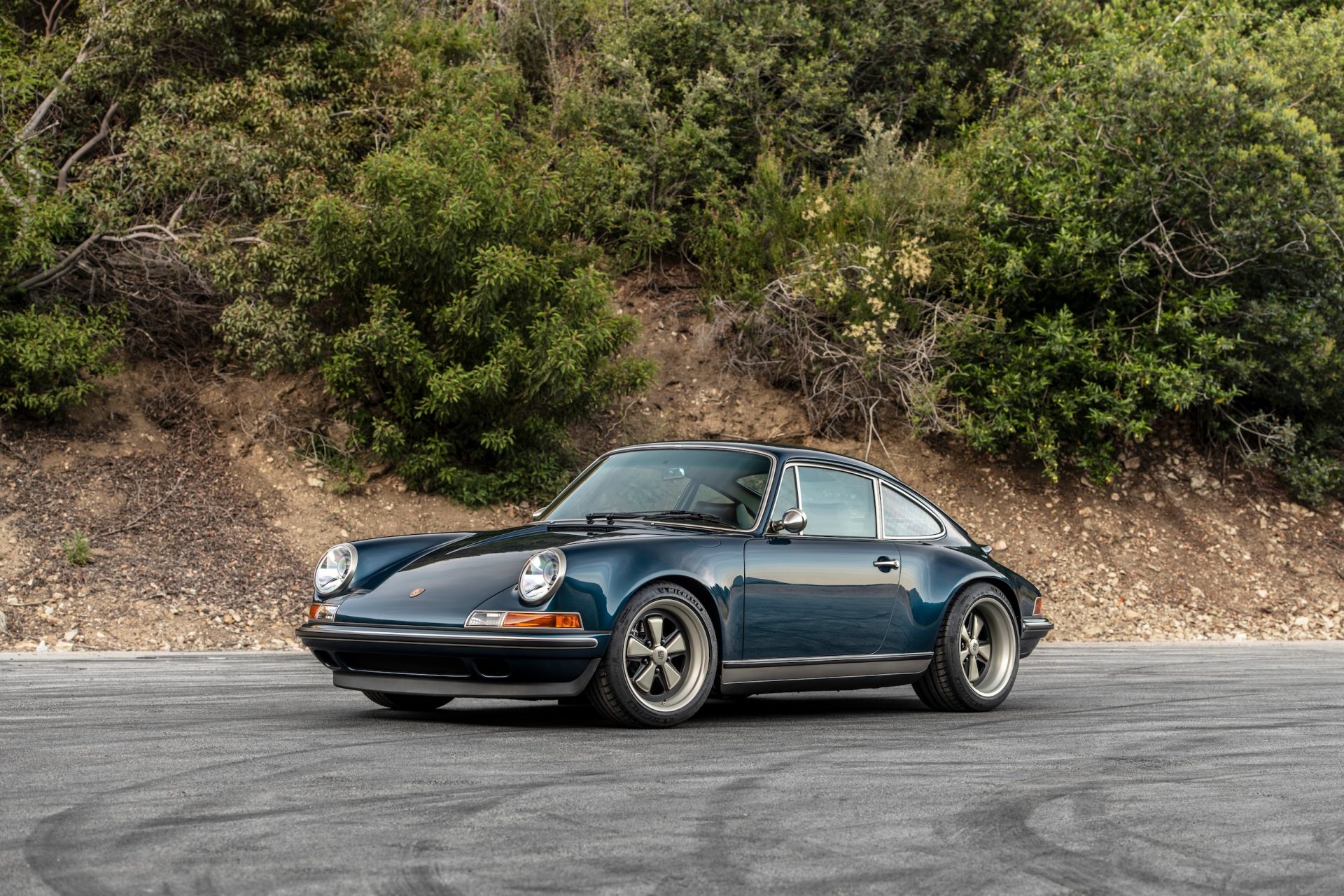


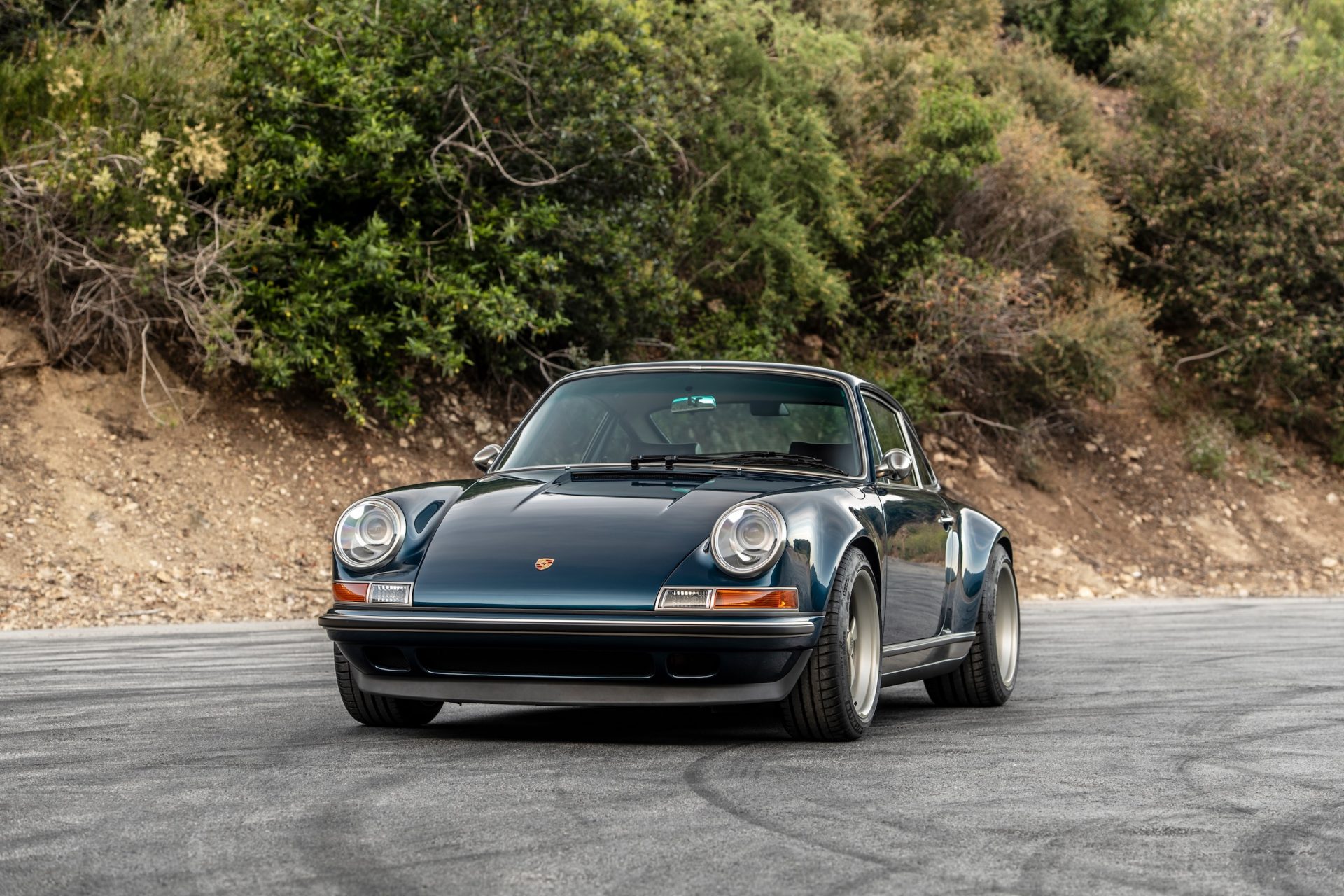
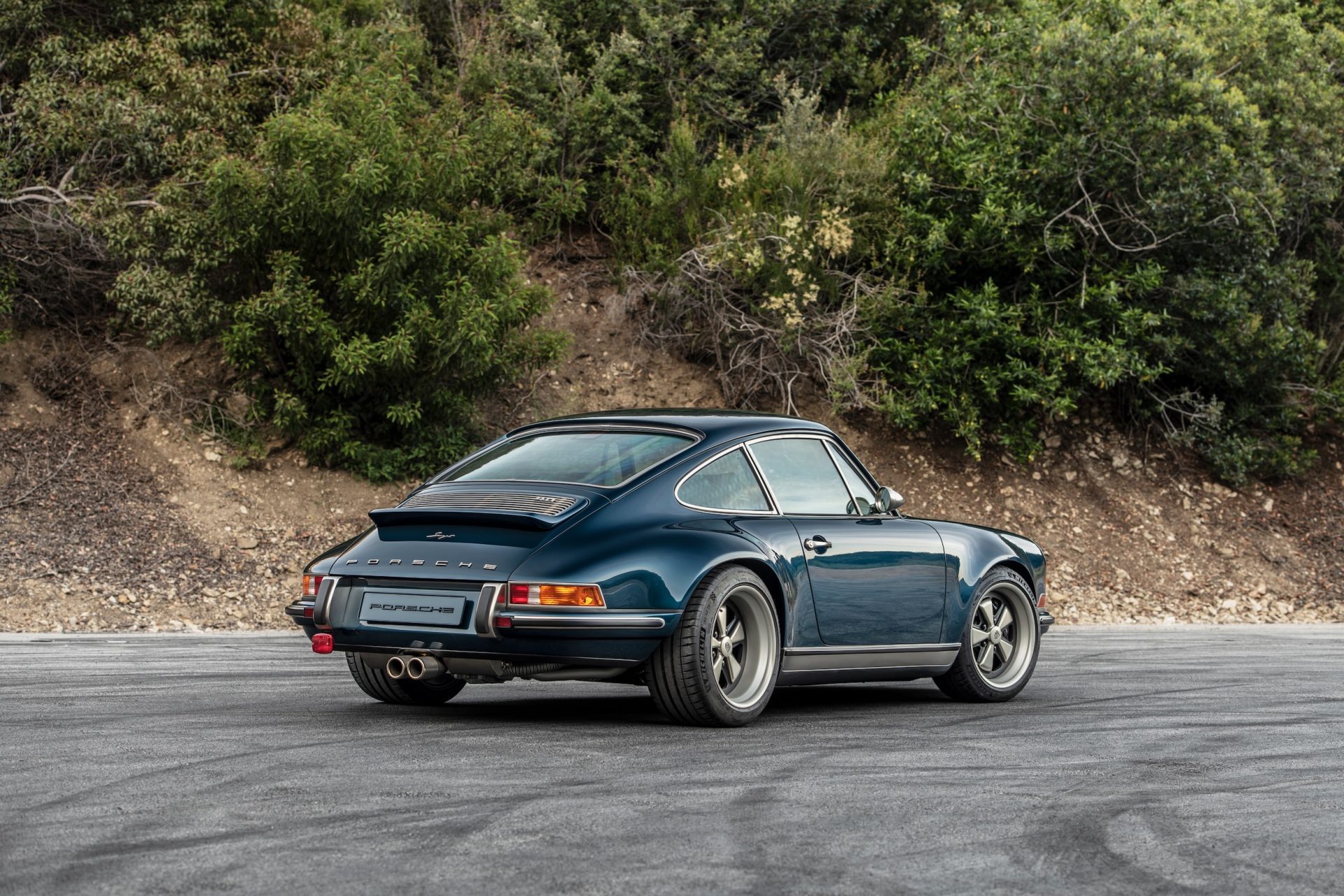
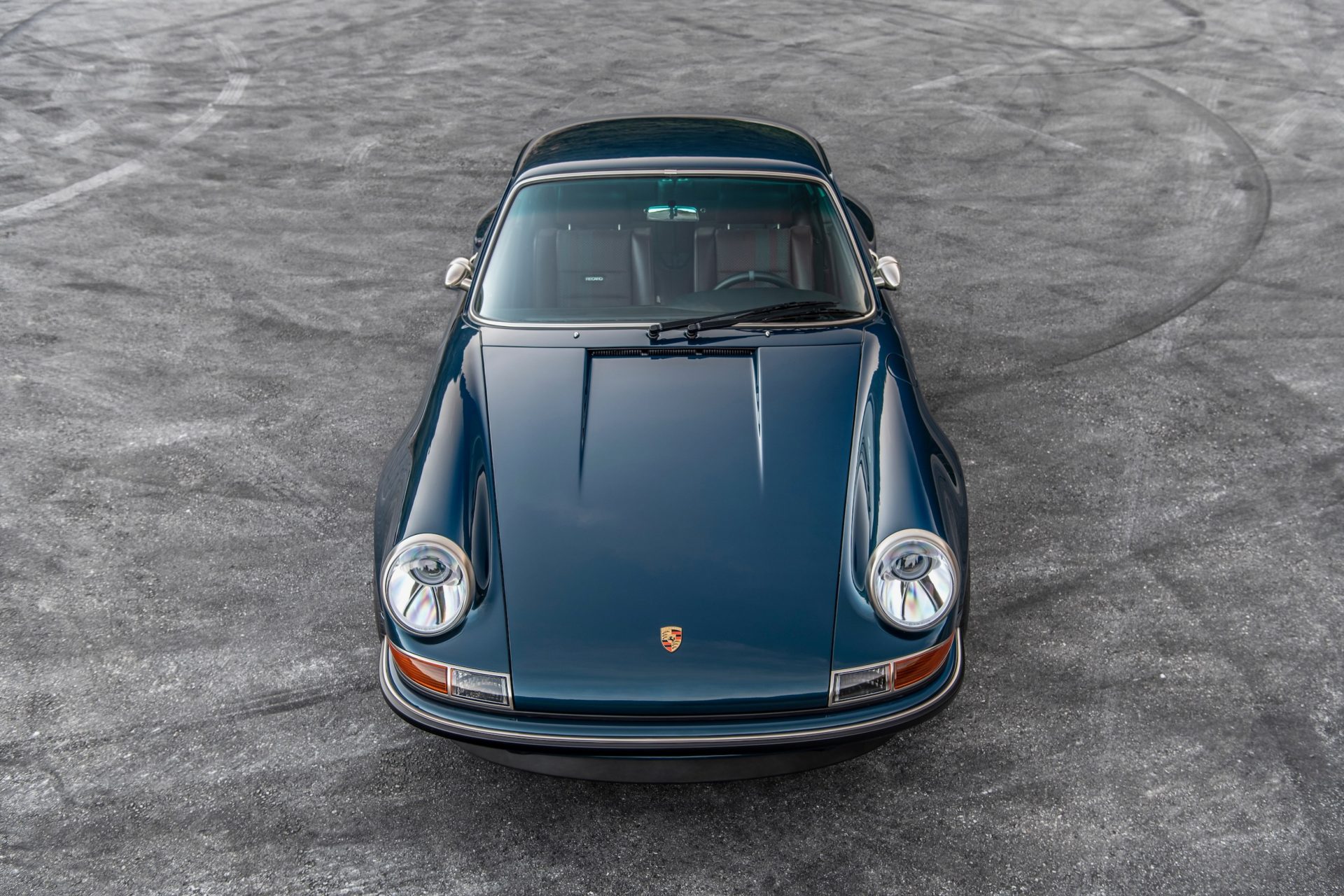
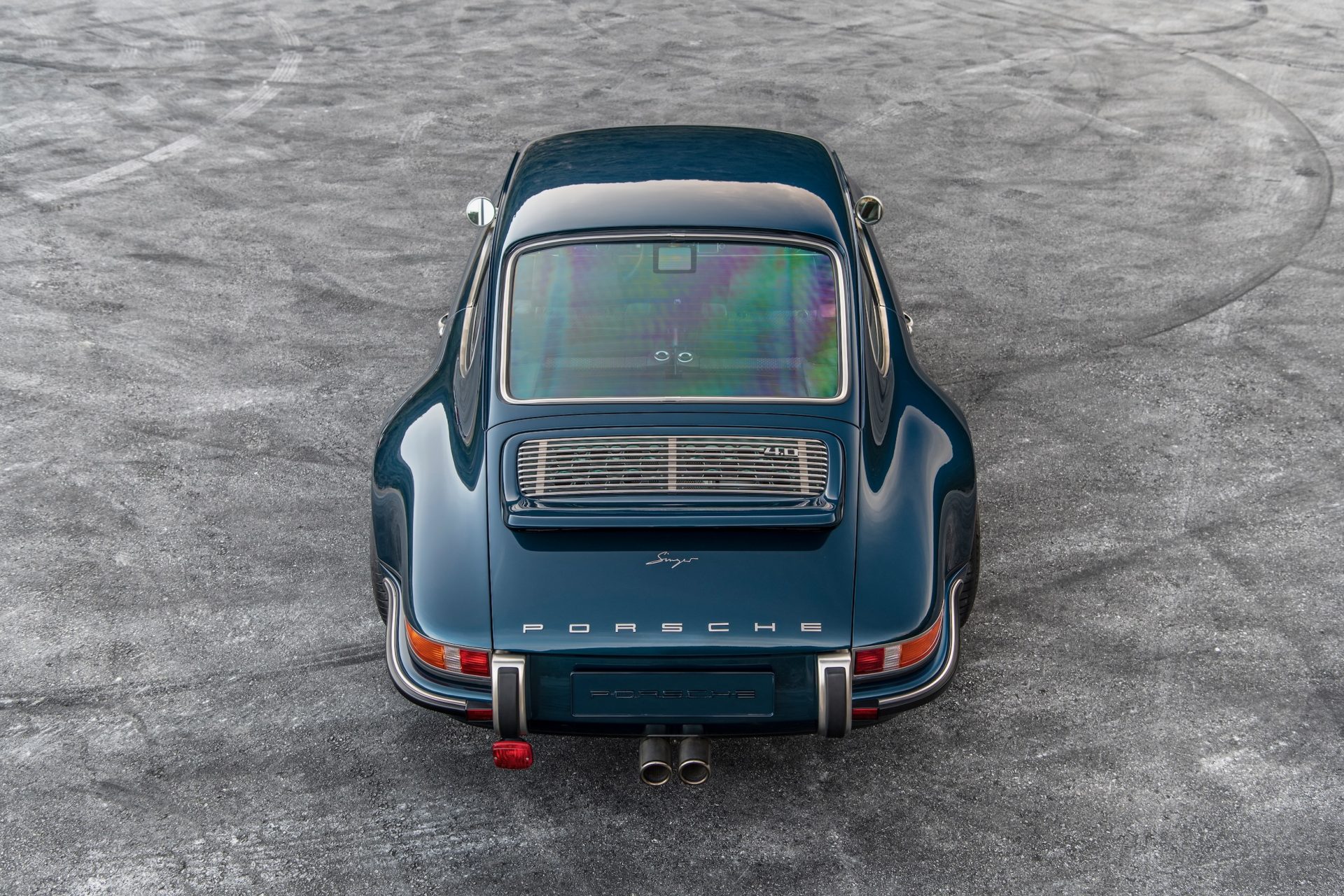

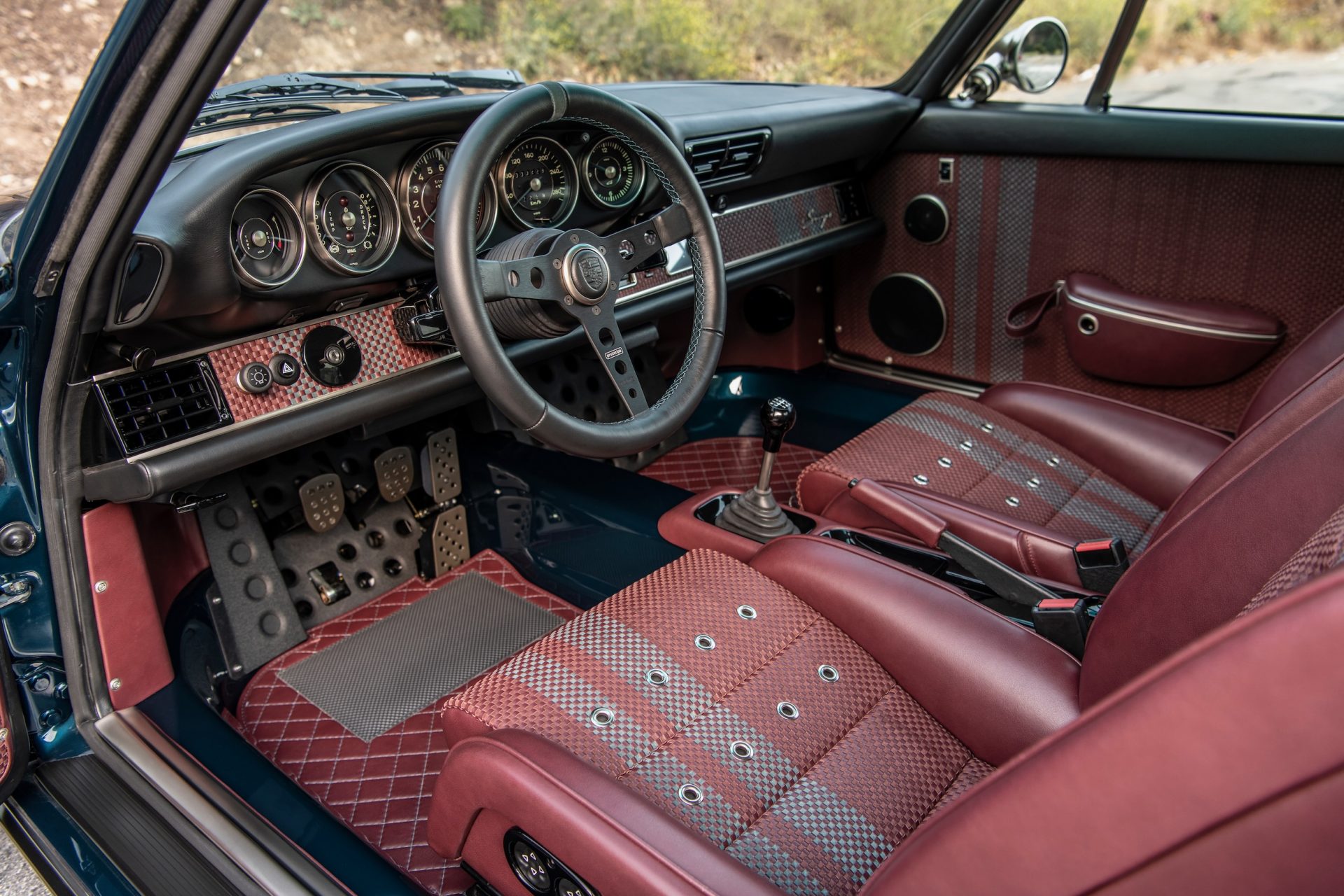

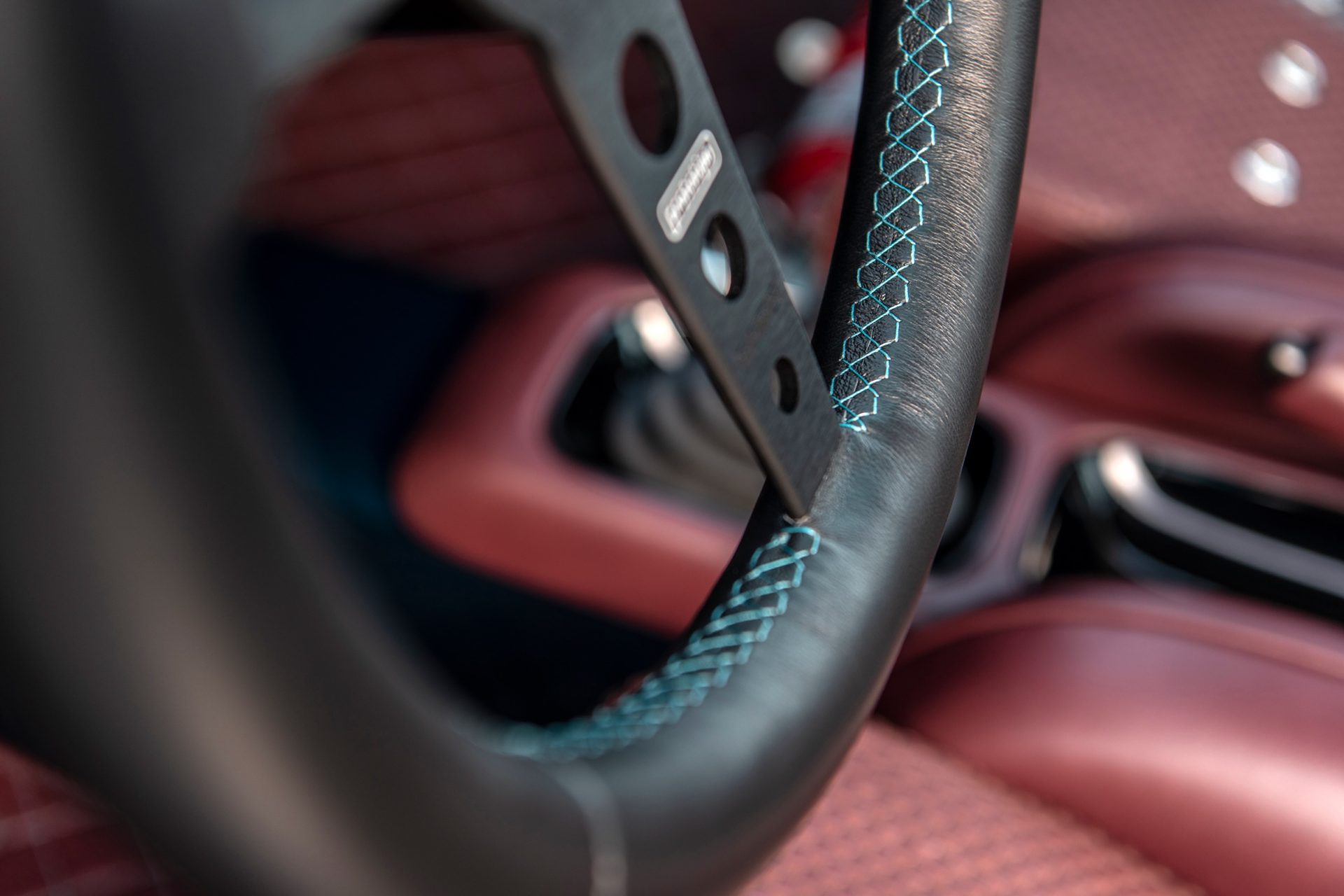
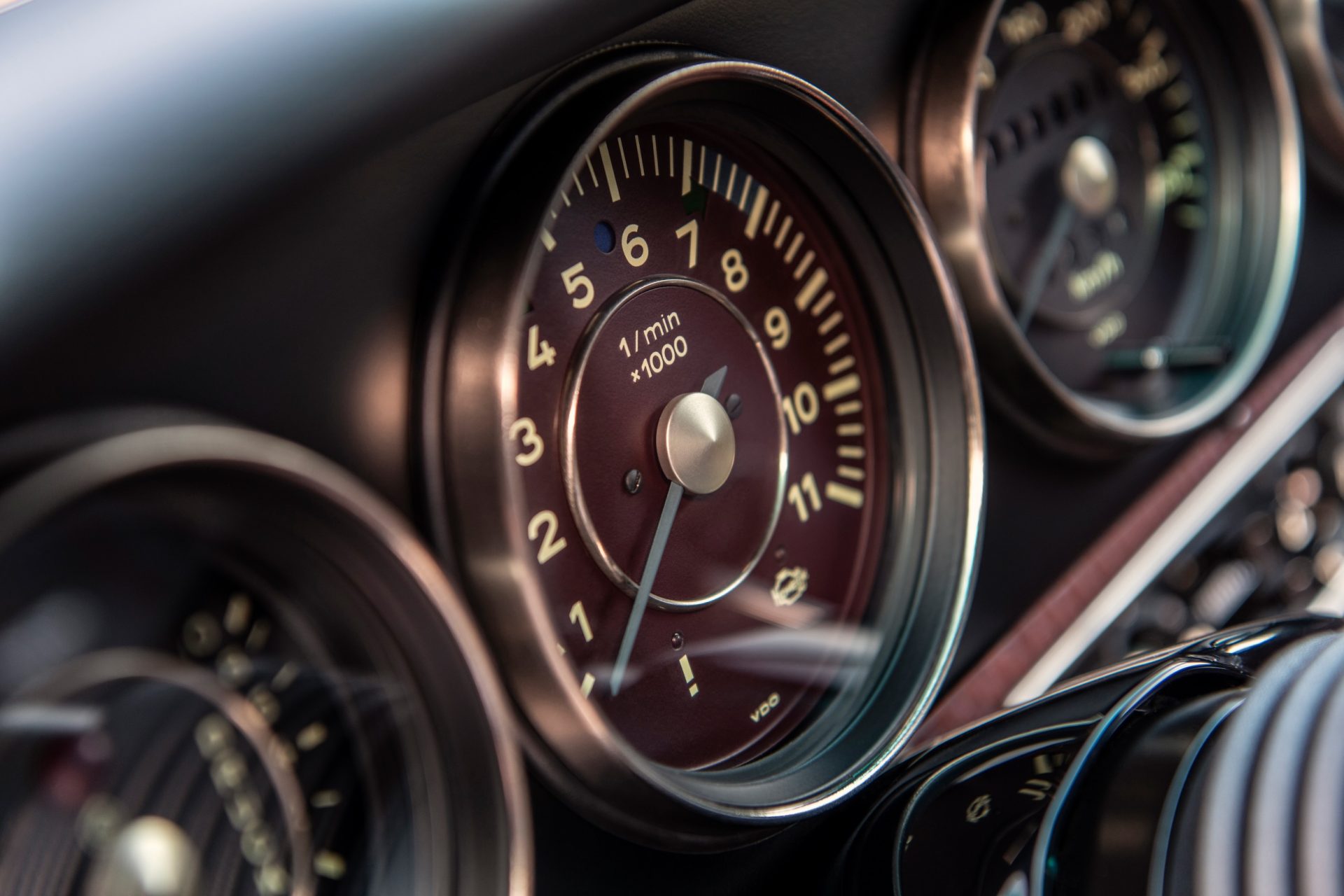


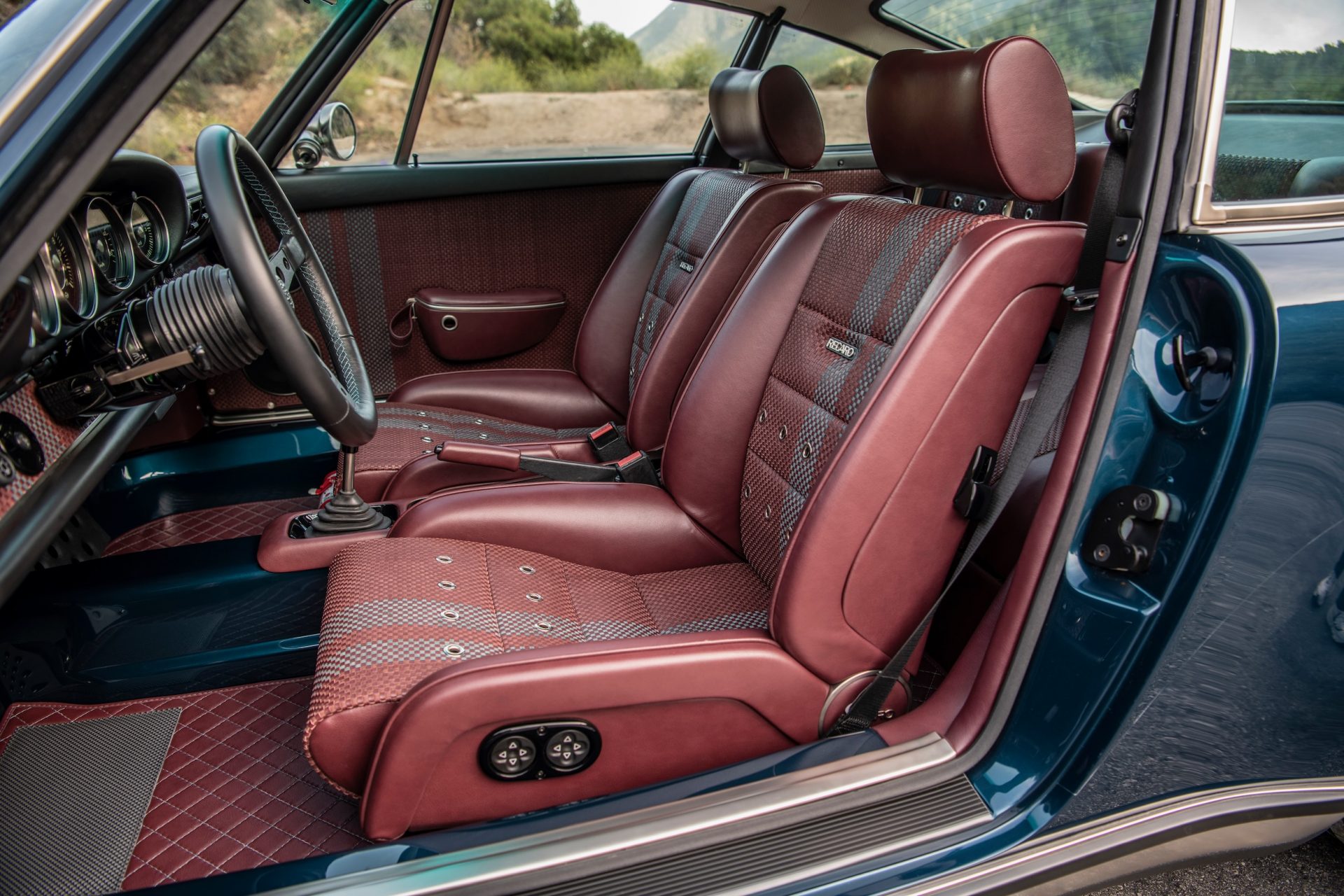
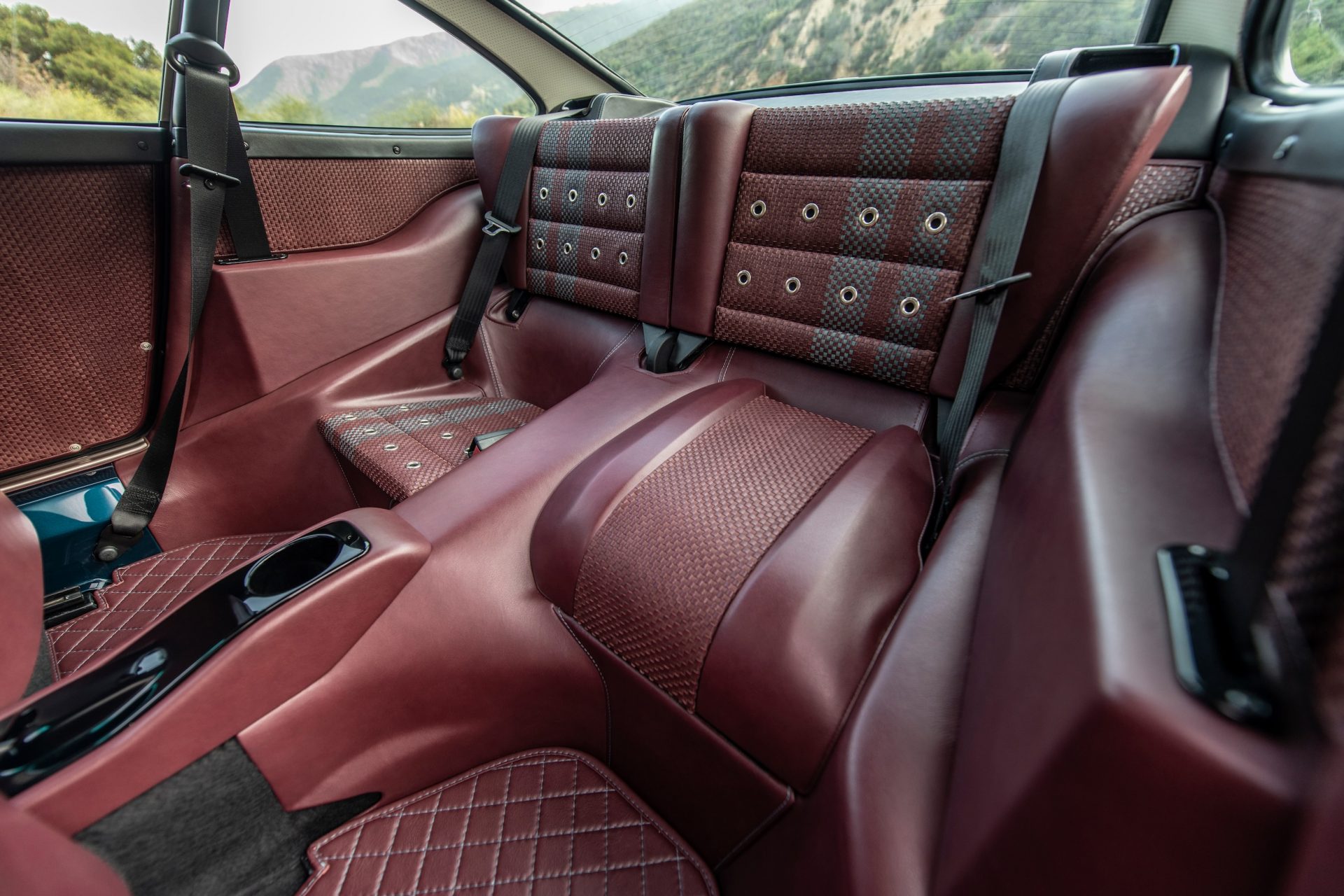
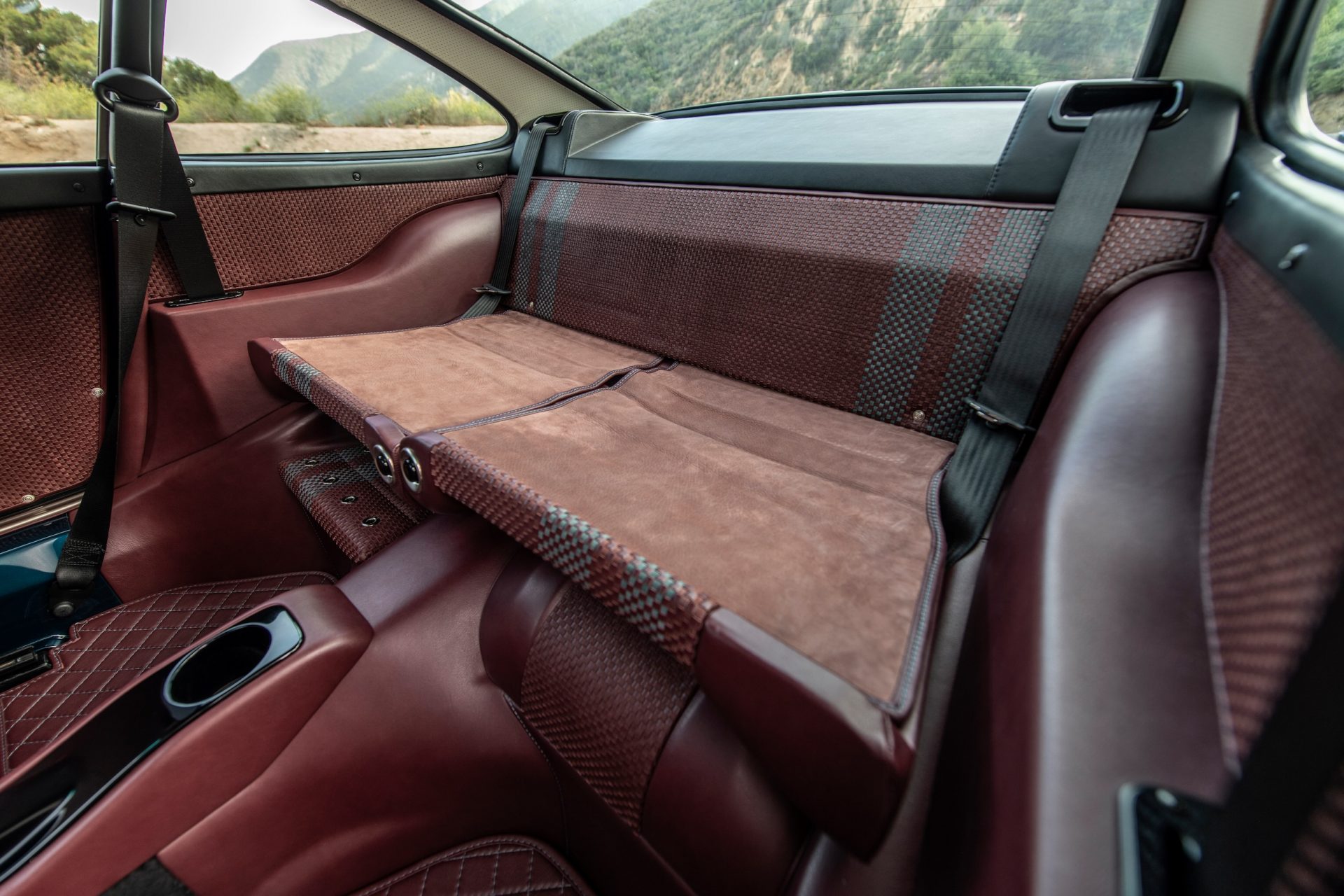

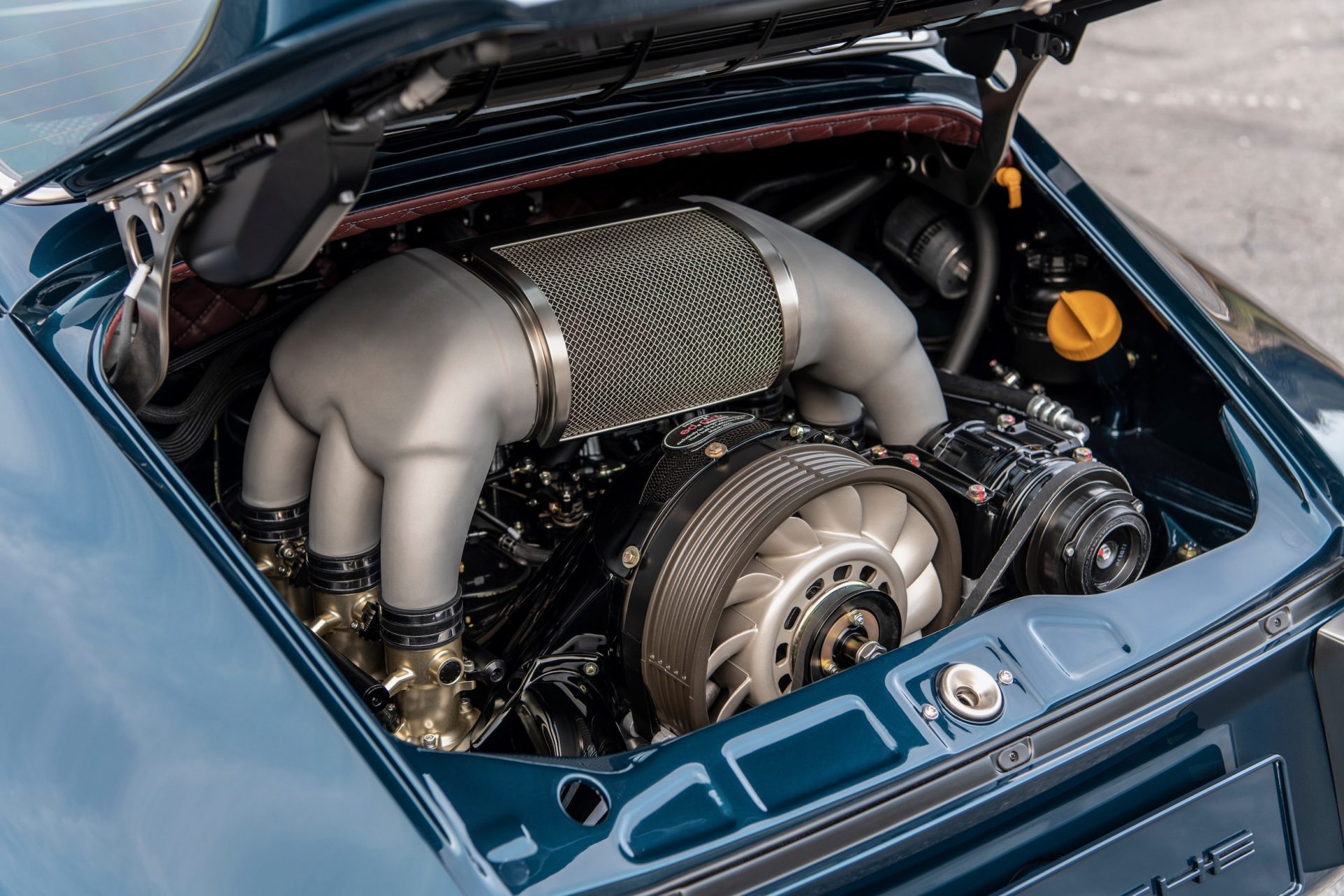

Auktion: RM Sotheby’s, Sealed May 2026, Schätzpreis 1 bis 1,1 Millionen Euro, mit diesen Angaben: «The Ramatuelle Commission was completed by Singer Vehicle Designs in 2022, having been commissioned by an individual living in the town of Ramatuelle, located in the south of France near Saint-Tropez. Outfitted with the 4.0-litre engine, the car is outfitted in seldom-seen all wheel drive configuration, with power managed through a six-speed manual gearbox. Other desirable features include the carbon fibre roof, Öhlins sport adjustable suspension, and the ‘big’ Brembo brakes. Resplendent in Porsche Amazon Green, a colour first introduced by Porsche in the early 1990s and now available as a Paint to Sample option on current production Porsches, it exudes a subtle sophistication which beautifully suits the Classic Services bodywork. Boasting nickel bumperettes, the rear decklid lettering is also finished in nickel. Fuchs-style wheels complete the look, with the car’s brake calipers finished in Aubergine. Inside, the interior is trimmed in Tintoretto leather, which beautifully contrasts Ramatuelle’s Amazon Green paintwork and can be found on the transmission tunnel and door sills. With a custom dual-stripe weave on the eight-way adjustable Touring-specification seats and door panels, the car is equipped with a Momo Prototipo leather-wrapped steering wheel. Behind that reside early-type 911 gauges and finally the car is fitted with the Porsche Classic Navigation system, equipped with Apple CarPlay, and an upgraded subwoofer, adding a classic feel with a touch of modernity. The Ramatuelle Commission has recently been inspected and serviced by the Differs Group, Singer’s authorized after sales service partner in the Netherlands. Singer Vehicle Design’s Encore warranty can be added to this car at additional cost, please contact an RM Sotheby’s Private Sales representative for further information. Showing just under 4,100 km since reimagining, this is a fabulously specified example of Singer Vehicle Design’s now iconic Classic Services for the type-964 Porsche 911».
–
«Acel», Chassis-Nummer WP0ZZZ96ZKS401518 (1989)
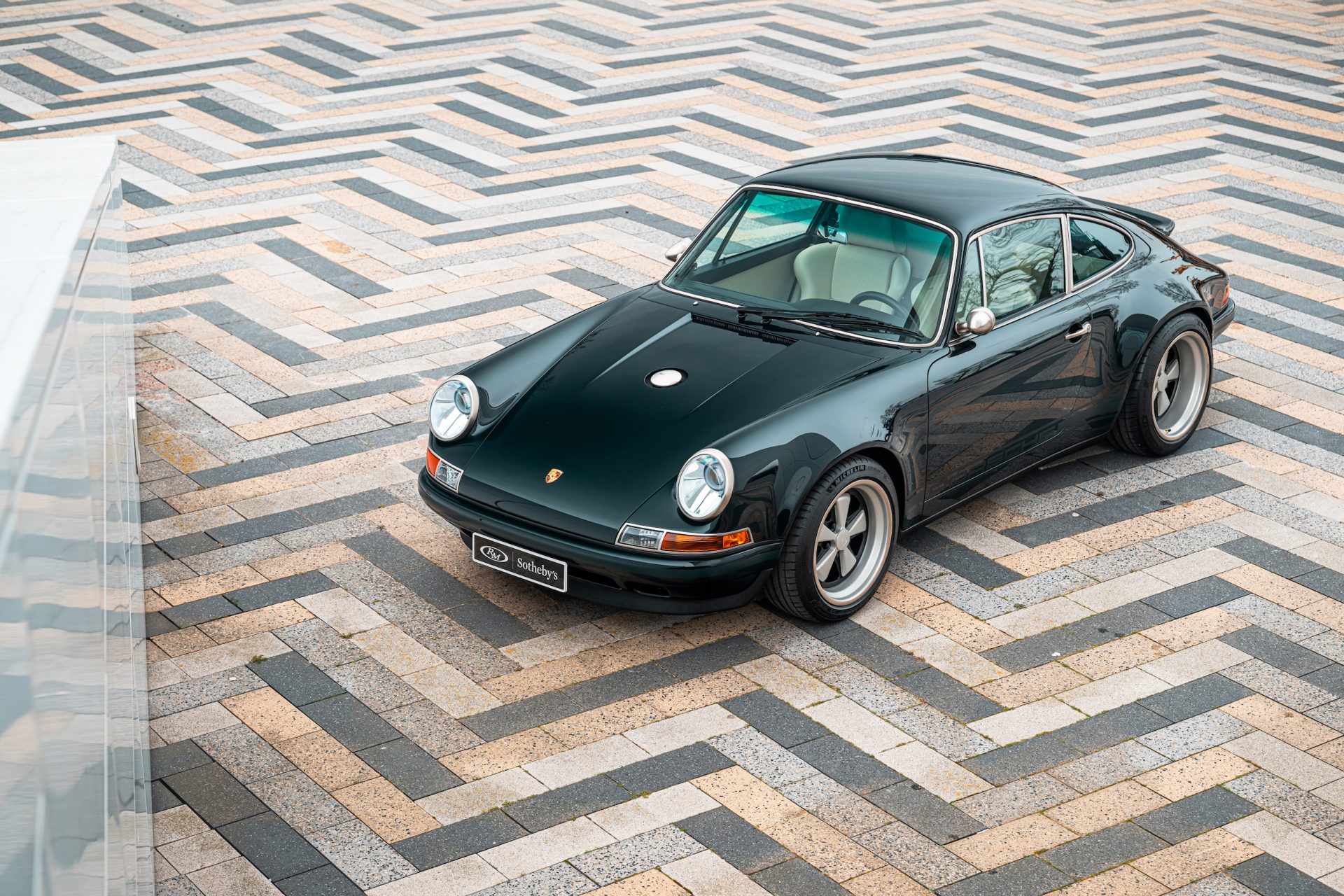
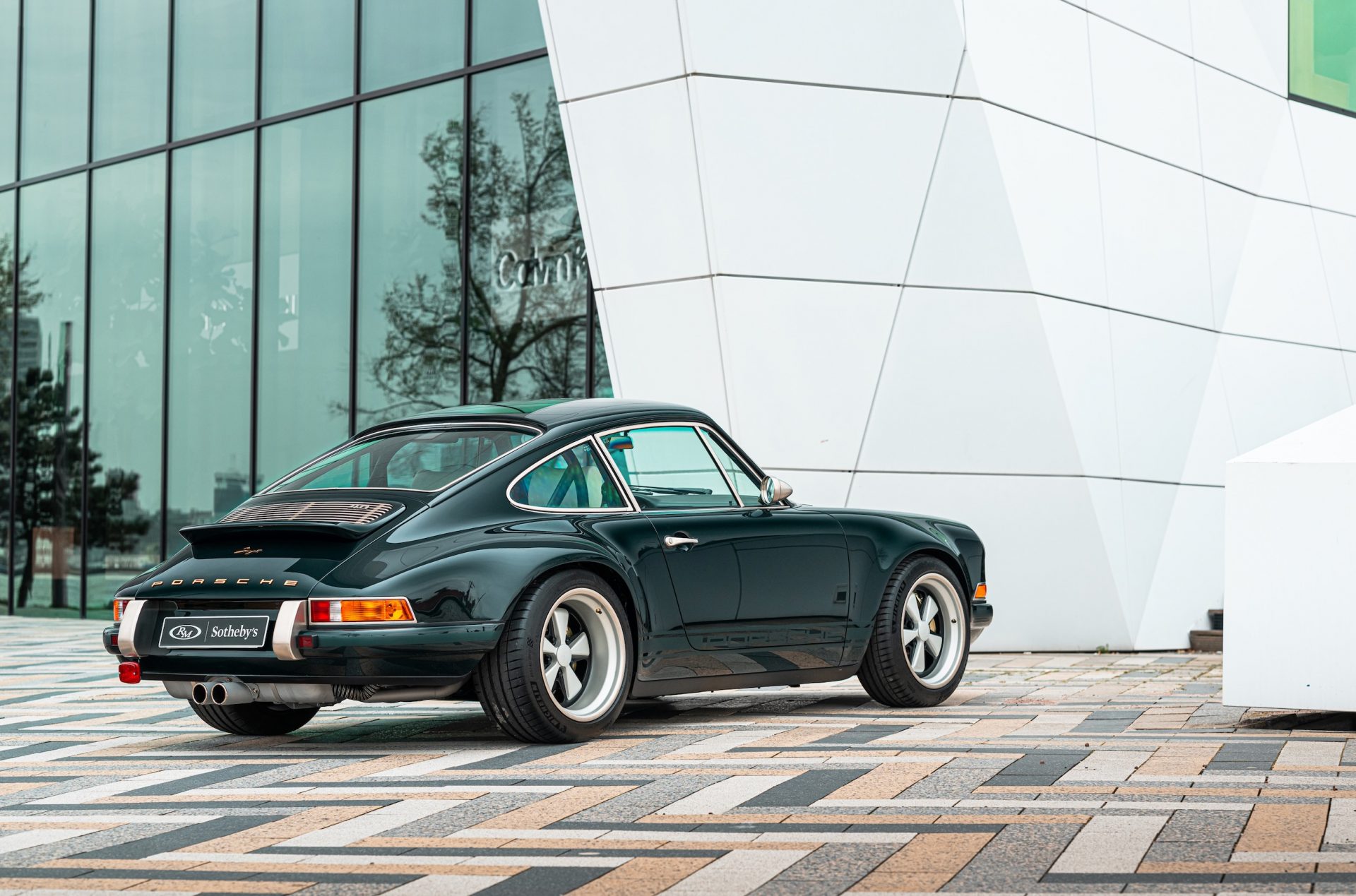
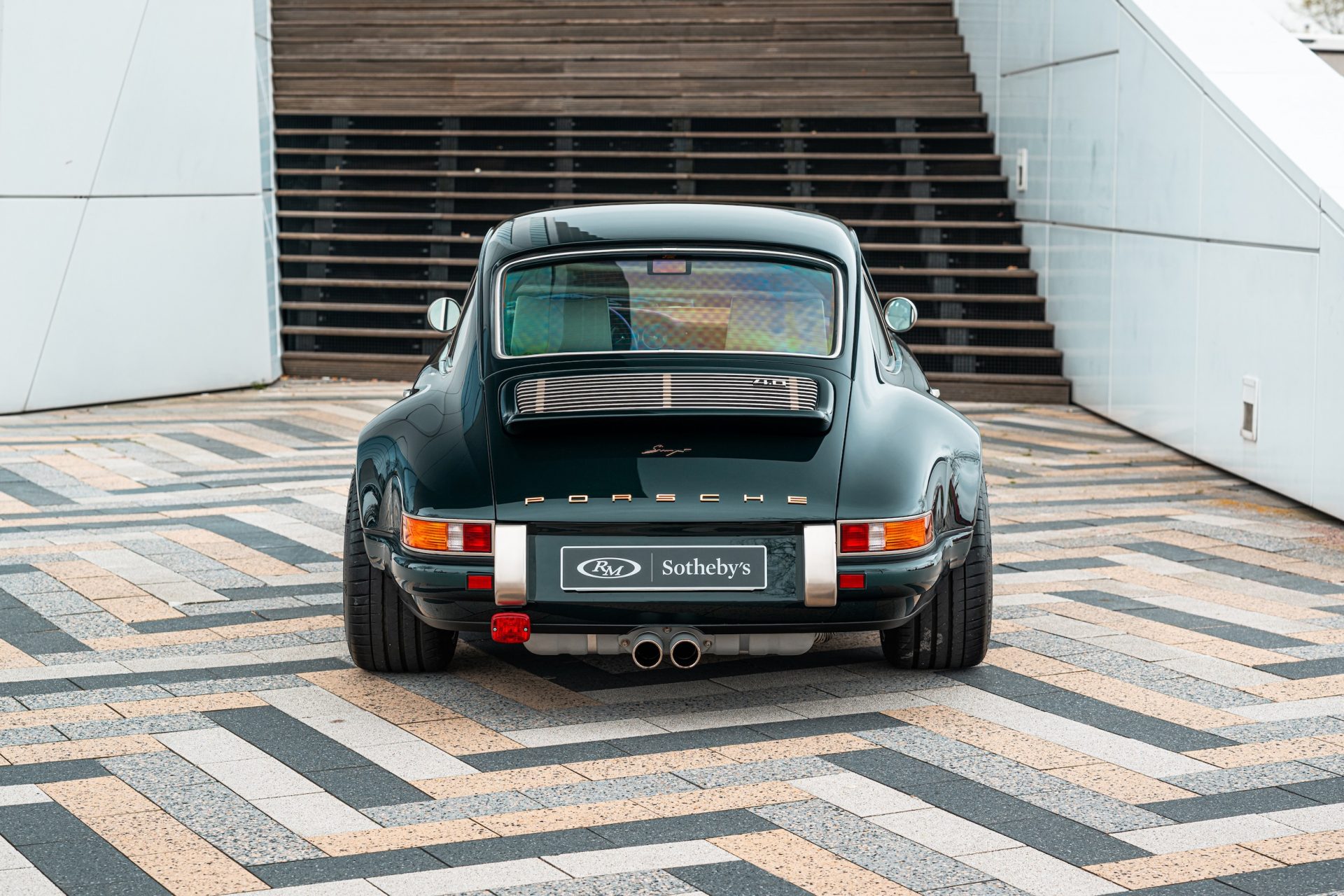
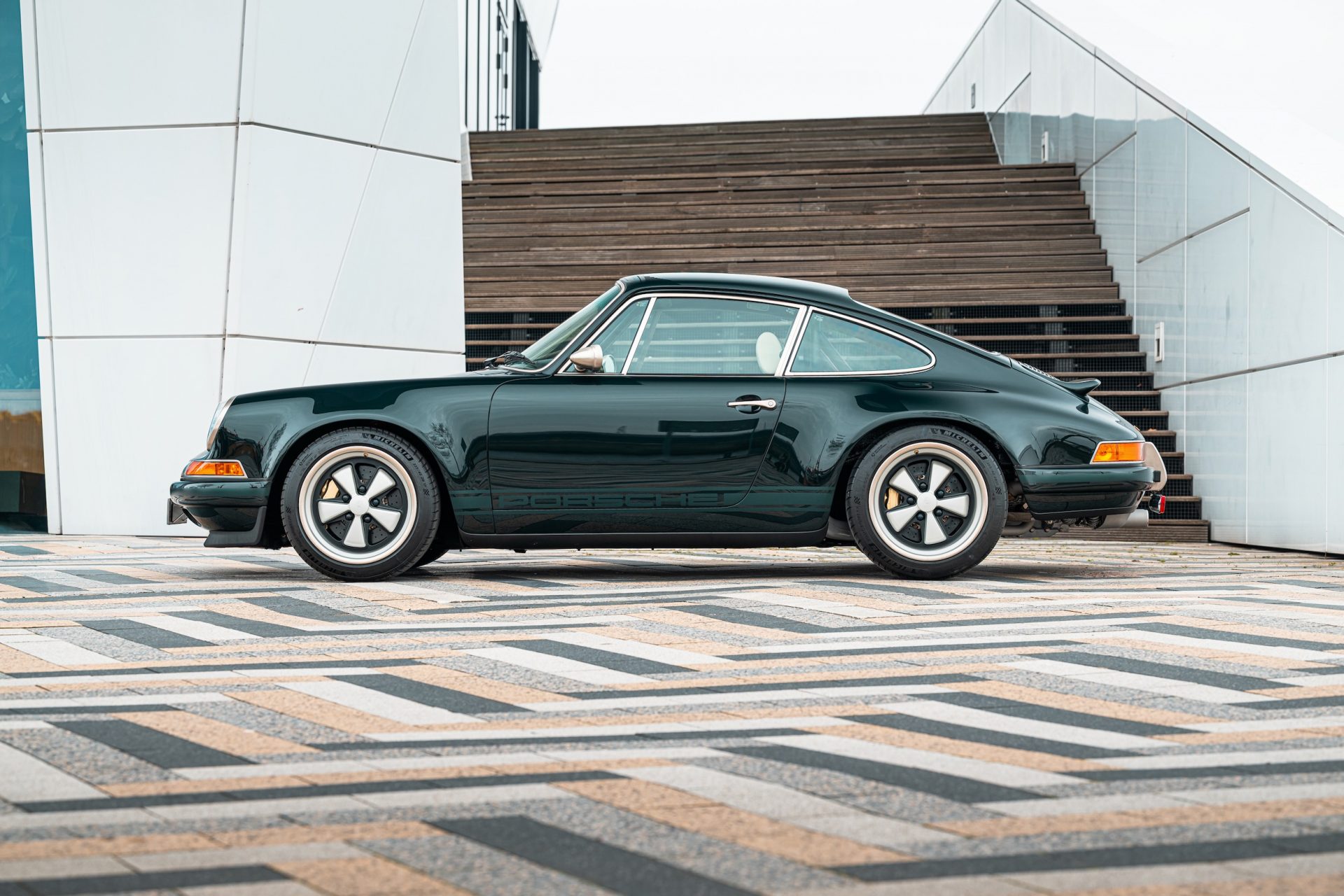
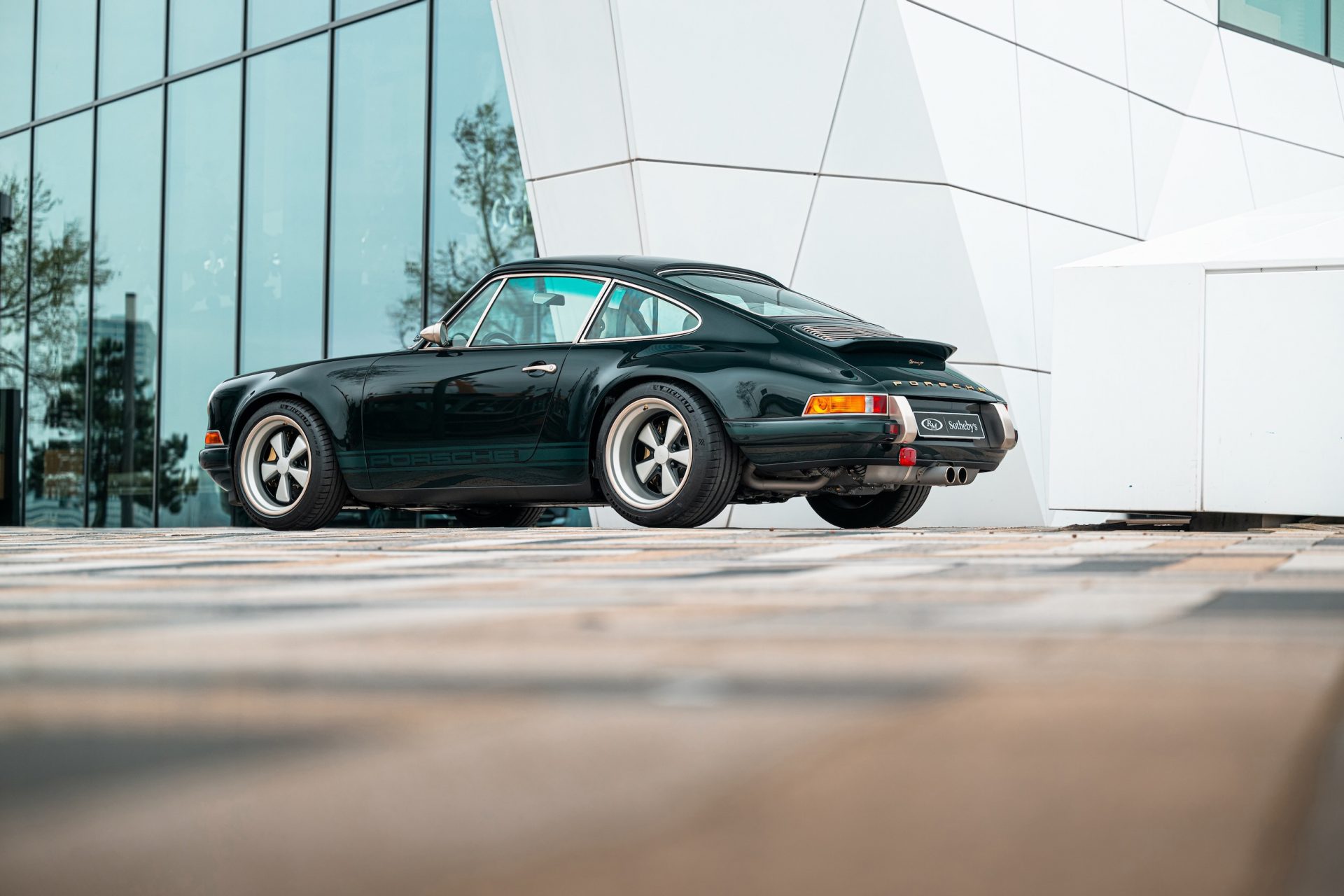

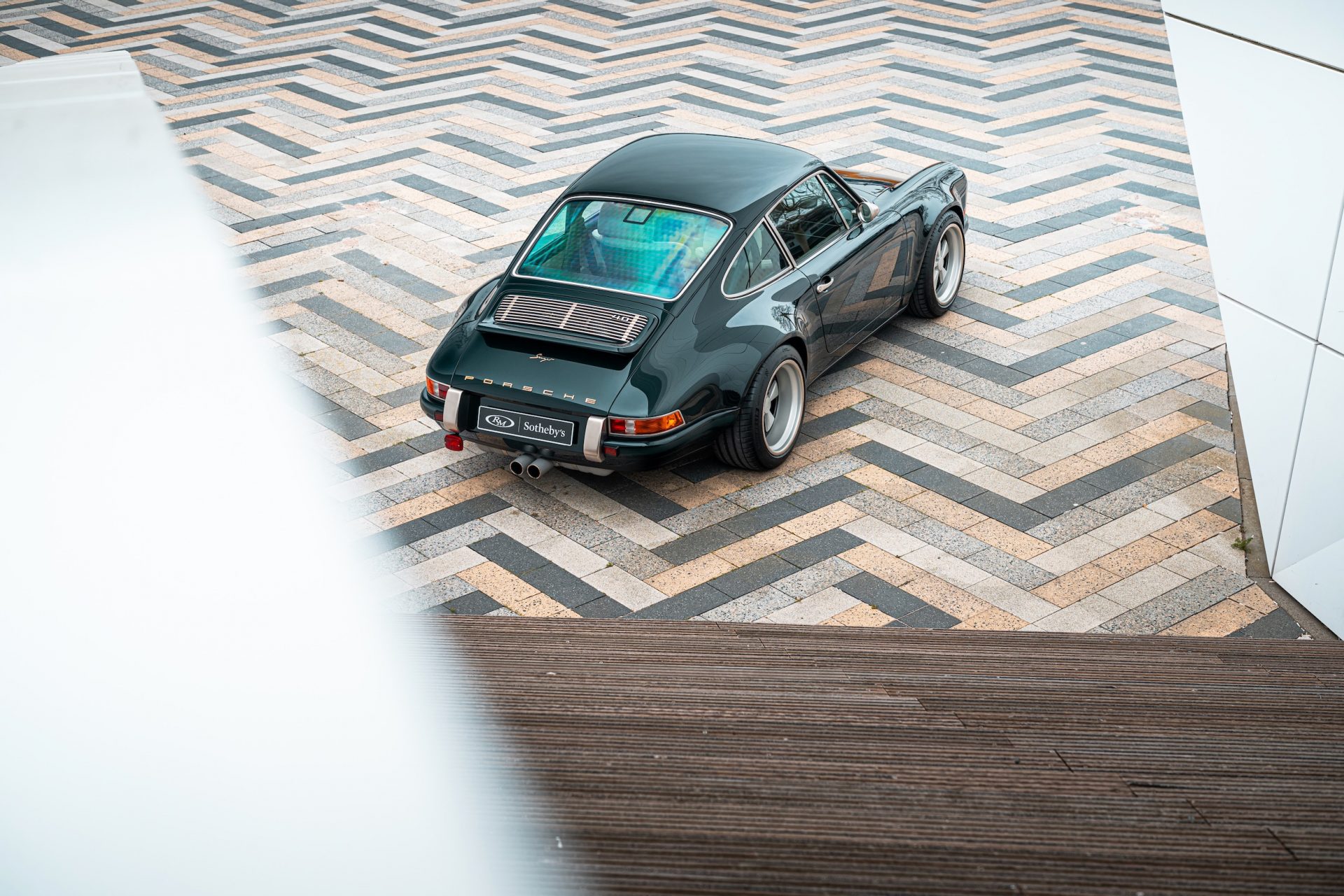
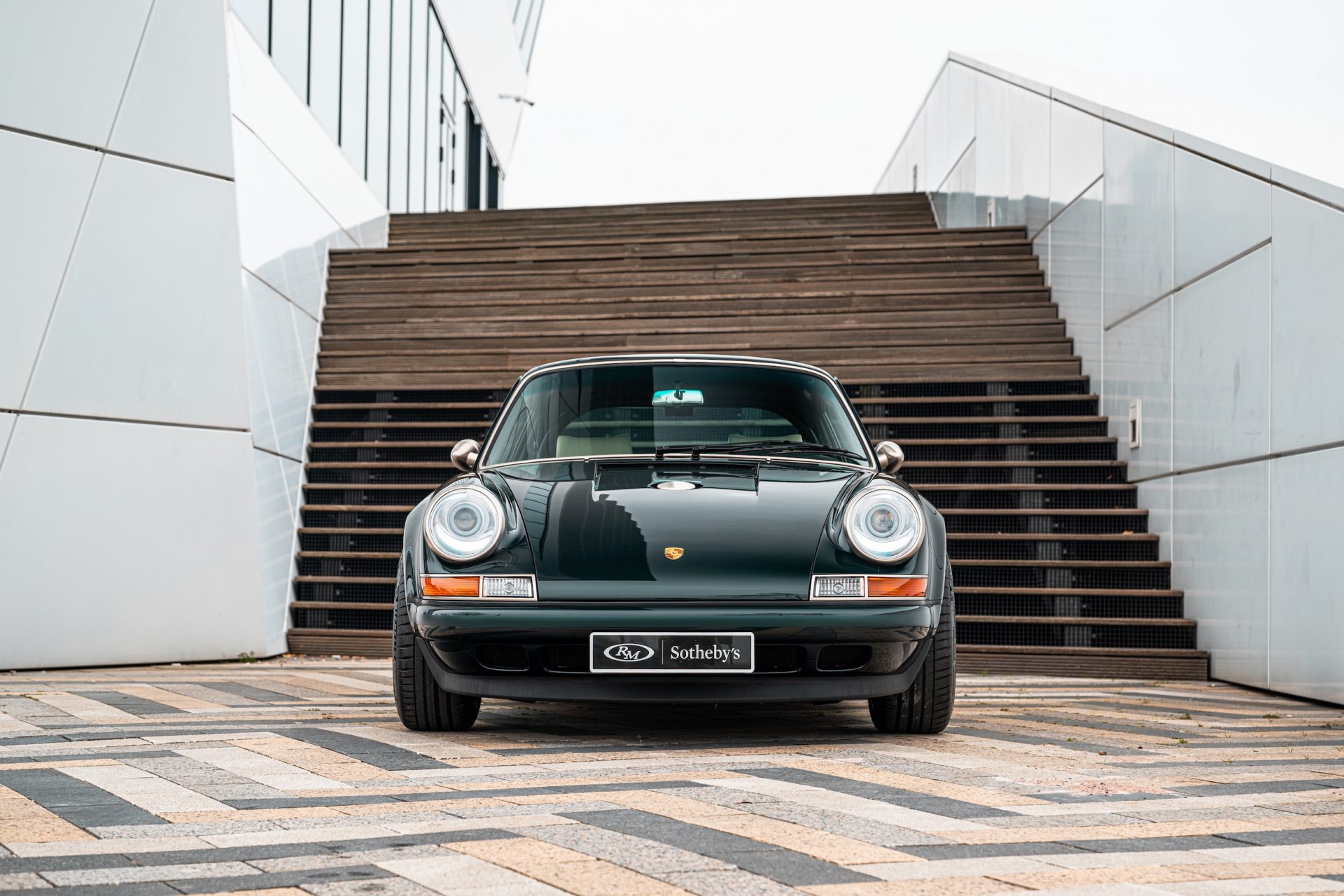
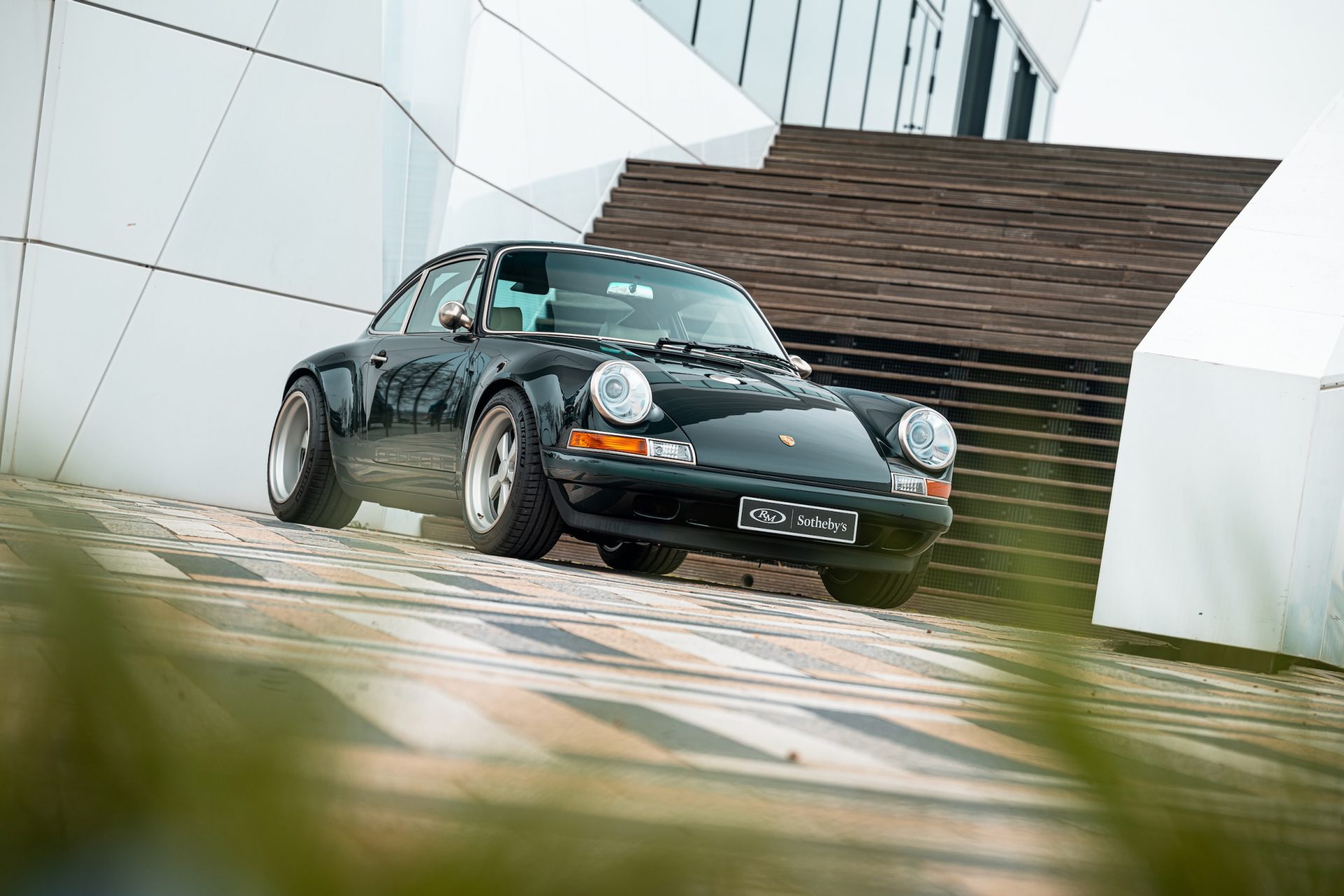
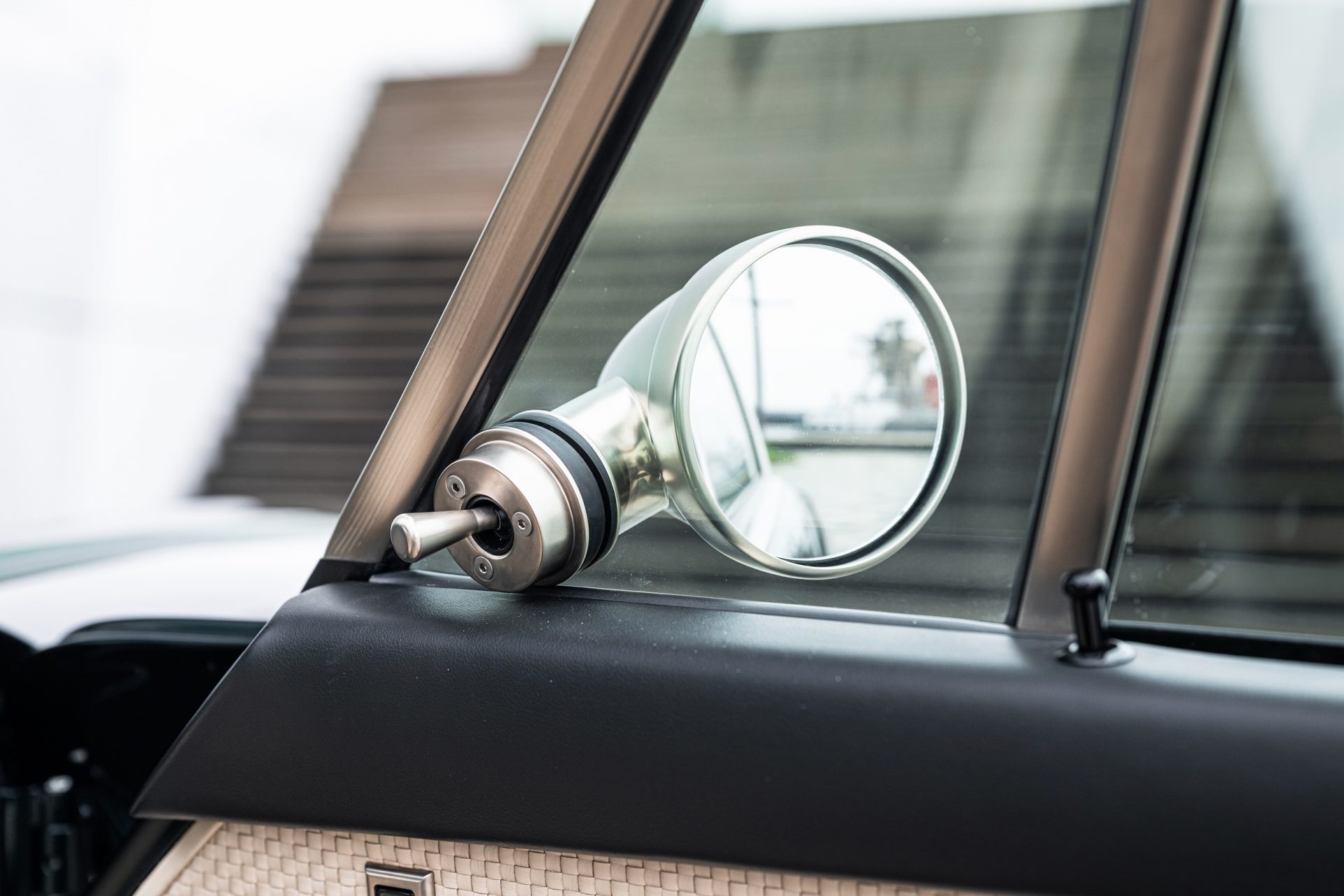
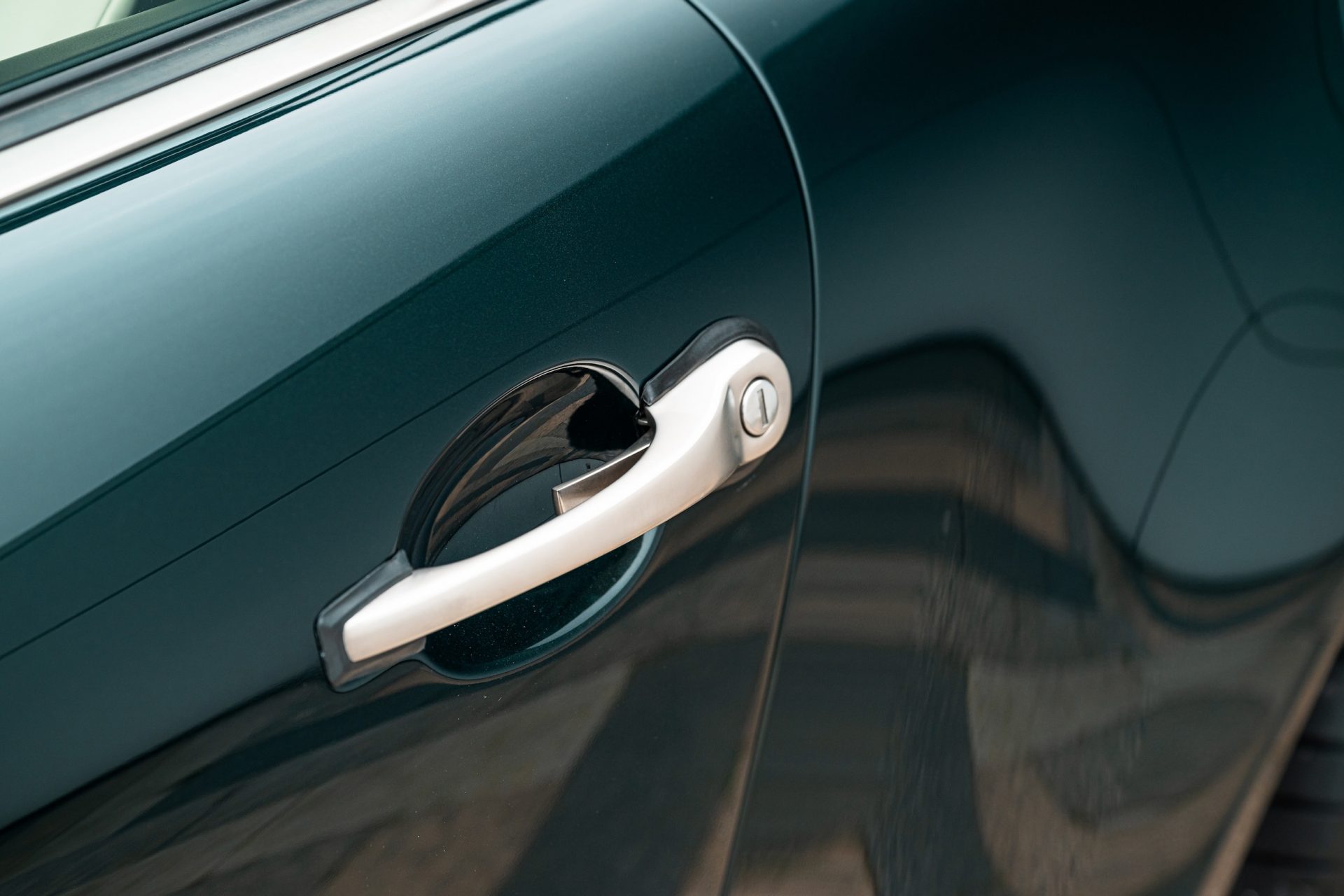
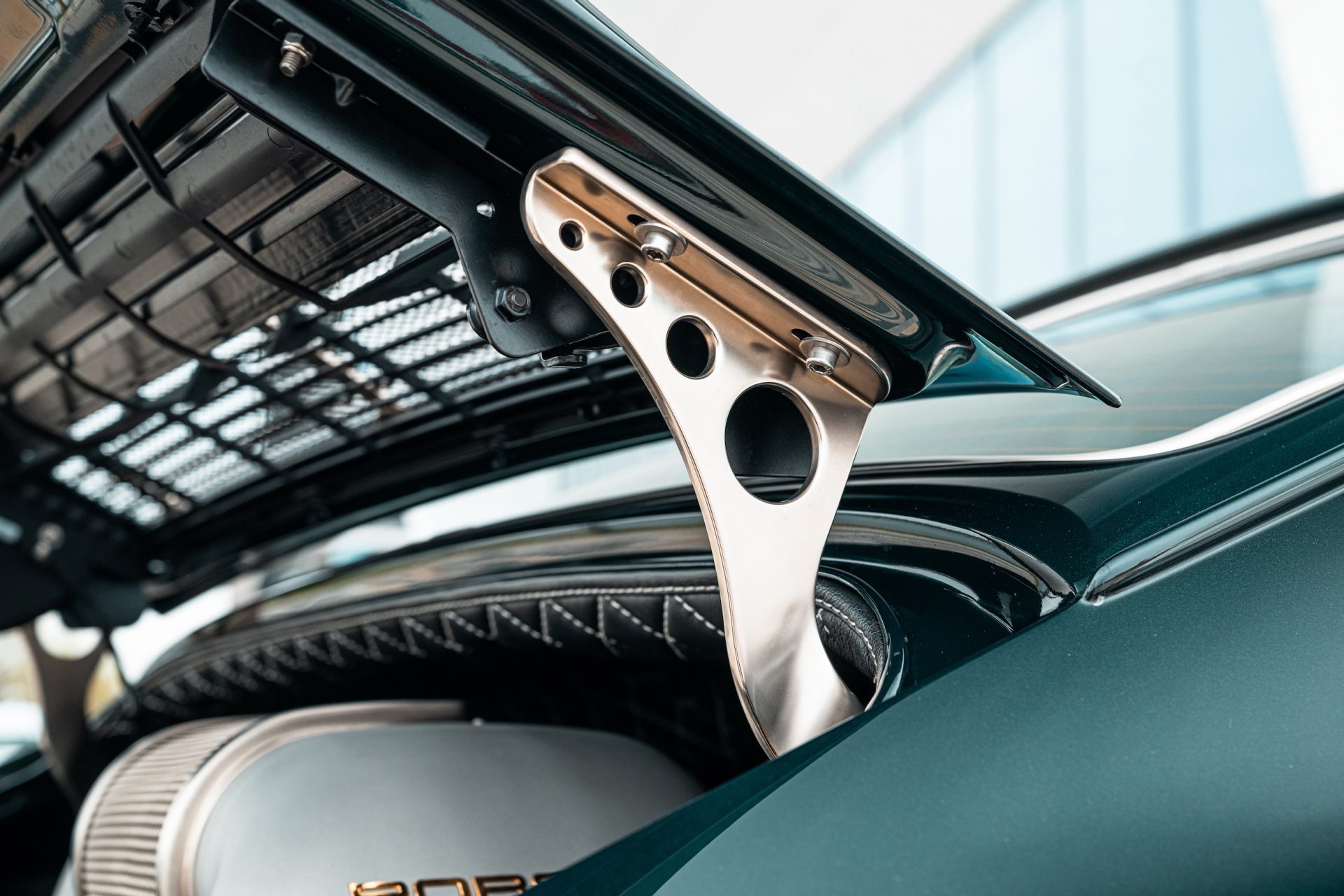
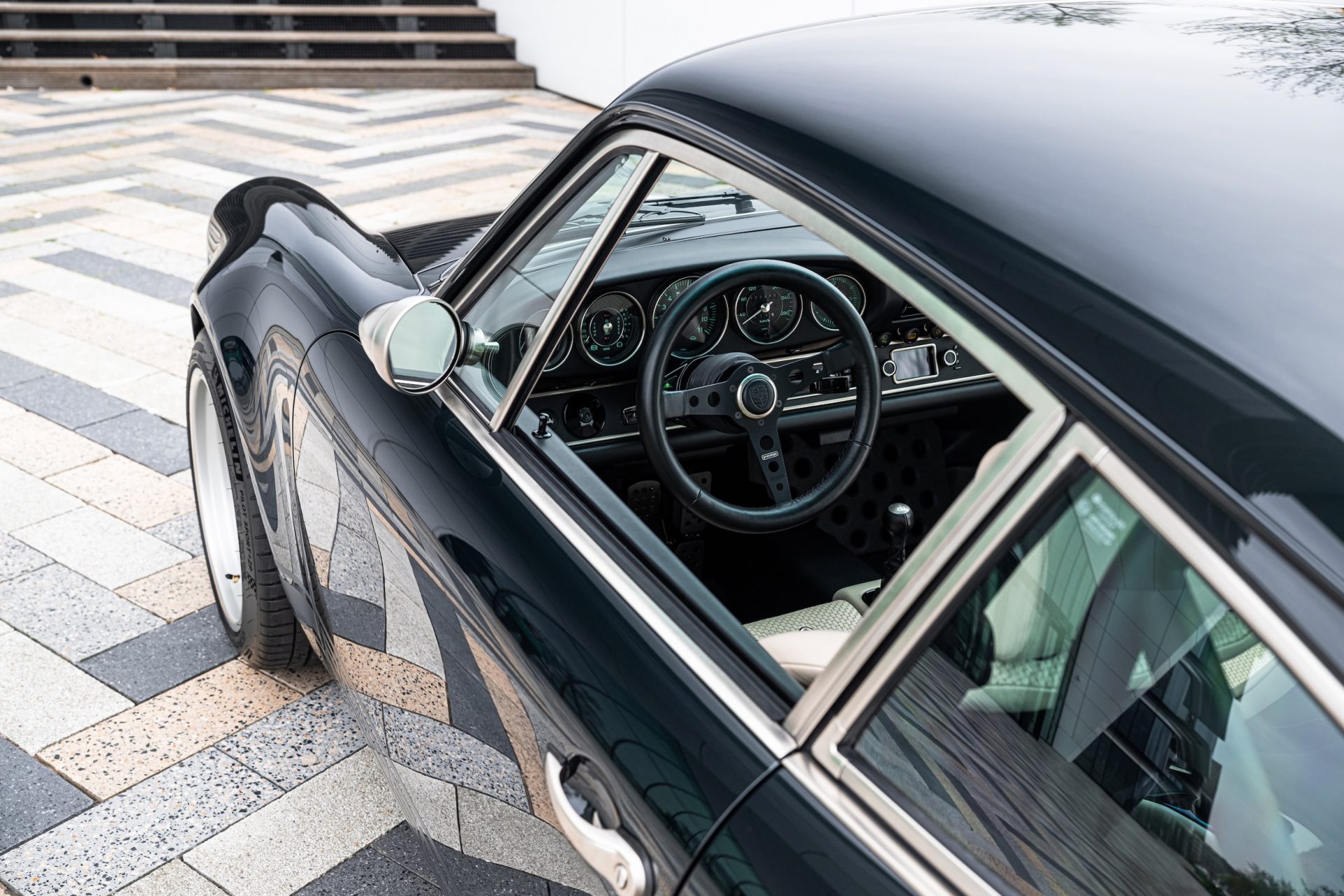
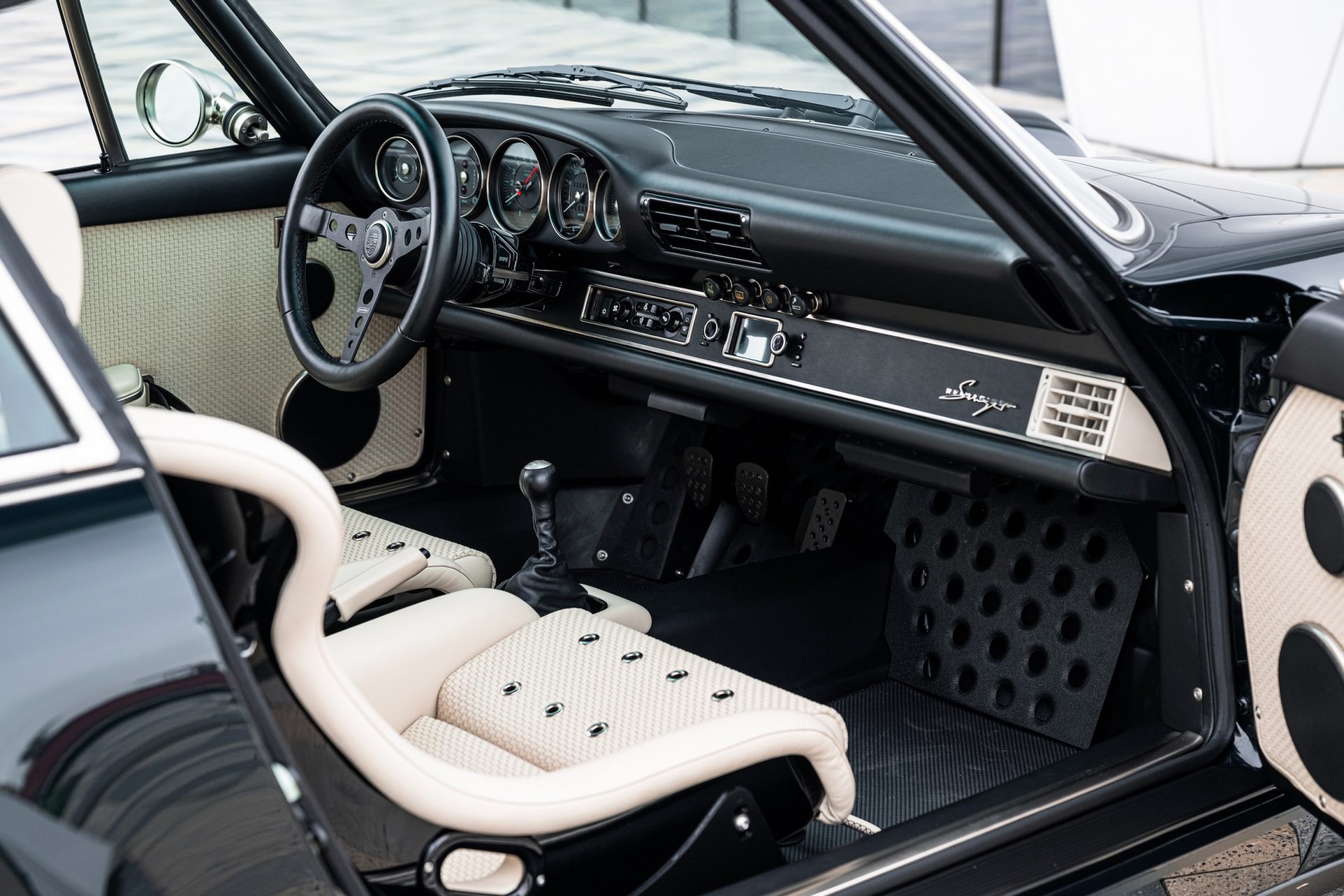
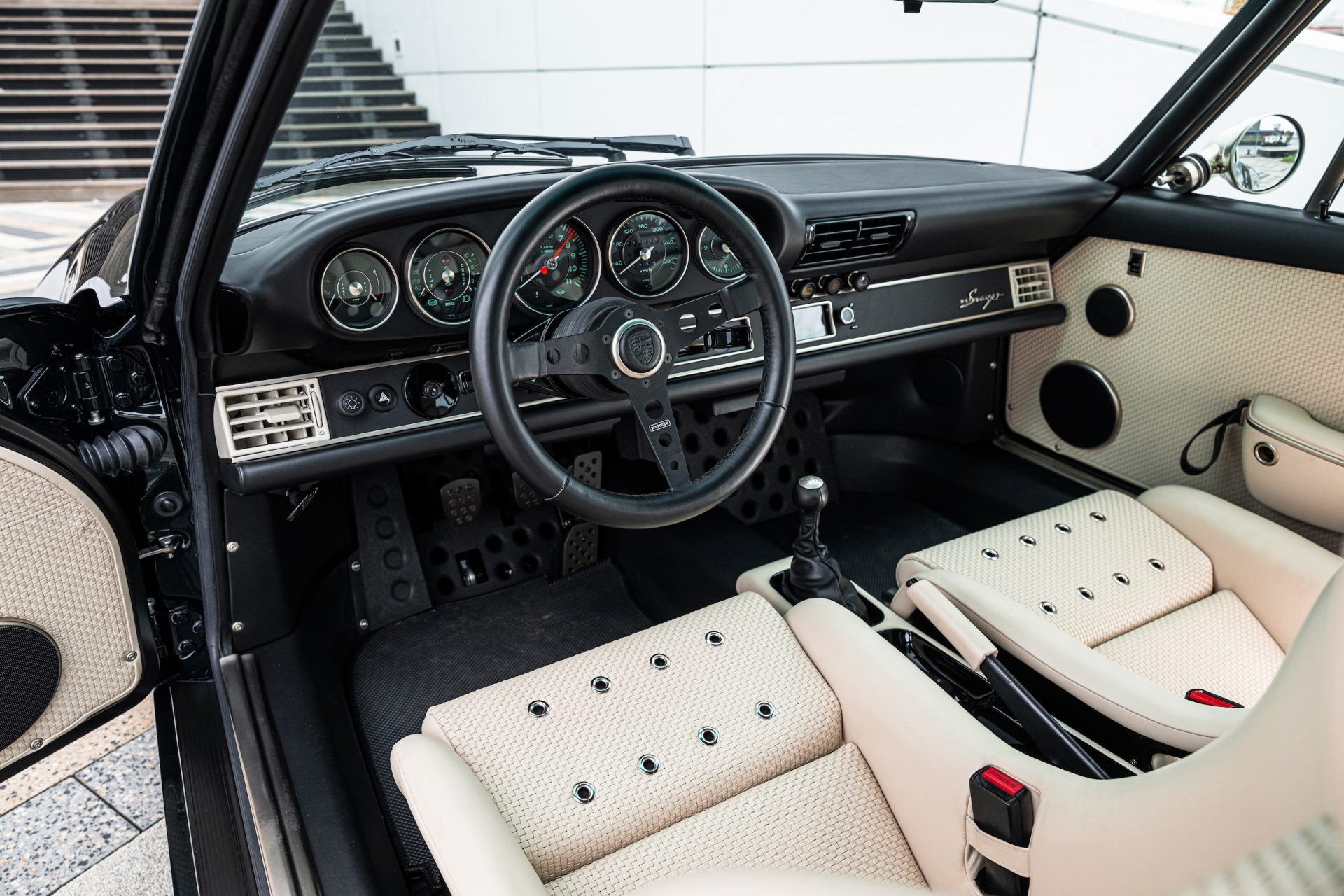
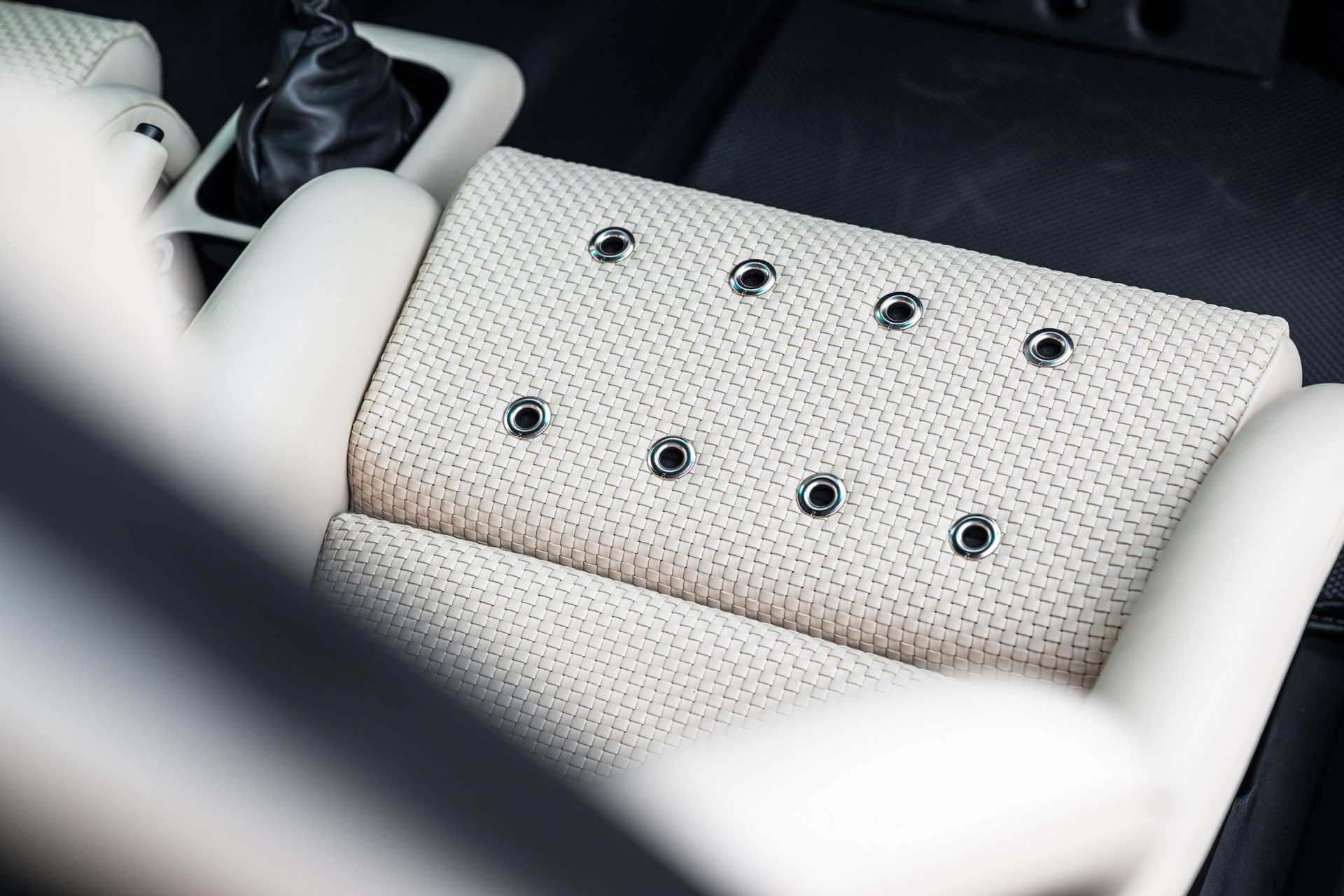
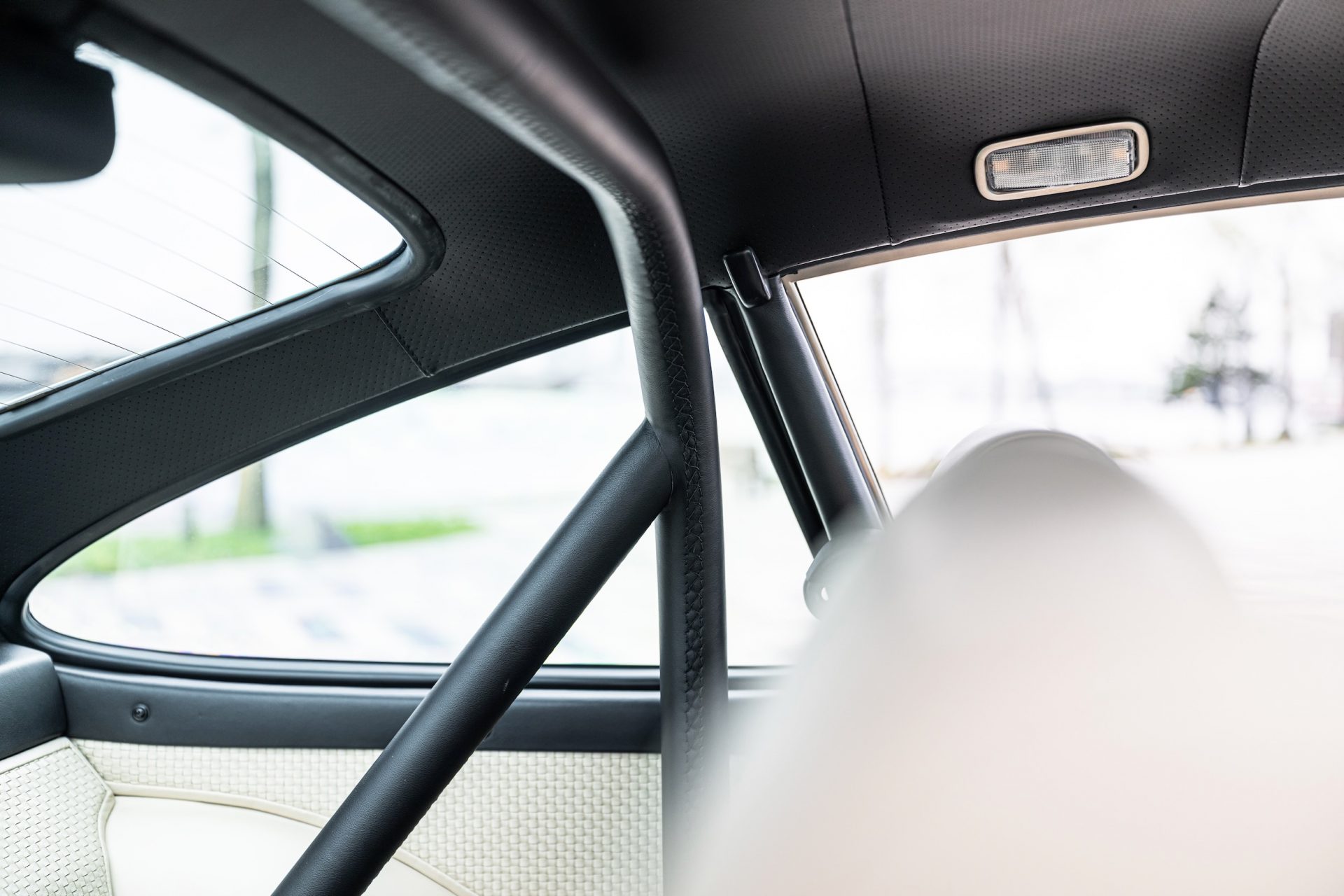
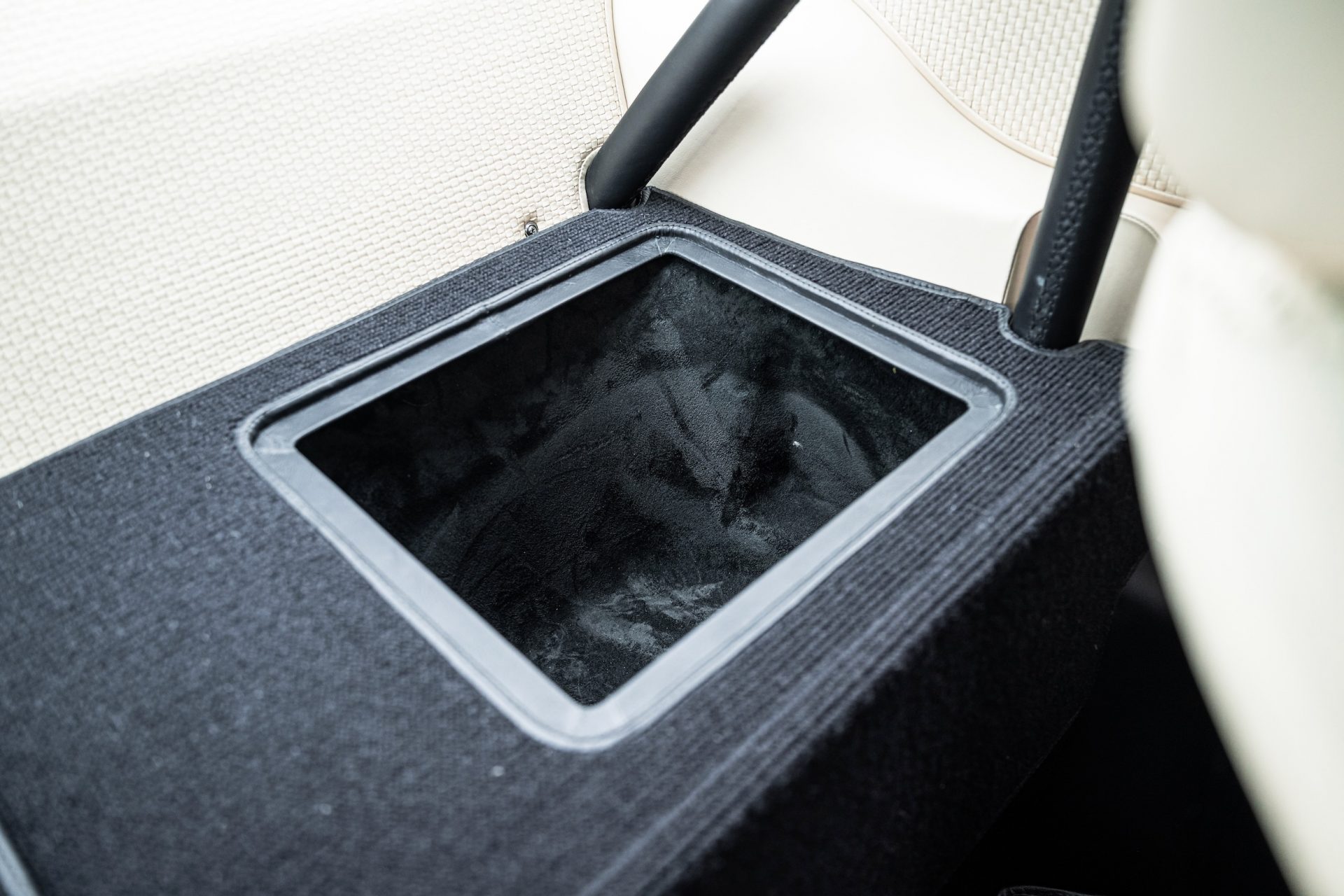
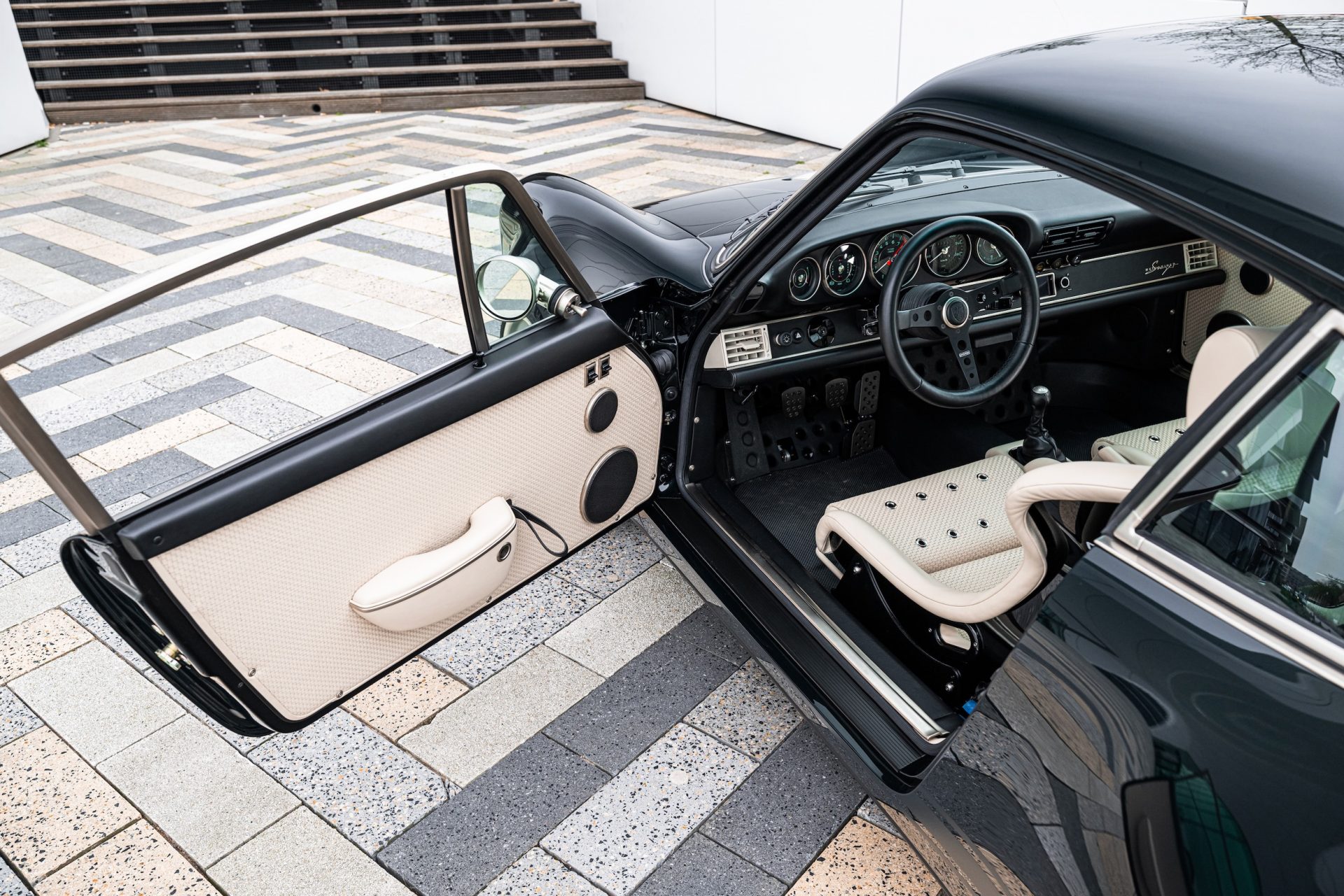
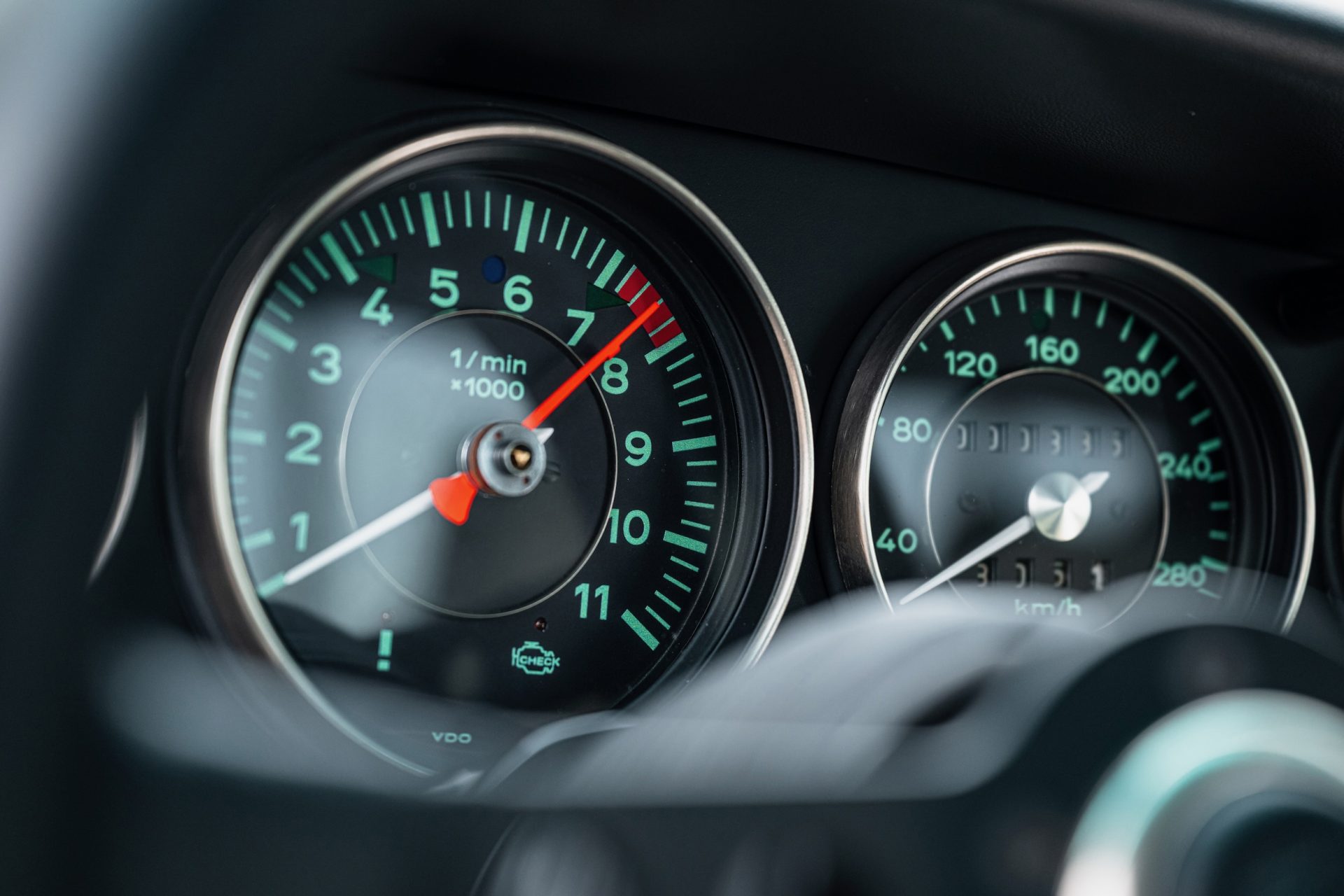
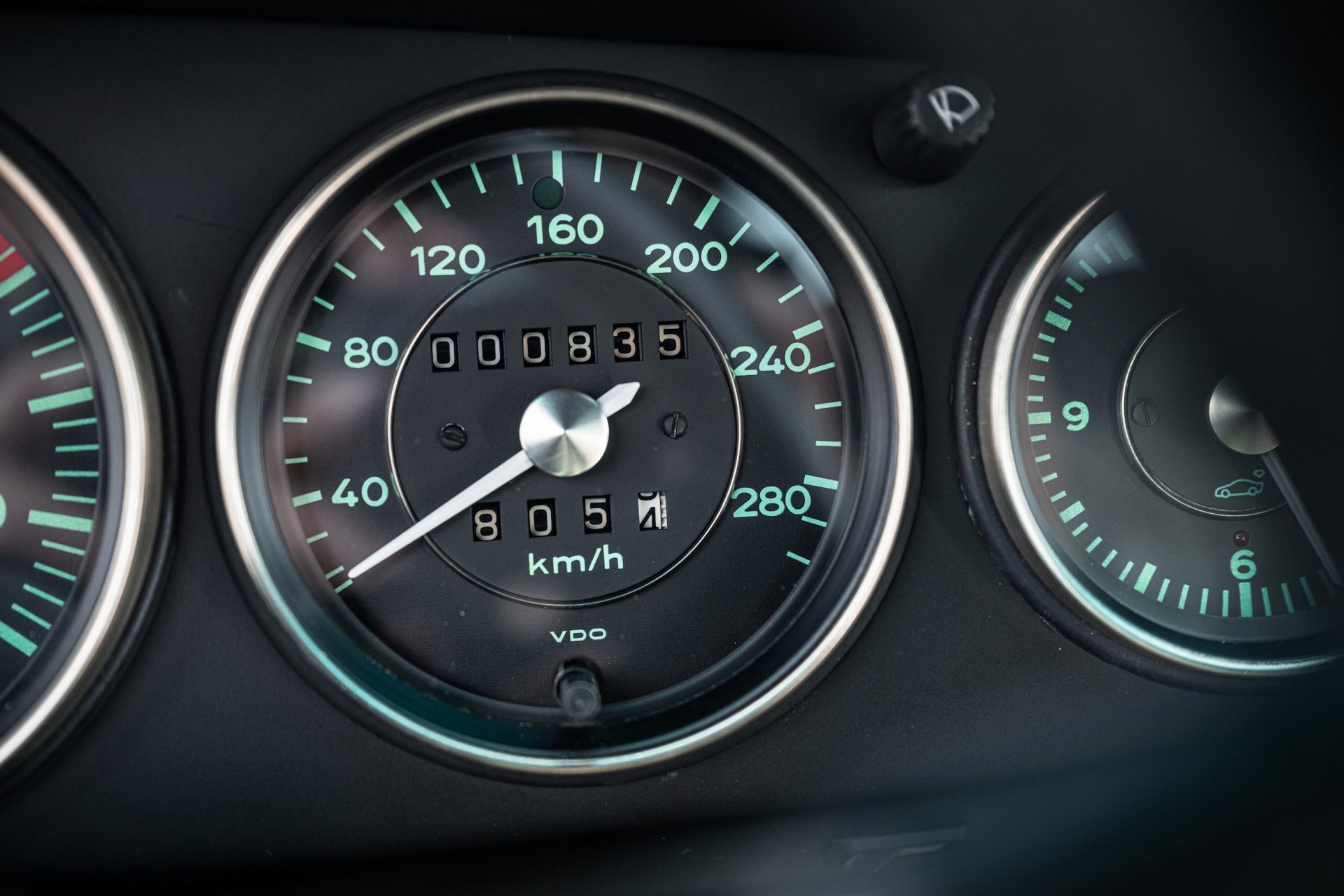
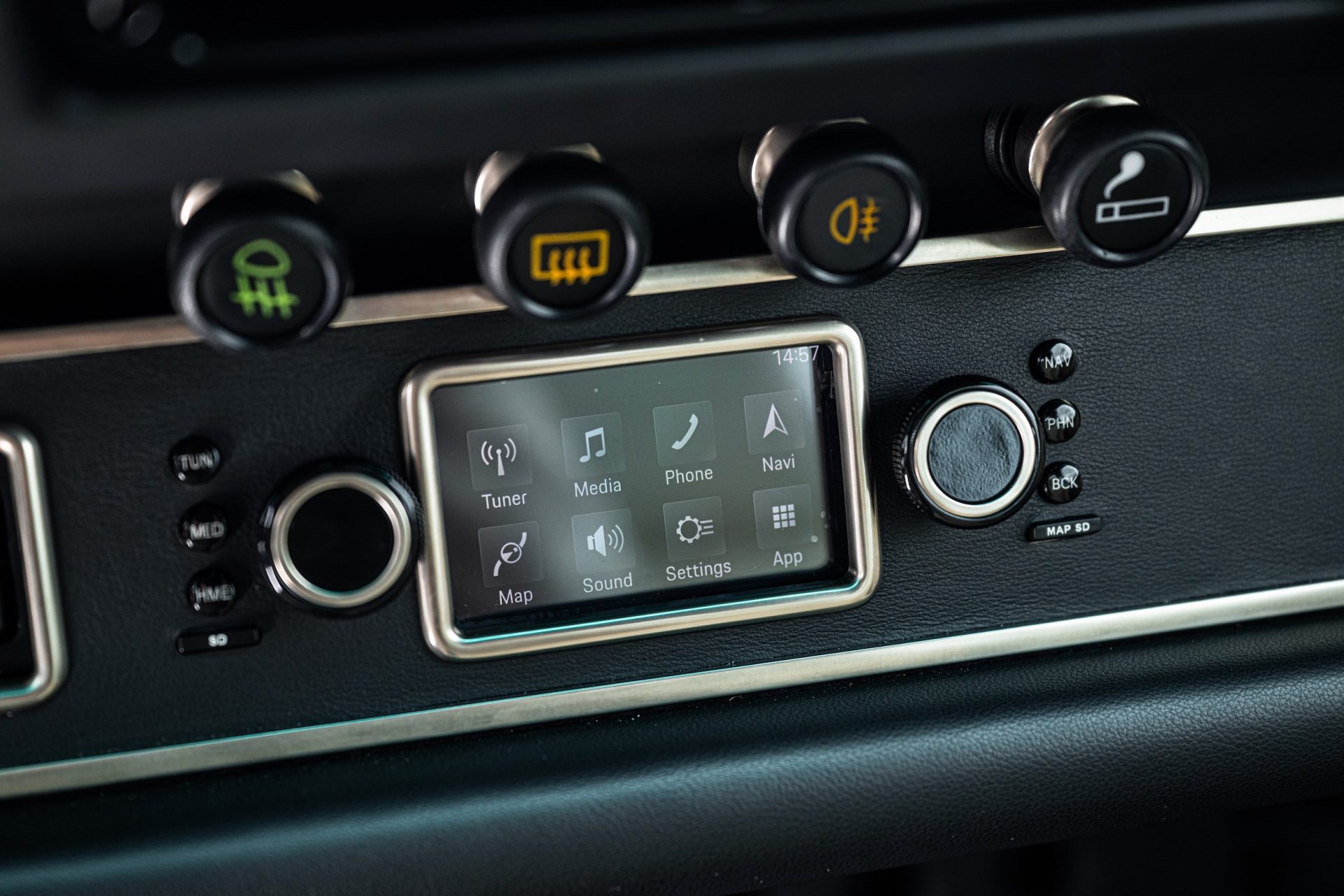
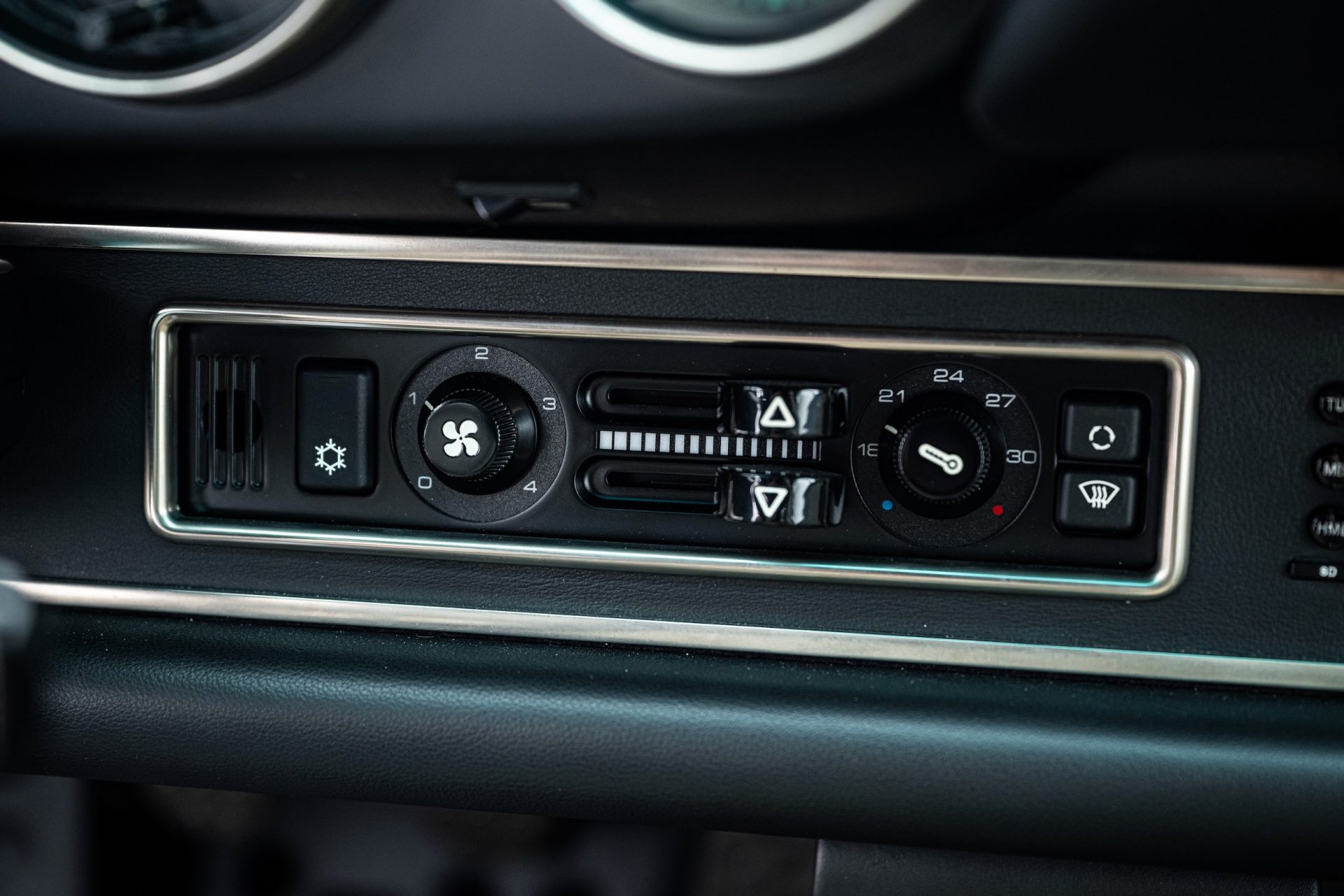
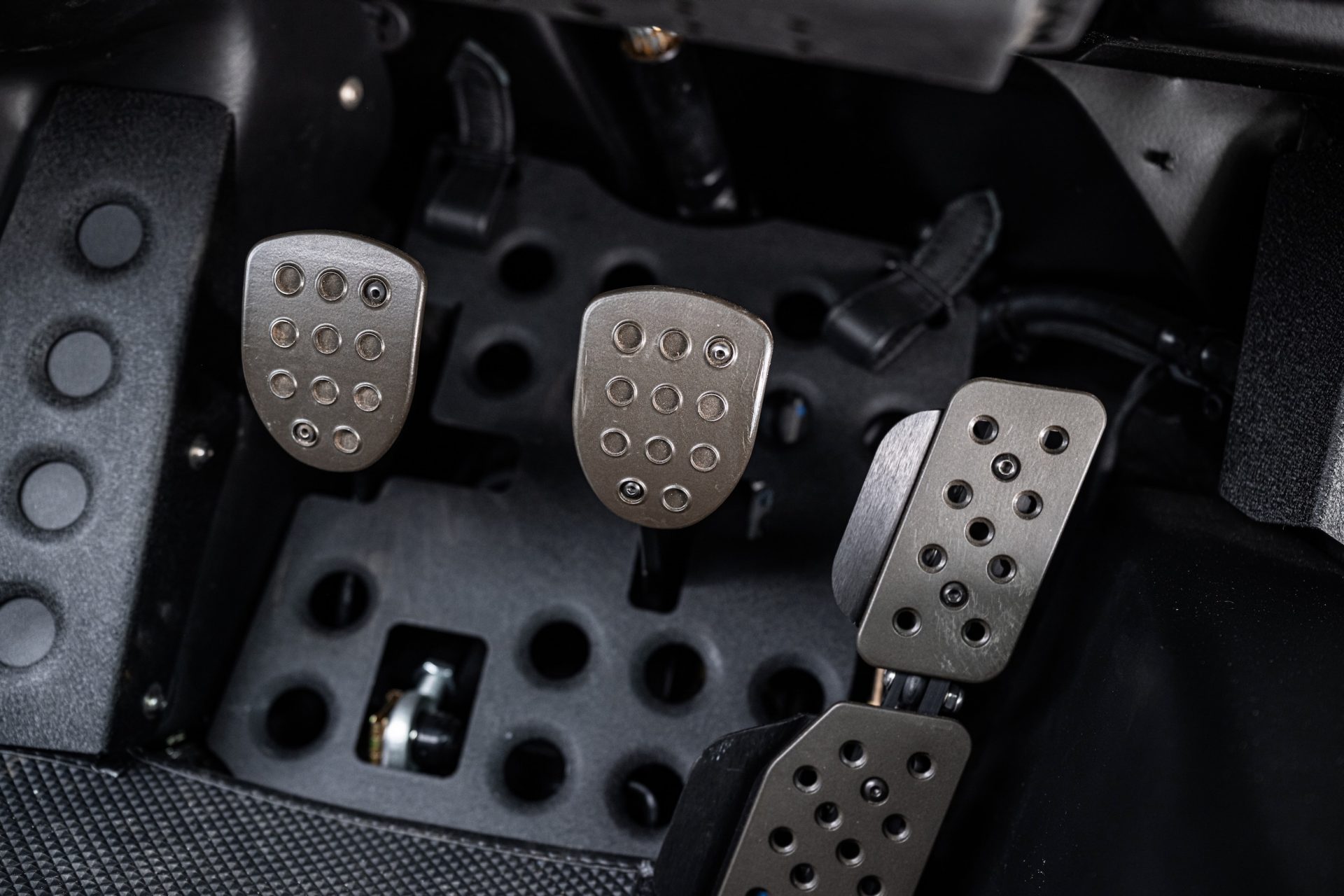
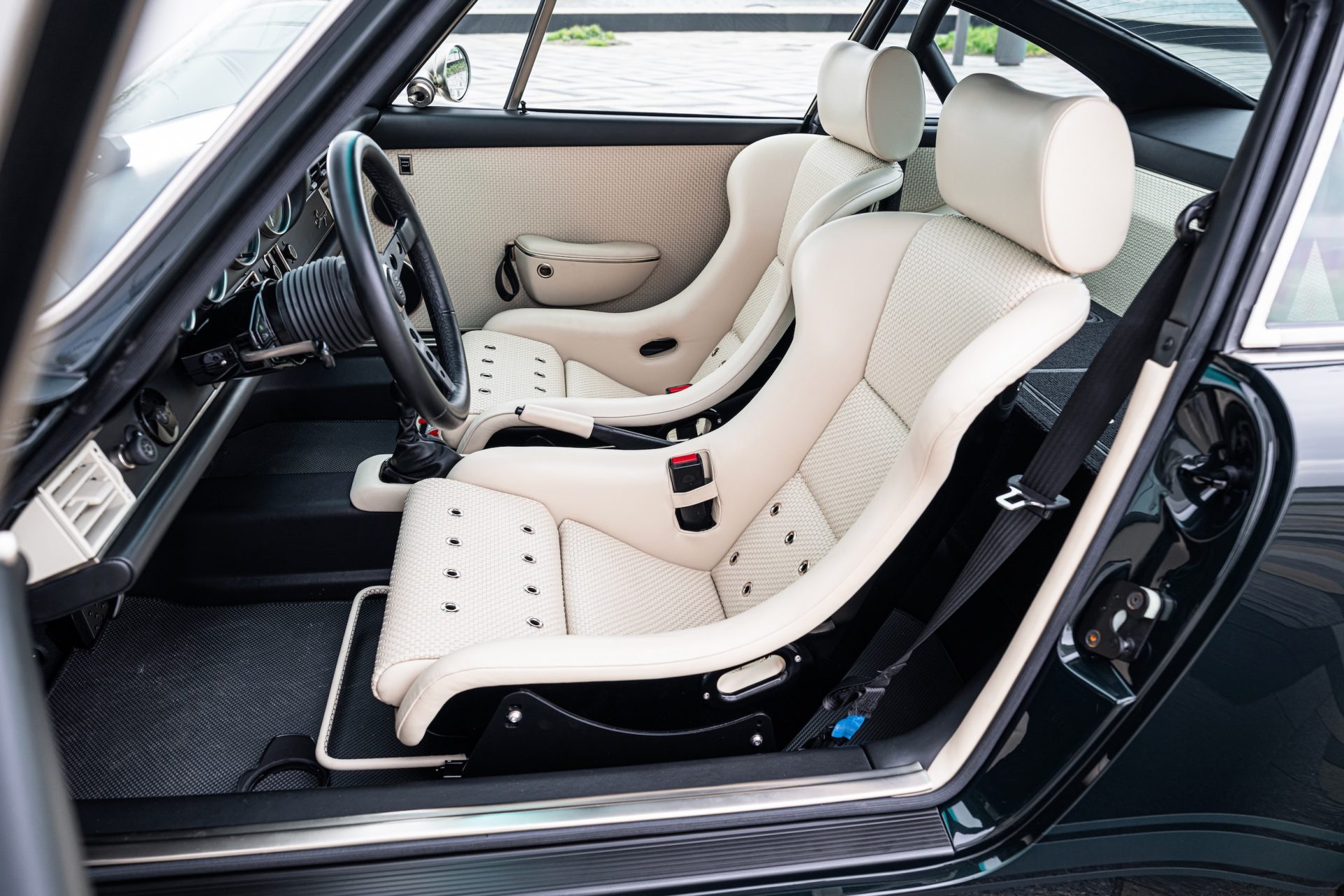

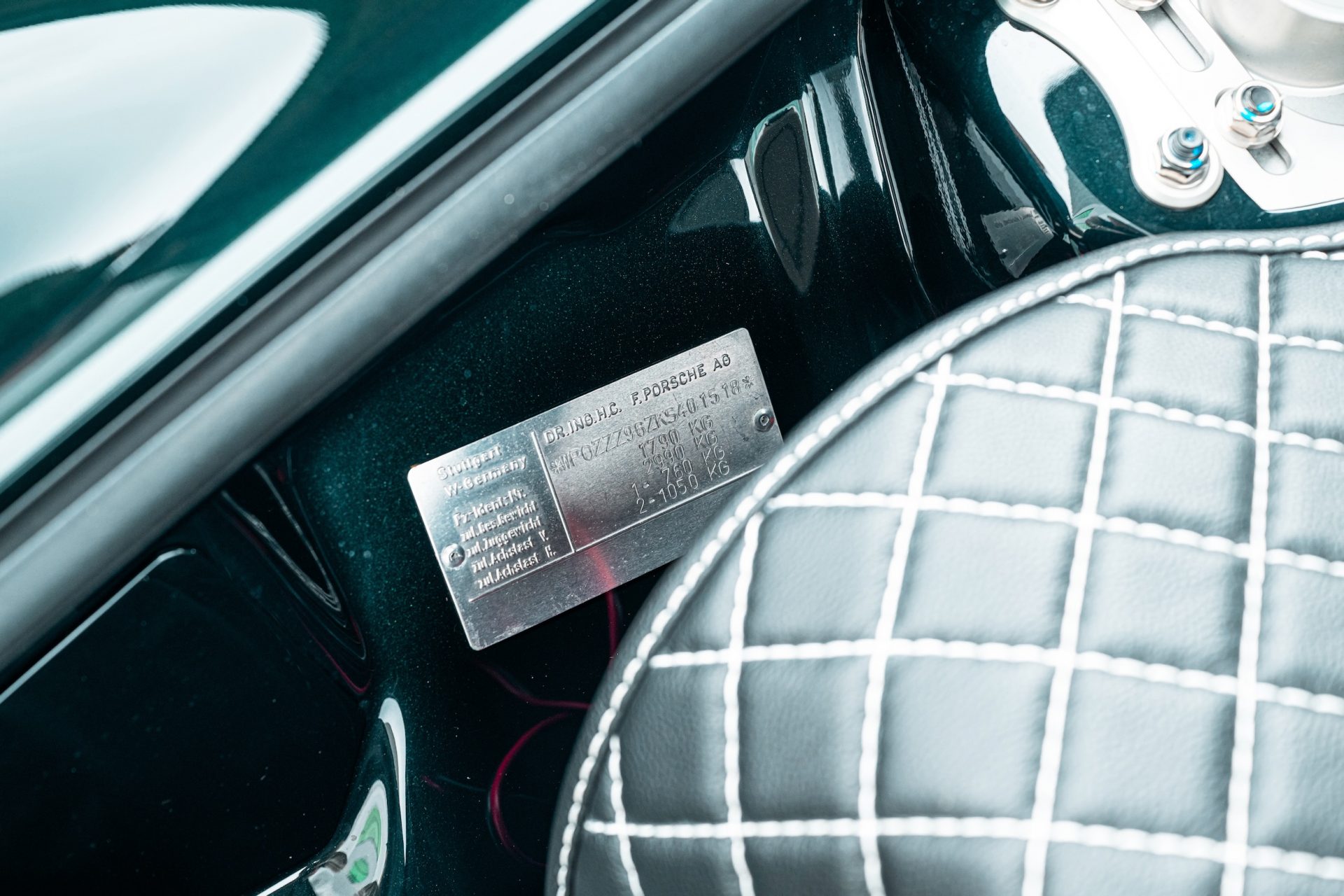
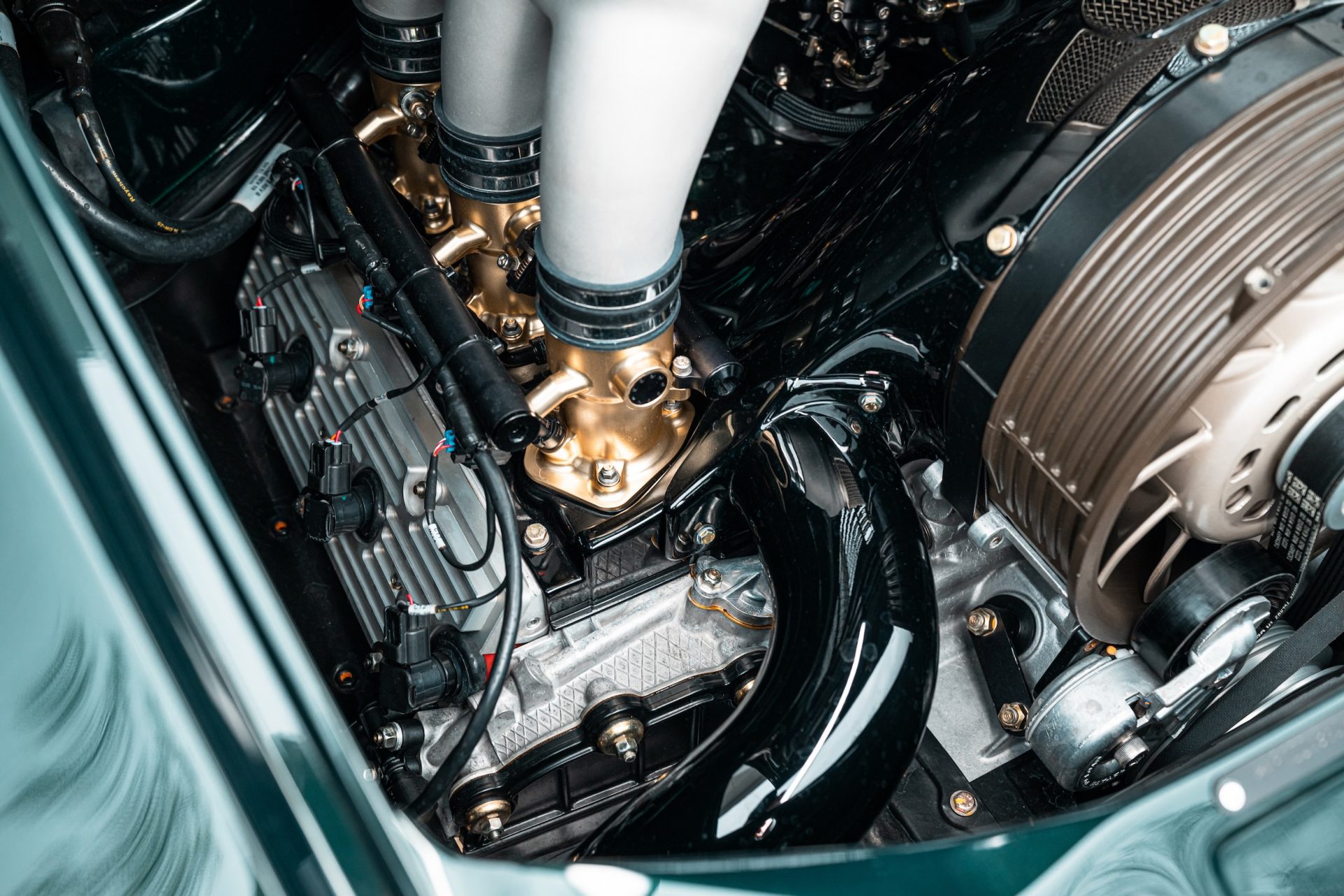

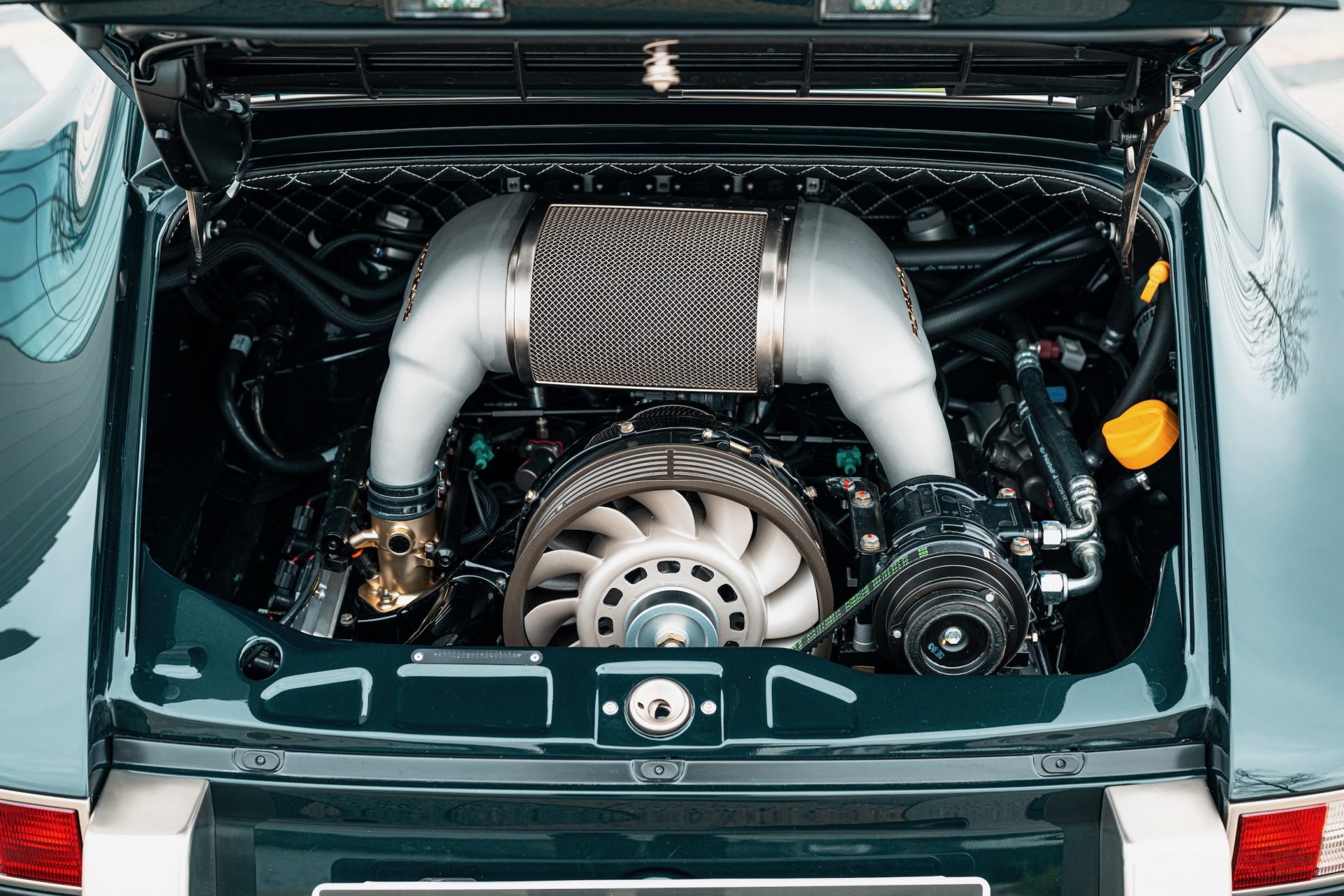
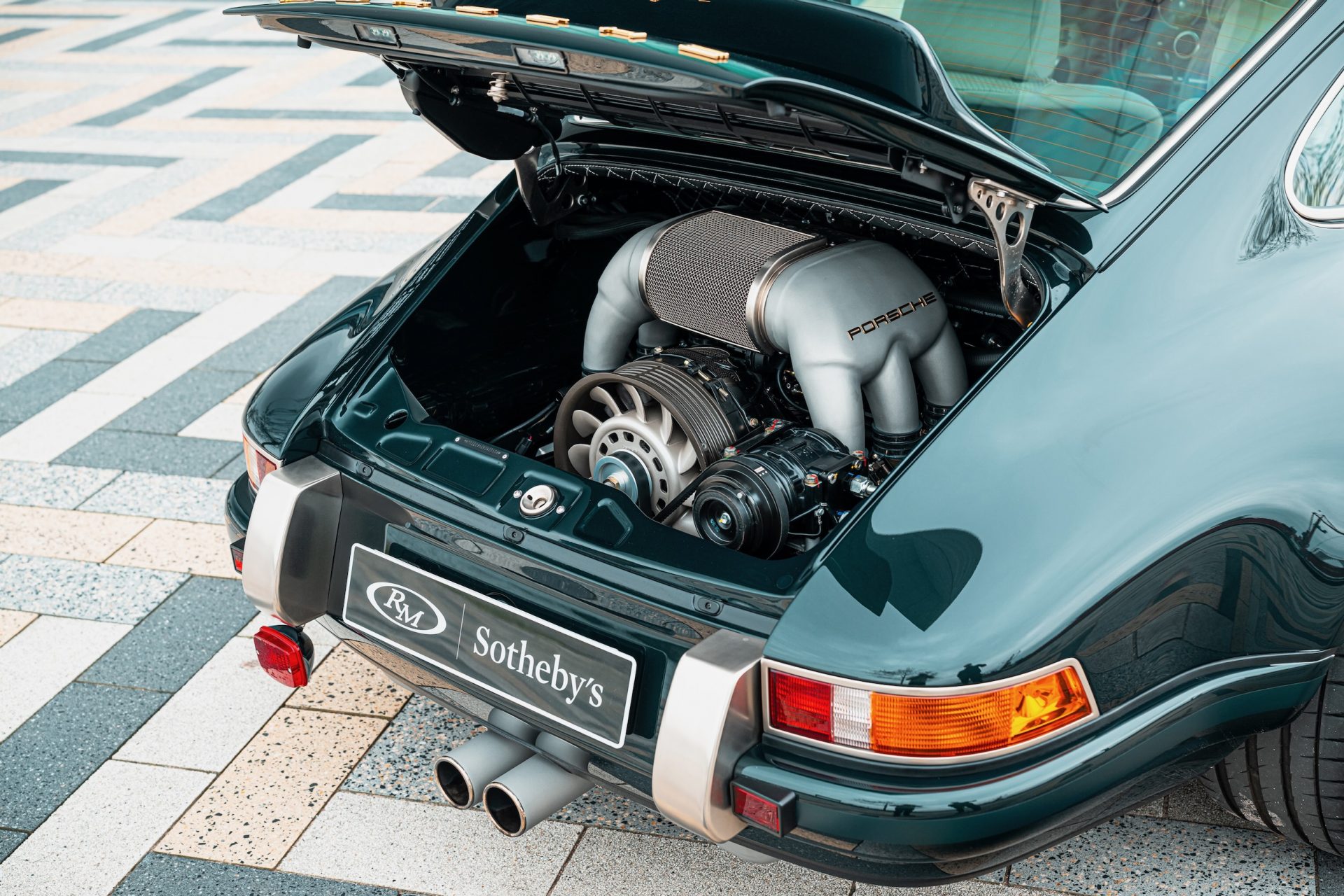

Angeboten über Private Sales bei RM Sotheby’s (April 2026), Preis 1,15 Millionen Euro, mit diesen Angaben: «Avoiding the traditional route to choose a colour from Porsche’s back catalog, the Acel commission is finished in Verde Zeltweg paintwork, a shade more commonly associated with Porsche’s arch rivals from Maranello. Protected by full-car paint protection film, the car also boasts ghosted Porsche lettering along both sides. At the rear, both the Porsche and Singer logos are finished in 24 carat gold, with nickel bumperettes and brake calipers in champagne with no lettering for a vintage feel. Inside, the Acel commission is trimmed in cream “Zelder” leather interior with carbon bucket seats and weave inserts on both the door panels and seat centres with nickel seat grommets. In a nod to 911s of past, the car is fitted with the early 911 gauge set (with a Schleppzeiger Tell-Tale tachometer as a special wishes option), yet the car is also fitted with the Porsche Classic Navigation system, equipped with Apple CarPlay, an upgraded Audison amp, Dynaudio speakers, and subwoofer, offering a 21st century infotainment experience alongside classic looks. In addition to the aforementioned tachometer, a variety of non-standard, ‘special wish’ options were selected for the Acel commission, most notably a second set of Fuchs-style wheels and tyres, as well as an additional Momo Prototipo steering wheel. These are one-piece wheels with body-coloured centres and shod in Michelin Pilot Sport 4S tyres. In an effort to adequately protect the most touch-sensitive areas of the cabin, the dash strip, emergency brake handle, and door pulls have all be upholstered in black leather. Adding to the car’s practicality, the rear seats are fully deleted and replaced with special cubbies to offer some additional storage. Having been driven less than 1,000 kms since the completion of its reimagining by Singer Vehicle Design, the Acel commission is offered with a full Singer Vehicle Design warranty, having recently been inspected by the Differs Group, Singer’s authorized after sales service partner in the Netherlands, who found the car to be in excellent condition throughout.»
–
«Auburn», unterdessen «Lindsey», Chassis-Nummer WP0AB2965LS451080 (1990)


Auktion: Broad Arrow, Porsche Air/Water 2026, Schätzpreis 1 bis 1,3 Millionen Dollar, mit diesen Angaben: «First reimagined as the “Auburn Commission” in 2022, this subtle and elegant restoration in Light Ivory, a color from Singer’s Specially Formulated Collection, perhaps belies the complexity of the build. Just over $300,000 in additional extras were added inside and out on top of the primary restoration cost. The heart of any Porsche 911 restored through Singer’s Classic services is its naturally aspirated flat-six, and this example features the 4.0-liter powerplant with Big cams, fed by Champagne Velocity Stacks breathing through a Titanium Muffler System. Coupled with a rare all-wheel-drive drivetrain and a six-speed manual transmission, performance is both thrilling and deeply engaging. True to Singer’s philosophy of prioritizing driving feel over outright figures, the car nevertheless accelerates to 60 mph in just 3.3 seconds, firmly within supercar territory. Additional top-shelf performance components include Brembo brake calipers with carbon ceramic rotors, a 2-Way Öhlins Sport Adjustable suspension with ‚Normal Road‘ tune, and Michelin tires. The cockpit of this restored Porsche 911 was specified with Cumin leather from the Classic Leather Collection with its vertical panels and inserts featuring a bespoke suede-mix weave—a trim style pioneered by Singer—in Cumin, Chocolate, with Mt. Blanc stripes. Seats by Recaro come in the form of optional Wide carbon fiber track seats with seat backs painted in Light Ivory. The body color also covers the lower interior panels that include the rear seat environment, tunnels, and sills. A Porsche Classic Navigation Radio with Apple CarPlay, paired with an upgraded Audison amplifier, Dynaudio speakers and subwoofer, stands ready when the wail of the 4.0-liter gives way to a different kind of soundtrack. The fantastic list of options selected—three pages long, in fact—is recorded in complete detail and available for review upon request. After Reimagining, the car was delivered to its first owner in Alabama, where a majority of its miles were added. Before trading hands, the Auburn Commission also supported Singer’s regional launch with Cornes Group in Japan, representing Classic services alongside other Porsche 911s reimagined through Singer’s services.
In 2025, the current owner and consignor glimpsed this restored Porsche 911 at an event in Las Vegas, later acquiring the car. It then became part of a growing trend of new owners who return their Reimagined 911 to Singer’s Los Angeles facility to be further recommissioned in the style of their choosing. In the case of the Auburn Commission, subtle changes were made from the original specification that included Bespoke ‚Dakar #2‘ exterior graphics and removal of the ‚Reimagined‘ decklid script along with the replacement of the Singer decklid script. On the inside, the floor material was changed to floorboards painted in Light Ivory, and the Cream-colored tachometer face was replaced to match the four other Black gauges. With the recommissioning complete, the vehicle was renamed the Lindsey Commission as a tribute to the consignor’s wife. Offered with only 1,499 miles since its original 2022 restoration, the Lindsey Commission is a beautifully executed and highly personalized example of Singer Vehicle Design’s Classic services applied to the Porsche 911—combining restrained elegance with formidable performance.»
–
«Palm Beach», Chassis-Nummer: WP0AB2963NS420185 (1992)
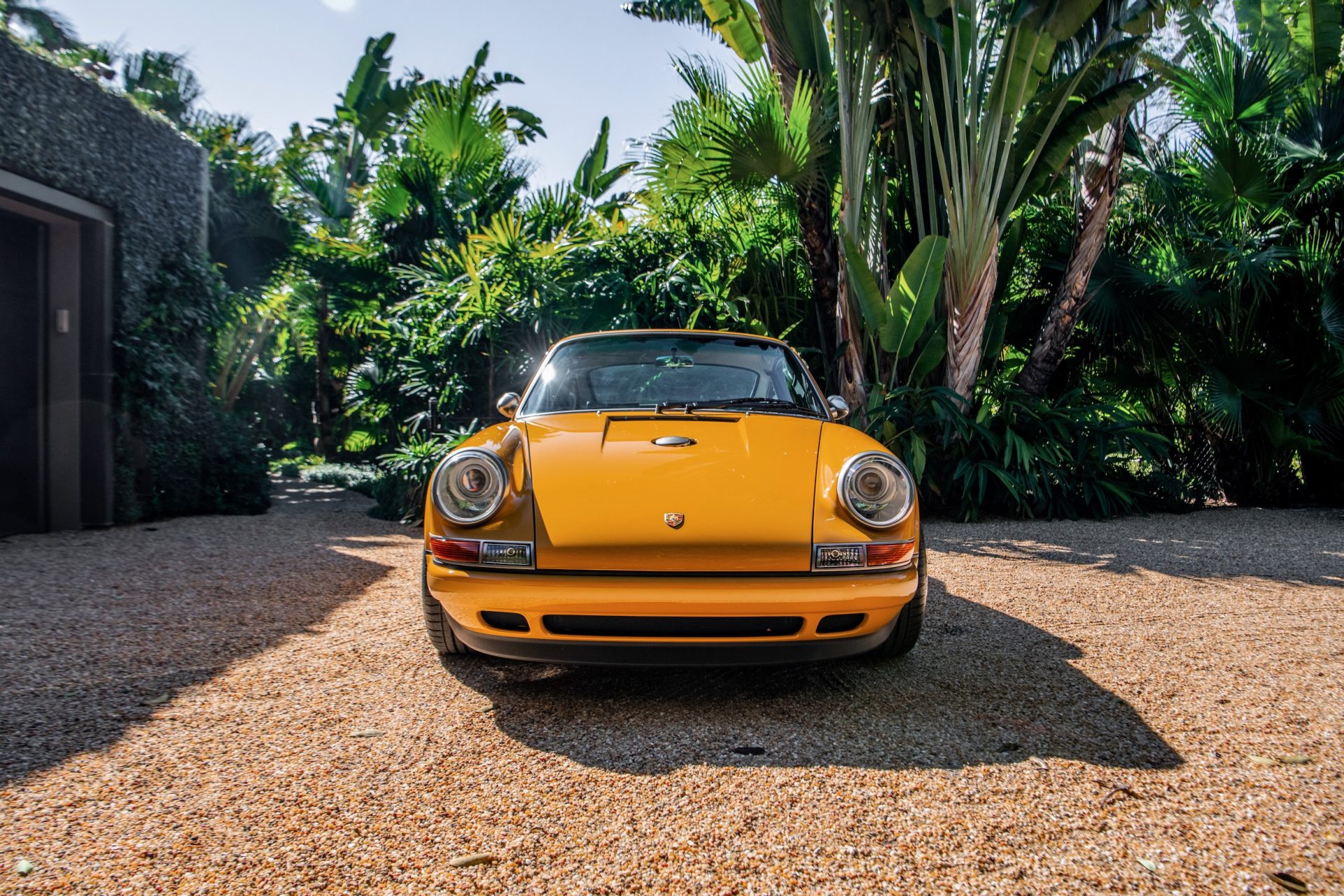

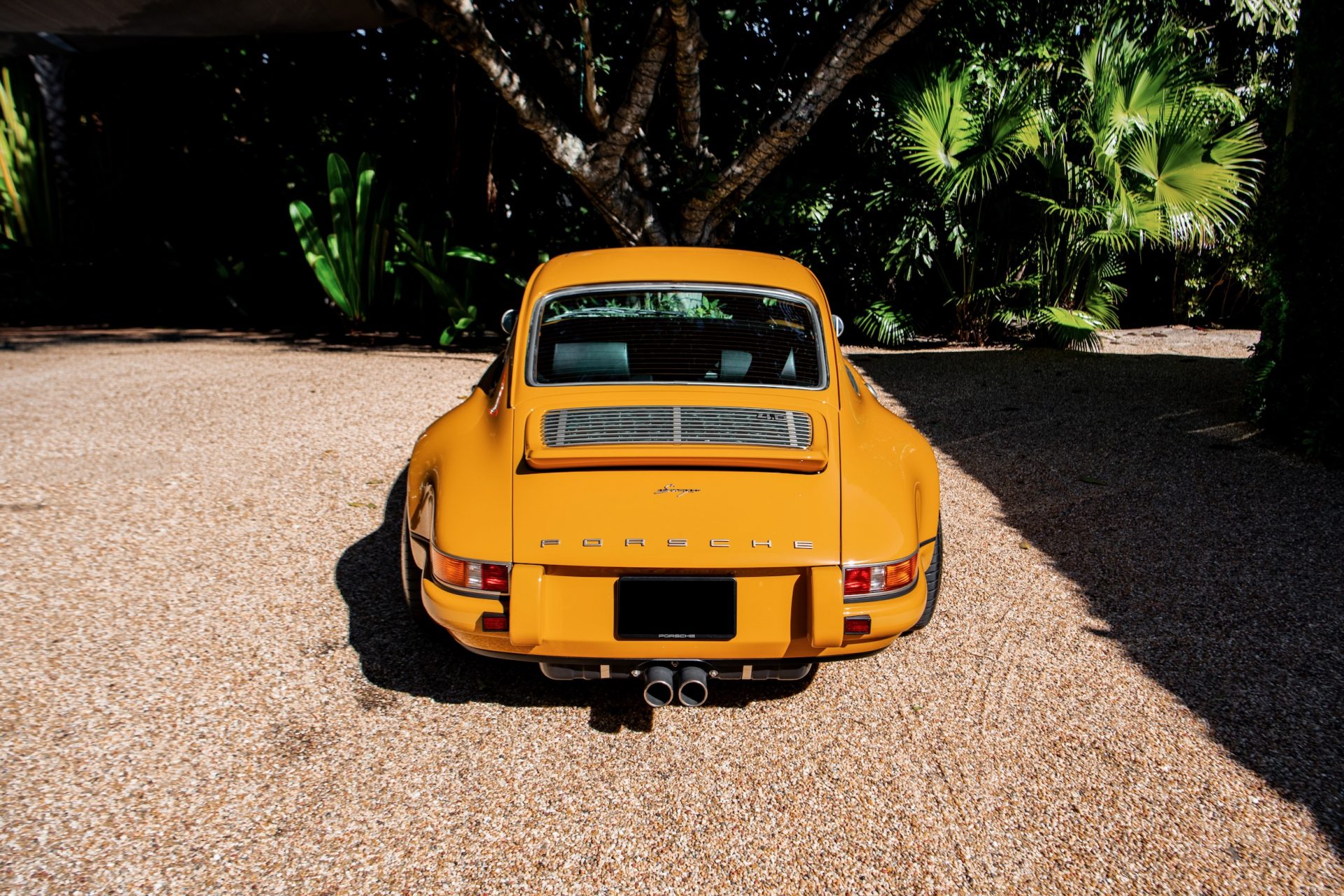
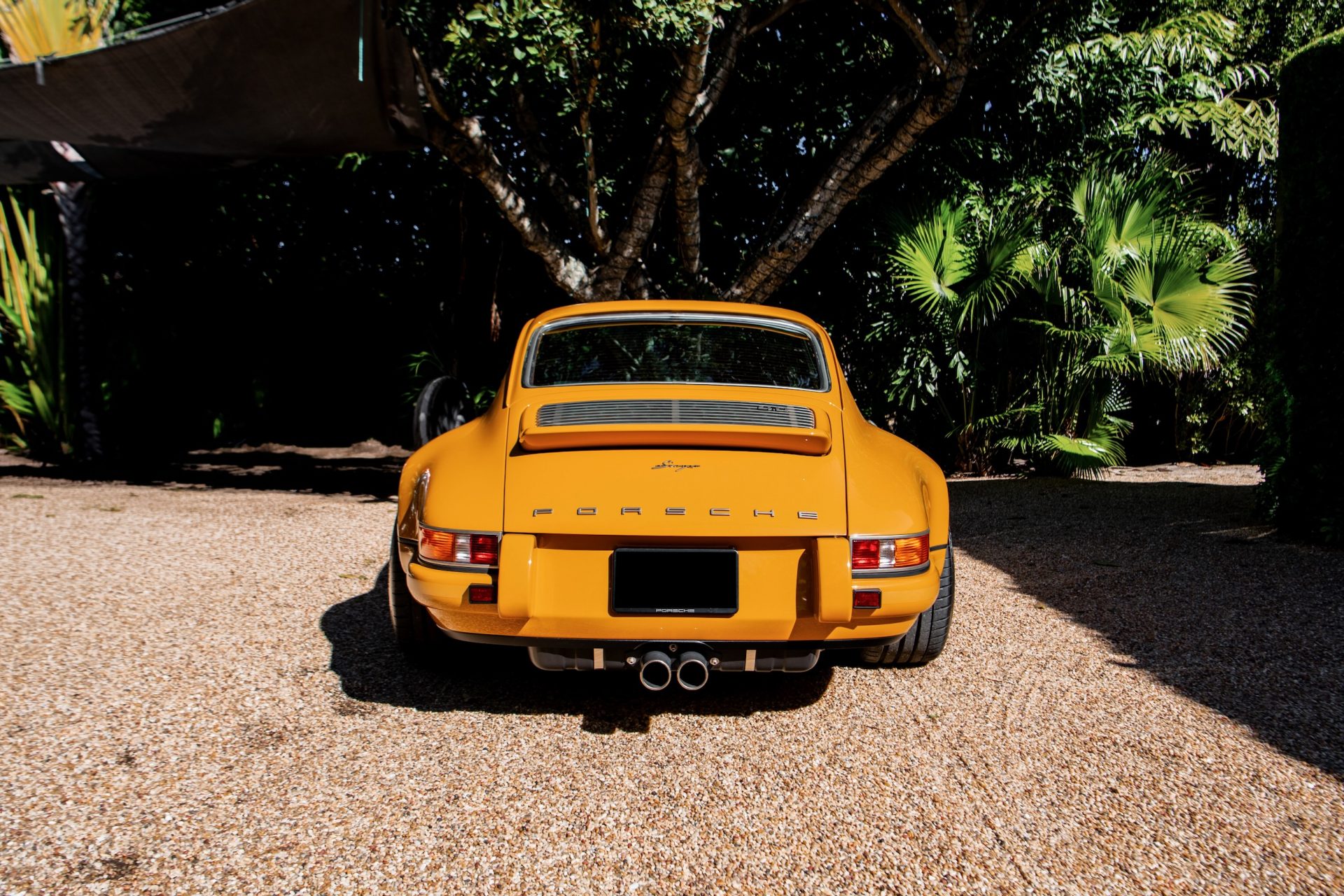


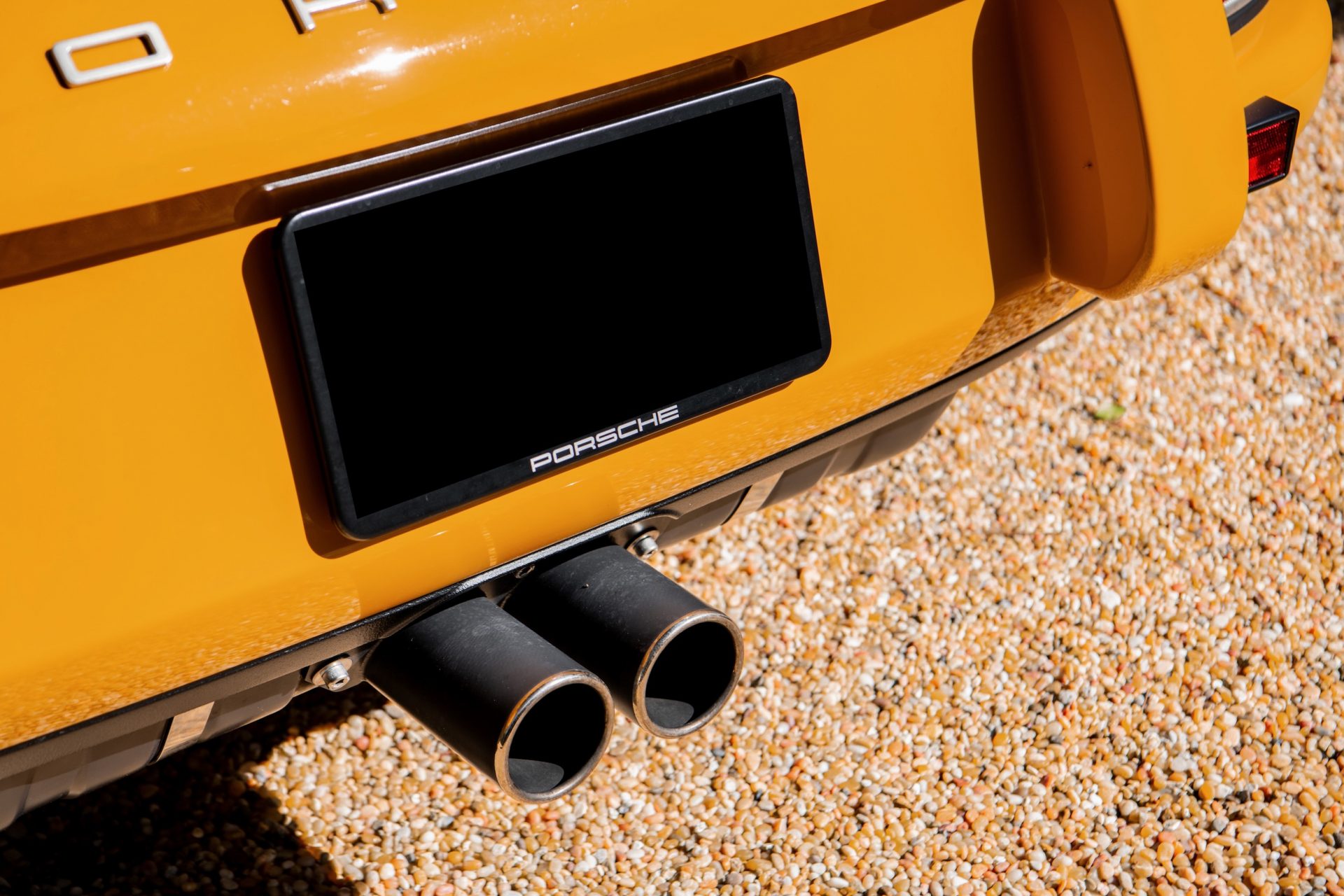


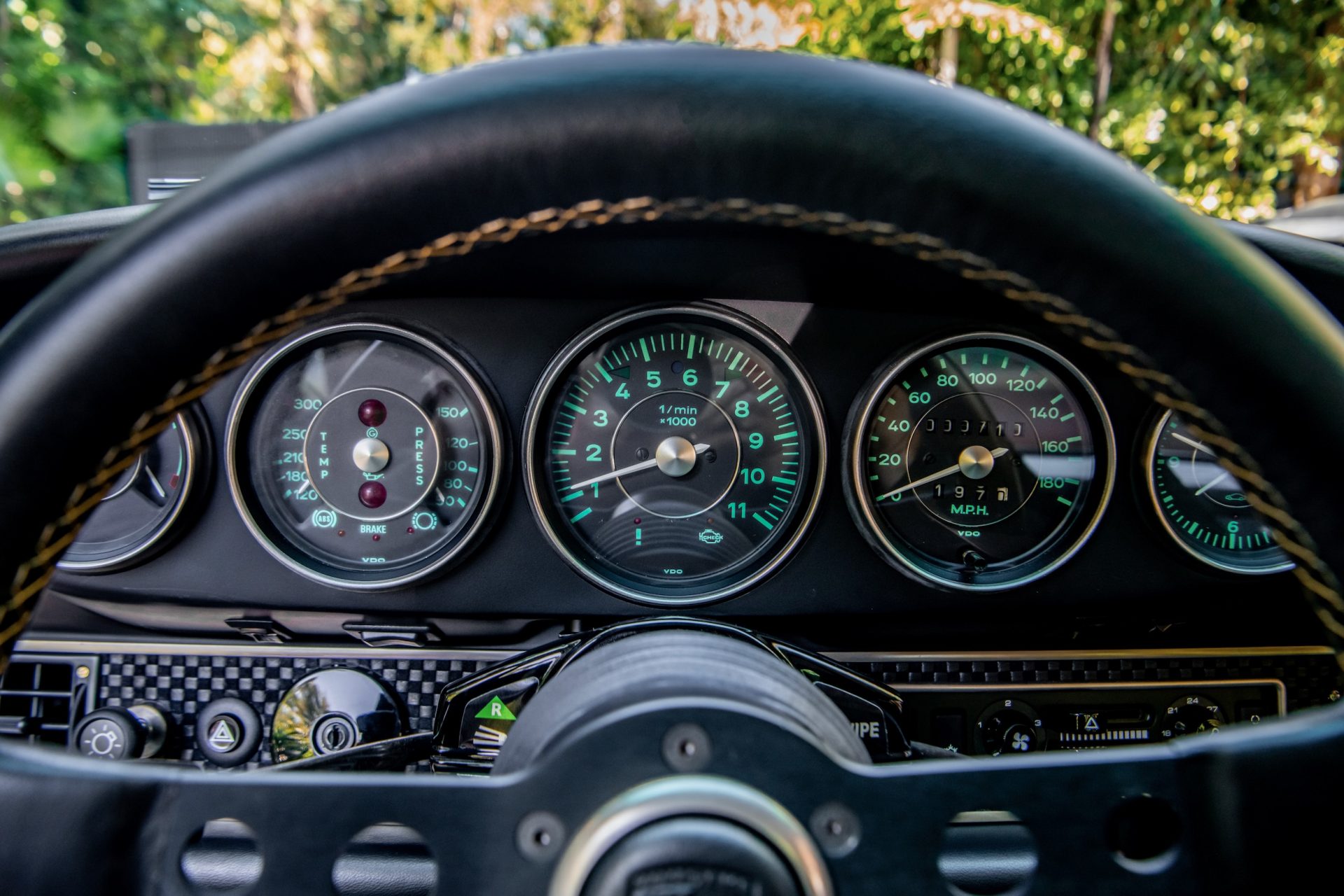
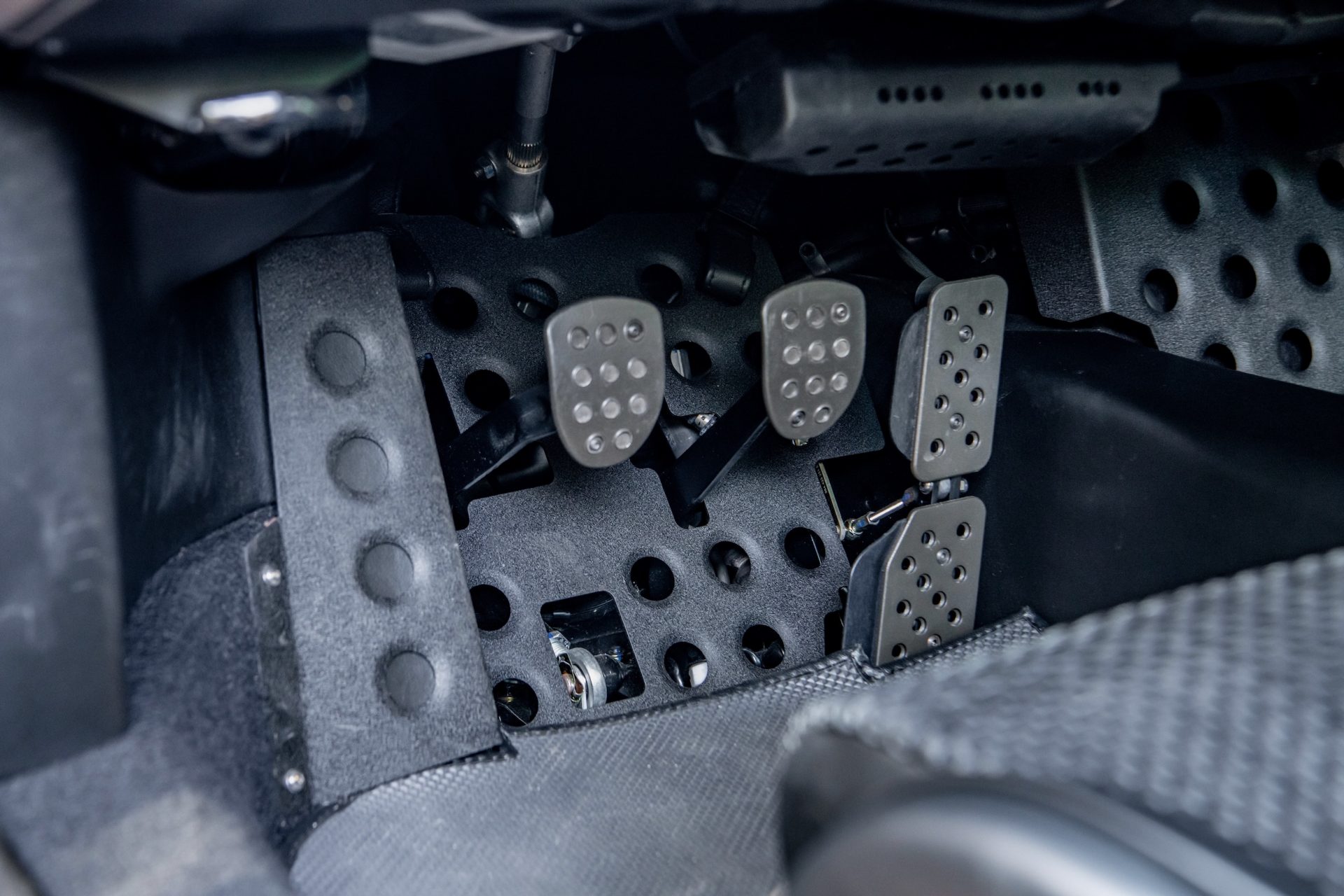

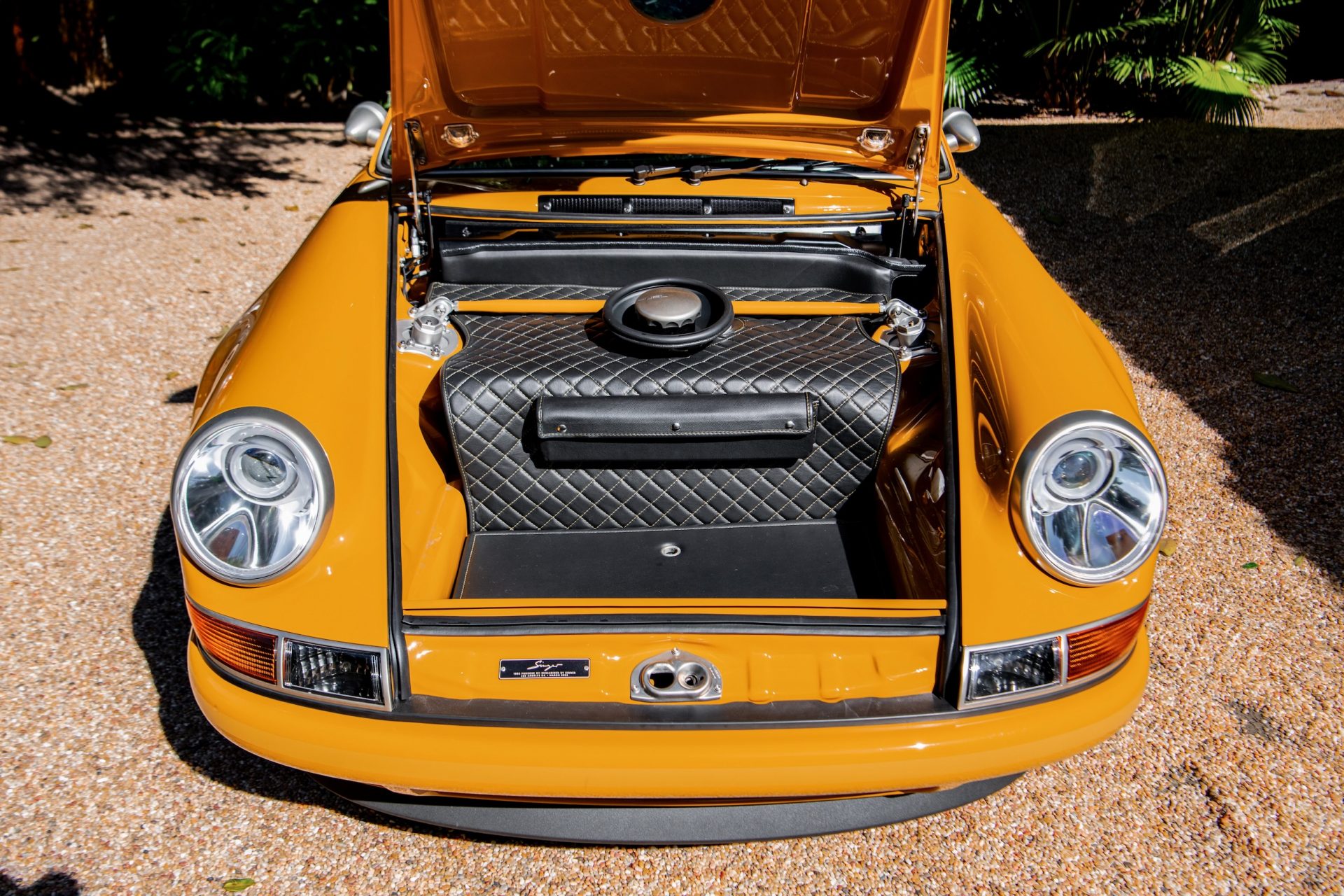
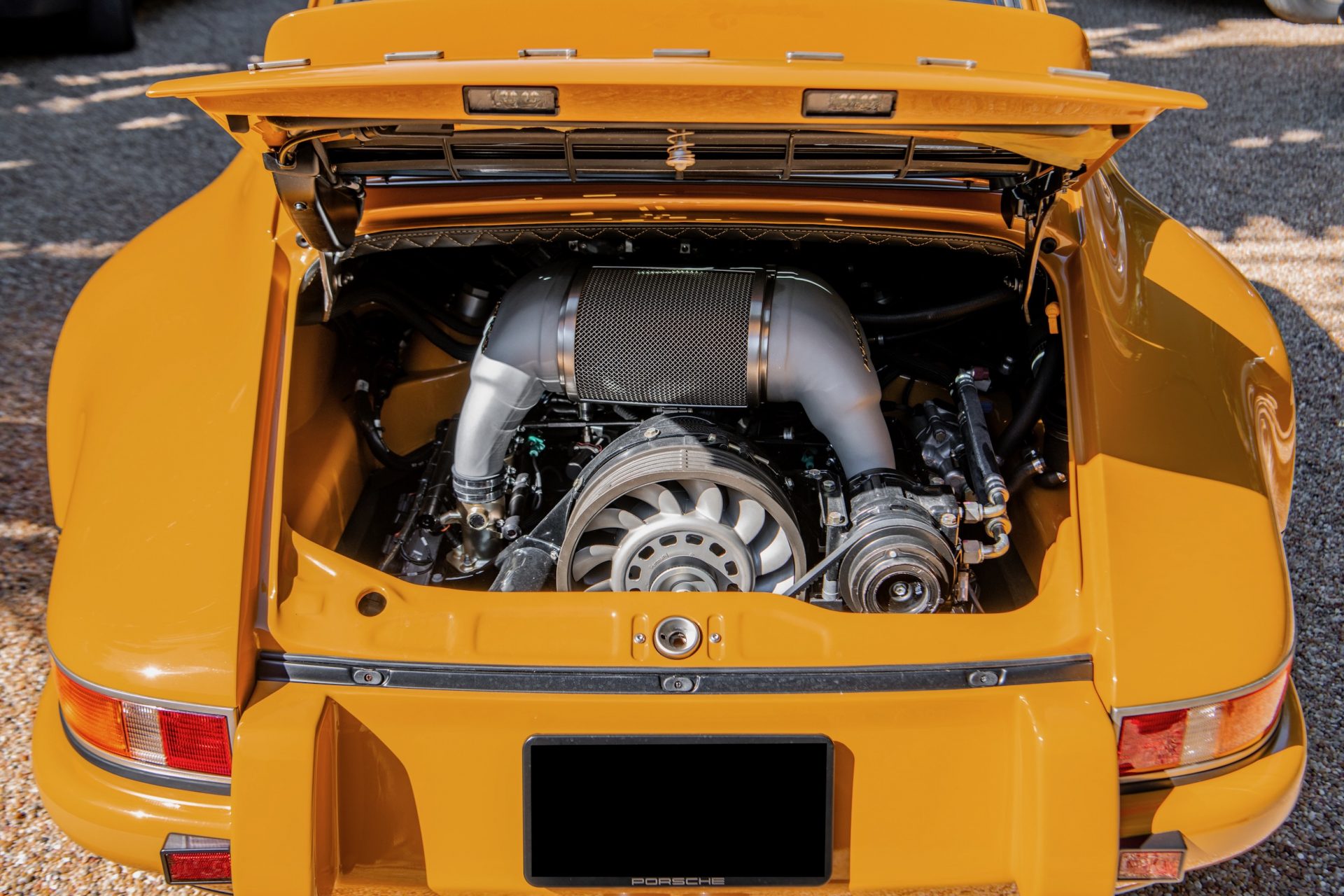


Auktion: RM Sotheby’s, Miami 2026, Schätzpreis 1 bis 1,2 Millionen Dollar, verkauft für 1,16 Millionen Dollar, mit diesen Angaben: «In 2021 the consignor began working with Singer to design their dream 911. A 1992 Porsche 911 C2 Sunroof Coupe served as the blank canvas for what would come to be referred to as the Palm Beach Commission, a nod to where the commissioning owner resides. Fully specified by the consignor, with build sheet on file, this example left the Singer factory finished in the brilliant shade of Bahama Yellow with Ghosted Light rocker stripes with Porsche script, accented beautifully by black painted Fuchs wheels with polished lips. Body colored calipers and bumperettes further tied things together, and the addition of quarter window integrated sideview mirrors, a center fuel filler, as well as an external oil filler give the 911 a wonderful, backdated look. The car is powered by a 4.0-liter flat six equipped with big cams, ceramic-finish plenum intake, black ceramic-coated exhaust system, high-flow cats, and featuring the standard MoTeC ECU tune. It is backed by a six-speed transmission. An Öhlins suspension ensures tires remain firmly on the road while a Supple Road tune affords a more comfortable ride. With all this power comes great stopping responsibility, which is provided by the Brembo big brake upgrade. The interior is tastefully trimmed in black leather, including the dash, knee-pad, and kick panels. Heavily bolstered Recaro four-way touring seats with headrests are also trimmed in black leather with suede-mix weave inserts and brass grommets. The seat insert pattern is carried into the door panels and lower dash. Rounding out the nicely appointed interior is a leather-wrapped Prototipo steering wheel with Bahama Yellow stitching, early 911-style instrumentation, including an 11,000-rpm tachometer (a subtle tribute to Spinal Tap), square-weave carpet with rubber overmats, and drilled footboards. It is further equipped with air conditioning and Classic Nav stereo with upgraded subwoofer. In total, options brought the price of this specification to $587,200. The car was completed in March of 2022 by Singer. Since delivery to its first and only owner since reimagining, the car had covered just 710 miles at time of cataloguing, reflecting an “as it left the factory” appearance throughout.
–
«Los Angeles», Chassis-Nummer: WP0AB2969LS450188 (1990)


Auktion: Bring A Trailer, Höchstgebot 911’000 Dollar, nicht verkauft. Mit diesen Informationen: «This 1990 Porsche Carrera 2 coupe was modified by Singer Vehicle Design in 2015 and spent time in Florida and Quebec before it was listed on BaT in October 2023. Finished in Namib Yellow over a custom Bone White leather interior, the “Los Angeles Commission” is powered by an Ed Pink-built 4.0-liter flat-six that drives the rear wheels via a close-ratio six-speed manual transaxle with a limited-slip differential. Additional features include carbon-fiber body panels, individual throttle bodies, Öhlins adjustable shock absorbers, Brembo cross-drilled and ventilated disc brakes with red calipers, staggered-width 17” Fuchs-style forged aluminum wheels, four-way adjustable Recaro sport seats, air conditioning, and power windows. Work in August 2025 is said to have included replacing the fuel cell and battery along with performing an oil change.»
–
«Austin», Chassis-Nummer: WP0AB2969LS450742


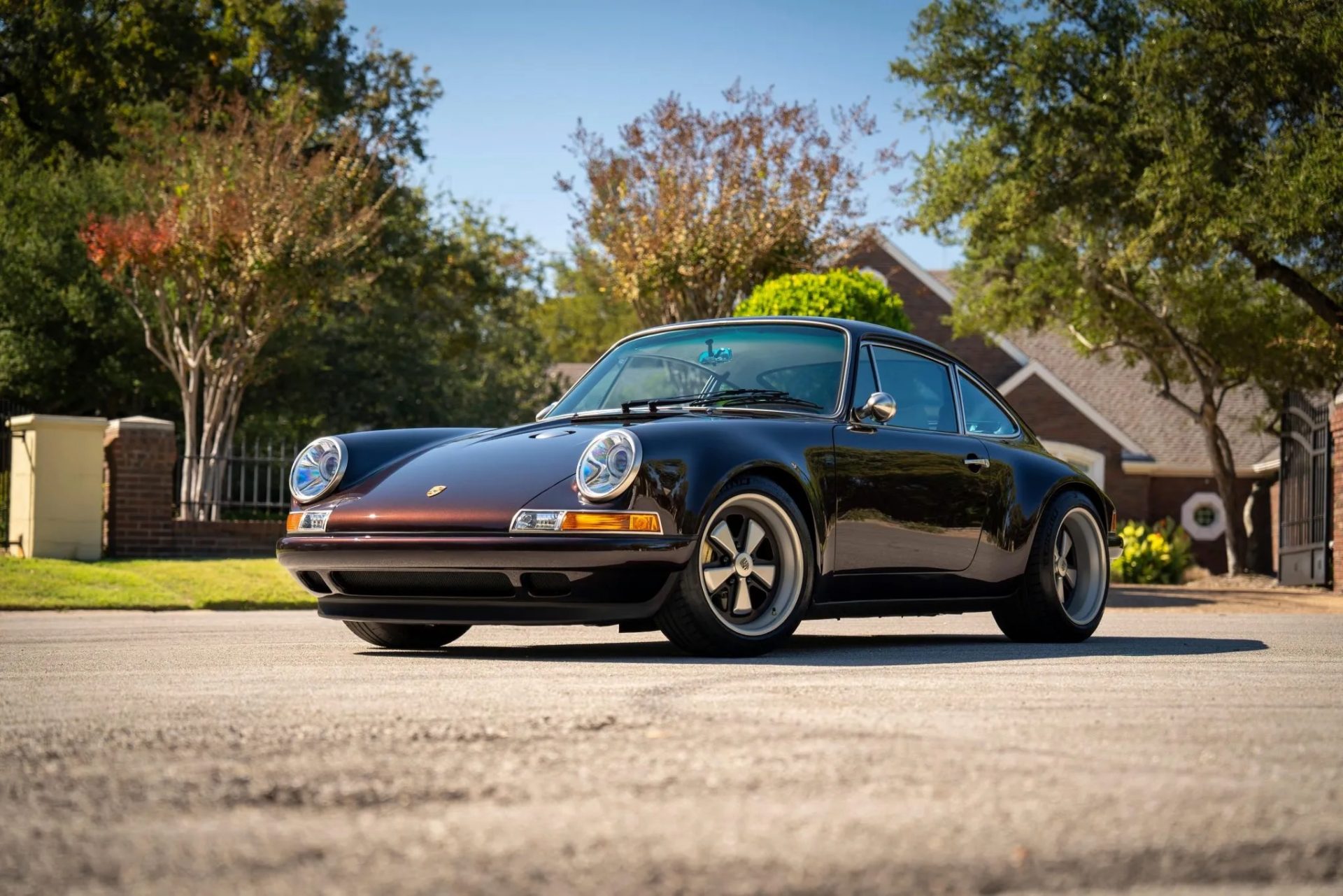

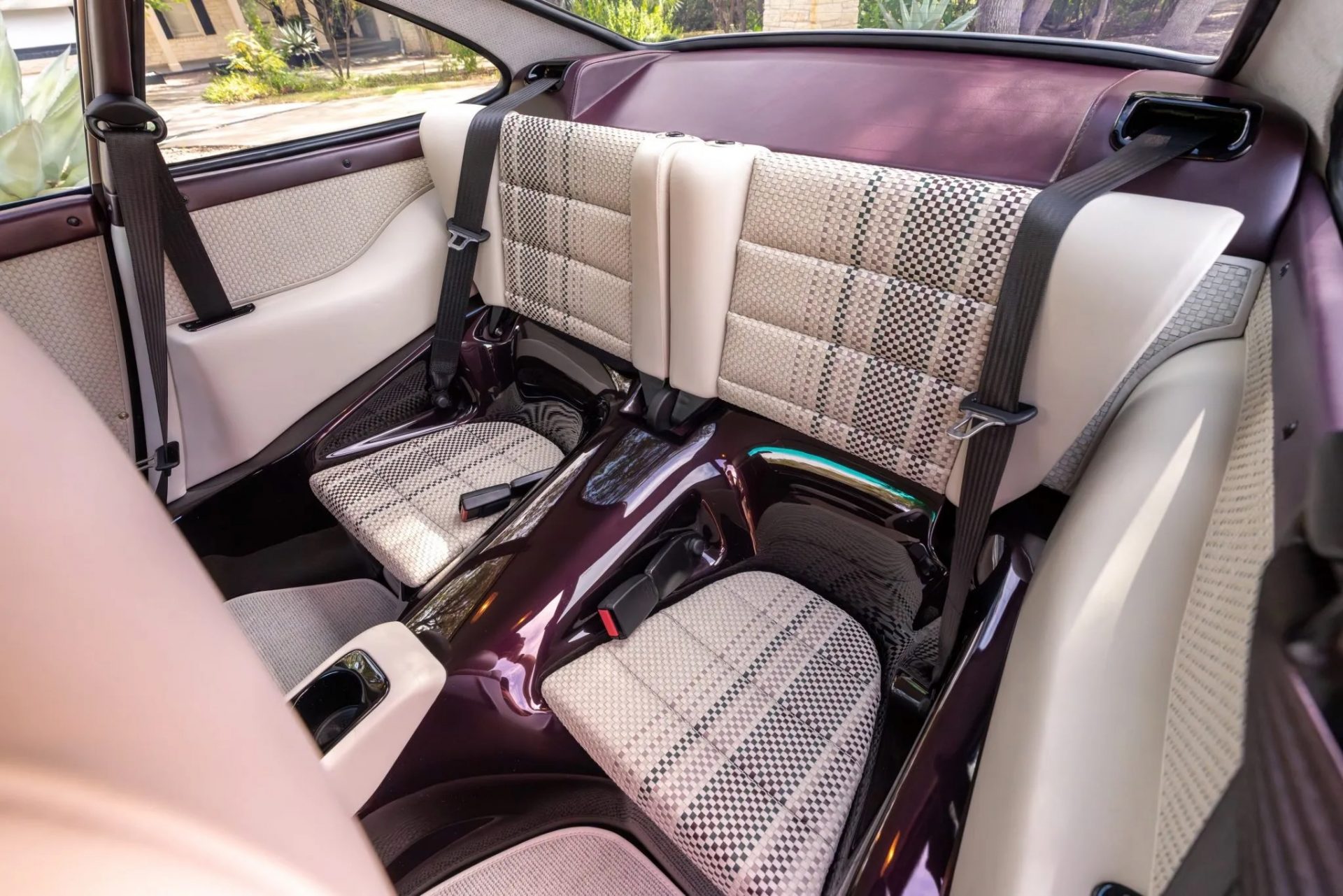

Auktion: Bring A Trailer, verkauft für 1,2 Millionen Dollar (November 2025), mit diesen Informationen: «This 1990 Porsche 911 Carrera coupe was modified by Singer Vehicle Design for its current owner, and the build was completed in March 2024. The “Austin” commission features carbon-fiber body panels finished in paint-to-sample Aubergine Metallic with nickel-plated brightwork.»
–
«Novato», Chassis-Nummer: WP0AB2964LS450387

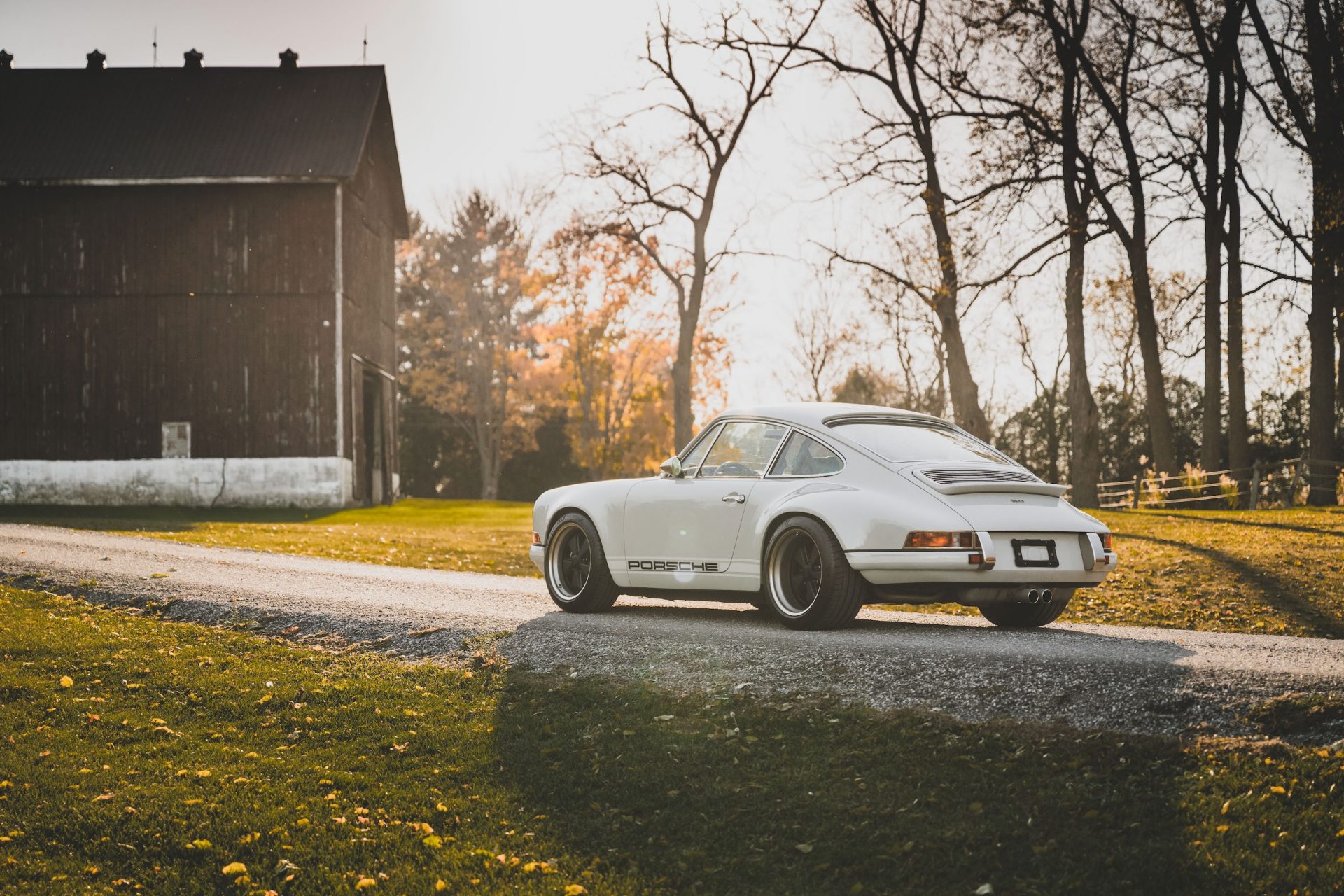


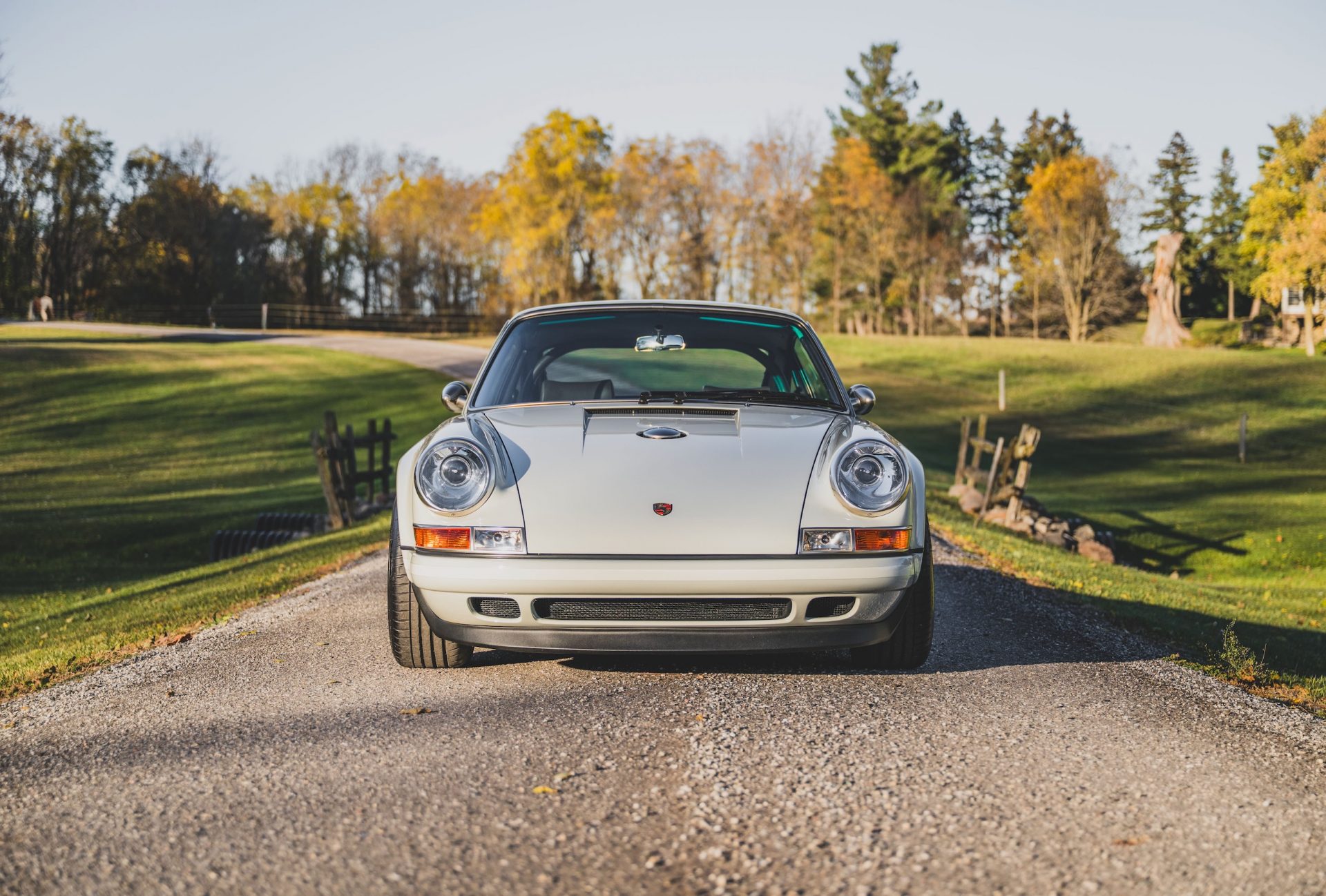

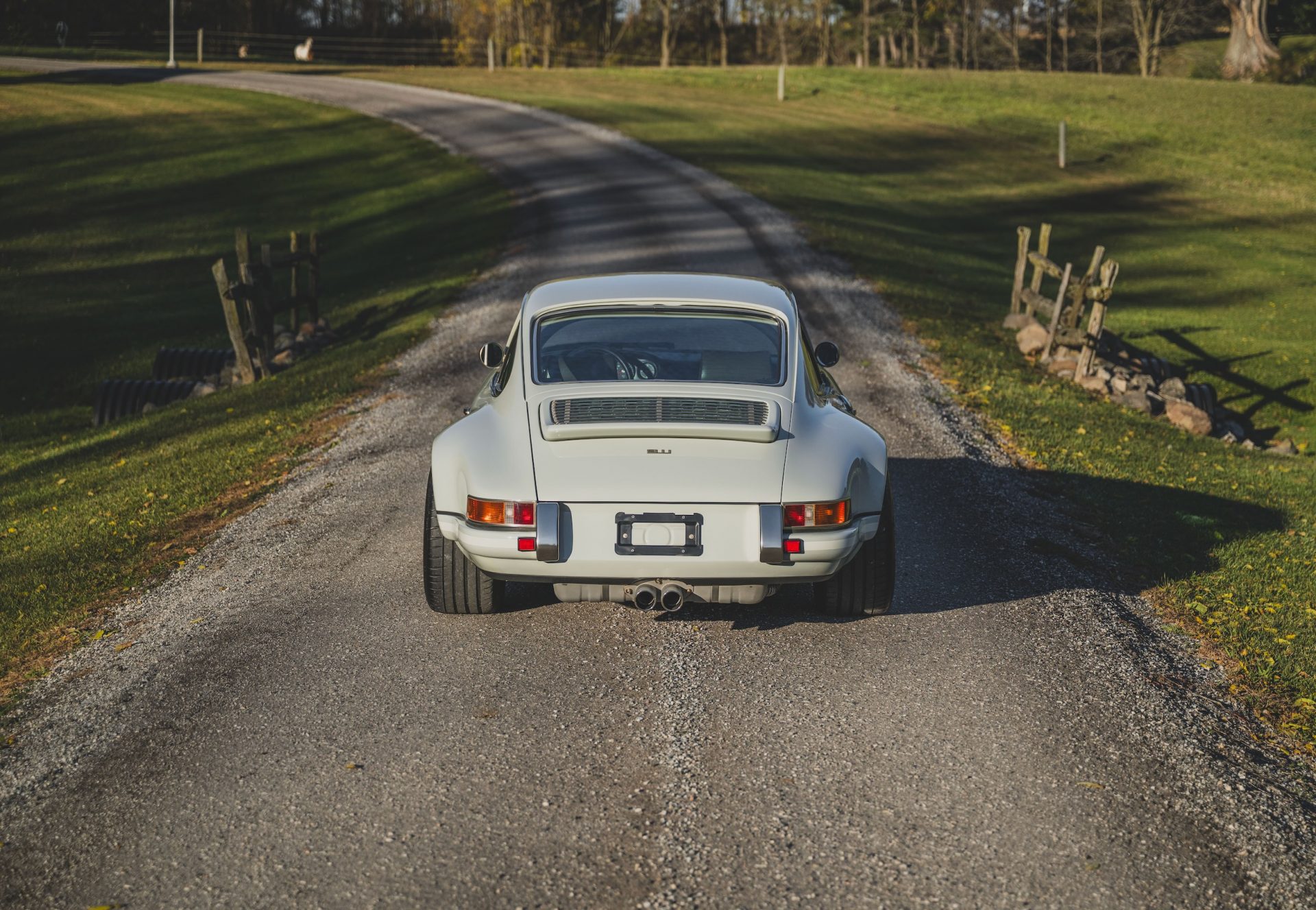


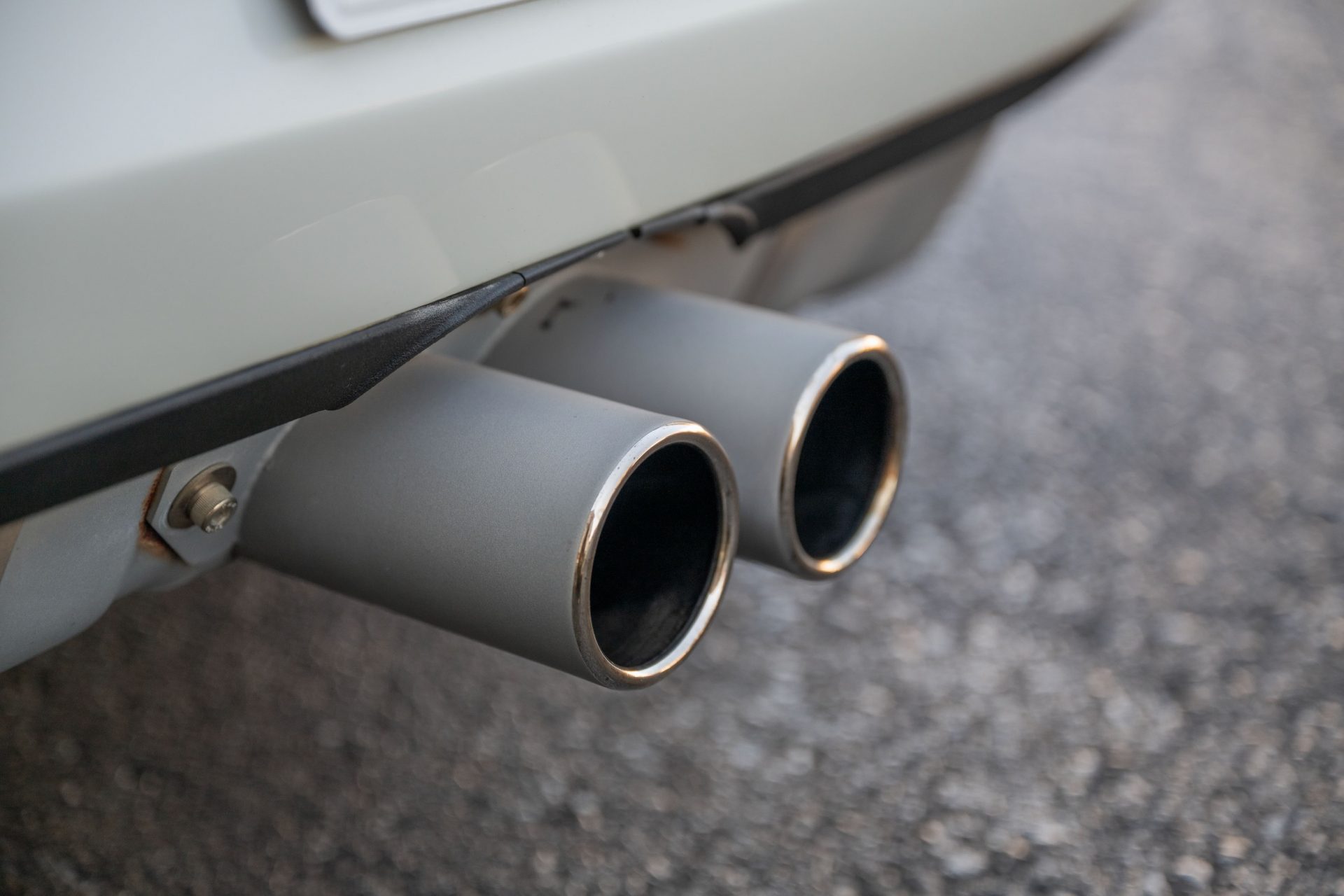
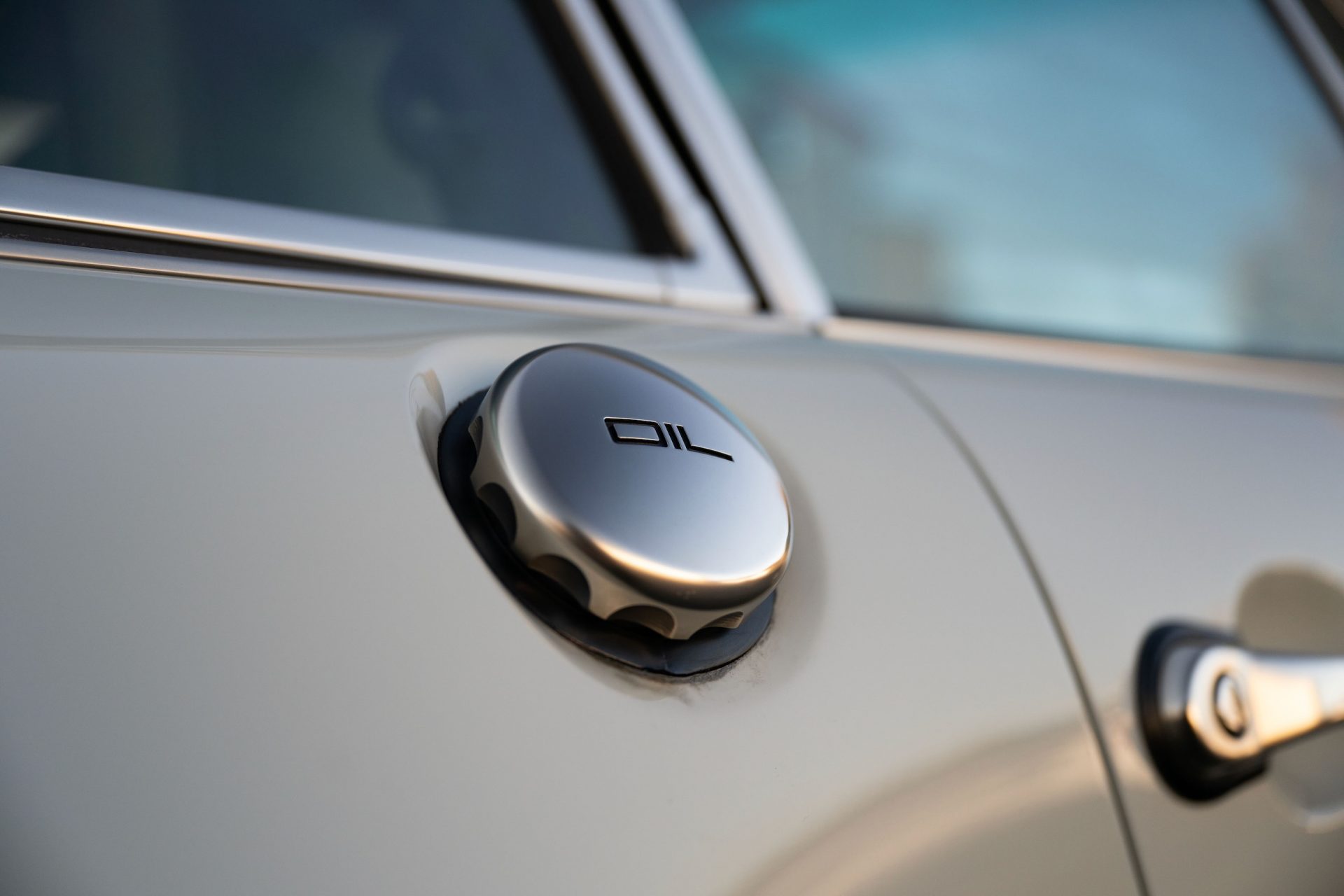

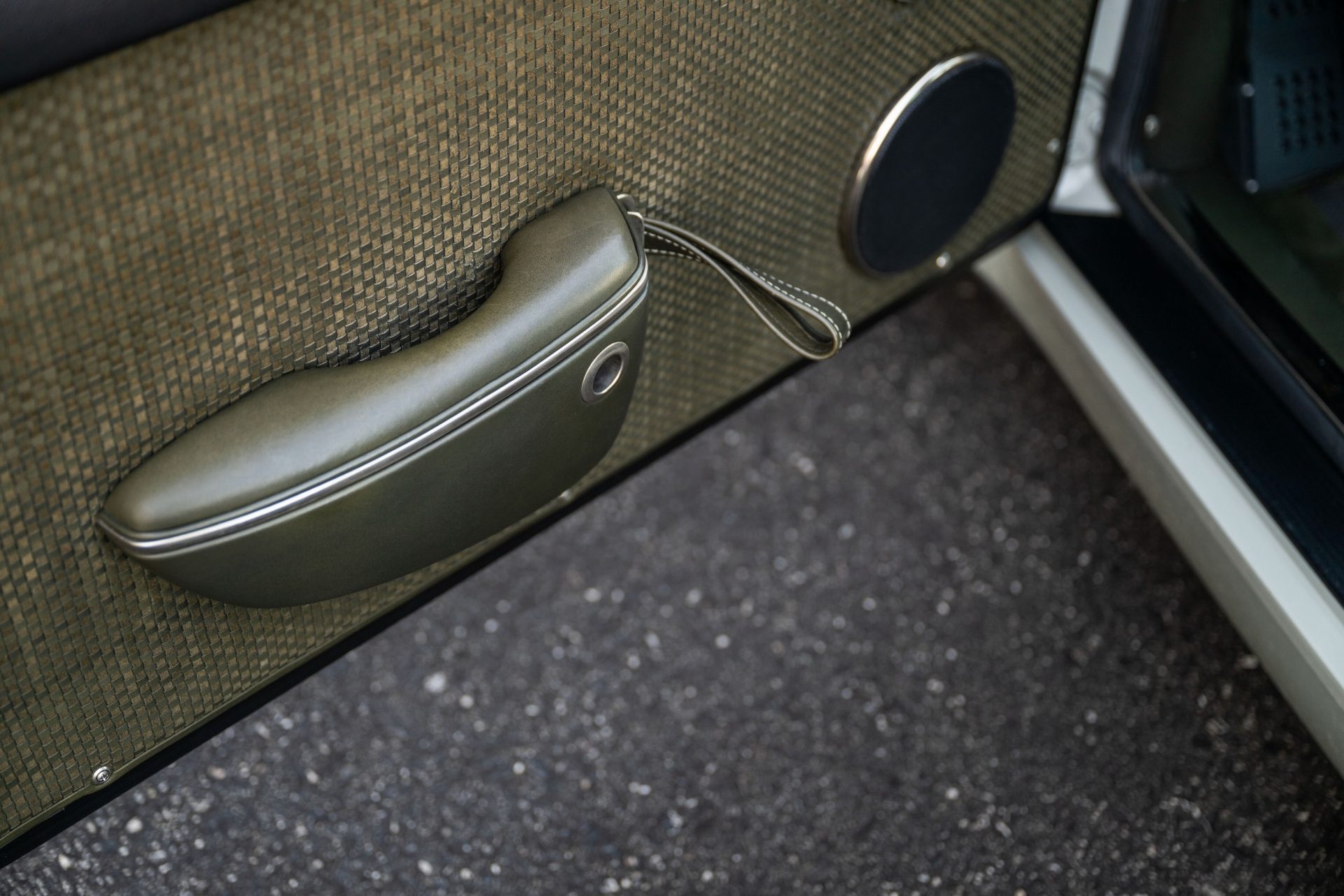

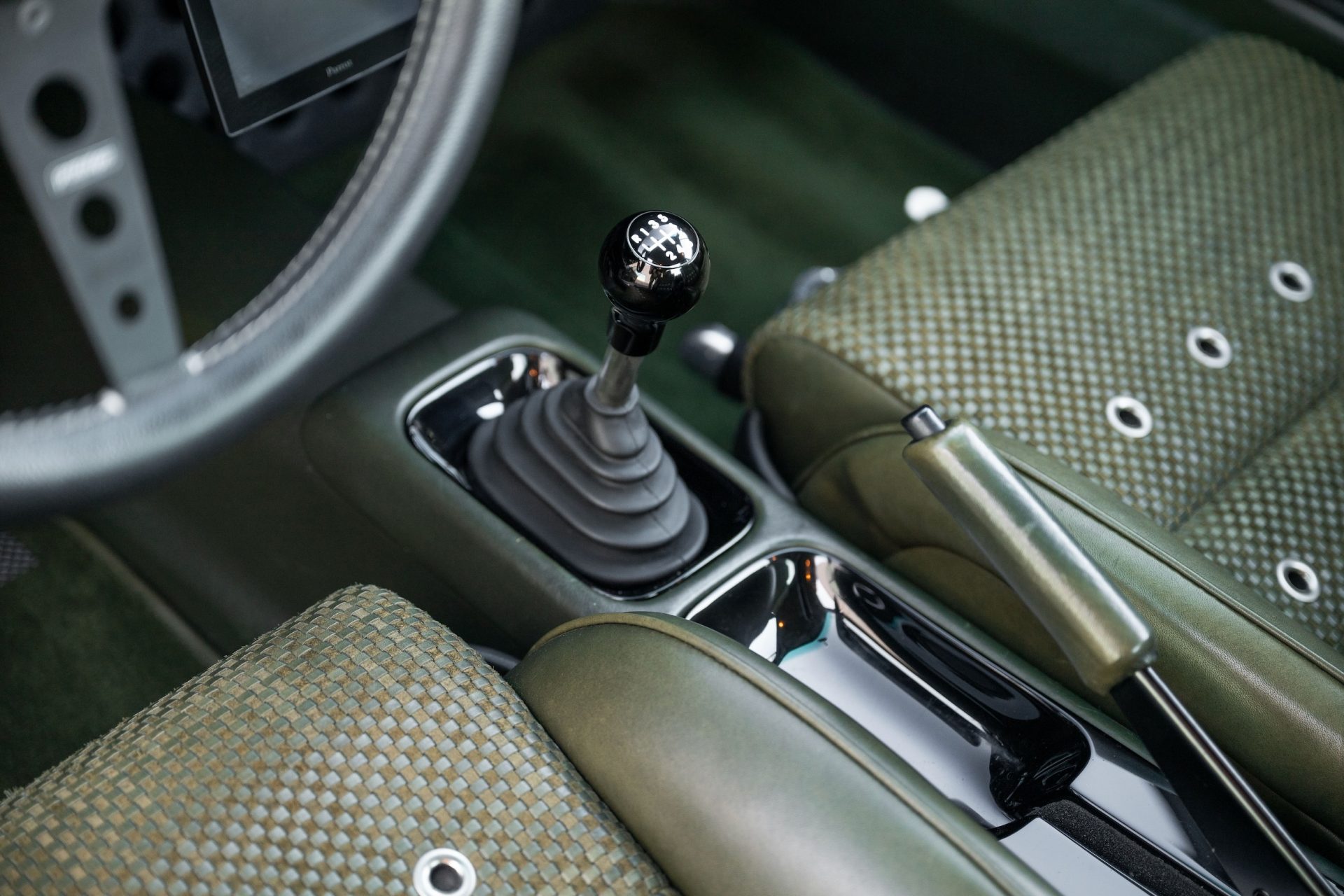
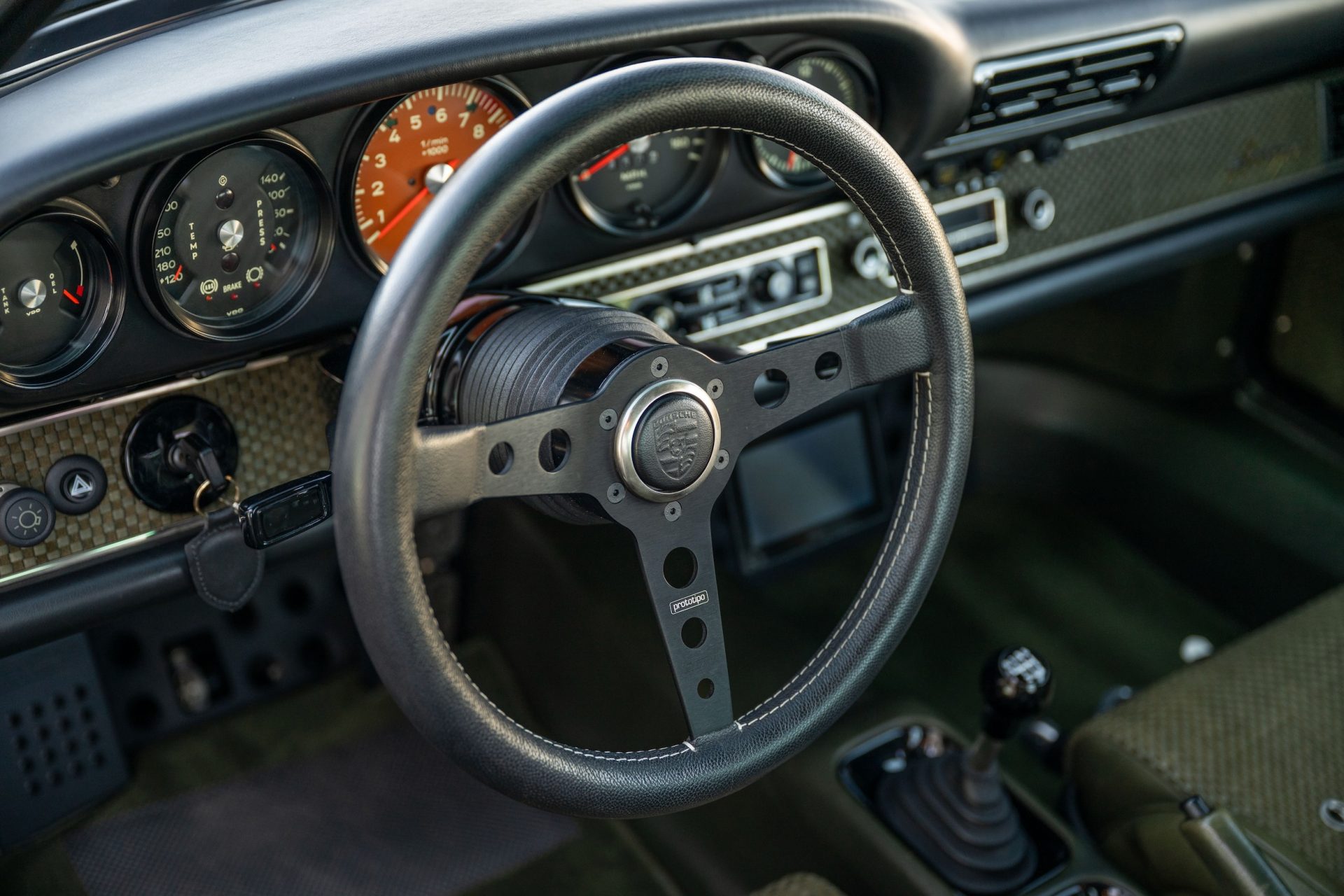

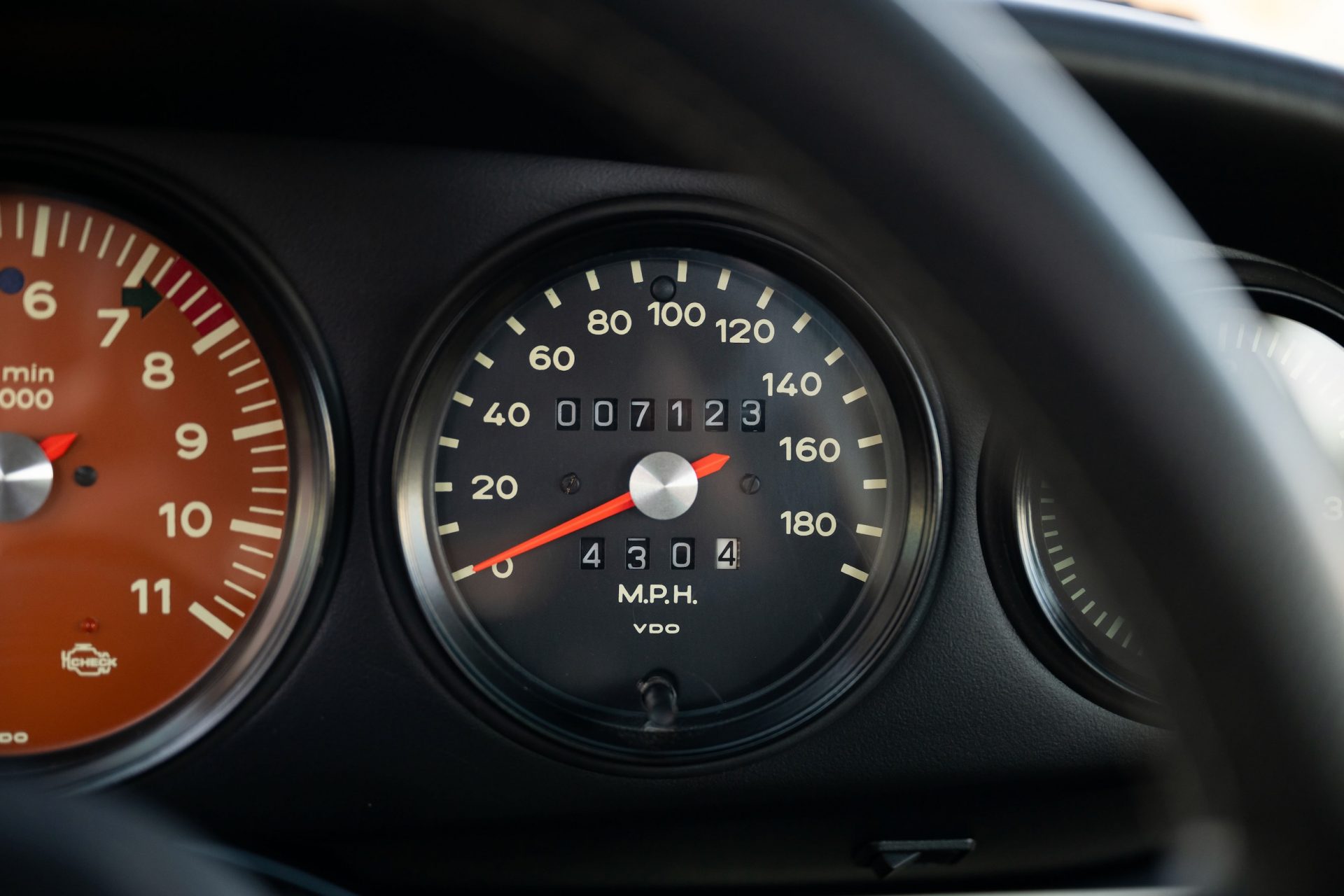
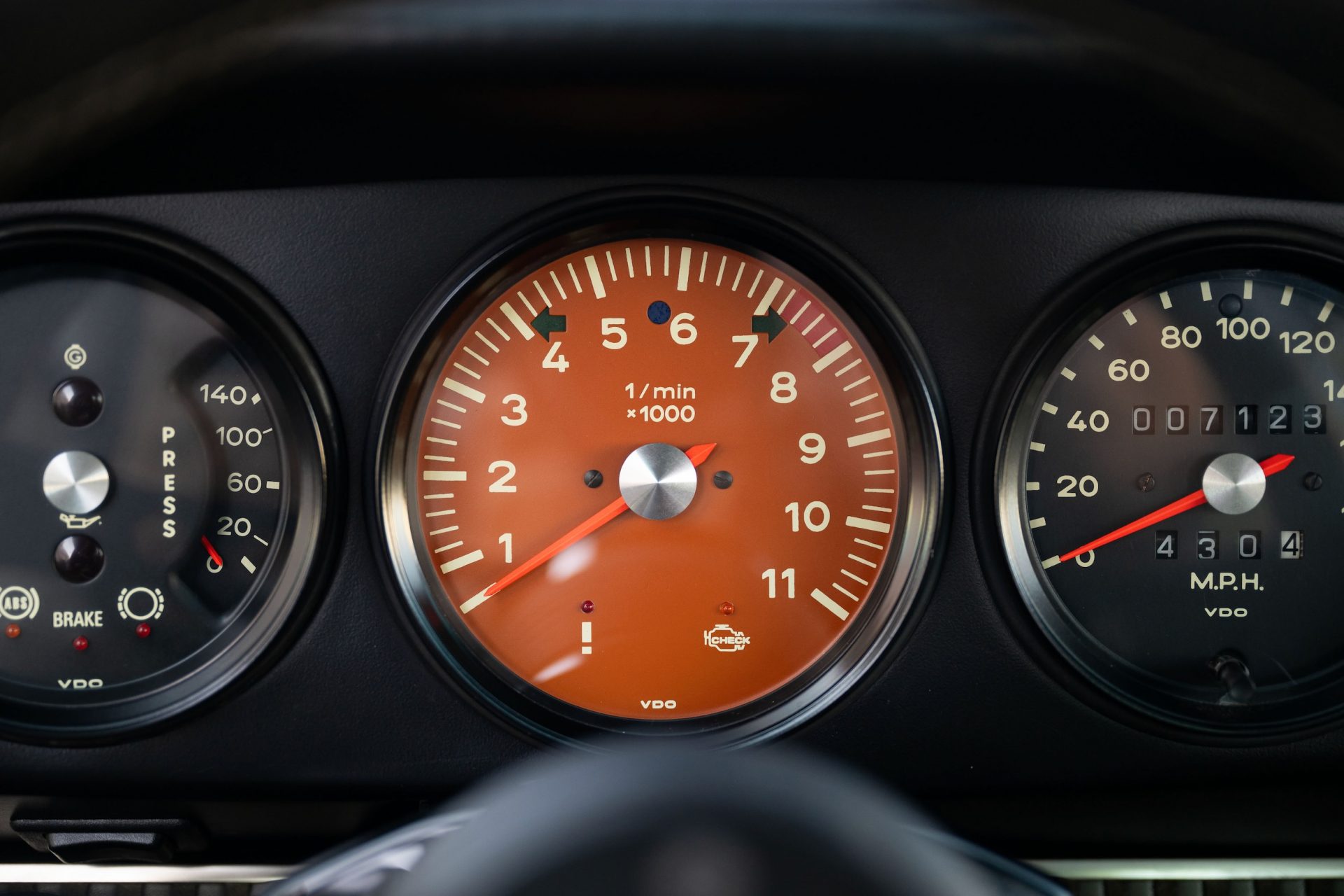


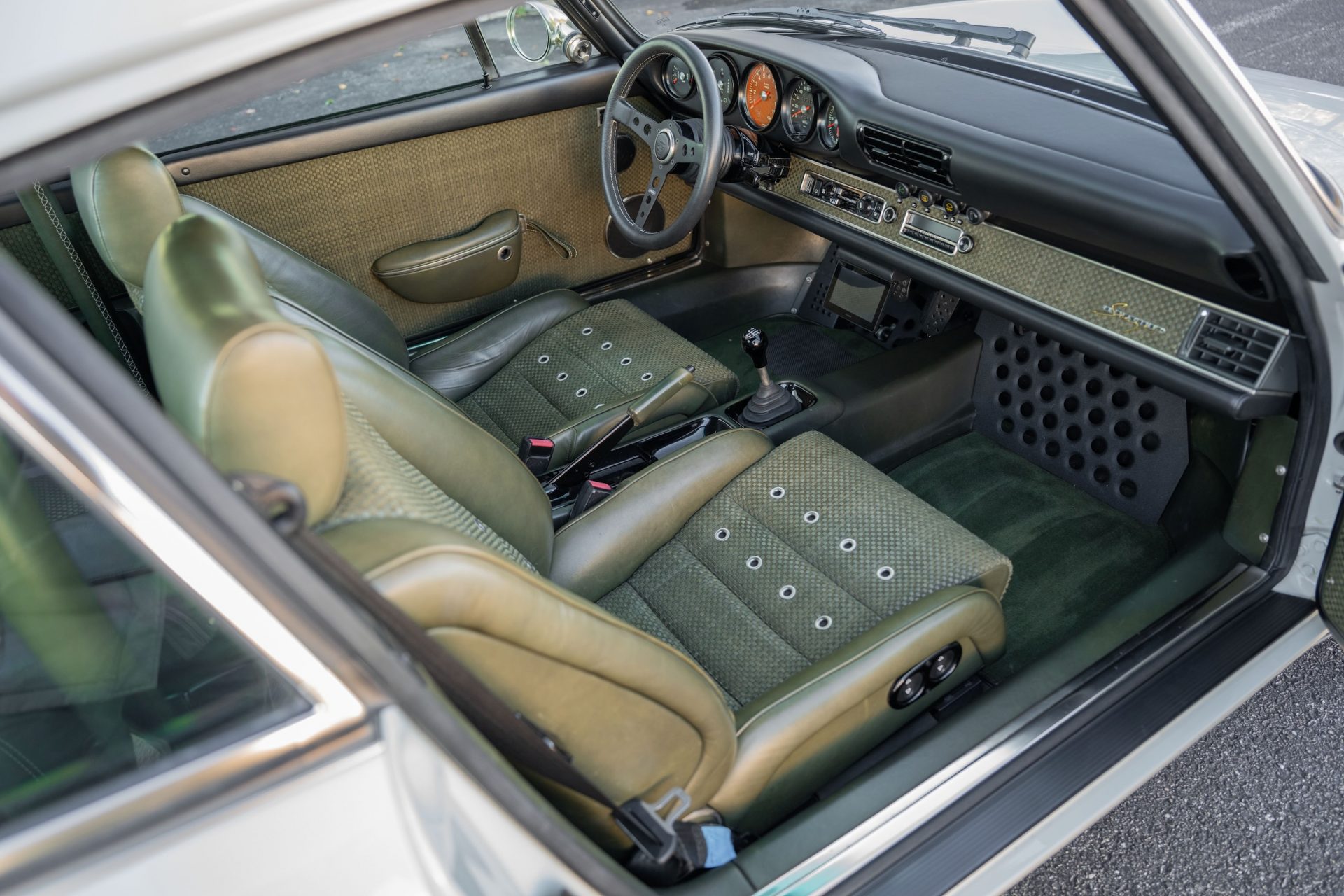


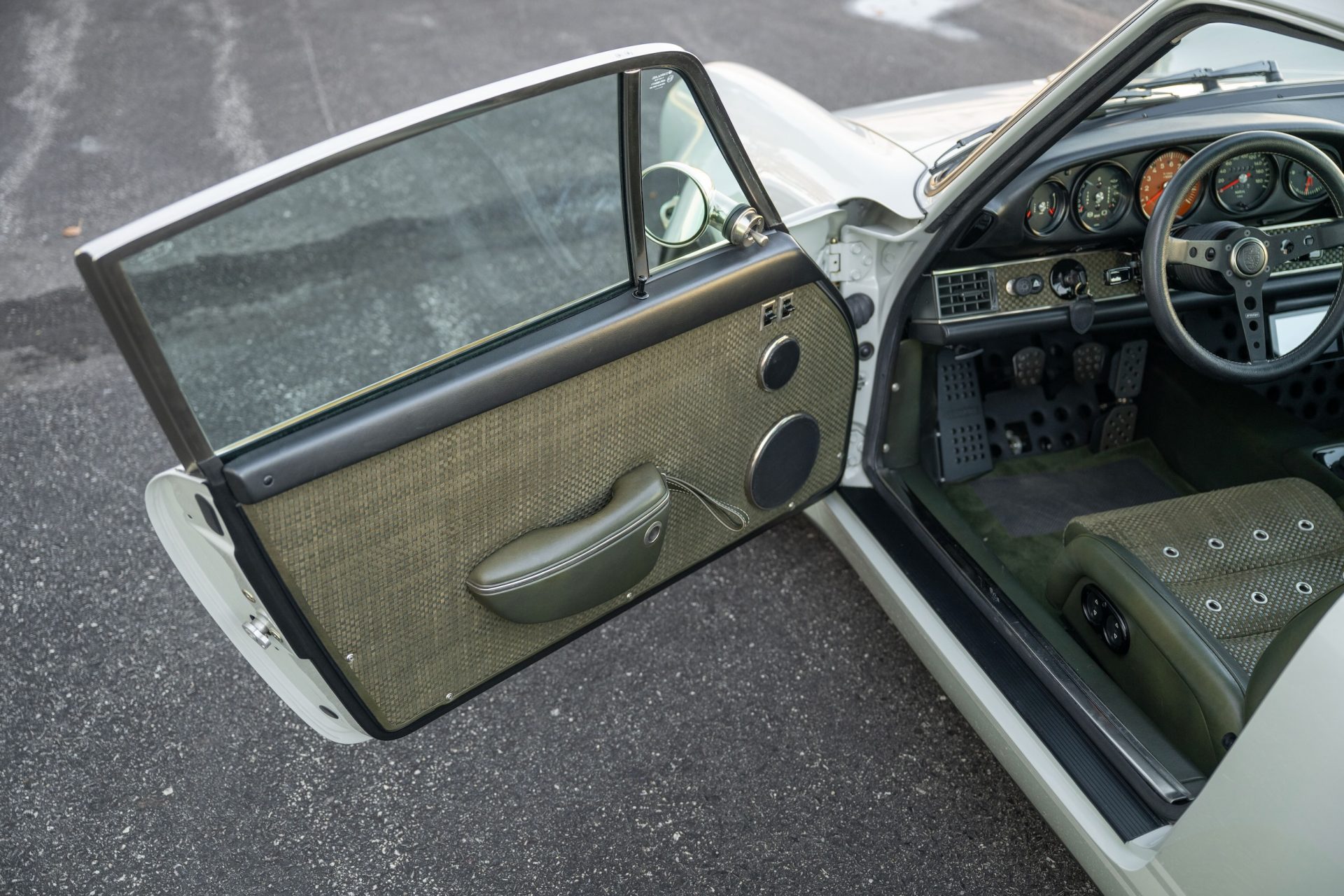

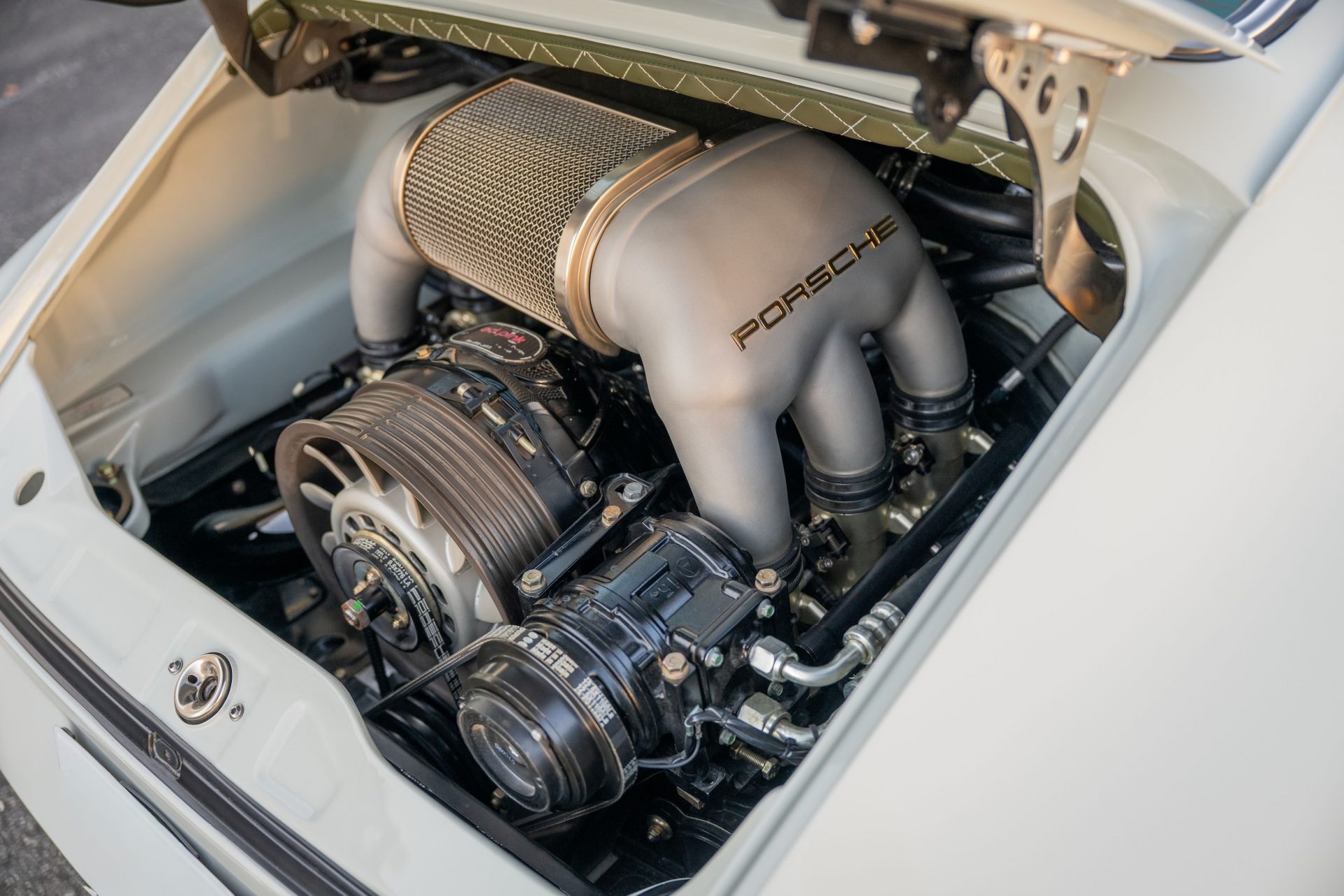
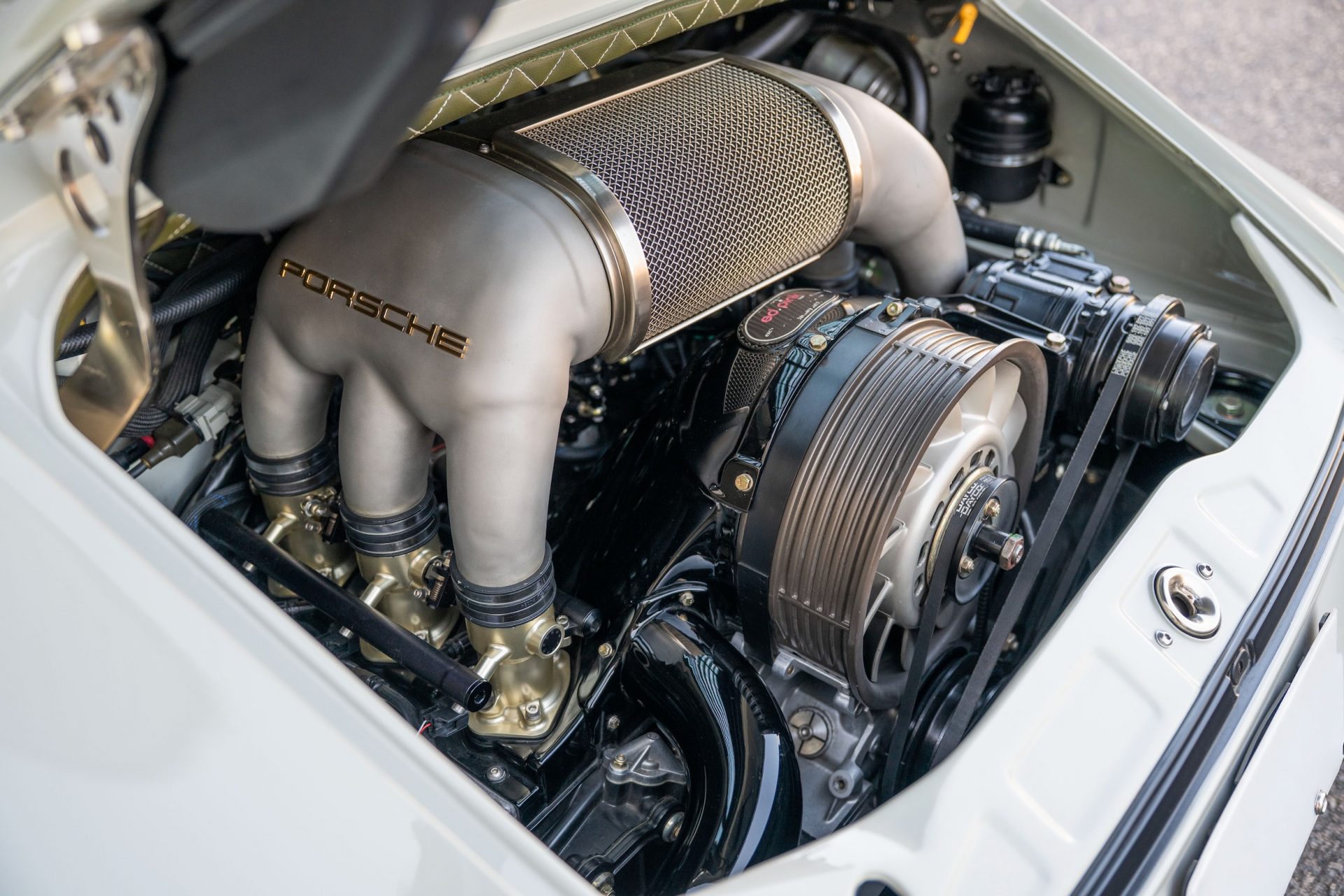

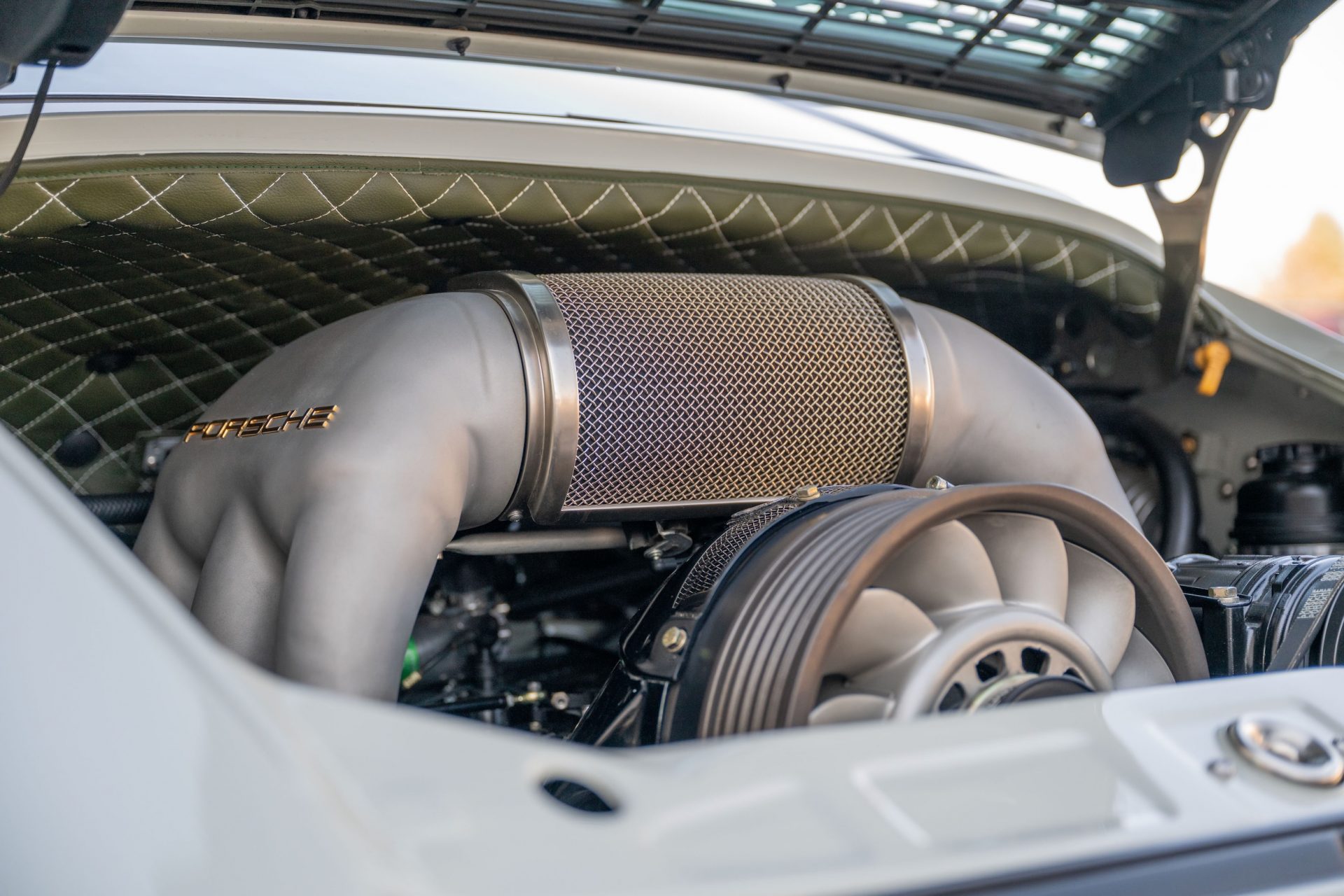
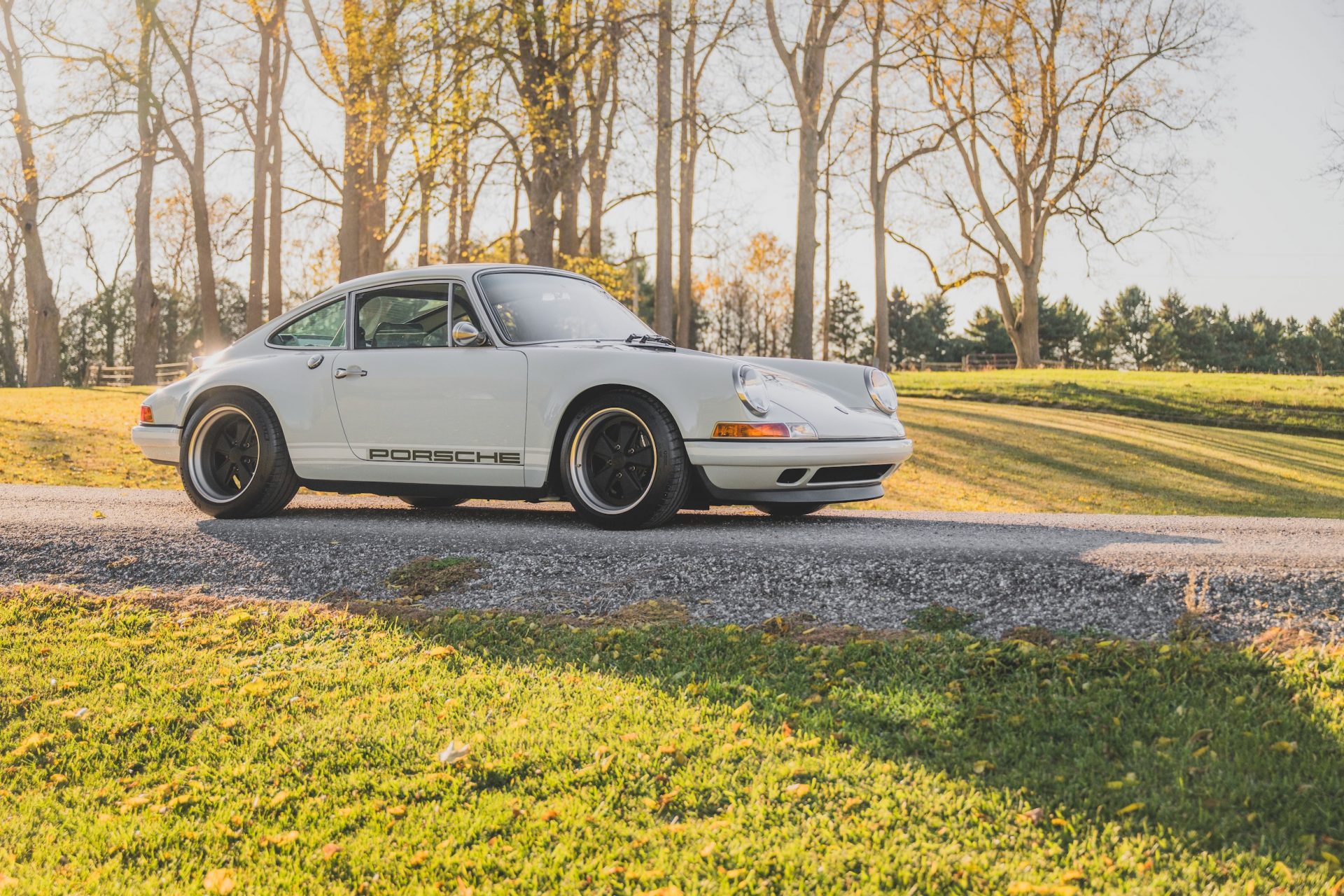

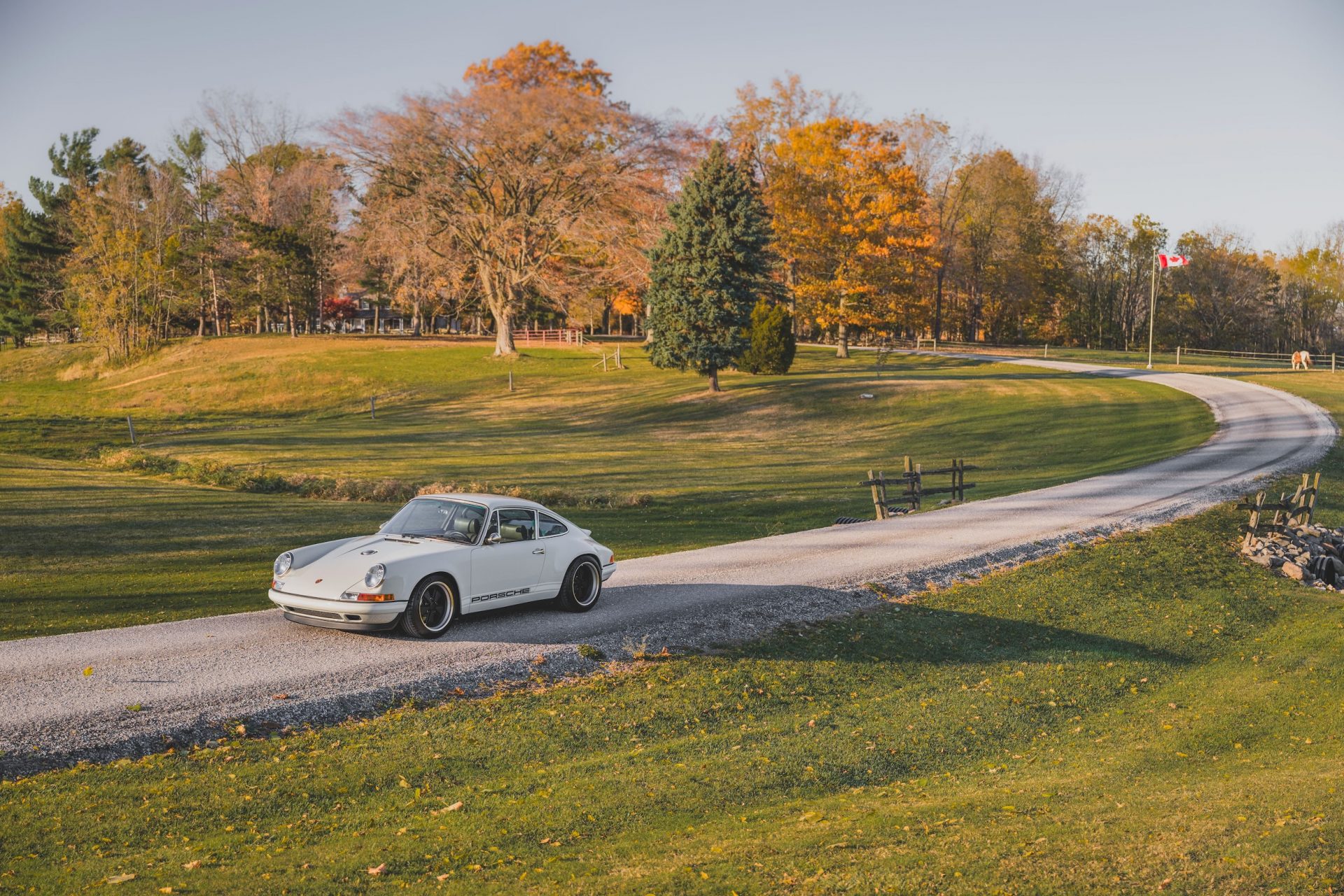


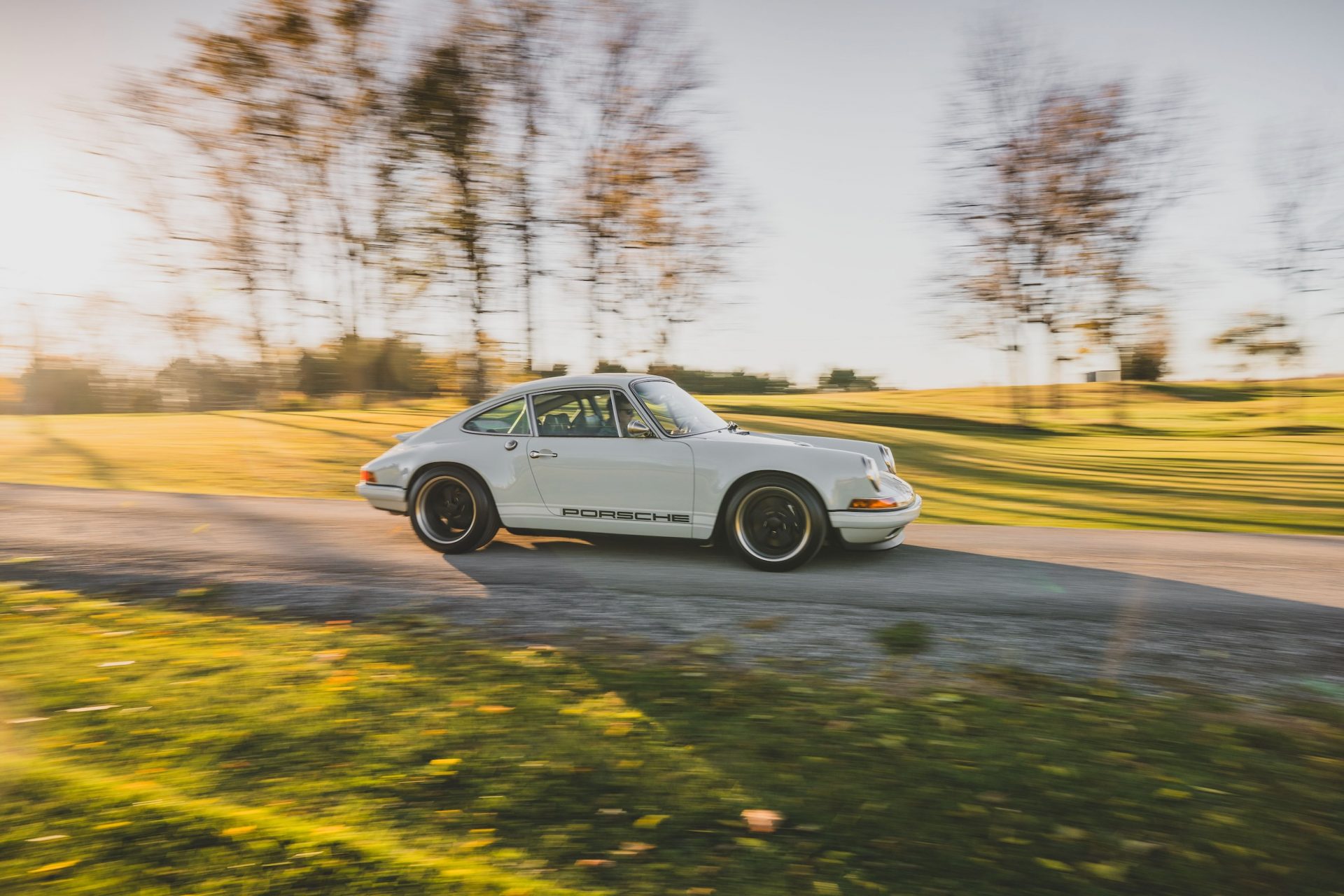
Auktion: RM Sotheby’s, Arizona 2026, Schätzpreis 950’000 bis 1’200’000 Dollar, mit diesen Informationen: «Among the standout commissions from this groundbreaking era is the Novato. With a North American market 1990 Porsche 911 as the foundation, Singer completed the Novato in February 2014 and subsequently delivered it to the commissioning owner in Novato, California—from which the commission fittingly draws its name. In homage to Porsche’s formative years, the Novato wears a specially formulated rendition of Dolphin Grey, a timeless hue recalling the company’s celebrated 356 models. Subtle “ghosted” racing stripes offset by dark green “Porsche” lettering are complemented by nickel-plated bumperettes and badging, while duotone black anodized RSR-style wheels lend the commission a purposeful stance. Olive Green leather envelops a cabin awash in Singer’s bespoke craftsmanship. Its optional four-way adjustable touring seats, door cards, and dashboard inserts are upholstered in woven Olive Green and La Marinella suede-mix hides, elegantly accented by Alabaster contrast stitching. The classic five-gauge instrument cluster features black faces, cream numerals, and a vivid orange central tachometer offering an evocative tribute to Porsche’s racing heritage. Discreetly integrated modern features, including Apple CarPlay, along with a leather-wrapped roll hoop provide seamless contemporary refinement. Beneath its sculpted body with carbon fiber roof panel, Novato’s mechanical specification is equally impressive with a six-speed manual transaxle, Brembo carbon ceramic brakes with Nato Olive-finished calipers, and an Öhlins adjustable suspension system with touring-rated springs, sway bars, and bushings. Originally completed to 3.8-liter specification, the car was returned to Singer in March 2017 for a factory upgrade to 4.0-liter configuration. This $40,000 enhancement included the installation of a new crankshaft, connecting rods, pistons and rings, and intake plenum, along with ECU recalibration. A $10,000 upgrade to carbon ceramic brake rotors was also undertaken at this time. In early 2024, the Novato again returned to Singer’s California facility for a comprehensive inspection and sorting totaling over $17,335. This included minor suspension tuning, laser wheel alignment, installing four new Michelin Pilot Sport 4S tires, servicing the air-conditioning system, replacing the belts, and tuning to ensure proper performance on 91-octane fuel. Displaying 7,123 miles at cataloging, the car is offered with Singer service records and factory-issued specification sheets».
–
«Abu Dhabi», Chassis-Nummer: WP0ZZZ96ZMS410725 (1991)


Auktion: RM Sotheby’s, Abu Dhabi 2025, Schätzpreis 1 bis 1,2 Millionen Dollar, mit diesen Informationen: «Offered in partnership between Singer Vehicle Design and RM Sotheby’s, this stunning example is known as the ‘Abu Dhabi’ commission. Starting life as a 1991 model year car built for the North American market, it was submitted to Singer for transformation in the spring of 2016. Completed the following December before being delivered to its owner at the start of 2018, this 911 has been beautifully specified in Delicate Blue featuring racing side stripes and nickel-plated bright trim and rear bumperettes. The artisan interior is primarily upholstered in Saddle Sand leather, while the vertical panels and inserts of the Recaro carbon fibre track seats feature a mix weave of Saddle Sand and Riva de Sole suede. Singer originally offered its Classic services with a 3.6-litre, naturally aspirated Cosworth flat-six making 270 horsepower. However, this car was configured with the optional 4.0-litre motor in the quilted leather-lined engine bay. Fed through a ceramic inlet manifold to deliver some 390 horsepower, such a significant upgrade added more than 20 per cent to the base price alone. The bespoke features for this 911 continue extensively from there. Tailored to offer the ultimate driving thrills, it benefits from an optional six-speed, close-ratio Getrag manual gearbox and a limited-slip differential. To keep the speed in check, higher-specification adjustable sports suspension by Öhlins and larger Brembo brakes with carbon-ceramic discs were also equipped. To improve the underlying structure of the 964, this Porsche 911 reimagined through Singer’s Classic services received strengthening seam welding to the chassis and a carbon fibre roof, while the specified integrated roll bar was upholstered in matching-colour leather. An additional support discretely positioned behind the removable carbon fibre rear seat cushions allows for the fitment of four-point Schroth racing-style harnesses. Further details include the yellow tachometer with an indicated 7,200 rpm red line (although, in tribute to Spinal Tap, it counts all the way round to 11,000), the woven leather dashboard fascia, and a wooden gear knob—reminiscent of the layered beech and mahogany item used in the all-conquering Porsche 917 sportscar. Ensuring that this 911 remains as usable as possible, the exterior is protected by clear paint-protection film; the interior benefits from air conditioning plus a stereo that features smartphone connectivity and Bluetooth. Finally, as part of this beautiful specification, the filler cap was relocated to the centre of the bonnet panel over the fuel safety cell and the external oil cap positioned in the rear quarter panel behind the passenger door. Since its transformation by Singer this 911 has been regularly maintained in Abu Dhabi by Porsche specialist JZM Gulf and more recently by The Stables, with its latest service performed in April 2025».
–
Chassis-Nummer: WP0AB0965KS451003 (1989)
Motorennummer: 62L13315
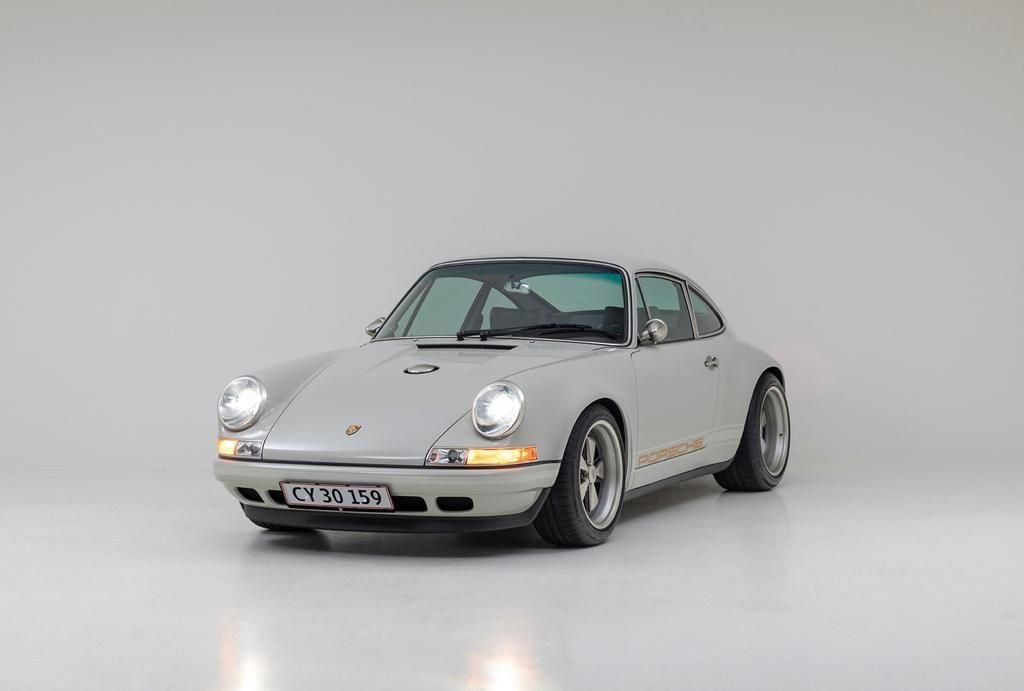
Verkauft über Broad Arrow, Private Sales, mit diesen Informationen: «Commissioned new by a Toronto-based collector, the car is now offered on behalf of its second private owner with less than 1,800 kilometers indicated on the odometer. It was extremely well specified from new with such desirable features as the large center-mounted fuel-filler cap, the high-horsepower RS+ camshafts, six-speed transmission (as opposed to the standard five-speed), and the bigger Brembo brake kit. On the interior, optional air conditioning and the stereo system with optional subwoofer are of particular note, as are the four-way touring seats and leather-covered transmission tunnel and “jacuzzi” foot wells. The car was finished in Geyser Grey with Bahama Yellow lettering on the sides, gold “911” badging on the decklid, and nickel-trimmed bumperettes. The interior colors are a stunning contrast to the understated Grey exterior, as the suede-mixed weaved Tobacco Olive seating surfaces are contrasted by the Dark Tobacco trim and dash surfaces. Bahama Yellow stitching matches the exterior, with brass grommets, a matching MOMO Prototipo steering wheel, ivory headliner, and a Bahama Yellow tachometer face.»
–
Chassis-Nummer: WP0ZZZ96ZMS400589 (offiziell: Jahrgang 1990)


Angeboten über RM Sotheby’s, Private Sales, 845’000 Pfund (November 2024), mit diesen Informationen: «With founder Rob Dickinson being born and raised in Norfolk, building the very first 911 Reimagined by Singer to UK RHD specifications would have been an incredibly special moment. The realisation of that dream is embodied in the very car offered here. Dubbed “UK 1”, this was the very first 911 to be reimagined by Singer in RHD specifications for the UK. Like all the early cars, it was fitted with the Cosworth-built 3.8-litre flat six-cylinder engine mated to a six-speed manual gearbox, driving power to the rear wheels. Finished in Egg Yolk paintwork over a black leather interior, the car is fitted with comfort seats as well as rear seats and a roll bar and is further optioned with a Becker stereo and navigation system. Upon arrival in the UK, UK 1 was retained by Singer for promotional activities. To many British enthusiasts, this would have been the very first 911 Reimagined by Singer that they had laid eyes upon, as it was driven by Marino Franchetti and Chris Harris for Singer up the hill at the 2015 Goodwood Festival of Speed. Later that summer, it was tested by Dickie Meaden for Evo magazine and featured on the cover of their December 2015 issue (issue no. 215). Meaden was besotted with the car from the outset, proclaiming in a YouTube feature that accompanied the editorial piece that “I had to choose one car, to own and drive from now until the day I die, it would be this”. High praise from one of the leading car journalists in the UK. Since its reimagining, this particular 911 has been driven just under 4,650 miles. With its current owner, the car was serviced by Heritage Auto Works in Berkshire, Singer’s official agent in the UK, in September 2023 and again in May 2024.»
–
Chassis-Nummer: WP0ZZZ96ZLS402183 (offiziell: Jahrgang 1990)


Angeboten über RM Sotheby’s, Private Sales, 950’000 Dollar (November 2024), mit diesen Informationen: «Dubbed The “Denmark Commission,” this Porsche 911 reimagined by Singer boasts a stunning and exceptionally well-considered and tasteful specification. In Rome Red Metallic, the Denmark Commission not only presents a fitting homage to the red rooftops and brick-lined streets of Copenhagen’s idyllic Indre By neighborhood, but also an intoxicating blend of familiar Porsche 911 heritage and unexpected exotic character tastefully rendered. The driver’s view of the road? Familiar, if perhaps more finely framed from within the sumptuously tailored cabin. Rocketing to triple-digit speeds with alarming rapidity? Shockingly exotic, although surely anything but unexpected for a Singer customer: someone who demands the best, and wishes to explore the heights of style, performance, and quality achieved when, as Singer puts it, “everything is important.” First restored for its Danish owner in December 2017, the Denmark Commission represents the stellar results of Singer’s Classic Study restoration services, orders for which the company capped at 450 examples. Singer stopped accepting new orders in June 2022. Beneath the Denmark Commission’s attractive color scheme is a host of impressive chassis upgrades demanded by the commissioner’s exacting taste. Most notably, the car’s original tub has been completely seam-welded. At the car’s heart lies Singer’s hand-built, 350 rated horsepower, 3.8-liter flat six-cylinder engine from Ed Pink Racing Engines of Van Nuys, California. This remarkable powerplant retains the 964-generation block, while utilizing bespoke pistons, cylinders and cylinder heads, crankshaft, camshafts, connecting rods, oil pump, throttle bodies, and intake systems. A speed-activated rear spoiler is integrated within the decklid by lightweight mounts. The Denmark Commission sends its power to the rear wheels via an optional six-speed manual transmission and limited-slip differential. This reimagined 911 can decelerate just as quickly as it accelerates, thanks to the optional Brembo big brake upgrade package. Inside, a pair of optional eight-way electronically adjustable Recaro sport seats are trimmed by Singer’s team of master upholsterers with optional upgraded black woven leather/suede upholstery rendered with their fascinating hand-woven handiwork. This outstanding attention to detail extends through the cabin to a woven leather dashboard trim panel and black woven leather/suede lightweight door cards. The black anodized kick panels are nicely complemented by a matching drilled pedal set, black leather headliner, and black leather dashboard—all of which visually tie-in with the car’s nickel-plated cabin trim and polished Fuchs wheels. Additionally, this incredible Singer build features a modern air conditioning system, optional electric sunroof, Audison Hi-Fi audio system upgrade with removable subwoofer, and an optional adjustable Öhlins suspension system designed to Singer’s exclusive specifications.»
–
Chassis-Nummer: WP0ZZZ96ZLS405318 (1990)

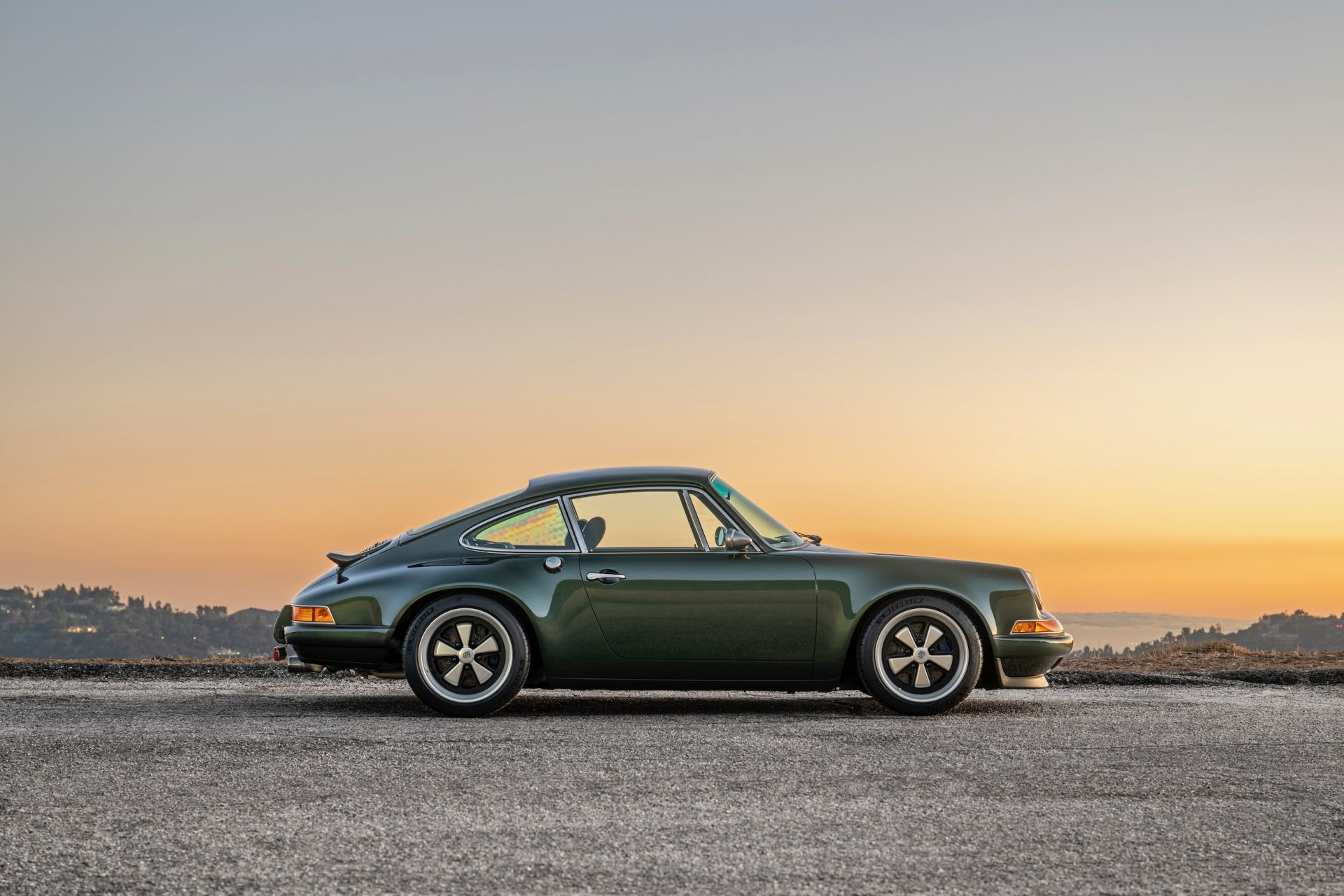

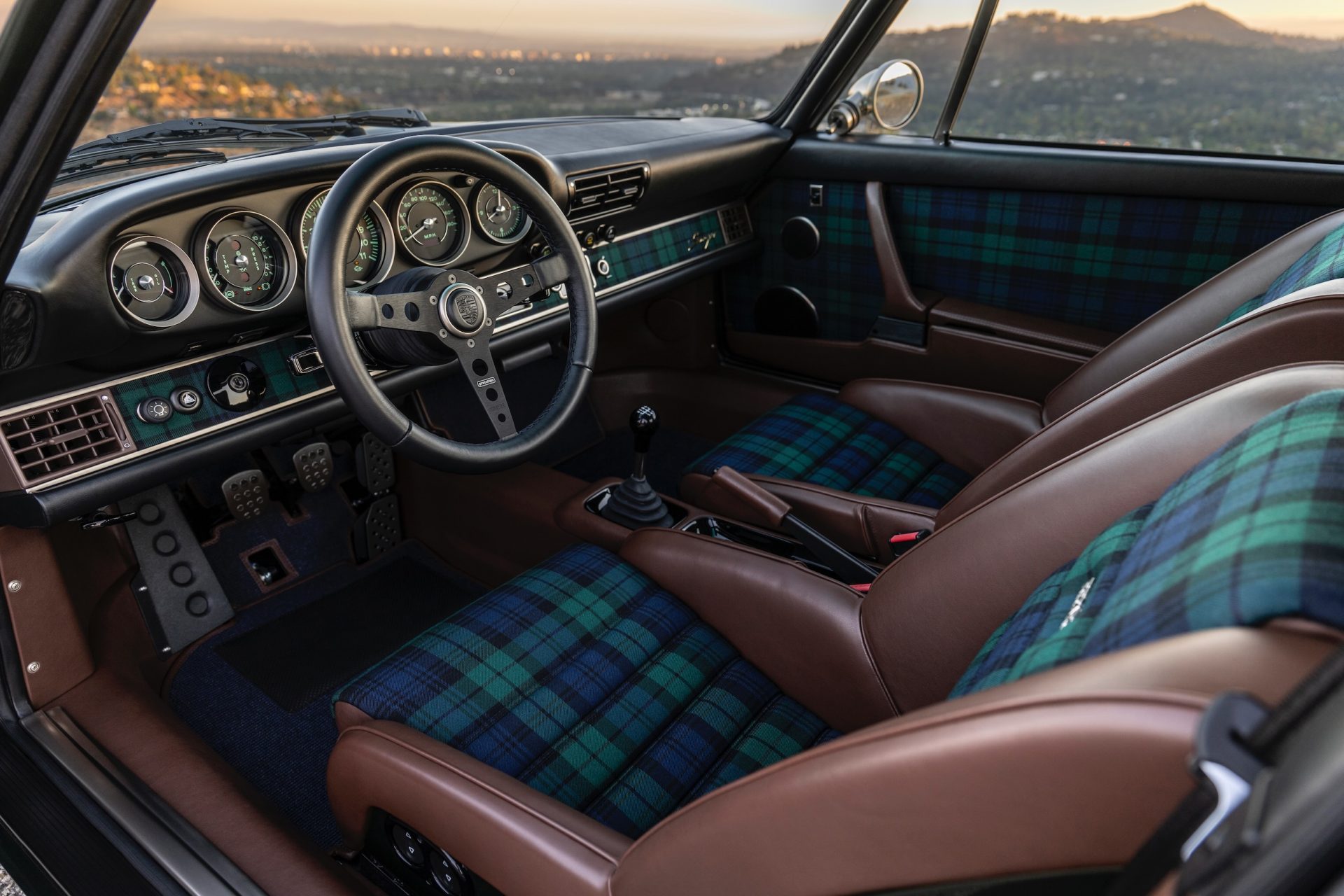
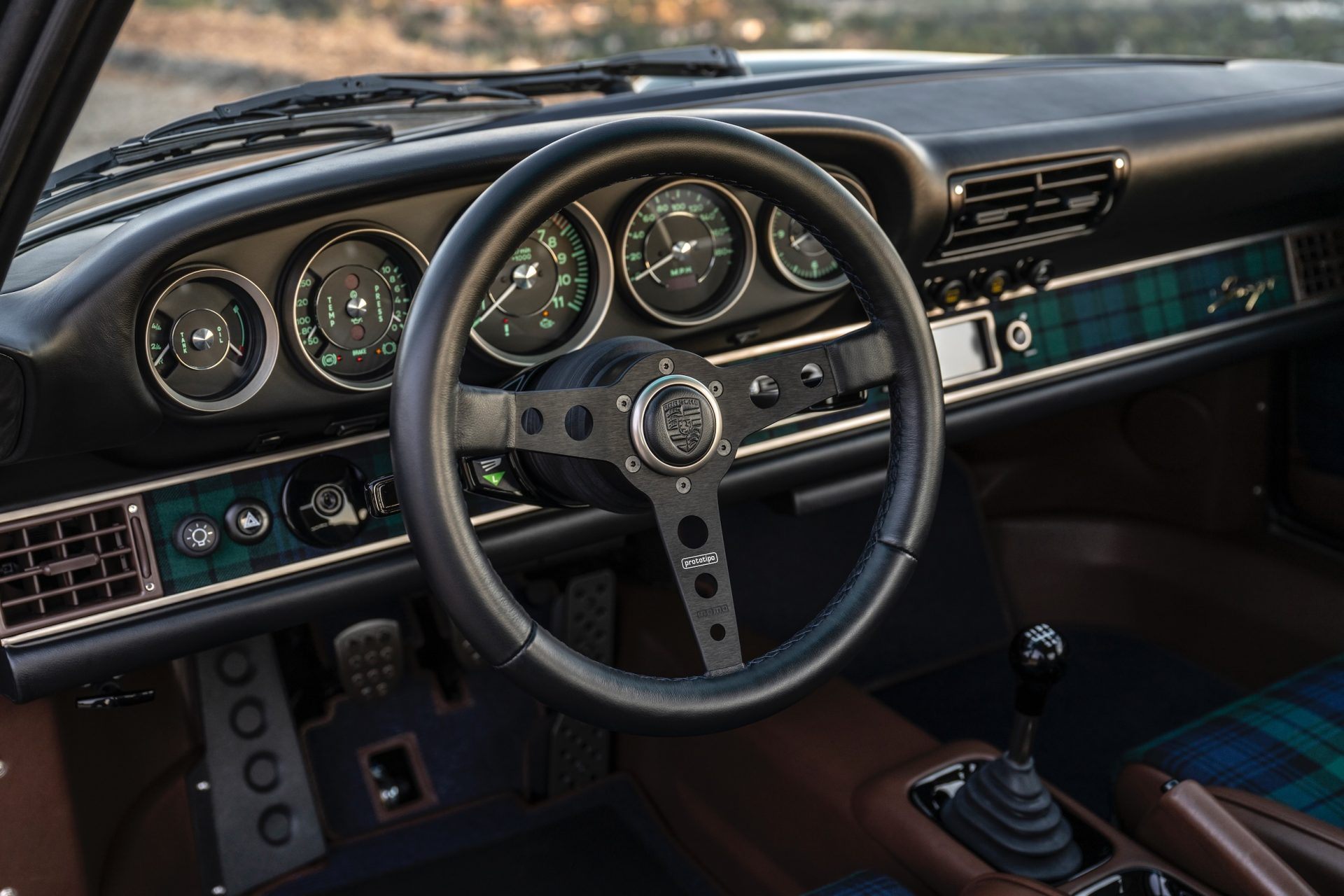
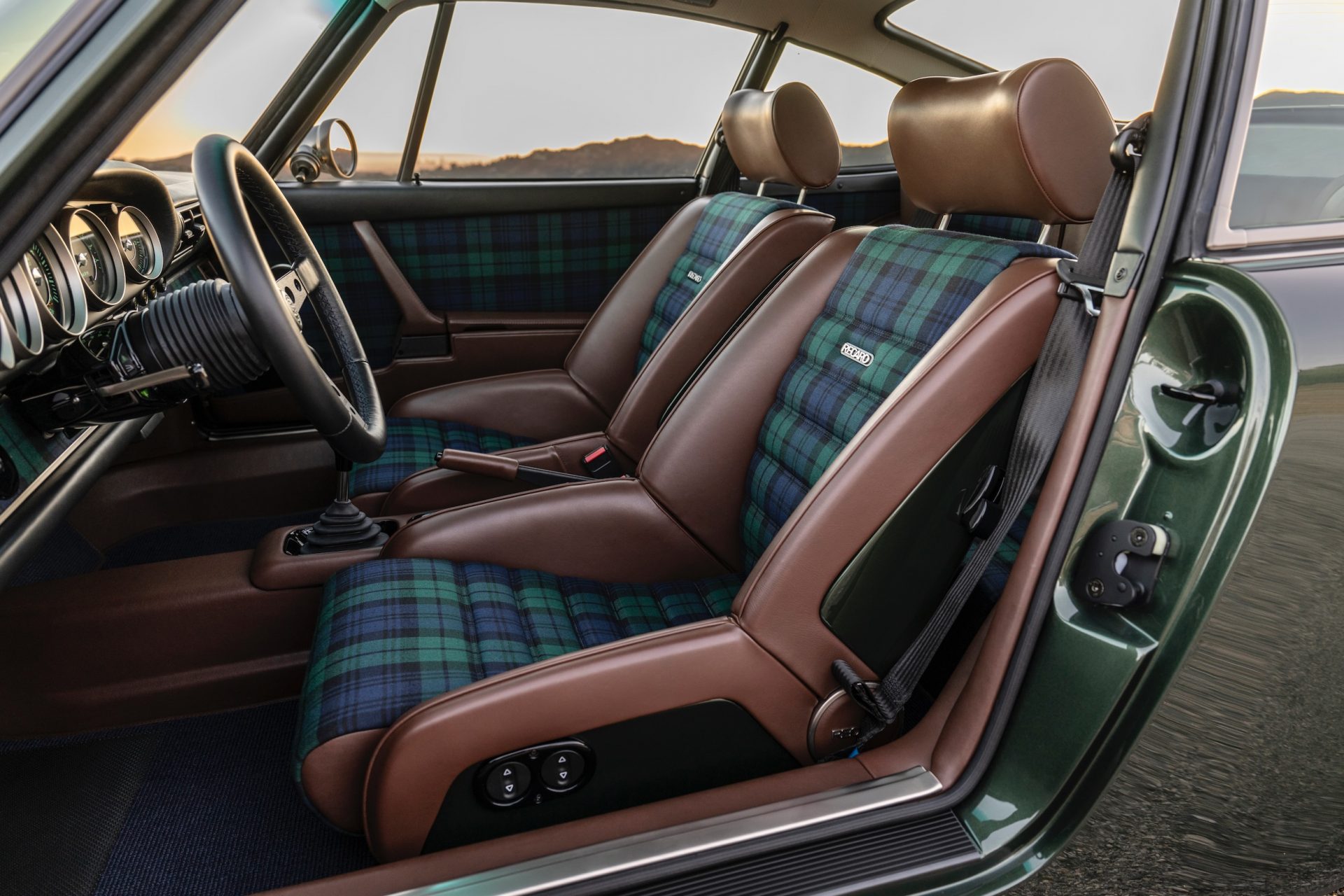
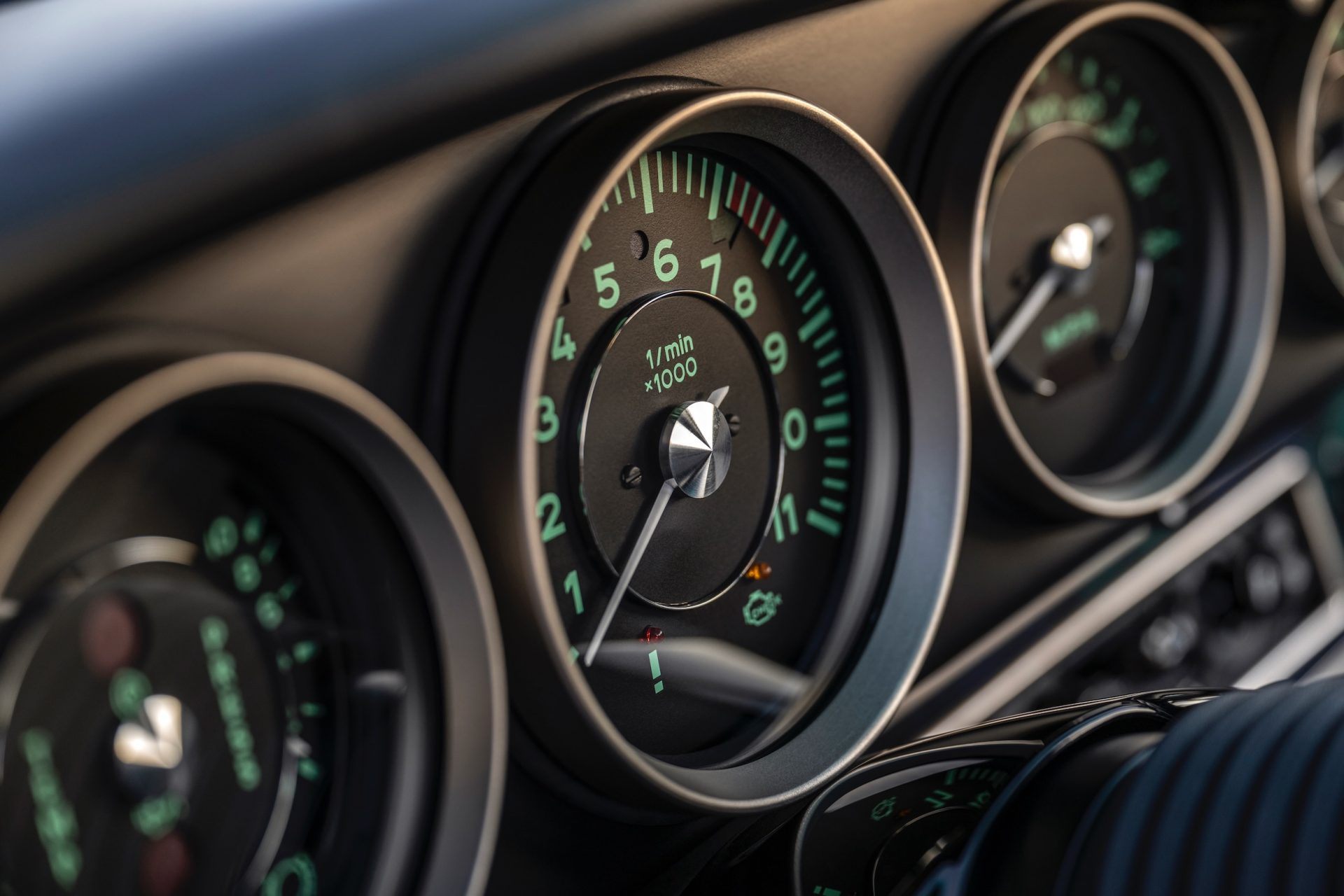
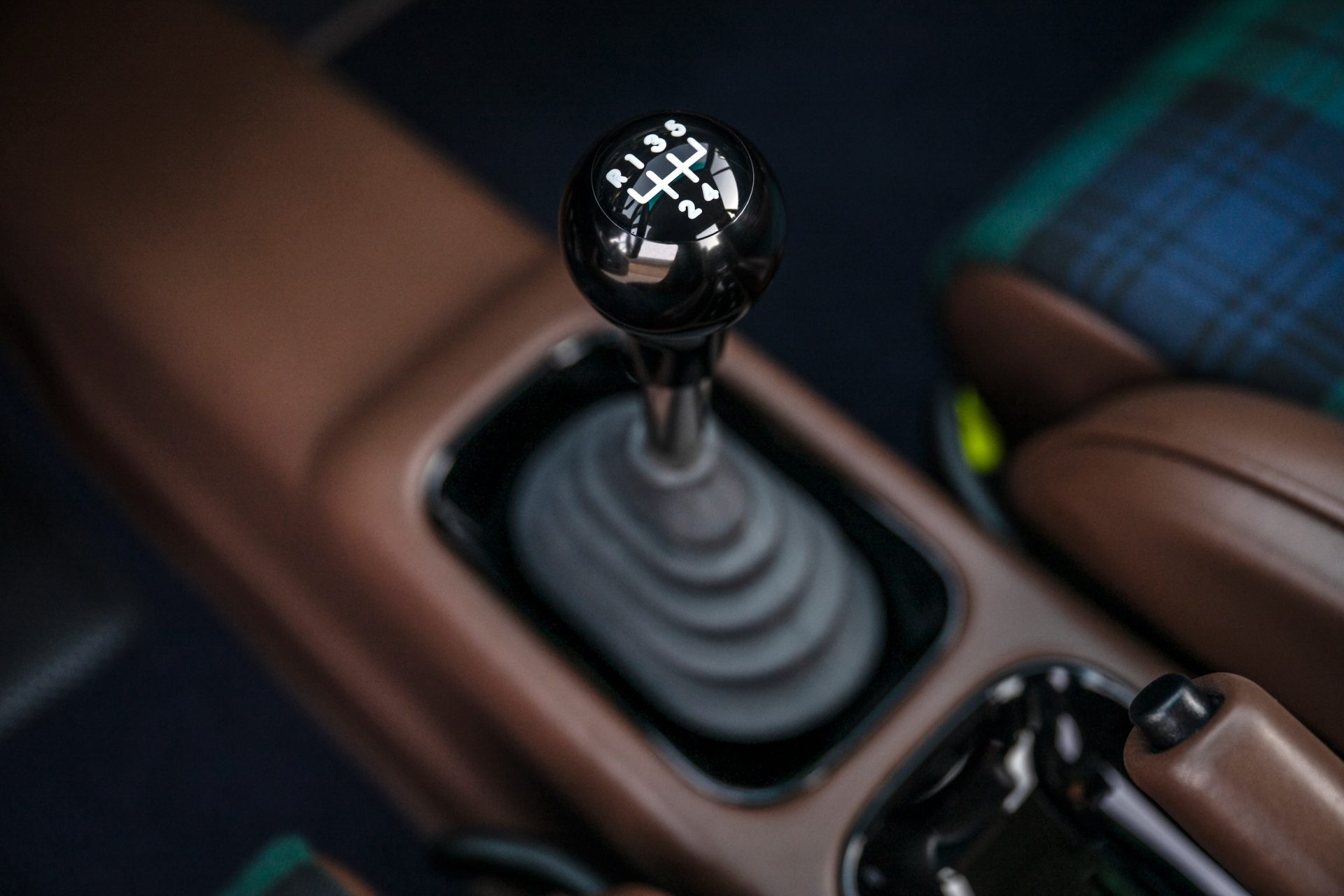
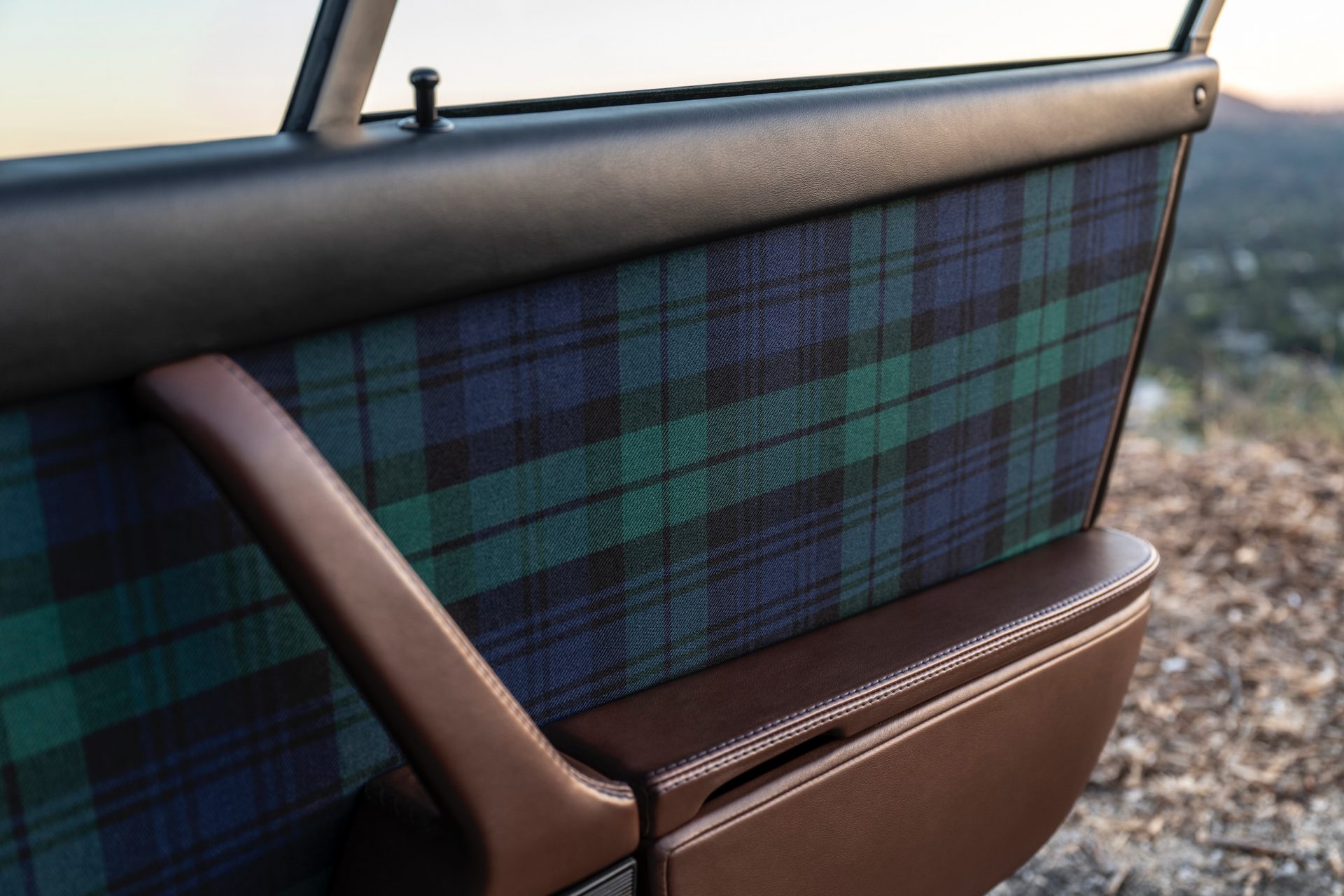
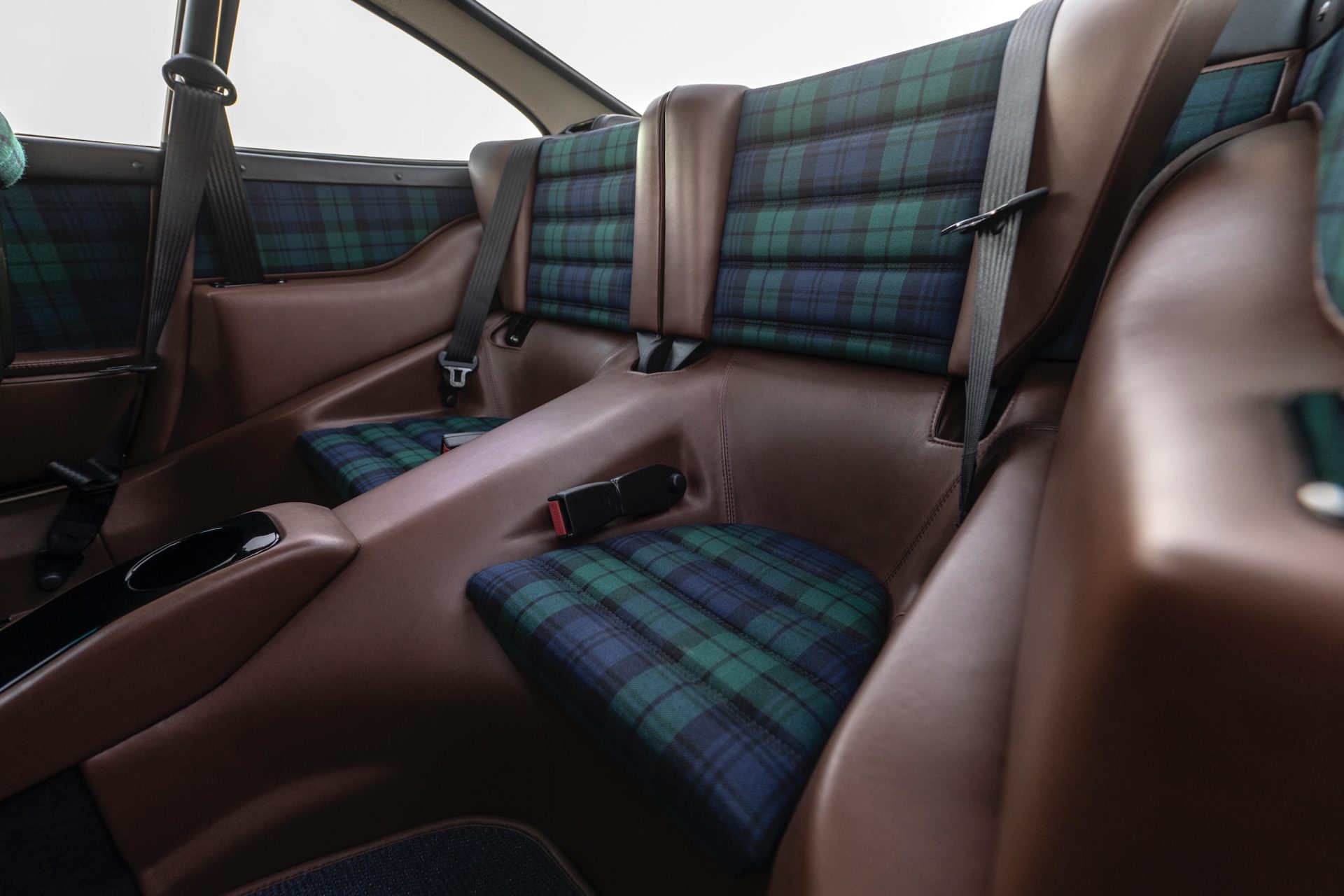

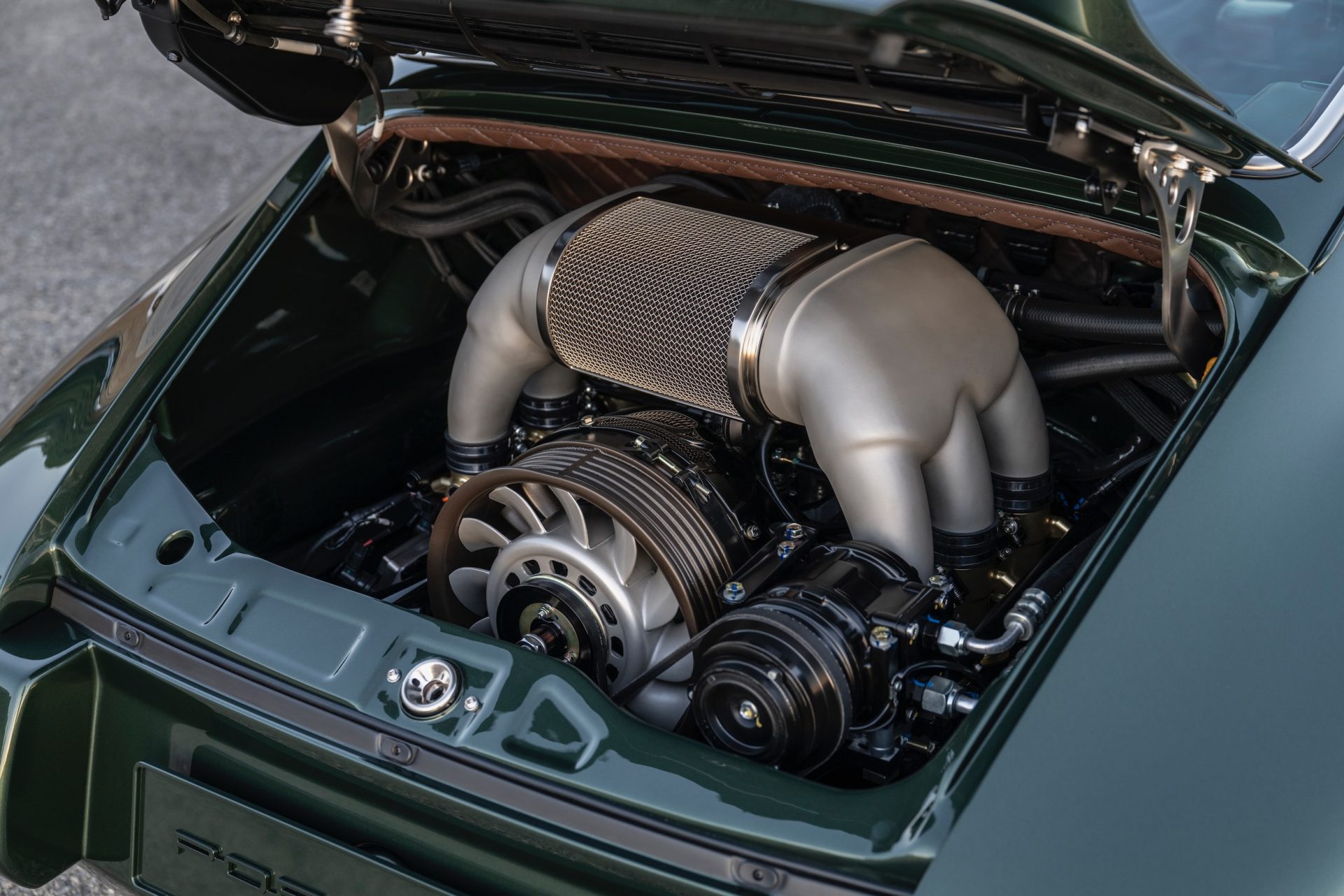
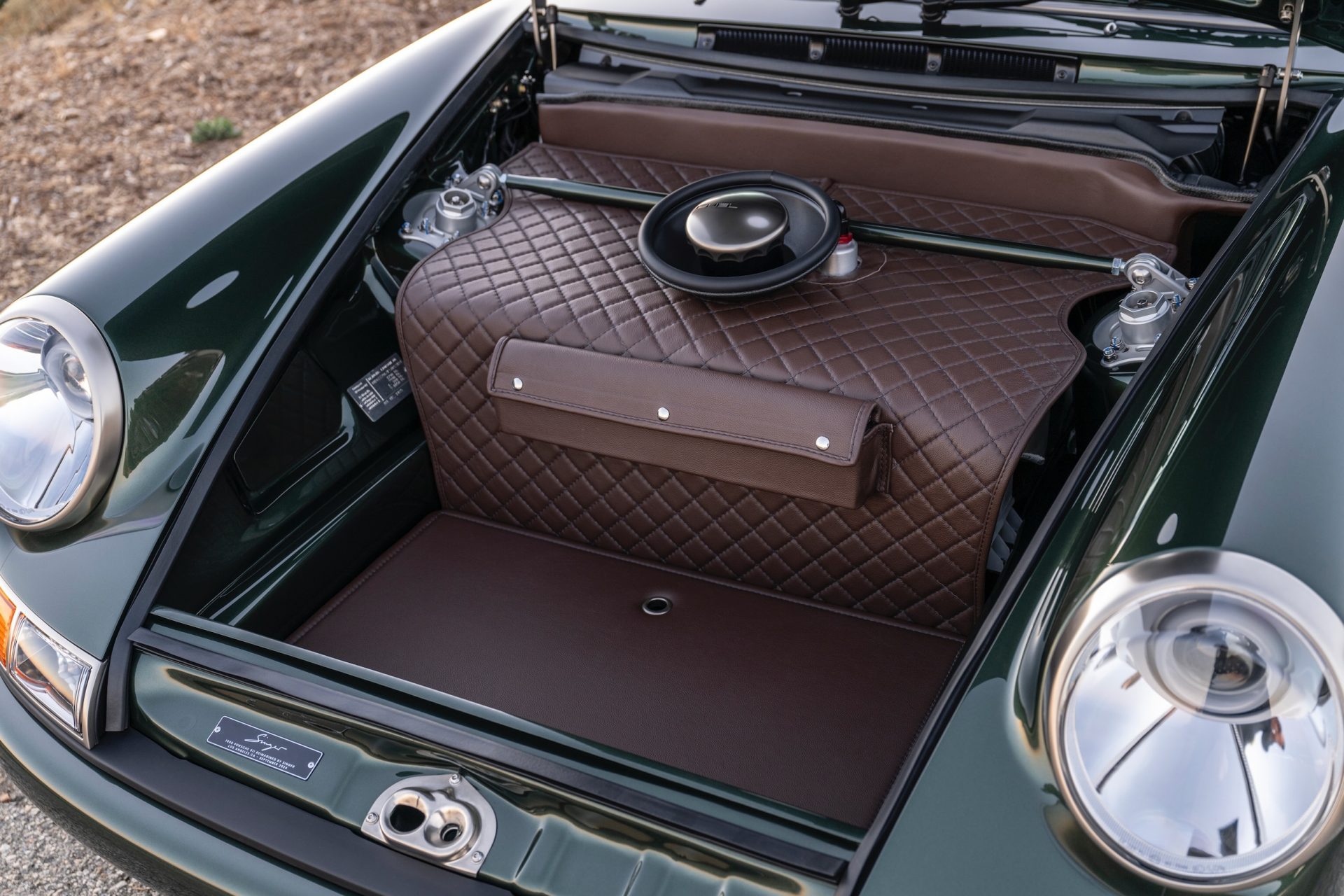
Auktion: RM Sotheby’s, Sealed Drop Mai 2025, verkauft. Mit diesen Informationen: «Completed by Singer in January 2025, the Black Watch Commission was built to the highest possible specification in an effort to create a car that harkens back to Porsches of yesteryear but with a modern twist. It is offered today by its commissioning owner, having accrued only delivery mileage since its reimagining. Mechanically, the Black Watch Commission is outfitted with the 4.0-litre engine option, alongside a titanium exhaust, five-speed manual gearbox, Öhlins adjustable suspension, carbon fibre roof, and carbon ceramic brakes. Built to UK specifications but in LHD configuration, the car is currently located in Southern California and can easily be registered in the US, UK, Continental Europe, or elsewhere, and modified according by Singer to suit any jurisdiction. Outside, the car is finished in Oak Green Metallic, a historical Porsche hue sourced by Singer at a cost of $11,800. The wheels are nickel coated in Porsche’s traditional Fuchs style with black backgrounds. The car has been fitted with full paint protection film by Singer. The Black Watch Commission takes its name from its interior trim, highlighted by its ‘Black Watch’ tartan inserts, a black, dark blue, and green tartan which dates to 18th century Scotland and is similar to the tartan interior trims seen on 930 Turbos in the late 1970s. This is offset by Espresso leather and some further detailing, such as the carpeted floor mats and deviated stitching, matched to the blue in the tartan. The backs of the four-way adjustable sports seats have been painted Oak Green Metallic to match the exterior. The car features the early 911 gauge set, a $8,400 option from Singer, alongside the Porsche Classic Navigation System with Apple CarPlay. A handful of other special requests were made on this car as well, including fitting stock 911 interior door panels (as opposed to Singer’s own door panels), rear decklid grill mesh finished in black, velocity stacks for the 4.0-litre engine, painted rear seat hinges, leather wrapped center console inserts, USB-C fittings for the infotainment, a leather wrapped steering surround, and revised door handles».
–
«HK2 Commission», Chassis-Nummer: WP0ZZZ96ZMS405379 (1991)

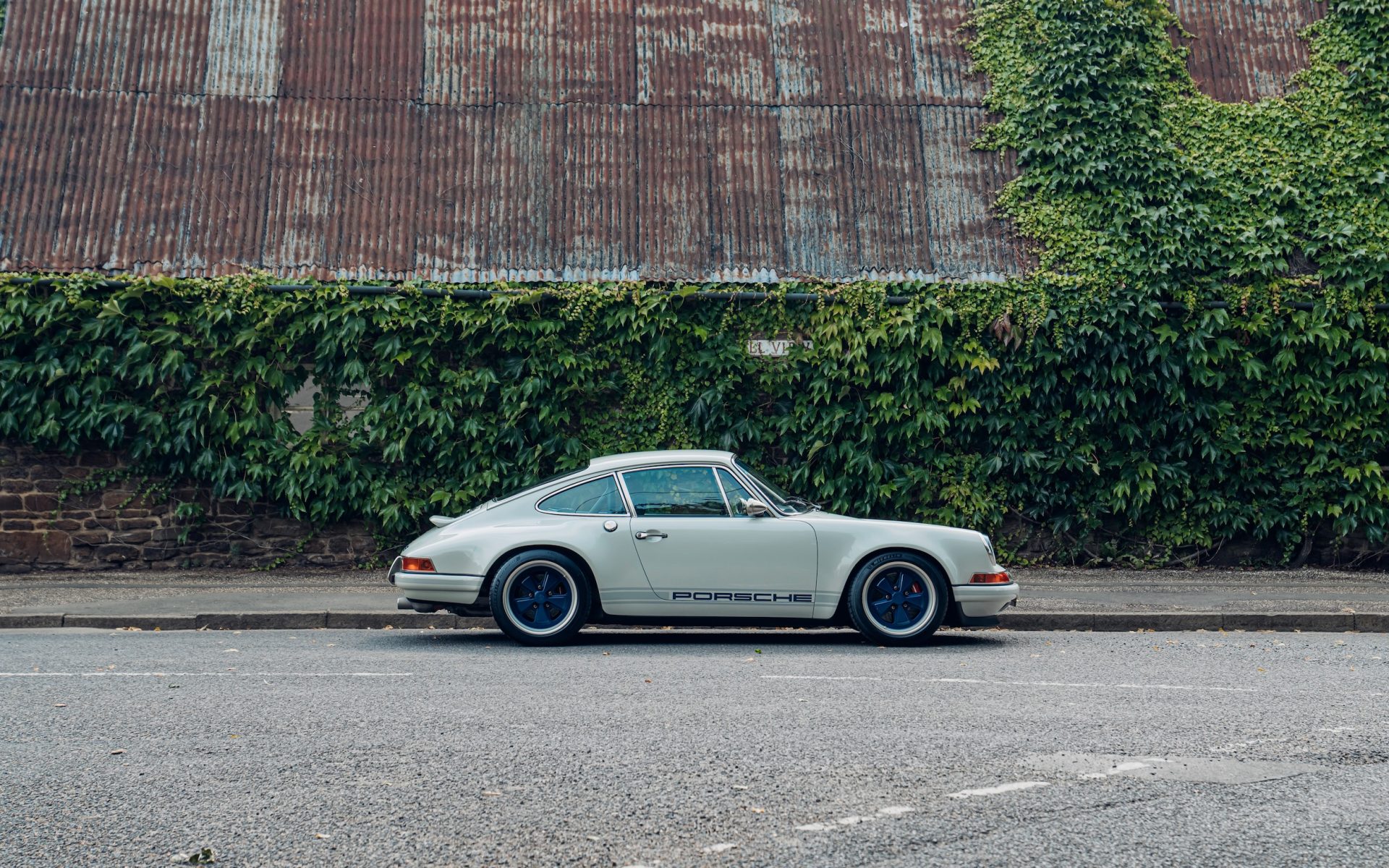
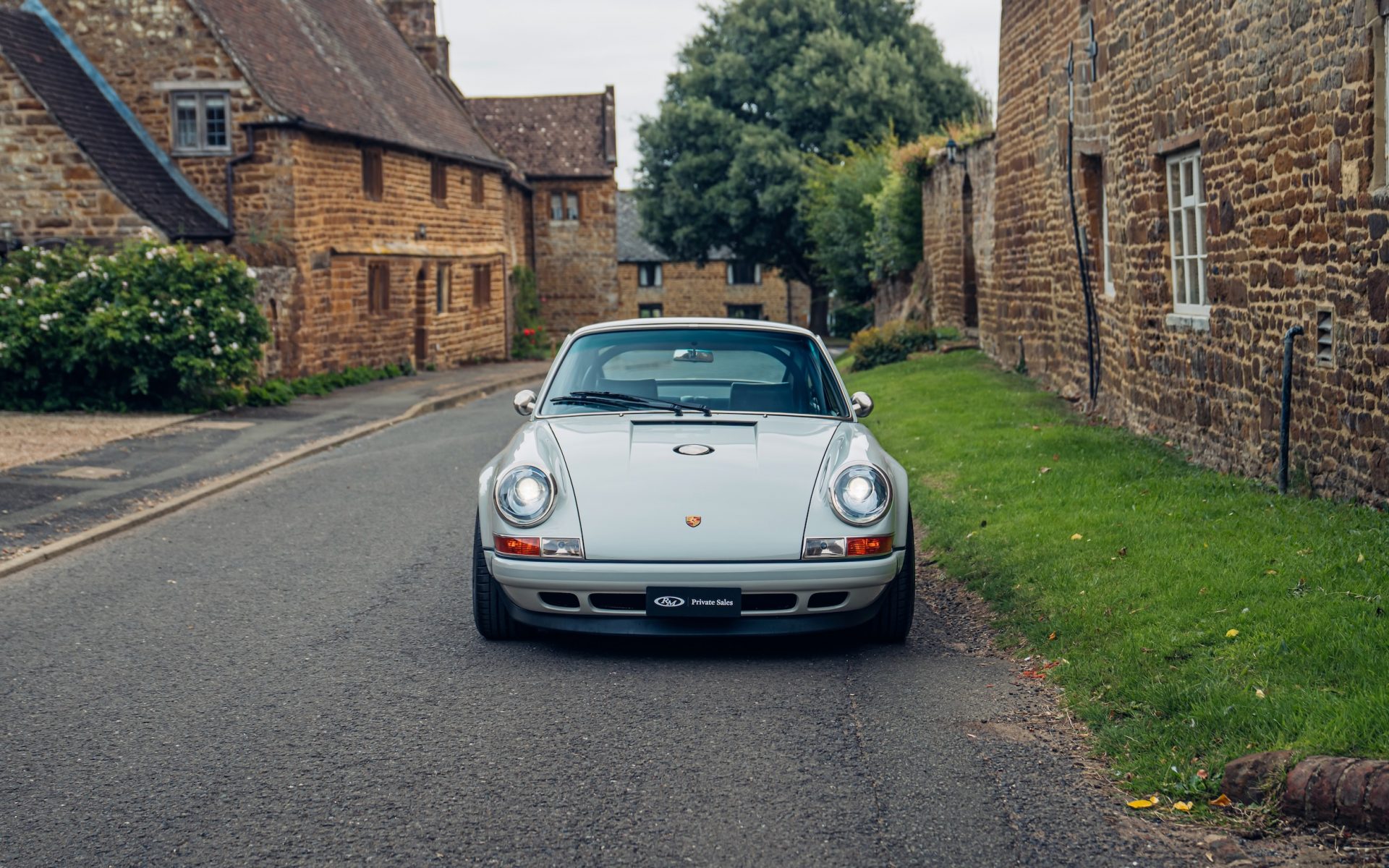
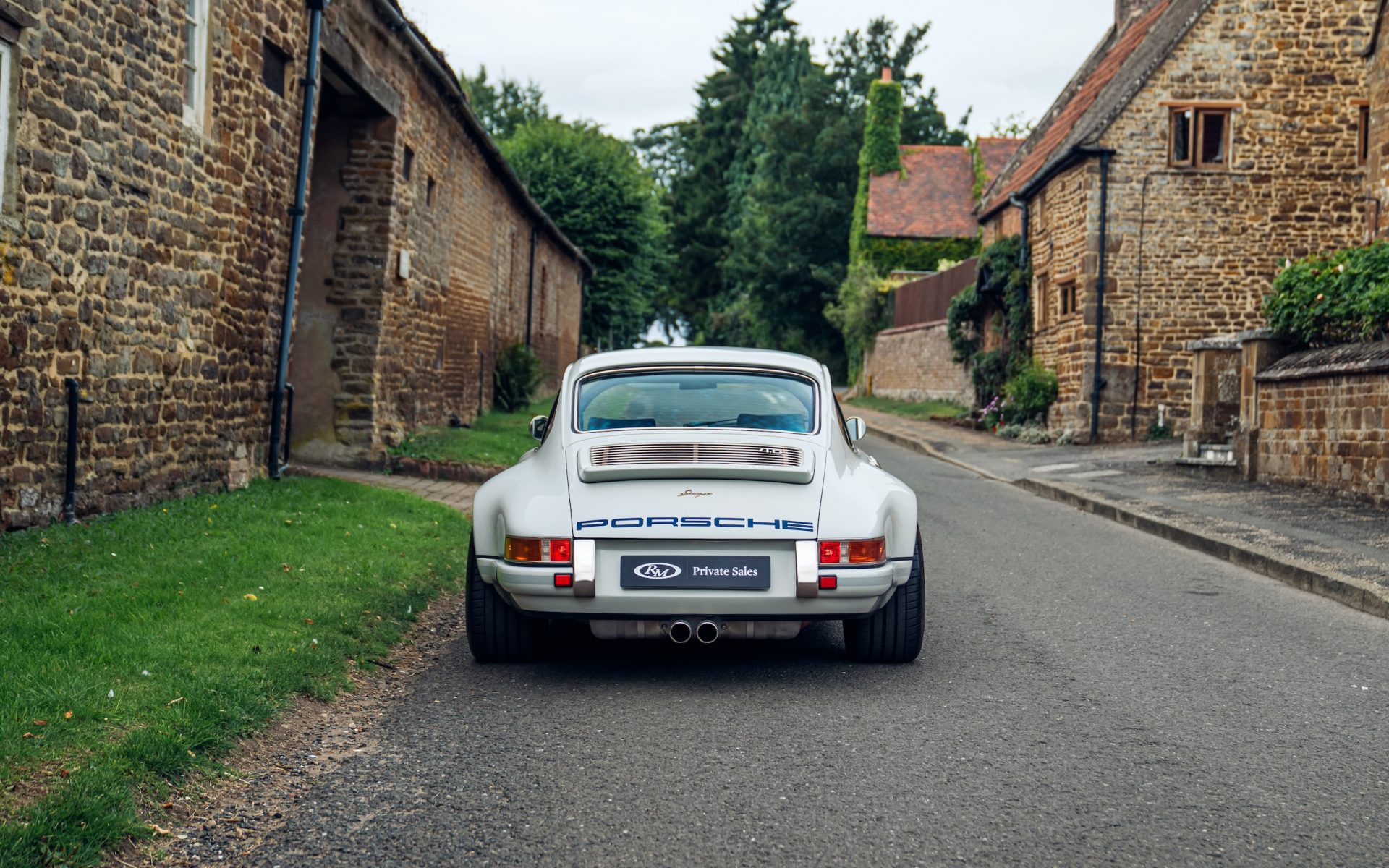
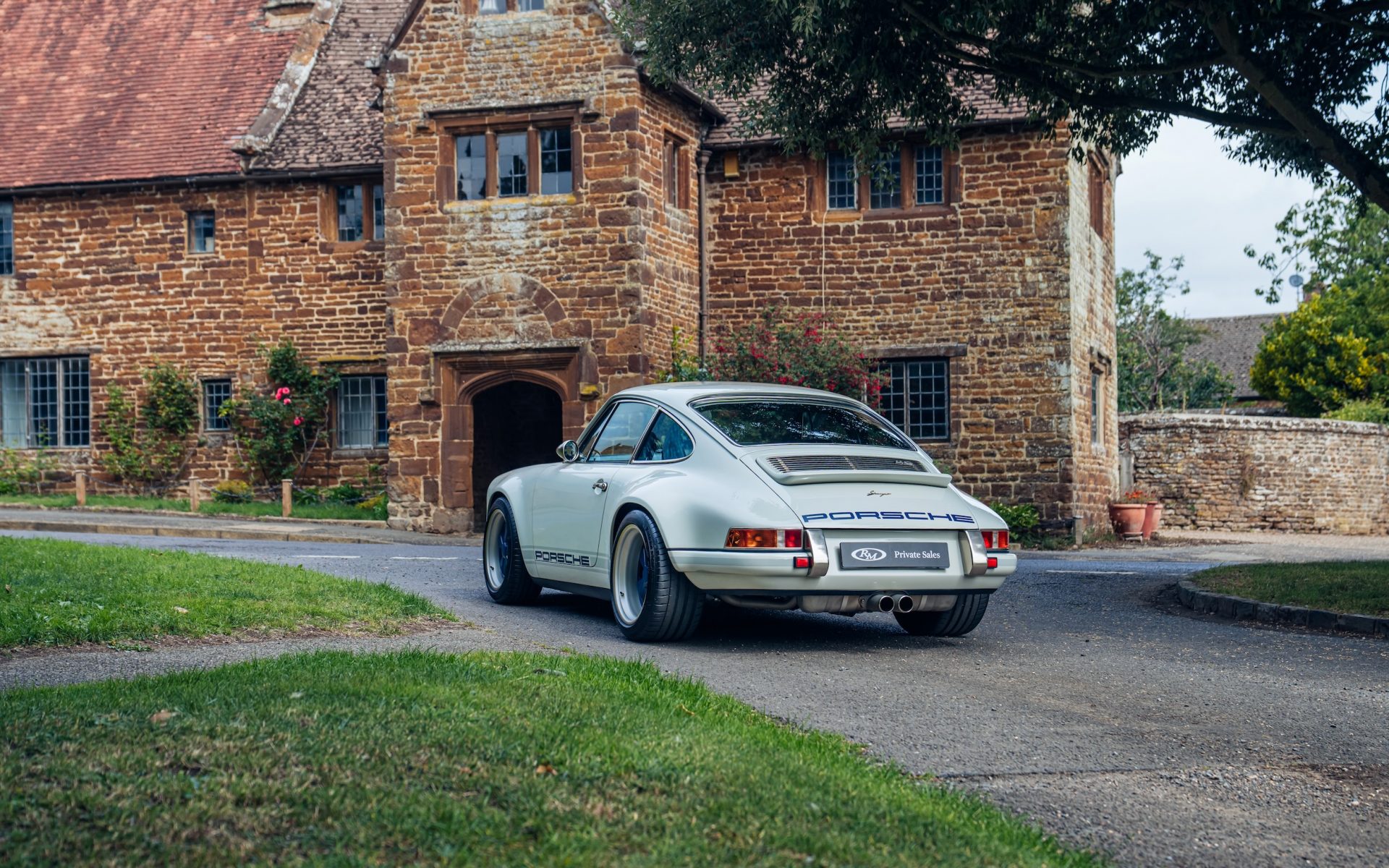
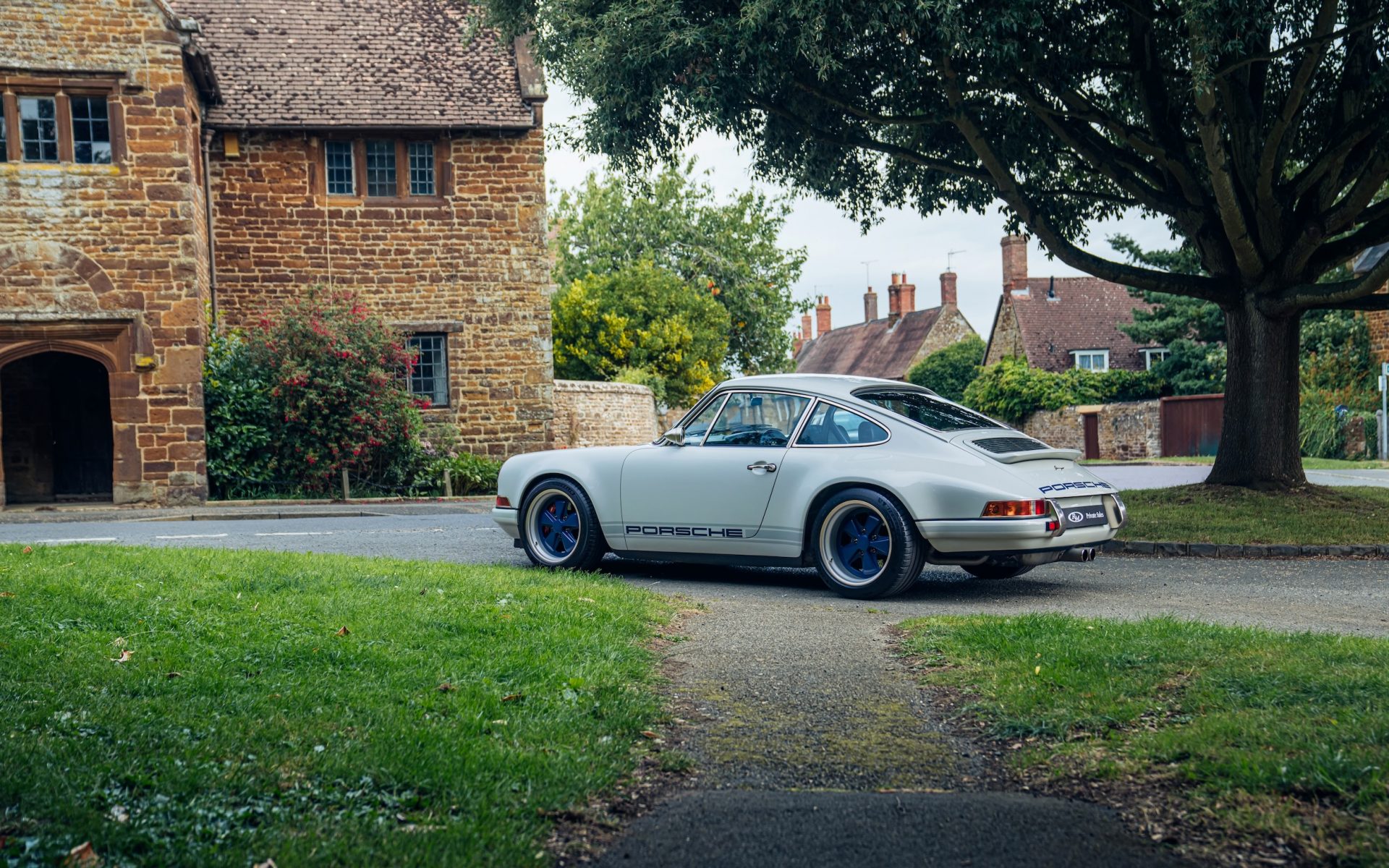
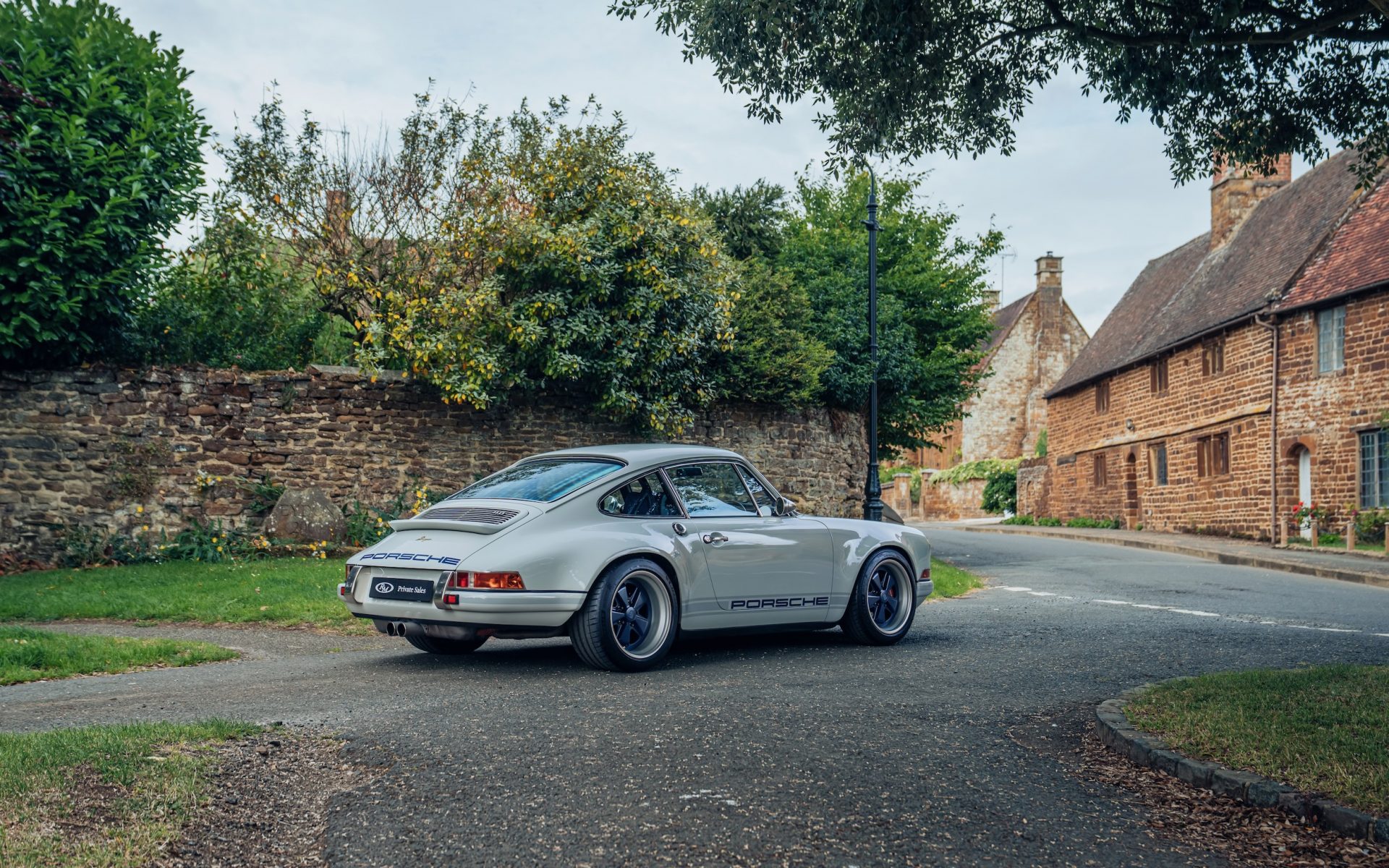

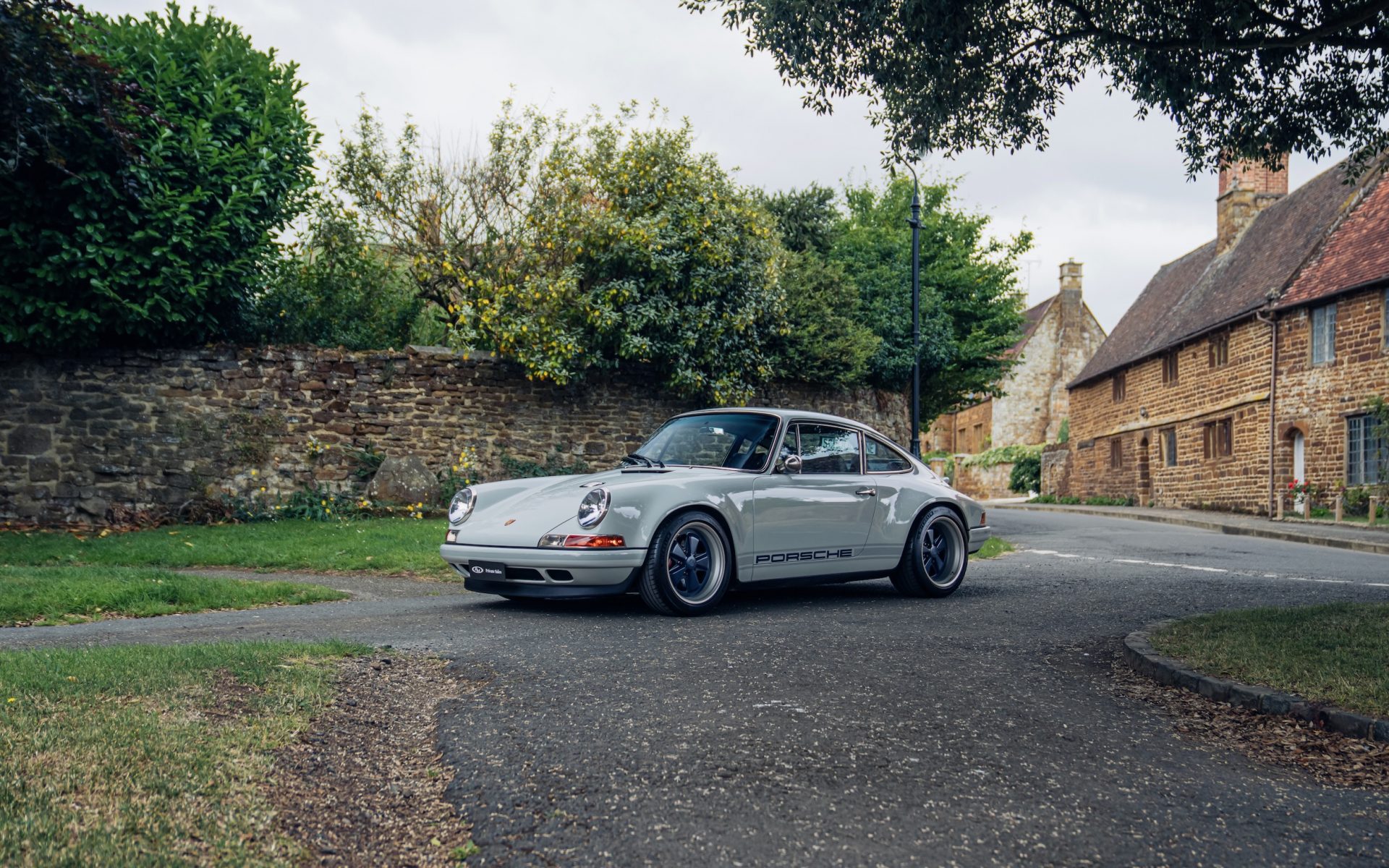


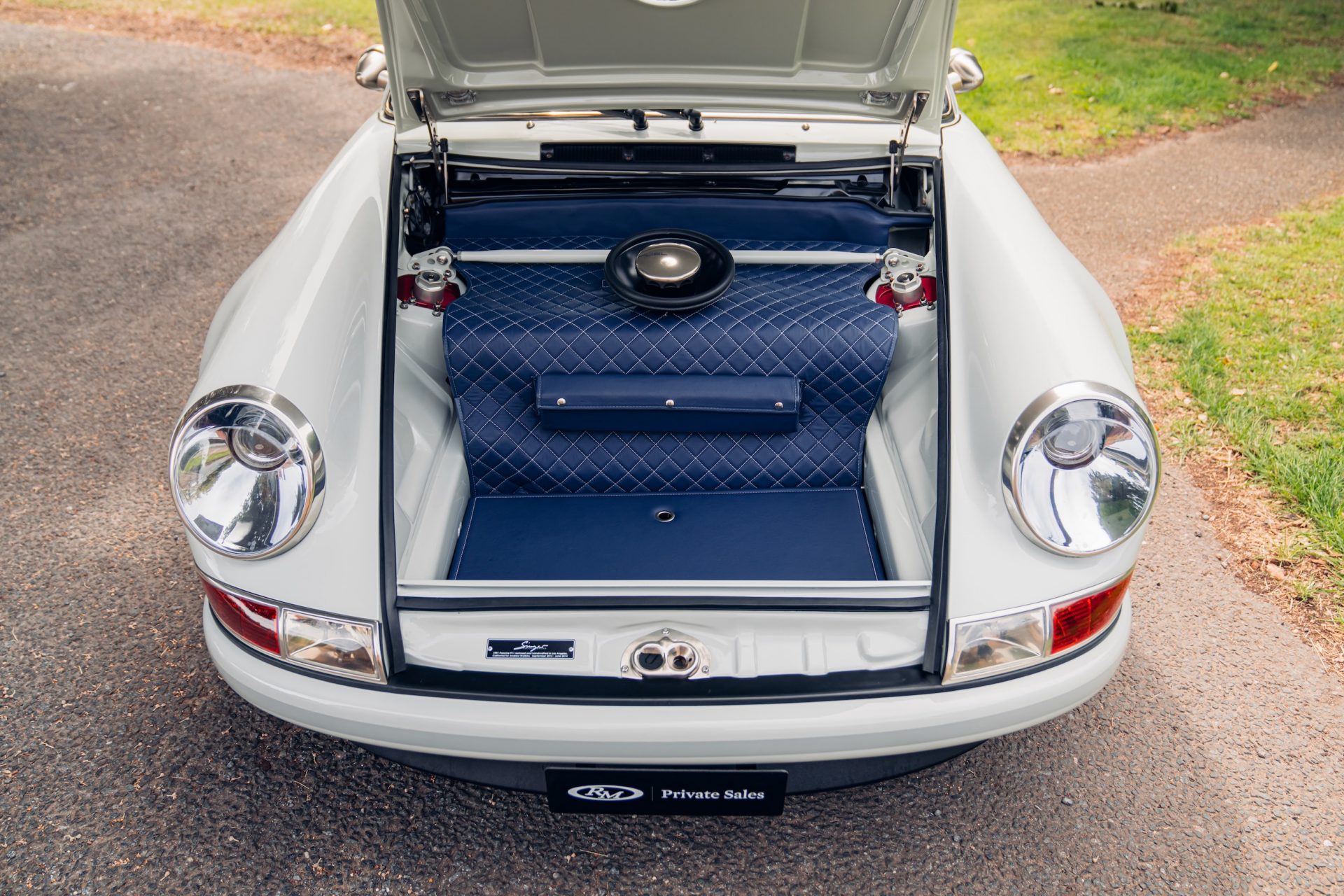

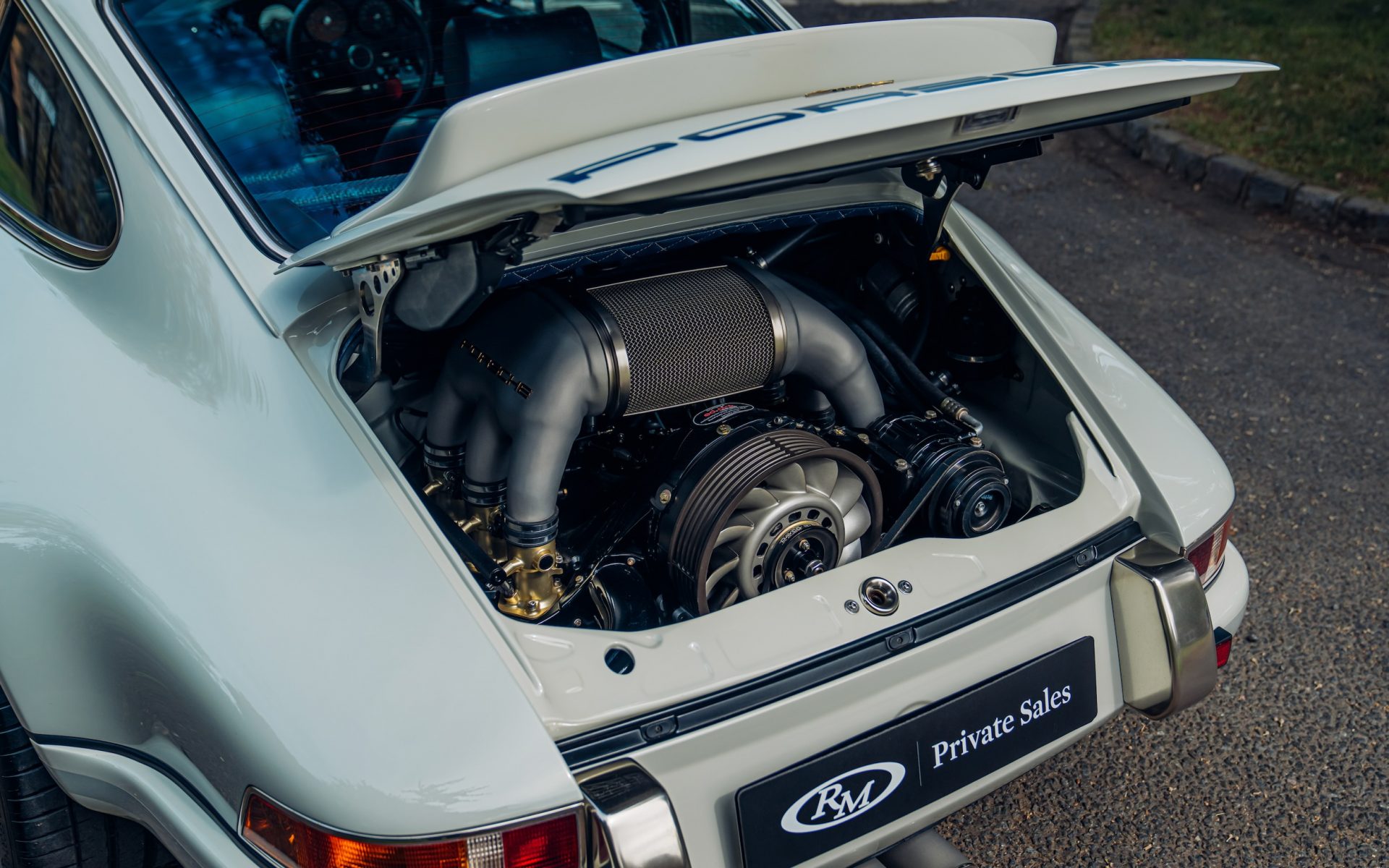
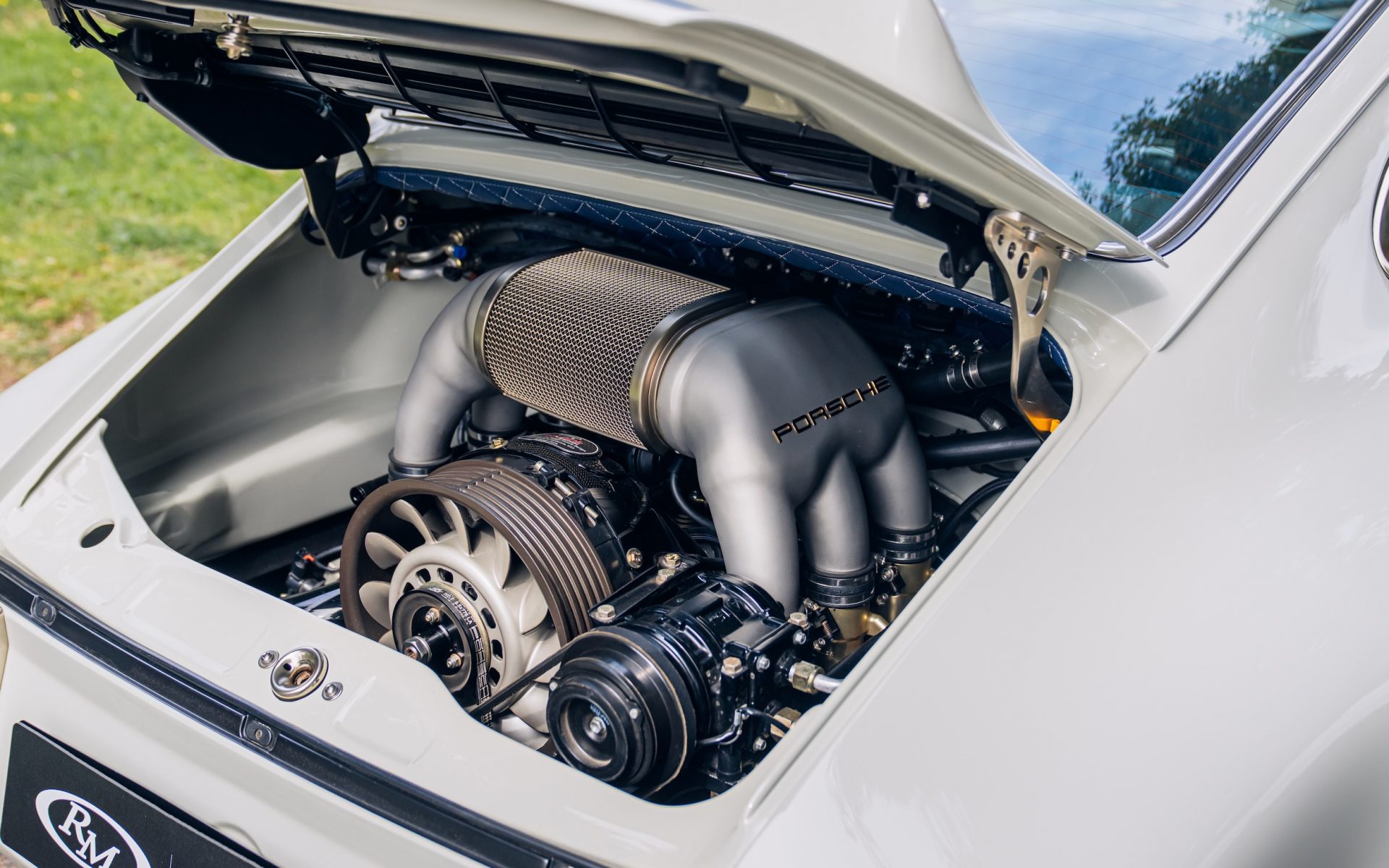


Steht zum Verkauf bei RM Sotheby’s, Private Sales (Oktober 2025), Preis auf Anfrage, mit diesen Informationen: «Built to RHD specifications for use by the consigning owner in Hong Kong, HK2, the second Classic Study to be delivered to Hong Kong, was completed by Singer Vehicle Design in the summer of 2015. This would be just the fourteenth Classic Study to be completed by Singer Vehicle Design and as such, Singer’s founder Rob Dickinson was personally involved in every step of the car’s build process, from initial specification discussions to completion and delivery to Hong Kong. HK2 is finished in Dolphin Grey, a colour made famous by Porsche on the 356, alongside ghosted stripes with blue lettering, and blue-painted Fuchs-style wheels to match. Mechanically, it is optioned with the Öhlins adjustable suspension, a leather-wrapped roll cage, and the five-speed manual gearbox. Further options include the exposed fuel and oil filler caps, grey ceramic-coated exhaust, and nickel-plated bumperettes. The blue detailing on the exterior carries through to the car’s interior, with the interior trimmed in matching blue leather and carpets. Options include the Recaro sport seats with black-painted seatbacks and the Becker radio. Upon the consignor’s move home from Hong Kong to his native England, HK2 would also find its way to the UK but not before being sent to Singer Vehicle Design’s headquarters in Los Angeles. There, its engine was upgraded to 4.0-litre specifications, having been initially fitted with the 3.8-litre engine option as that was the largest available at the time of its build. The car was also fitted with upgraded exhaust system to reduce in-cabin noise and drone. Further work was done by Tuthill to tune the suspension specifically for use on UK roads. Since returning to the UK, the car has been maintained by Singer’s approved aftersales partners and more recently at Singer’s own facilities in the UK. Offered in partnership between RM Sotheby’s and Singer Vehicle Design, the car is offered with a full Singer Vehicle Design warranty, having been prepared to meet Singer’s pre-owned ‘Encore’ standards».
–
Chassis-Nummer: WP0AB2967MS410452 (1991)
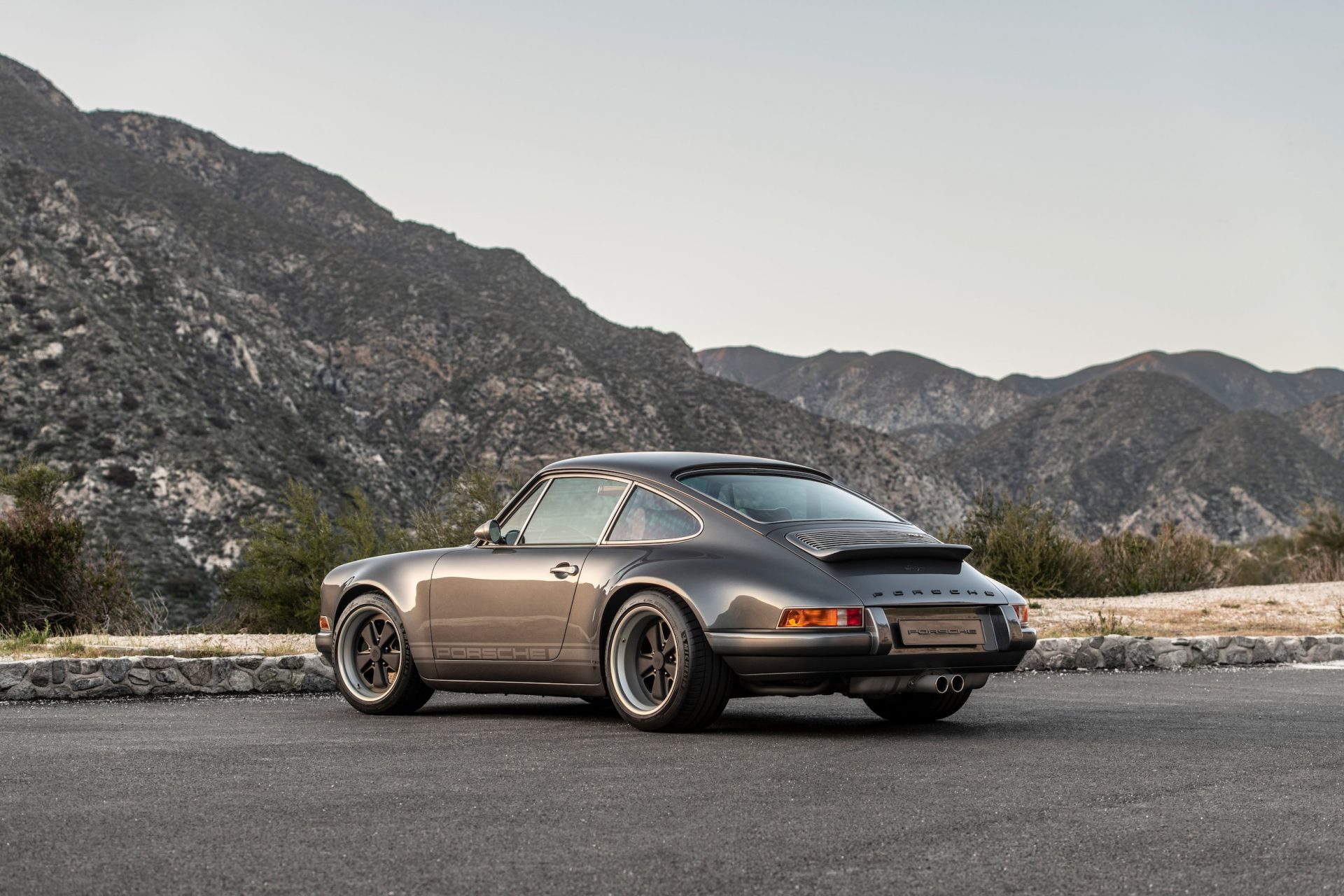
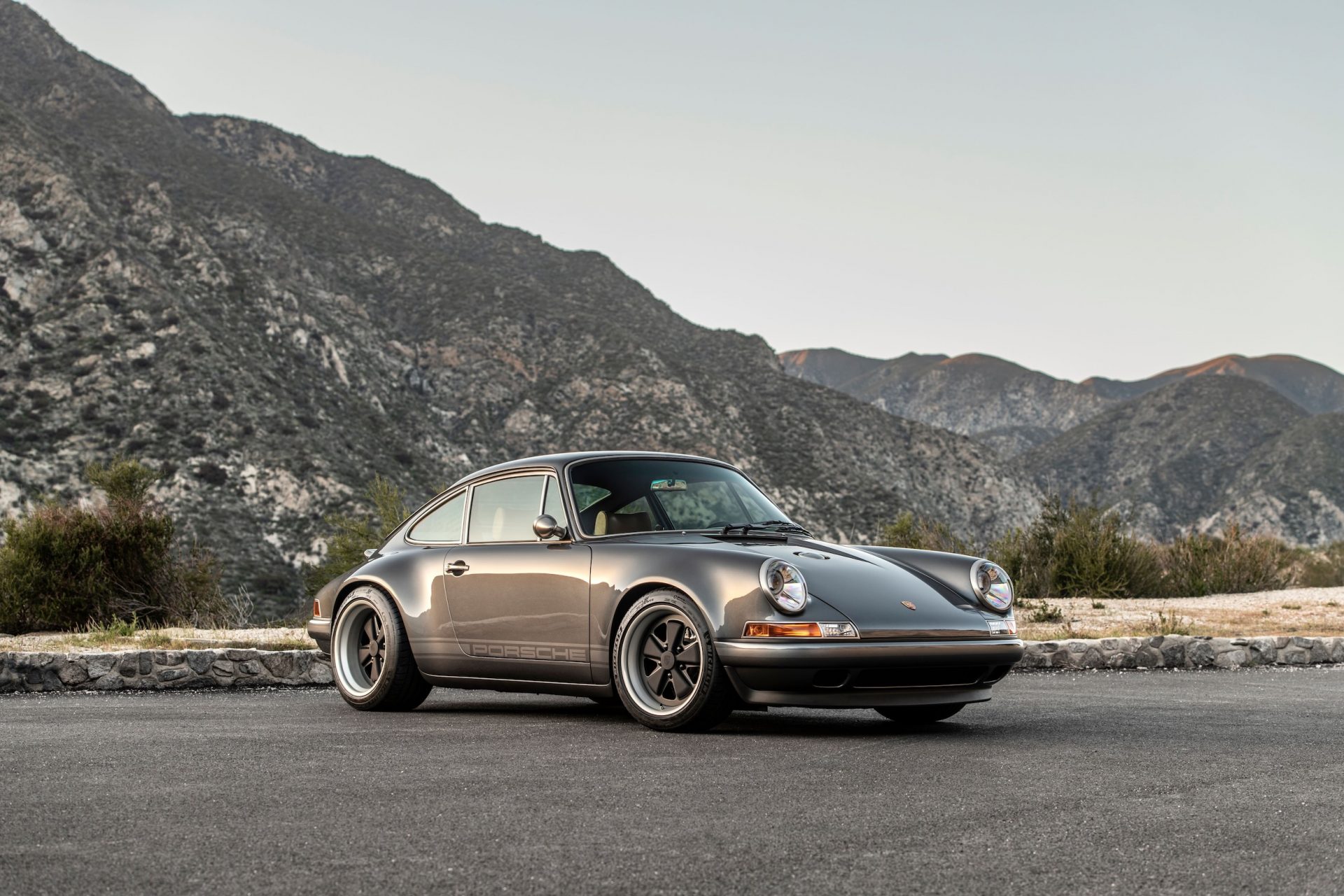


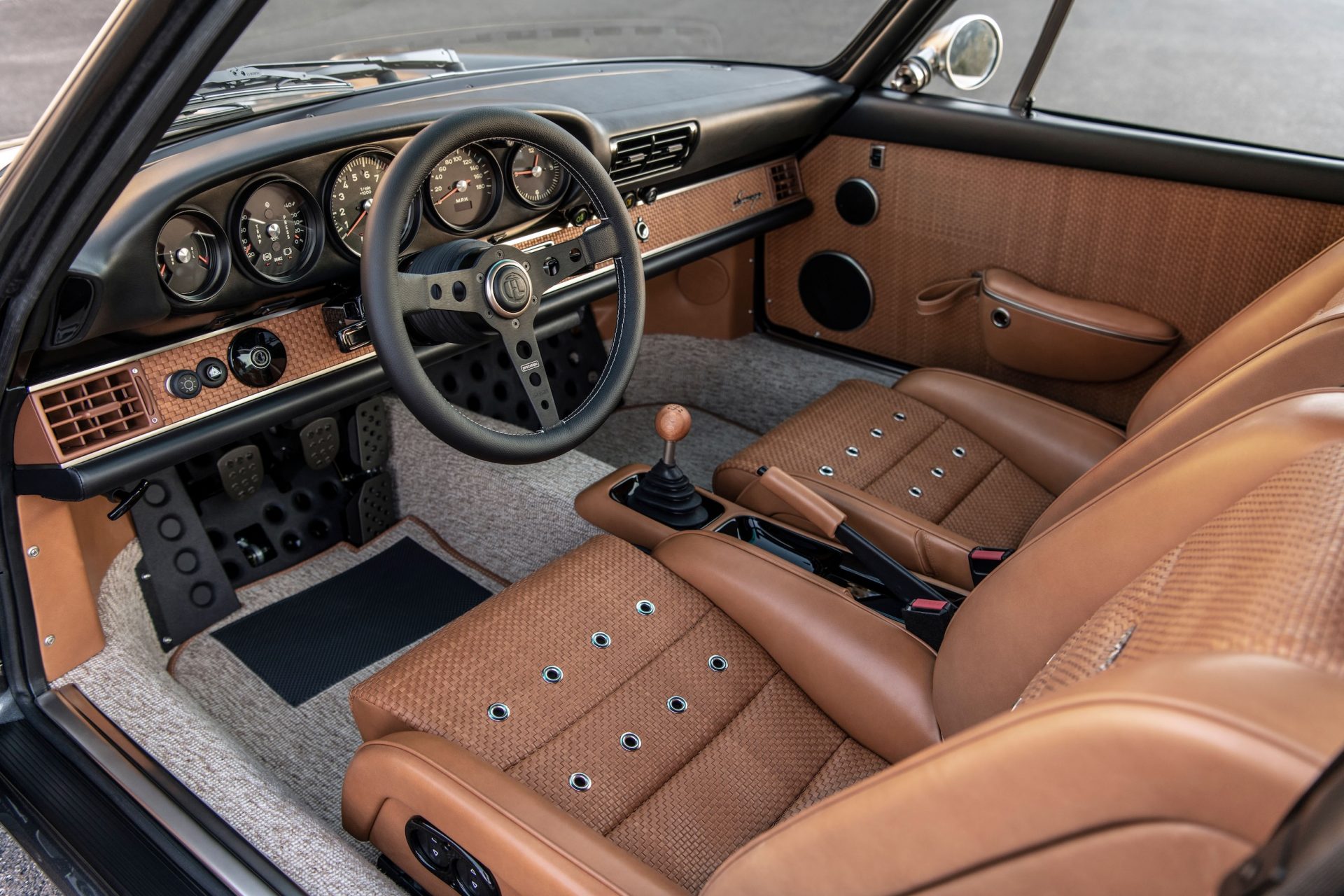

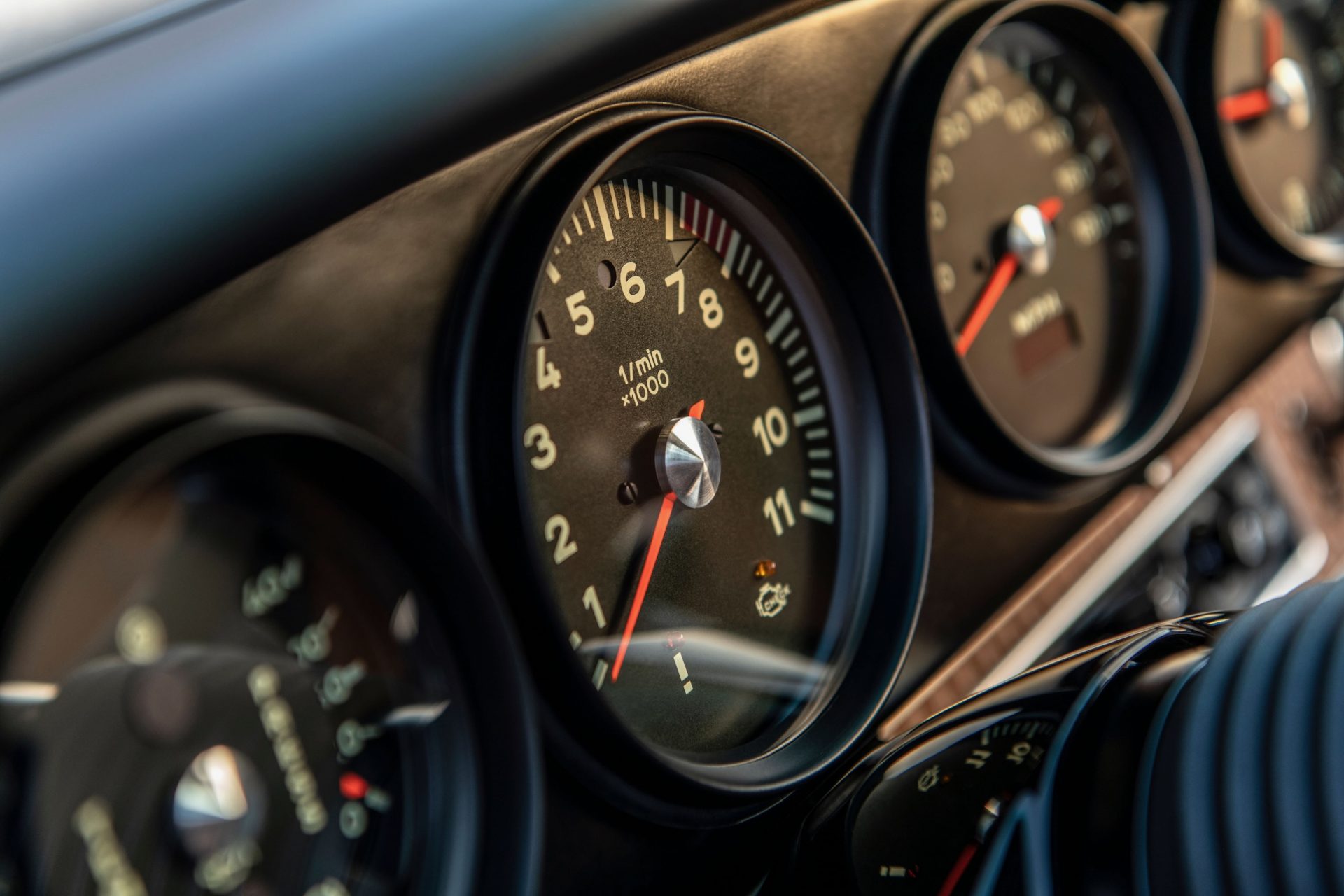

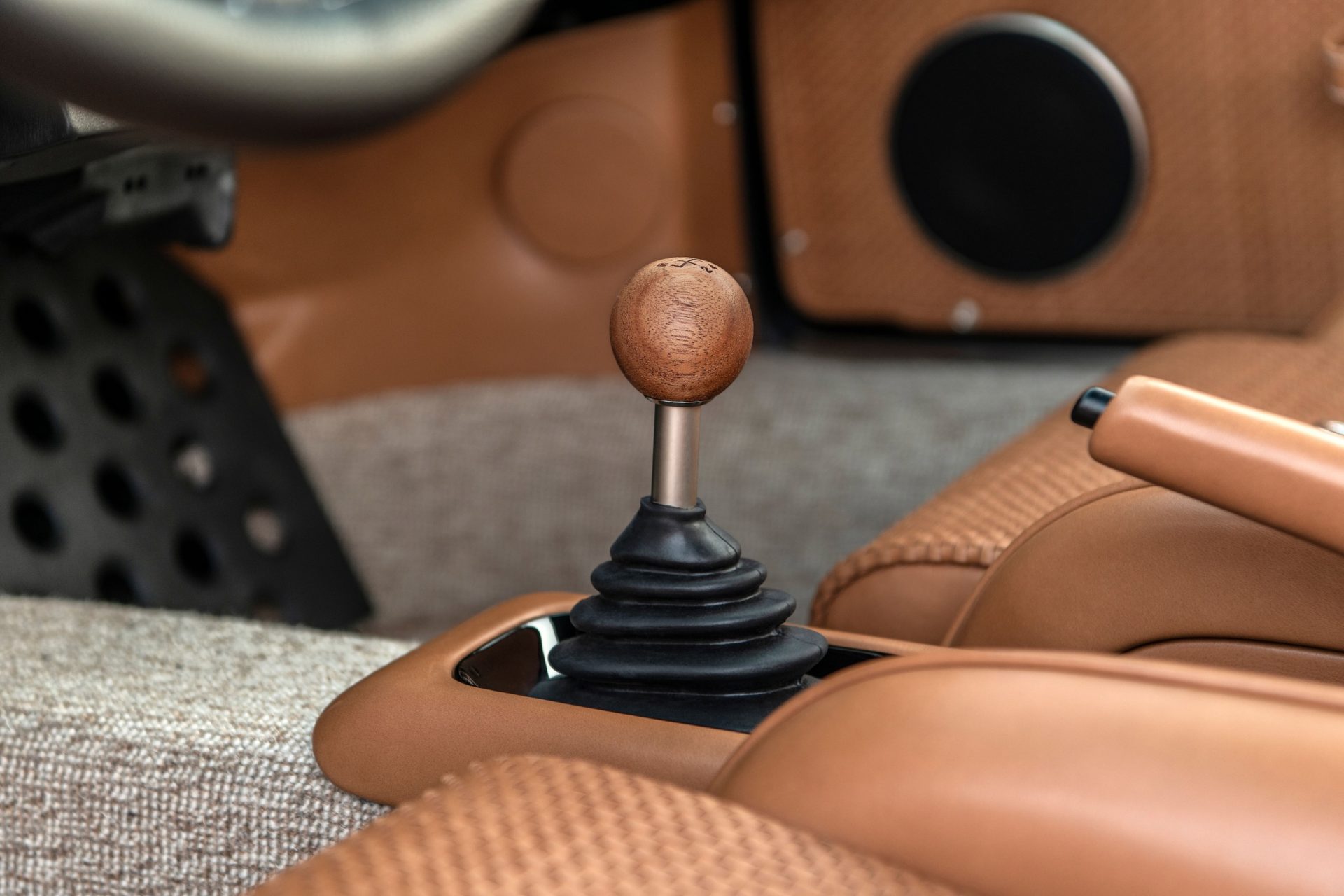


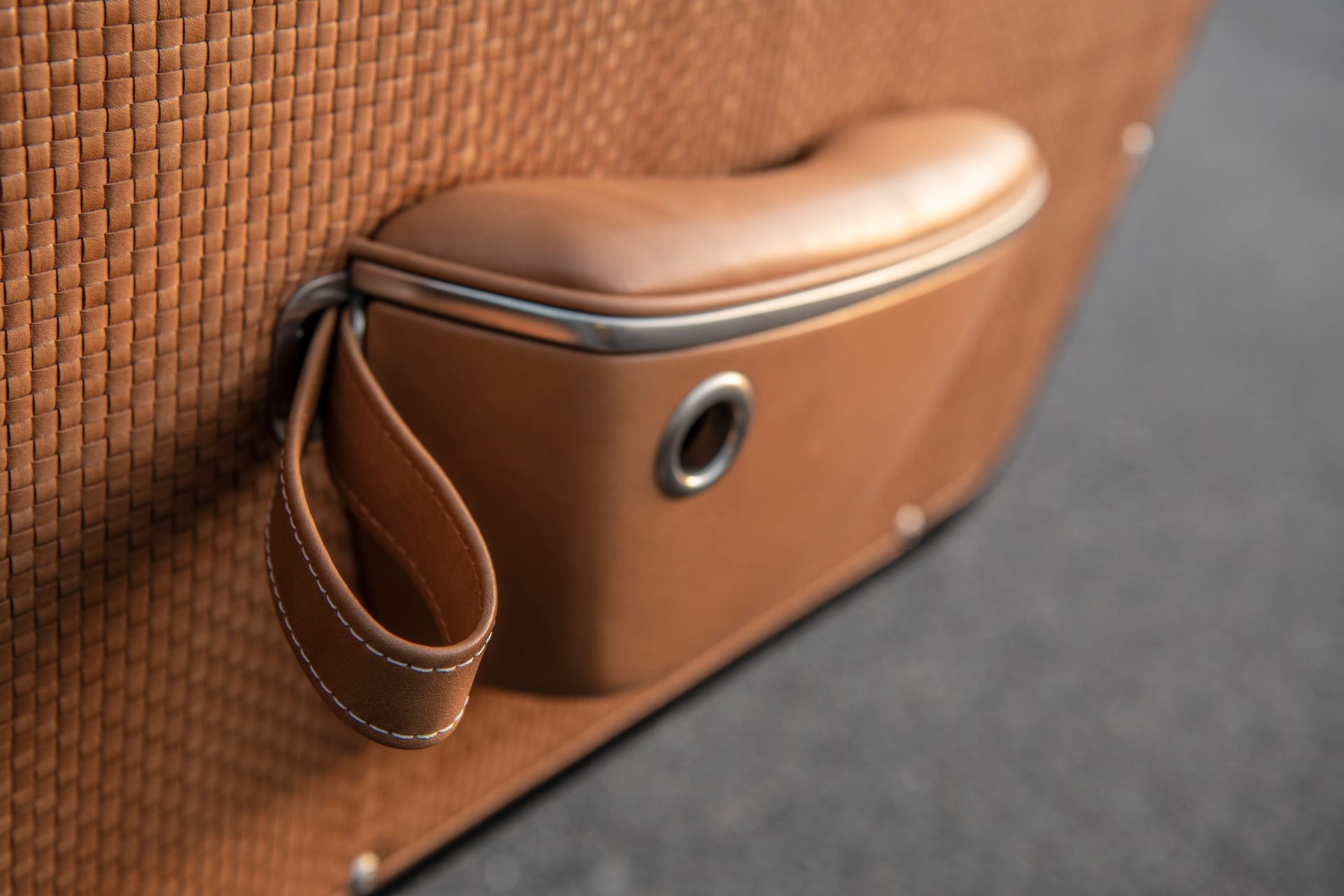
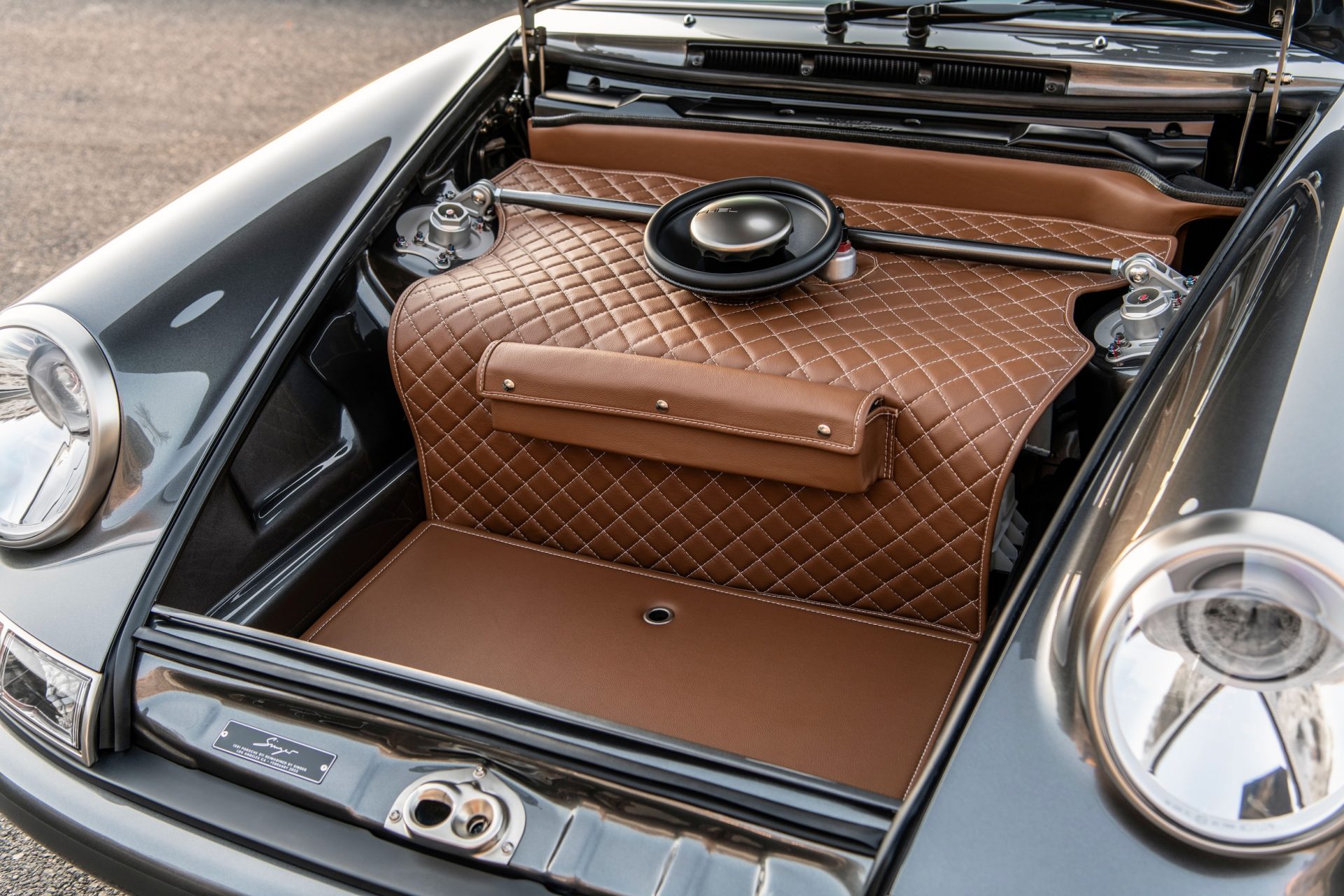


Auktion: RM Sotheby’s, Monterey 2023, verkauft für 1’407’500 Dollar, mit diesen Informationen: «Dubbed The “Lautrec Commission,” this Porsche 911 reimagined by Singer boasts a stunning and exceptionally well-considered specification. As with this car’s namesake—the famous French Impressionist painter Henri de Toulouse-Lautrec—the world will never see its equal. Ordered by the consignor in April 2019, this stunning car represents the results of Singer’s Classic Study restoration services, orders for which Singer capped at 450 examples in June 2022. With its Paint-to-Sample Magnetic Silver exterior, the Lautrec Commission represents an exceptionally well-chosen specification. At the car’s heart lies Singer’s signature engine offering: their hand-built, 4.0-liter flat six-cylinder engine which produces 390 horsepower and 315 foot-pounds of torque. Better yet, the Lautrec Commission retains the purest powertrain configuration, sending power to the rear wheels via a five-speed G50-transmission. Thanks to the fitment of the optional high-performance brake package (with bespoke NATO Green-painted calipers), this reimagined 911 can decelerate just as quickly as it accelerates. Inside, a pair of Recaro sport seats are trimmed in Singer’s signature elegant, hand-woven Cinnamon leather which extends through the cabin to the dashboard trim panel and door cards. The black anodized kick panels are nicely complemented by a matching pedal set, perforated black vinyl headliner, and black leather dashboard—all of which visually tie-in with the car’s Satin Black-finished Fuchs wheels. The transmission tunnel and interior doorsills are finished in square weave Oatmeal carpeting, while especially keen eyes will note the mahogany 917-style gearshift knob and classic-style gauge suite bearing Magnetic Silver dials anointed with cream markers—a bespoke touch which harkens back to the instrumentation found in 911s of the mid-1960s. The car also benefits from a modern air conditioning system and Singer’s premium Dynaudio sound system package with Audison amplifier. Finally, Toulouse-Lautrec’s monogram adorns the center of the steering wheel».
–
Chassis-Nummer: WP0AB2960MS410941 (1991)
Motorennummer: 62M05682

Verkauft über Broad Arrow, Private Sales, mit diesen Informationen: «Originally built to order by a New York-based collector, car #153 named the ‚St. Tropez‚ Commission, later renamed ‚Onera‚ by its current owner, was built between October 2017 and March 2019 and is equipped with the largest, most desirable 4.0-liter engine. According to Singer, these 4.0-liter engines produce about 390 bhp and about 315 lb/ft of torque with engineering by Ed Pink Racing Engines. All of Singer’s Ed Pink-built engines start with a 964 case and feature a litany of internal upgrades including a custom crankshaft, oil pump, pistons, cylinders, connecting rods, camshafts, cylinder heads, throttle bodies, and intake system. When married with the Singer chassis, performance is awe-inspiring with 0-60 times below 3.3 seconds and 0-100 mph sprints of about 8.2 seconds. Onera is offered on behalf of its second owner with 3,478 miles indicated on the odometer. Well specified from new, Onera is finished in Porsche Silver with side stripe delete and optioned externally with large center fill fuel cap, raised gold decklid letters, Bahama Yellow ‚Big‘ Brembo brake calipers, and nickel-plated exterior trim. Working in concert with the classic Silver exterior are the four points of contact in the interior – Dark Navy Blue leather fixed track-spec seats with brass grommets, MOMO Prototipo steering wheel, drilled, floor mounted pedals, and ’special wishes‘, 917-style wooden gearknob – take center stage. Black trim and Alabaster cabin stitching compliment the tan square-weave carpet, ivory headliner, with the Bahama Yellow tachometer face rounding out the interior. The entire car is underpinned by Öhlins sublime ‚Phantom Road‘ Sport Suspension Package, built with bespoke valving for Singer. These Öhlins dampers, finely adjustable for bump and rebound, were developed with renowned driver/journalist Richard Meaden of EVO magazine.»
–
Chassis-Nummer: WP0AB2963MS411078 (1991)
Motorennummer: 62M06641
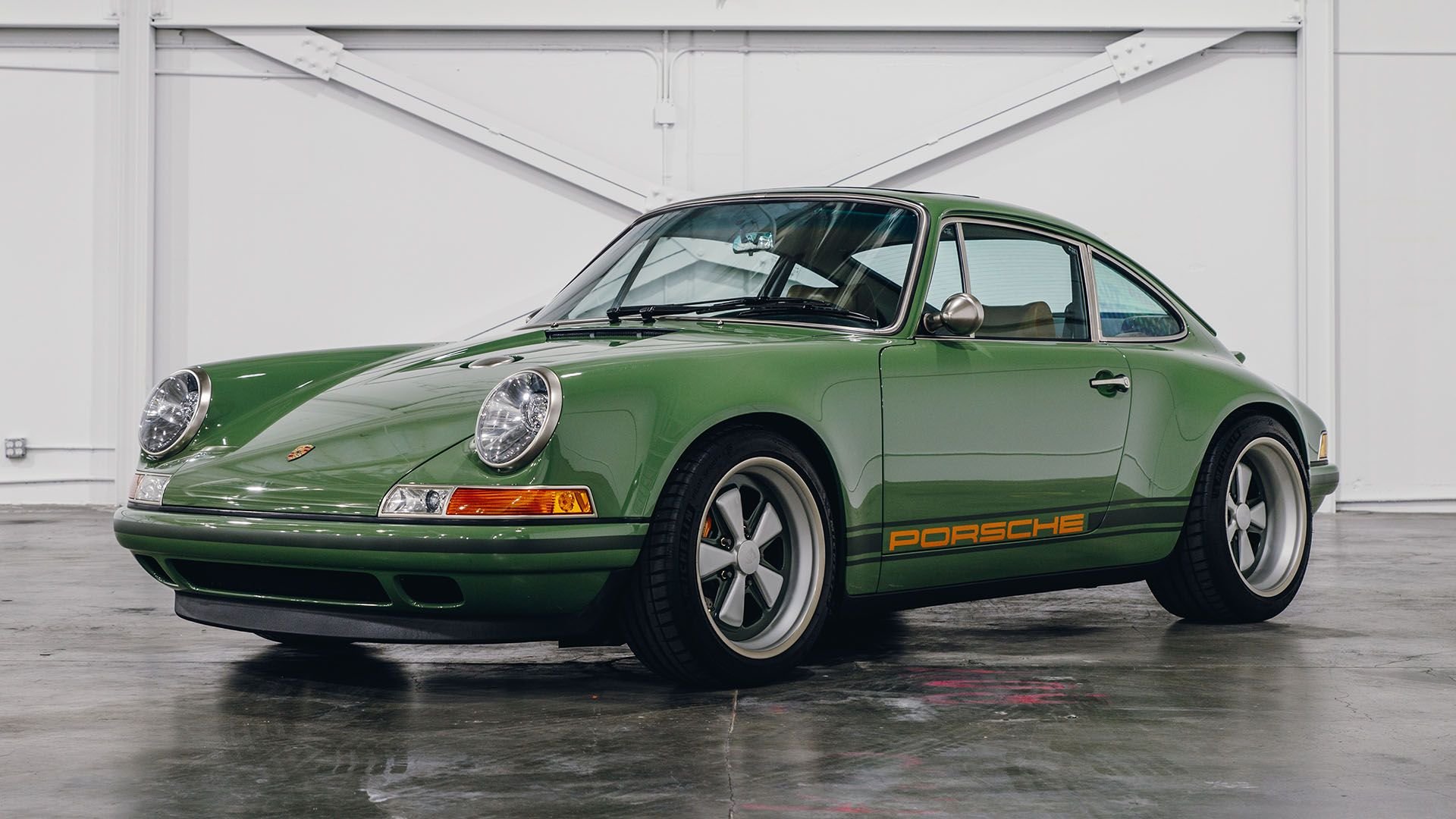
Verkauft über Broad Arrow, Private Sales, mit diesen Informationen: «Vehicle #188, the ‚Lyon‚ commission, was completed in June 2021. This highly specified example features the largest, most desirable 4.0-liter flat-six developed by Ed Pink Racing Engines to produce 390-horsepower thanks to a multitude of internal upgrades such as a custom crankshaft, oil pump, pistons, cylinders, connecting rods, camshafts, cylinder heads, throttle bodies, and the ever so visually gratifying anodized Velocity Stack intakes. This engine is paired with a chassis that features its own plethora of upgrades including a six-speed – Porsche Motorsport built – manual transmission, bigger Brembo brake kit, and Öhlins ‚Phantom Road‘ suspension to provide a staggering level of usable performance. While this Singer is capable of incredible performance figures, Collector’s Garage Senior Specialist Alexander Weaver, a noted Singer enthusiast, praises the vehicle’s ability to provide pure driving enjoyment, whether commuting to work or navigating the twists of a favorite mountain road. As a result of each Singer being built to specification, collectors were faced with nearly endless customization opportunities that resulted in some truly unique and beautiful examples, such as the ‚Lyon‘ commission offered here. Finished in Leaf Green with Nato Green side stripes, Nato Green brake calipers, and Fuchs-style wheels featuring RSR style Nato Green backgrounds, this Singer’s detailed specification compliments many of the subtle changes Singer has made to the now largely carbon fiber body. The center fuel filler option, and painted body-color bumperettes pair well with the subtle hints of color from the SR Orange accents and Brass deck lid badges to finish off this attractive exterior. The interior features desirable 8-way touring Recaro seats featuring Saddle leather contrasting well with the special wishes body-colored ‚Jacuzzi‘ tunnel and foot wells. Further options include air conditioning and a special wishes Maple/Mahogany wood gear selector. Following the custom nature of the vehicle, contrasting SR Orange stitching and dash gauge dial details compliment the exterior accents. Exquisitely engineered to provide both driving soul and performance, ‚Lyon‘ currently shows just 1,374 miles at the time of cataloging.»
–
«Le Mans Commission» – Chassis-Nummer: 411128 (1991)
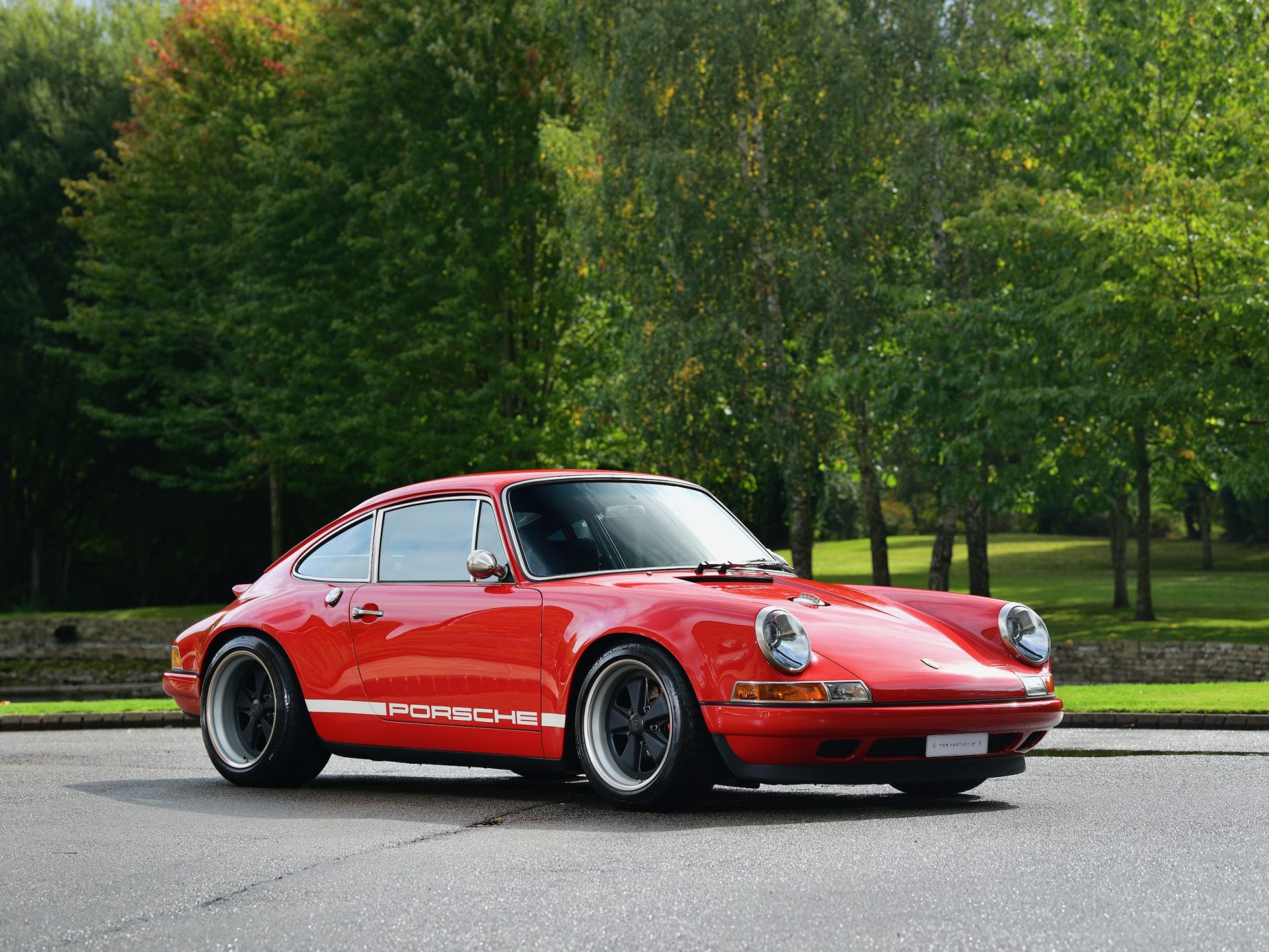
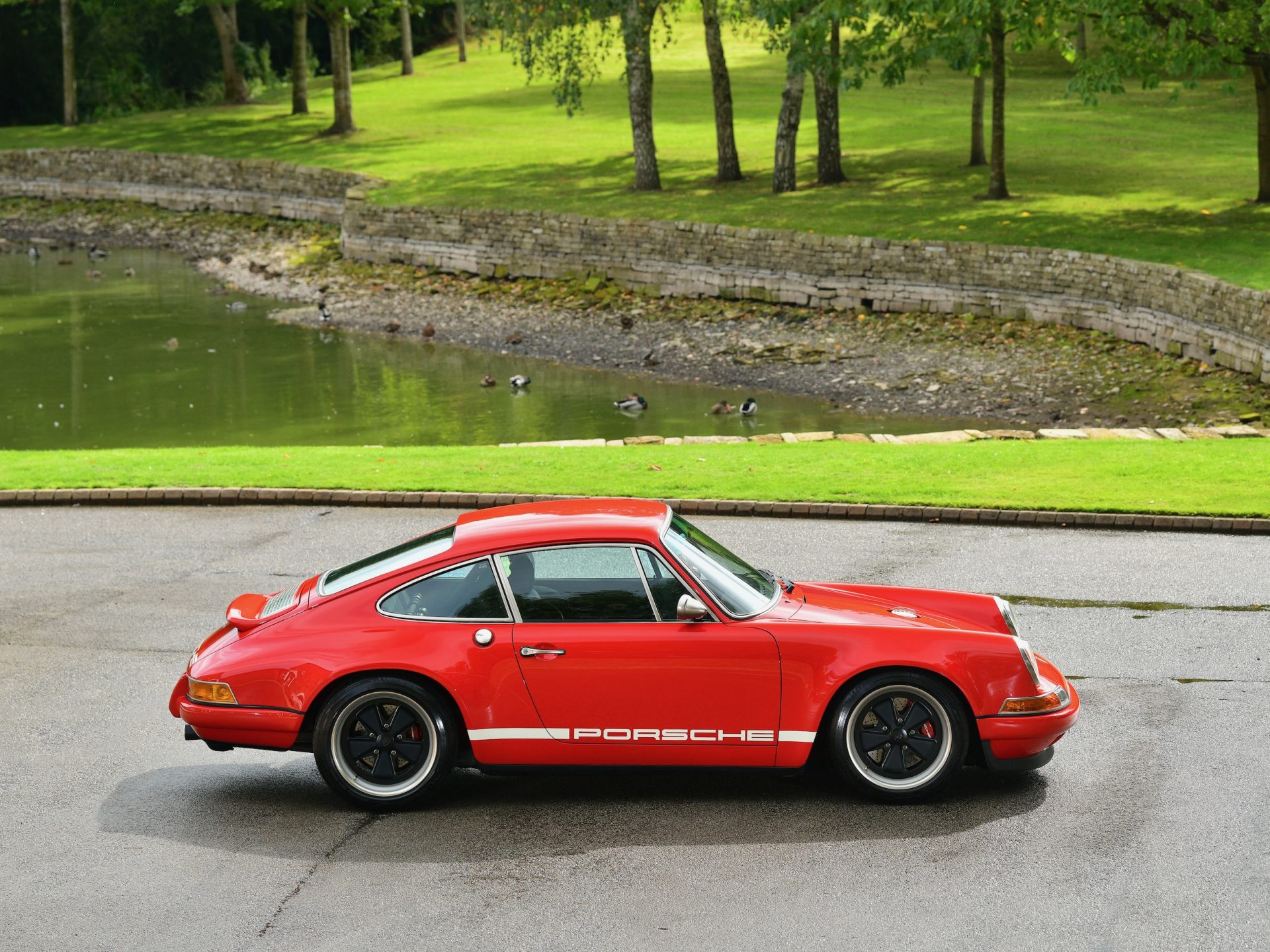
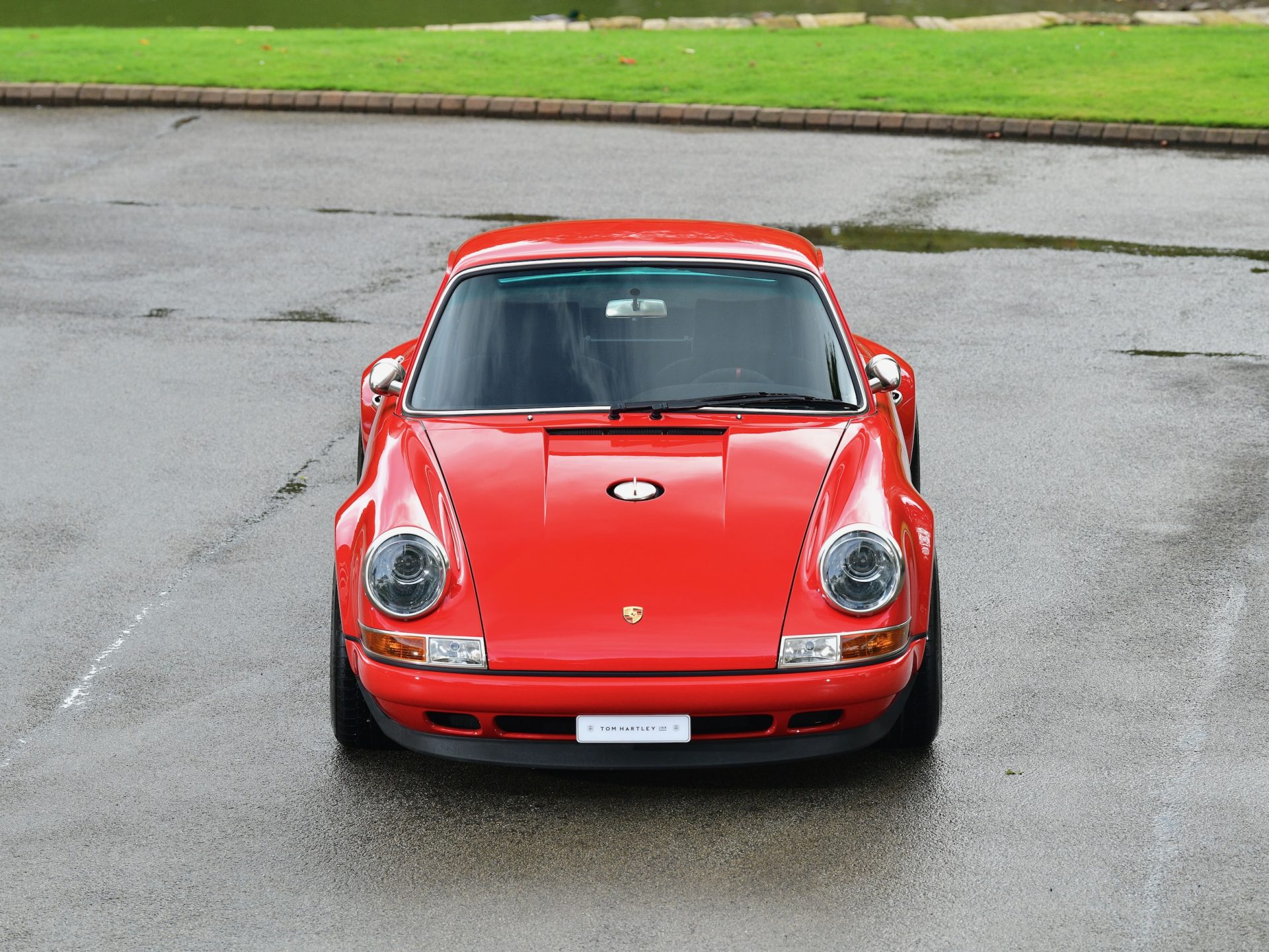
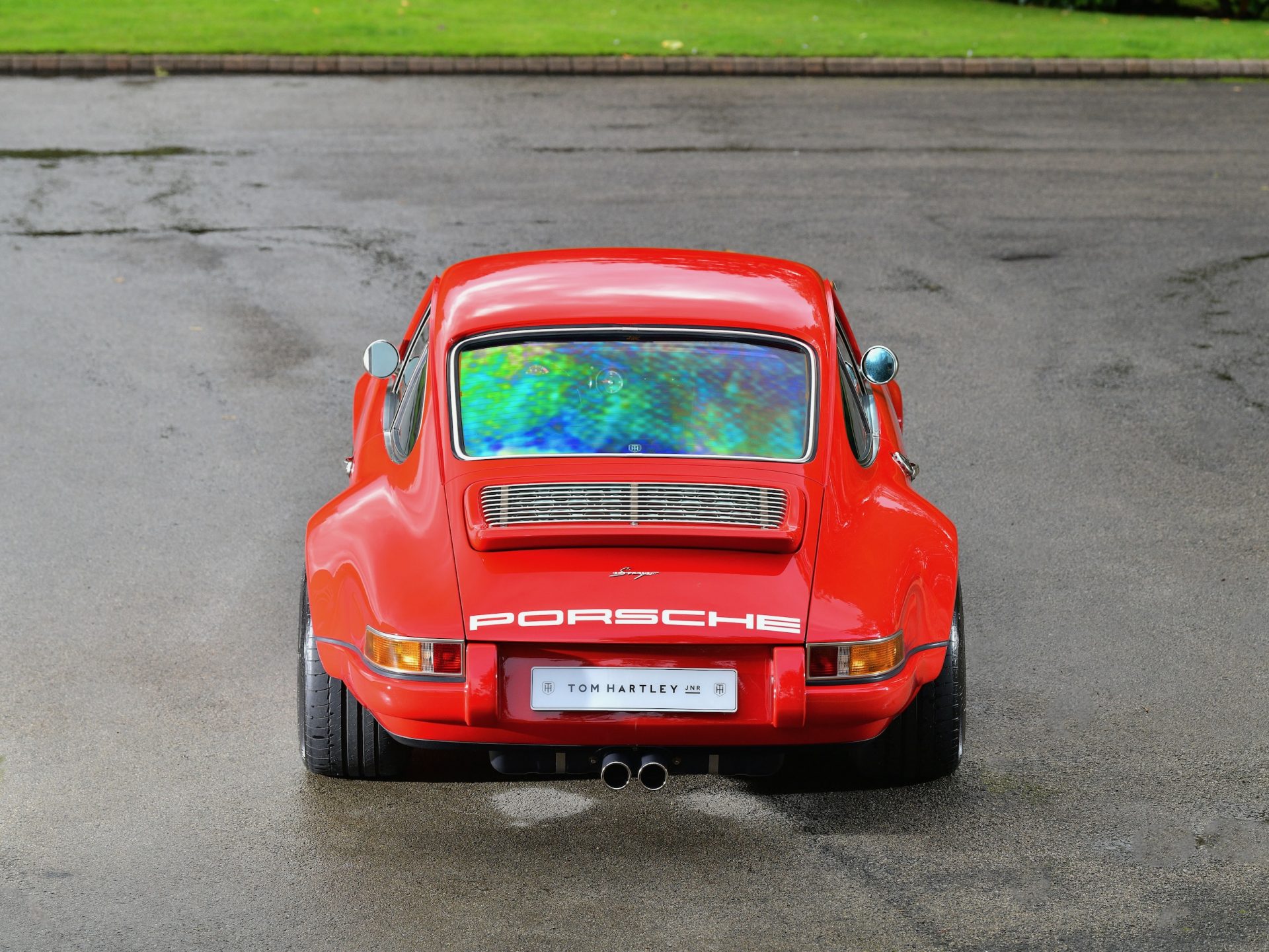
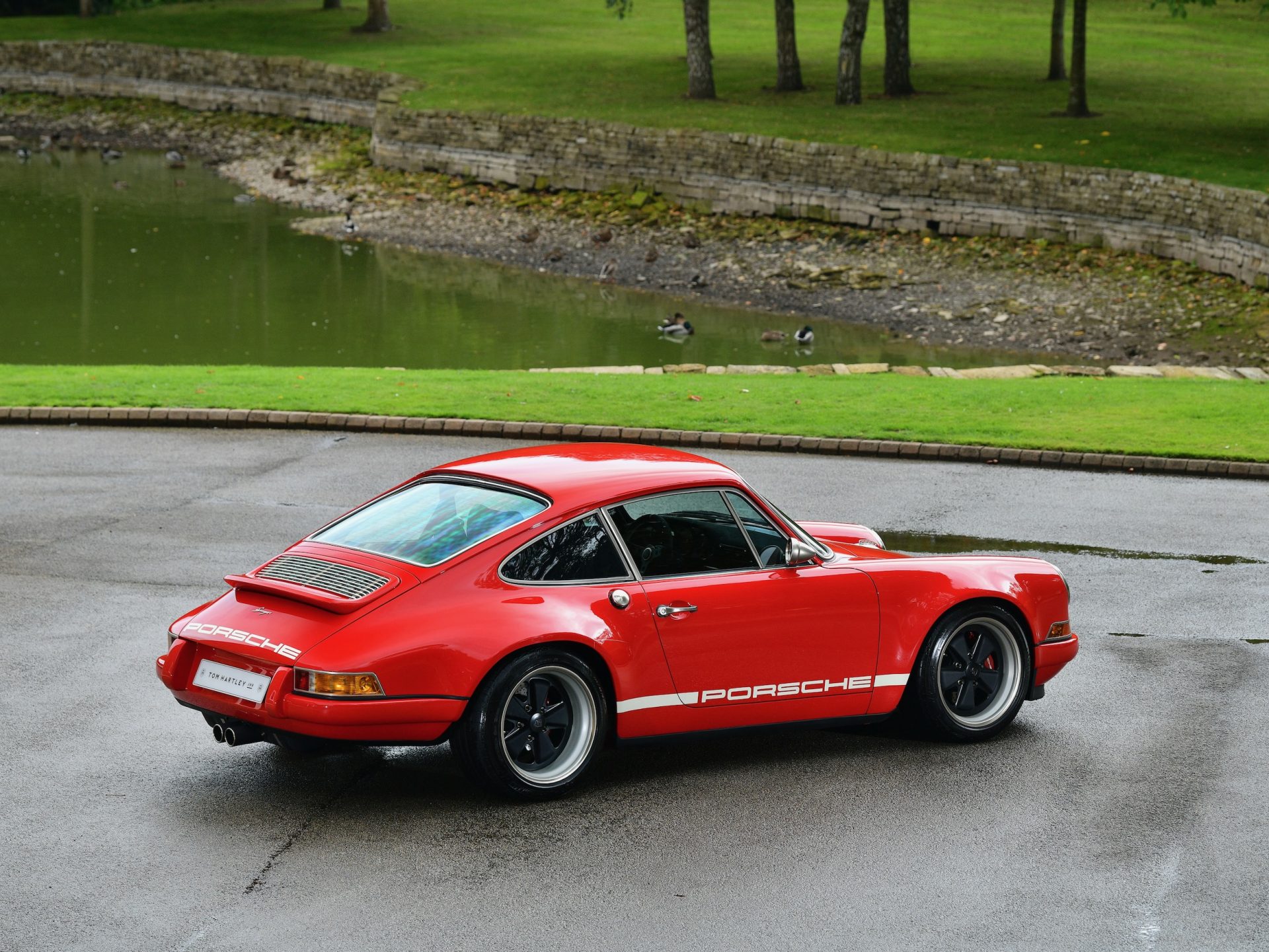
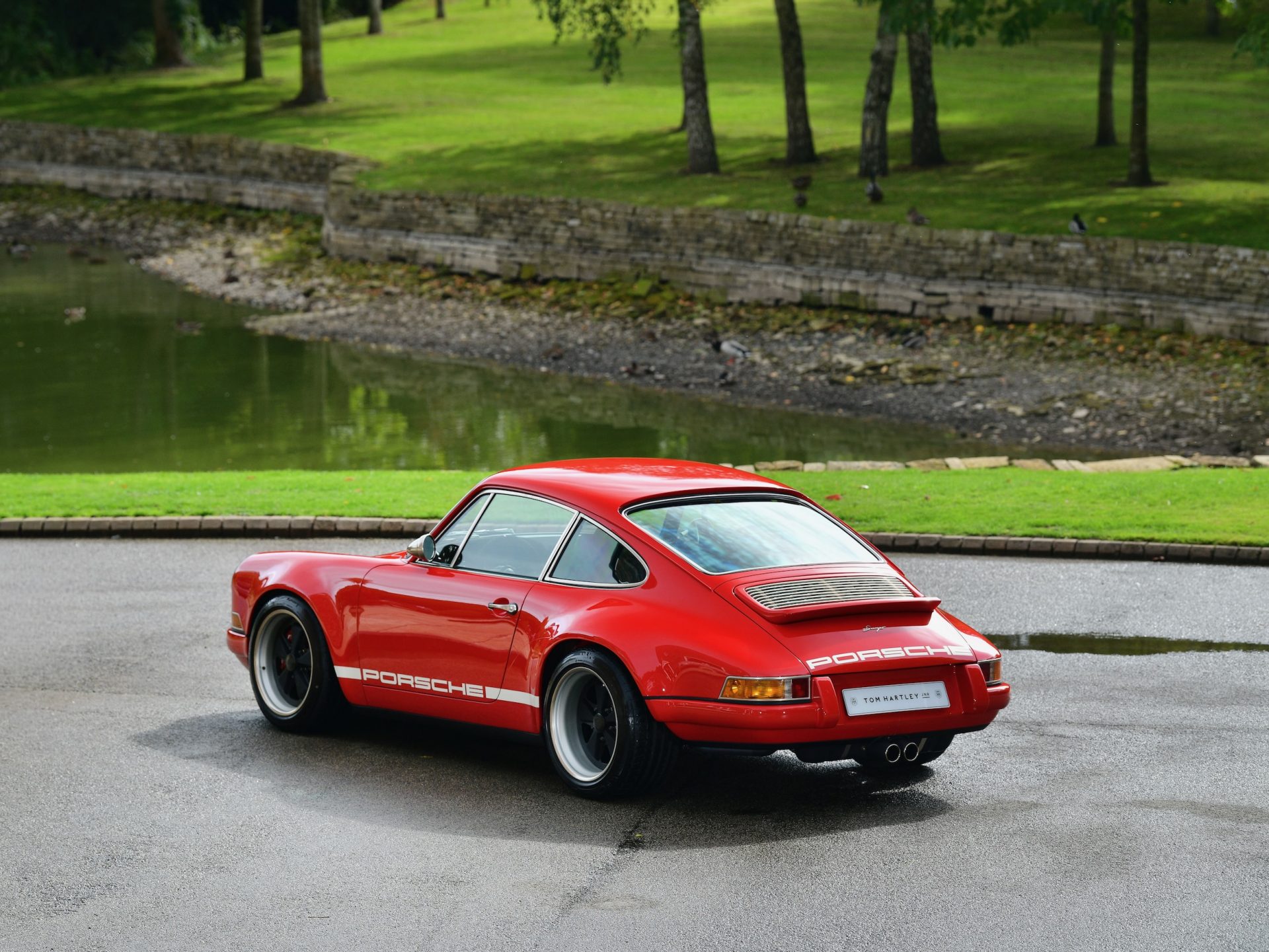
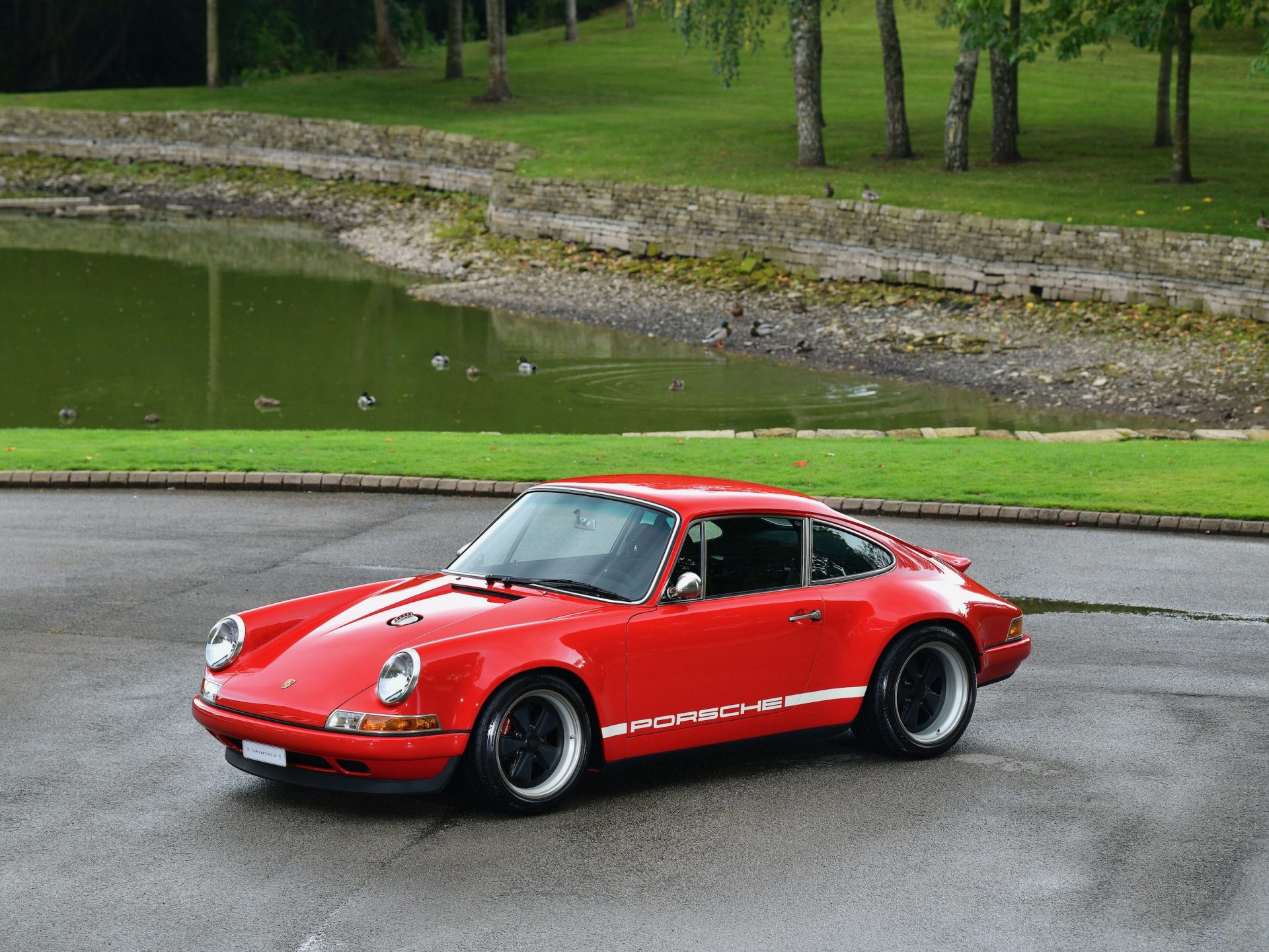
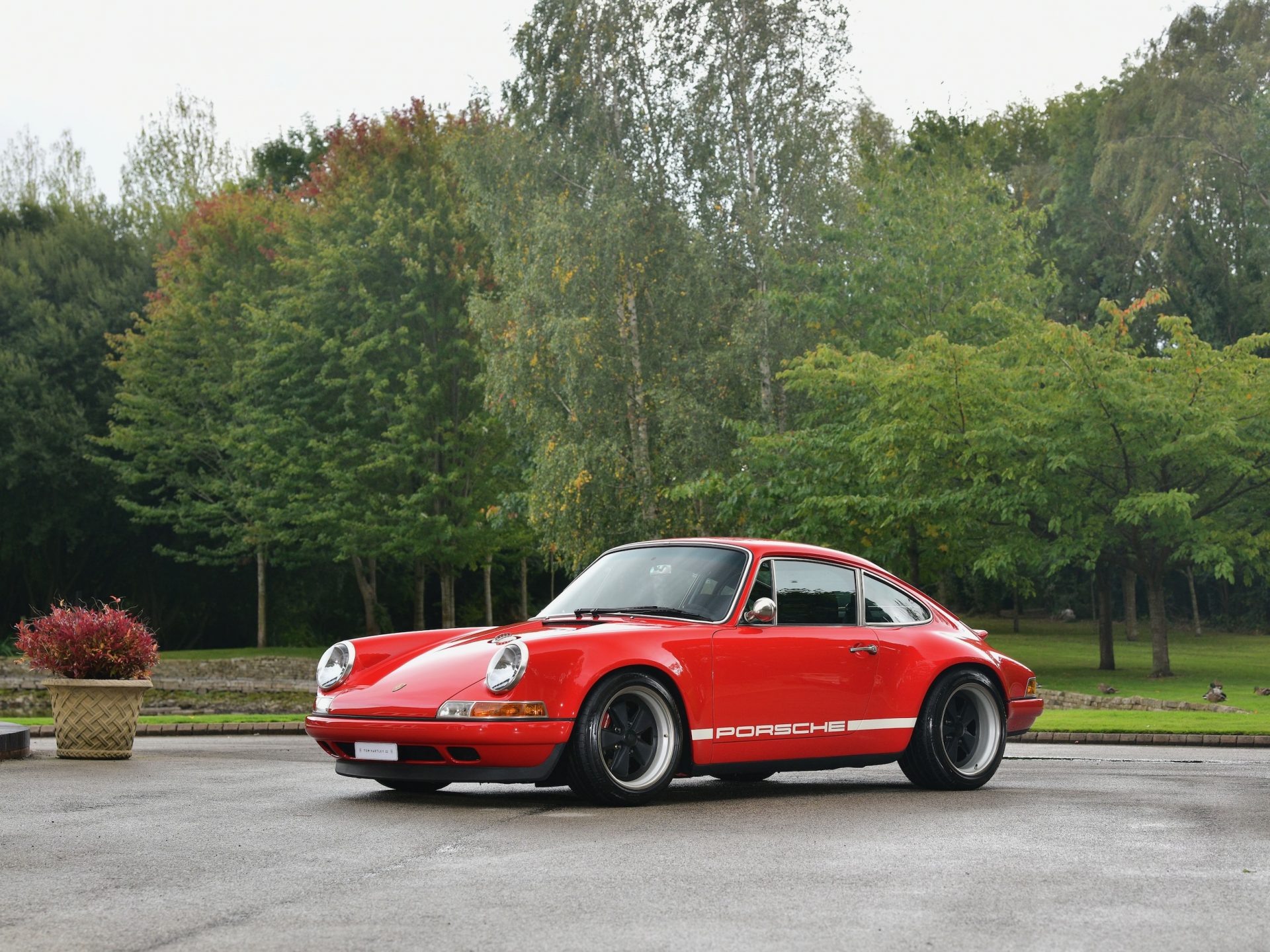
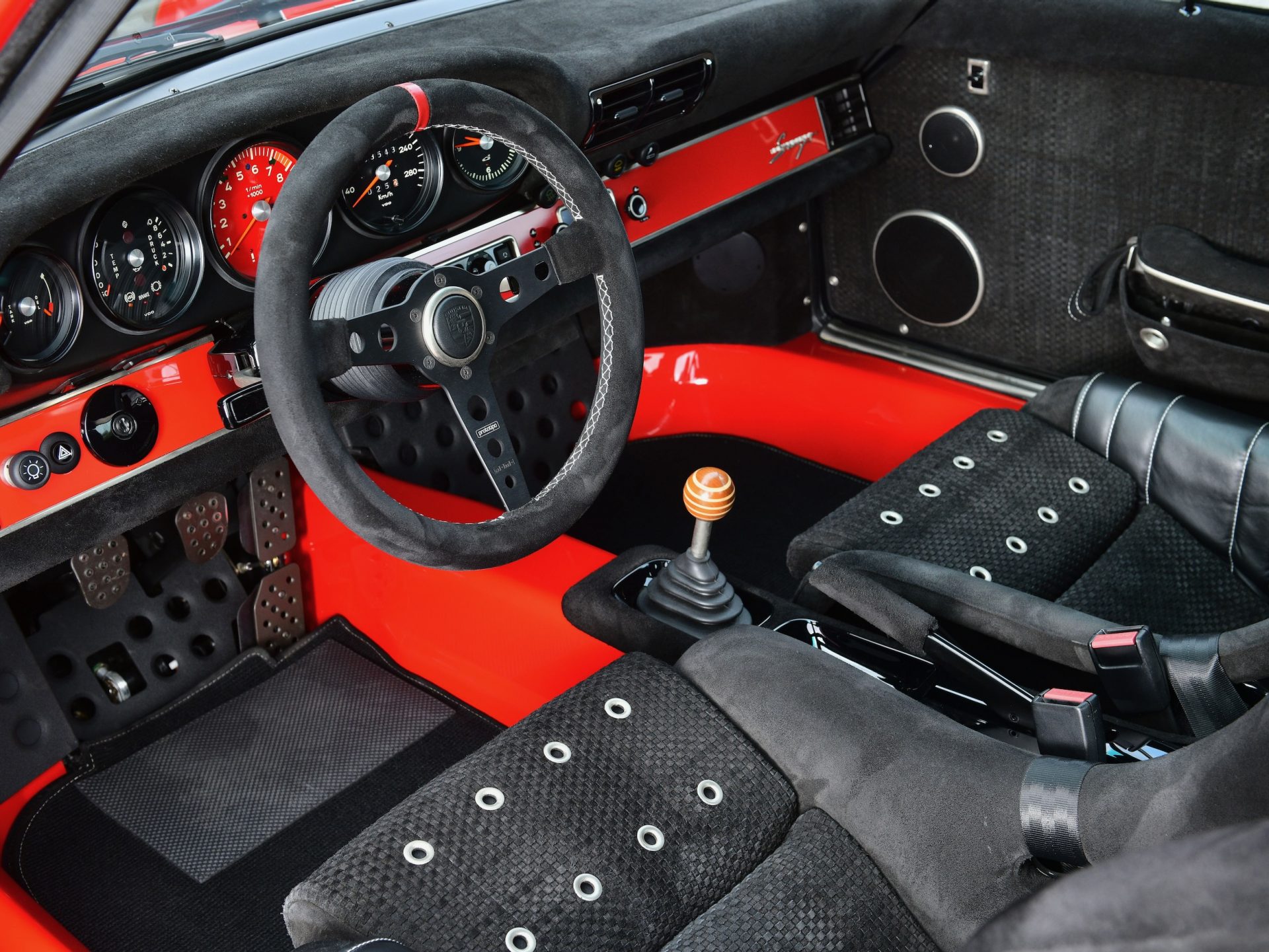
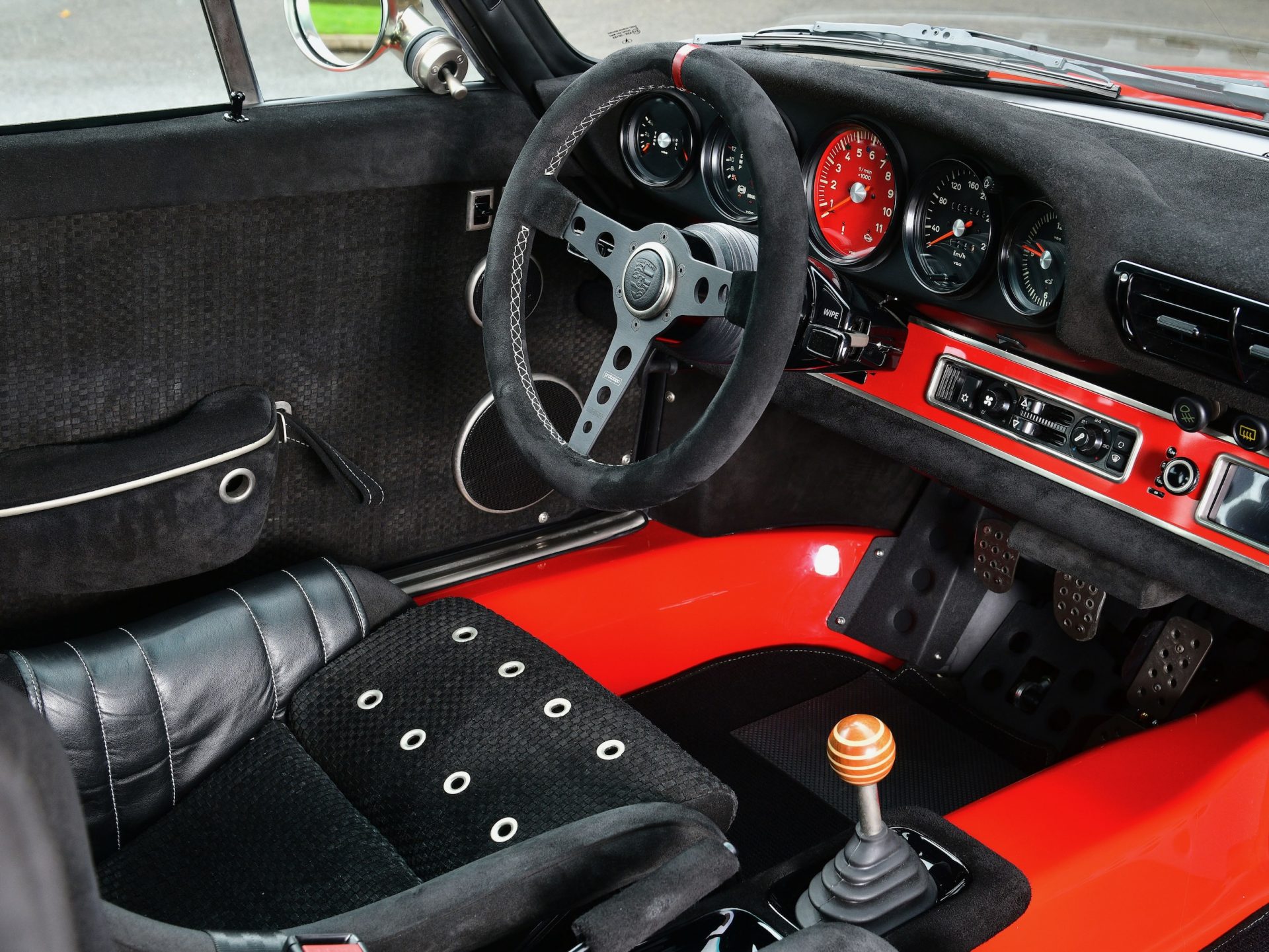
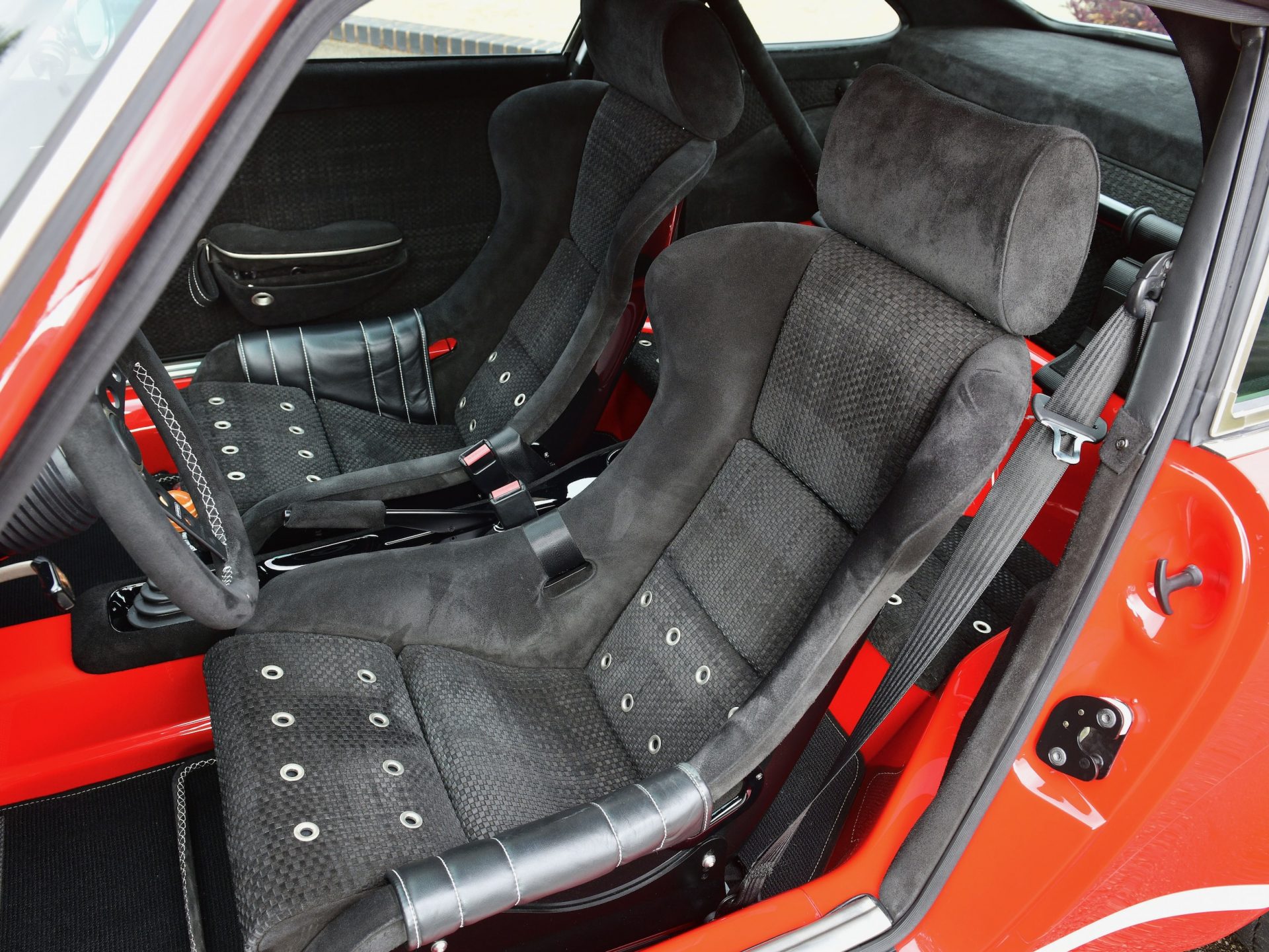

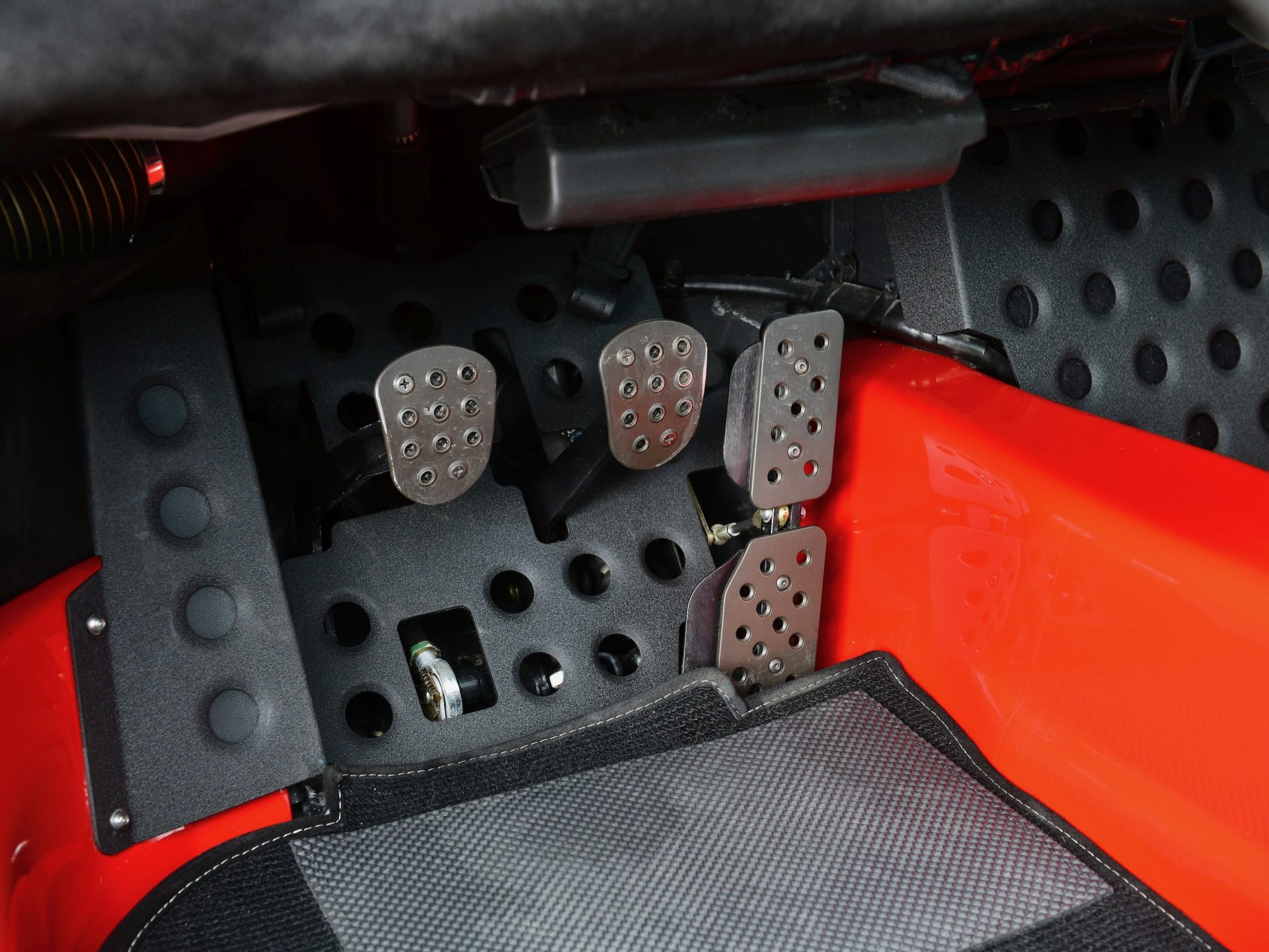
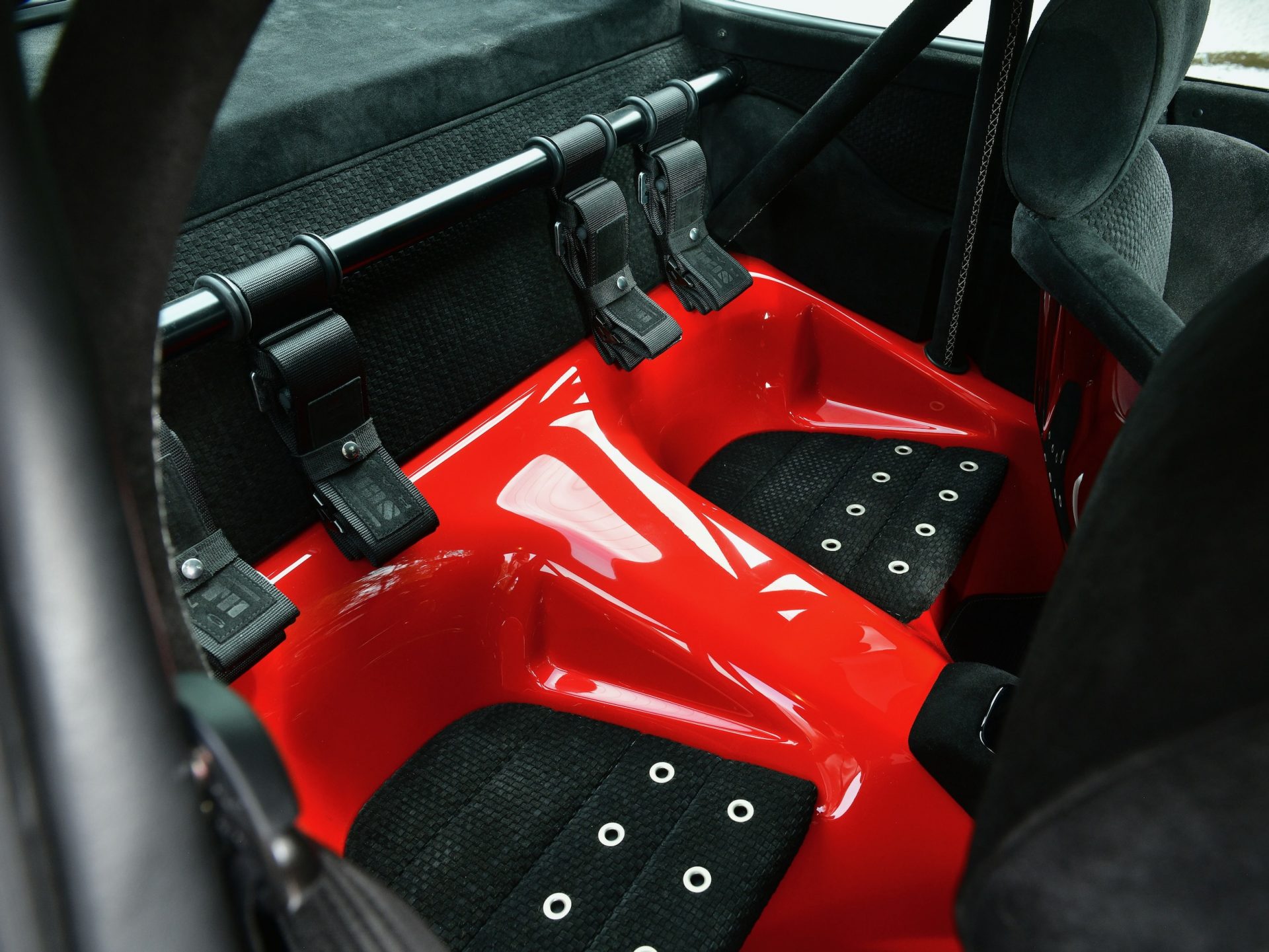
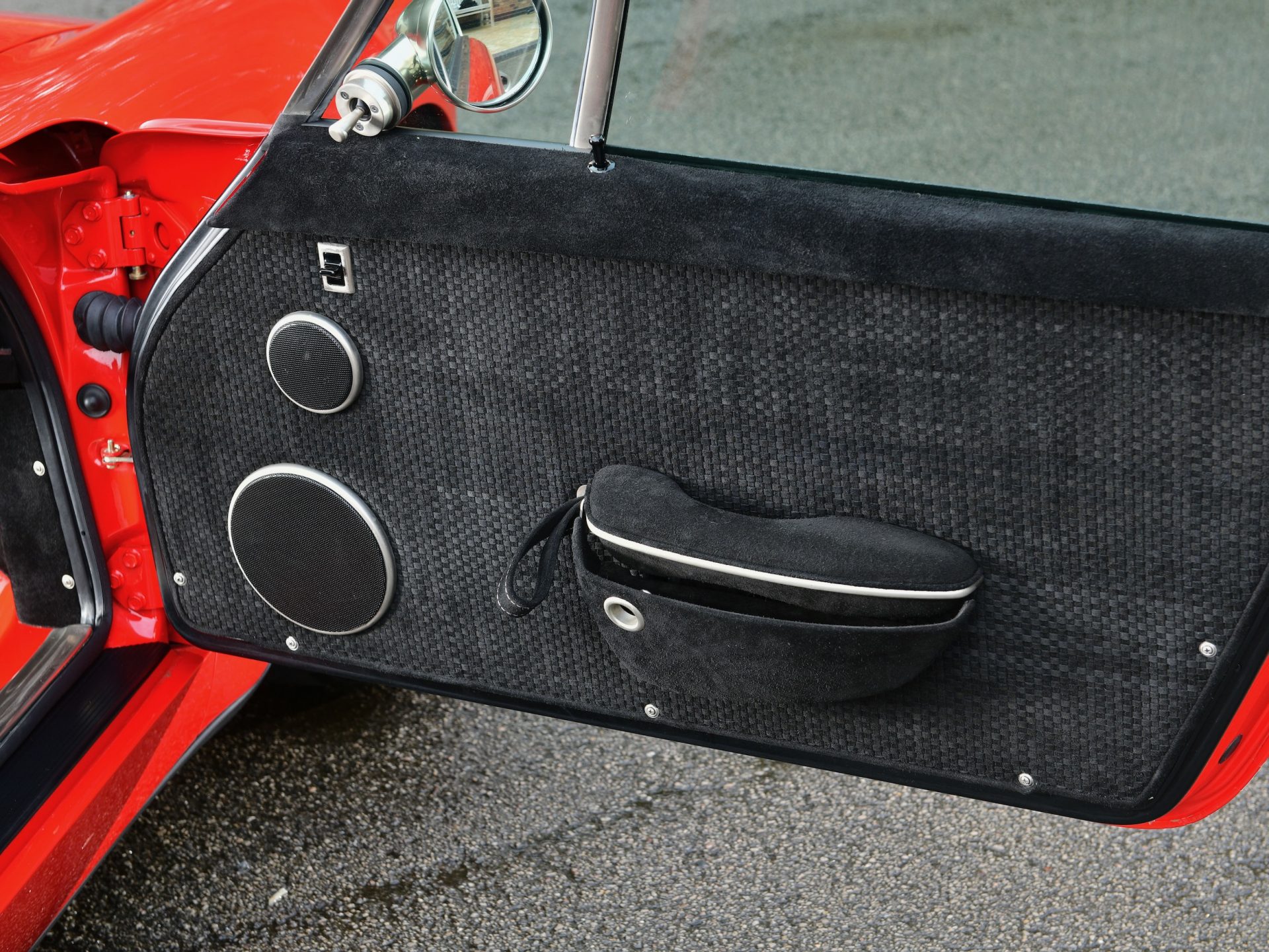
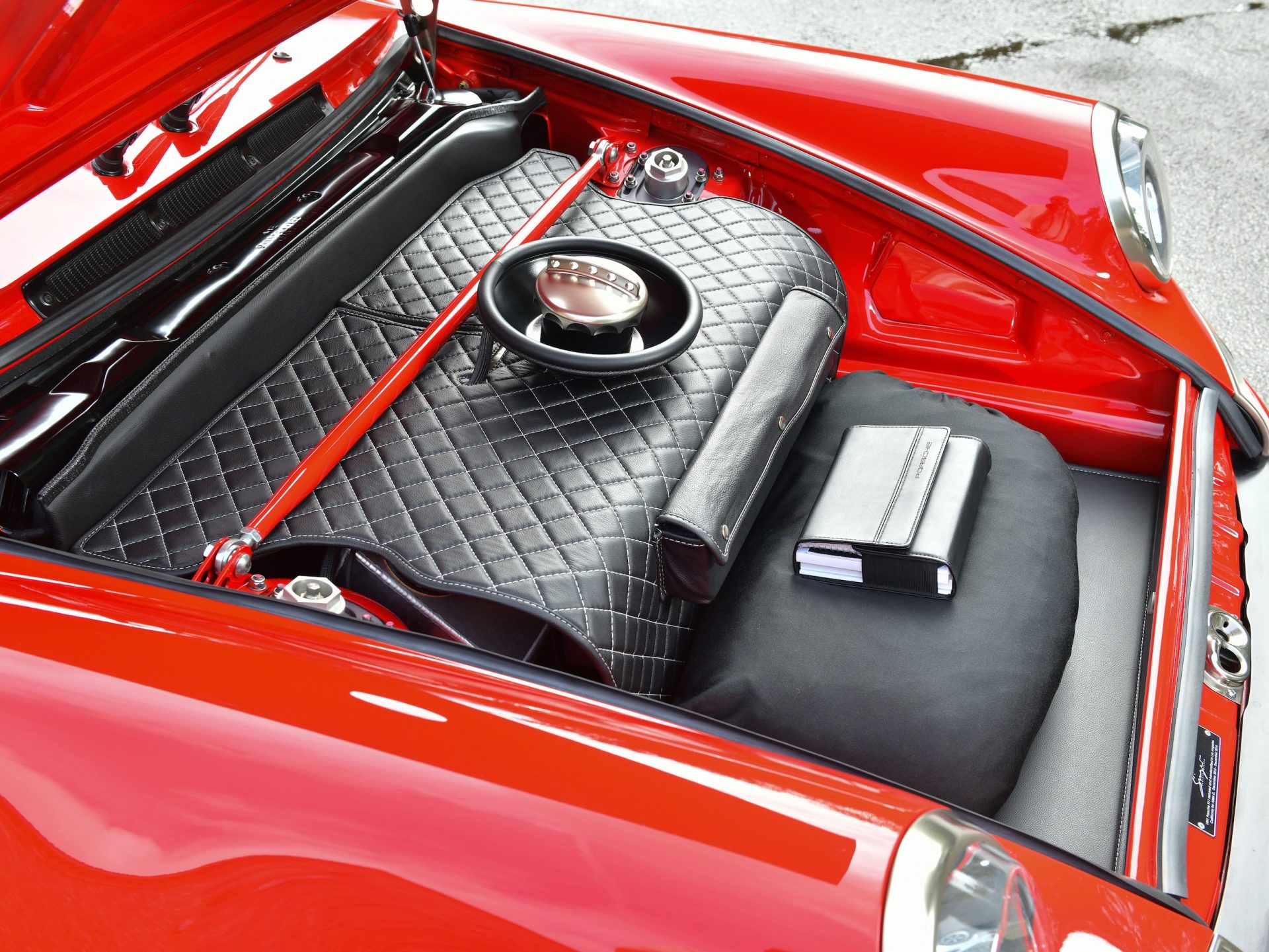
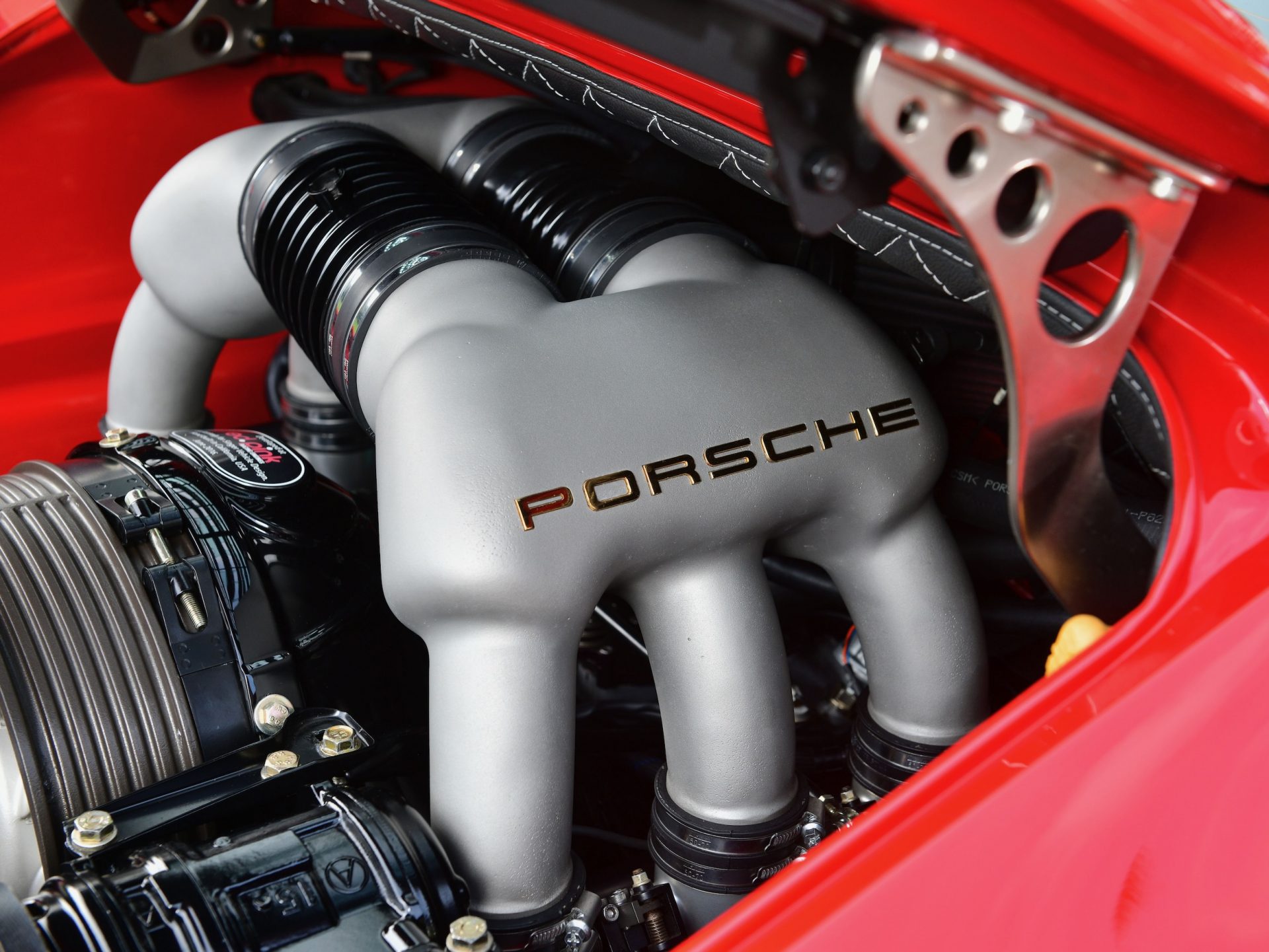

Steht zum Verkauf bei Tom Hartley Jnr. (Oktober 2025), Preis auf Anfrage, mit diesen Informationen: «Known as the ‘Le Mans’ commission and inspired by the Le Mans winning Porsche 917. This particular example began life as a 1991 964 Carrera Coupé. In 2015, it was sent to Singer’s headquarters in the USA to be ‘reimagined’ by the highly skilled craftsmen of Southern California. The goal was to capture the finest details of the early 911s, incorporating Ferdinand ‘Butzi’ Porsche–inspired design cues while adding modern driving capabilities. Specified with a Cosworth-developed 3.8-litre engine, a raft of upgrades to the fuelling system, crankshaft, pistons, cylinders, oil pump, and plenum help this engine produce 350 hp with tremendous torque. Mated to a five-speed gearbox with optimised ratios, the performance and driving experience are exceptional. Additional enhancements include a carbon-fibre roof, Öhlins adjustable sport suspension, large Brembo brakes, and red callipers detailed with white lettering. Exterior highlights include a Paint-to-Sample (PTS) finish in Bahia Red, a bespoke side stripe with ‘Porsche’ script, decklid lettering in white, Fuchs-style wheels in a two-tone finish of satin black with matte-anodised petals and centre caps, a black ceramic exhaust system, and desirable options such as a centre-fill fuel filler with ‘Special Wish’ finned filler cap and external oil filler. The pièce de résistance is the interior: a masterpiece of design finished in black suede, with an optional suede centre weave on the carbon-fibre ‘track’ bucket seats. The seat backs are finished in piano black, the headlining in black Alcantara, and the dash top and steering wheel trimmed in black suede. Across the centre of the dashboard runs a Bahia Red–painted dash strip, paired with a Bahia Red tachometer face with cream/white lettering. A ‘Milky Nickel’ rear-view mirror casing adds a distinctive touch, bringing together both elegance and purpose, along with a ‘Special Wish’ layered wood Le Mans–style gear knob. Additional features include drilled floorboards, square-weave carpet mats with rubber overlays, and iPod connectivity».
–
Chassis-Nummer: WP0AB2966MS411379 (1991)


Auktion: Bring A Trailer, Januar 2025, mit diesen Informationen: «This 1991 Porsche 911 Carrera 2 coupe was modified by Singer Vehicle Design between 2020 and 2023 and was purchased from its commissioning owner by the selling dealer in January 2024. Finished in paint-to-sample blue, the “Step On It Commission” is powered by an Ed Pink-built 4.0L flat-six that drives the rear wheels via a close-ratio six-speed manual transaxle with a limited-slip differential. Additional features include carbon-fiber body panels, individual throttle bodies, Öhlins adjustable shock absorbers, Brembo cross-drilled and ventilated carbon-ceramic disc brakes, staggered-width 17” Fuchs-style forged aluminum wheels with Rosso Mugello spoke accents, carbon bucket seats, Monticello leather-weave interior trim with blue accents, air conditioning, and power windows. Exterior options include body-color rear bumperettes, a brass “Singer” badge atop Rosso Mugello “reimagined” lettering, and a black mesh grille screen beneath the retractable rear spoiler. Additional Singer touches include bi-xenon headlights, polycarbonate front lenses, bullet-style side mirrors, and nickel-plated brightwork. Paint protective film was applied over the rear front fenders and lower rocker panels during the build. The sport suspension incorporates Öhlins adjustable dampers at all four corners with “aggressive road” tuning. The digital odometer shows 68 miles added since completion of the Singer build, eight of which have been added by the selling dealer.»
–
Chassis-Nummer: WP0AB0960KS450857 (1991)

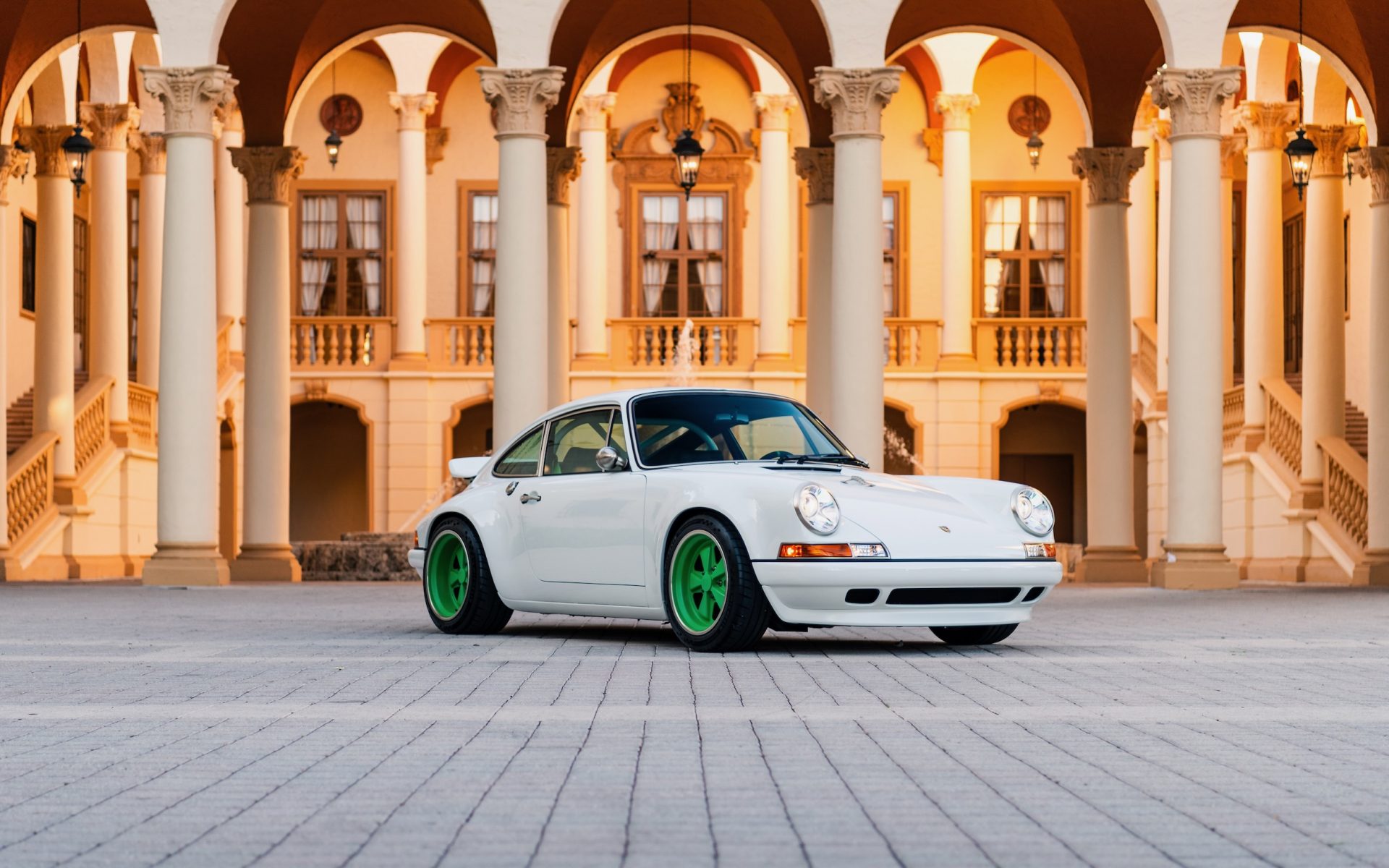


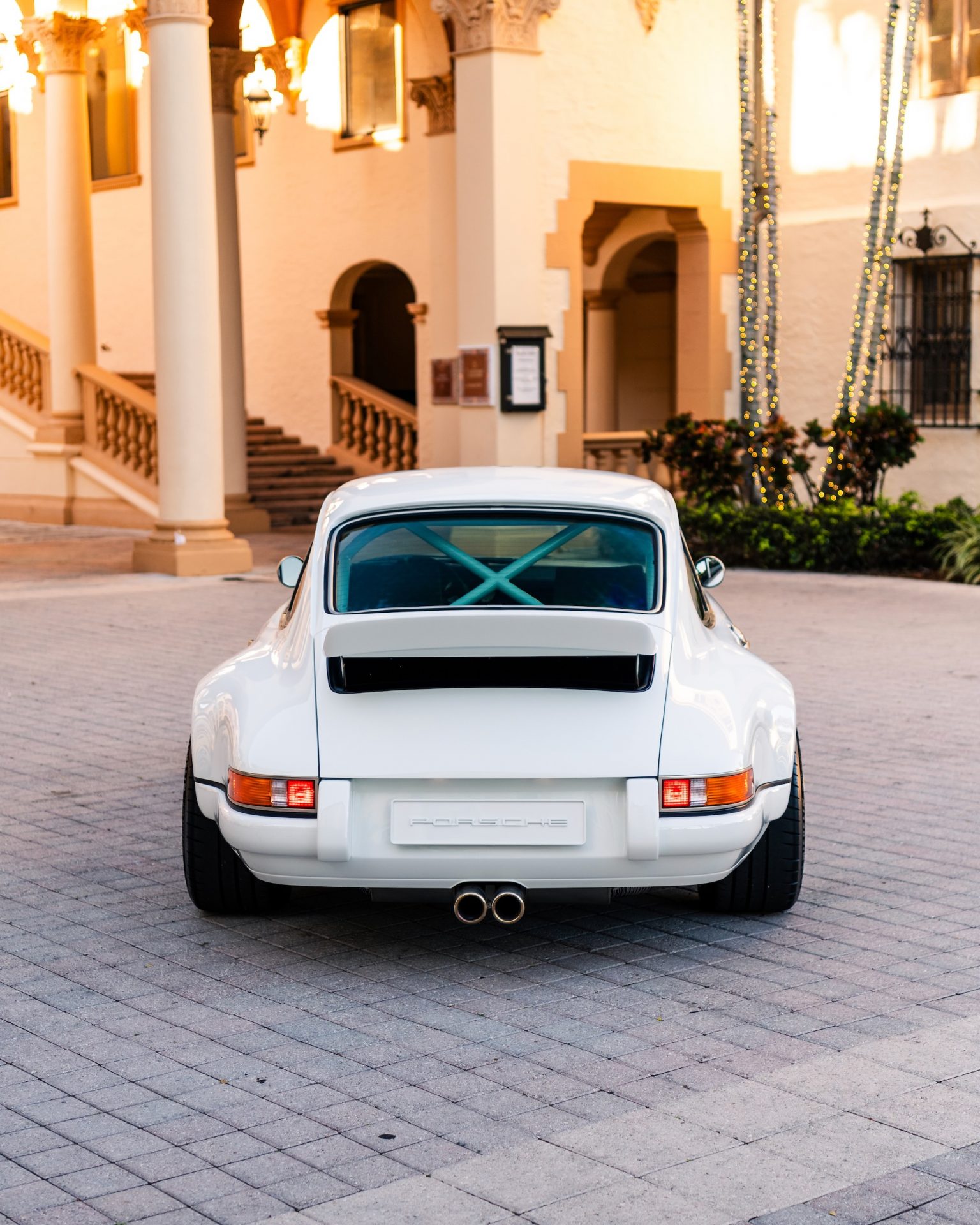
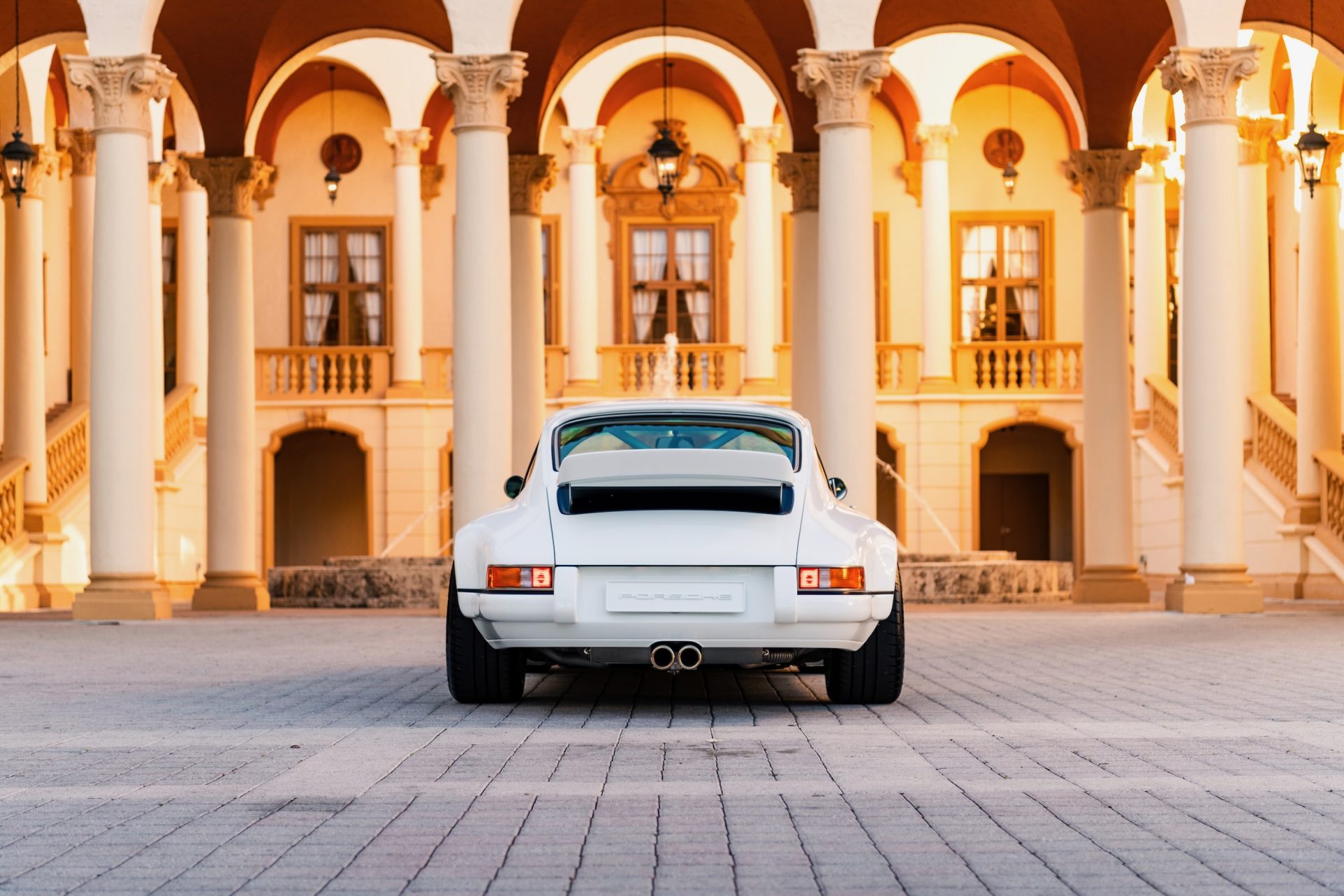
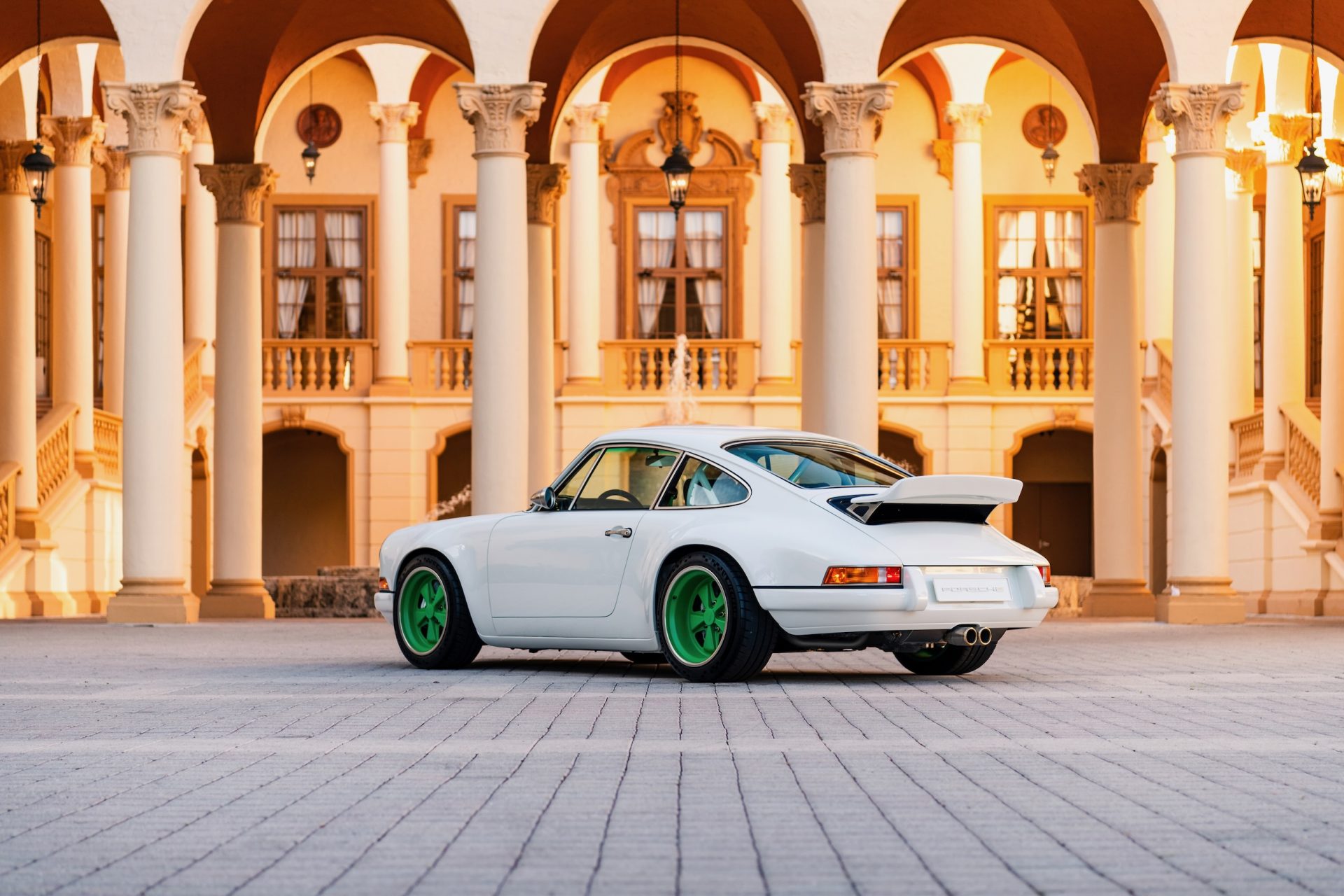

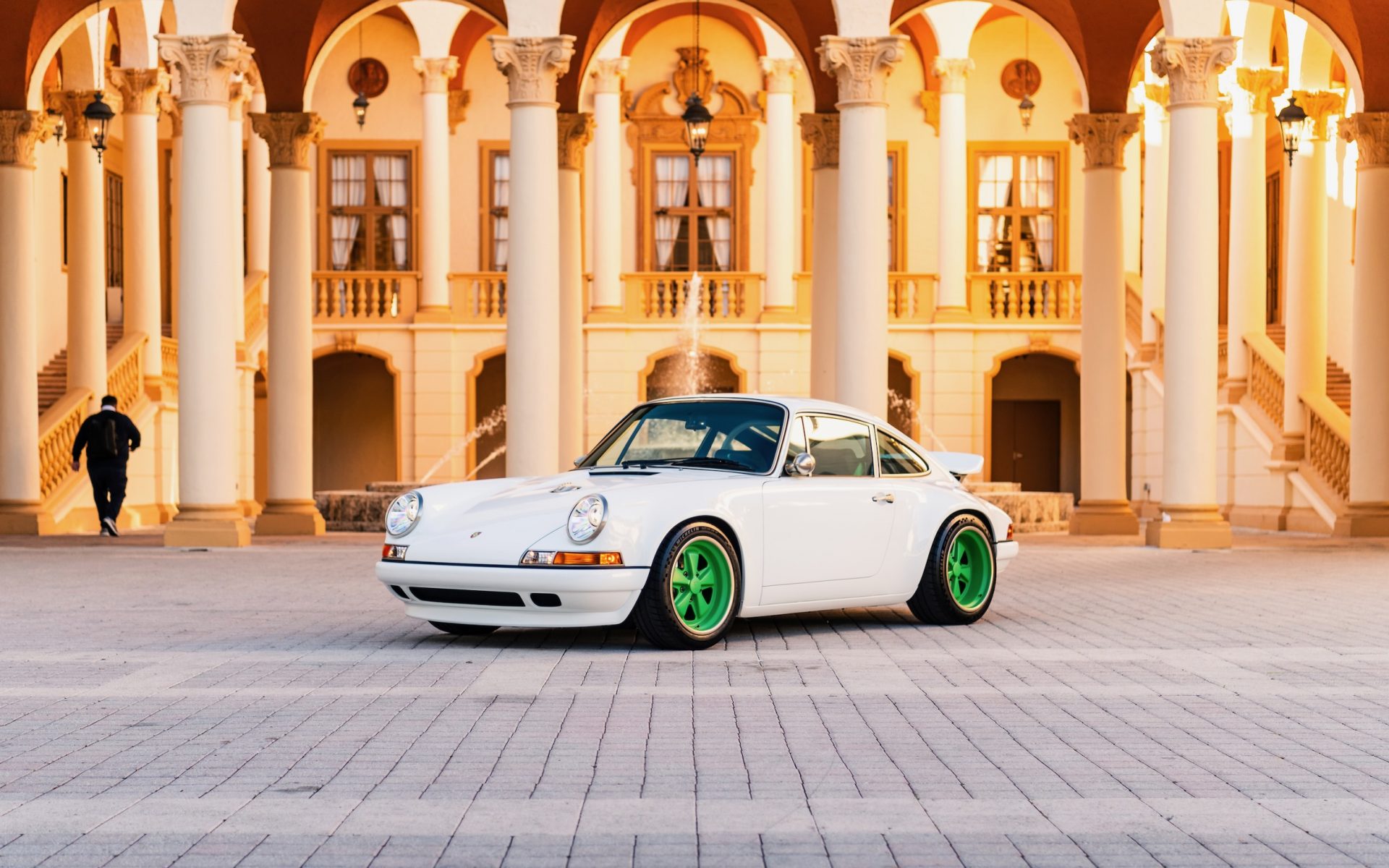


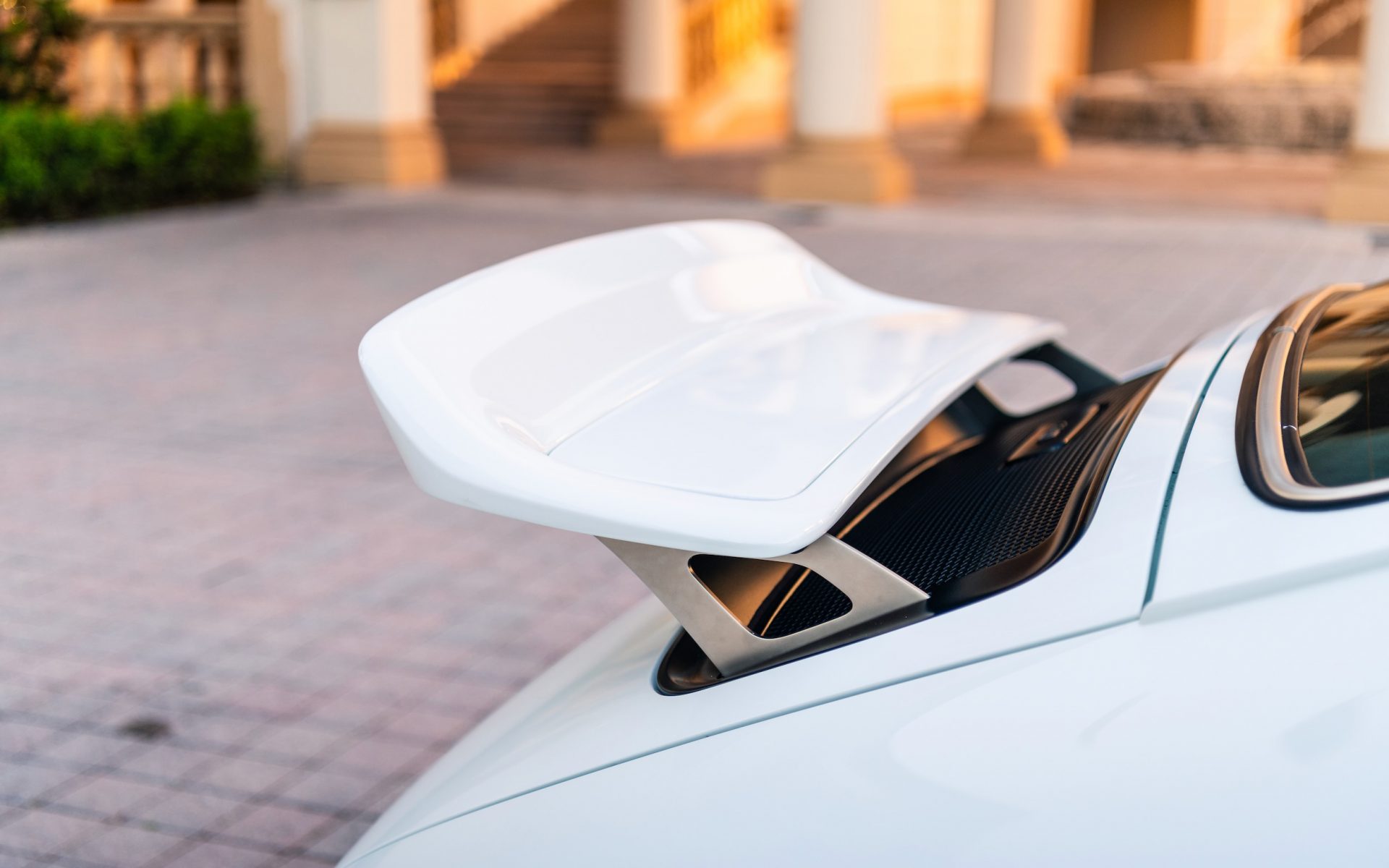
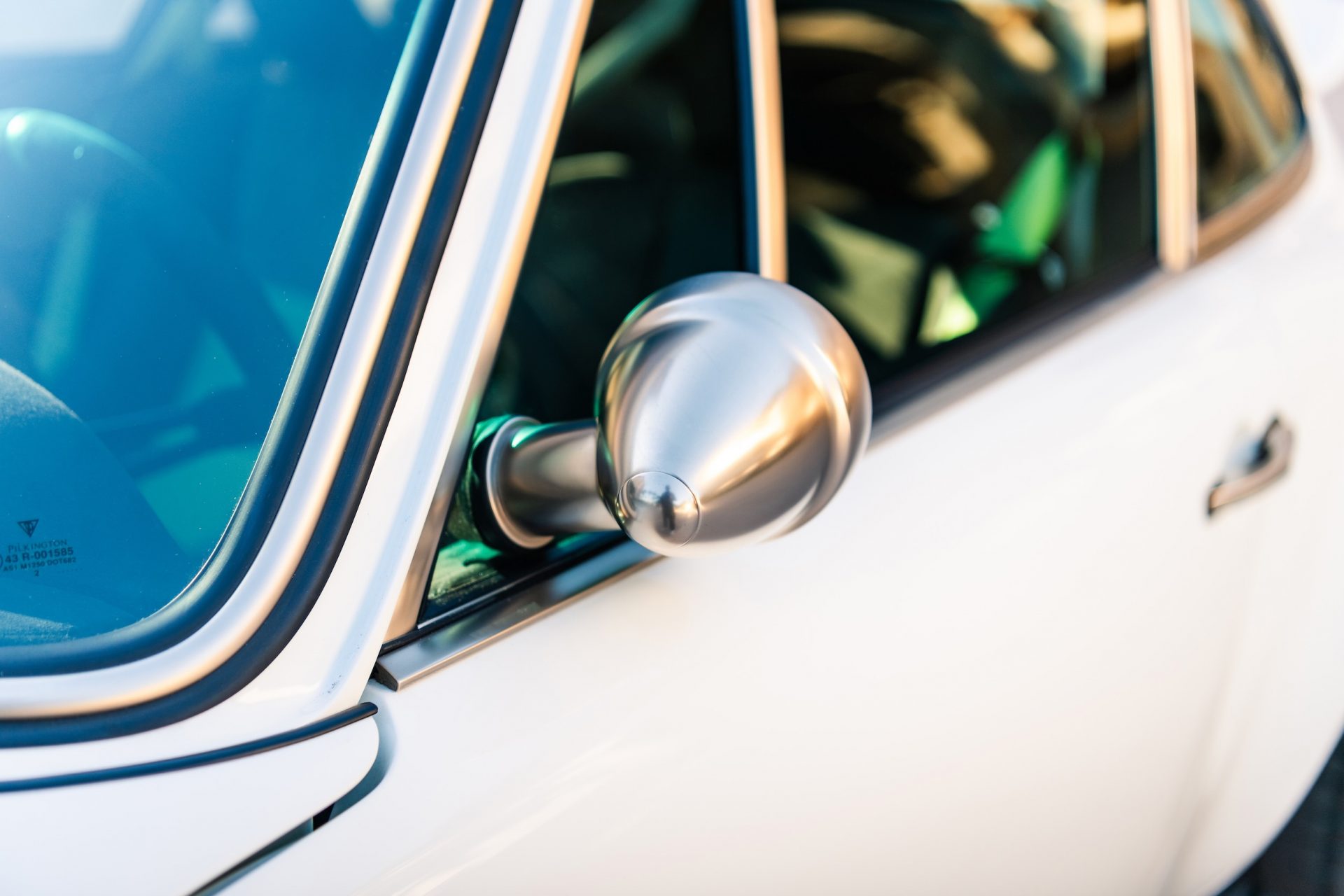

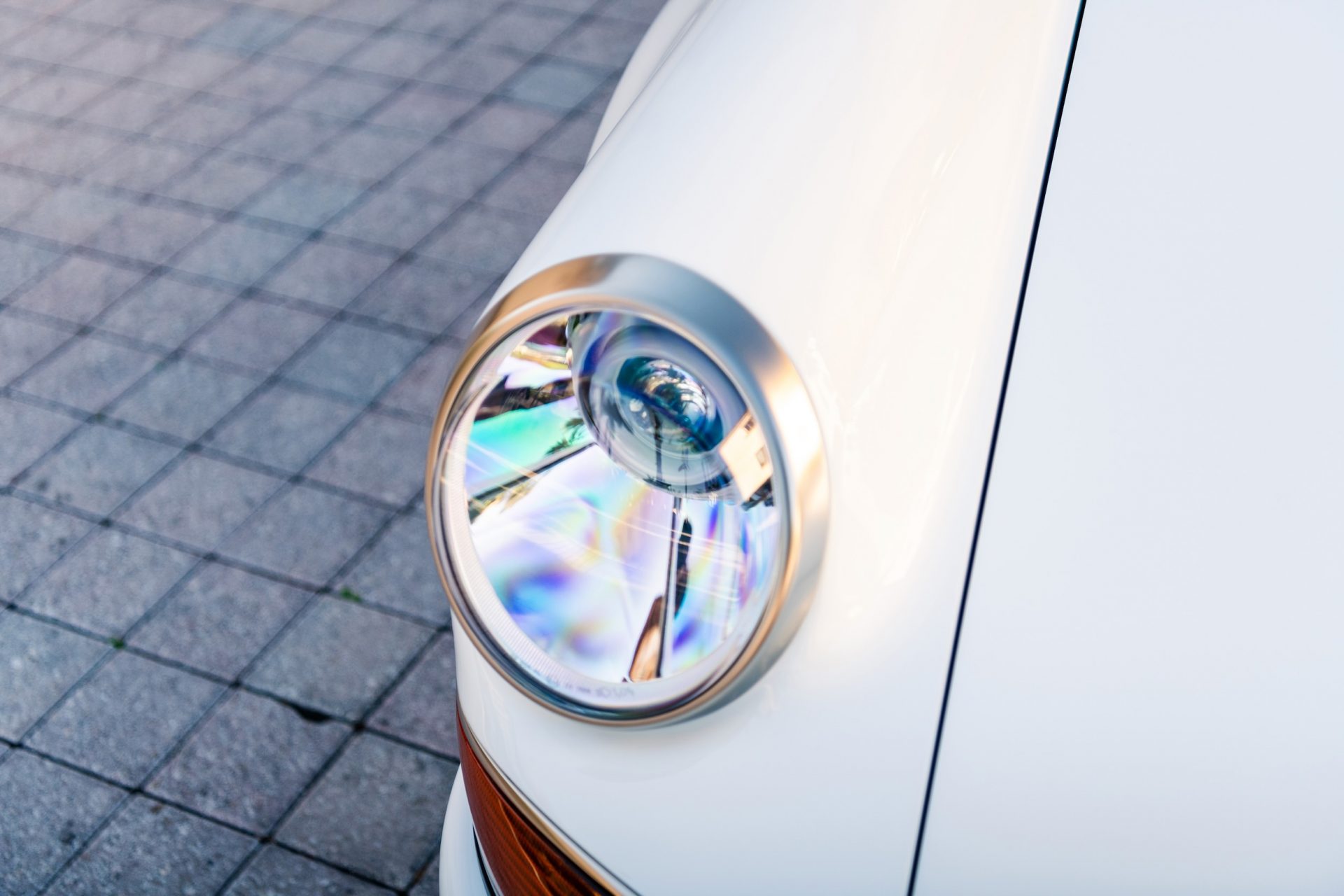
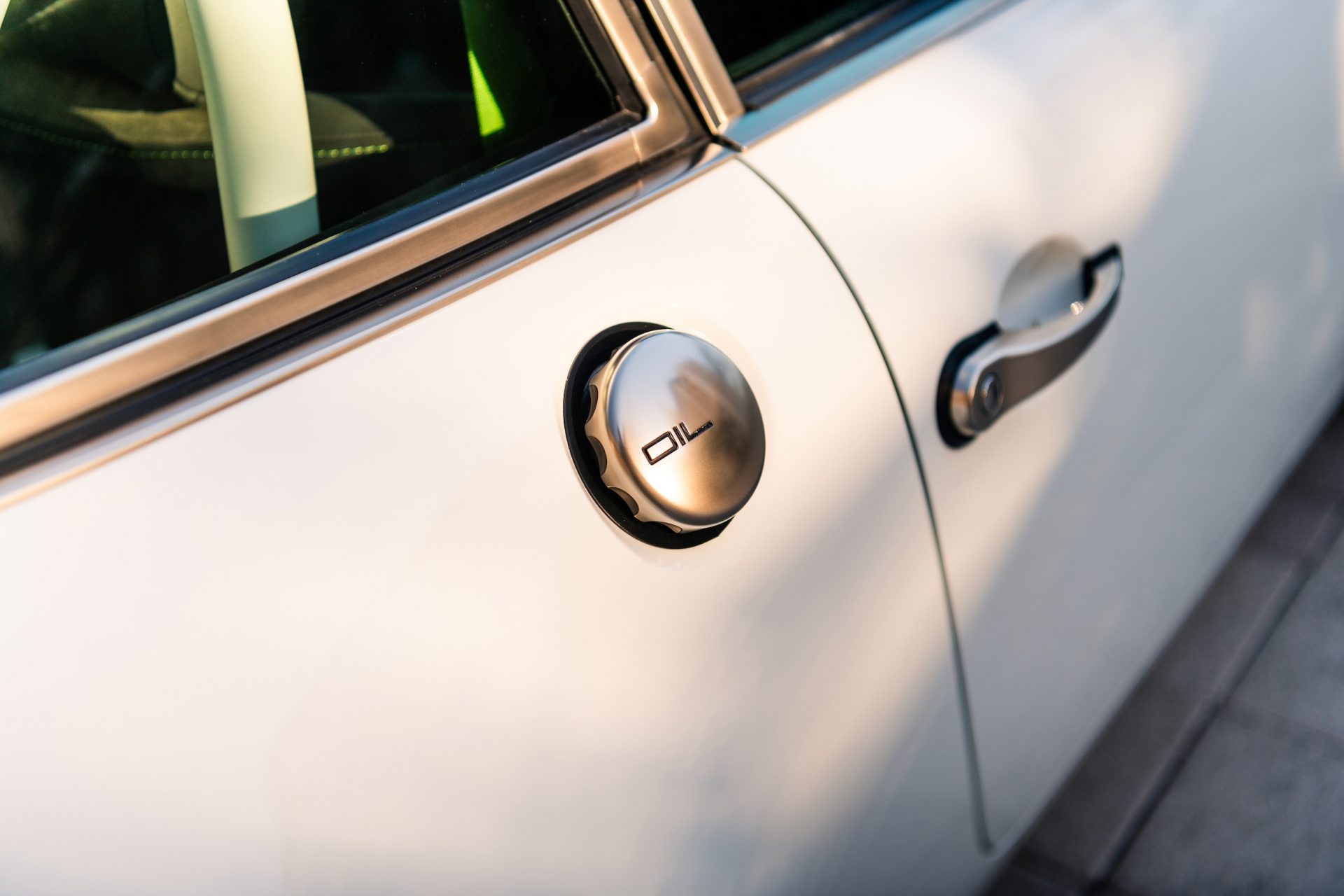


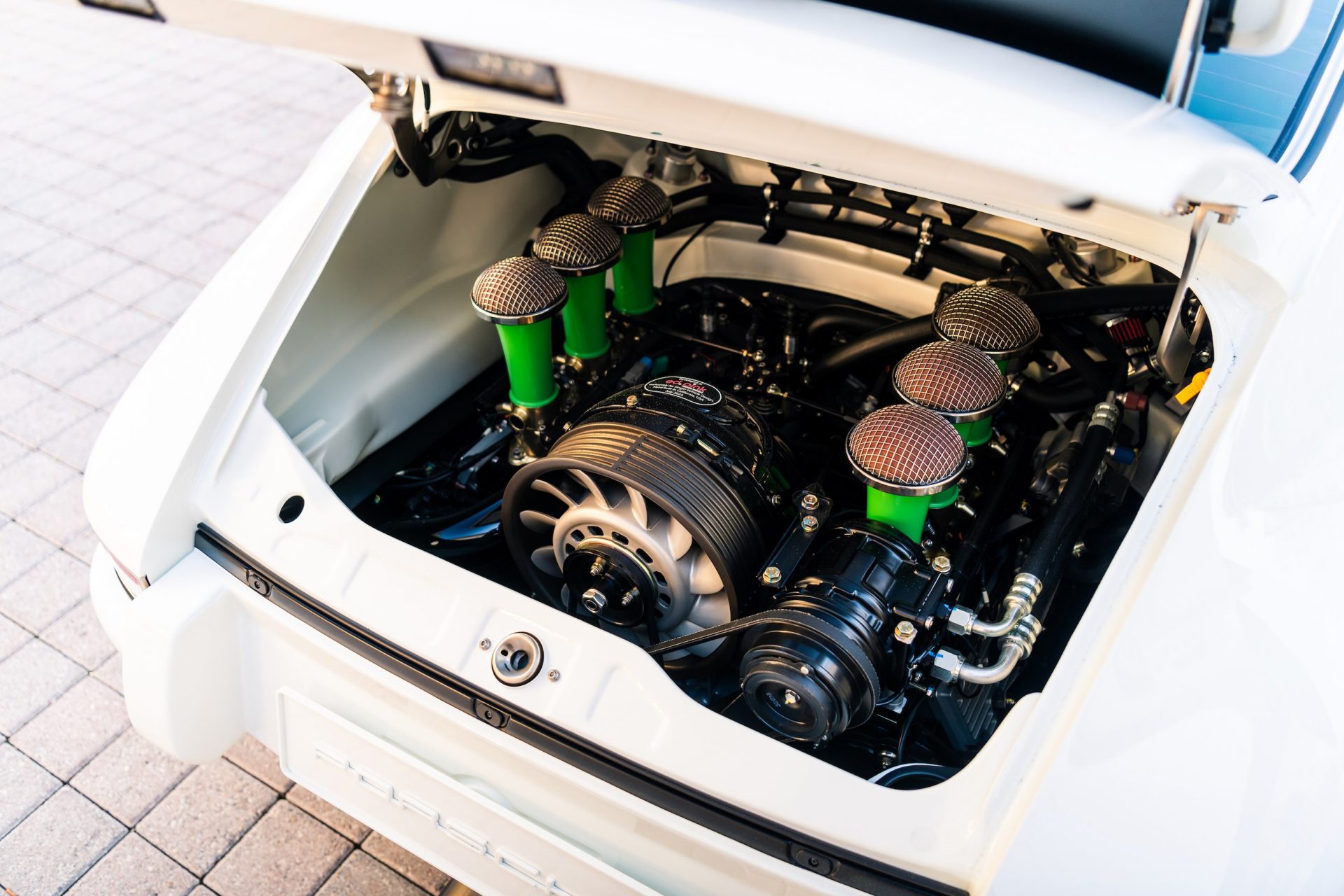
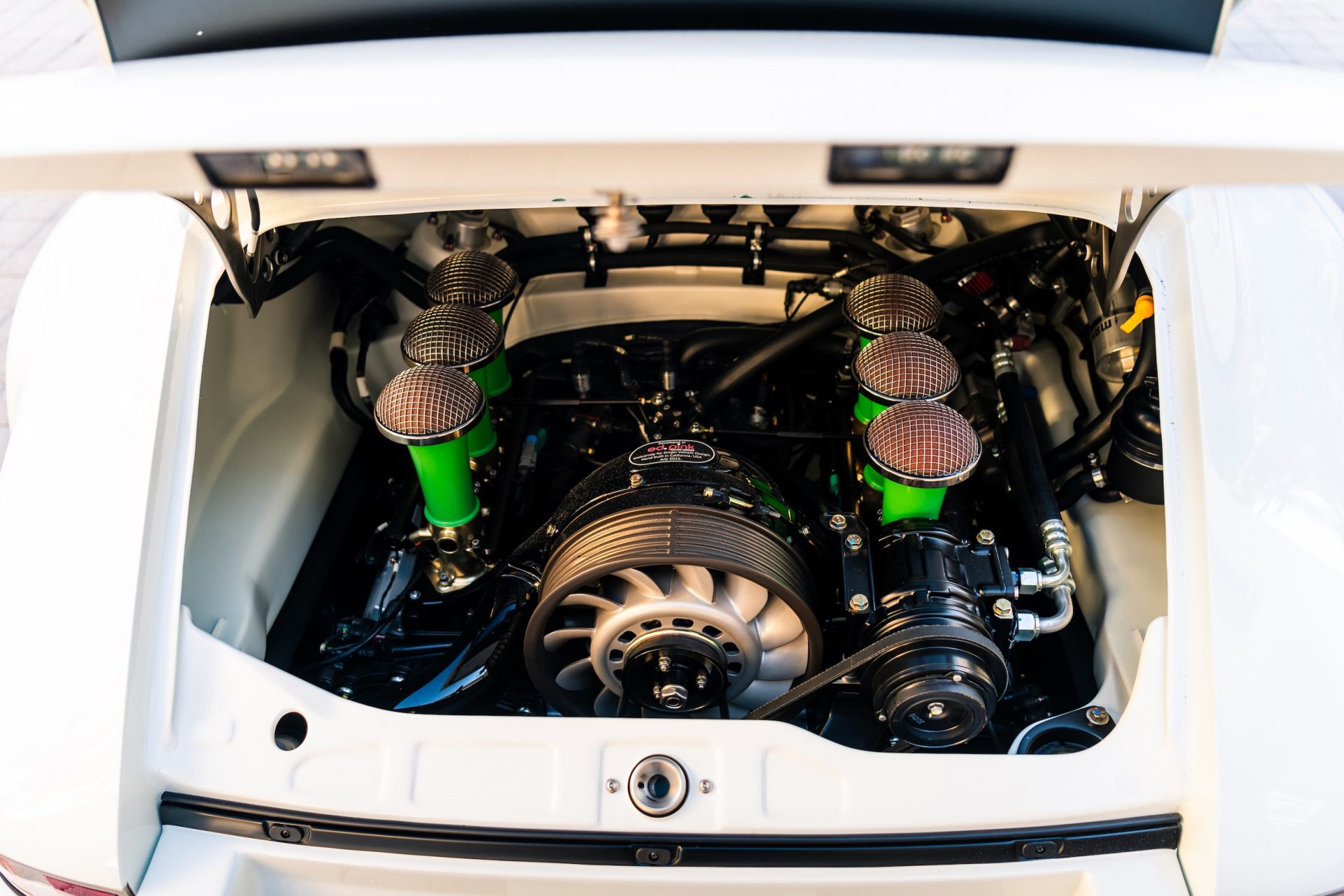


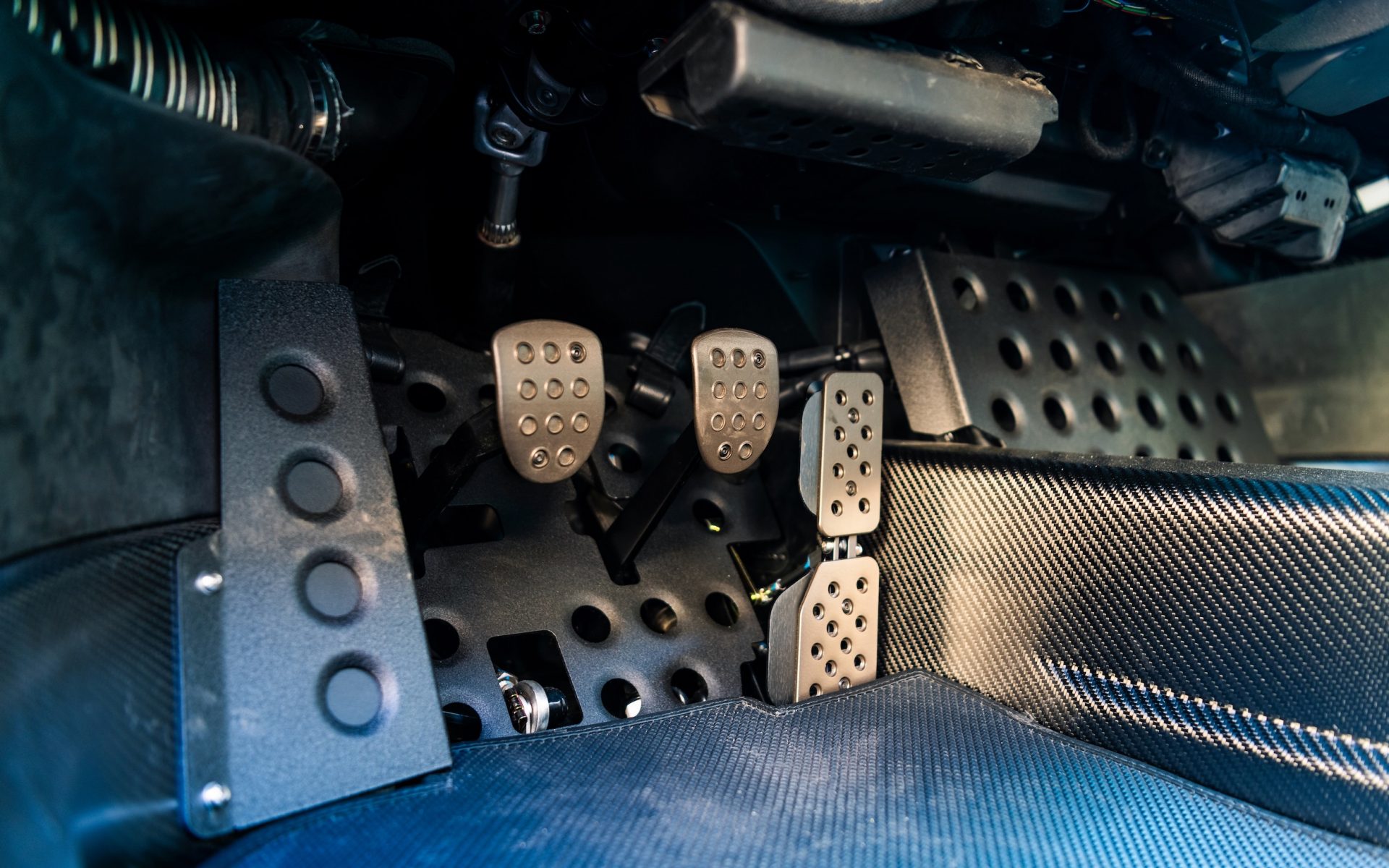


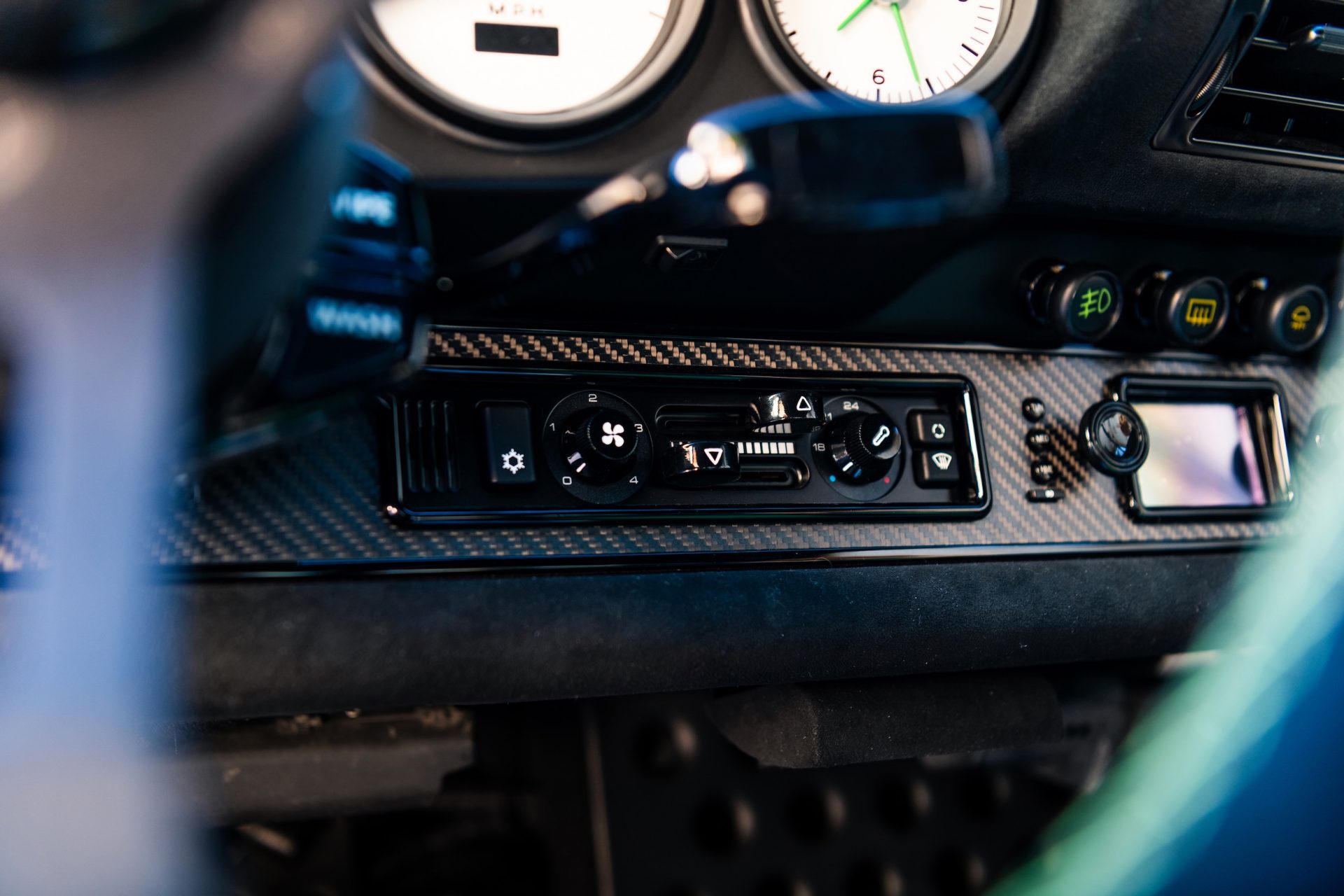


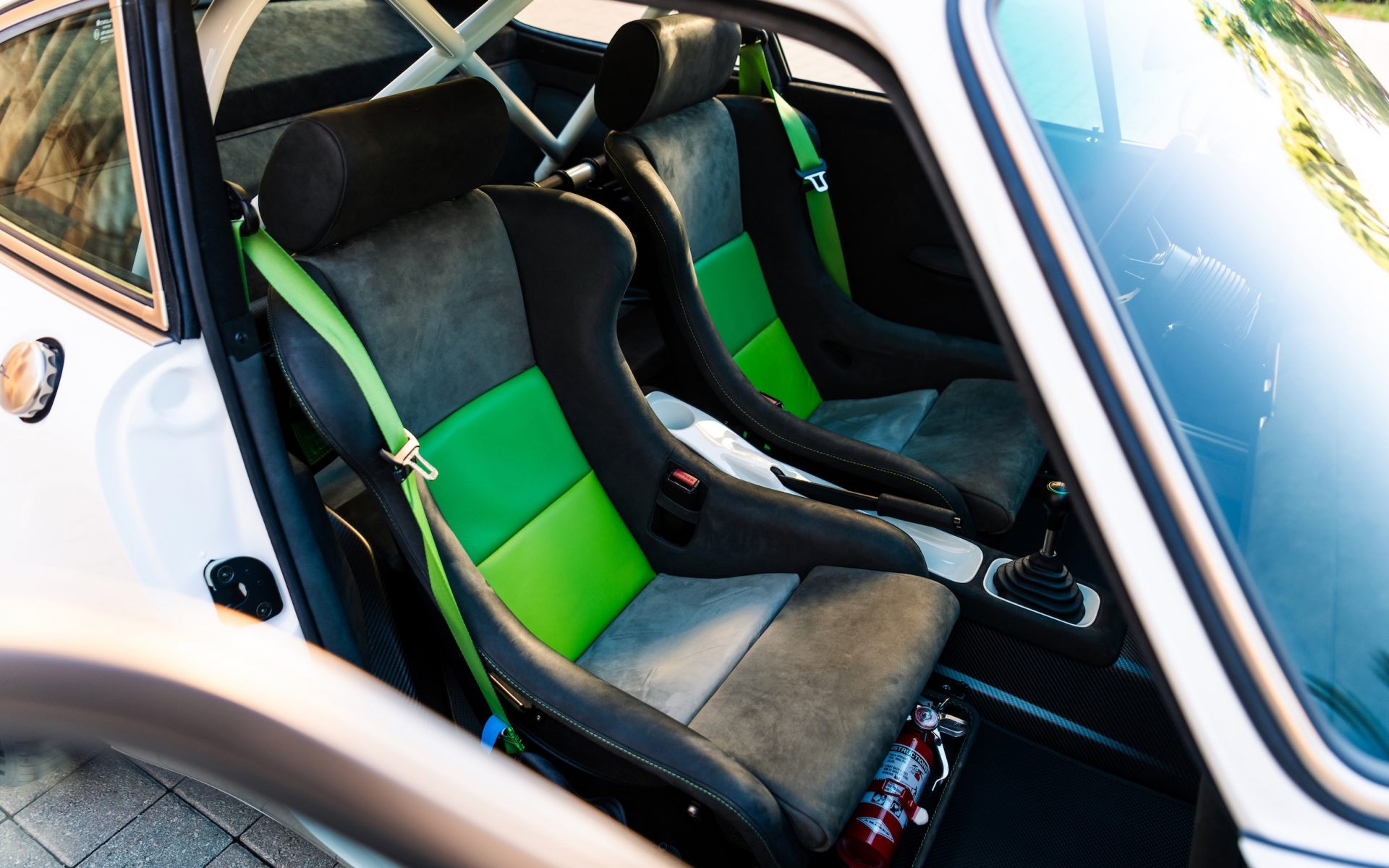


Auktion: RM Sotheby’s, Miami 2024, Schätzpreis 1,3 bis 1,5 Millionen Dollar, nicht verkauft. Mit diesen Informationen: «Dubbed The “San Juan Commission” this Porsche 911 reimagined by Singer boasts a stunning and exceptionally well-considered specification. Just like the idyllic, colorful capital of Puerto Rico for which it is named, Singer’s San Juan Commission presents an intoxicating blend of familiar Porsche 911 heritage and unexpected, exotic character. Delivered new to the consignor in October 2023, the San Juan Commission represents the stellar results of Singer’s Classic Study restoration services, orders for which the company capped at 450 examples in June 2022. Beneath the San Juan Commission’s Grand Prix White and Singer Racing Green color scheme (itself a clever homage to Porsche’s legendary 2.7 Carrera RS) is a whole host of impressive chassis upgrades demanded by the consignor’s exacting taste. Most notably, the car’s original tub has been completely seam-welded and fitted with integrated cabin bracing for extreme rigidity. At the car’s heart lies Singer’s signature engine offering: their hand-built, 4.0-liter flat six-cylinder engine which produces 390 horsepower and 315 pound-feet of torque. The consignor specified a lightweight titanium exhaust system ($17,500) and a bespoke set of SR Green velocity stacks ($15,000), ensuring that this formidable engine is heard long before, and after, it is seen. A downforce-generating “Mulholland” rear wing is fixed directly to the engine decklid with lightweight mounts. Better yet, the San Juan Commission retains the most engaging powertrain configuration, sending power to the rear wheels via a six-speed manual transmission. Thanks to the fitment of the optional high-performance brake package (with bespoke Viper Green-painted calipers), this reimagined 911 can decelerate just as quickly as it accelerates. Inside, a pair of Recaro sport seats are trimmed by Singer’s team of master upholsterers with their own rendition of Porsche’s motorsports-derived “lollipop” pattern executed in a polychrome gradient of black, Viper Green, and Singer Racing Green leathers complete with contrasting Alcantara suedes and lime green stitching. This outstanding attention to detail extends through the cabin to the carbon fiber dashboard trim panel and black Alcantara lightweight door cards. The black anodized kick panels are nicely complemented by a drilled pedal set, black Alcantara headliner, and black leather dashboard—all of which visually tie-in with the car’s SR Green-finished Fuchs wheels. The transmission tunnel and interior doorsills are finished in visual Carbon fiber with Grand Prix White accents, while especially keen eyes will note the anodized Malibu-style gearshift knob and classic-style gauge suite bearing Grand Prix White dials anointed with black markers and Viper Green needles—a bespoke touch which harkens back to the instrumentation found in 911s of the mid-1960s. Additionally, this incredible Porsche 911 reimagined by Singer features a modern air conditioning system, manual windows, and an adjustable “track” Öhlins suspension system designed to Singer’s exclusive specifications».
–
Chassis-Nummer: WP0AB2969PS420162 (1993)
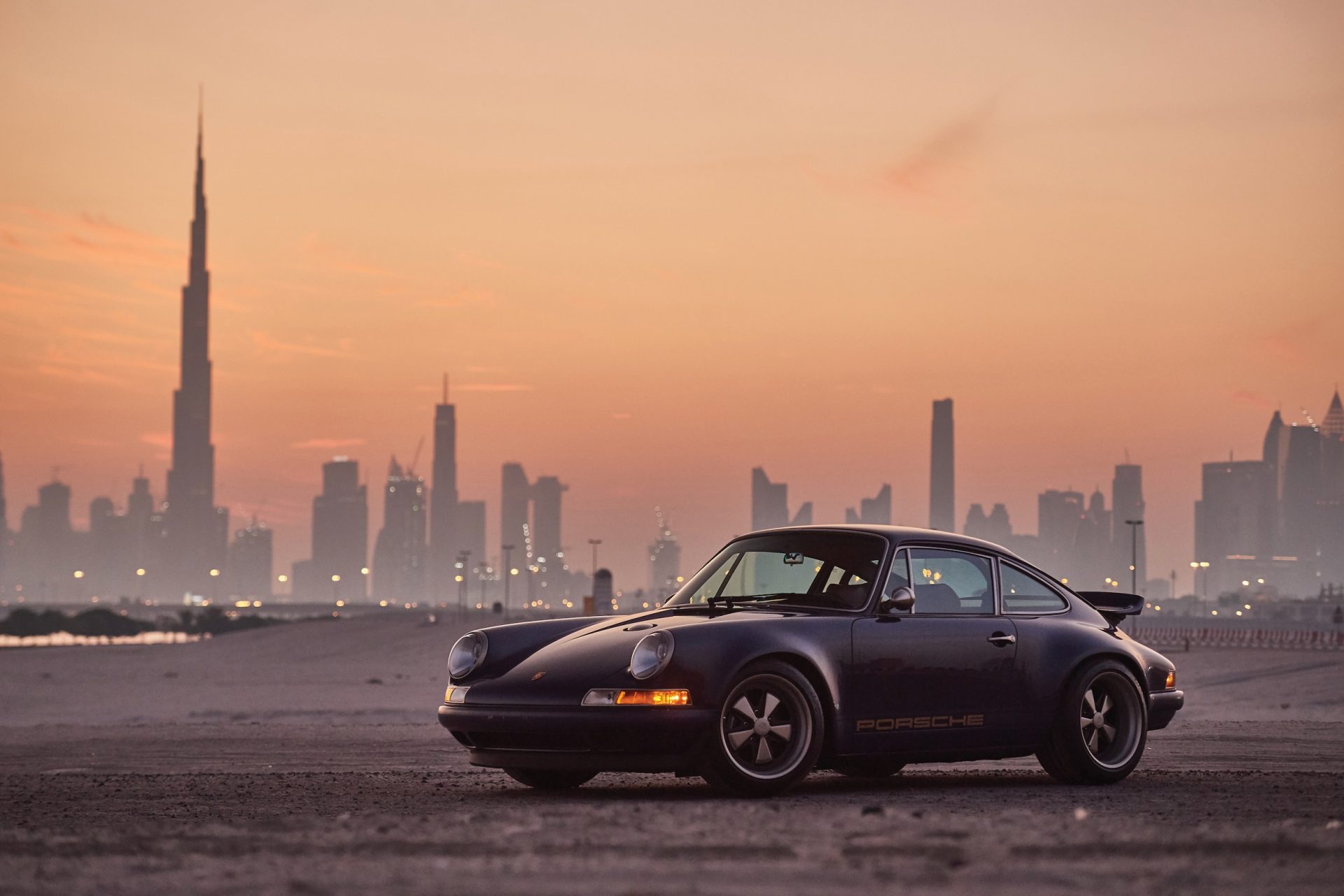
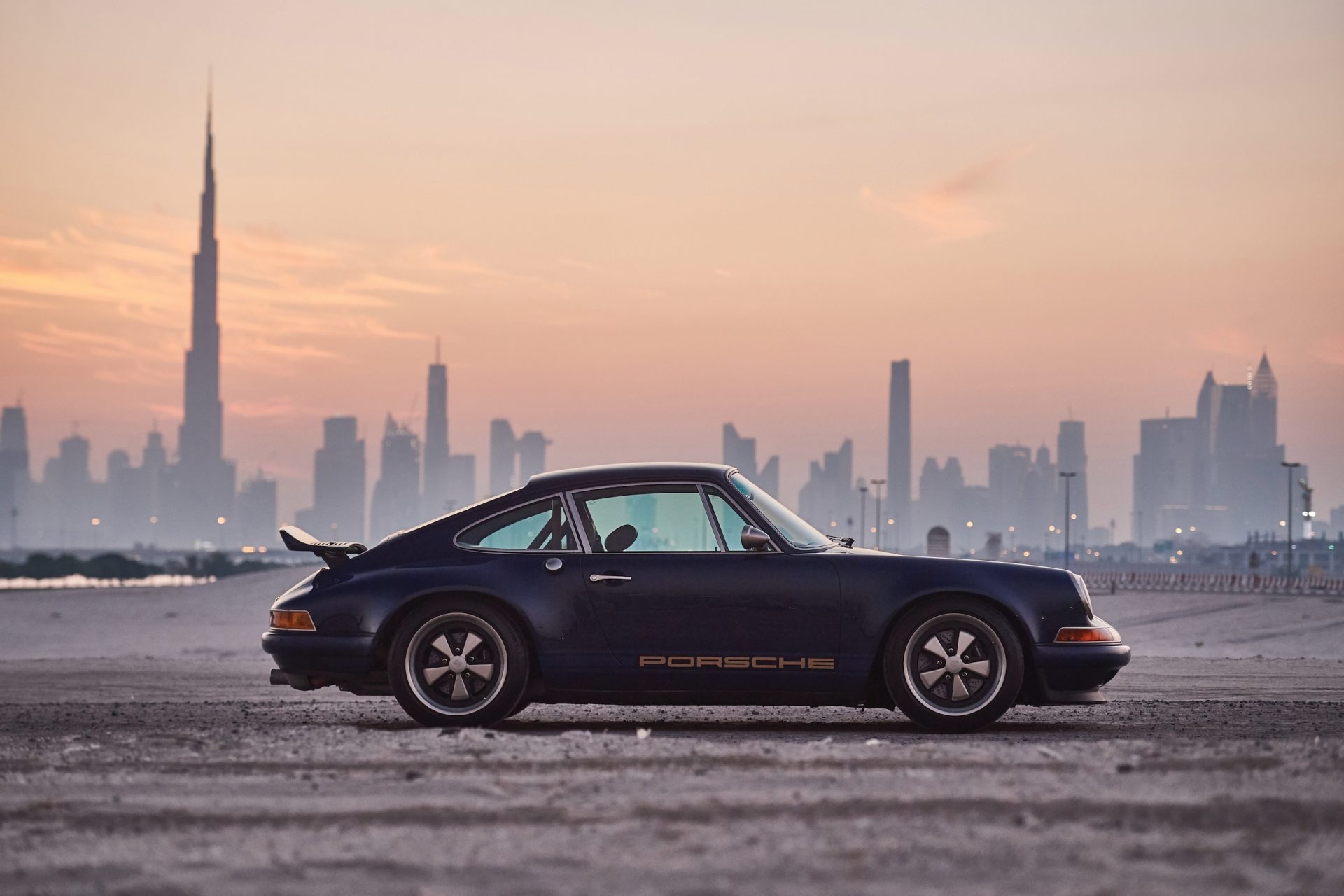
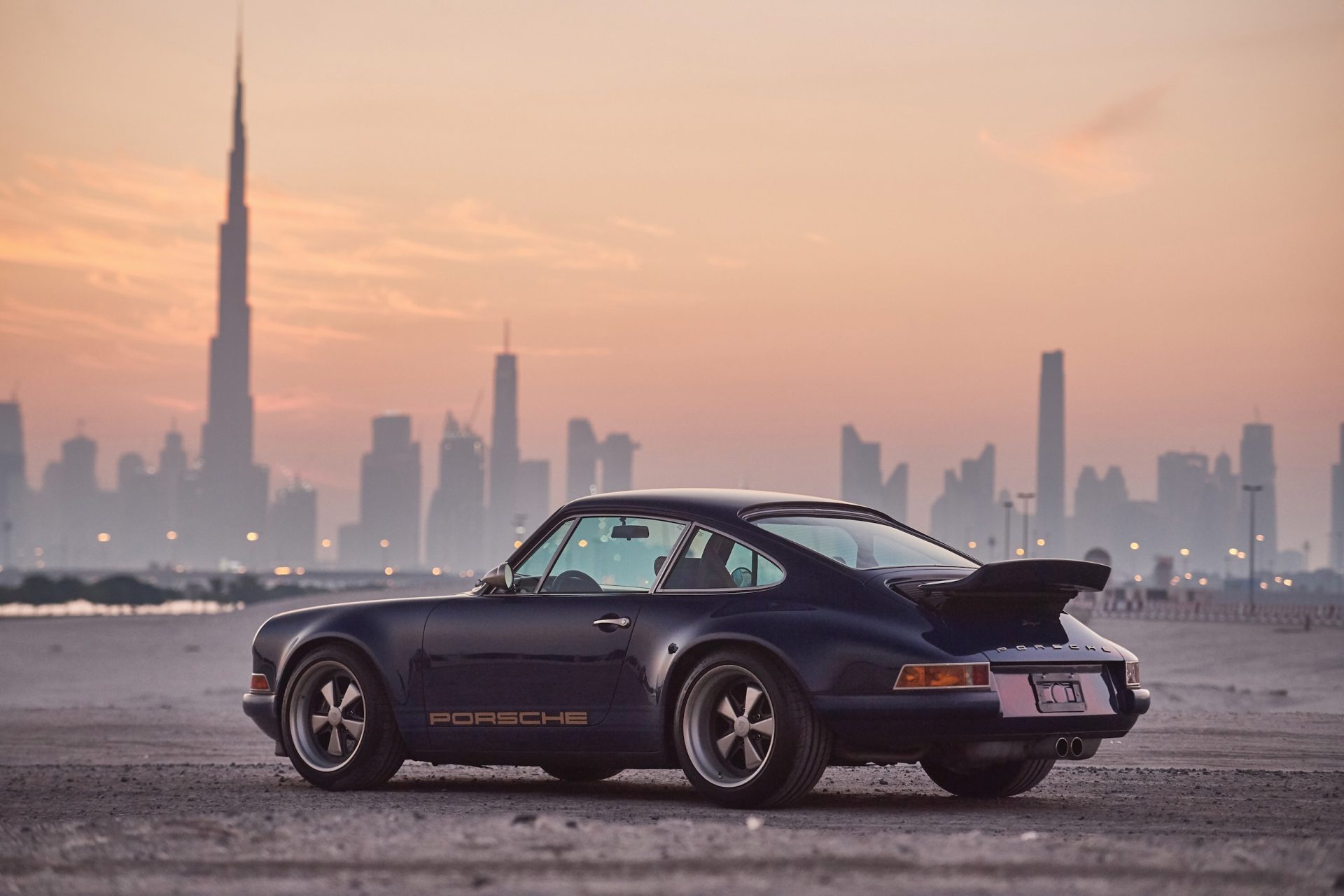
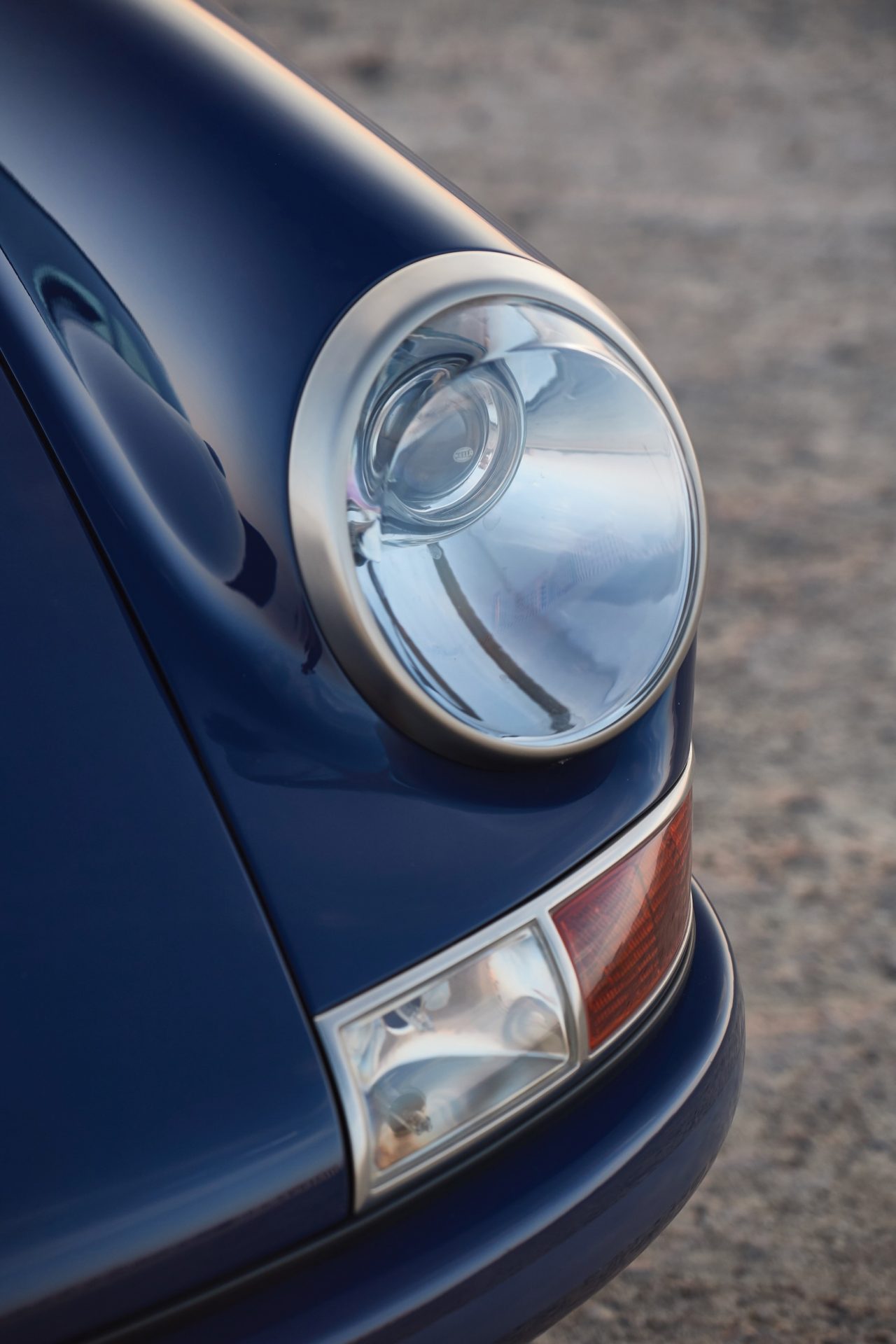
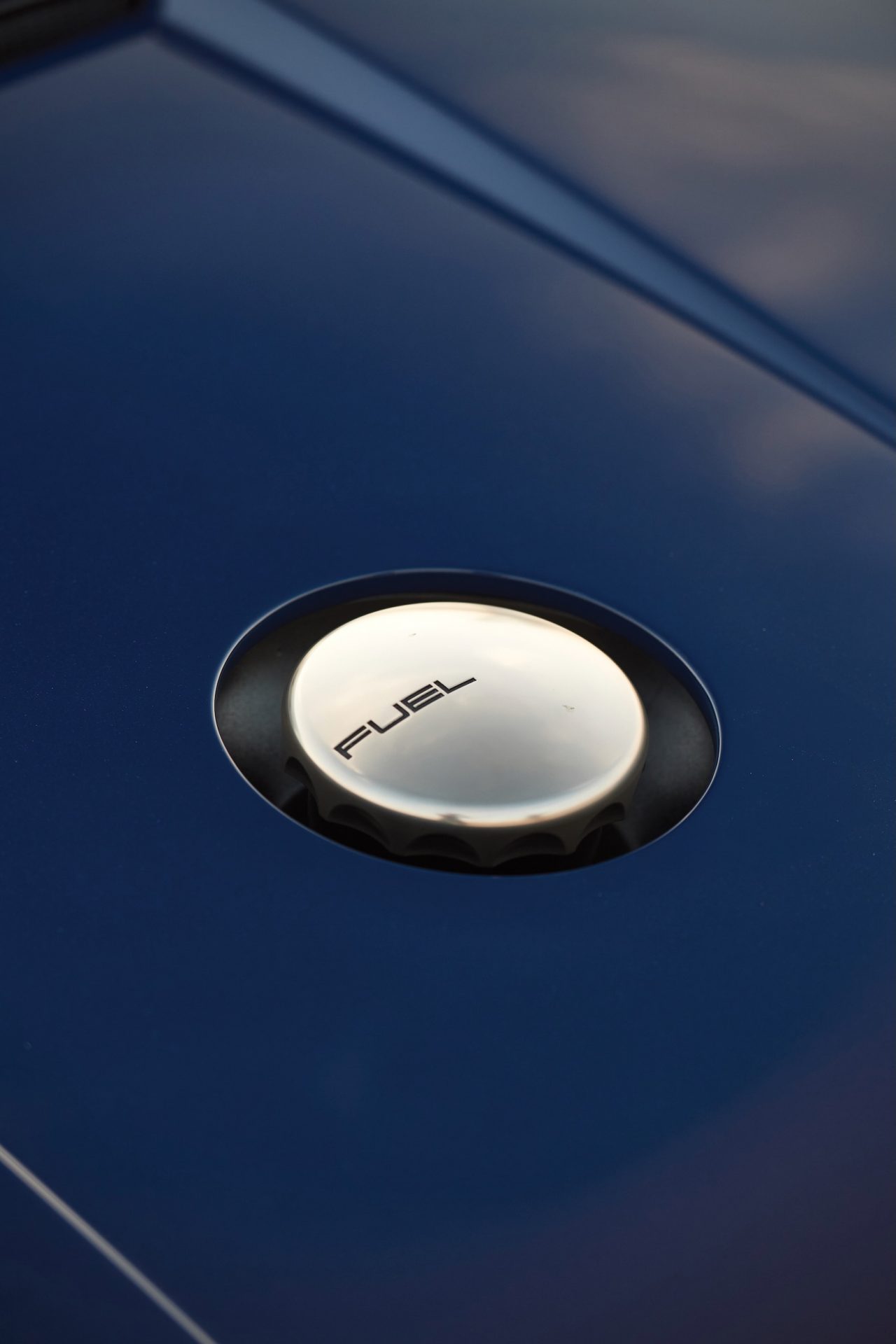
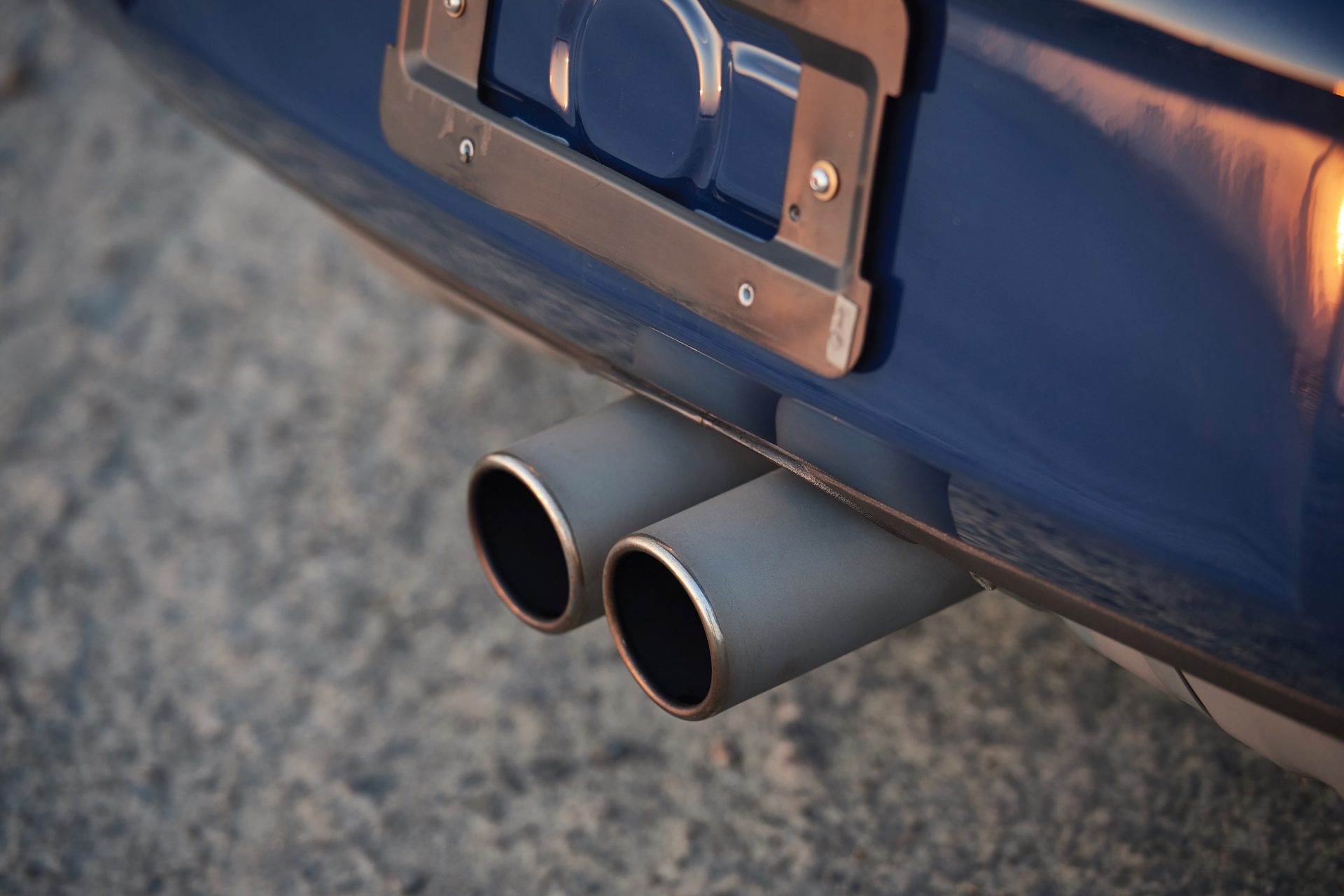


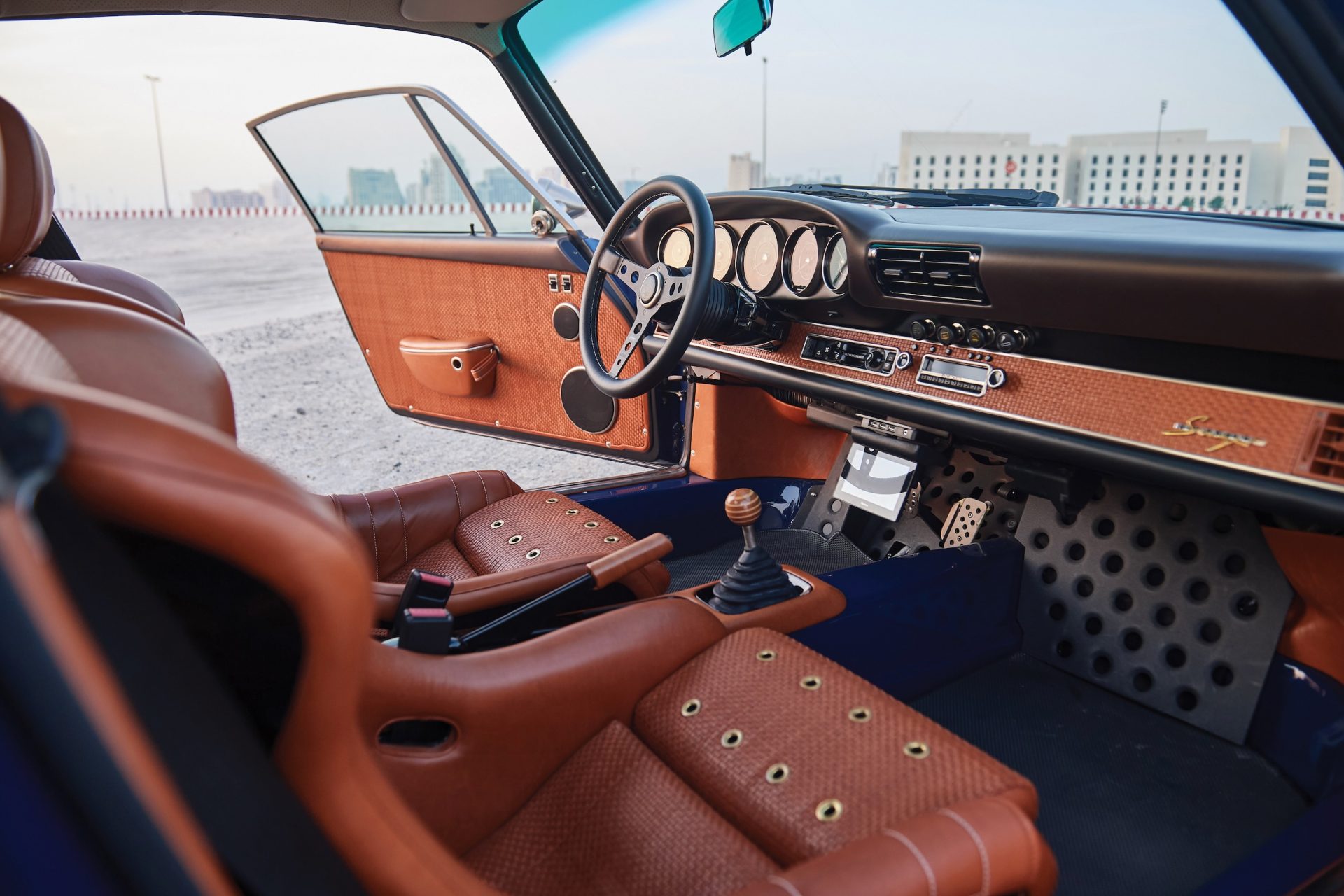
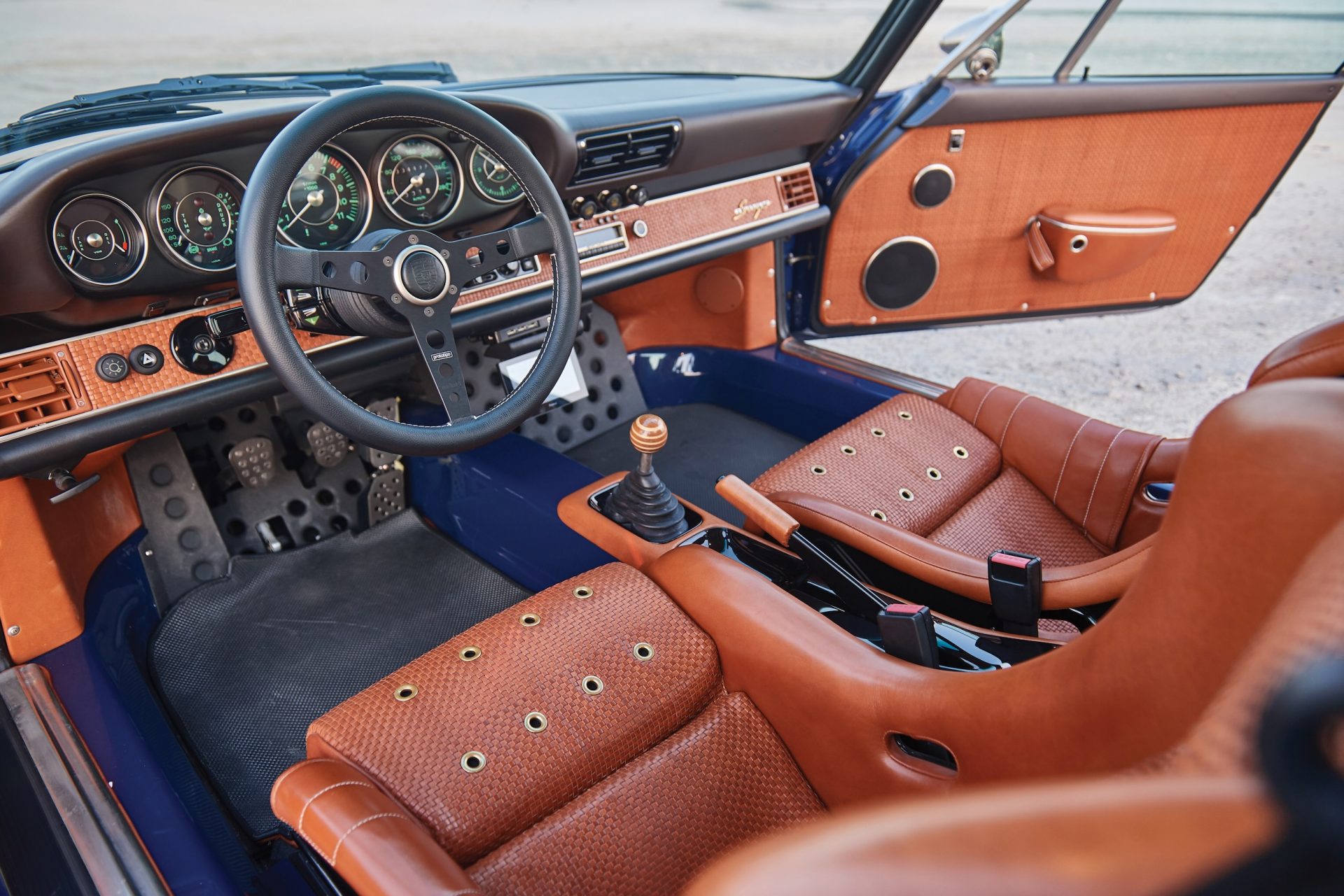
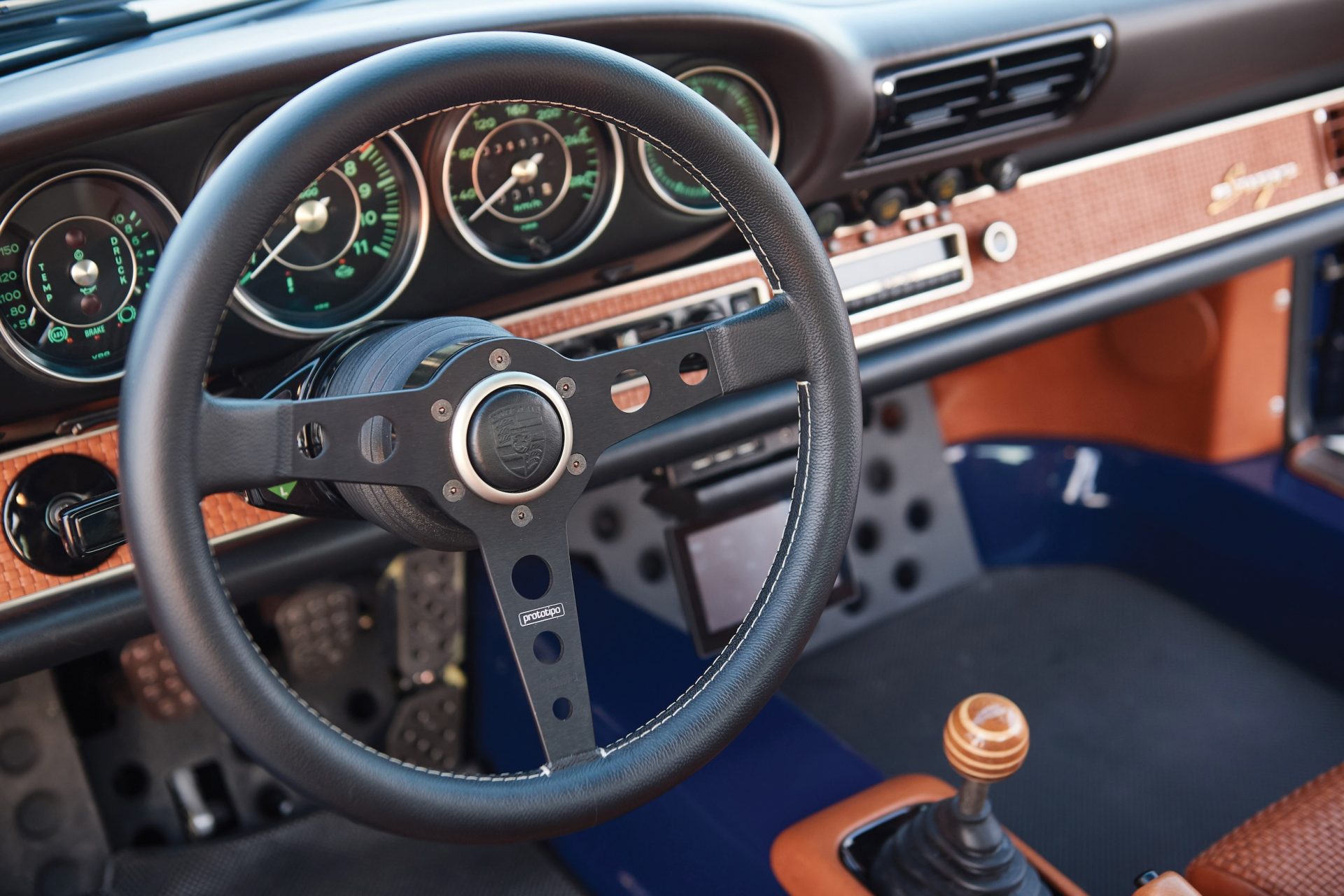
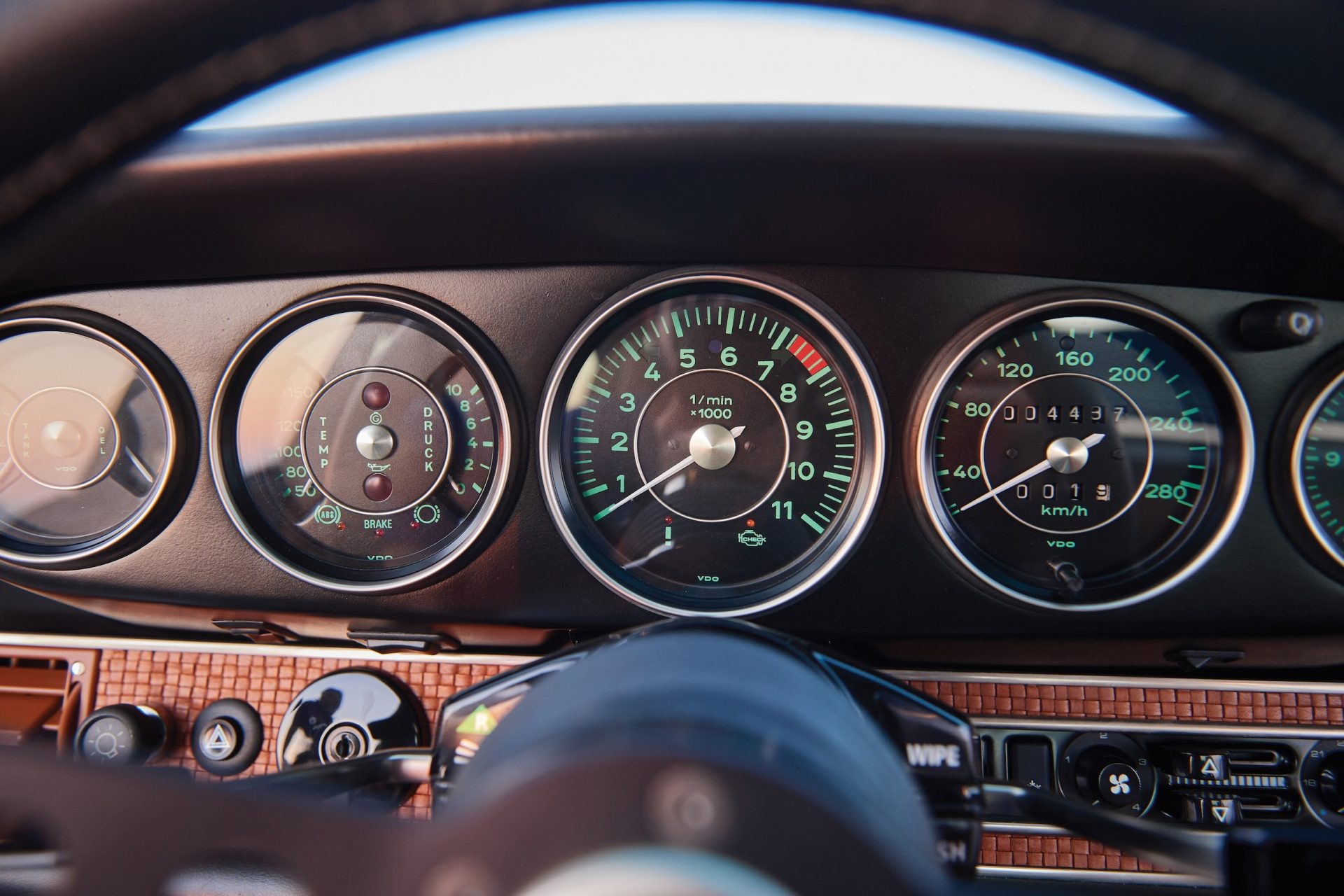
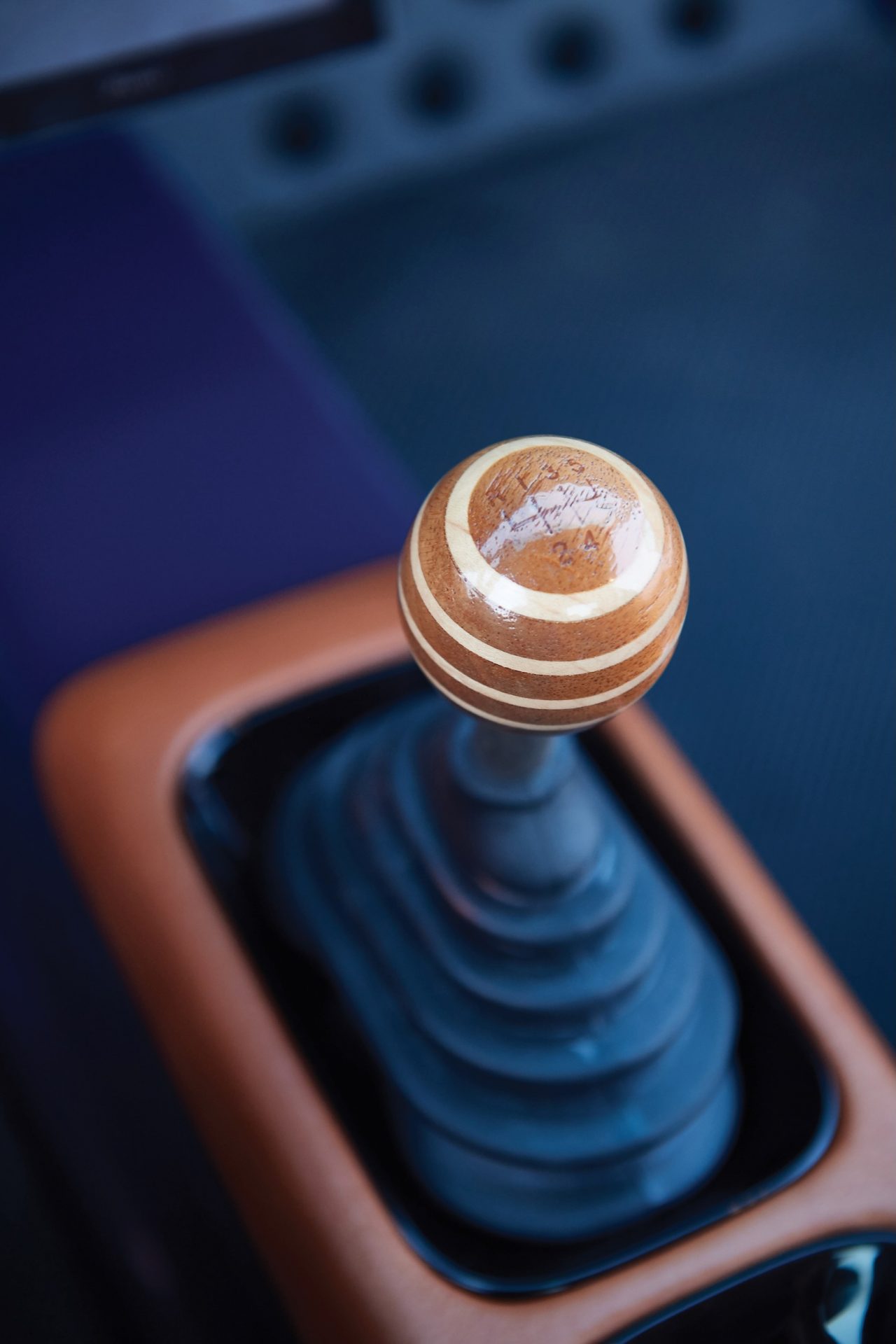
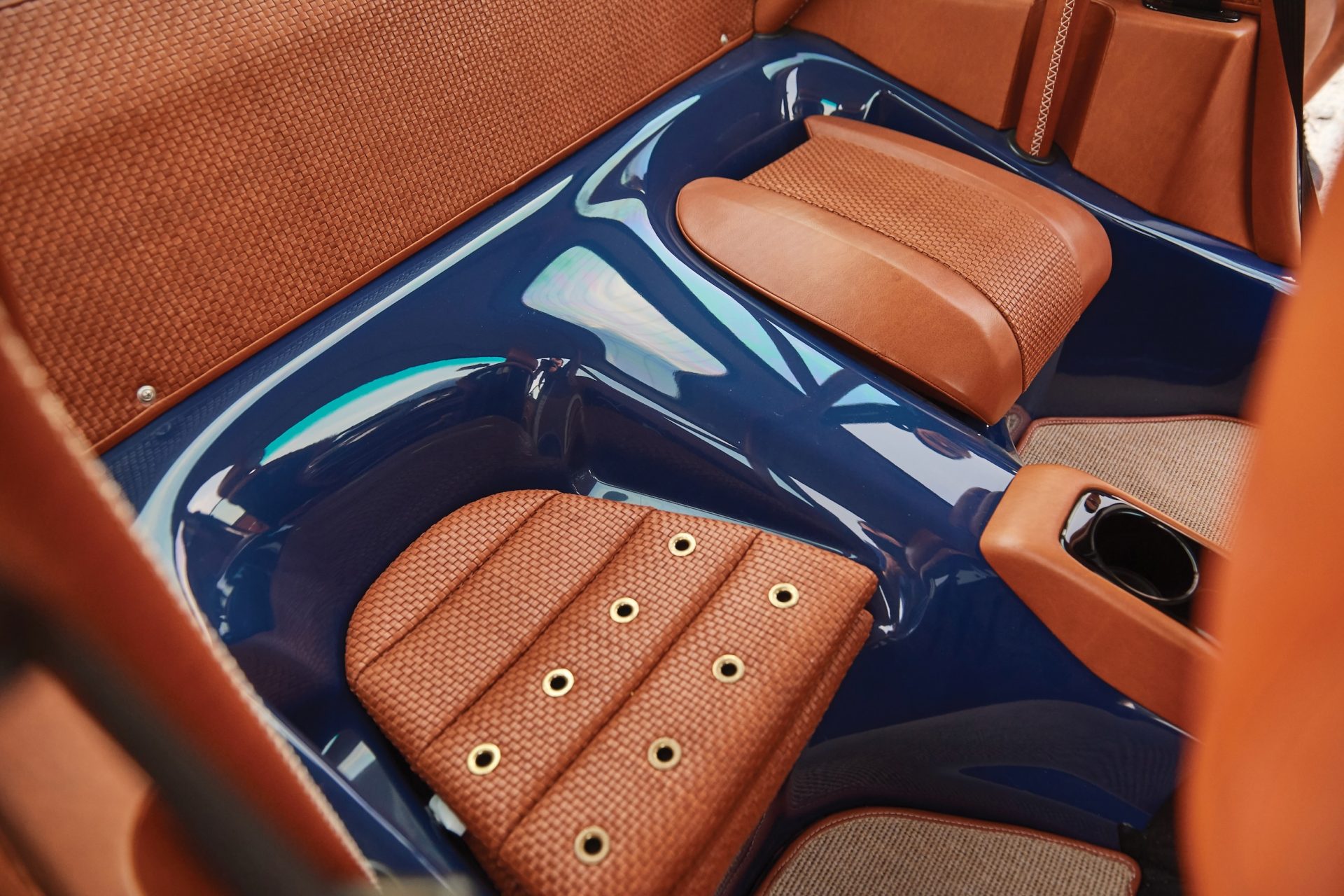


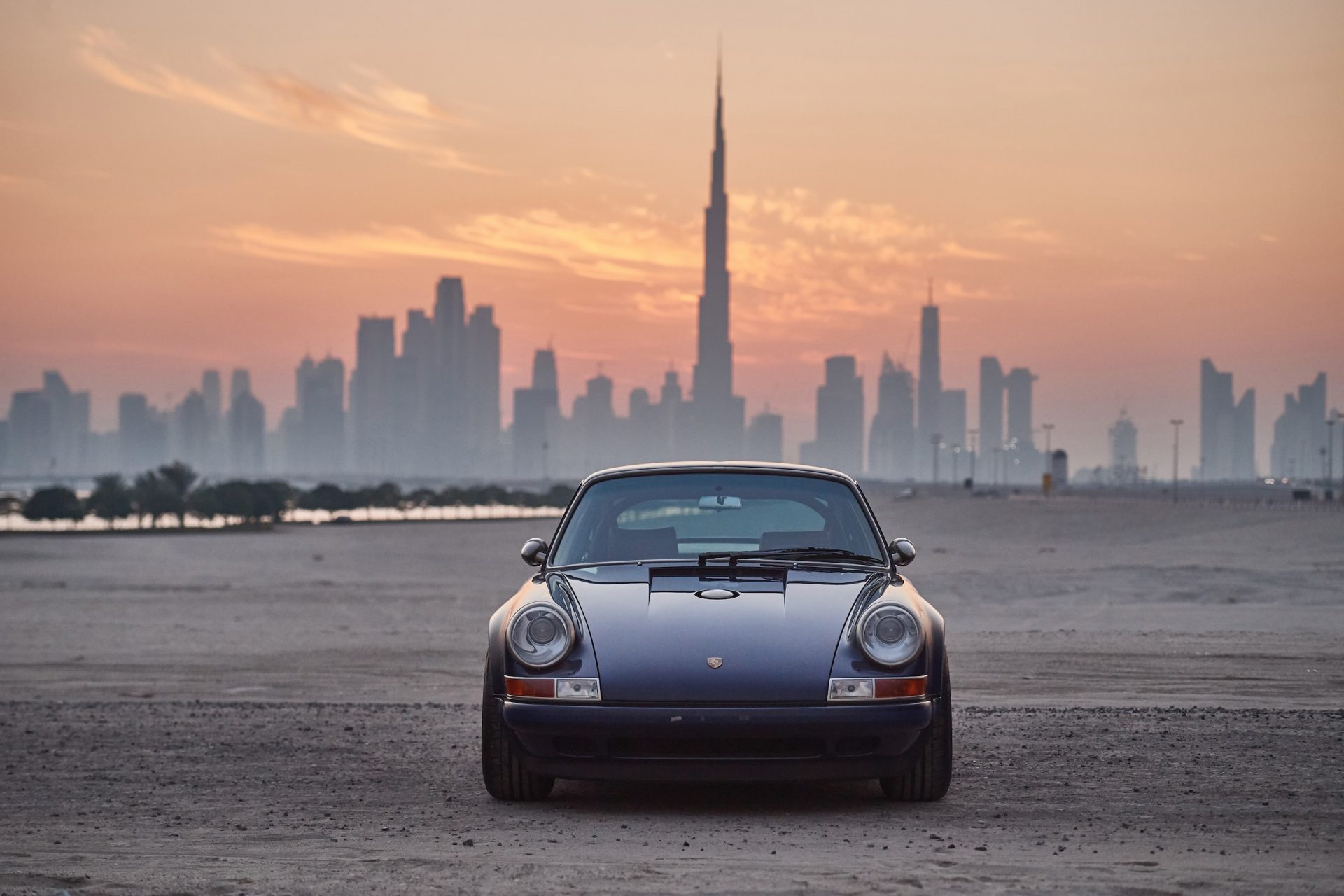
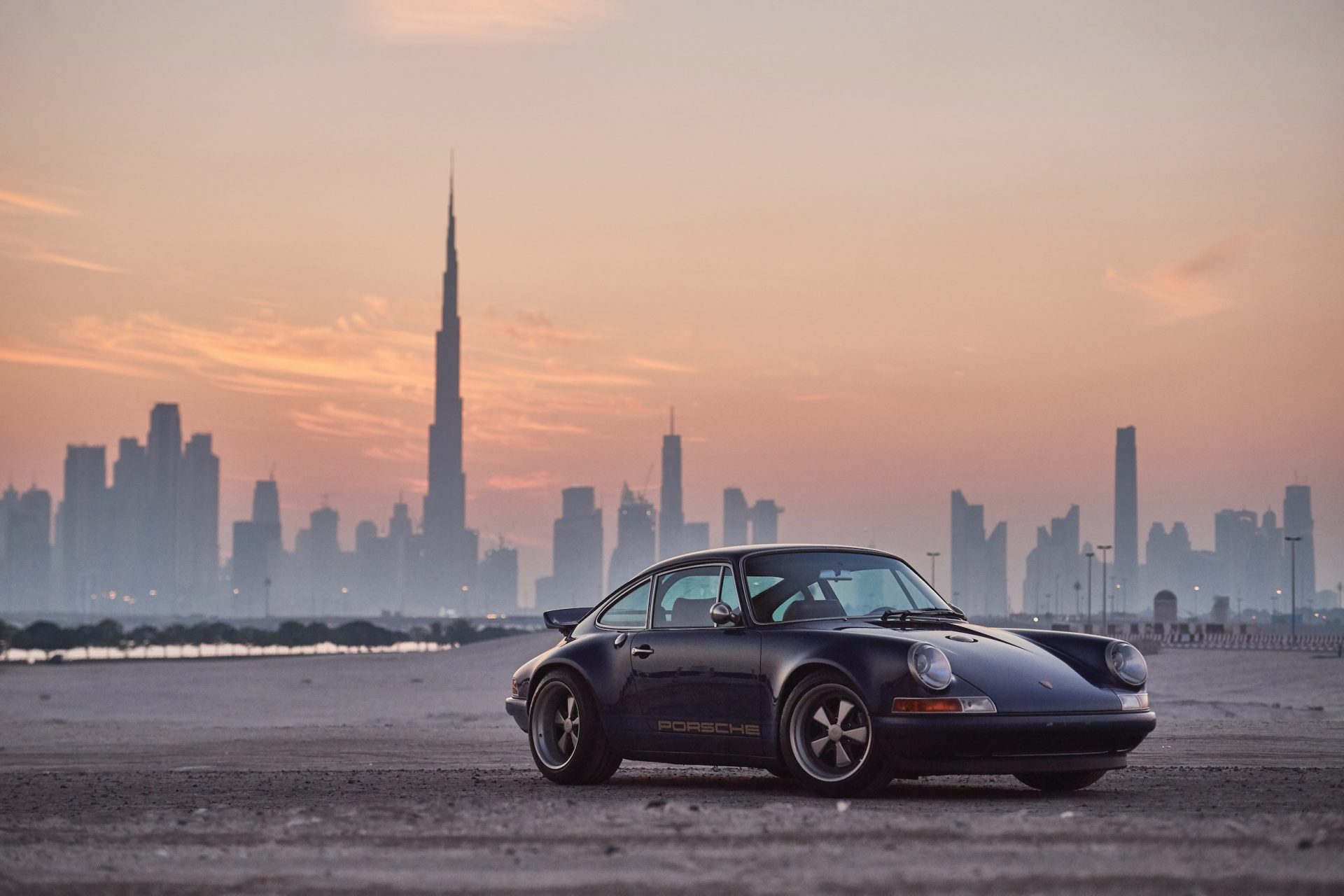
Auktion: RM Sotheby’s, Abu Dhabi 2019, verkauft für 825’000 Dollar, mit diesen Informationen: «Dubbed ‘the Fiona Commission’ by Singer, this particular car boasts a beautiful and well-thought-out specification. At its heart lies Singer’s 4.0-litre flat six-cylinder engine mated to a G50 five-speed manual transmission. The 4.0-litre engine produces 390 bhp at a redline of 7,200 rpm and 315 foot-pounds of torque. Built by Ed Pink Racing Engines retaining the 964-generation block, it utilizes numerous bespoke internal components, including pistons, cylinders and cylinder heads, crankshaft, cams, connecting rods, oil pump, throttle bodies, and intake systems. According to Singer, 911s equipped with the 4.0-litre engine can sprint to 60 mph from a standstill in less than 3.3 seconds, leading to 100 mph in 8.2 seconds. The car is painted Midnight Blue, complemented by Fuchs-style wheels with matching brake calipers. Singer’s larger-size steel Brembo brakes are fitted, along with an Ohlins adjustable suspension. Importantly, the Fiona commission also boasts the desirable options of the exposed centre-mounted fuel filler cap, as well as the exposed oil filler, a homage to the 1972 911s. Importantly, the car is also fitted with a carbon-fibre roof. Inside, both driver and passenger enjoy track-specification seats and rollbar trimmed in cognac leather with an Ivory headliner. Creating a slight contrast are the dash, door cards, and kick panels, which are trimmed in Espresso leather. Furthermore, the transmission tunnel and the interior doorsills are finished in Midnight Blue to match the exterior paintwork. Keen eyes will also note the wooden 917-style gearshift knob and the car’s instruments, which are done to replicate those in 1964–1967 911s, utilizing light green font. The car is also outfitted with air conditioning, stereo with iPod connect, and subwoofer. It presently shows less than 4,500 km on its odometer since its rebuild by Singer in 2016».
–
Chassis-Nummer: WP0AB296XRS420240 (offiziell: Jahrgang 1994)


Auktion: RM Sotheby’s, amfAR Las Vegas 2024, Schätzpreis 1’25 bis 1,5 Millionen Dollar, mit diesen Informationen: «This Porsche 911 Reimagined by Singer is number 201 of approximately 450 Classic 964 examples created; Singer Vehicle Design is no longer accepting orders for this compelling specification, increasing this car’s desirability from the outset. Completed in December 2021 on a 1994 911 RS America chassis, it was delivered to Dallas, Texas. Known as the “Highlands Commission,” its original owner specified the desirable 4.0-liter flat-six engine, rated at 390 horsepower. Importantly, in June 2024 Singer refreshed the engine to Porsche Motorsport North America’s latest specifications with new cylinder heads and various other components. A copy of the invoice for this work, completed at a cost of nearly $40,000, also indicates that the Brembo braking system was updated at this time to the carbon-ceramic brakes package, an ebony and walnut Le Mans shift knob was installed, and the exterior graphics were updated with Deep Orange lettering, the original owner having specified no lettering. The Rainette green exterior pairs beautifully with the brown, orange, and black interior featuring Vivaldi leather trim with Vivaldi and Tivoli woven inserts, Tivoli square-weave carpets, and black leather dashboard, upper door trim, knee pads, roof pillars, and parcel shelf. Other features specified by the original owner include a six-speed manual transmission, Ohlins suspension with “Phantom Road” tune, Fuchs/RSR wheels, decklid letters and badge in nickel, Ivory headliner, track seats with nickel gromets and back panels in Piano Black, rear folding seats with seatbelts, drilled footboards, a Momo Prototipo steering wheel, brass dash badge, and air conditioning. “Special Wishes” features stipulated by the original owner include a Deep Orange tachometer with Cream markings and deletion of the door pockets. Any 911 touched by Singer is a mechanical and aesthetic masterpiece, and Singer’s Classic restorations, including the Highlands Commission offered here, sit at the very foundation of the company’s ever-growing legend. With only 2,103 miles showing on the odometer at cataloguing time, this Porsche 911 Reimagined by Singer presents as new.»
–
Chassis-Nummer: WP0AB2961LS451139
Motoren-Nummer: 62L06029
Getriebe-Nummer: 1002572


Auktion: Broad Arrow, Porsche Air/Water 2025, Schätzpreis 1’050’000 bis 1’250’000 Dollar, mit diesen Informationen: «Completed in March of 2023, this 1990 Porsche 911 was Reimagined by Singer as the Central Florida commission. As per its Singer-supplied build sheet, its custom crafted bodywork is finished Singer Racing White from Singer’s “Specially Formulated Collection” with full-car clear paint protection film. Its flanks feature racing side stripes in Black with Mustard Yellow lettering a color that carries onto the Porsche decklid lettering and its painted wheel centers. The multi-piece 17-inch wheels feature closed lug nuts and Michelin Pilot Sport 4S tires. Inside, Black contrast woven leather and suede is the dominant theme on the door panels, dashboard trim, and seat centers. The Recaro seat bolsters and headrests are expertly trimmed in Mustard Yellow leather as are the door arm rests, the Black square-weave carpet edging, and 12 o’clock stripe on the MOMO Mod.07 dished steering wheel. Black leather features throughout the rest of the interior covering the Jacuzzi, tunnel, sills and Recaro seat backs. Both an electric sliding sunroof and air conditioning are interior amenities along with Singer’s retro look Porsche Classic Radio Navigation unit with Apple CarPlay. This exceptional specification is powered by a fully rebuilt and enlarged 4.0-liter air –cooled flat-six by Ed Pink developing 390 horsepower. The 4.0-liter features “Big” cams, a CARB-compliant Emtron ECU, a ceramic plenum inlet, and a Black ceramic coated exhaust system. Power is transmitted to the rear wheels via a five-speed manual transmission. All of this potential speed can be brought to a halt by Brembo brake calipers finished in bespoke Black with White lettering with high-performance carbon ceramic rotors. The entire car is underpinned by an incredible 2-Way sport adjustable suspension system by Öhlins. Furthermore, Central Florida is specified with five separate Special Wishes items that include the decklid grille mesh finished in black, Recaro badge delete, a yellow MOMO logo on the Mod.07 steering wheel, and dash strip vents in Piano Black».
–
Chassis-Nummer: WP0AB2964LS451541 (1991)


Auktion: Broad Arrow, Zürich 2025, Schätzpreis 950’000 bis 1’250’000 Franken, mit diesen Informationen: «This Porsche 911 Coupe Reimagined by Singer, known as “Goldfinger Commission”, represents a stunning reimagination of a 964-generation 911 by Singer Vehicle Design. At the core of this reimagined 911 lies a bespoke, air-cooled flat-six with a label on the fan shroud indicating that it was upgraded to 4.0-liter specification by Ed Pink Racing Engines in September 2016. Announced during Monterey Car Week in August 2014, the Ed Pink 4.0-liter engine upgrade built upon the strong foundation of the Cosworth-developed 3.8-liter engine with an array of bespoke parts including a Pankl crankshaft, Extreme cylinder heads, Mahle pistons and cylinders, Carrillo connecting rods, Rothsport fuel injection, and AEM engine management. These enhancements allow the engine to produce approximately 335 PS in European specification, routed through a Getrag six-speed manual transmission. The suspension has been upgraded with an Öhlins sport two-way adjustable system, while braking performance is enhanced by premium Brembo brake calipers—finished in Singer Racing Red with white lettering—clamping high-performance rotors. The car rides on Fuchs-style wheels with nickel RS centers over black backgrounds, shod in Michelin Pilot Sport 2 tires. “Goldfinger” also features a carbon roof and the Touring exterior trim package with nickel bumperettes and rubber inserts, presented in dazzling Paint-to-Sample Casablanca Beige Metallic with clear-film protection on the lower rockers and rear fender fins. Distinctive raised decklid lettering finished in 24-karat gold is complemented by a brass Singer script. Inside, Goldfinger showcases a thoroughly personalized interior. The primary trim is finished in Chocolate Brown (DE 238) leather from the Classic Leather Collection with woven inserts featuring grommets finished in brass. The dashboard, roll tops, pillars, parcel shelf, and knee pads are trimmed in black leather for a neat contrast. Front occupants are treated to four-way adjustable Recaro sport seats with backs upholstered in the primary trim color, while rear passengers enjoy folding seatbacks. Singer’s renowned attention to detail is evident throughout the rest of the cabin, from the Prototipo steering wheel and piano-black shift knob, to the dash emblem with a brass Singer script and “Reimagined” picked out in Orange. The gauge cluster presents black faces with a Singer-Orange tachometer and Cream markings, and modern conveniences are neatly integrated, including air conditioning, a Becker radio, and a Porsche Classic Radio Navigation unit with Apple CarPlay».
–
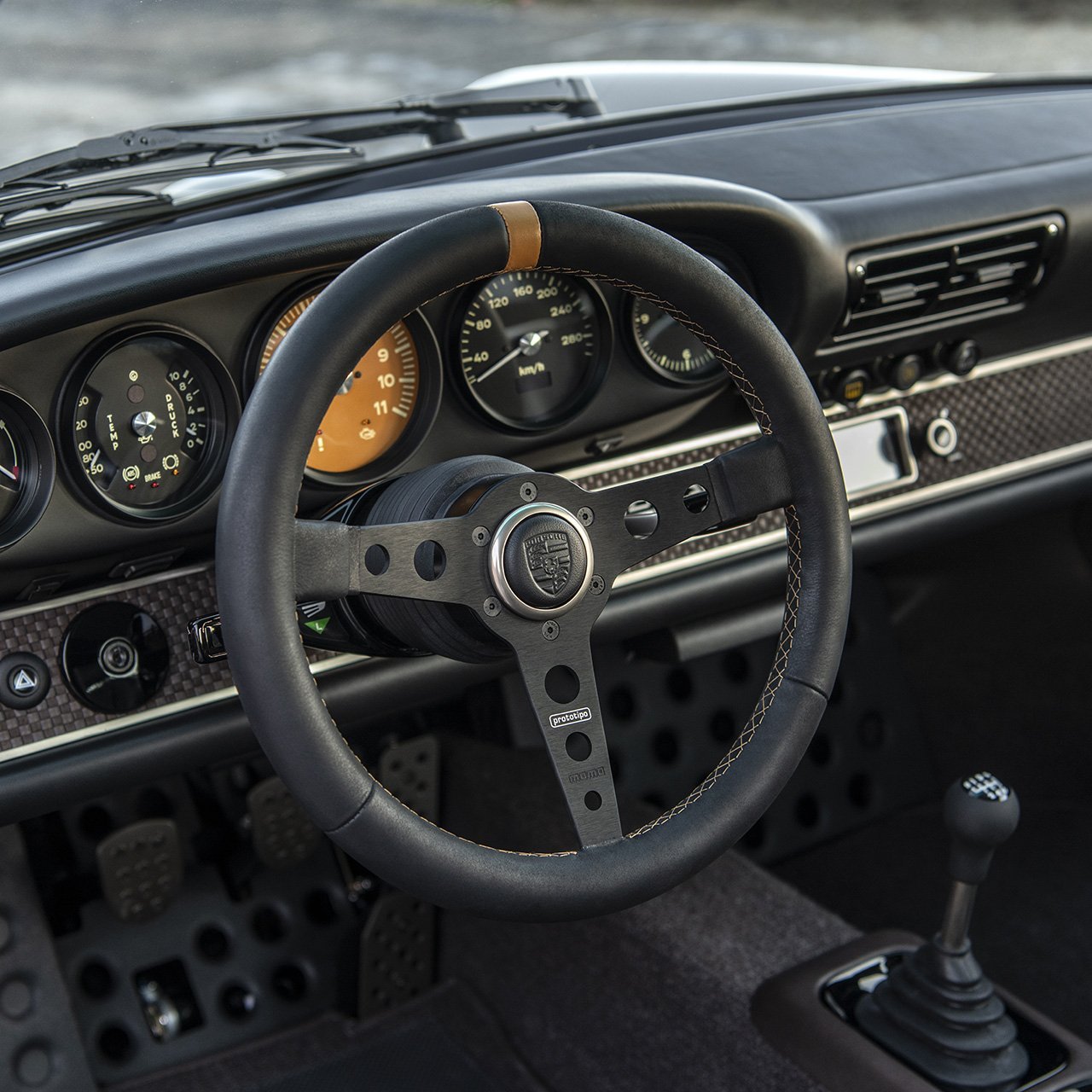
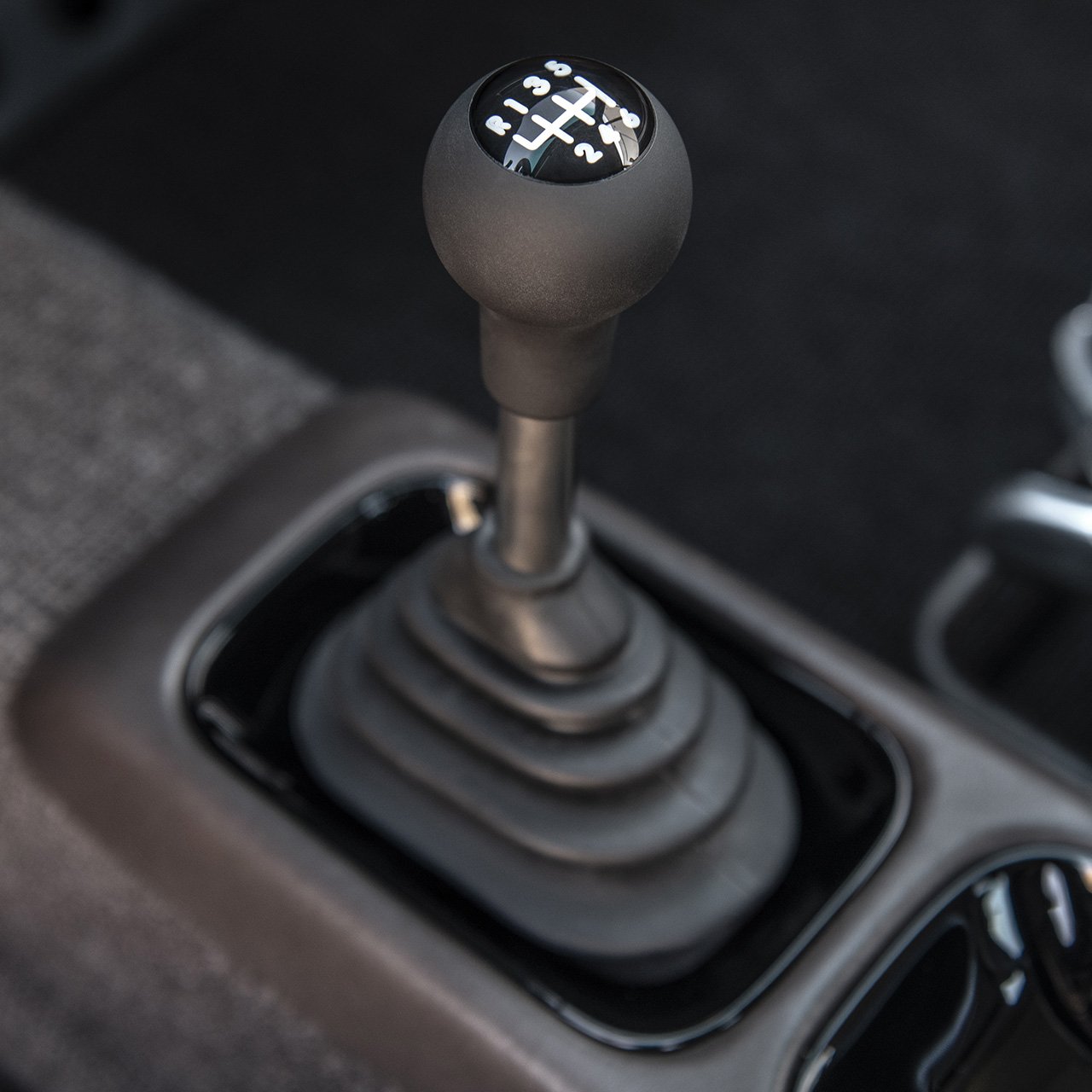
The Neos Commission, steht zum Verkauf bei Bugatti München (August 2025), 1,34 Millionen Euro.



–
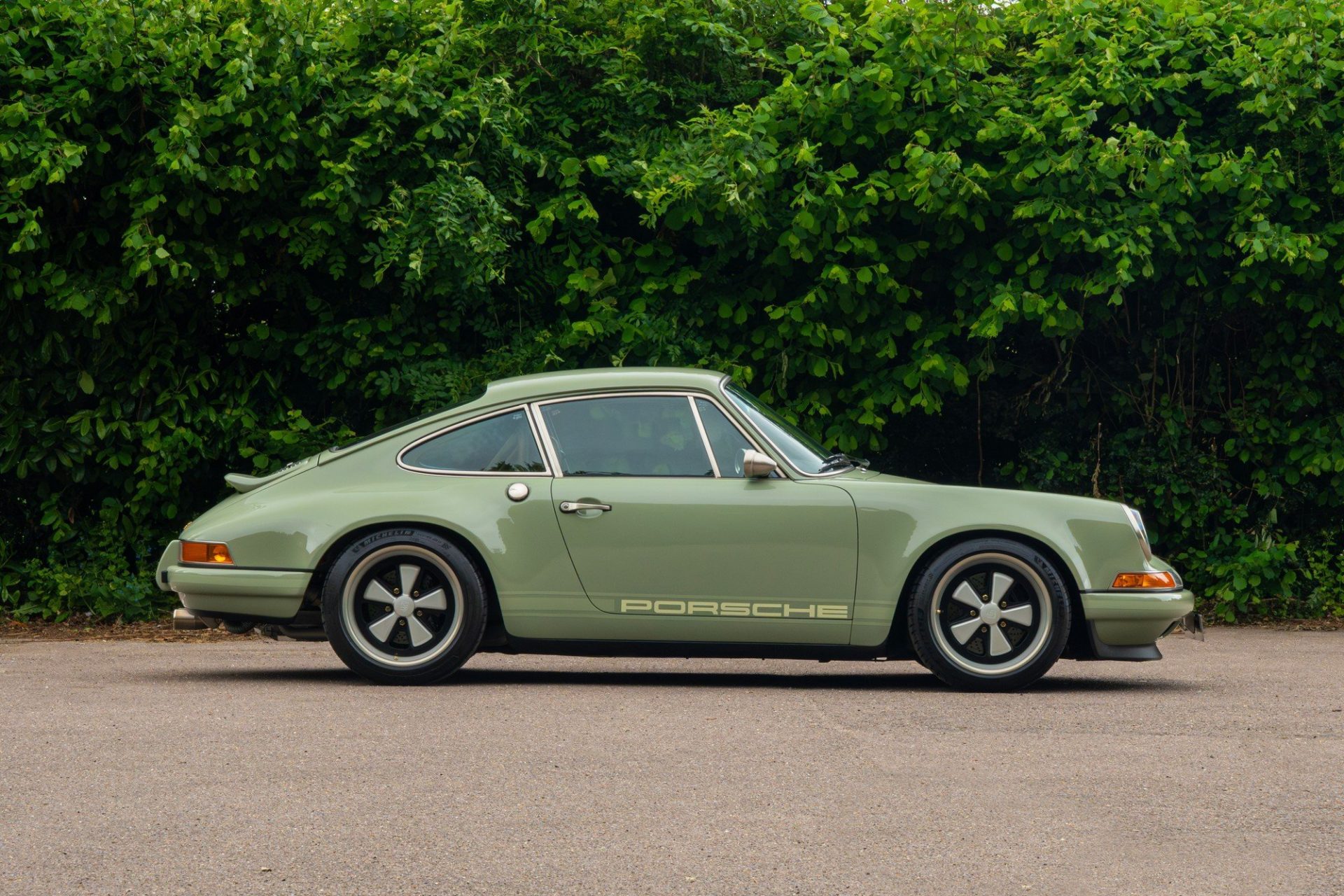
The Stowe Commission, steht zum Verkauf bei Cottingham Blue Chip (August 2025), 1’040’000 Pfund.




–
Chassis-Nummer: WP0ZZZ96ZLS404568 (1990)
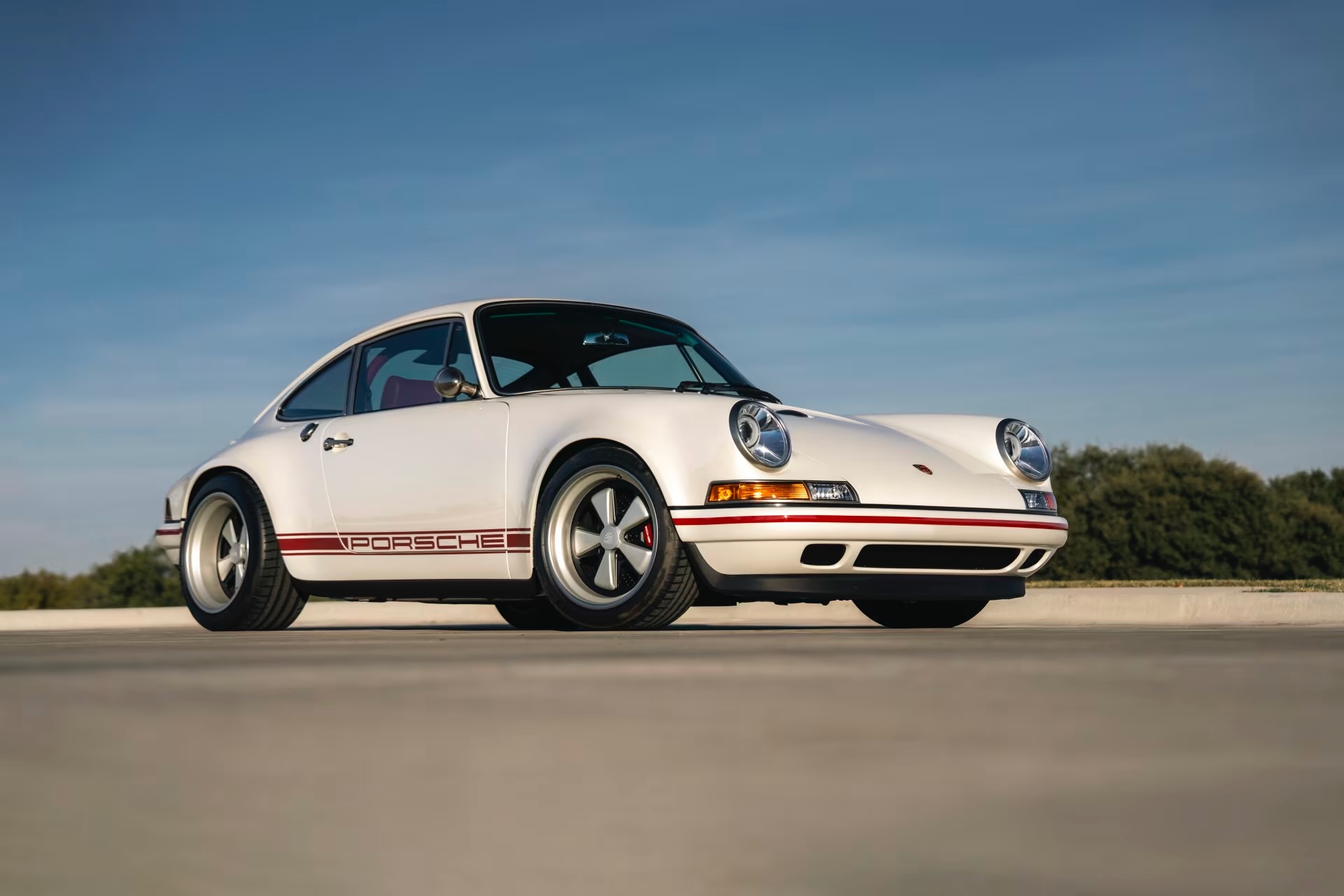
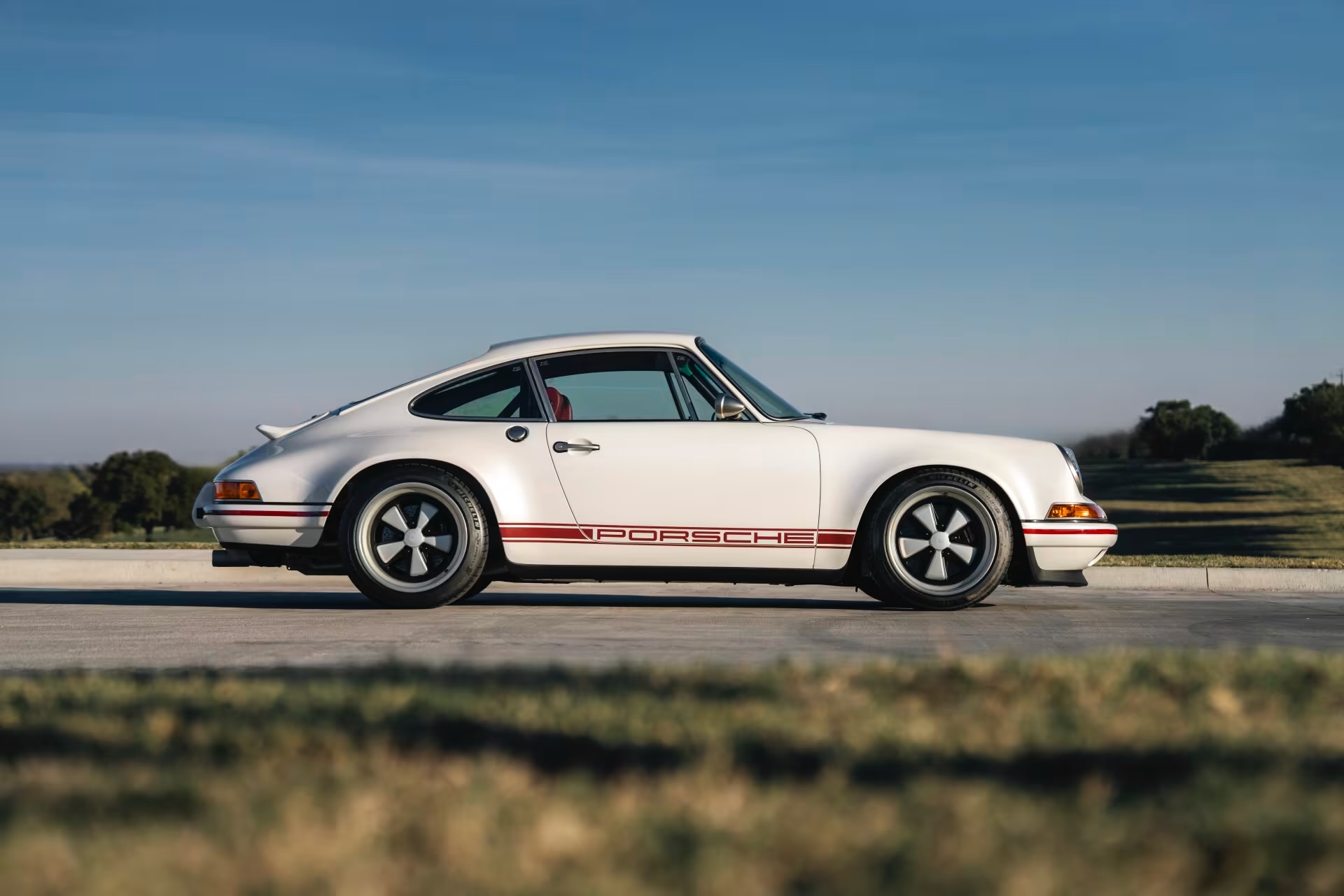
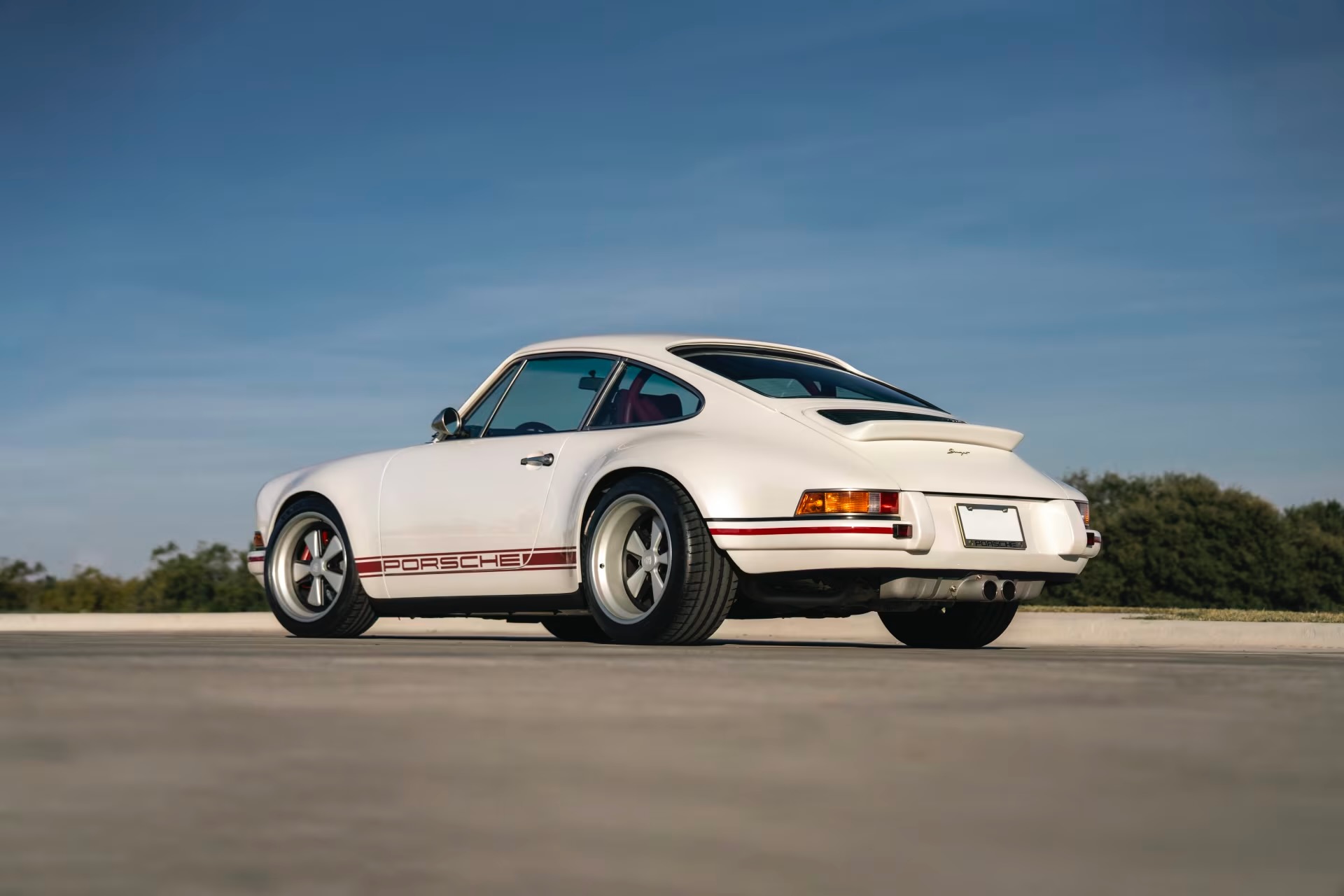
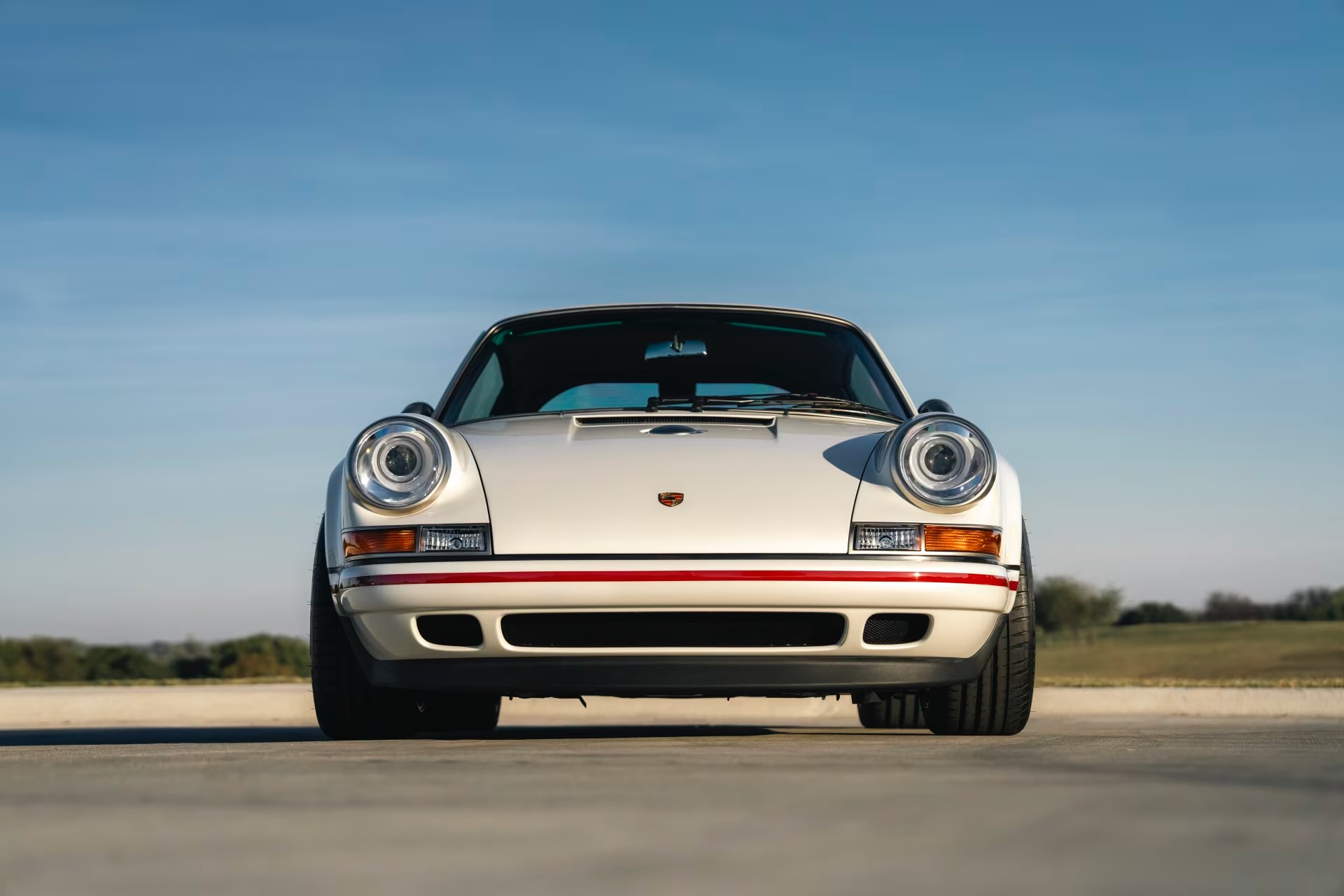
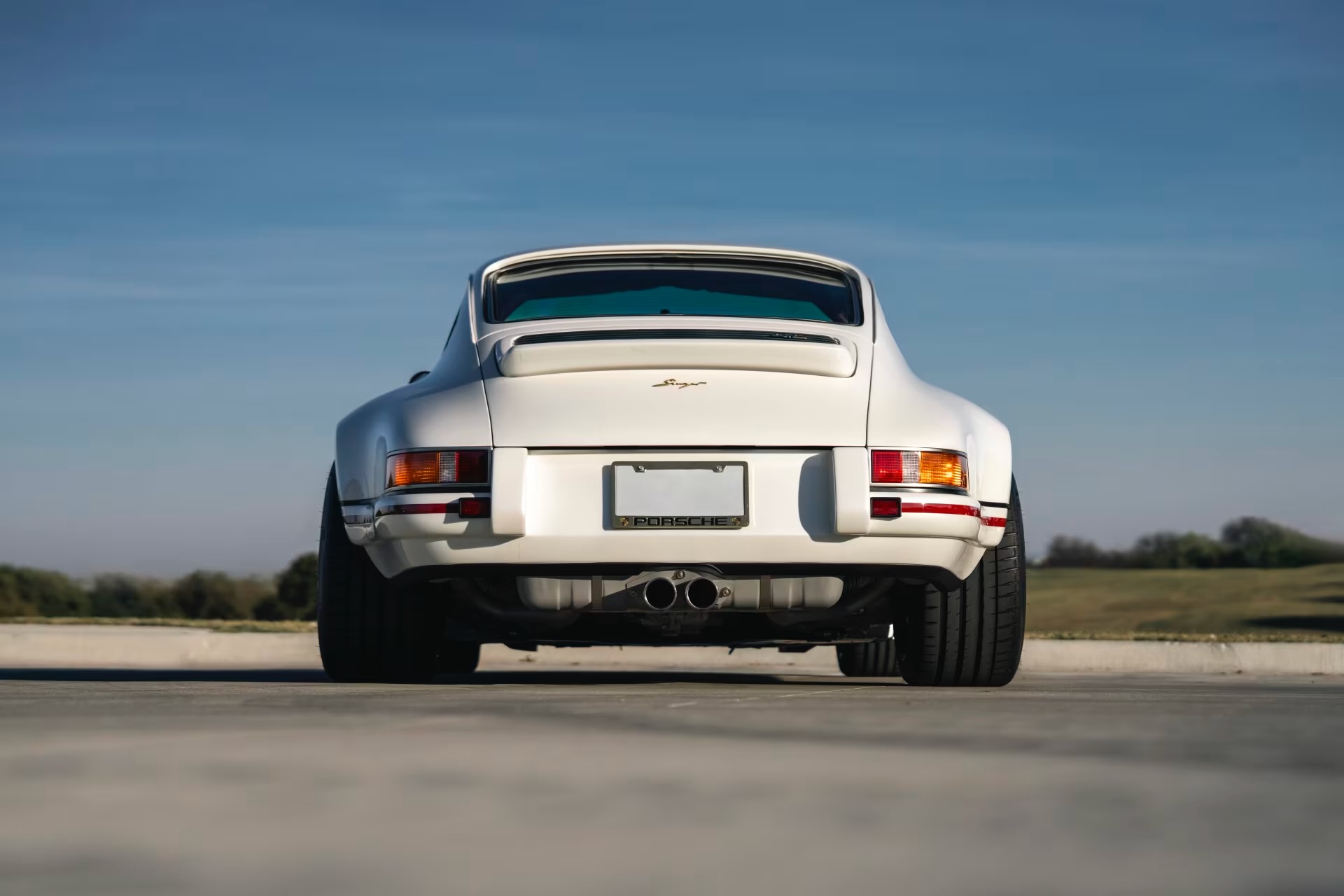
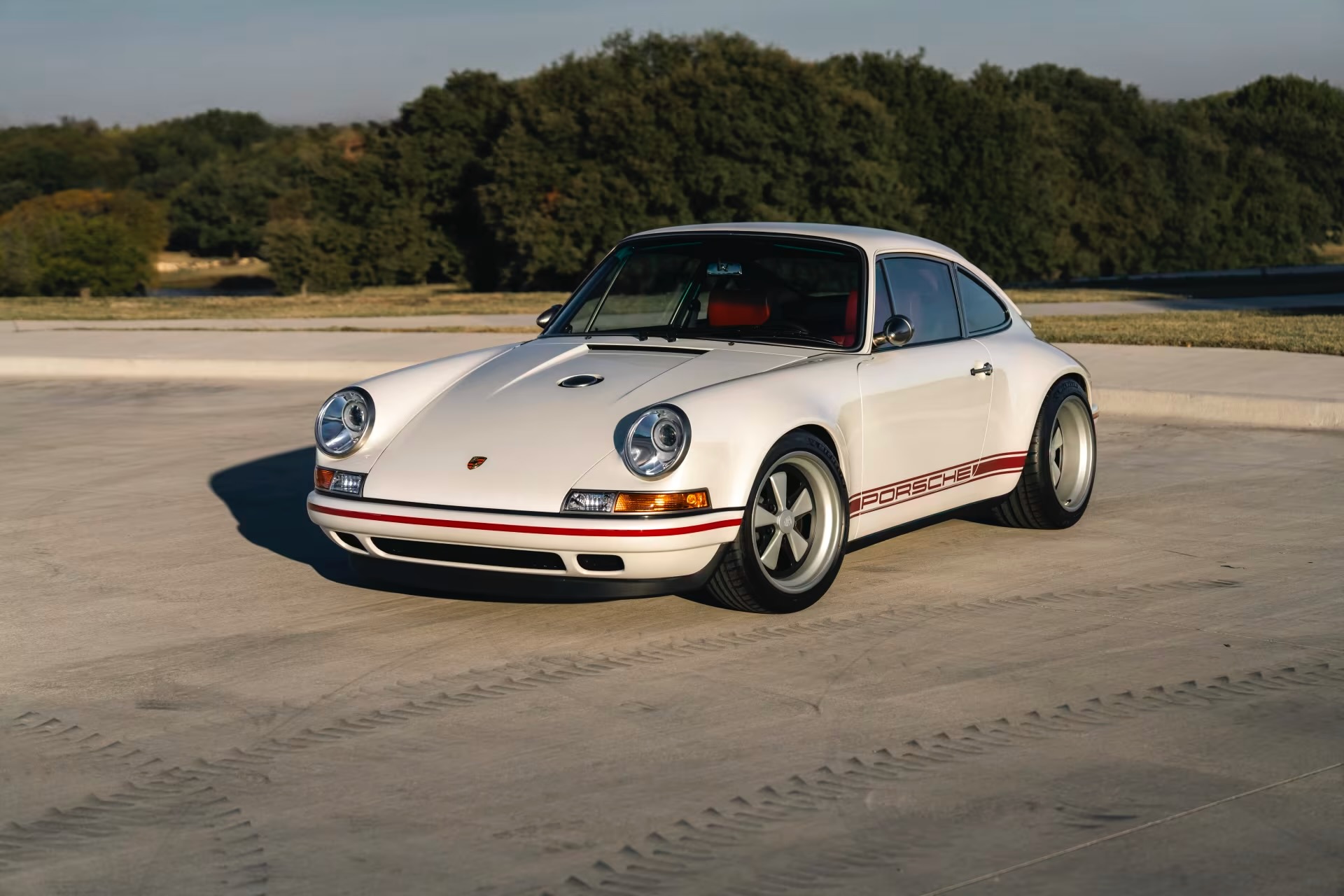
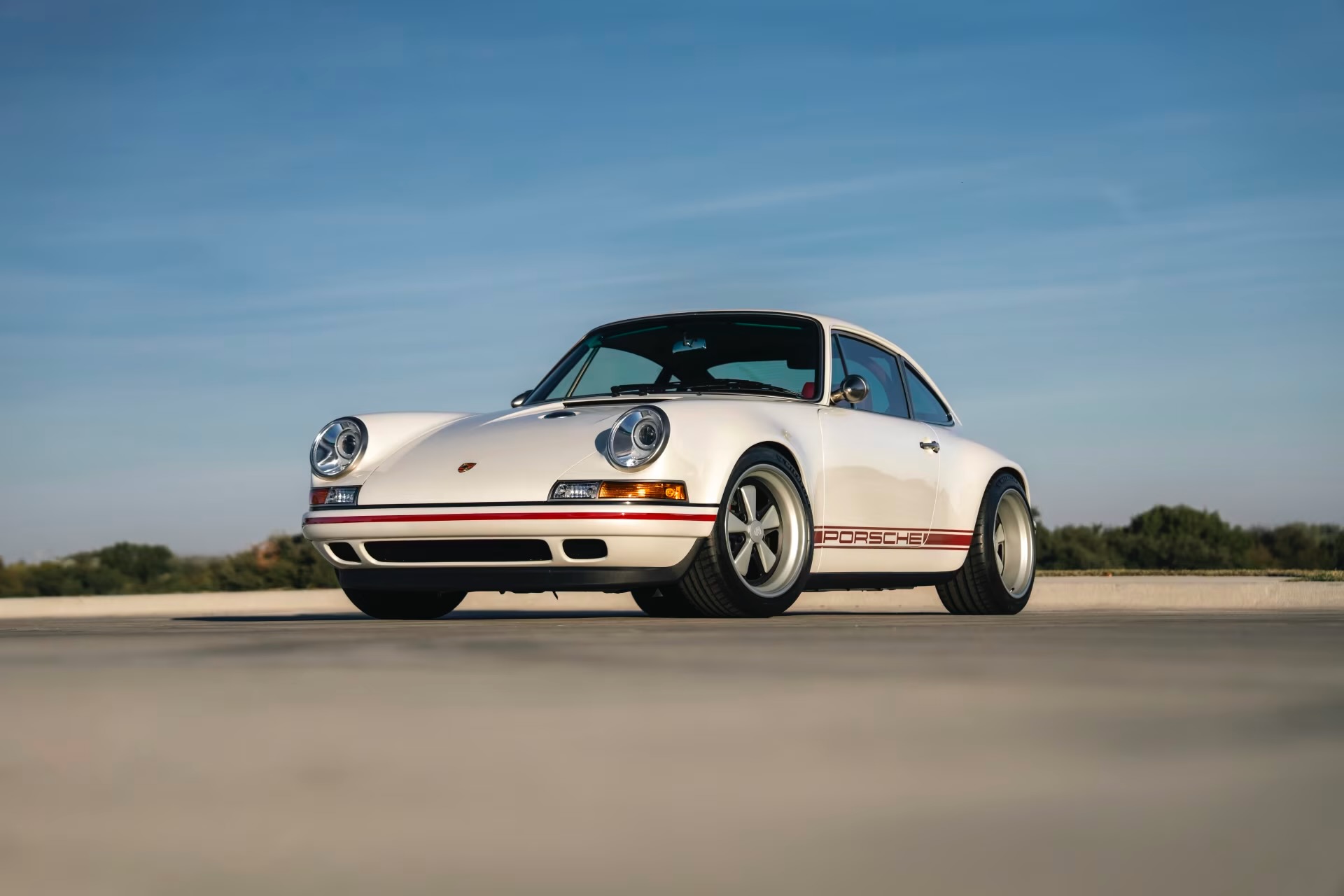
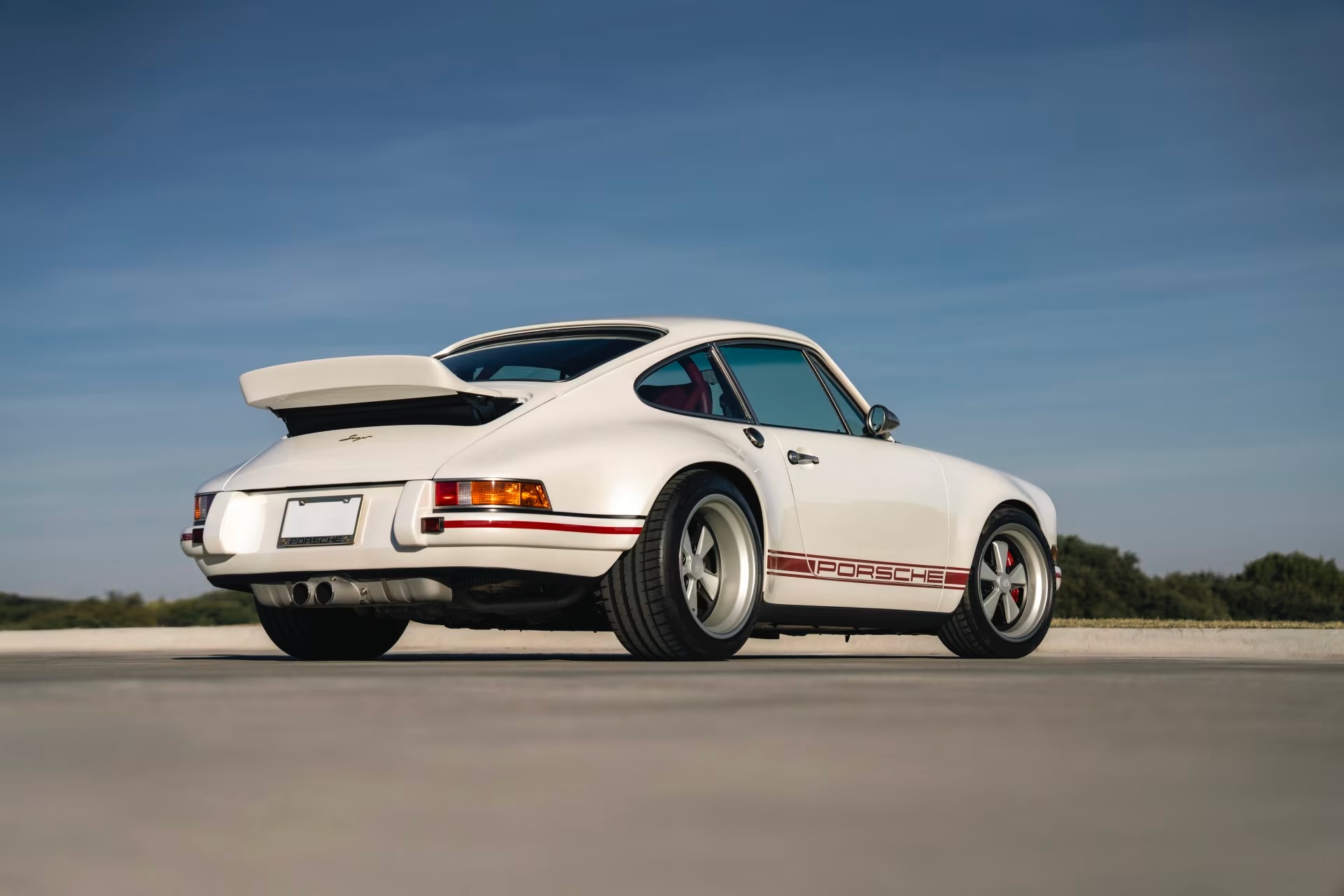
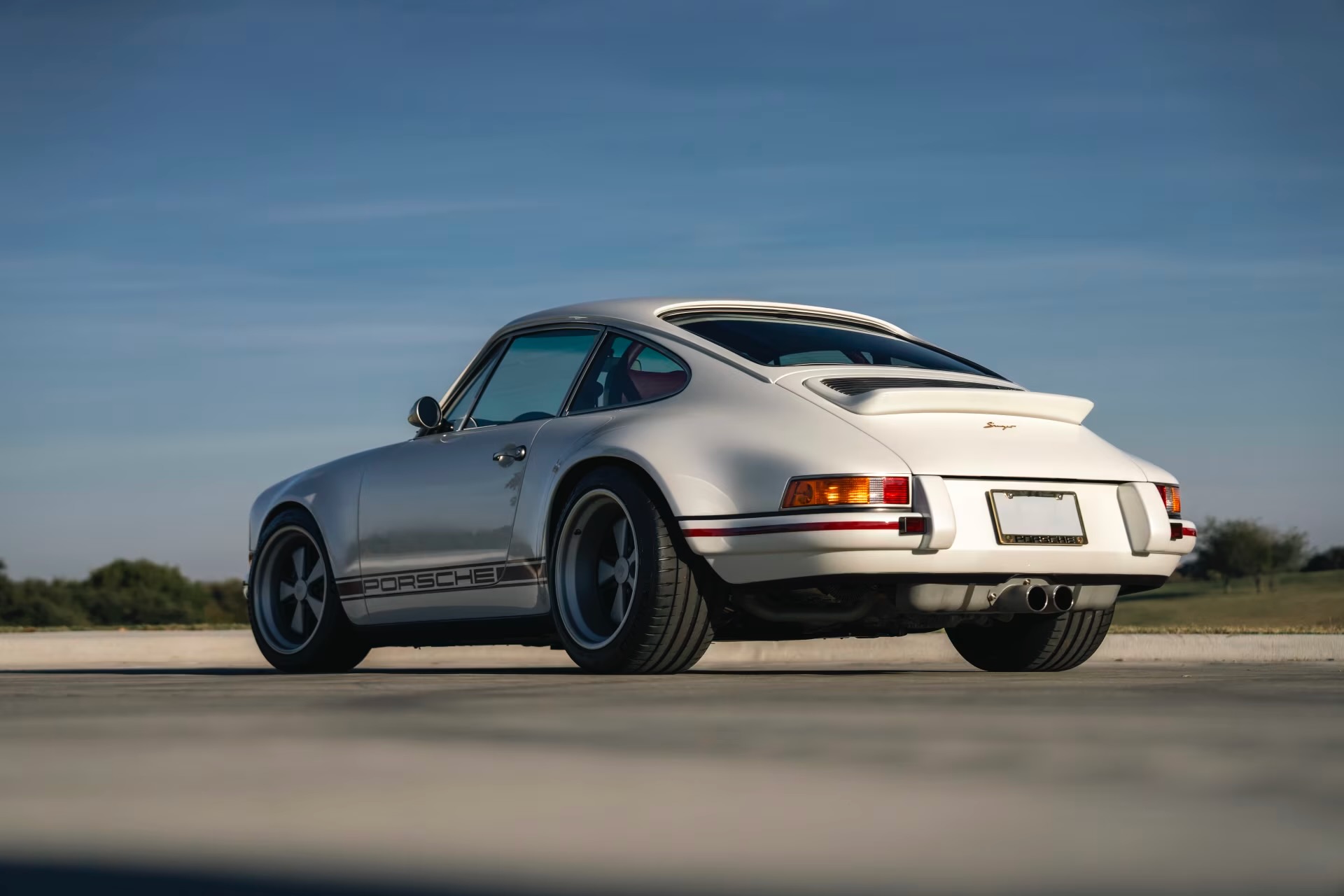
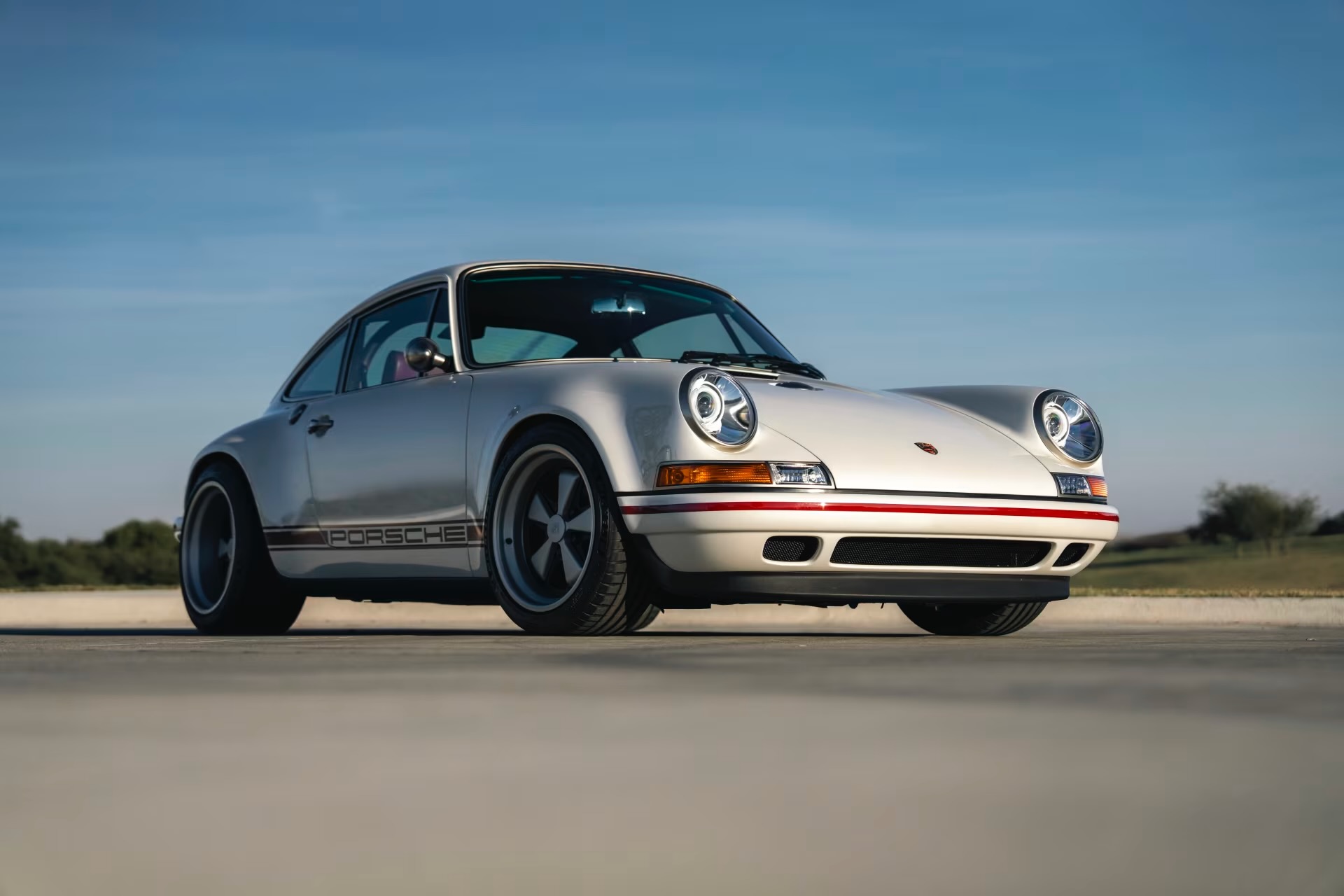
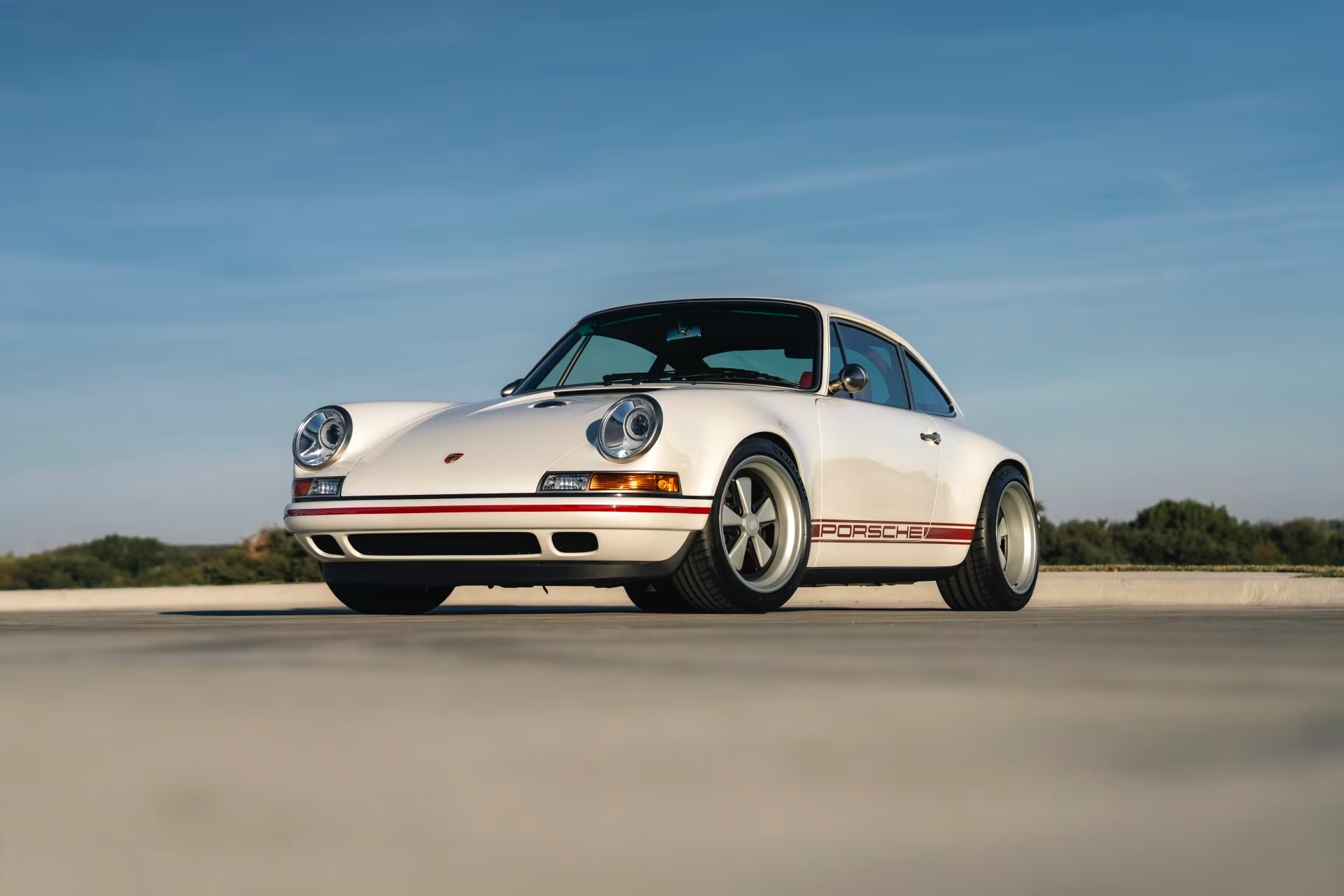
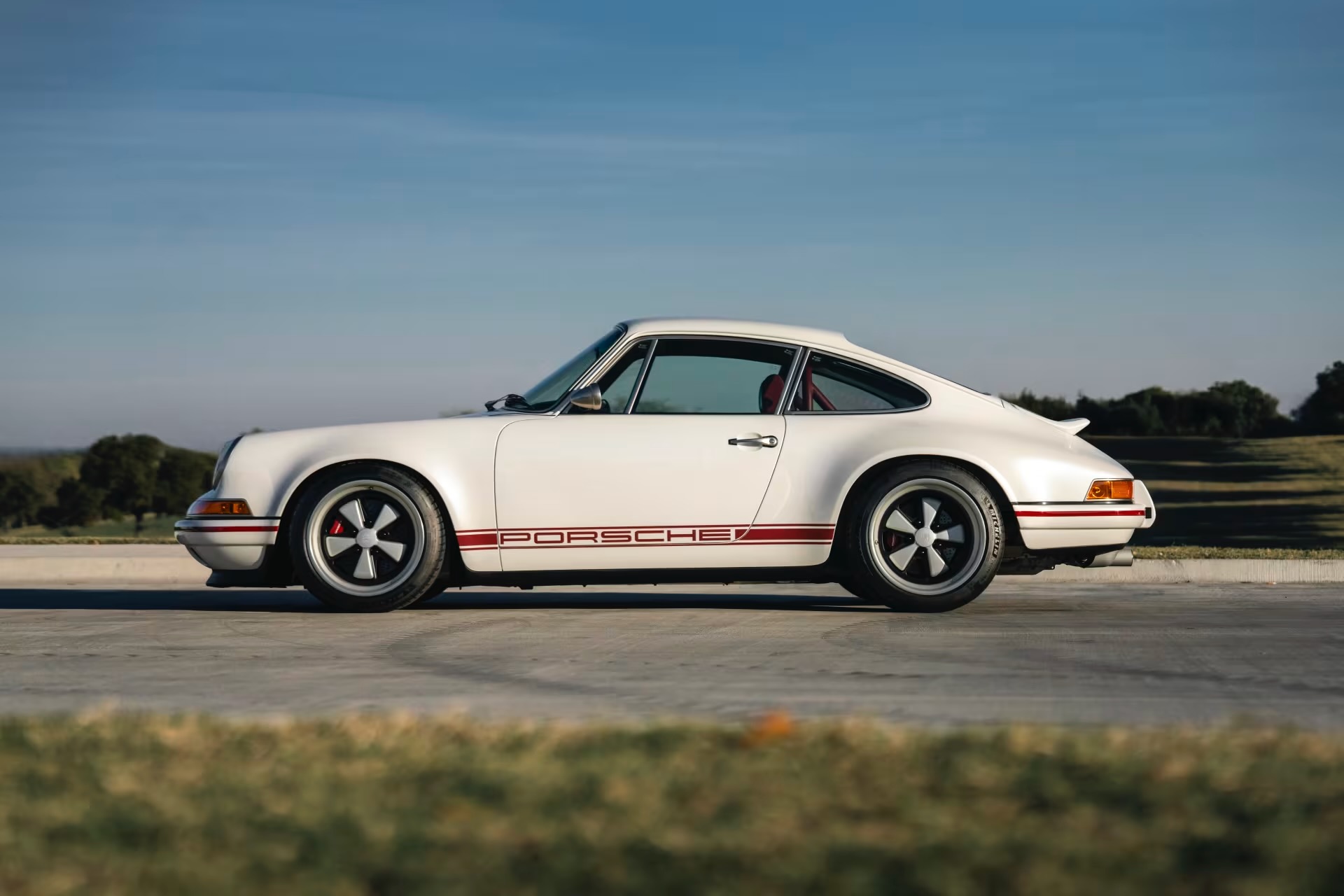
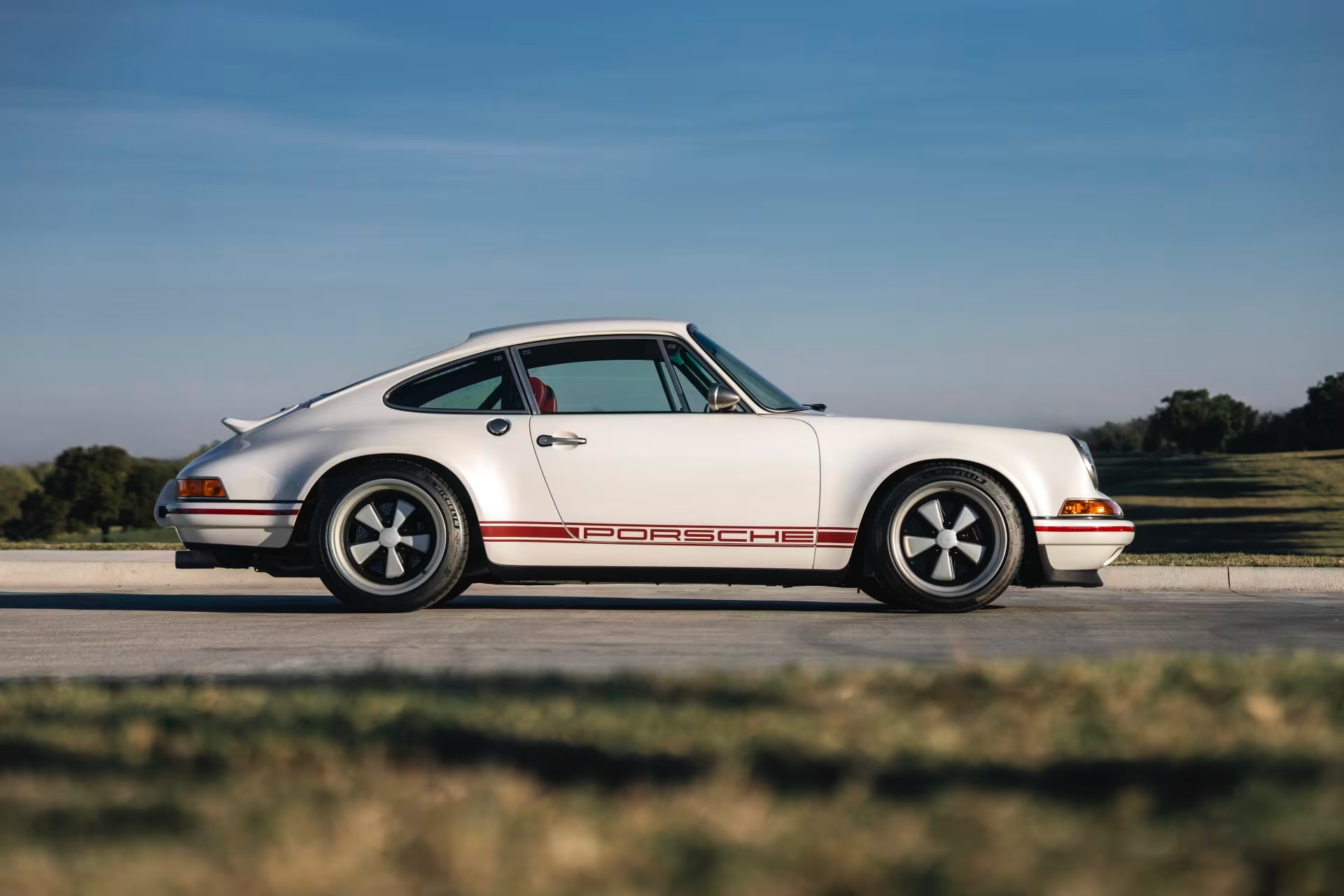
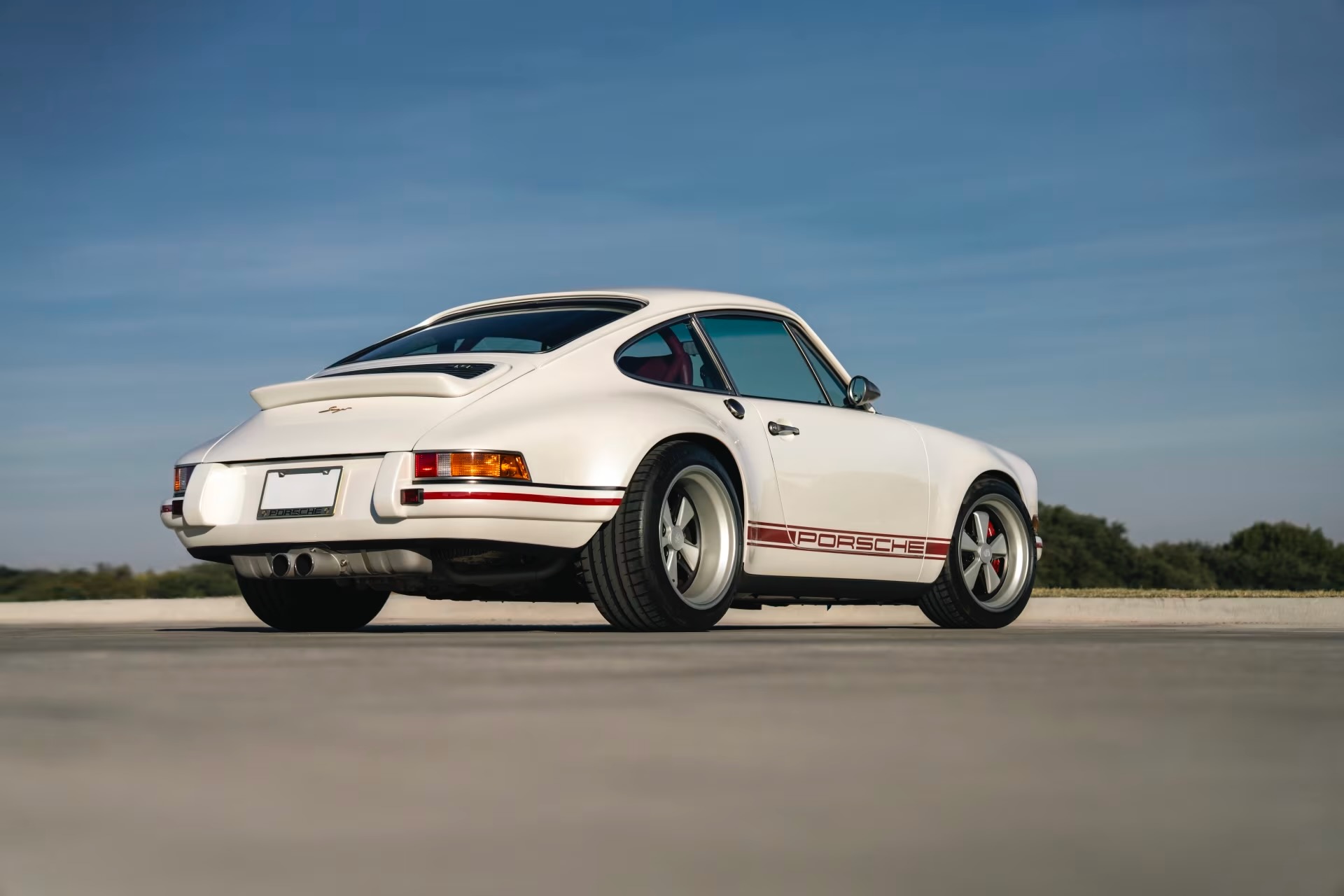
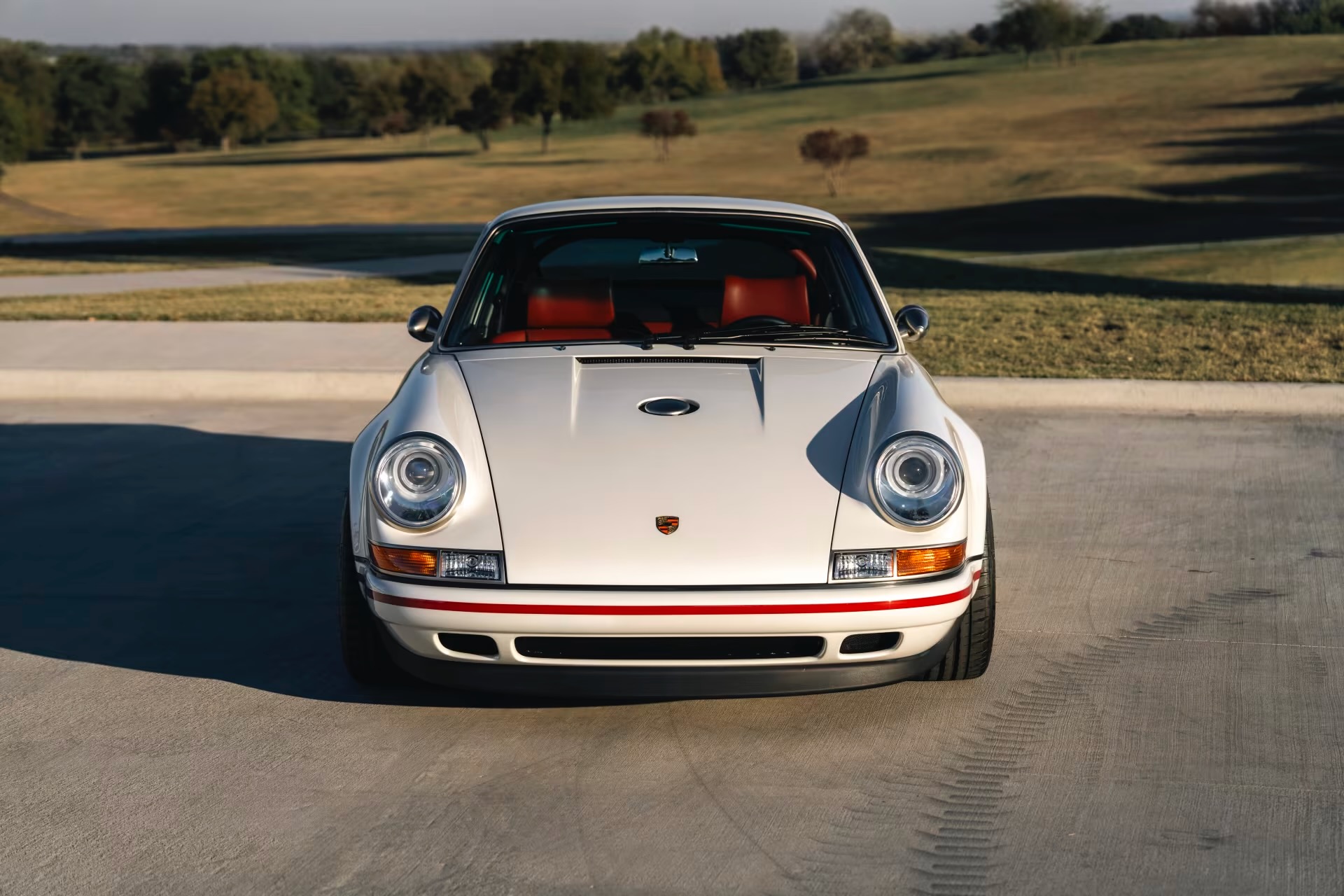
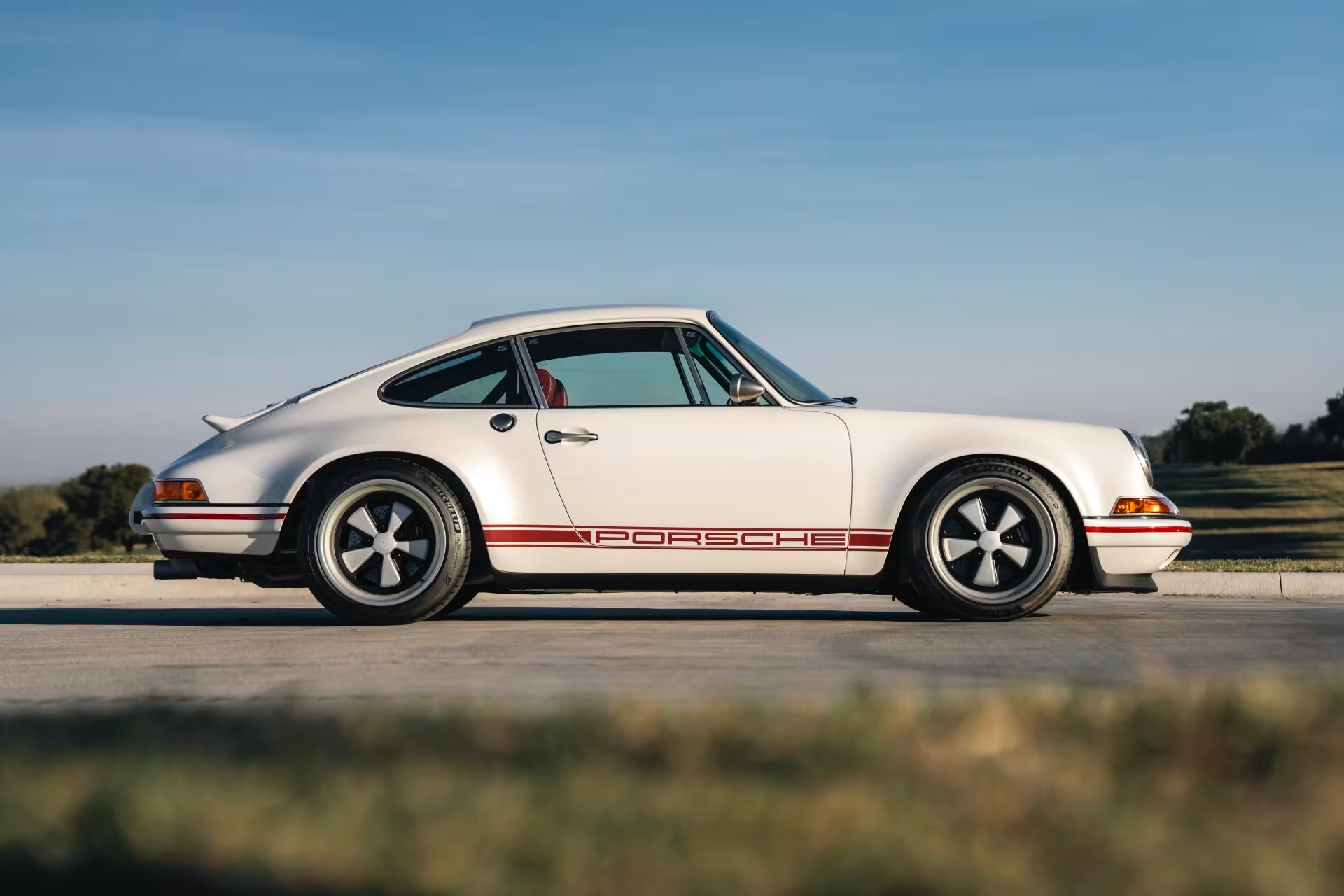
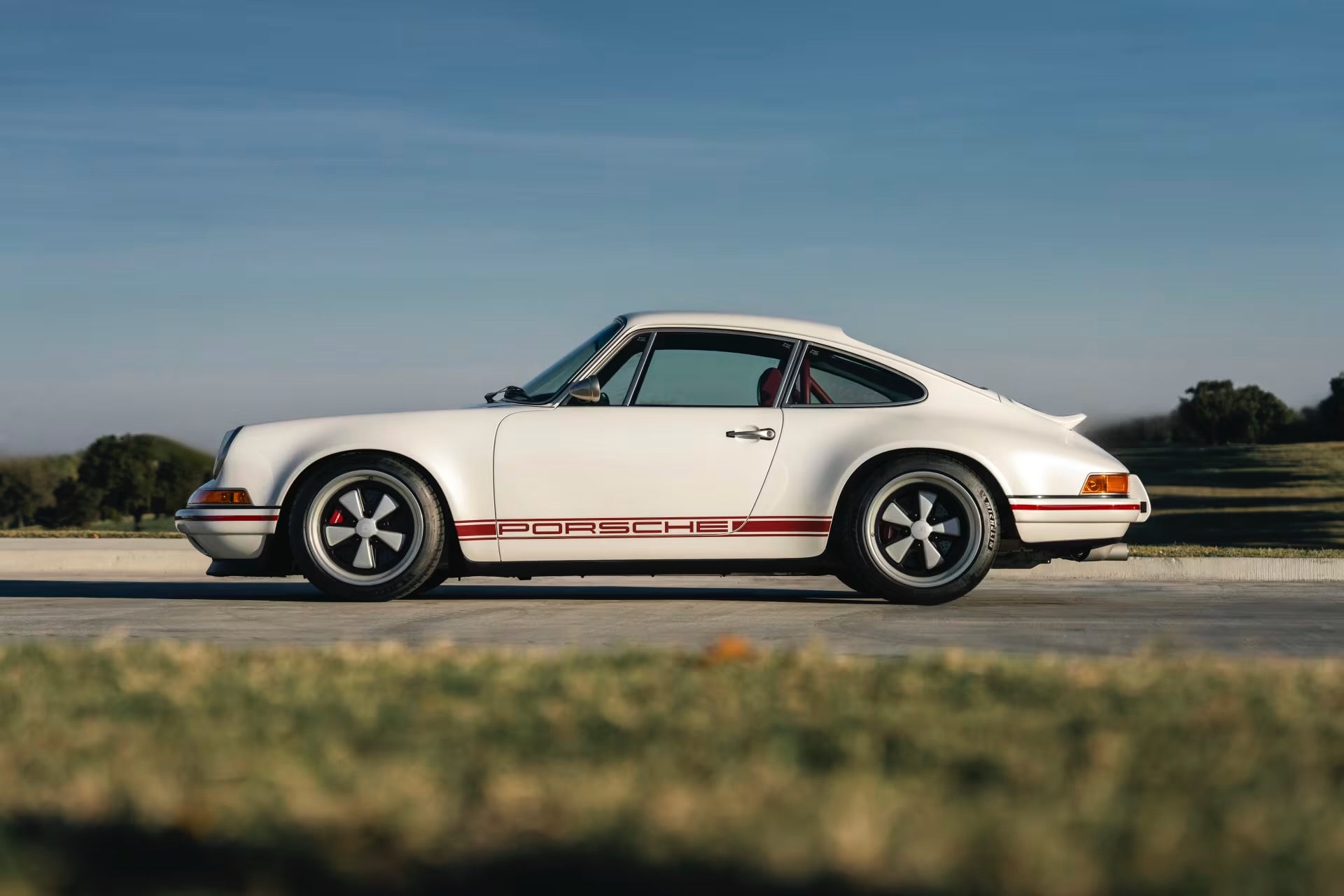
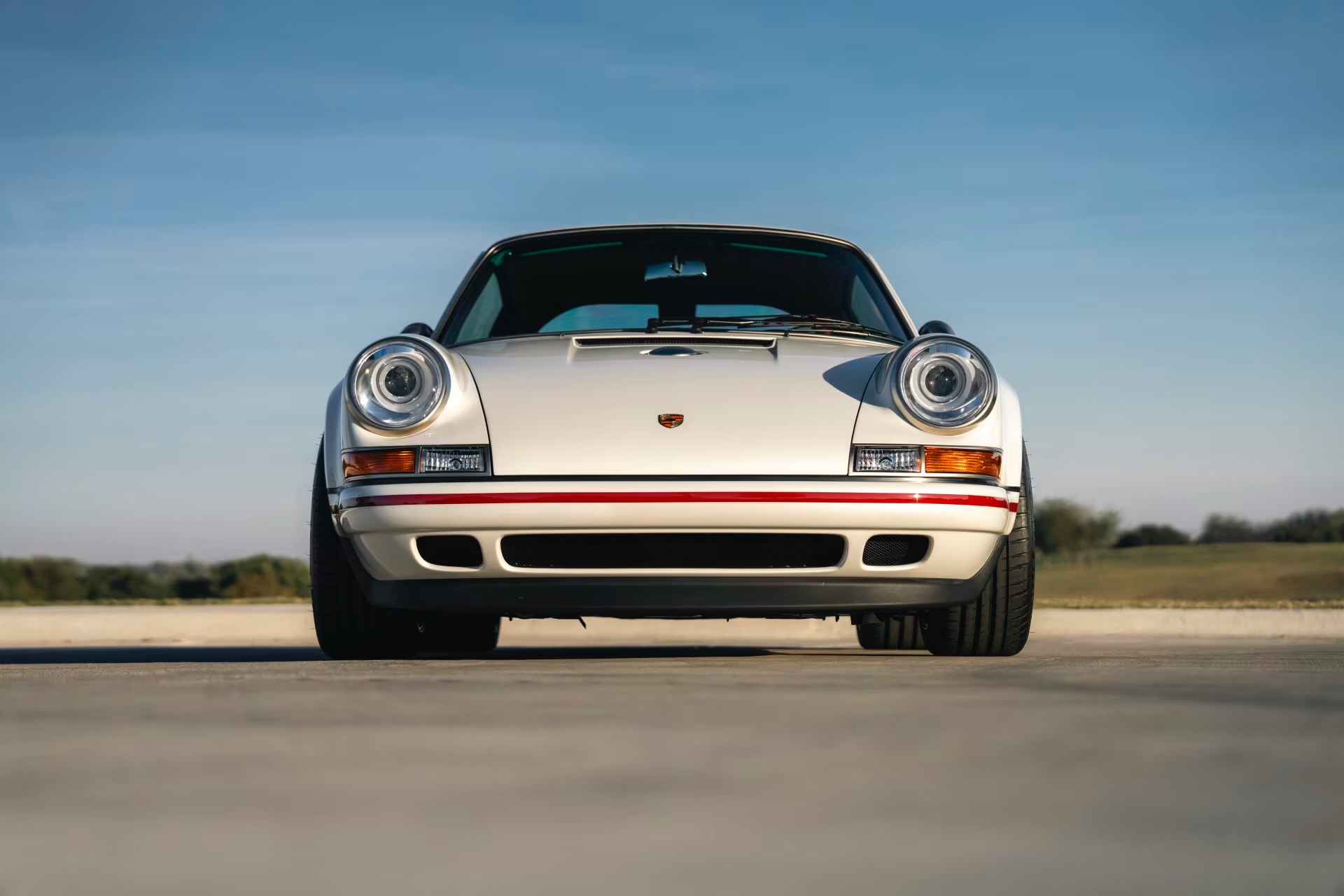
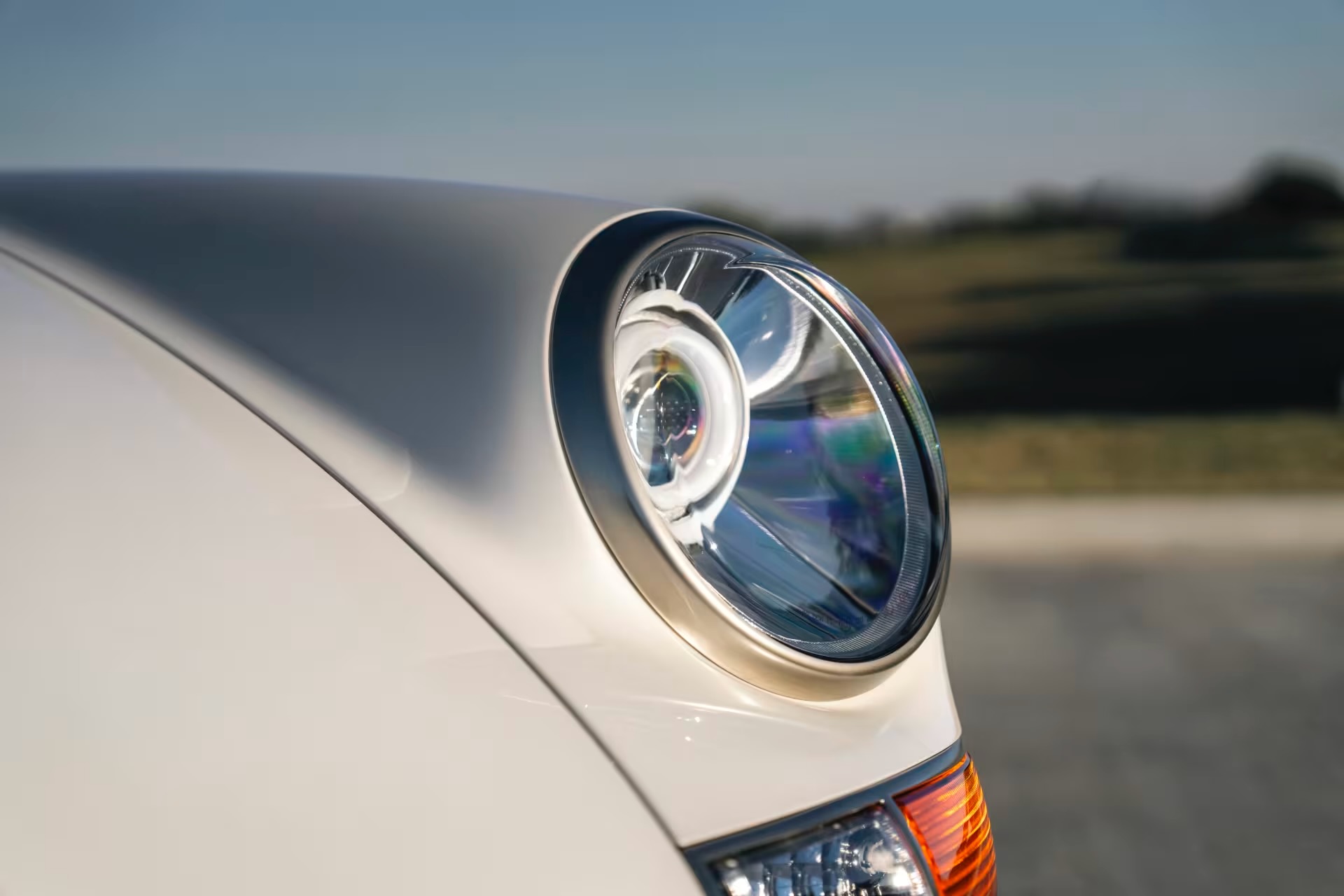
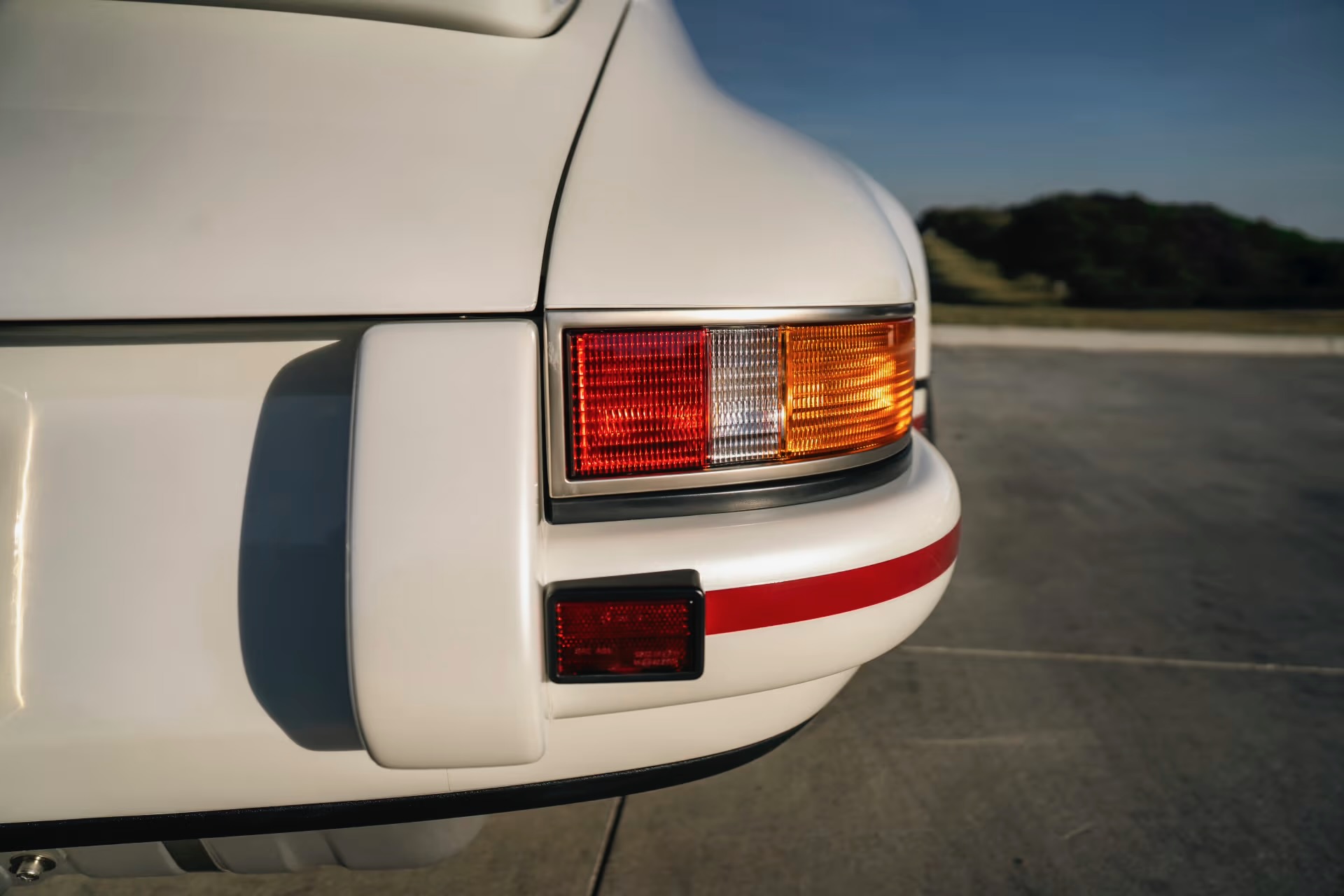
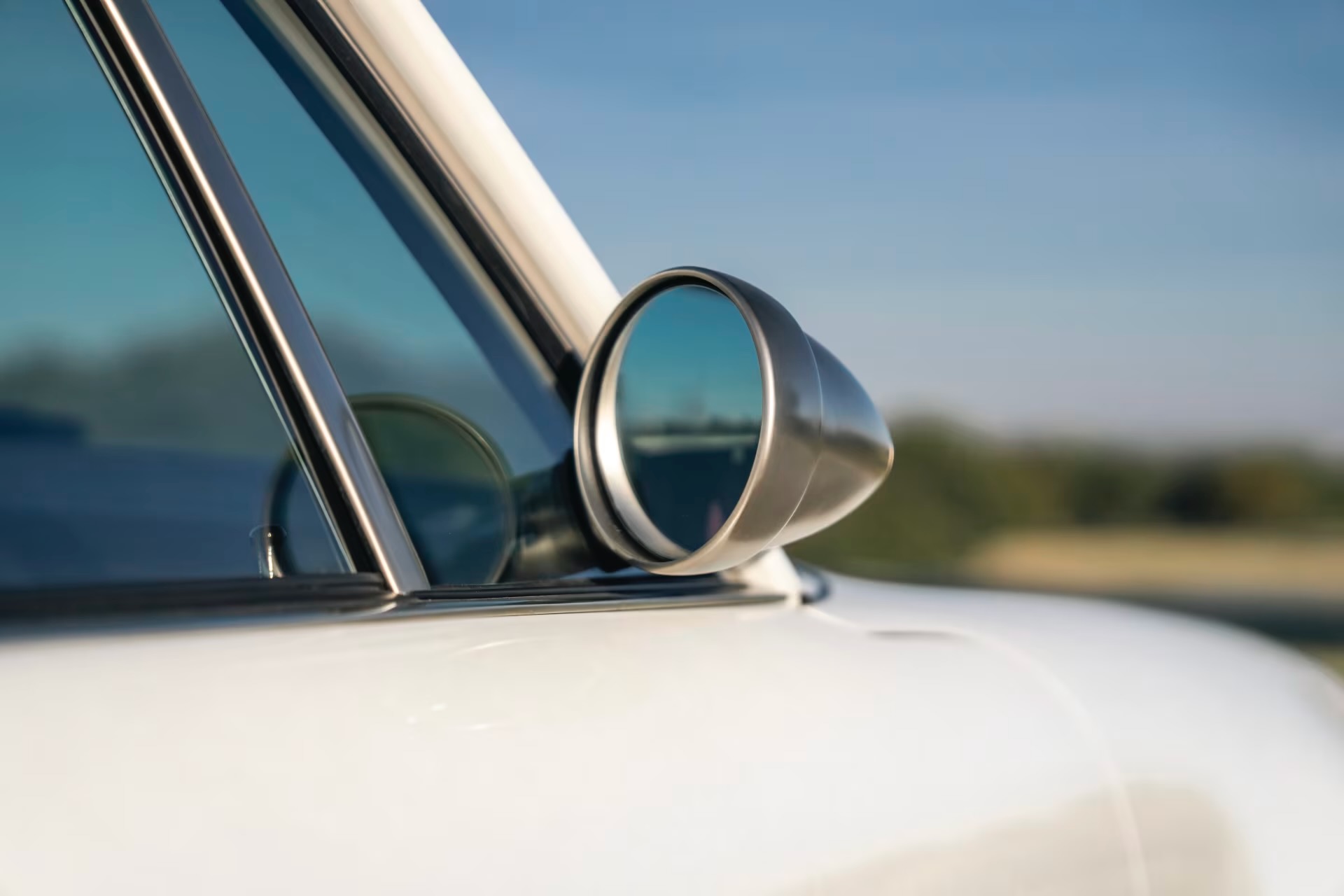
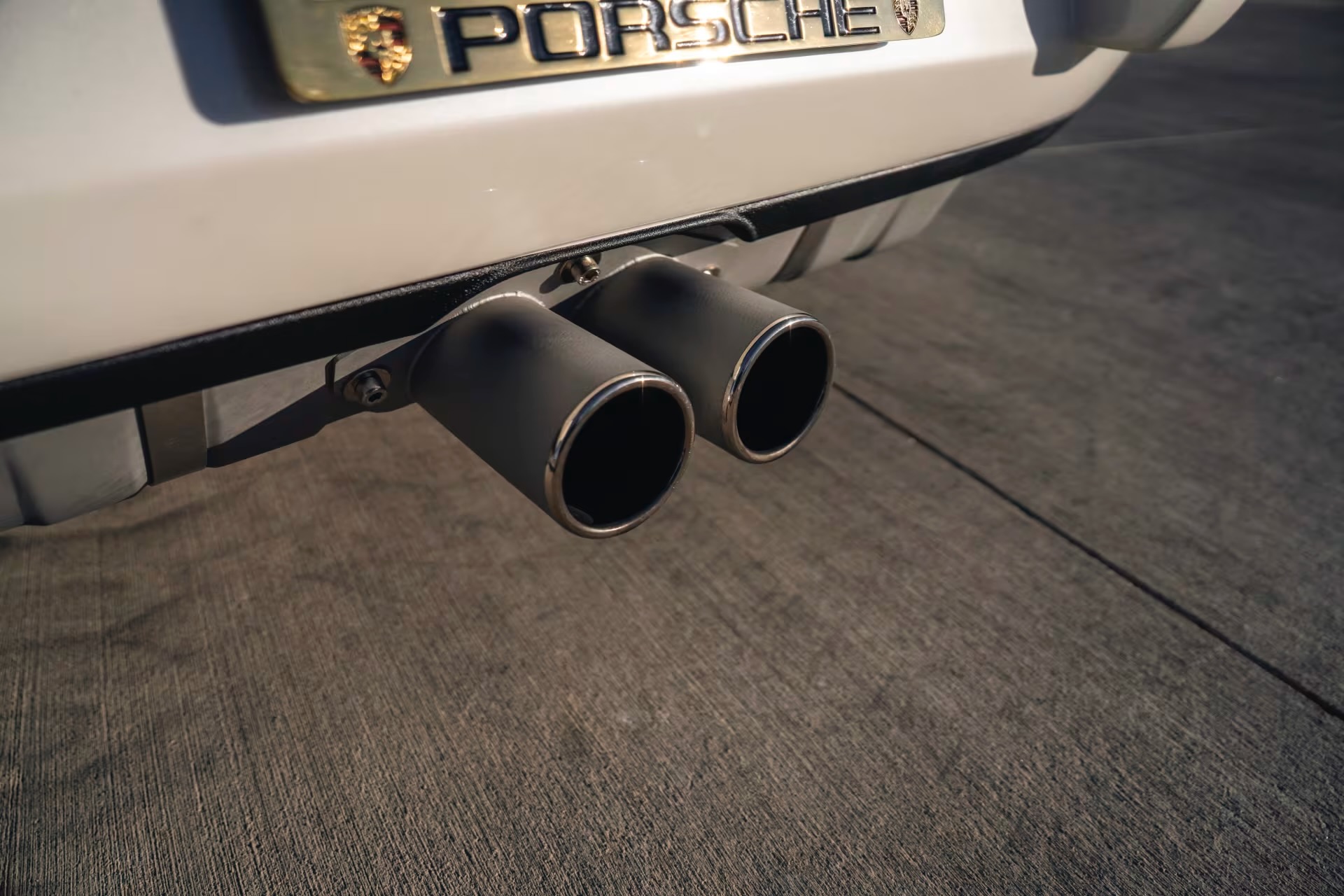
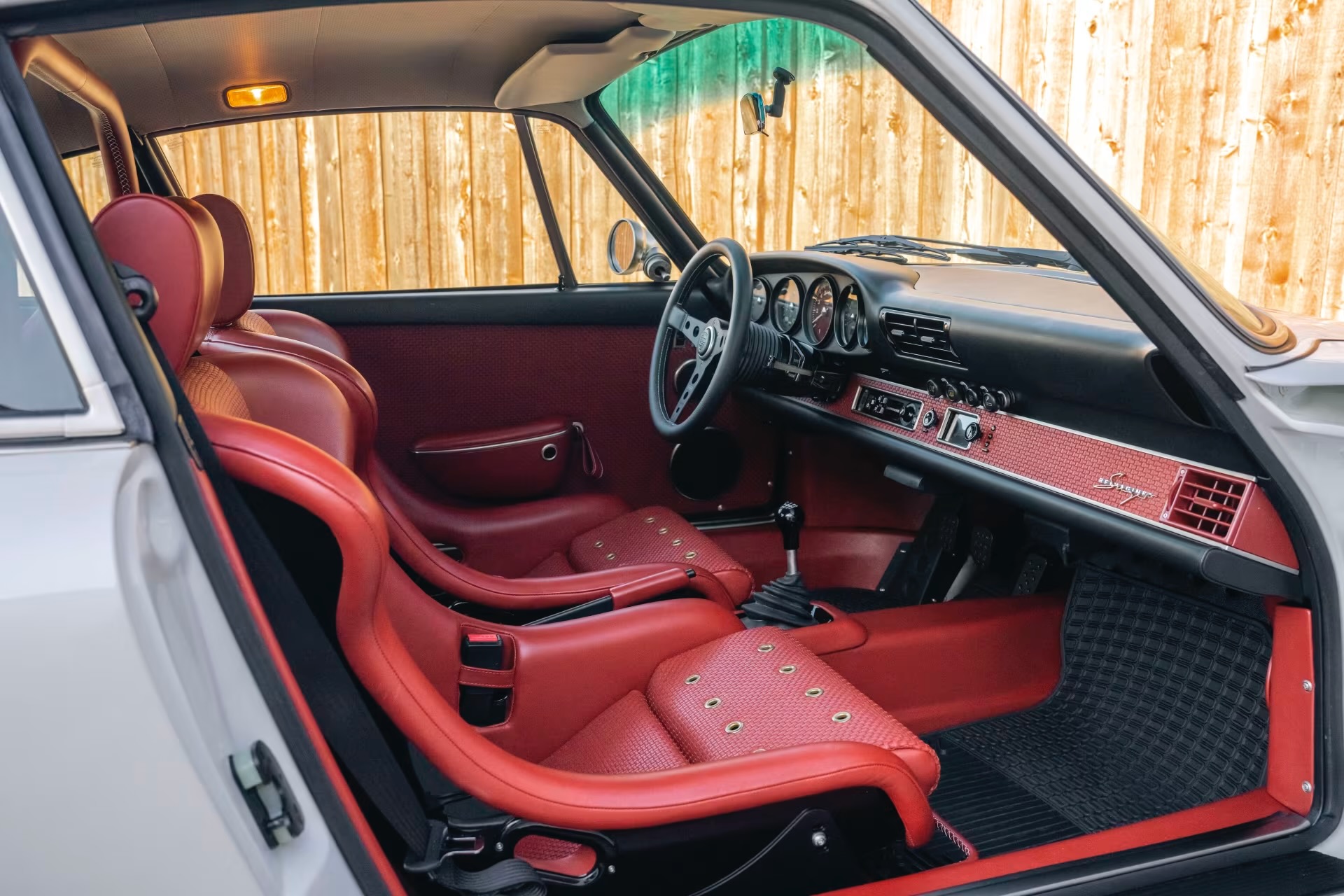
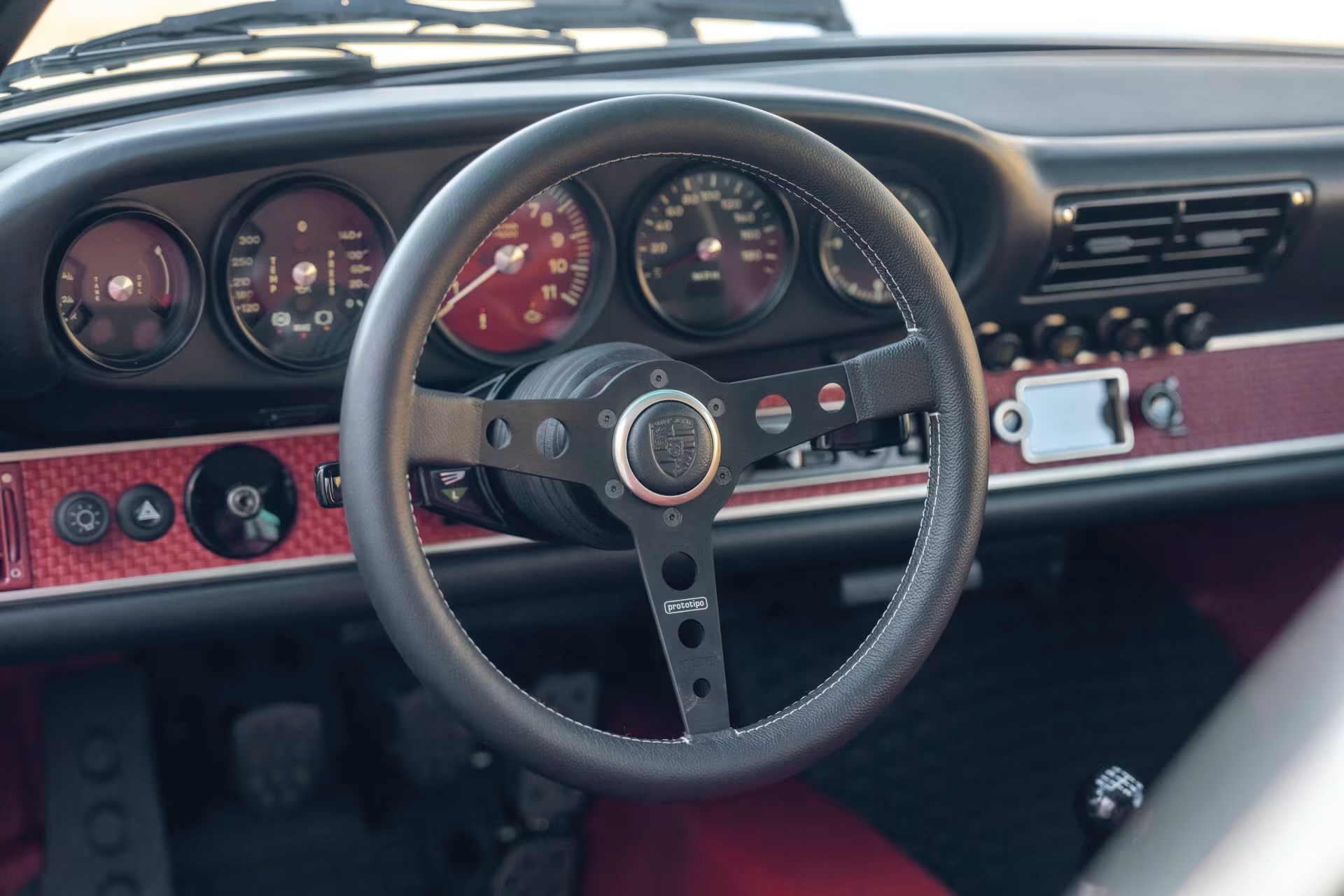
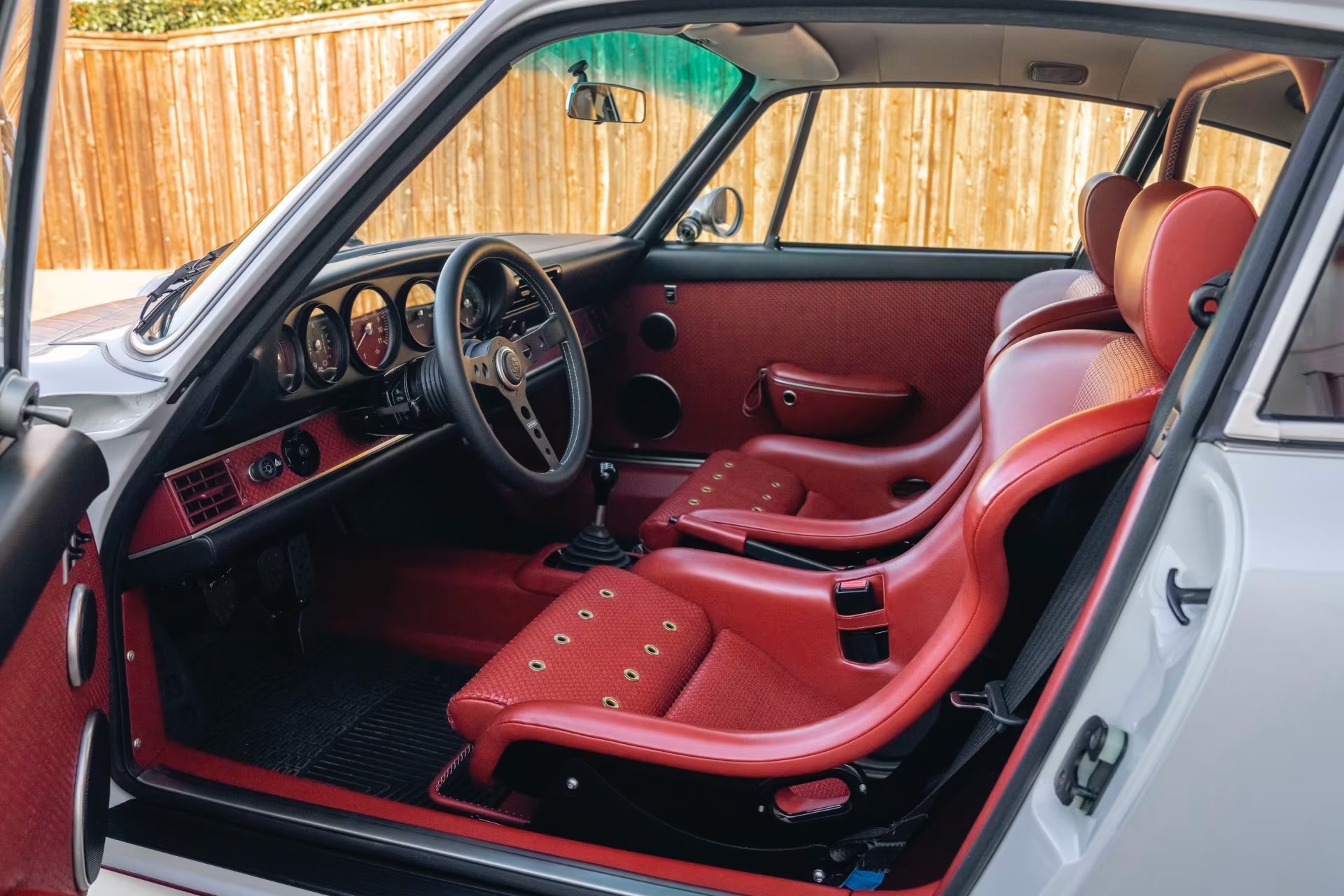
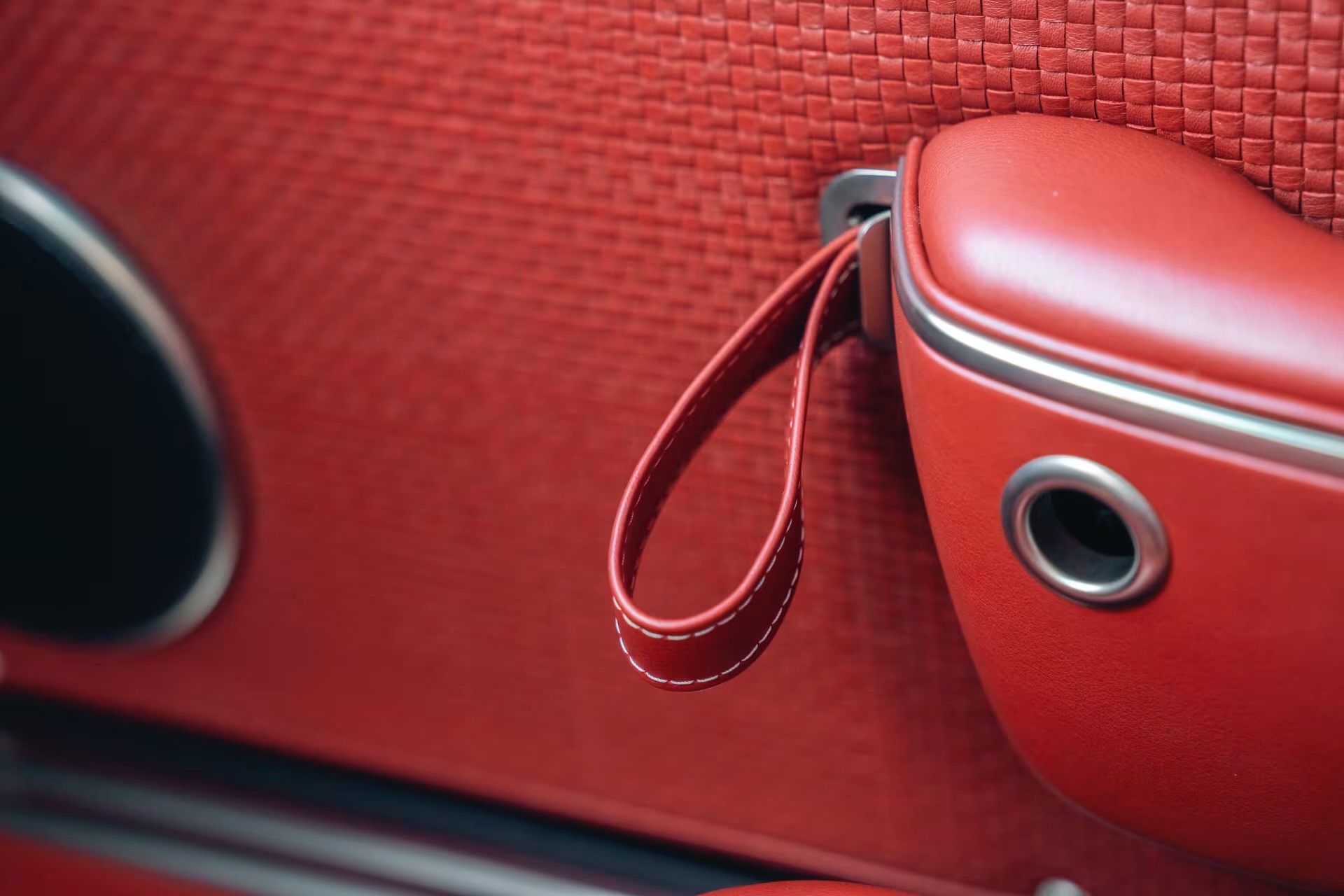
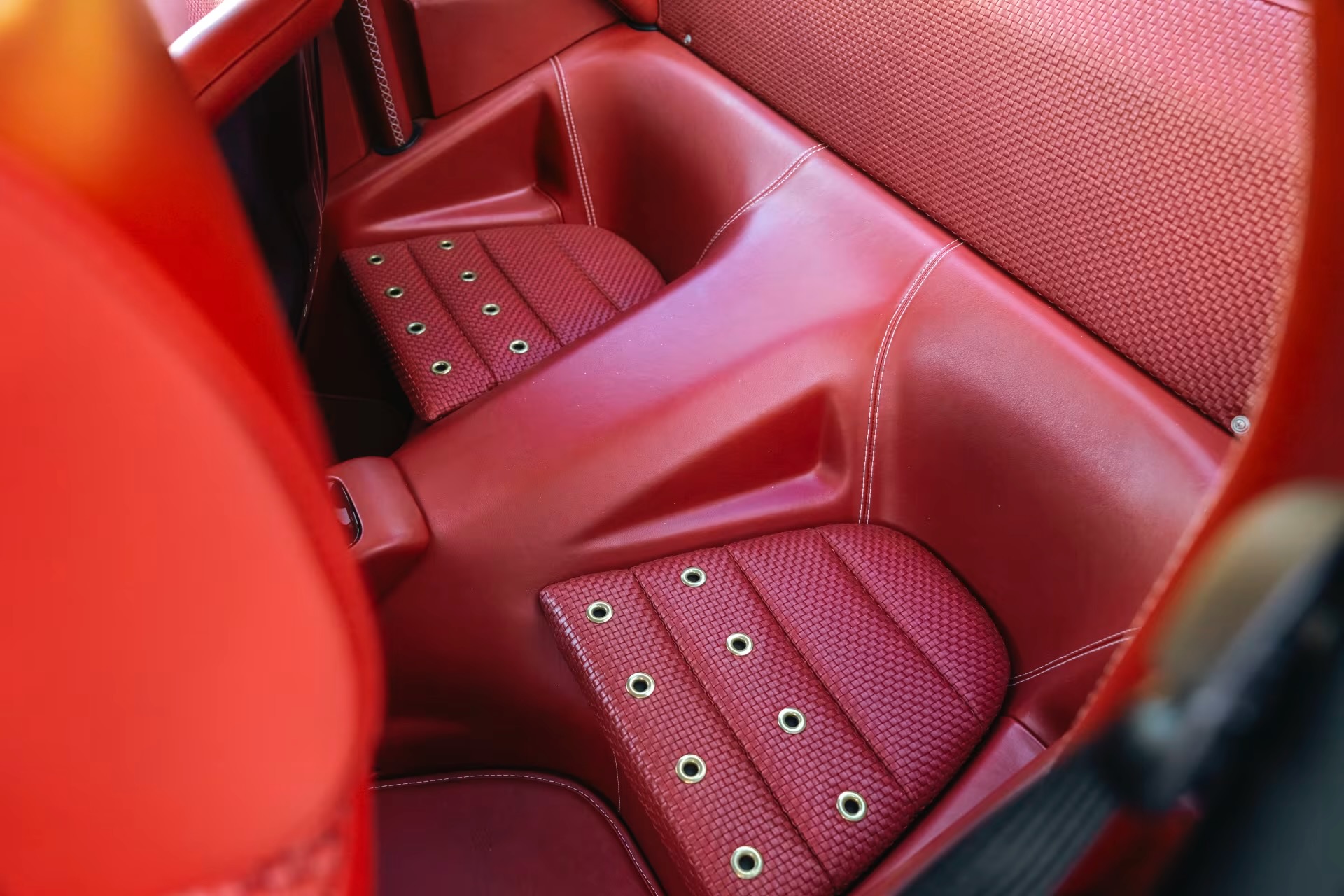
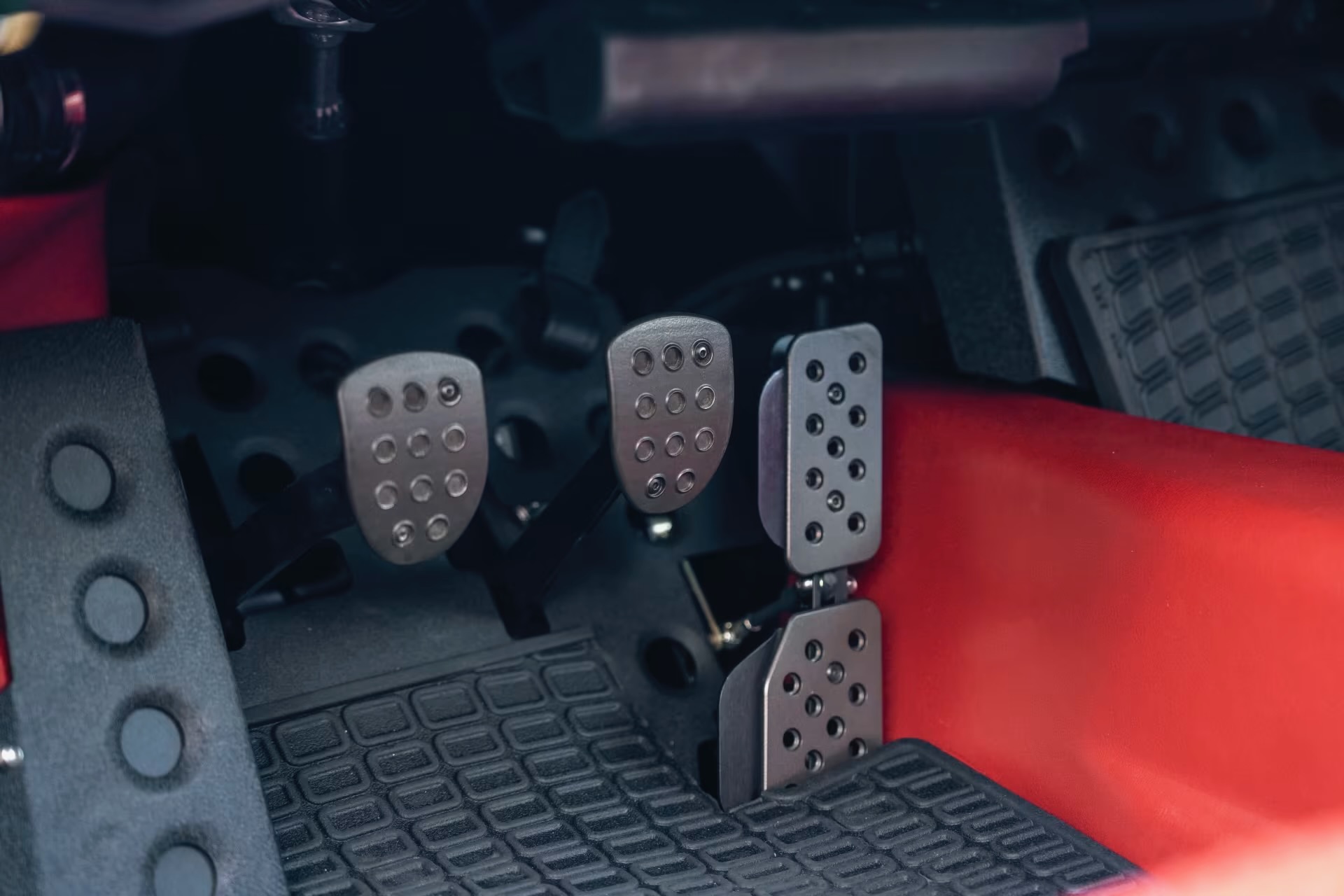
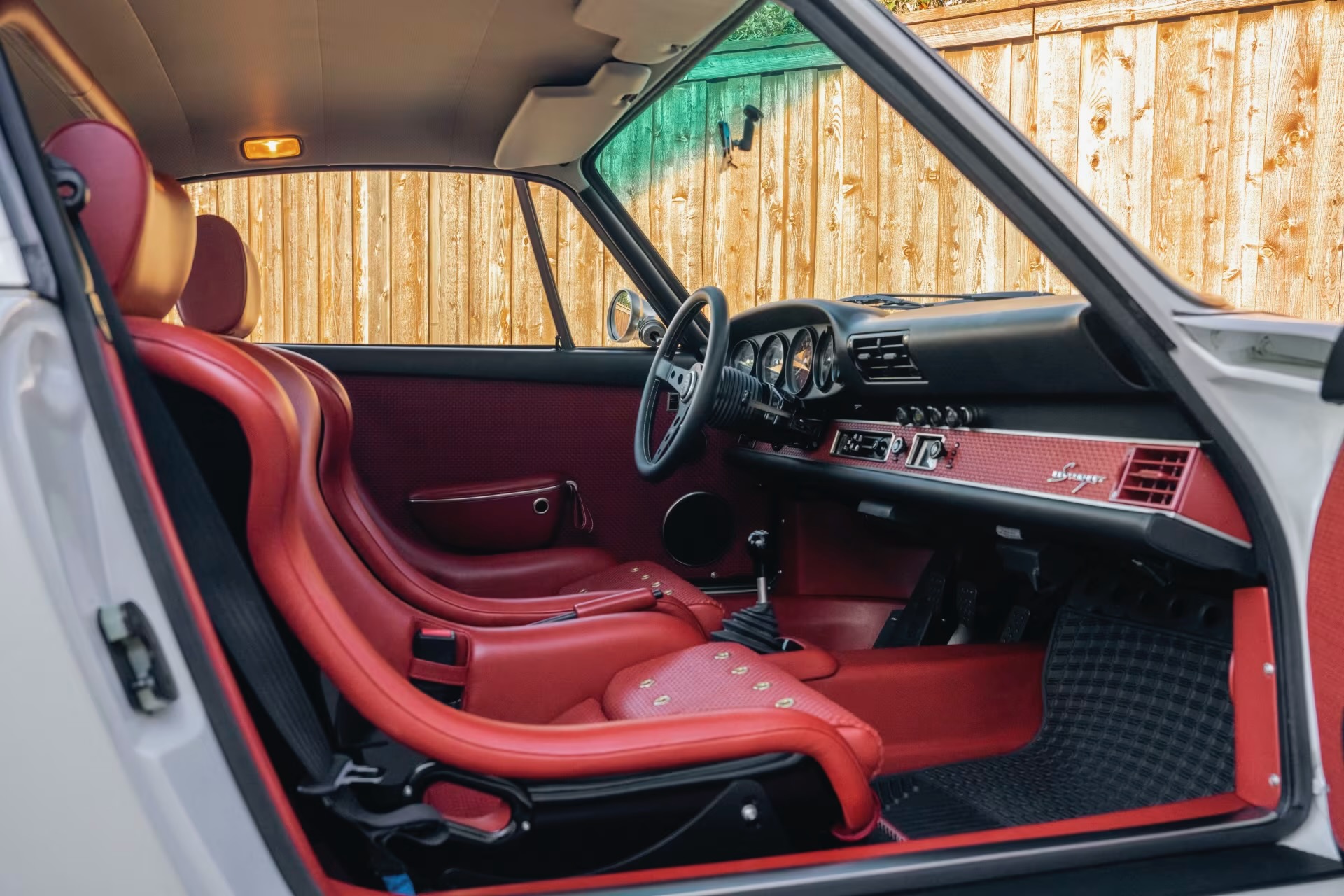
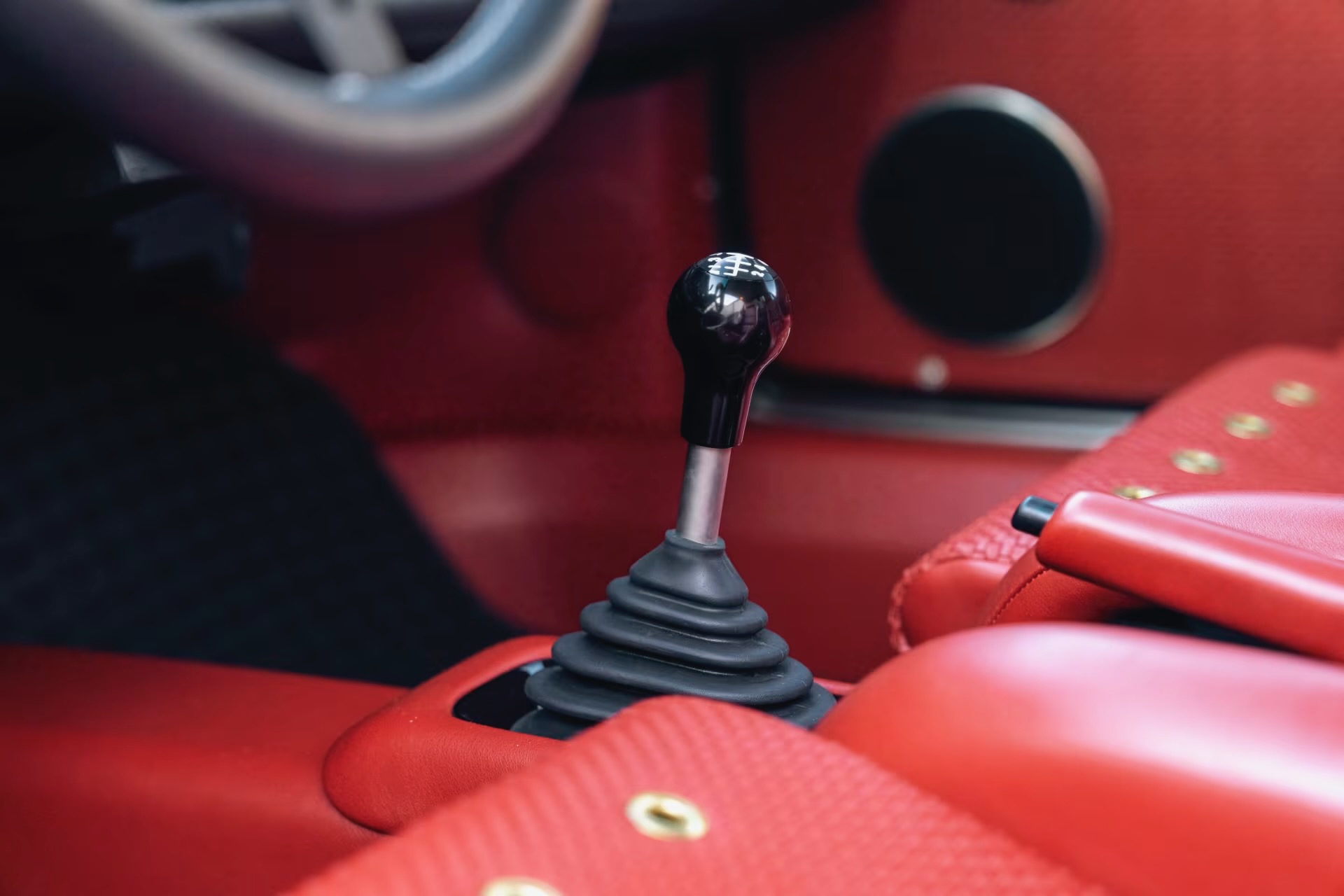
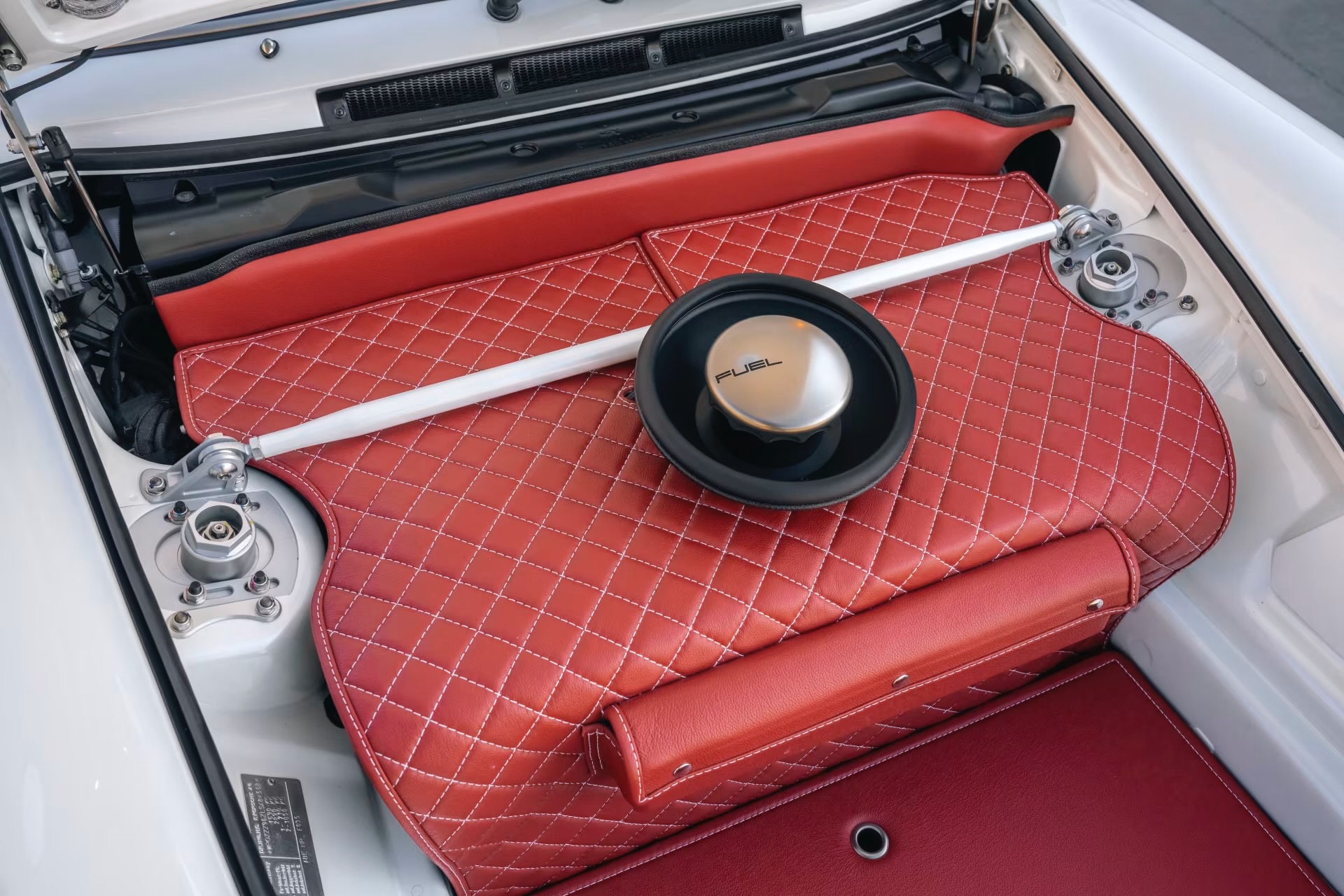
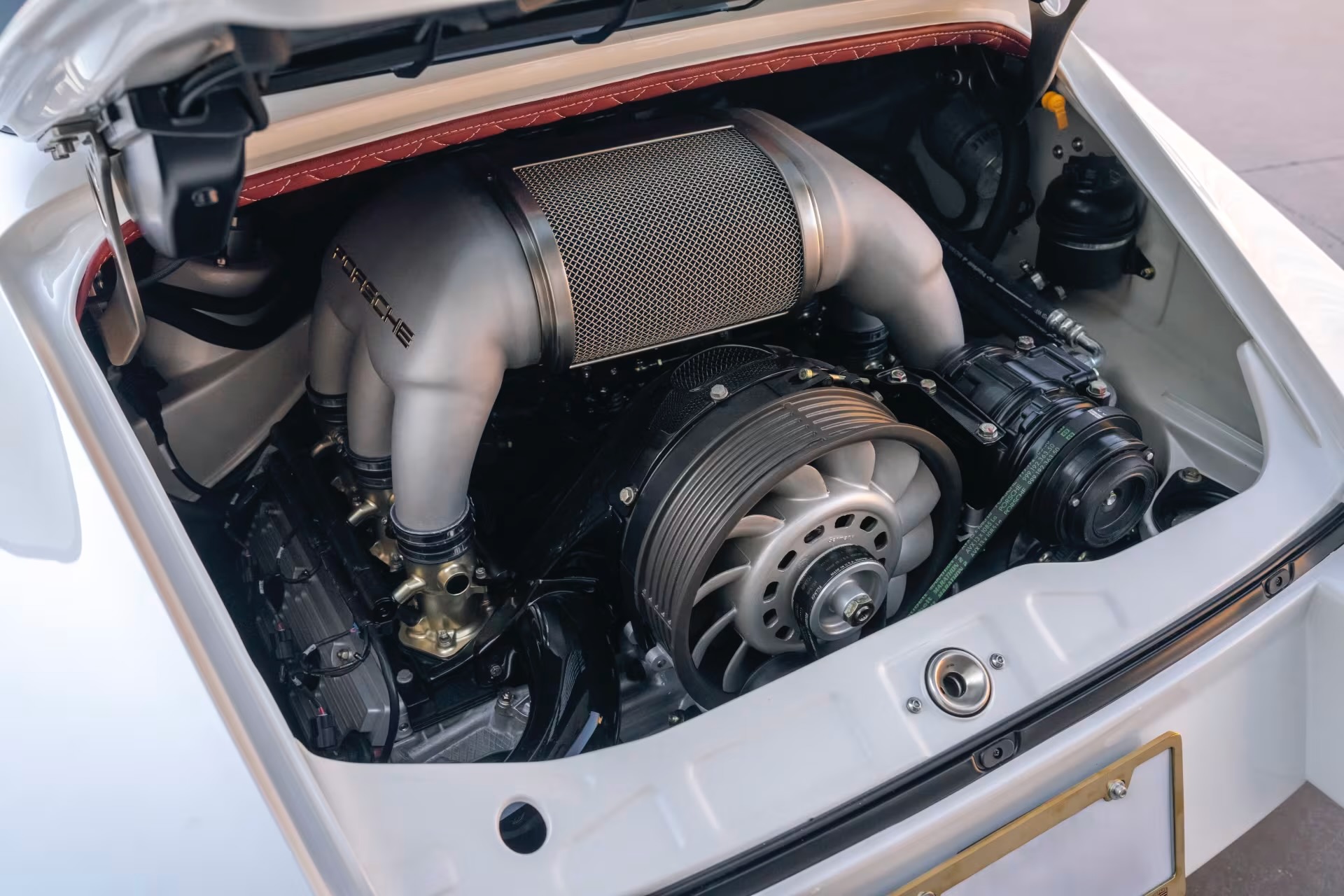
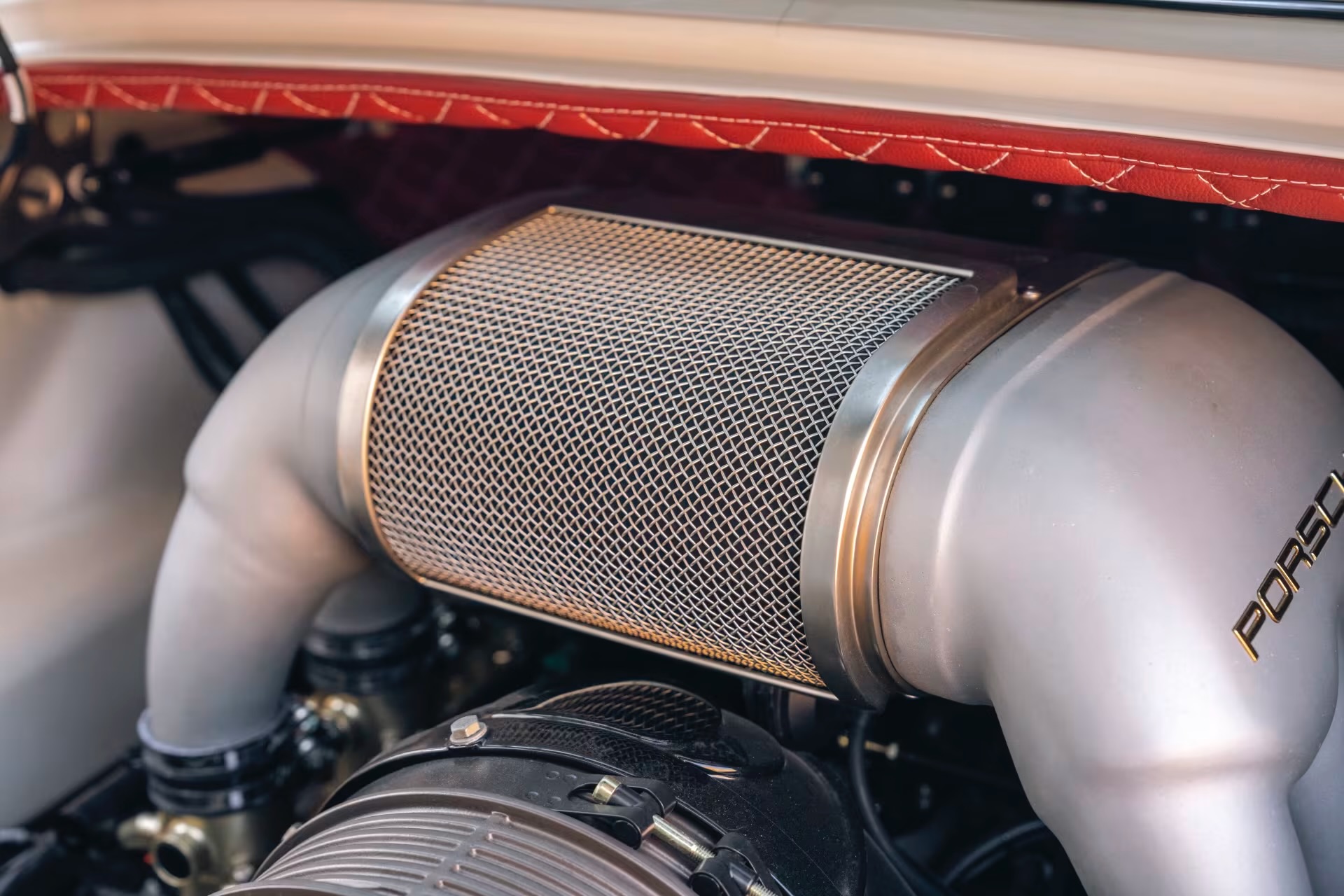
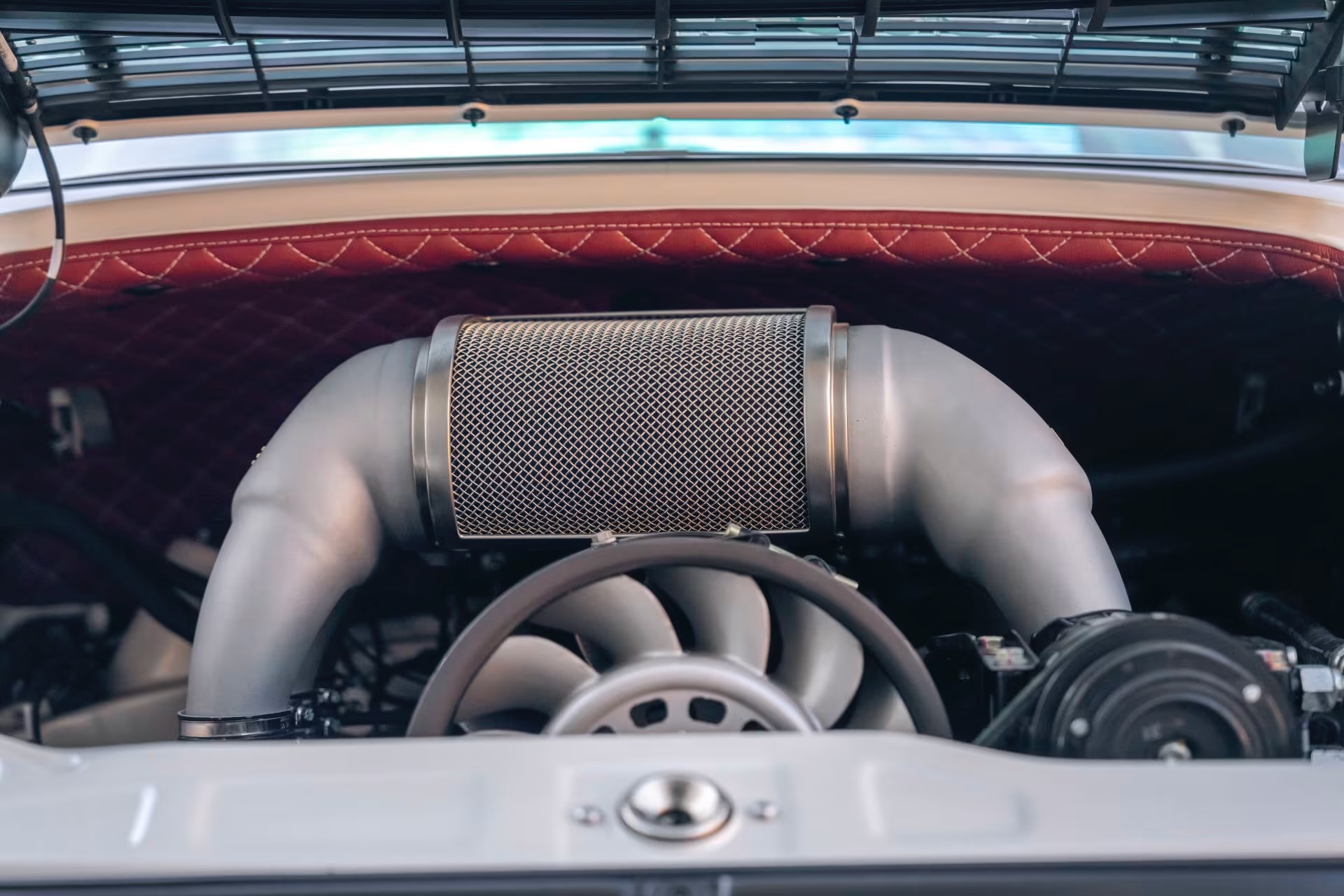
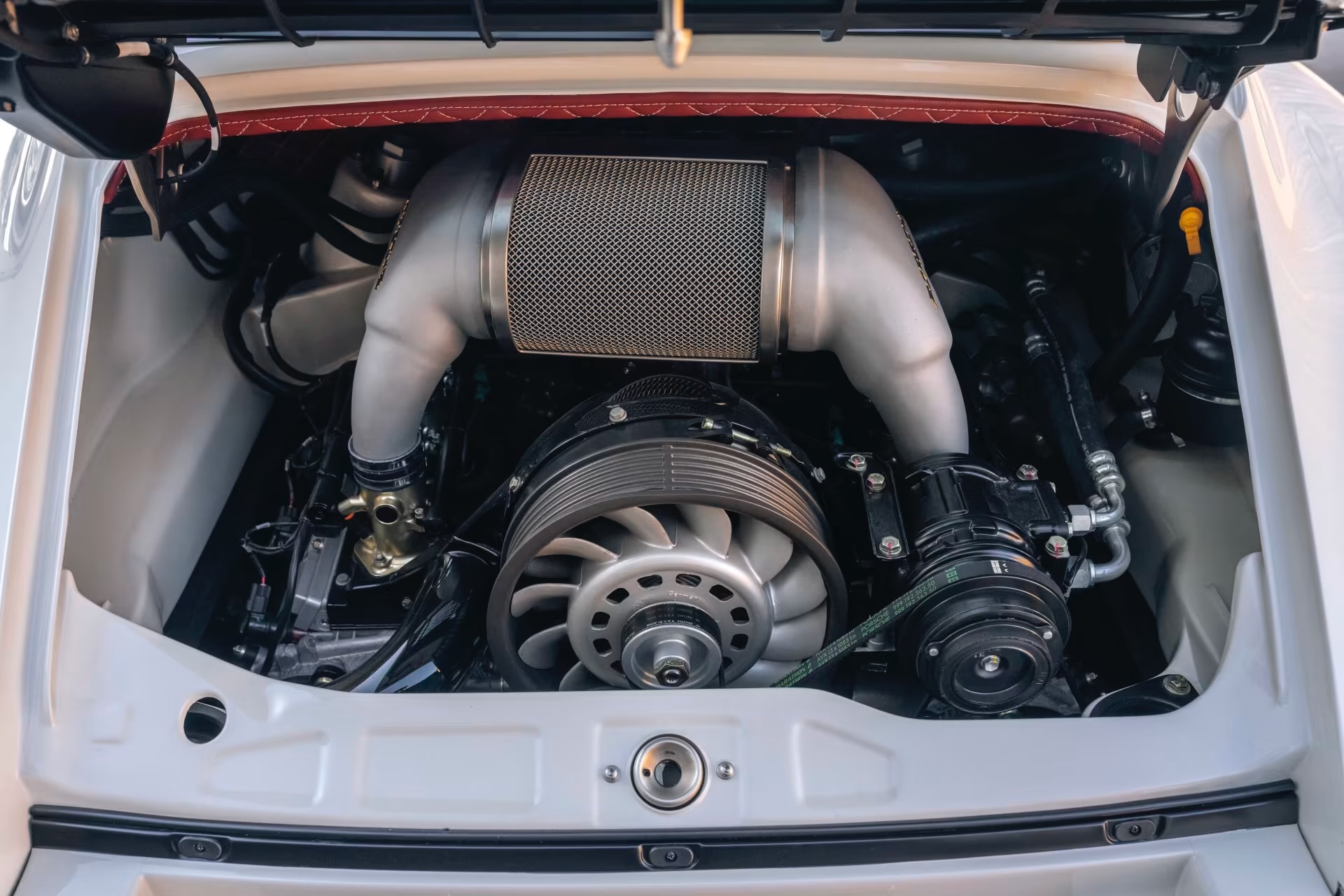
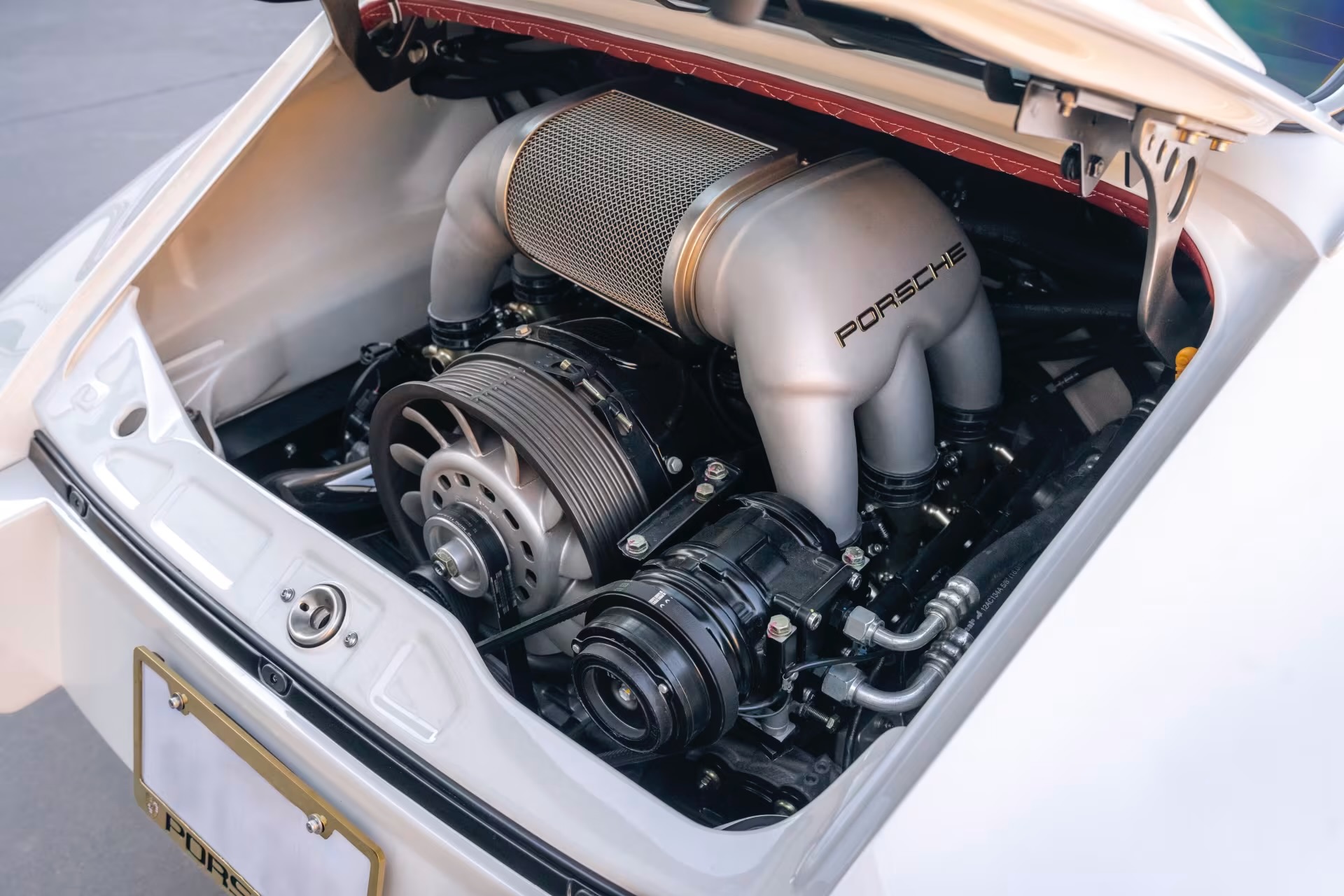
Auktion: Mecum, Kissimmee 2026, kein Schätzpreis.
–
«Blueberry»


Chassis-Nummer: WP0BB2963MS440455 (2023, ursprünglich 1991)
Steht bei Broad Arrow, Private Sales, zum Verkauf (Dezember 2024), mit diesen Informationen: «This Porsche 911 Targa Reimagined by Singer, known as „Blueberry,“ represents a stunning reimagination of a 1991 911 Carrera 4 Targa by Singer Vehicle Design. The transformation process was meticulously executed over the course of some 4,500 man-hours. At the core of this reimagined 911 lies an air-cooled 4.0-liter flat-six engine, fully rebuilt with RS+ cams, a CARB-compliant Emtron ECU, a ceramic plenum inlet, and a titanium muffler exhaust system. Power is transmitted to all four wheels via a six-speed manual transmission, maintaining the original Carrera 4’s all-wheel-drive system. The suspension has been upgraded with an Öhlins sport adjustable system, providing superior roadholding capabilities. Braking performance is enhanced by Brembo brake calipers with high-performance rotors, finished in a bespoke Deep Orange with black lettering. The car rides on duo-tone wheels featuring satin black backgrounds with anodized outer rings. The „Blueberry“ also boasts a seam-welded Targa body – an uncommon body style in the world of Singers – painted in Singer’s specially formulated „Blue Blood“ exterior finish. This striking color is complemented by ghosted light Blue Blood racing side stripes with Deep Orange lettering, and a matching Deep Orange decklid lettering. The Targa roof is trimmed in a Blue Black Stayfast canvas, while the Targa header, hoop face, and liner are custom-finished in Dark Navy and perforated Orange, respectively. Inside, the Blueberry showcases a thoroughly personalized interior. The primary trim is finished in Orange leather from the Classic Leather Collection, with bespoke weave inserts featuring Dark Navy stripes. The dashboard, roll tops, and knee pads are similarly trimmed in Dark Navy leather, creating a striking contrast of complementary colors. The front passengers are treated to carbon fiber bucket seats while rear passengers enjoy a folding rear seat, providing a touch of practicality. Singer’s renowned attention to detail is evident throughout the rest of the cabin, from the bespoke Prototipo steering wheel wrapped in Dark Navy leather with Orange stitching, to the dash emblem featuring a Singer script finished in Blue Blood. Even the gauge cluster has been customized with Singer Racing White faces, Blue Blood markings, and Singer Orange needles and redline. Modern conveniences have not been overlooked, with the inclusion of air conditioning and a high-end audio system featuring a Porsche Classic Radio Navigation unit with Apple CarPlay, upgraded Audison amplifier, and Dynaudio speakers with a subwoofer. Blueberry stands as a testament to Singer’s philosophy of reimagining the Porsche 911, creating a vehicle that is both a tribute to the past and a glimpse into an alternative automotive future where the air-cooled engine continued to evolve and thrive. With its unique combination of performance upgrades, bespoke design elements, and meticulous attention to detail, this reimagined 911 Targa truly embodies the essence of Singer’s craft. Offered with just 59 miles at the time of listing.»
–
Classic Turbo
«Red Black Silver», Chassis-Nummer: WP0ZZZ96ZMS400161 (1991)
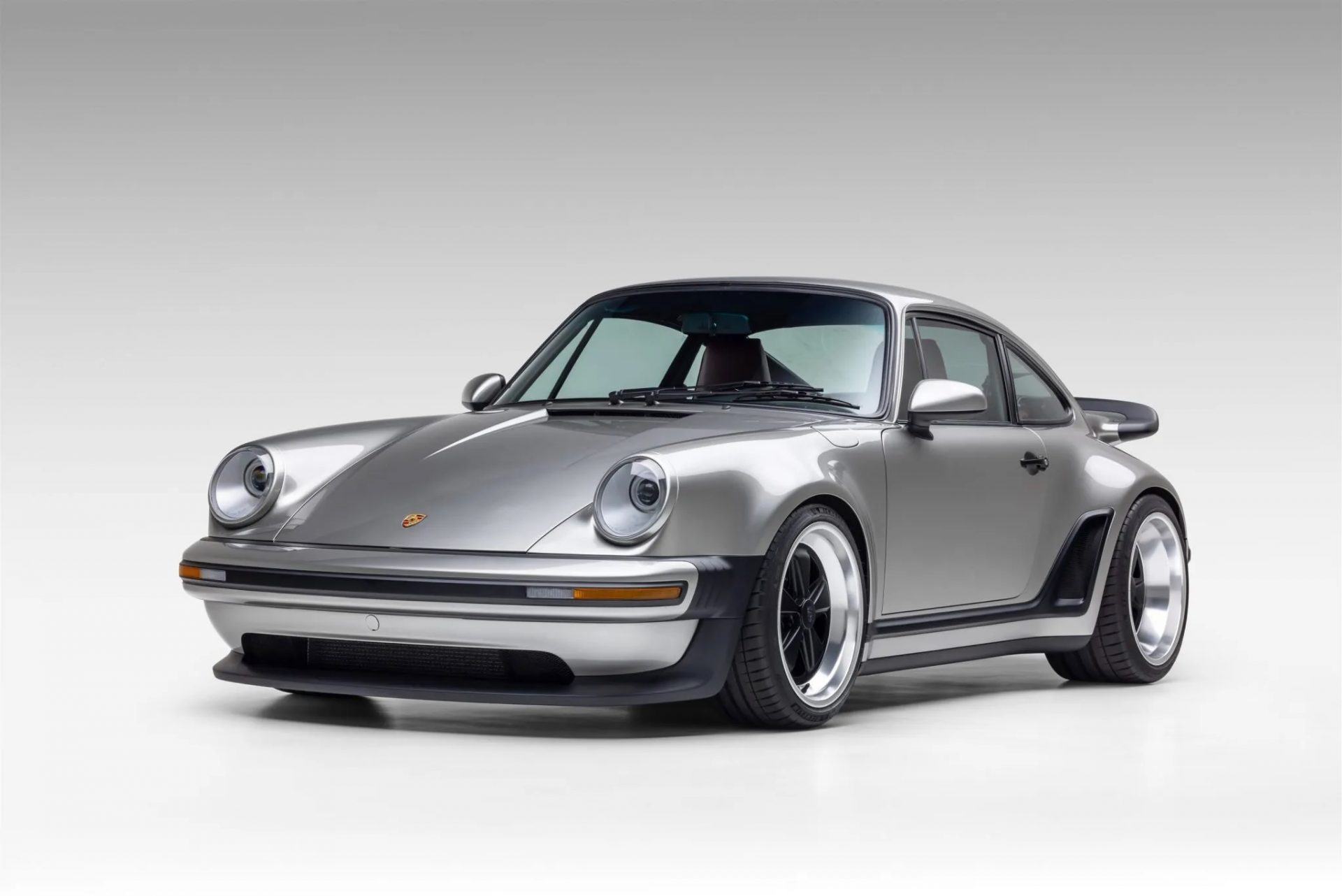
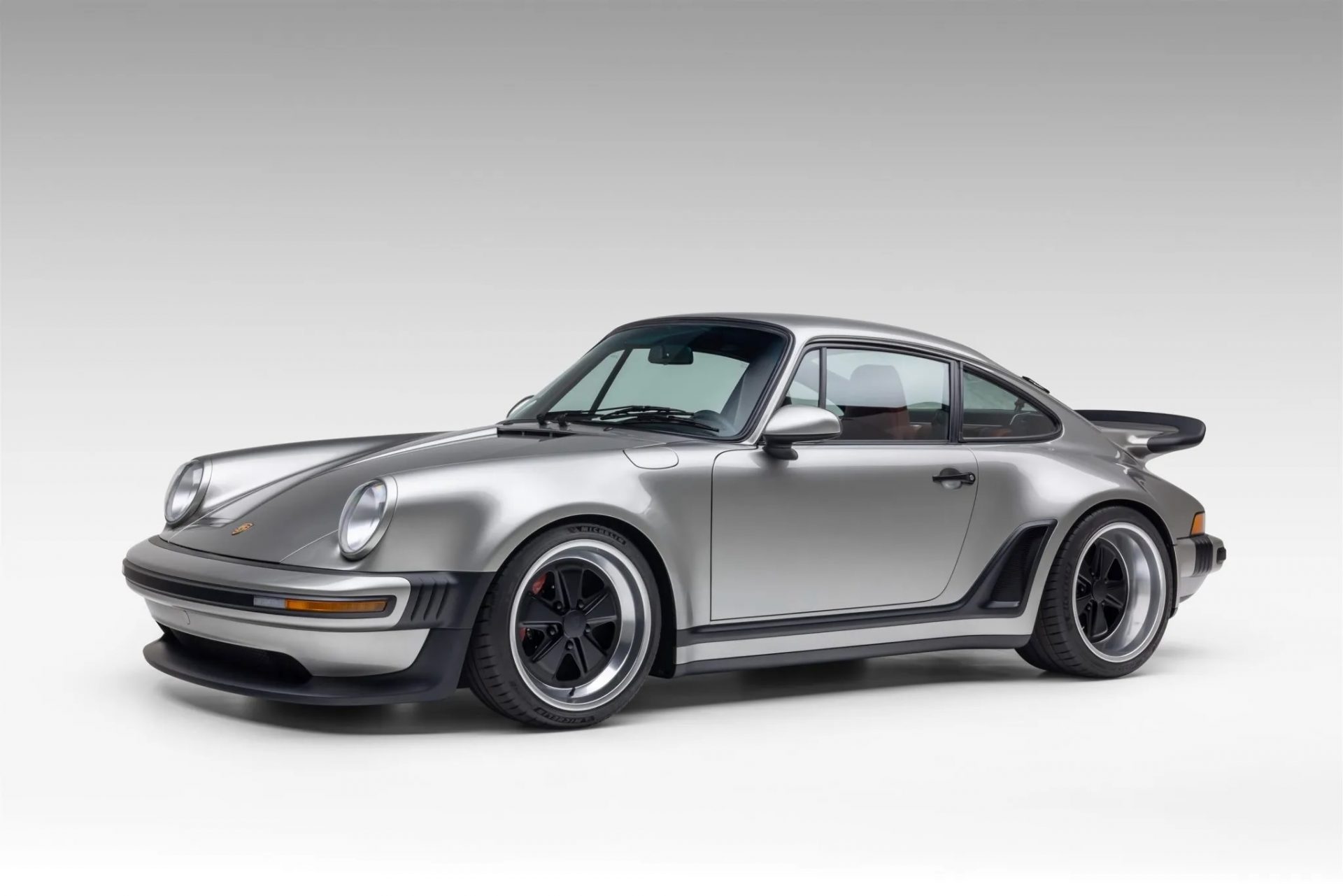


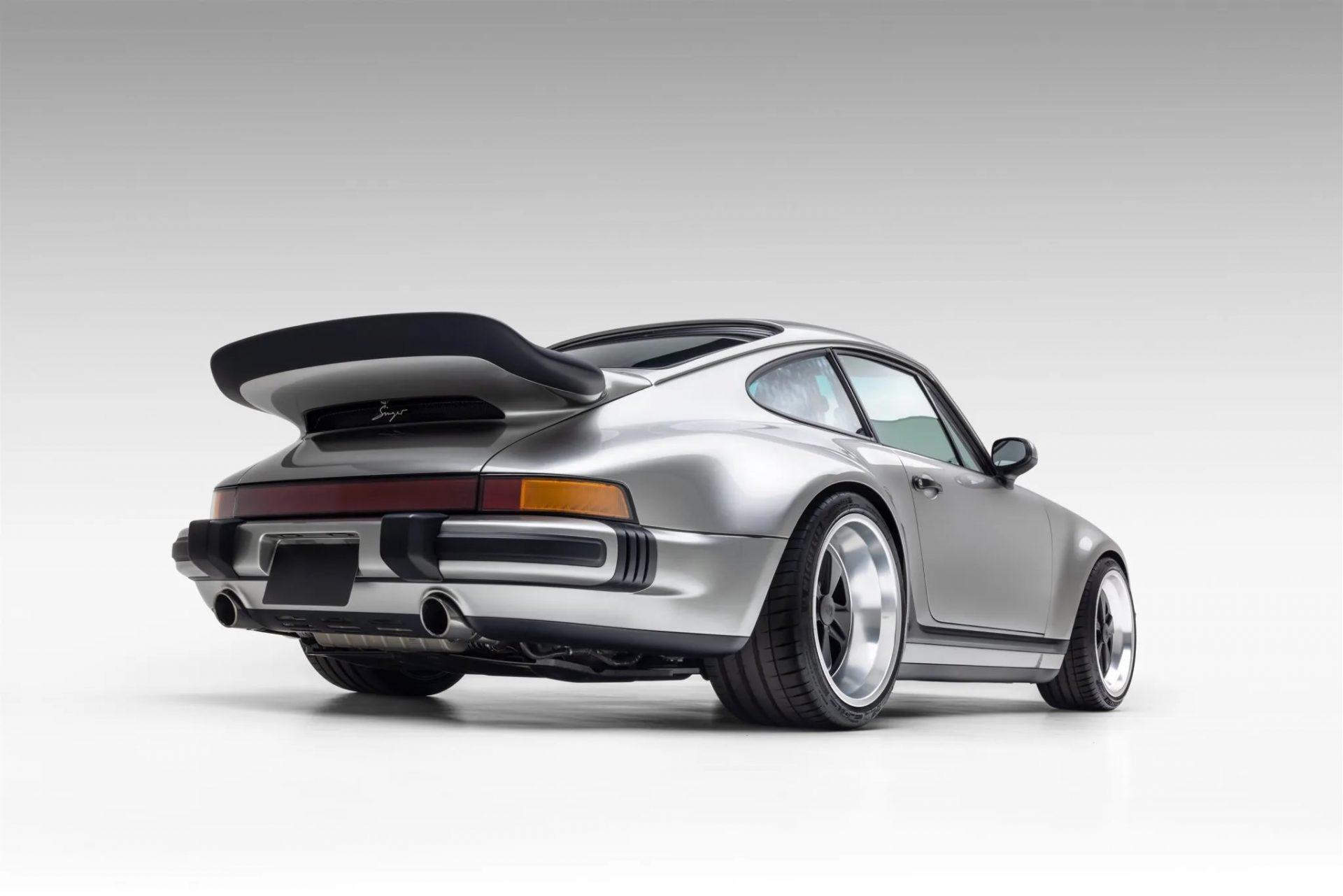
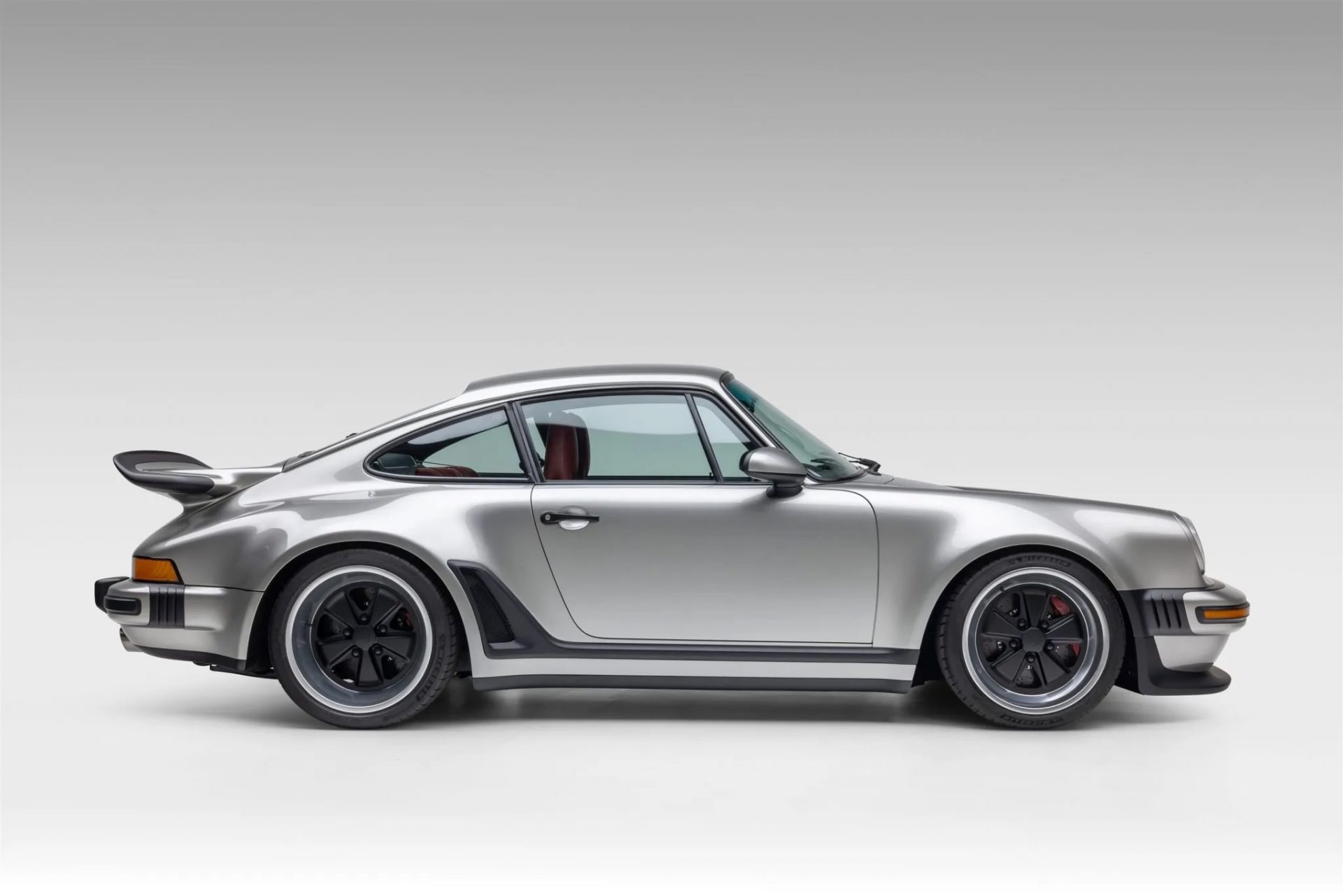

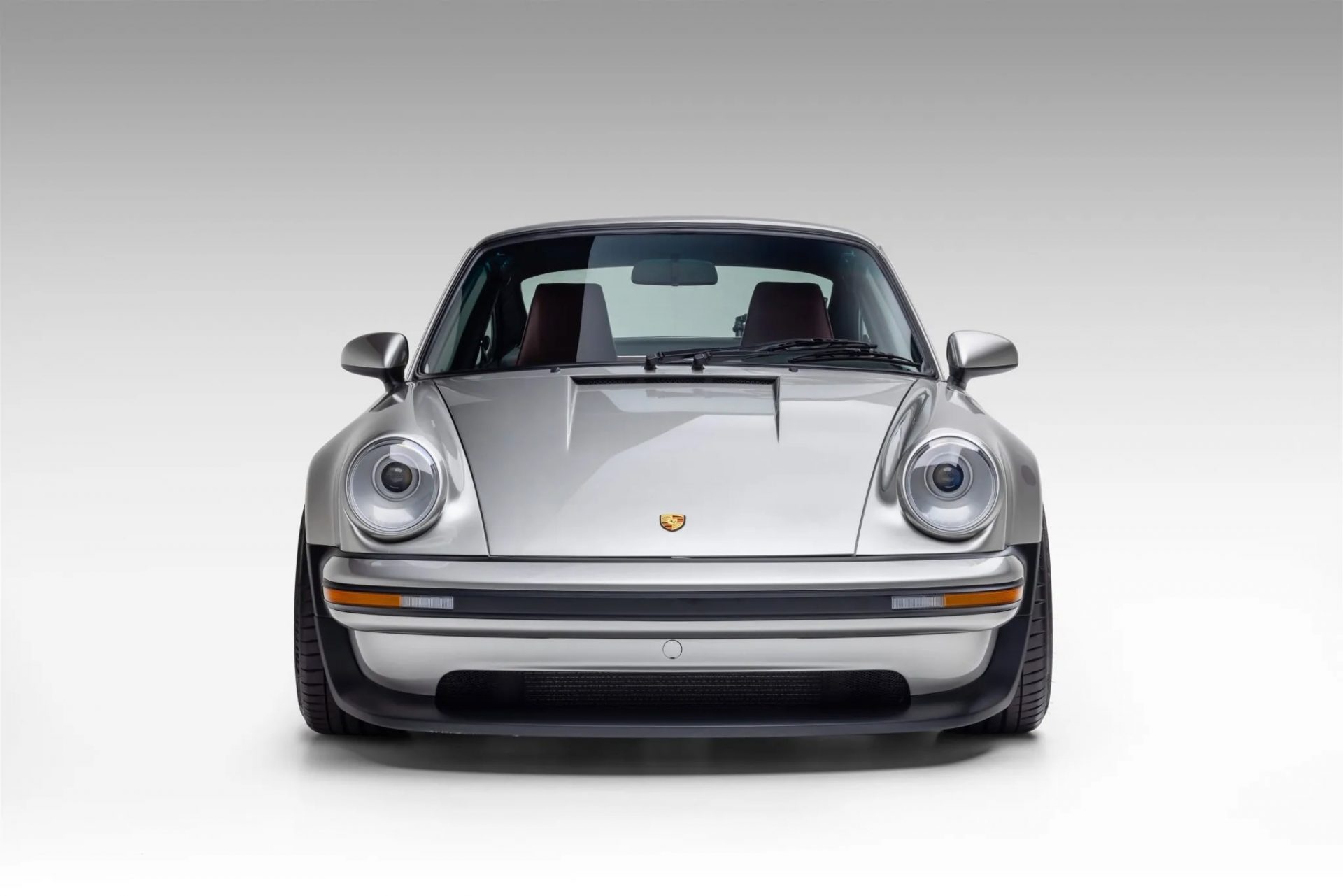


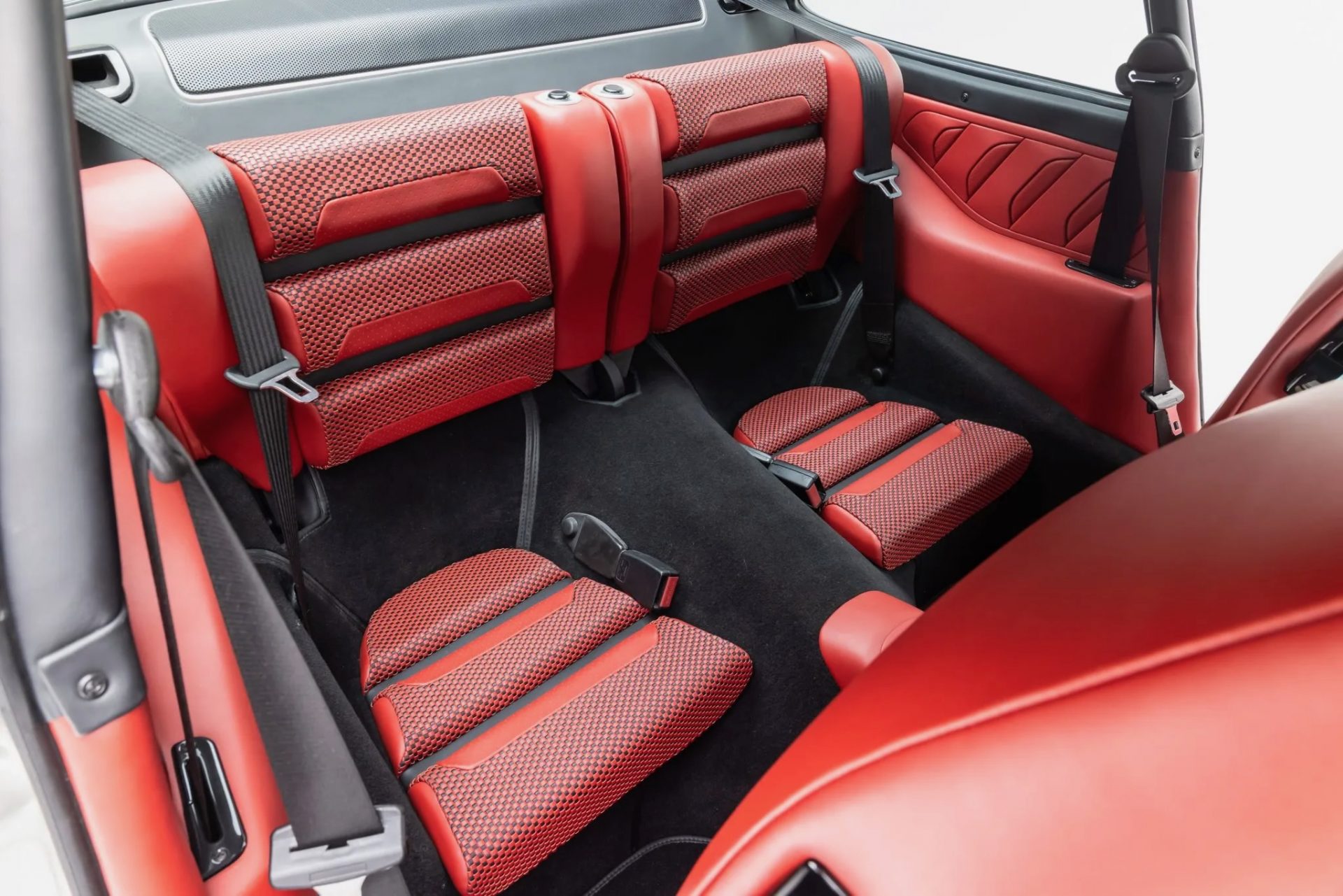
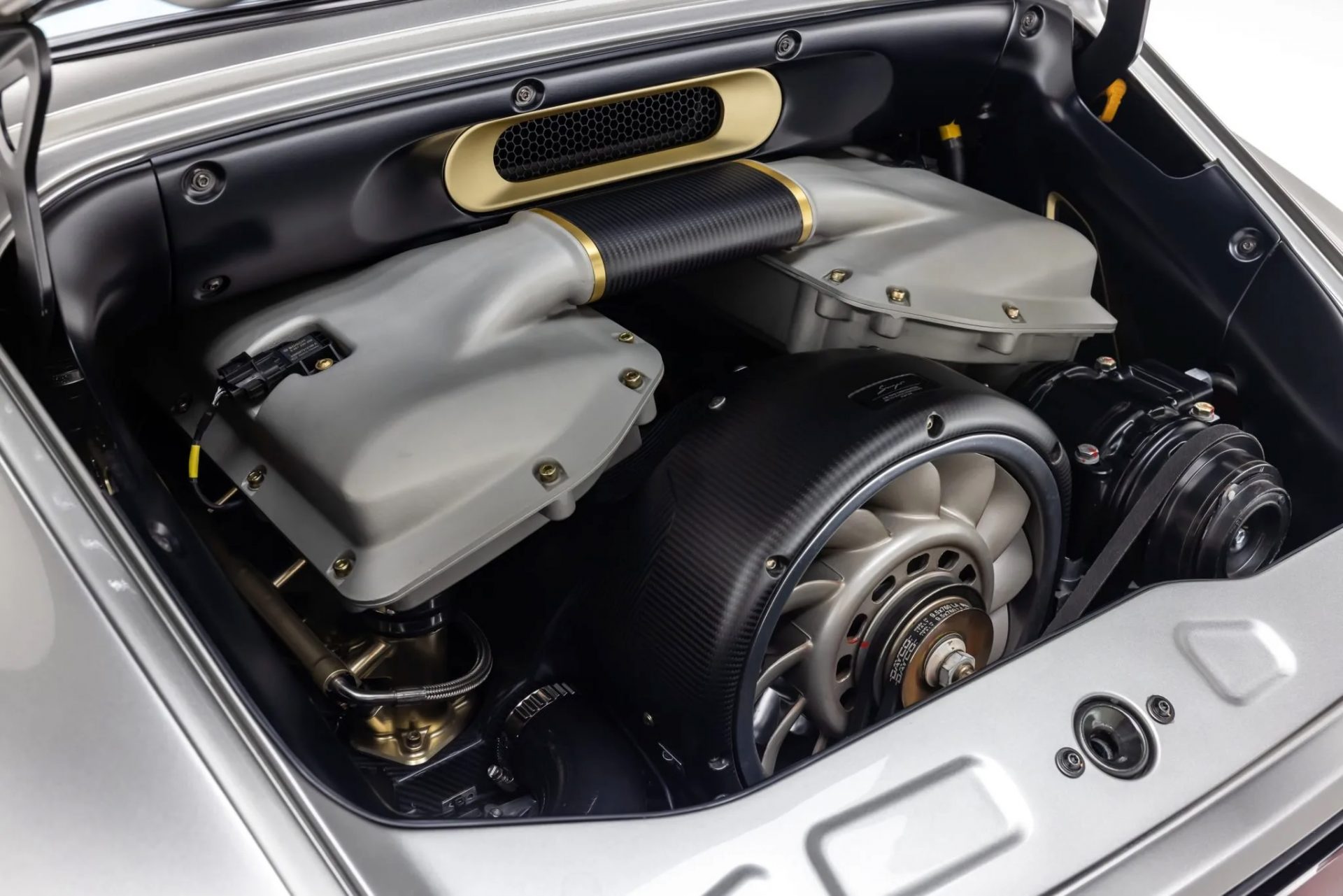
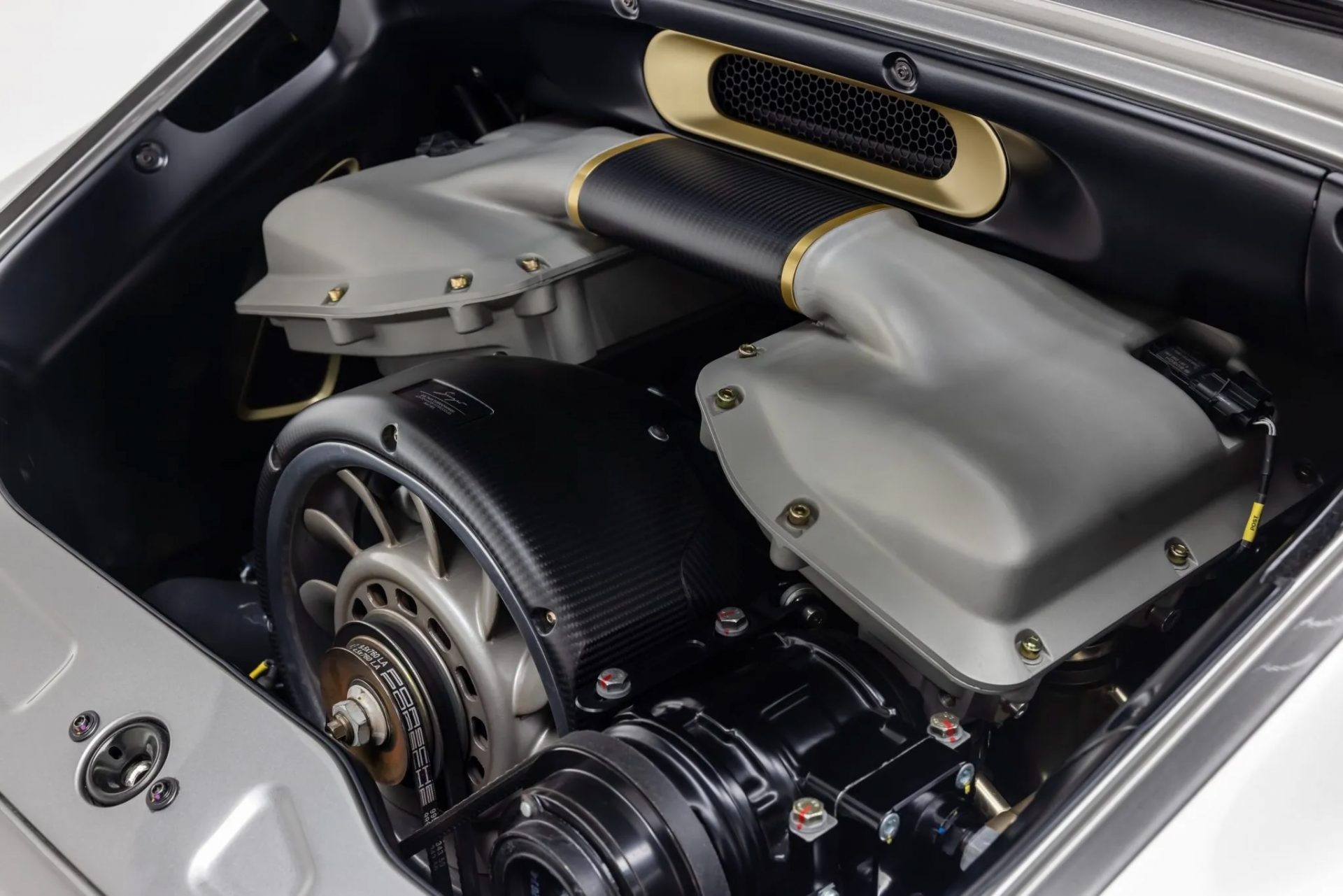
Auktion: Bring A Trailer, verkauft für 1,8 Millionen Dollar (April 2026), mit diesen Angaben: «This 1991 Porsche 911 Turbo coupe was modified by Singer Vehicle Design to its Classic Turbo specification in December 2024. The “Red Black Silver” commission features carbon-fiber body panels finished in paint-to-sample Lunar Silver, and power comes from a 503-horsepower 3.8-liter flat-six equipped with electric wastegates and bespoke air-to-water intercoolers mounted inside the intake plenums. Power is sent to the rear wheels via a six-speed manual transaxle, and additional equipment includes a front axle lift system, Brembo brakes with carbon-ceramic rotors, and staggered-diameter RSR-style 18″ wheels. Inside, the power-adjustable sport seats and rear seating surfaces are trimmed in Photon Red leather with woven inserts, and amenities include air conditioning, power windows, a wireless smartphone charger, a Singer Premium Audio system, Porsche Classic radio with navigation, black-finished wood trim, and Singer’s Floating Gauges suite. This Singer-modified 964 Turbo has 897 miles.»
–
Chassis-Nummer: WP0ZZZ96ZLS407435
Motoren-Nummer: 62P01617


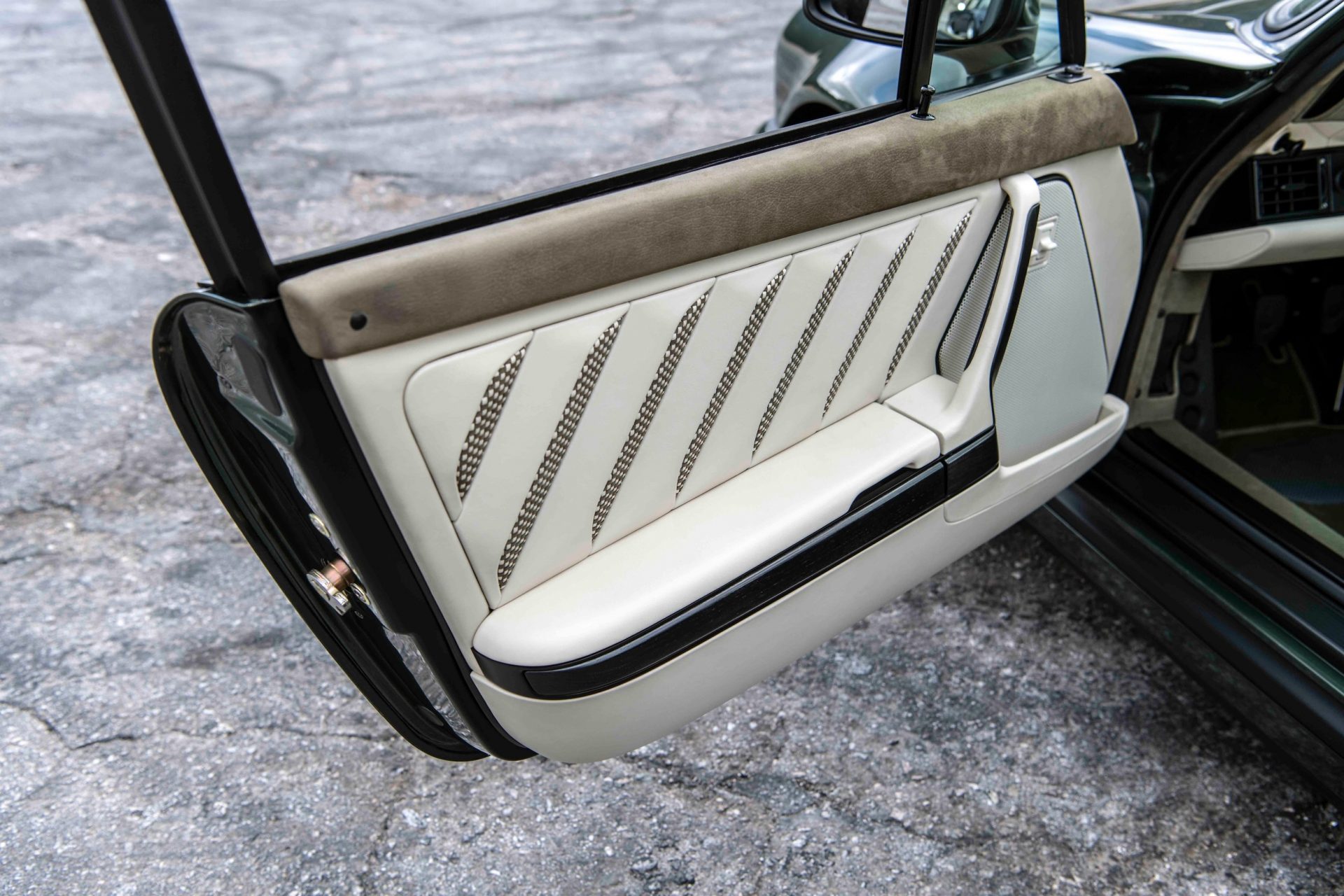

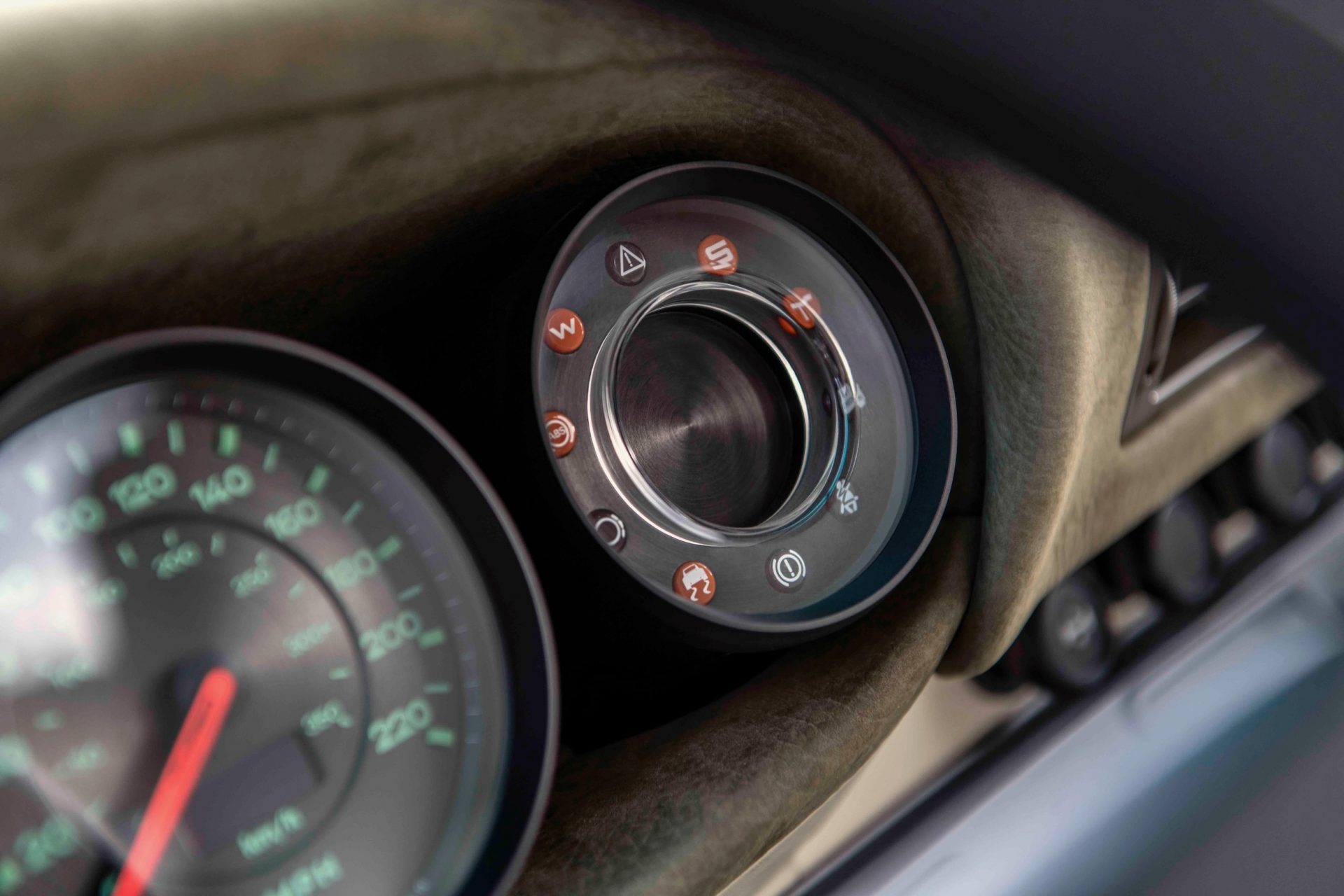
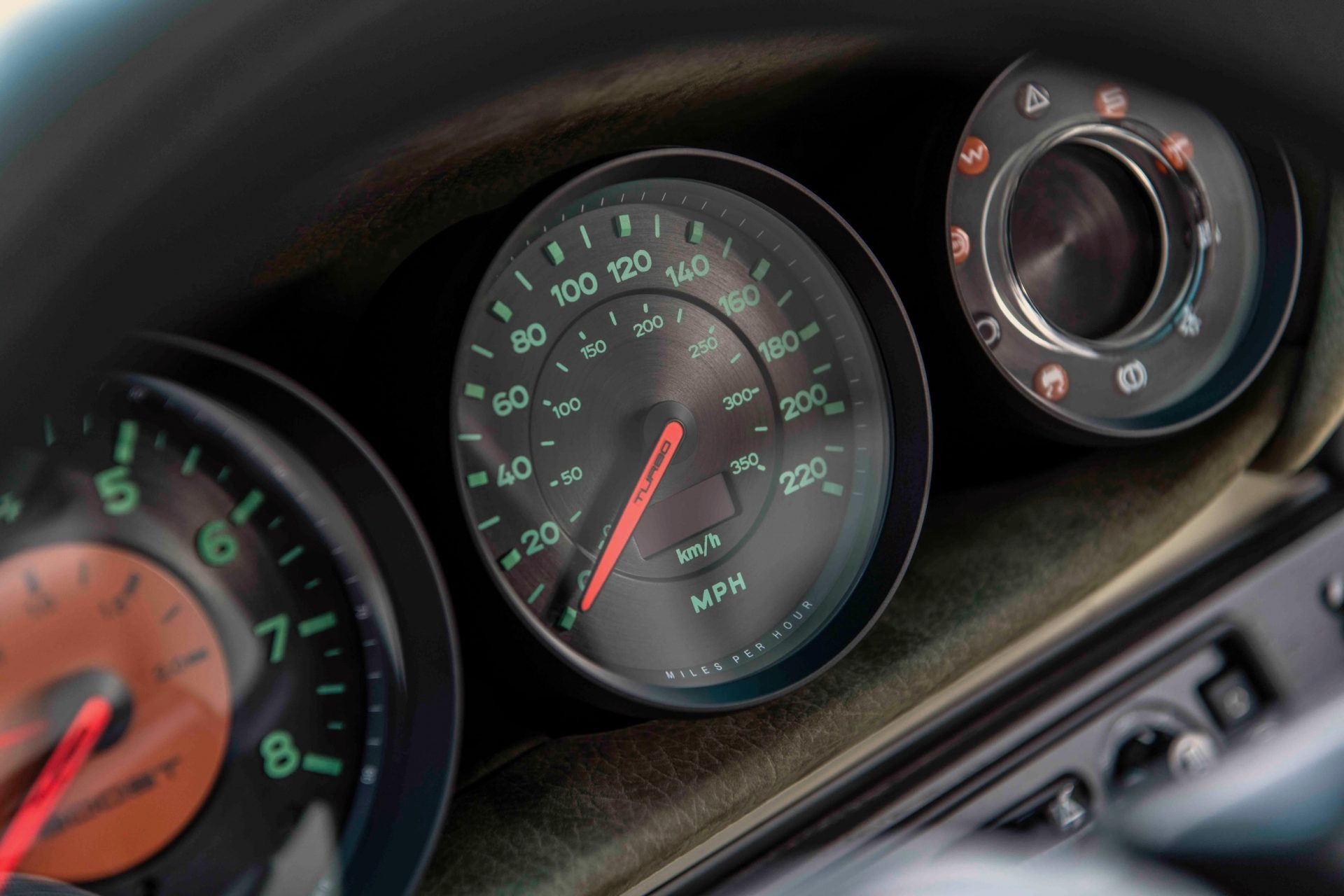


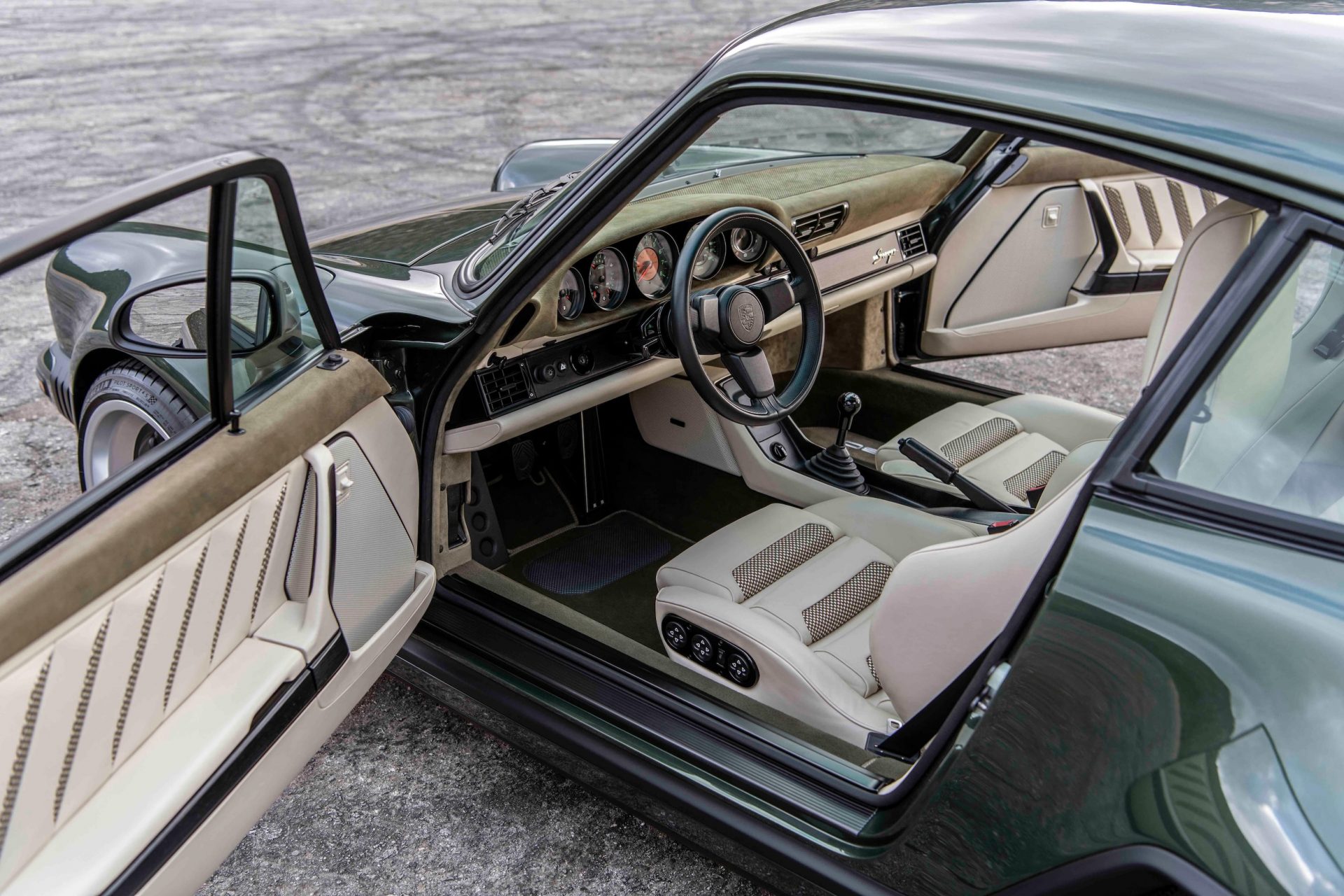


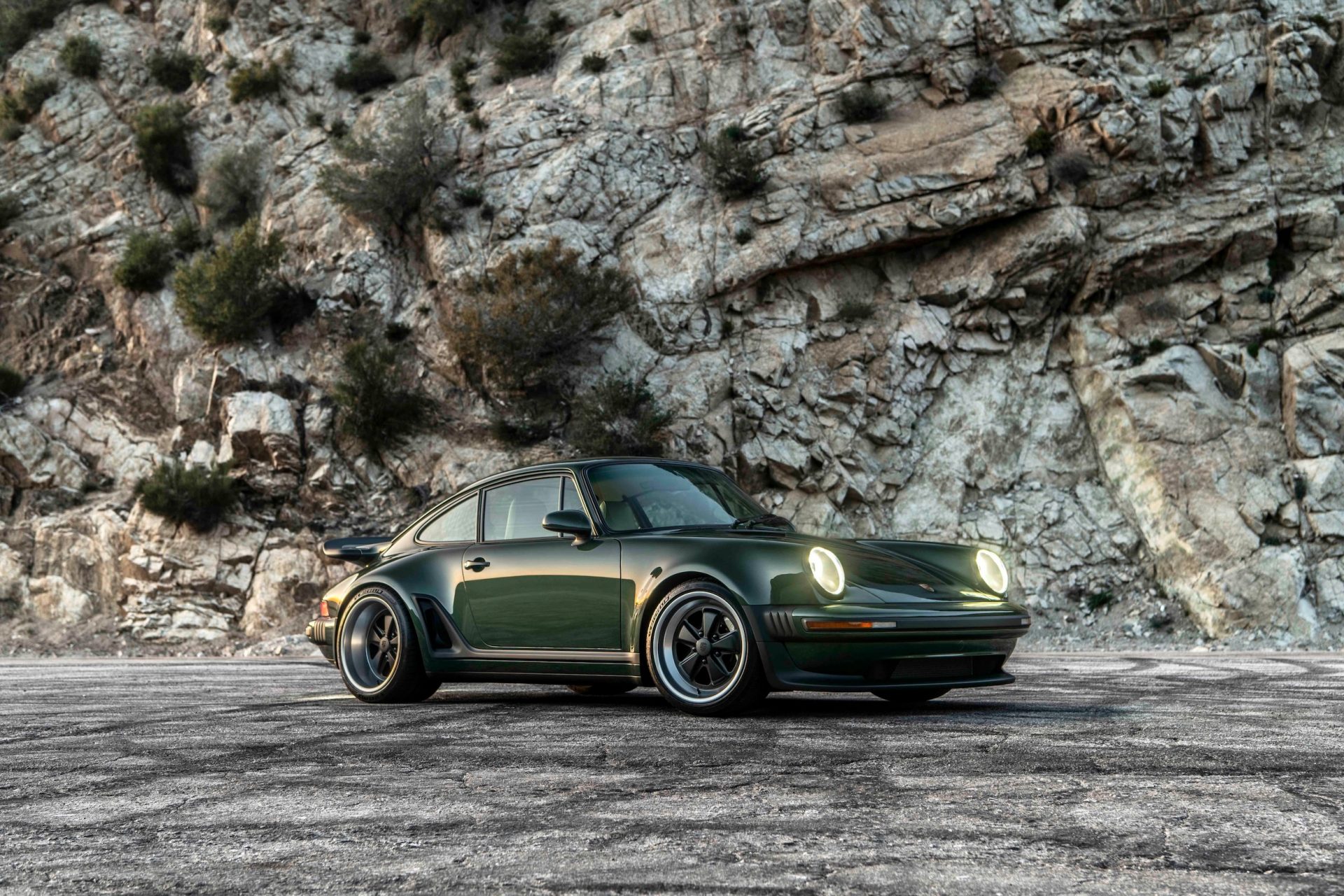


Auktion: Bonhams, Miami 2025, Schätzpreis 1,75 bis 2,25 Millionen Dollar, mit diesen Informationen: «It is with tremendous pleasure that Bonhams|Cars offers this turbocharged Porsche 911 Reimagined by Singer, „The Sun Valley Commission.“ This is the first such car to be offered for public sale, and the very car road and track-tested by famed journalist Chris Harris in his 40-minute film introducing Singer’s Classic Turbo services.
As with every car Singer reimagines, Sun Valley is meticulously restored with direct input from its original owner. It has been completely restored around the 964 chassis, with every last nut, bolt, and fastener to meet Singer’s exacting standards. The body shell, which was crafted and painted in the DLS facility in the UK, based on a 964, features bespoke lightweight carbon fiber panels subtly reworked to enhance the aggressive, wide-body stance of the 930. The body is finished in a stunning shade of paint-to-sample Dirty Oak Green Metallic—a color that is and always will be unique to this example, accented by 18-inch Fuchs-style alloys with black centers. The quality of the paintwork alone is staggering, and to protect the investment, it features full-body paint-protection film, applied prior to assembly to minimize visible seams.
Once past the beauty of the exquisite body, you open the featherweight door to reveal a stunning interior that is both instantly familiar and entirely new. The seats and door cards, covered in ivory leather with jewel-like woven olive accents, are inspired by the 930’s ‚tombstone‘ seats, but redesigned with aggressive bolstering and a fresh modern look. Olive green carpets and dash roll, and black wood accents punctuate the sophisticated ambiance. Matching rear seats fold flat to provide a platform for luggage – which you’ll need because you won’t want your road trips to end! The details are seemingly endless, from the bespoke wheel to the playfully redesigned instruments and slick integrated optional premium audio system, it is a cabin that will bring joy and surprises virtually every time you climb in.
Abetting the car itself is a matching Singer Reimagined Flytrack watch, stamped with a serial number to match the car and listed on the original build sheet. This beautifully crafted, manually wound timepiece carries with it the same attention to detail, stunning design, and meticulous craftmanship embodied in the car and is only available to owners commissioning Singer’s Classic Turbo services.
The joy will undoubtedly continue when you twist the key to ignite the mighty 3.8-liter twin-turbo flat-six. Great attention was paid by Singer to ensure the two turbos hanging off the side don’t completely mute the mechanical symphony, and a Singer-developed titanium exhaust ensures it maintains its bark, while still emitting the whooshes and whistles you want from a great turbocharged engine. Of course, it does all of that with sublime balance – never overpowering and always brilliantly judged. This car develops a reported 510bhp which is sent to the rear wheels via a 6-speed manual transaxle, aided by Bosch traction control should you need it. In his road test, Chris Harris marveled at the ocean of torque and the incredible ease at which it fires out of one corner and into the next. He also noted that Singer managed to instill just the right touch of turbo lag, which is all about retaining elements of the original 930’s legendary boxer in a suit character.
The Sun Valley Commission is specified with Singer’s sport suspension system, including integrated front axle lift, and it wears Brembo calipers finished in Ivory (a subtle yet brilliant touch) that clamp on massive carbon ceramic brake discs. Away from the confines of the road, Harris found this car was remarkably adept at lurid slides, taking his inputs with ease and translating them into graceful drifts. Driven with gusto, only 267 miles are currently registered on the odometer at the time of cataloging».
–
Chassis-Nummer: WP0AB2965LS452035 (1990)


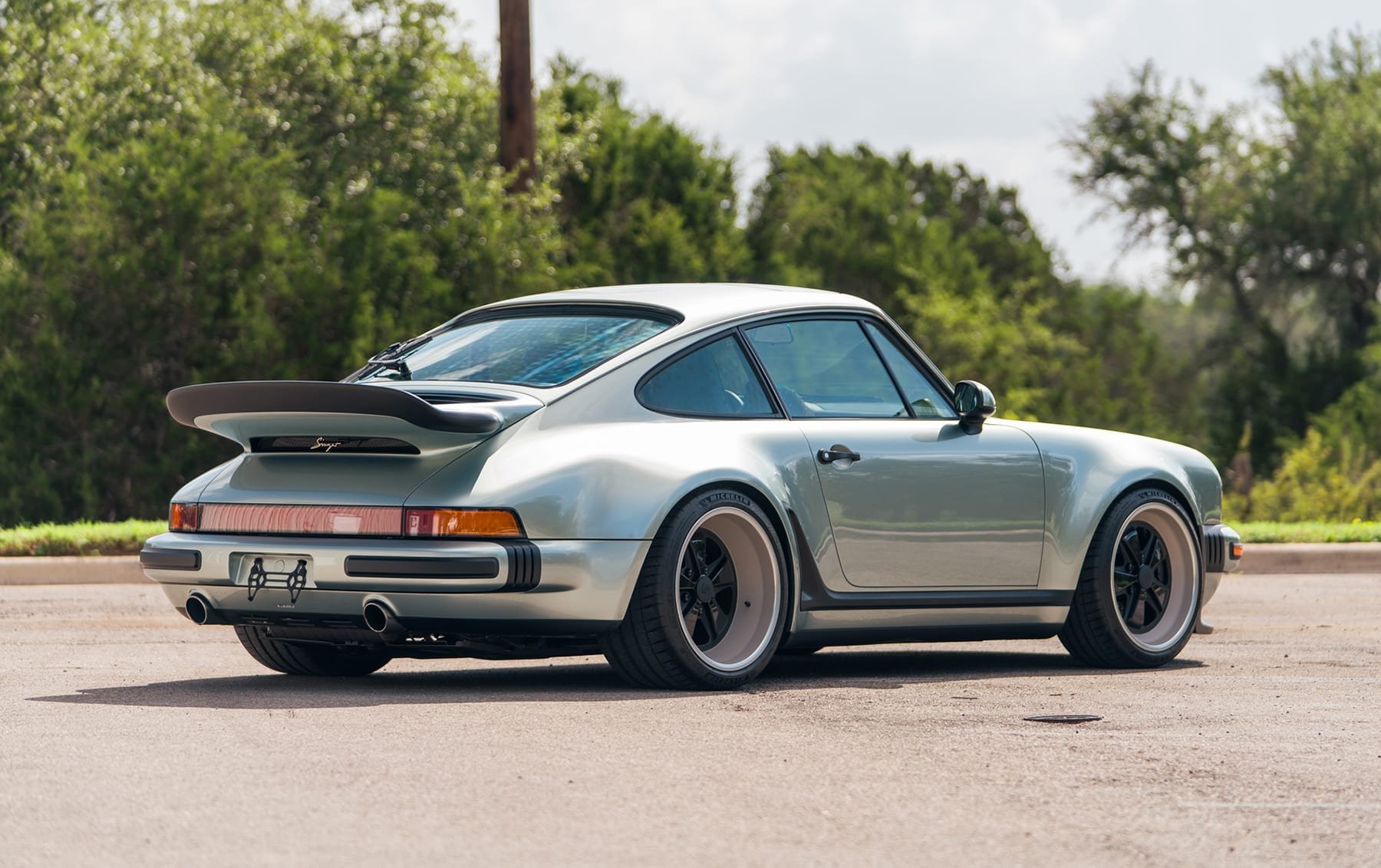


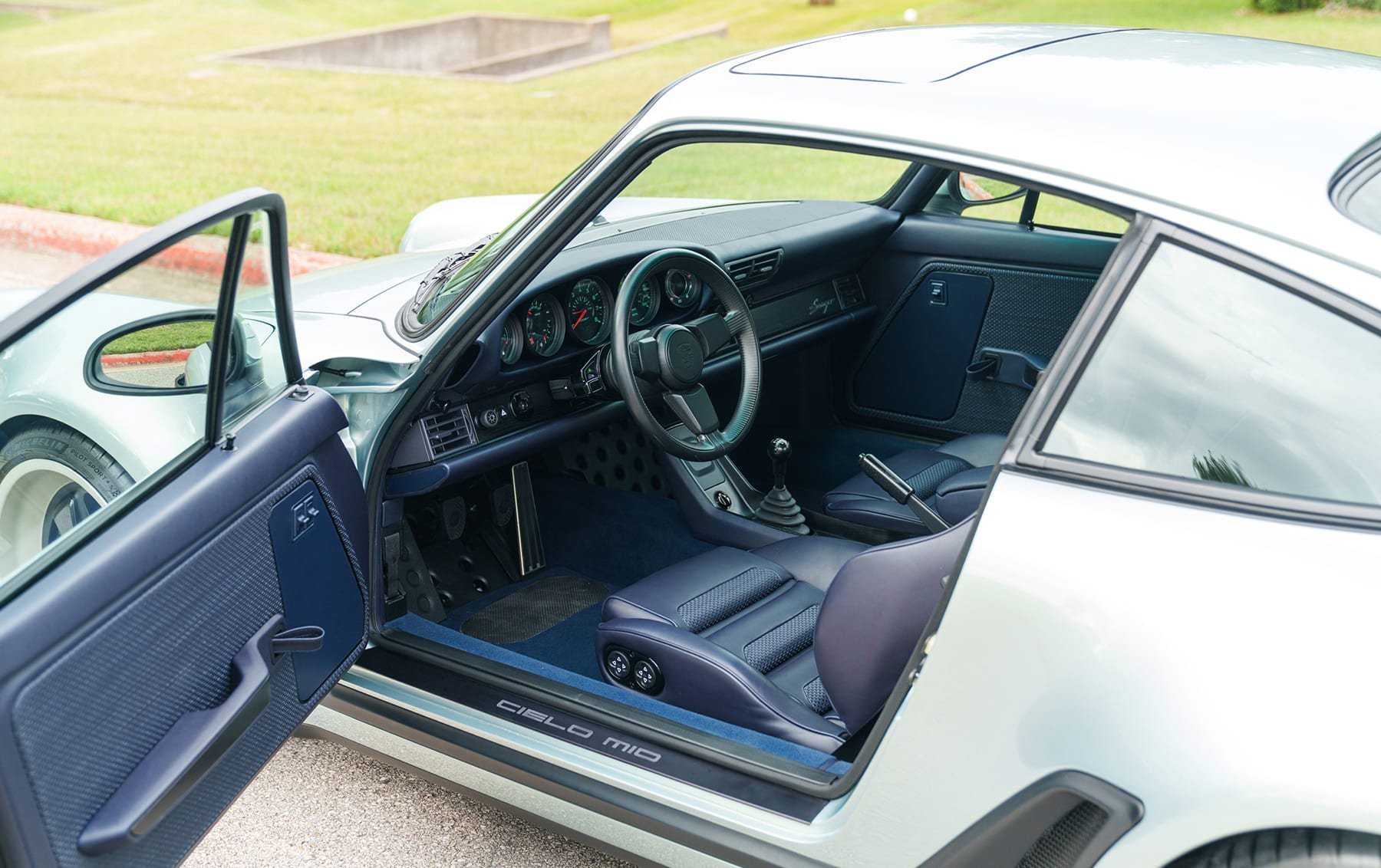

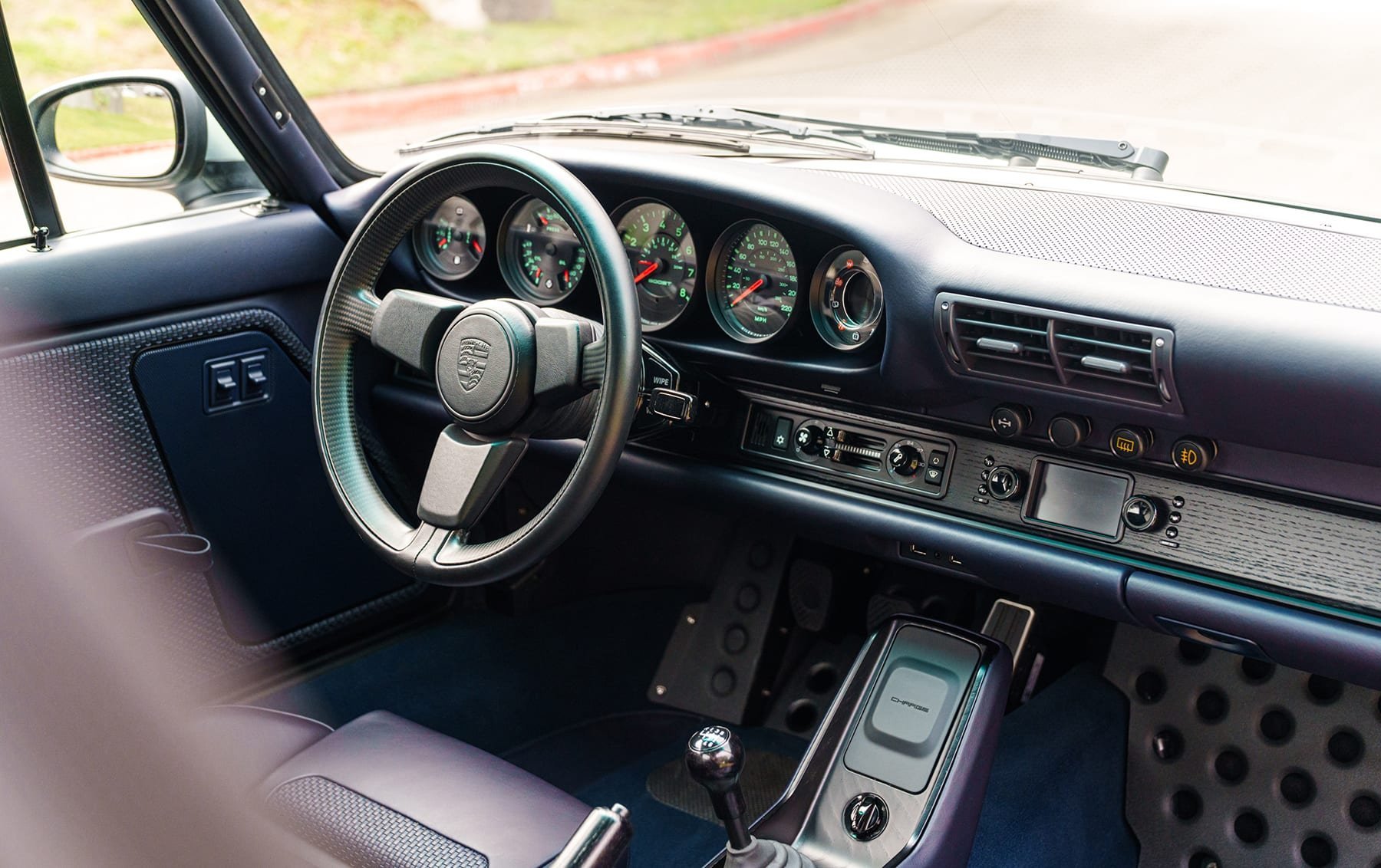


Auktion: Gooding & Co., Pebble Beach 2025, Schätzpreis 1,5 bis 2 Millionen Dollar, mit diesen Informationen: «An early example of the Classic Turbo restoration services, the “Cielo Mio” commission would see completion in 2024. The Type-964 generation “donor” chassis headed to Singer’s facility in late 2022 and was restored over the next year and a half. Its first and only owner since the restoration chose a specification that pays homage to the original Porsche 930 Turbo, while elevating it through Singer’s meticulous, modern craftsmanship. Finished in radiant Wolf Blue paint, the exterior color is understated yet deeply striking, complemented by special-coated carbon and satin black trim throughout. Fuchs-style wheels in an RSR finish echo the 930 Turbo’s iconic stance, while a platinum-plated Singer badge under the whale tail adds a quiet note of luxury. On the inside, “Cielo Mio” is appointed in rich Connolly Oxford Blue leather, woven with cord, to provide a unique texture for both the seat centers and door panels. Deep blue velour carpeting matches the dark blue hue of the leather, while interior hard surfaces are finished in black wood, adding warmth and tying into the satin black trim found on the exterior. The result is a cabin that feels right at home as a touring car, bolstered with modern amenities like Apple CarPlay and selectable drive modes developed in partnership with Bosch. As a finishing detail, the commission name is elegantly engraved into the door sill, offering a subtle, personal touch that reflects the one-of-one nature of each commission completed by Singer».
–
Chassis-Nummer: WP0AB0967KS451021 (1989)
Motoren-Nummer: 62K03070
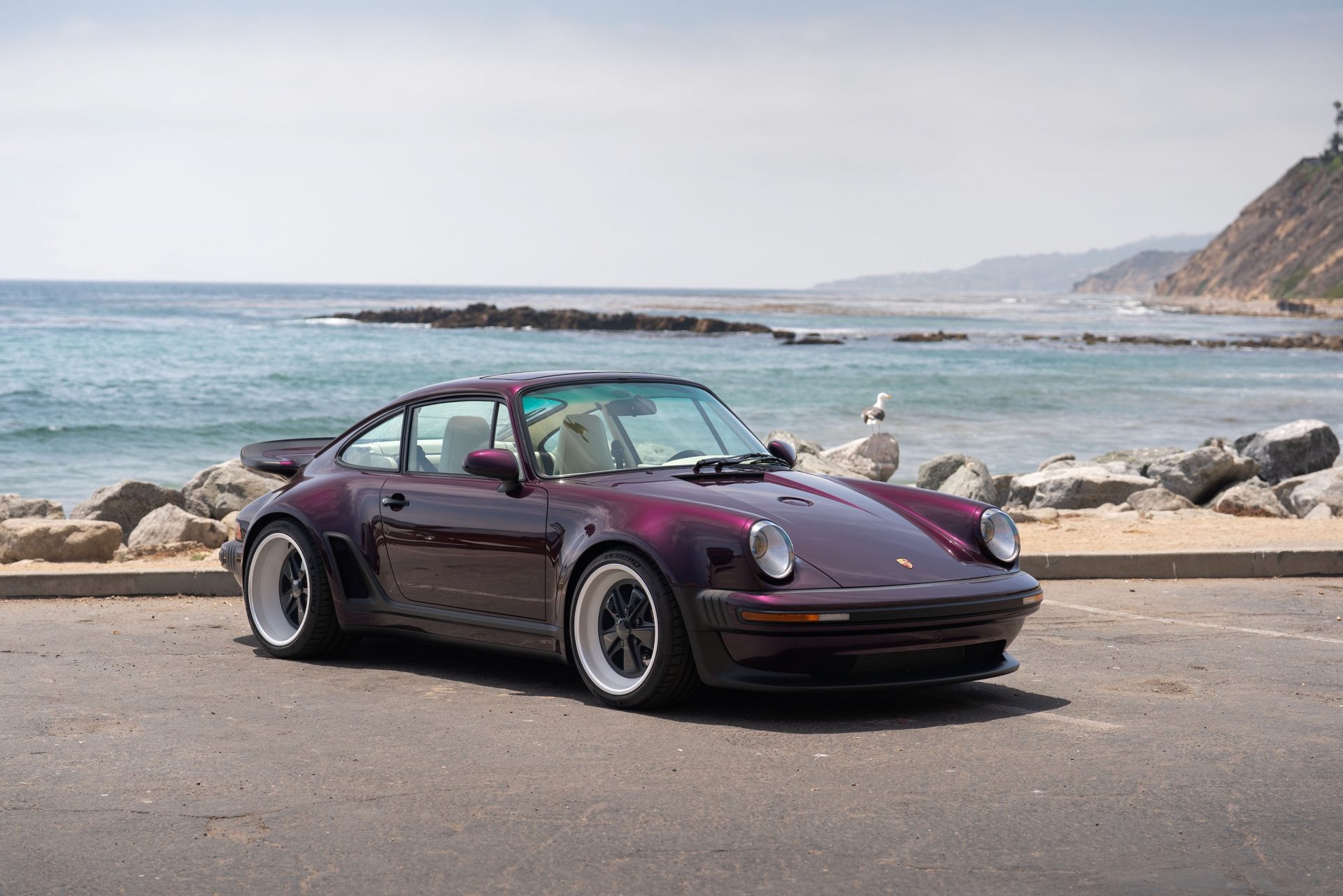

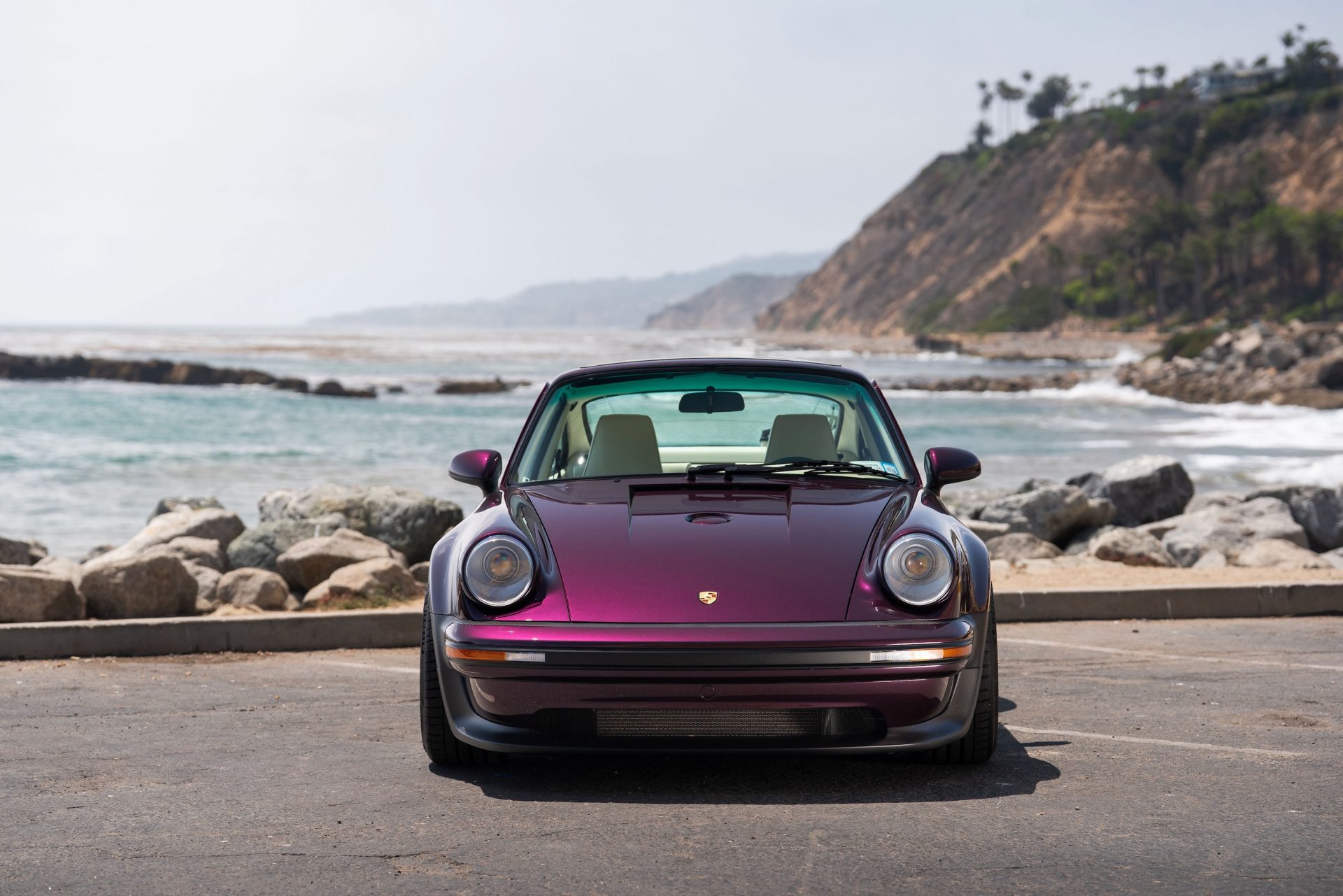
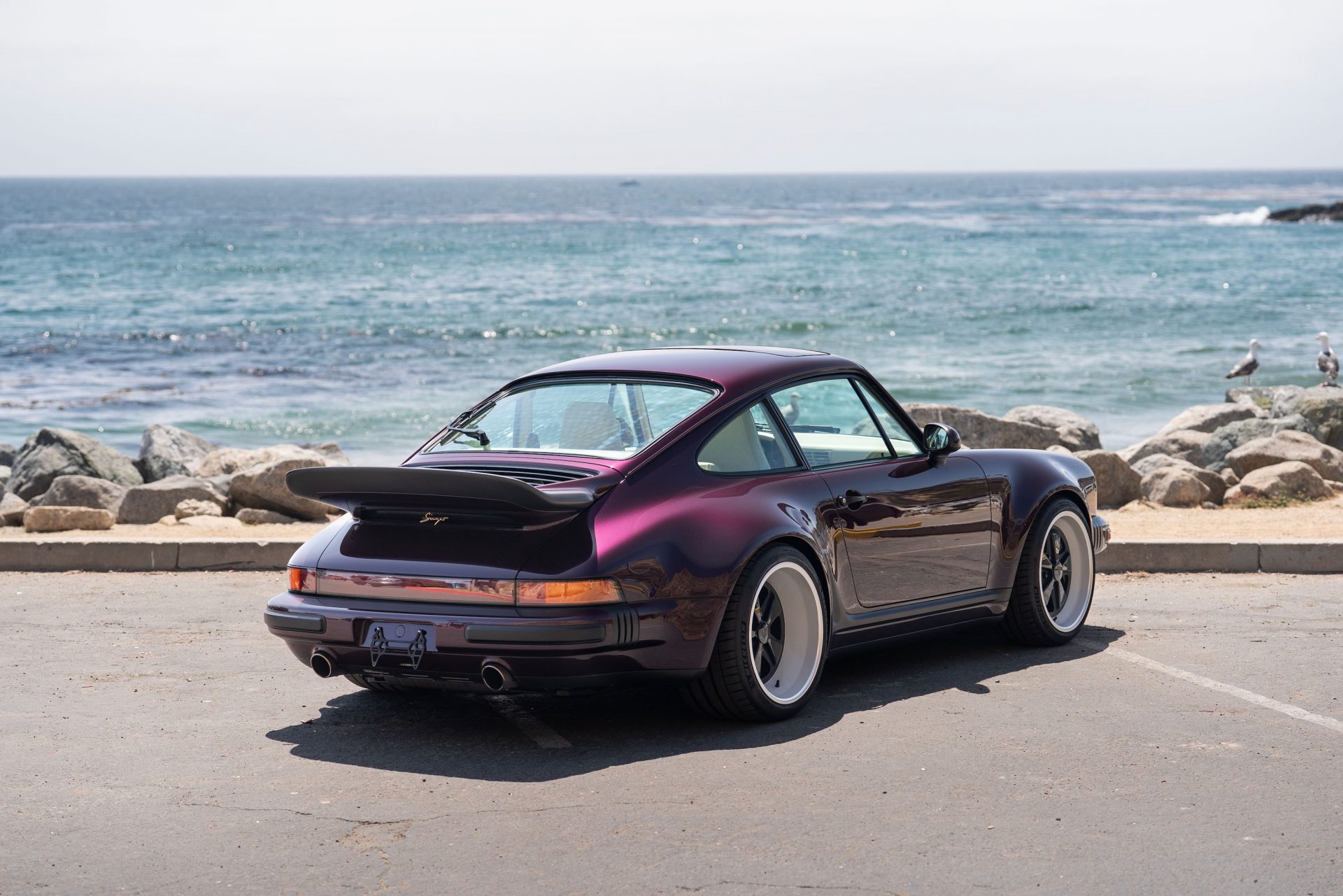
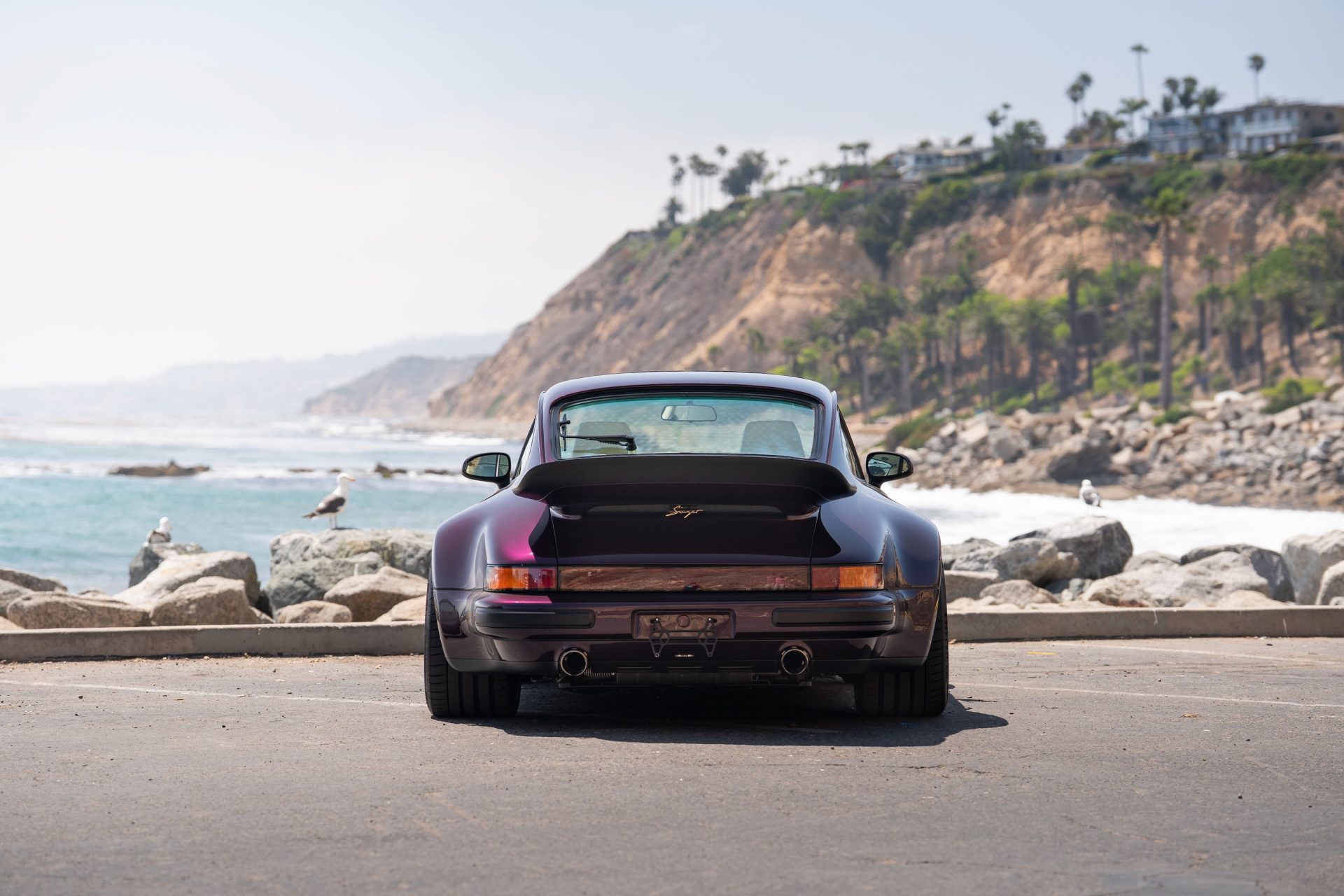
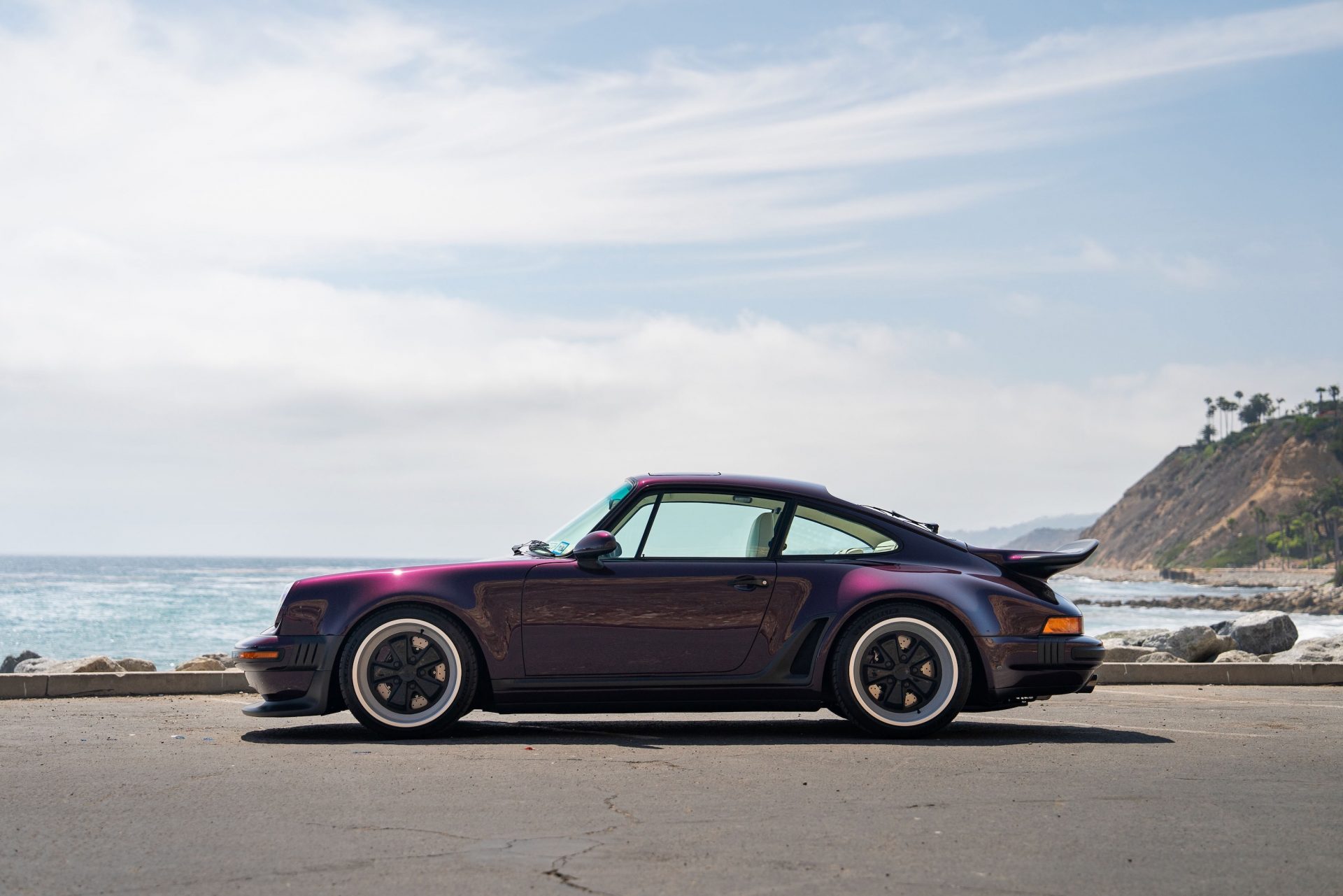

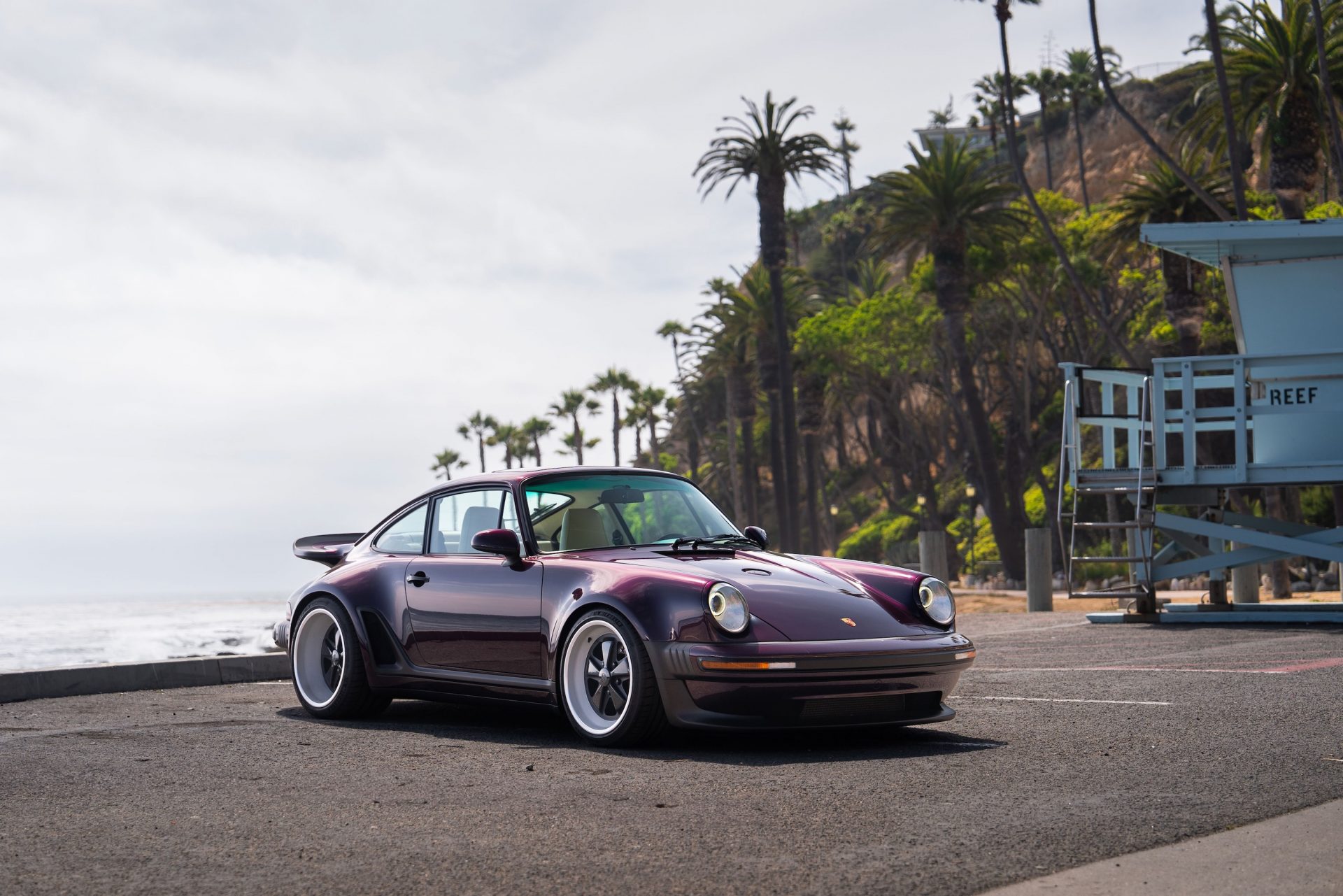

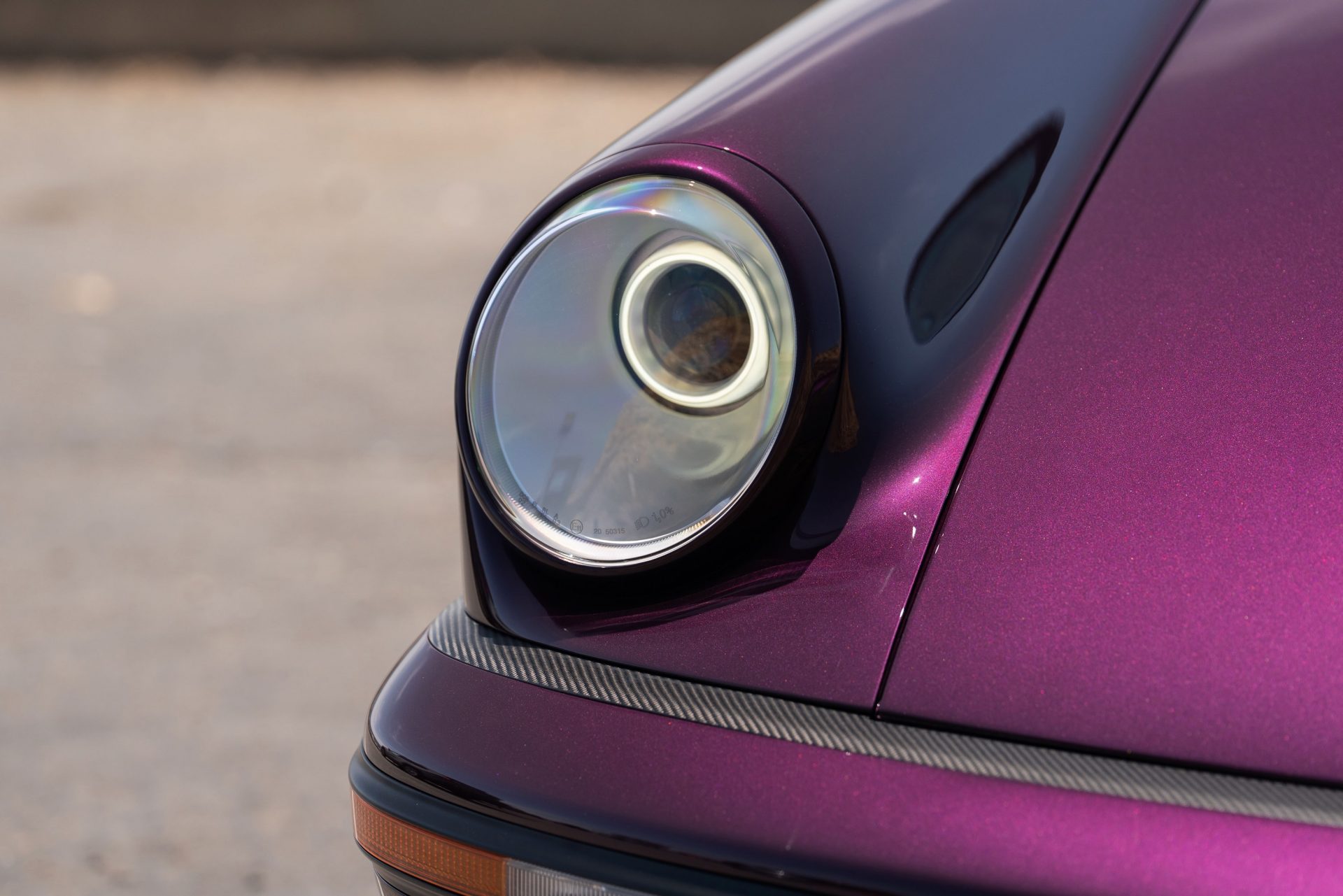
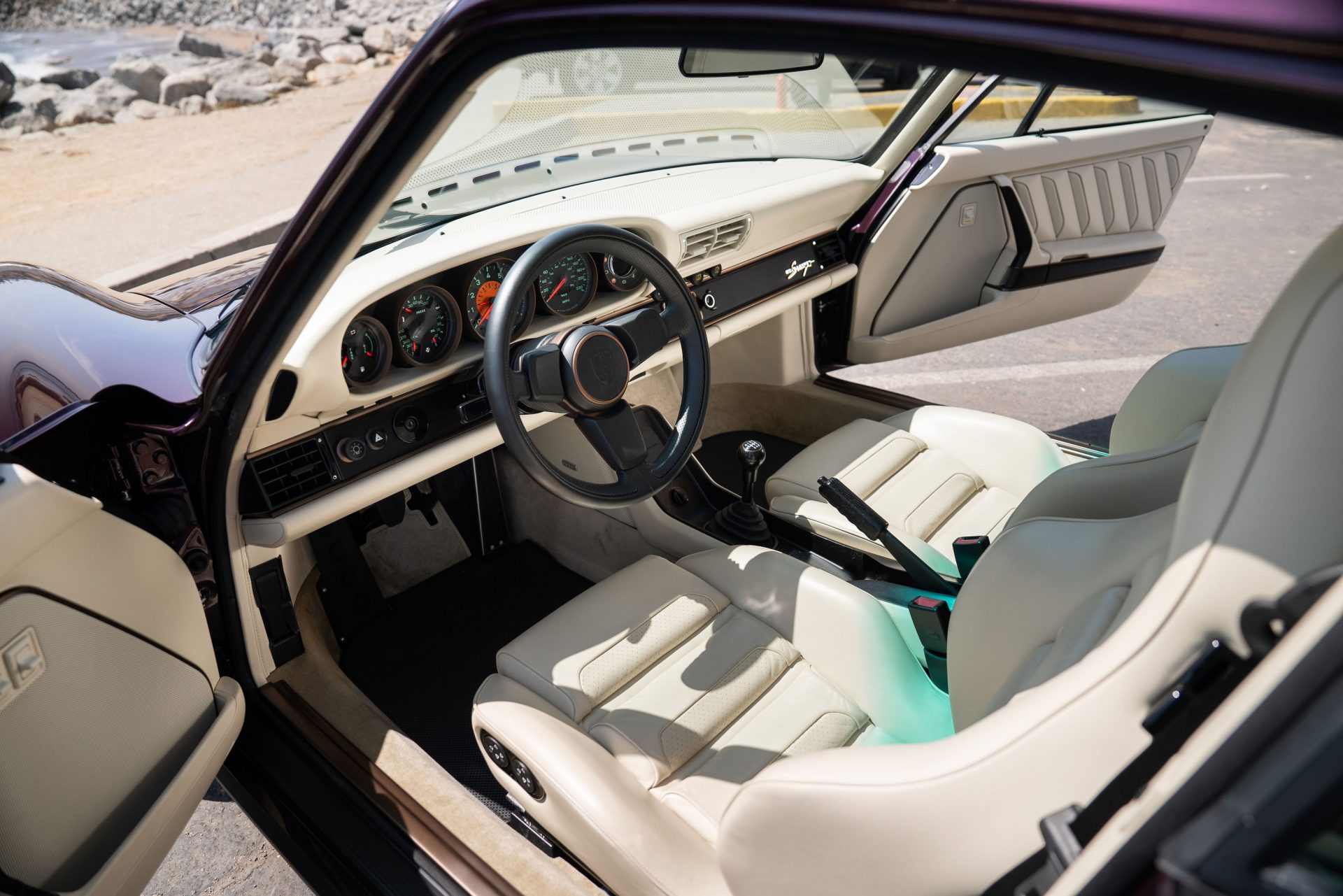
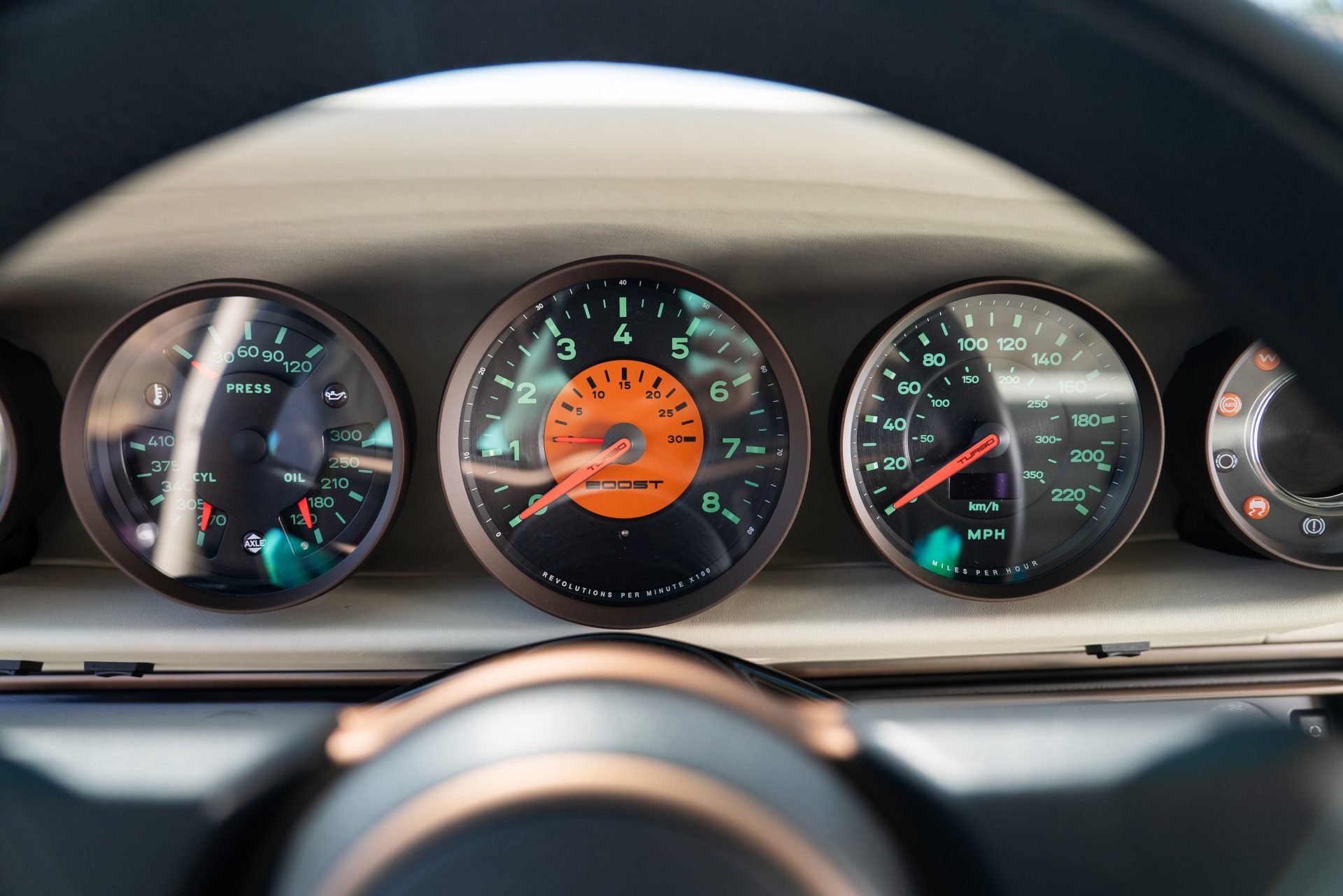
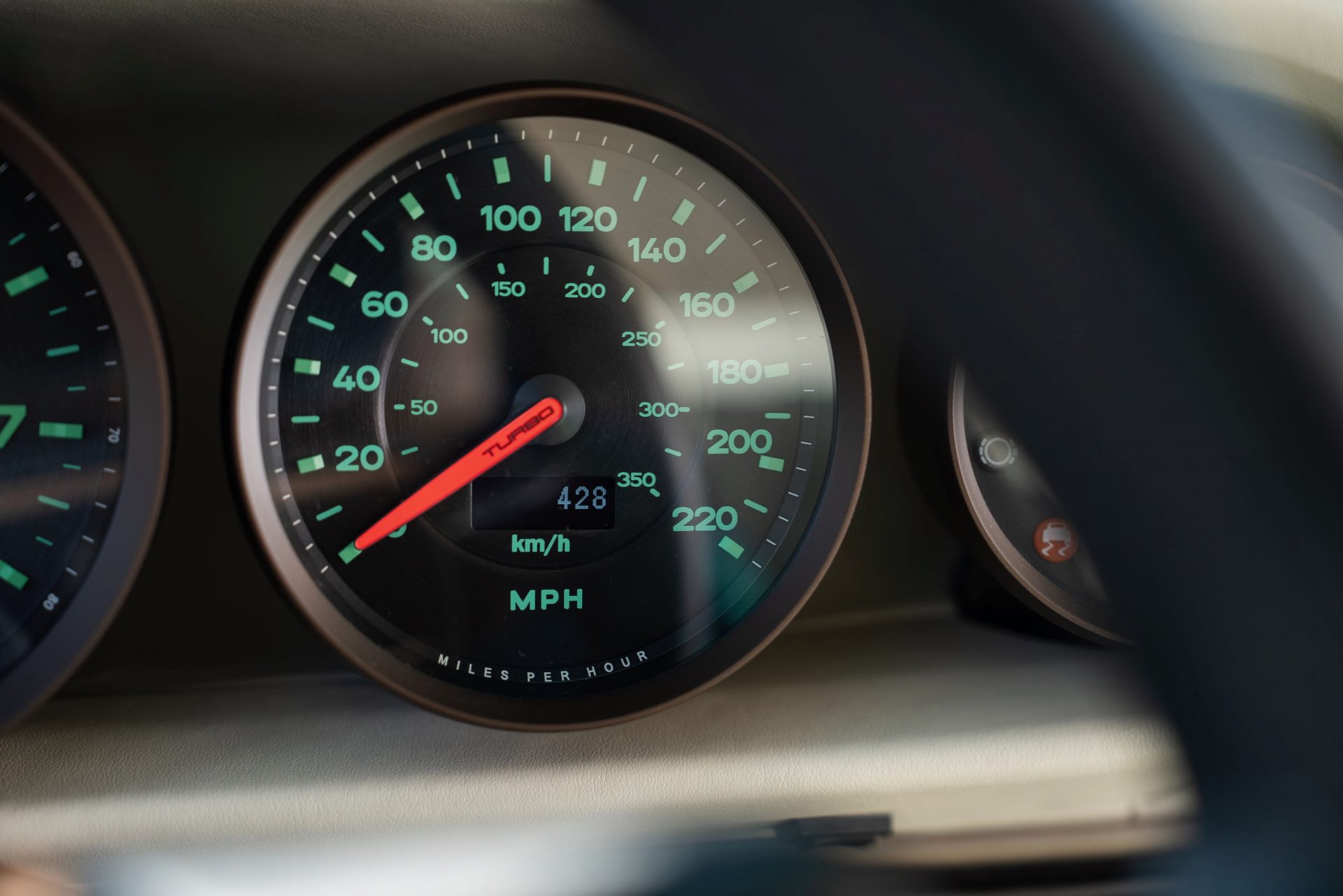

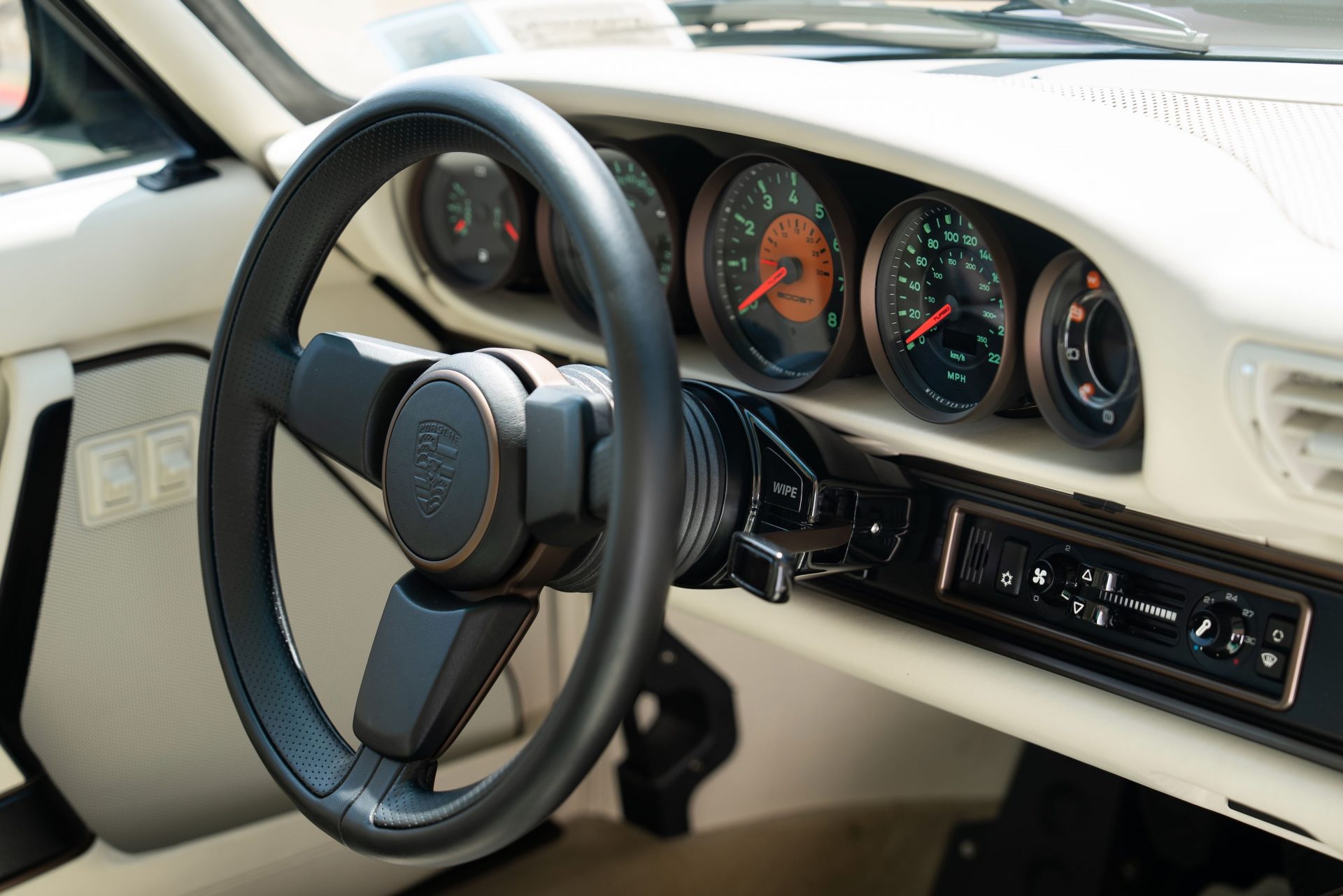

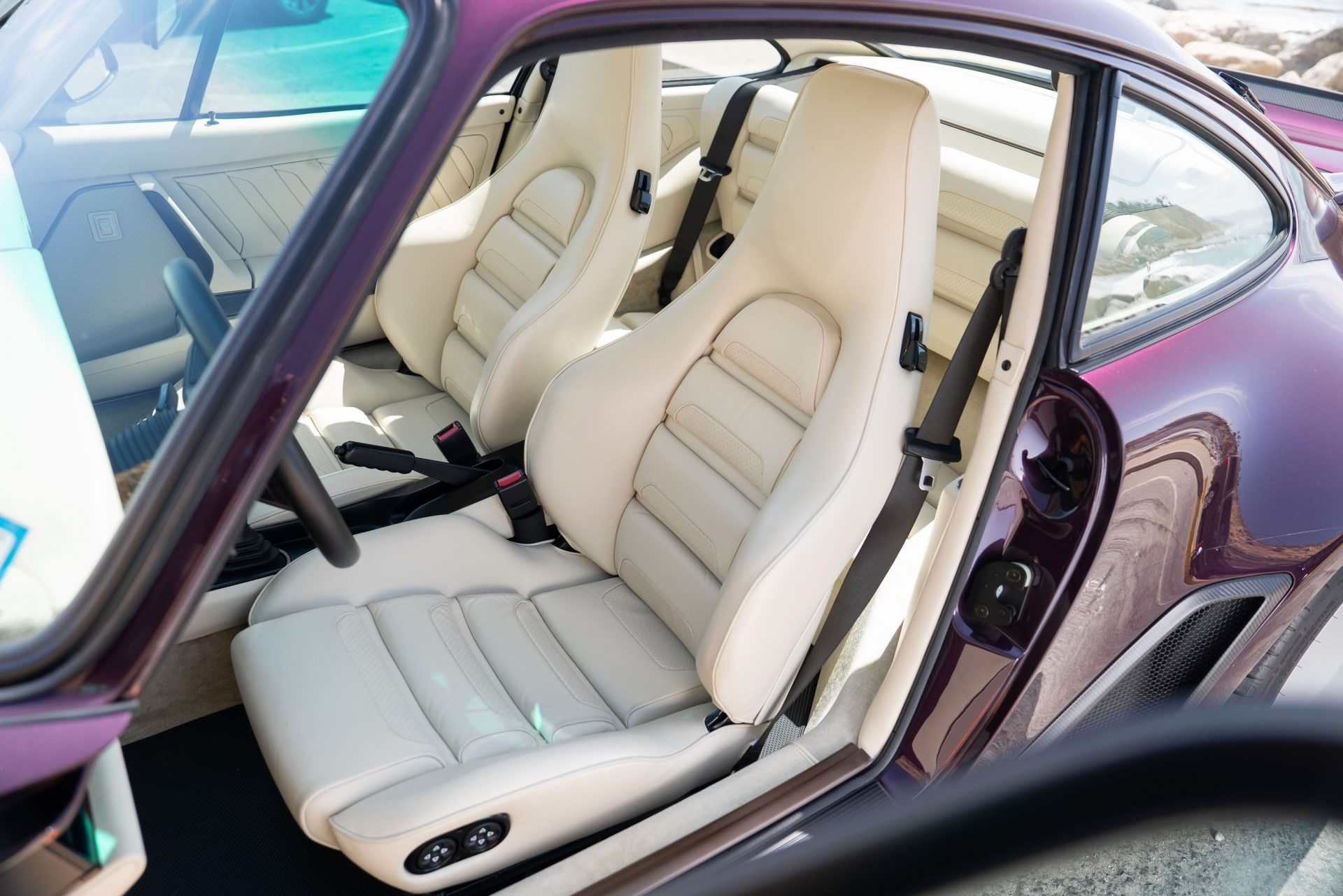
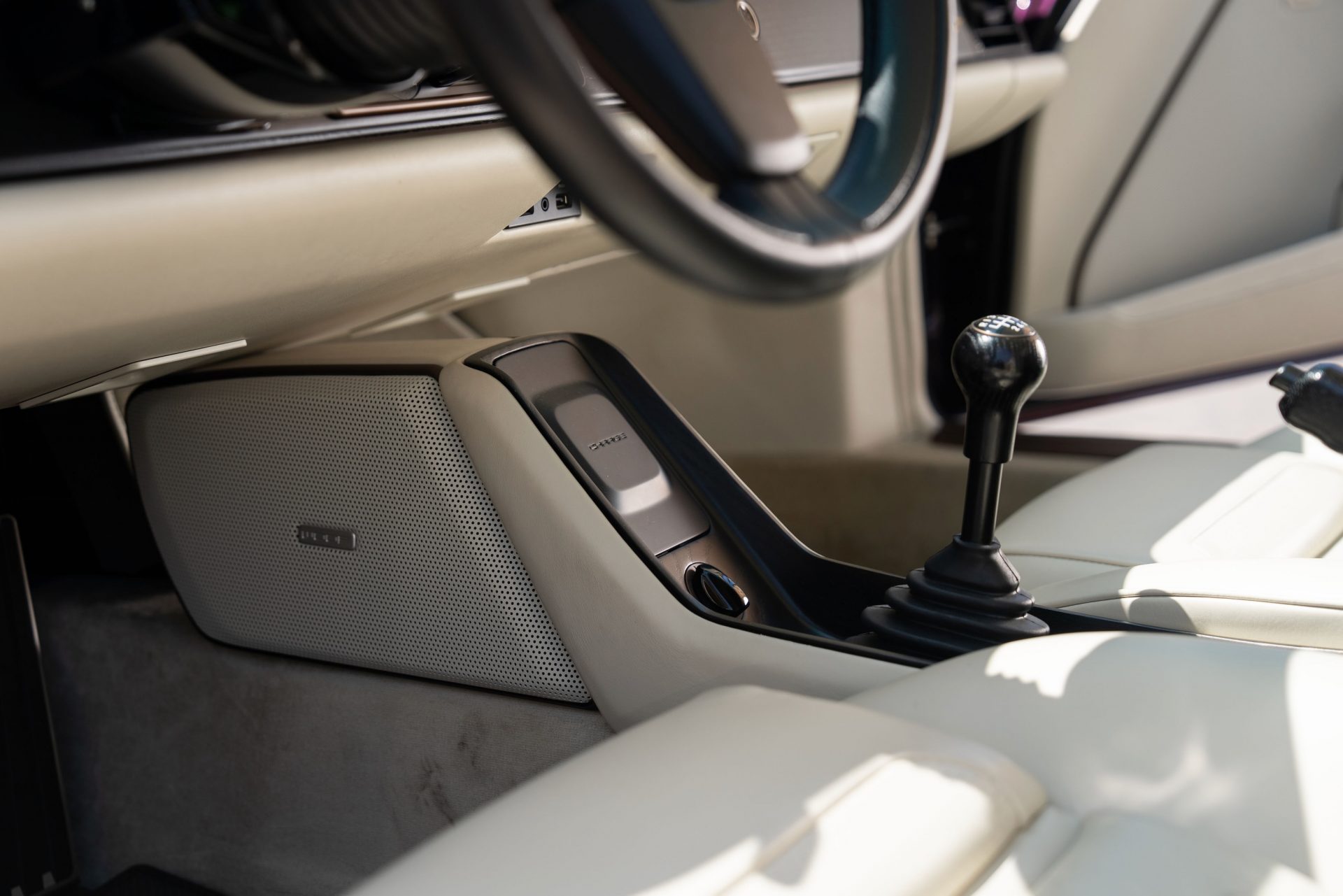
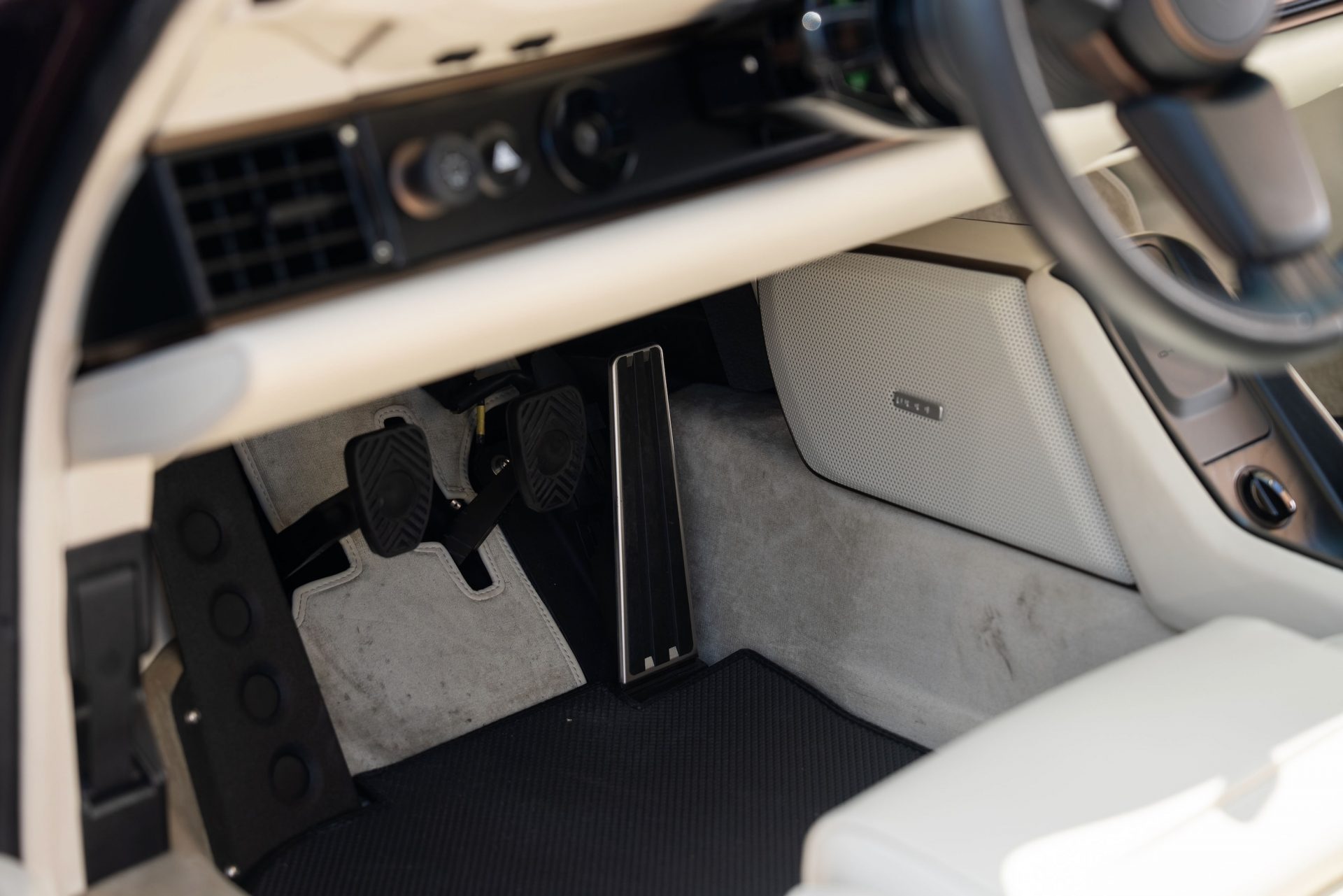

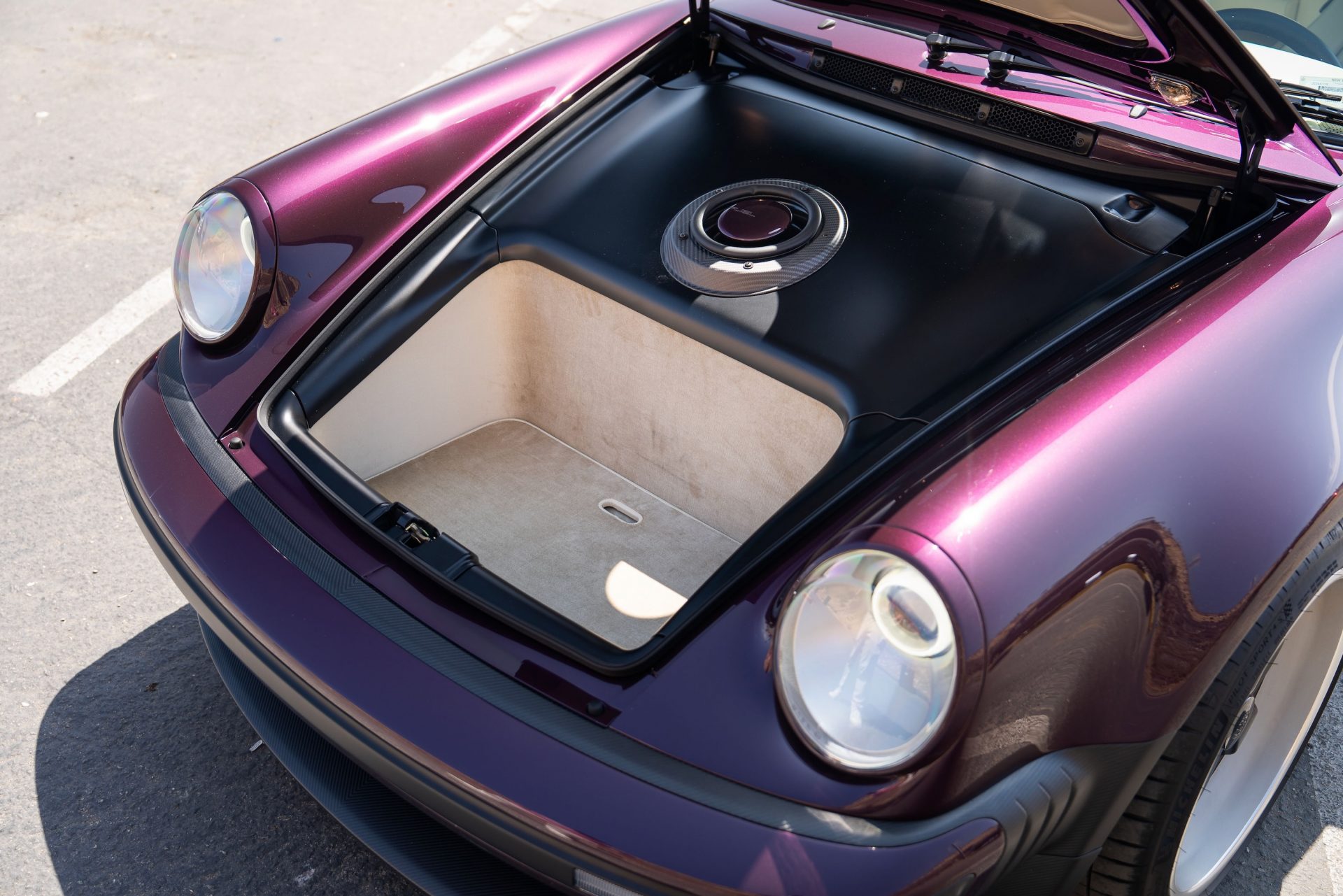
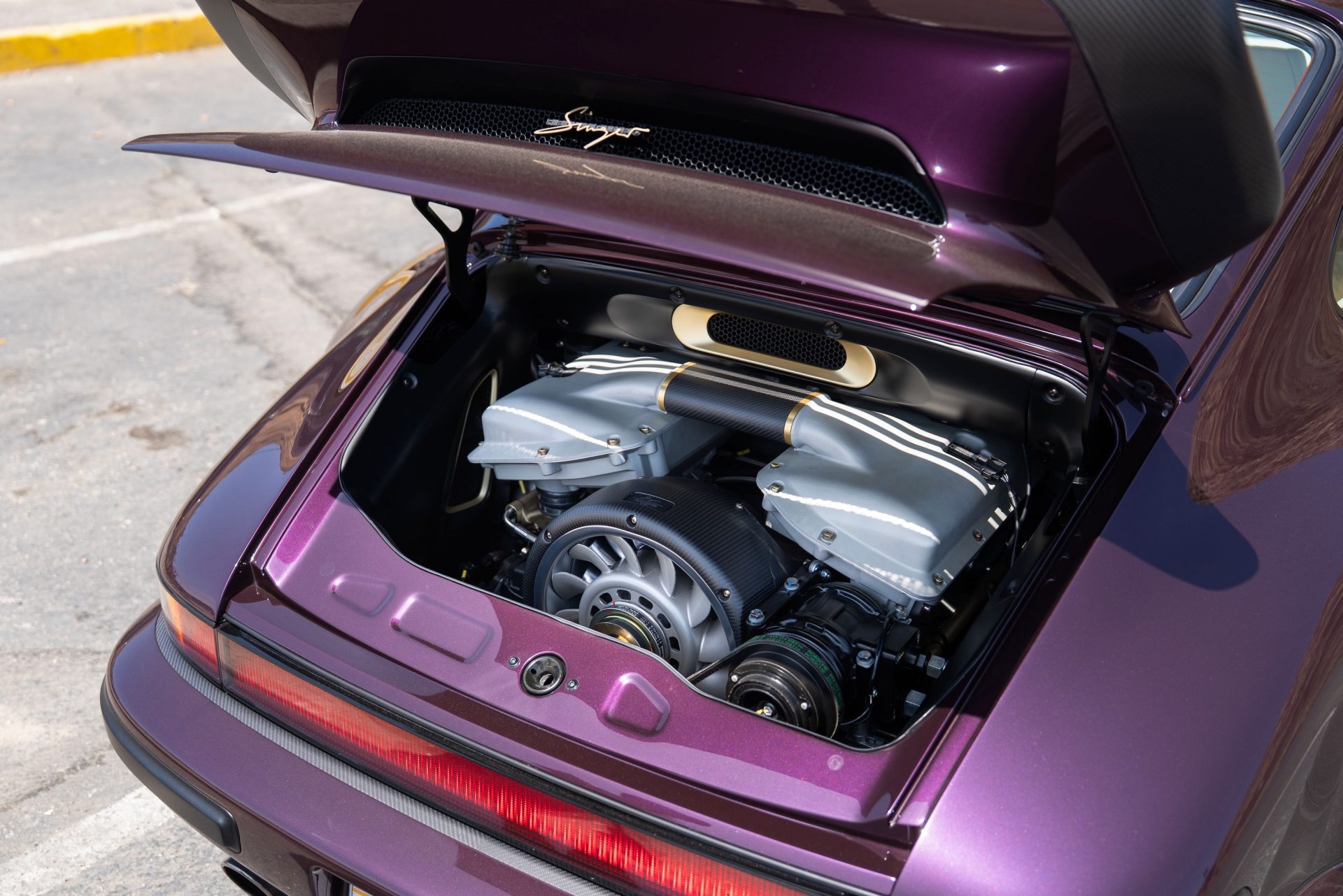
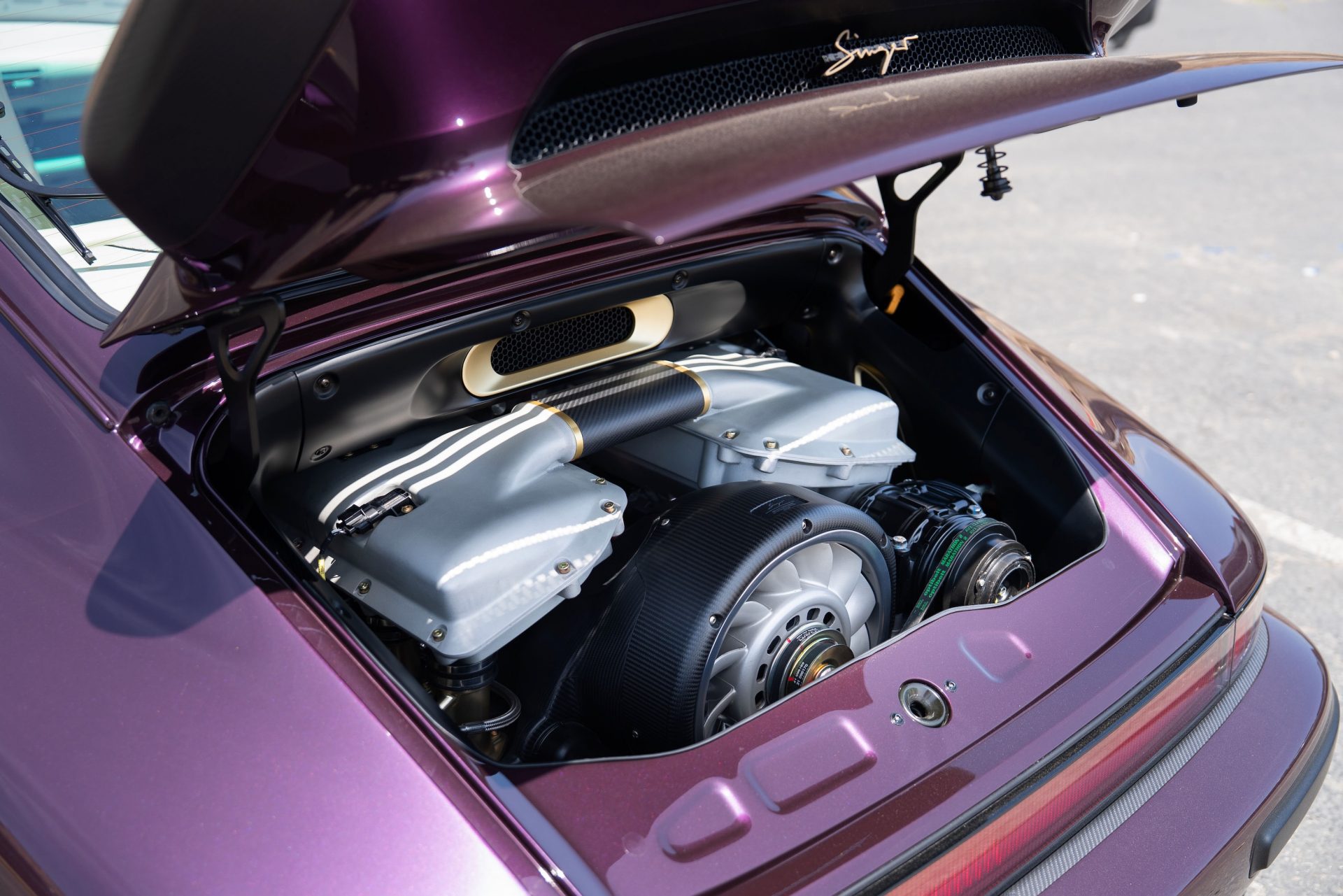
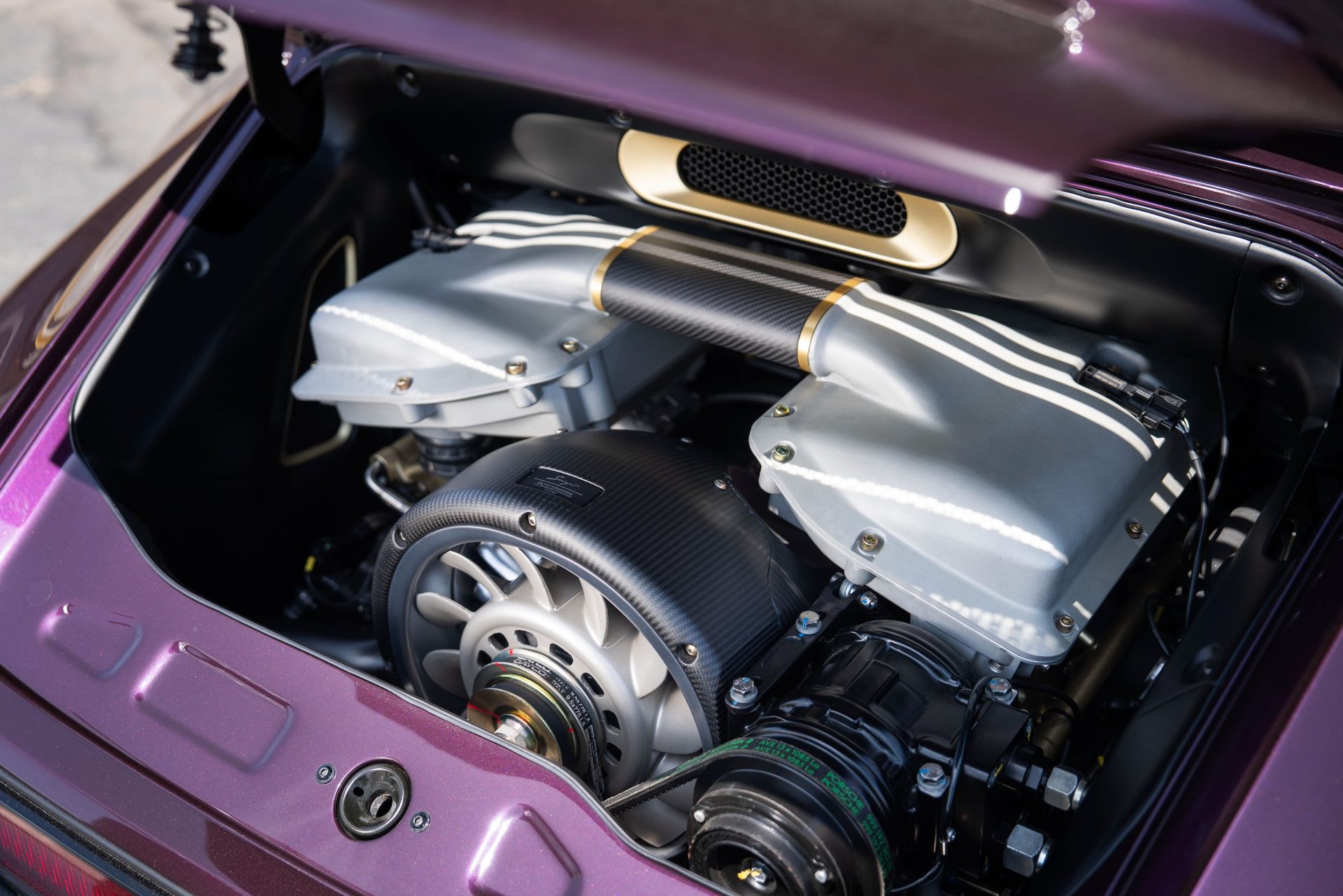
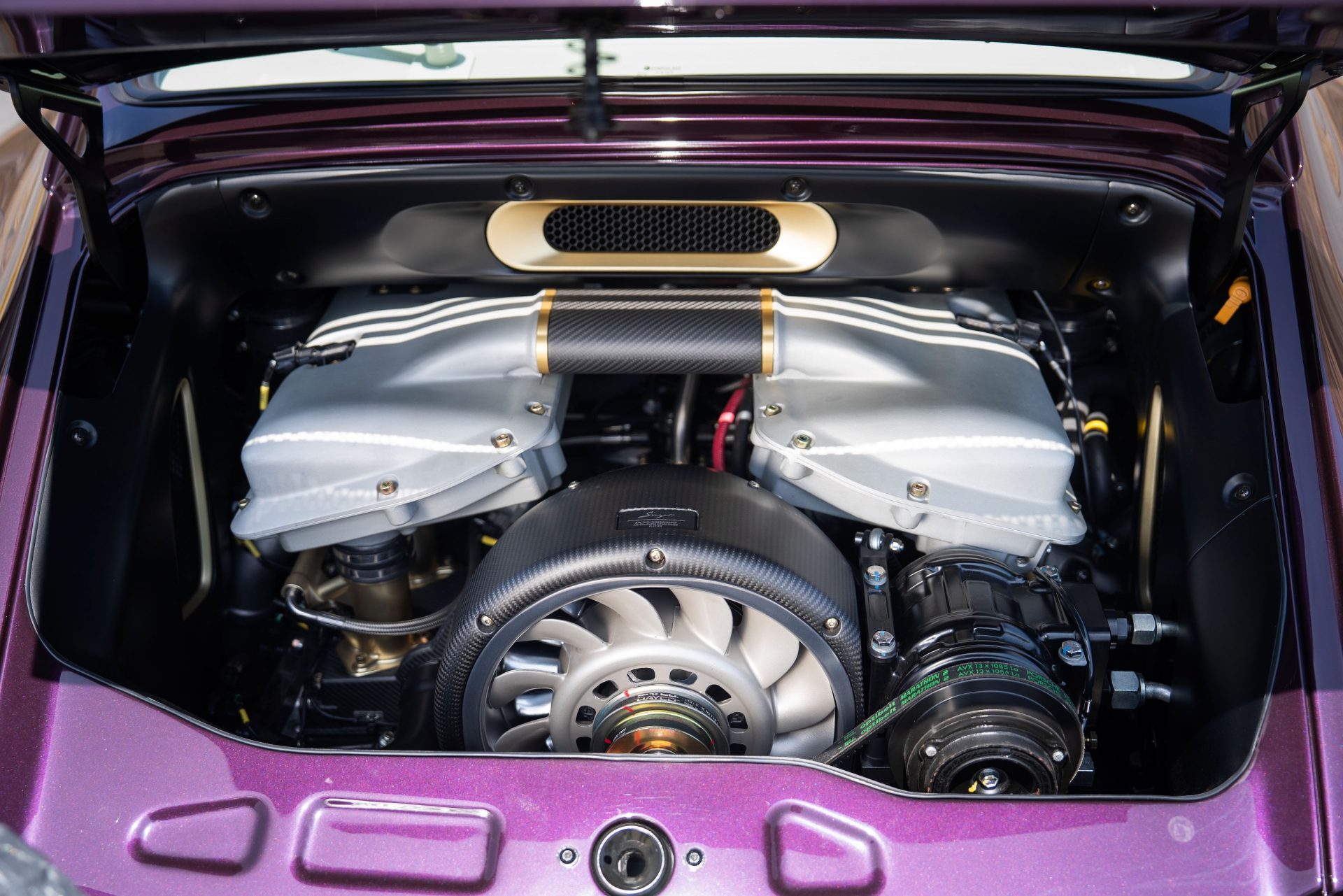
Auktion: RM Sotheby’s, Sealed Drop (Juli 2025), keine Preisangabe, mit diesen Informationen: «Recently completed by Singer, this Turbo Study—dubbed ‘The East Hampton Commission’ by the consignor who commissioned the car—is a truly stunning example of one of Singer’s most anticipated creations. Having been driven just under 500 miles from new, the car presents in exceptional condition throughout, ready to be enjoyed by its fortunate new custodian. In the case of The East Hampton Commission, it boasts the classic Turbo body shape with a whale tail spoiler and sunroof. The car is fitted with steel Brembo brakes, and the Fuchs-style wheels are wrapped in Michelin Pilot Sport 4S tires. Mechanically, the engine produces 500 brake horsepower and the car is fitted with adjustable suspension, nose lift, titanium muffler, and six-speed manual transmission. The East Hampton Commission’s color scheme is perfectly suited to the character of the Classic Turbo and is what makes the car come alive. The paintwork is a paint-to-sample color called Black Eye Darker and is protected by Singer-fitted paint protection film on the lower rocker panels and rear fender fins. Exterior accents and mirror arms are finished in satin carbon as to not detract from the paintwork, alongside all the brightwork finished in satin black. The brake calipers and the trademark center fuel filler cap are painted to match the bodywork. Finally, the car is outfitted with a heated rear windscreen and standard equipment titanium muffler, the Singer rear decklid script is forged in solid brass, and the bumperettes were deleted. Open the door and one is met by a sumptuous Bone (light beige) leather interior. Brightwork inside the car is satin bronze, alongside black wood décor trim and the floating gauges in rose gold. The headlining is trimmed in perforated ivory Alcantara alongside carpentry in ivory velour to match. Outfitted with Singer’s premium audio system, the interior also boasts an inductive phone charger. Importantly, the car is accompanied by a Singer Flytrack Chronograph engraved with a matching serial number to the car, which will be included in the sale».
–
Chassis-Nummer: WP0ZZZ96ZNS400749 (1992)
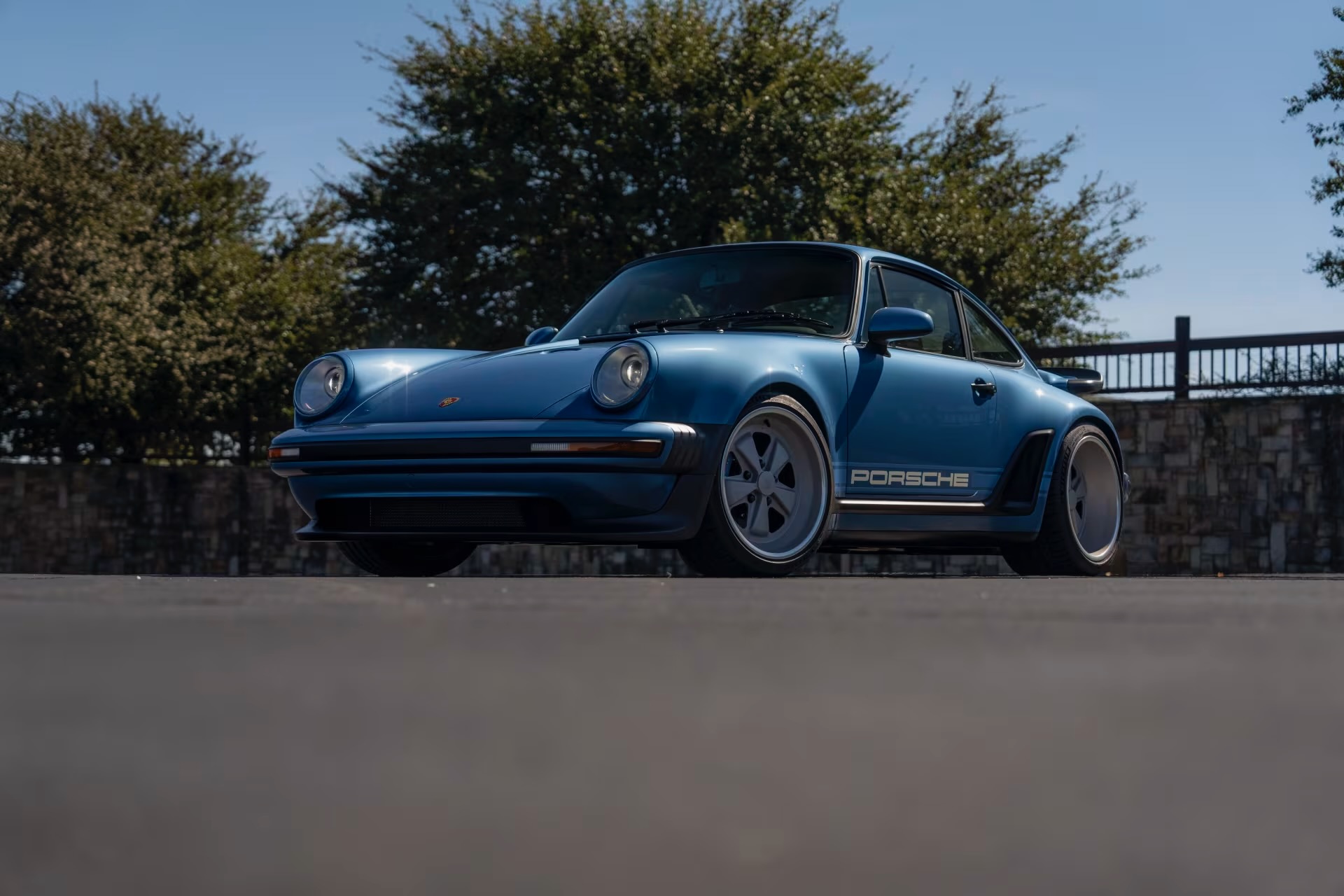
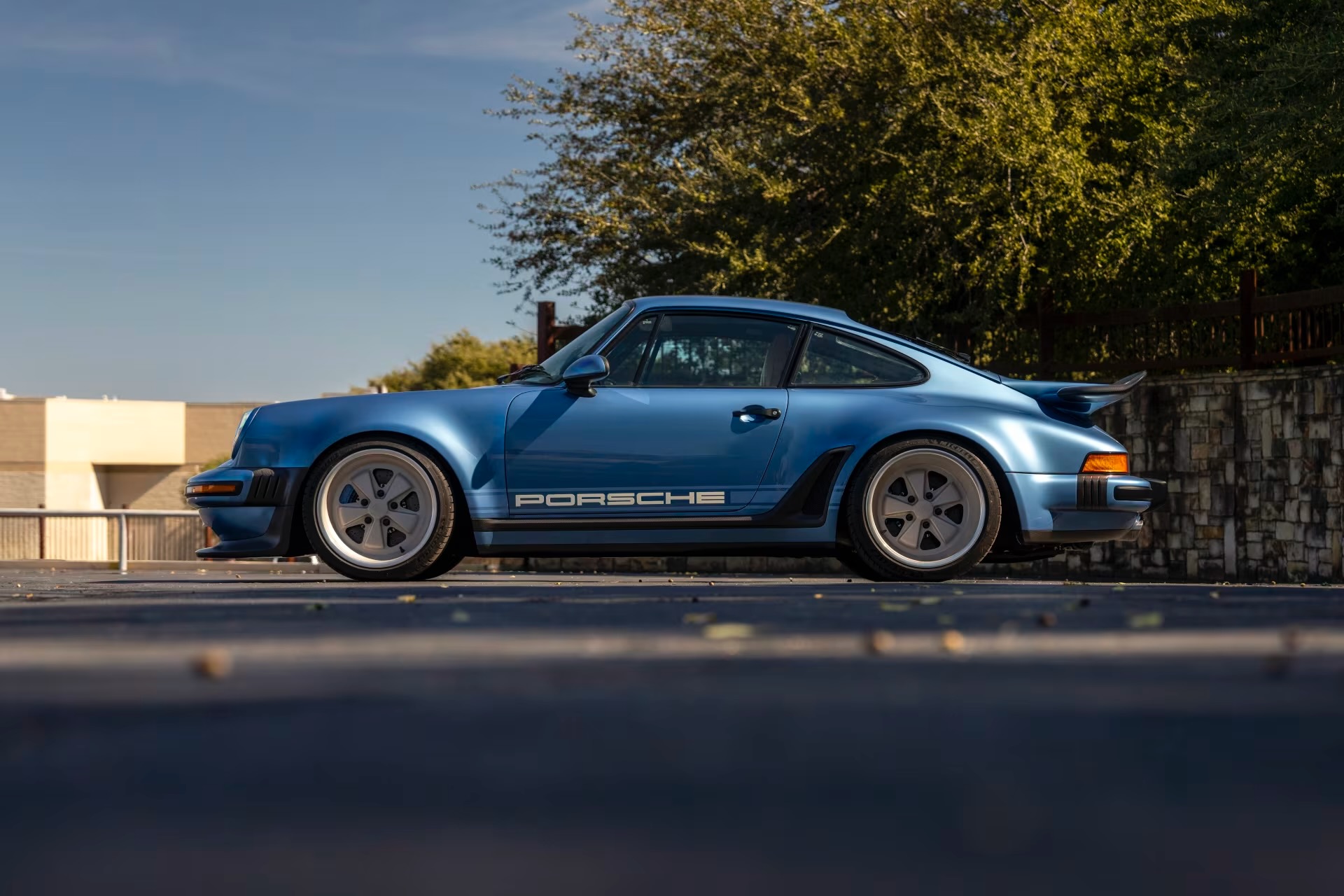
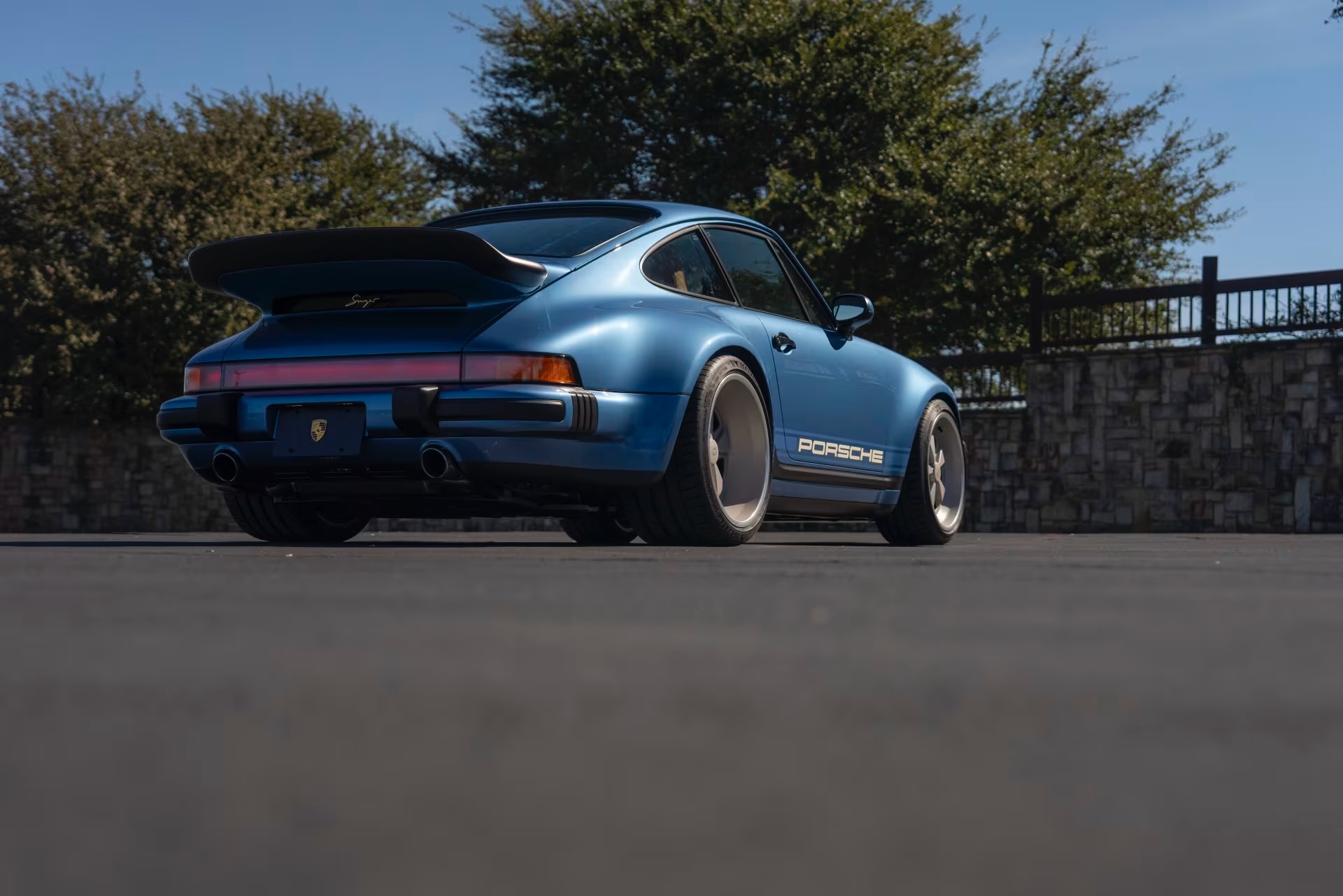
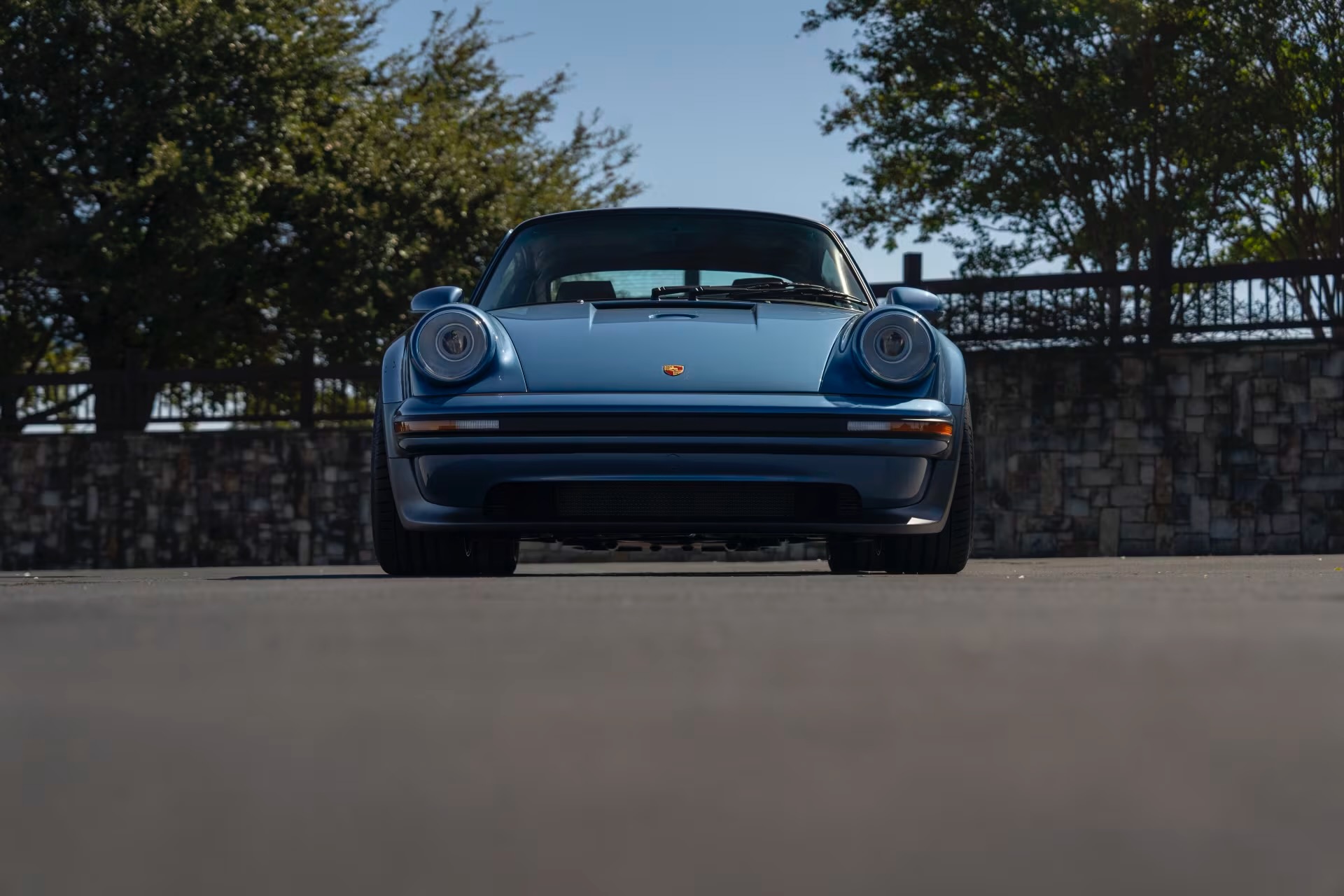
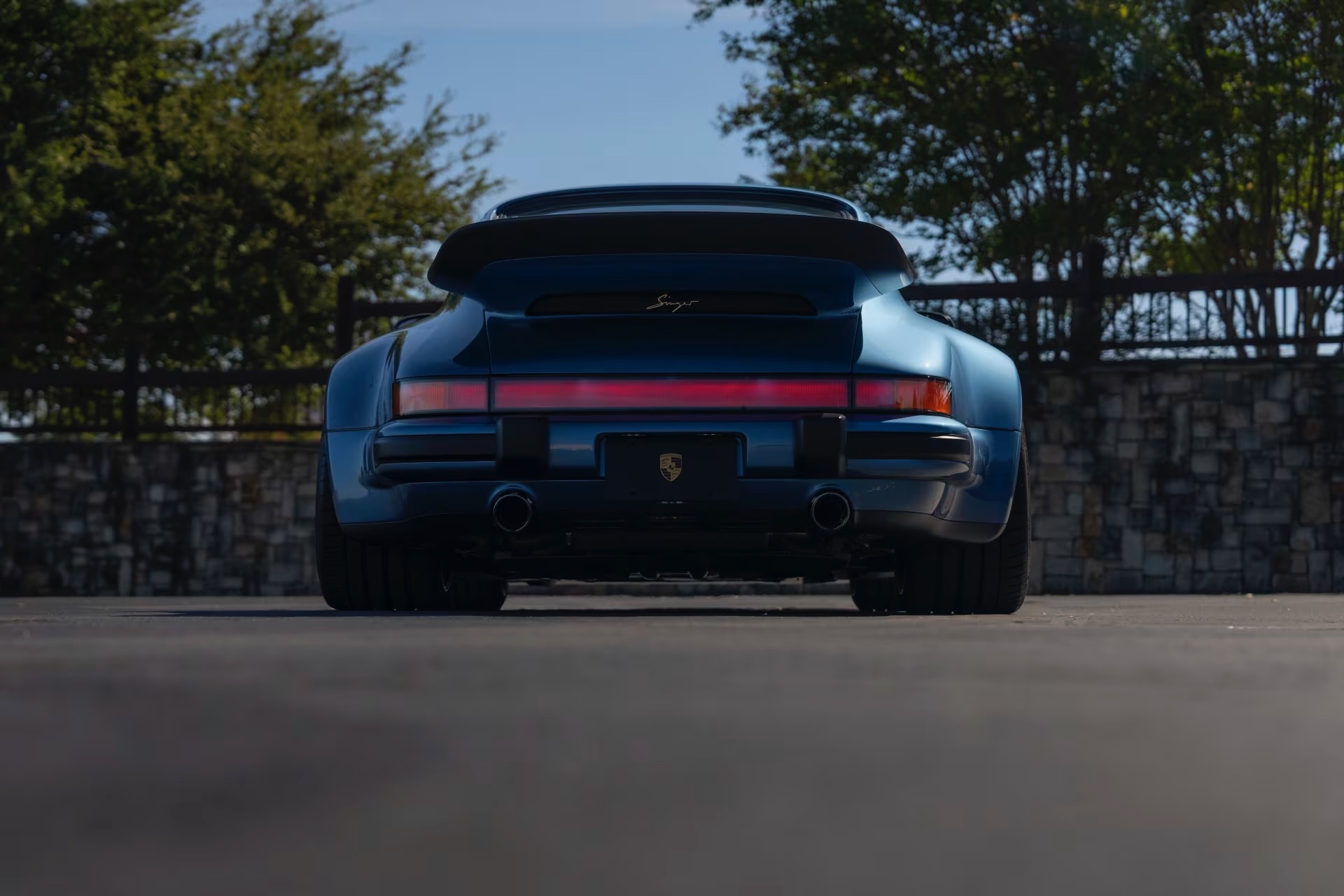
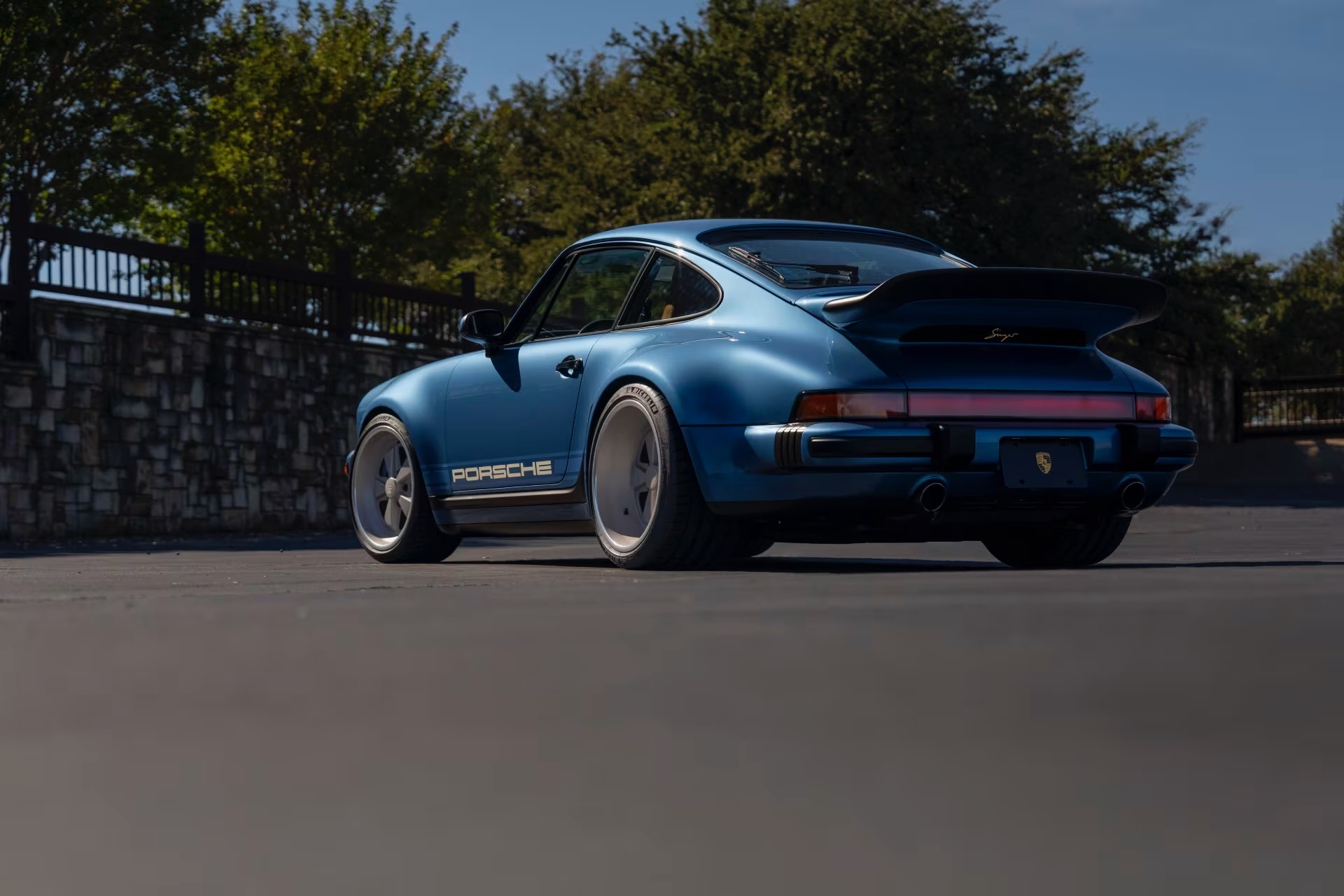
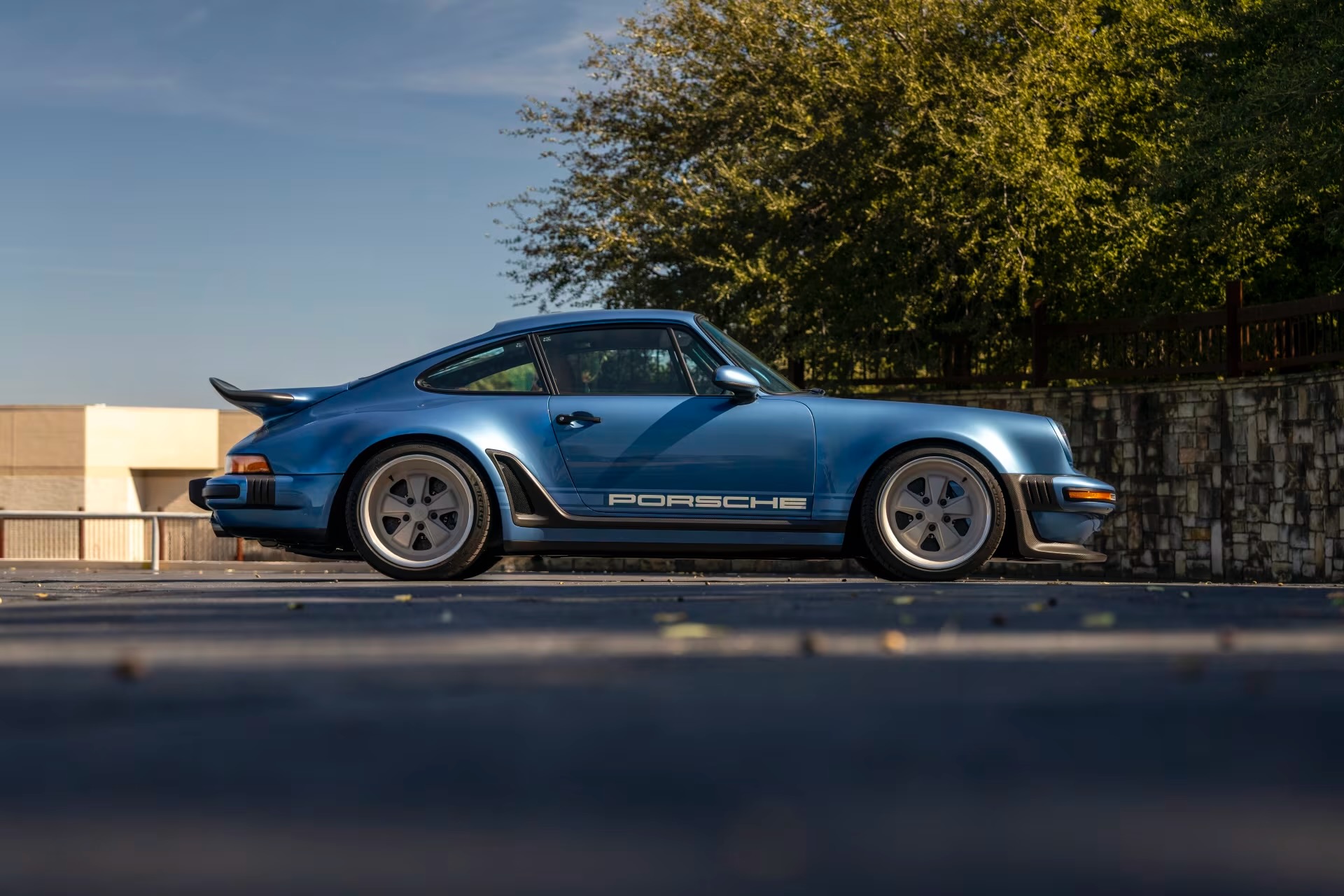
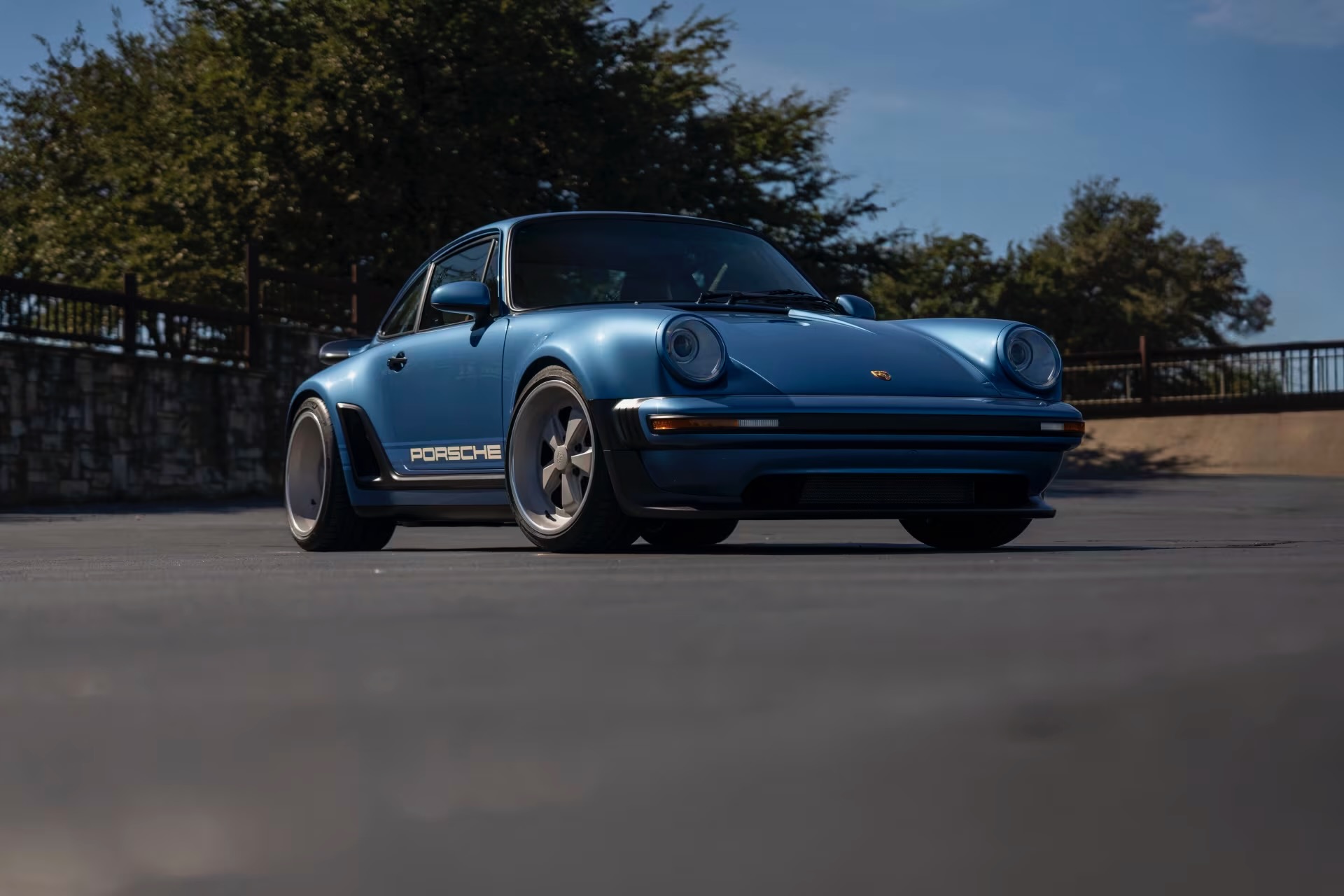
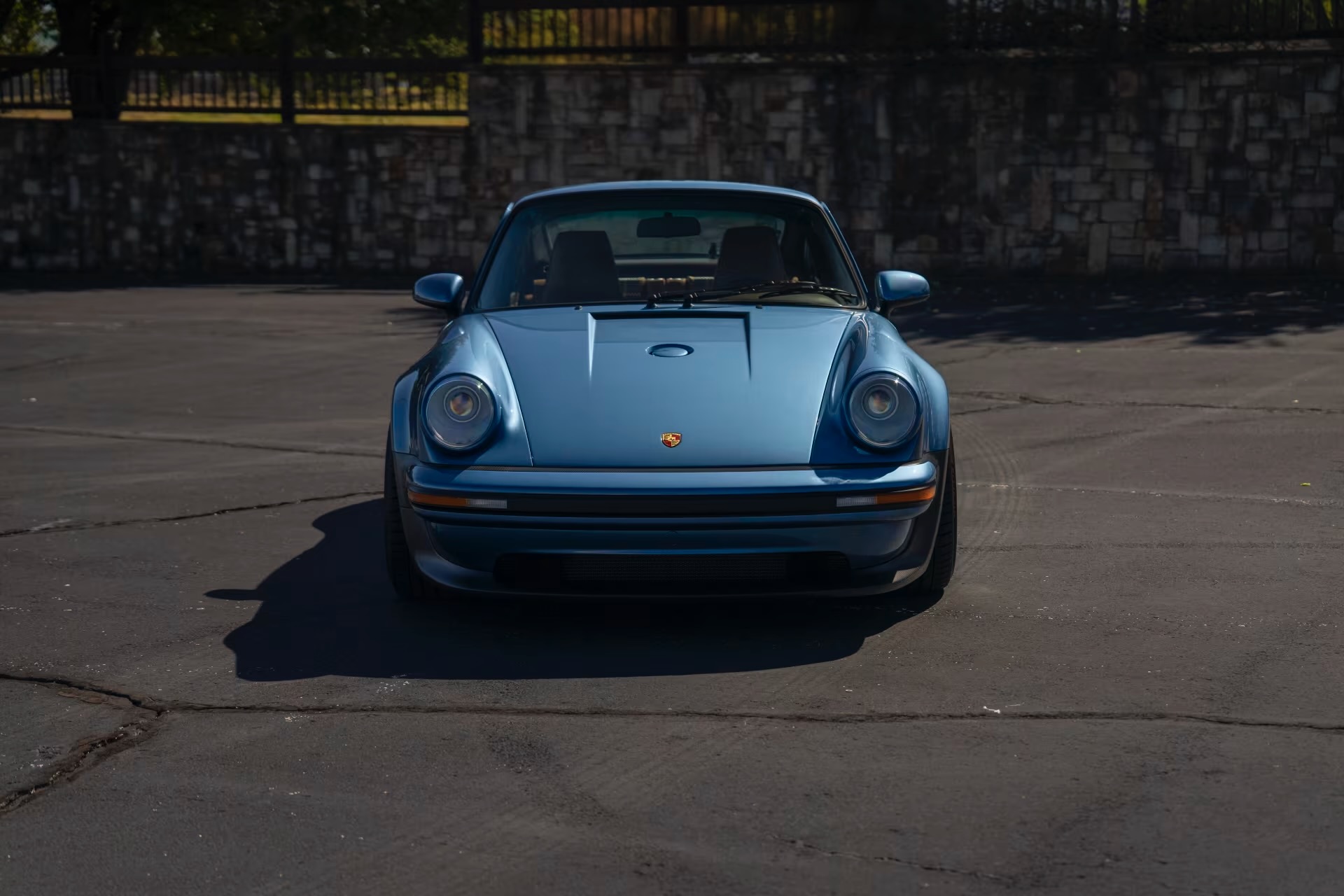
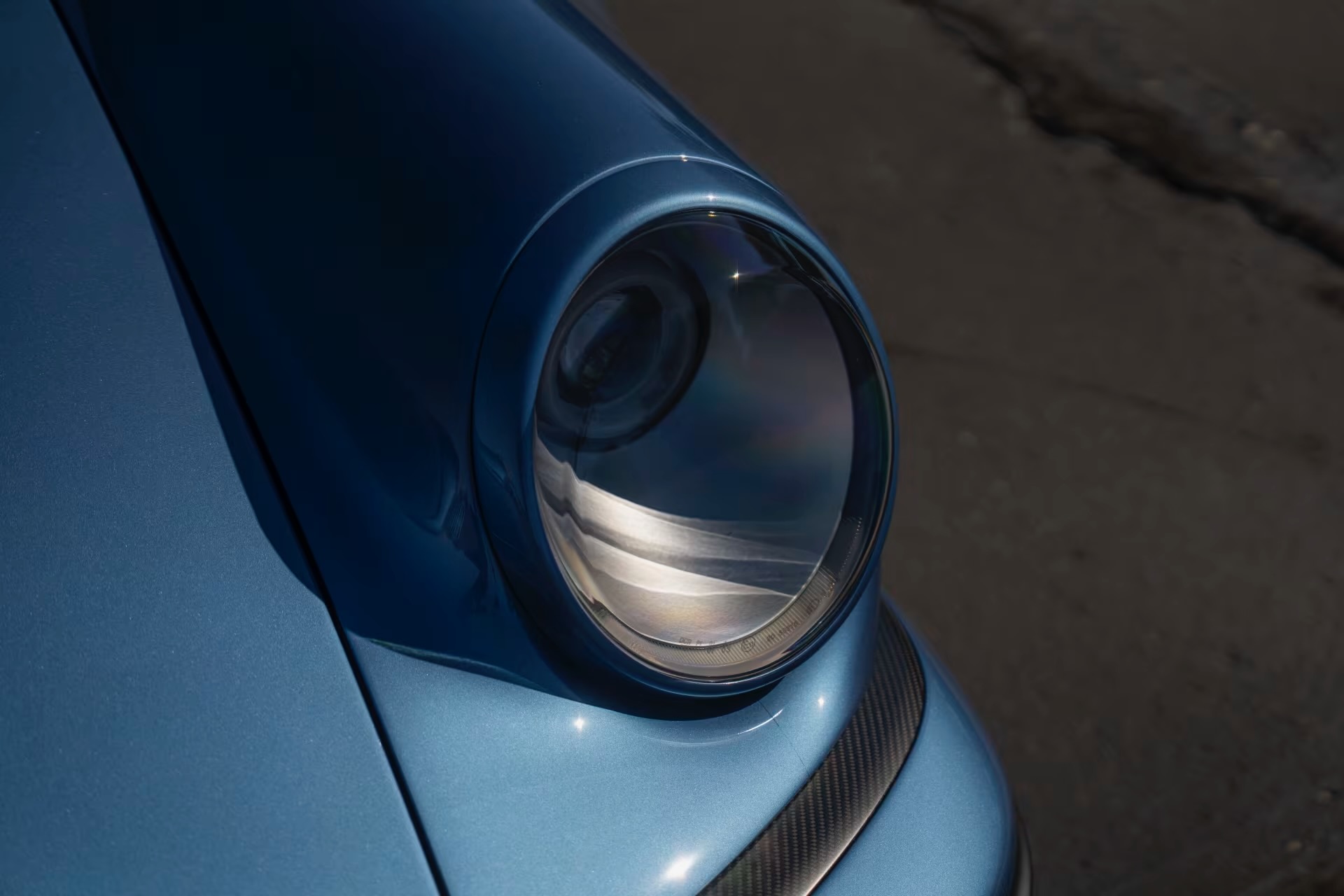
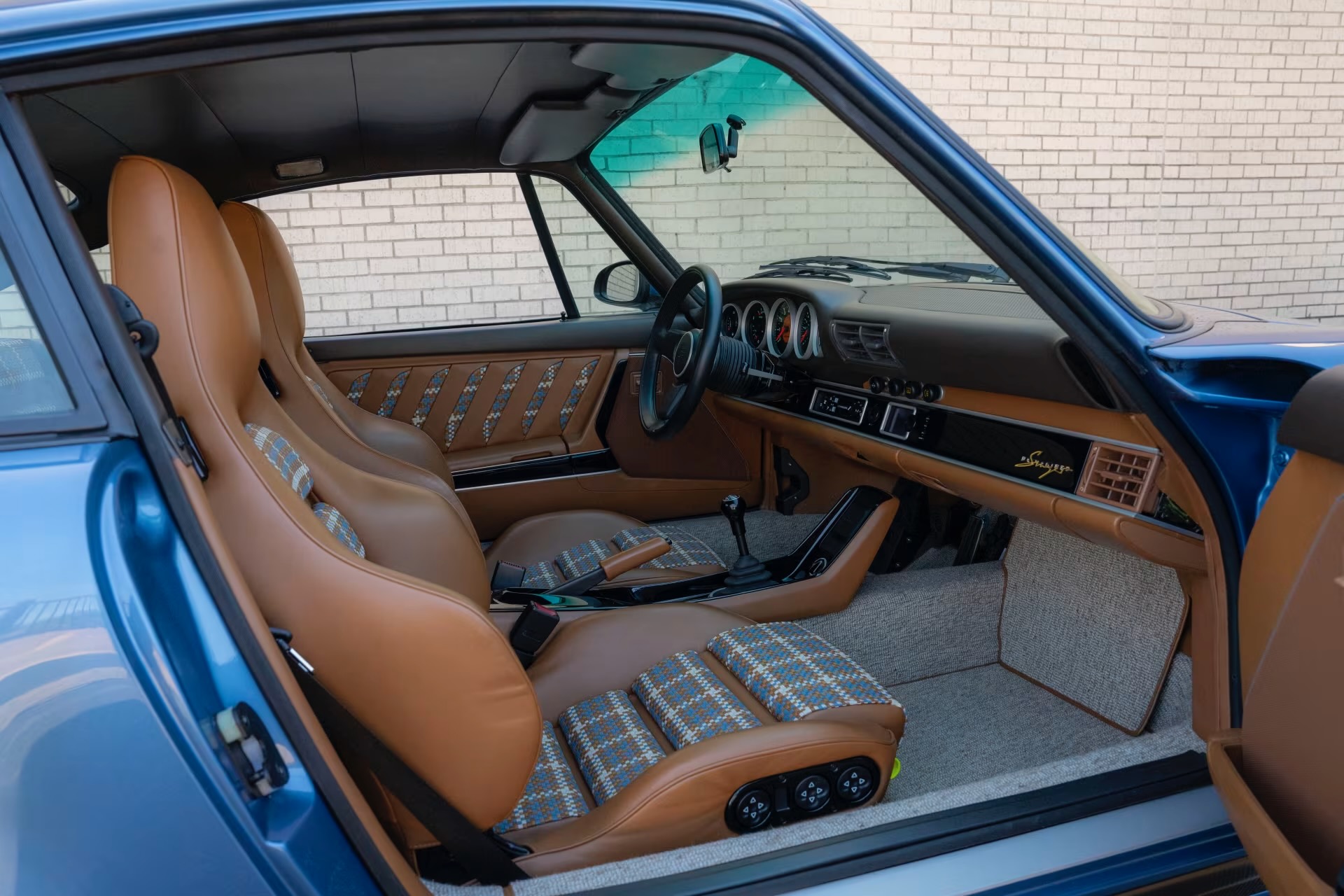
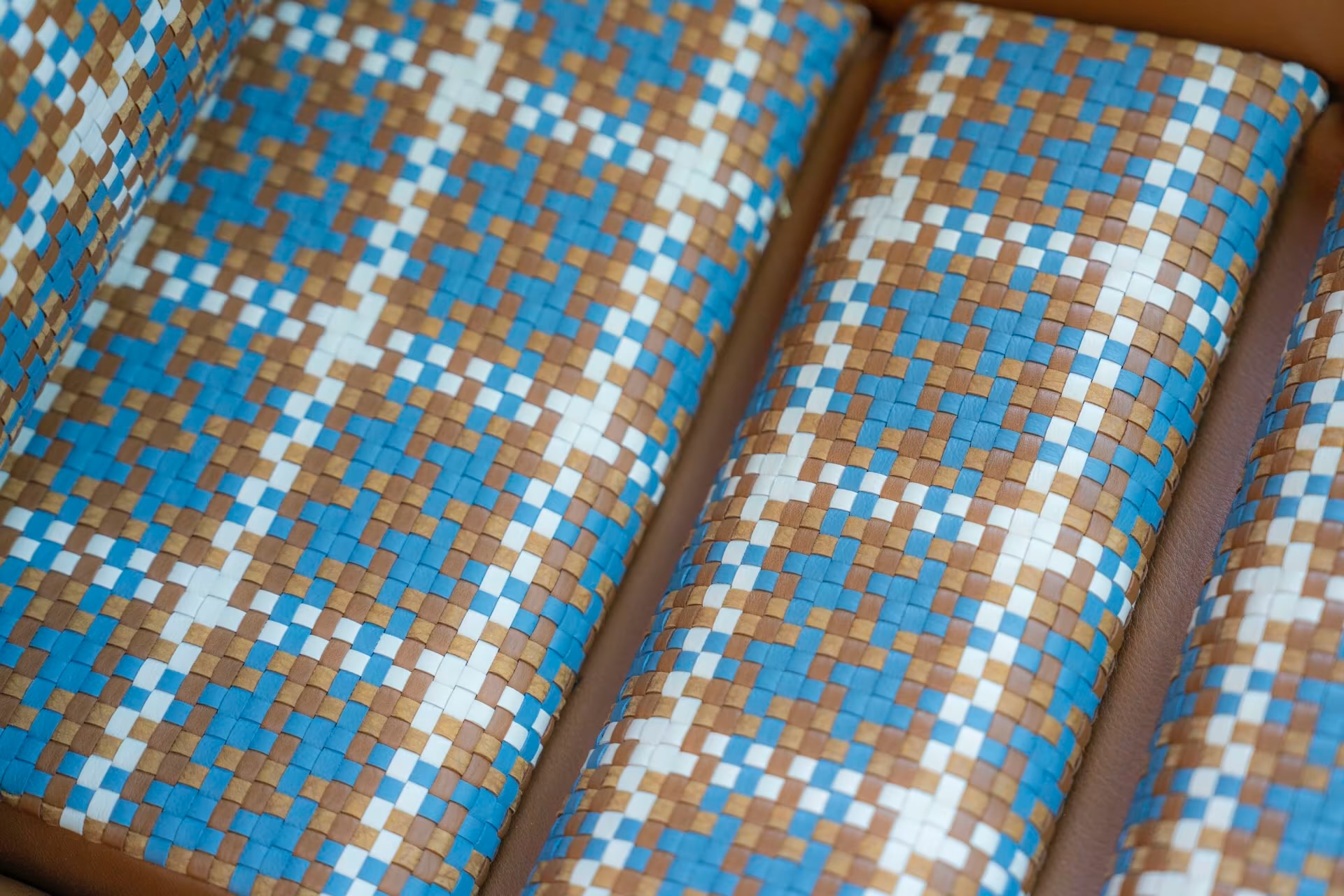
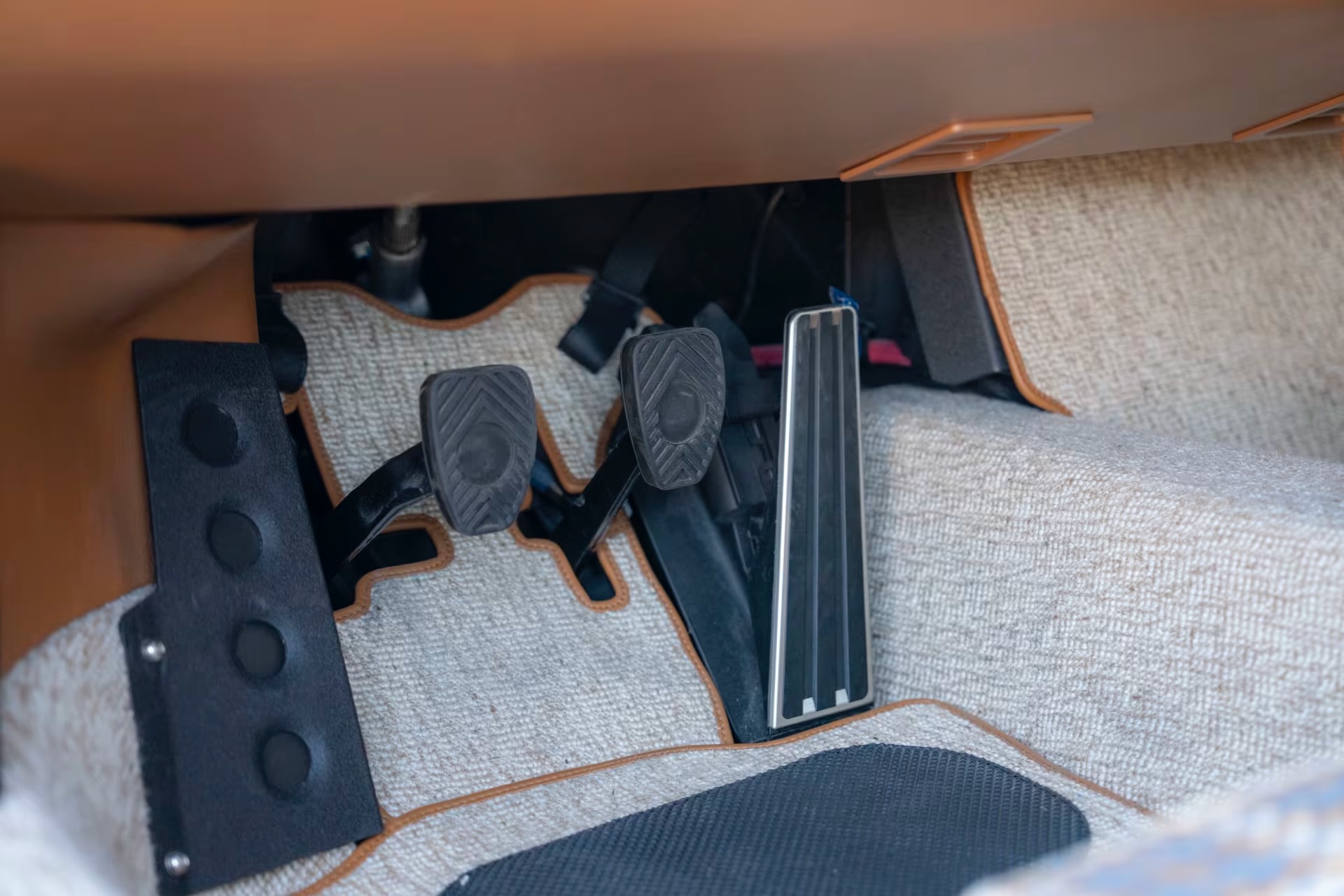
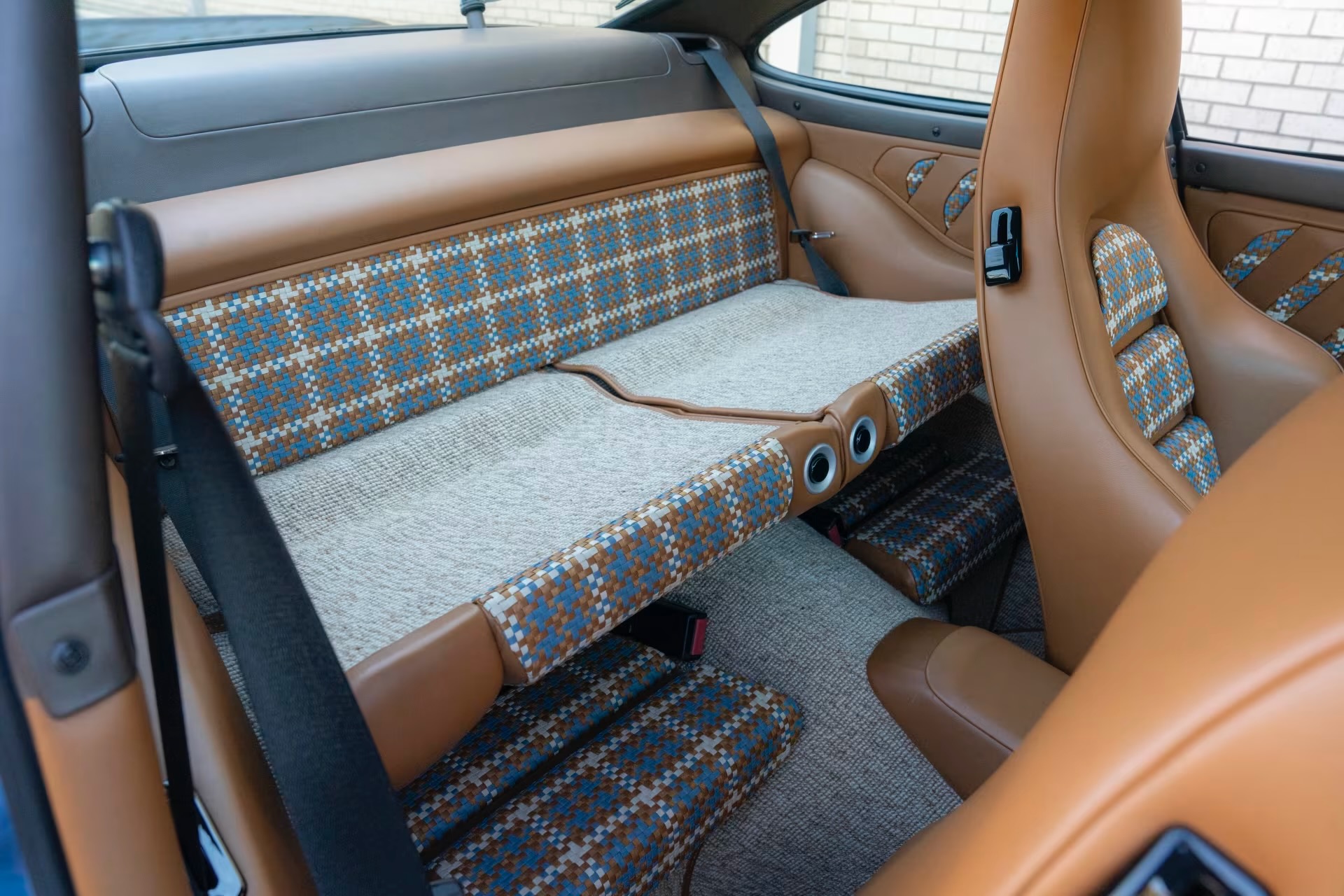
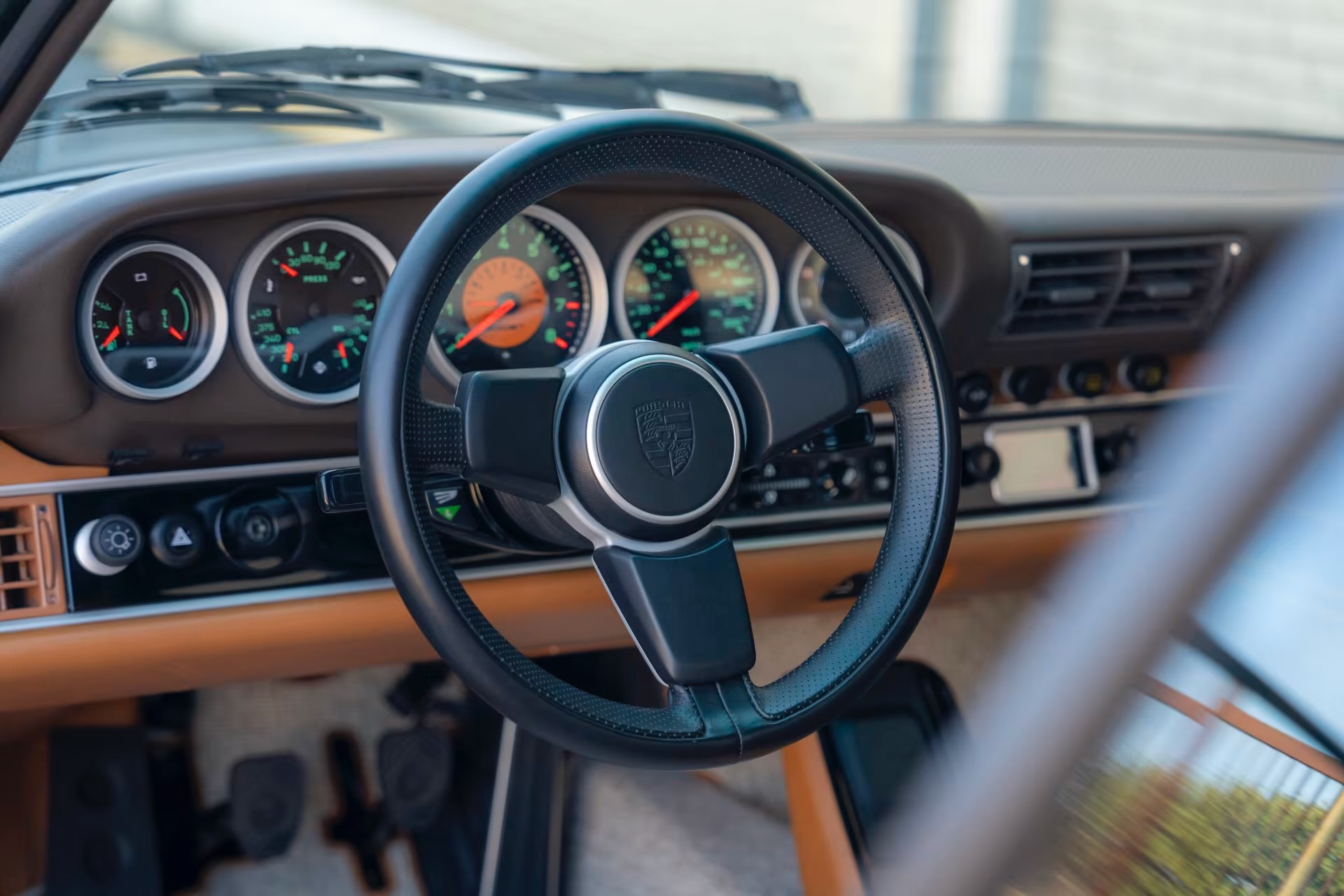
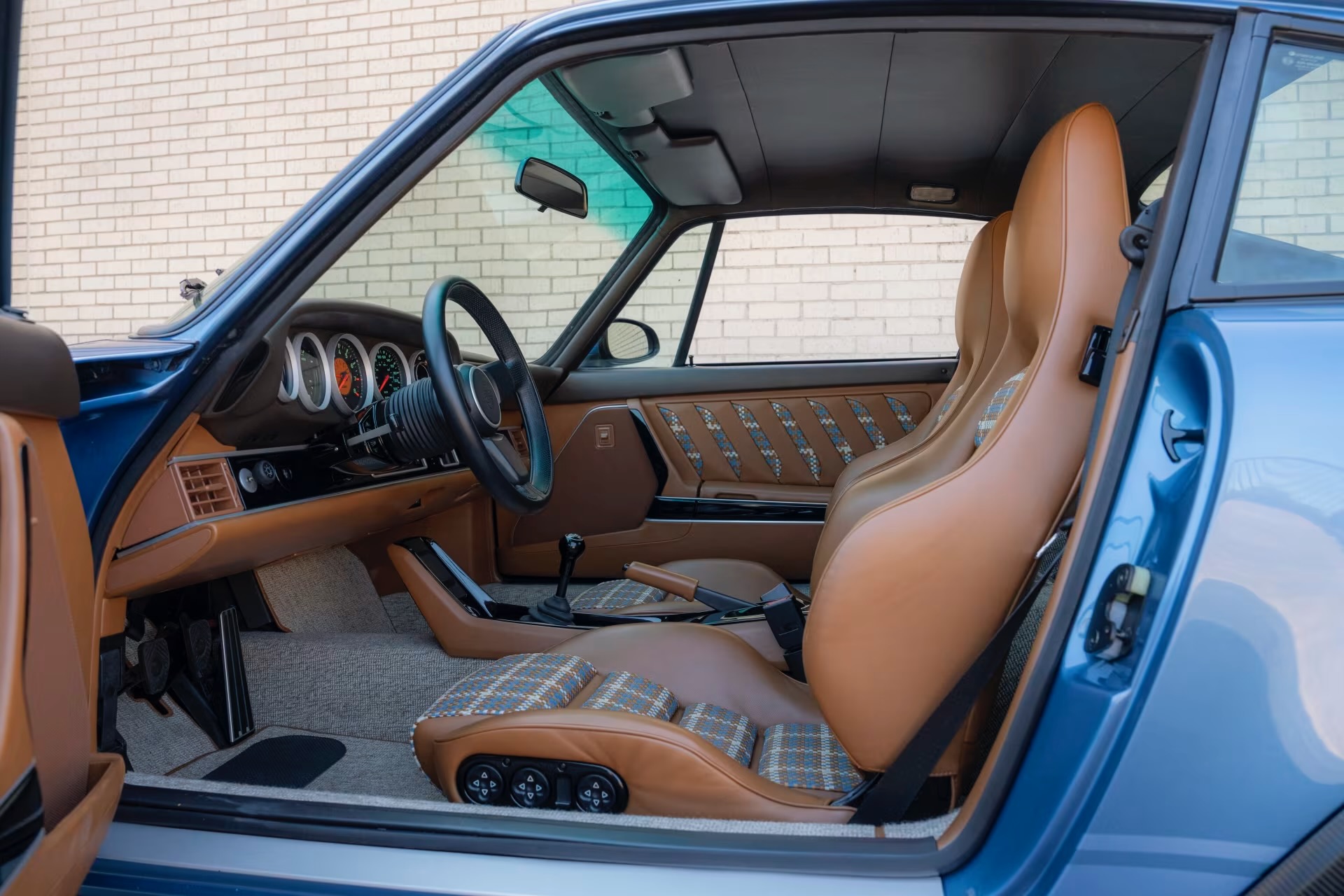
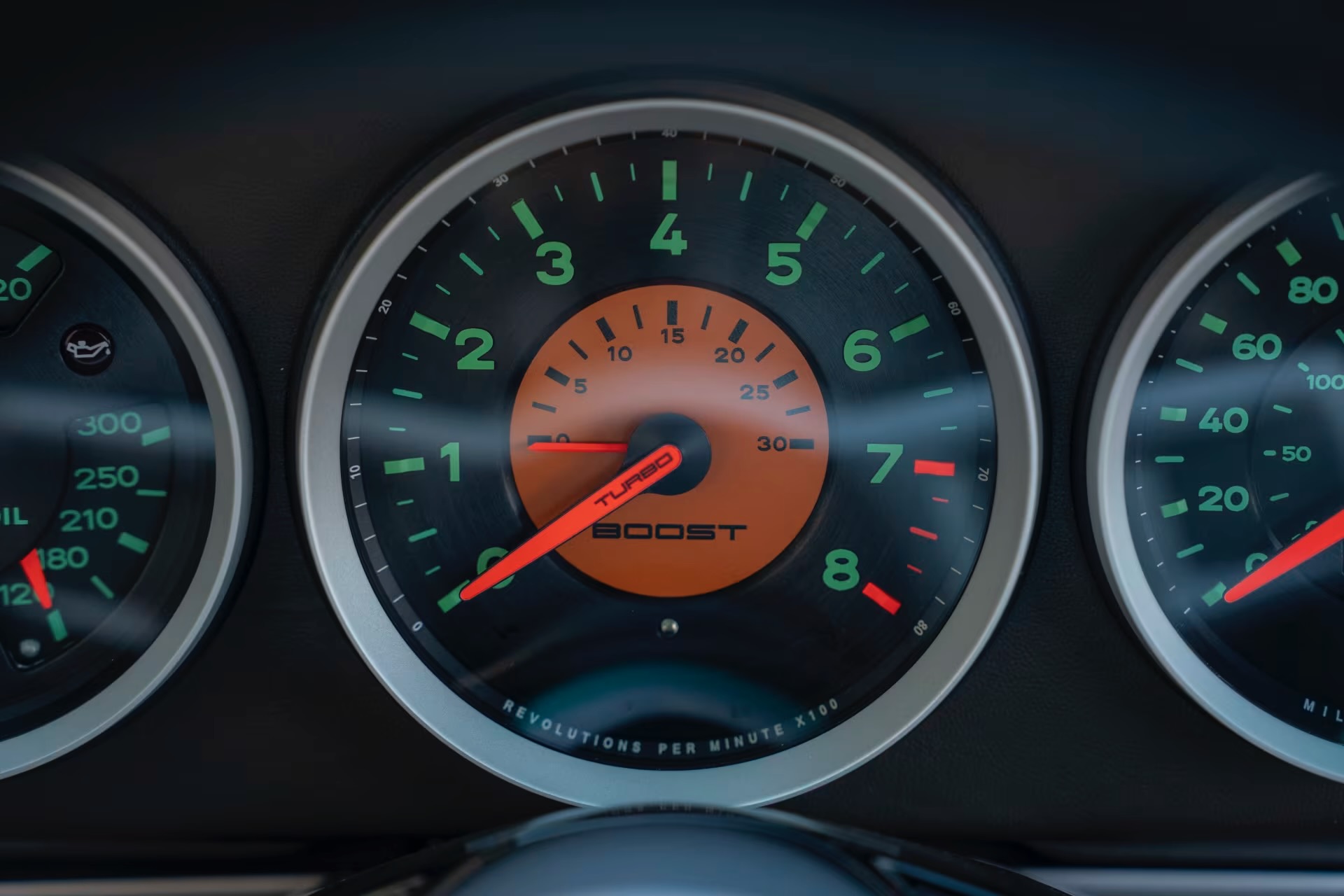
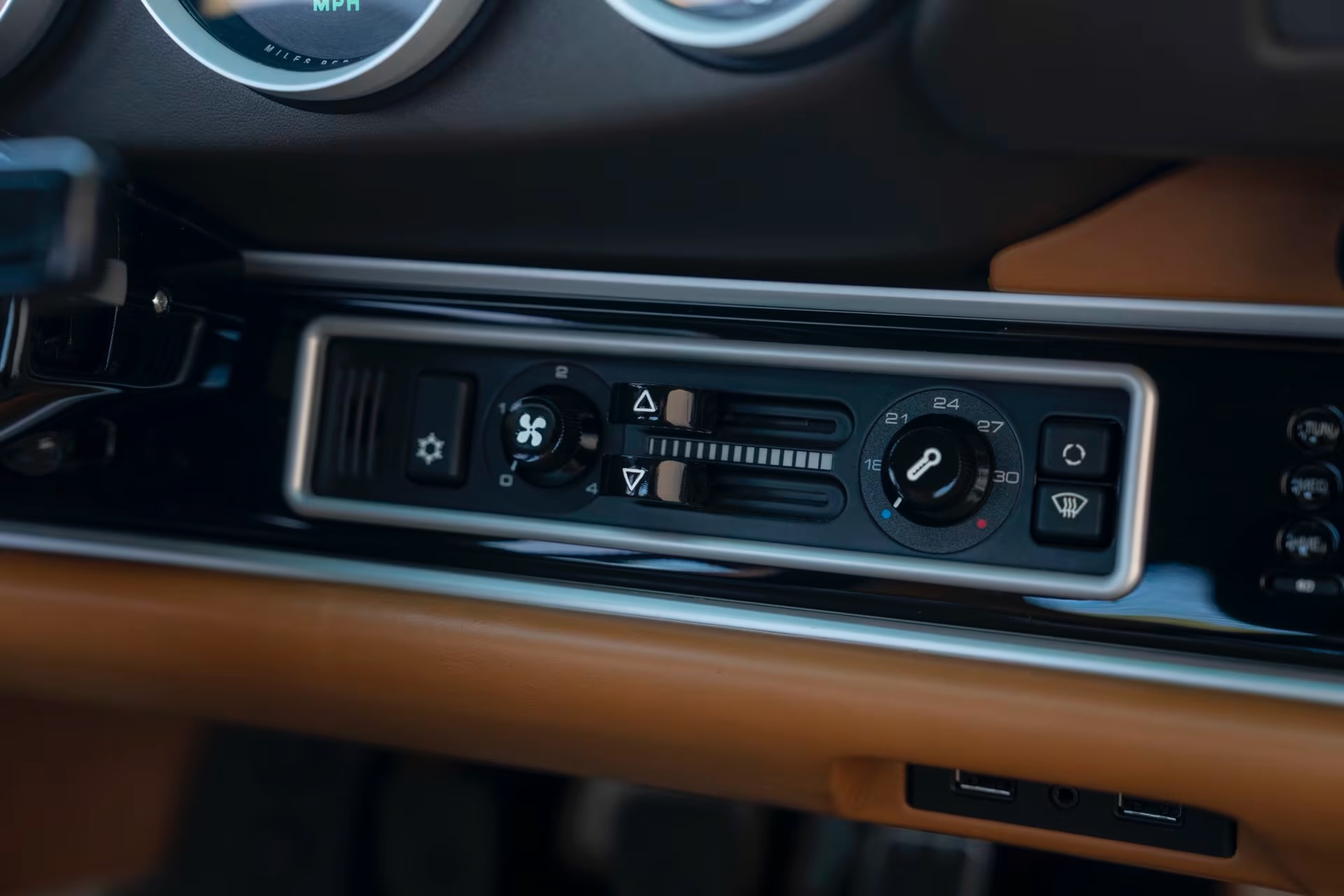
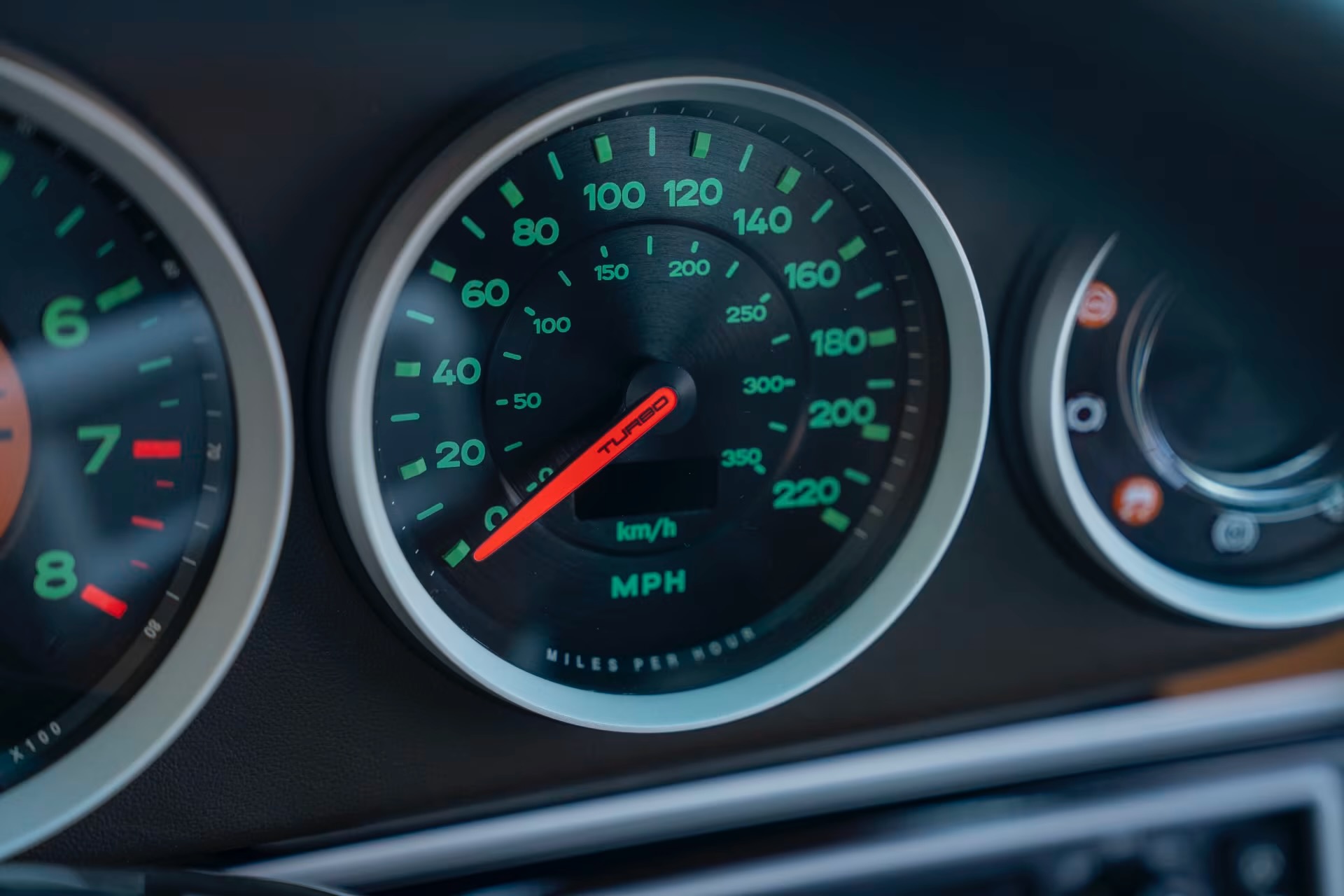
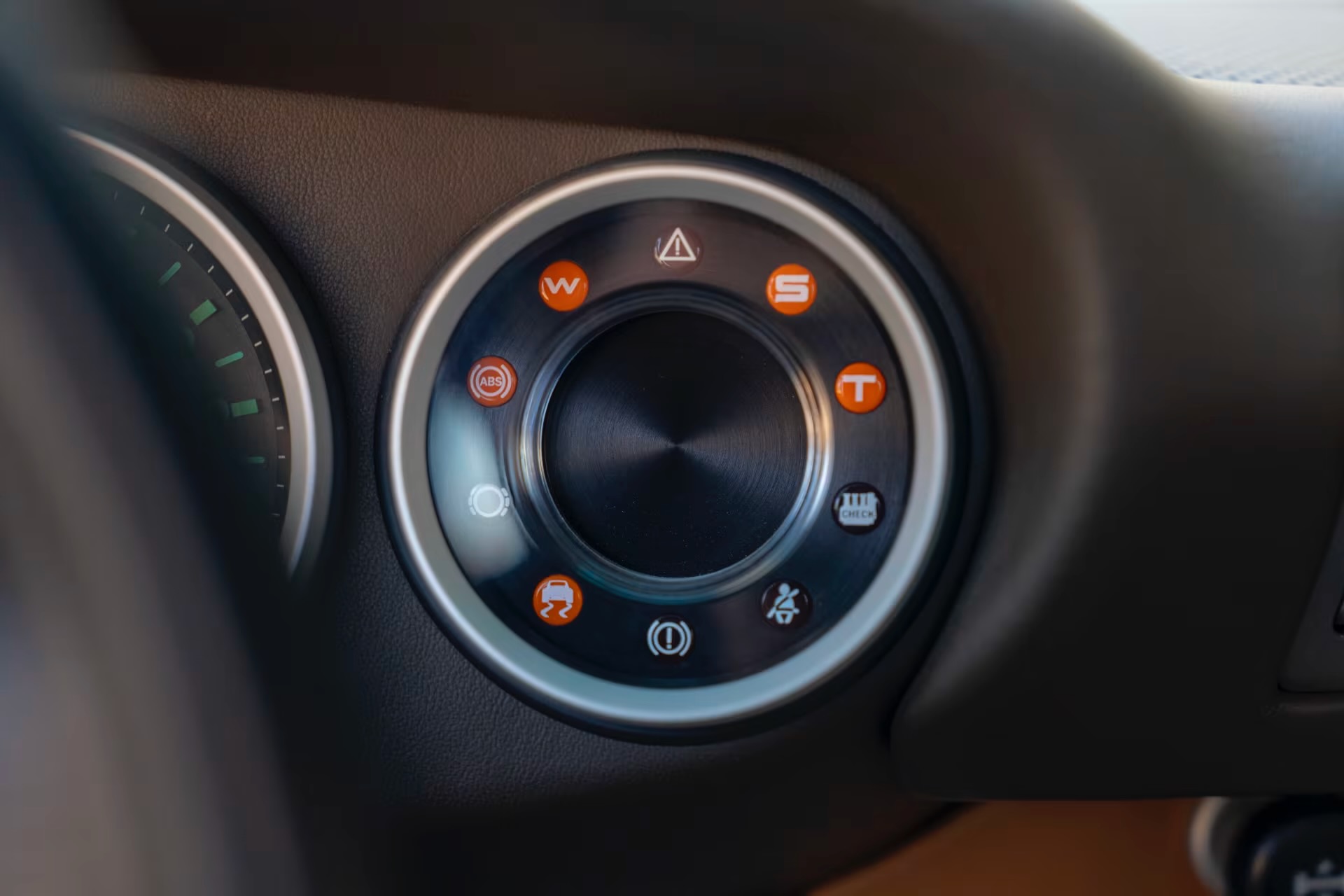
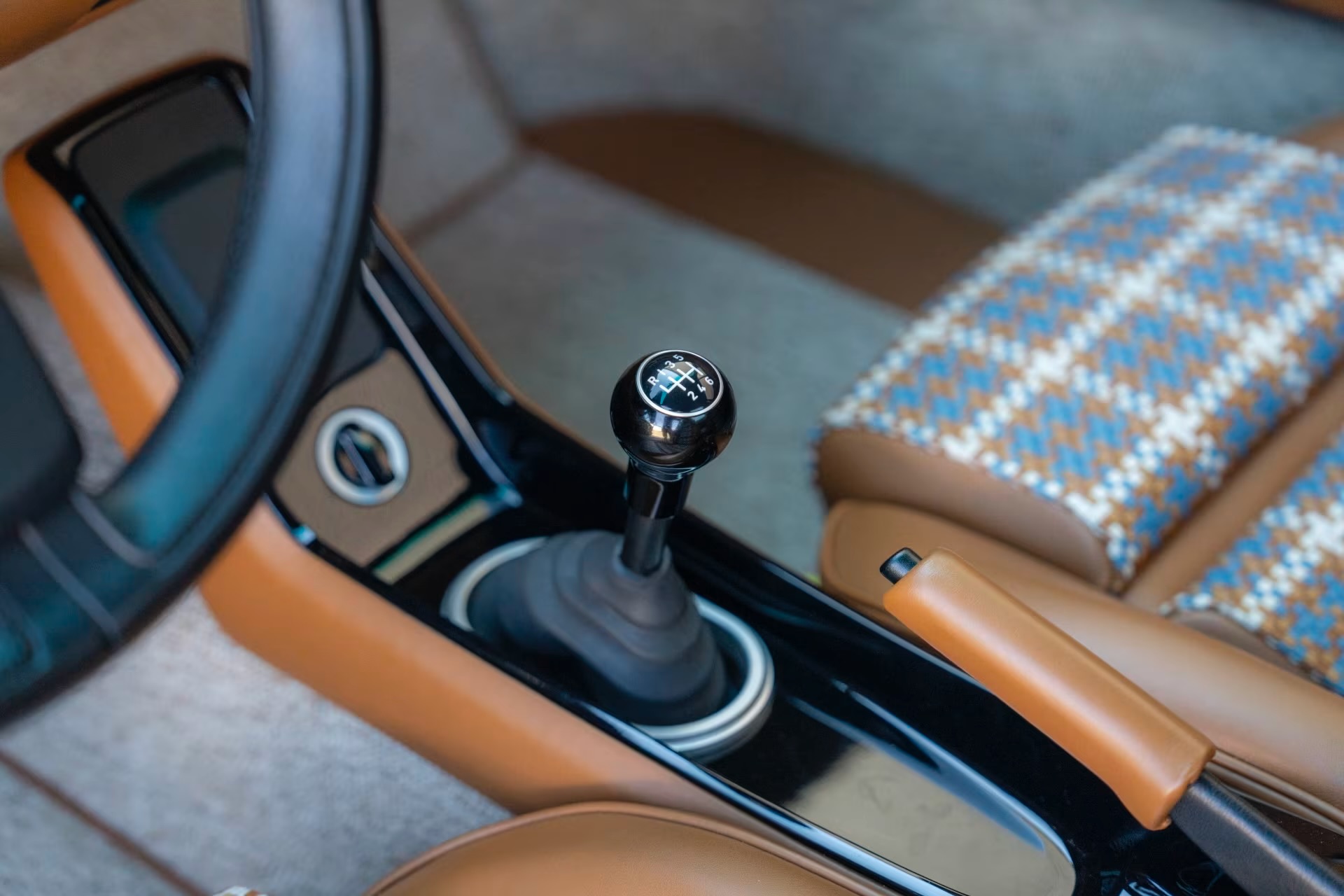
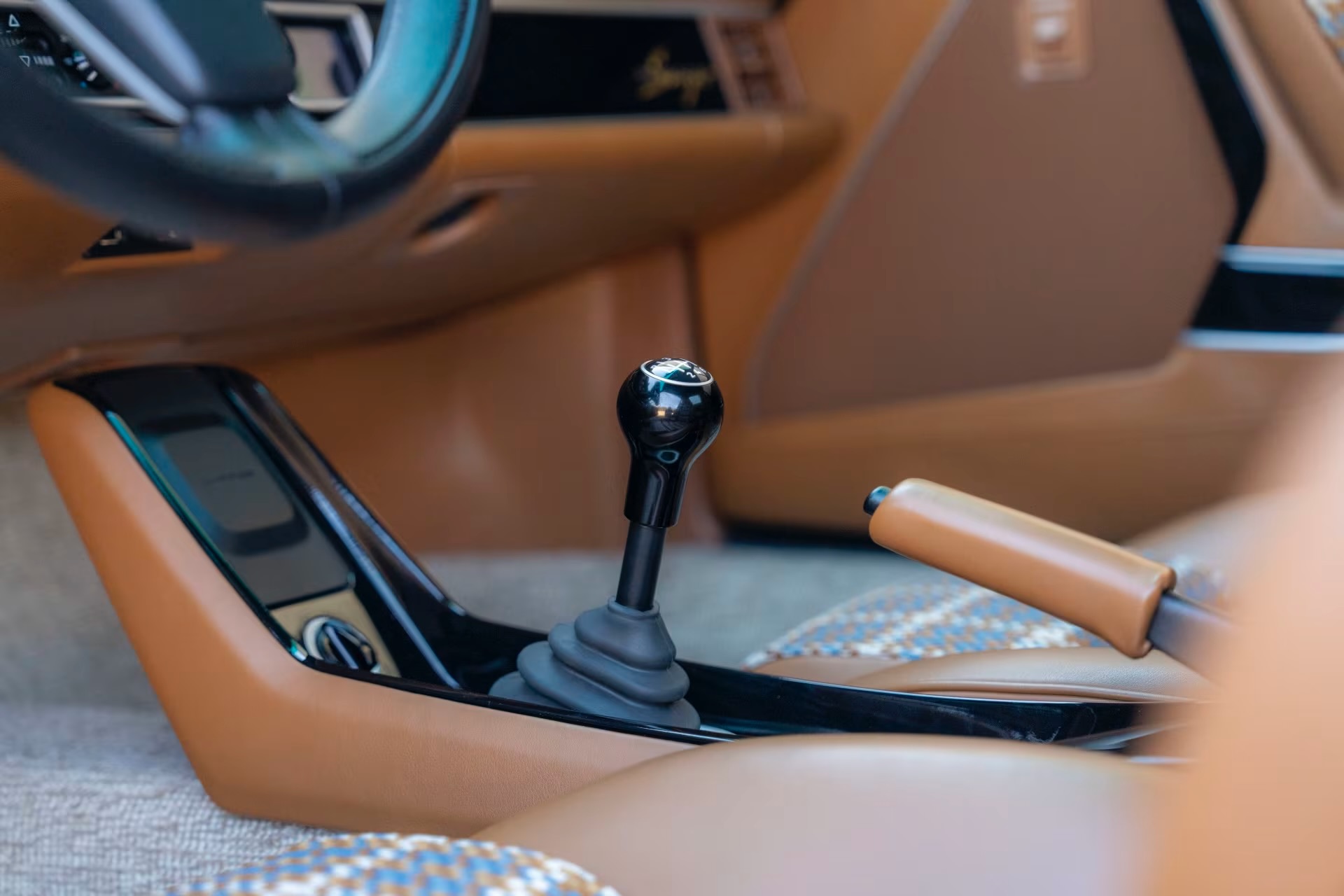
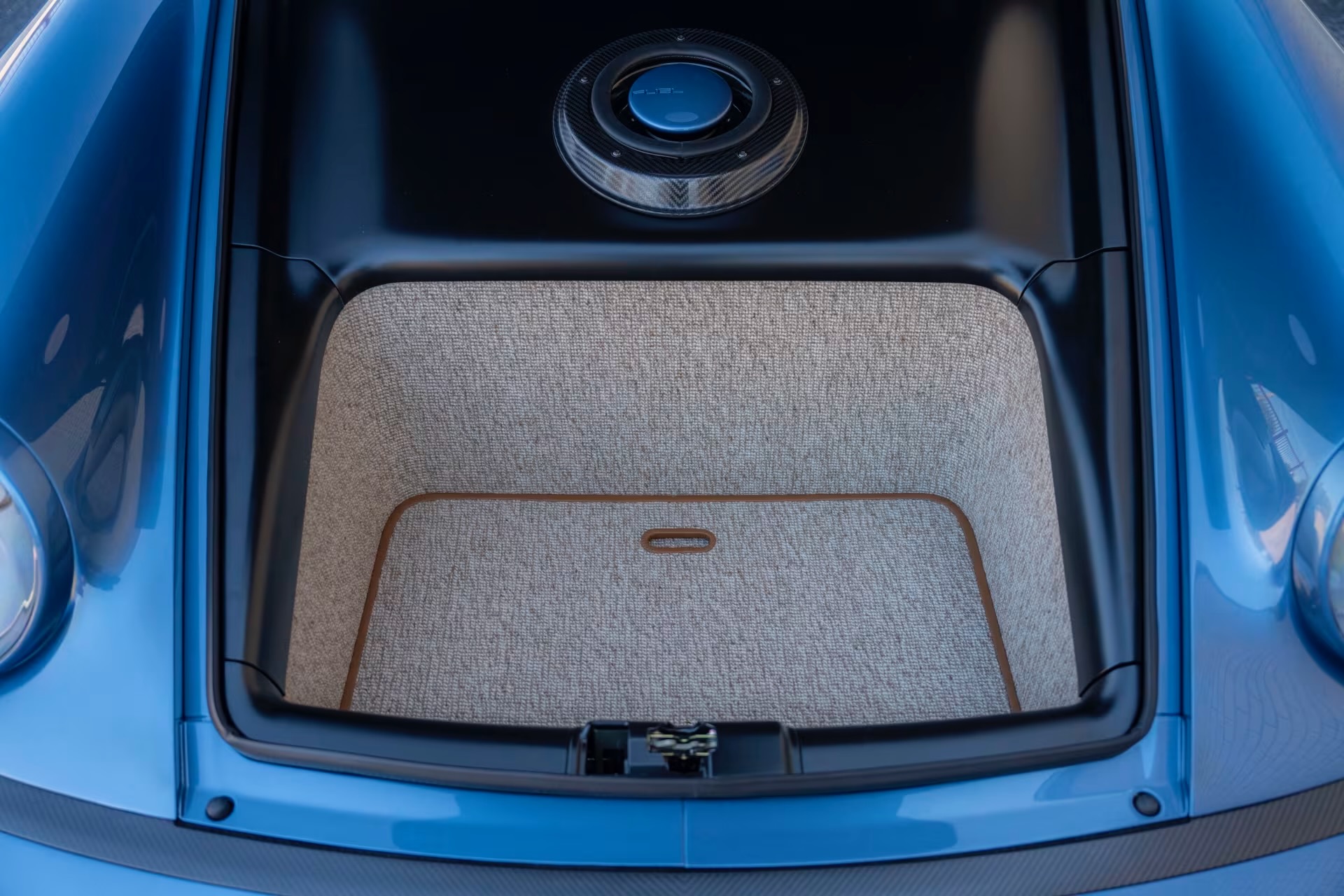
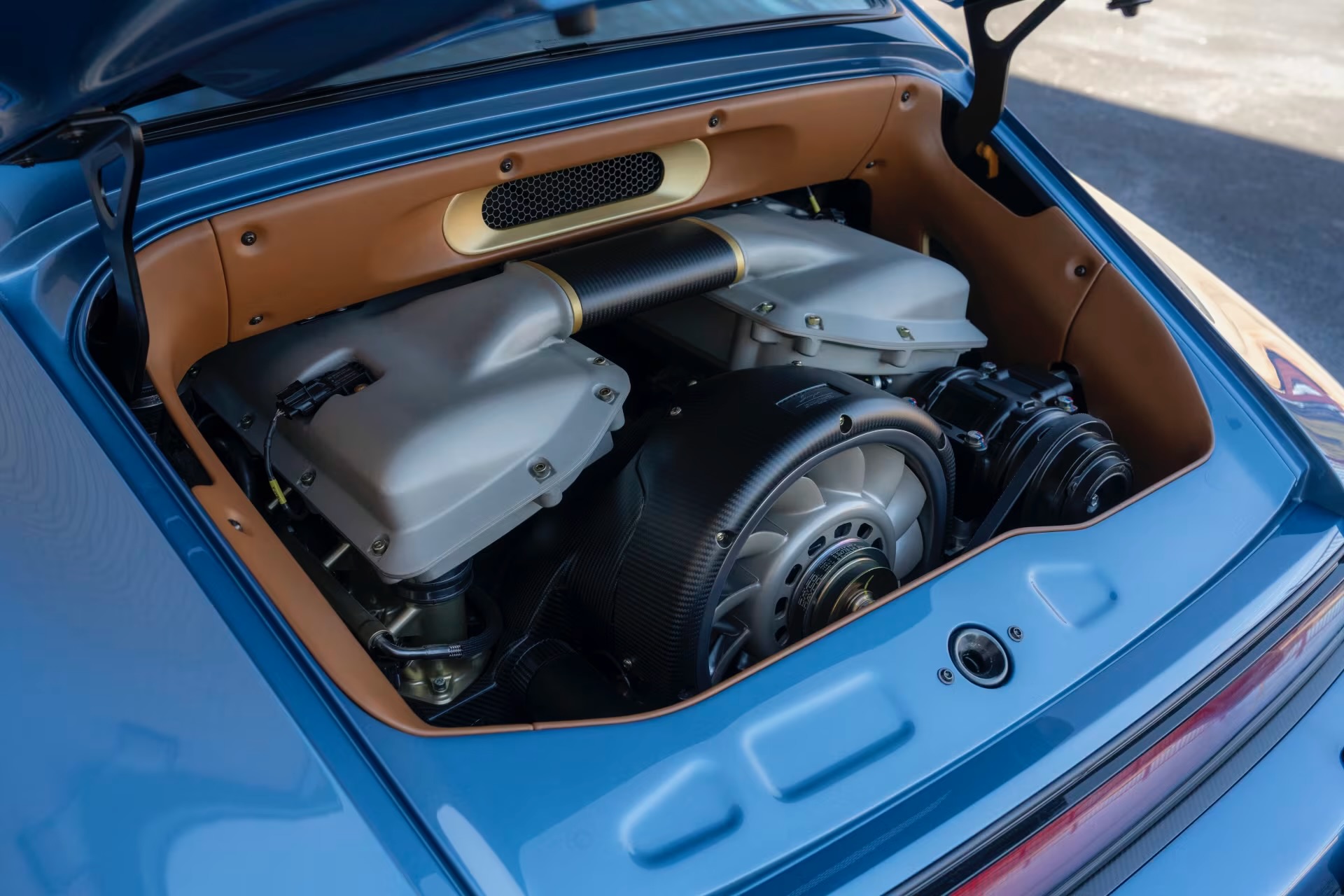
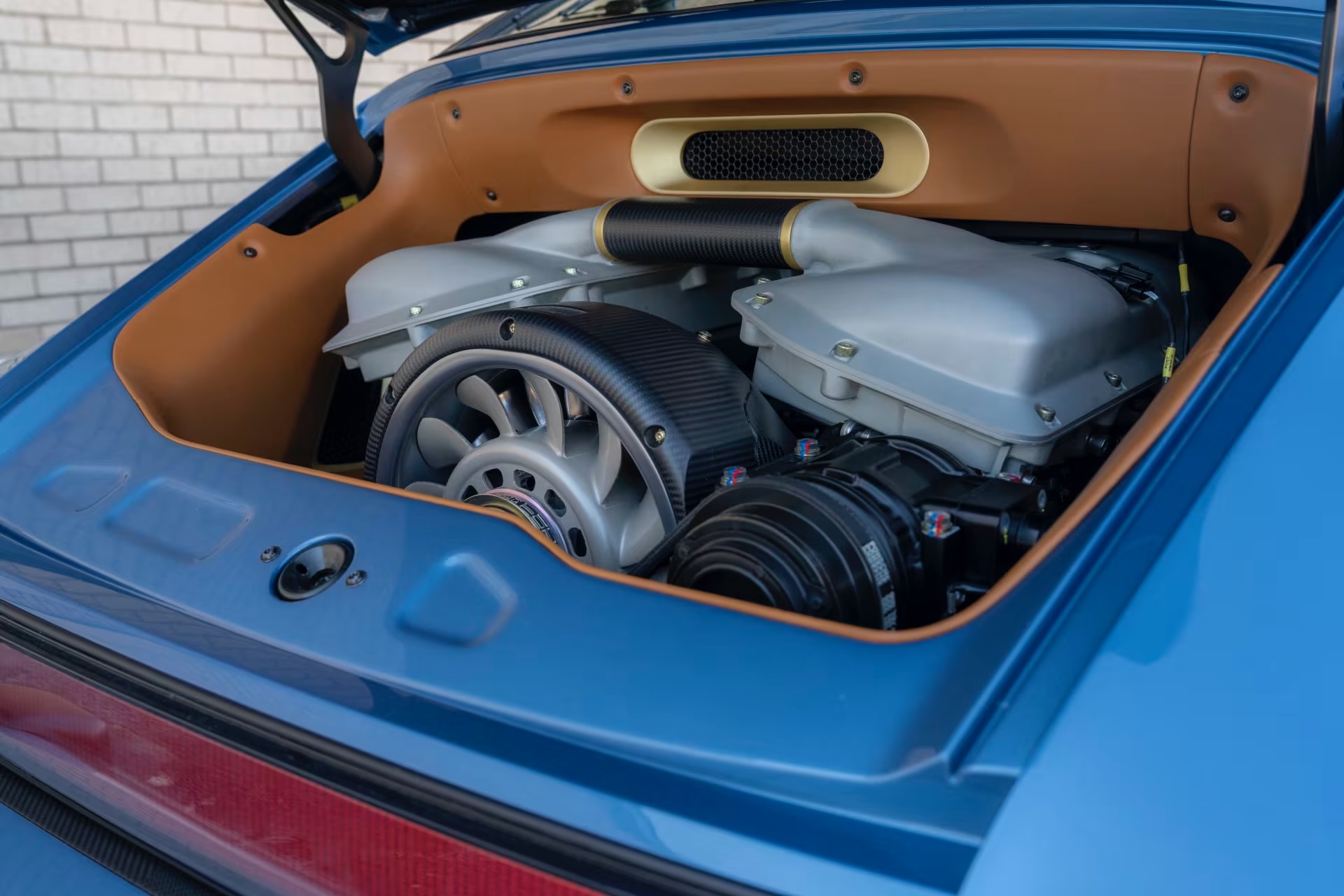
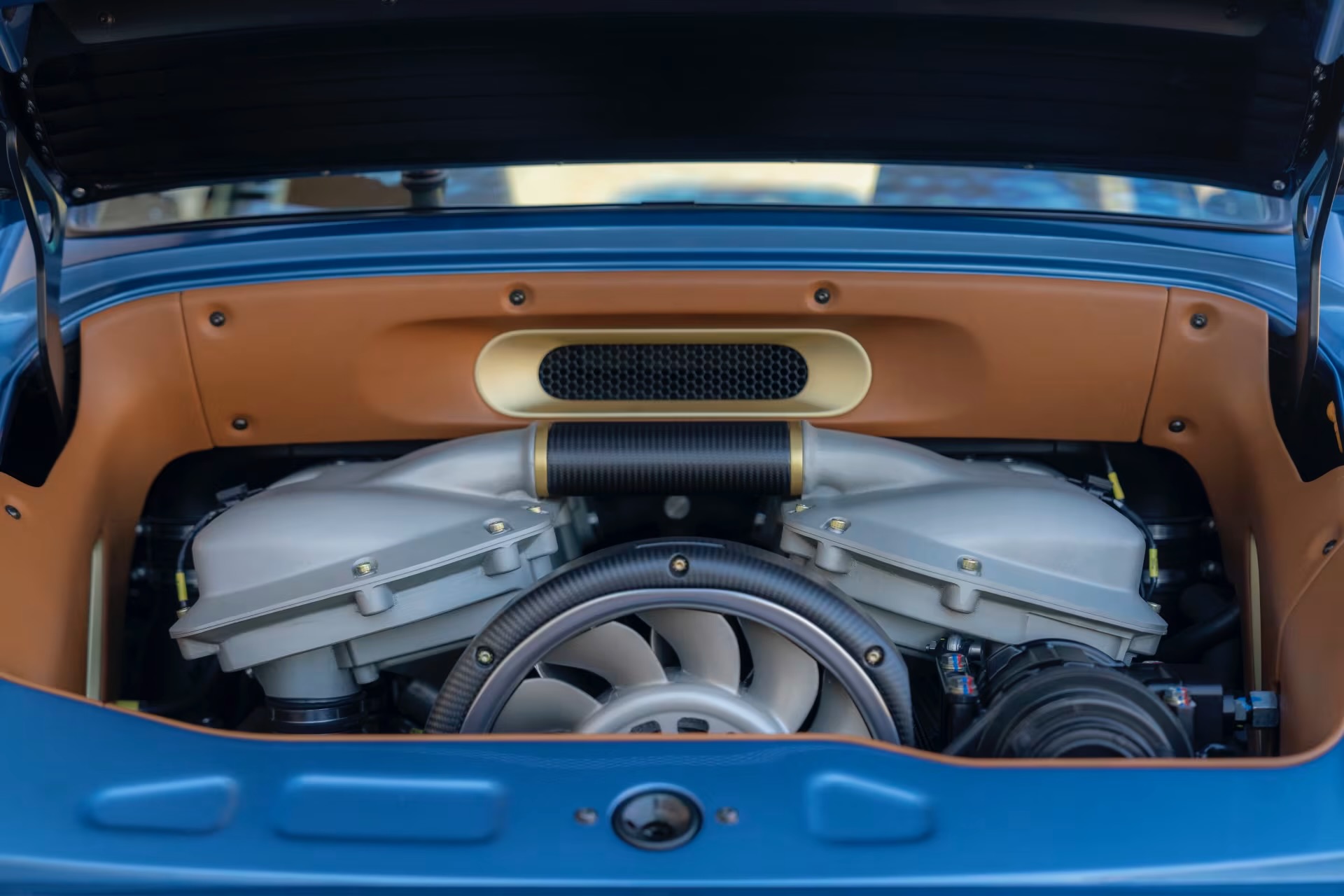
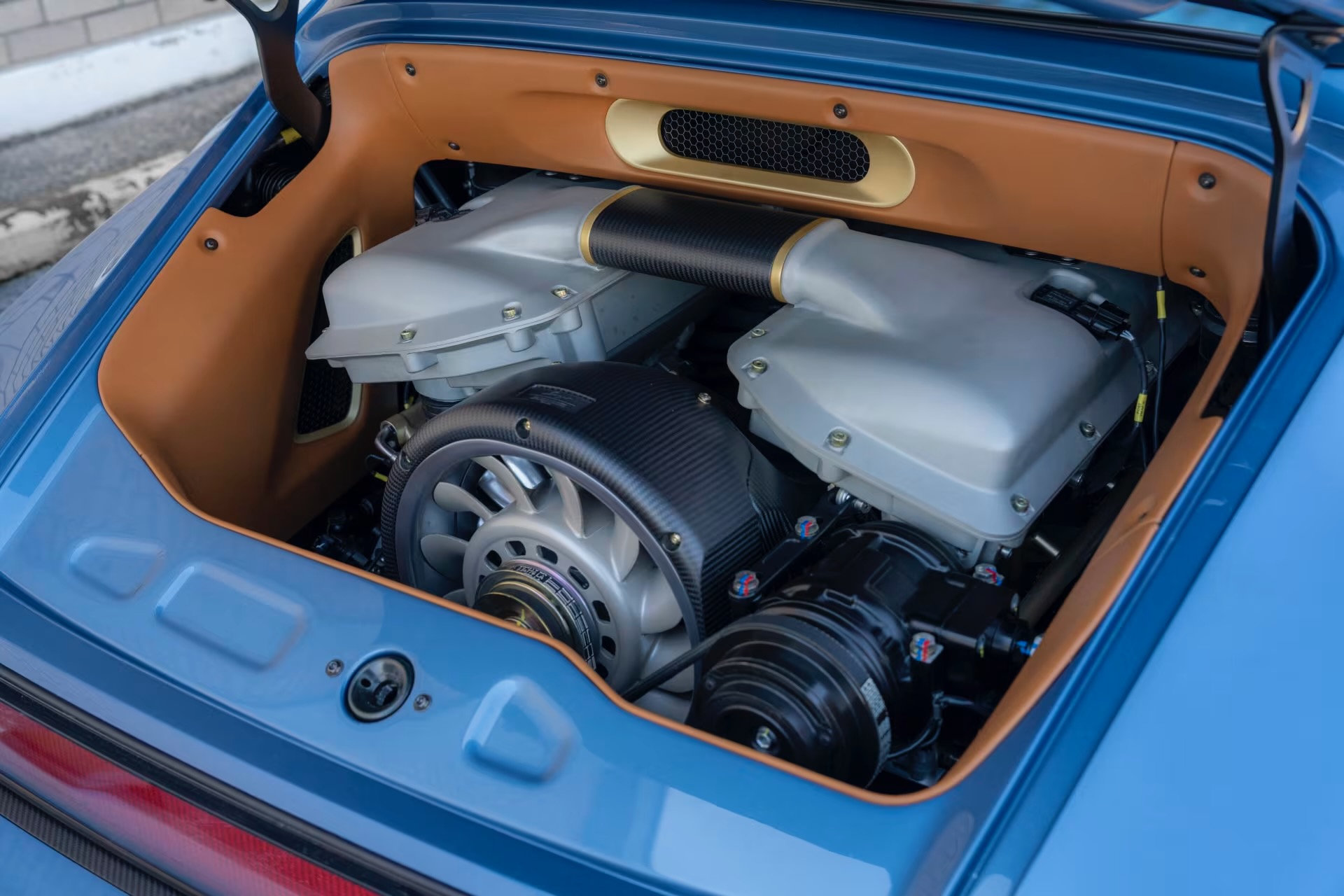
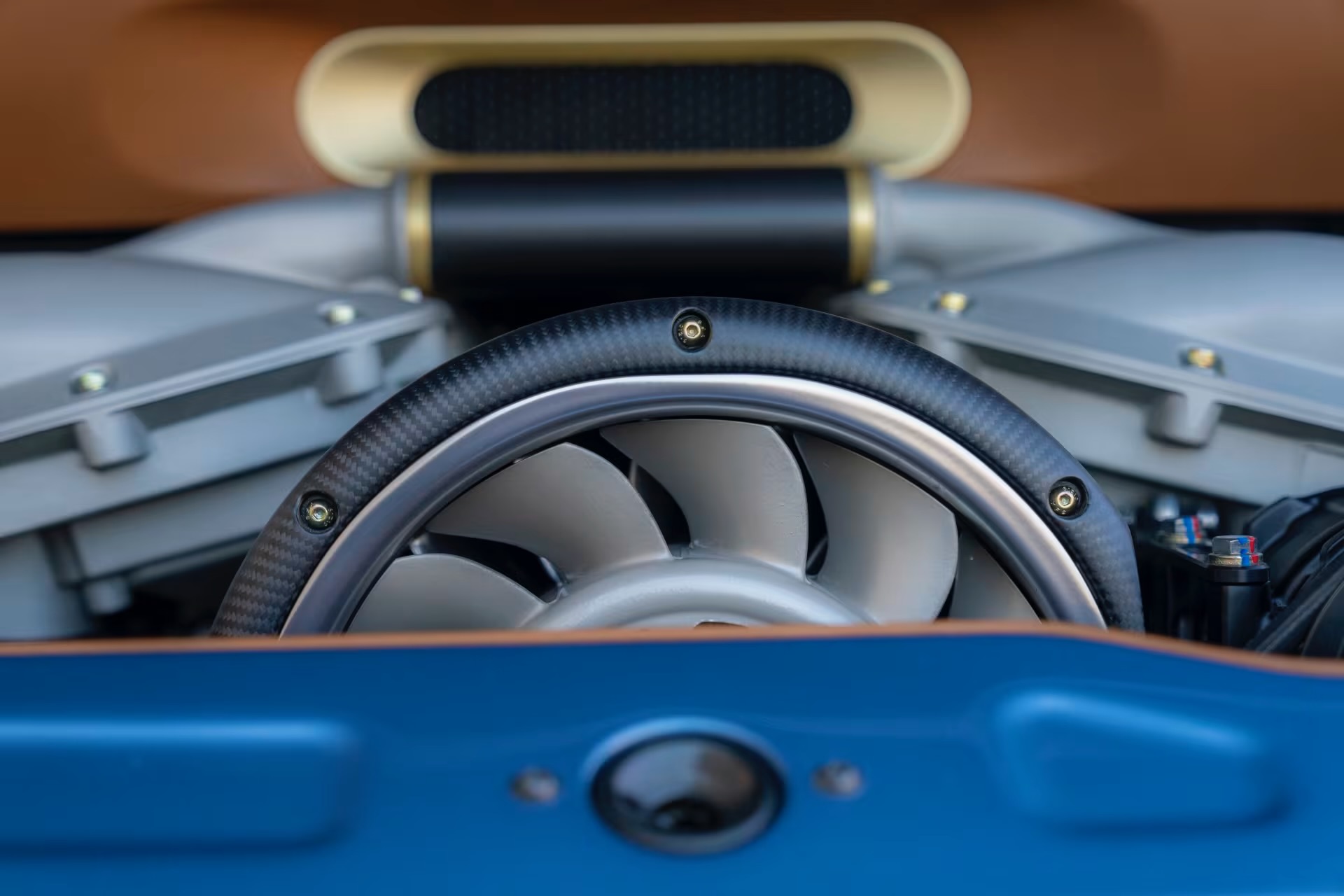
Auktion: Mecum, Kissimmee 2026, kein Schätzpreis. 196 Meilen.
–
Die DLS (Dynamic and Lightweight Study, 75 Ex.)
«Sepang», Chassis-Nummer: WP0ZZZ96ZLS404560 (1990)

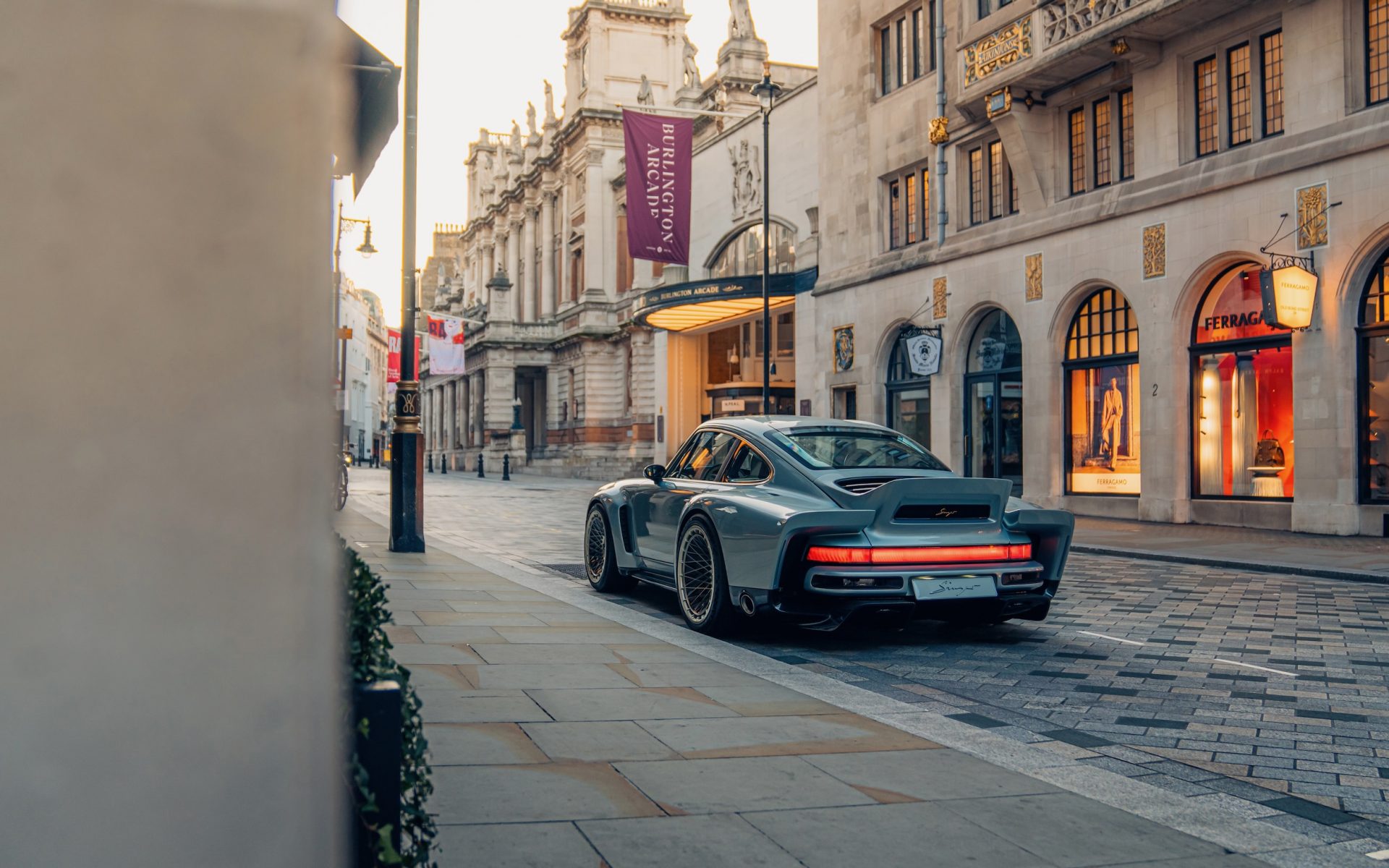

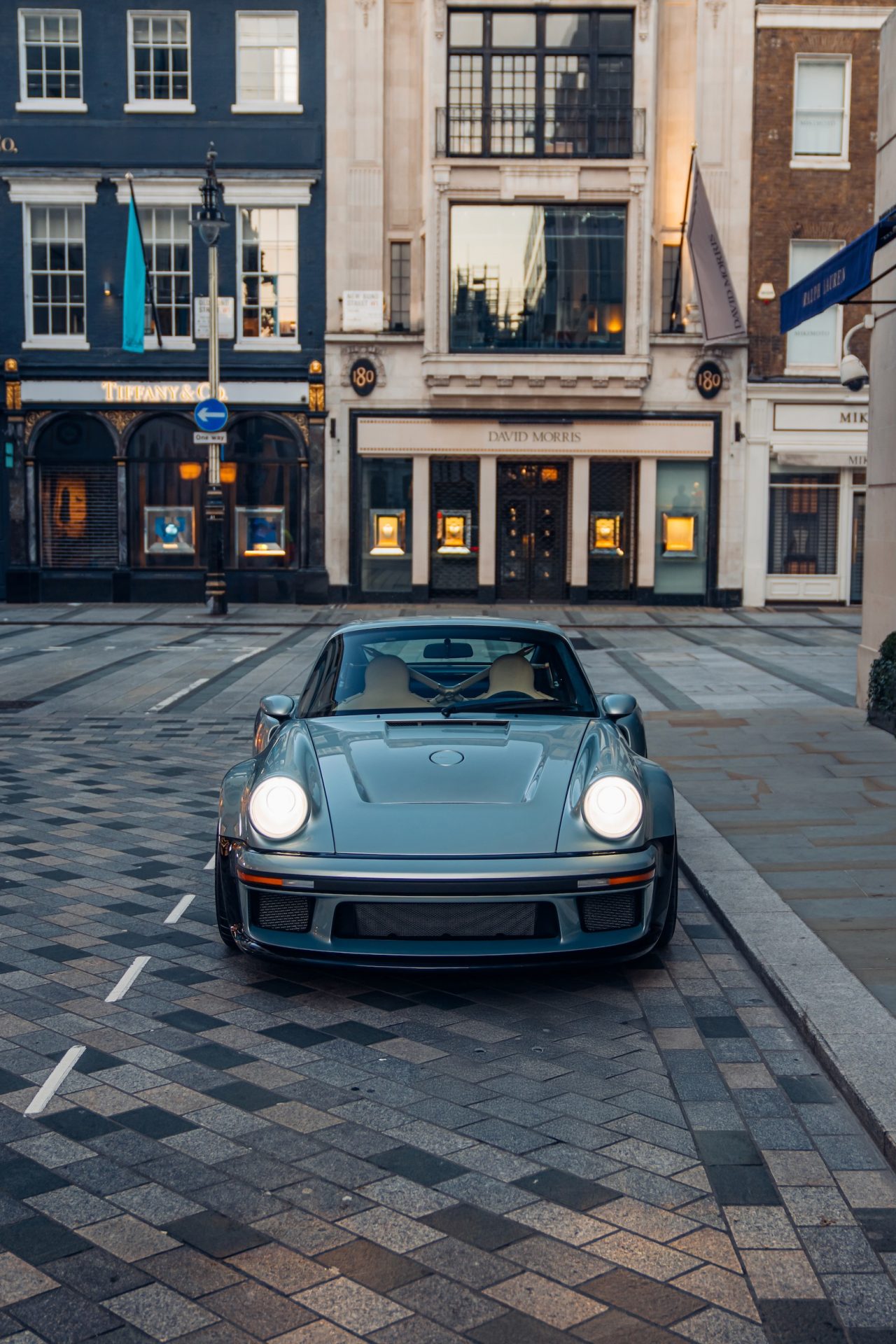


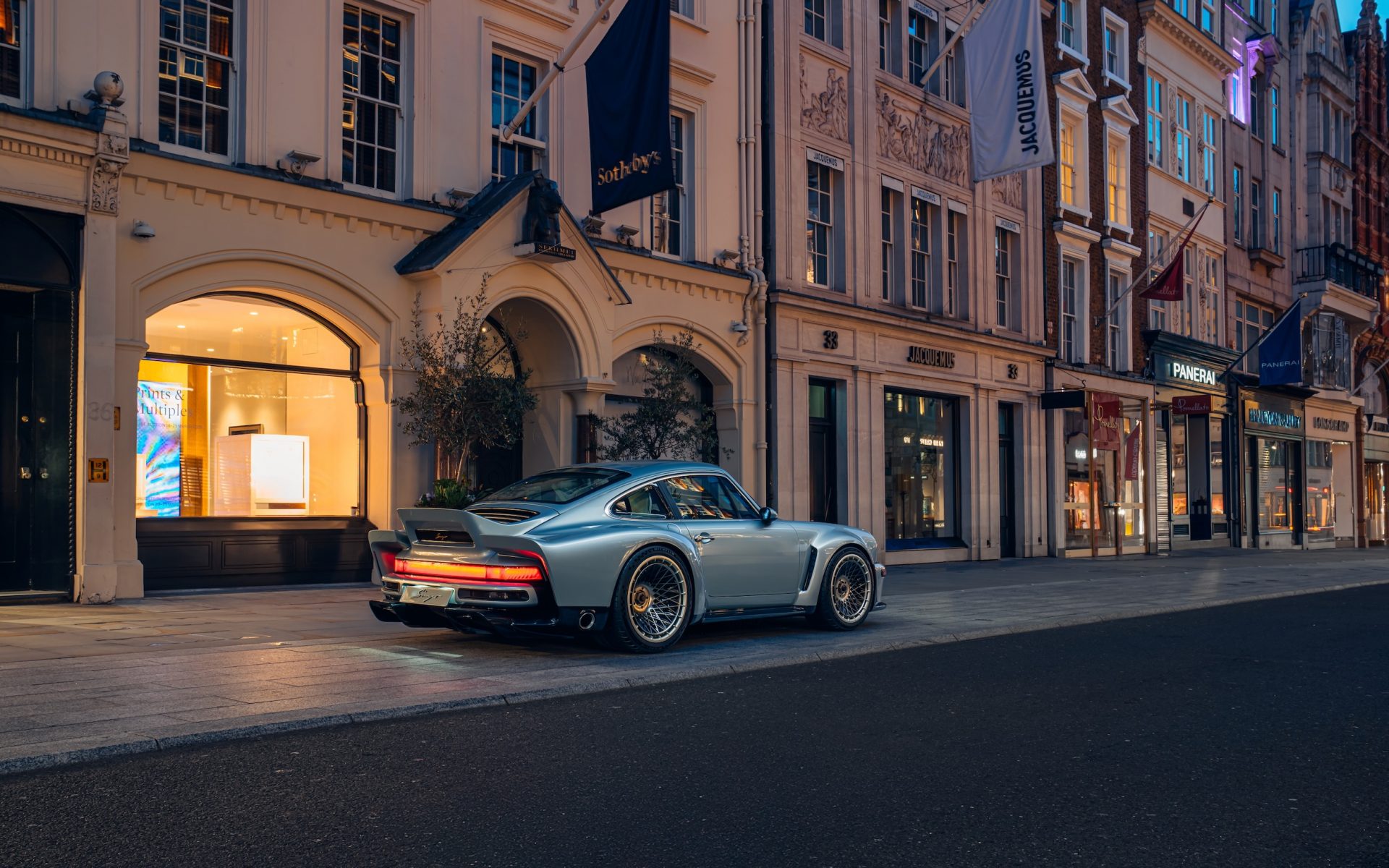
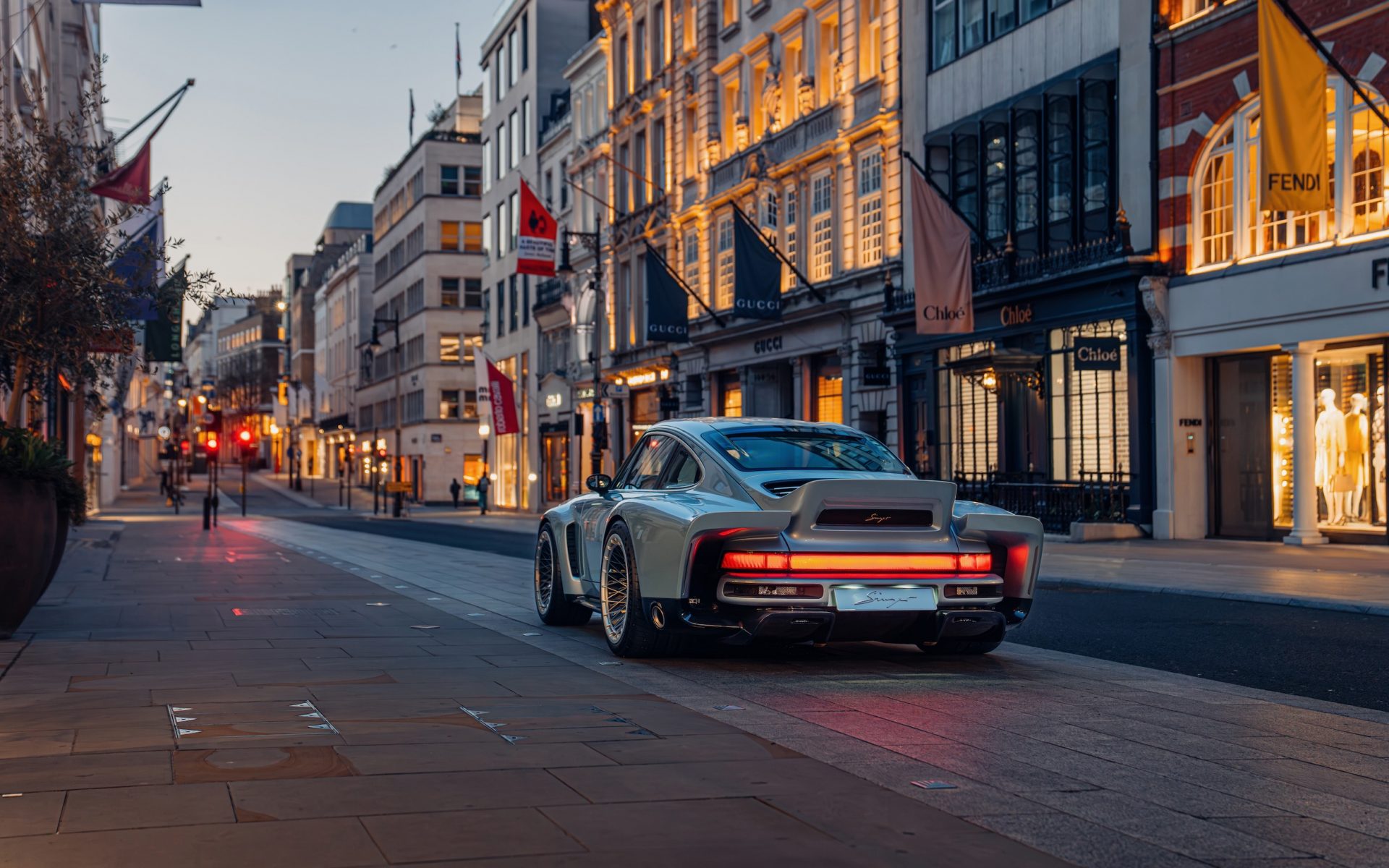


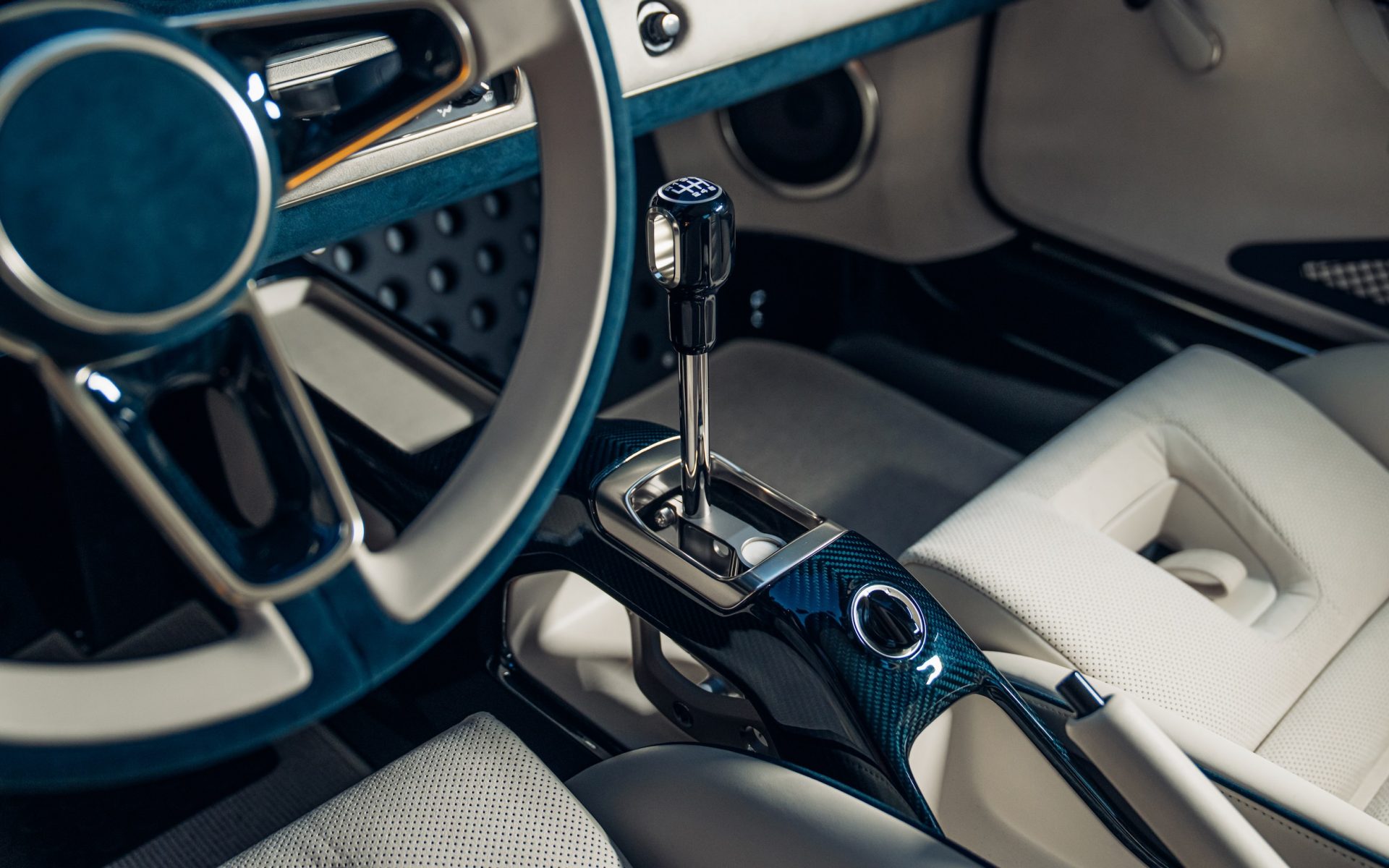

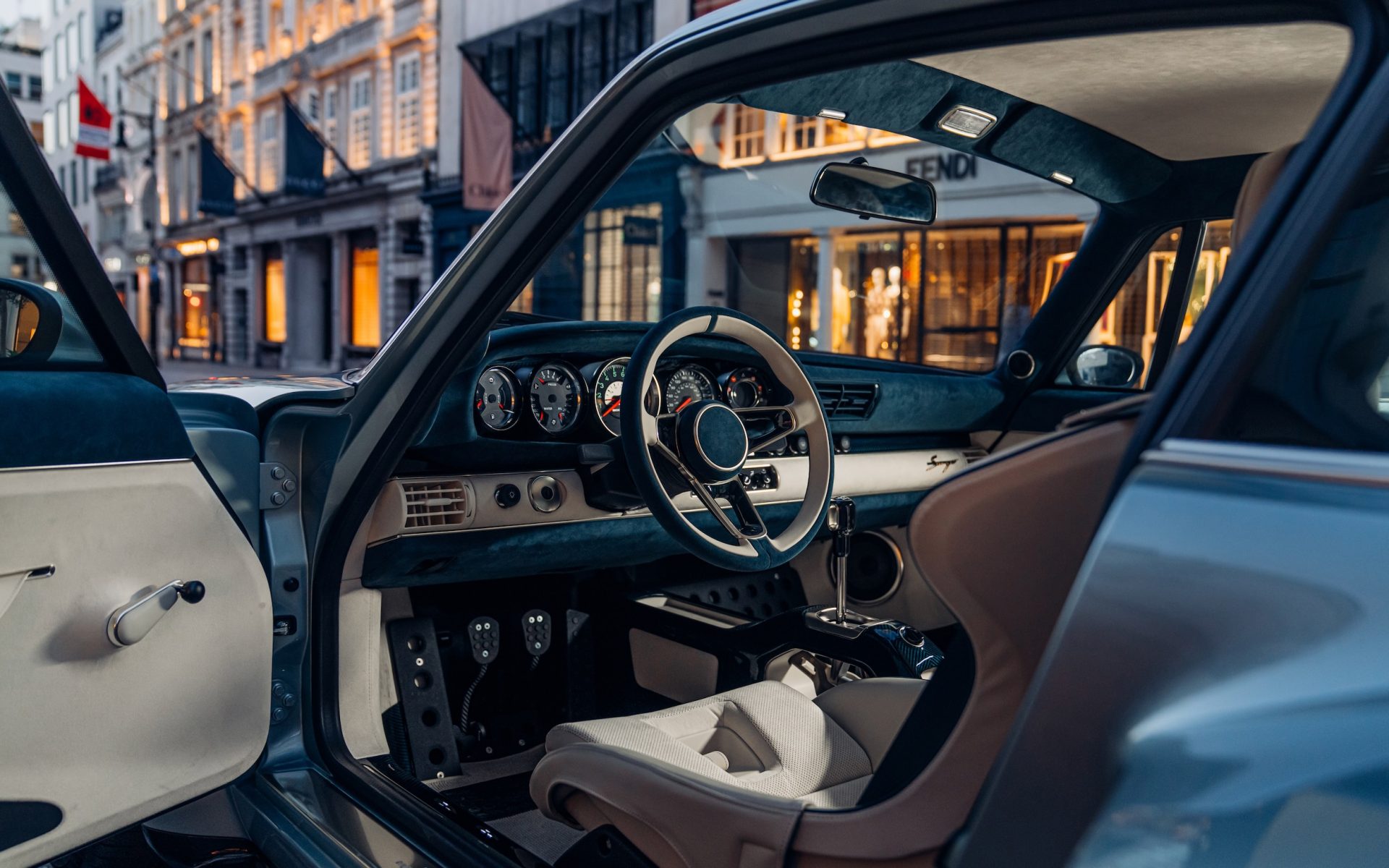
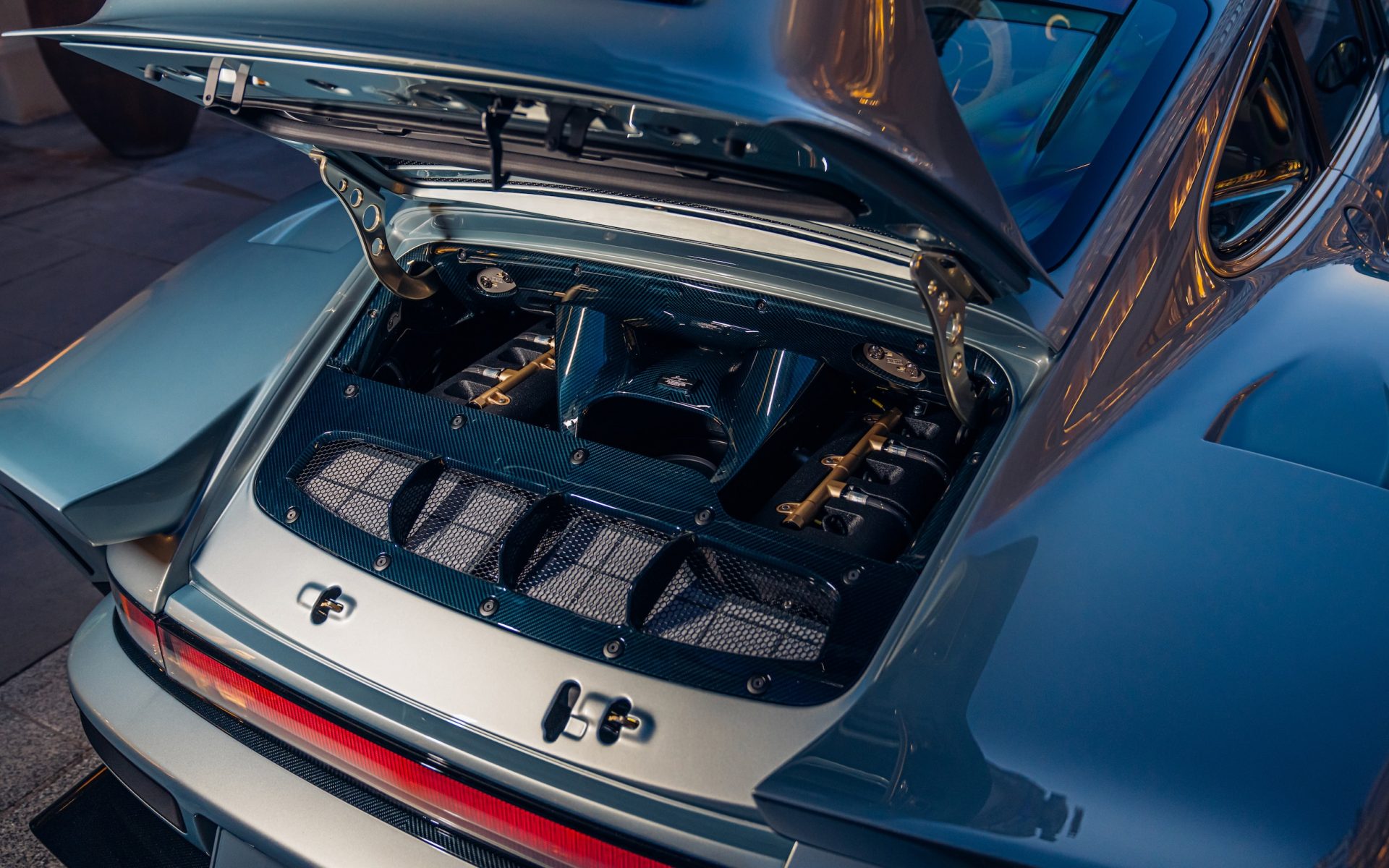
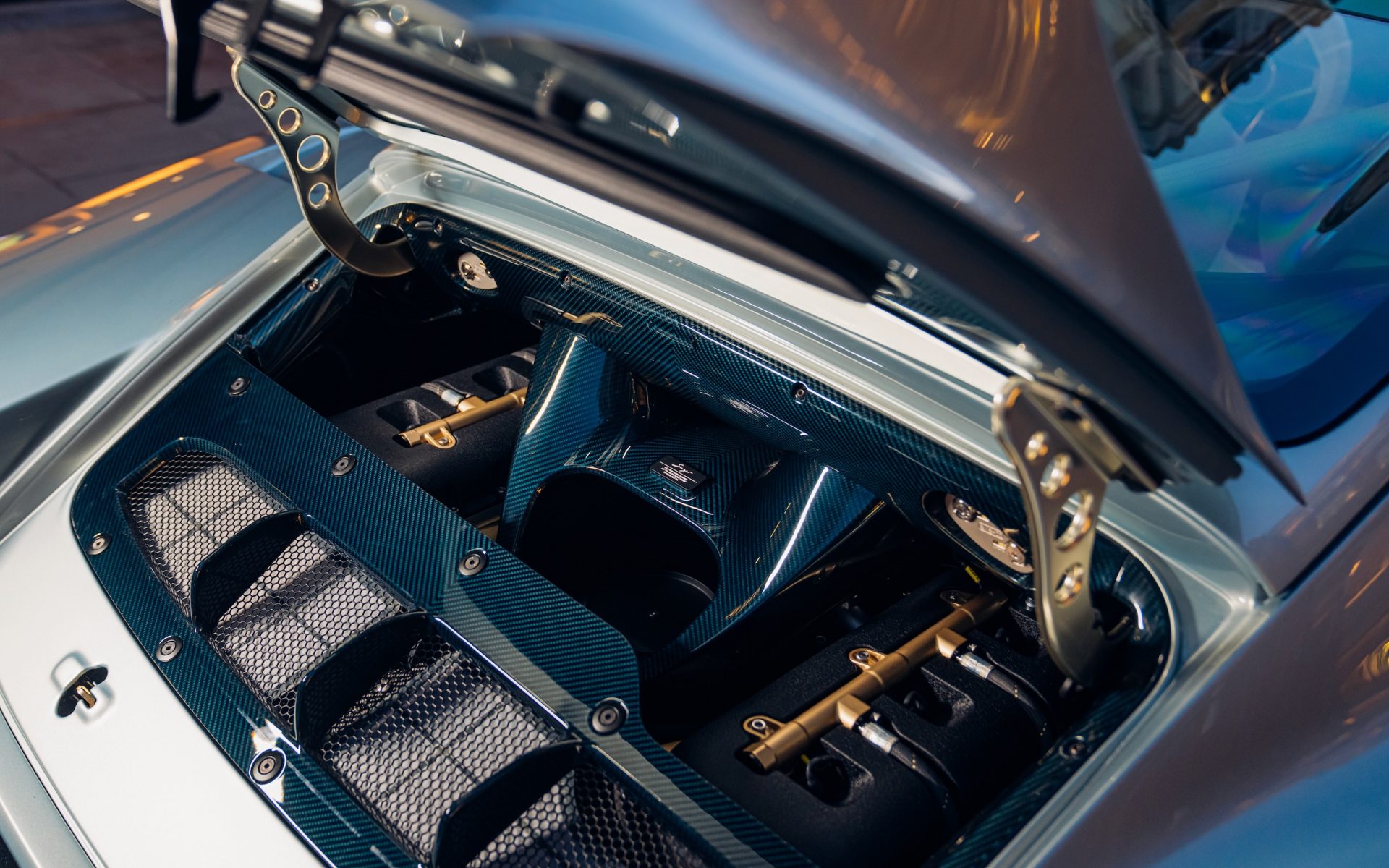
Auktion: RM Sotheby’s, The Singer Drop (2026), mit diesen Angaben: «Offered here is “The Sepang Commission”; one of just 99 DLS Turbo restorations. Its first owner, a collector who has commissioned multiple restorations with Singer, spared no expense in the pursuit of a car that epitomizes Singer’s motto of ‘Everything is Important’. Finished in paint to sample Wolf Blue, The Sepang Commission features numerous visible carbon fibre options tinted dark blue to complement the Wolf Blue paintwork. The car’s champagne anodized polished brightwork offers a touch of contrast and this finish is continued on the turbofan magnesium wheels, while the rear decklid badging is specified in solid brass. Inside, The Sepang Commission is trimmed in Bone leather with further champagne anodized and polished brightwork with dark blue-tinted gloss carbon throughout to unify the car’s overall appearance. Touring seats are specified with Bone Alcantara perforated seat centres, seat backs trimmed in soft Bone leather, and ‘DLST’ embossed in the headrests. The outer section of the steering wheel is trimmed in Alcantara to match the bodywork with the inner steering wheel trimmed in bone leather. The Sepang Commission has been outfitted with both the track- and road-focused rear decklid and front fascias, as well as an additional set of clear lens corner lights, allowing its new owner the freedom of choice to configure their new acquisition as required. The Sepang Commission is presented fresh from restoration, with break-in mileage conducted by Singer Vehicle Design before delivery.»
–
«Paradise», Chassis-Nummer: WP0ZZZ96ZKS400554 (1989)


Auktion: Bring A Trailer, verkauft für 2,8 Millionen Dollar (Oktober 2025)
–
Chassis-Nummer: WP0AB2966LS452058 (1990)

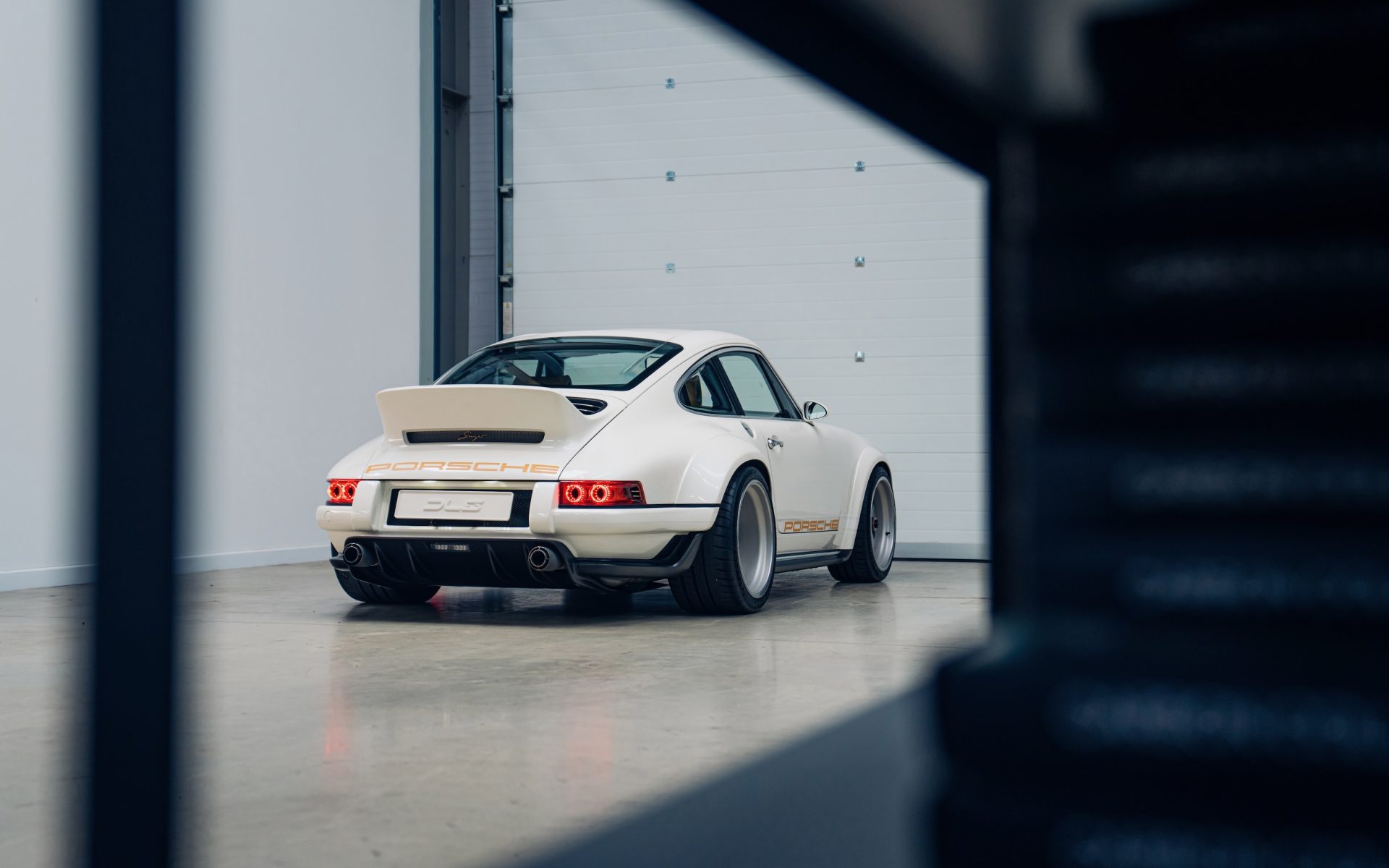
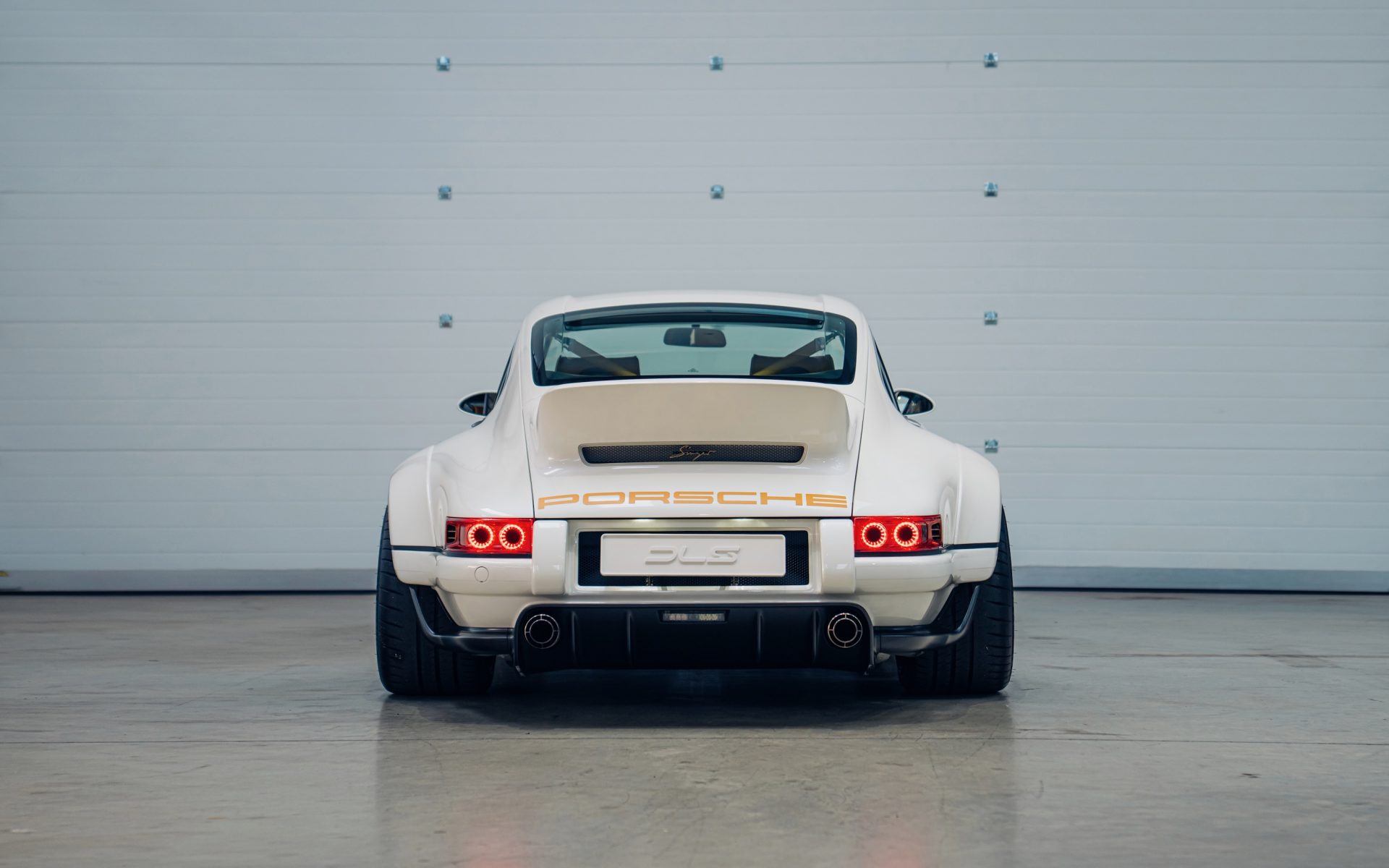
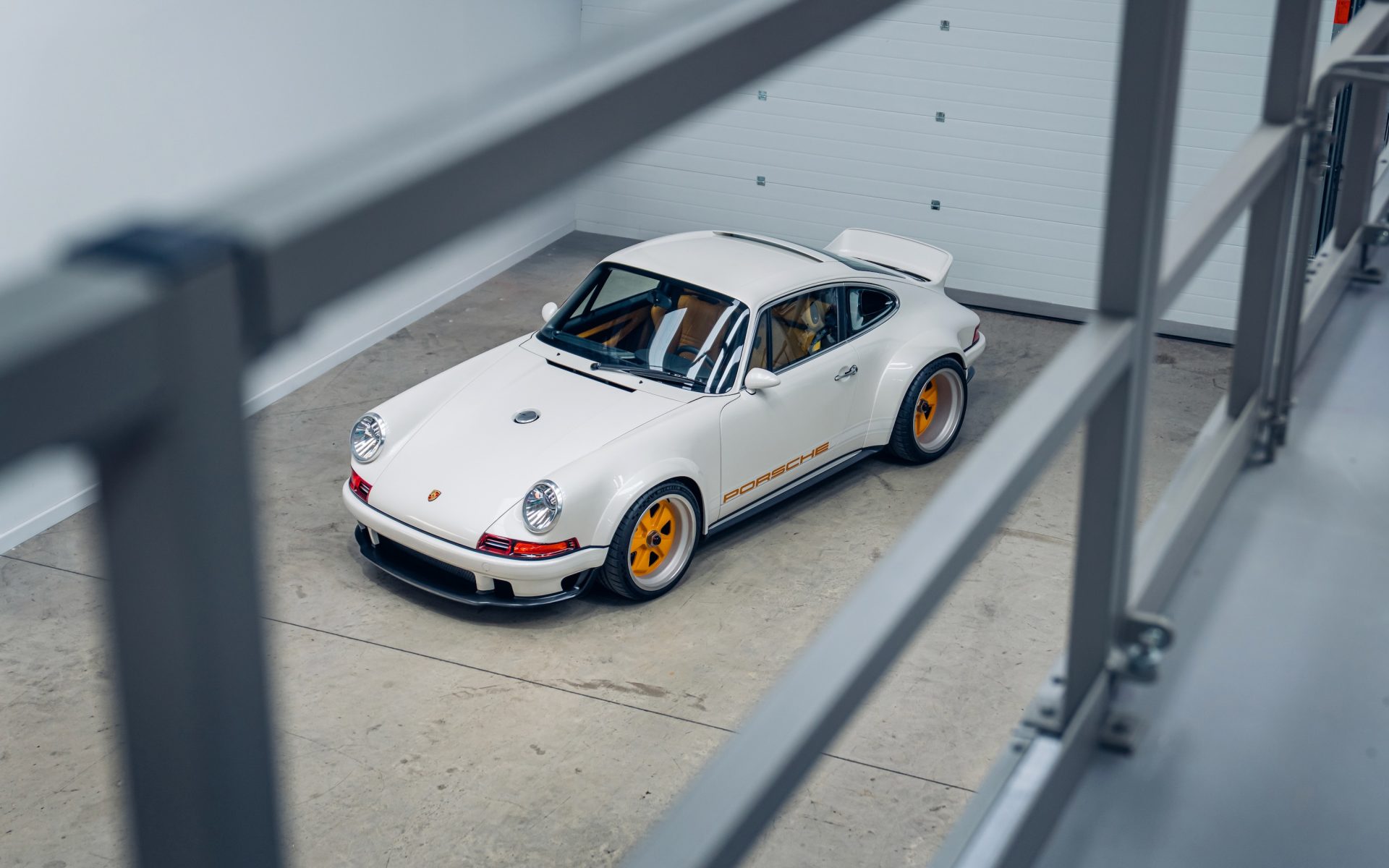
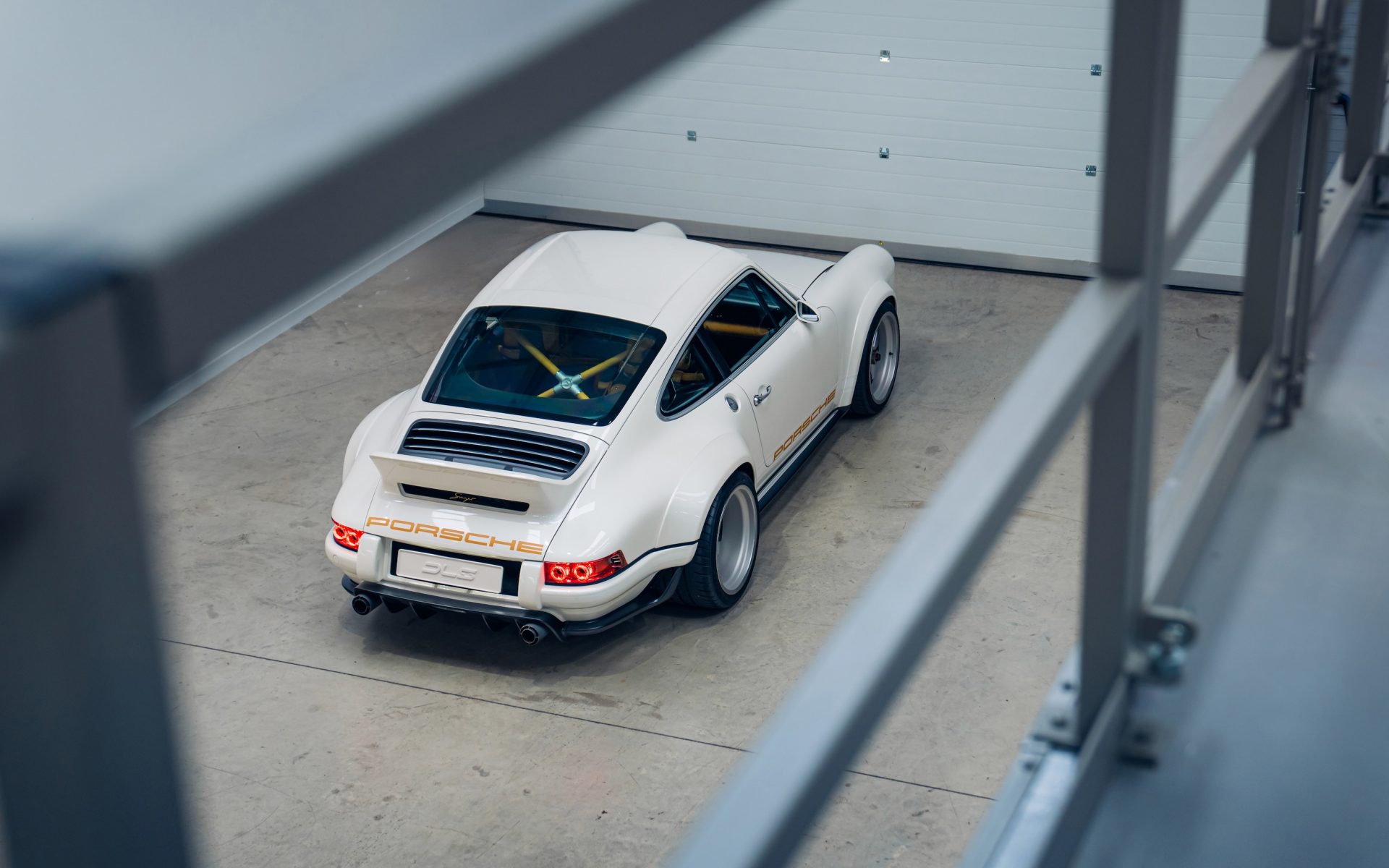
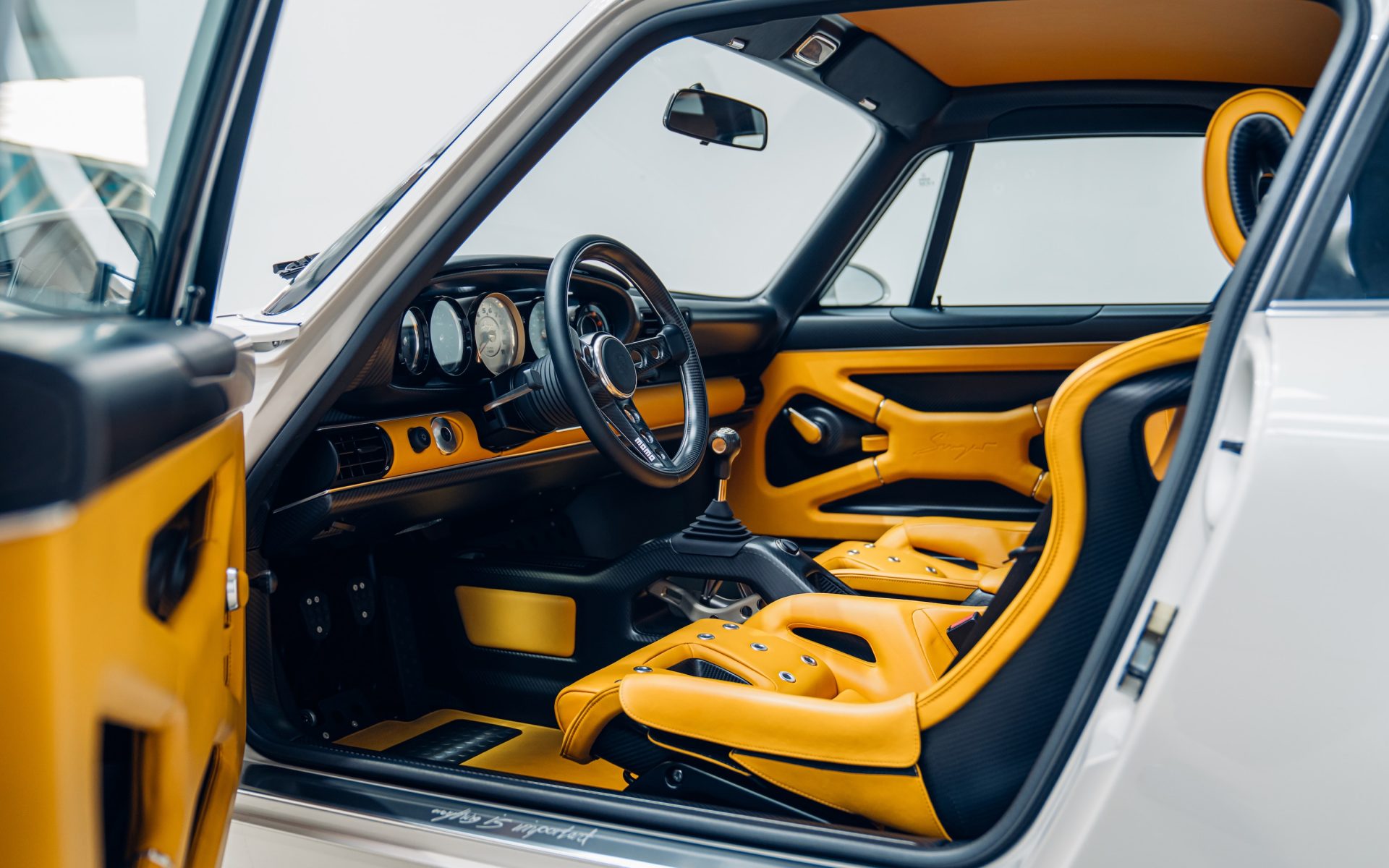
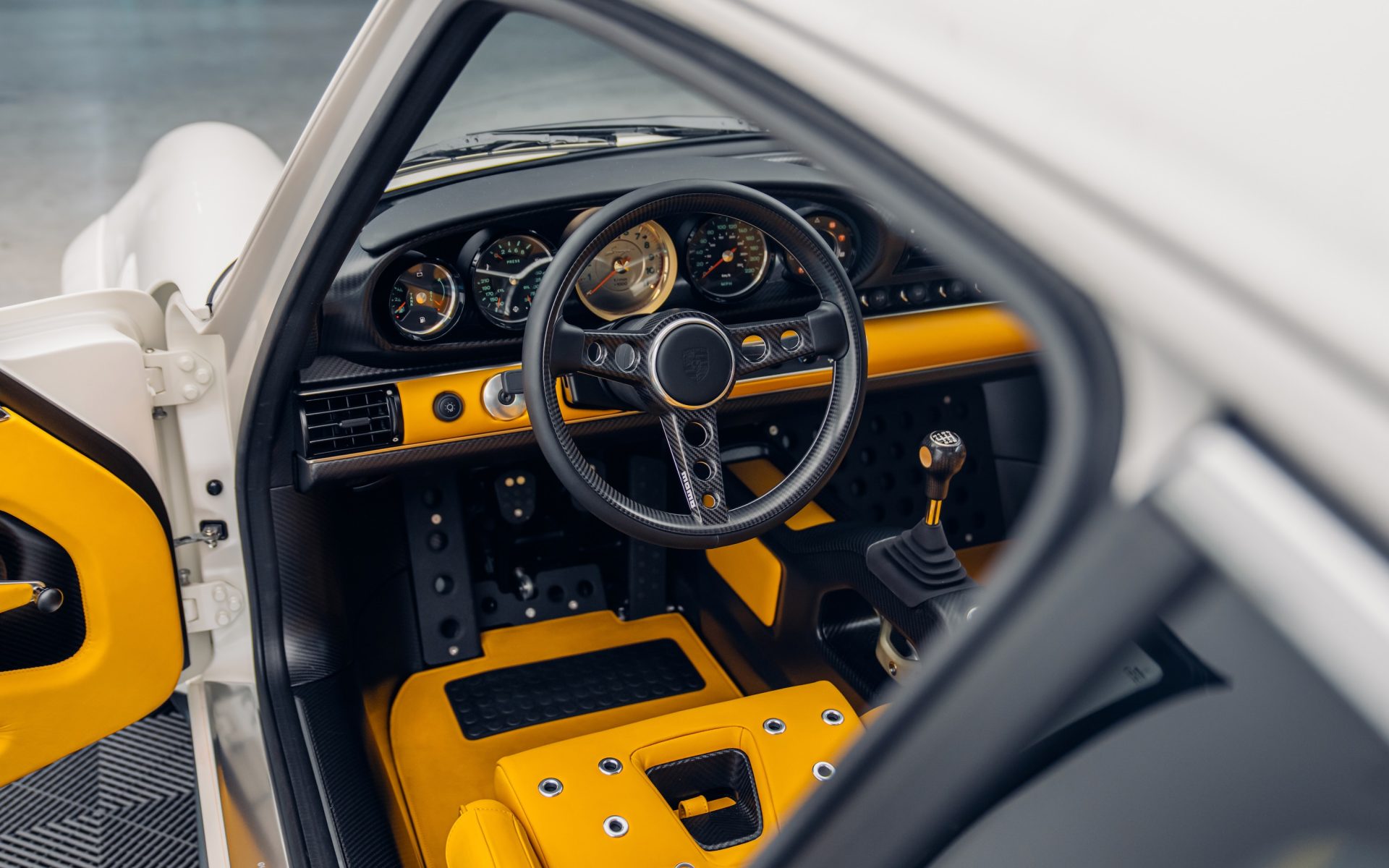
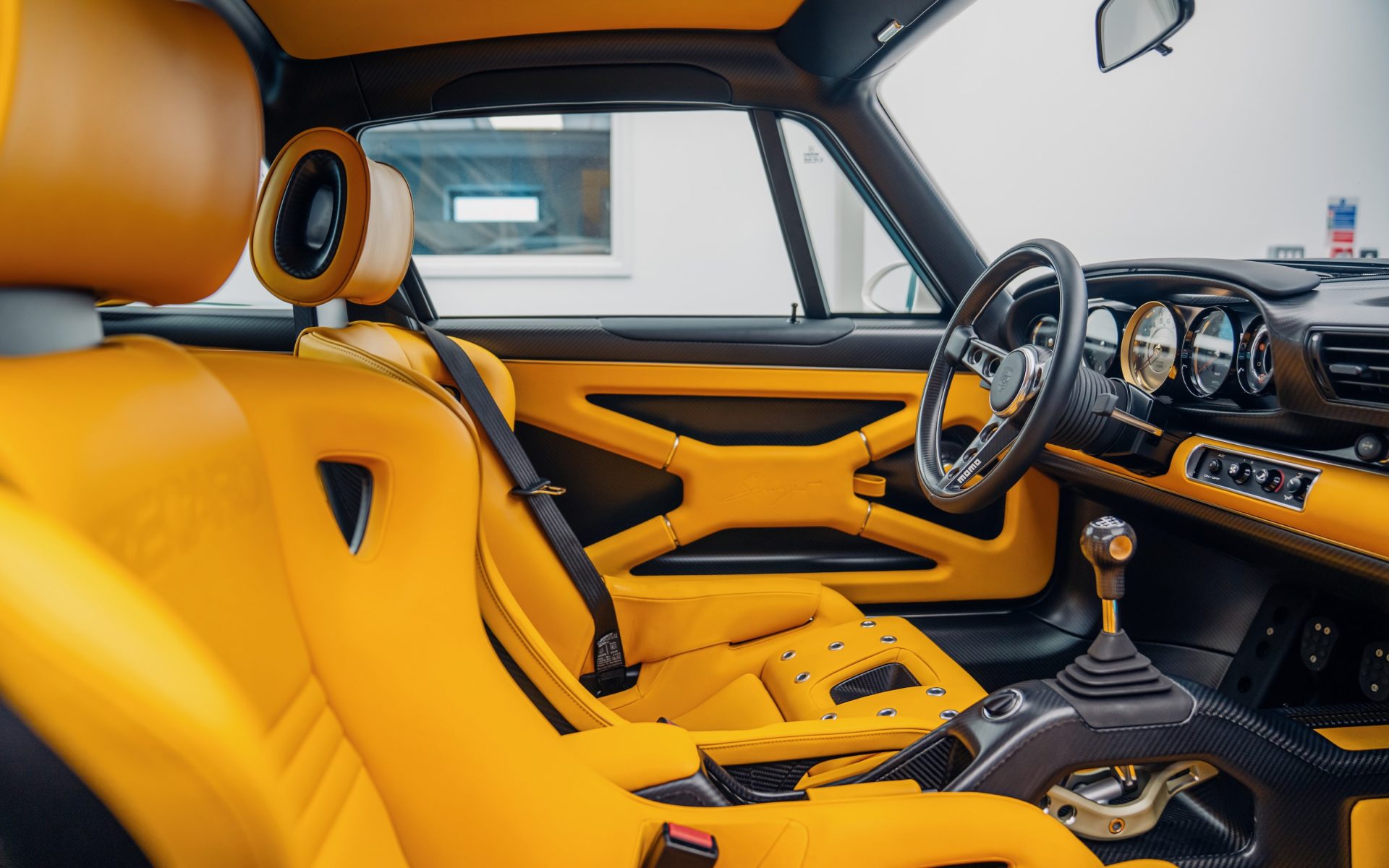
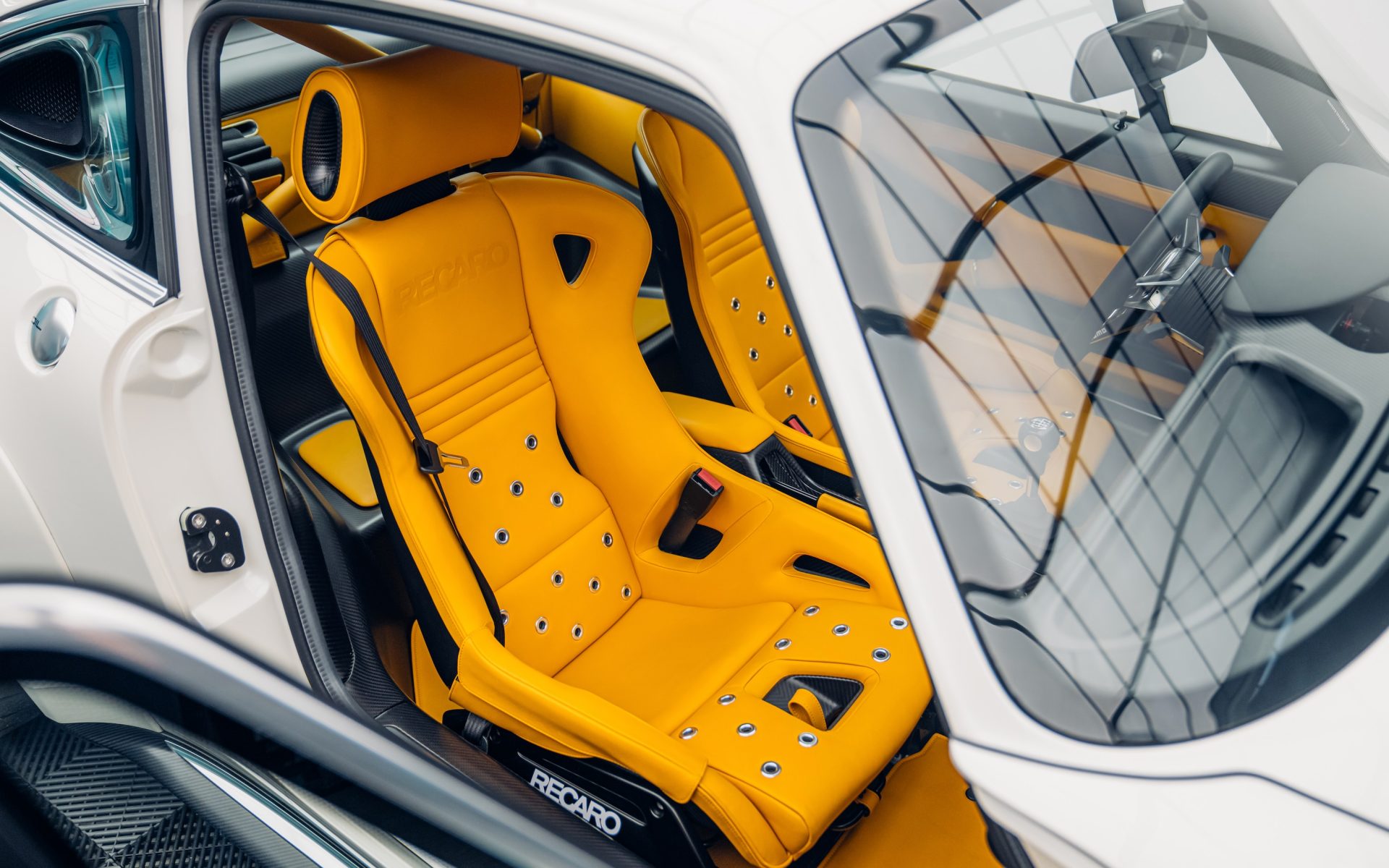
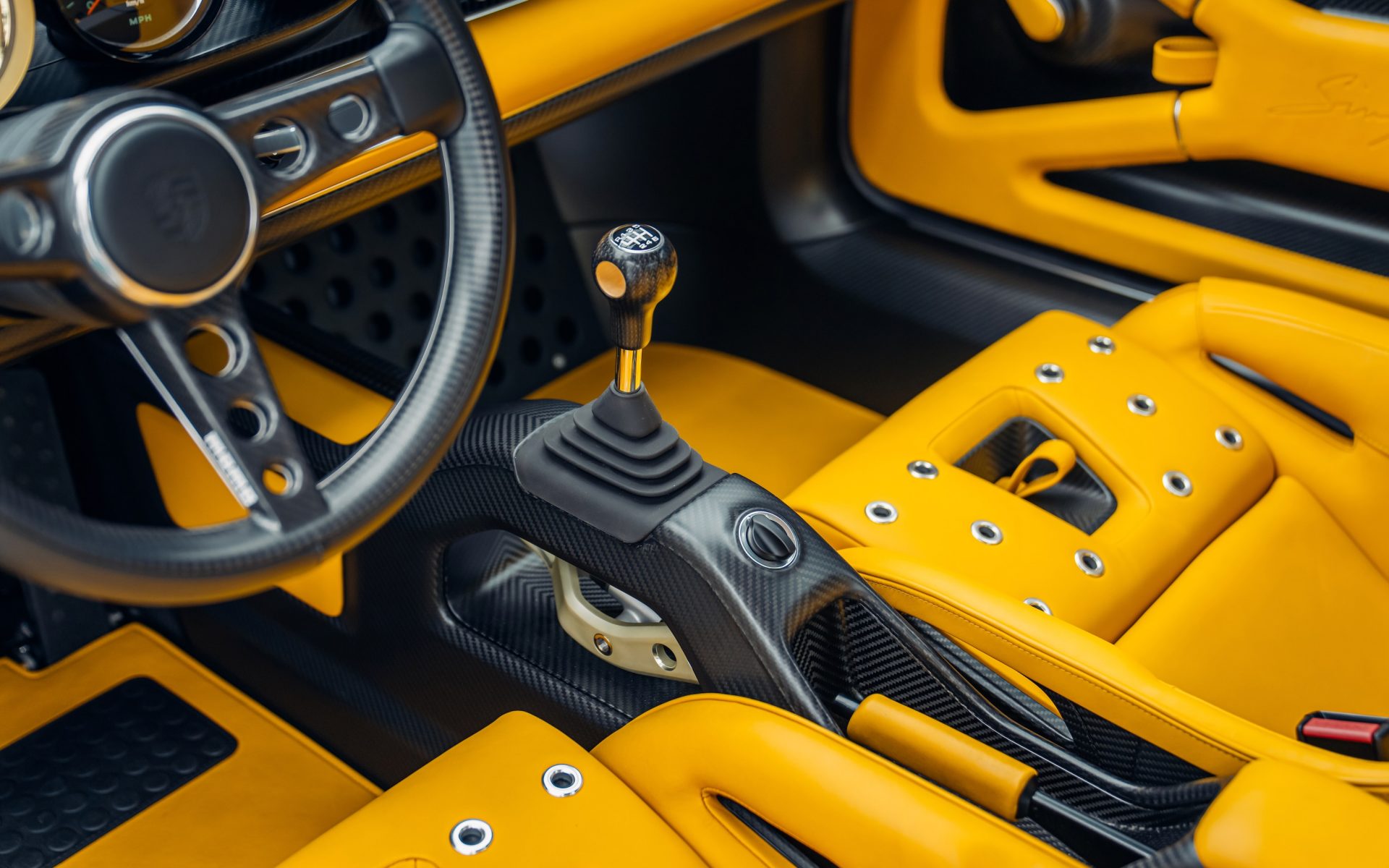
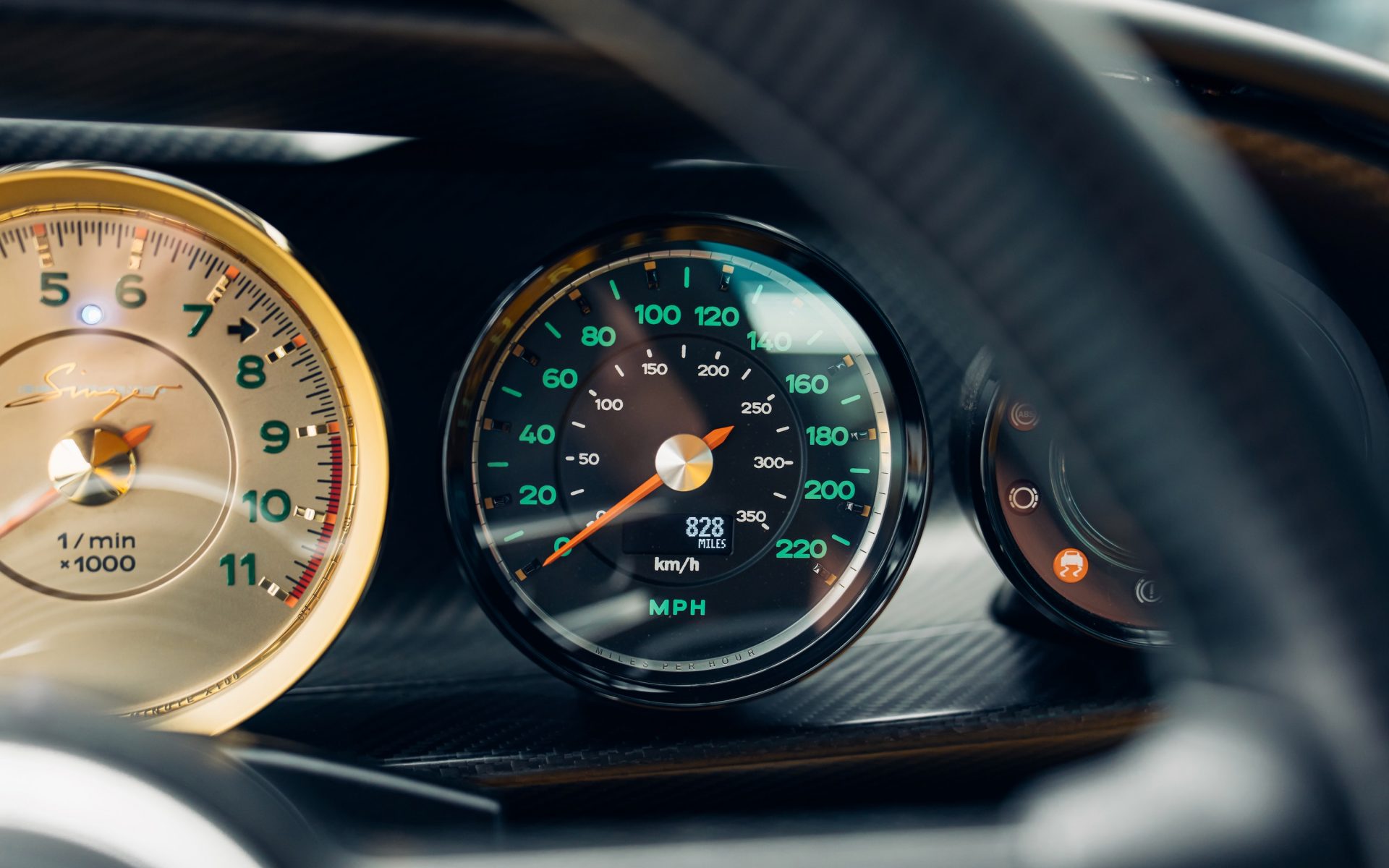
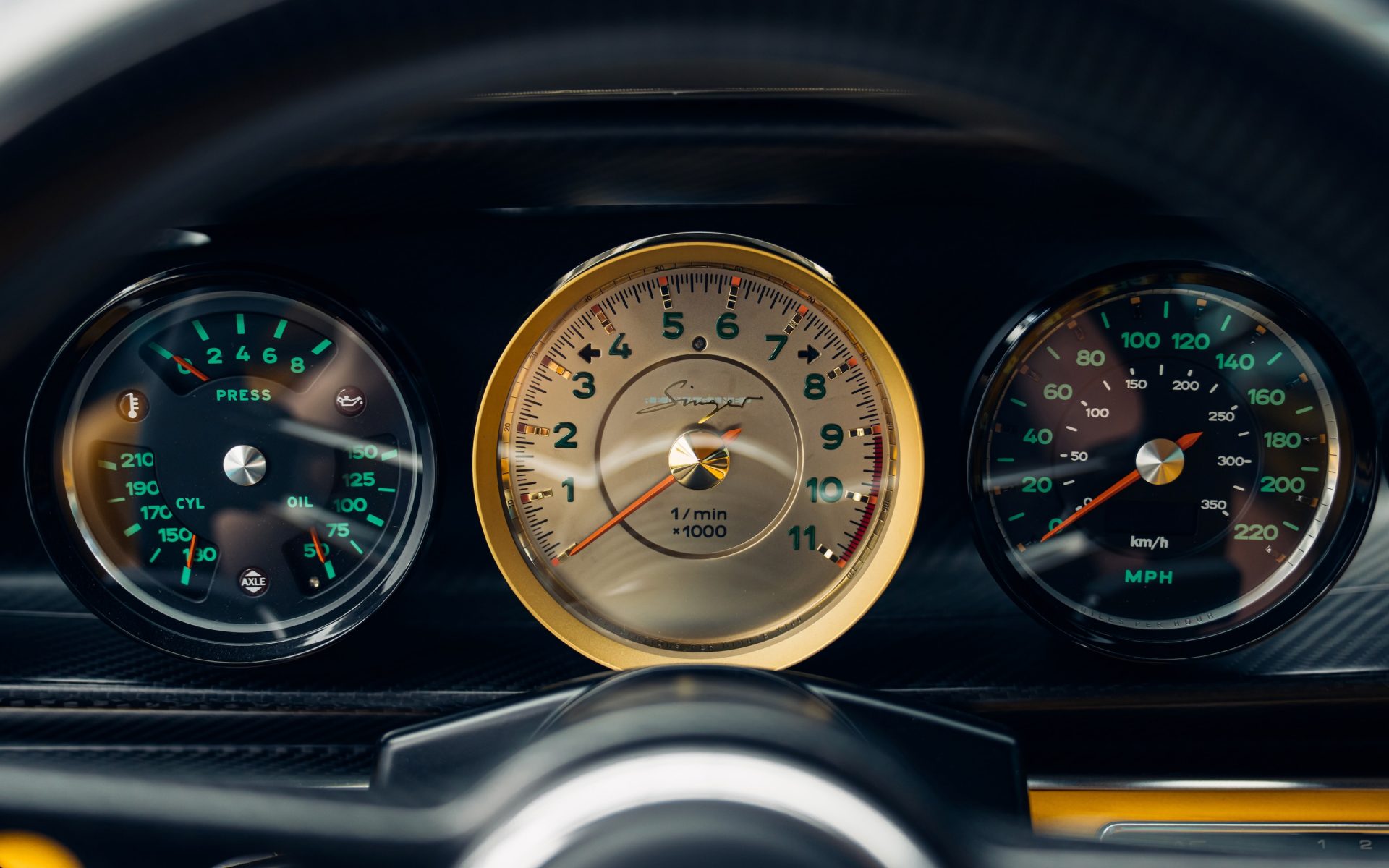
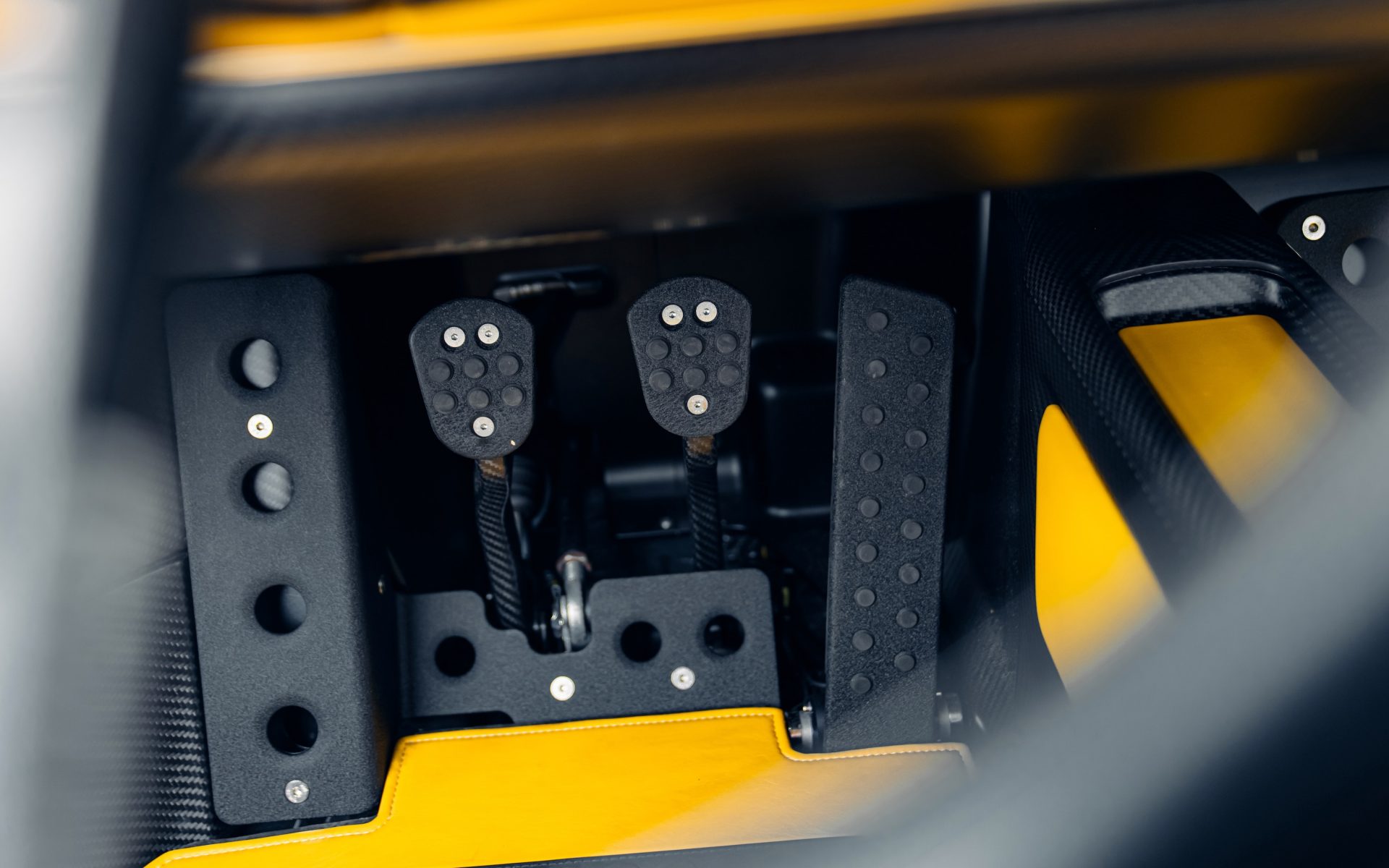
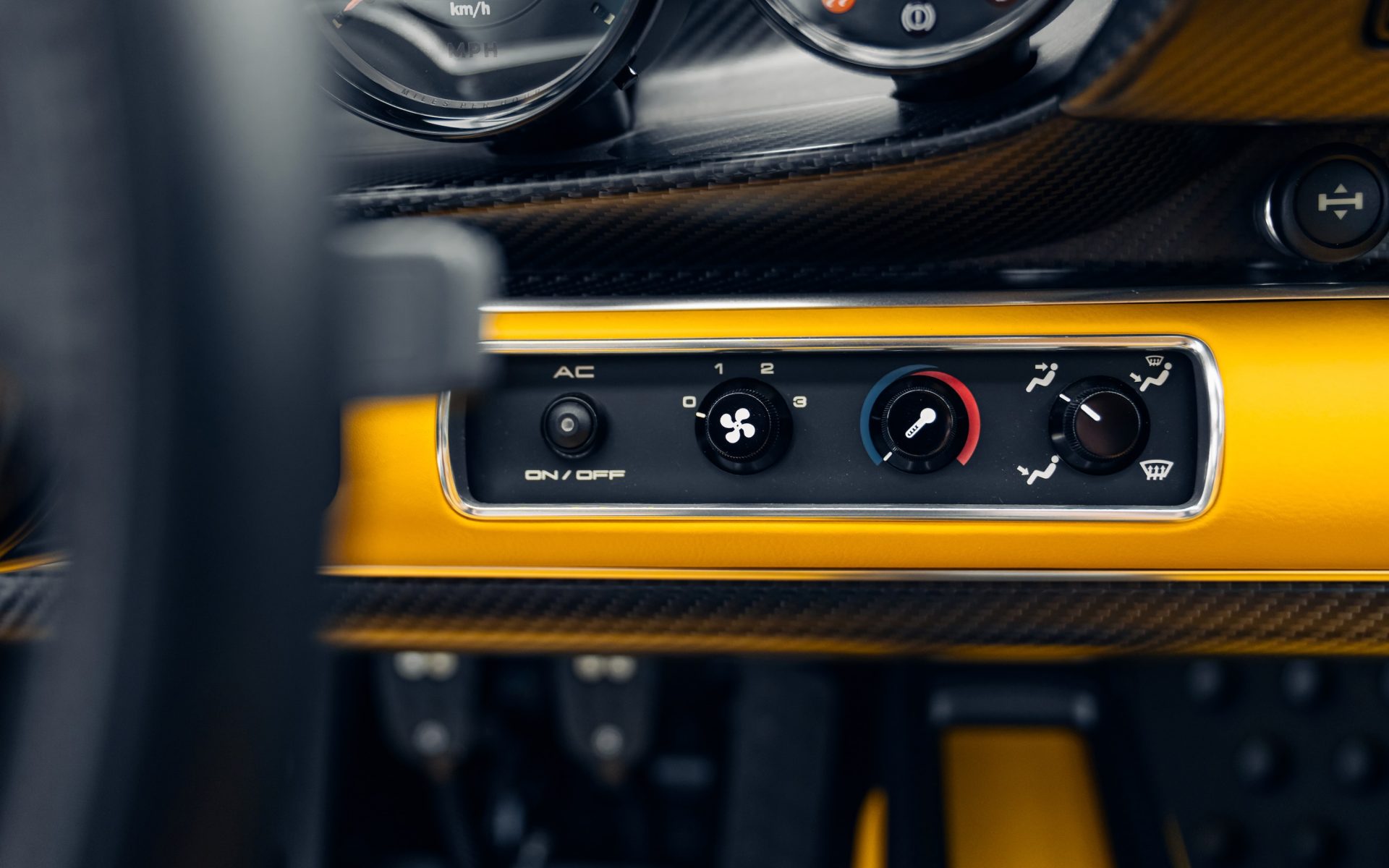
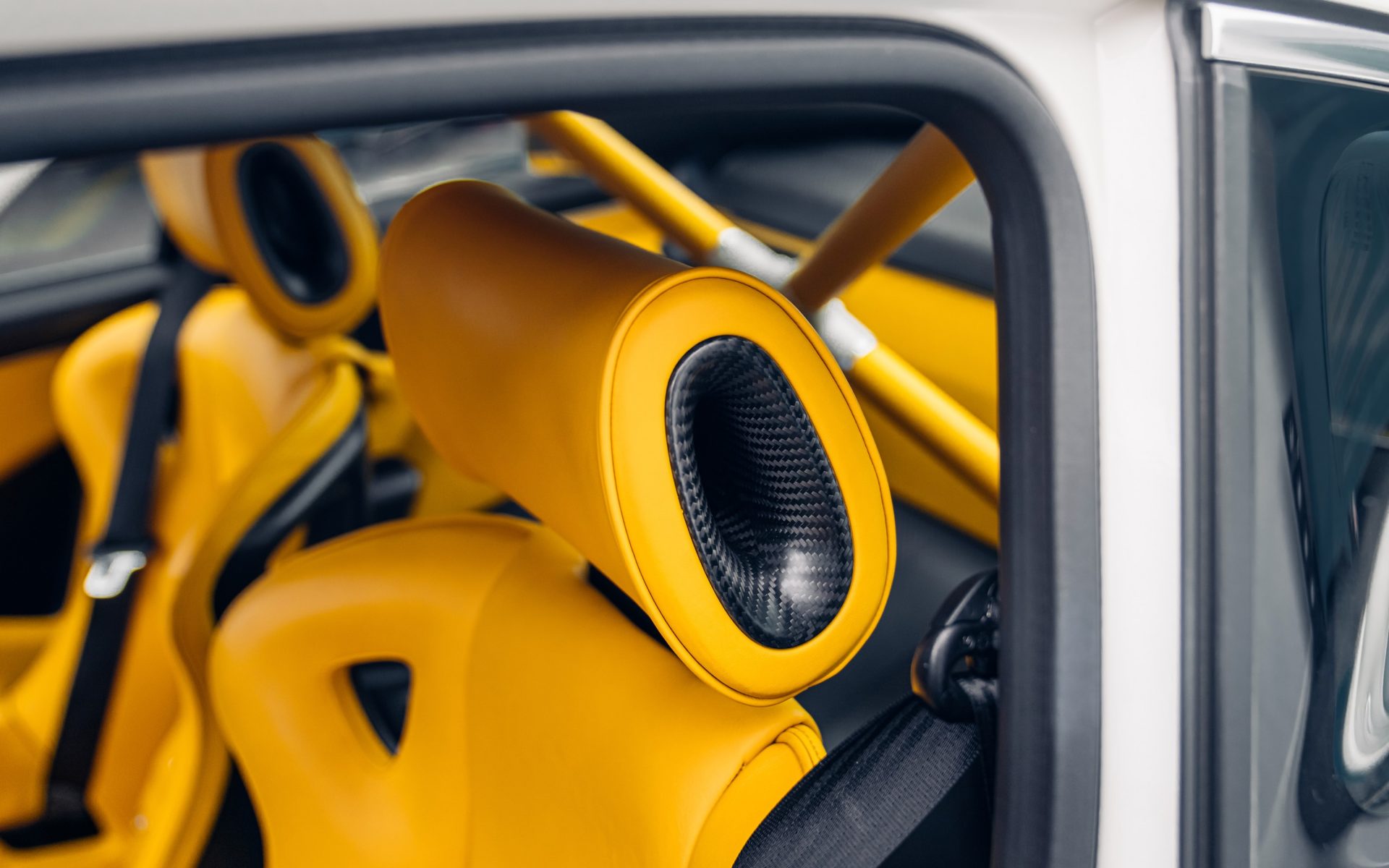

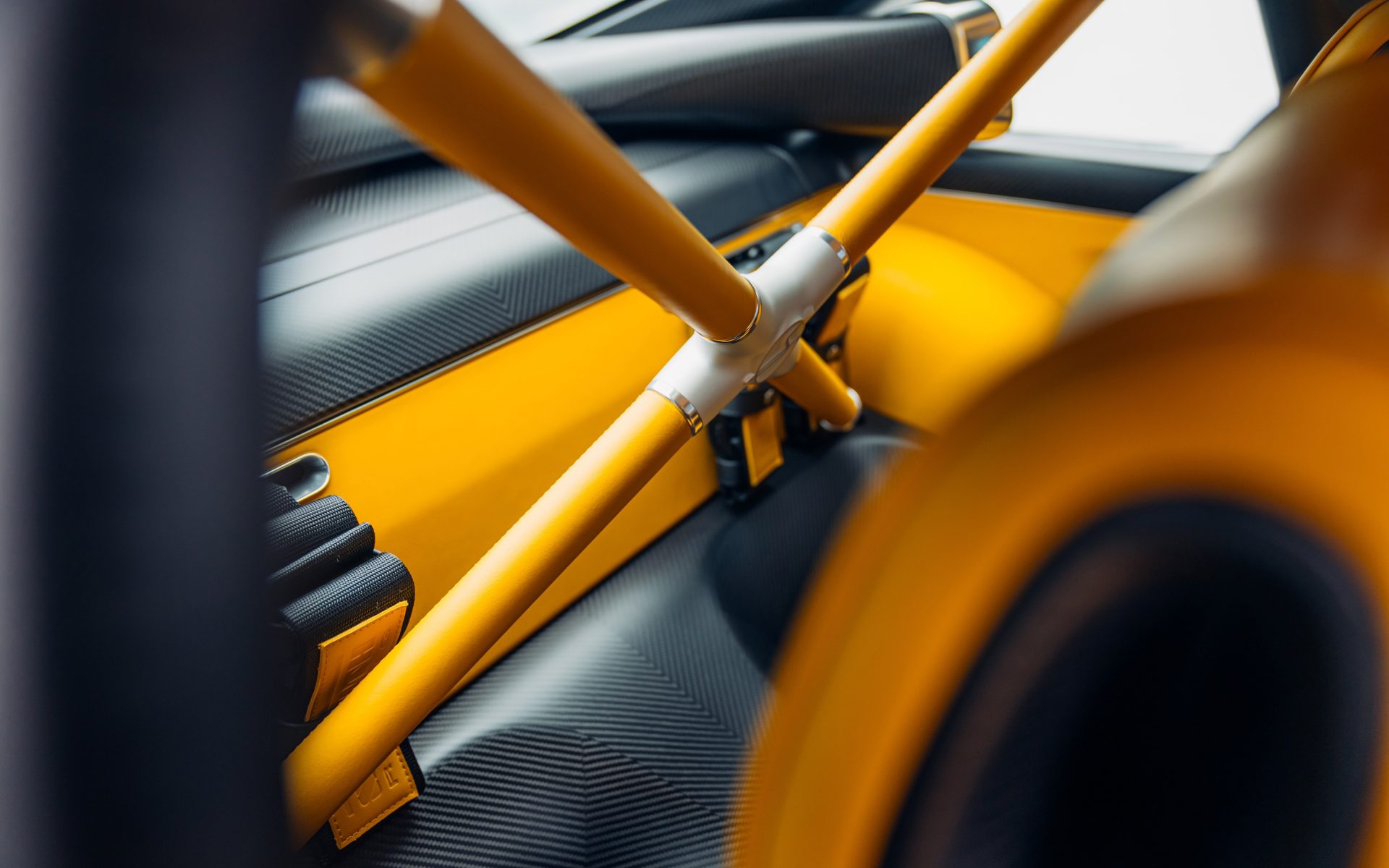
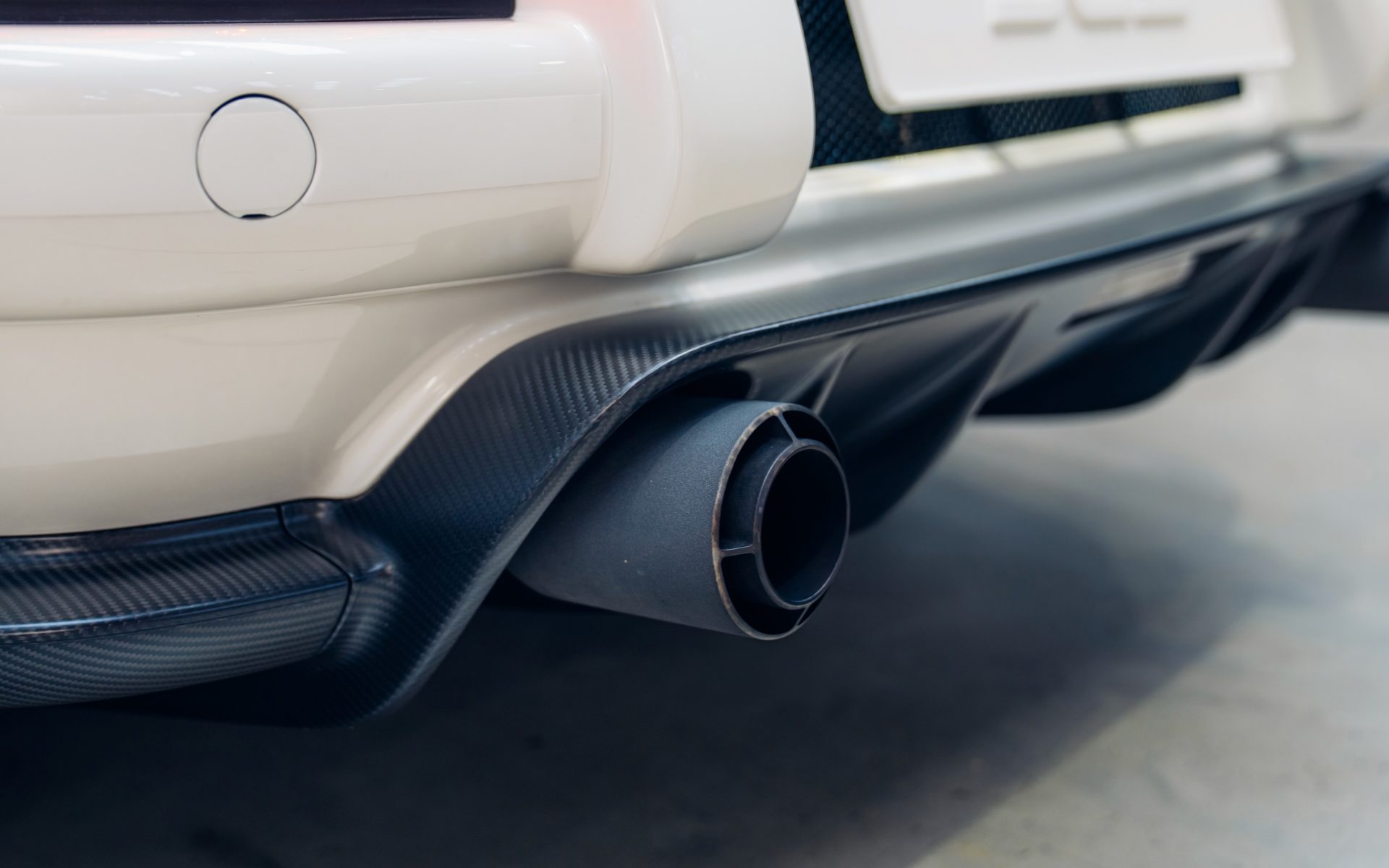
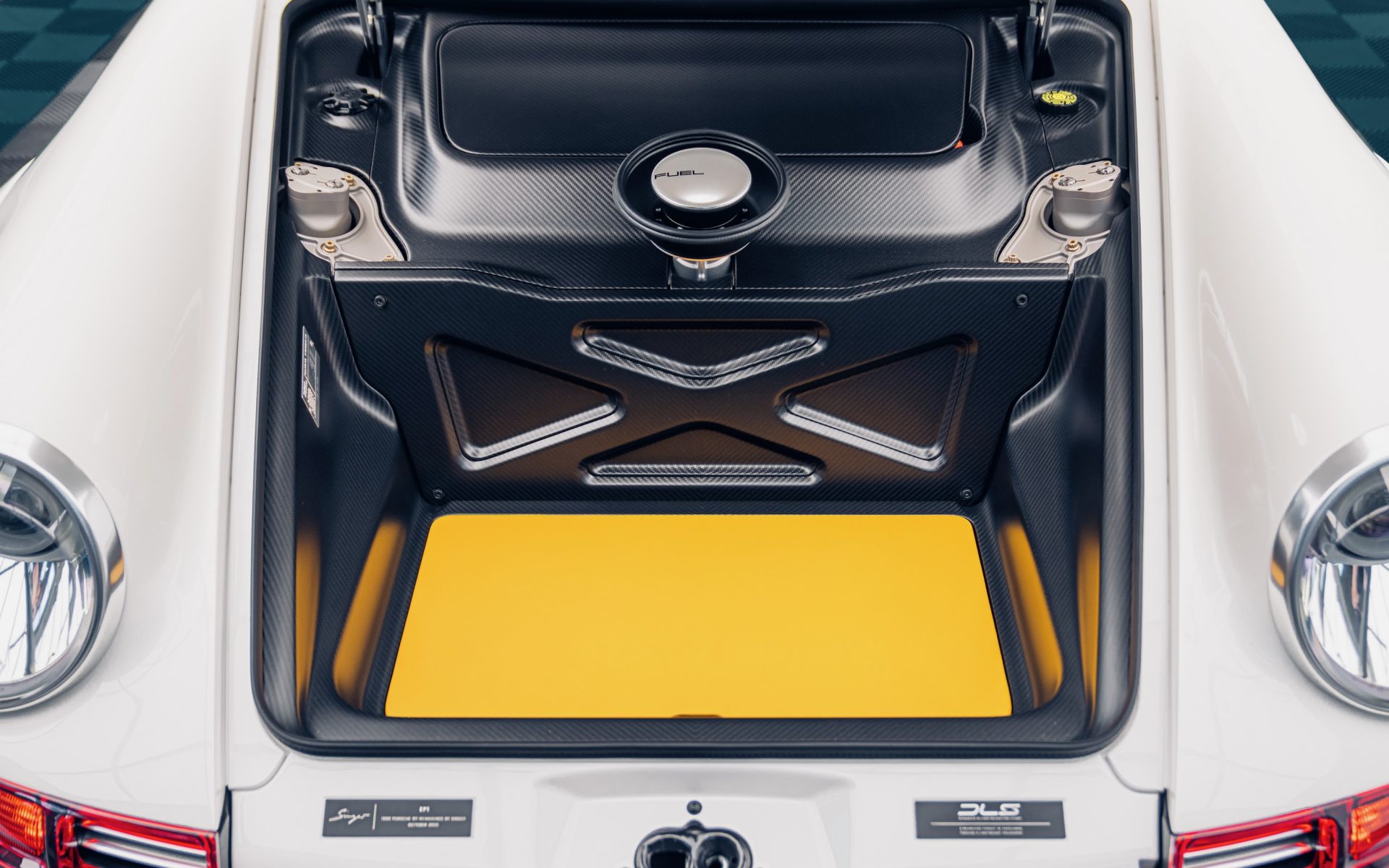
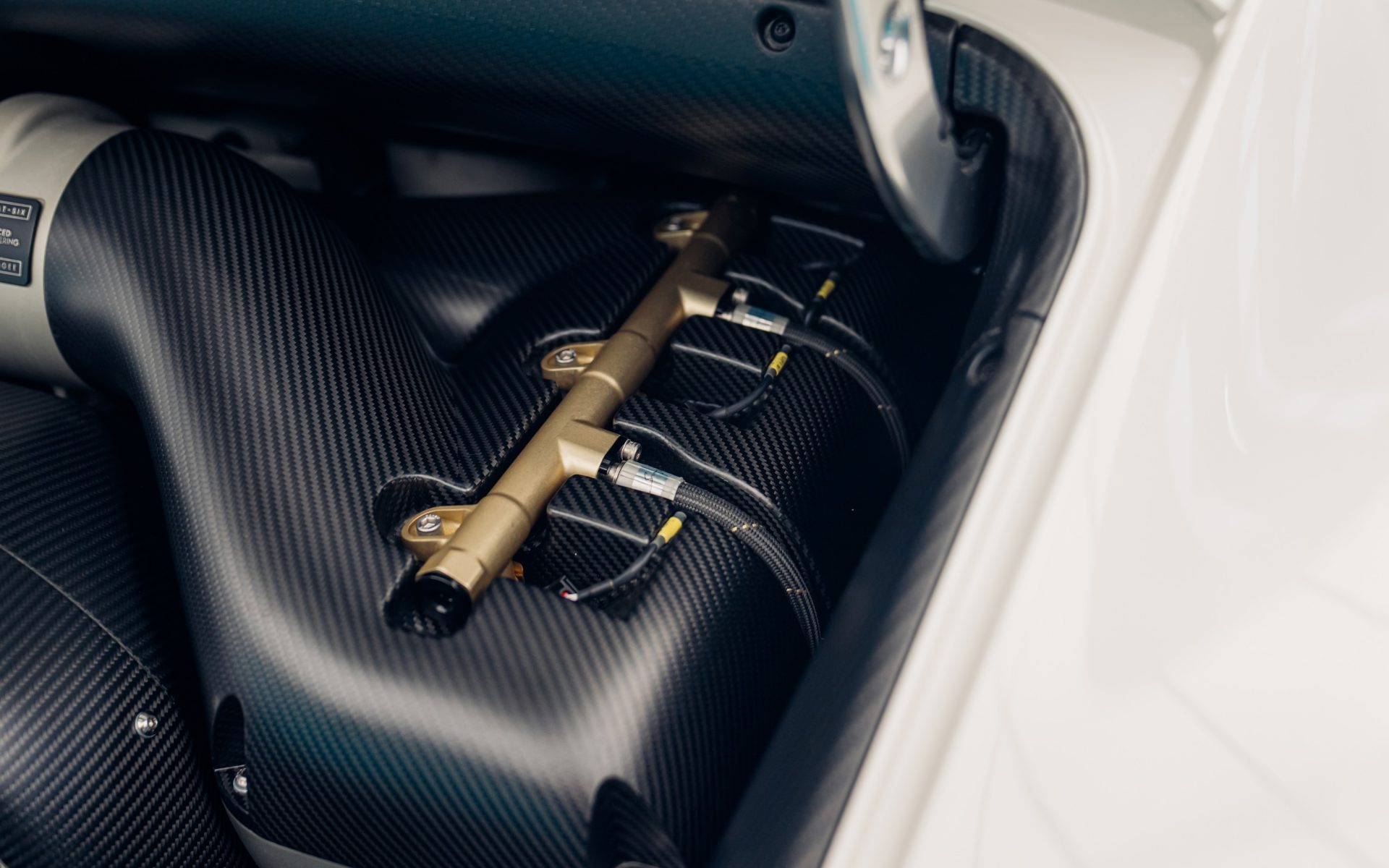
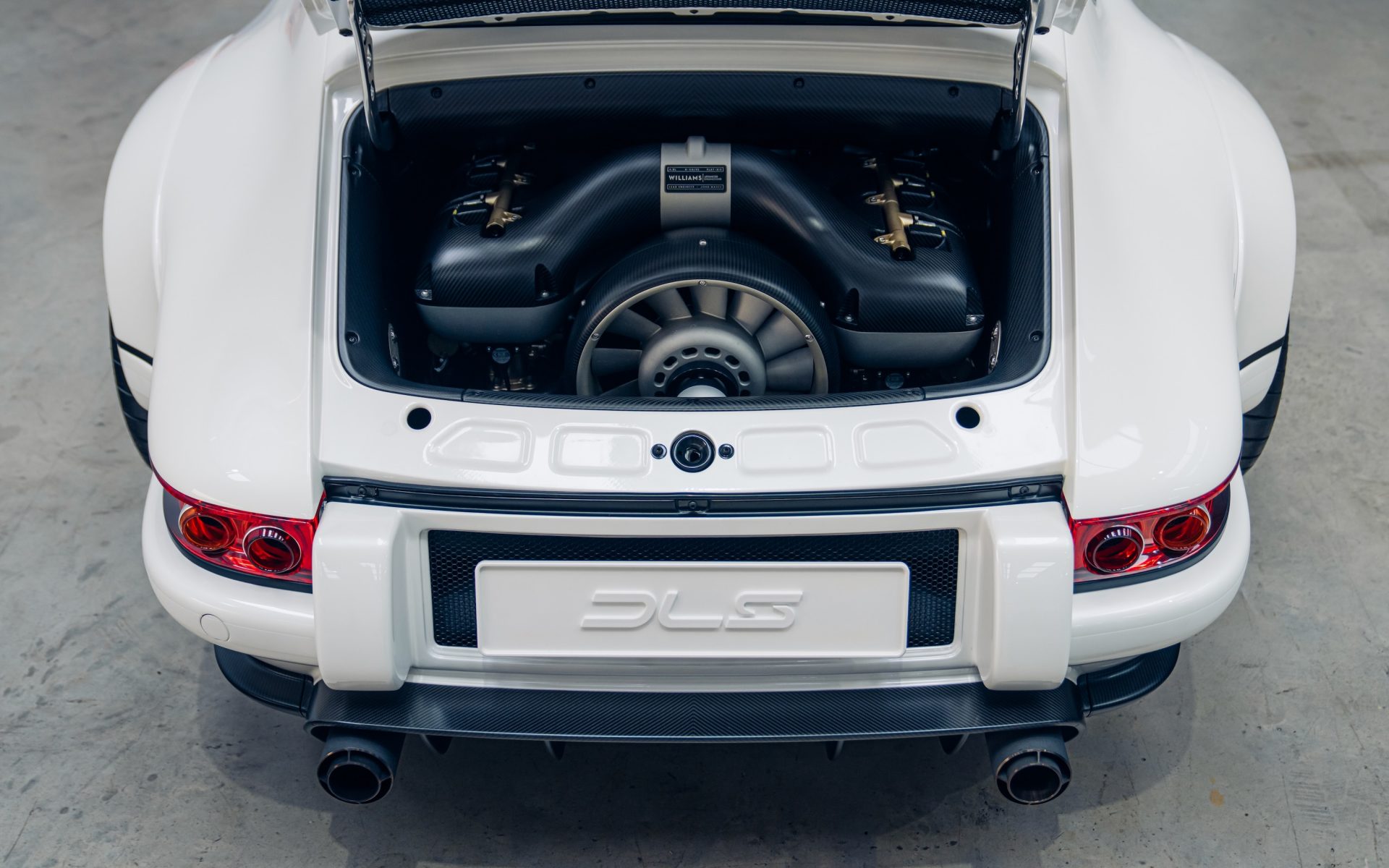
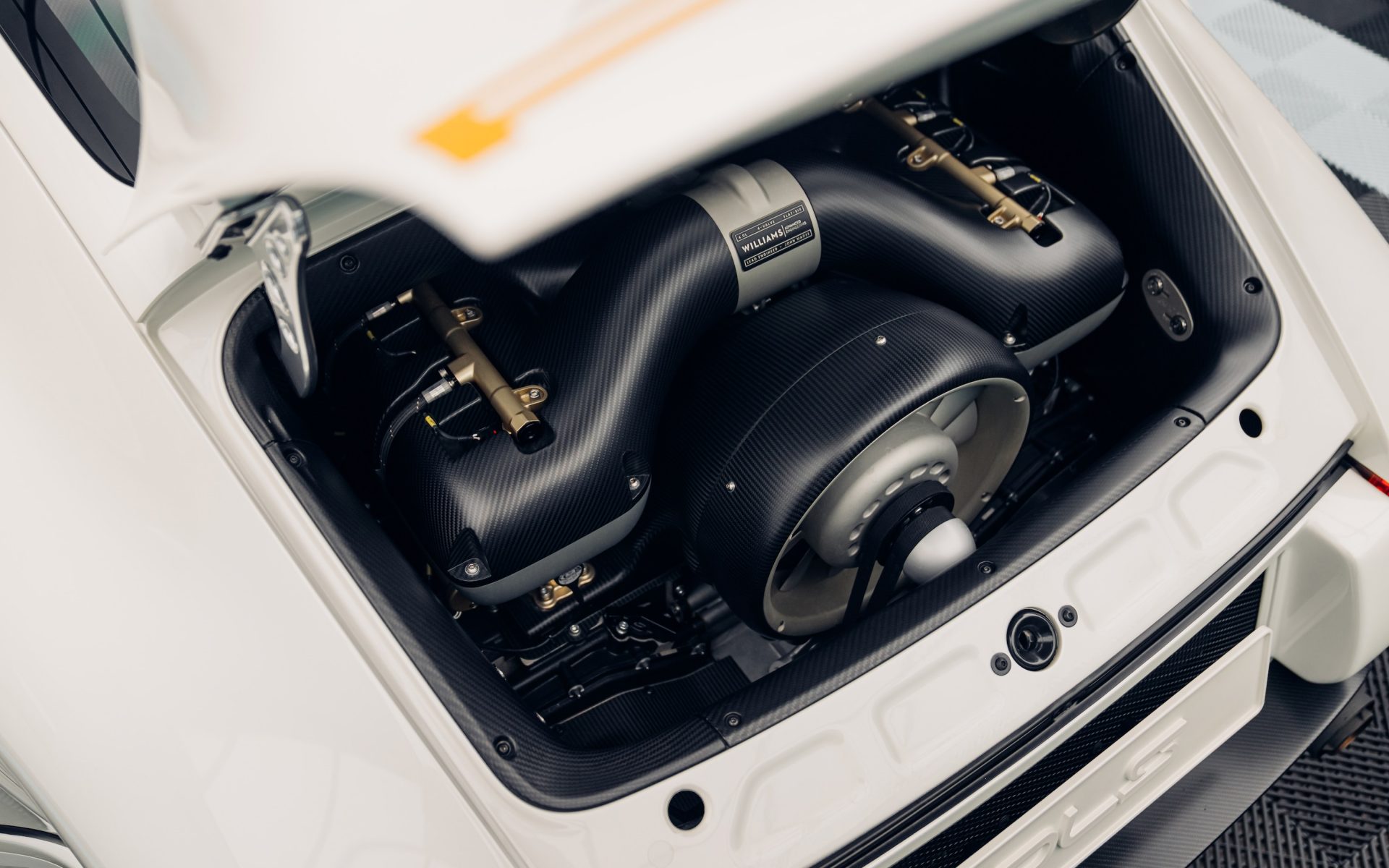
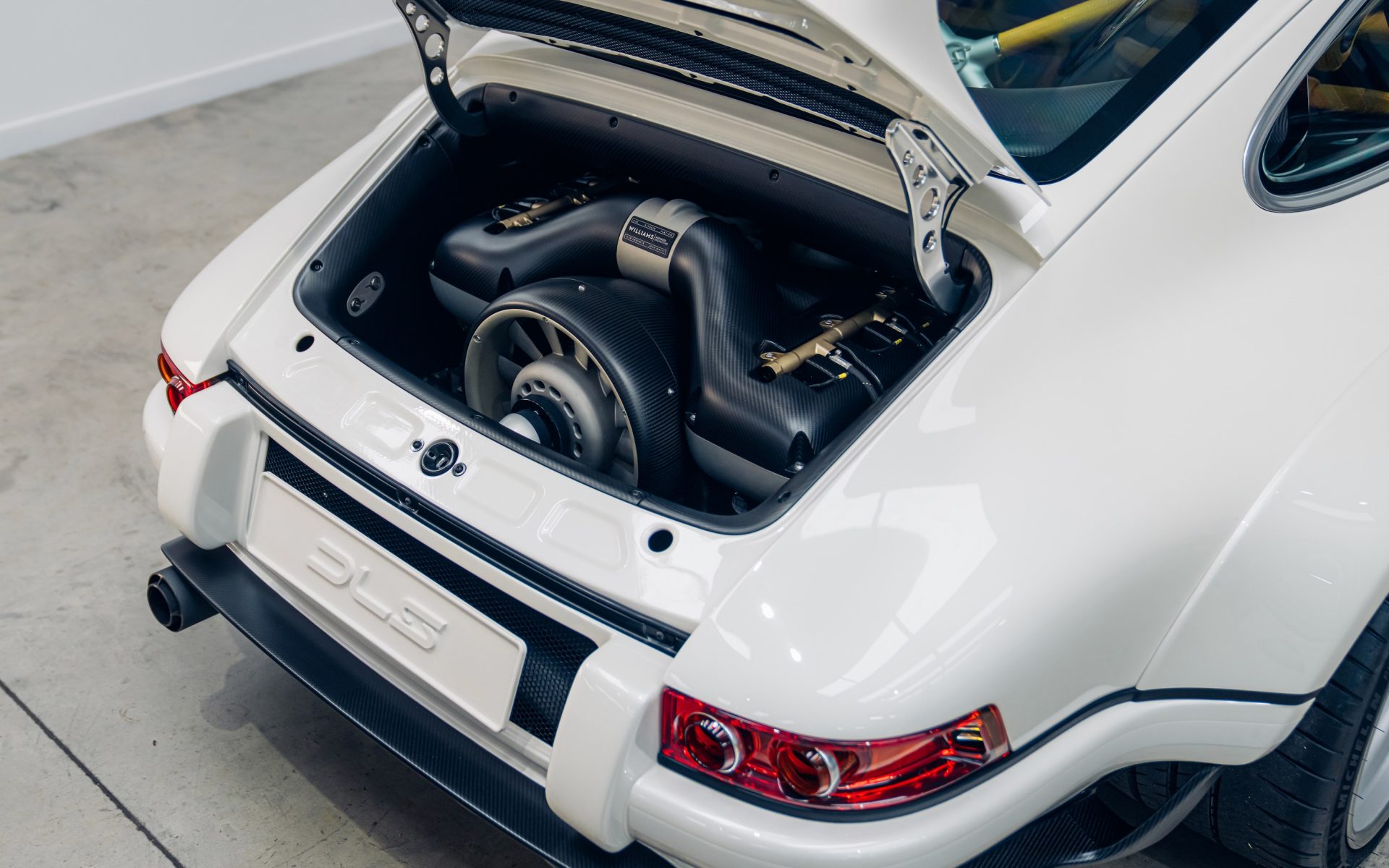
Auktion: RM Sotheby’s, Sealed (Monterey 2025), Schätzpreis 3,25 bis 3,75 Millionen Dollar, mit diesen Informationen: «The fruits of Singer’s labor were laid bare for the world to see in 2018, when the DLS services made their global debut at the Goodwood Festival of Speed. This example—named EP1, finished in Parallax White with Ghosted Light stripes and Norfolk Yellow lettering —spent the weekend sitting on a podium on the company’s stand and proved a magnet for the world’s press. The polished aluminum brightwork attracted social media influencers like magpies, while both oil and fuel fillers were external. Even the 18-inch monoblock center-lock wheels were a work of art, forged from Magnesium, shod in Michelin Pilot Sport Cup 2 tires, and hiding bespoke Brembo CCMR carbon-ceramic disc brakes and monoblock brake callipers. The interior was equally special with lightweight carbon fiber bucket seats trimmed in Norfolk Yellow leather, secondary trim in exposed, satin carbon fiber, and a sublime exposed gear linkage with a gear knob made from carbon fiber and maple. If ever a car came close to ‘breaking the internet,’ this was it. Its sister car, appropriately finished in Heart Attack Red, assaulted the famous hill, with its 9,300 rpm redline letting out an ethereal howl unlike any 911 that came before as it tore past the Flint Wall. Close your eyes as it screamed through the gears and you’d be forgiven for thinking it was a Formula One car being put through its paces. That something so beautiful, so perfectly styled, and thoughtfully executed can also be so fast, so visceral in its performance, well, it hardly seems fair. After its initial restoration and presentation at Goodwood in 2018, EP1 was meticulously refreshed by Singer in 2023. From being the first car presented on the stand at the Festival of Speed in 2018, to featuring in many magazine articles, EP1 and the DLS restoration services were part of a pivotal moment in the firm’s history—a watershed moment when the legendary style and swagger that made Singer famous was fused for the first time with cutting-edge Formula One technology».
–
Chassis-Nummer: WP0ZZZ96ZMS400118 (1991)
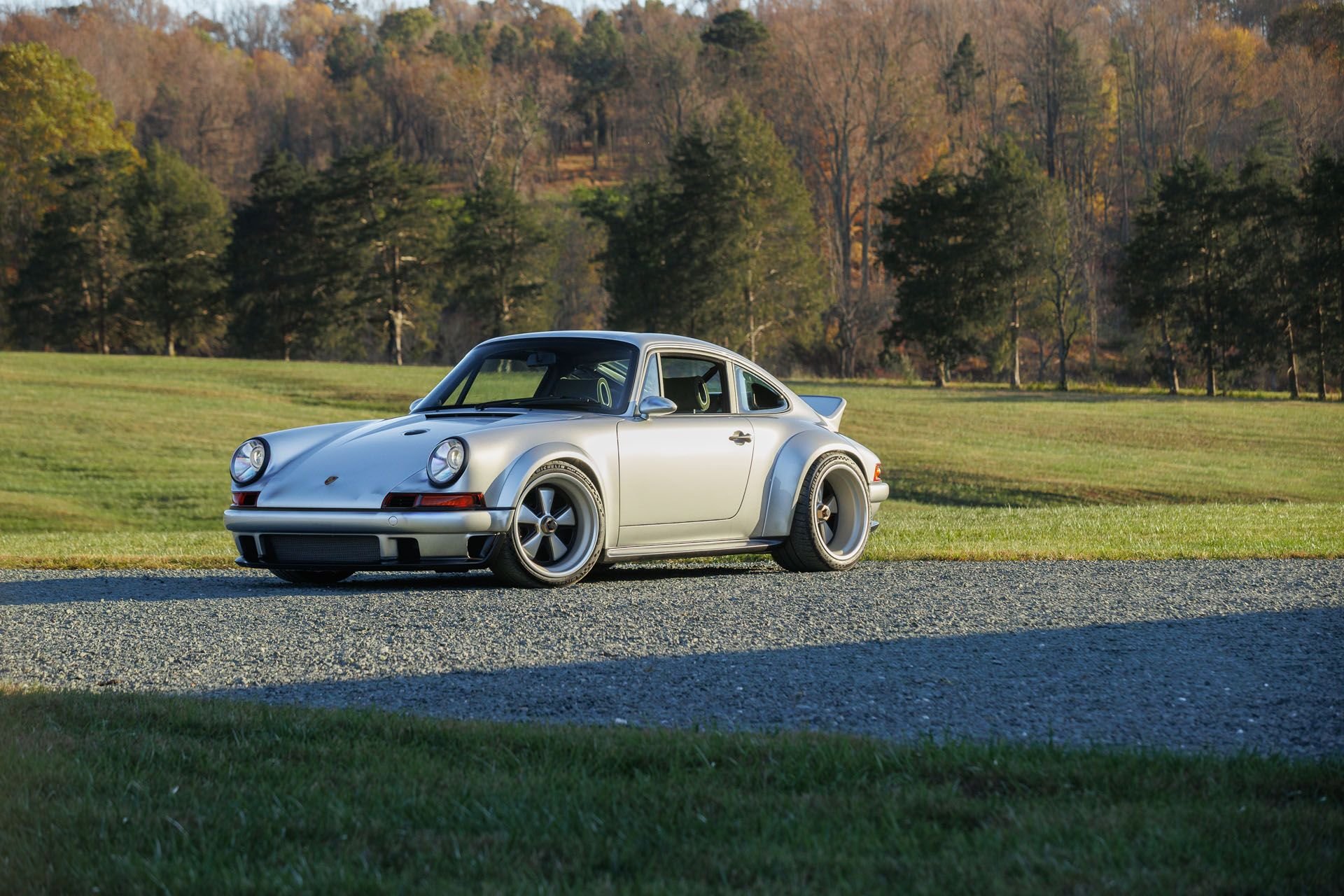
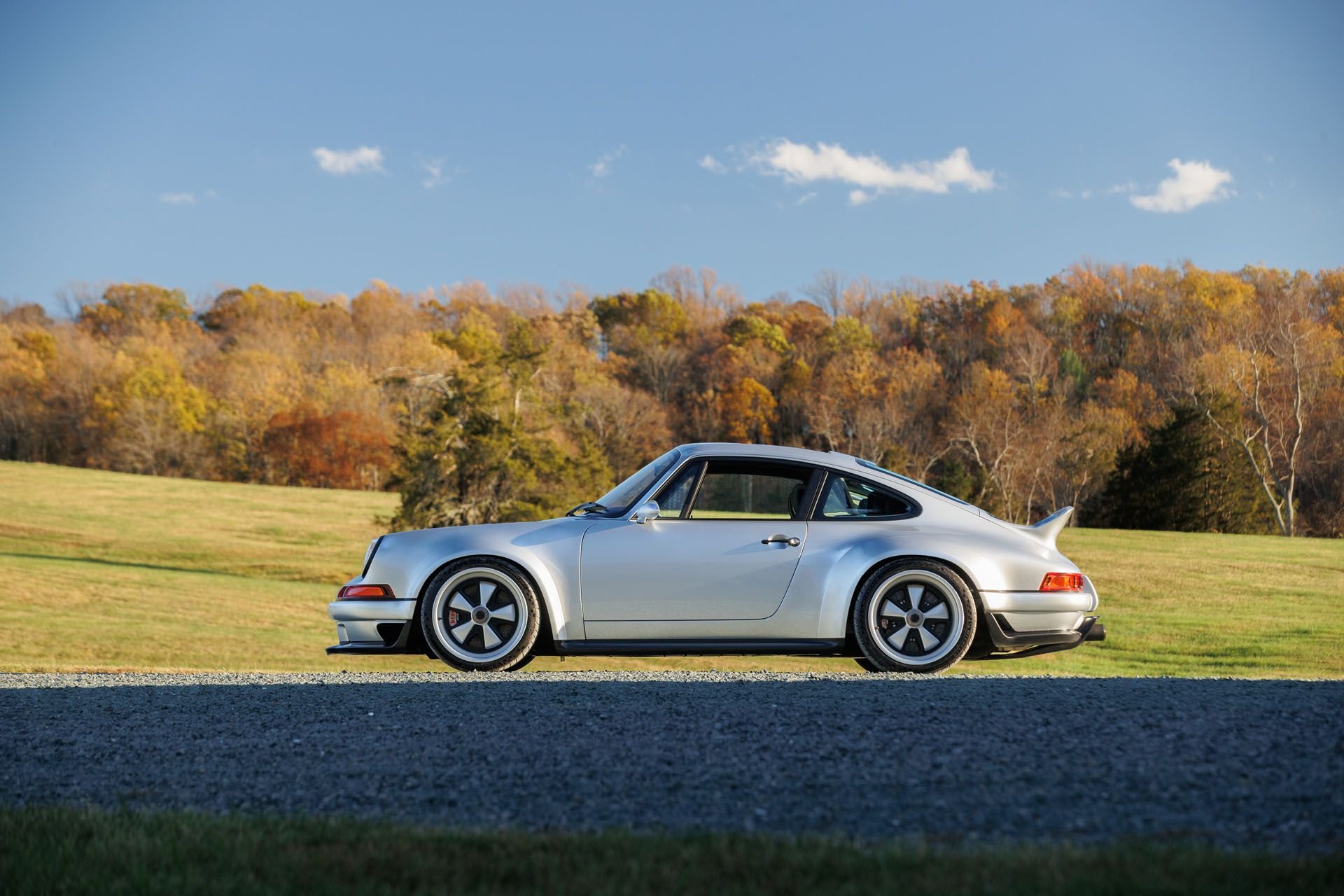

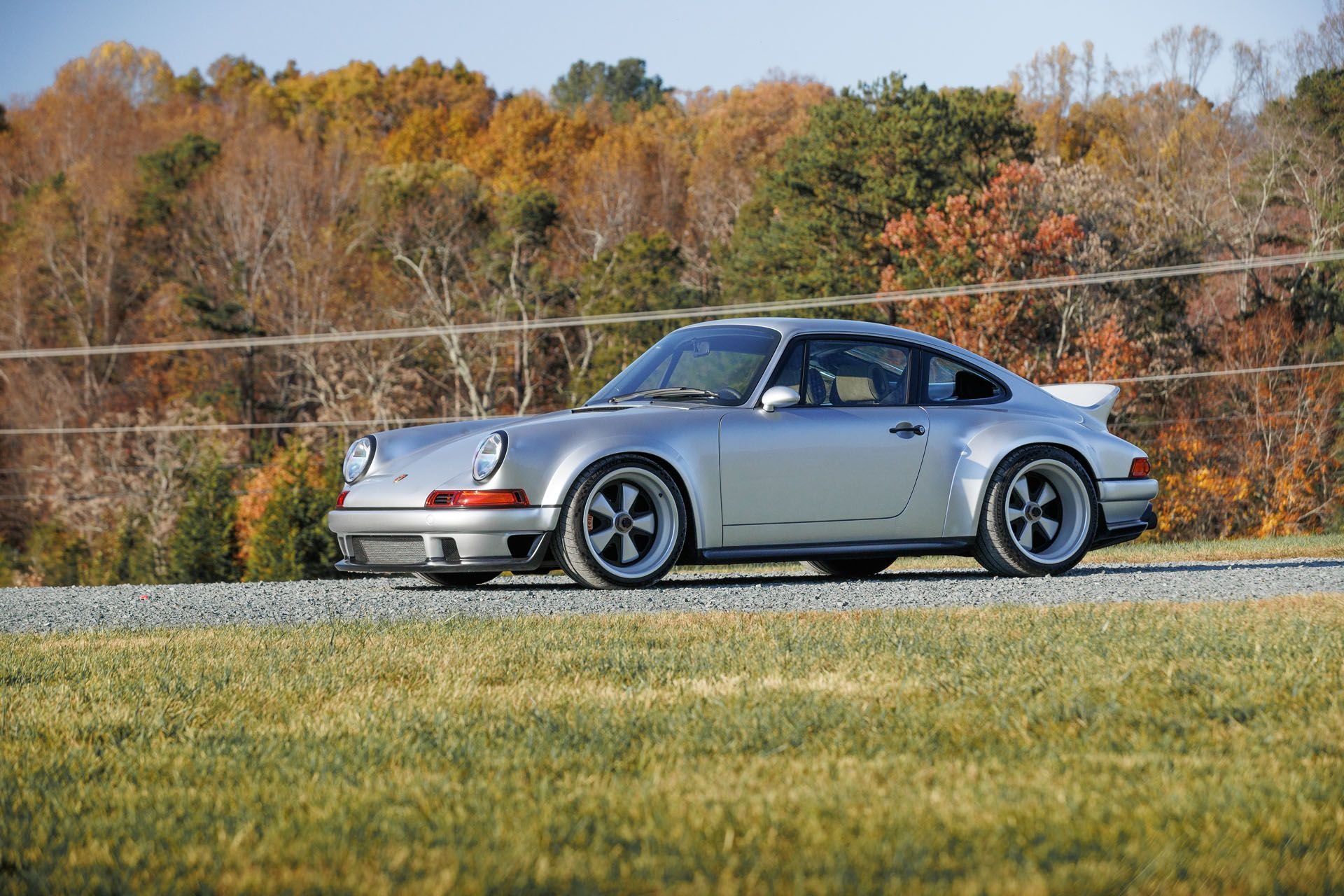


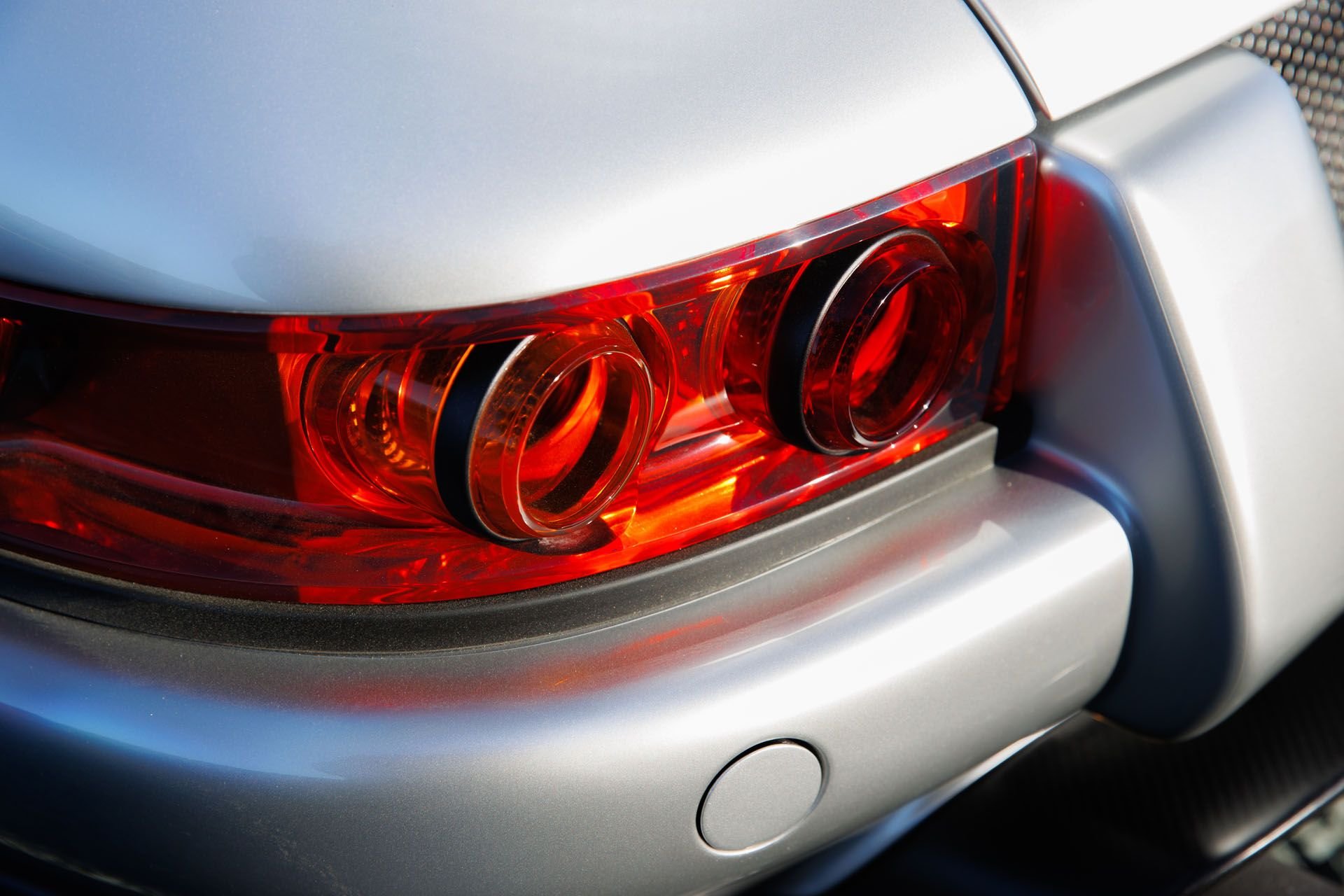
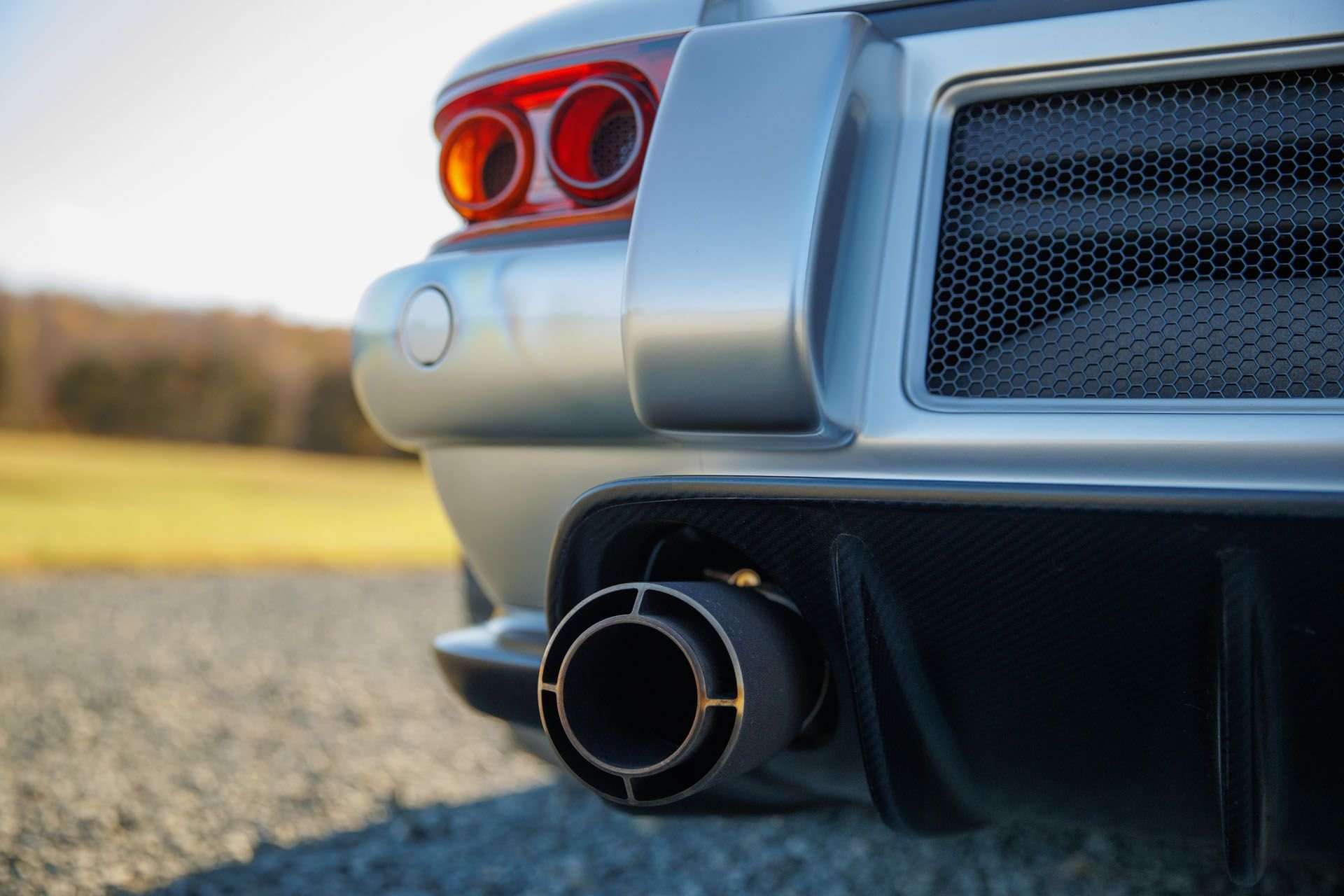
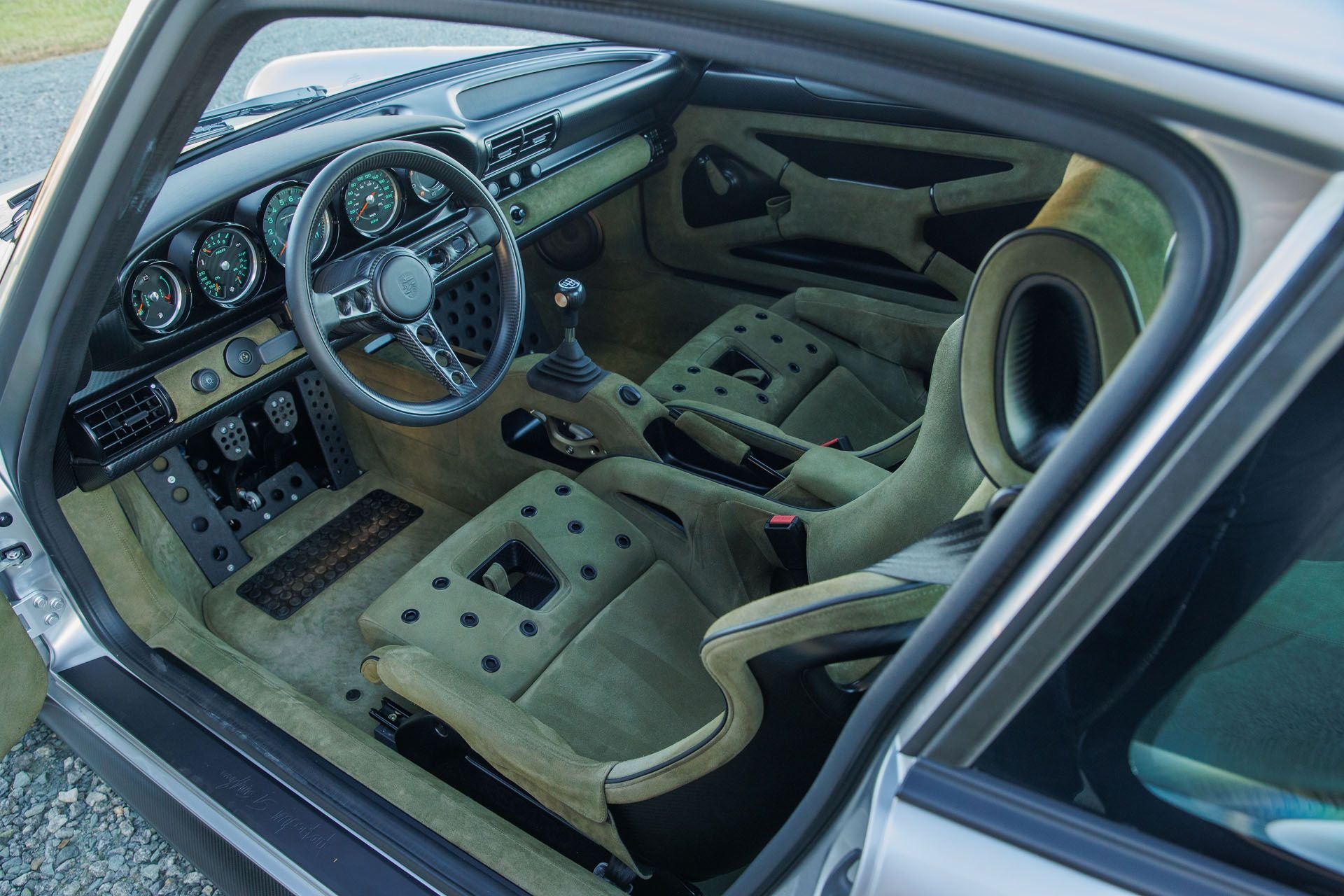
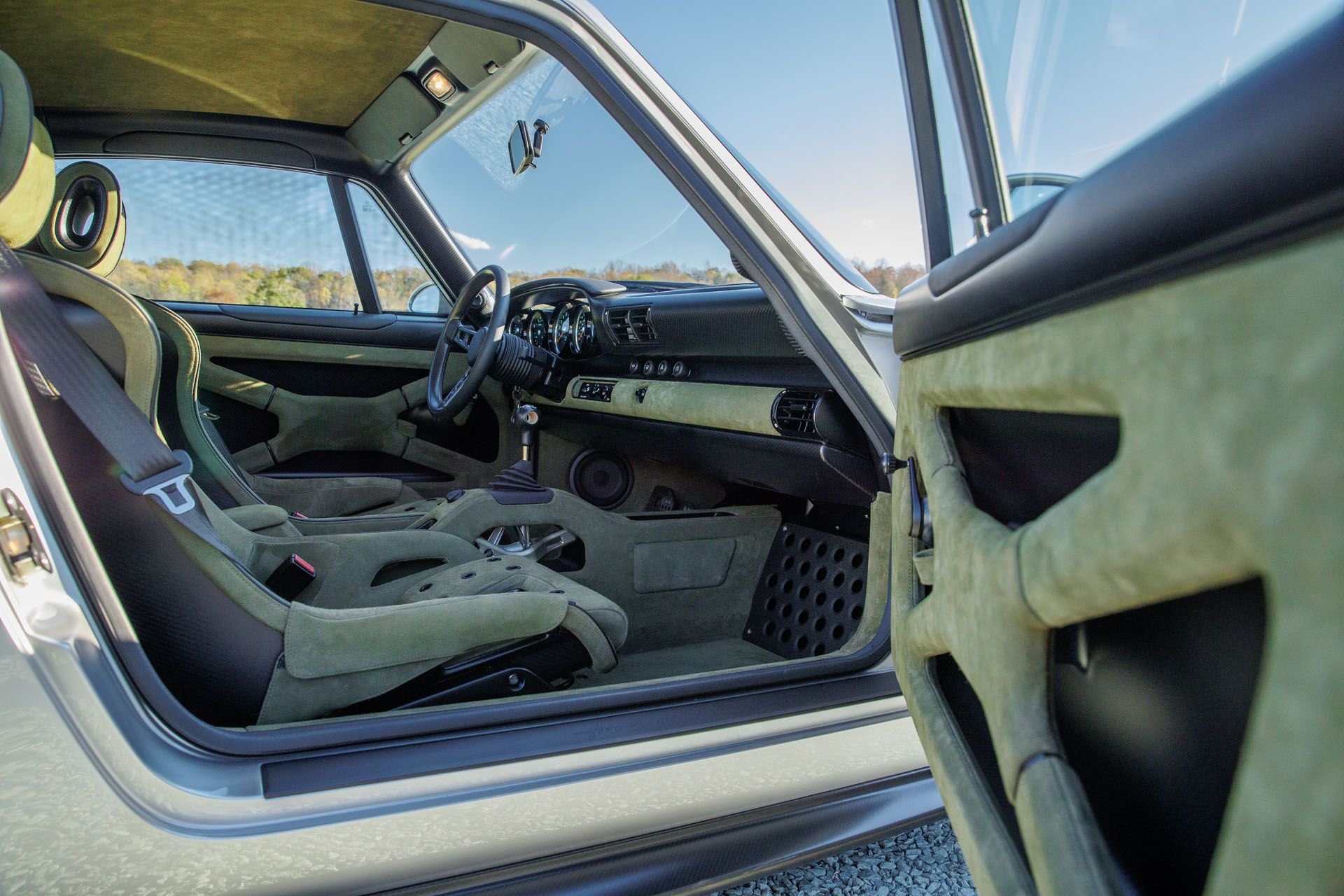


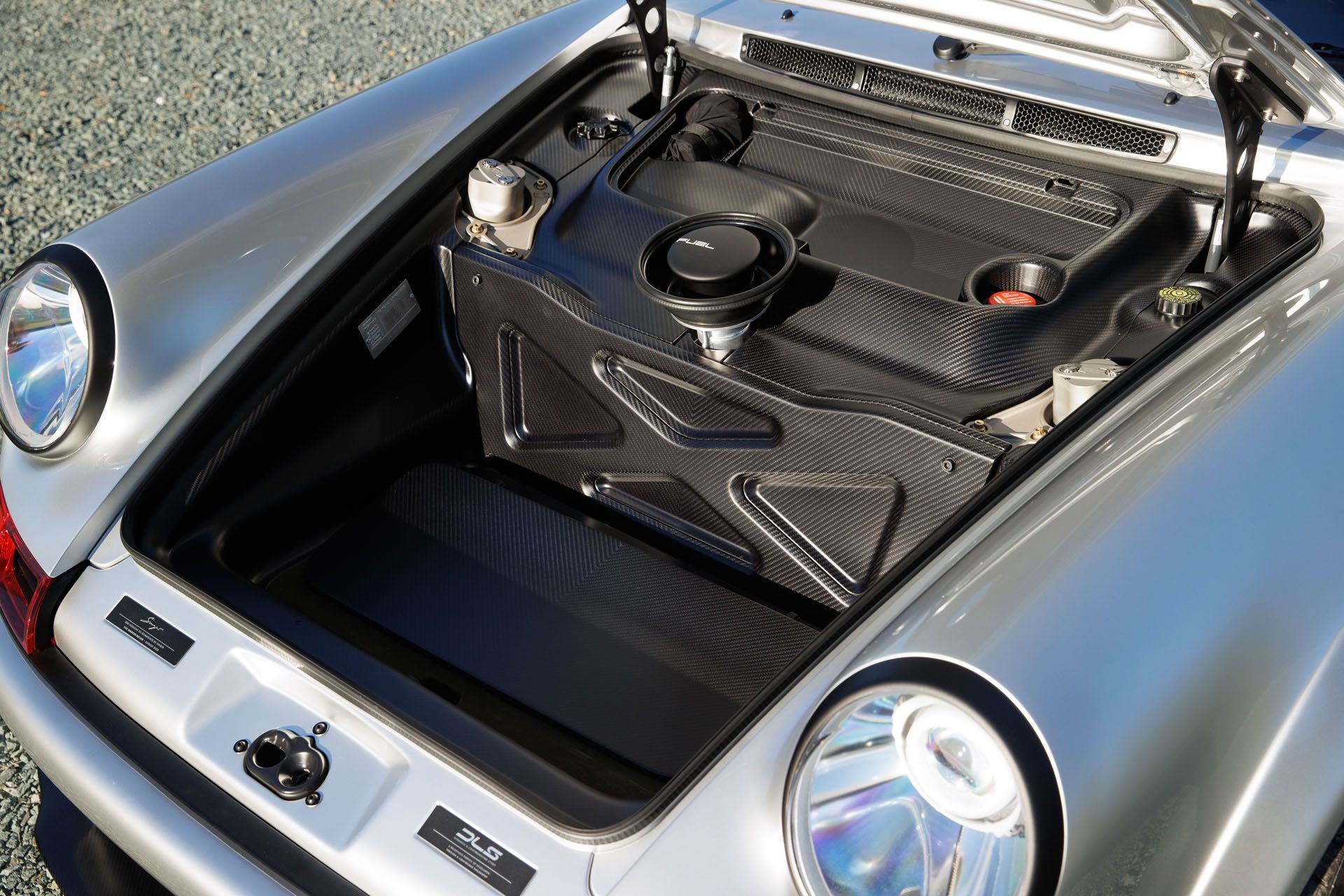
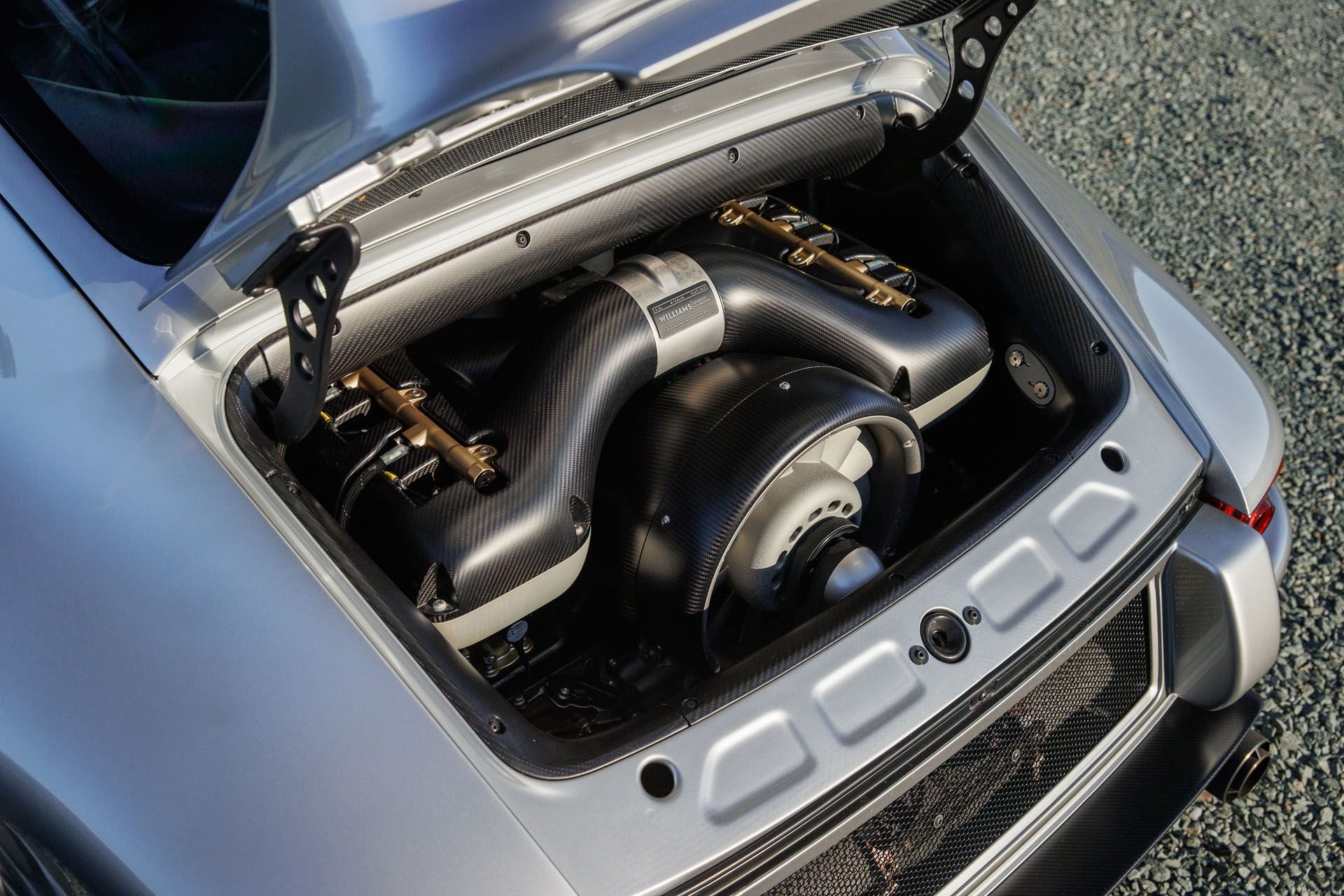


Steht zum Verkauf bei Broad Arrow, Private Sales, Dezember 2024, mit diesen Informationen: «Presented here is an exceptionally low-mileage and uniquely specified example of Singer Vehicle Design’s renowned Dynamics and Lightweight Study, known as the „Mame Commission.“ Originally a 1991 911 Carrera 2 Coupe, chassis number WP0ZZZ96ZMS400118 has been „reimagined“ in a bespoke Fluid Silver finish, a $42,550 option, safeguarded by a full-body paint protection film applied by Singer to preserve its impressive appearance. The exterior is further distinguished by Black Titanium bead-blasted bright trim and Black-tinted satin visible carbon fiber accents along the lower trim and decklid inserts. The interior of the Mame Commission exemplifies Singer’s dedication to uncompromising craftsmanship. It features “To Sample” Olive Green suede, offset by Black-tinted satin carbon fiber elements and Black bead-blasted bright trim. The mid-trim and lower trim are wrapped in matching suede, completing a sophisticated monochromatic aesthetic rarely seen in such meticulous detail. Additional interior features include a carbon fiber X-brace finished in Black-tinted satin, color-matched harnesses, and premium brightware on the doors. Singer’s ethos, “Everything is Important,” is engraved on the door sill plate, reinforcing the commitment to precision, while a maple wood shift knob, Black tachometer face, and MOMO carbon fiber steering wheel seamlessly blend vintage inspiration with contemporary refinement. Modern conveniences such as air conditioning and a heated front screen are seamlessly integrated, providing both luxury and functionality. As one of only 75 DLS commissions undertaken, chassis number WP0ZZZ96ZLS403221 represents a rare and significant piece of modern automotive art. The odometer shows just over 182 miles at the time of cataloging, indicating this DLS has been preserved in like-new condition since its completion. Furthermore, in August 2024, this exceptional Singer DLS was the subject of a “Year 1 Service” that included an inspection, engine oil change, transmission fluid change, and a diagnostic review.» Dann: Broad Arrow, Monterey 2025, Schätzpreis 2,9 bis 3,2 Millionen Dollar, gleiche Infos wie oben, aber unterdessen 250 Meilen.


–
Chassis-Nummer: WP0ZZZ96ZLS403221 (1990)


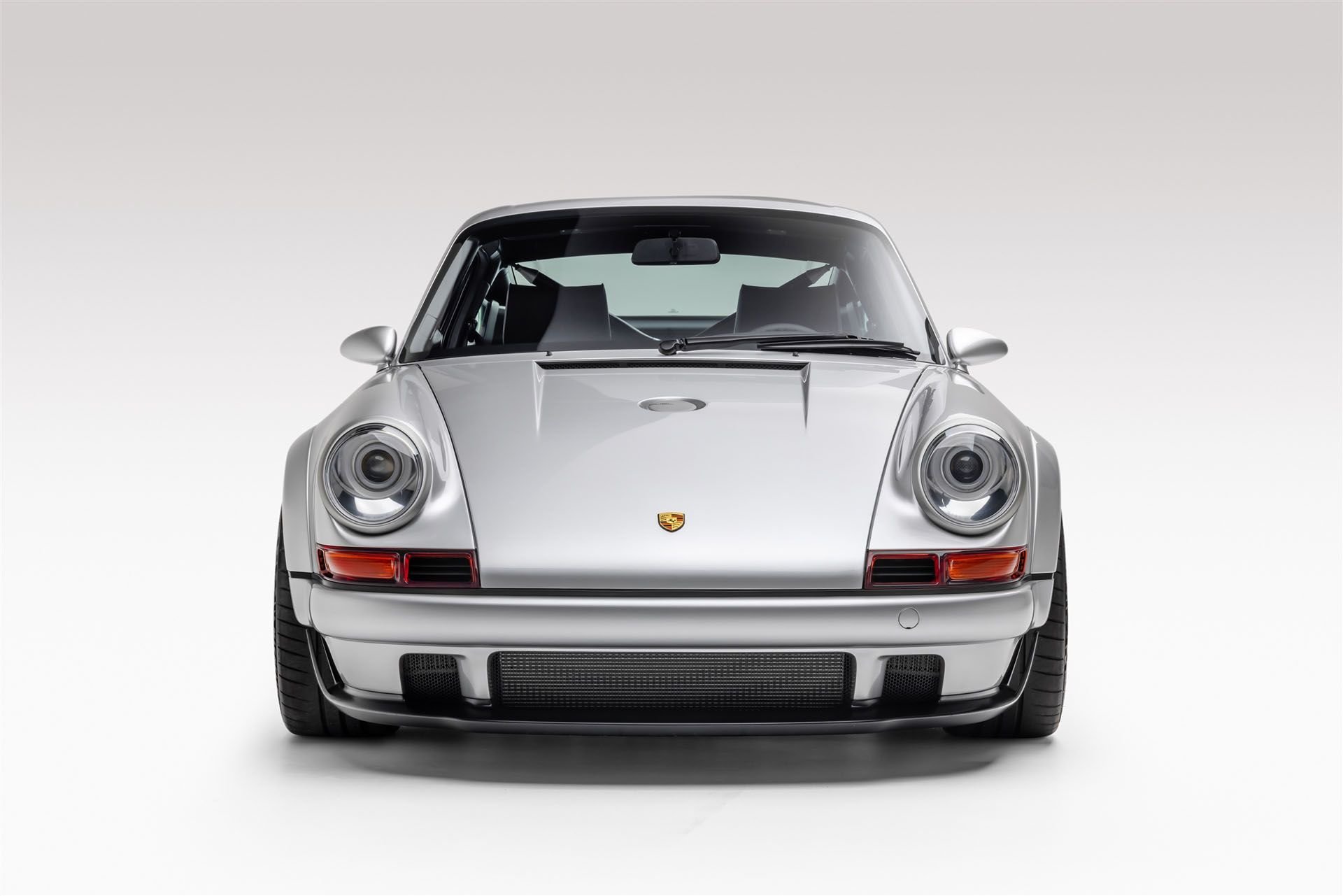
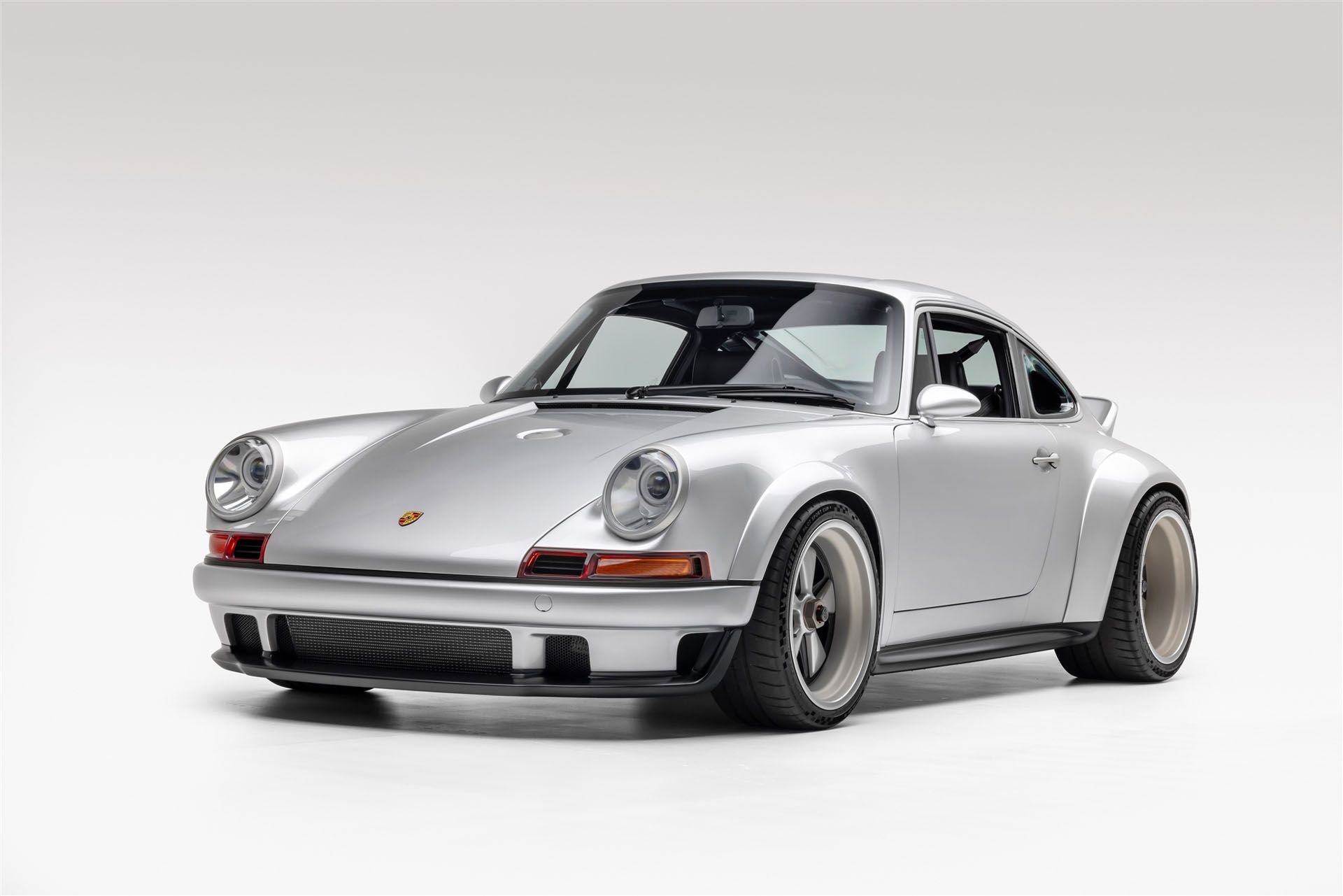
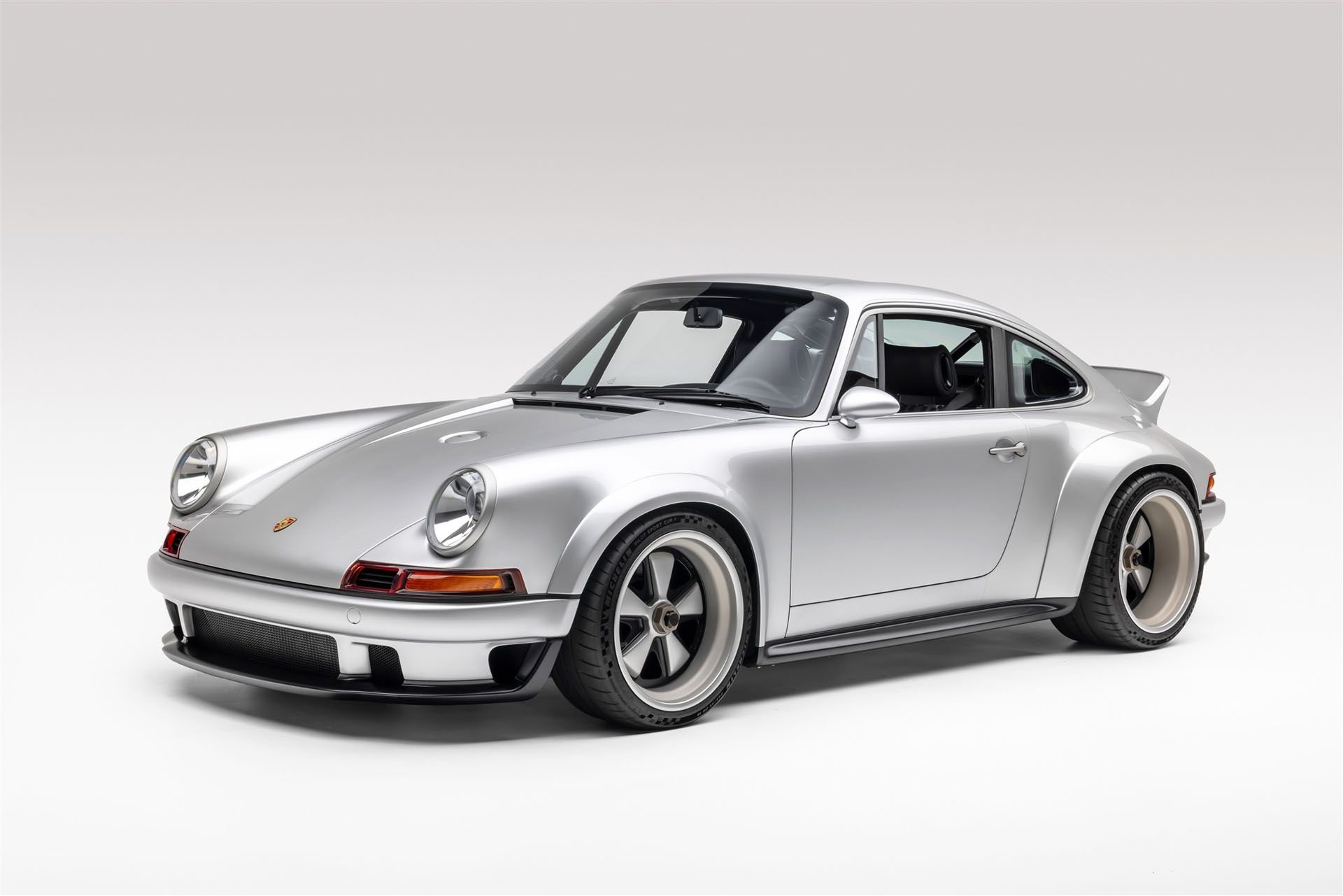
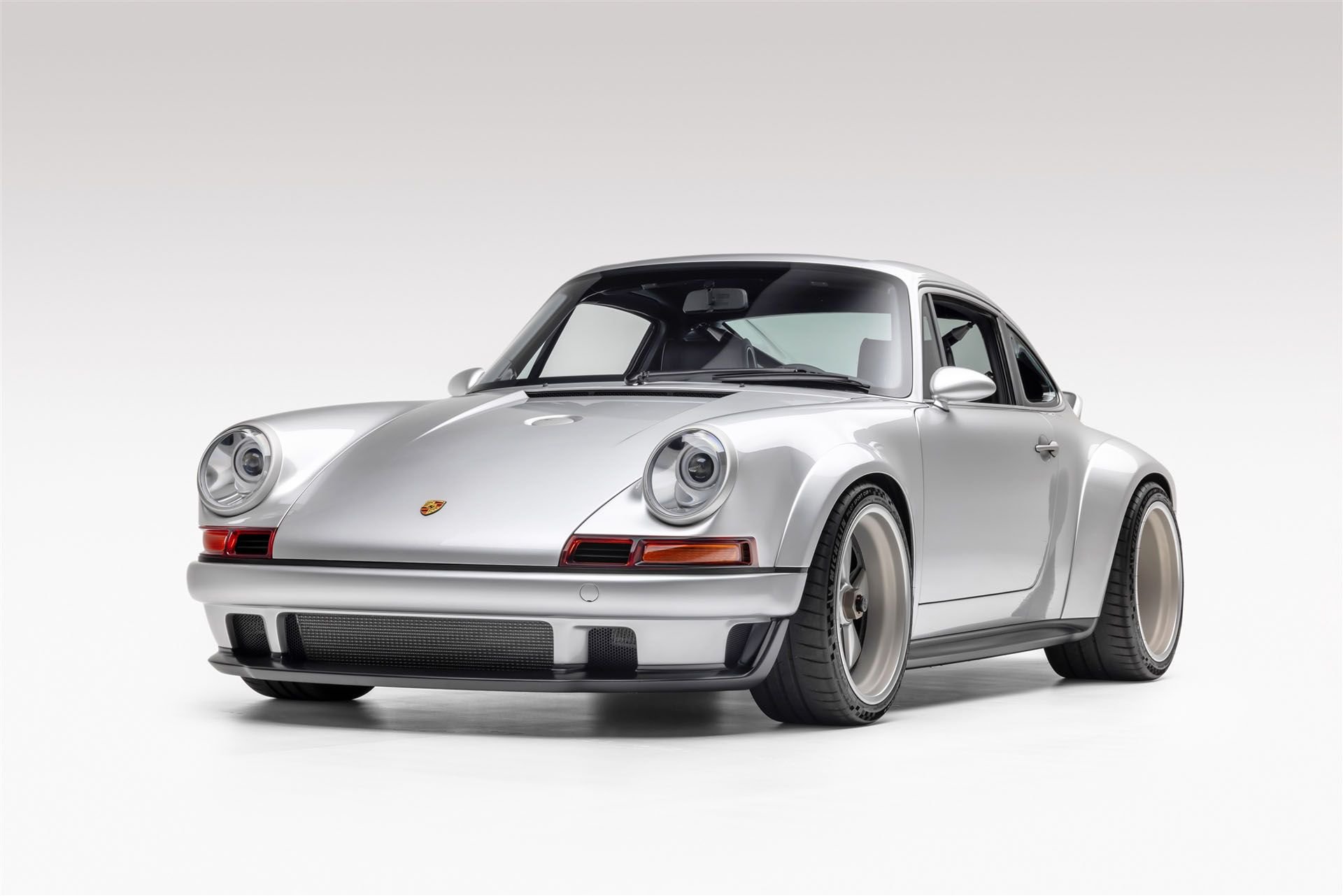
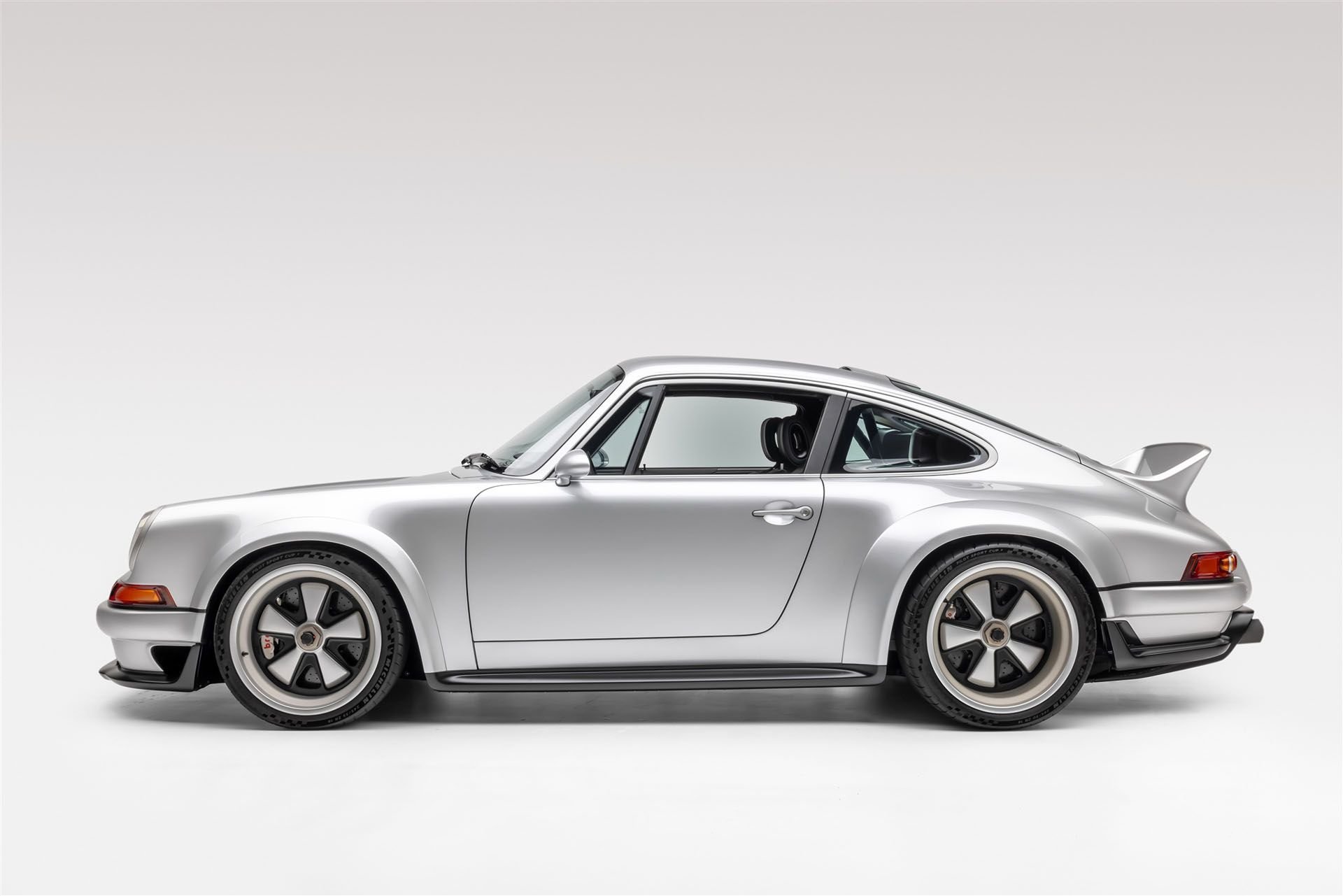
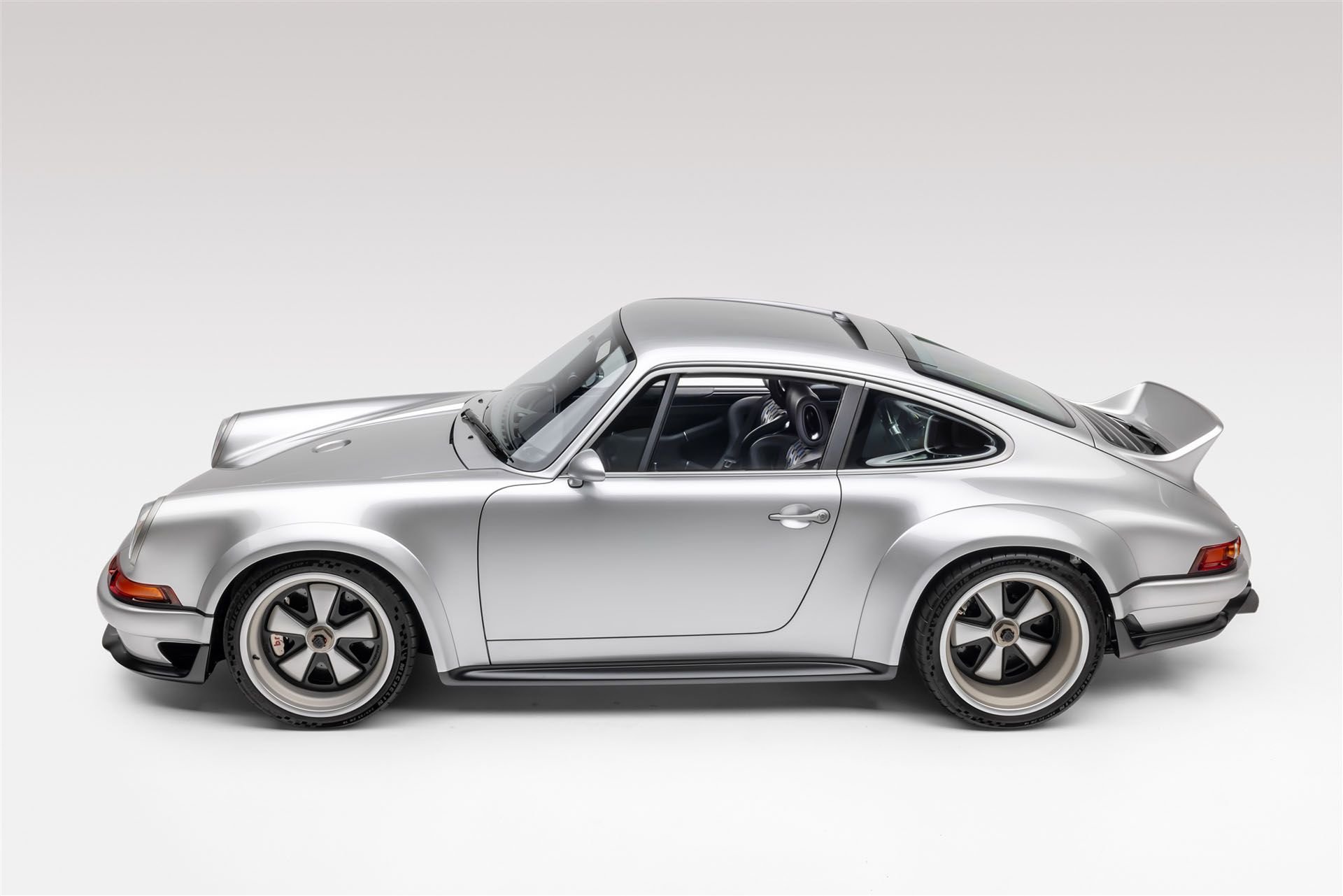
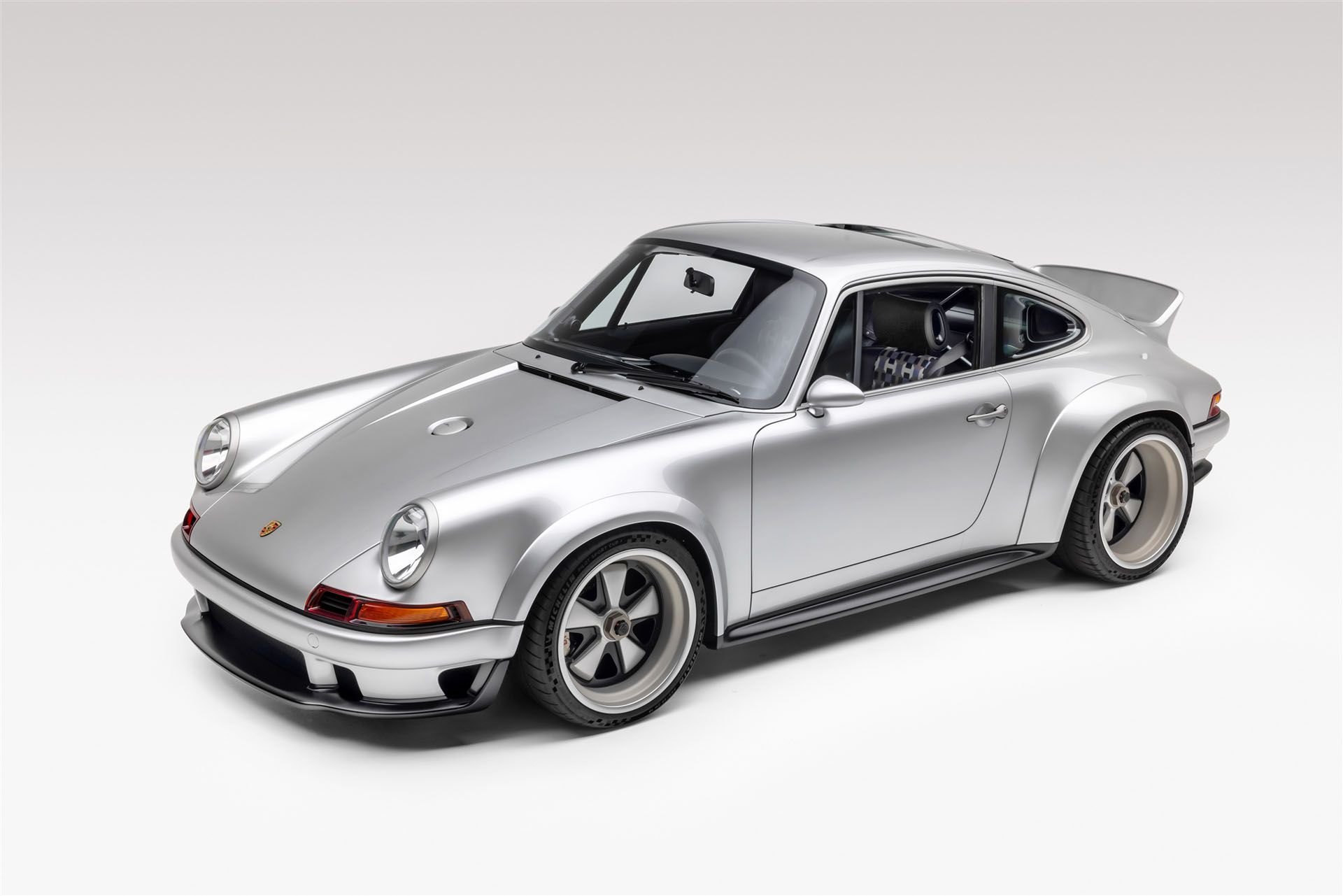
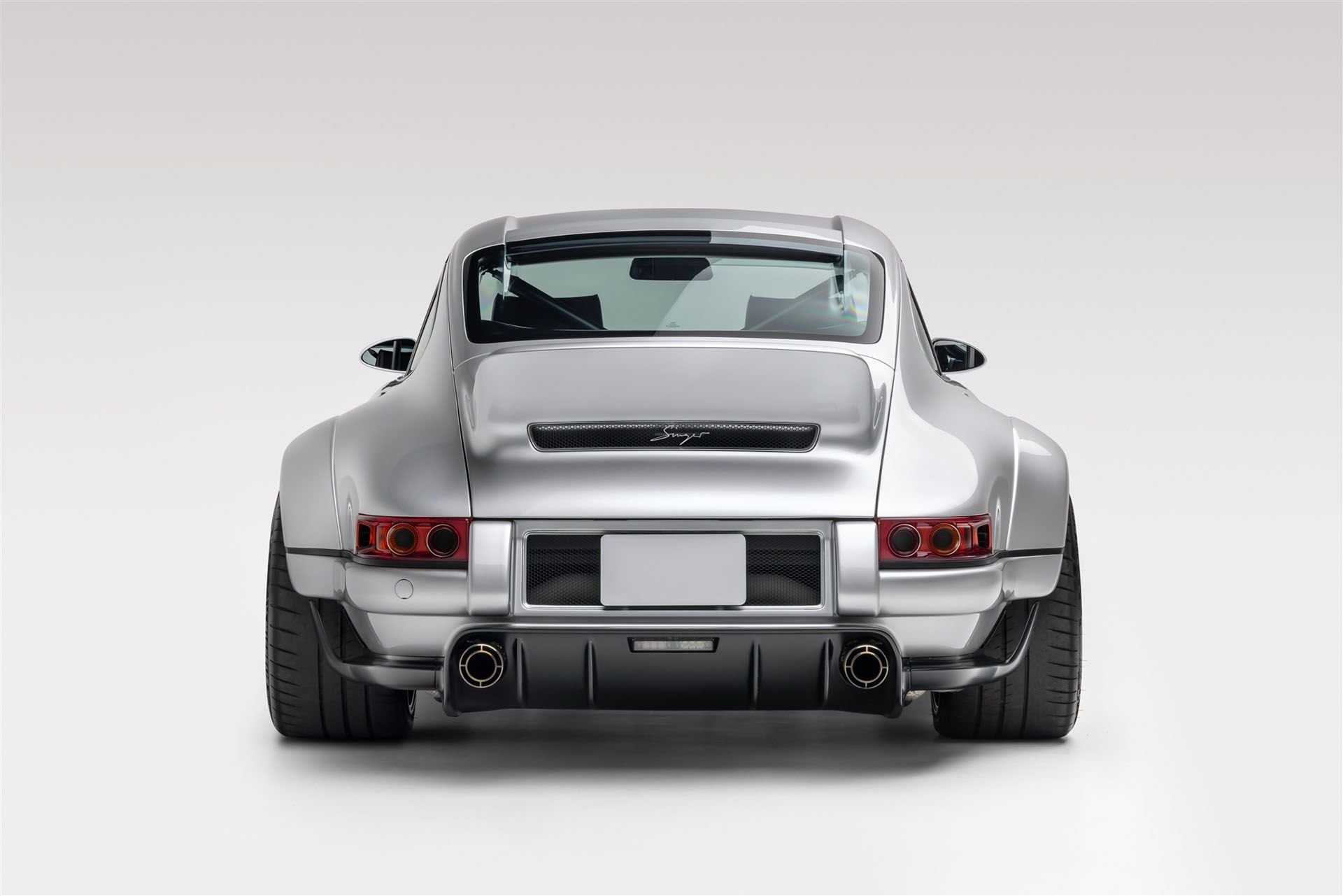
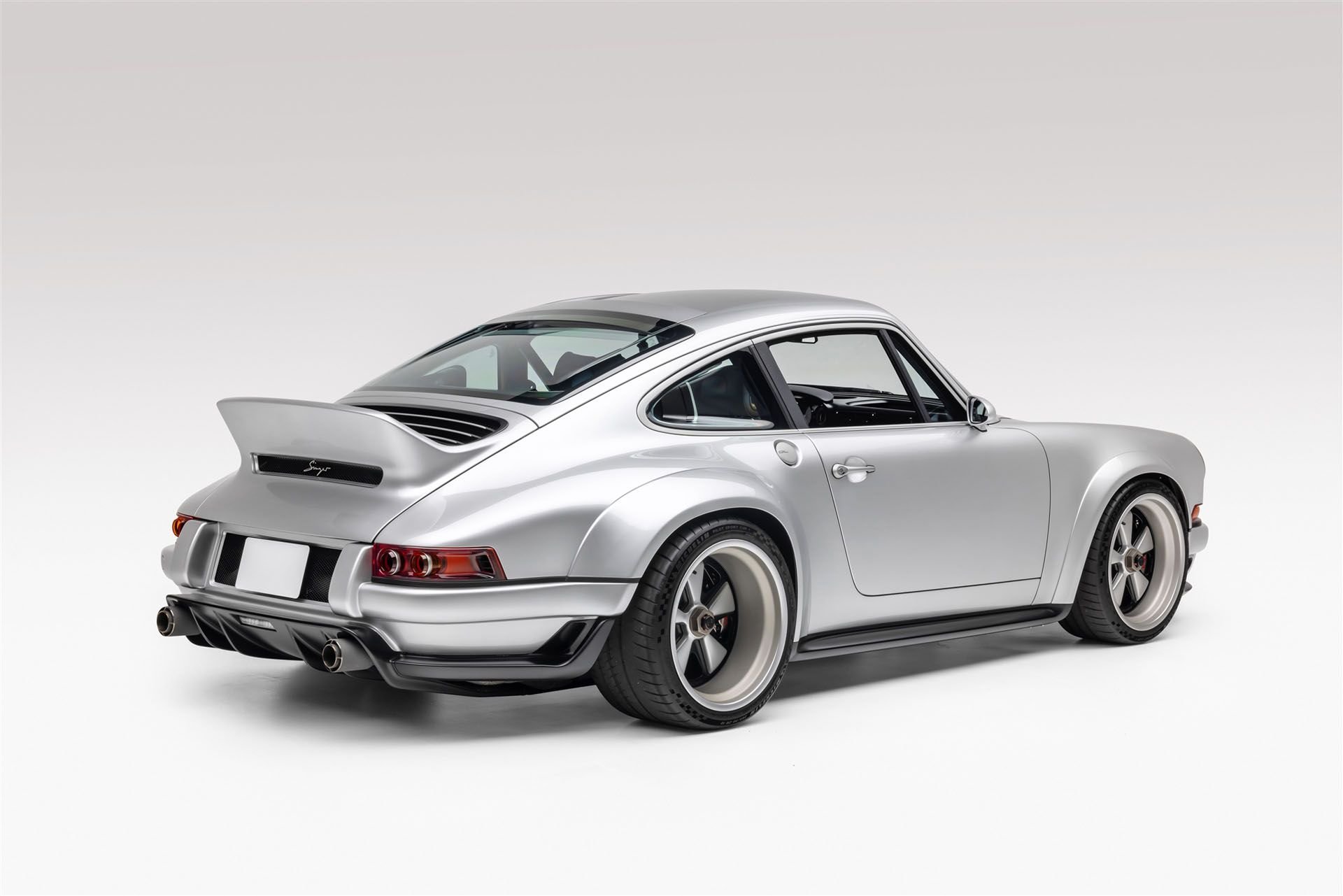
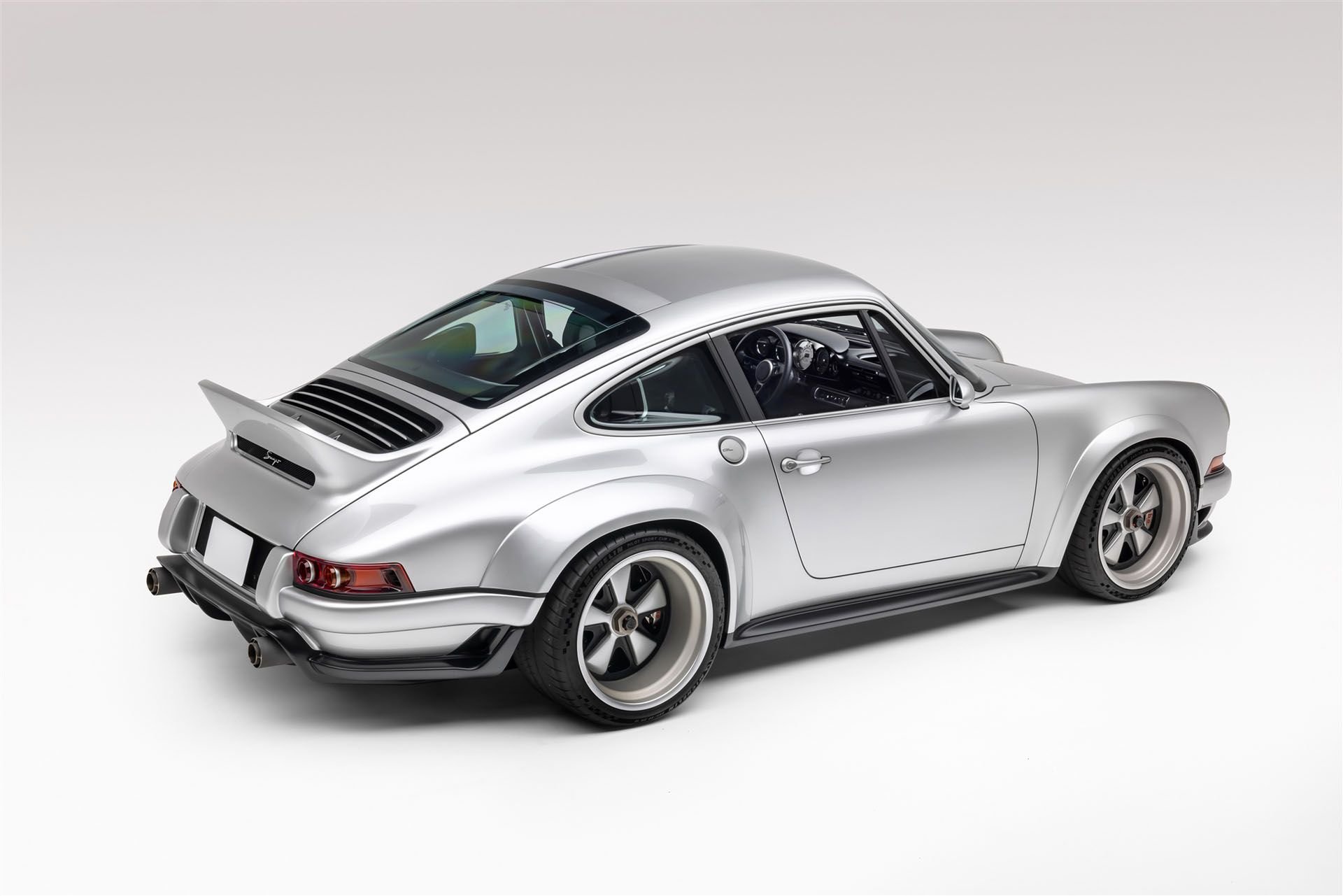
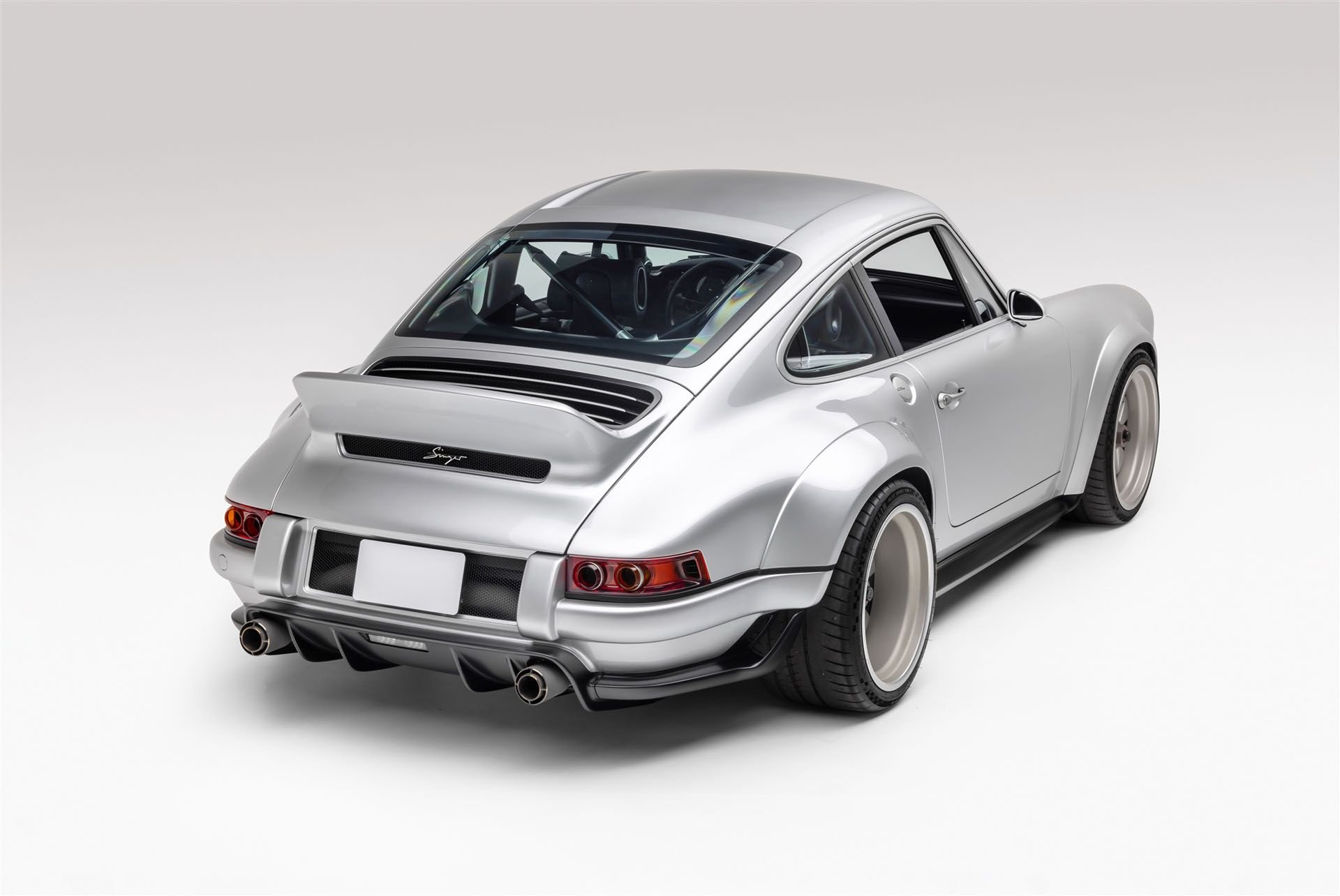


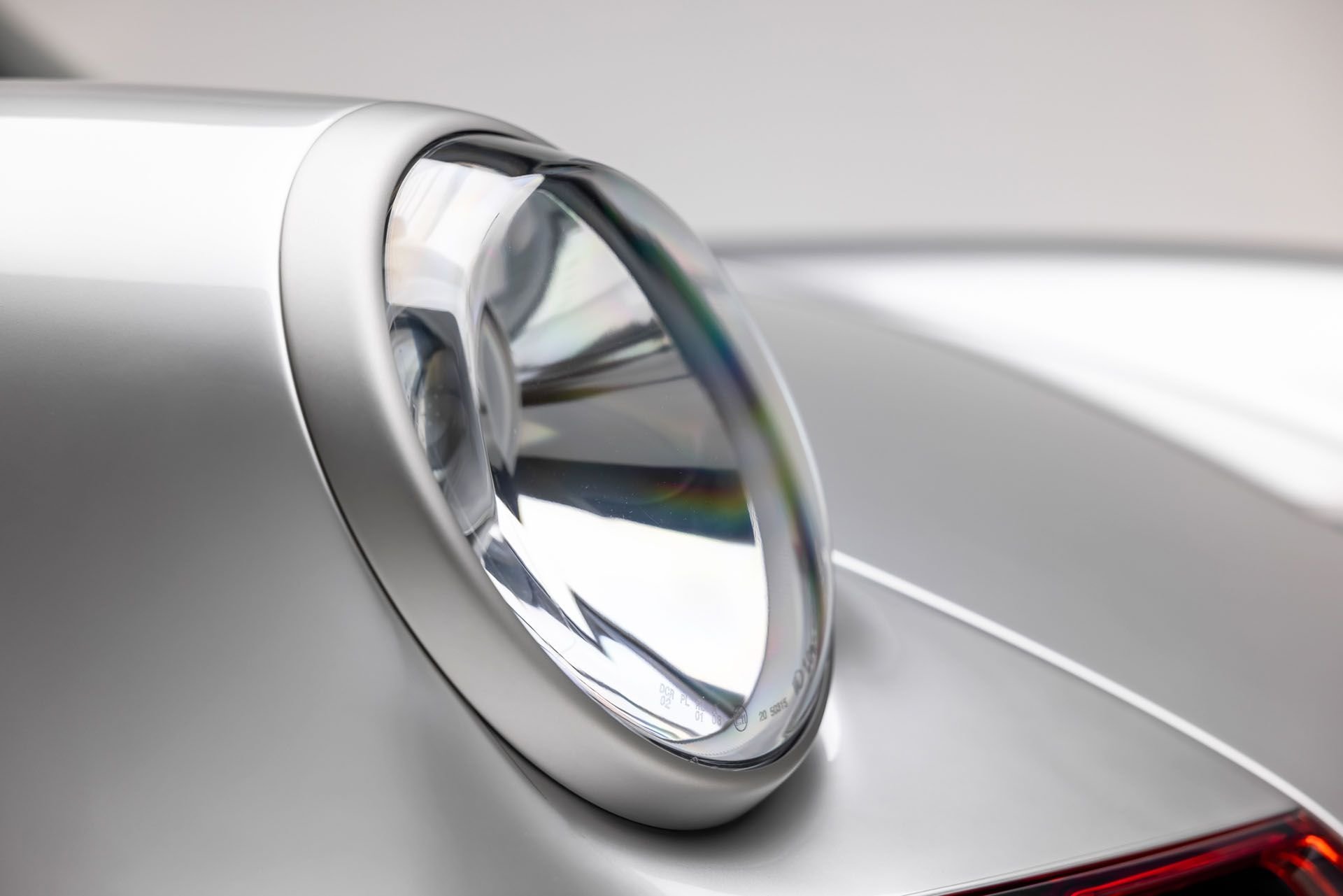
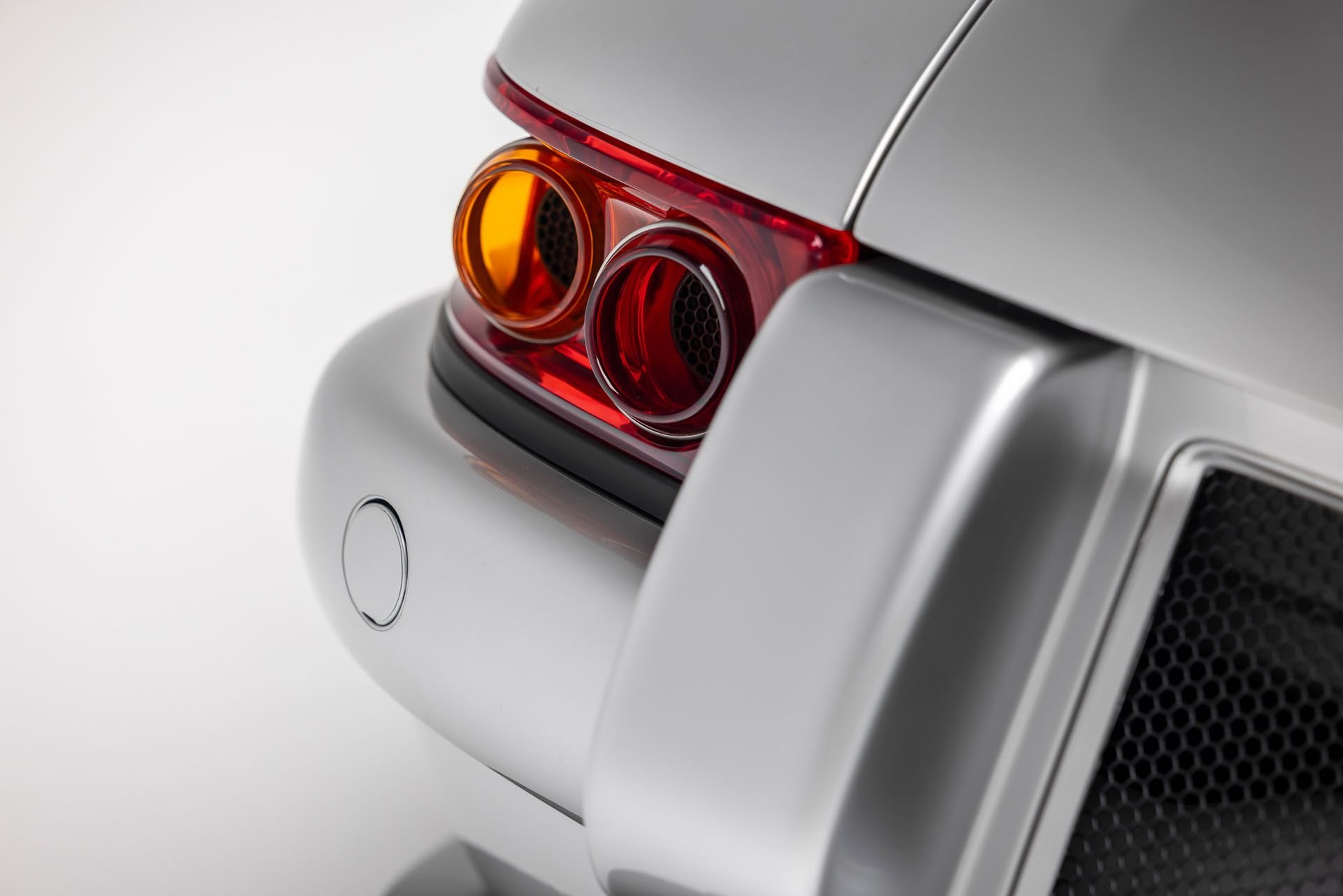
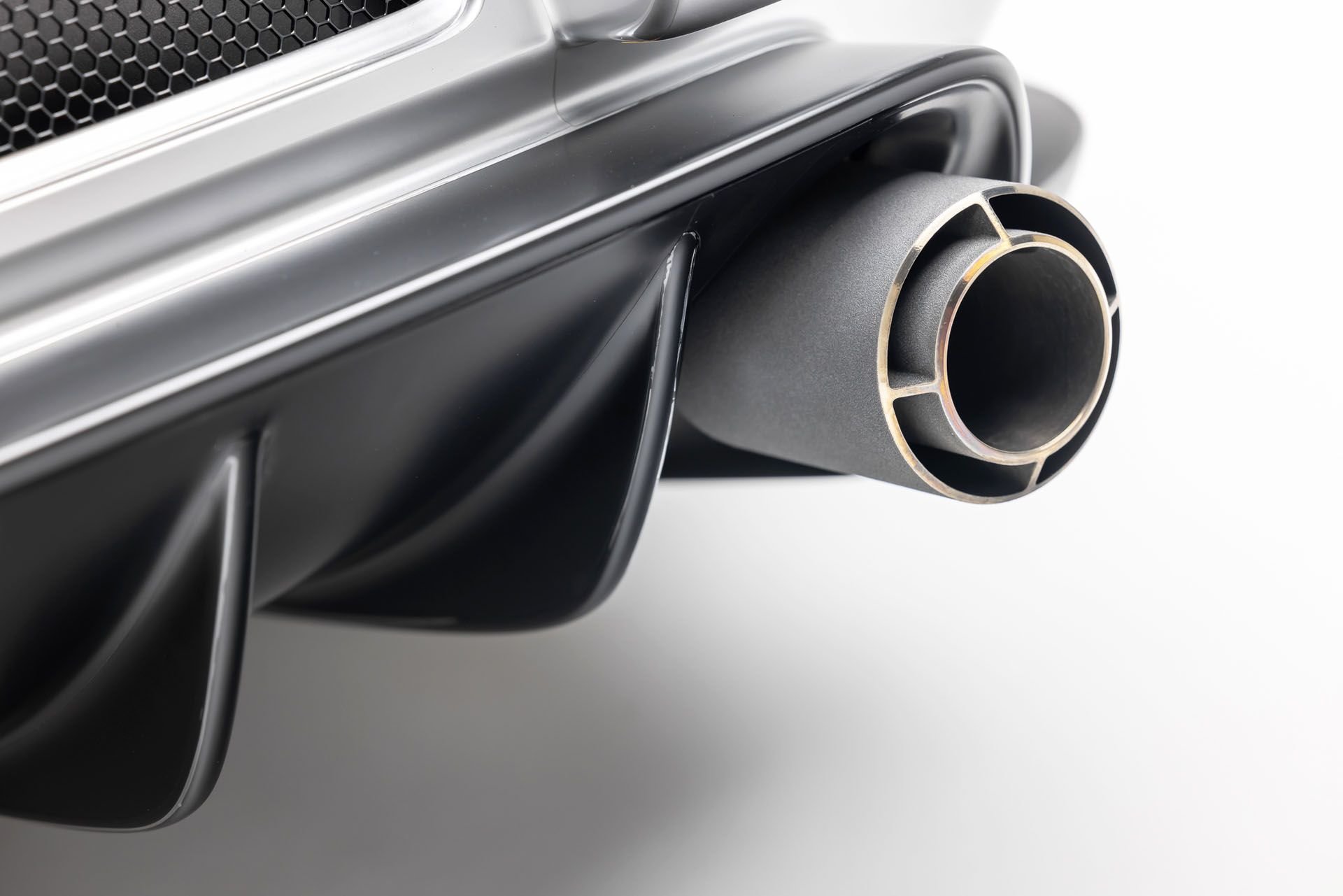


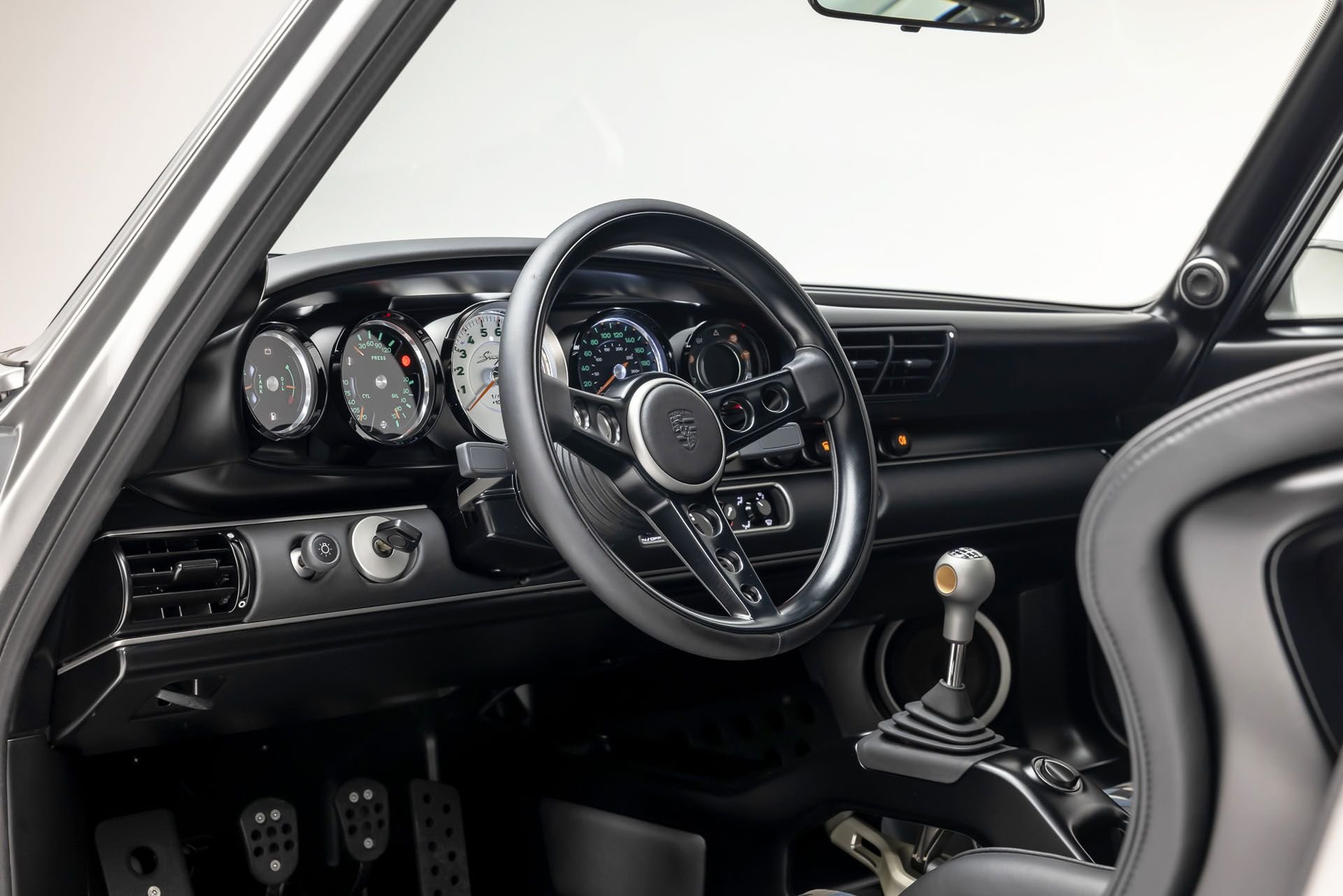
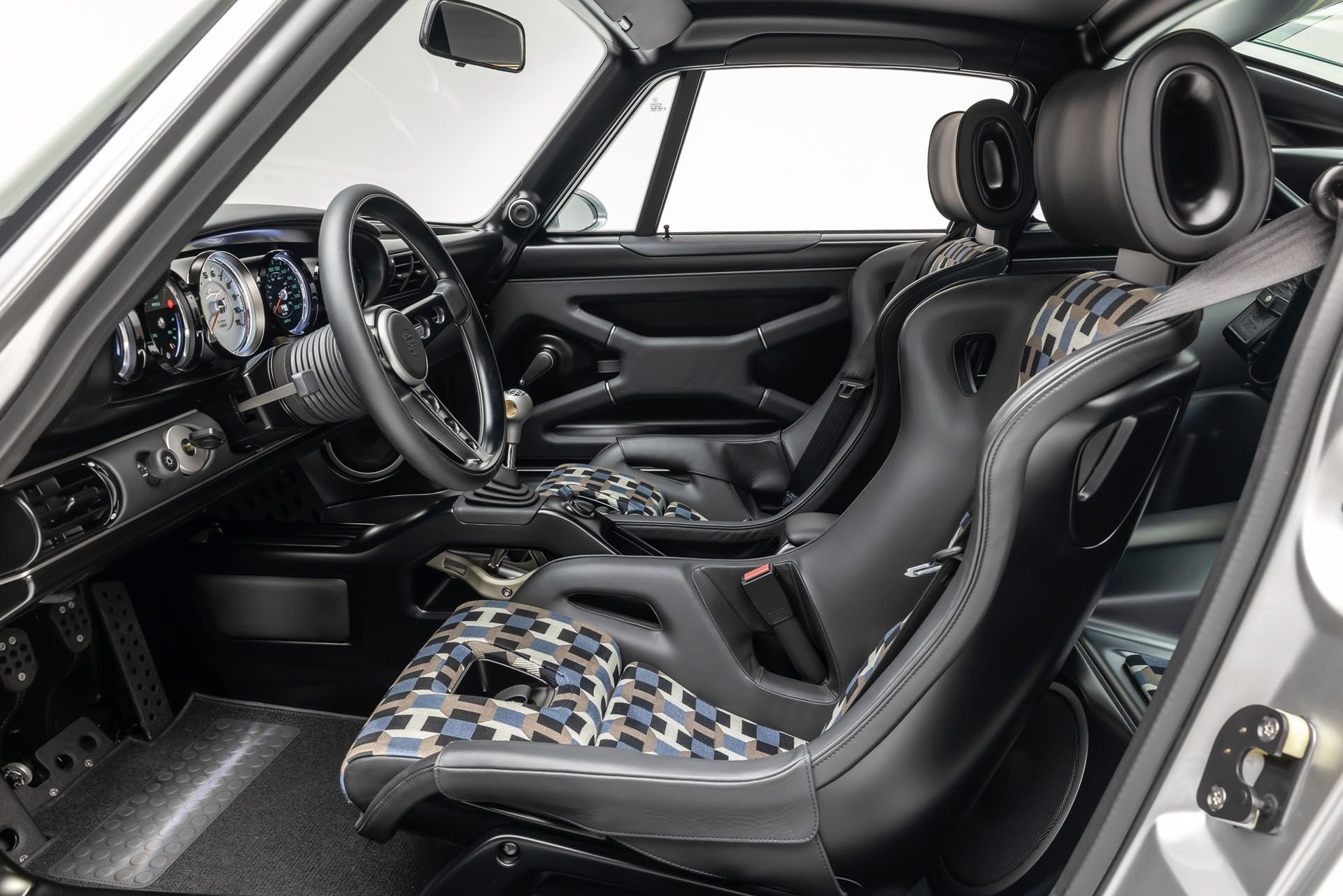


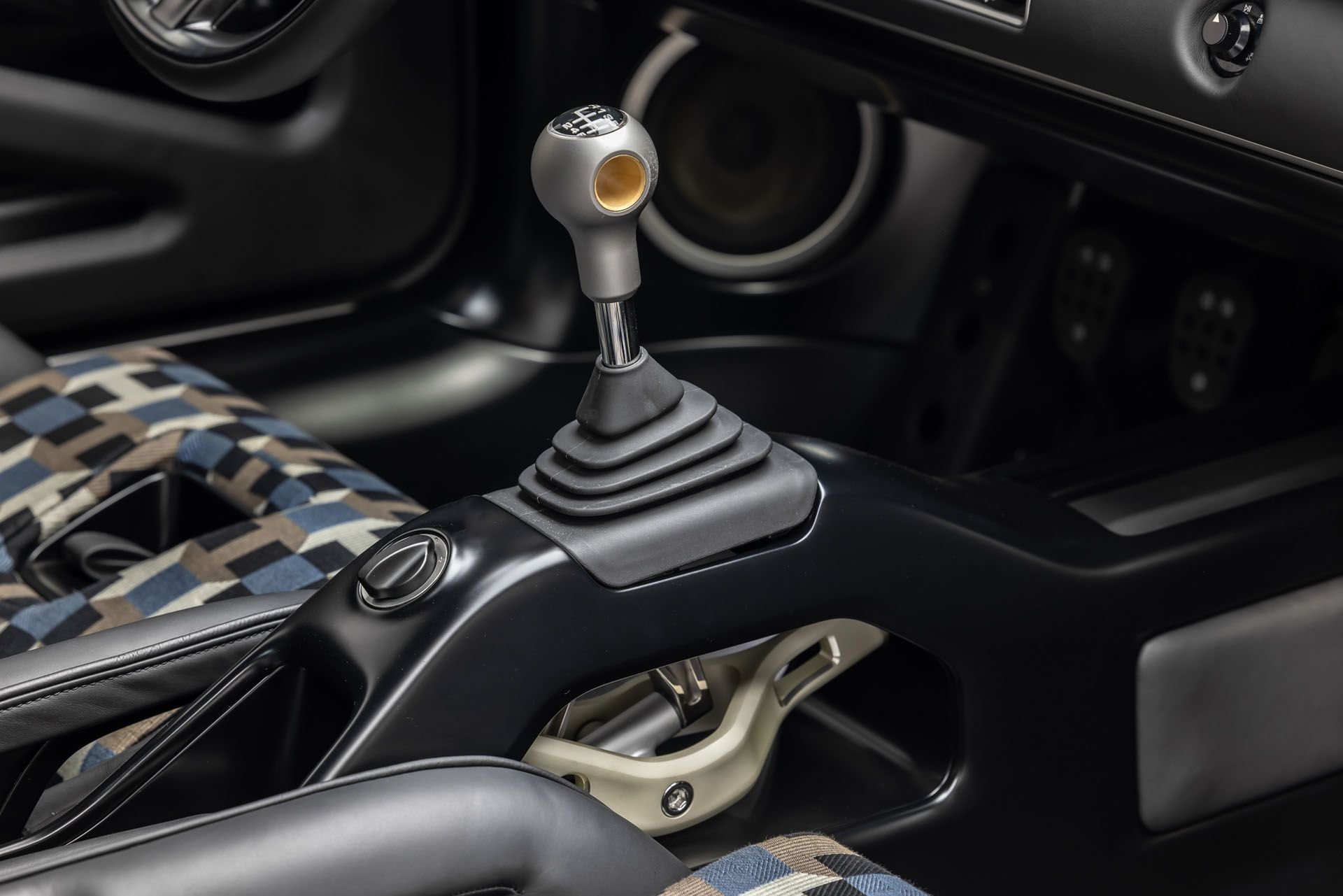


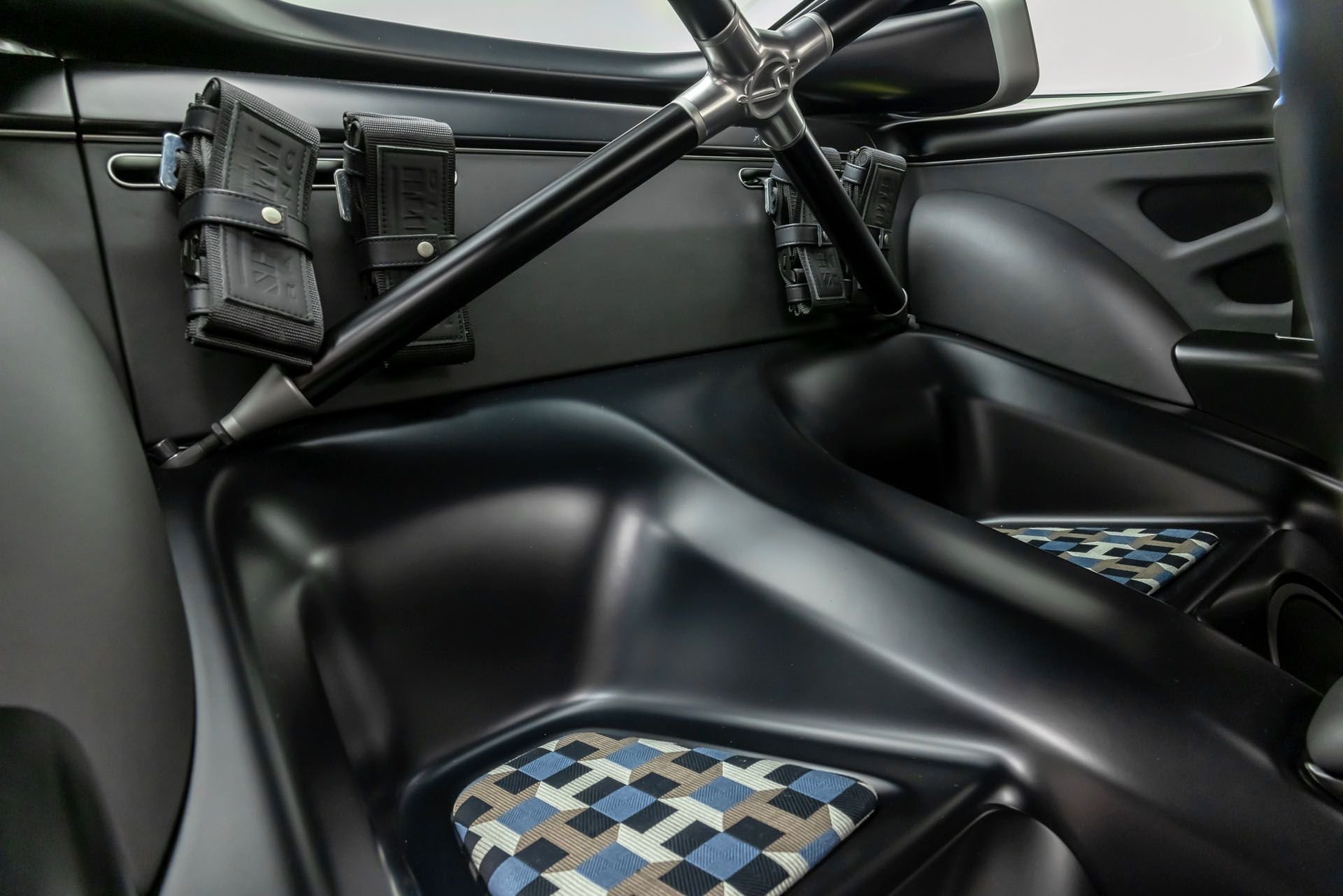


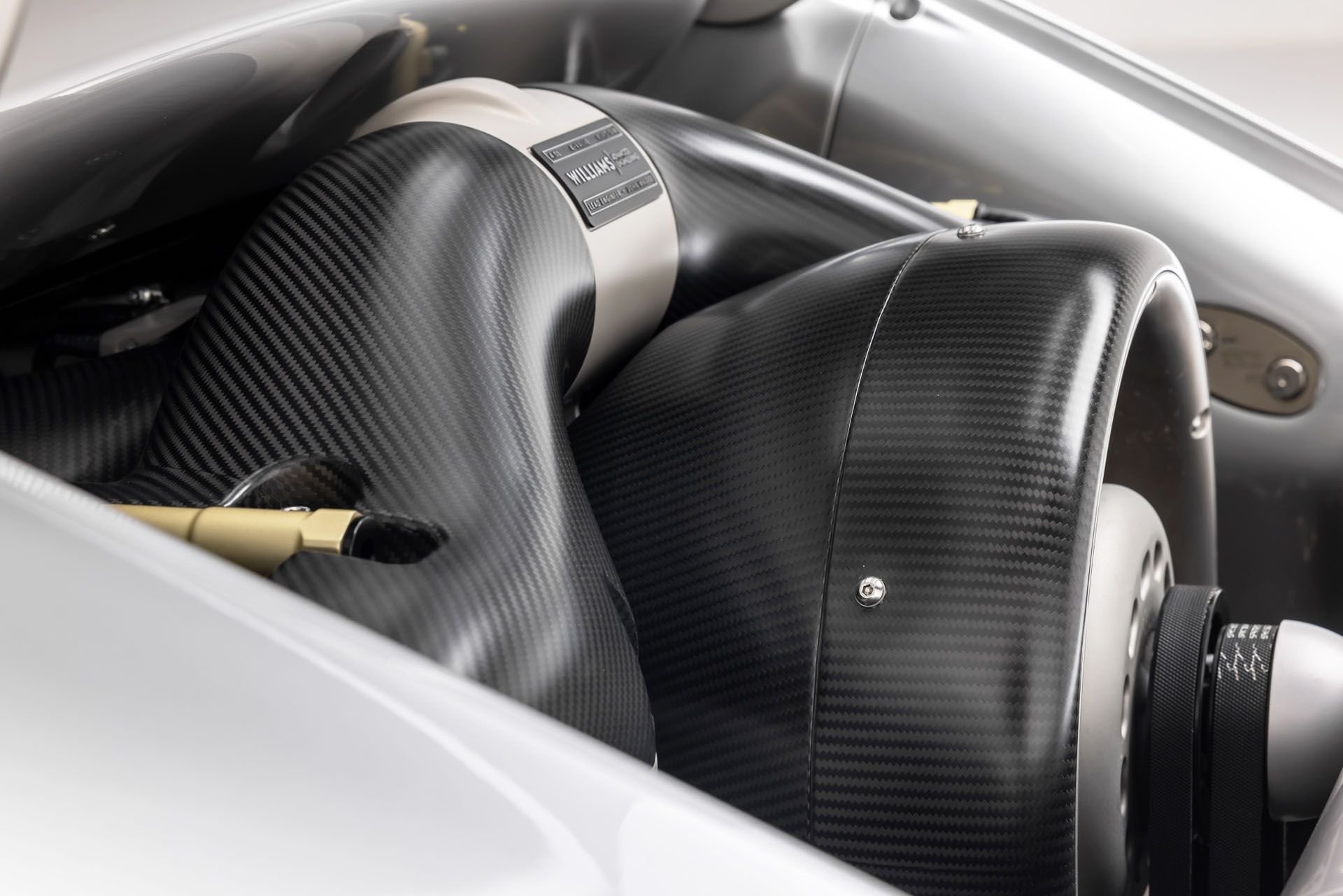

Verkauft über Broad Arrow, Private Sales, mit diesen Informationen: «Offered here is an exceptionally well specified example of Singer Vehicle Design’s Dynamics and Lightweight Study, dubbed the „JAG Commission.“ Beginning life as a 1990 911 Carrera 4, chassis number WP0ZZZ96ZLS403221 was reimagined in the bespoke shade of Fluid Silver, a $42,550 option, protected by Singer-installed full-body paint protection film ensuring the pristine finish remains unblemished. The exterior is also adorned with Titanium bead-blasted bright trim and a Platinum decklid badge which complement the Fluid Silver paintwork exquisitely. The interior of the JAG Commission is a testament to Singer’s uncompromising attention to detail. The interior is trimmed in Black semi-aniline leather, complemented by custom fabric-to-sample Dedar Hermes Pavage Jacquard seat inserts and Titanium bead-blasted bright trim. The mid-trim package is leather-wrapped to match the rest of the interior, while the lower trim package is executed in Satin Black, completing the sophisticated monochromatic color scheme. Additional interior details include a carbon fiber X-brace painted in Satin Black, harnesses in Black, and premium door brightware. The tachometer features a Platinum face, and the shift knob is matched to the exterior brightware. Modern amenities are seamlessly integrated, including air conditioning, a heated front screen, and a Focal audio system. An optional axle lift system adds a welcome touch of practicality for everyday driving. As one of only 75 DLS commissions undertaken, chassis number WP0ZZZ96ZLS403221 represents a rare and significant piece of modern automotive art. The odometer shows just over 1,200 miles at the time of cataloging, indicating this DLS has been preserved in like-new condition since its completion. The car benefits from a recent service performed in March 2024 at 813 miles, which included a thorough one-year service encompassing both engine oil and transmission fluid changes. The „JAG Commission“ embodies Singer’s philosophy that „Everything is Important“.»
–
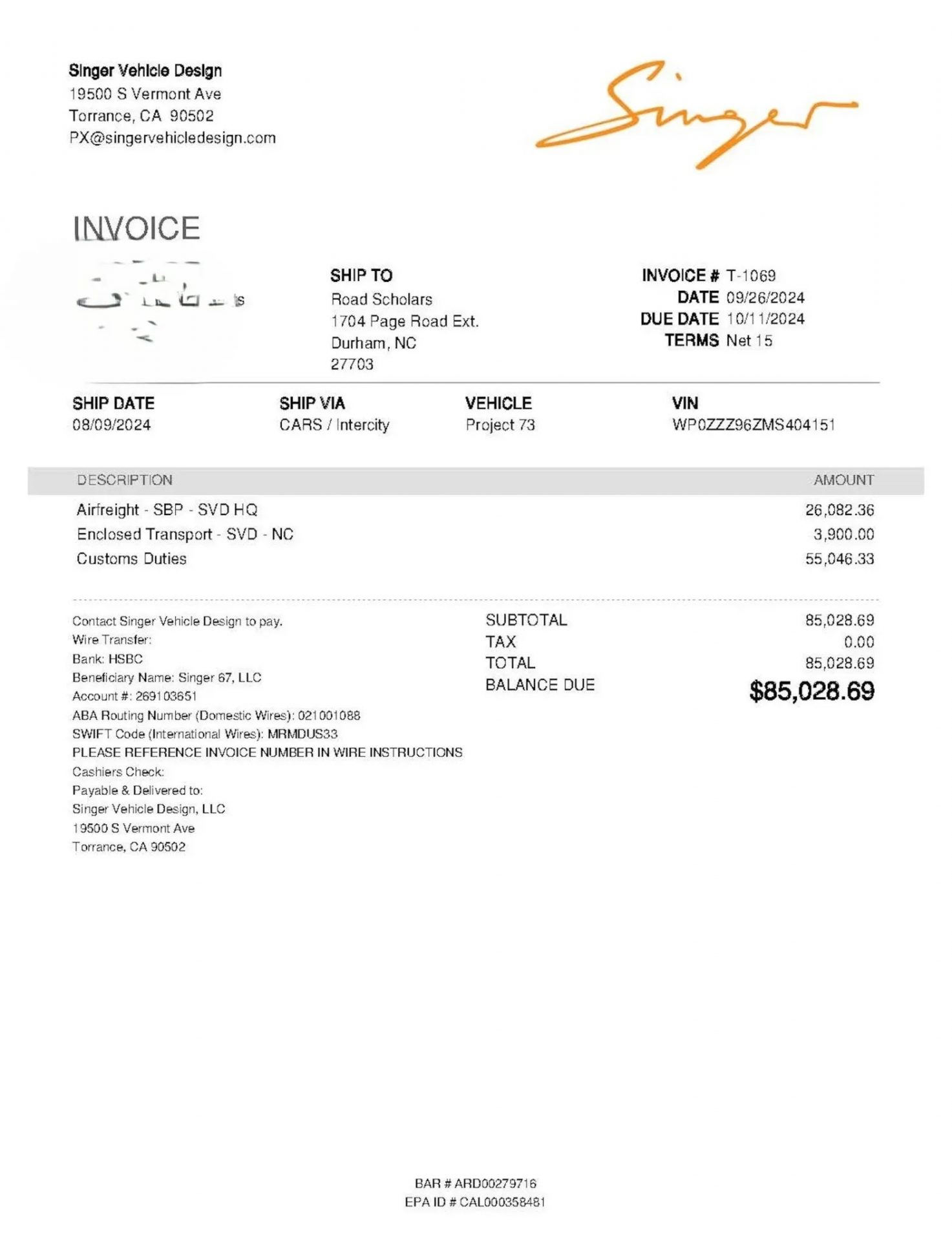
Chassis-Nummer: WP0ZZZ96ZMS404151 (1991)
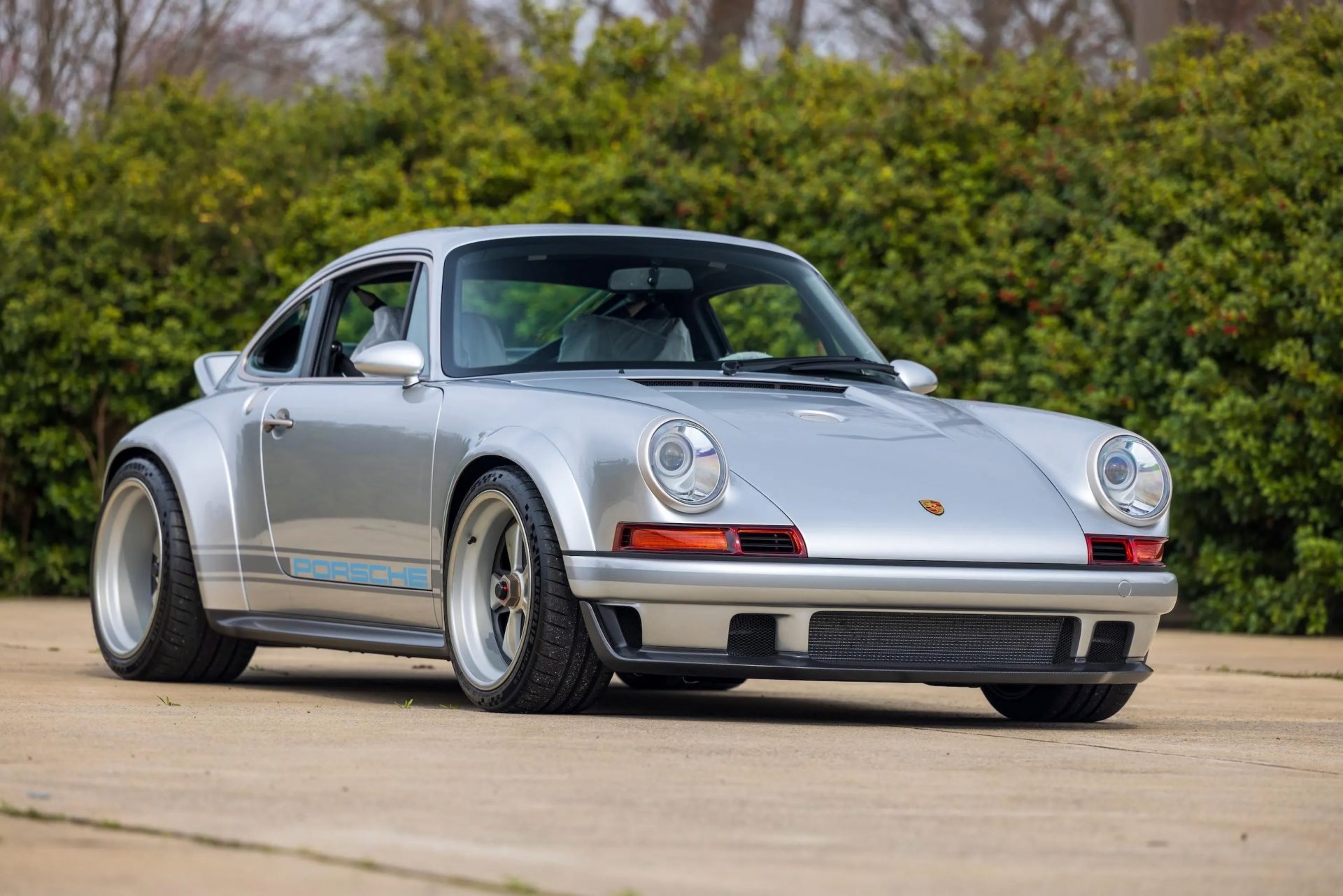
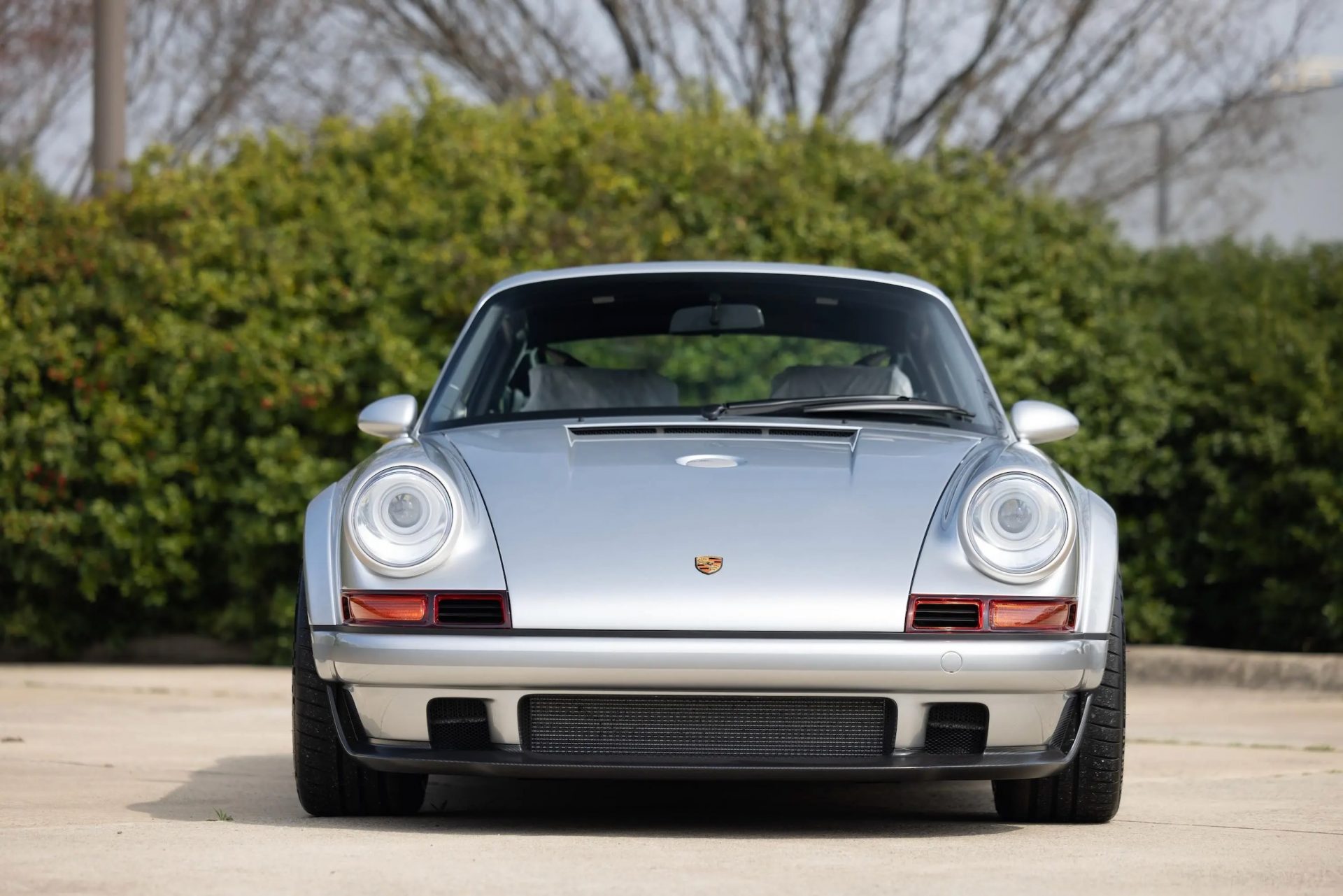
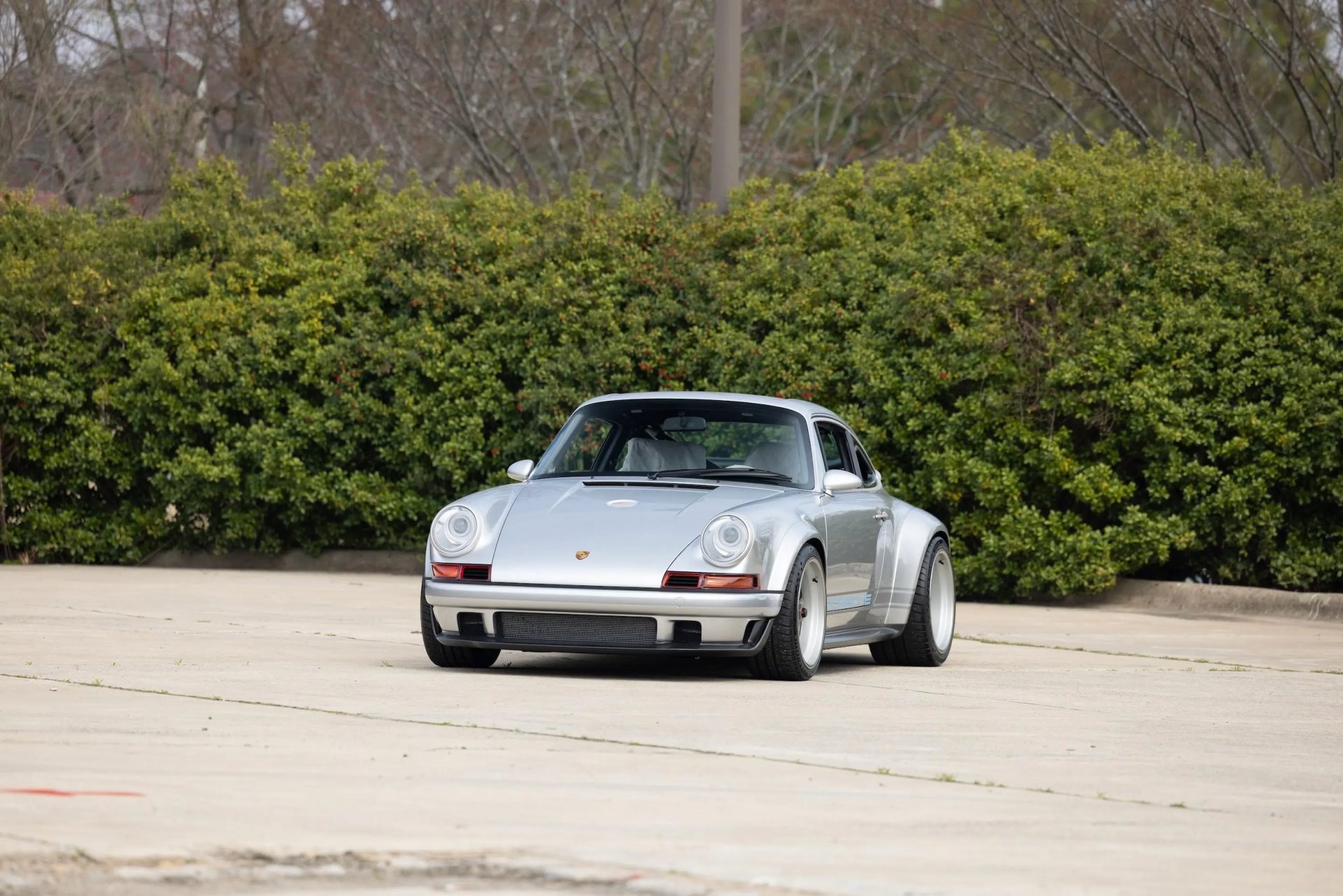
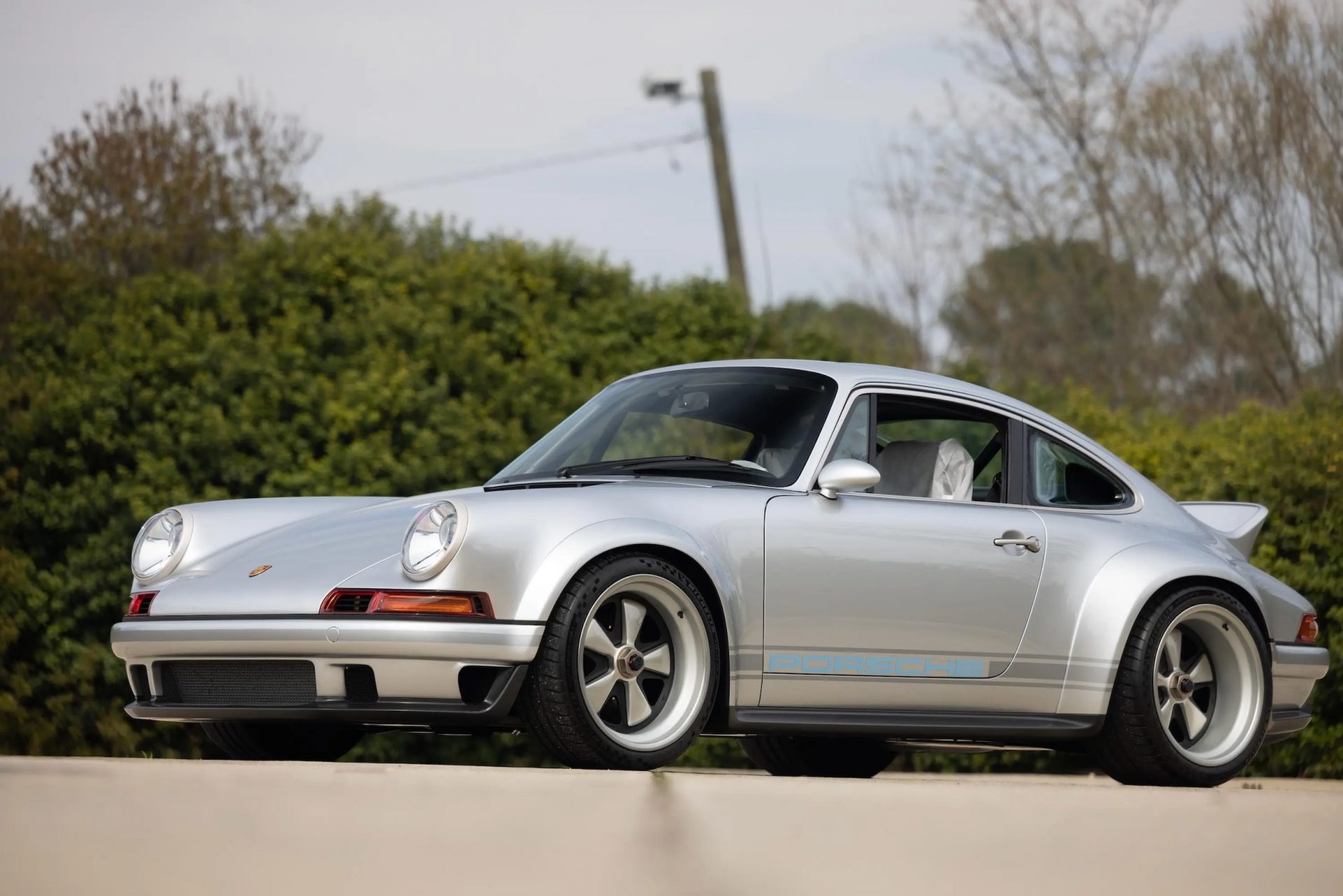
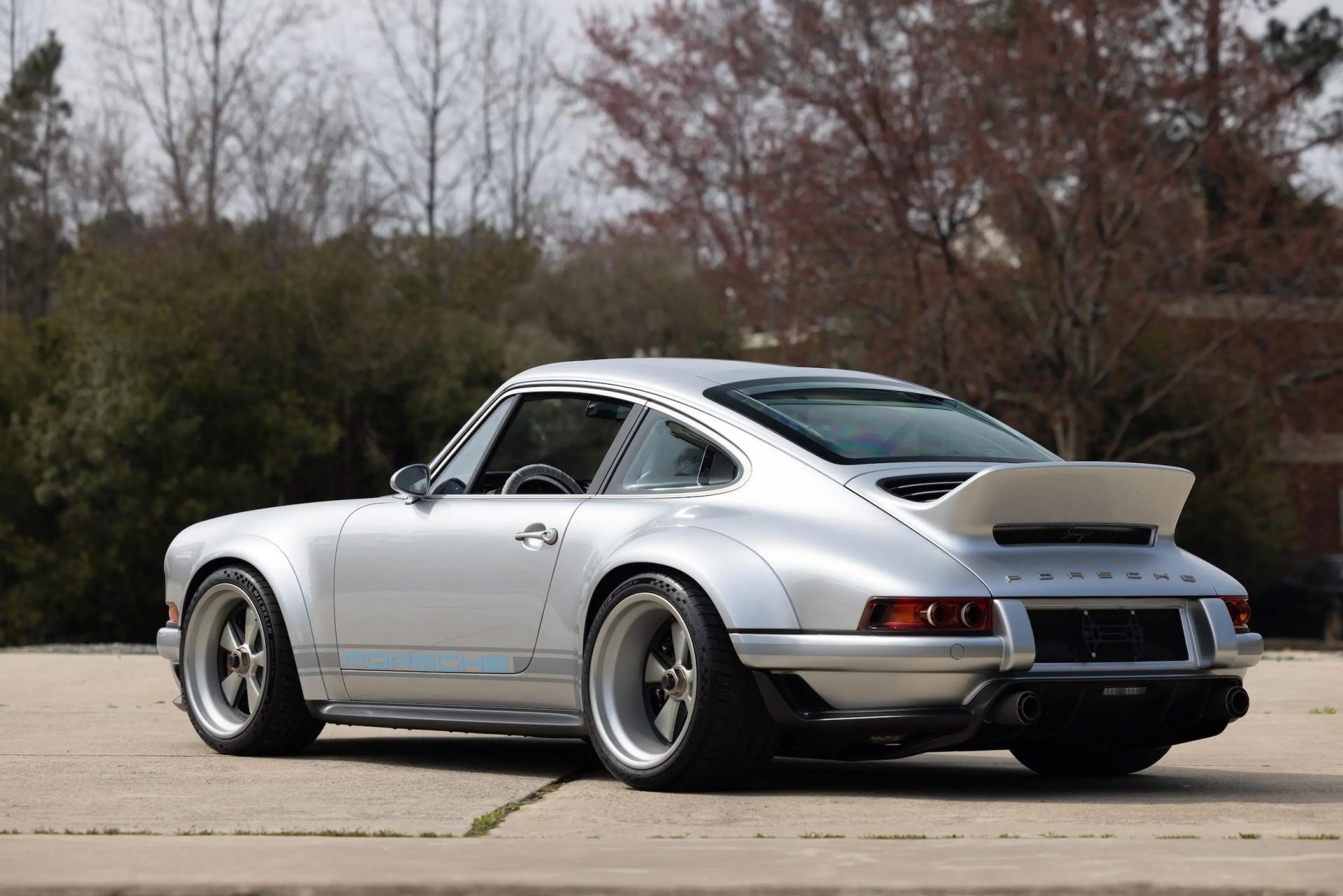
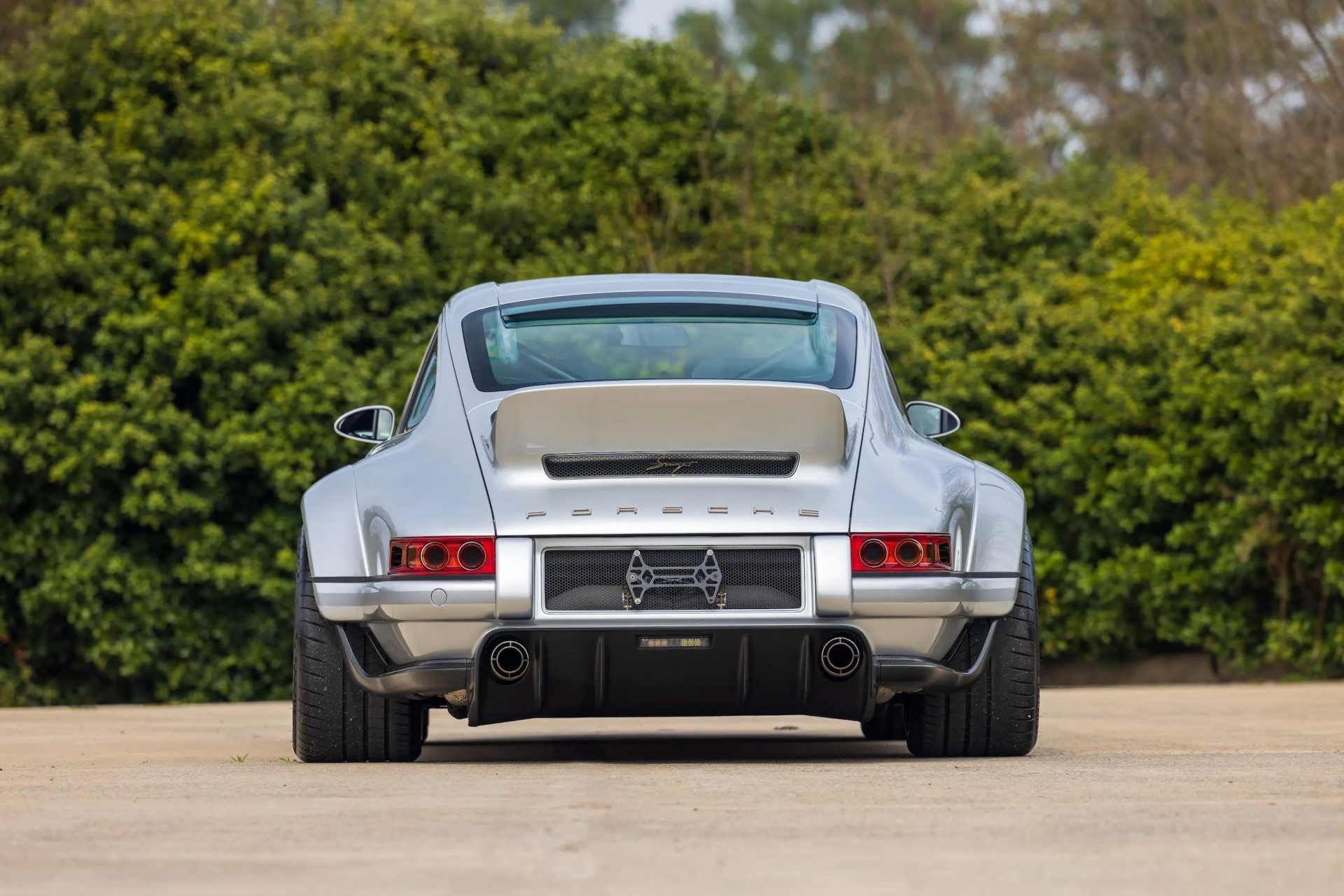
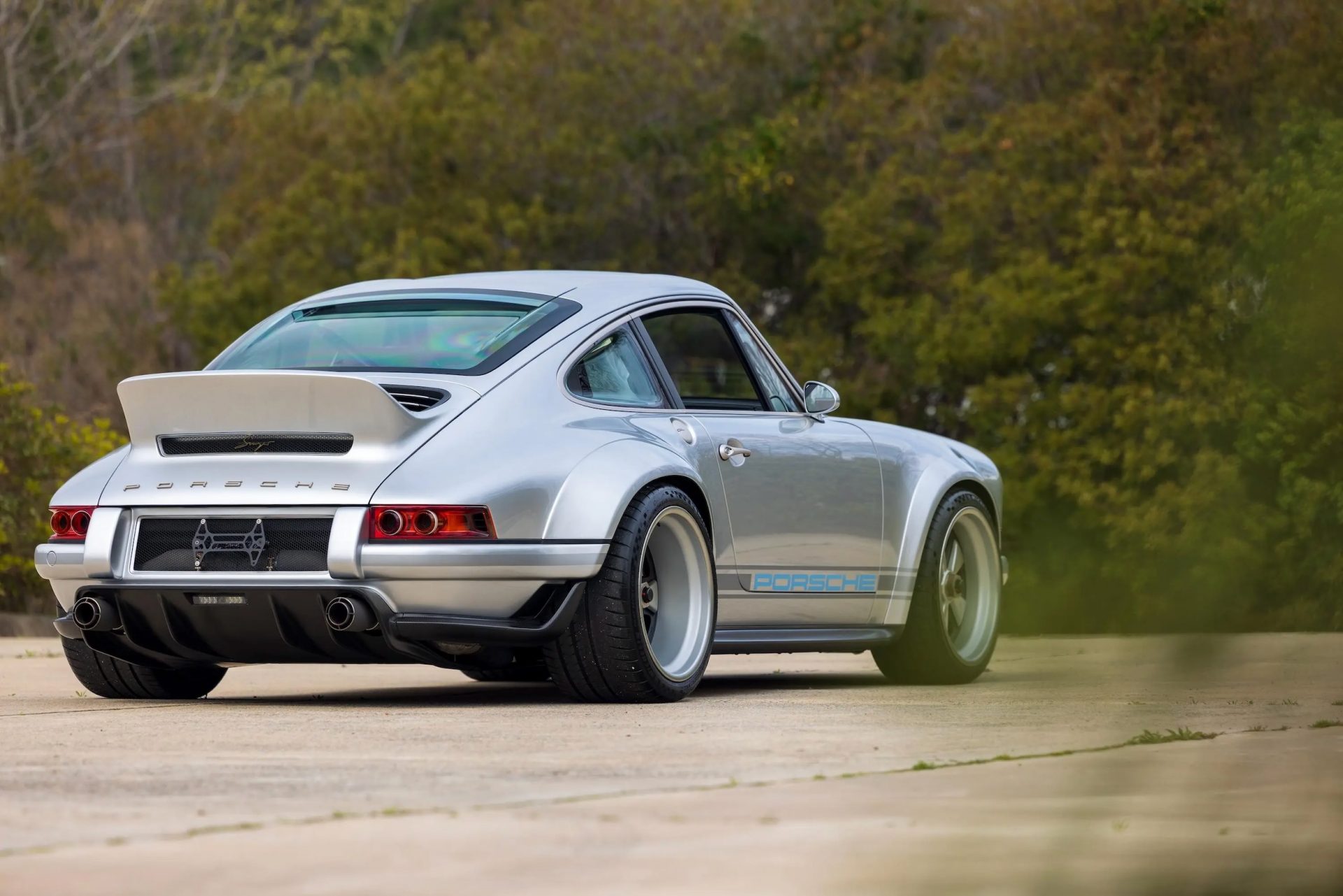

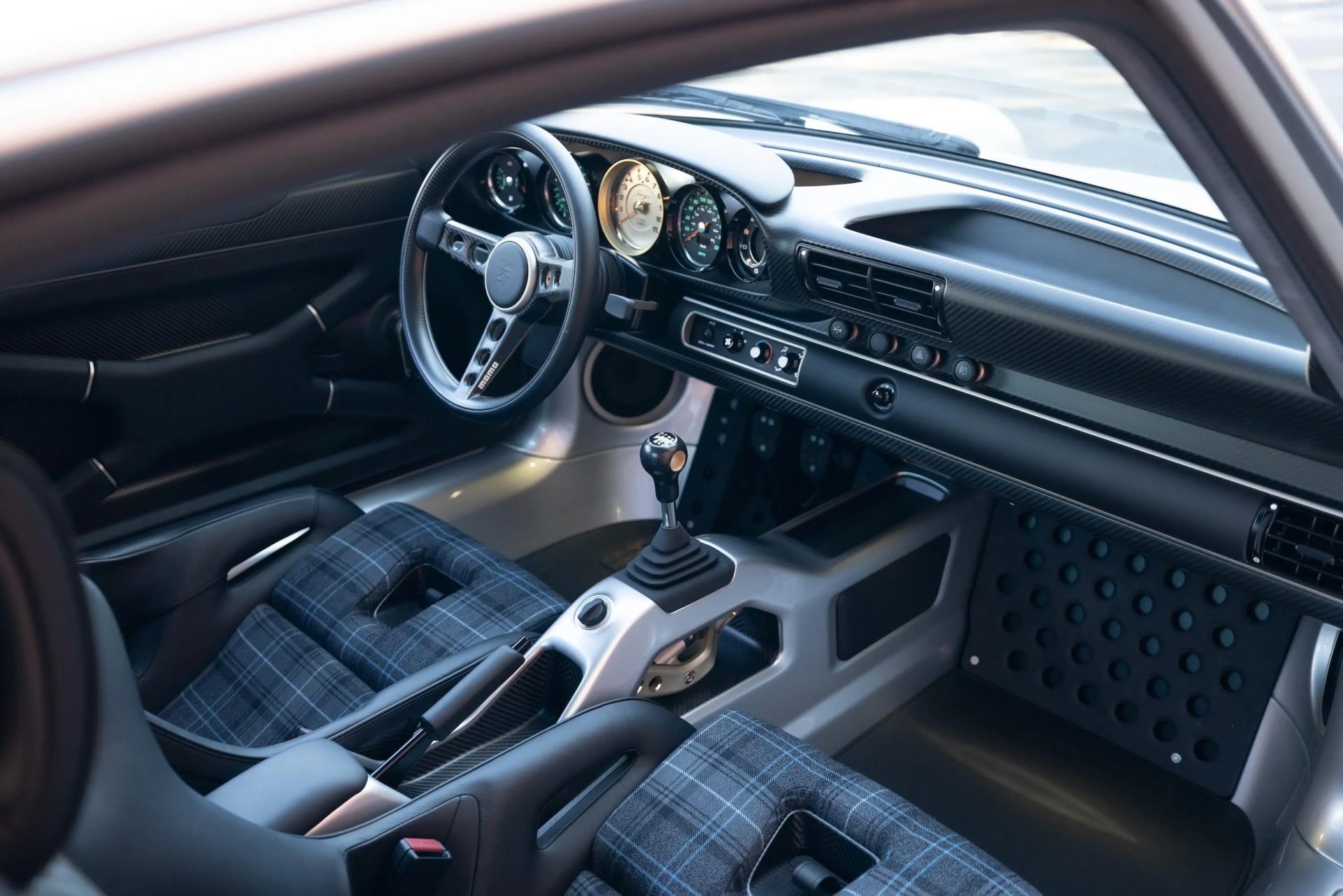
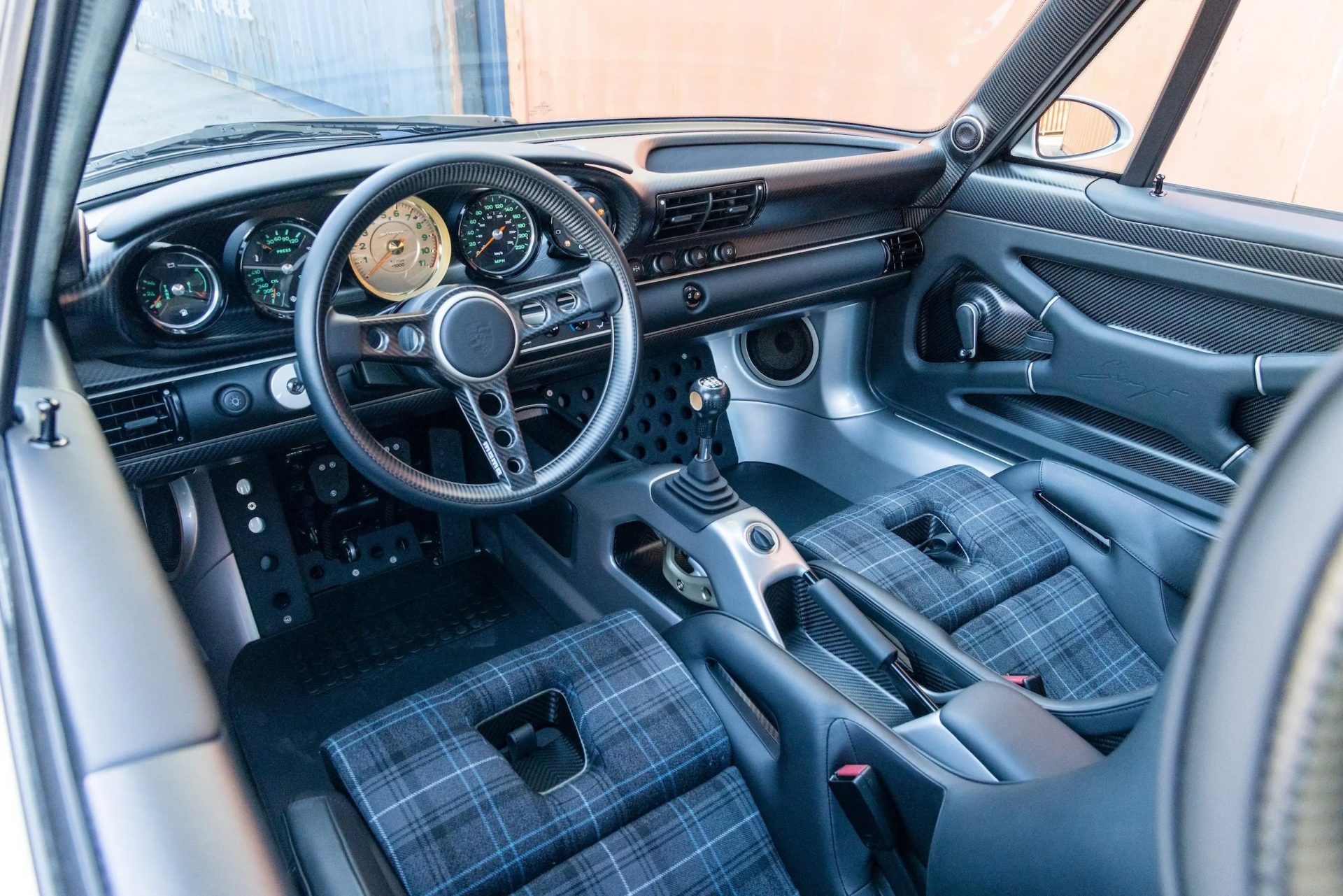
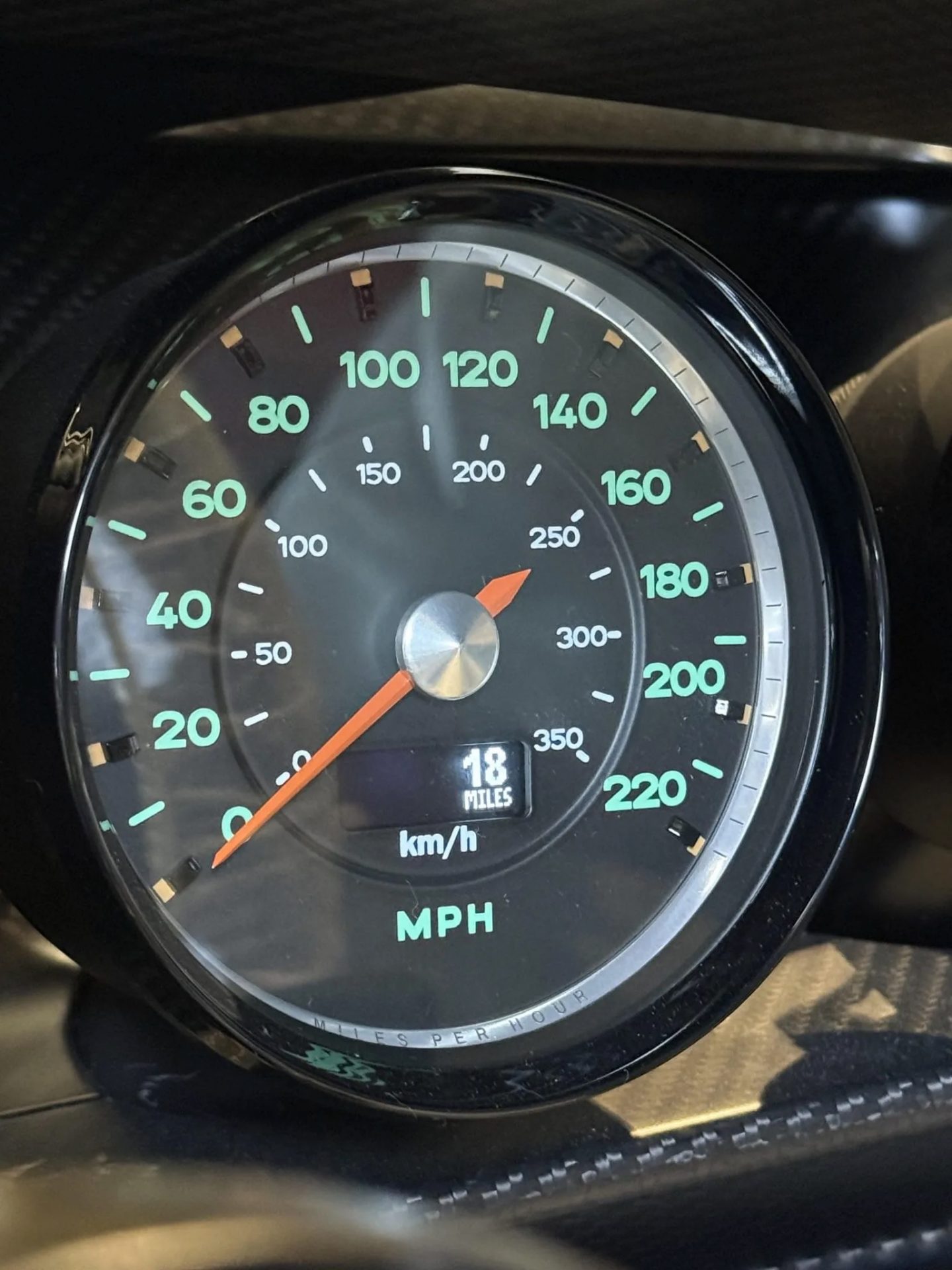
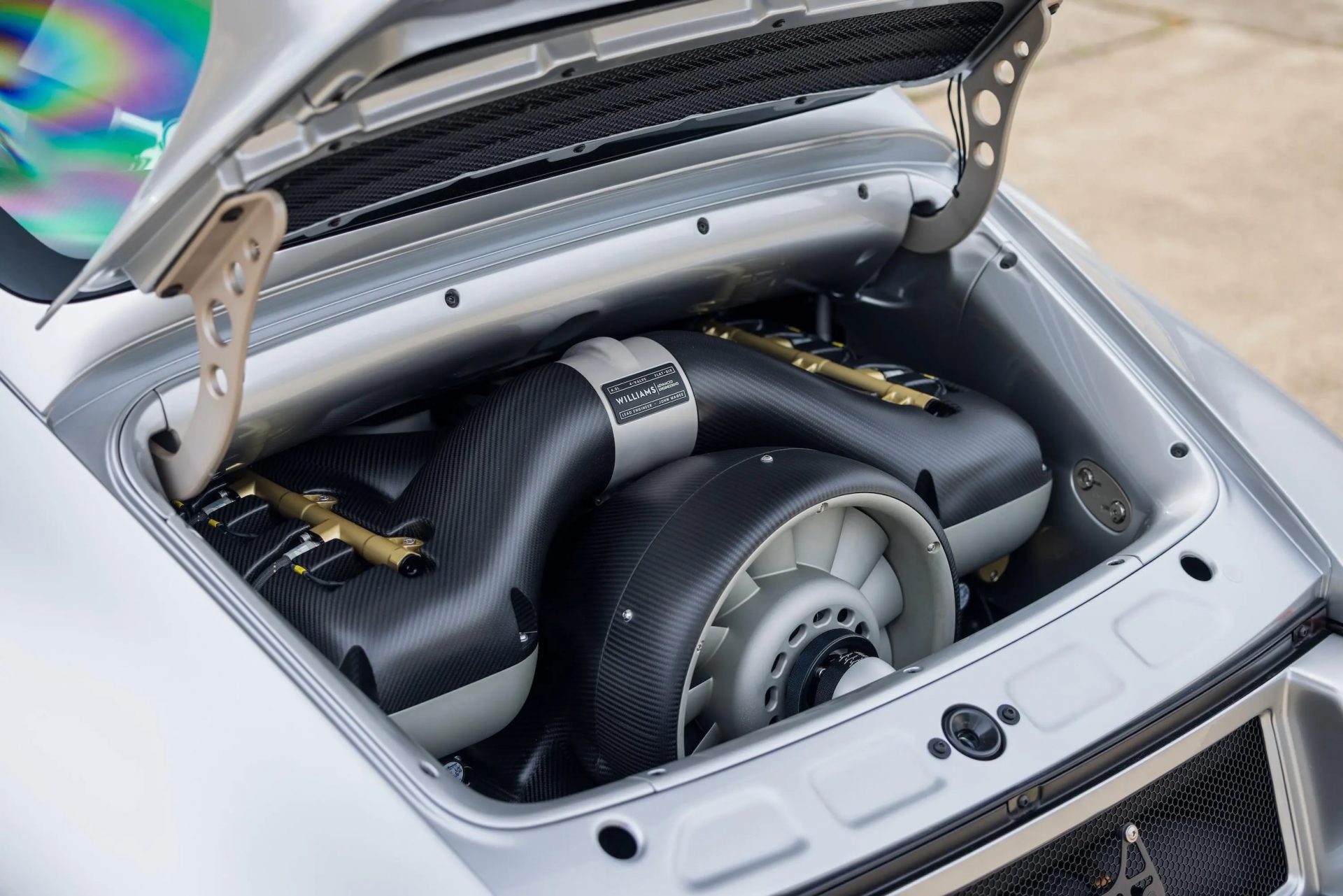
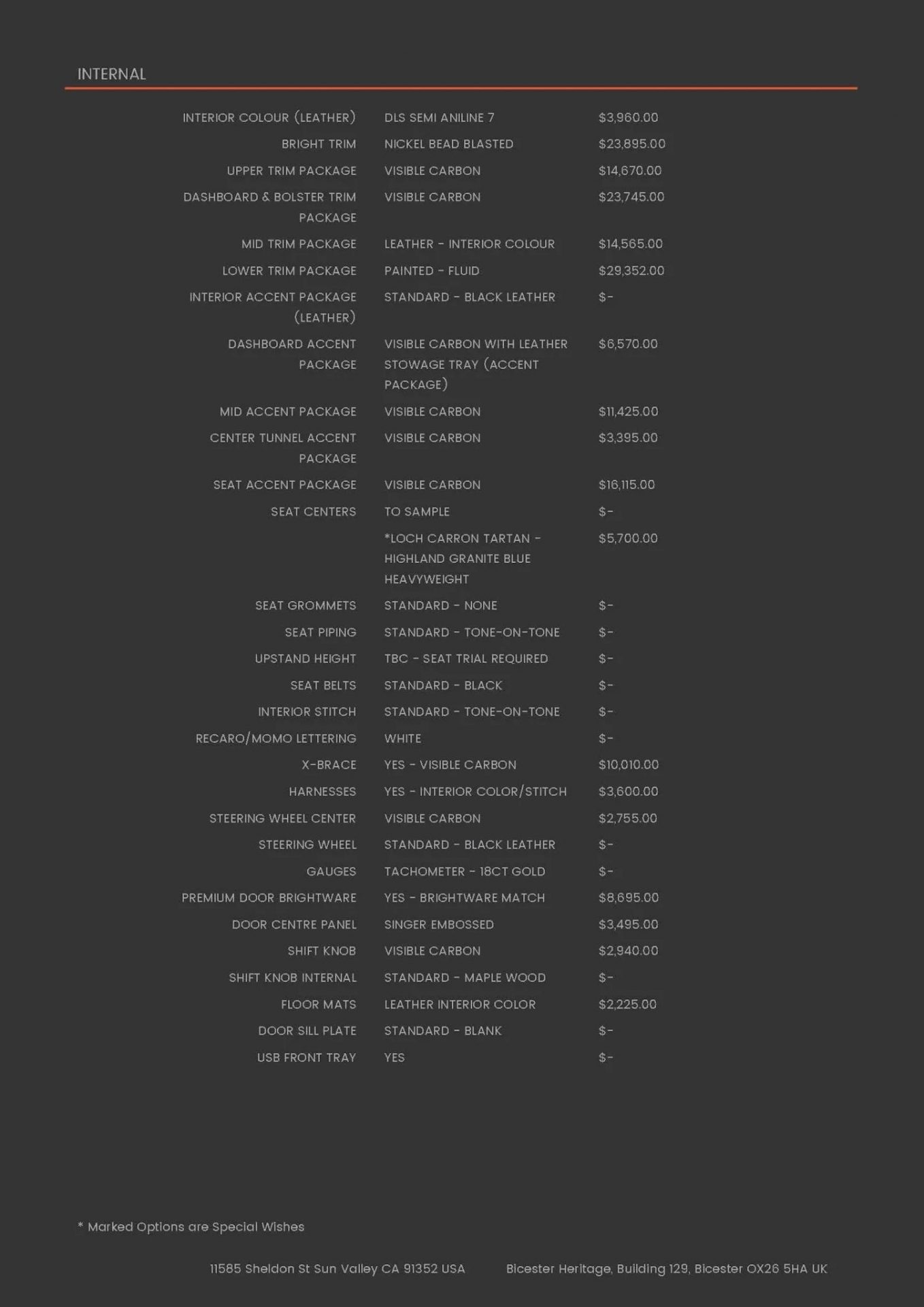
Auktion: Bring A Trailer, Juni 2025, verkauft für 3 Millionen Dollar (!), mit diesen Informationen: «This 1991 Porsche 911 Carrera is the 73rd of 75 examples modified by Singer Vehicle Design in collaboration with Williams Advanced Engineering in Oxfordshire, England, as part of Singer’s Dynamics and Lightweighting Study project. The car is said to have been delivered to the selling dealer for its current owner in late 2024 with an odometer reading of 17 miles, and it now has 18 miles. Additional features include a Hewland six-speed manual transaxle, Brembo carbon-ceramic disc brakes, EXE-TC adjustable coilover dampers, DLS-specific staggered-width 18” BBS forged magnesium wheels, electrically powered air conditioning and power steering, a roll cage, Recaro carbon-fiber seats trimmed in blue leather with Highland Granite Blue Lochcarron tartan inserts, a MOMO carbon-fiber steering wheel, and a Focal sound system. The DLS-specific MOMO carbon-fiber steering wheel features drilled spokes and leather accents and sits ahead of instrumentation centered around an 11k-rpm tachometer trimmed in 18-karat gold. The Singer build sheets list $401,853 in options for a total price of $2,201,853».



–
«Sebring Commission» – Chassis-Nummer 406191 (1990)
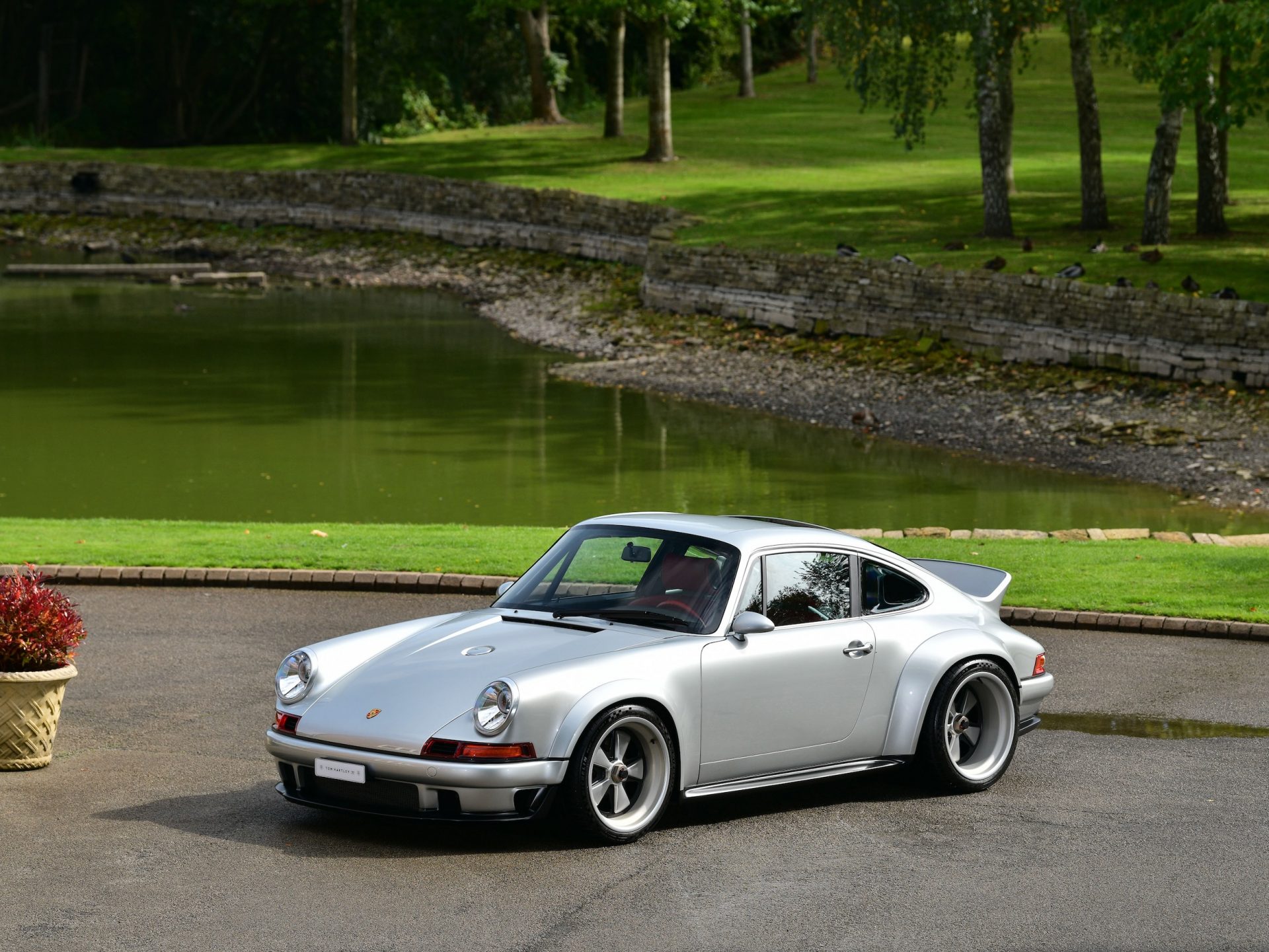
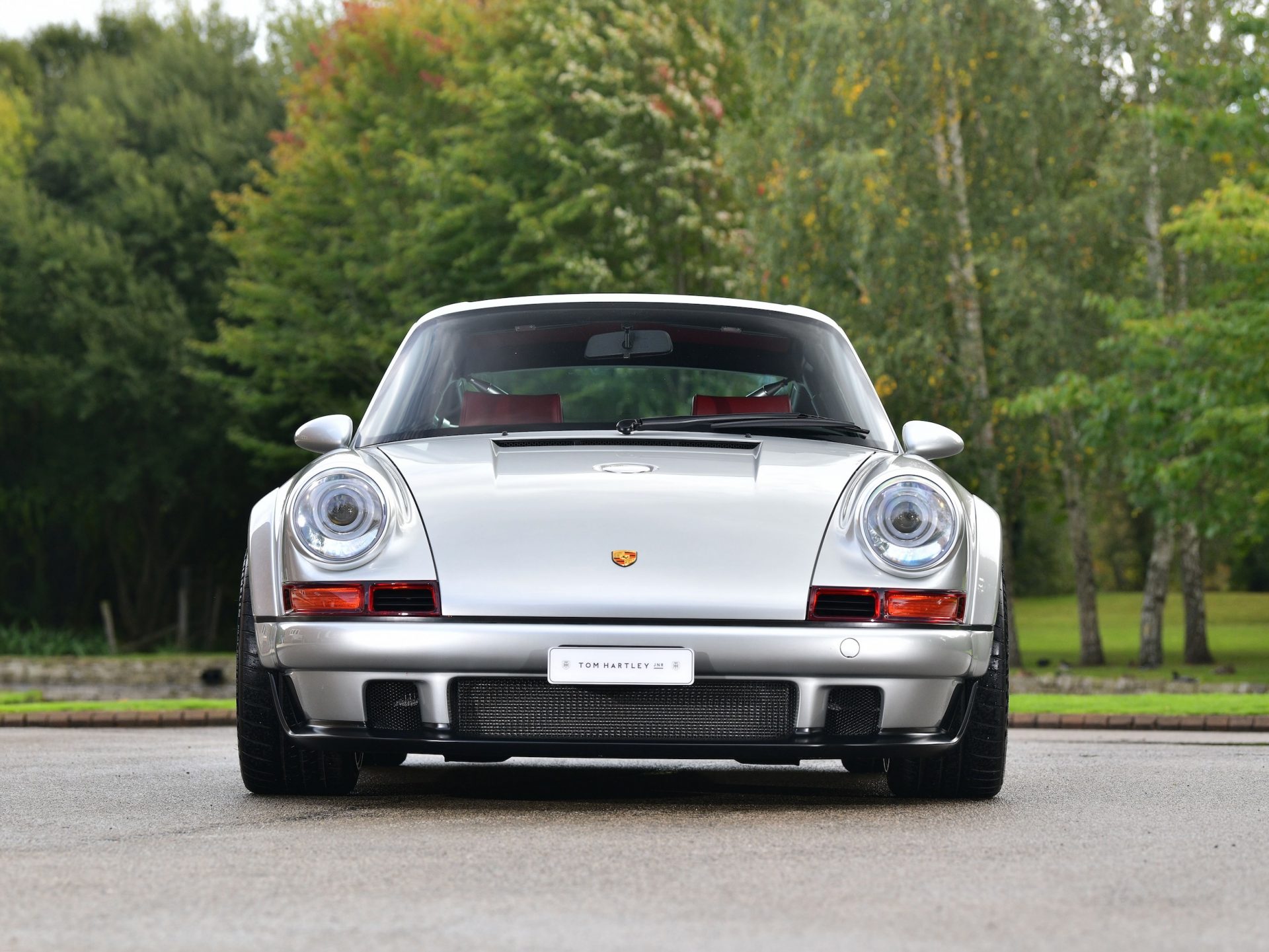
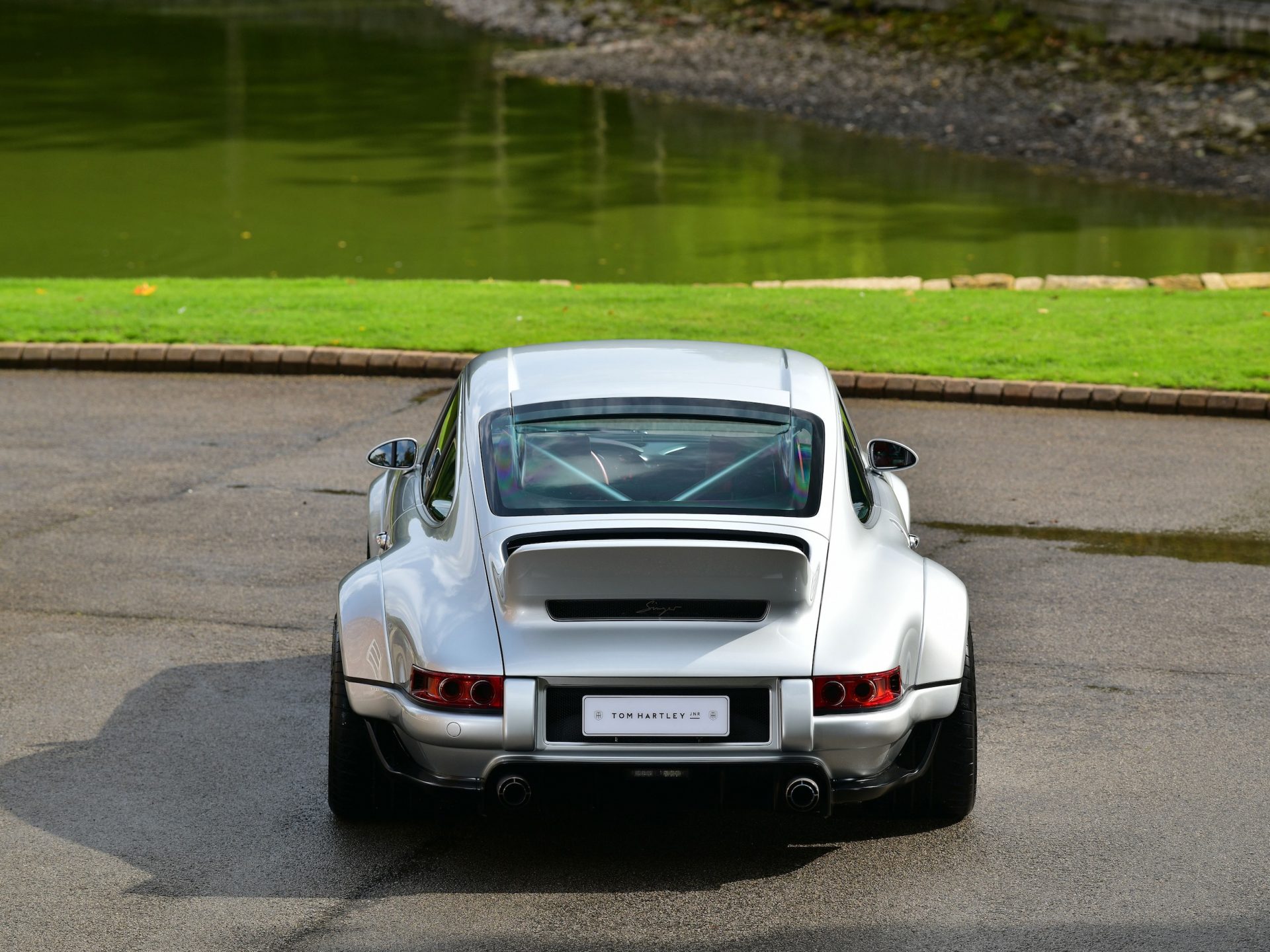
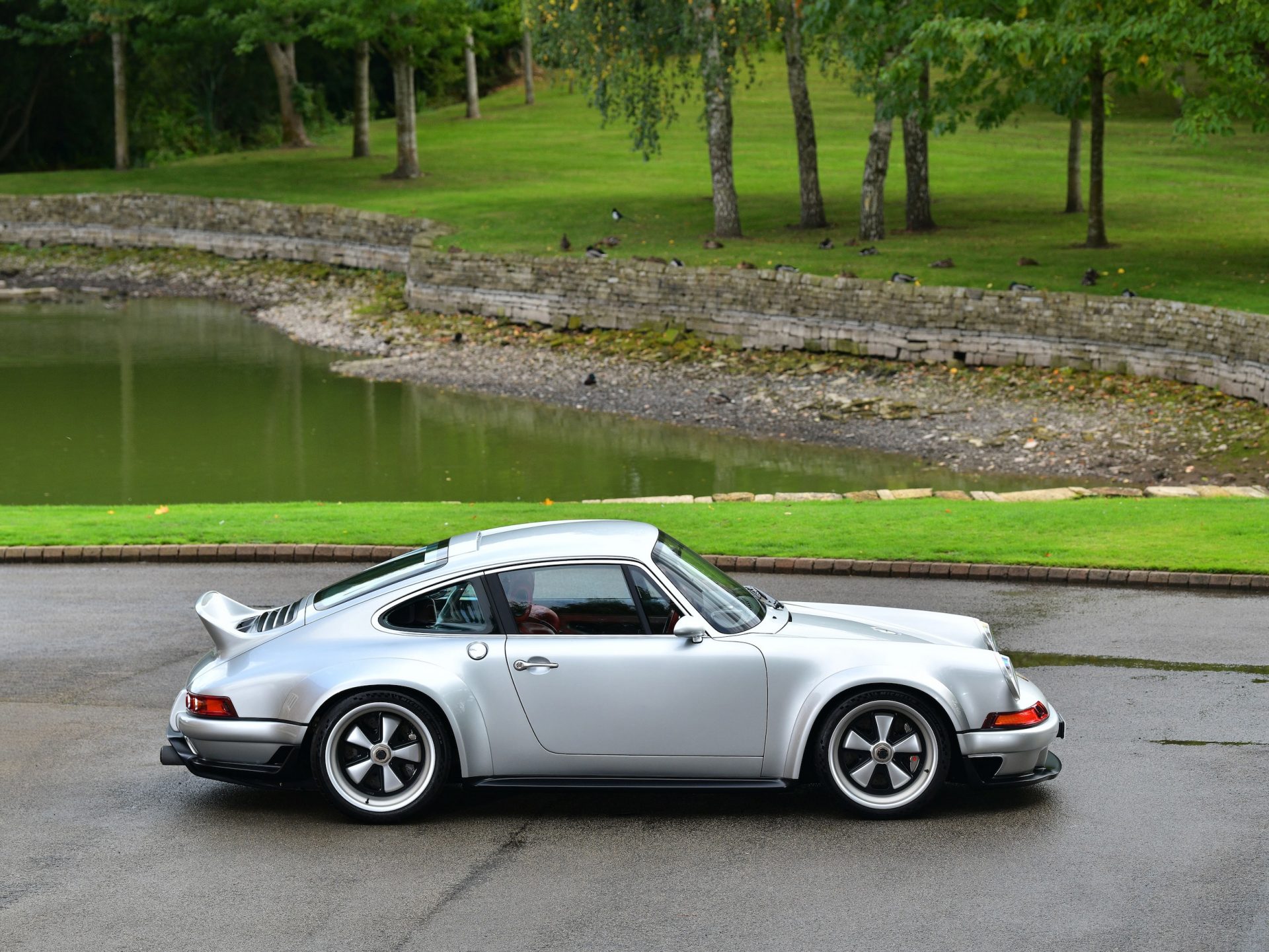
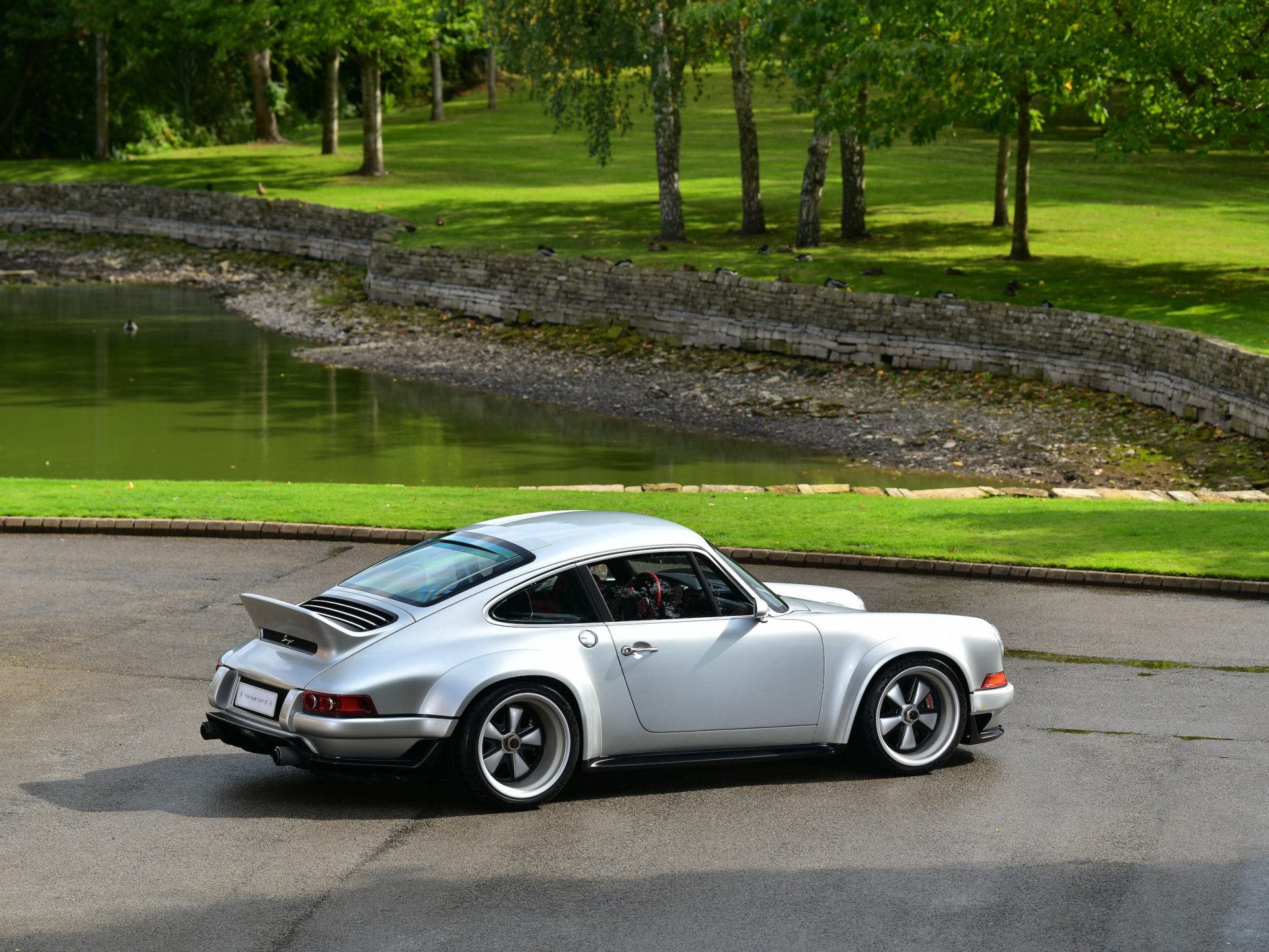
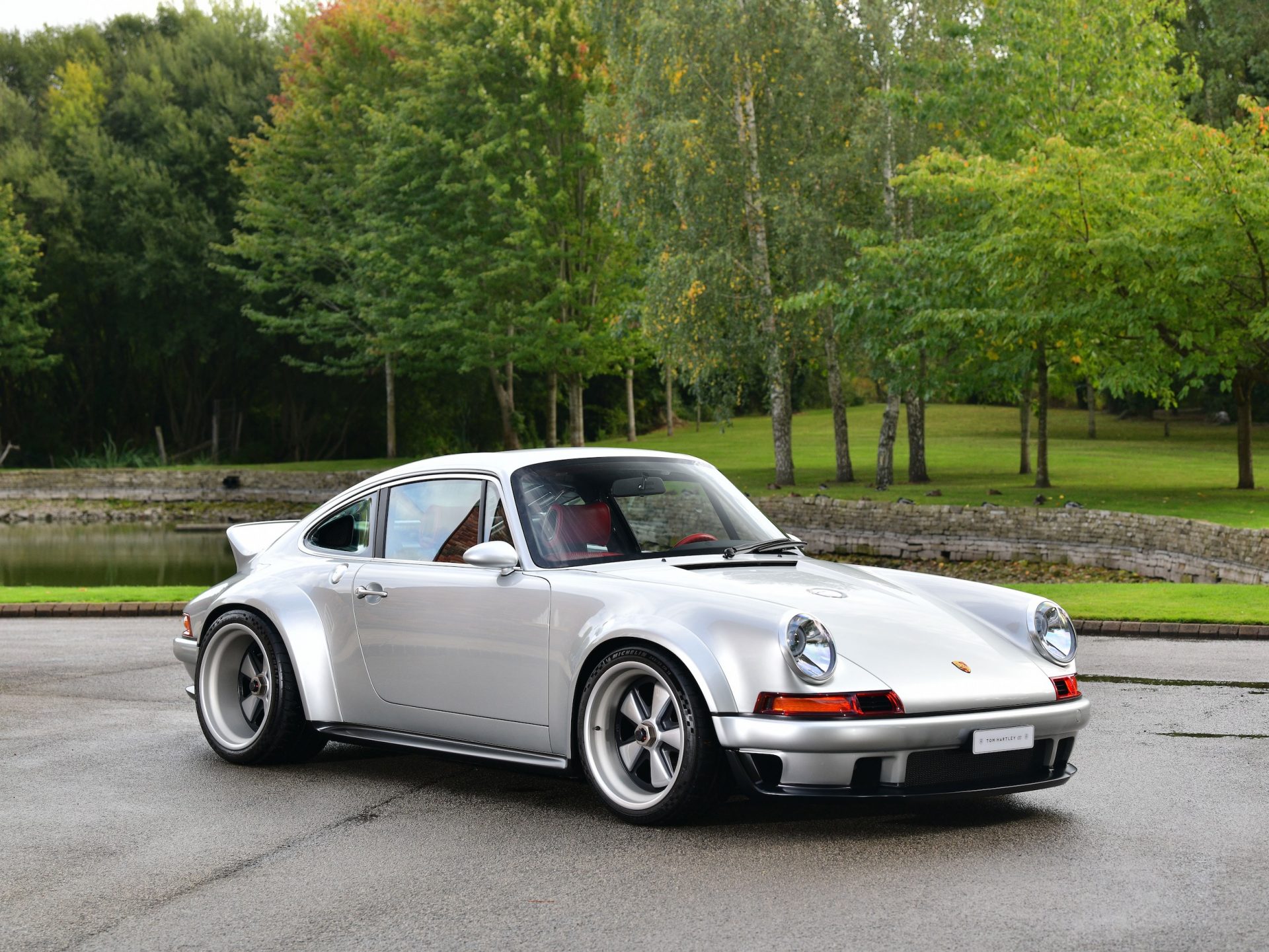
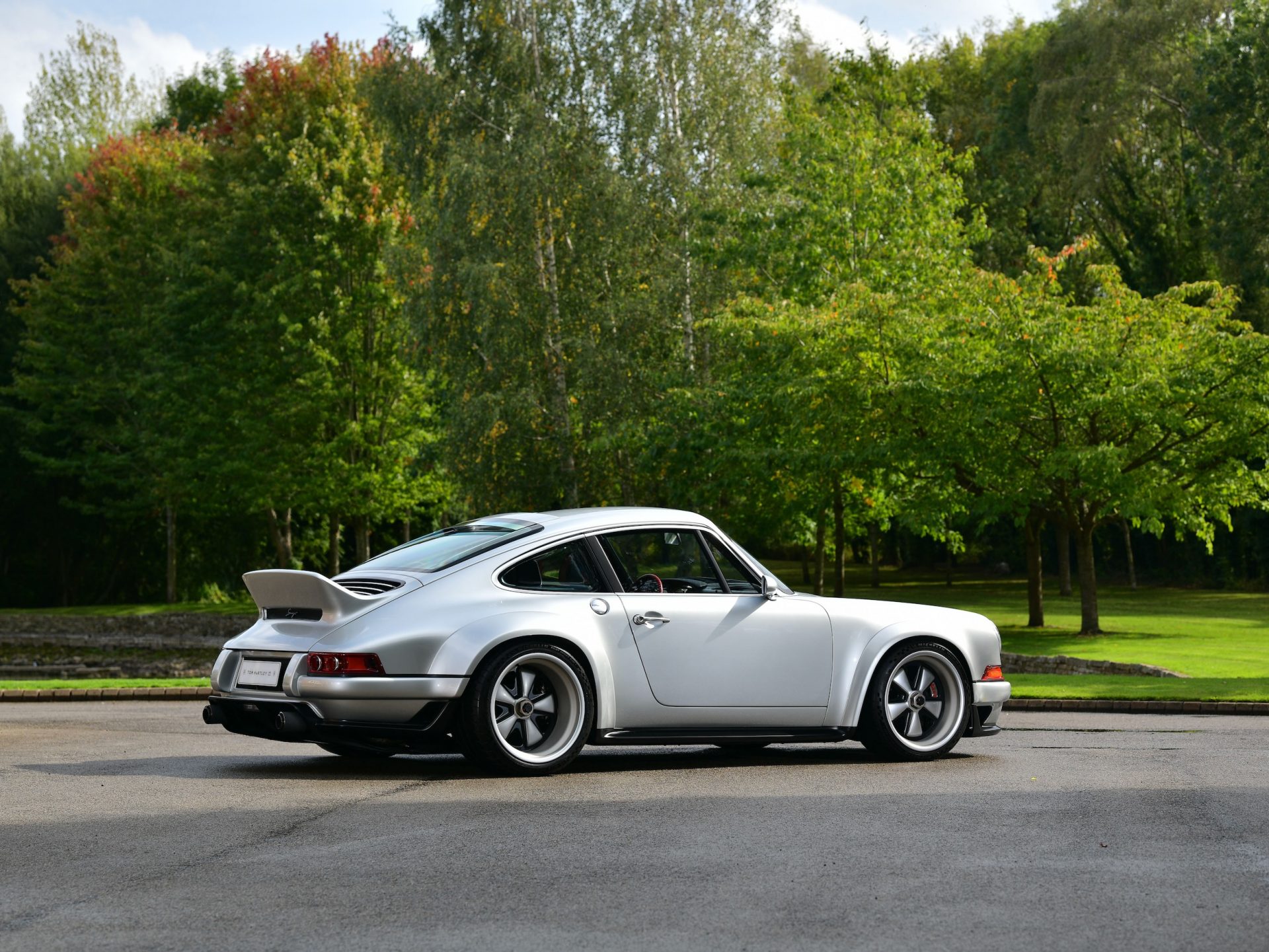
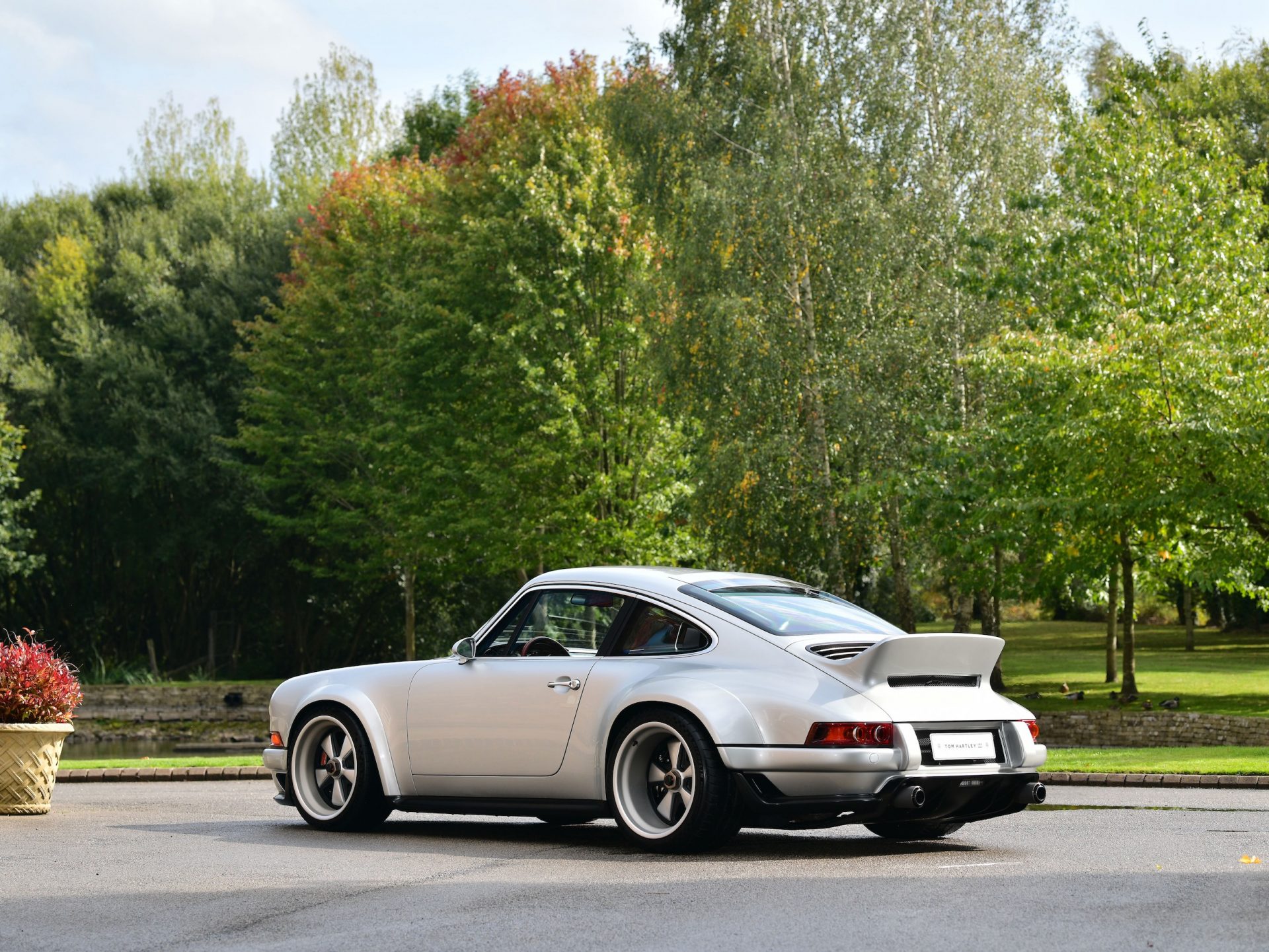
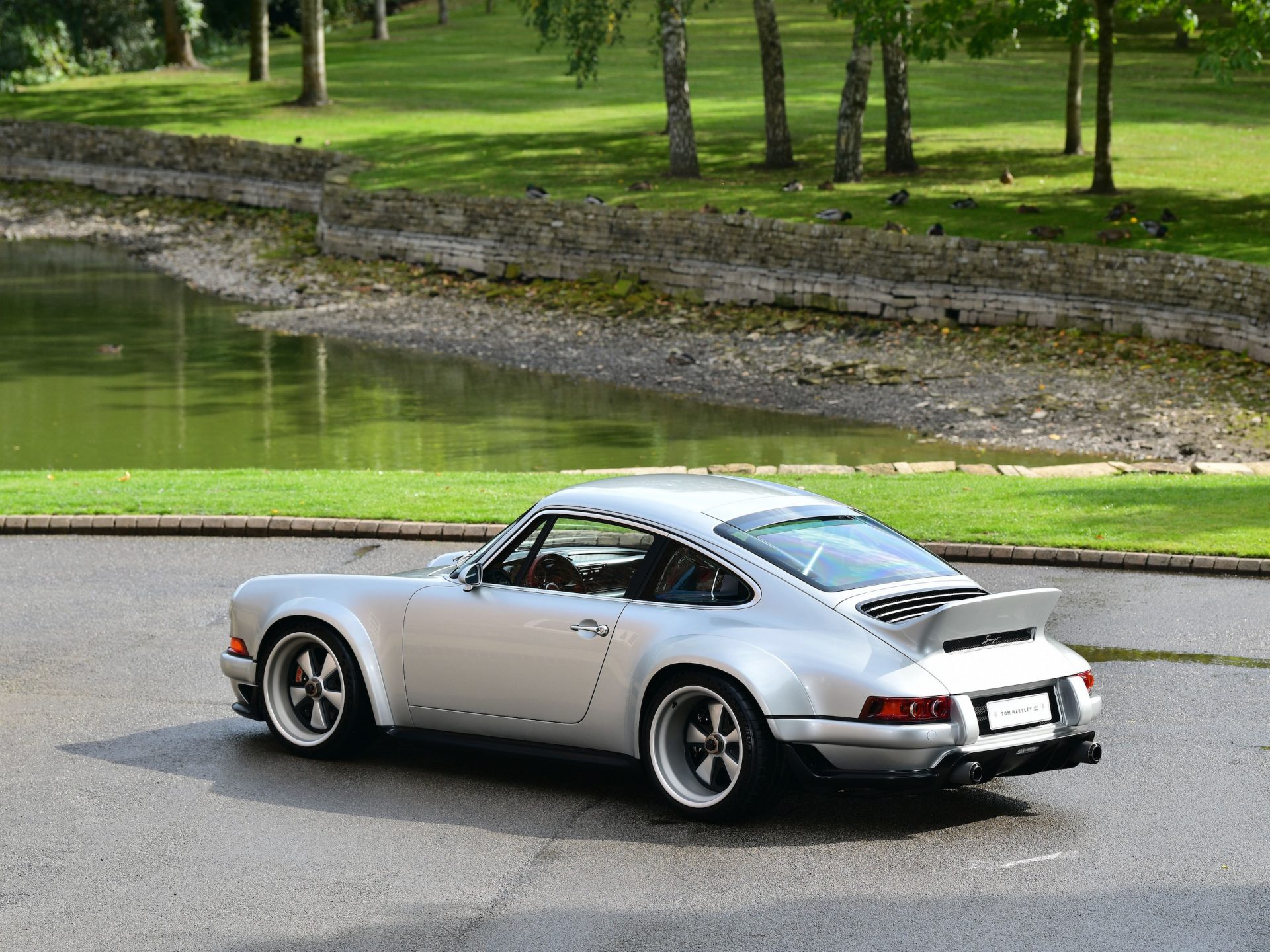
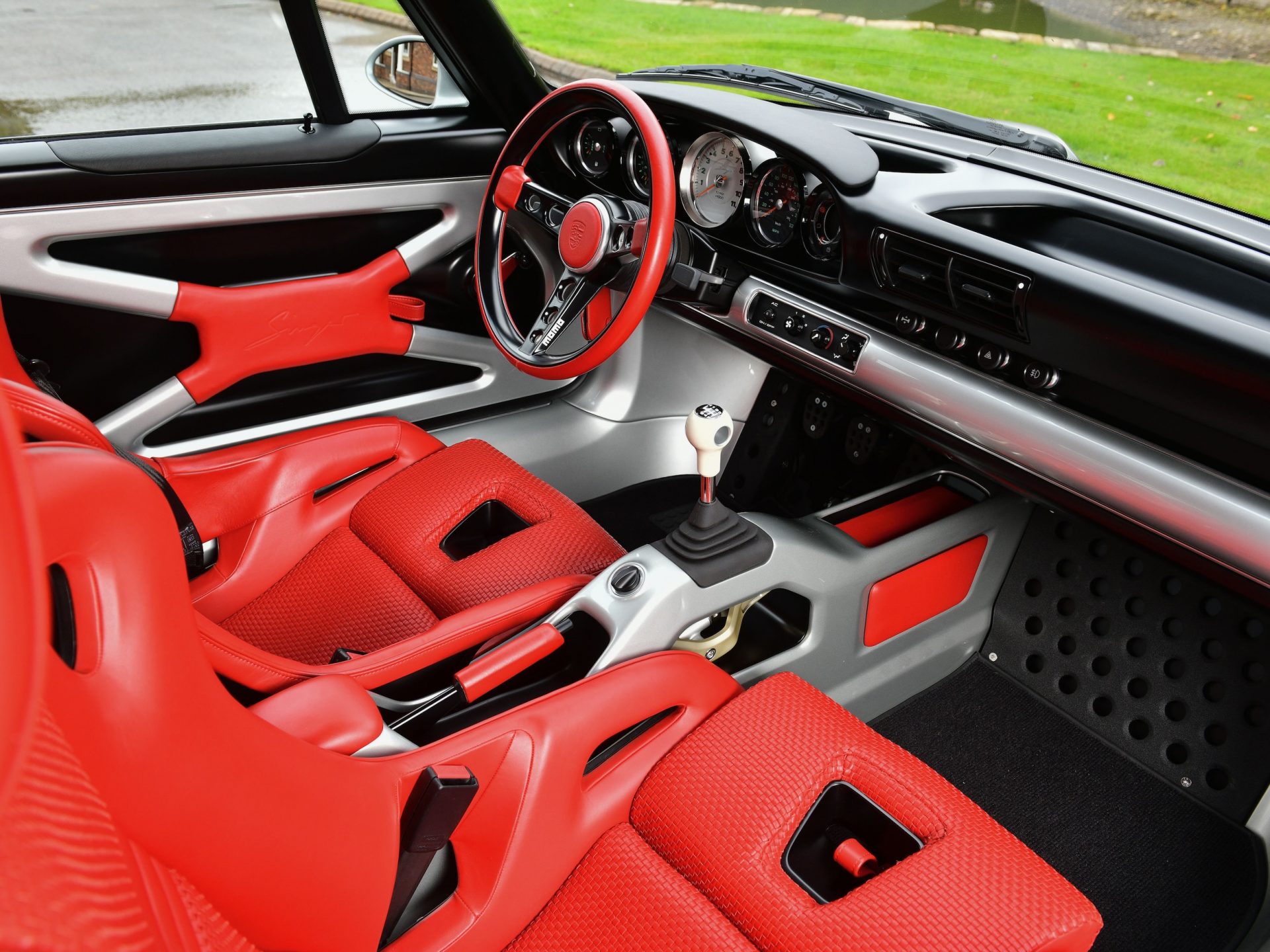
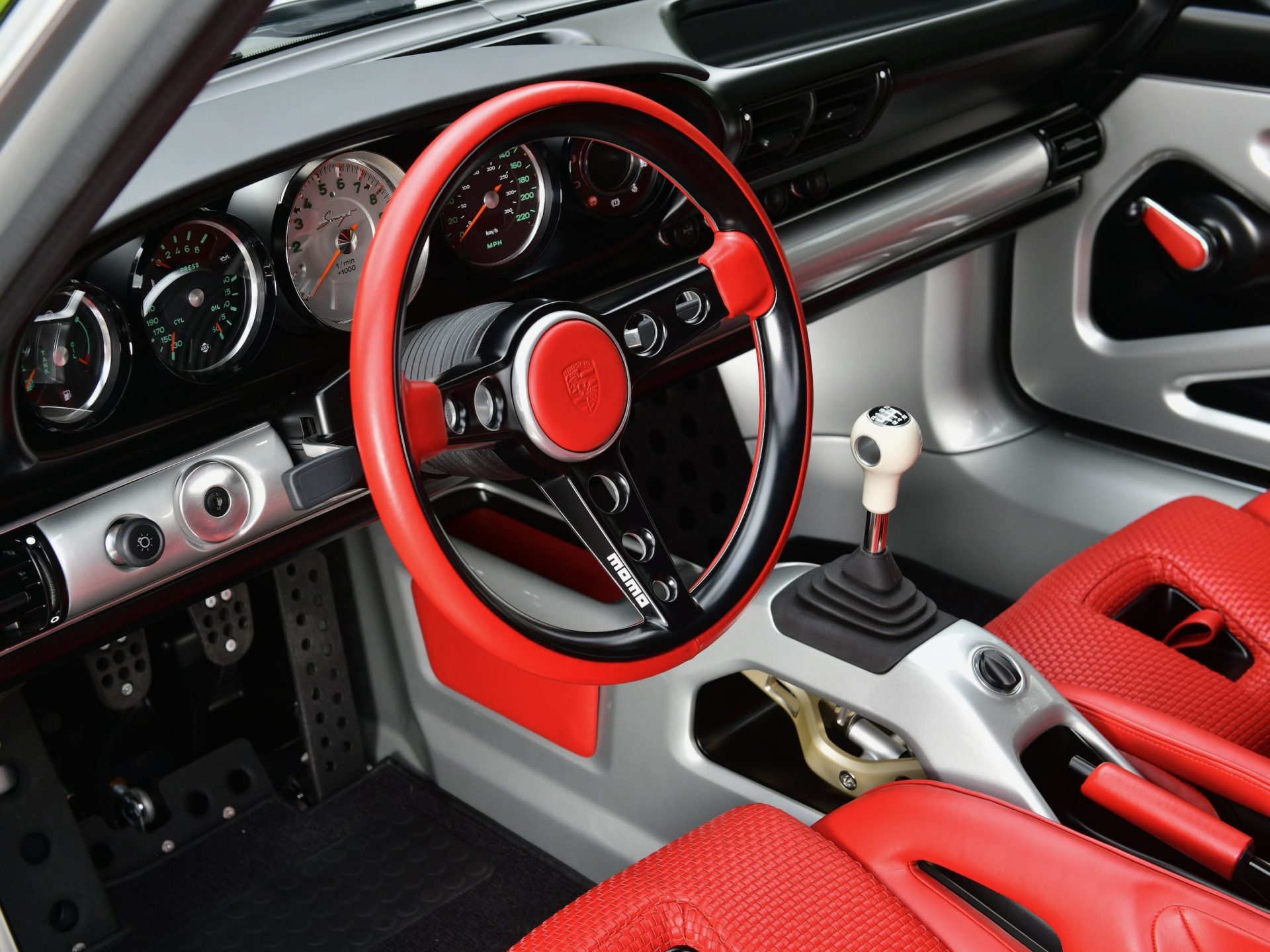
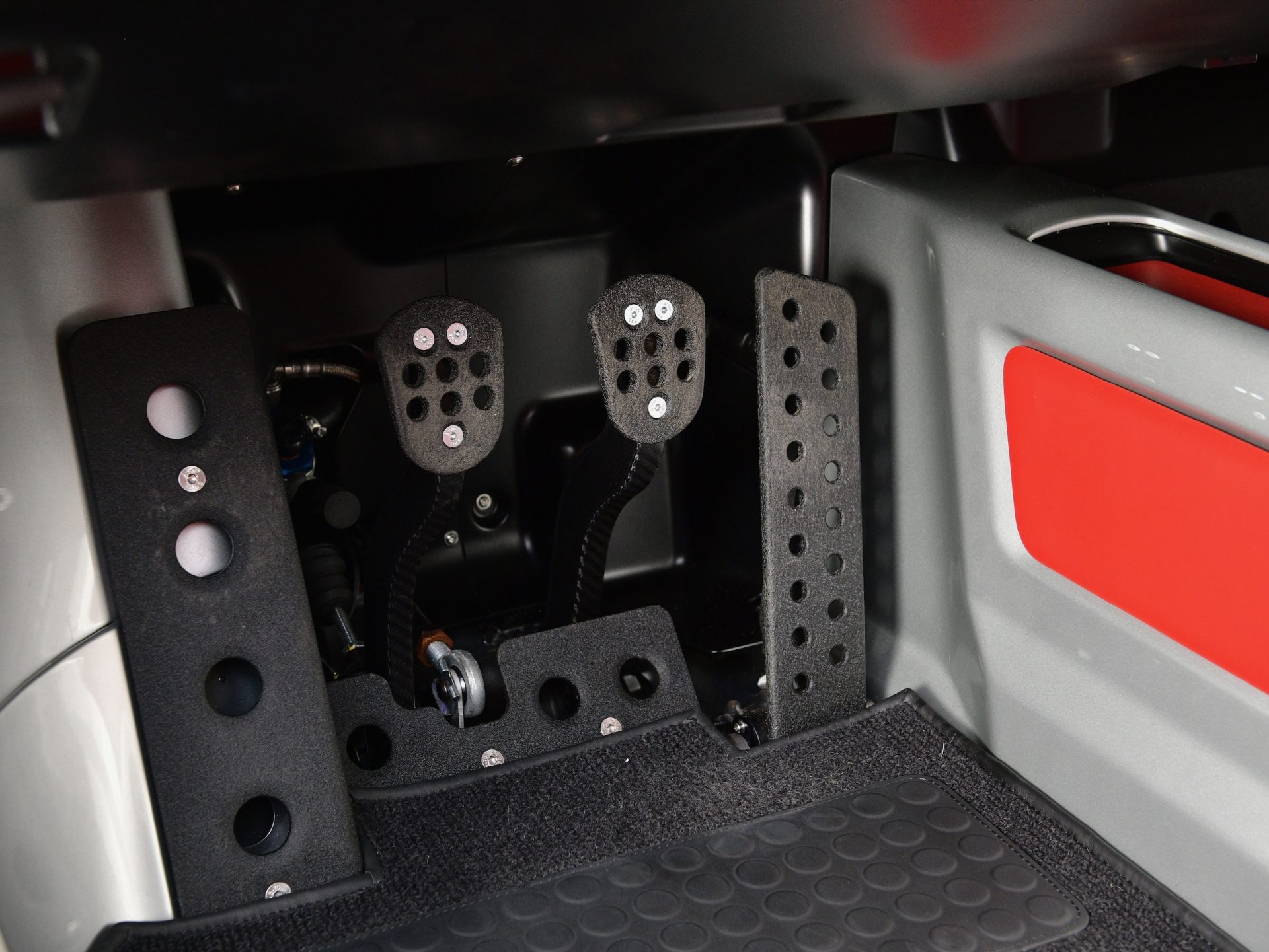
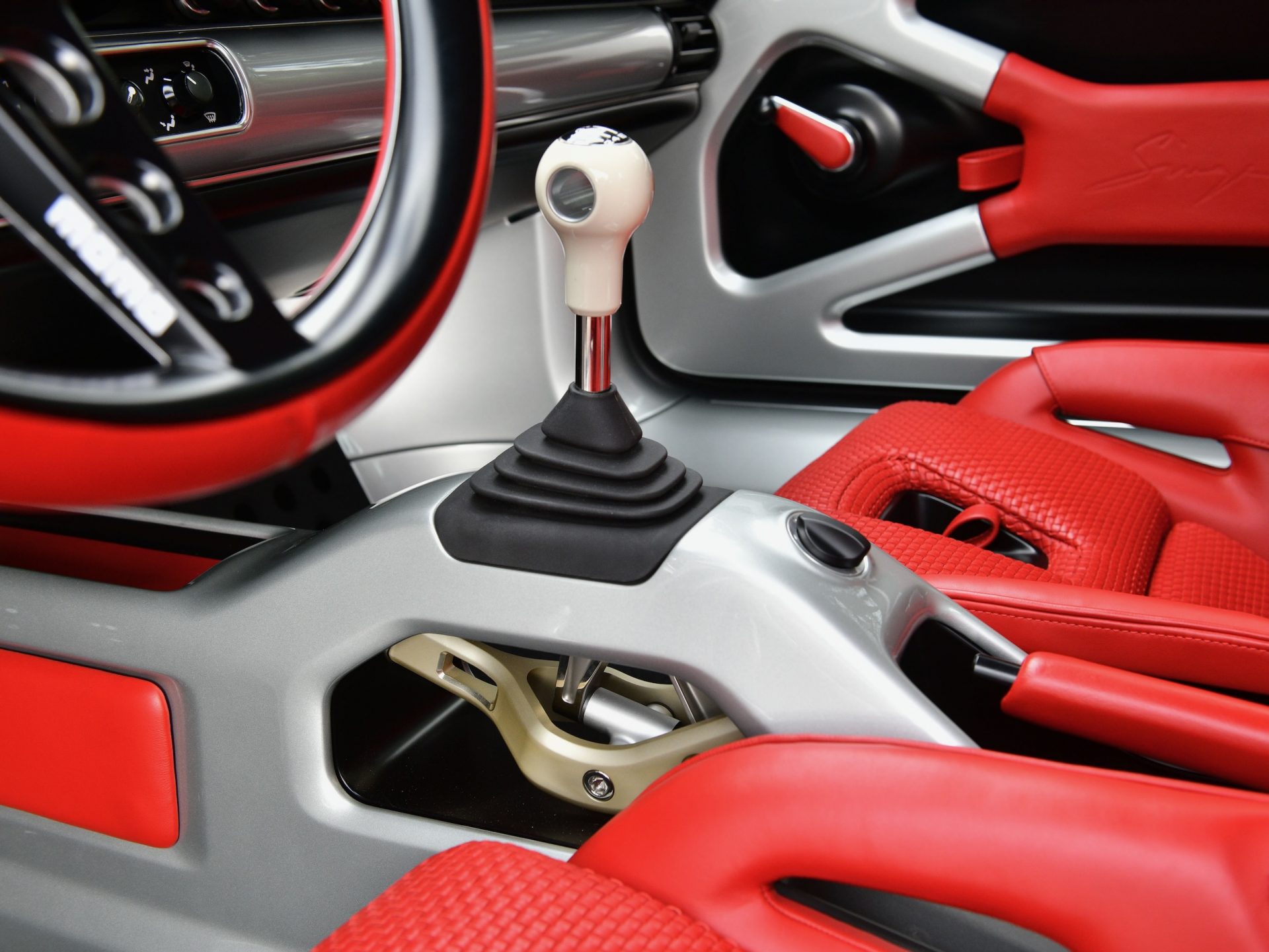
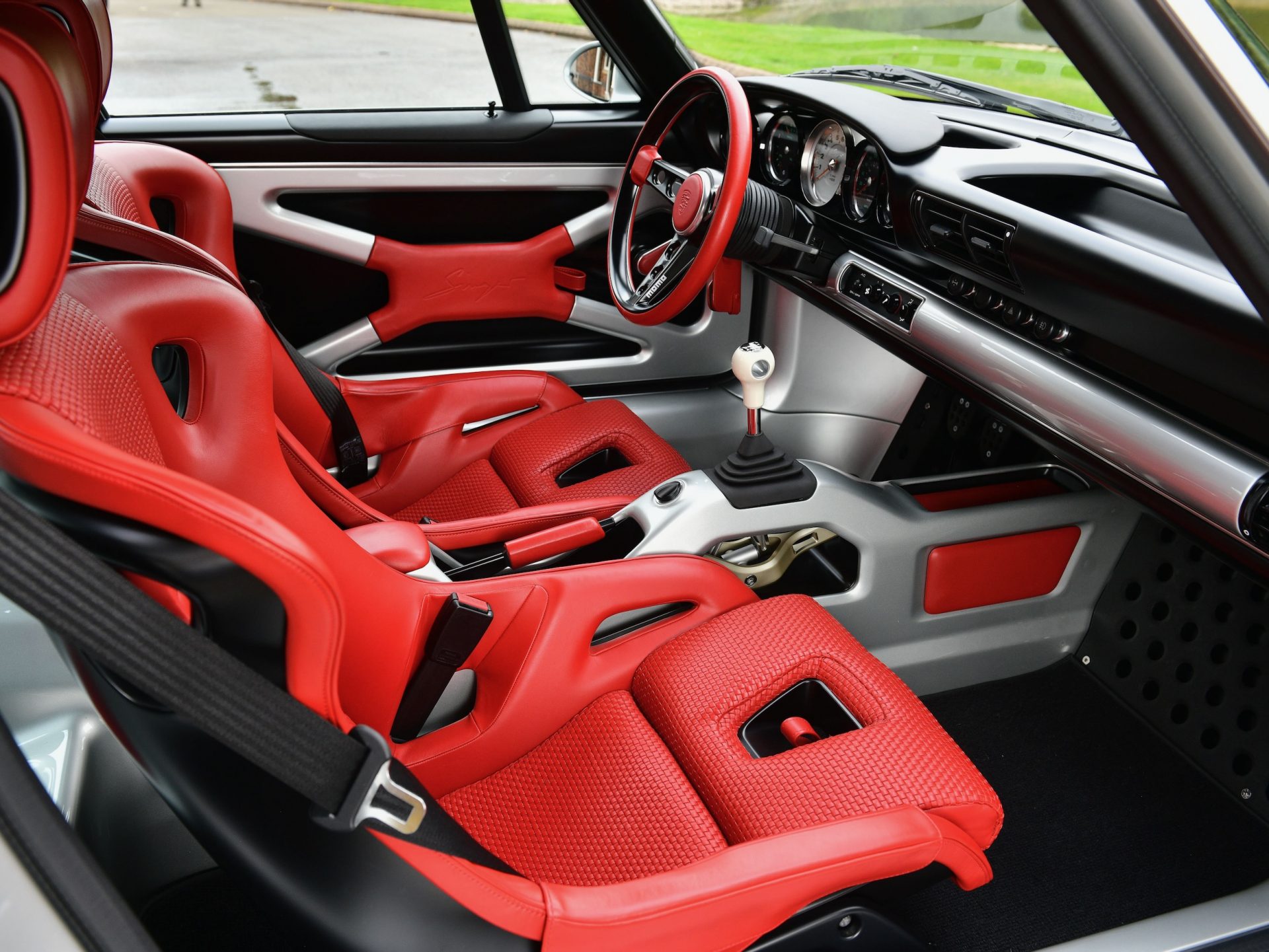
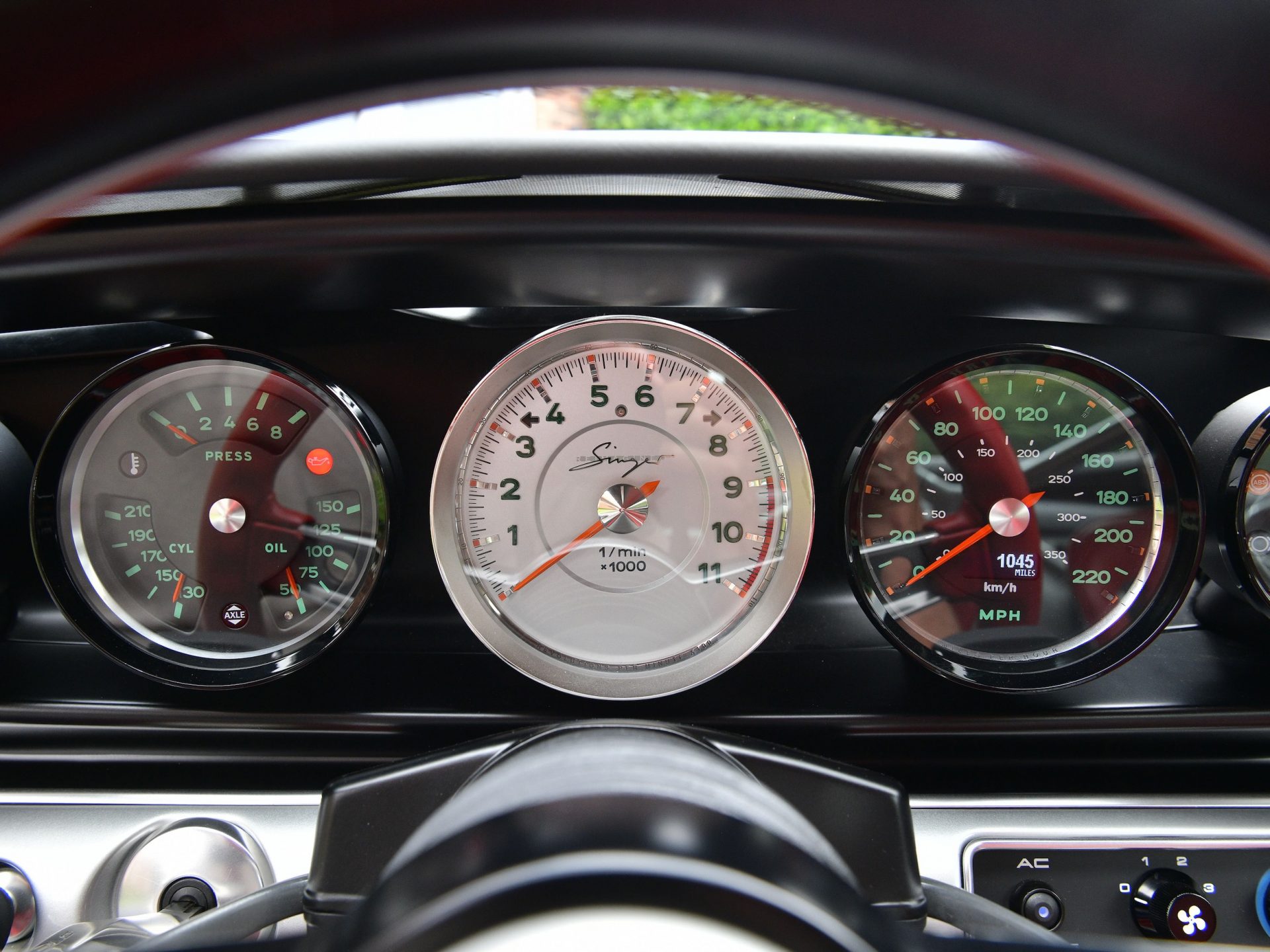
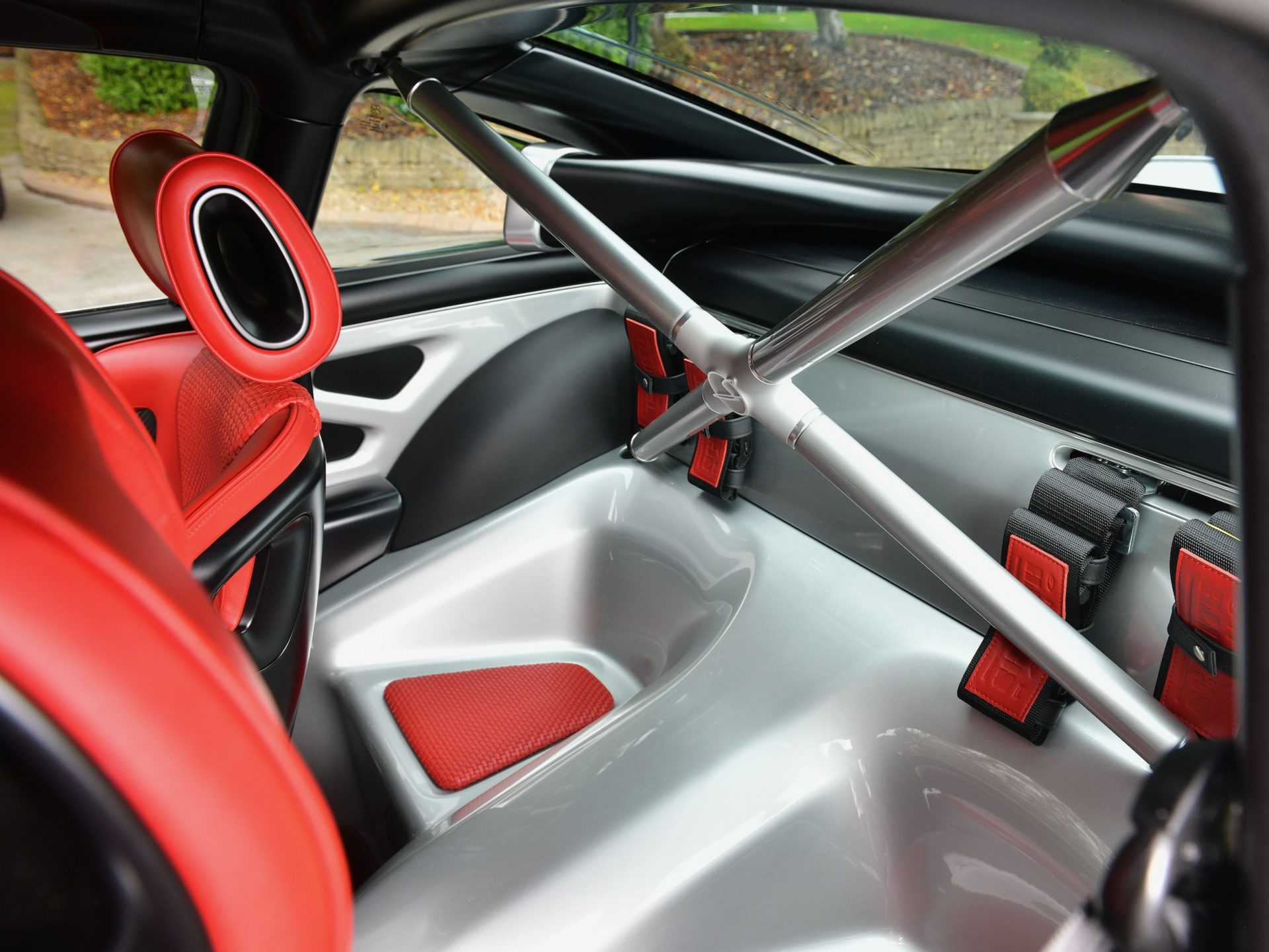
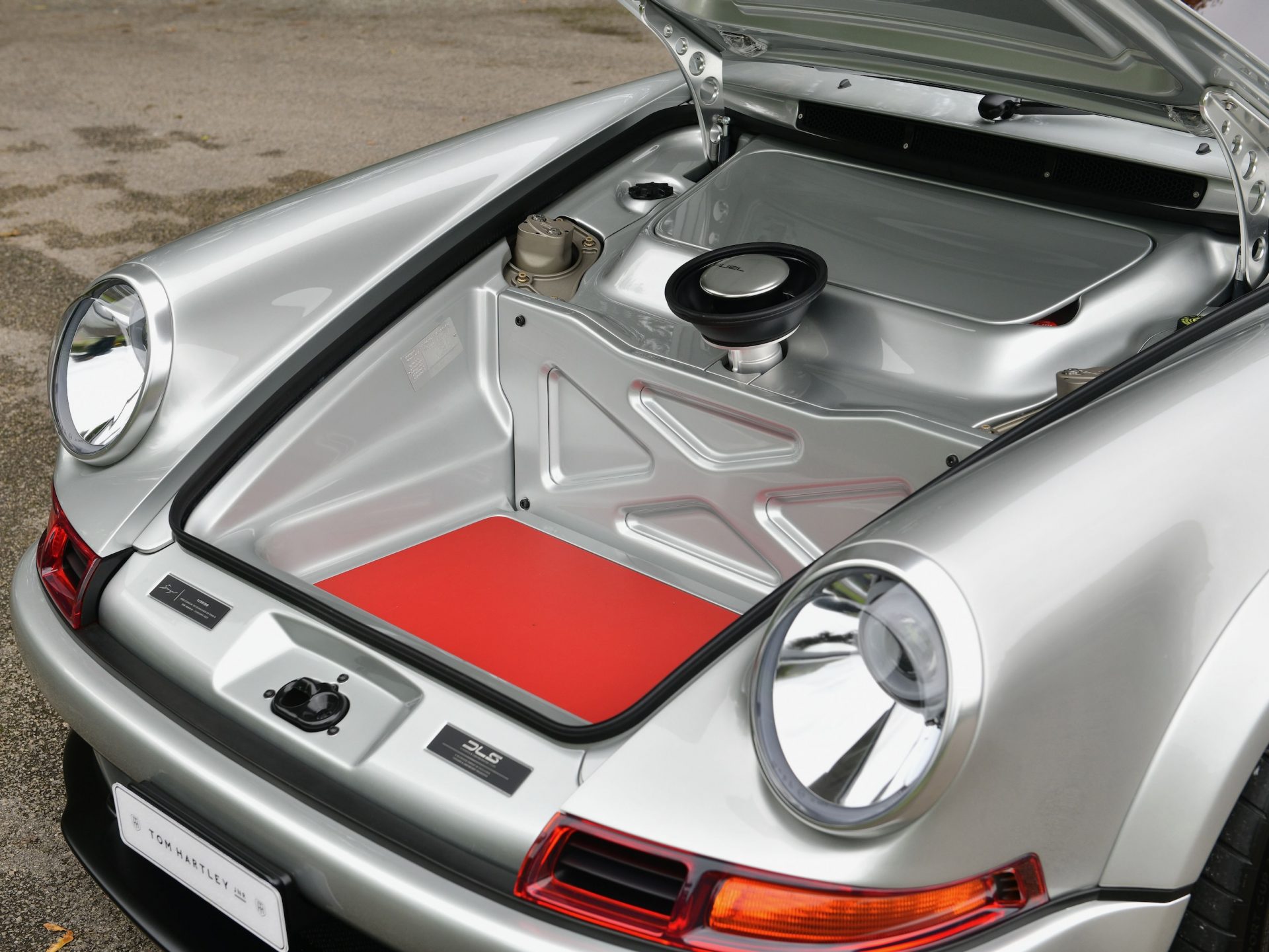
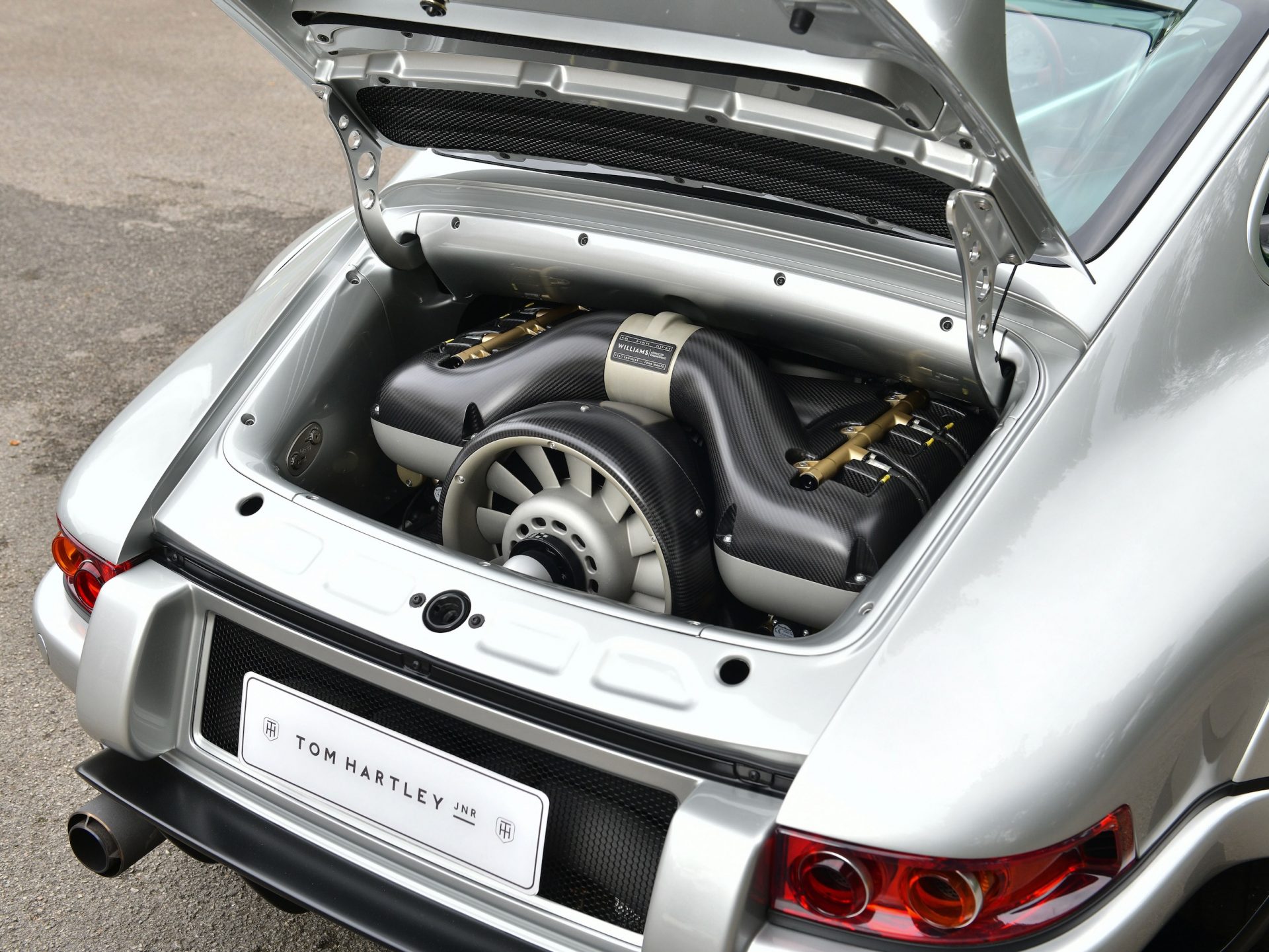
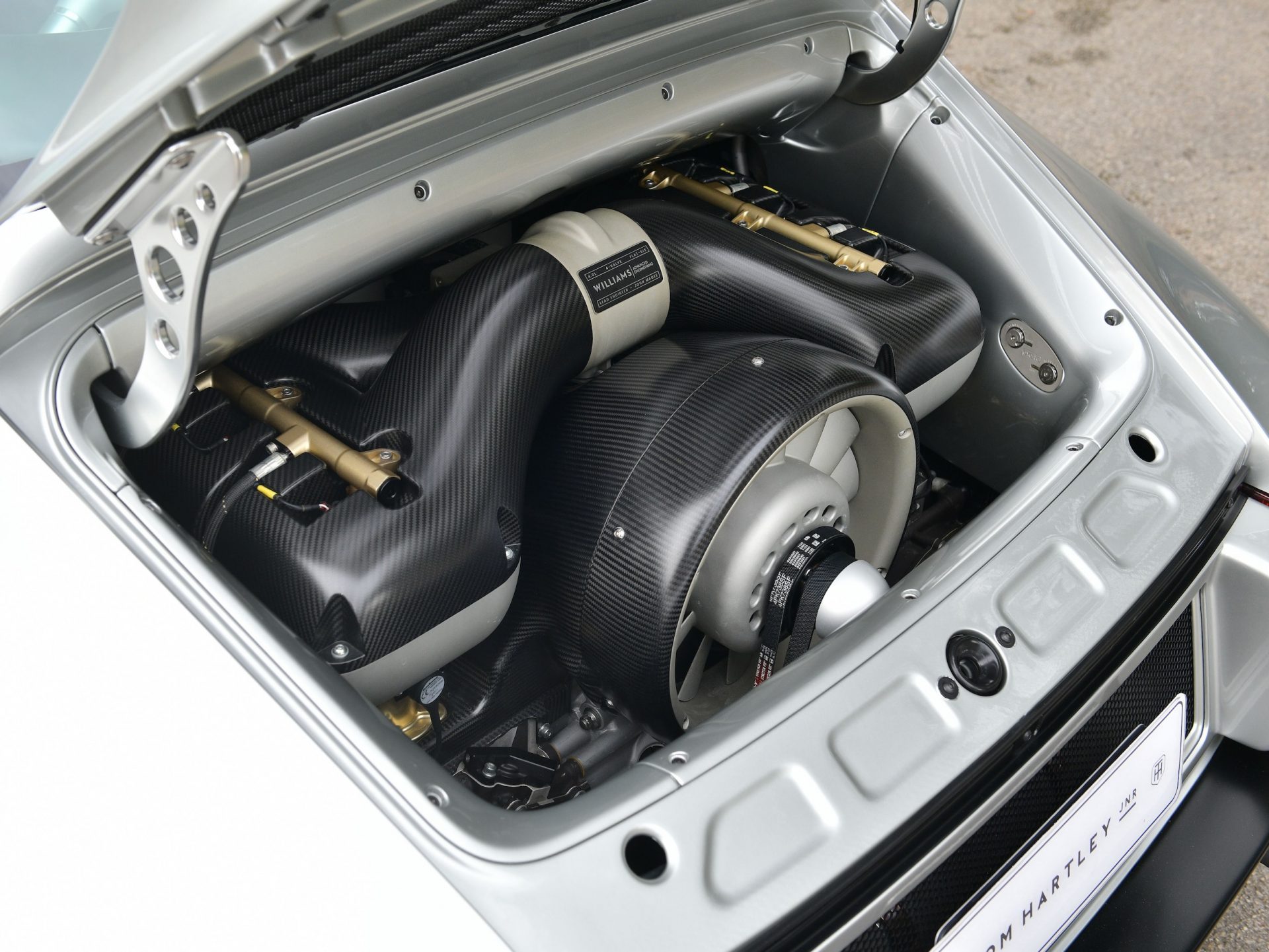
Steht zum Verkauf bei Tom Hartley Jnr. (Oktober 2025), Preis auf Anfrage, mit diesen Informationen: «This particular example began life as a 1990 964 Carrera 4 Coupe and was presented to Singer’s UK facility in Northamptonshire to begin its transformation in May 2020. Reborn in 2022 as the Sebring commission, it is finished in Paint-to-Sample (PTS) Porsche Silver RS60 with red interior trim, as a tribute to the 1960 12 Hours of Sebring-winning Porsche 718 RS60 Spyder. The iconic silver paint finish extends to the door mirrors, front trunk, and engine bay, with the exterior lower trim, decklid insert, and corner light trims finished in contrasting satin black. The wheel centres, wheel lips, and wheel barrels are executed in RS magnesium, while the exhaust is finished in graphite with polished tips. To complete the exterior, the Singer decklid badge is presented in platinum. The interior is a masterpiece of design, finished in Spinneybeck Candy Red leather with uniform weave seat centres. The carbon-fibre track seats feature Recaro side lettering in white, while the Special Wish steering wheel is trimmed in matching red leather with a satin black centre and white MOMO logo. To contrast the red leather interior, the rear X-brace is finished in Porsche Silver, and the Special Wish gearshift knob in gloss ivory with internals in Porsche Silver. The optional platinum-finished tachometer, additional racing harness seatbelts, and Sebring-engraved sill door kick plates complete this exquisite interior».
–
Chassis-Nummer: WP0ZZZ96ZMS406828
Motorennummer: 62M11433

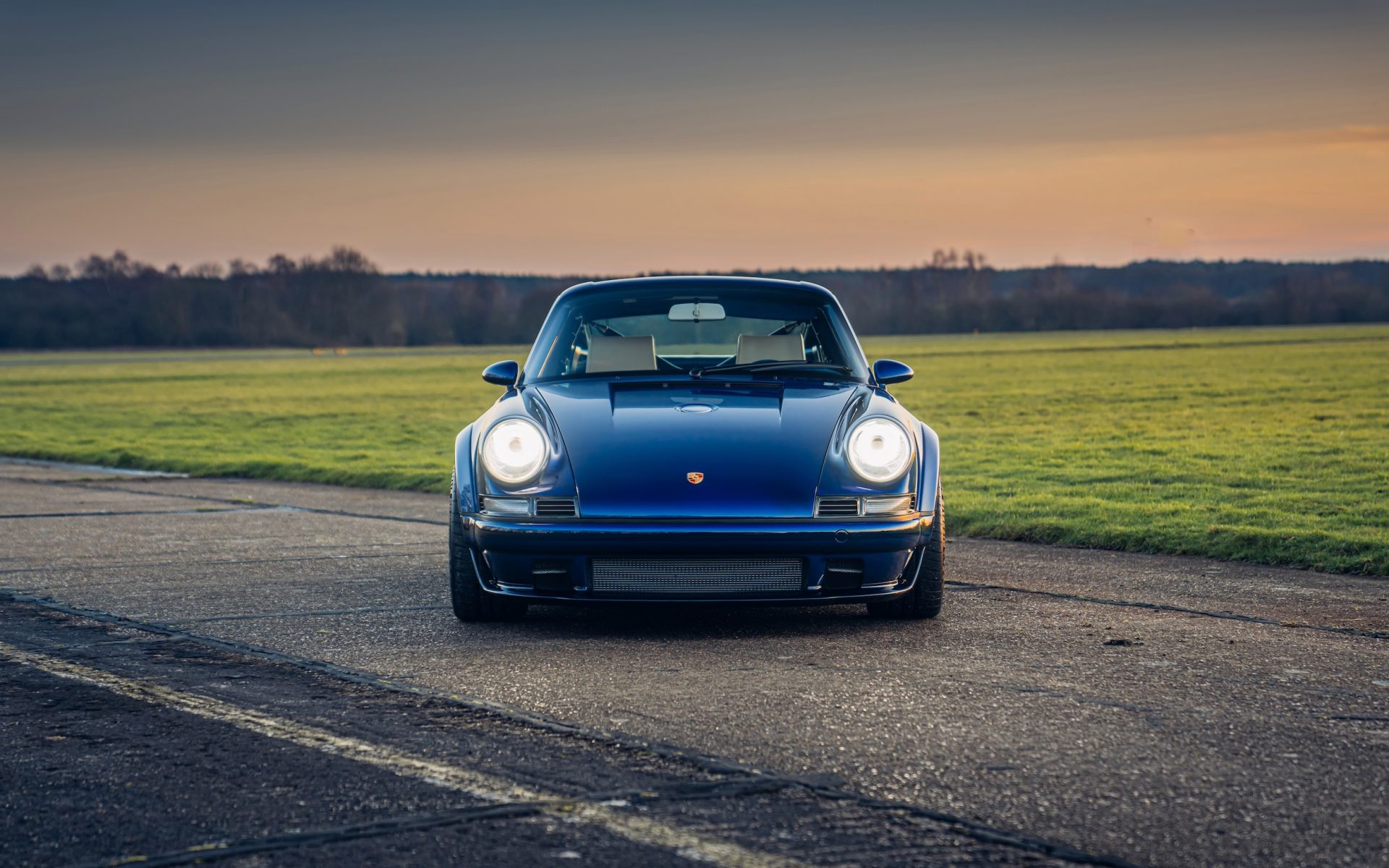


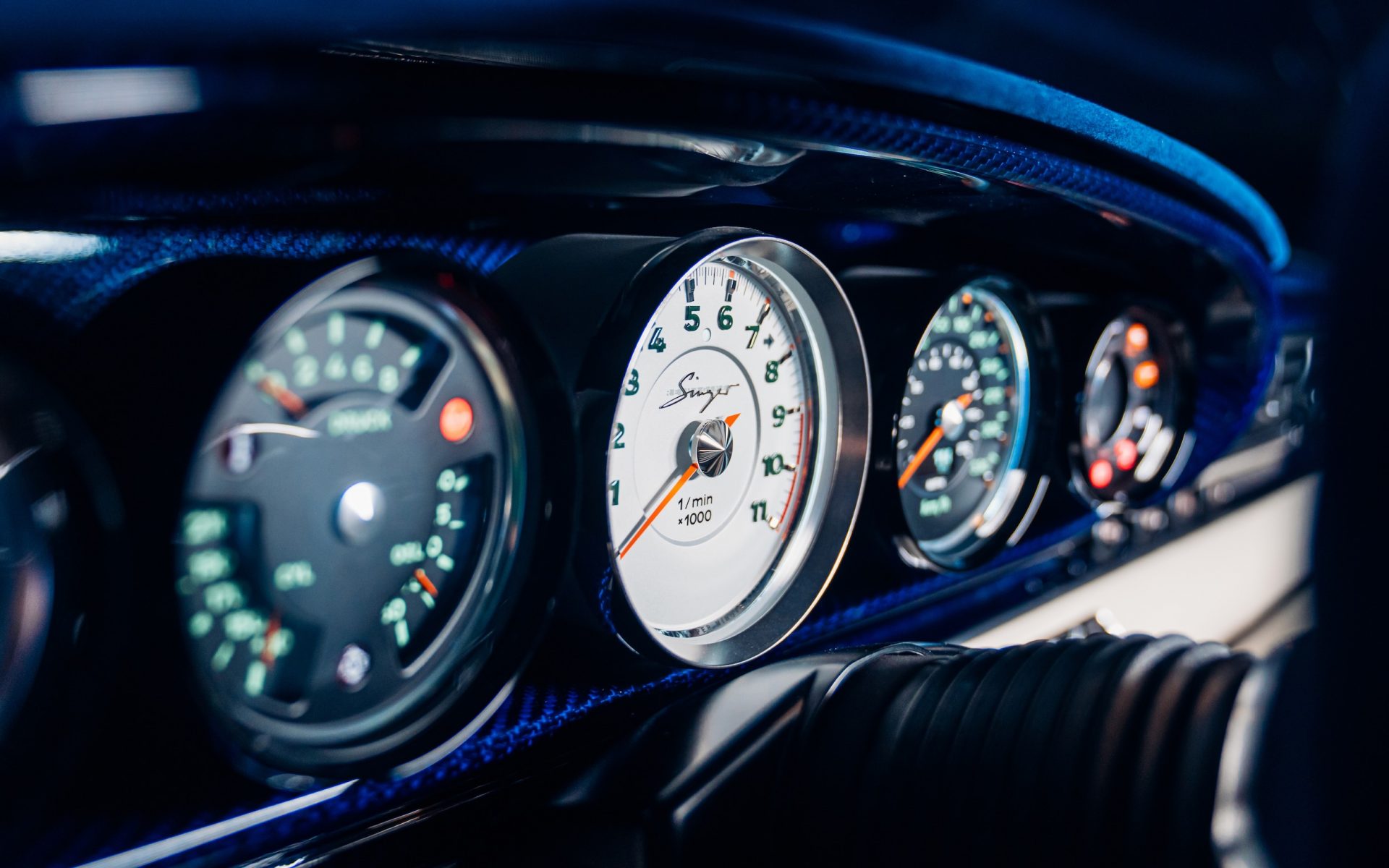


Auktion: RM Sotheby’s, Sealed (Februar 2025), mit diesen Informationen: «Named for the Oppenheimer Blue diamond, a 14.62-carat vivid blue diamond that is the largest fancy vivid blue diamond classified by the Gemological Institute of America ever sold at auction, the Oppenheimer Commission boasts a truly spectacular specification, one that exudes class and sophistication both inside and out. Mercedes-Benz Brilliant Blue Metallic was selected for the exterior paint colour, which is wonderfully, yet subtly, contrasted by visible carbon with navy tint gloss lacquer throughout the car. The most impressive aspect of the ‘Oppenheimer Commission’, as well as the DLS as a model in general, is Singer’s and the owner’s unrelenting incredible attention to detail and their use of only the finest materials, resulting in a number of one-off features even Singer had never done before. The ultimate expression of this is even the underbody of the car was applied with custom-fitted paint protection film by Singer, again something the company had never done before. From aluminum to carbon fibre, to the maple wood gearshift knob, no detail is overlooked in creating a premium experience for both driver and passenger that showcases the quality of materials used in the car’s construction. The bare carbon trim, especially in the Porsche lettering on the decklid and trim lines along the front and rear bumpers, provide a wonderful visual contrast to the Mercedes-Benz Brilliant Blue Metallic paintwork. The brightwork is polished titanium while the wheels are magnesium. Finally, the taillights have been smoked as to not distract from the car’s colour scheme, a seldom-seen $18,000 option. Inside, the ‘Oppenheimer Commission’ is awash in leather, carbon fibre, and a splash of Alcantara. The main leather colour is Cream, and this is contrasted by Navy Blue Alcantara perfectly matched to the navy-blue carbon fibre trim. The bucket seats boast a bespoke weave in the seat centers with a double offset stripe finished in navy blue. Built to LHD specifications but for the UK market, the ‘Oppenheimer Commission’ can easily be enjoyed by its new owner in a variety of markets with minimal modifications. Since completion by Singer in 2023, the ‘Oppenheimer Commission’ has remained in the hands of its first and only owner, having accumulated less than 120 km from the completion of its reimagining by Singer.»
–
Da kommt noch so einiges – und weitere spannende Fahrzeuge haben wir in unserem Archiv.
Wirklich erstaunlich wie klein die Lufteinlässe sein können, ohne dass der Turbo erstickt.
Hört ihr das, Designer von heute?
Tolle Autos. Eindeutig Restomods der ganz harten Sorte.
Ich wundere mich, dass radical das mag!?
„Ich wundere mich, dass radical das mag!?“
Sie nehmen mir das Wort aus dem Mund, oder von der Tastatur, lieber Rolf!
Bei den frühen Singer-Kreationen kann ich das ja noch ein wenig verstehen, bei den neueren Auswüchsen, da bin ich vollständig ‚raus, da fehlt mir alles Verständnis…
Herr Ruch, hier besteht Erklärungsbedarf…
es sind eh dreiViertel der 964er «krumm», da verhilft so ein Restomod zur Besserung. Ausserdem gibt es nun wahrlich genug, da kann man ein paar davon schon entbehren. Die Singer sind zwar hässlich teuer, aber halt schon sehrsehrgut gemacht. Und so ganz prinzipiell: radical besteht nicht auf absoluter Originalität, sondern auf Ehrlichkeit, Transparenz. Lieber ein sauber aufbereitetes Fahrzeug mit klar deklarierten Veränderungen/Verbesserungen als eine Lügen-Geschichte.
Ich mag keine „Restomods“!
Weder vernobelte Fiat Panda 4×4, noch sinnbefreite Defender mit V8-Motor und schon gar nicht totrenovierte, auf nostalgisch getrimmte und bunt tapezierte 911er.
Ja, einige der Singer-Porsches sind sehr reizvoll.
Ja, es sieht so aus, als wären diese Autos perfekt verarbeitet.
Ja, es sind sicher Sammlerstücke, die ein enormes Geld kosten.
Ja, vermutlich fahren sie sich auch ganz großartig, sind sauschnell, verbinden das Beste aus zwei Welten, der stilreinen frühen Elfer-Karosserie und der modernen Technik des 964.
Aber:
Viele der vorgestellten Exemplare sind overdesigned, etwas gewollt, etwas neureich, etwas kitschig.
Aber:
Die Leichtigkeit und Eleganz des „F-Modells“ mit den schmalen Stoßstangen, den relativ schmalen Rädern, dem luftigen und leichten Innenraum, die ist nicht übertragbar auf einen modernen Porsche, wie es der 964 trotz der Kostümierung ist.
Aber:
Wer je einen frühen 911 gefahren ist, der ist begeistert von der Leichtigkeit und „Pureness“ eines solchen Autos, Alois Ruf sagte einmal über seinen 901, daß „sich das Auto wie eine Feder fahre“, ein Eindruck, den ich bestätigen kann. Das wird bei einem Singer ganz anders sein.
Aber:
Der 964 war die letzte Bauform des klassischen 911, seine Karosserie hatte – im Gegensatz zum 993 – noch alle Merkmale des Urentwurfes, von den Seitenschwellern einmal abgesehen, er war eine sehr gelungene Weiterentwicklung des wundervollen „G-Modells“. Durch die Reimagination in Amerika wird solch ein großartiges Originalfahrzeug entstellt, wenn auch auf hohem Niveau und sicher sehr gekonnt.
Deshalb:
Hätte ich lieber einen gut restaurierten, frühen 911, vielleicht sogar als „Soft-Window-Targa“, so original wie möglich und am liebsten mit den herrlichen Chromrädern mit Radkappen.
Und dazu einen perfekten 964 als Coupé, mit Cup-Spiegeln und -Felgen, ebenfalls so original wie möglich.
Und am liebsten beide in Dunkelgrün.
Wirtschaftlich dürfte sich dazu noch eine feine Garage mit angenehmer Atmosphäre und einem schönen Gußasphaltboden ausgehen und vom Kaufpreis eines Singers bliebe immer noch etwas überig…
Natürlich sind Restomods in der Szene ein heißes Thema, an dem sich die Geister scheiden. Aber gerade die Singer-Porsche sind meiner Meinung nach eben kein optisches Brutal-Tuning, sondern schaffen es recht gut, die Optik der alten Originale zu erhalten. Ganz abgesehen davon, dass originale alte Porsches seit vielen Jahren ebenfalls heftig teuer sind. Ich bin mir nicht so sicher, ob die ihren Wert in den nächsten 30+ Jahren halten können, wenn eine neue Generation Sammler auftritt. Denn eines sind die meisten alten Porsches sicher nicht: Selten. Ganz im Gegensatz zu den Singer-Kreationen.
Wusste ich nicht, dass die Basis hier ein 964 ist, hatte mich aber über den Schalthebel gewundert. Das G-Modell mit diesen „amerikanischen“ Stoßstangen mochte ich nicht.
Vom Fahren her gefiel mir der 964 besser als die älteren Modelle, Kraft hatte er genug und die „alte“ Karosserie mit den cleanen Stoßstangen mochte ich sehr. Nur das Airbag-Lenkrad war hässlich. Der so hoch gelobte 993 war nie so ganz meins, habe ich aber nie gefahren, der 996, gefahren mit Automatik, war gruselig, der 997 fuhr toll.
Aber der 964 war 1,65 m breit und damit hatte man Platz auf der Landstraße und innen waren gefühlt die Dickärsche auch nicht geräumiger, nur halt viel breiter.
In der Familie gab es einen 964 in Hellblau-Metallic und einen in uni Schwarz. Der Schwarze war so richtig mein Ding damals.
Kann „man“ machen – muss mir aber nicht gefallen und wenn mich so ein Auo nicht anspricht, was soll`s. Andere Menschen finden solche Autos gut und die sollen glücklich damit werden.
Letzten Samstag war bei uns Garagenparty mit ein paar Oldies. Darunter war auch ein nicht restaurierter 911 Targa mit dem 110 PS-Motor (ohne Turbo). Ein paar Gebrauchsspuren (lack, Dichtungen, usw.) hatte er schon aber eben auch einen tollen Sound. Der hörte sich an wie 400 PS -mindestens.
Sein Besitzer war sehr zufrieden und wir führten ganz „erbauliche Benzingespräche“.
Ach ja, der Wagen war schwarz (außen und innen), hatte einen silbernen Targabügel, einige Chromteile und die schlanken Stoßstangen und ja logisch Fuchsfelgen. Ein ehrliches Auto. Und einen Besitzer, der zu seinem Auto „steht“ – Entwicklungsingenieur für die Wartungssoftware bei Fendt (Traktoren).
Und bekanntermaßen bin ich jetzt nicht der Porsche-911-Fan aber der Porsche hat mich schon „berührt“.
Ich bin auch kein Freund von „Besser als Neu Restaurationen“. Ich befürchte, dass diese Restaurationen wohl auch die Ursache für viele Fälschungen sind. Dem unbedarften Kunden, der nicht selbst schraubt, nicht technikaffin ist und einfach einen 911er „braucht“, gefällt das, weil er glaubt ein „altes Auto“ (zum angeben?) mit den (guten?) Eigenschaften eines aktuellen Autos zu erwerben.
Für mich geht`s aber „tiefer“, wie dem Besitzer des oben beschriebenen 911ers. Ja, es gibt mittlerweile Schnellere ;-), ja, die neuen Autos fahren sich leichter, ja, sie verbauchen weniger, ja, du kannst auch Nachts dank Xenon mit über 200 „dahinbrennen“, ja, es riecht nicht nach Öl und Sprit, ja, ja, ja – aber wenn die „alte Kiste“ brav ihre km abspult dann fühlst Du Dich wie ….. – das Gefühl ist durch nichts zu überbieten.
Möchte ich ein modernes Auto im Gewand eines Oldies? Ich nicht!
Ja, das ist ein schwieriges Thema und ja, „everybody can do what him happy makes“.
Sehr seltene Ikonen sollte man nicht anfassen, bzw. pur original restaurieren.
Ich könnte wenig mit einem völlig unrestaurierten Wagen anfangen, ausser er gehörte mir (fast) von Anfang an und die Gebrauchsspuren und Gerüche kommen von mir selbst. Sonst hätte ich ein Gefühl, als würde ich Kleidung aus dem second hand Markt tragen.
Manche Autos haben eine gute Grundkonstruktion, aber eine schlechte qualitative oder in Teilbereichen technische Ausführung. Nehmen wir beispielsweise den hier nicht vorkommenden E-Type. Ein wundervolles Auto, mit großen Anfälligkeiten und schlechter Qualtiät. Diesen, moderat verbessert, neu aufzubauen könnte ich mir vorstellen. Auf youtube gibt es ein Video von Cargold über ein V12 Coupé, welches „in Rolls-Royce Qualität“ neu aufgebaut wurde. Toller Wagen mit ehrlichen Angaben. Technisch wurde er auf Einspritzung umgestellt, optisch ein Traum mit einer Innenausstattung, wie es sie nie gab. Das eigentlich ziemlich hässliche Armaturenbrett der Serie 3 wurde mit Holz, das es so nie gab, verkleidet und …. es passt zu dem Auto. Ich verstehe aber auch, wenn jemandem das schon zu viel ist.
Oder nehmen wir einen, ich mag ihn sehr, Jeep CJ7. Der fährt so unsagbar schlecht, dass ein Defender daneben fast schon ein gutes Fahrwerk hat. Wenn man bei dem die Starrachsen mit Längslenkern, überarbeiteten Blattfedern und Gasdruckdämpfern bändigt, damit er wenigstens ansatzweise geradeaus fährt, ändert man ja nicht gleich den Grundcharakter, macht das Auto aber alltagstauglicher. Auch beim Verdeck gibt es leichter zu bedienende Lösungen als das Original, das schlimmer als Camping ist.
Dann gibt es ja so extreme Restaurierungen, dass dabei ein Neuwagen herauskommt. Pagode von Arthur Bechtel oder Brabus zum Beispiel. Ich gebe zu, für mich hat das einen gewissen Reiz, so als überhaupt-nicht-Schrauber. Und die riechen sicher nicht muffig, wie leider viele Oldies.
Wie gesagt, die obigen Porsches sind durchaus spektakulär anzusehen, auch die individuellen Innenausstattung, die es so nie ab Werk gab. Aber die alte Karosse über ein neueres Modell zu stülpen, tut sogar mir weh.
Ja, ja, der Luftschitz, in den Achtzigern hatte er den herrlichen Laden am Mittelweg in Hamburg vom – nein, ich sollte die Wahrheit nicht schreiben, also, vom – Firmengründer Mirbach übernommen, was redet er in dem Video für einen Blödsinn…
Den Jaguar E-Type finde ich ganz schrecklich, zwar scheint alles sehr hochwertig und gut restauriert, aber ohne jedes Gespür.
904 Dunkelblau ist eine Mercedes-Farbe, magnoliafarbenes Leder hat es im E nie gegeben, eine hellbeige Armaturenbrettoberseite macht nur Sinn bei Autos, die man sicherheitshalber nicht und schon gar nicht bei Sonne fährt, das Achtzigerjahre-Becker Cassettenradio gehört in einen Mercedes SL, paßt also wenigstens zur Lackierung, das Nardi-Classico-Lenkrad hat natürlich in einem Engländer gar nichts zu suchen, völlig entstellt wird es durch den aufgepfropften E-Type-Plastik-Hubknopf!
Und der finale Beweis, daß der Besitzer das Auto nicht verstanden hat, ist das Holzarmaturenbrett, der E-Type war ein durch Aerodynamik und Flugzeugbau beeinflusster, vom Rennwagen D-Type abstammender, Sportwagen, in dem solch ein Wohnzimmerschränkchen nichts zu suchen hat, das schwarze Schrumpflackambiente der originalen E-Types ist vielfach stimmiger!
Man kann sich den leicht adipösen Unternehmer aus der süddeutschen Provinz richtig vorstellen, wie er der Werkstatt die Anweisung zur Restaurierung gegeben hat:
„I wui dös Audo aufs högschte Niveau henn, machts mir dösch gnau so wie mei Pagode, mit dösch sölbe Lenkrad un in de gleiche Farb. Göld spuilt kei Rolle, dös Wägele muß perfekt sei!
Nein, so etwas darf man keinem Jaguar antun!
In der Tat waren insbesondere die Zwölfzylinder-E-Types nicht besonders gut verarbeitet, aber das läßt sich ja alles bei einer guten und originalgetreuen Überarbeitung des Fahrzeugs korrigieren, ohne daraus eine verkitschte, eingedeutschte Herrenhandtasche auf Rädern zu machen.
Am besten ist aus meiner Sicht sowieso das gut gepflegte, mit Liebe behandelte und regelmäßig gefahrene Ersthandfahrzeug, „well used but well loved“ sagen meine Englischen Freunde dazu, mein in 33 Jahren 88.000 km gelaufener Daimler Double Six, mein in 28 Jahren 70.000 km gelaufener XK8, natürlich findet man Gebrauchsspuren, aber die haben meine Eames Chairs auch, von mir ganz zu schweigen.
Wenn ich ein altes Auto fahren möchte, dann muß ich auch damit leben, daß nicht alles funktioniert wie in einem modernen Fahrzeug, daß der Unterhalt gegebenenfalls etwas höher und der Wertverlust sicher deutlich niedriger sein wird.
Und darf das alte Auto nicht seiner Geschichte und seines Alters berauben, wie viele der Nobelrestaurierer es auf Kundenwunsch tun.
Zurück zu den Singer- Porsches, sie sind ja keine Restaurierung, sondern eher eine Neuinterpretation des Themas 911, sie sind zwar nicht immer geschmackssicher, aber sehr gut gemacht und sie basieren, wie Herr Ruch richtigerweise anmerkte, auf einem relativ oft gebauten „Massenprodukt“ von Porsche.
Insofern sind sie mir hundertmal lieber als der Cargold-Jaguar, die Mechatronik-Pagoden oder andere totrestaurierte Statussymbole.
Allseits frohe Pfingsten!
Sehr geehrter Herr Servatius,
ich leg mich weg vor lachen über den Südwestdeutschen Kunden – einfach herrlich. Genauso könnte das abgelaufen sein.
Die meißt gehörte Frage auf Oldtimertreffen im Südwestdeutschen: Was koscht jetz sowas? Mit „sowas“ ist das KFZ gemeint. Andere Daten interessieren die Leute oft nicht.
Mir gefällt der Jaguar trotzdem. Man kann natürlich immer auf Nummer Sicher gehen und vermeintlich so nichts falsch machen. Es ist allerdings auch ein wenig langweilig und sicher nicht kreativ. Gleichzeitig die Singer ok zu finden …. verstehe ich nicht. Muss aber auch nicht alles verstehen.
Lieber Rolf, Kreativität, die ein in einen Jaguar nicht passendes Nardi-Lenkrad mittels des Plastik-Hupknopfs des Originallenkrads entstellt, die aus gutem Grund schwarze Oberseite des Armaturenbretts beige beledert und das Wäscheschränkchen aus dem Ankleidezimmer meiner Großmutter vor Fahrer und Beifahrer zimmert, die ist fehlgeleitet – finde ich!
Da sind dann die Interieurs der Singer-Porsches mit Zitaten aus der Geschichte, wie den grünen Ziffernblättern, dem Schottenkarostoff und den Flechtmustern im Leder auf einem anderen Niveau!
Wie weiter oben geschrieben, haben möchte ich diese Autos auch nicht, aber noch weniger den Cargold-E-Type!
Aber:
Einen originalgetreu revidierten E-V12 Roadster, mit einem Moto-Lita-Holzlenkrad und unbedingt auf den verchromten Stahlfelgen, am liebsten in Silbergrau mit dunkelblauem Interieur und Verdeck, das wäre schon noch einer der Wagen, die ich sehr gerne hätte!
Es tut mir ja leid, dass mir die Farbkombination gefällt, auch wenn sie nicht original ist und die Benz-Farbe sieht auf dem V12 viel besser aus als auf einem Strich 8.
Aber ich mag auch lieber in einer feinen und wertigen Landhaus-Einrichtung leben als in einem Bauhaus-Bungalow mit karger LC usw. Möblierung.
Und ein 50 oder 60 Jahre altes Schrumpflack-Armaturenbrett sieht halt einfach schäbig und versifft aus, da klebt der Dreck förmlich drin.
Eine schöne und gut zu schaltende 5-Gang-manuell-Box hätte ich mir auch noch einbauen lassen in den Wagen.
Ich verstehe das Konzept schon, auch das des Ur-Mini, den Sir Alec ja extrem raumoptimiert konstruiert hat, fast ohne Einrichtung, mit durchgehender Netzablage vorn und mit Camping-Stühlen, damit auch hinten Platz ist.
Trotzdem fand ich damals die Wood & Picket Minis mit guten Sitzen, Holz und Leder extrem cool. Das war zu Zeiten, als es für einen Golf noch kein Leder gab, weil niemand es gekauft hätte. Gerade das war eben so anders und so cool, auch wenn dann weniger Platz im Auto war und das geniale Konzept konterkariert.
Heute ist eh alles anders …… und jeder kann ja mit seinem Geld machen, was er will.
Lieber Rolf, in der Tat wohne ich in jenem Bauhaus-Denkmal, mit Corbusier, Breuer, Dieter Rams (meinem Design-Lehrer) und Eames-Chairs…
Und tatsächlich ist mir das fein restaurierte Schrumpflack-Armaturenbrett lieber als das gefakte Walnussholzkommödchen.
Aber:
Mein Mini-Cooper stammt von Wood & Pickett, hat die feinen Ledersitze und das Walnußholzarmatuenbrett, die verchromten Schalter und die Chromrahmen um die Seitenfenster, natürlich ist er rechtsgelenkt und gehört eher nach Mayfair als nach Charlottenburg…
Natürlich ist er kein Original-Mini, aber ein originaler W&P-Mini.
Ende der siebziger Jahre gab es die ersten VW Golf vom Autohaus Nordstadt in Hannover, der viertürige Golf I GLS wurde mit GTI-Technik versehen, mit den schönen US-Stoßstangen, Lederpolstern und Aircondition, sozusagen das Äquivalent zum W&P-Mini, auch feine Käfer-Cabrios mit Chromfelgen, Lederpolstern und Oettinger-Motoren baute dieses Autohaus, wie die Gölfe vorzugsweise in Dunkelblau, Dunkelgrün oder Schwarz lackiert.
Aber diese Autos waren zeitgenössische Exemplare, dagegen spricht aus meiner Sicht gar nichts.
Der Cargold-Jaguar ist einfach nachträglich verkitscht worden, alleine die Mercedes-Farbe ist viel zu cremig, das originale Jaguar-Dunkelblau ist deutlich kühler aufgrund des höheren Anteils an grüner Farbe und das originale Leder war eher cognacfarben.
Die Speichenräder sind schick, aber dem Drehmoment des Zwölfzylinders nicht gewachsen, da stimmt halt nix!
But, nevertheless, ich mag‘s lieber puristisch, original und reduziert, aber verteufele niemanden für einen anderen Geschmack. Ich war immer anders als andere Kinder…
Lieber Hugo,
wieder einmal nötigen Sie mich zu einer längeren Antwort. 😉
Bauhaus:
Meine erste Frau hatte mit Einrichtungsberatung zu tun und liebte die Bauhausmöbel, von denen wir damals einige hatten. In meinem Bad steht immer noch die Wagenfeld auf dem Fensterbrett. Ihr Mentor damals war ein Herr Sander, der Onkel von Gil.
Meine jetzt-Frau ist sehr geschmacksfest, liebt den Landhausstil innen und aussen, aber es muss durchgängig und passend sowie wertig sein.
Es gibt da eine Krimiserie, die Sie mangels TV nicht kennen, die spielt in den Cotswolds (ja, ohne „r“) und da ist in einem reetgedeckten gelblichen Häuschen eine äusserst moderne Einrichtung zu sehen. Schlimm.
Wood and Pickett:
Das gilt nicht, lieber Hugo, auf der einen Seite diese Verunglimpfung des Jaguar zu kritisieren und dann den W+P zu entschuldigen, der ja gnadenlos gegen den eigentlichen Sinn des Mini verstößt.
Aber natürlich beneide ich Sie um den wundervollen Wagen!
Es ist ja einiges in den 80ern aufgekommen, das meiste ist aus heutiger Sicht fragwürdig. Harm Lagaay hatte damals für den 964 wilde Farben ins Programm genommen, weil „Fun-Farben zu einem Fun-Car passen“.
Nordstadt:
Da sehe ich immer so ein komplett weisses Käfer Cabrio vor mir.
Mit dem Golf hat er es dann auch getan.
Udo Brinkmann aus der Schwarzwaldklinik bestieg diesen ja immer, ohne die Tür zu öffnen.
Cargold:
Als ich das erste mal den Herrn Luftschitz in einem Video sah, fand ich ihn seltsam mit seinem Gefasel und den häufigen Wiederholungen.
Die Videos sind auch zu lang.
Aber: Er ist wohl eine Größe in der Branche und so manches, was er so nebenbei sagt, zeugt schon von tiefster Kenntnis. Und er ist ehrlich, was die Autos betrifft, da macht er kein verbasteltes Auto zum Original, wie so manch anderer.
Und der Jaguar: Ist verkauft, also müssen wir nicht mehr weiter über ihn diskutieren.
Tut mir nochmal leid, dass ich ihn recht stimmig finde. Ein Freund nannte mich mal einen pingeligen Ästheten, ich nahm es als Kompliment. Vielleicht liege ich in diesem Fall doch mal daneben, wer weiss?
Lieber Rolf, jetzt schweifen wir zwar wieder gewaltig ab, aber unser Gastgeber läßt uns hoffentlich gewähren…
Bauhaus:
Ich bin mit Bauhaus-Möbeln, den Möbeln der sechziger Jahre und moderner Kunst groß geworden, für mich ist schwer vorstellbar, mit sogenannten Antiquitäten oder im sogenannten Landhausstil zu leben, die Moderne als Gegenmodell zu der verschmockten, teilweise finsteren Vergangenheit der Einrichtungen unserer Großeltern und häufig auch Eltern ist für mich auch ein Statement zu Aufklärung und Demokratie.
Und: Die Kombination aus einem historischen Gebäude mit einer modernen Einrichtung funktioniert ganz prima, entweder kommen Sie mich in meinem Büro in Berlin besuchen oder Sie schauen sich Gero von Böhms wunderbare Dokumentation „Magier des Lichts“ über den New Yorker Architekten Richard Meier an, sein Landhaus auf Long Island ist ein hervorragendes Beispiel für die Möglichkeit des Zusammenspiels!
Wood & Pickett:
Ja, Sir Alec Issigonnies hatte den Mini als Massenverkehrsmittel gedacht, aber wie so oft, hatte die „Masse“ eine andere Vorstellung als die Designer und Ingenieure und fuhr weiterhin den etwas betulichen Morris Minor, stattdessen wurde der Mini zum Symbol des „Swinging Sixties“ in London, die Beautiful People entdeckten den Reiz des zwergenhaften Autos.
Einer der ersten, der sich seinen Mini „veredeln“ ließ, war Anthony Armstrong Jones, besser bekannt als Lord Snowdon, begnadeter Photograph und Ehemann der Schwester der Königin.
Er ließ sich einen getunten Mini Cooper von Hooper mit Lederpolstern, Kurbelfenstern und einer tief dunkelgrünen Lackierung auf Rolls Royce Standart bringen, bald darauf folgten Radford und dann Wood & Pickett.
Diese Minis, wie sie alle vier Beatles, Twiggy, Christine Keeler, Elton John und zahllose andere Protagonisten des Londons der sechziger und siebziger Jahre fuhren, sind auch ein soziologisches Phänomen, waren Modeaccessoire und Statement und sind eindeutig ein Stück Zeitgeschichte, sehr Englisch, sehr skurril und ganz wunderbar.
Der E-Type von Cargold ist all dieses nicht, er wurde aus meiner Sicht eben nicht zeitgenössisch mdifiziert.
Lord Snowdon fuhr übrigens nach seinen Aston Martin DB 5 Convertible einen absolut serienmäßigen E-Type V12 Roadster.
Porsches in Fehlfarben:
Walter Röhrl kommentierte das zunächst auf Schwarz, Weiß und Rot beschränkte Farbspektrum des frisch präsentierten 911 SC Cabrios mit den Worten: „Ist doch ok, andere Farben braucht ein Porsche nicht!“.
Ich sehe das anders, für die Hamburger muß es immer noch ein Dunkelblau und für die richtig eingefleischten Porsche Liebhaber ein Dunkelgrün geben!
Die Fehlfarben der achtziger und neunziger Jahre sind entbehrlich…
Nordstadt:
In der Tat ist das Autohaus Nordstadt mit dem „Triple White“-Käfer Cabrio bekannt geworden, es gab aber sehr viel mehr in gedeckten Tönen lackierte, ledergepolsterte und auch ansonsten verfeinerte Cabrios, außerdem wunderbare Golf I-Umbauten mit vier Türen und Oettinger-Motor, es gab auf Basis des ersten Sciroccos einen bildschönen Shooting-Break namens Sciwago, es gab Käfer mit Carrera-Mittelmotor, Gölfe mit Porsche 928-Unterbau, alles zurückhaltende, feine Autos, sozusagen das Deutsche Äquivalent zu den Radford- und Wood & Pickett-Minis.
Cargold:
Ich halte mich da zurück, Herr Ruch soll nicht auch noch durch unsere Kommentare Probleme bekommen.
Ästheten:
Für einen solchen halte ich mich auch, manche meiner Freunde bezeichnen mich als etwas neurotisch und meine Frau leidet still. Scheint eine Berufskrankheit zu sein und wenn ich Ihnen erzähle würde, auf was ich zu Hause, in meinem Büro, in meinen Autos und bei meiner Garderobe alles achte, dann würden Sie sich kopfschüttelnd zurück ziehen…
Lieber Hugo,
ja, ich weiß, dass das geht mit moderner Einrichtung im Altbau.
In München hatte ich eine Altbauwohnung, mit sehr hohen Decken etc. und einige Bauhaus- und passende weitere Möbel darin.
Aber leider ist es oft schlecht gemacht, wie eben in der TV-Serie.
Schlimm auch viele Häuser auf Sylt, die mit historischem Verblender und Reetdach schön anzusehen sind und innen aussehen, wie aus dem Neubauviertel, nur etwas teurer.
Ich denke mich zu erinnern, dass der 911 SC damals (war es nicht das erste Cabrio?) nur in weiß und rot zu haben war und Röhrl sagte dazu: Da kann man wenigstens nix falsch machen.
Und ja, ich kann mir das bei Ihnen vorstellen, was Sie da schreiben.
Ich war früher auch so, heute bin ich etwas milder mit mir geworden, zudem ich meist einen oder mehrere Hunde an der Leine habe und auf dem Land unterwegs bin. Da zählt auch ein wenig die Funktionalität.
Aber es ist ja so: Männer ziehen etwas an, Herren kleiden sich. 😉
PS: Als ich in HH ankam (2001) erklärte man mir, ein 911 dürfe hier drei Farben haben:
Schwarz, black, noire.
Es scheinen diese Singer ja allseits Schmerzen zu bereiten. Was ich zwar nicht wirklich verstehe, das sind richtig gut gemachte Automobile, definitiv viel zu teuer, aber das Milliönchen scheint ja kaum noch jemand zu schrecken. Aber ich hab mich nochmals g’scheit gemacht – und kann zur allfälligen Beruhigung vermelden, dass Singer fast ausschliesslich Chassis-Nummern von komplett geschrotteten 911ern verwendet. Es bringt also niemand seinen noch ganz feinen 964 und lässt ihn dann «umbauen»; man geht auf den Abbruch, kauft sich eine Fahrgestellnummer samt Ausweis – und bestellt sich dann dafür einen «neuen» Singer (oder lässt das Singer machen). Es wird also kein deutsches Kulturgut verschandelt, ganz im Gegenteil, es entsteht neues Leben. Natürlich könnte man so einen eigentlich verendeten 911 auch mit Originalteilen aus Stuttgart rund um den Blinkerhebel wieder aufbauen, aber das würde wohl ähnlich viel Geld kosten – und es wäre dann immer noch ein Unfall-Auto, dessen Restwert in keinem Verhältnis zu den anfallenden Kosten steht. Da bietet Singer nun definitiv besseres «recycling».
Nee, das deutsche Kulturgut sehe ich nicht gefährdet, nur sollte halt ein 964 auch so aussehen dürfen, wie er halt aussieht.
Einen Bentley Arnage mit fast 500 PS und der Karosse eines S3 fände ich auch seltsam.
Und das gilt auch für einen Arnage mit unwiderruflichem Totalschaden? Ok, ich verstehe das «teilweise», ich möchte nicht einmal einen Skoda Yeti haben, der als Audi wiedergeboren wurde…
Ja, gilt auch für den Totalschaden. Das ändert ja nichts an der Sache an sich.
Ich finde es halt seltsam. Wie W223 mit W108 Karosse.
Aber der geneigte Millionär darf natürlich zuschlagen. 😉
Unbenommen, das schrieb ich ja, dass die Autos genial gemacht sind von der Ausführung her.
Habe eben von einer Firma Wetzel ein solches Auto entdeckt. Es nennt sich „964 Backdate S/T“. Man schreibt, es wurden 350 K investiert, wobei der Innenraum serienmäßig und angewohnt ist.
964 S/T – interessant… Porsche selber hat ja nicht mal eine annähernde Ahnung über die «echten» S/T, man hat da zwar kürzlich ein völlig überteuertes Sondermodell rausgeworfen, aber die paar Groschen für die Recherche, was denn so ein S/T überhaupt ist, die konnte Stuttgart dann nicht investieren. Und nein, 964 S/T – no way…