

Not for the faint-hearted
It should also be mentioned: I can now park a Countach in reverse. That won’t really influence the course of history, but it’s still important for me. Not that I have to drive a Lamborghini like that into or out of the garage every day, but it’s good to know that I can do it. And it looks very cool sitting on the sill with the right arm on the roof. By the way, it also goes forward quite well, if you want to make a grand entrance.

But most Countachs are parked in such a way that you can drive forward again straight away. But even then you can tell fairly quickly who is an experienced driver and who is not: when getting in and out. The sill is wide, the scissor doors don’t open very high, the footwell is narrow. The best way to get in is to place your right leg on the inside, then lean against the outer edge of the seat – and let yourself slide slowly into the narrow chair, taking your left leg with you. By no means: with your butt in front. That’s when you’ve lost. Ladies are advised not to wear too short skirts.
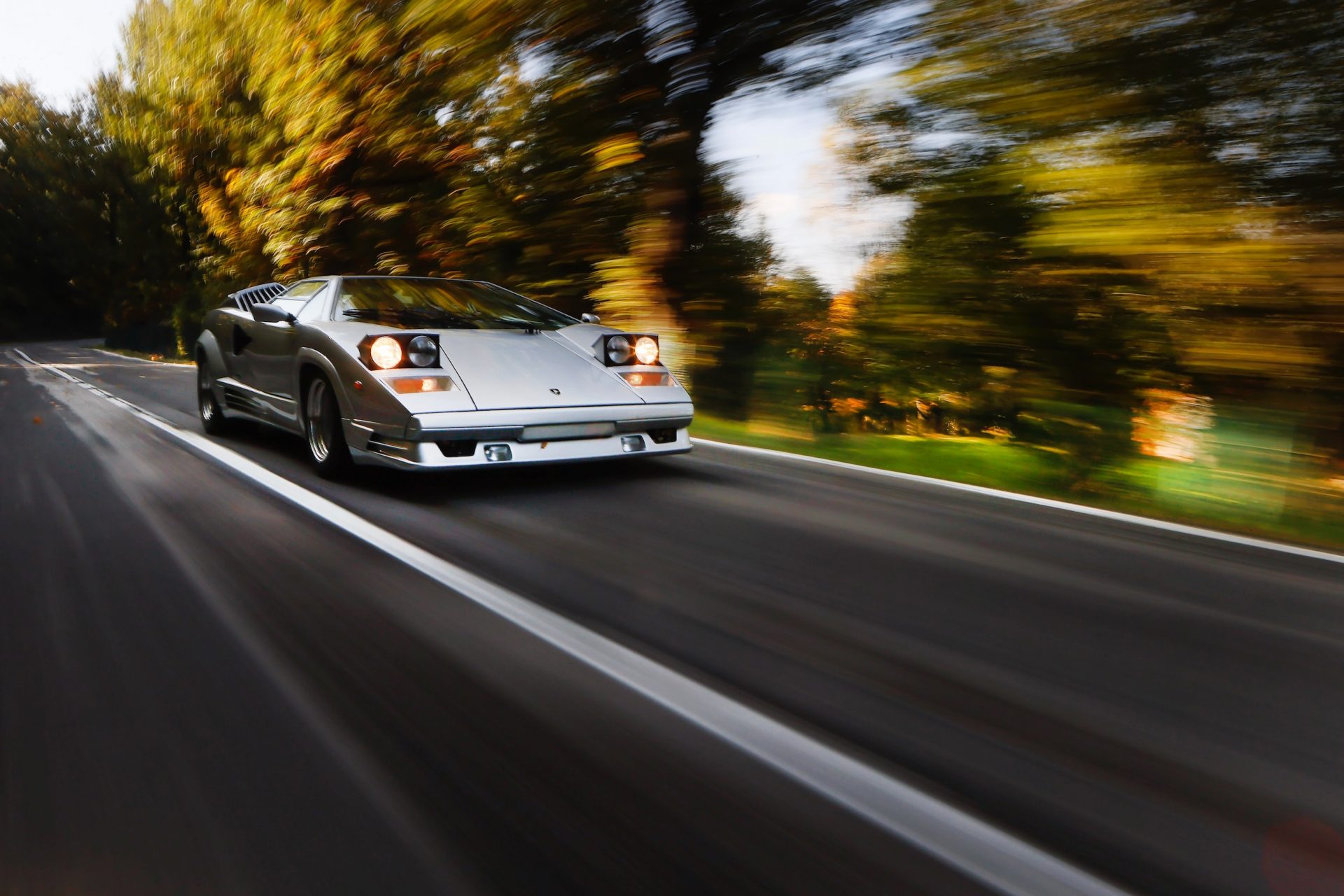
On the other hand, it does get warm in the Countach. Even though our prototype is a 25th Anniversary, of which 657 were built between 1988 and 1990, everything is a bit cramped. Headroom is rather tight for all those who are taller than Italian jockeys, the throttle and clutch are very close together (was there anything in between?), the windscreen is close, the engine too. And it is behind the passengers. It is said that the 25th Anniversary is by far the most suitable Countach for everyday use. Well, have fun with all the other versions.

So, the 25th Anniversary, which apparently came onto the market 25 years after the Lamborghini brand was founded: it is not universally loved. The once so puristic shape of the Countach is hardly recognisable in this last version, the add-on parts are just so typical of the 80s, when there were still shoulder pads in the jackets. Yes, maybe it’s not as beautiful as the LP400, but the longer you look at the 25th, the more this fascination arises that you can hardly escape. But it is also good that this model variant is not so popular: the market has not completely dried up, the prices are not completely absurd.

The result: LP400 (1974-1978, 157 ex.), LP400S (1978-1982, 237 ex.) LP500S (1982-1985, 321 ex.), LP5000S Quattrovalvole (1985-1988, 610 ex.) and then the 25th Anniversary (1988-1990, 657 ex.) – we already have an illustrated line of ancestors. The 25th is powered by the same 5.2-litre twelve-cylinder as the LP5000S QV, i.e. 455 hp and 500 Nm maximum torque at 5000 rpm. On paper, that made 4.9 seconds from 0 to 100 km/h and a top speed of 295 km/h, this with a kerb weight of 1590 kilos (but that was 100 kilos more than the LP5000S QV).

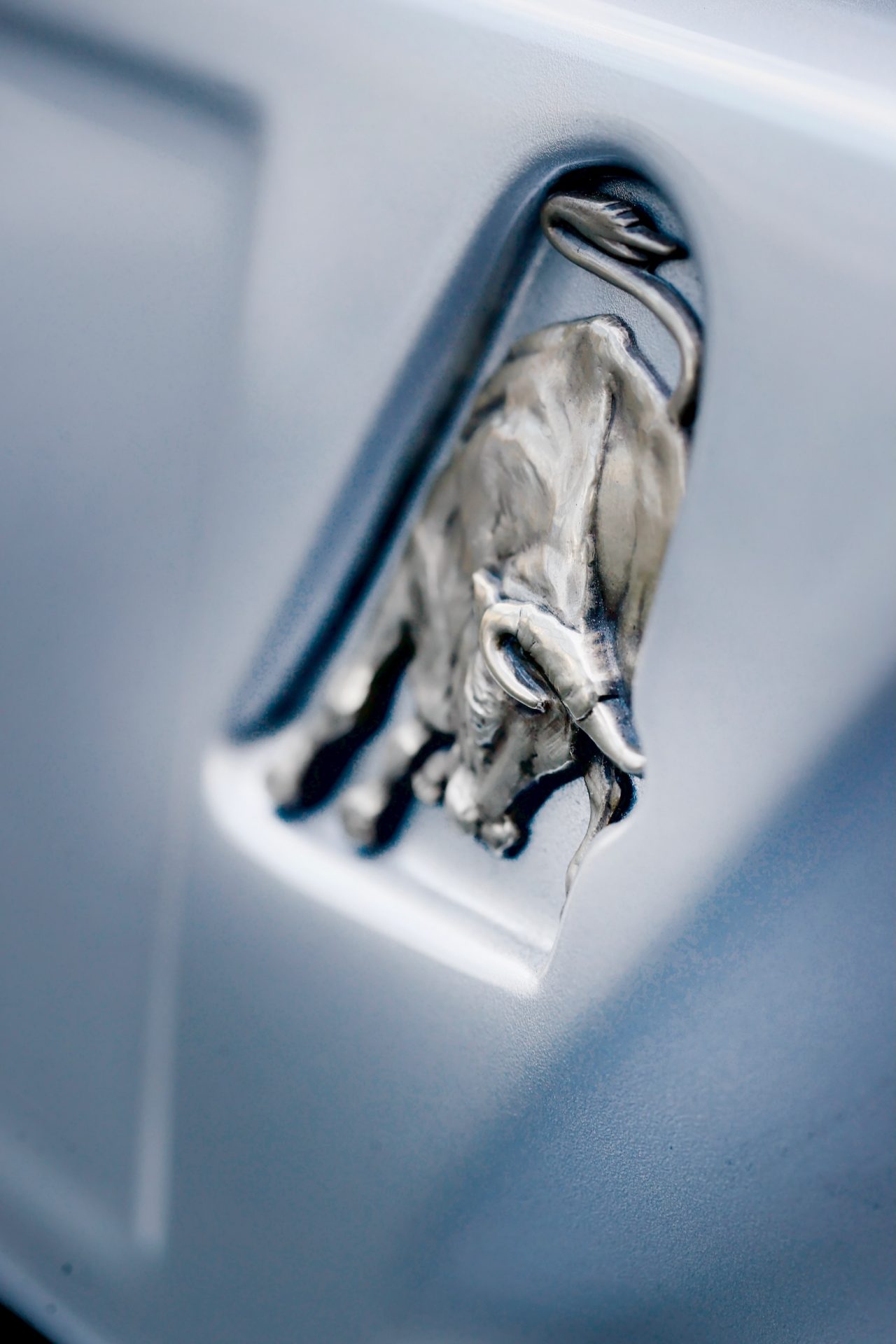

But it’s not the weight that makes the Countach a bit cumbersome, but the complete lack of power assists. The clutch is a nasty bugger, the gearstick needs real power, as does the steering. This is made even more difficult by the fact that you can’t see a thing, you have no idea where the Lamborghini starts and ends (unless of course you’ve learned to park in reverse…). For the first few kilometres I keep my distance, a lot of distance, from the roadside, from the car in front. But it’s certainly not wrong to treat such a classic with a lot of respect at first.

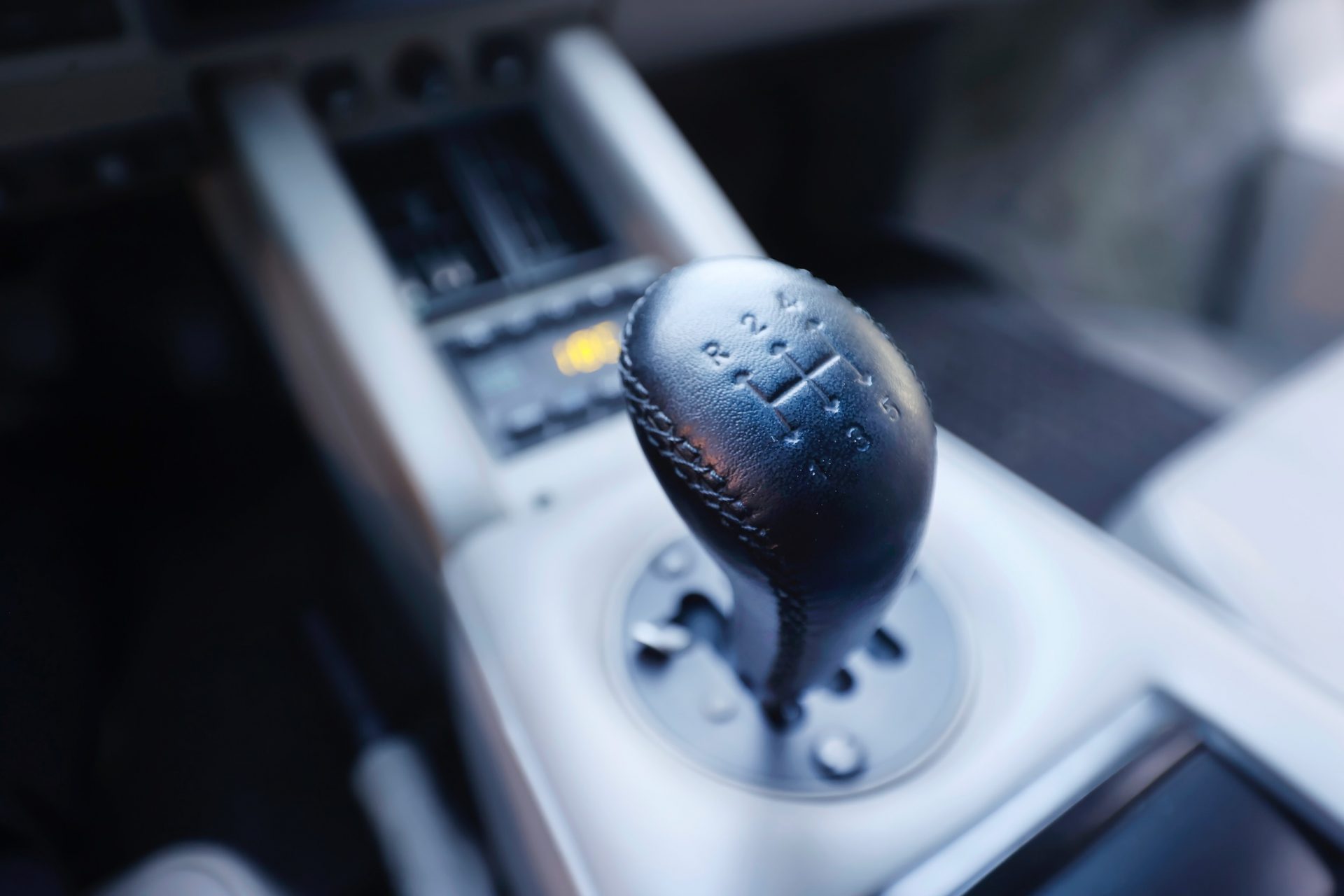
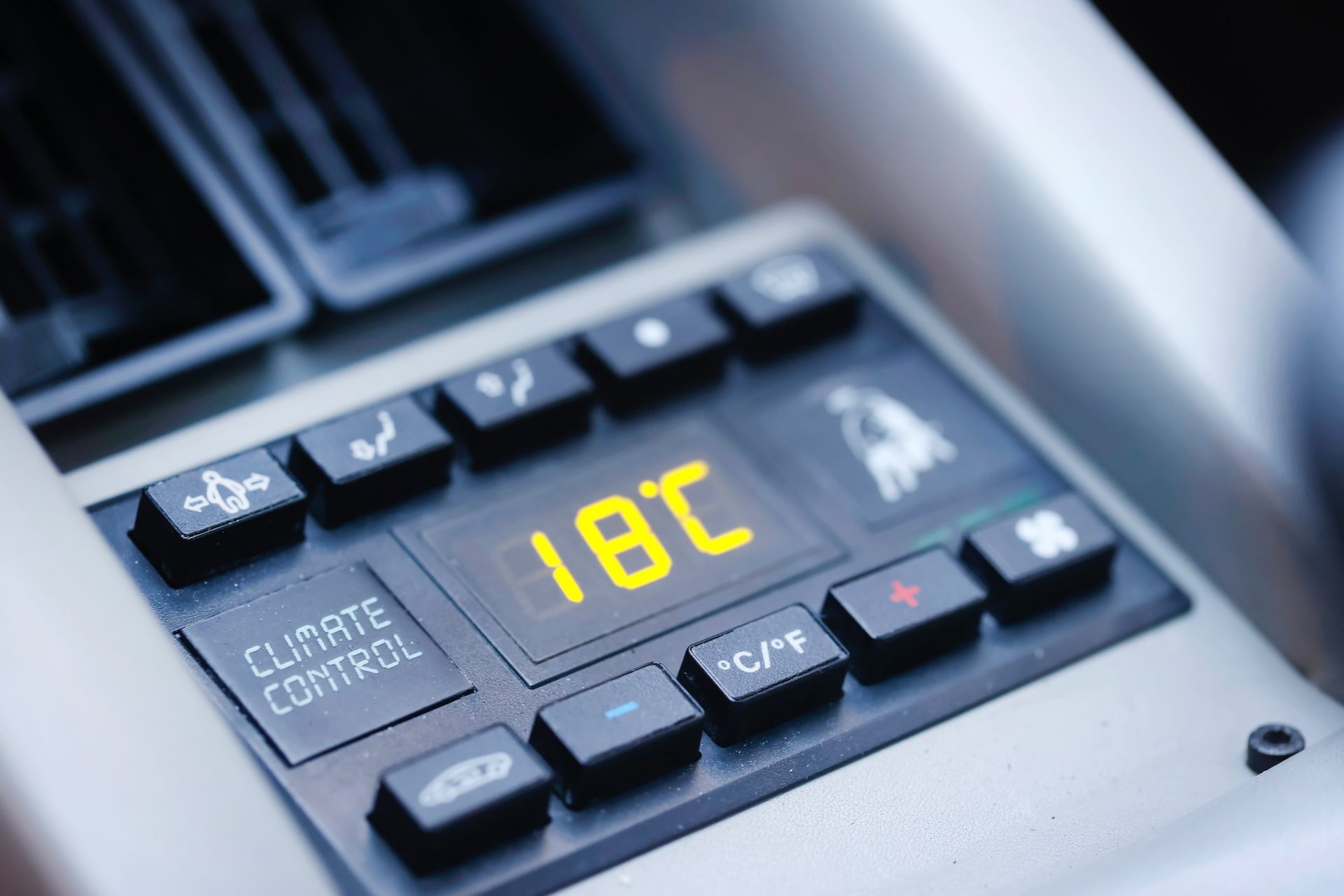
We drive from Sant’Agata past Bologna towards Raticosa, one of those Mille Miglia legends. There’s hardly any traffic, and it’s time to let our guard down a bit; Lamborghini test driver Vincenzo is sitting in front in an Audi Q3, and he’s letting it fly now. You soon realise that our Lambo is three decades behind: it’s hard physical work to get the Countach moving reasonably quickly, sweaty. I’m no longer used to having to hold the steering wheel so tightly, I couldn’t remember that shifting gears can be so long (first gear is at the back left, but second and third go in one go; intermediate throttle when downshifting is extremely helpful), I’m amazed that a clutch can require so much effort. The only real recovery is on the brakes, which are not so easy to control – and do not decelerate nearly as well as one is used to in a modern vehicle. ABS is something for warmists anyway.

But then it goes forward well. Very well. Very loud. Of course, a 5.2-litre naturally aspirated engine doesn’t really have torque problems, the power development of the four-valve engine is wonderfully linear – from 3500 rpm the whole thing really comes alive. Did we mention that it also gets really loud, like right at your ear? It is once again one of those experiences for all senses that makes driving a classic car so wonderful: there is something for the ears, it smells (like a classic car, somehow like petrol fumes), it needs physical effort. It’s just that your vision is somewhat limited, you can’t see much except straight ahead.

But above all, it’s good to drive a car again that has already had 30 years on its various edges. The differences to a current vehicle are enormous. When you consider that the Countach 25th Anniversary at the end of the 80s was one of the roughest cars money could buy, but today you have trouble following a mundane Q3, then you sense very directly what progress the automobile industry has made. Most striking: brakes, grip, you’re in completely different dimensions today.

But, and here comes a big but: the pleasure of driving this Countach is incomparably greater. It’s still about: Driving. And not about: driving dangerously (with the help of dozens of assistants). I treat the accelerator like a raw egg, I step on the brake like a horse, my hands are wet with sweat (and are about to get covered in calluses after almost 300 kilometres). But first and foremost I have unbelievable joy, I’m the boss here, I have to have the car under control, I’m responsible for the mistakes I make, I’m the king when I get the curves really clean. Nothing beeps – another thing that makes me smile.

Lamborghini Countach 25th Anniversary
Twelve-cylinder in V, 5167 cm3, 335 kW/455 hp, 500 Nm at 5000 rpm, manual 5-speed gearbox, rear-wheel drive, many litres/100 km, many grams/km CO2, zero efficiency.
0-100 km/h: 4.9 s, top speed: 295 km/h.
L/W/H: 4140 / 1999 / 1069 mm, tyres front 225/50 VR15, rear 345/35 VR15, kerb weight: 1590 kg, payload: 190 kg, load capacity: any other questions?
Price: 220,000 Swiss francs (1989)

Photos: ©Vesa Eskola. More Lamborghini? Archive.
Be First to Comment