

The green of the leek
He doesn’t make things easy for himself – quite the opposite. Pascal Schmutz, born in Düdingen and soon to be 42, could easily have made life a bit simpler for himself: commanding a large kitchen brigade, cooking his way to three Michelin stars and 19 points in GaultMillau. The talent for it is certainly there in the ‘Discovery of the Year 2010’ and the former 16-point chef. But Schmutz doesn’t want that; he wants more – he can do more, much more. He thinks further, far beyond ‘nose to tail’; he wants to connect, he can network, he can bring talent on board, he can inspire. That is why his job titles include entrepreneur, head chef, food consultant and catering consultant. Schmutz certainly describes his own style as bold and playful, colourful and incisive, with a clear stance, innovation and quality with soul. He consistently supports the regional industry and uses almost exclusively local and seasonal produce for his unadulterated, authentic dishes. The aim is to create culinary compositions with depth that linger long in the memory.
Cooking in the great outdoors
The guest of honour had specifically requested Schmutz as his chef and given him free rein. And so the group of guests first had to dig a deep hole and fill it with wood. The guests were then asked to help him marinate a few less noble cuts of pork. The wood was lit, and the pig was then buried in this earth oven. A few hours later, shortly before midnight, the pieces of meat were dug out. Schmutz arranged them in small pieces on a fresh brioche, added a little gravy – and the audience was delighted. The aroma alone. And the texture of the meat. And the simple means with and from which he had conjured up a feast: ‘It’s so simple, and people were so happy – it turned into a magnificent celebration!’ Of course, Pascal Schmutz is also a gifted showman, witty, eloquent, handsome, just as one expects of chefs today: ‘You can make this earth oven anywhere. It’s wonderful with children in particular; they love it and are absolutely eager to see if it works. And you can cook more than just meat in it. It works with vegetables too – beetroot is brilliant. You can also wrap the meat in banana leaves, which makes it even more like a game. It’s all an adventure: Is the fire burning? Where’s the wind coming from? Why is there so much smoke? And the result always evokes such strong emotions.” Schmutz adds: “By the way, this works with a campfire too, almost even more easily. I always have a large pot with me. Fresh vegetables, a few tomatoes, some decent bread – it makes for such a good, satisfying meal. You can also make a pot-au-feu, a lentil stew. Of course, you have to stay with it, keep the fire under control, stir it, make sure nothing burns. But you’re happy to do that; the aroma is wonderful».




But there’s more to it than that. Sustainability has, after all, almost become a dirty word. So perhaps we should speak instead of: contemporary food culture. In Italian, there’s ‘cucina povera’ – good, seasonal and regional ingredients that are affordable and readily available. Nothing is wasted; the best is made of very little. It’s important that we all realise we need to change something; the collateral damage resulting from our current abundance should provide more than enough incentive to rethink our ways. We must reduce food waste; we must eat more frugally and, above all, more healthily. Pascal Schmutz puts it this way: ‘It’s very much about listening and asking questions – in the village, in your local area, at the baker’s, the butcher’s, the farmer’s. Someone rang me today and said he still had three crates of quinces. Sure, I love quinces, but I can’t really do anything with three crates of them. But I took them, made jelly and juice, so I’m sorted for a few months now. Or take the cabbage that’s being harvested right now – make sauerkraut out of it! It’s not only wonderfully satisfying work, it also helps get you through the whole winter. You have to plan more locally, more seasonally, and definitely think beyond the limits of your weekly shop and fridge. Eat meat only when an animal has had to be slaughtered. Have a pot of boiled beef again for a change, rather than always going for the top quality. Eat more vegetables that are truly fresh from the farm. Use them even if they don’t meet the aesthetic standards of the big retailers. It does you good to engage more deeply and intensively with your food.”
Joy of life
The kitchen in this pop-up restaurant in Mallorca was tiny, says Schmutz. That’s another reason why he thought: a set menu, three or four à la carte dishes – that works best. But after just a few days, he realised he already had plenty of regulars coming in every day – and they’d already worked their way through the entire menu twice. “So I changed tack; I went to the market every morning, made friends with the fishermen – and subsequently cooked whatever was fresh that day. I learnt a great deal myself: fish and other seafood I didn’t even know existed, recipes from the locals, the right ways to prepare them, but above all how to work with whatever ingredients were available. For example, I had a lemon tree in front of the house; it was wonderful – the lemon focaccia was absolutely brilliant. The guests loved it – and I took such pleasure in cooking – and shopping – as I hadn’t done for a long time.”


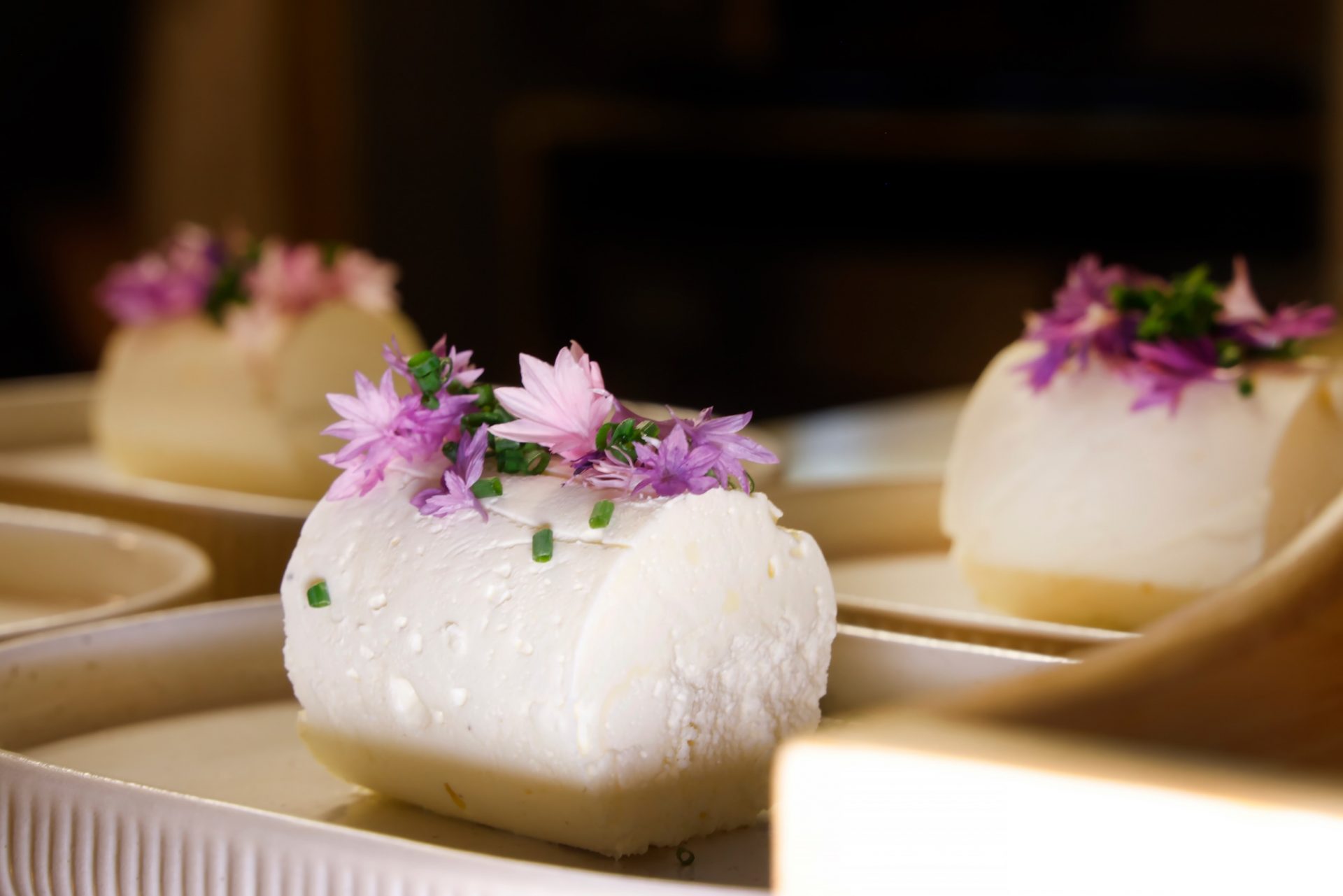
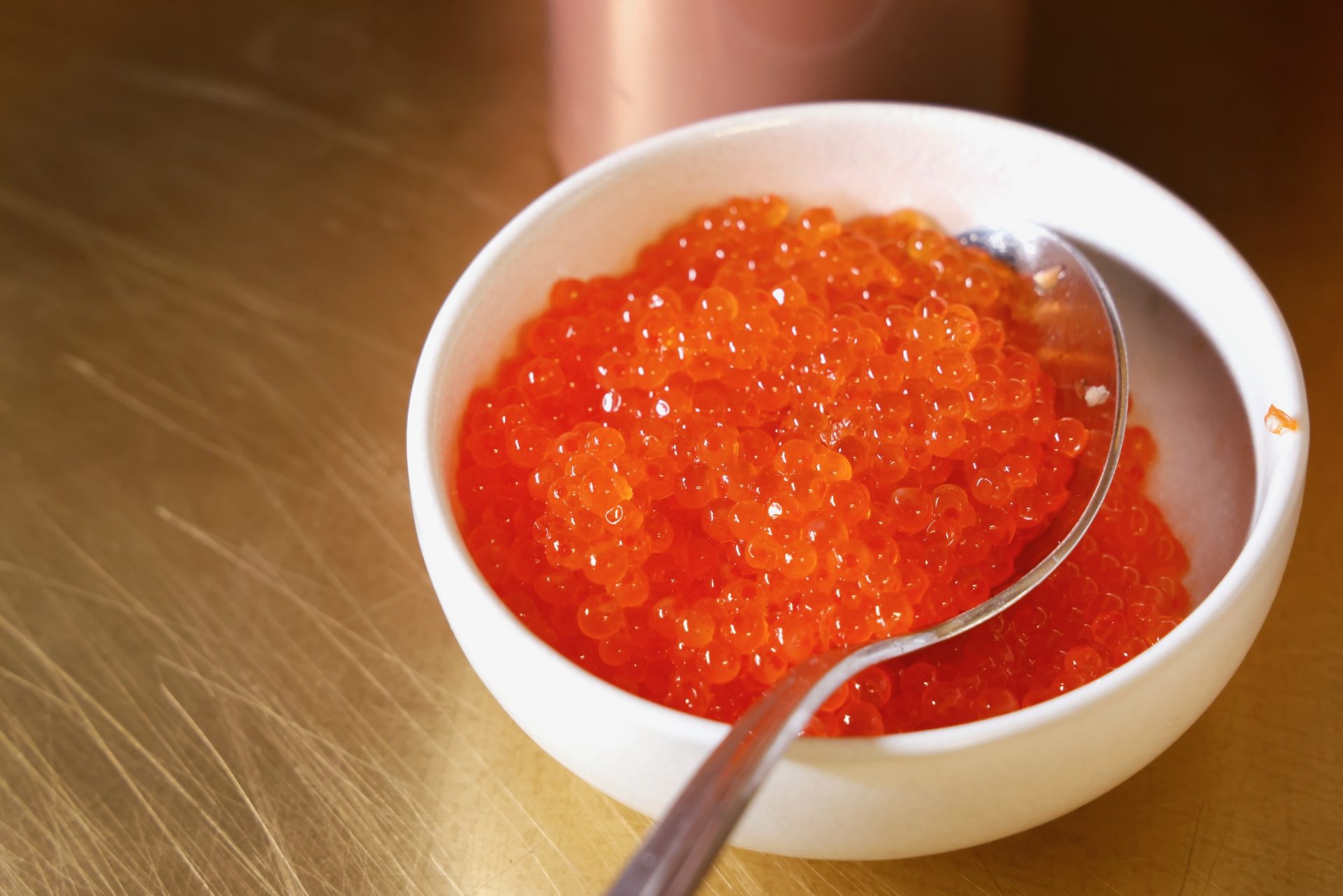

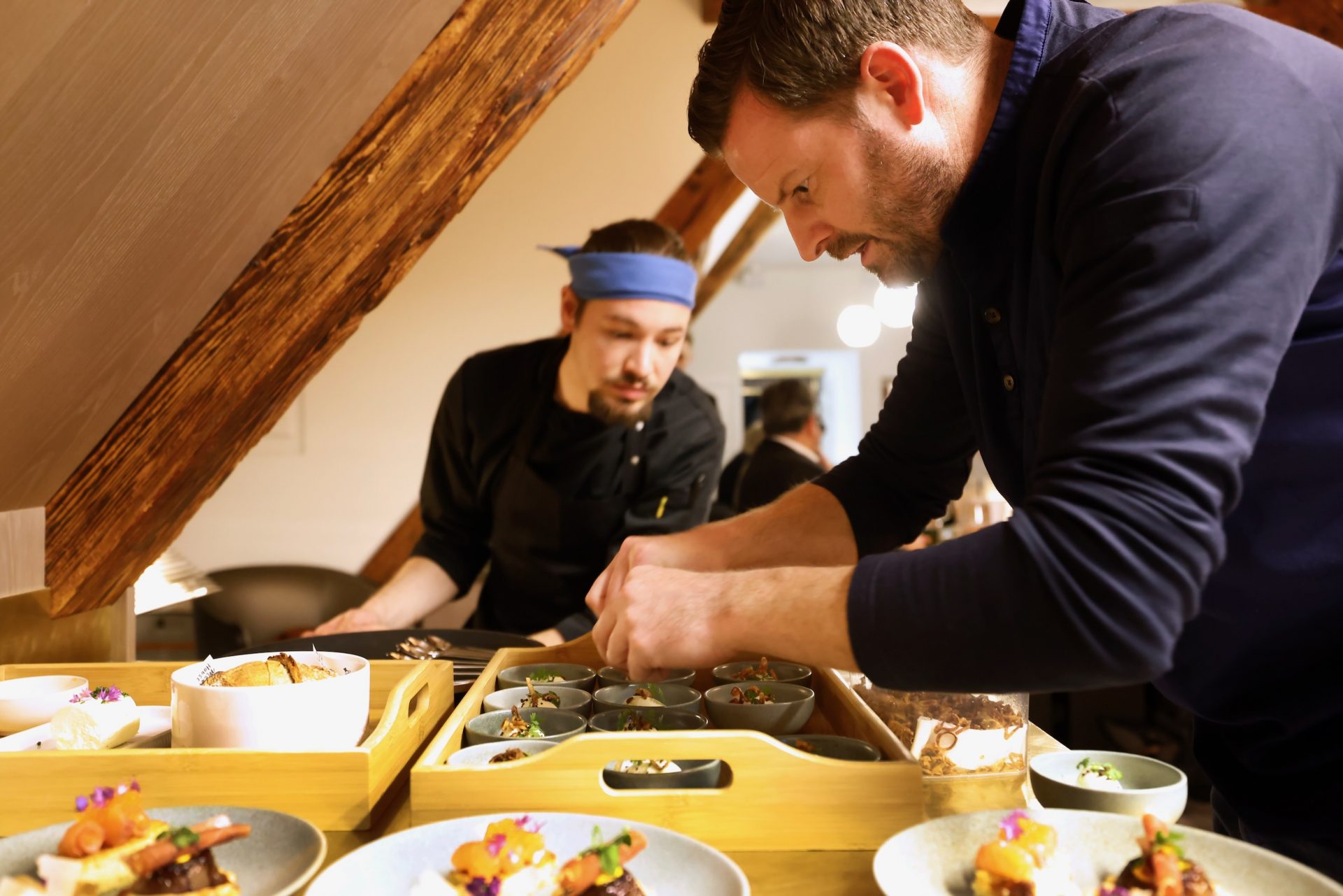


With and through his network, Pascal Schmutz can do a lot of good. He strongly encourages the catering projects he advises to work as closely as possible with local producers. He loves seeking them out himself. Schmutz sometimes drives and walks around the area for days on end, looking for farm shops, greengrocers, winegrowers, cheesemakers, and chatting to the gamekeeper and the herb fairy. He can make a real difference there too. A guaranteed market for their produce has encouraged many a farmer to try something new, such as growing turmeric. Or ginger. Schmutz explains: “There has been tremendous progress in Switzerland in recent years, particularly with vegetables. This is certainly also down to the fact that more people want to eat a vegetarian diet or at least be more conscious about what they eat. The choice has become so much greater. But there is still a lot to be done. In Switzerland in particular, there is still too little holistic thinking, both among customers and producers. And you don’t always have to use only the best-looking potatoes and beetroot – the taste stays the same even if the carrot is crooked. Or cauliflower: the leaves are usually just thrown away. But they’re brilliant – sautéed with a bit of garlic and onions: fantastic! Or the green parts of leeks – oh, there are still so many possibilities.”
Network
Pascal Schmutz has an excellent network. This or that hunter gives him a call when there’s been another accident; the farmer’s wife knows he can find a use for the cow that’s died of old age; he doesn’t compare apples with pears, but makes sure they can be put to good use when there’s a surplus. He is not alone in this; there are quite a few initiatives that promote such things – but it is too little, far too little. Particularly in (upmarket) gastronomy, much more could – no, must – be done. But that takes time, and time is money.

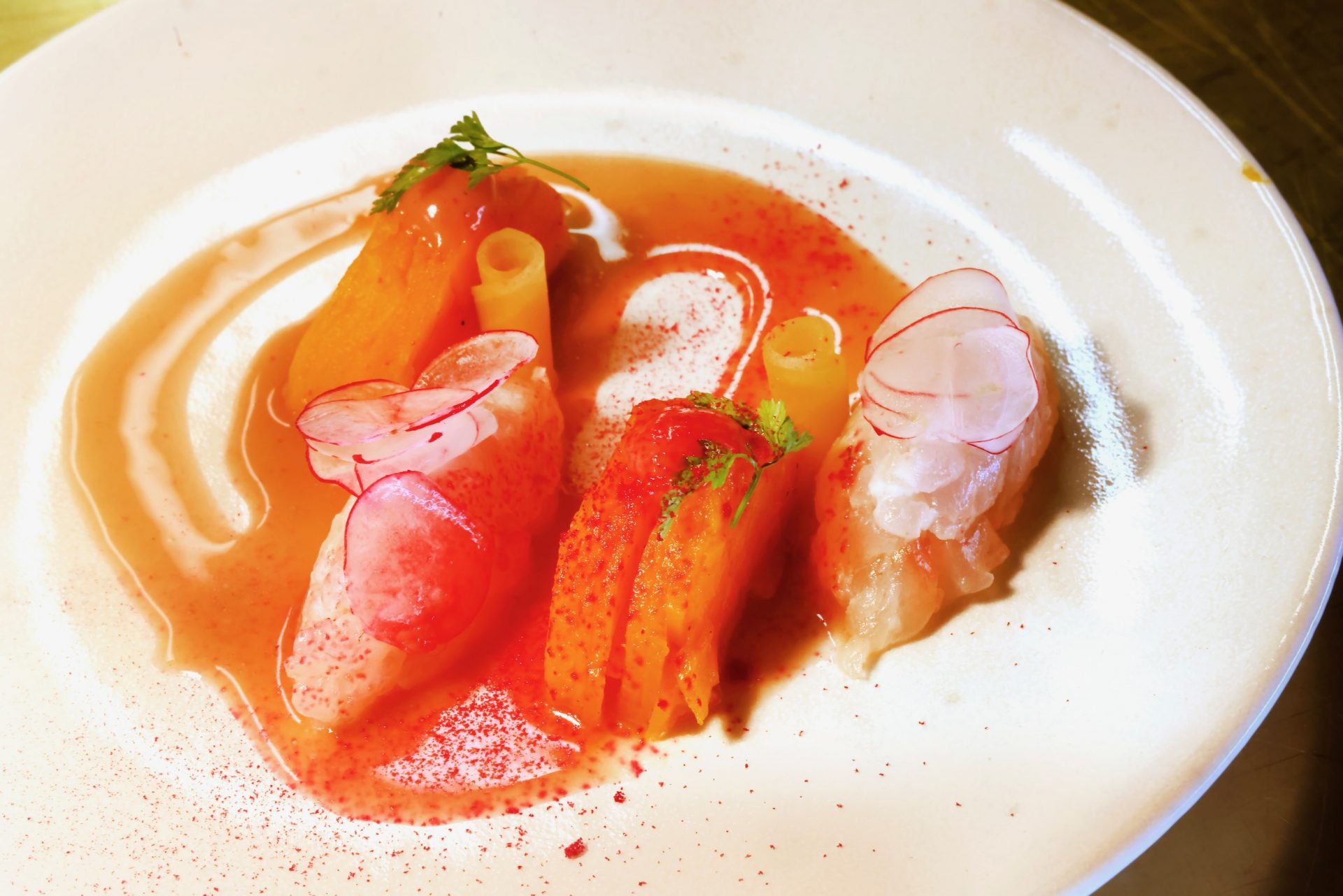
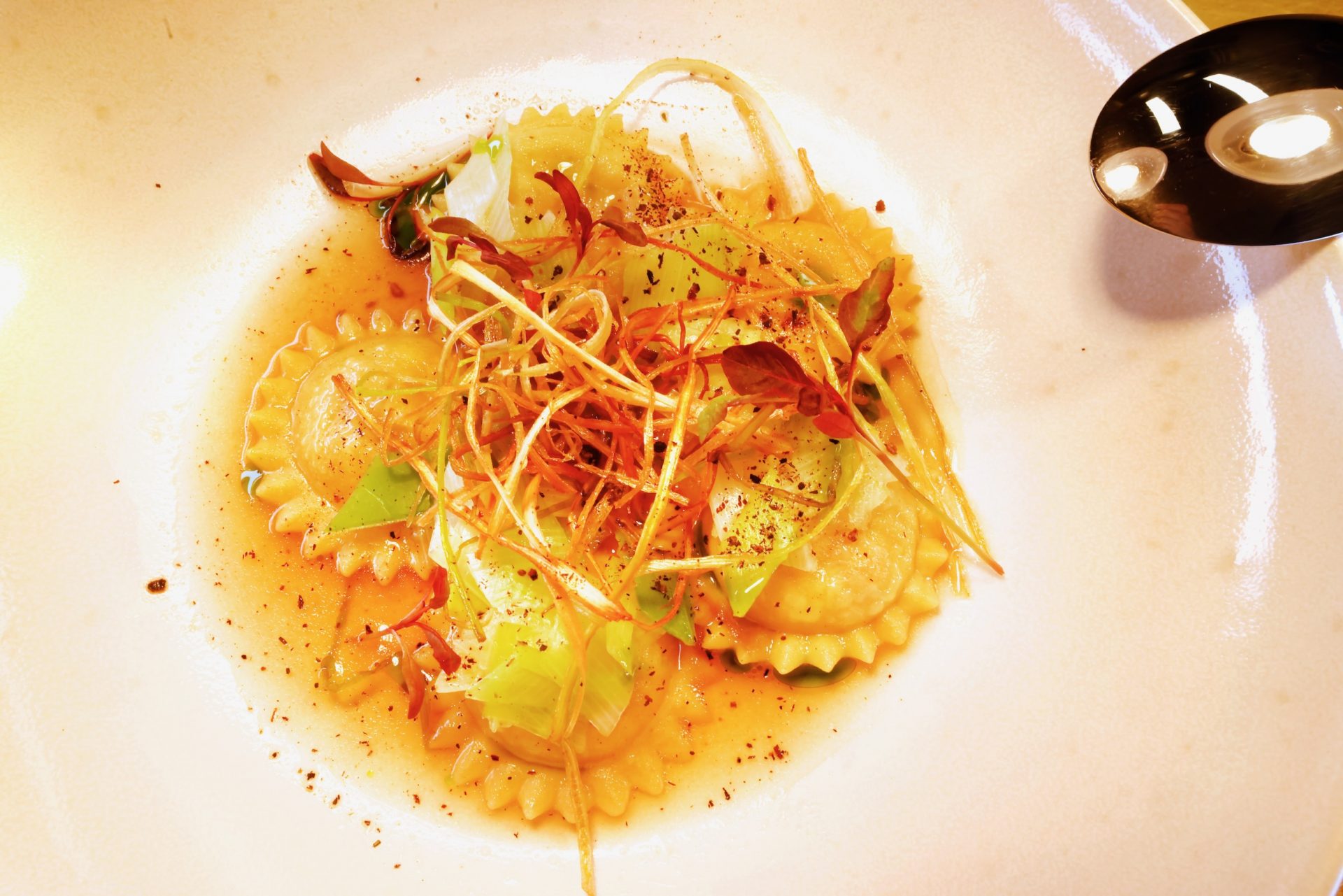


Recently, I had the pleasure of simply being able to sit down – the Schmutz crew were cooking for one of their supporters, Volvo (yes, that’s necessary; it’s part of the deal these days). The second starter was a yellow pea soup with ravioli, filled with boiled beef. The soup (wonderfully concentrated) and the boiled beef came from an event the day before. Of course, the Schmutz crew has entirely different options than, say, a home cook or a hobby chef, but all of this requires a plan. And behind a good plan lies a good concept. And the concept here is: everything is used. That it then also tastes excellent and is beautifully presented goes without saying. Another example: We meet in Adrian Stämpfli’s yard (see also pages 4/5); we’d actually planned to dig a hole or at least build a nice fire, but time was running out. So Schmutz unpacked a barbecue, got us a decent fire going, and grilled a piece of Wagyu to perfection (he doesn’t even need to look at it; he can just feel it). He’d brought along a few marinated leaves of lettuce (less than five minutes’ work, he says), and whipped up some chimichurri on the spot (brilliant) – done. We sat on the edge of the well, chatting peacefully and cheerfully, getting our hands and trousers dripping with the oily sauce and meat juices, enjoying the still-faint January sun. That’s how it can be, that’s how it should be.
More food and drink: pure. More about Pascal Schmutz: here. Photos: Vesa Eskola
Be First to Comment