
What can we learn from China?
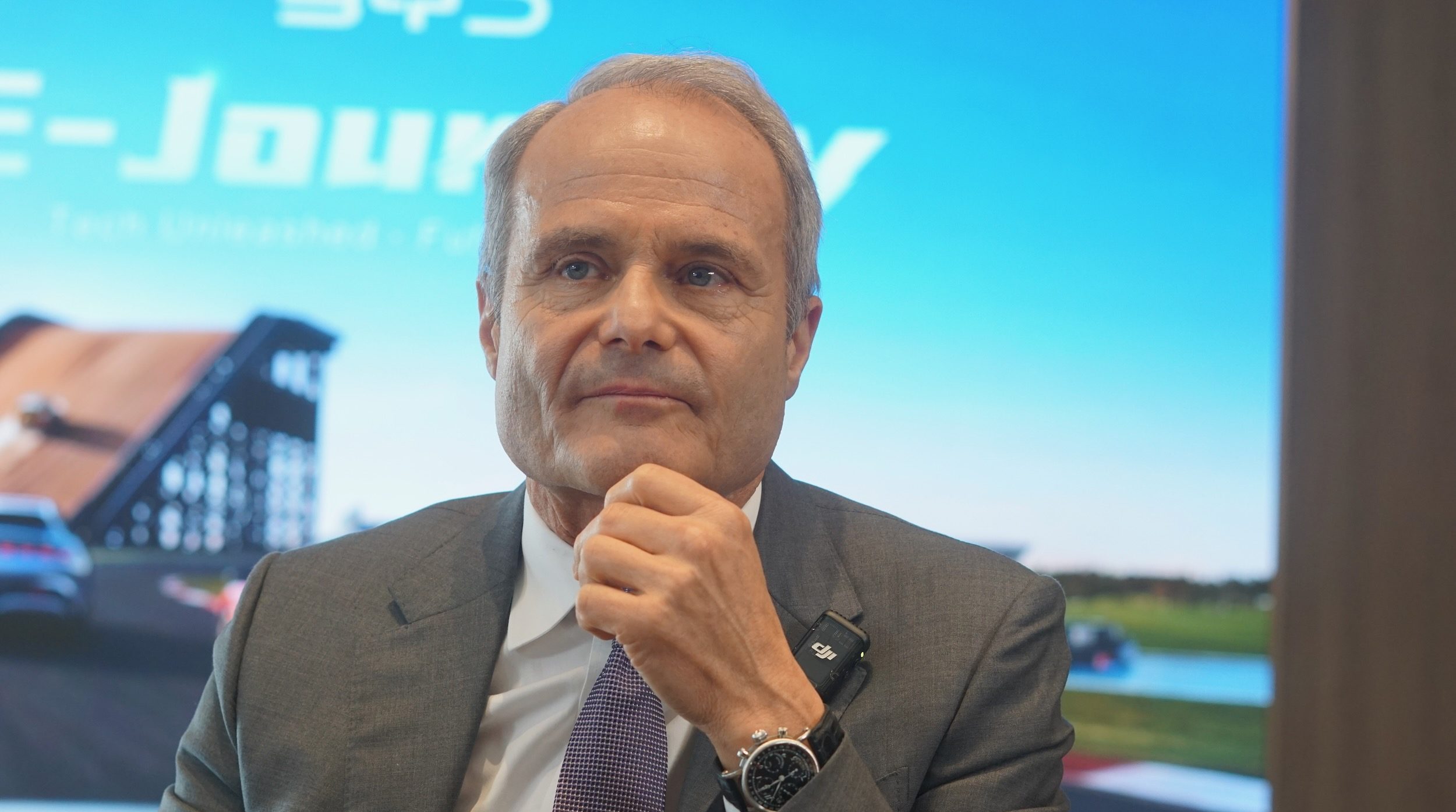
He naturally continues to wear bespoke Italian suits. And a rather pricey Swiss watch. Wolfgang Egger, born in 1963 in the heart of the Allgäu, certainly knows how to appreciate the finer things in life. He certainly doesn’t need to worry about his bank balance either; when he took up his new post as chief designer at BYD at the end of 2016, he undoubtedly made the most of his departure from Europe. Today, he leads a team of 1,200 (!) designers. And he is constantly accompanied by two assistants; photographers and a film crew are never far away – BYD wants to ensure its star is shown in the best possible light.

Unlike most other well-known German designers, Egger did not study at the University of Pforzheim, but in Milan. He landed his first job at Alfa Romeo in 1989, and four years later he was already head designer there. He then spent a brief spell at Seat, returned to Alfa, and from 2007 worked at Audi/Lamborghini, where he developed the e-tron Concept, among other things. Yet: “Cuore sportivo,” says Egger, clutching his heart theatrically, “forever. This history of Alfa Romeo, all these stories, Nuvolari, Varzi – but we’d need a bottle of wine for that now.” You can well understand him; he created the Alfa 156, 166, 147, but above all: the 8C Competizione. And that is precisely why Egger was hired ten years ago: he was to turn a faceless Chinese start-up into a brand. To inject emotion. Beauty. Luxury.
radical: Mr Egger, do you speak Chinese?
Wolfgang Egger (laughs): Well, I can certainly order my food. I can manage a few everyday things too.
He turns to his assistant, says something in Chinese, she has to laugh – and then confirms that he’s making progress. Egger lives in Shenzhen, right in the south of China. That is where BYD’s headquarters are located – and Hong Kong lies on the other side of the river. It’s lovely there, Egger says; the weather is brilliant, much warmer than in Milan; he raves about the food and the quality of life in general.
radical: You’re the boss of 1,200 designers – are you still involved in day-to-day operations? Or are you just an administrator now?
Egger: You have to understand: we don’t have a heritage here; this hasn’t grown out of the past. Consequently, it’s organised in a much less hierarchical way, the structures are much flatter – and there are a great many very young people working here, many of them from abroad, incidentally. Of course I’m involved in day-to-day operations, though I spend relatively far less time in meetings than I used to. We discuss things in small, highly ambitious teams – and then it’s implemented immediately. The efficiency with which people work here is truly impressive.

radical: How much influence does artificial intelligence have on design at BYD?
Egger: We see it as a tool. One that you need to know how to use. The fact is: we humans have our five senses – and that’s what we work with here; they cannot be replaced. And they’re what make life worth living, after all. AI will play a major role in operation, in the car’s systems, and as an interface, but not so much in design. We don’t want to have a design factory here either; human intuition must and should remain at the centre.

radical: BYD and its sub-brands are launching new vehicles onto the market at an incredible pace; from the outside, however, one gets the feeling it’s more of a design factory.
Egger: You really have to distinguish between what the Chinese market wants and what the rest of the world wants, what we produce for the mass market and what we produce for the more upmarket segments. The Chinese want cars with a clean, simple design; Europeans want them to be more detailed and finely crafted. If something here in China doesn’t work quite as well as we’d imagined, or if customers request changes in their feedback, we can make those improvements within a few months – it’s worth it, not least because we’re talking about massive sales figures. We cannot work in the same way for Europe or the luxury market; there, we first have to establish ourselves, build the brands slowly and carefully, and fill them with substance. However, we can envisage offering different designs for the various markets in the near future.

We met Wolfgang Egger outside Zhengzhou, where BYD recently opened a new plant. It is set to become one of the largest car factories in the world; it is expected to be capable of building up to 1.5 million vehicles a year. The entire site is divided into relatively small units, connected by short distances, so that the company can respond more flexibly to market needs. It has everything there, even a small race track, but only a small design office.
radical: Why did BYD open a design studio in Milan?
Egger: We are always on the lookout for the best talent. Milan now opens up entirely new possibilities for us. Incidentally, the same applies to Shanghai, which is currently our hotspot; we’re getting a huge amount of excellent input from there. But Milan is important to us for other reasons too: we can provide better training for our Chinese staff there. You have to see it clearly: China knows nothing of luxury. You have to learn that first, and then also understand what you’ve learnt.
radical: Doesn’t China offer enough inspiration?
Egger leans forward, looking his interlocutor deep in the eyes: It’s like being at school here, day in, day out – and not just for me. There’s still so incredibly much to learn. We’re talking about 5,000 years of high culture, of incredible craftsmanship. Over the past few months, for example, we’ve been working very intensively on traditional lacquer art – which has brought us many new insights and will also have a major influence on our colour palette. Or take silk, an incredibly magnificent material, or the vases, the porcelain – a wonderful source of inspiration for design too. And then there is the symbolic language that everyone here in China understands – it took me at least three years just to begin to grasp the basics. We have set ourselves the goal of incorporating these symbols into our design language as well – the water droplet, a recurring theme, for our Ocean model range. Or take the dragon, Long – it is a mighty mythical creature that promises luck, power and wealth. Unlike depictions of dragons in Europe, however, in China it is a benevolent, peaceful, friendly creature – and we incorporate that into our design as well.

radical: In China, it is said, customers have different expectations of their cars; they demand more entertainment, karaoke, games consoles. Does that make interior design easier?
Egger: You’ve forgotten another important point: autonomous driving. That’s likely to arrive sooner in China than in the rest of the world, and to a certain extent will soon become part of everyday life. Chinese manufacturers are absolute leaders in this field – and that will, must have a major influence on interior design. Reading a book about Confucius in absolute tranquillity whilst being transported from A to B opens up whole new realms of comfort. We’re currently in a decisive phase here: AI, voice control – what else is possible? Or are customers already feeling overwhelmed?
radical: BYD, a pioneer in electric mobility, is now also offering many models as plug-in hybrids or with range extenders again – why?
Egger: I can’t comment on that. Customers want it, so we deliver it. But I think this is just a brief detour. BYD has focused on electric power from the very start; we are convinced that this is the right solution. [A small aside: BYD’s head of R&D is actually called Ai.]

radical: With Denza, BYD is also attempting to establish a luxury brand in the European market. Is the time right for this?
Egger: Now I have to use some marketing jargon here: Denza stands for pure elegance. That’s appreciated all over the world. We also have Yangwang, which is a step higher still, ‘ultimate art’. But the Denza Z9 GT is a good example; this vehicle has been conceived differently. Because luxury isn’t something you simply add on, for instance through optional extras. Luxury must come from within, and we already see a customer base for that. We’re taking a cautious approach here. It works well in China; in Europe, we’re only just getting started. But that actually applies to all Chinese brands. However, we now have enough self-confidence here to face the challenges.
radical: Final question – what can we – not just the European car industry – learn from China?
Egger: Everything.
This is a story from the new print edition, radical#6. We have more great stories in our archive.