
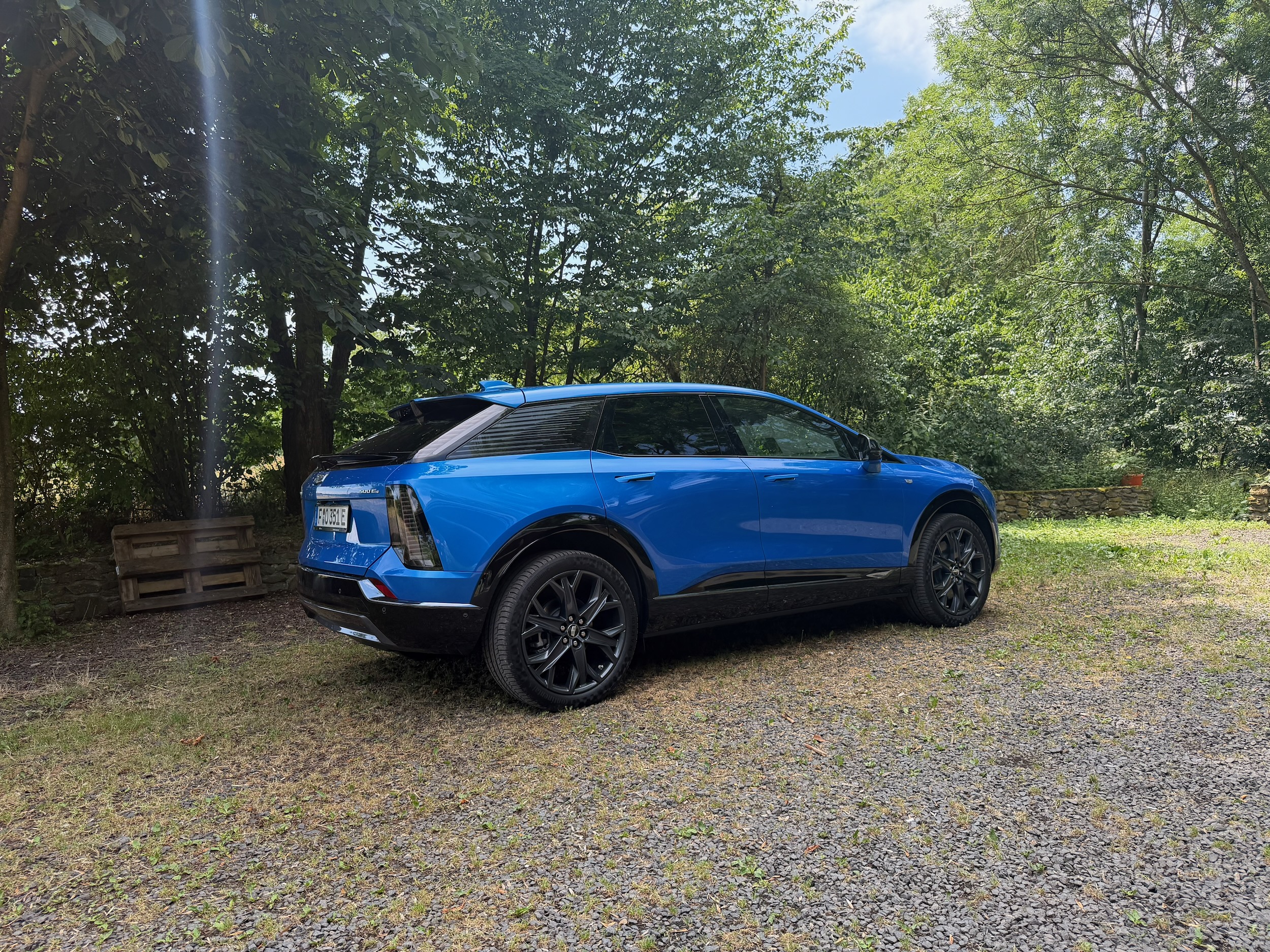
Sound, stones, shards
In July 2026, Cadillac actually managed to increase its sales in Switzerland by 33 per cent. Expressed in absolute terms, this means the American brand’s sales rose from 3 to 4 vehicles sold. This brought them almost level with Genesis, which sold 6 units. That’s certainly a positive sign, as after seven months of this year, things haven’t been looking quite so good for Cadillac: sales have fallen from 39 units to just 19. Admittedly, that’s still quite respectable compared to Jaguar, which has sold just two units so far in 2026, but one does wonder whether it’s really worth setting up an entire sales organisation, including a showroom on one of the world’s most expensive streets, Zurich’s Bahnhofstrasse. Nor do the brand’s commitments to Formula 1 and the WEC seem to have had a particularly dramatic impact on sales success so far. Another point not to be overlooked in this analysis is that Switzerland was once Cadillac’s best market in Europe, even in absolute terms. (And just to mention the tectonic shifts in the (Swiss) car market: BYD from January to July 2026: 3,332 (has overtaken Tesla…), Leapmotor over the same period: 1,074, Zeekr: 706… .)
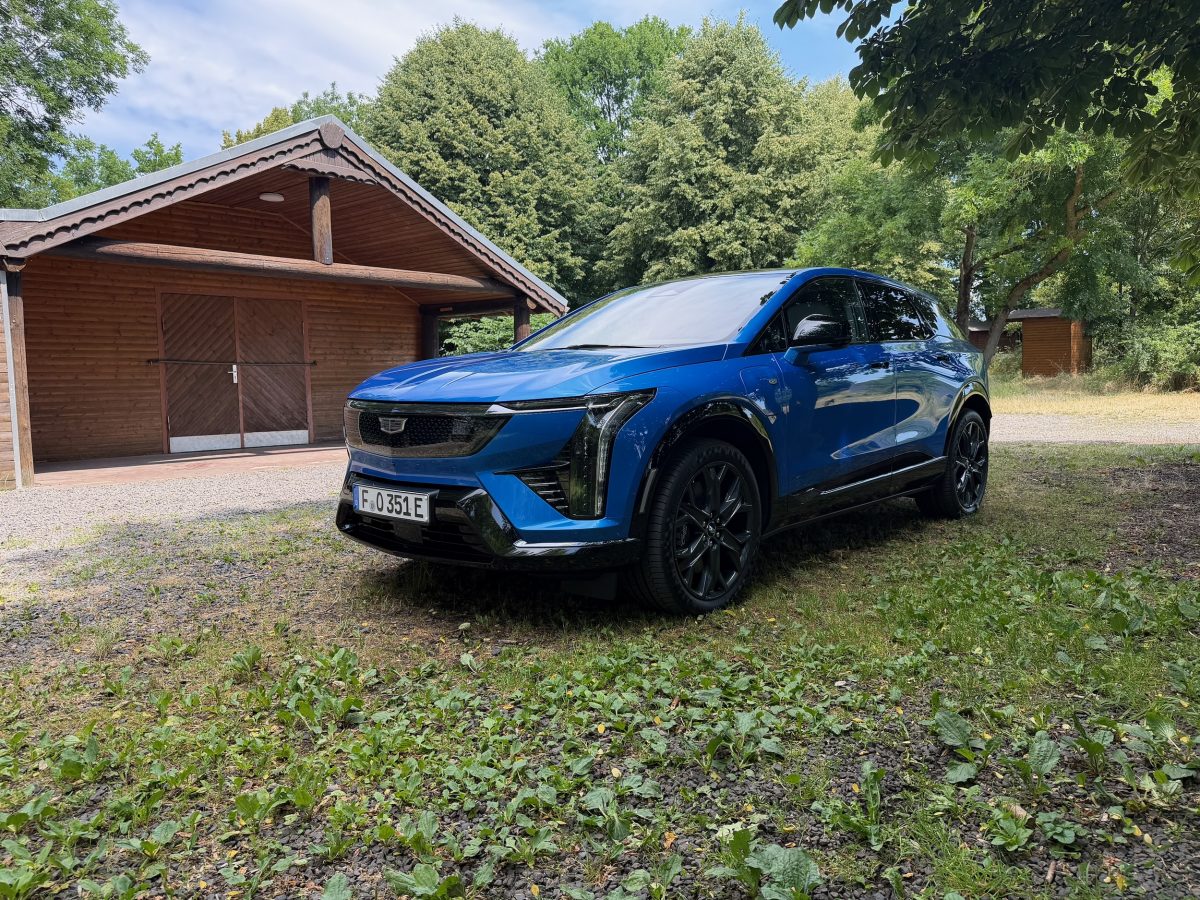
With the Vistiq, the Lyriq and, most recently, the Optiq, the Americans now offer almost as many different models as they managed to sell in Switzerland in July (although it may well be that a ‘large proportion’ of those sales were accounted for by the Escalade, which is no longer officially on offer…). All are electric; the Lyriq starts at 90,100 Swiss francs, the Vistiq at 108,800 Swiss francs – so the Optiq, with a starting price of 66,680 Swiss francs, almost seems like a bargain. For that, you get 2.4 tonnes of metal, spread over 4.82 metres in length, 1.91 metres in width and 1.64 metres in height, a 75-kWh battery offering a range of 425 kilometres according to WLTP, a rather modest 281 PS for an electric car (or perhaps 304 – Cadillac itself gives varying figures) and 480 Nm of maximum torque, plus all-wheel drive.
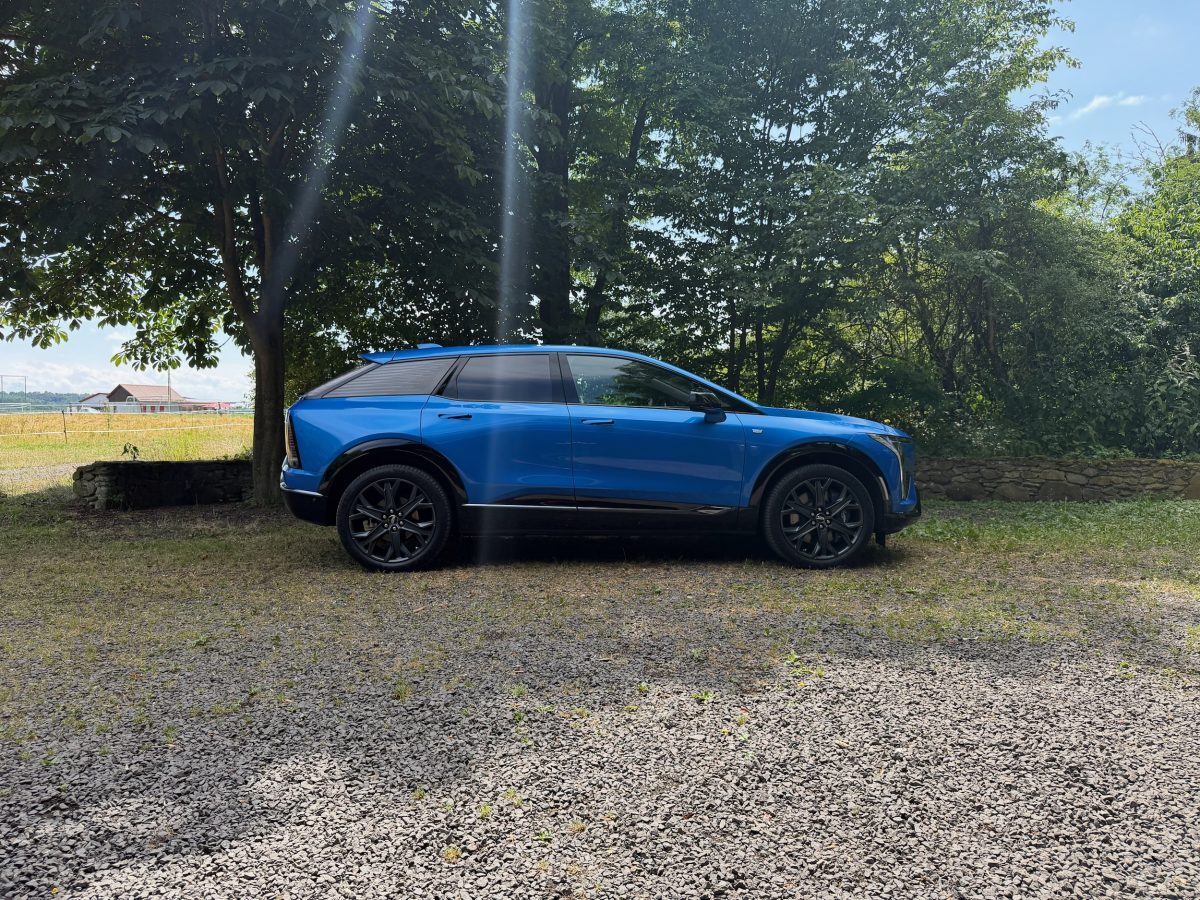
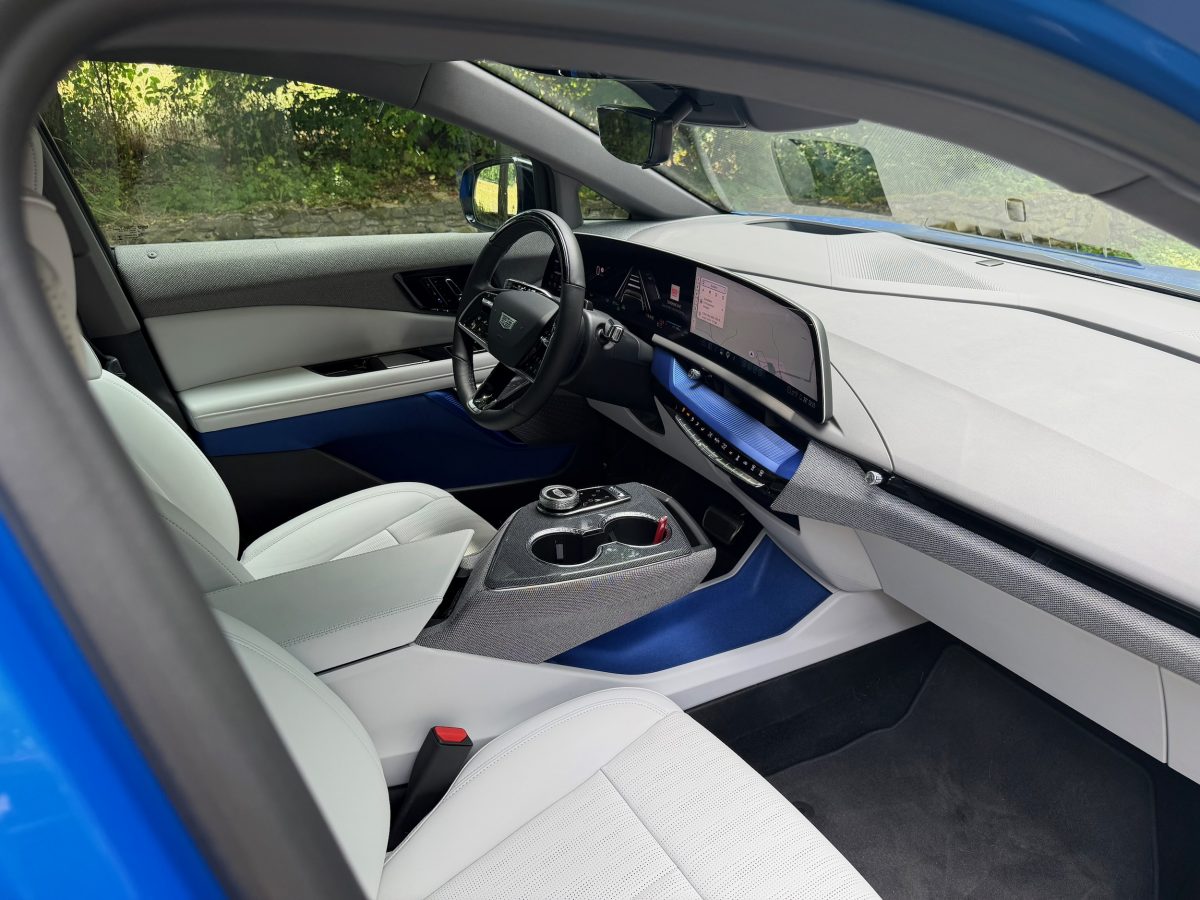
The simple fact is this: we’re dealing with yet another electric SUV here. If you’re a fan of Cadillac’s design language – those sharp edges, that rugged front end with the shark’s teeth as daytime running lights (hello, Peugeot…), that van-like look – well, then this could be something. Inside, there’s more of that edginess in the form of a 33-inch-wide screen that’s simply been plonked on top of the dashboard. It doesn’t look bad – and yet, at the same time, it seems somewhat inconsequential, interchangeable; it could just as easily be a cheap Chinese model or a Belgian one. At least it’s all beautifully finished with good materials – something you couldn’t always take for granted with the luxury brand Cadillac, the former ‘Standard of the World’. On the other hand, for 65 grand, you’d certainly expect as much. Oh yes, a very good sound system – AKG. We’re not familiar with the brand, but the sound separation is crisp; it’s not that muddled, muddled mess you often get. The space is good too, although 443 litres of boot capacity isn’t exactly outstanding for a 4.82-metre-long car.
The Cadillac drives nicely. Nice and quiet, very comfortable. Yes, the steering isn’t great, but it’s not bad either. The Brembo brakes require a bit of a feel for them, but you soon get the hang of it. What’s rather surprising, though, is how quickly and how much the American car understeers via the front wheels when you take a bend a bit more briskly – the chassis, which Cadillac says has been tuned to European requirements, feels a bit like a front-wheel-drive car from the 1980s. Nevertheless, the American marketing team has labelled the Optiq ‘sporty’; this is probably why it’s fitted with 275/40 R21 tyres featuring a special compound from Continental – massive tyres that are sure to leave a deep hole in your wallet when they need replacing.


The problem is quite simple: why on earth would anyone want to buy a Cadillac Optiq? It’s not a bad car, certainly not, but it’s not a particularly good one either. For roughly the same money, you can get a Skoda Peaq, which is about as ‘exciting’ as the Optiq but offers much more space. For a few more notes, you can get a Volvo EX60 or a BMW iX3 – these, however, are very modern electric cars with much greater range and far higher charging speeds (Cadillac: 110 kW…) as well as a significantly better resale value and a much higher density of dealerships, and so on. On our decidedly uneventful test drive, the American car recorded a consumption of 24 kWh/100 km, which, extrapolated, would result in a range of just over 300 kilometres. And scaled down to real-world conditions – i.e. from 80 per cent SOC to 10 per cent – that’s 210 kilometres. ‘Relaxed travel’, as Cadillac claims to have discovered with the Optiq, looks rather different.
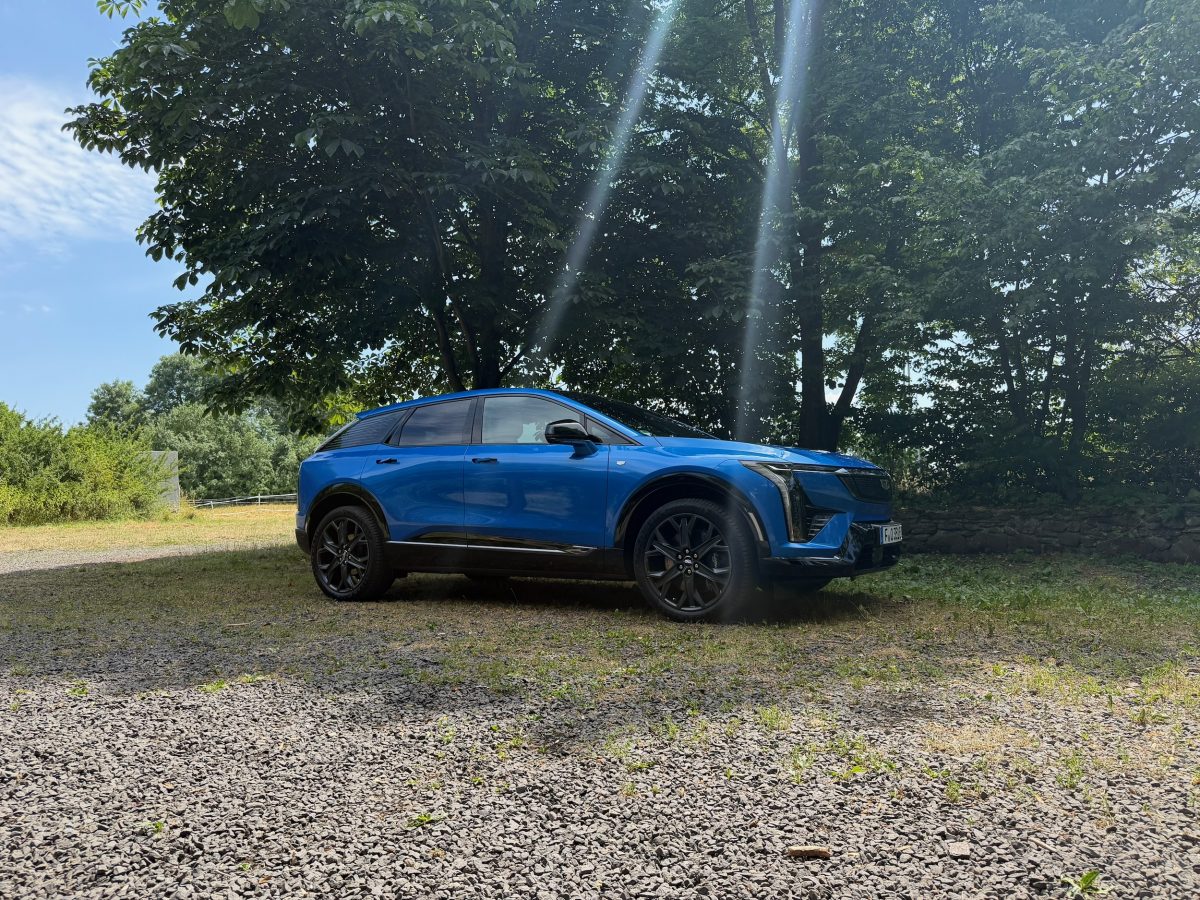
We drove this very blue Cadillac Optiq at the #GTEST organised by German Car of the Year. We have more Cadillacs – beautiful, classic ones, even those with 16 cylinders – in our archive.