

The power of habit?
Even I, as a truly old Latin, have fallen for the saying ‘de gustibus et coloribus non disputandum est’, there is no arguing about taste and colours, because it would have been a perfect saying for a long-decayed Roman. Well, that is not the case. The first authentic source is Jean Anthelme Brillat-Savarin (1755-1826), not only the inventor of a cake and the eponym for a cheese, but above all the author of ‘physiologie du goût’ (1826), one of the most important writings on the culinary arts and the pleasures of the table. He, the Frenchman, is credited with the Latin ‘de gustibus non est disputandum’, although he only got it from the Spanish ‘sobre los gustos no hay disputar’, a very typical phrase there. It is said that colours only came into the equation later; the scholastics are of the opinion that such things are beyond all provability.
Well, we see it differently. There are definitely cars to which one colour suits better than another. Let’s try: Ferrari Enzo, in the typical red, the equally classic yellow, blue (not original, was once matt black), then matt black (as mentioned), black, silver and white (a one-off):


Which would you choose? We are convinced that Ferrari cars are designed to look good in red. Most female customers want it that way. And it’s understandable somehow. Even if Ferrari can’t claim red for itself, it is the Italian racing colour. Long, long before Ferrari, the fastest Alfa Romeos and Maseratis were already red. This applies less to another Italian brand: Lamborghini. We’re going to be extreme here: Miura – which one would you like? Can you also justify it? With yourself – fathom it out? Of course, we can’t show all the colours, there were 7 different yellows, 9 different reds, etc. – we’ve created a list for this, here.
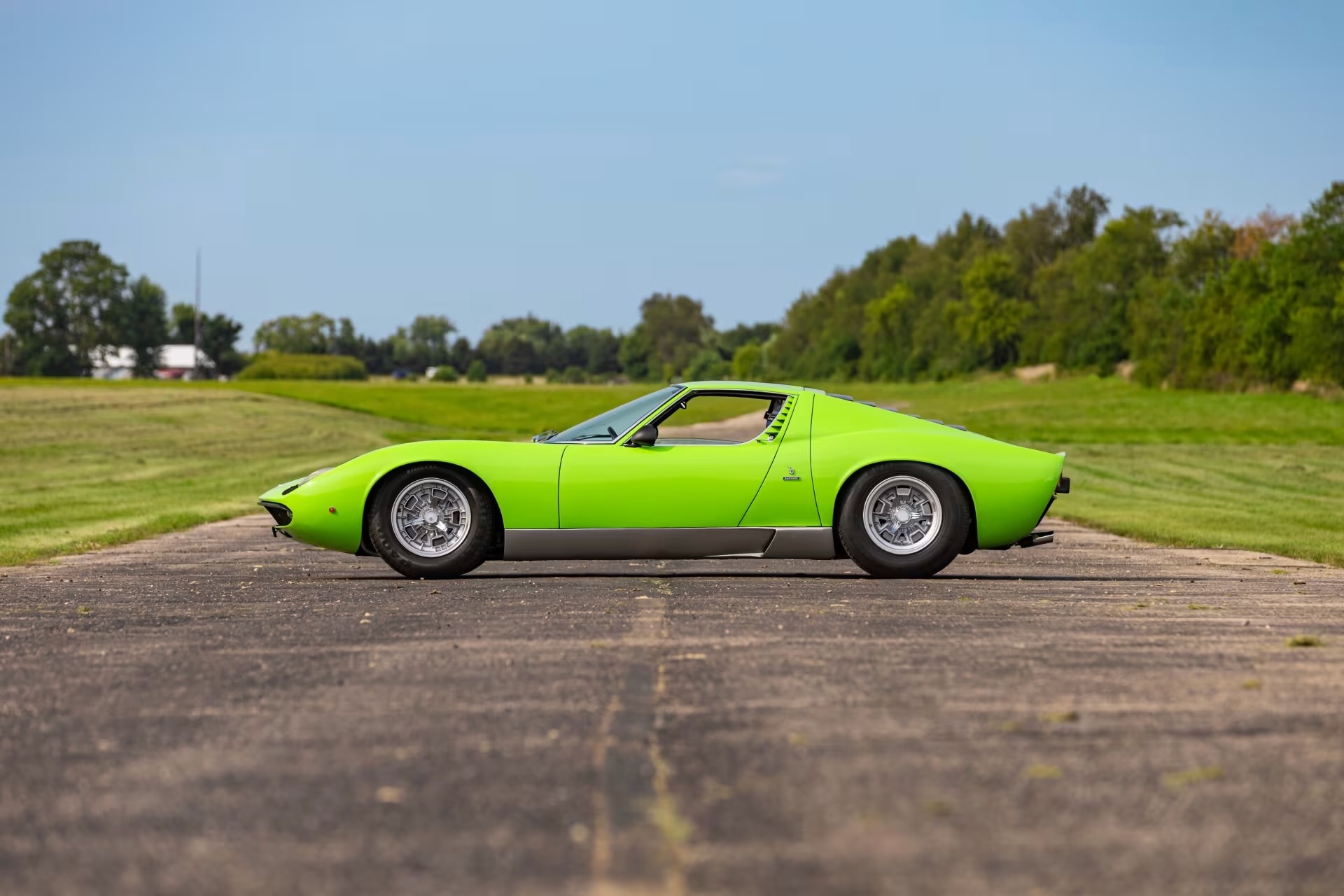

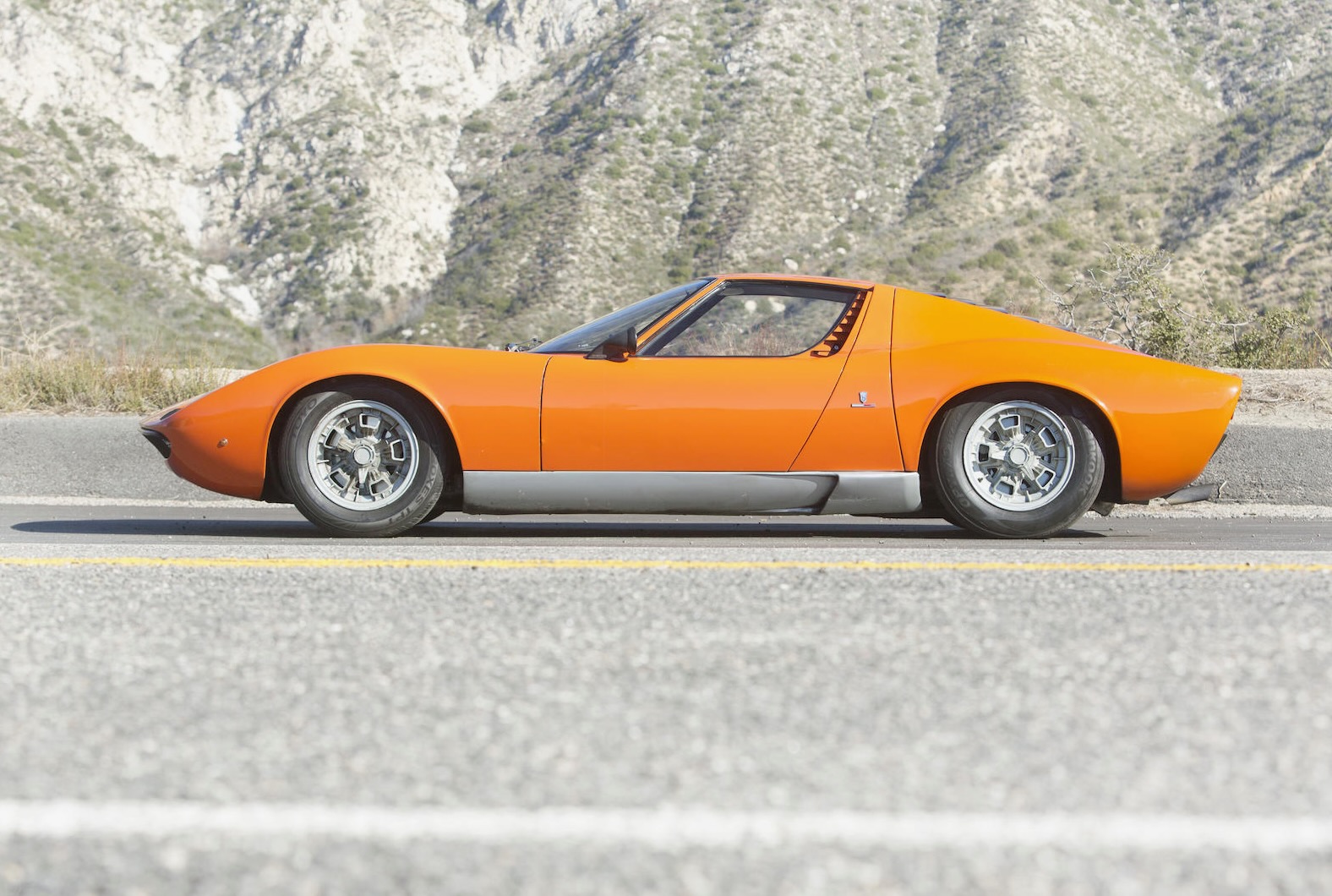
We would venture to say that this has a lot to do with habit. A sporty Italian car is red, while an English car is green. Need an example?

The Frenchman comes in blue.

Oh la la, sorry, it goes like this:

If you believe in the power of habit, an American car has to be white:

A typical German traditionally comes in silver.

Of course that’s not true, let’s take the Porsche 911 Carrera RS 2.7, then we know for sure. There were: 1010, black (62 units); 1111, light ivory (160); 1313, bahia red (42); 1414, signal orange (5); 1515, Irish green (12); 2201, Grand Prix white/blue (205); 222 5, Grand Prix White/Red (185); 2238, Grand Prix White/Green (60); 2323, Sanguine Orange (126); 2525, Indian Red (30); 3838, Viper Green (79); 3939, Olive (4); 4040, Aubergine (16); 4545, Fraise (4); 4646, Ivory (0); 4848, Lake Blue (55); 5252, Signal Yellow (87); 5454, Sepia Brown (19); 5555, Beige Grey (0); 5656, Bush Green (2); 6060, Gulf blue (18); 6161, Gulforange (25); 6262, Light yellow (296); 6666, Glaze blue (16); 6767, Lime green (23); 6868, Light green (11); 6969, Lilac (16). You can get the best overview: here.
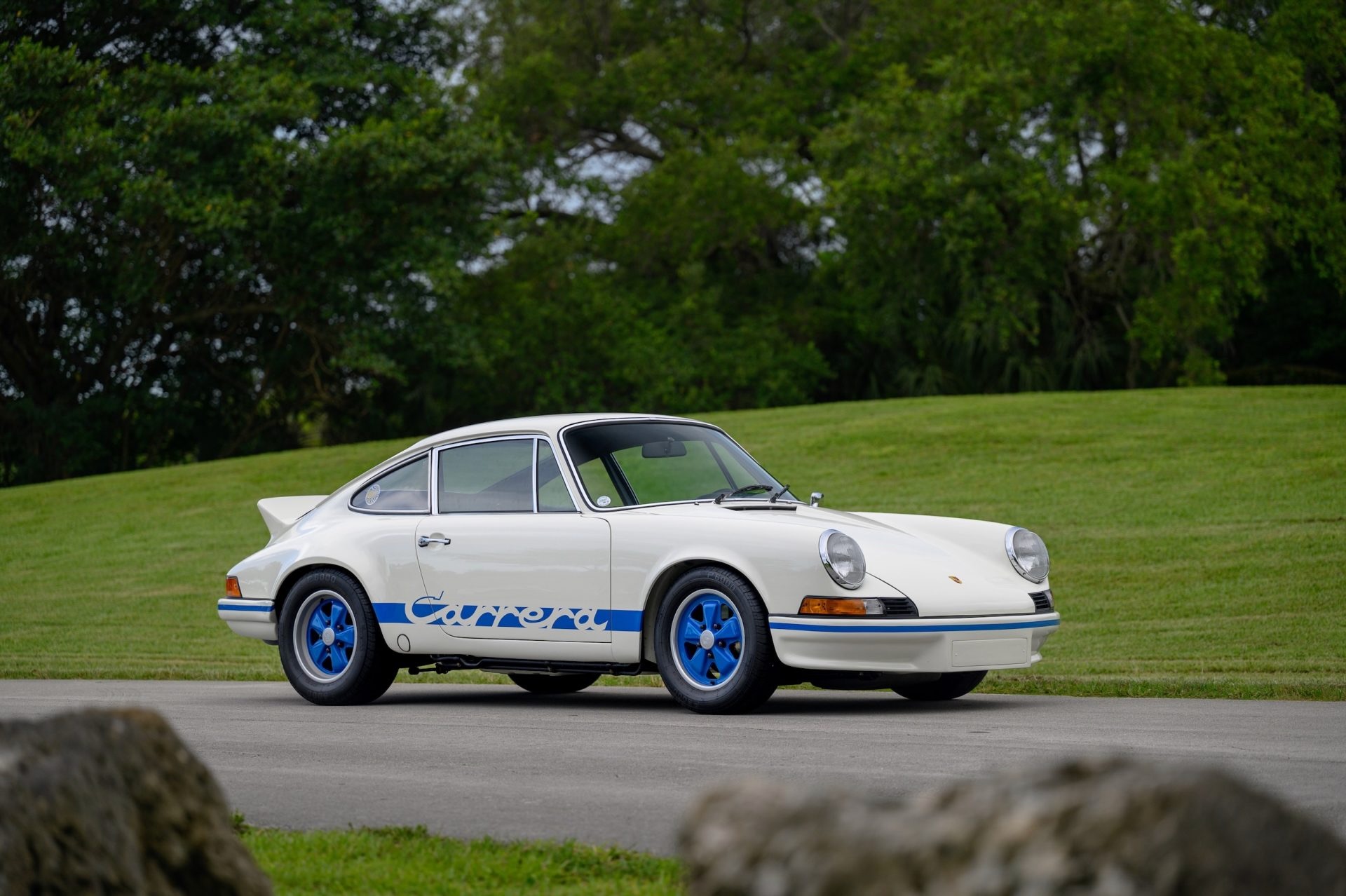


But then there was also 9999, the special colour; 15 units were painted according to an explicit special request. This has become extremely fashionable at Porsche today: paint to sample. Rumour has it that the Stuttgart-based company makes a quarter of its remaining profit from this. It costs a pretty penny, you can choose the 911 in the colour of your choice (12,760 francs/10,460.10 euros) and also the colour of your choice plus for 27,930 francs (22,895.60 euros), where you can also find the perfect picture of your personal dental plaque or your favourite underwear of the third wife. Oh, sorry, now we have gone a bit astray with the text, we wanted to discuss matching colours, not decadence. And so far we have only shown sports cars, what about the limousines? Is there anything other than black?

Personally, I prefer white, but that’s my own private problem. We have more examples of cars in different colours, for example: here.