

The birth
(Unfortunately, I am not as knowledgeable about Bugatti as I would like to be. But it’s never too late to learn something new.)

Ettore Bugatti, born in Milan in 1881, had been designing vehicles for a long time. He started out at well-known companies such as De Dietrich and E.C.C Mathis, and in 1907 he joined Gasmotoren-Fabrik Deutz AG in Cologne. This was, after all, the company co-founded in 1864 by inventor and developer Nikolaus-August Otto. At the beginning of the century, Deutz wanted to build cars under licence, and the young Ettore Bugatti became head of the production department. Bugatti and his family moved into a villa in Cologne-Mühlheim on the right bank of the Rhine, close to the factory, and developed his own projects at the same time. From 1908 onwards, he worked with his own employees to design his own new car, with only the raw materials coming from Deutz.


The Type 10 was to be small, light and manoeuvrable, yet powerful enough to win races. At the beginning of the 20th century, this was a new approach. Previous vehicles relied on large displacement, between four and twelve litres, and heavy weight, which resulted in sluggish handling. The Type 10 broke with this tradition and looked like a sports car from the future. It was a stylish racing car in which form followed function – without compromising on performance. Aesthetics and design were already important to Bugatti 110 years ago. Although Bugatti was still employed by Deutz and only later officially registered his own company as a trademark, the Type 10 is considered his first own design and thus the first true Bugatti – marking the birth of the brand.


Finally, in 1909, the ‘Pur Sang’, French for thoroughbred, was ready. Weighing 365 kilograms and powered by a 1.2-litre four-cylinder engine with 10 hp, the two-seater could accelerate to 80 km/h. The overhead camshaft controls two valves suspended from a cast-iron block, which was a novelty at the time. It is connected to the crankshaft by a vertical king shaft. The engine’s power is transmitted to the rear wheels via a cardan shaft and a multi-plate clutch. This was modern for its time. Most vehicles relied on chain drive. Leaf springs absorbed the most violent shocks, while cable brakes reduced speed. The angular radiator dominated the front of the car. Only over the years did it develop into a completely unique and distinctive shape.
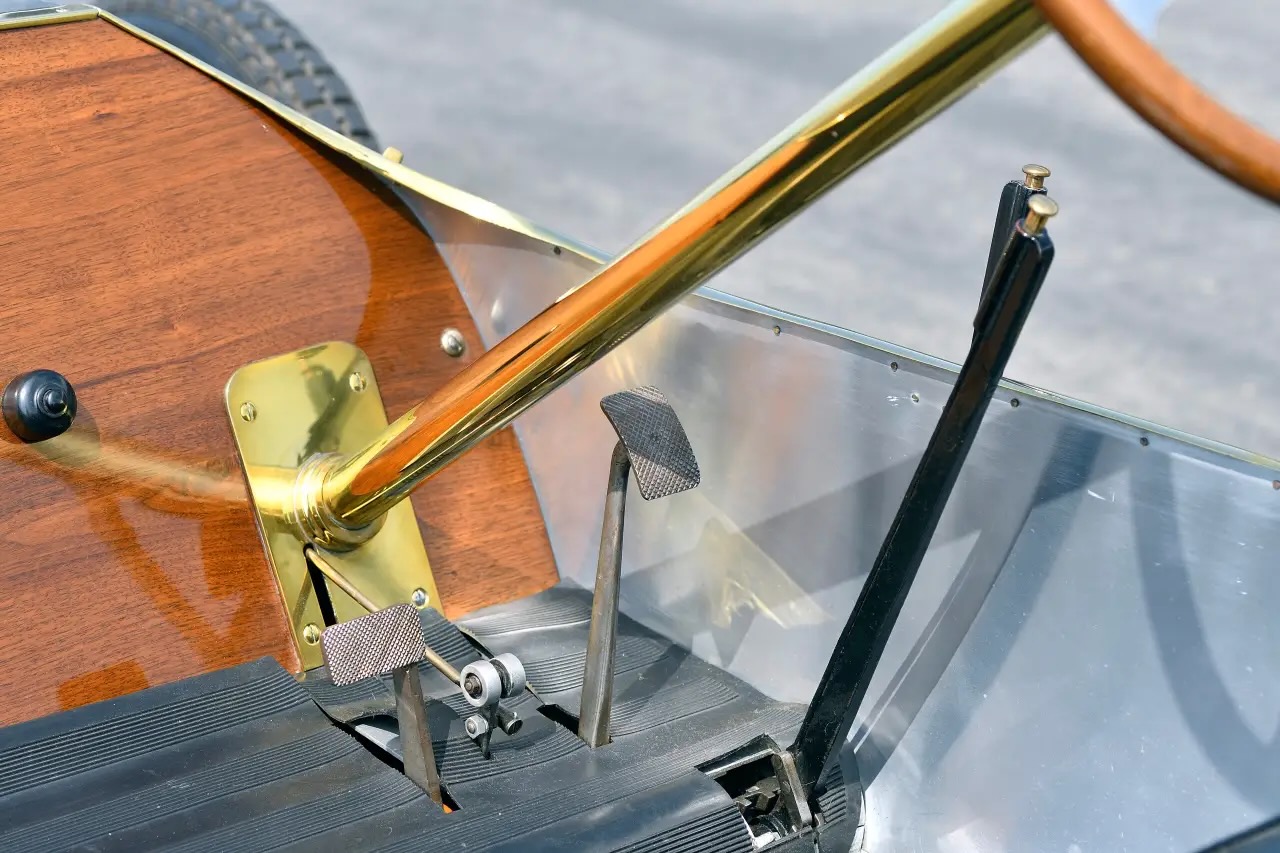
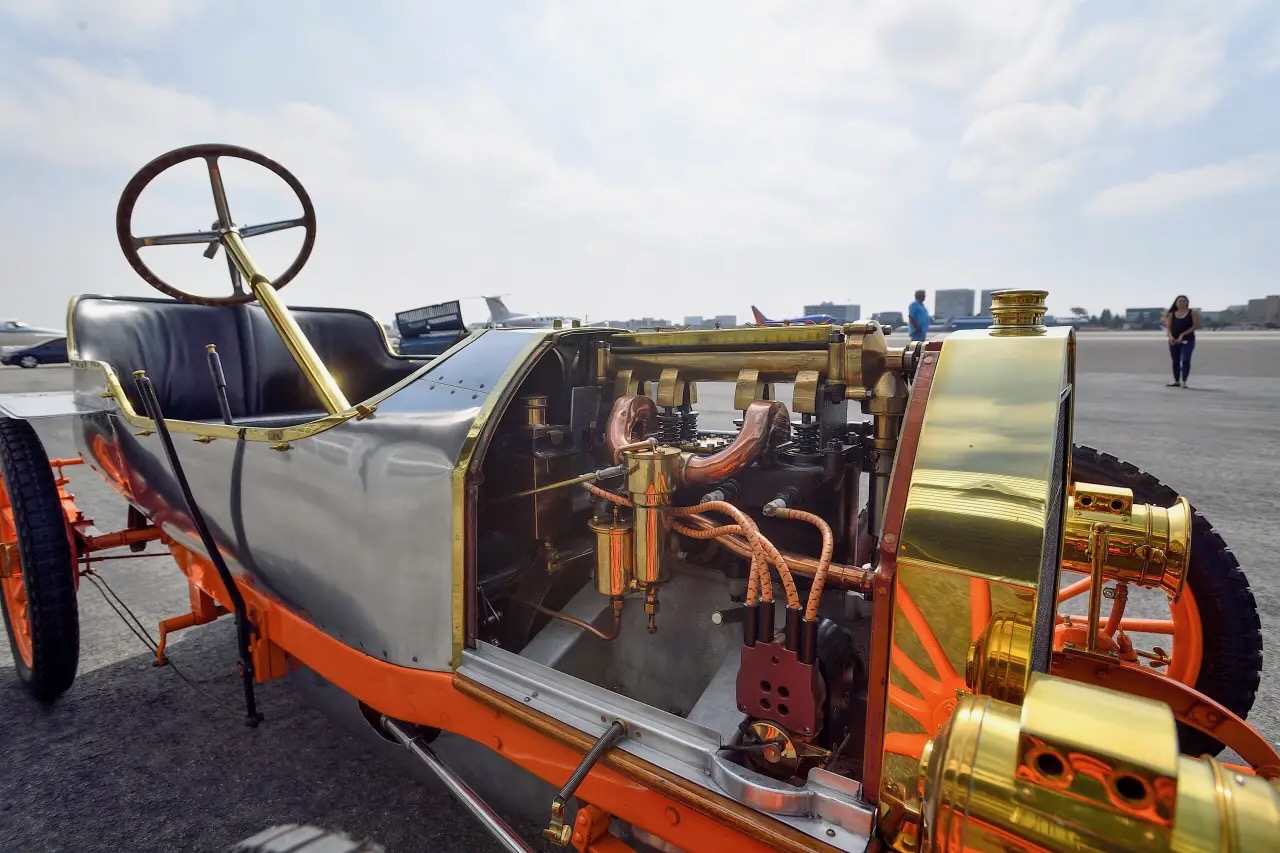
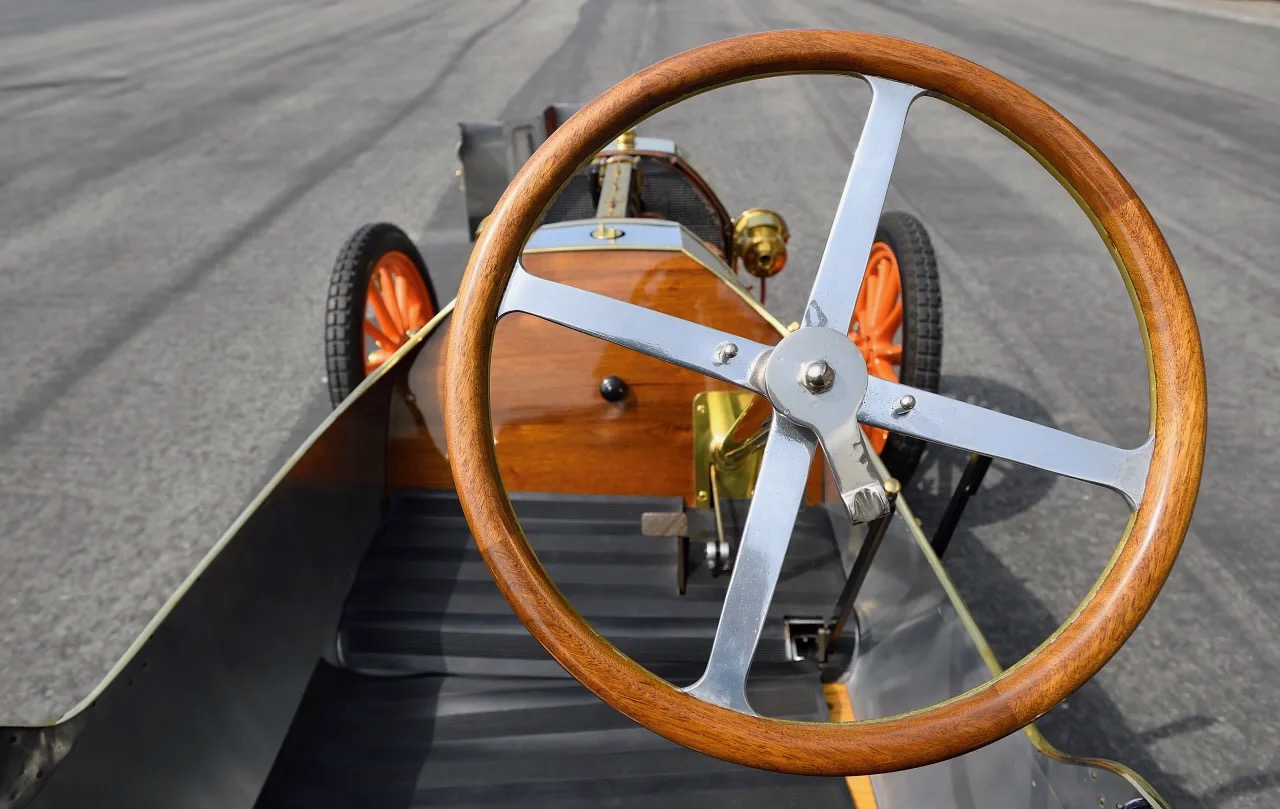
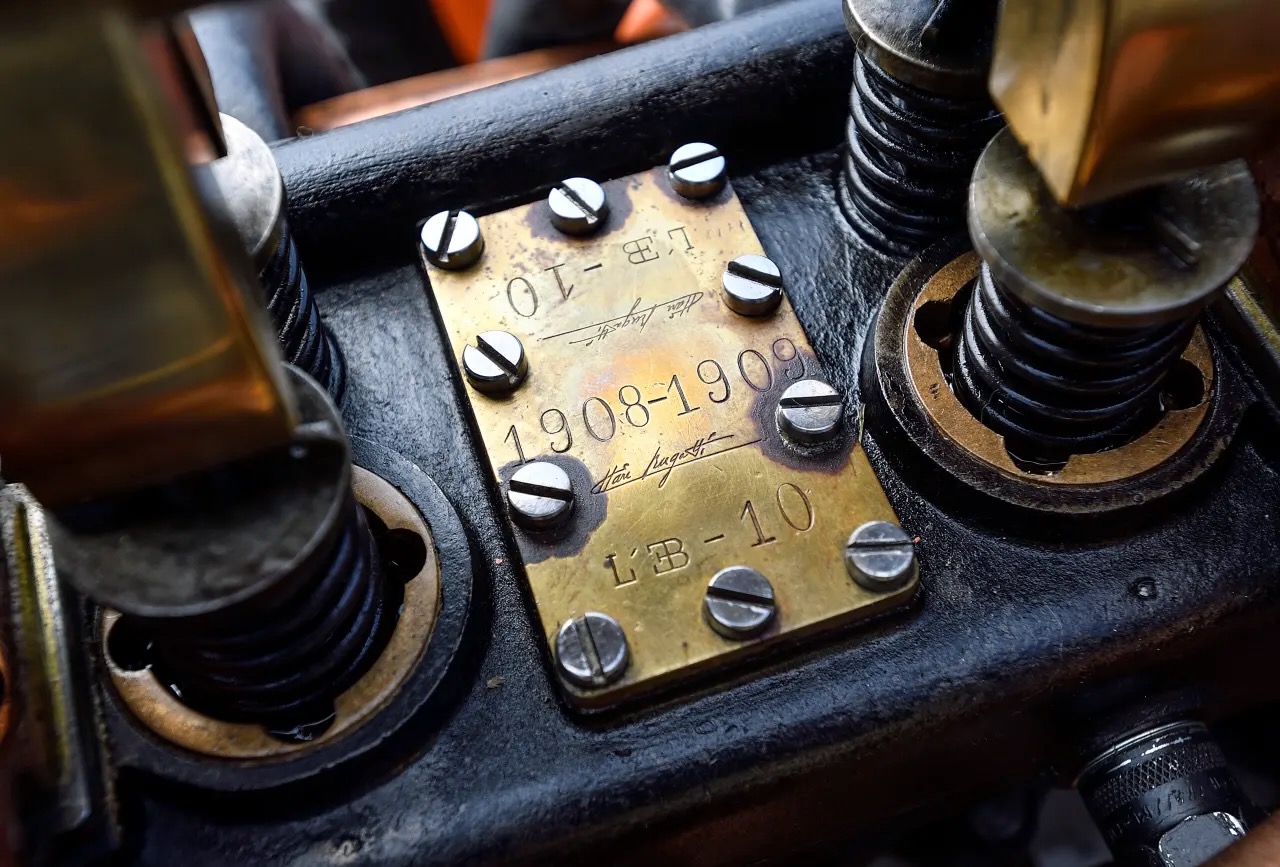
Bugatti’s Type 10 also impressed experts. When French flying ace Louis Bleriot drove the Type 10 at an air show in Cologne in September 1909, he was thrilled. He urged Ettore Bugatti to put this car into series production. With the help of partners such as Pierre de Vizcaya, Bugatti set up his own business in Molsheim at the end of 1909 in a disused dye works. Bugatti had previously successfully negotiated a loan with the Darmstadt Bank for the production of ten cars and five aircraft engines. After terminating his contract with Deutz, one of Bugatti’s close associates drove the Type 10 to Strasbourg in an eight-hour journey. On 1 January 1910, Bugatti officially signed the lease for his production facility in Molsheim.

After the move, Bugatti and his team continued to develop the Type 10, naming the modified car the Type 13 – and officially Bugatti for the first time. The four-cylinder engine with a displacement of 1.4 litres now produced 15 hp and accelerated the open-top Type 13 to over 90 km/h. But Ettore Bugatti remained loyal to the Type 10 and had no intention of selling it. A good 30 years later, in 1939, the car is still in his possession and serves as his wife Barbara Bugatti’s everyday car. When the Germans invade Alsace during the Second World War, Bugatti takes the Type 10 to his shipyard in Bordeaux, where he designs speedboats. After Ettore Bugatti’s death in 1947, the car was neglected near Bordeaux until the end of the 1940s, when a French racing driver discovered the badly damaged car, restored it and sold it to a British collector. The latter in turn sold it to a private collection in the USA, which restored it once again. The chassis with axles and wheels was painted red-orange, while the bodywork remained silver. The car still exists today in the collection, but the roadworthy Type 10 is rarely exhibited in public. (Text Bugatti Newsroom)

We have more classics in our archive.