

The Angels’ Share
As is so often the case in life, it was simply a coincidence. It has been almost 40 years since I visited a few distillers in the Bassano del Grappa area, and as we chatted about this and that, including the competition, one name kept coming up: Vittorio Capovilla. He wasn’t distilling grappa at the time, but the other distillers spoke of him with great respect, so I went to visit him too. That is to say, I spent quite a long time searching before I found the old manor house Ca’Dolfin just outside the village of Rosà, which is south of Carbonara, and then the back yard where Capovilla was running his business, which was still tiny at the time.

It came as a great surprise, for Vittorio Capovilla does not belong to one of the well-known schnapps-making families of the area, but had lived in Switzerland for many years, where he trained as a mechanic and worked as such – a true ‘Secondo’, who had, however, been drawn back to his homeland. In his tiny distillery, he had focused on fruit spirits, which was still a very difficult business at the time, as there were hardly any quality spirits available, even though fruit distilling has a very long tradition. Capovilla attempted the impossible in his back garden. He gathered the fruit he wanted to work with himself: wild, tiny peaches by the roadside, blackberries growing somewhere in a wood, apricots he could buy cheaply from a neighbour. He experimented and tinkered, converting the second-hand equipment he’d bought to suit his own ideas, distilling twice, distilling three times, playing with the temperatures and the duration of the distillation process, perfecting his craft – and eventually he reached the point where he could produce one litre of schnapps from 30 kilos of wild peaches.

But this schnapps was something else. Not only did it really taste of peaches without any added flavourings – you even had the sensation of still feeling the fine hairs of the fruit on your tongue. Capovilla was bottling true sensations in his bulbous bottles. His daughter wrote the labels by hand, and in the evenings Vittorio would burn his hands sealing his products with sealing wax. He knew little about sales back then, but he knew that he had to present his extraordinary products in an extraordinary way, and he managed to do so without the support of expensive marketing gurus and sleazy advertising strategists. Capovilla’s spirits were already expensive back then, but I was happy to pay the price, for the quality was out of this world.

And yet Capovilla struggled with himself at the time: he lived right in the heart of grappa production, yet he couldn’t figure out how to produce one of these pomace spirits himself that met his standards of quality and integrity. He had a grasp of the fruit like no other, but he faltered when it came to grappa, which isn’t actually that difficult. He couldn’t let that lie. I have visited Capovilla time and again over the years. And seen how he has grown. How he was able to leave his dark distillery and build a modern distillation room with two distillation cycles. How he got the grappa under control. Capovilla has long since moved beyond distilling his own wonderful pomace, working instead for many well-known names (Château Palmer!) who have their grappa distilled by him and then affix their own labels to the bottles.
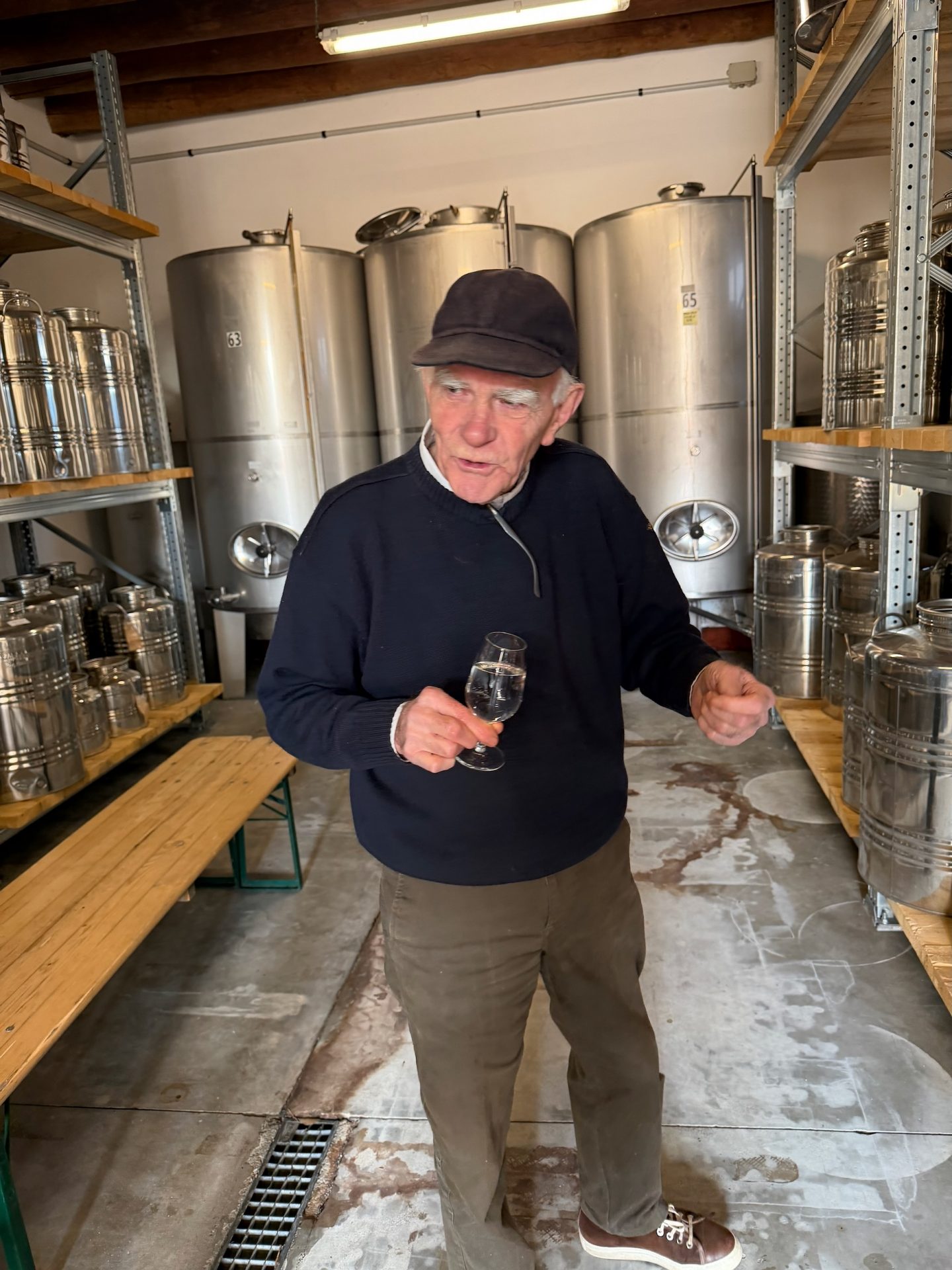
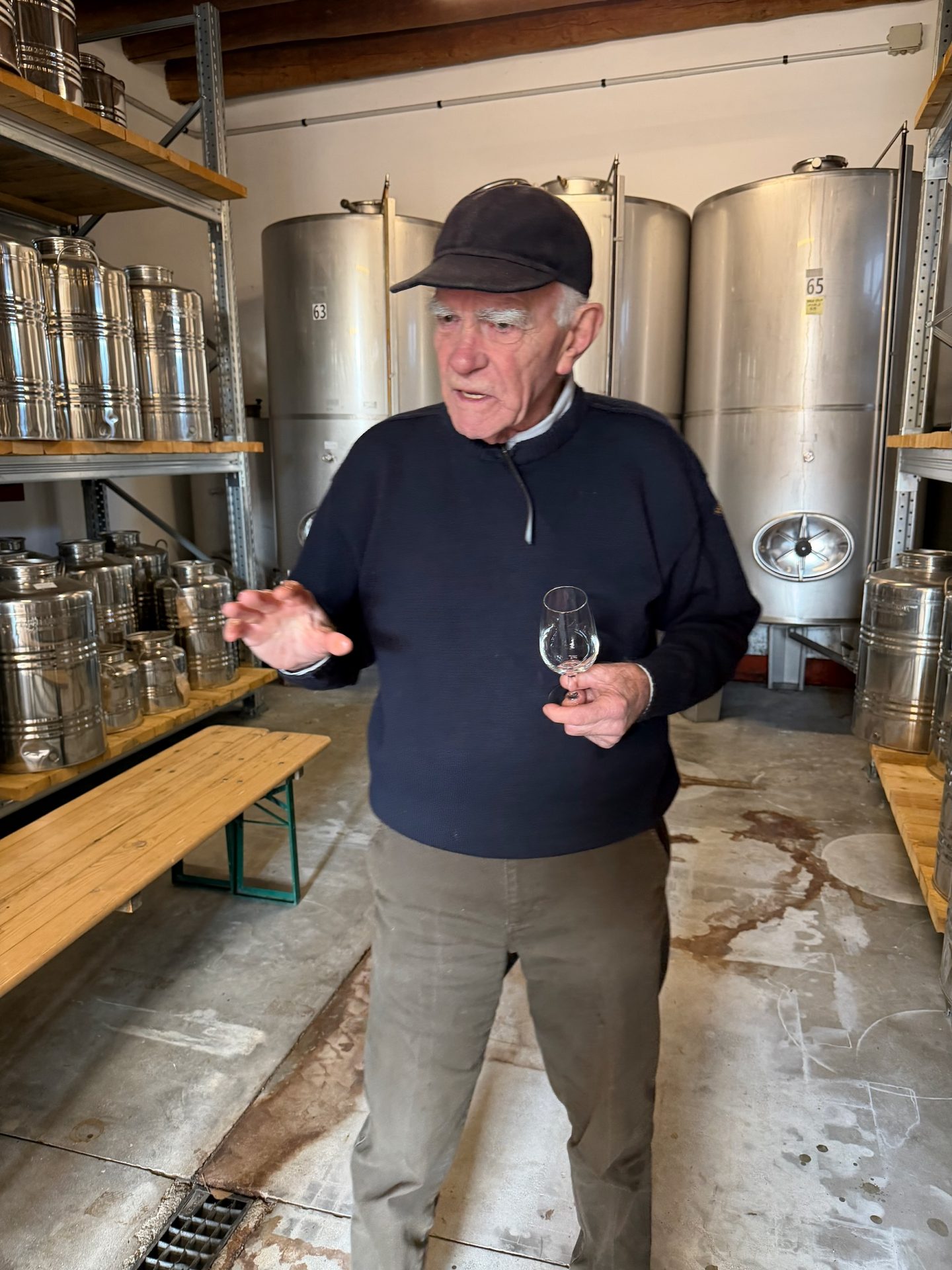
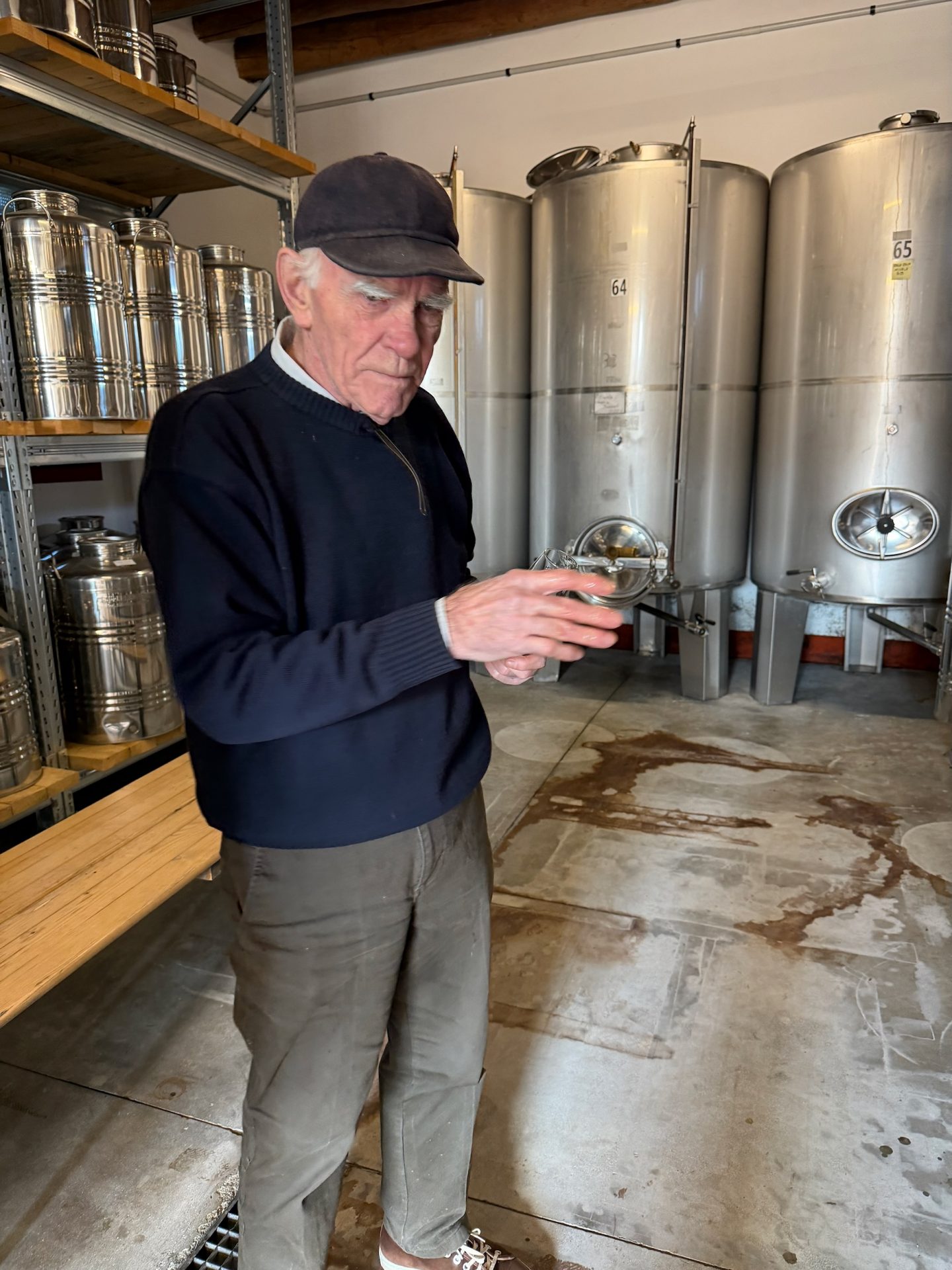
But what does his grappa actually taste like? Whilst his other products are very gentle, almost sweet, always pleasant, carried solely by the character of the fruit used, the ‘Grappa del Bassano’ is powerful. It has a very gentle smoky note and an incredibly long finish, reminiscent of a two-hour stroll through a vineyard full of ripe grapes. This grappa is mighty, naturally free of flavourings, and of course perfectly distilled. Despite this intensity, there is not the slightest hint of ethanol to be tasted. Capovilla charged 17 euros for the 0.7-litre bottle back then. Today it is a little more, but that is a bargain compared to all the designer grappas that smell of everything except grapes. Capovilla is very pleased with this product, but he isn’t resting on his laurels; he also distils single-varietal grappas – Brunello, Barolo, from the rare yellow Moscato grapes, and from old varieties that probably only he knows: Isabella is one, Clinton another. His daughter, who runs the shop when her dad is off travelling the world and winning awards, has long since lost track of it all.

Capovilla doesn’t mind. He can employ 10 people all year round and still focus on what he does best: producing what are probably the world’s finest fruit brandies. For the business of these spirits has changed significantly in recent years. Fruit brandies have become fashionable; the tiny niche has turned into a thriving business – not, of course, comparable to wine or whisky, but the clientele that appreciates the craftsmanship of good distillers is steadily growing. Other ‘madmen’, such as the Austrian Sigi Herzog or the Swiss Lorenz Humbel, have played their part in this. But Capovilla is and remains the ‘emperor’ amongst these ‘kings’; he continues to dare the impossible, creating fantastic quality. Especially when he works with wild-grown fruit – peaches, tiny, essentially inedible plums, various berries – he remains unrivalled. He now owns a few hectares of land on which he grows his own produce. ‘Quality control,’ he says, and his staff roll their eyes, for to them it means significantly more work, because the master simply has precise ideas about what must be grown and harvested, how and where.

It’s the nose, they say. Capovilla possesses the ‘absolute’ nose. He sticks it in everywhere during the distillation process, and then it’s a matter of seconds, a matter of one degree more or less heat. Vittorio, the trained mechanic, tastes everything himself. Only he knows how long the musts should be stored in the stainless-steel tanks and barrels, when they can be bottled, where water is needed, and where only time and patience will do. Capovilla now also works with oak barrels. Because he is so well-known in the industry, he has acquired the honoured barrels from Château d’Yquem, and this is set to become a very special grappa. He had also stored a few litres of rum during my penultimate visit, produced in Guadeloupe at a venerable distillery. After much, much trouble, he now has the first bottles on offer; he takes great pleasure in this honest product and the fine traditions behind it. And Capovilla is, of course, involved in a project to grow sugarcane in southern Europe as well, researching precisely which varieties are particularly suitable for producing rum. He is determined to teach young people how distilling works. There aren’t many distilleries left in Italy – about 100, perhaps a few more. He knows why, too, because one thing annoys him immensely: the bureaucracy. You wouldn’t want to put yourself through that in the first place; every little glass he serves or tastes, he has to account for – and he also has to pay the ‘angel’s share’, i.e. everything that evaporates.

Capovilla invites me for an aperitif. An ice cube, a bit of lime zest, a generous sip of ‘Rhum Rhum Blanc Agricole’ at 56 per cent ABV – thank goodness I’m allowed to sit down. The 85-year-old, whom one rarely sees without his red Marlboros, tells anecdote after anecdote in his beautiful German: about the pesky blackthorn, which is a nightmare to pick; about the wild raspberries he found in North Macedonia, of which he needs 55 kilos to produce a bottle of schnapps; about the idiocy of used barrels – a silly fad, he says, they’re all just trying to save money. He then fetches this little bottle of rum, distilled in 2008, then aged in a cask; 160 litres were made, 30 remain – it’s no longer worth bottling now; he takes a small sip, already very content with himself and his products. It is probably precisely this incredible passion that continues to drive Vittorio Capovilla, that makes his spirits so unique, so magnificent.

This is a story from the first issue of pure, our magazine for contemporary food culture.