

The King of the King of Sausages
It’s a bitterly cold January morning in the Ticino village of Piotta; it’s dreadful outside, and there’s not a soul to be seen far and wide – understandably so. But as soon as I step into Macelleria Salumeria Piccoli on the main street, my heart warms. It’s that classic village shop: a few vegetables, some bread, a couple of bottles of wine, chocolate sticks, Chupa Chups – and such incredibly warm-hearted owners. Sascha, the son, a mountain of a man, greets me loudly and cheerfully; Loredana, his mother, starts chatting away straight away. They simply don’t have it easy in this area; we couldn’t survive on the locals alone, says the business-savvy mum; almost everyone has moved away, especially the young people. And there are only tourists in the Leventina for two or three months a year now – and that’s as many as there’ll ever be.


The fact that it still works is a tradition in the Piccoli family: The butcher’s shop has been in existence for more than 120 years, and Fausto Piccoli has been famous for decades as the king of Ticino salami. He’s not entirely comfortable with being put in the spotlight for this; after all, he’s long since retired. He’d rather be making sausages than posing for photos, but Loredana, his wife, explains to him how the business works, where things are heading and why. For every article written about the salumi – the shop’s various cured meats – will hopefully bring in new, more customers. Swiss German-speakers might then take the short detour off the motorway between Airolo and Quinto, stocking up on the Piccoli family’s delicacies before their holidays in Ticino or on the journey home from the south. One really ought to.


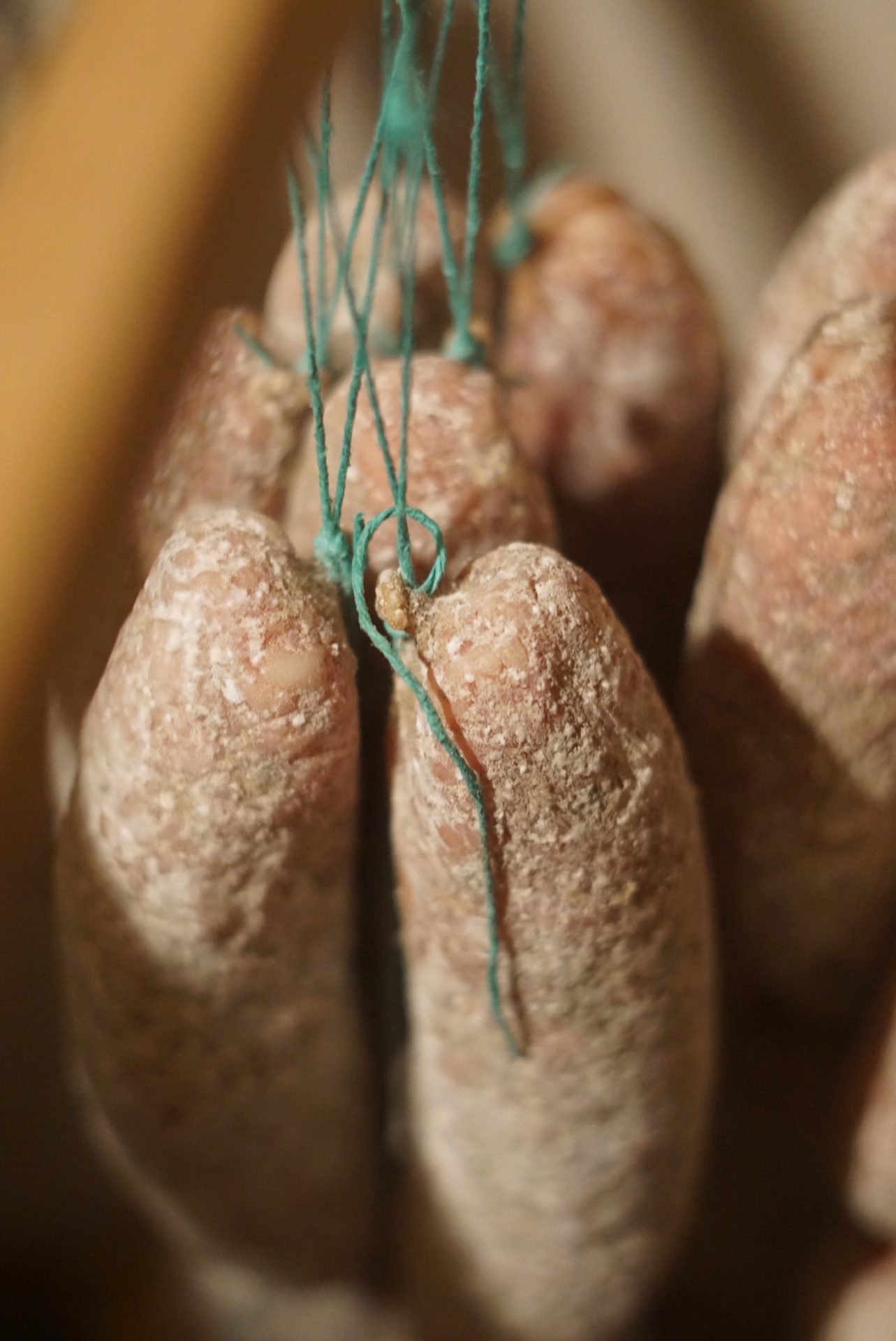
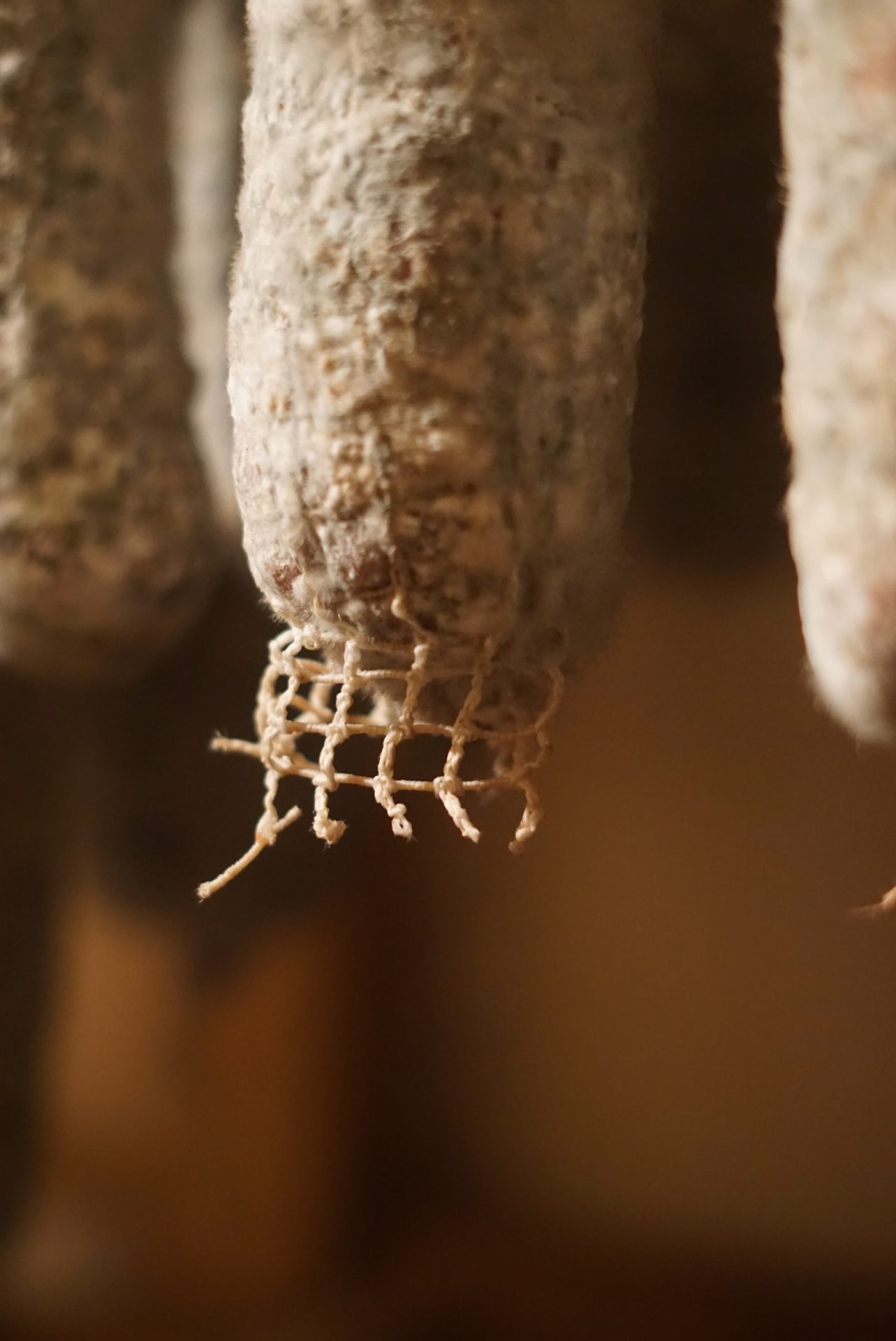
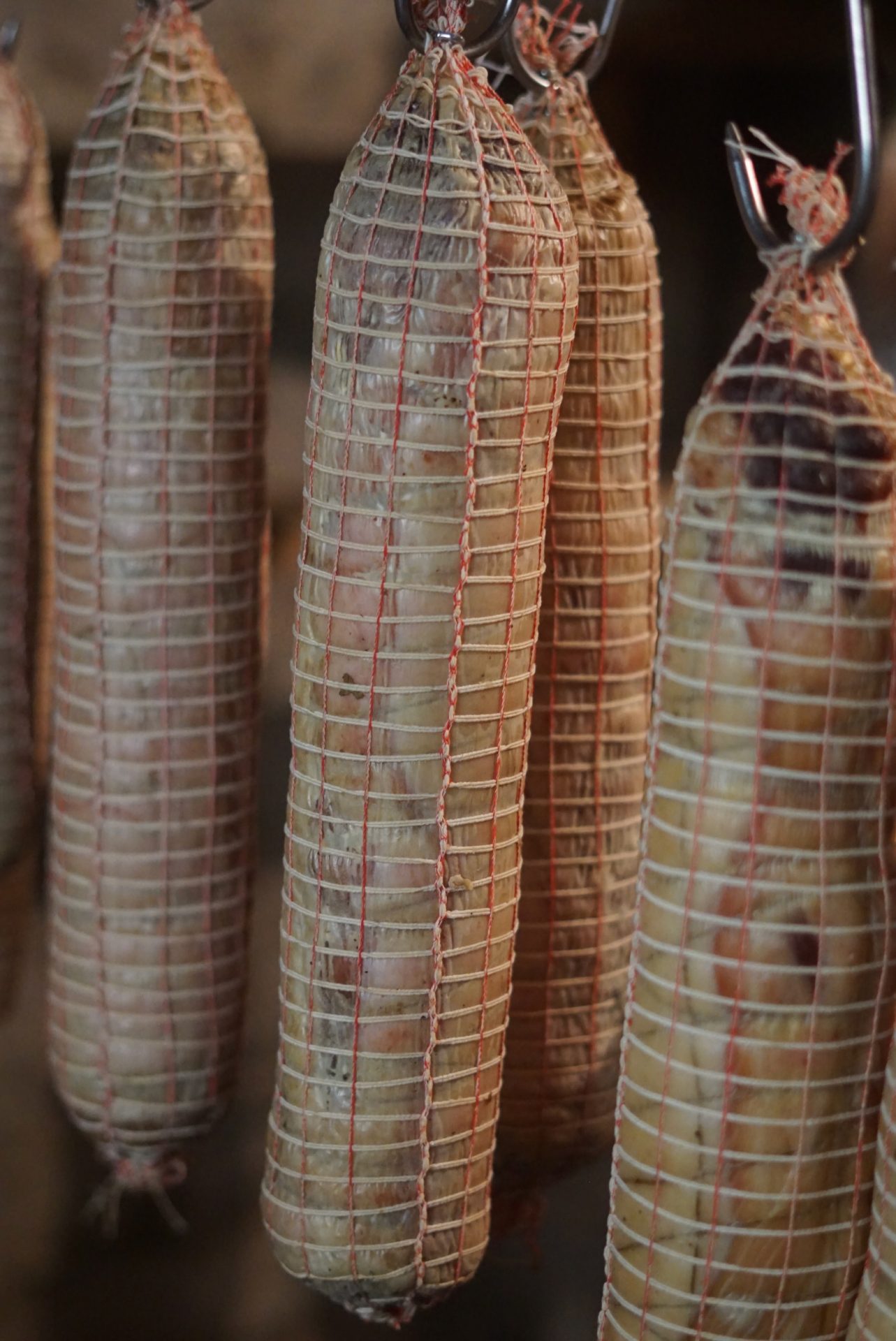
Salami is a salted sausage. The art of curing meat with salt to preserve it for longer is around 5,000 years old; the Romans and Etruscans then refined it. And as is almost always the case when it comes to culinary traditions, the product we know today was brought to true greatness in Emilia-Romagna. Once, from around the 15th century onwards, it was mainly donkey and mule meat that was processed into the well-known, elongated dry sausage (which is still available today), but nowadays, not only at Piccoli, it is pork and beef cuts – the prime cuts, back fat and even more belly fat – combined with the house recipe of spices (salt, pepper, garlic, a little sugar, but under no circumstances nitrite curing salt), and a little wine (around 3 litres of Ticino Merlot per 100 kilos of meat) that are not minced too finely by machine and then stuffed into natural casings. These stuffed casings are then tied by hand, pricked by hand (to ensure no air remains in the sausage), and hung up for an initial drying. Afterwards, they are taken to the cellar, for at least two months, sometimes even for six months. There they are allowed to mature at a temperature of 12 to 15 degrees and a (controlled) humidity of 80 per cent. The characteristic white skin on Piccoli’s sausages does not come from a ‘vaccination’ or even from rice flour (as with industrial salami), but from the spores of noble moulds – yes, that includes mould – in the ‘Cantina’; this is why it is irregular in colour and distribution. During drying, the sausages lose around 30 per cent of their weight; Fausto recognises the ‘mature’ sausages by their colour.

Even though the ‘Nostrano’ is the star of the Piccolis – we are in a very traditional Ticino butcher’s shop here. So there’s not just salami and salametti in all sorts of sizes; there are also fresh luganighe for boiling or grilling, the slightly fatter cotechini; they also make their own ham and bacon here, pancetta, the Ticino mortadella – which is so very different from the Italian version – and various types of carne seca, i.e. dried meat, made from whatever the farmers and hunters happen to have on offer. During my visit, there are just a few wonderful cuts of venison left – rock-hard on the outside, wonderfully tender when freshly sliced. And Sasha, the son, is currently busy with a huge cordon bleu; the Piccolis have now gained more than just local fame for this too. Down in the cellar, various Alpine cheeses are maturing; Fausto Piccoli takes care of that too – turning, flipping and washing them – and he accepts payment in kind; that’s how it works here, he says.


So what does it taste like, Piccoli’s Salame Nostrano? You slice it diagonally (definitely at room temperature, so the flavours can really develop) – it just looks better that way, says Fausto – and it makes the skin easier to peel off. The aroma is slightly tangy at first, not salty as one might expect, then a nutty note quickly emerges, just as it should with high-quality meat. “We Ticino locals prefer our salami younger and softer, cut into rather thick slices; the German-speaking Swiss like it drier and therefore thinner,” the master butcher explains; but one should certainly follow his recommendations.
It’s simply this: true happiness lies in one of these salamis, some (preferably homemade) bread, a nice piece of (soft) cheese, perhaps an onion, and a decent wine. Umami, the Japanese would probably say – that full-bodied depth, rich and intense, everything complementing one another: textures, flavours. It’s hearty; it’s honest.

Address: Macelleria Salumeria Piccoli, Via San Gottardo 154, Piotta TI. Products can also be ordered by telephone or email: Tel. 091/868 11 19, macelleria.piccoli@bluewin.ch.


This is a story from our magazine on contemporary food culture, pure.