
Reliable
BMW began production of its first 6 Series – known internally as the E24 – as early as October 1975, but it was not until the 1976 Geneva Motor Show that the 630 CS and the 633 CSi were unveiled to the public. The successor to the E9 was significantly larger and heavier (4.76 metres, from 1,400 kilos) – and, with a production run of over 13 years (the last model rolled off the production line on 14 April 1989), was to become the longest-produced BMW model ever. A total of 86,219 (or was it actually 86,216?) were built; it wasn’t exactly a massive success. And until recently, these 6 Series models were relatively affordable (apart from the M635 CSi and the Alpina B7 Turbo); prices are now rising slightly, though without drifting into absurd territory. And yes, a 635 CSi (from 1978, 3.5-litre engine, 218 PS, port fuel injection) is certainly a fine Gran Turismo. And from 1981 onwards, it was also a good racing car.


From 1982, Group A regulations applied to touring cars. BMW did not officially participate as a works team; it was a complicated arrangement: the bodywork was specially welded at Karmann, BMW supplied the chassis, brakes, safety fuel tank and various components – and Alpina supplied the engine. A Group A 635 cost around 120,000 marks; customer teams had to fork out a further 35,000 marks for the powertrain, and around 70 of these customer cars were sold. And then there were probably another 10 units, where the works team’s support via Schnitzer Motorsport was somewhat more intensive. Nevertheless: strictly speaking, the BMW should never have stood a chance; the turbocharged Volvos produced around 350 PS, the Jaguar XJ-S well over 400 PS – whilst the 635 CSi had to make do with 300 PS. On the other hand, the Bavarian car was very easy to drive, fairly economical – and, above all, very reliable. It was crowned European Touring Car Champion three times: in 1981 (Helmut Kelleners), 1983 (Dieter Quester) and 1986 (Roberto Ravaglia), and it won the 24 Hours of Spa-Francorchamps three times.


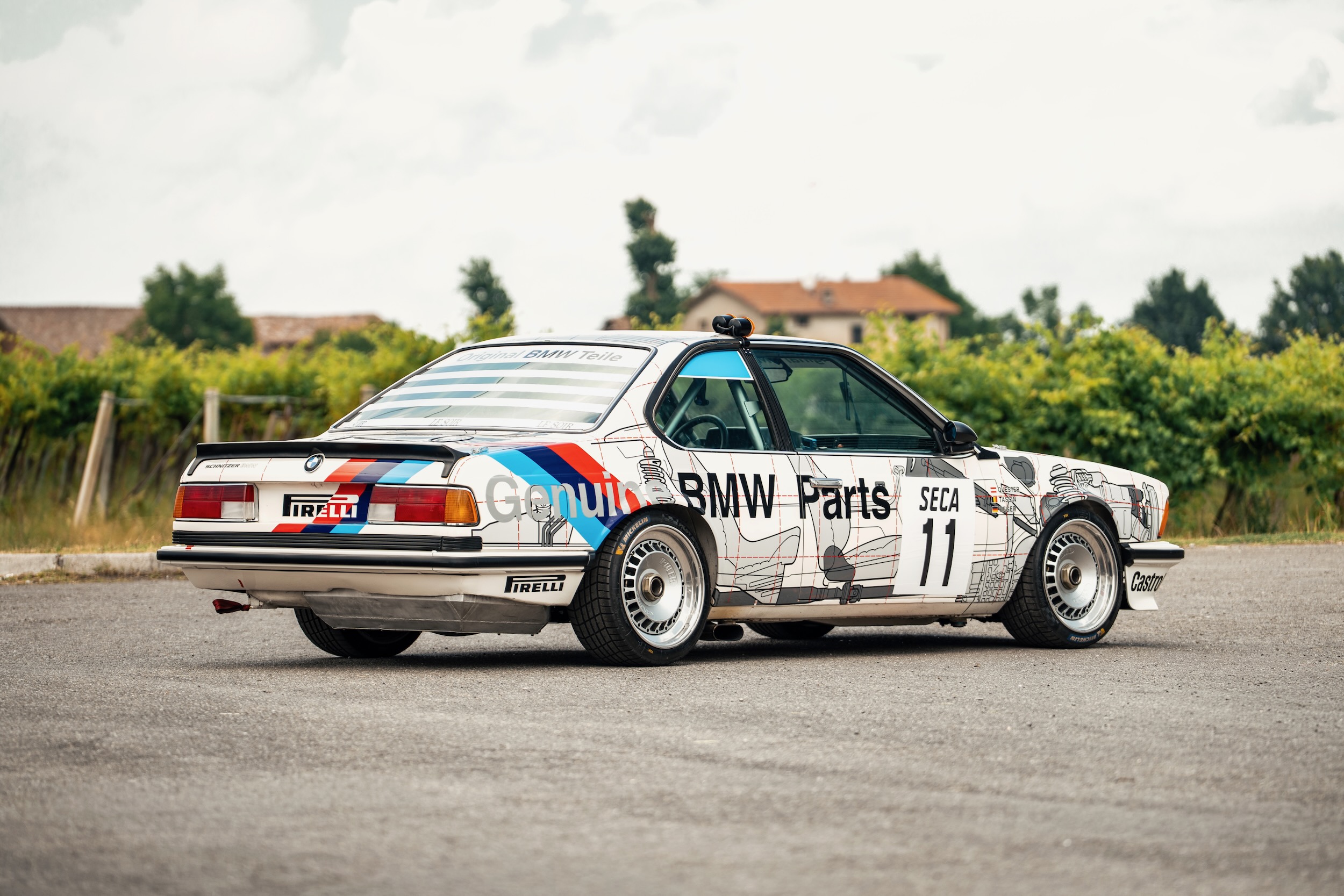
And that brings us straight to the car we’re showcasing here: chassis number E24 RA2-79, the winning car at Spa in 1986, driven by Quester, Tassin and Heger. The car competed in 10 races during the 1986 season, retiring only twice; alongside the victory at Spa, its best results were two second places at Donington and the Hockenheimring. Among others, Gerhard Berger, Roberto Ravaglia and Emanuele Pirro took the wheel. In 1987, the BMW was sold to a private driver, and in 2017 to its current owner, who had the car restored, serviced and prepared for racing by Graber Sportgarage in Toffen, Switzerland, between 2017 and 2024. Repainted in the classic ‘Genuine BMW Parts’ livery, the car is due to be auctioned by RM Sotheby’s in Munich in 2026, with an estimated price of 500,000 to 700,000 euros. Yes, buy racing cars! It is precisely these examples with a rich history that will only continue to rise in value.


Mehr spannende Fahrzeuge haben wir im Archiv.