
Learning from mistakes.
We’ve already described in detail here how Citroën came to develop the Wankel engine and why the M35 never came to fruition, here (sorry, just in German). Now, one might think the French had learnt something from that costly debacle, but – once again – that wasn’t the case. Meanwhile, NSU had designed a twin-disc Wankel engine, the KKM 612, for the Ro80, and because Citroën had also contributed to the costs via their joint venture, Comotor, the higher-ups presumably felt the need to be able to profit from it as well, despite everything. However, as the KKM 612 was relatively wide, and the French wanted to fit the Wankel engine into their new GS model, another expensive, new design was required: the KKM 624.


This was a complex design that incorporated experience gained from two other engines: the more modern twin-disc Wankel KKM 619 and the triple-disc Wankel KKM 622. From these, the axial coolant flow and the stiffer eccentric shaft arrangement were adopted; the air pump and alternator on the KKM 624 were driven via the propeller shaft. The Citroën Wankel also featured a Bosch HKZ, a Solex 32-DDITS twin carburettor and something of an attempt at exhaust gas purification, whereby air was injected into the exhaust stream via a pump and an ‘exhaust gas reactor’. As with the Ro80, it had a three-speed gearbox, although the French model was fitted with a Borg-Warner torque converter.
A brief explanation from a Citroën press release: ‘The water-cooled twin-disc Wankel engine has a comparatively simple design comprising eight main components: in addition to two trachoids and an intermediate section separating the two trachoids, the Birotor features two side sections at the front and rear, two circular pistons – also known as rotors – and the engine shaft with two eccentrics. The four-stroke system operates without valves, springs, rocker arms, rods or camshafts. In the first stroke, the fuel-air mixture enters through the intake port. In the second stroke, the piston closes the intake port, thereby compressing the mixture. The sparks generated by the spark plugs ignite the fuel-air mixture at the moment when the compression pressure is at its maximum. During the third stroke, the expansion causes the piston to rotate and, thanks to the pressure forces exerted on the piston surface, provides the necessary driving energy. In the fourth and final stroke, the piston opens the exhaust port, allowing the burnt gases to escape.»


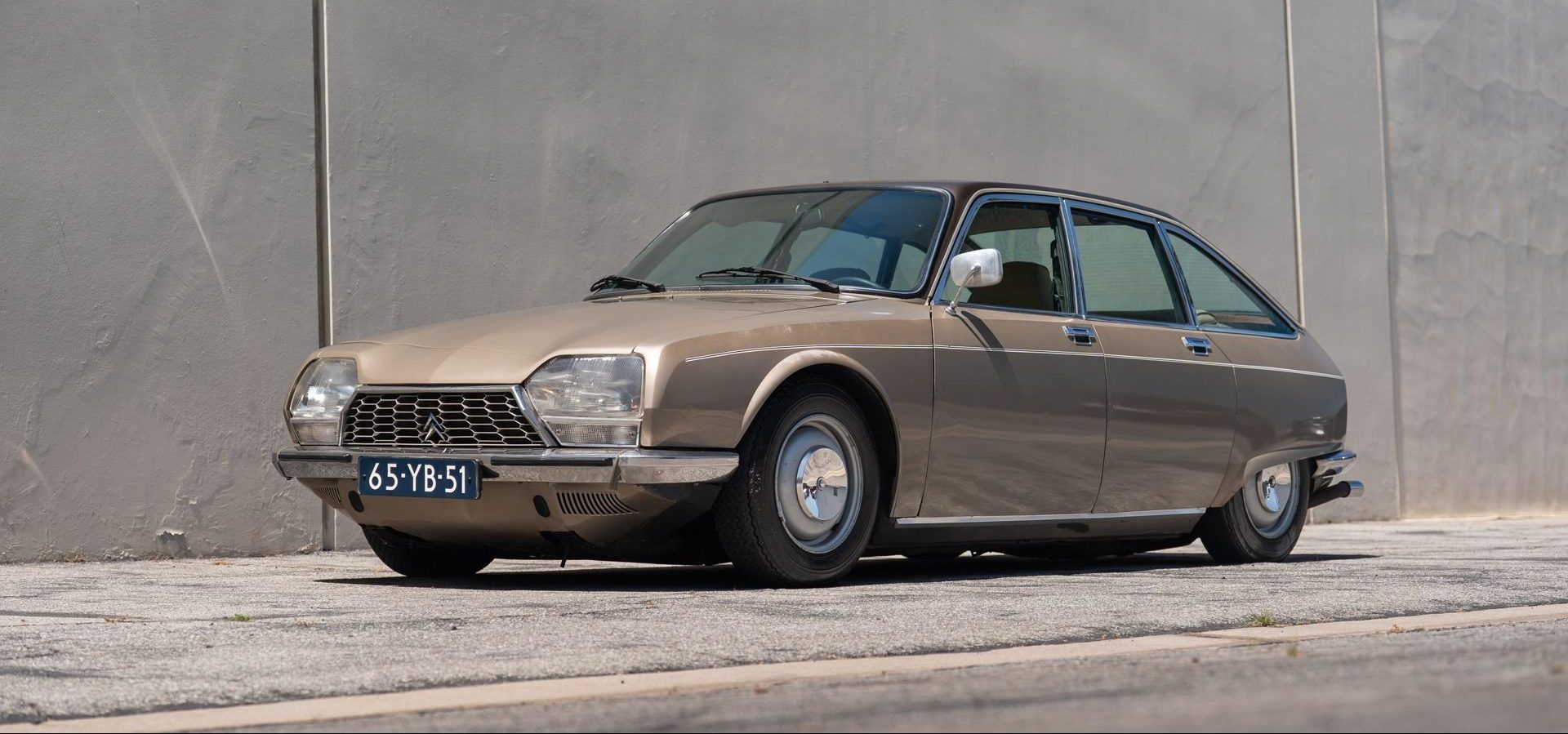
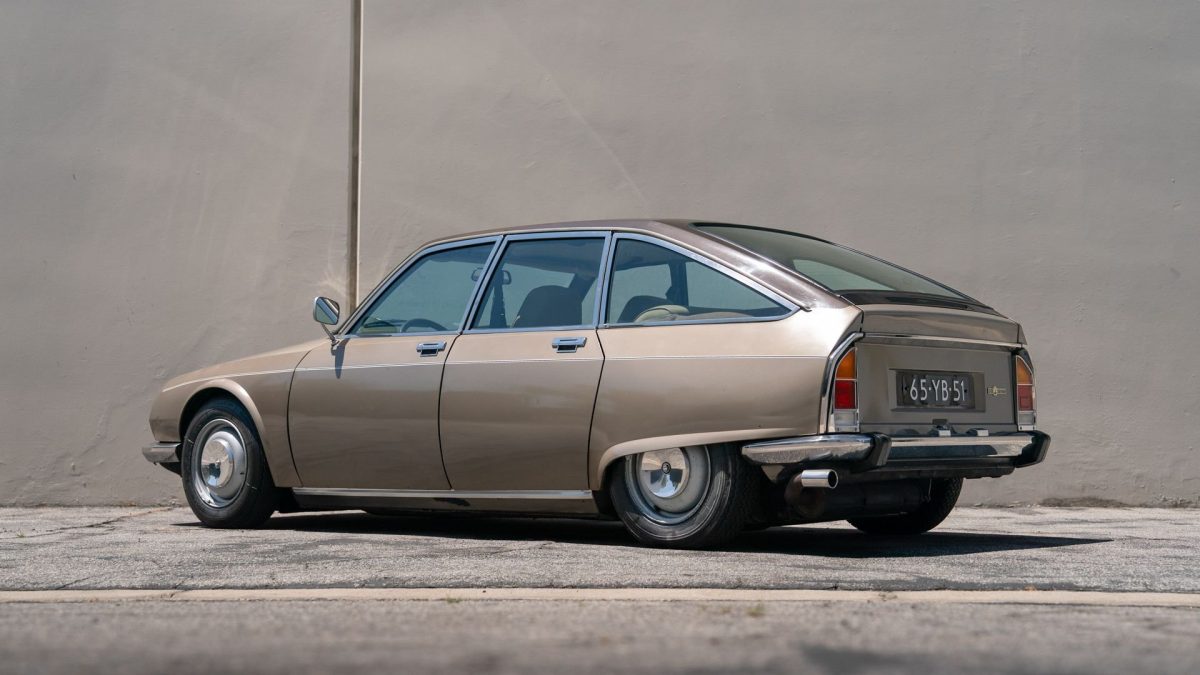
With 107 PS and a maximum torque of 137 Nm at 3000 rpm, the Birotor was by far the most powerful model in the GS range; weighing 1140 kilos, it was also the heaviest. Its performance figures were not really impressive: 14.7 seconds for the 0–100 km/h sprint and a top speed of 176.5 km/h, according to measurements by the once-prominent Swiss motoring magazine *Automobil Revue*. However, they also recorded an average fuel consumption of 15.7 litres per 100 km, which was rather absurd. This was probably why the fuel tank was increased from 43 to 56 litres. The Birotor models could be recognised from the outside by additional trim strips as well as the special alloy wheels and tyres (165×14 instead of 145×15); inside, there were new round instruments and a more upmarket fit-out. At 24,952 French francs, the purchase price was significantly higher than the usual GS prices.
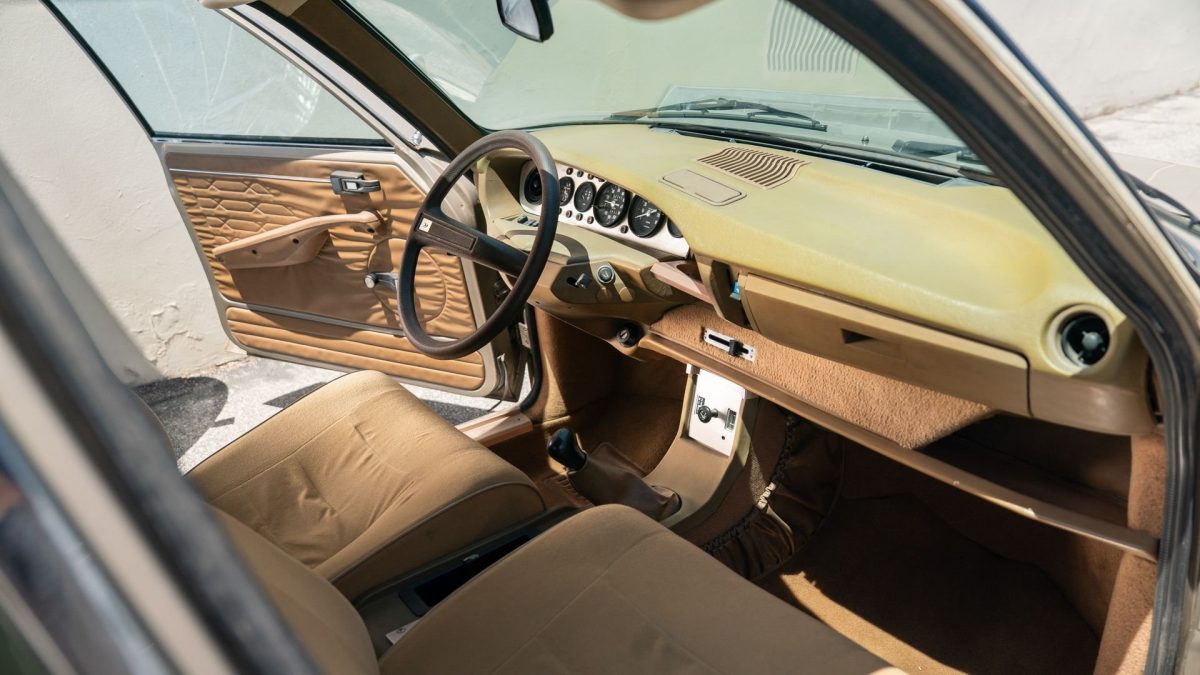
Volkswagen (and thus NSU) had already withdrawn from Comotor in 1972, leaving Citroën to shoulder the project alone from then on. Then came the oil crisis, followed by the costly Maserati venture – after probably 847 Birotor engines had been built, Citroën simply ran out of money, which led to bankruptcy in 1974 and a takeover by its arch-rival Peugeot. It is not entirely clear how many GS Birotors were actually built; as with the M35, Citroën attempted to buy back all vehicles that had already been delivered to avoid having to contend with spare parts problems later on. But this too failed, and around 250 examples remained on the market. Here we show the car with chassis number GXGG00GG0009, which was long part of the marvellous Mullin Collection and is to be auctioned by Broad Arrow at Quail 2026; the estimated price is a modest $20,000 to $30,000.


But just for the sake of argument: in the early 1970s, Citroën had the ingenious 2CV in its range; the marvellous DS was still available; then there was the new and, today, so underrated GS series, complete with the Birotor – and at the top end, there was also the SM. All absolutely magnificent cars – and what is the situation today?


You can find more exciting cars in our archive.