
A Listed Facade, a New Building Behind It
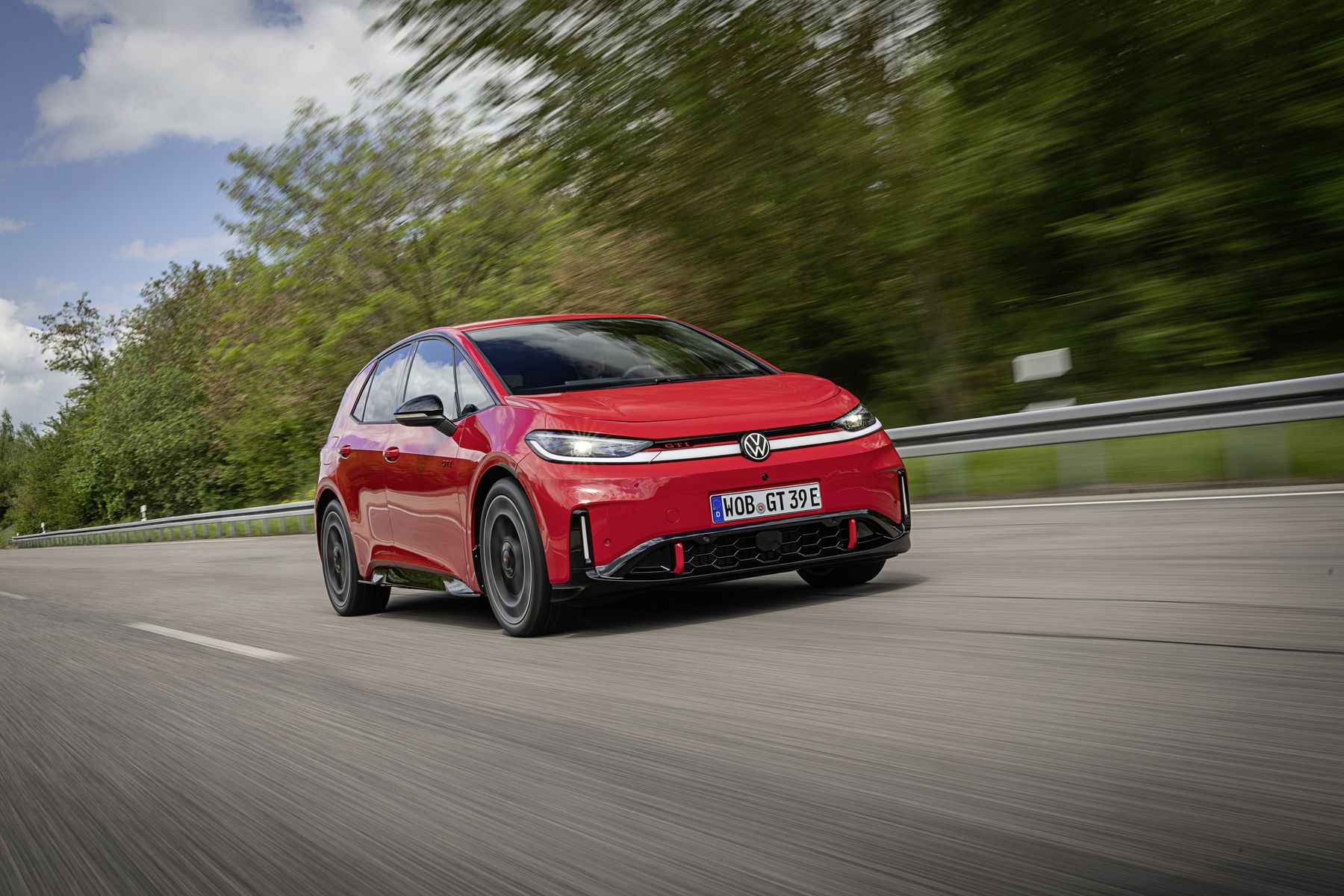
Developers sometimes keep a historic building’s street-facing wall, the bit conservationists actually care about, and demolish everything structural behind it, rebuilding an entirely new steel frame under the preserved facade. The practice has a name, facadism, and architects argue endlessly about whether it honours a heritage or merely wears its skin. Volkswagen has just built the automotive equivalent: the badge reads GTI, the facade is unmistakably original, and almost everything structural behind it has been torn out and replaced.
Keeping the Wall, Losing the Frame
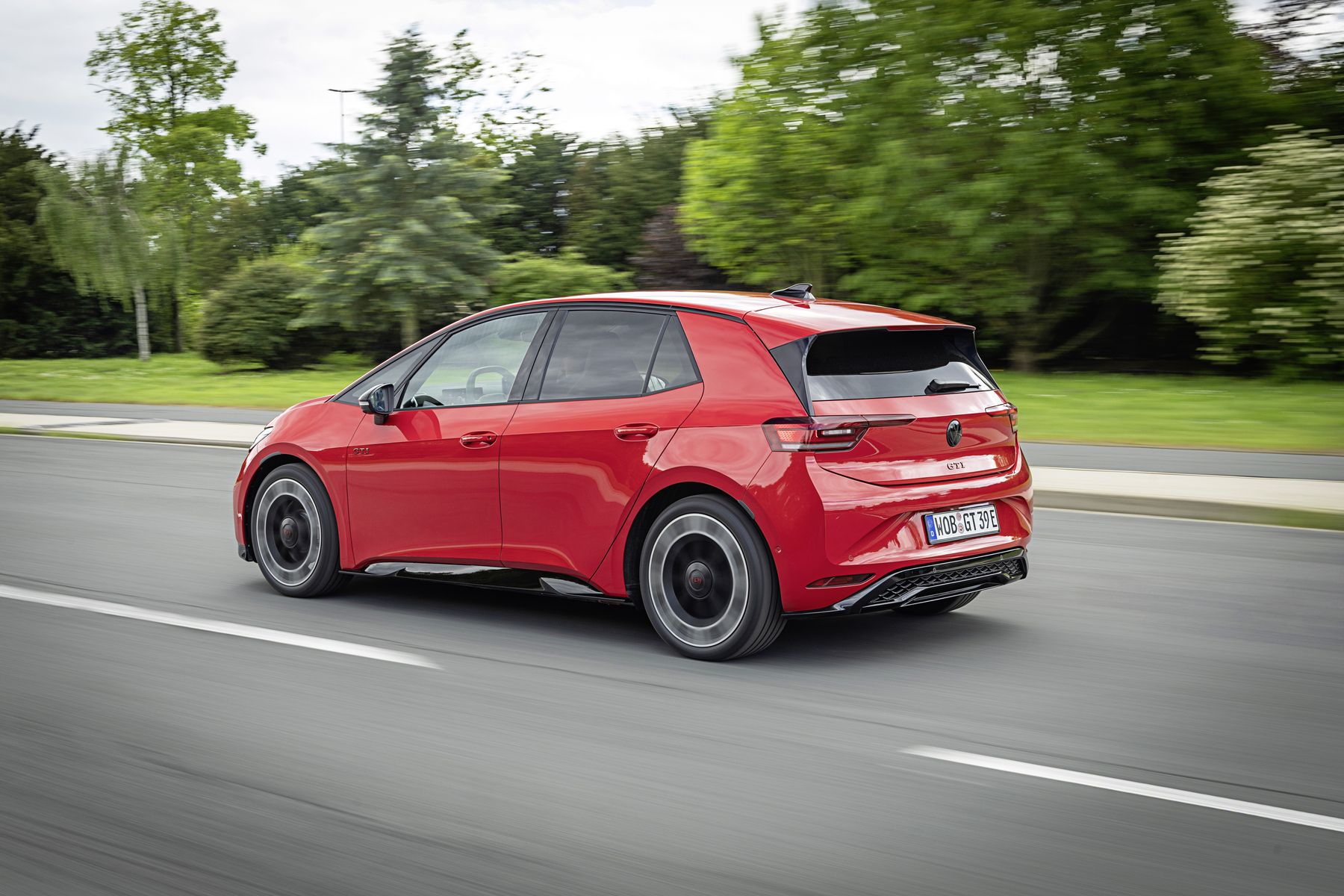
The ID.3 GTI replaces the outgoing ID.3 GTX Performance, a technically identical car stripped of the GTI name’s emotional pull. “We lost what Volkswagen stands for, the connection to our fans,” says Martin Sander, still Volkswagen’s board member for sales and marketing, explaining the reasoning behind reviving the badge. After early ID. years defined by cost-cut interiors and a profit-first approach, the brand is pushing back toward what it calls “True Volkswagen,” clear design and genuine emotion, qualities a compact GTI is well placed to carry.
Numbers That Hold the Facade Up, Just
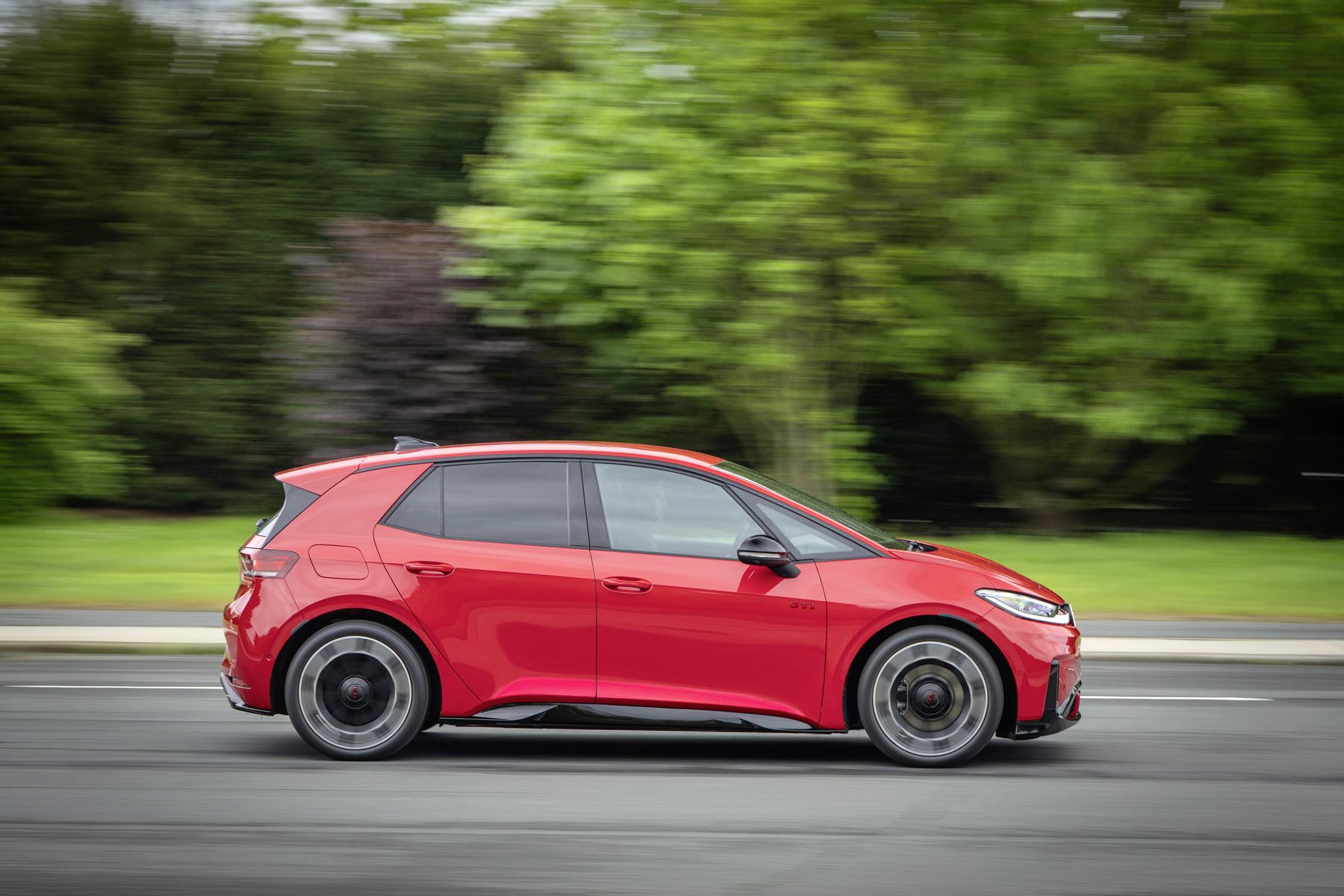
A rear-mounted motor, badged APP550, produces 240 kW, or 326 PS, and 545 Nm, enough for 0-100 km/h in 5.6 seconds with launch control, before an electronic limiter steps in at 200 km/h, the most powerful series-production GTI in fifty years. The 79 kWh net battery delivers up to 601 km of WLTP range, and 183 kW charging brings it from 10 to 80 percent in around 29 minutes. Solid figures, not a sensation, and Volkswagen effectively admits as much: the standard ID.3 Neo, sharing the same battery, manages 629 km on considerably less power.
The Steel Frame Nobody Sees From the Street
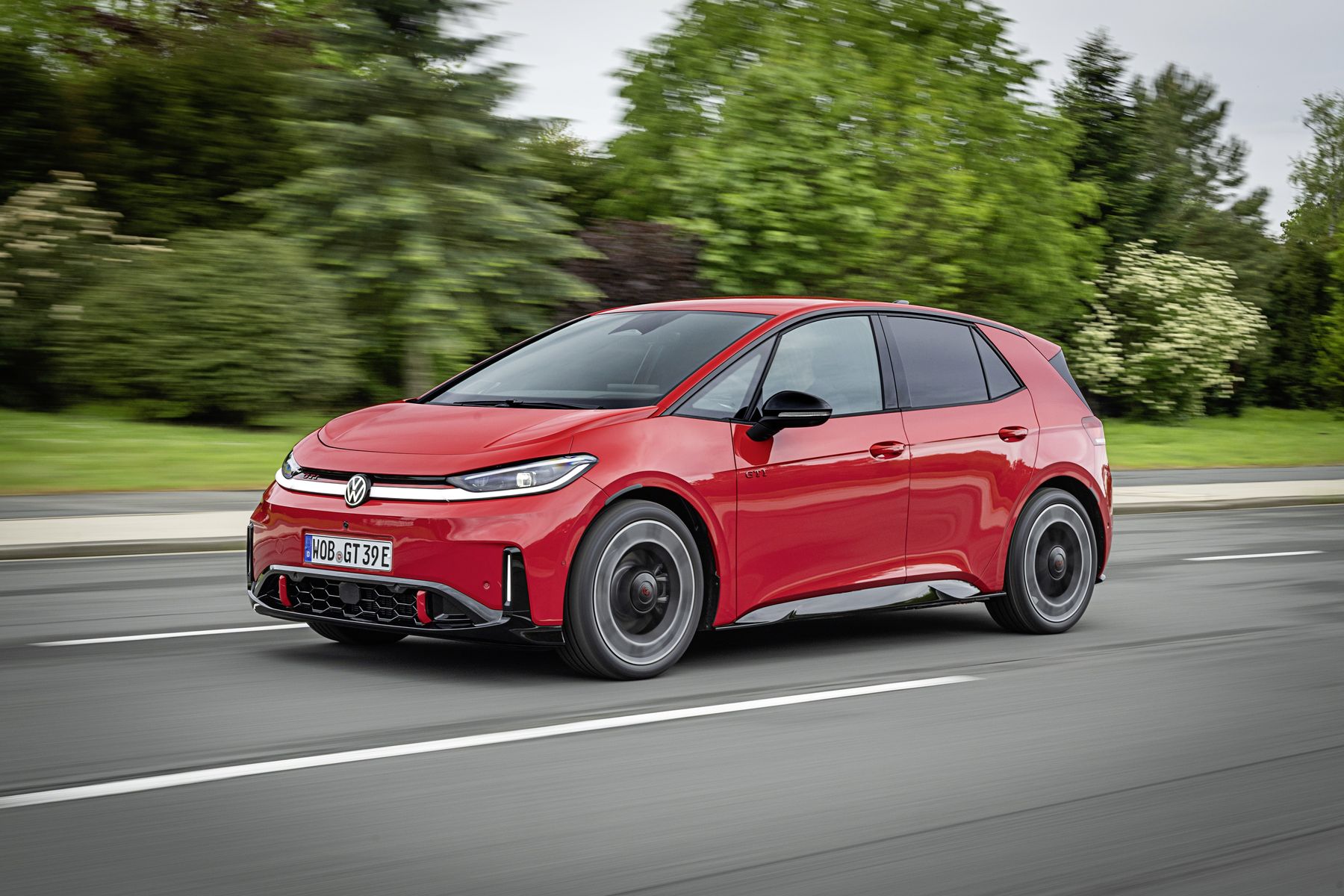
Power was never really the story, since the outgoing GTX Performance matched these numbers exactly. What actually separates GTI from Neo sits behind the facade: progressive steering and adaptive DCC sport suspension come as standard, and engineers reworked the front axle’s elastokinematics, springs, dampers, stabilisers and tyre tuning specifically for a car whose front wheels no longer need to handle propulsion at all. A dedicated GTI mode sharpens throttle, steering and damping, and unlocks launch control. The genuinely structural change, though, is rear-wheel drive, a first for the badge after eight generations of the Golf GTI sending power exclusively through the front axle.
Restoring the Original Details, Deliberately
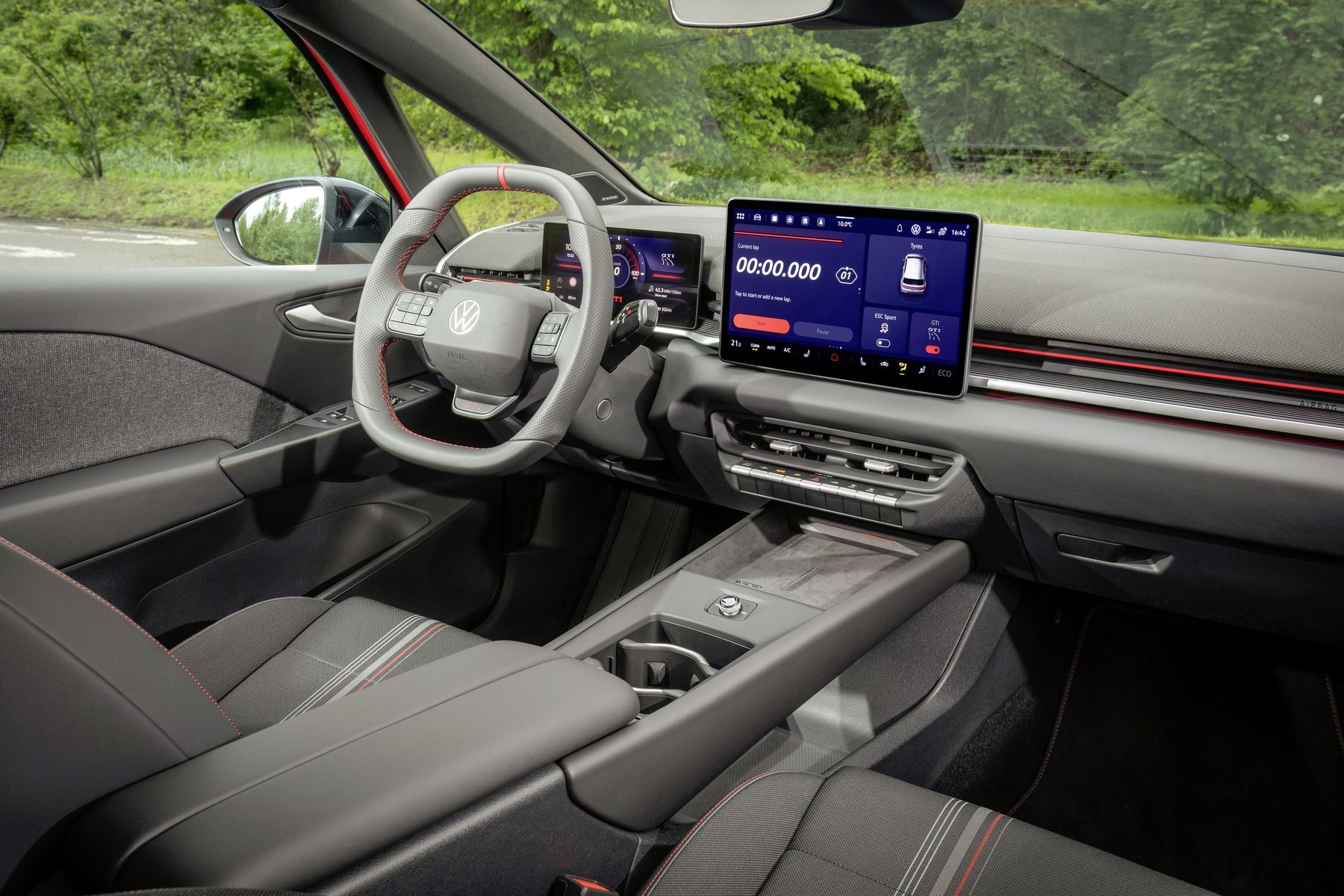
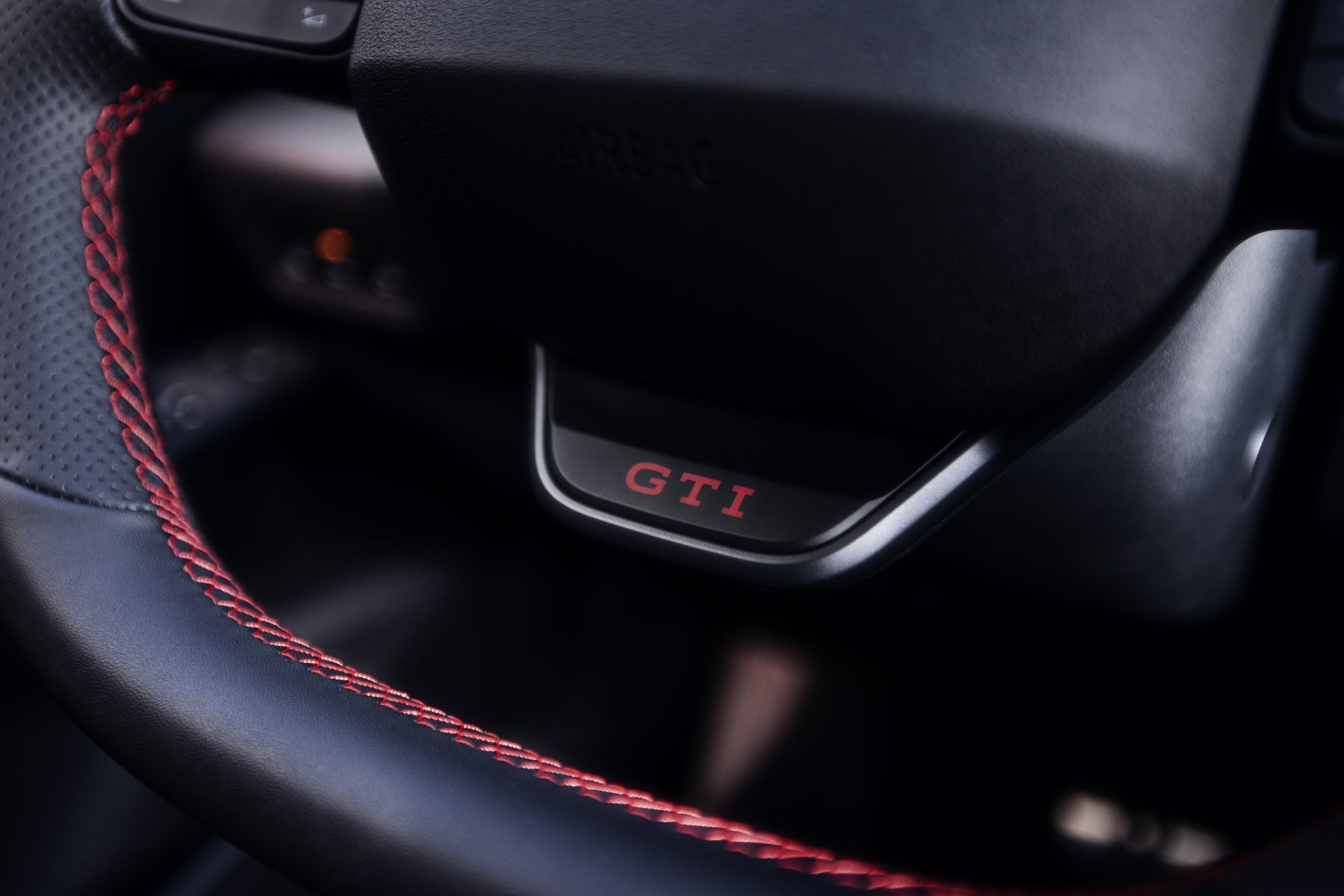
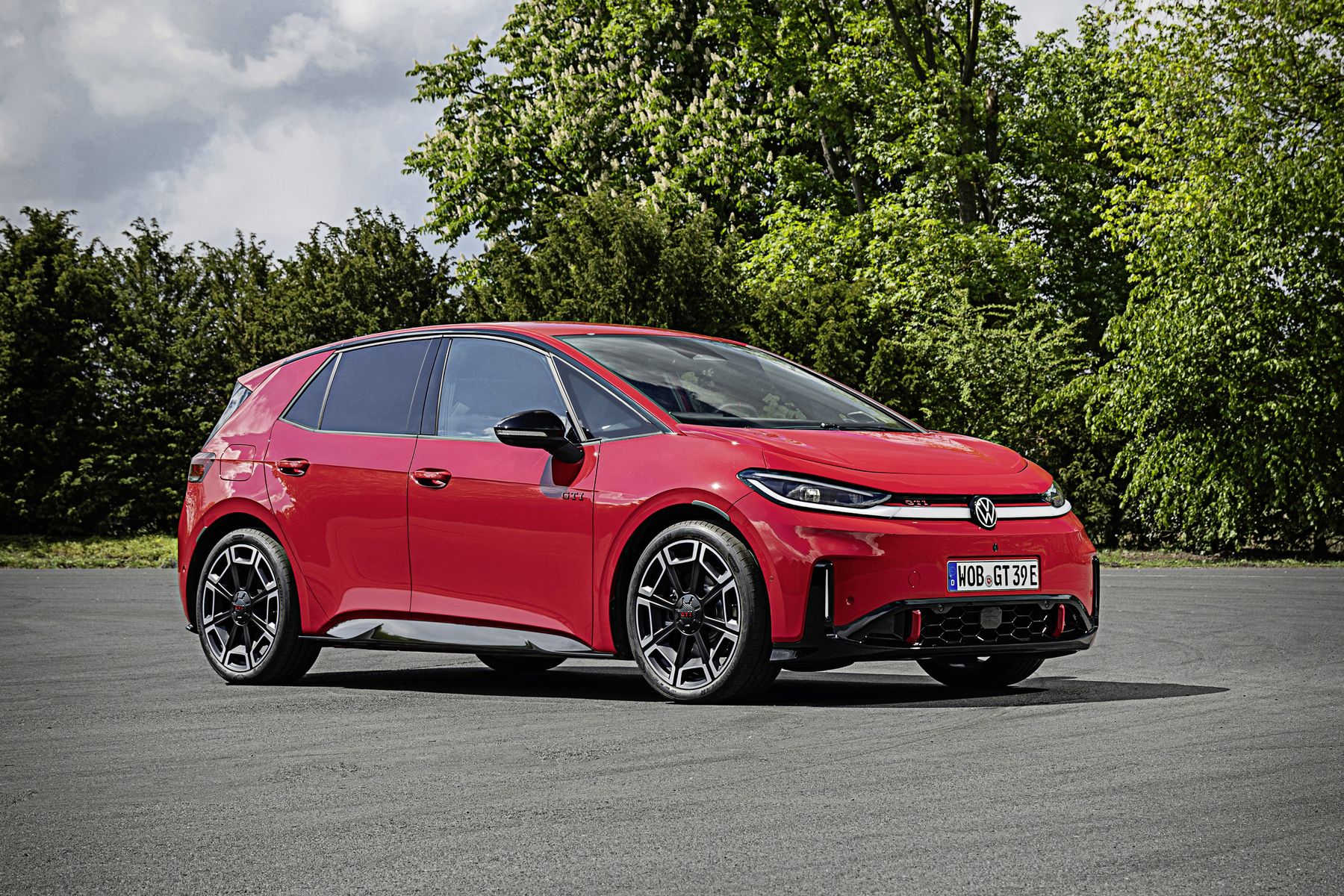
Visually, the ID.3 GTI raids its own archive with real care: a red stripe referencing the 1976 original, the honeycomb grille that’s been a GTI fixture for decades, Tornado Red paint back in the catalogue, tartan-pattern seat trim, and standard 20-inch wheels named “Wörthersee” after the long-running GTI meet in Austria. Inside, the cabin largely mirrors the ID.3 Neo, upgraded with richer materials, a 10.2-inch instrument display and a 12.9-inch touchscreen, plus sport seats, GTI graphics and red accents. A synthetic engine note and red light effects add theatre on top, whether that reads as restoration or pastiche depends on the viewer.
A Rival Built From the Same Steel
The closest competition comes from inside the same corporate group: the new Cupra Born VZ matches the ID.3 GTI almost exactly, 240 kW, or 326 PS, 545 Nm, the identical 79 kWh battery, the same 183 kW charging and an identical 5.6-second sprint. Cupra leans into sharper handling and louder presentation, leaving Volkswagen the harder brief, everyday usability, precision and restraint blended with genuine driving enjoyment, the traditional GTI range a flashier sibling doesn’t have to bother defending.
Verdict: A Convincing Restoration, Structurally Unproven
The ID.3 GTI keeps the parts of the facade that actually matter, the details, the references, the visual grammar built up over fifty years, while replacing the entire structural frame behind it, right down to which axle does the driving. That’s a more serious attempt at earning the badge than a coat of paint and some red stitching would have been. Whether the new frame actually holds the old feeling up, rather than just the old wall, isn’t something a spec sheet or a press release can settle. Nobody outside Wolfsburg has driven it yet, and no price exists to weigh against the ambition. The facade looks right. The building behind it is still, for now, unverified.