
Tectonic Shifts
If you read the German-language trade press, Chinese car manufacturers are really struggling. The domestic market is said to be very weak, with huge piles of unsold vehicles everywhere – the Chinese now urgently need to offload their cars in Europe, otherwise 8 out of 7 of the current 119 brands would be doomed in the short rather than the medium term. Well then, it is true that the overall market in China is faltering. 27.3 million cars were sold; volume grew by just 6.7 per cent in 2025 – we’ve seen better. This rather modest growth occurred for the simple reason that pure combustion engines are increasingly taking a back seat. However, this actually only affects Chinese manufacturers through their joint ventures with the well-known European, Japanese and American manufacturers. Yes, for Volkswagen, Toyota, Nissan, Mercedes & Co., things are not going well at all in the Middle Kingdom – in contrast to the ‘young’ Chinese brands, which are focusing on so-called NEVs (new energy vehicles, with a market share of just under 60 per cent in 2025), i.e. electric cars, plug-in hybrids (from now on, they must have an electric range of more than 100 kilometres) and vehicles with range extenders. Oh yes, Chinese manufacturers exported over 7 million vehicles last year, up 21.1 per cent; total production in China amounted to 34.4 million passenger cars, up 9.4 per cent. The American car market grew by 2.2 per cent in 2025, the European market by a respectable 2.3 per cent.

The difference is this: whilst the Americans are currently catapulting themselves back to the automotive Stone Age and the Europeans are wallowing in self-pity, China – yes, with the help of the state – is investing heavily in e-mobility. And innovation in particular is being promoted; the government has even included this in its next five-year plan. The year 2026 is still young, yet the world’s largest battery manufacturer, CATL, has just unveiled the first mass-produced sodium-ion battery. Sodium has significantly better cold-weather performance, is far more abundant and costs only about one-twentieth of the price of lithium. These sodium batteries have a similar energy density to LFP batteries (lithium iron phosphate, i.e. around 200 Wh/kg), but cannot compete with the latest NMC batteries (nickel-manganese-cobalt), which now reach 270 Wh/kg but are also much more expensive. They nevertheless represent a significant step forward, including in terms of the carbon footprint of battery production.
But this is only the beginning: various Chinese manufacturers are already conducting trials with solid-state batteries. Chery has announced that the Liefeng is set to launch in 2026 with a battery developed in-house, boasting an energy density of 600 Wh/kg. The Chinese promise a range of 1,500 kilometres. Even extreme temperatures of minus 30 degrees are said to have little impact on power management. The only problem: manufacturers currently estimate production costs to be around three times higher. However, this is likely to be significantly reduced over the next five years once large-scale production gets underway. Naturally, intensive research into these solid-state batteries is also taking place outside China, but according to Toyota, it will take until at least 2030 before the Japanese have such batteries ready for series production.

The maths is quite simple: batteries with higher energy density become smaller, and consequently lighter. Or you can keep them the same size, in which case you get significantly more range. But that is only one side of the coin. The other shines even brighter: the first V3 charging stations have long been in operation in China. V3 means you can charge at up to 800 kW (in Europe, the so-called hyperchargers manage 400 kW). Logically, this is only useful if the car is also ‘capable’ of handling such power surges, but here too, Chinese manufacturers have long since left their competitors in the dust. The Xpeng G9, for example, which is also available in Switzerland, draws 5.4 kWh/min from the charger; the current ‘star’ among European models, the recently unveiled Volvo EX60, still manages a respectable 4.1 kWh/min. At Chery, the target is now 10 minutes to charge the battery from 10 to 80 per cent, which is set to become possible within this decade. BYD, by far the world’s largest EV manufacturer, is in a league of its own with its ‘Flash Charging’ offering (story will follow).
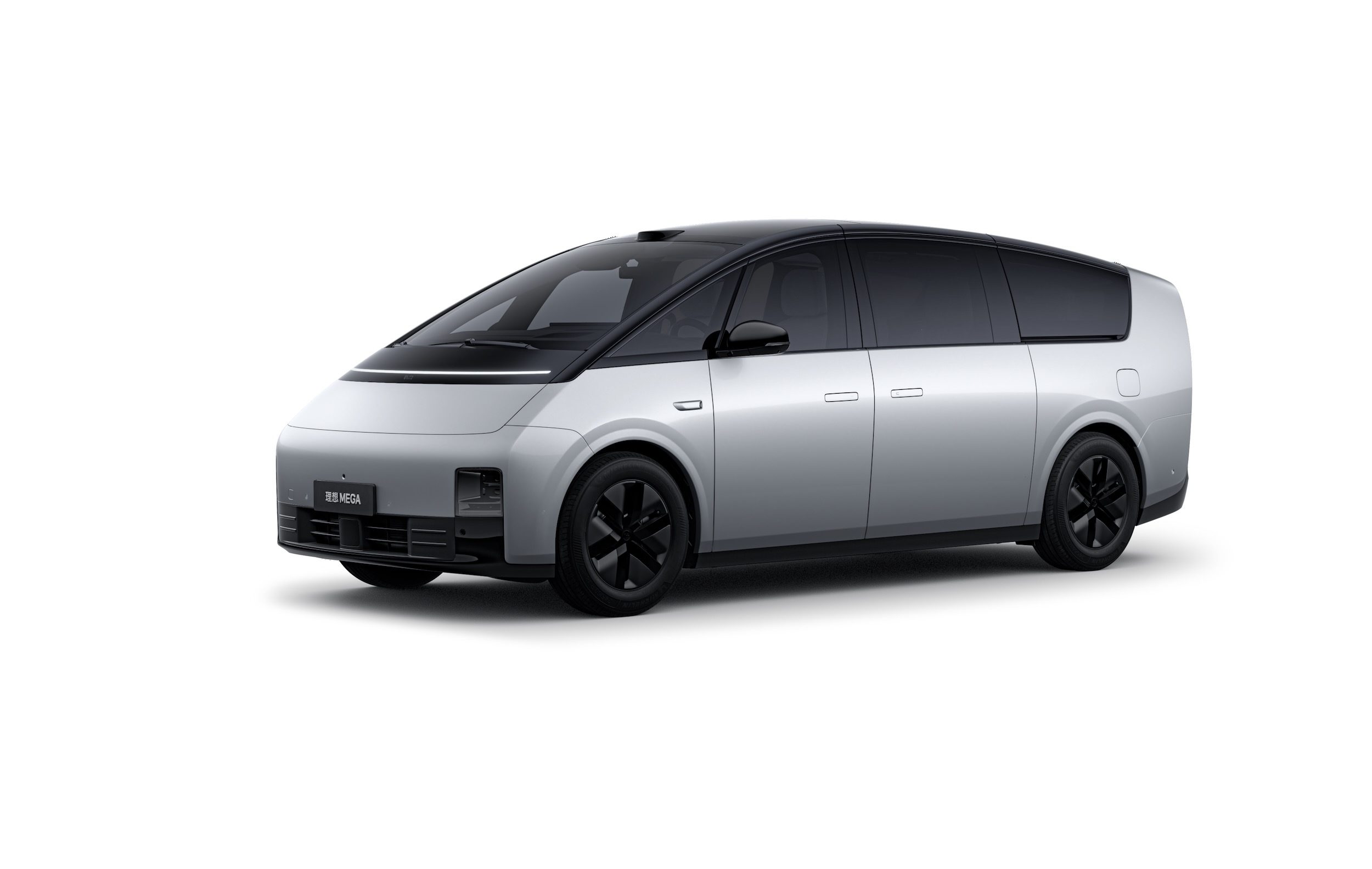
Nor will it be the case that Chinese manufacturers are now resting on their laurels; quite the contrary, competition in the domestic market is far too fierce. But that is also where the greatest opportunities lie: the Chinese are buying more and more Chinese cars, with the market share of domestic producers rising to over 65 per cent last year, and the trend is rapidly increasing. On the one hand, this means that European premium manufacturers in particular are increasingly losing their former strongholds; yet at the same time, this may well be their good fortune: the Chinese are currently still keeping their best, most modern cars to themselves, and some of the most exciting brands have yet to show any interest in exporting their vehicles to Europe. This is partly because their vehicles are often more like rolling games consoles or smartphones. Europeans still need to acquire a taste for this.

What is certain to happen: more factories from Chinese manufacturers in Europe. BYD will open a plant in both Turkey and Hungary this year, Leapmotor is coming to Spain, as is Chery, and Geely has big plans in Slovakia. This will allow the Chinese not only to circumvent certain tariffs, but also to break down the prejudices many potential customers have against ‘made in China’.
The best-selling cars in China in 2025
- Geely Galaxy Xingyuan – 465,775
- Wuling Hongguang Mini EV – 435,599
- Tesla Model Y – 425,337
- BYD Qin Plus – 387,315
- BYD Seagull – 310,956
- BYD Qin L – 264,671
- Xiaomi SU7 – 258,164
- BYD Seal 06 – 220,317
- Tesla Model 3 – 200,361
- BYD Song Plus – 200,276
The largest Chinese manufacturers (2025)
- BYD – 4’602’436
- Geely – 3’024’567
- SAIC – 2’928’000
- Changan – 2’913’00
- Chery – 2’631’381
- Great Wall Motors – 1’323’672
- Leapmotor – 596’555
- Hima – 589’107
- Xpeng – 429’445
- Xiaomi – 400’000+
It’s that story from radical#6. Yes, there are already new figures for 2026; we’ll catch up on those after the first quarter.