
Der Vorläufer
When Maximillian Edwin Hoffmann was born in Vienna in 1904, he was initially surrounded by sewing machines and bicycles; his father owned a factory producing various goods. But Hoffmann’s father was also passionate about cars – and little ‘Maxie’ caught the bug early on, competing in car and motorbike races in the 1920s, before founding Hoffmann & Huppert in 1934 and importing cars such as Volvos into Austria. By 1938, the going had got tough for Hoffmann (his father was Jewish); he first emigrated to Paris, then to New York in 1941. There, he initially produced cheap costume jewellery; in 1946 he changed his name to Hoffman, and in 1947 he began importing European sports cars, founding the Hoffman Motor Company for this purpose. The first vehicle he tried to sell was a Delahaye with a body by Figoni & Falaschi; in 1948, he began importing Jaguars to the East Coast, as well as Rolls-Royces, Bentleys, Austins and other British brands. From 1950, Hoffman also sold VW Beetles, but he soon grew bored with that. Over the years, Max Hoffman came to play a pivotal role for European manufacturers; it was on his initiative that the Mercedes 300 SL and 190 SL, the BMW 507 and the Alfa Romeo Giulietta Spider were created.


But this is, of course, about Porsche. In 1950, the Swiss journalist Max Trösch – to whom a major feature should certainly be dedicated one day – showed Hoffman pictures of the first Porsche 356. Maxie ordered two. After test-driving them, he travelled straight to Paris, met Ferdinand Porsche at the Motor Show there, ordered another 15 – and was declared, with a handshake, the Stuttgart-based company’s unofficial representative for North America. To promote the cars, he raced them himself, doing quite well; business was also going quite well, and he managed to sell 32 units in 1951. But Hoffman had a wish: a 356 Cabriolet, but lighter and cheaper; the car was to cost a maximum of 3,000 dollars, 1,500 less than the Cabriolet. Actually, he wanted a road-legal racing car.


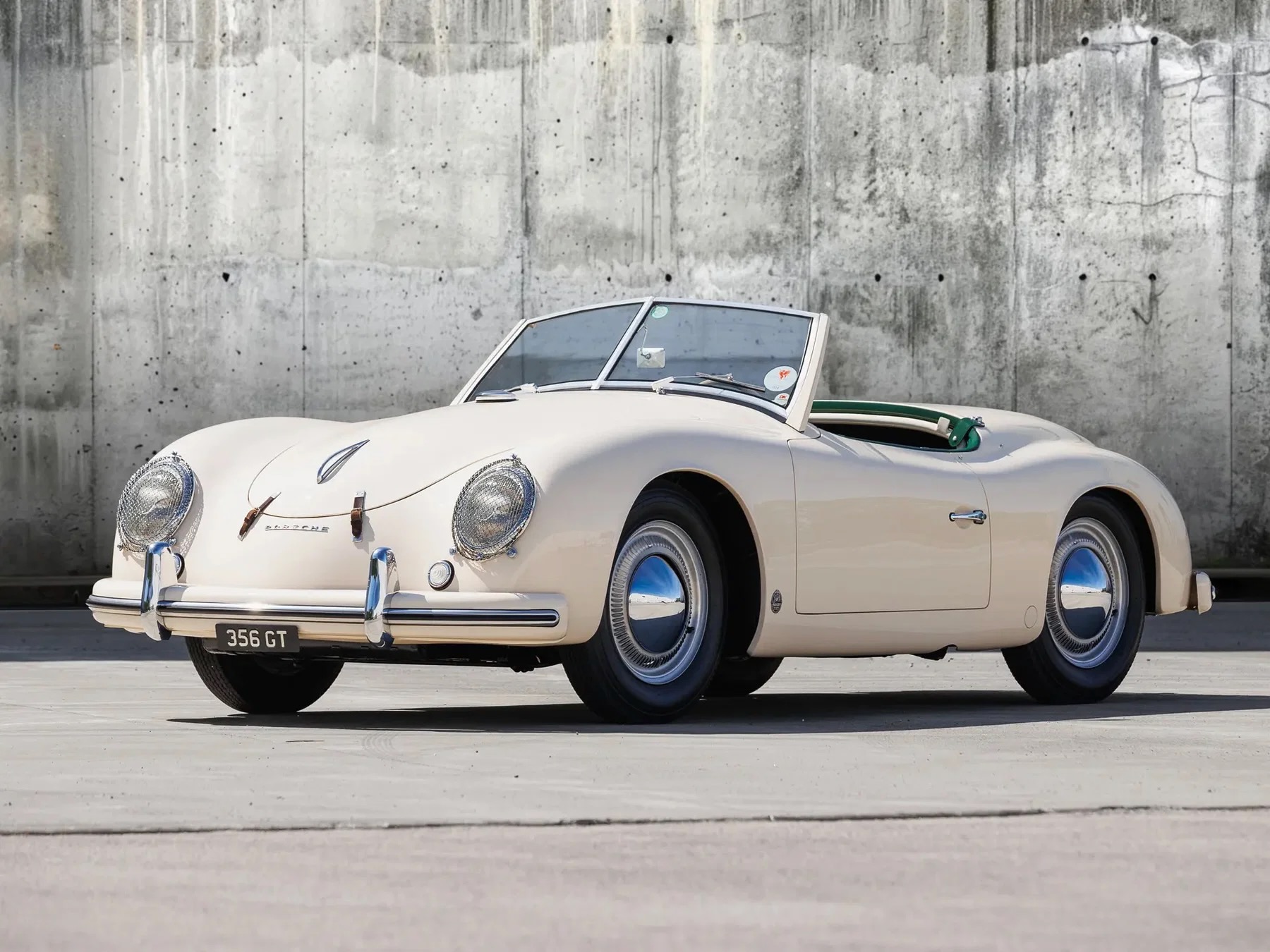
Yes, later, from 1955 onwards, this evolved into the legendary 356 Speedster. But before that, in 1952, came the Type 540, better known as the America Roadster – and otherwise fairly unknown. This is partly because only 17 were ever built. But first we need to take a brief detour into earlier history (the very early history of Porsche is covered in great detail here). When the fledgling company moved from Gmünd in Austria to Stuttgart in 1949, ties were immediately (re)established with the Reutter coachbuilding workshop, which was located across the road. Consequently, Reutter built over 60,000 examples of the 356 up until 1963, before being taken over by Porsche. In 1951, however, the ties were still tenuous and Reutter’s capacity was only just being established, so Porsche awarded the contract for the America Roadster to Gläser-Karosserie Weiden. Gläser, founded in Dresden in 1864, had already had an eventful history; until the end of the Second World War, it was one of the most important coachbuilders in Germany, but was destroyed by the Red Army after 1945. However, Erich Heuer, son of Gläser’s long-standing managing director Emil Heuer, had managed to save a few machines and bring them to the West; from 1950 onwards, he received orders from Porsche for the 356 Cabrio (237 units, probably) – and indeed also for the Type 540 (which explains why these America Roadsters, although marked with Gläser (spelled Glaser for the US), they are often referred to as Heuer designs).


Gläser/Heuer managed to save 60 kilos; the car still weighed just over 600 kilos. The bodywork was carefully hammered out of aluminium; there was merely an emergency soft top and no other comforts whatsoever. It was powered by what was then the most powerful engine, producing 70 hp from a 1.5-litre displacement, which made for decent performance on the road. However, it was not a profitable venture; although the Type 540 was priced at $4,600, it proved unprofitable for Porsche, for Hoffman, and certainly for Gläser/Heuer – in November 1952, the company was forced to file for bankruptcy. Sixteen of these America Roadsters were sold off, as one might expect; a single vehicle (with a steel body) remained in Germany; it still exists; there are said to be 10 of the aluminium models left. Naturally, these cars are extremely valuable today; the fine example (chassis number #12353) we are showing here is to be auctioned by RM Sotheby’s in Monterey in August 2026, with an expected price of 2 to 2.5 million dollars.


We have more rare Porsches in our archive.