
Friction drive and tung trees
Back in the early 90s, I wrote a book about Cadillac. That’s when I came across quite a few brands that hardly anyone knows about today; nobody knows Marmon anymore (and yet: brilliant!), Peerless even fewer; Packard still has a few fans, as does Cord, though mainly across the pond. Recently, Bonhams auctioned off a large number of vehicles from The National Automobile Museum and The Minden Automotive Museum – and I was amazed at how many brands I didn’t recognise. And so: a brief look back. This is a random selection – and we’ll probably continue it as we please.
–
Metz Company


Charles Herman Metz, born in 1863, was an early industrial pioneer. He worked for the Waltham Manufacturing Company, which mainly produced Orient brand bicycles – and took it over in 1908, as he saw the future in automobiles. Metz is regarded as one of the inventors of the kit car; customers could buy 14 parts of a vehicle (the ‘Metz Plan’, 27 dollars each, with the steering wheel arriving with the final delivery…), and then assemble them themselves at home. However, the Metz Company, founded in 1909, also offered complete cars – and went on to sell more than 40,000 units by 1921. It would certainly be worth delving a little deeper into this, for instance into the friction transmission, but also into the town of Waltham, where the world’s largest watch factory once stood. Pictured: 1913 Metz Model 22 Runabout.
–
Briscoe Motor Corporation


Benjamin Briscoe is certainly one of those figures who would be worth at least a Netflix series. Born in 1867, he founded his first company at the age of 18 with $472 in start-up capital. In 1901, he financed the first Buick, thereby acquiring 97 per cent of the shares, which he sold in 1904 to found the Maxwell-Briscoe Motor Company, which in turn grew to become the third-largest American car manufacturer by 1909. Briscoe then wanted to bring the four largest manufacturers – Ford, REO and Buick, in addition to his own company – under one roof, but failed to do so; he therefore founded the United States Motor Company and bought up pretty much everything he could get his hands on. In 1912 he ran out of money, went to France with his brother, founded Briscoe Frères in Billancourt, returned, and in 1914 founded the Briscoe Motor Company, which had probably produced 56,000 vehicles by 1921. Oh yes, later Benjamin Briscoe made a fortune in oil, then another in gold – and retired to Florida after the Second World War to grow wood oil trees. Pictured: 1915 Briscoe B-15 Cloverleaf Roadster.
–
Monroe Motor Company


Now that’s a rather unusual story. Well, there was R.F. Monroe, who produced carriages and later also bodywork for automobiles. But there was also the fascinating figure of William C. Durant, who had founded General Motors in 1908, had to leave again in 1910, founded Chevrolet with Louis Chevrolet in 1911 (which enabled him to return to the helm of GM in 1916) – and joined forces with R.F. Monroe in 1914 to form the Monroe Motor Company. The Monroe cars were then partly built at Chevrolet and sold through Chevrolet dealers, even though they were actually in direct competition, with the Monroe models being a few dollars cheaper. In 1916, Durant withdrew again; by 1918, Monroe was bankrupt and was bought out by the William Small Company, which in turn hired Louis Chevrolet as an engineer. He designed seven racing cars for Monroe, three of which were designated as Frontenacs; Gaston Chevrolet went on to win the 1920 Indianapolis 500 in one of these cars, which was actually a Monroe. After several further changes of ownership, the Monroe Motor Company ceased trading in 1923; a total of 14,344 units were produced. Pictured: 1917 Monroe M-3 Roadster.
–
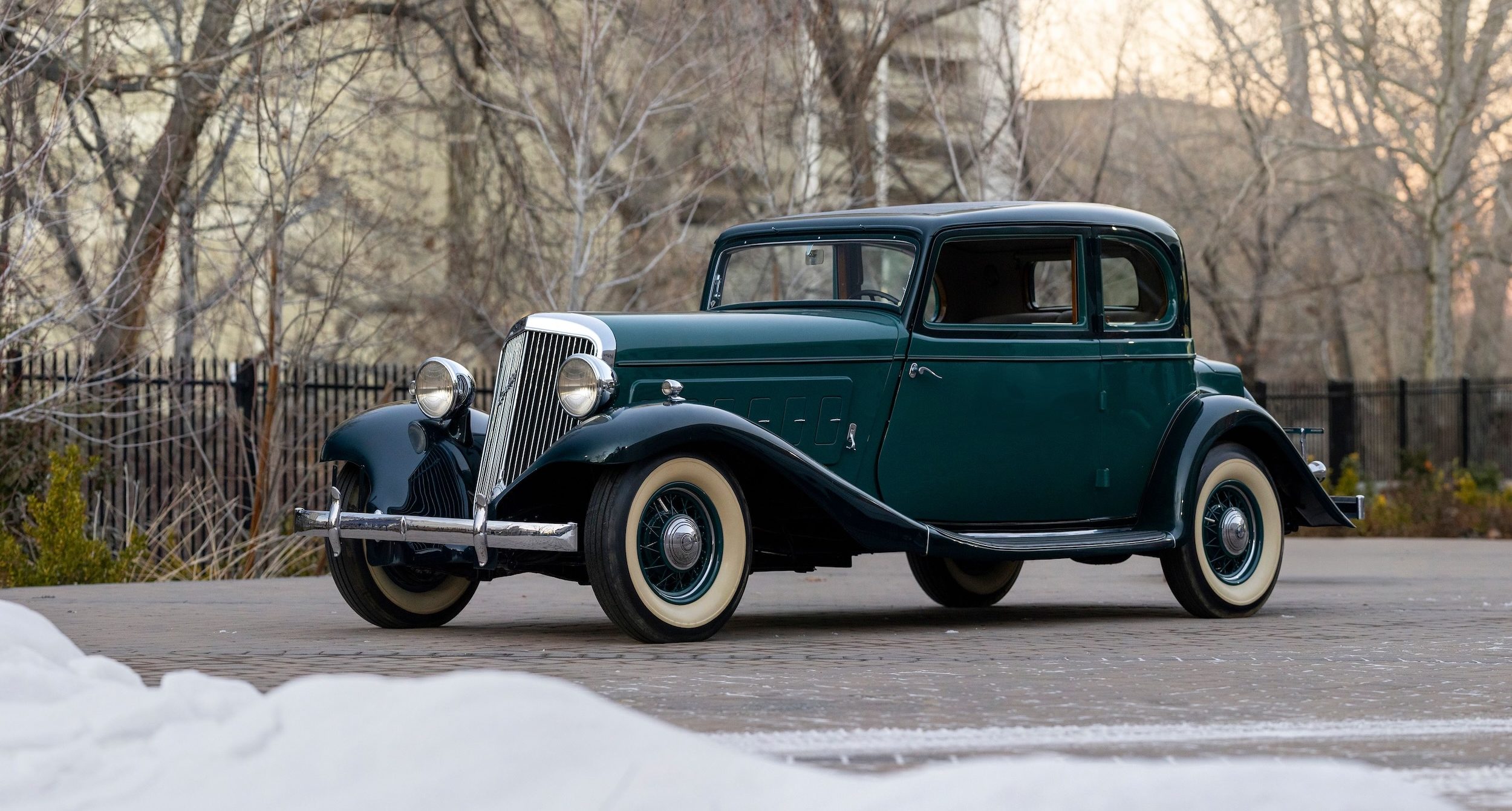
Incidentally, the top image shows a Franklin with an air-cooled V12; there’s more to come. There’s even more in the archive.