
More Dirt
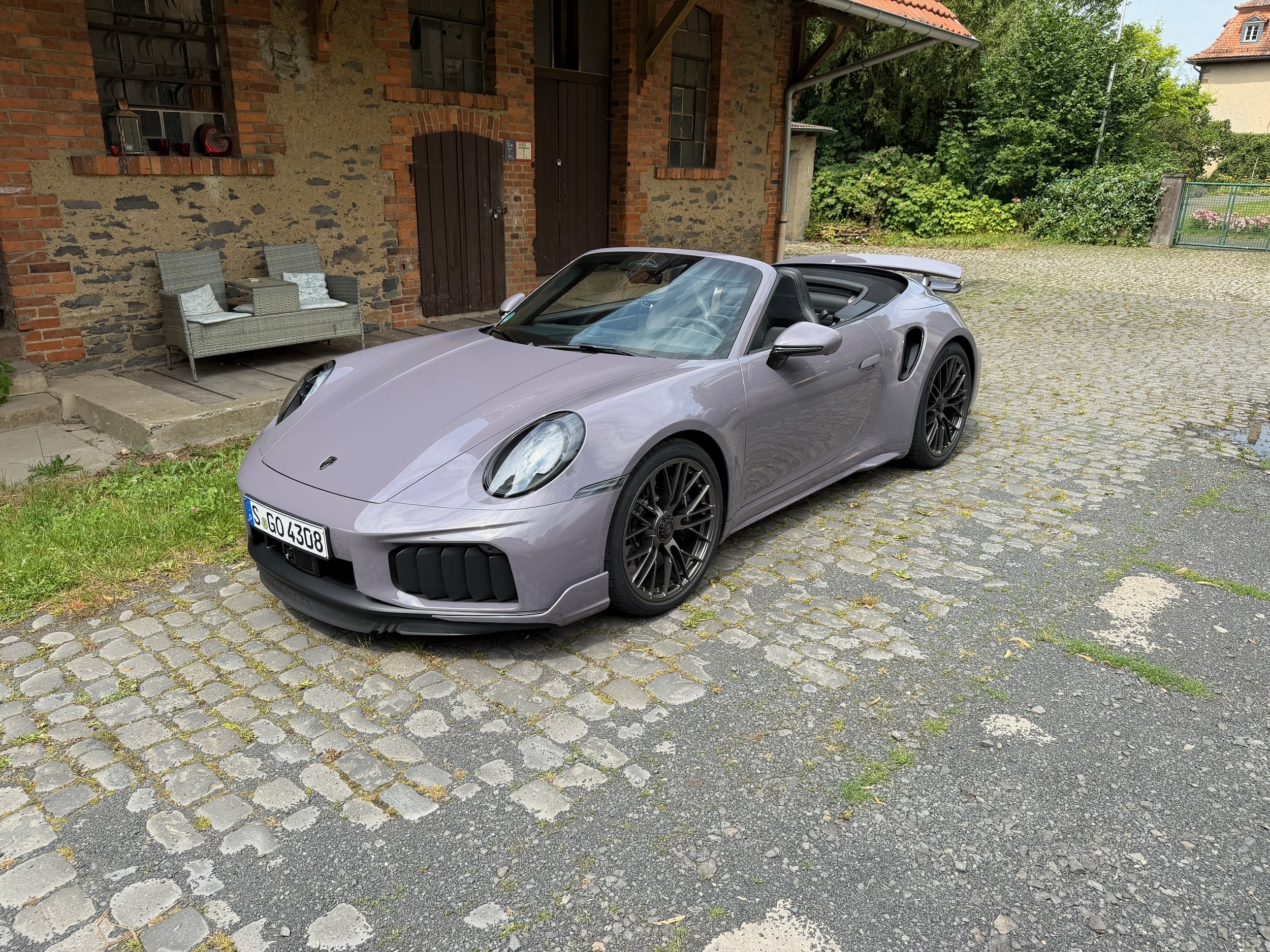
It really is quite intense, even without Launch Control. From a standstill in Sport Plus, floor it – it’s mad. It’s unbelievable how much grip this thing can generate, how confidently it marches in a straight line – and, above all, just how fast it is. It’s said to do 0–100 in 2.5 seconds, and reach 200 km/h in 8.4 seconds. And it does it all with a smile, somehow. Yes, even the new 911 Turbo S – the 992.2 – is once again the absolute top of the range, the real beast, the eternal king; not even the electric models in the Porsche range, with almost twice the power, can shake that. Oh yes, I drove the convertible (which looks a bit botched), where I reckon everything’s about a thousandth of a second slower, but with the top down, the experience of the surroundings is all the more intense.
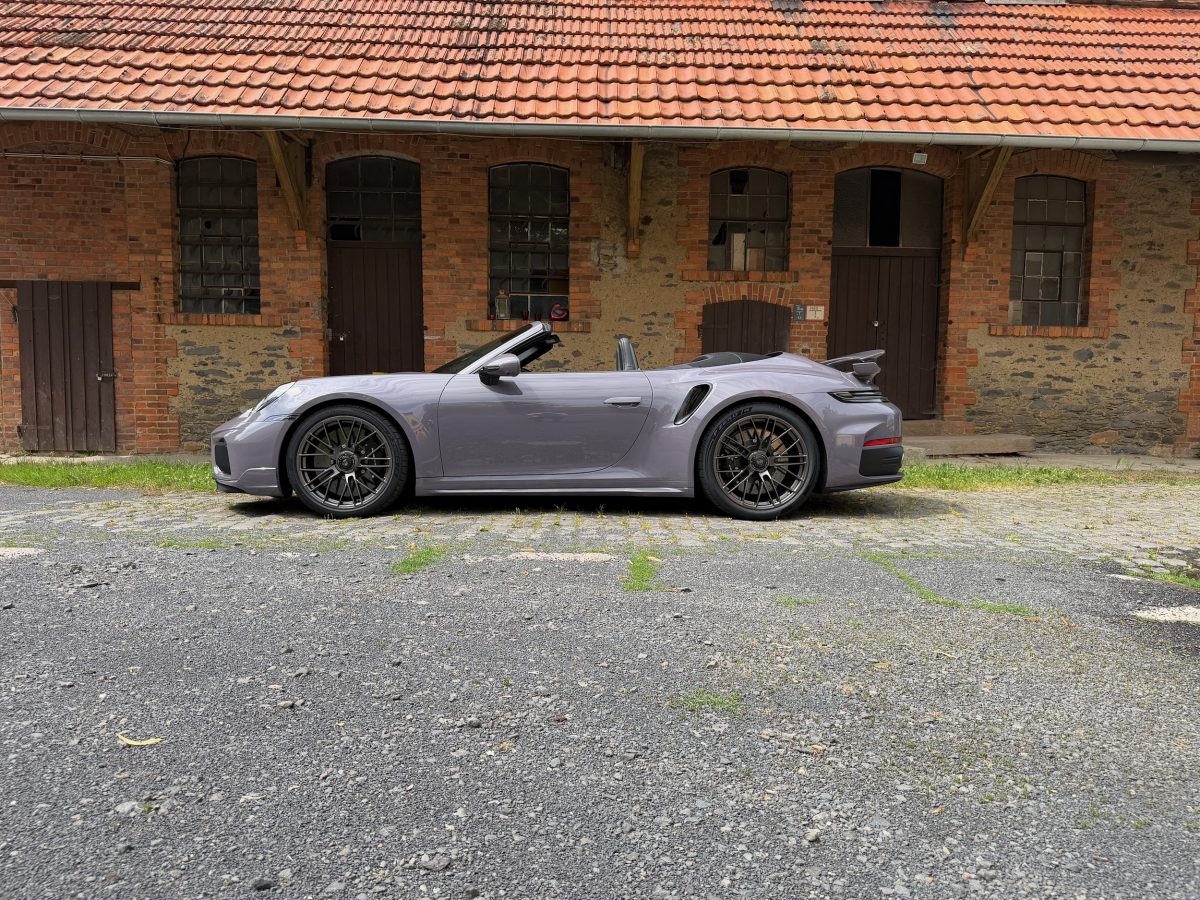
They’ve carried out a very comprehensive overhaul once again; the 992.2 Turbo is actually a new car, technologically speaking. Now electrified for the first time, it no longer features the 3.8-litre biturbo, but instead the 3.6-litre engine with two electric turbochargers. The six-cylinder engine delivers 640 PS and 760 Nm of maximum torque, with a further 60 kW and 188 Nm coming from the electric motor. This results in a combined system output of 711 PS at 6500 rpm and 800 Nm of maximum torque, all within the seemingly surreal range between 2300 and 6000 rpm. The boxer engine revs up to a maximum of 7500 rpm. So everything is better than before (for example: 14 seconds on the Nordschleife), and it was already right at the very top before. But so too is the weight: 1,800 kilos. To compensate, there’s now an official colour palette with 137 options, 136 of which come at an extra cost.
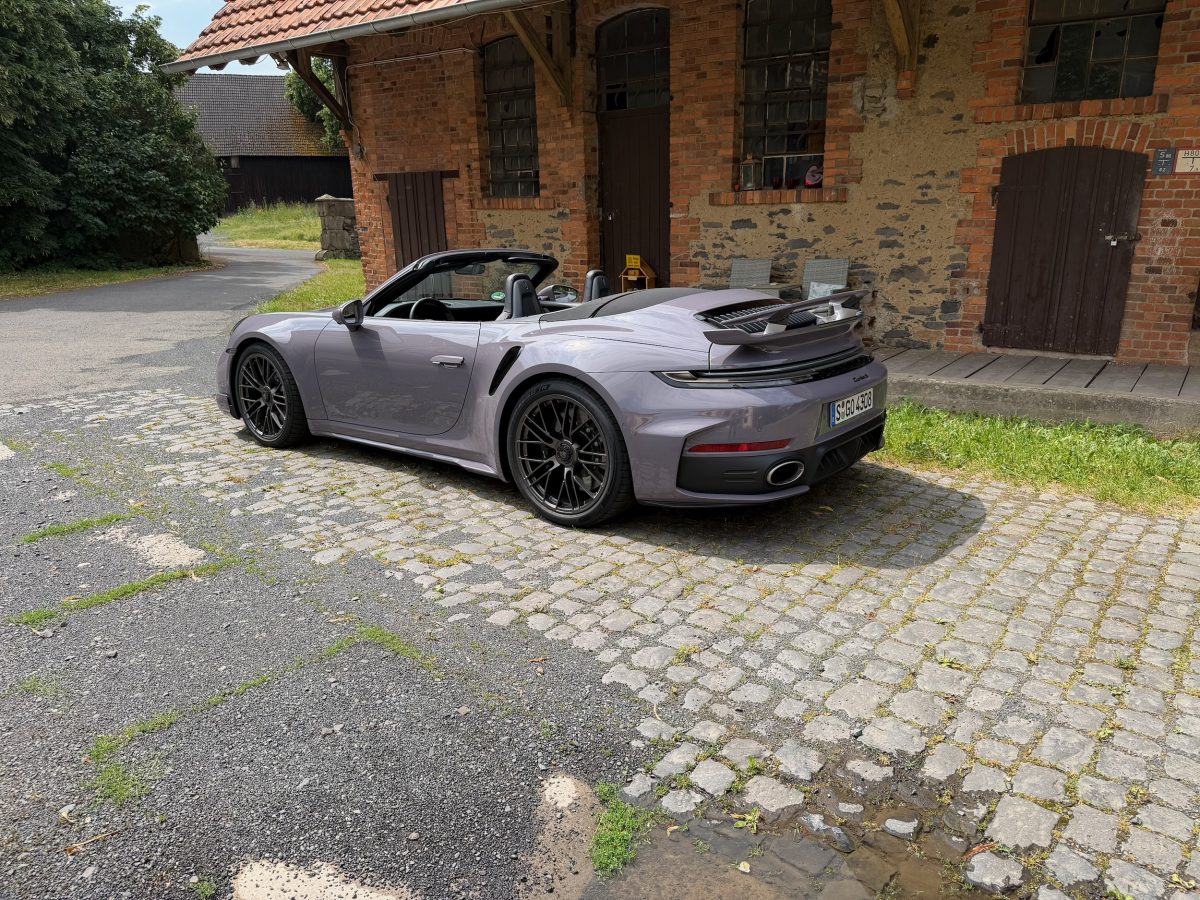
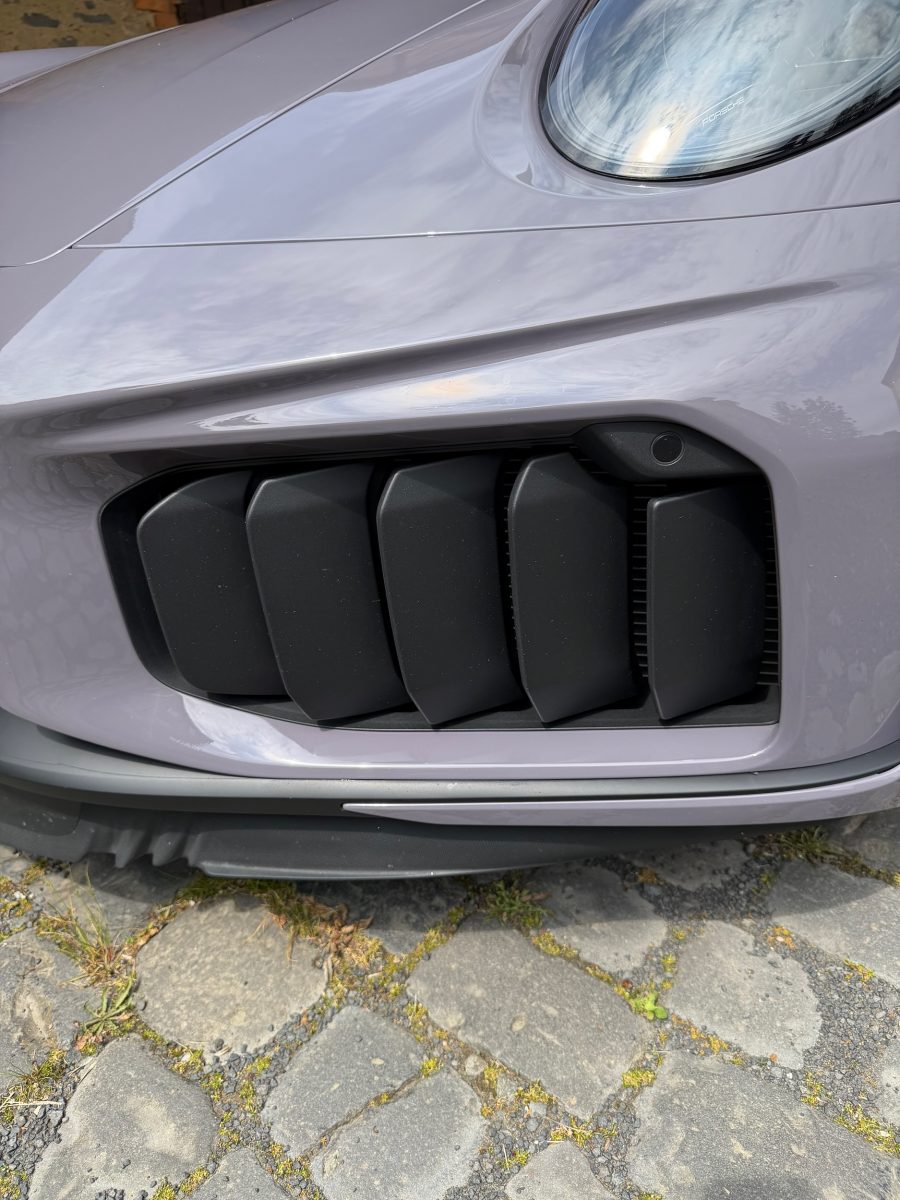
But what all these colours – and even a lot of money – cannot hide – the coupé starts at 309,000 Swiss francs, the convertible at least 327,100 – is this: Visually, the 992.2 – even in Turbo S form – is no masterpiece. The illuminated strip at the rear seems to have become de rigueur within the Volkswagen Group, but contrary to popular belief, stripes don’t make a car look slimmer; they actually make the rear end look even bulkier. And at the front – no, those five ‘gills’ on each side just don’t cut it, even if their benefit is apparently immense (up to 10 per cent better aerodynamics), somehow the car looks rather daft, like a nerd with huge glasses and braces. On top of that: it’s cheap, tacky plastic. For at least 300 of those big notes, you’d expect better. I feel the same way about the interior, by the way: yes, OK, clean, functional, decent materials, nicely finished. But about as charmless as the now rather mundane plastic button used to start the car.
Once the Porsche is on the move, though, you can have complete confidence in it again. The Turbo S is guaranteed to be a gentle lamb even at over 300 km/h; I haven’t tried it, but it feels that way (it does reach a top speed of 322, by the way). Its greatest strength lies on winding country roads – Gran Turismo stretching far beyond the horizon – where it’s comfortably smooth yet always responsive, with a surprisingly subtle noise level (despite the new titanium exhaust system that doesn’t just end there), superb steering and incredible brakes (420 millimetres at the front!) – I can’t think of anyone who does it better. When things get a bit tighter, you do start to feel the weight – and the size, too (4.55 x 1.90 x 1.31 metres) – and is it perhaps a little light at the front? Unfortunately, there wasn’t enough time to get used to it and find out whether that might be a hint of a trace of a very, very slight weakness. And anyway, you’d have to take this thing onto the racetrack to even come close to experiencing its full potential; any limits definitely lie with the driver, not the car.
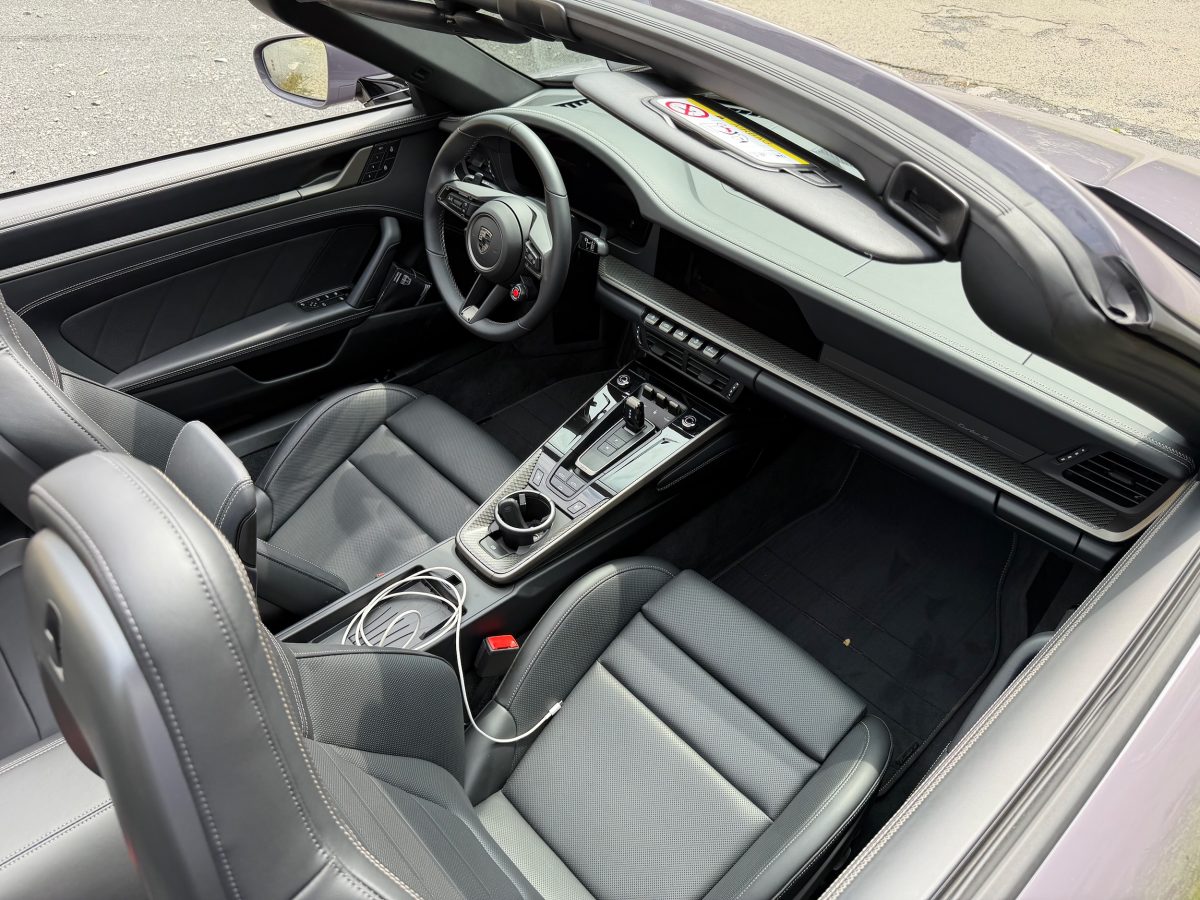
It’s still difficult to describe. I’ve distanced myself quite significantly from Porsche in recent years; the whole attitude of the Stuttgart lot is annoying – years of unbelievable arrogance – so their current whingeing seems rather out of place (and could perhaps be compared to the national football coach, who’ll likely be leaving his post soon). The 911, once something of the pinnacle of driving pleasure, has long since become bloated; the prices (and above all the price rises) are now simply absurd – it’s their own fault if people let themselves be ripped off (this applies particularly to Switzerland; in Germany, a Turbo S like this is available from as little as 271’000 euros). Above all, though, the emotion is somehow missing; this 992.2 Turbo S is just shy of perfection – but that’s not really what you want, is it? A sports car shouldn’t be a luxury saloon. Of course, 711 PS needs a bit of electronic assistance; the further-improved Dynamic Chassis Control (which naturally also benefits from the hybridisation and the connection to the 400-V on-board electrical system) therefore does its job very well. Too well. The same applies to the 8-speed dual-clutch gearbox; it almost feels like you’re in a Taycan. ‘Meh Dräck,’ more dirt, as a Swiss bard once demanded – I’d certainly agree with that.
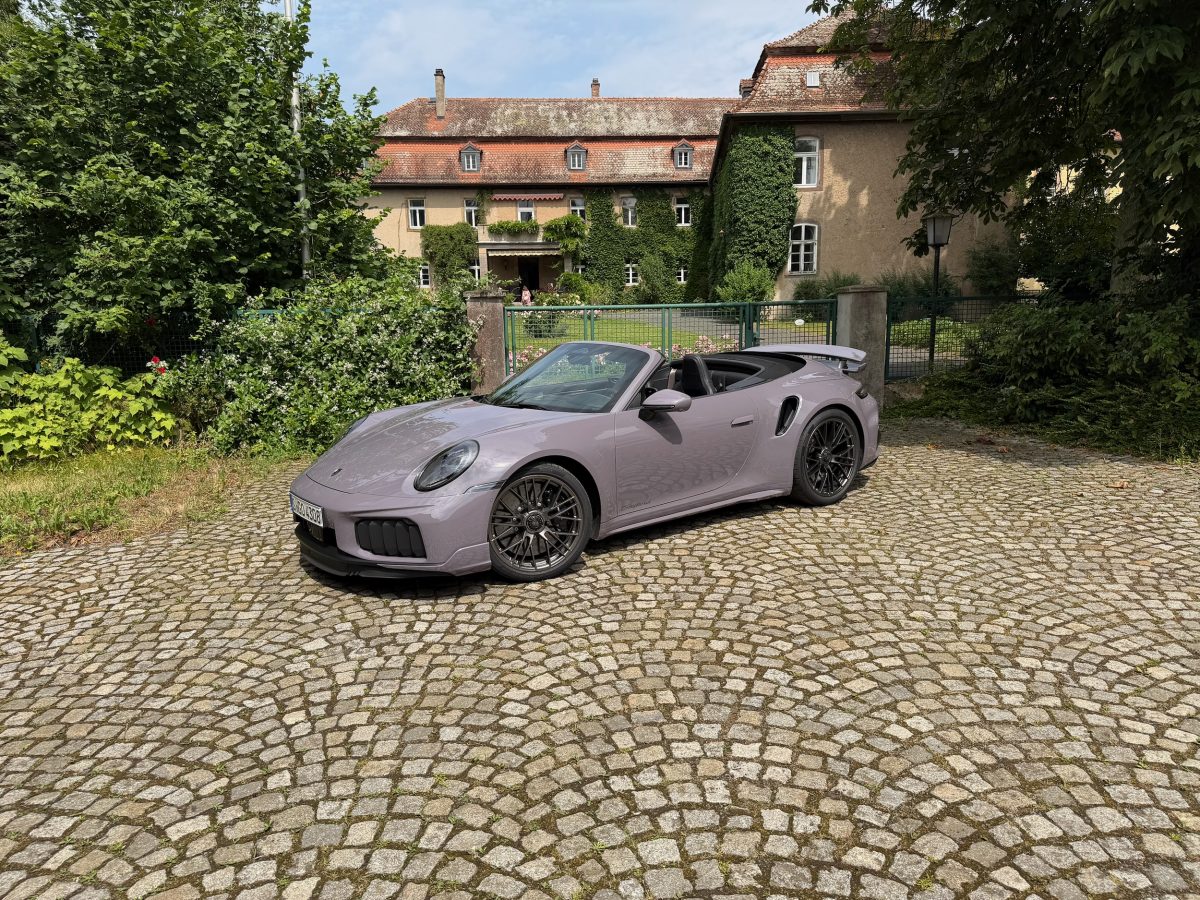
We have more test drives in our archive. We have driven the Porsche at #GTEST, organized by German Car of the Year.