
Spasticity
As a lifelong Defender driver (Td5, 110, built in 2005, over 300,000 kilometres), I’ve never really understood this new Land Rover model with the same name. It’s just another one of those lifestyle SUVs, usually parked in the front row outside a posh gelateria or an international nursery on fat tyres that wouldn’t even get it off a wet meadow, often with the snout unconnected and a wild array of desert gear left unused straight from the factory. But I stopped trying to make sense of anything ages ago anyway – and not just when it comes to cars – and apparently this hot-air blower sells well; I’m happy for the Indian Tata Group – after all, they’ve also got the looming Jaguar debacle to deal with.
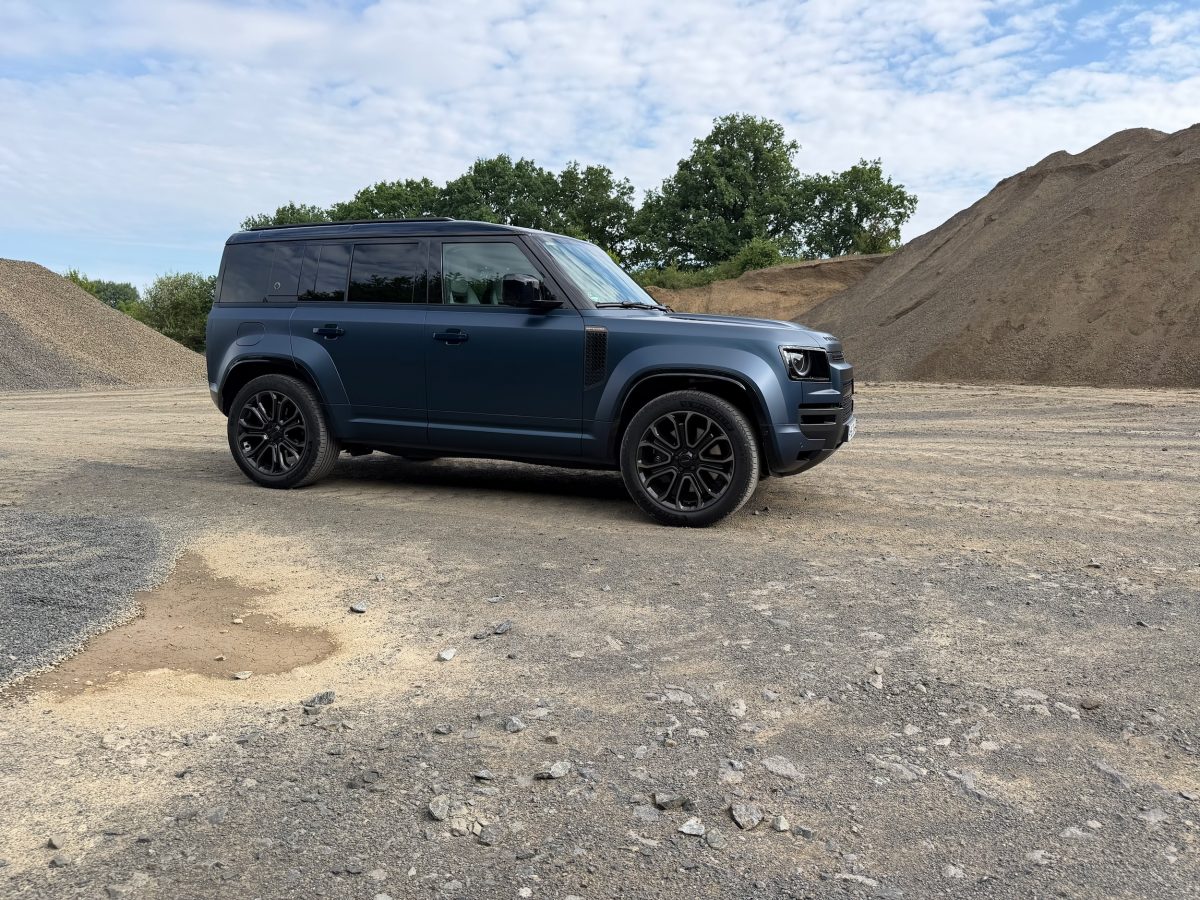
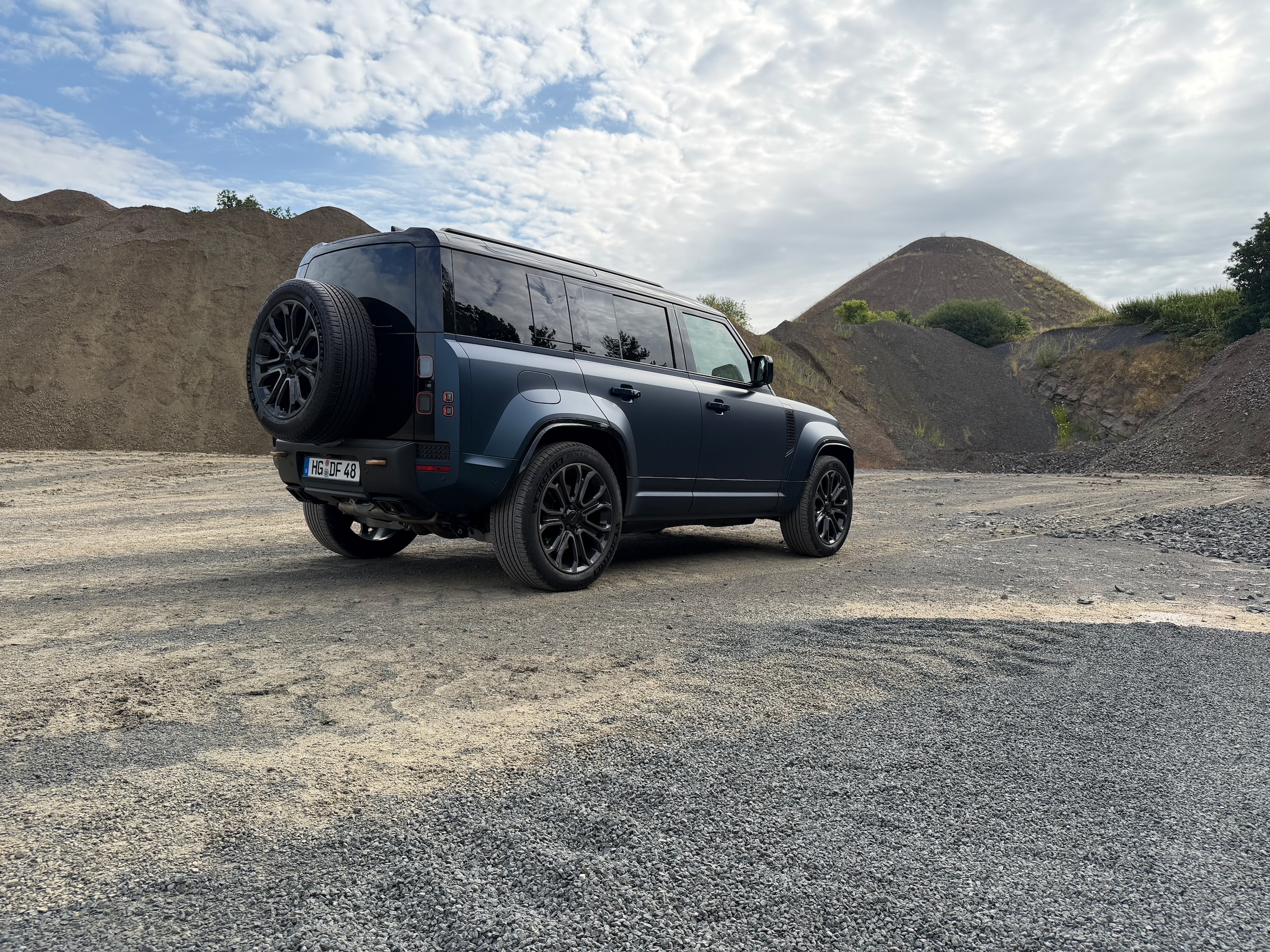
Now it so happened that, on the occasion of the #GTEST for ‘German Car of the Year’, I did end up sitting in one of these behemoths. The Octa, that show-off machine, priced from 187,600 euros in Germany and, in Switzerland, from a staggering 226,400 francs (what exactly is the deal with the exchange rate – have they learnt anything from Porsche?), visually a rival to the working-class dream, the MB-OMG G63, about as understated as an illuminated statue by Niki de Saint Phalle or Kim Kardashian in a glittery thong. That’s a good comparison anyway; the Octa is 2.11 metres wide at the hips, which banishes it to the back of the queue behind the Lithuanian lorries on motorway roadworks – a rather embarrassing sight for 635 PS and 750 Nm of maximum torque, available between 1,800 and 5,855 (!) rpm. Under the bonnet, it’s not JLR’s familiar 5-litre supercharged engine that’s at work, but BMW’s S68, with a displacement of 4.4 litres – and that brings us straight to the first problem. This V8 is far too refined; despite its fierce power, it’s somehow too well-behaved – it purrs rather than roars – and that doesn’t really fit with the Indian car’s aggressive stance; an ‘OMG’ roars and snorts much more appropriate. On the other hand, it can propel the 2.6-tonne beast from 0 to 100 in 4 seconds, and it doesn’t top out until 250 km/h.


That, on the other hand, is something I wouldn’t have wanted to try. I always drive the same route with all the cars in this #GTEST; before the Octa, it was a Lucid Gravity (test drive report to follow), also rather overpowered, also no lightweight, but one that held its own admirably further back on the twisty sections. I certainly can’t say the same about the Octa, neither in comparison to the Lucid nor in general: although Land Rover is so proud of its ‘6D Dynamics’ suspension, including roll stabilisation for this vehicle that’s almost exactly 2 metres tall – I almost felt sick. I slowed down to well below the recommended speed limit; I was getting scared. It’s an indescribable mix of being too stiff yet rolling in a nasty way; you sit so high up and have zero confidence in what’s happening down below, the steering gives zero feedback – for this sort of handling, the Octa has about 500 PS too much. And any Renault 5, including the early models, would leave it in the dust. I haven’t experienced such erratic behaviour on the road for a long time; I have to describe it as dangerous. At least the brakes are good – easy to modulate, with real bite. And perhaps the Land Rover is better off-road; after all, it feels like it has about 62 driving programmes – but with these ‘diamond-turned’ 22-inch wheels and the corresponding low-profile tyres, you wouldn’t even think of taking it off-road. It is also available with special off-road tyres, but only with 20-inch wheels, and then it looks like the company car of the motorway service station toilet cleaning crew. And it’s limited to 160 km/h. 635 PS.
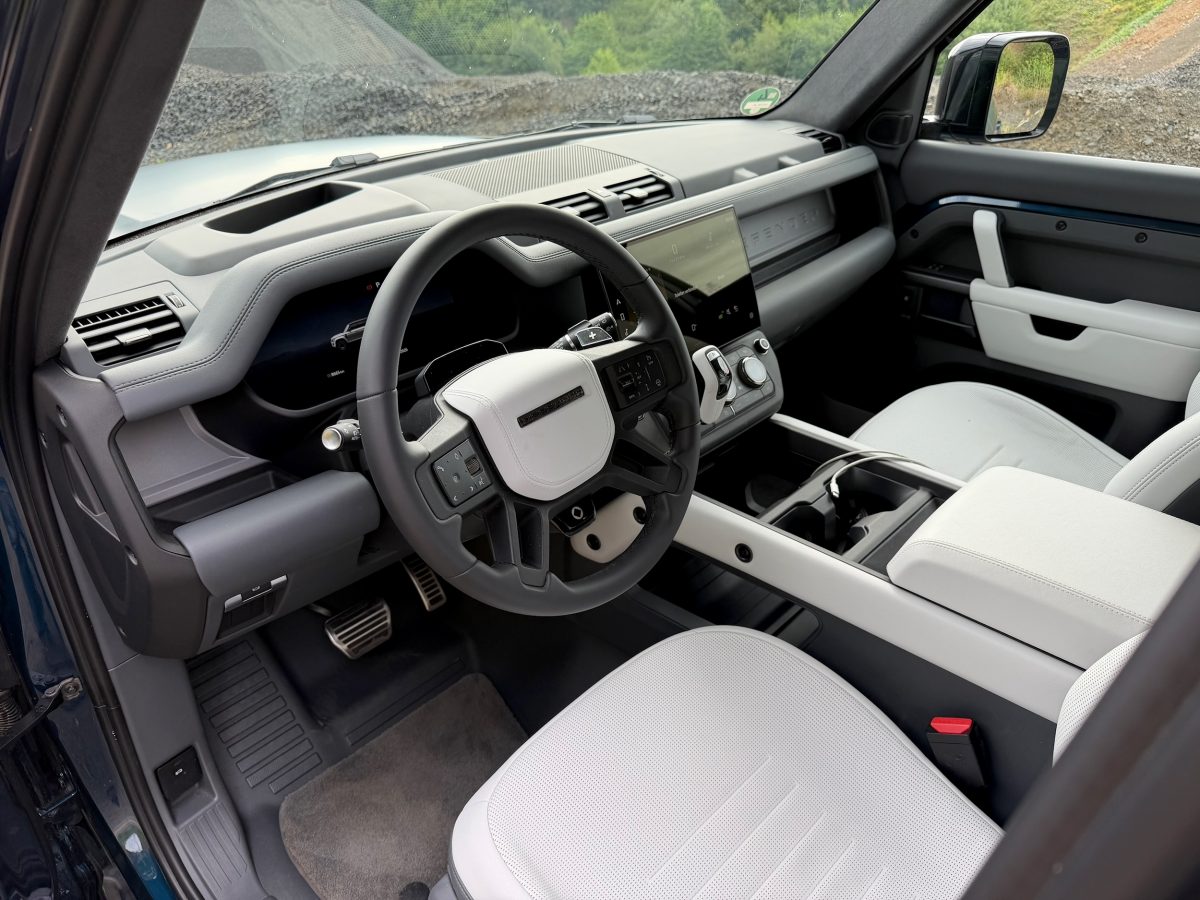
What the idea behind this Octa is supposed to be, I simply cannot fathom, try as I might. It starts with the name ‘Octa’ itself – according to the Indian manufacturer, derived from the octahedron of a diamond, i.e. eight faces – yet the rather cheap-looking key features a perfectly ordinary square. It carries on like that: yes, the leather is lovely, but then there’s that shredded carbon fibre in the interior, which always looks like a bit of plastic dragged through the mud – it’s awful. The infotainment system absolutely refused to connect to my iPhone (model year 2026); at some point I just couldn’t be bothered any more; a Leapmotor T03 does it better. The seating position is so high that it – thankfully – nips any sporting ambitions in the bud. But why, then, cram 635 PS under the bonnet, which, even at idle, spews more CO₂ into the atmosphere than a diesel engine under full load on the motorway? Is it really just all about the show, the self-promotion – hey, I can afford this, even if it’s completely pointless? OK, the Land Rover has 786 litres of boot space, so you can probably fit your carbon-fibre bike in there standing upright to avoid scratching it. This Octa is the perfect example of what’s currently going seriously wrong in the car industry; according to the manufacturer’s figures, the engineers are said to have carried out ‘more than 13,960 tests’ (could you be a bit more specific, please?) on this vehicle – but to what end?


We’ve got more sensible vehicles in our archives.
I agree, the Octa seems like a strange direction for Land Rover. The focus on luxury doesn’t seem to align with the Defender’s heritage.