

Zwei Einzelstücke (mindestens)
Wir hatten gerade ein paar Rätsel beim deTomaso Vallelunga nicht lösen können. Und auch beim deTomaso Mangusta gibt es deutlich mehr Fragen als Antworten. Nun kommen wir aber zu einem deTomaso, der so eigen- wie einzigartig ist. Das beginnt schon beim Namen: Er hiess deTomaso Sport 500. Und auch Ghia deTomaso. Und deTomaso 70P. Und schliesslich auch noch deTomaso P70. Nicht schlecht für ein Fahrzeug, von dem nur gerade ein Exemplar entstand. Von dem (mindestens) zwei noch existieren.


Es gibt zwei Versionen dieser Geschichte.
1) Man schrieb etwa das Jahr 1965. Carroll Shelby wusste, dass er bald einen Nachfolger für seine Cobra brauchen würde. Also wandte er sich an Alejandro de Tomaso, den er irgendwann bei Ford kennen- und schätzen gelernt hatte. Shelby kannte auch den Vallelunga – und dessen Bauweise mit dem Zentralrohrrahmen und dem Mittelmotor erschien ihm als eine gute Ausgangslage für einen neuen Sport- und auch Rennwagen.
2) Man schrieb etwa das Jahr 1965. Alejandro de Tomaso brauchte für seinen Vallelunga unbedingt einen stärkeren Motor. Also wandte er sich an Carroll Shelby, den er irgendwann bei Ford kennen- und schätzen gelernt hatte. Dieser hatte selbstverständlich die Maschnen, auf die de Tomaso schielte – und er hatte mit Pete Brock den Designer zur Hand, der aus dem Vallelunga einen wirklich ernsthaften Sport- und Rennwagen machen konnte.


Wie auch immer: Shelby gab einen seiner besten Motoren her, einen 289er, der es auf satte 482 PS bei 7300/min brachte. Brock zeichnete auf Basis des Vallelunga eine offene Karosse – und fertig war der deTomaso Sport 5000. Doch Shelby war gar nicht zufrieden, verlangte von Brock, dass er sich von den Karosserie-Künstlern von Fantuzzi Hilfe holte, da wurde der Wagen dann mit einem beweglichen Heckspoiler und seitlichen Türen neu aufgebaut. Und erhielt den Namen deTomaso 70P. Oder auch P70. Aber genau dann erhielt Shelby den Auftrag von Ford, sich um das miserabel angelaufene Ford-GT40-Projekt zu kümmern, er liess de Tomaso im Regen stehen, der war entsprechend sauer, trug sein Einzelstück zu Ghia, wo es wieder ein paar Veränderungen und einen neuen Namen gab, Ghia deTomaso; dieses Fahrzeug wurde im November 1965 in Turin ausgestellt.


Wahrscheinlich wäre der Sport 5000 sogar schnell gewesen. Er war 4,08 Meter lang bei einem Radstand von 2,36 Meter, nur gerade 660 Kilo schwer. Er wurde auch bei diversen Rennen gemeldet, Le Mans, Sebring, doch da fuhr er keinen Meter. Etwas besser lief es in Mugello, da überstand er mit Roberto Bussinello am Steuer sogar die Qualifikation – im Rennen schaffte er dann aber nicht einmal eine Runde weit. Da wurde es de Tomaso zu viel, er stellte den Wagen – anscheinend – in die hinterste Ecke seiner Fabrik in Modena, wo er erst nach seinem Tod 2003 wieder entdeckt wurde.


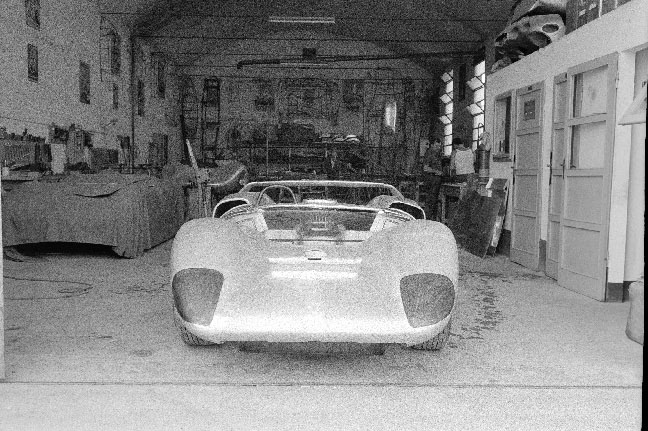
Irgendwie gelangte der Wagen (so es ihn überhaupt noch gab) dann in die Hände eines in der Szene bekannten Herren aus einem der Benelux-Länder. Irgendwie hat er sich in den Jahren seither auch (mindestens) verdoppelt (was aber bei jenem in der Szene bekannten Herren aus einem der Benelux-Länder nicht weiter wundert, schreiben wir es mal so: es kam auch schon vor). Irgendwie ist es nun halt auch schwierig zu eruieren, welches denn nun der echte ist; vielleicht sind es auch beide nicht. Einen zeigen wir oben, der wurde 2019 kurzfristig von einem Bonham’s-Auktion zurückgezogen; das andere Teil ist folglich unten. Und dann gibt es auch noch ganz viele andere Fragen: Warum 5000? Was ist dran am Gerücht, dass de Tomaso aus lauter Ärger darüber, dass Shelby nicht mehr mitmachen wollte, den (oder einen) 289er-Ford-Motor in eine Big-Block-Maschine mit 6,8 Liter Hubraum verwandelte, der dann für fast 700 PS gut war?


Am 19./20. August kommt wieder einmal einer der De Tomaso 5000 zur Versteigerung, in Monterey, bei RM Sotheby’s. Noch gibt es keinen Schätzpreis, noch gibt es keine «Geschichte» – wir sind gespannt:


Jetzt wird es aber erst richtig lustig – es kommen nämlich «beide» Fahrzeuge auf der gleichen Auktion unter den Hammer, RM Sotheby’s, Monterey 2025. Wir zeigen sie gerne, geben selbstverständlich auch die Infos des Auktionshauses weiter. Man kann das ja dann mit dem Text oben abgleichen.
De Tomaso P70 (Schätzpreis 750’000 bis 1’000’0000 Dollar):

«Heading into the 1965 season, Carroll Shelby was in search of a replacement for his Cooper-Monaco-based King Cobra. Hoping to best Bruce McLaren’s Chevolet-powered cars in the newly thriving USRRC series, and the forthcoming Can Am, Shelby envisioned a rear-engine open prototype with a 7-liter engine. Ford declined to provide him a lightweight alloy version of their 7-liter NASCAR engine, so Shelby turned to de Tomaso for a solution, and the Argentine speed wizard proposed boring a Ford 289 engine to a 7-liter displacement. Peter Brock, the onetime GM Design intern who penned the original sketches for the Stingray Corvette, and later became the Shelby-American employee responsible for the Daytona Coupe’s winning coachwork, was assigned by Shelby to formulate a new body for the proposed car. Brock had long championed the concept of the adjustable rear airfoil, and he soon penned a slippery rear-winged open racer based on his earlier design for the Lang-Cooper Special. A chassis was built by De Tomaso using the company’s revolutionary central-spine architecture. First engineered for the Vallelunga model, this novel design incorporated the engine and transaxle into a load-sharing arrangement, not altogether unlike the McLaren F1 that appeared decades later. Initially fitted with a standard 289-cubic-inch Ford engine with a custom De Tomaso intake manifold, the chassis was dispatched to Fantuzzi’s shop for coachwork, where Brock worked side by side with Modena’s brilliant craftsmen. As the P70 was intended for Can Am’s relaxed regulations, and not the more stringent European Group 7 rules, Brock was able to implement a number of revolutionary design elements. In addition to features like covered headlamps and covered rear wheels, the coachwork featured an impossibly low body-integrated windscreen, and an adjustable rear airfoil that provided considerable downforce at speed. Unfortunately, when De Tomaso’s progress on the 7-liter engine fell behind Shelby’s projected schedule, the American cancelled the project. Without a 7-liter engine the P70 would not be competitive in Can Am, and the build specs were purposely formulated without respect to Group 7 regulations, rendering the car unusable in European racing. Shelby’s impending contract with Ford to assume control of the GT40 program surely also influenced his decision.
Alejandro de Tomaso, no less shrewd an operator than Shelby, quickly repositioned the project and completed the car. De Tomaso had recently acquired Ghia to support his next model, the Mangusta, and the P70 was therefore rebadged as the Ghia De Tomaso Sport 5000 when it was presented at the 1965 Turin Motor Show. Following the Turin appearance, the P70 was essentially mothballed, and it remained stored in a disassembled state for many years in the corner of the De Tomaso factory. In 2004 the car was discovered by Philippe Olczyk, a De Tomaso enthusiast and researcher who pined to steward its return to glory. The surviving components included the chassis, rear clamshell bodywork, and cockpit with seats and dash panel. A sale was soon arranged to a committed collector in Belgium, and the P70 was entrusted to various concerns in Modena, initially with the purpose of assembling a complete car. In addition to rebuilding the chassis with new suspension and brake parts as needed, the project included the fabrication of a new front body section and new cast aluminum wheels in the original style. For power, the car was fitted with a Ford small-block engine capped with Gurney Weslake aluminum heads like the ones used on the Le Mans-winning John Wyer GT40s. After initially being displayed in an unpolished state at the 2005 The Quail, A Motorsports Gathering, the P70 was sold in April 2013 to its current owner, who embarked a more comprehensive restoration».


–
De Tomaso Sport 5000 (Schätzpreis 500’000 bis 650’000 Dollar):


«Suitably fortified by the dynamic success of the Vallelunga, in 1965 de Tomaso embarked upon his most ambitious project to date: the dramatic P70 spyder. An ambitious collaboration between De Tomaso, Carroll Shelby, and former Daytona Cobra Coupe designer Pete Brock, the car was intended as a prospective entry into the burgeoning North American Can-Am series as well as longer-distance European events. It borrowed heavily from the design of the Vallelunga, featuring a steel backbone chassis and a stressed engine; in this case a Shelby-sourced competition version of the tried-and-tested 289-cubic-inch Ford unit. A five-speed Colotti transaxle transmitted power to the road, while Brock’s futuristic body design was transformed into reality by Modenese master craftsman Medardo Fantuzzi.
While P70 development ultimately fizzled after Shelby’s departure to rescue Ford’s then-troubled GT40 program, de Tomaso had progressed with the construction of a companion car, the Sport 5000 Spyder, with the intention of contesting selected international events the following year. Though built around the same chassis design as the P70 and wearing similar bodywork, the Sport 5000 Spyder included certain distinguishing features to meet FIA regulations, namely a taller windscreen with wiper and more conventional doors. On 17 July 1966, the Sport 5000 made its racing debut in the grueling Mugello 500 KM, driven by long-time De Tomaso associate and works Alfa Romeo driver Roberto Bussinello, but was regrettably forced to retire due to mechanical failure.
Incredibly, this marked both the commencement and conclusion of the Sport 5000’s competitive career. After Mugello, chassis SP5000-001, the car which RM Sotheby’s is proud to offer here, returned to De Tomaso’s Modena works, where it would languish for almost four decades until Alejandro de Tomaso’s death in 2003 when it was acquired directly from his estate by a Belgian enthusiast and later passed to its current US-based custodian.
Impeccably preserved in near-time warp condition, the car offers a fascinating insight into both contemporary Italian Sports Prototype design and “what might have been” had Shelby remained with the project. Notably, its well-preserved cosmetic condition stands in dramatic contrast to the De Tomaso P70 companion car, which has since been fully restored».
Mehr schöne Klassiker haben wir in unserem Archiv.
Gib als erster einen Kommentar ab