

Der Vernascher
Kundensport wurde bei Maserati immer schon gross geschrieben, und obwohl Maserati mit dem A6GCS immer noch noch respektable Ergebnisse möglich waren, mussten die Italiener 1954 anerkennen, dass dieses Modell nicht mehr ganz vorne mitmischen konnte. Also wurden in Modena gleichzeitig die Modelle 150S und 200S als geeigneter Ersatz entwickelt. Beide Modelle, die unlogischerweise Tipo 53 bzw. Tipo 52 genannt wurden, verfügten über ein weitgehend ähnliches, konventionelles Rohrrahmenchassis sowie über 1,5- bzw. 2-Liter-Versionen eines völlig neuen Vierzylindermotors mit Doppelzündung.

Die Vorderradaufhängung bestand bei beiden Modellen aus herkömmlichen Doppelquerlenkern und Schraubenfedern. Während der 150S hinten mit einem De-Dion-Rohr und querliegenden Blattfedern ausgestattet wurde, musste der 200S – zumindest zu Beginn seiner Karriere – mit einer sehr klassischen Starrachse vorlieb nehmen. Weil sich aber schon die ersten 200S-Kunden beschwerten, wurde die Hinterradaufhängung bei allen Fahrzeugen – bis auf wenige Ausnahmen – geändert.


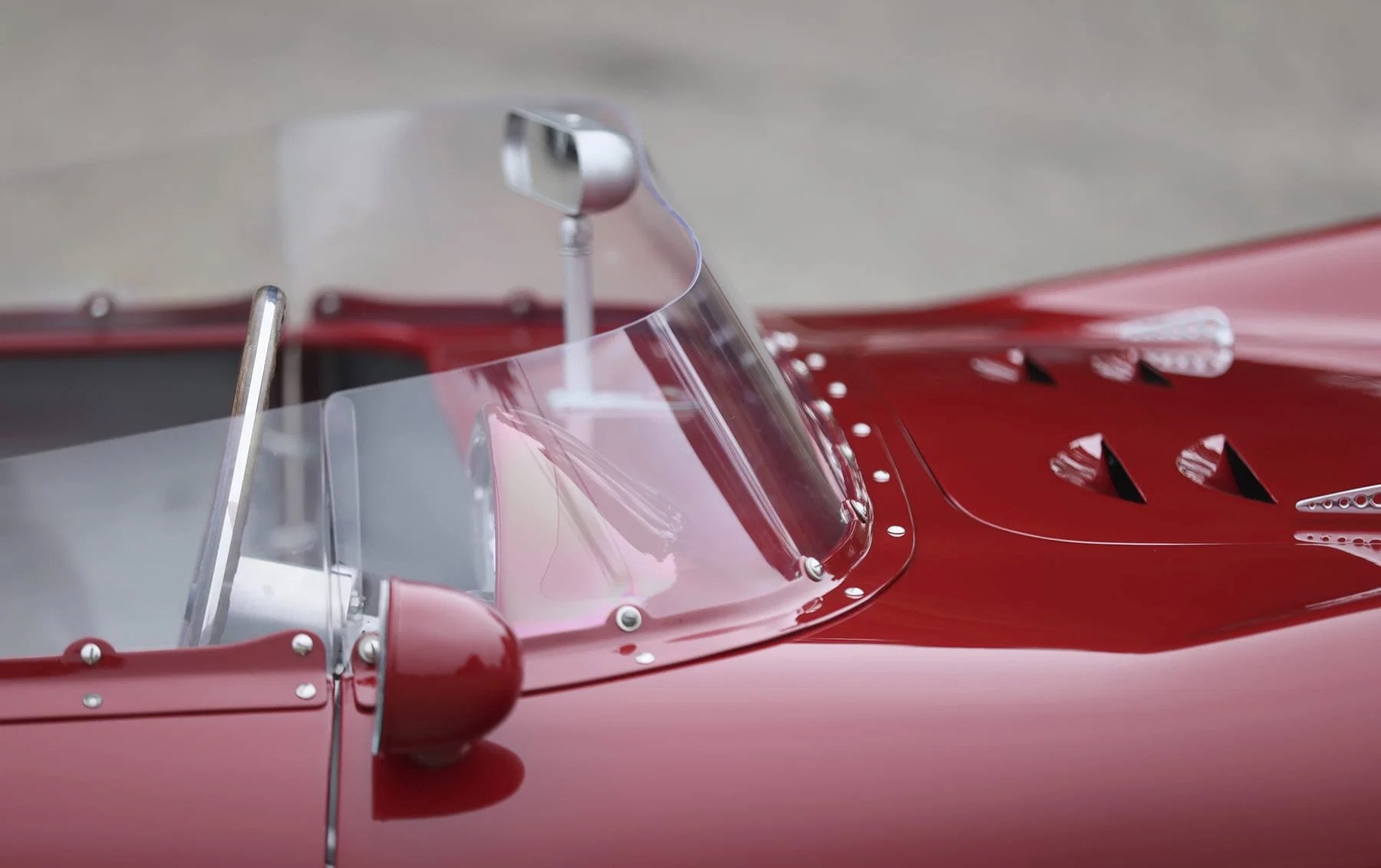
Die Entwicklung des 200S erwies sich als problematisch, da das Auto bei Langstrecken- und Strassenrennen von Getriebeproblemen geplagt wurde. Die Siege von Jean Behra beim Gran Premio di Bari und Gran Premio di Roma im Jahr 1956 retteten jedoch die Würde der Marke, ebenso wie der gute zweite Platz von Stirling Moss und Cesare Perdisa beim Supercortemaggiore in Monza (hinter dem Ferrari 500 Testa Rossa von Mike Hawthorn und Peter Collins). Die Umstellung auf das Reglement des Anhangs C für das Jahr 1957 führte dazu, dass der Wagen in den 200SI (Sport Internazionale) umgewandelt wurde, der mit einer breiten Windschutzscheibe, zwei funktionierenden Türen, einem Reserverad und einem doch sehr provisorischen Stoffverdeck ausgestattet war.


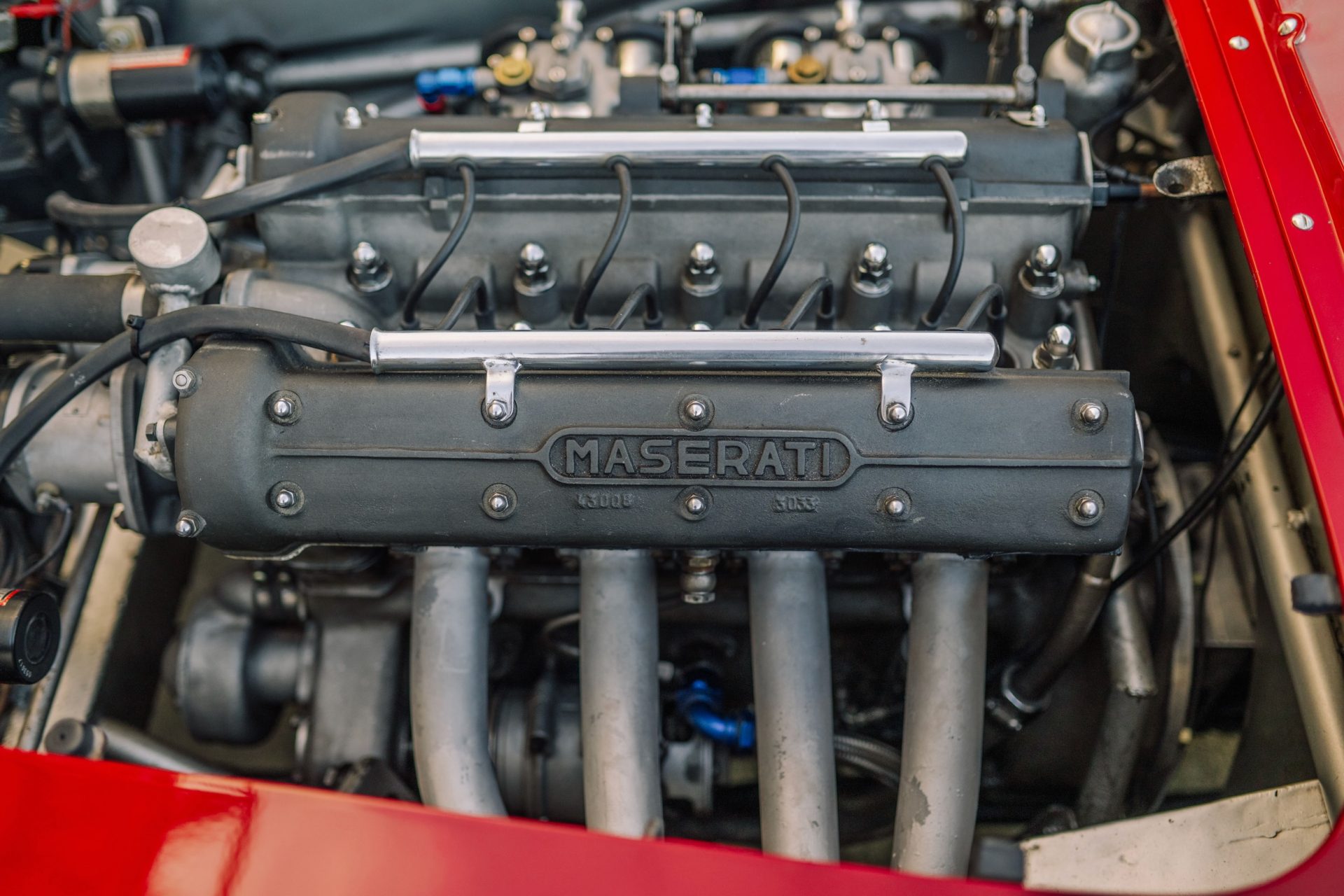
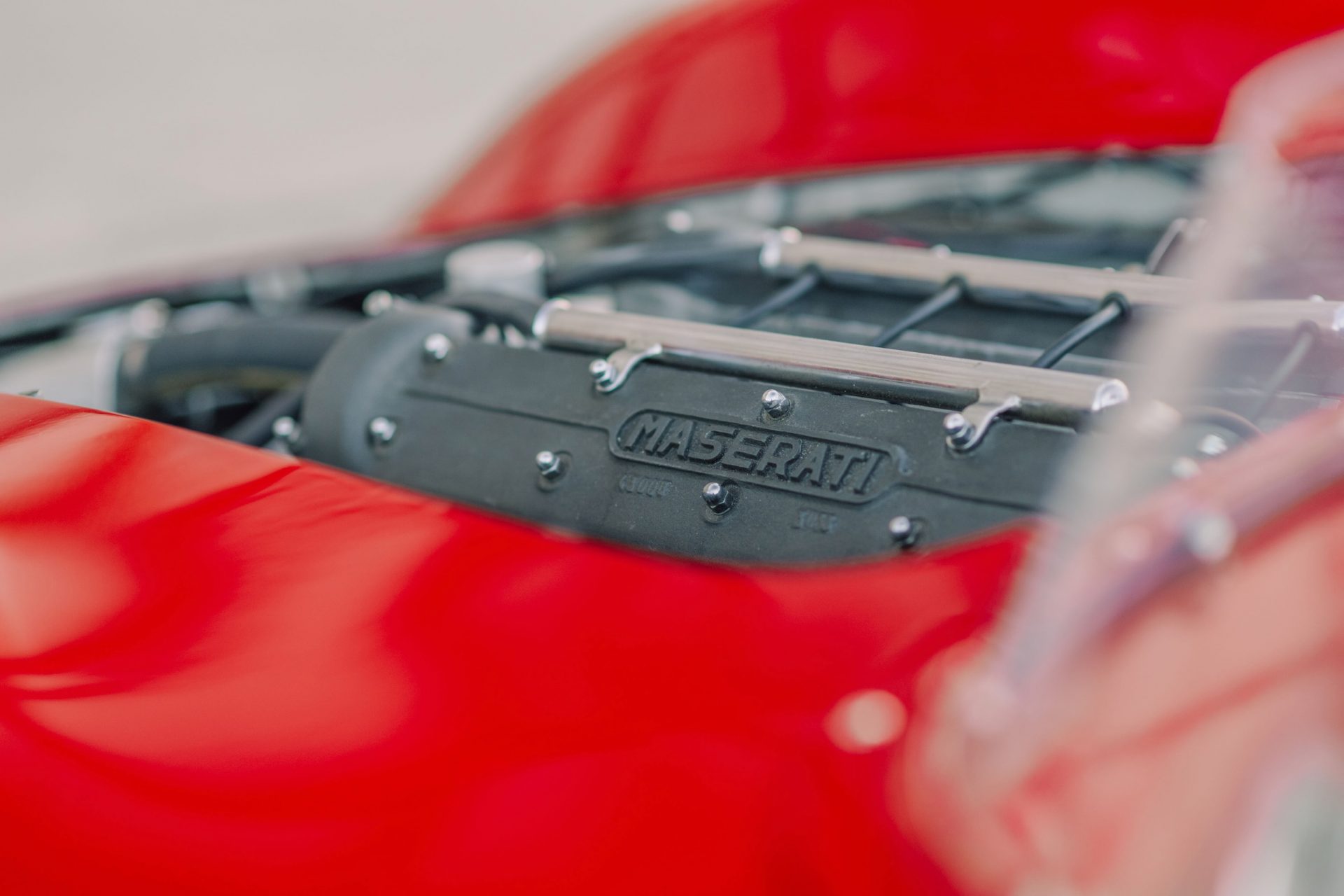
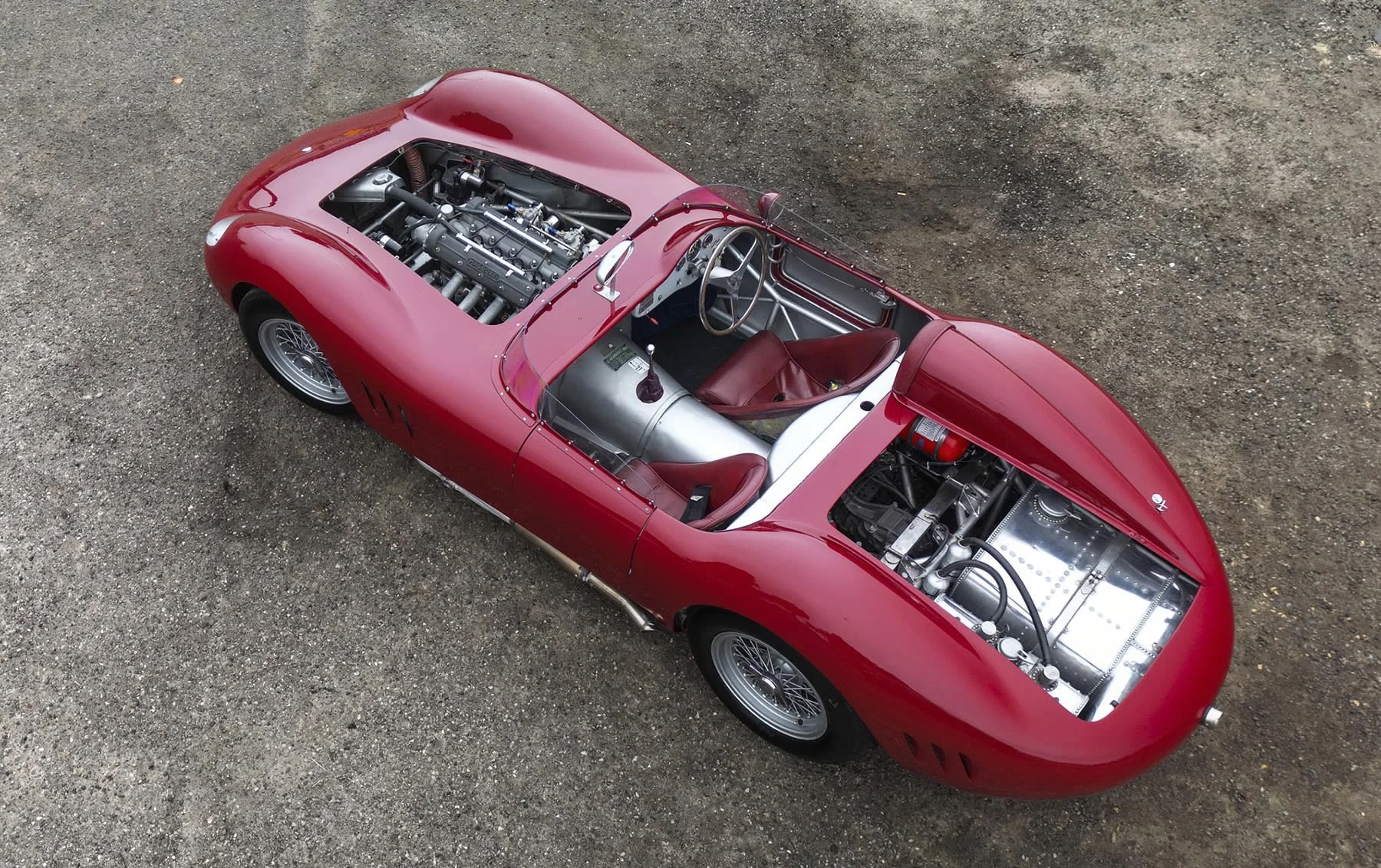
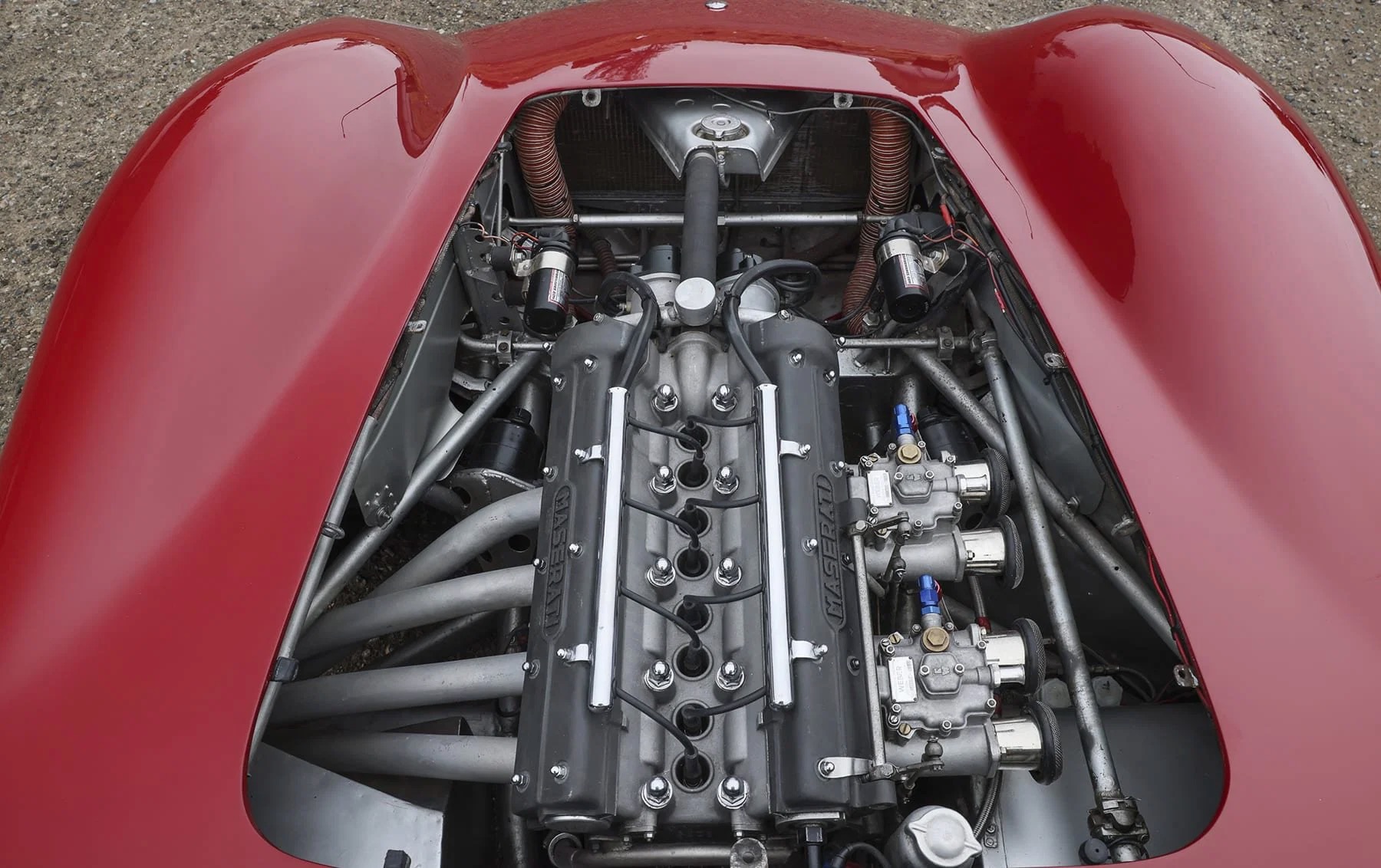
Als Antrieb kam im 200S ein 2-Liter-Vierzylinder aus Alu zum Einsatz, wie erwähnt mit Doppel-Zündung, hemisphärischen Brennräume, Trockensumpfschmierung, mindestens 180 PS stark. Die Fahrzeuge wurden zumeist von Fantuzzi eingekleidet und wogen etwa 660 Kilo, wohl etwa 30 Exemplare entstanden. Und sie waren schnell, richtig schnell, bei einem Rennen 1956 vernaschte Stirling Moss gleich vier Ferrari 500TR.


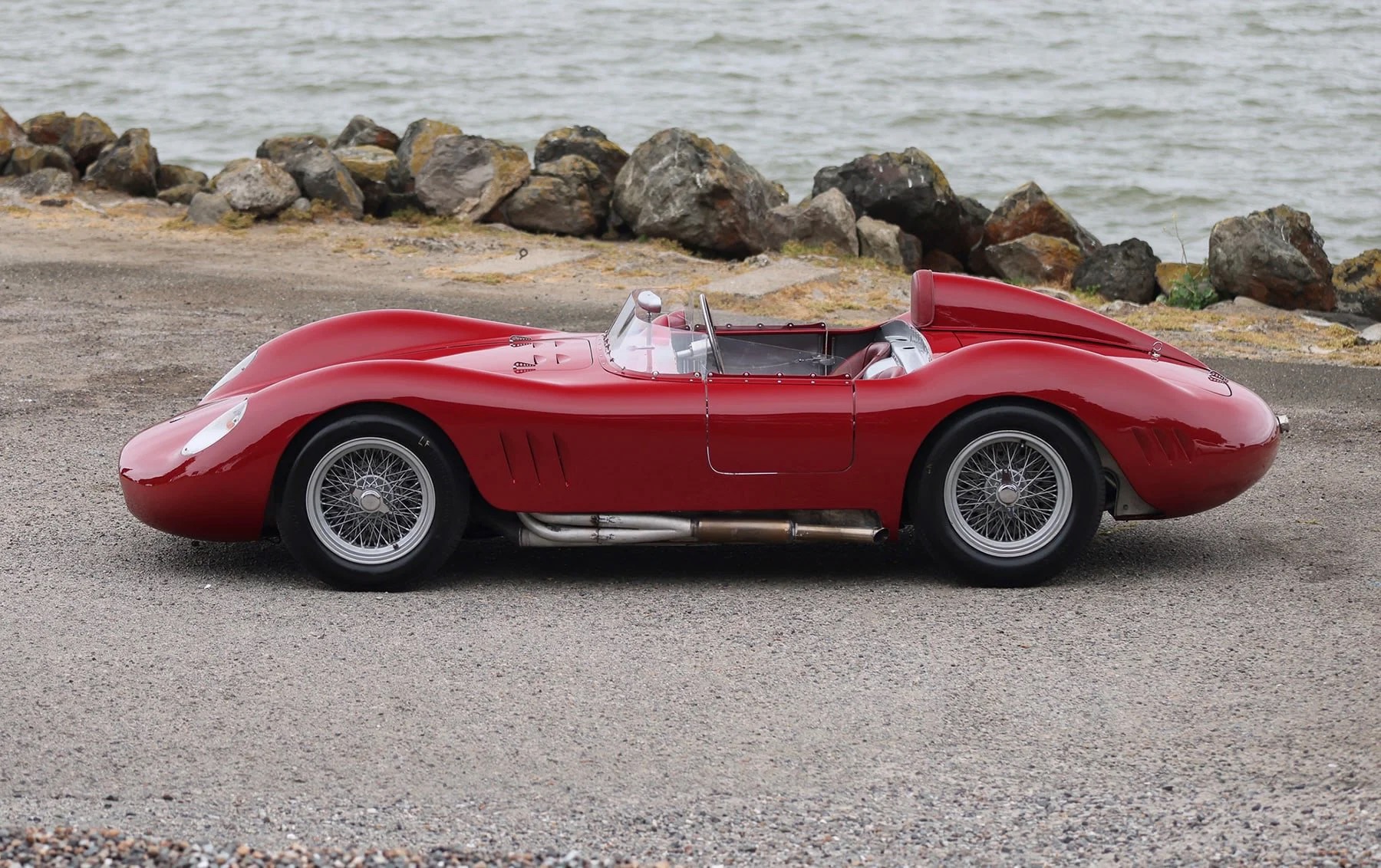
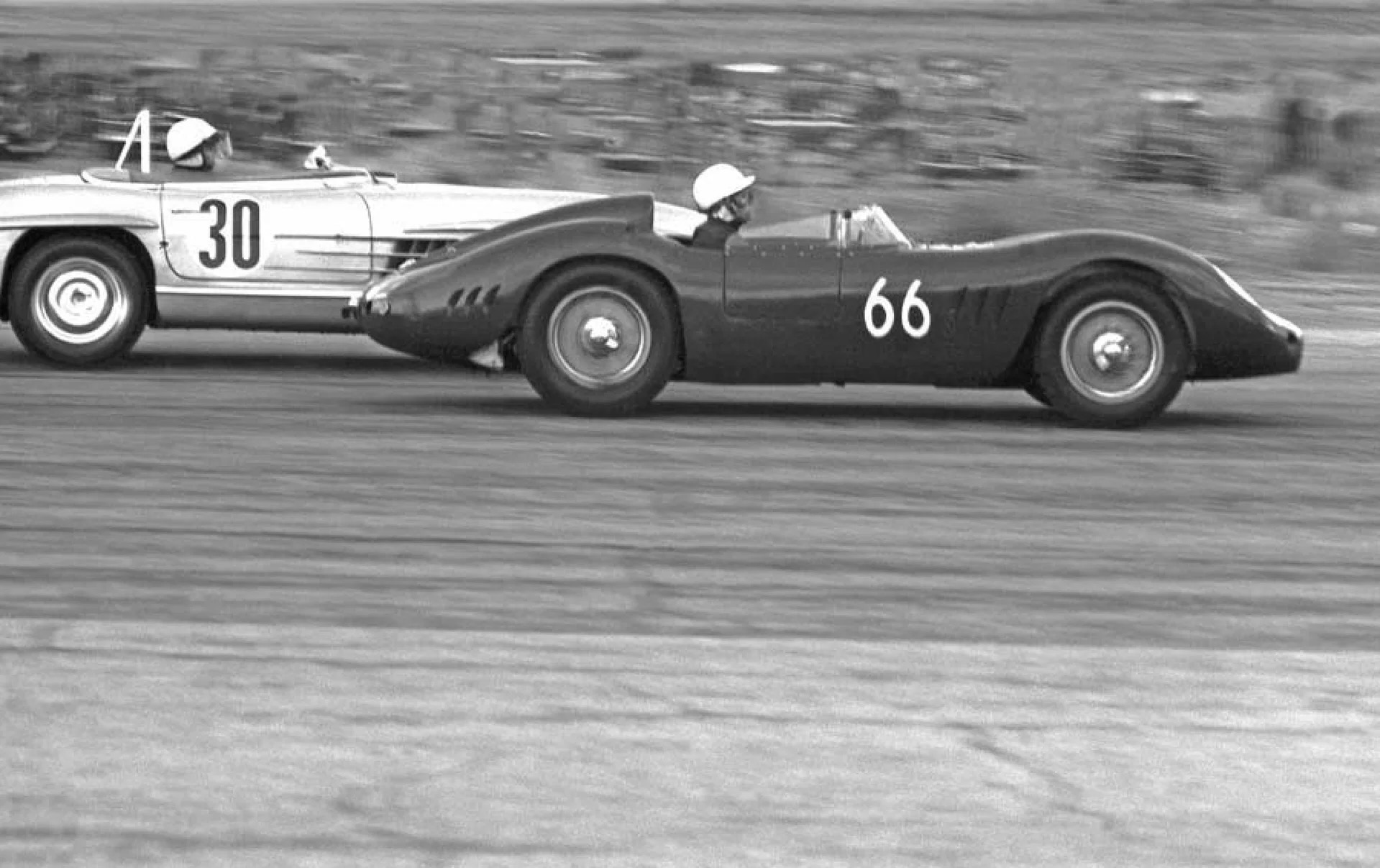
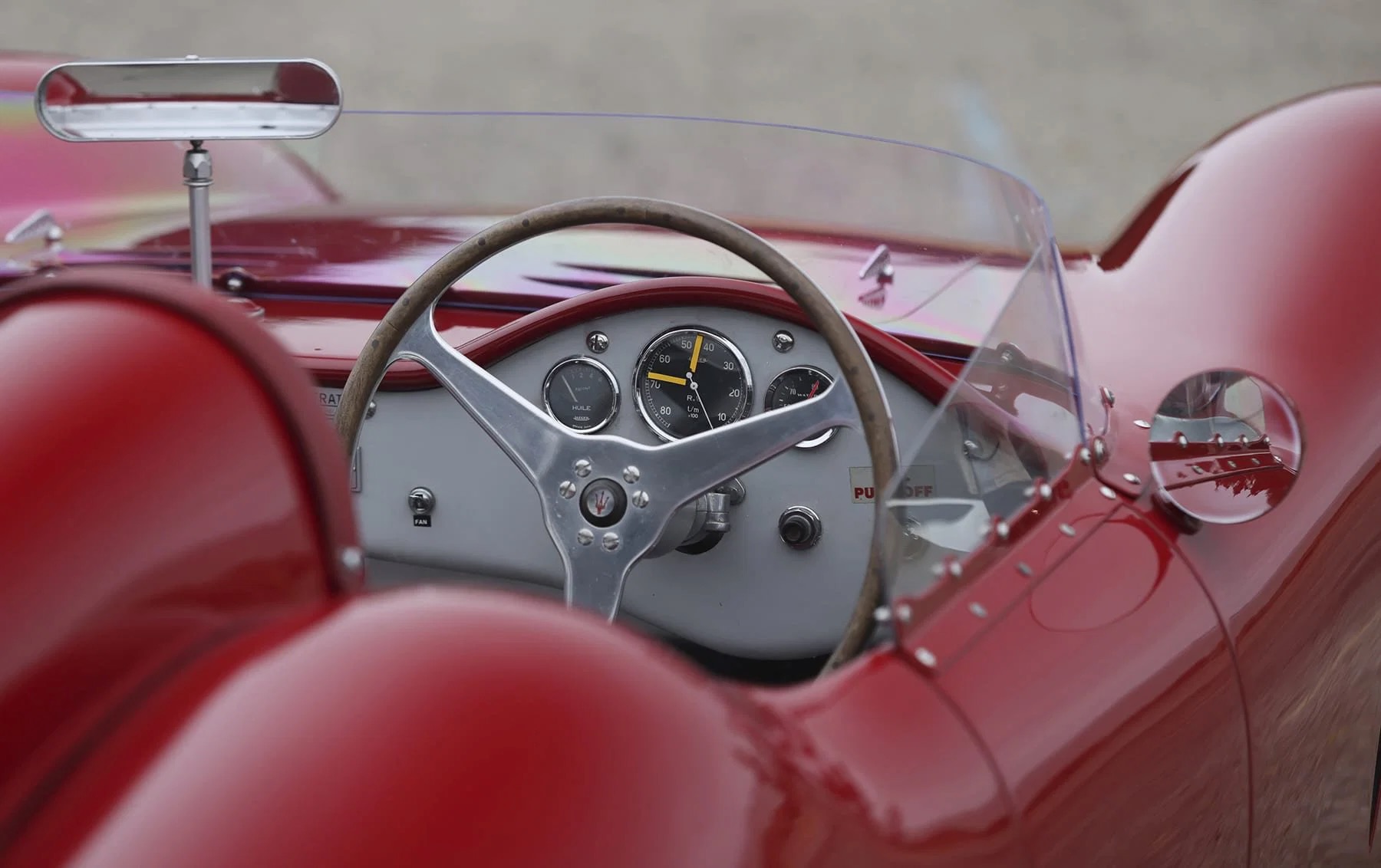
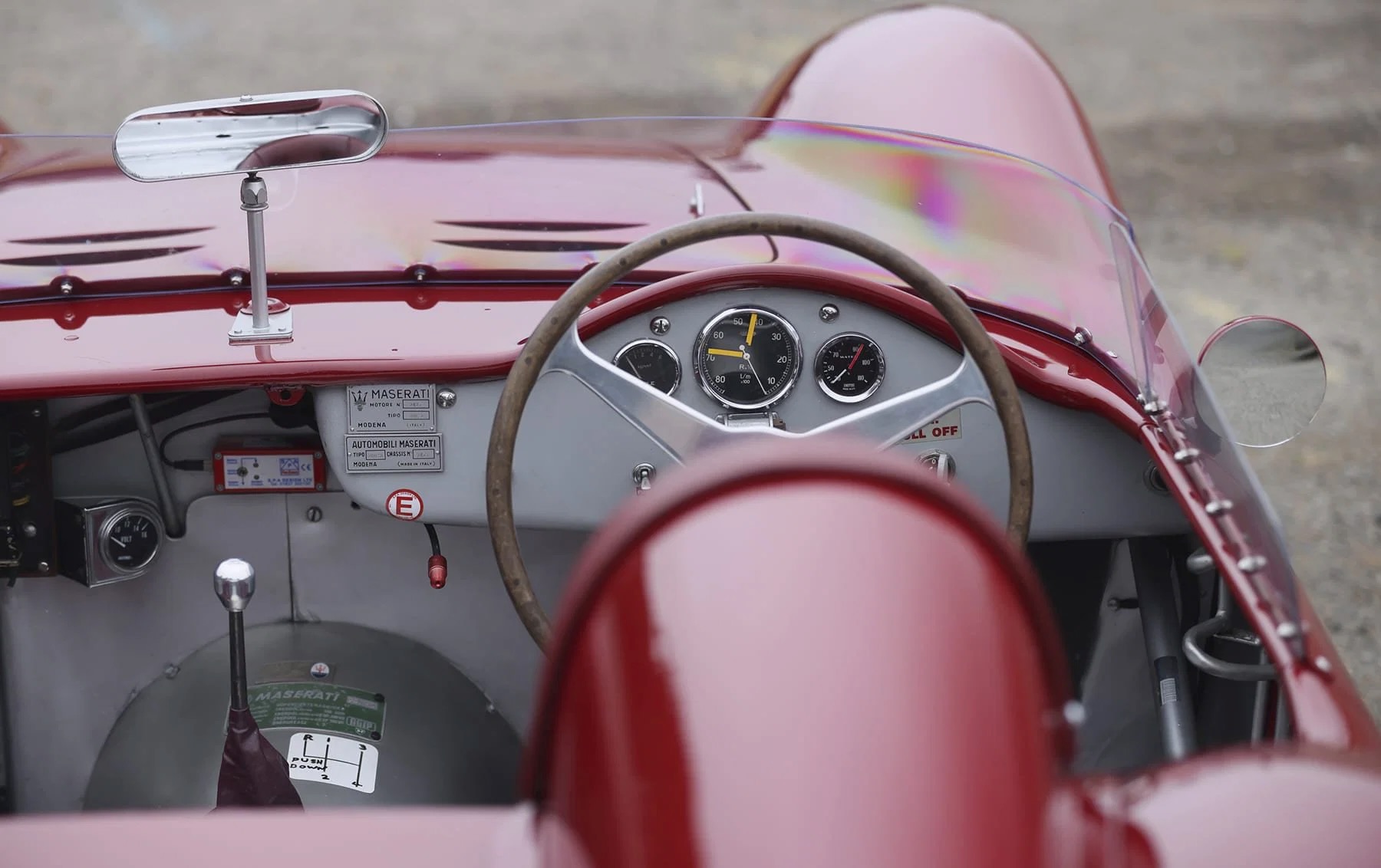
Wir zeigen hier Chassisnummer 2427, ein 200 SI aus dem Jahre 1957 mit einem feinen Fantuzzi-Aufbau. Als erster Kunde ist Vincent Dyckman Andrus bekannt, der den Wagen kaufte, um ihn John Fitch für SCCA-Rennen an der Ostküste zur Verfügung zu stellen. Fitch, der den für ihn weiss-blau lackierten Wagen liebte und ihn als eines der Fahrzeuge mit dem besten Fahrverhalten überhaupt lobte, holte sich reihenweise Klassensiege; für die grossen Töpfe reichte es nicht. Später ging 2427 durch die Hände einiger berühmter Sammler, wurde irgendwann wieder rot – und wurde am 19./20. August 2022 vom RM Sotheby’s für 3’112’500 Dollar versteigert.

Mehr davon? Klar.
Chassis-Nummer: 2401


Auktion: Gooding & Co., 2010, verkauft für knapp 2,5 Millionen Dollar.
–
Chassis-Nummer: 2405


Verkauft über Tom Hartley Jr., Stirling Moss fuhr 1956 damit bei den 1000 Kilometern von Imola auf den zweiten Rang.
–
Chassis-Nummer: 2412
Motorennummer: 2412


Auktion: RM Sotheby’s, Monterey 2023, Schätzpreis 3’000’000 bis 3’500’000 Dollar. Erster Besitzer war Jim Kimberly (Kleenex), die Farbe heisst Kimberly Red und war von GM-Design-Legende Harley Earl «entwickelt» worden. Jetzt kommt er schon wieder: RM Sotheby’s, Private Sales (Februar 2024), die Geschichte gibt es unten in den Kommentaren.


–
Chassis-Nummer: 2415


Auktion: Broad Arrow, Monterey 2024, Schätzpreis 3,3 bis 3,6 Millionen Dollar, die ausführliche Geschichte dazu gibt es unten in den Kommentaren.
–
Chassis-Nummer: 2425

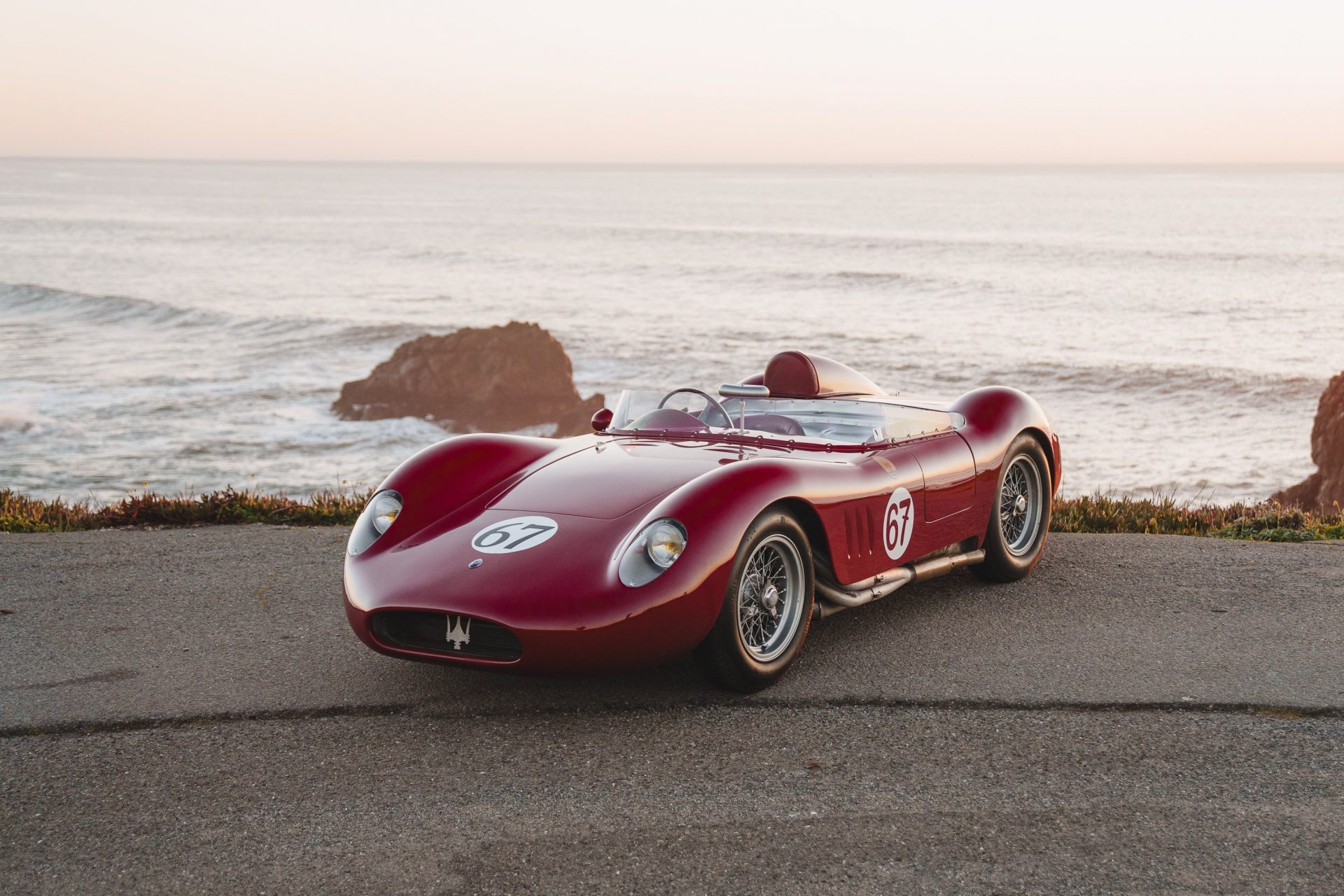


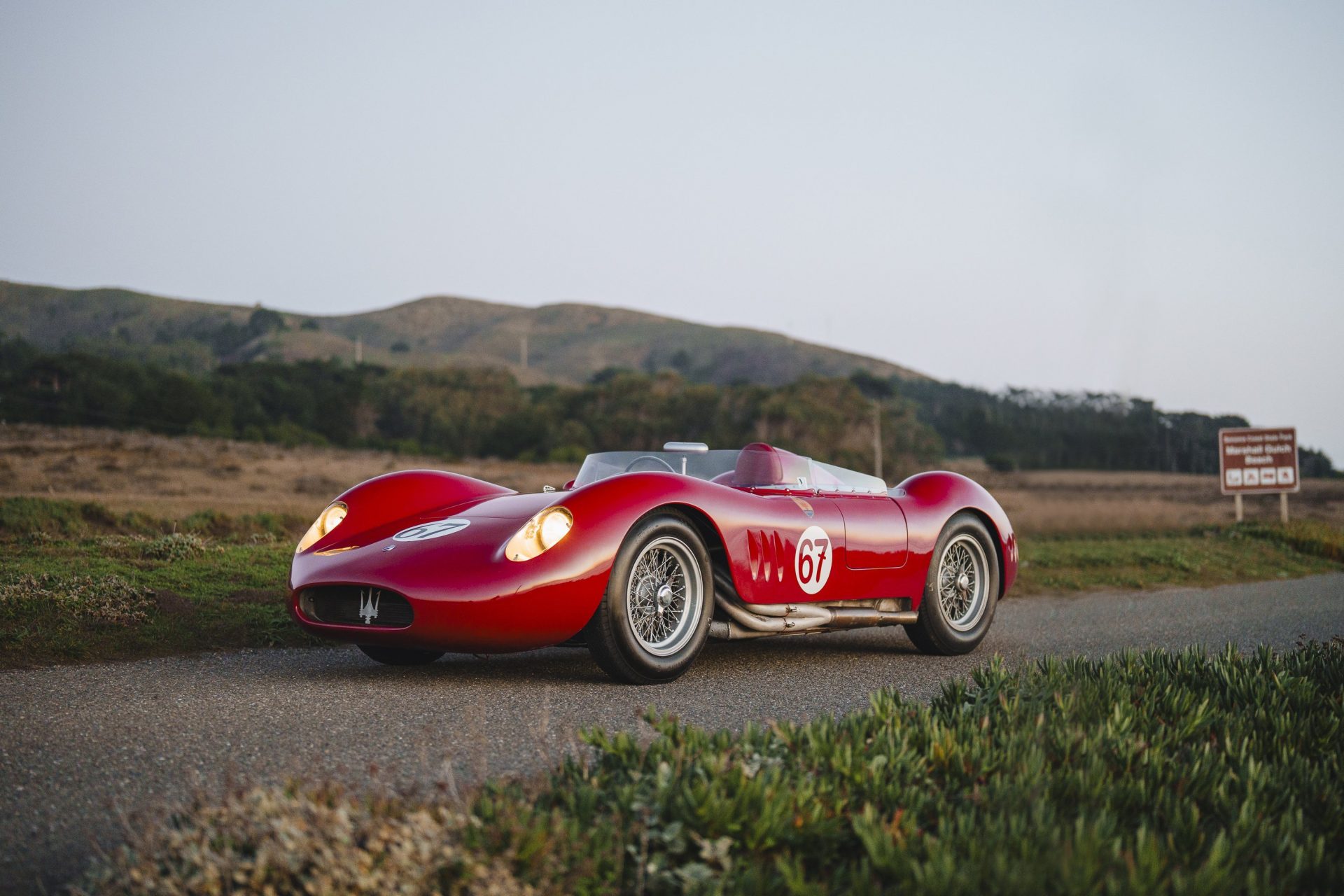


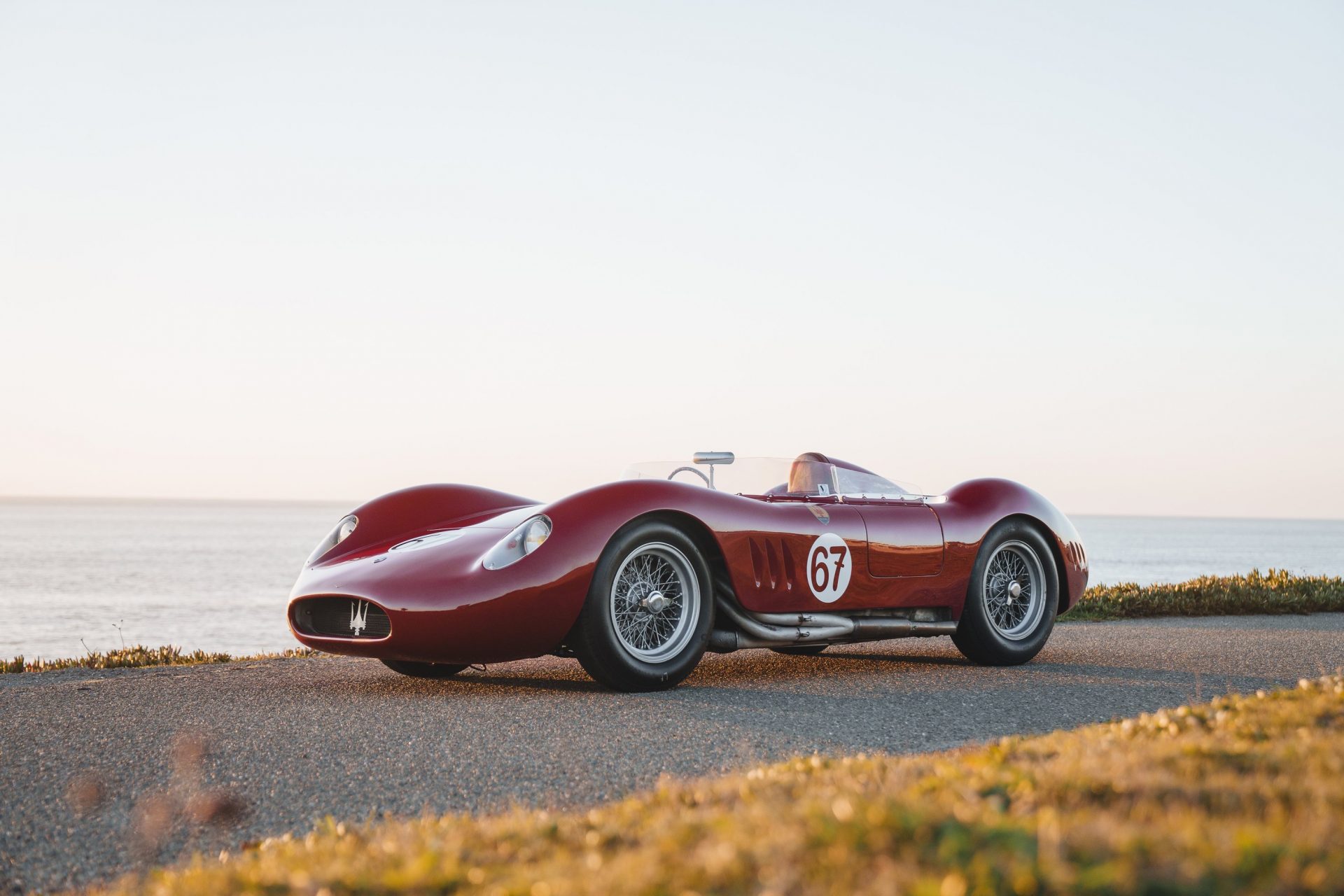
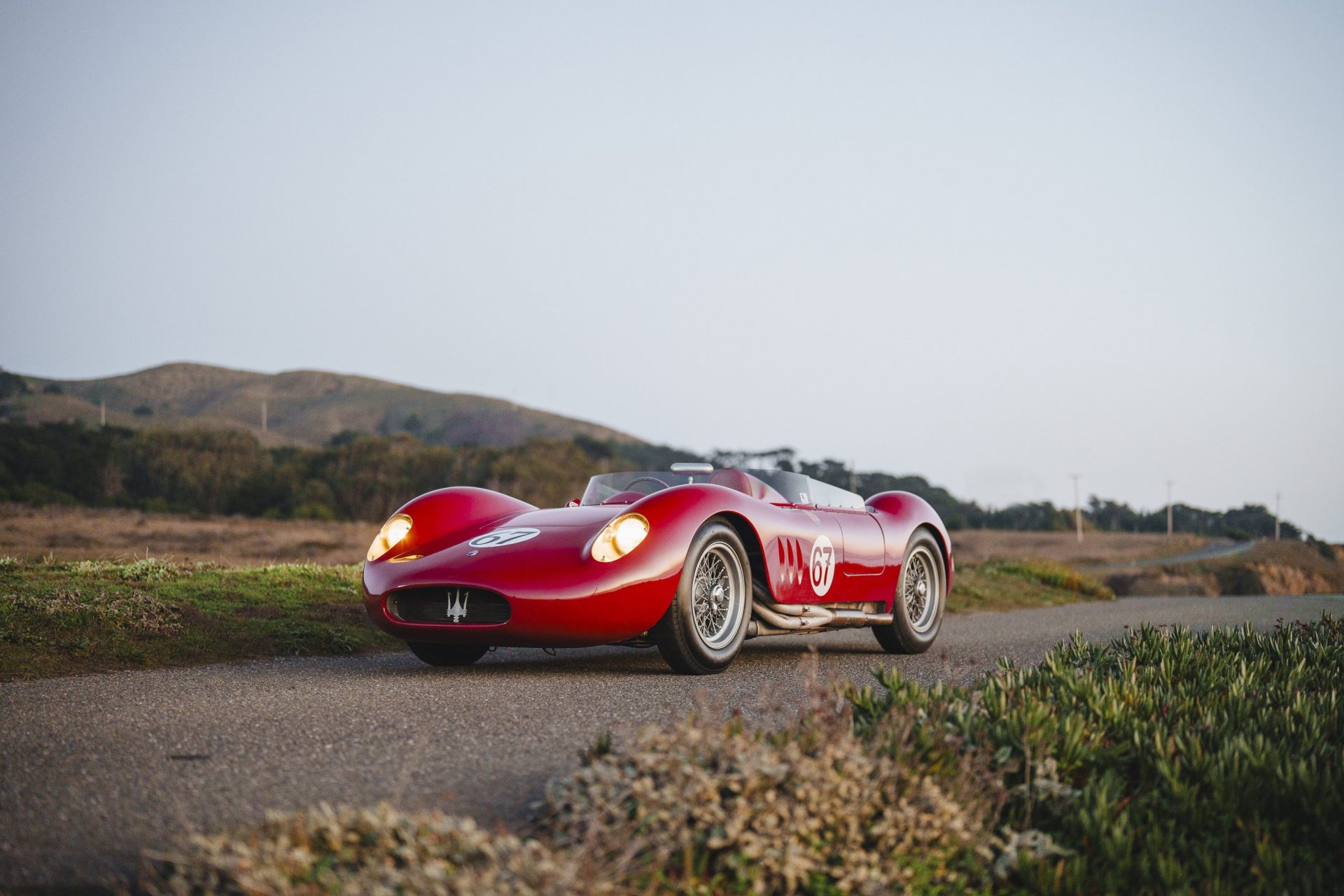


Steht bei Fantasy Junction zum Verkauf, Februar 2025, keine Preisangabe. Soll ein Werks-Rennwagen sein, gewann mit André Loens auch den GP Cadours im September 1957, wurde danach in die USA exportiert, Jim Hall soll einige Rennen damit gefahren haben. Die Renn-Karriere dauerte bis Mitte der 60er Jahre, da hatte #2425 aber schon einen Chevrolet-Motor. In den 90er Jahren wurde der Maserati restauriert, später erhielt das Fahrzeug einen modernen, extra aufgebauten 2,5-Liter-Motor (der originale Antrieb soll sich aber noch beim Auto befinden). Dann: RM Sotheby’s, Monterey 2025, Schätzpreis 2,8 bis 3,2 Millionen Dollar. Die Infos zu diesem Fahrzeug finden Sie unten in den Kommentaren.
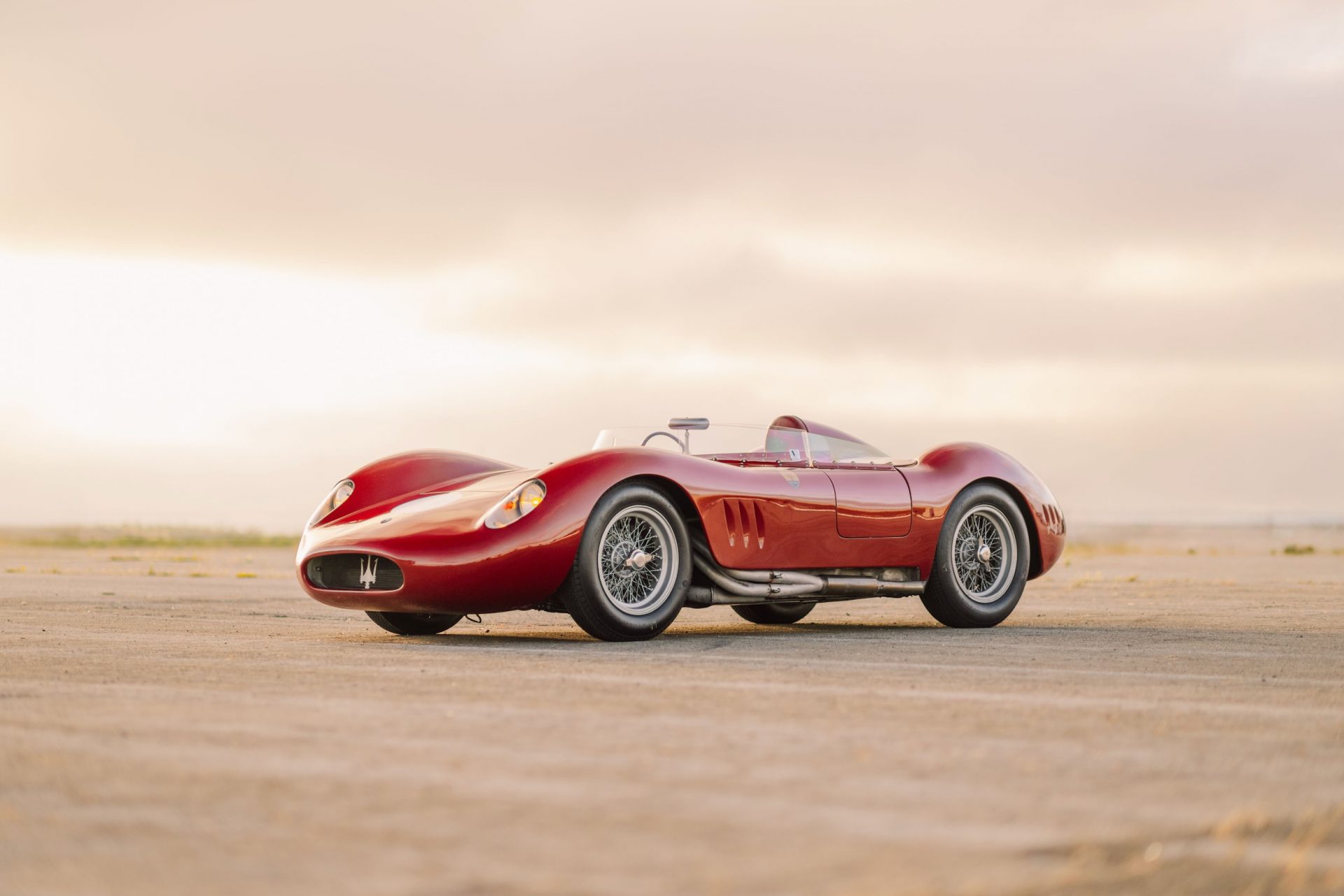
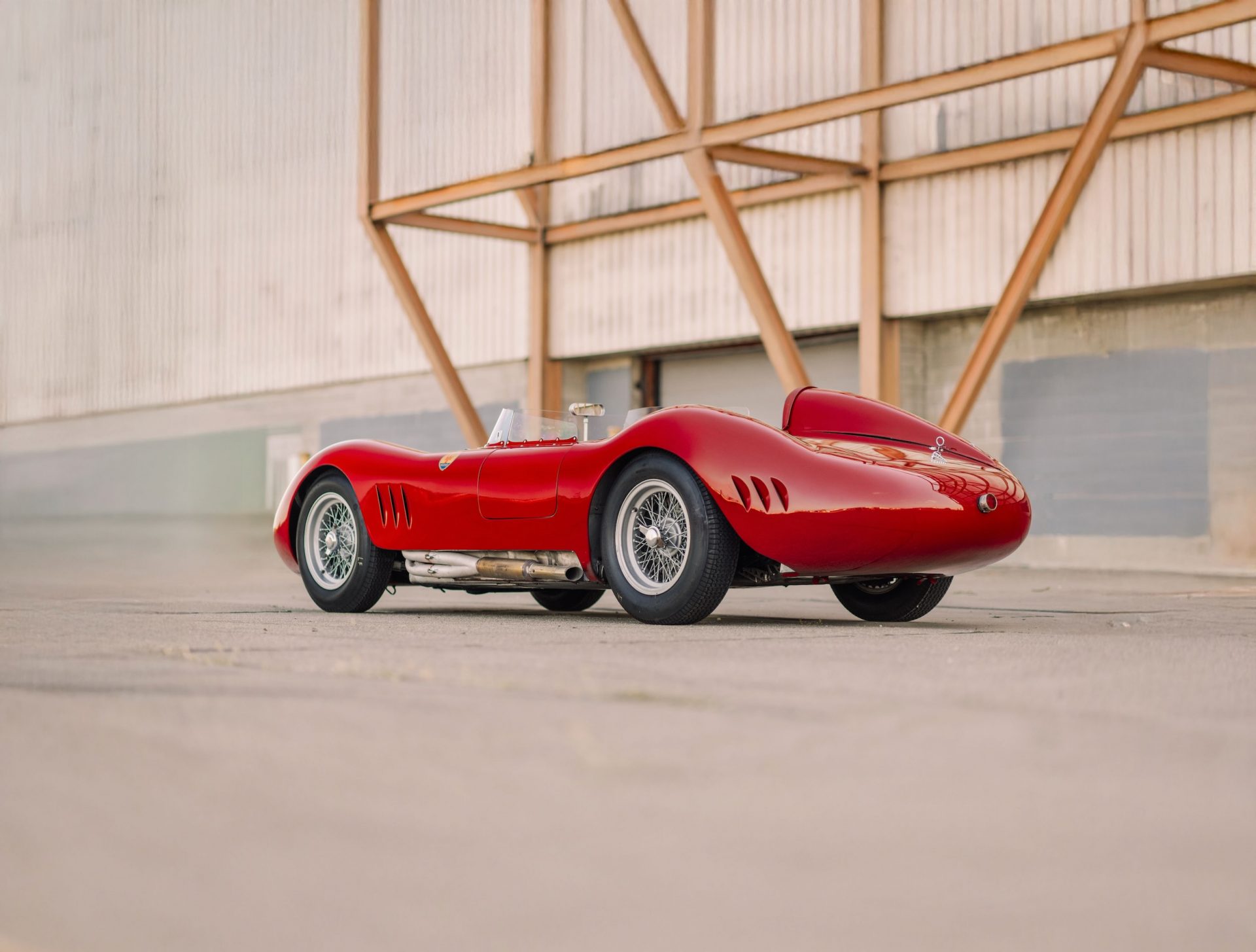
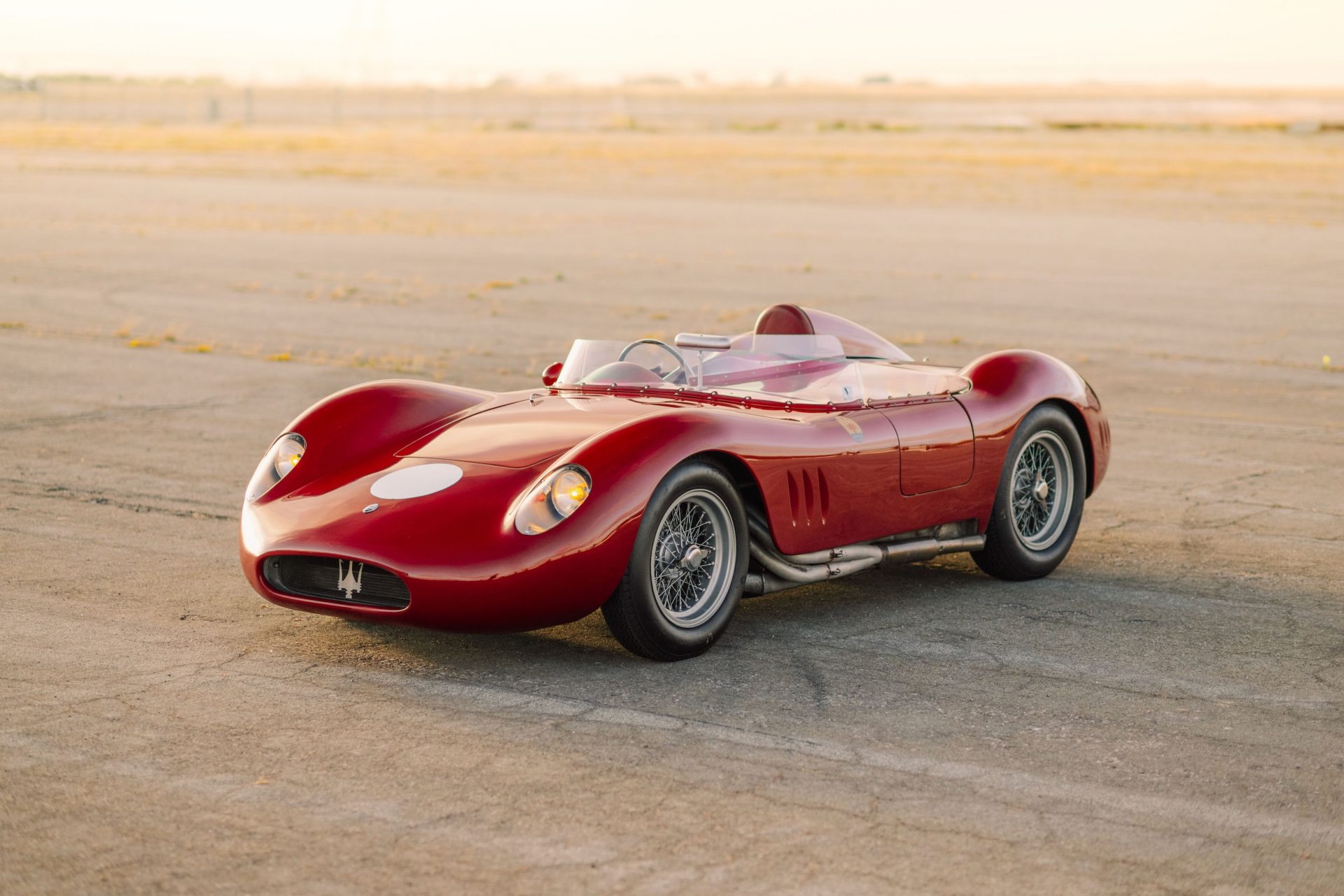
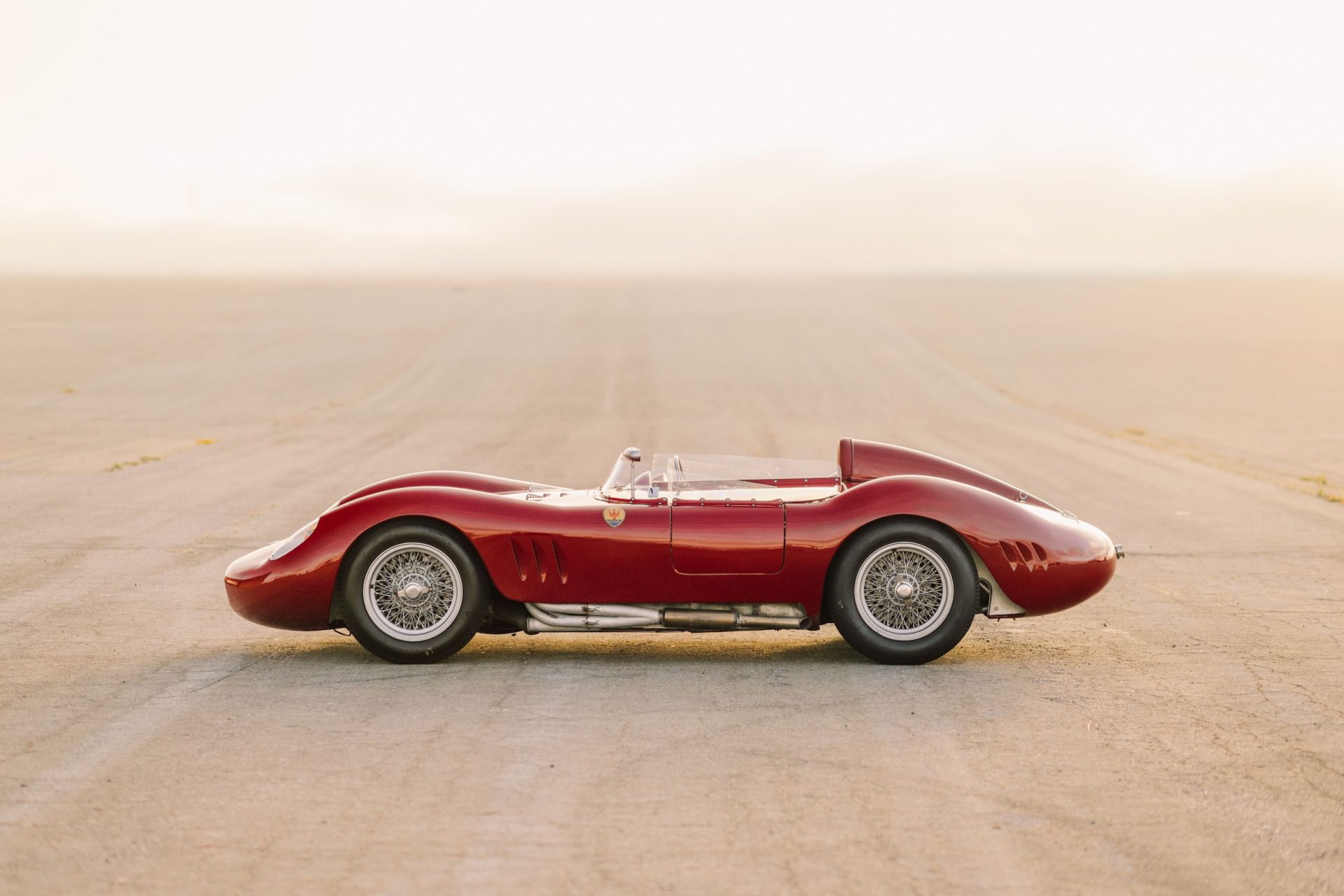
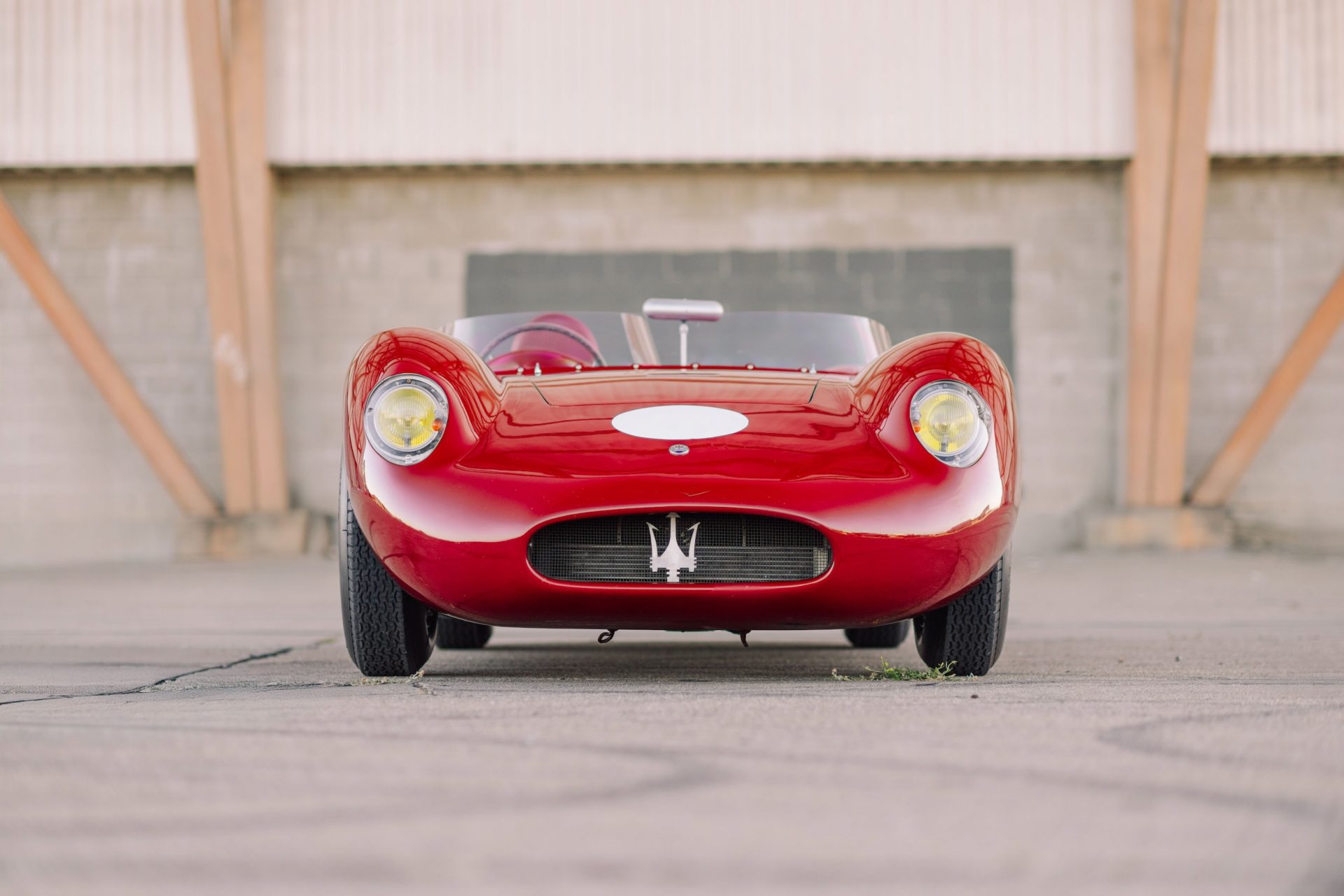


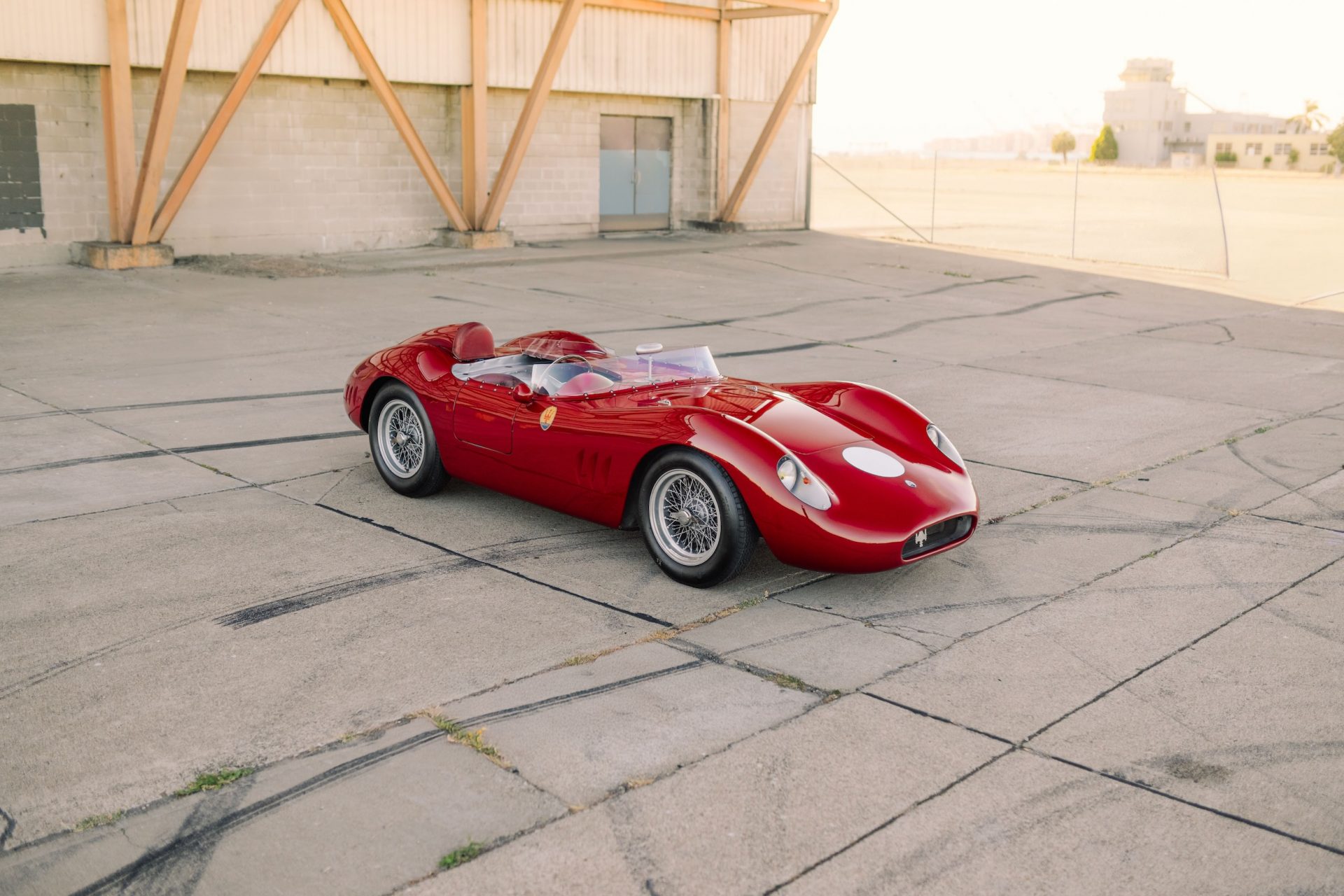
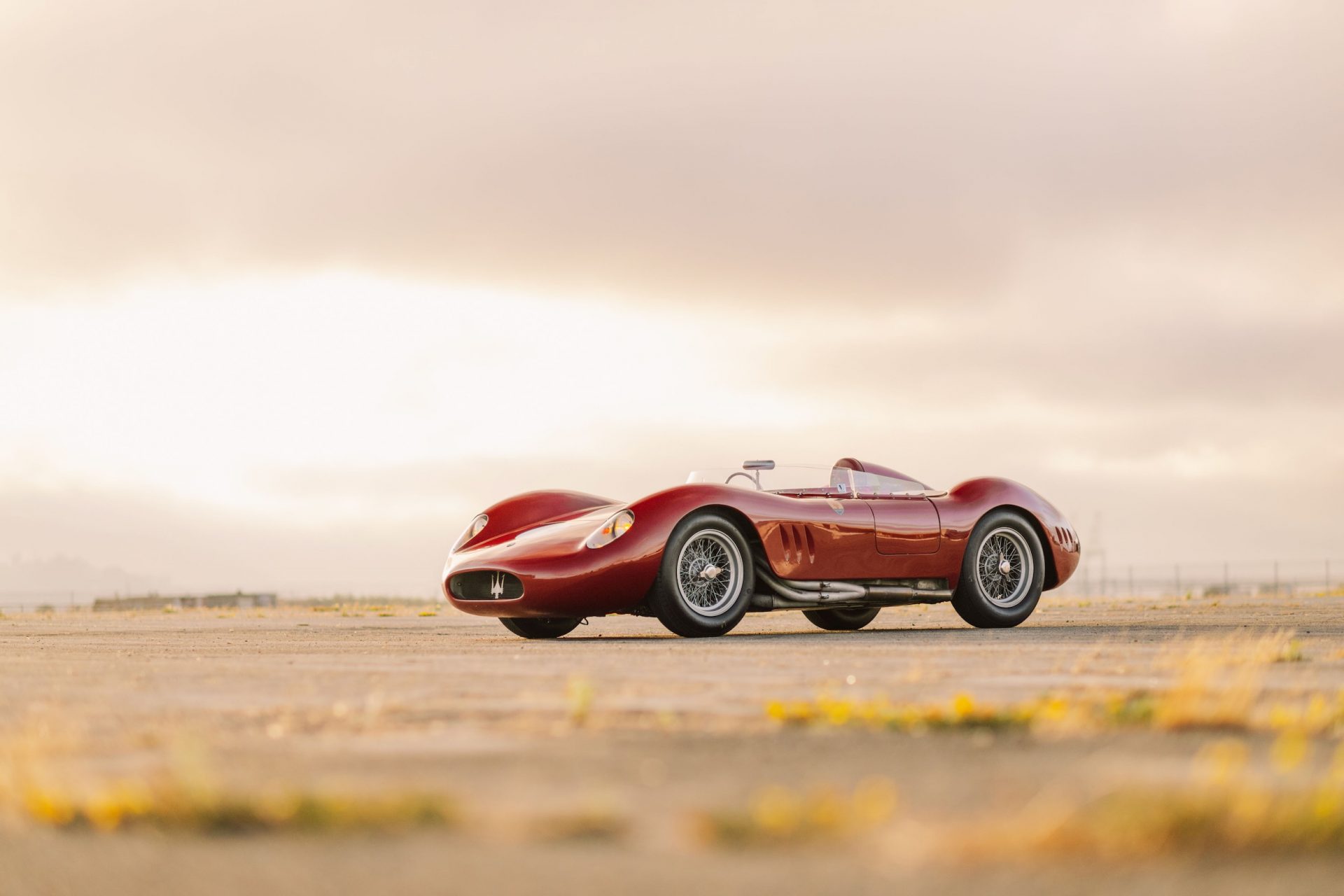
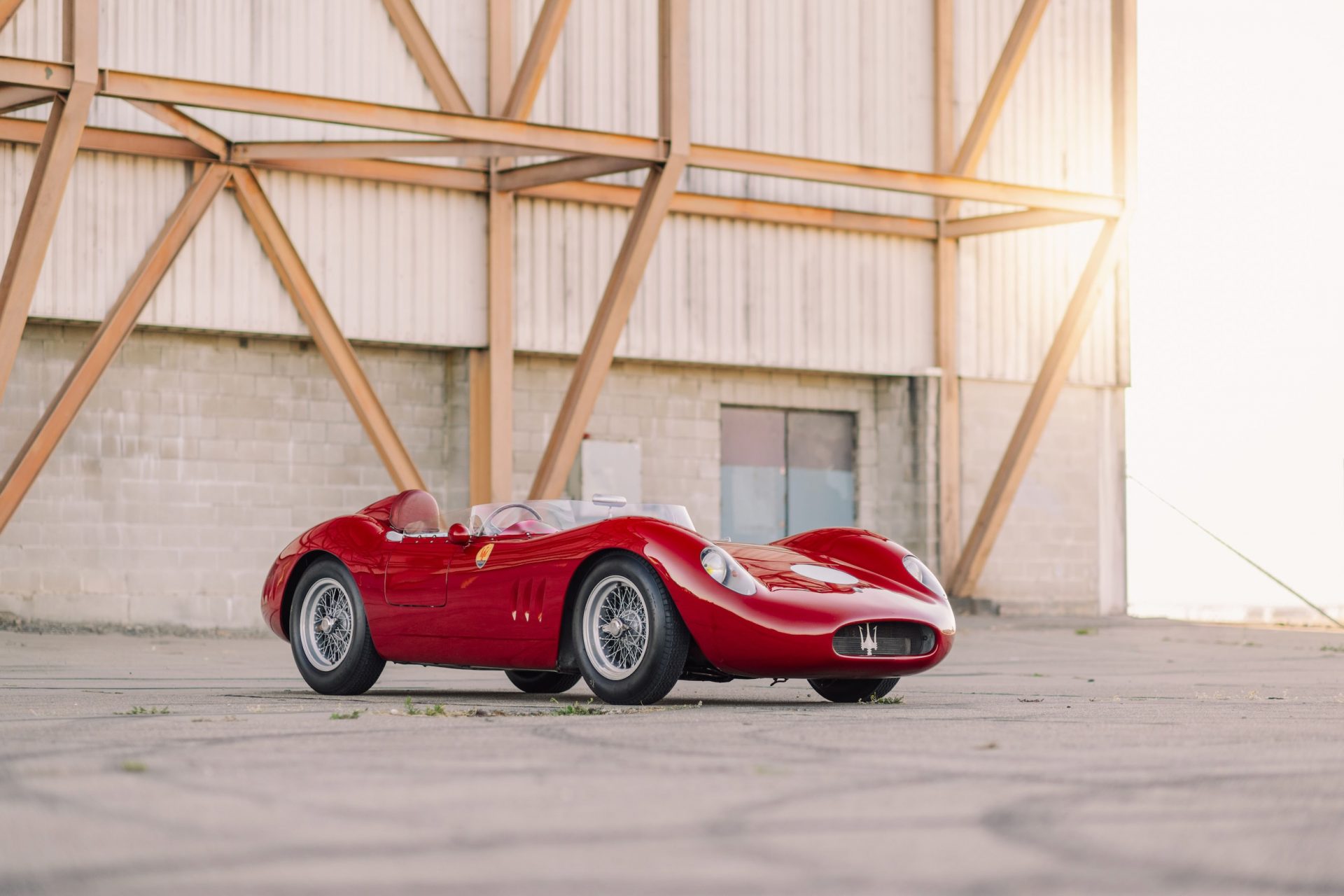
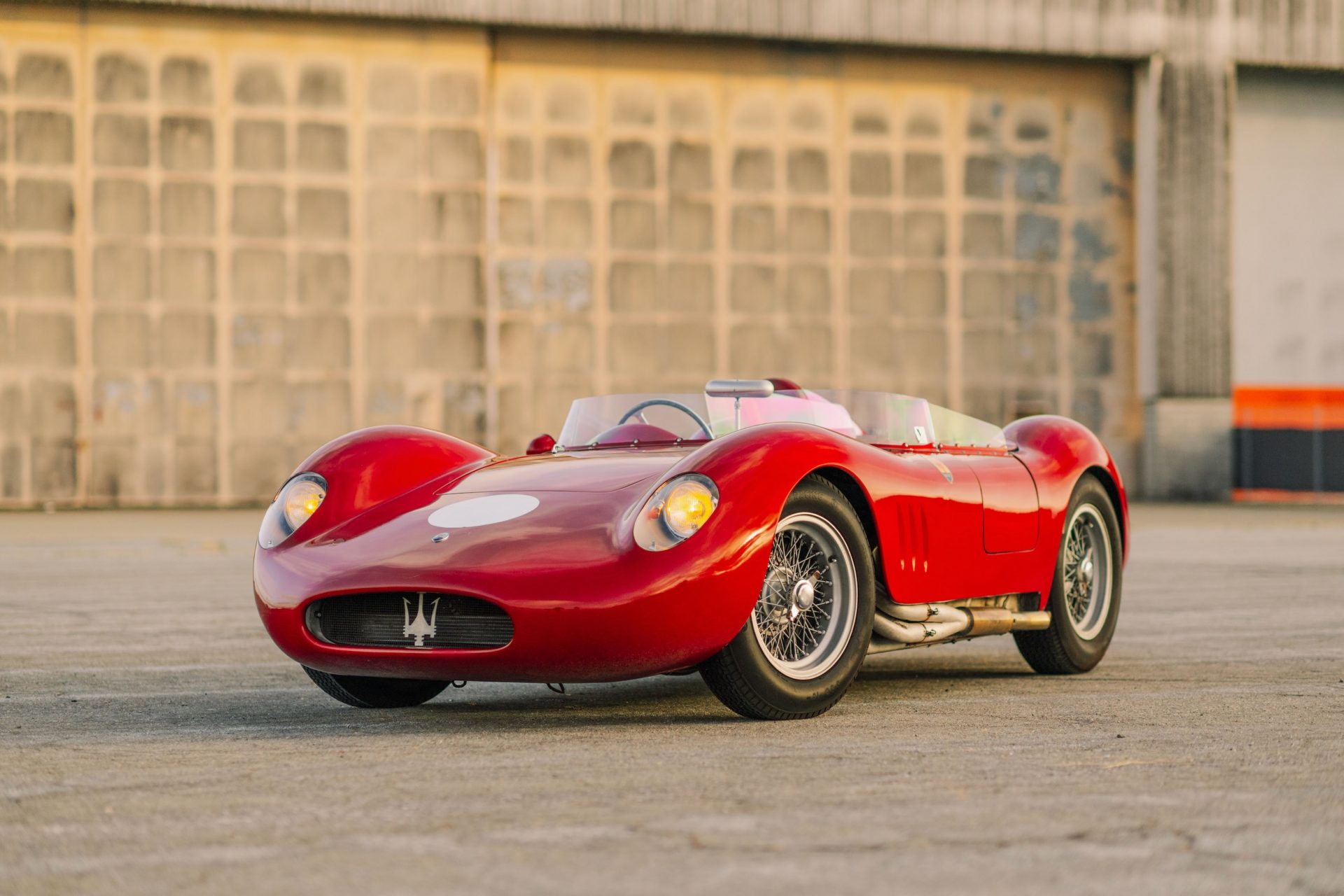
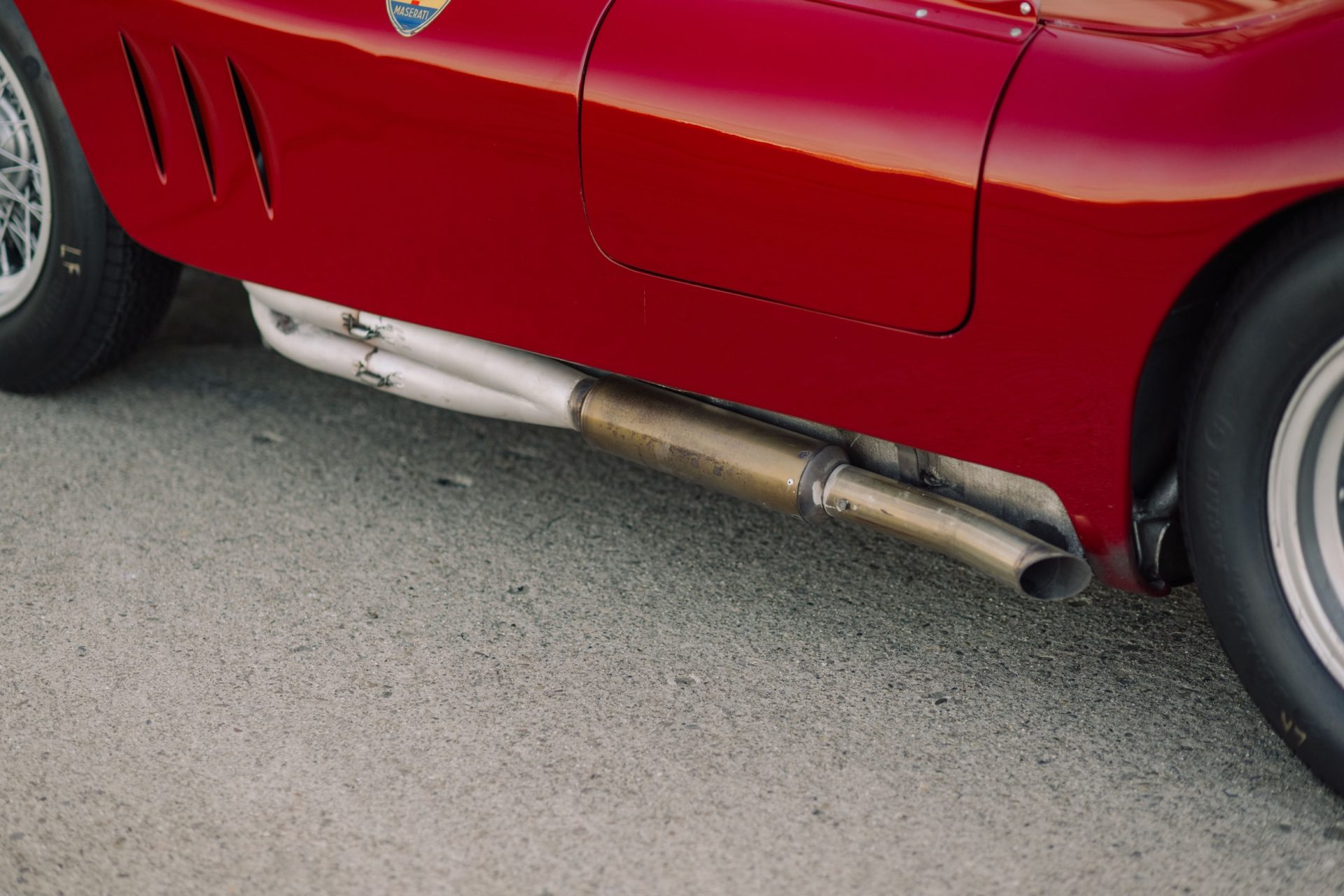
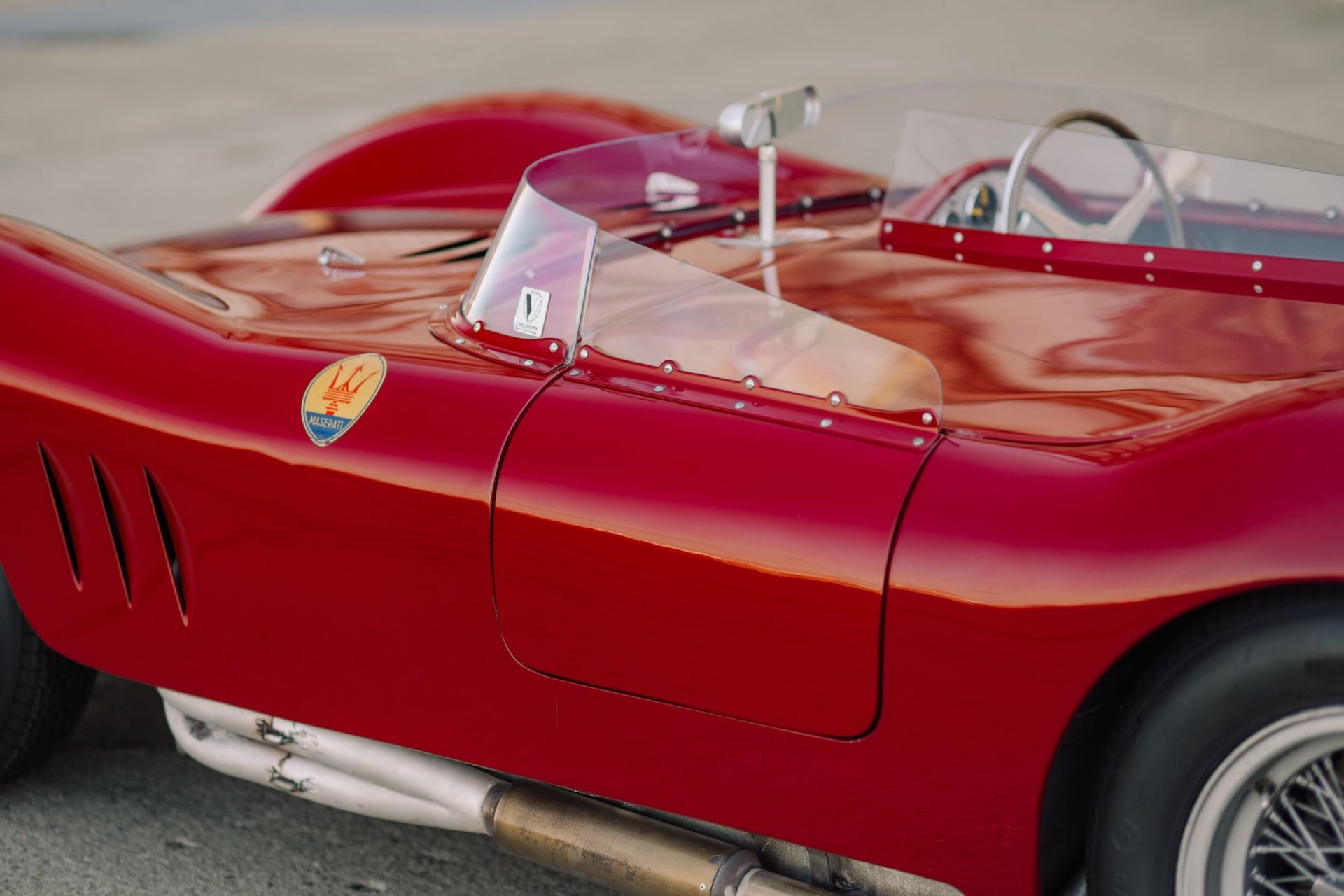
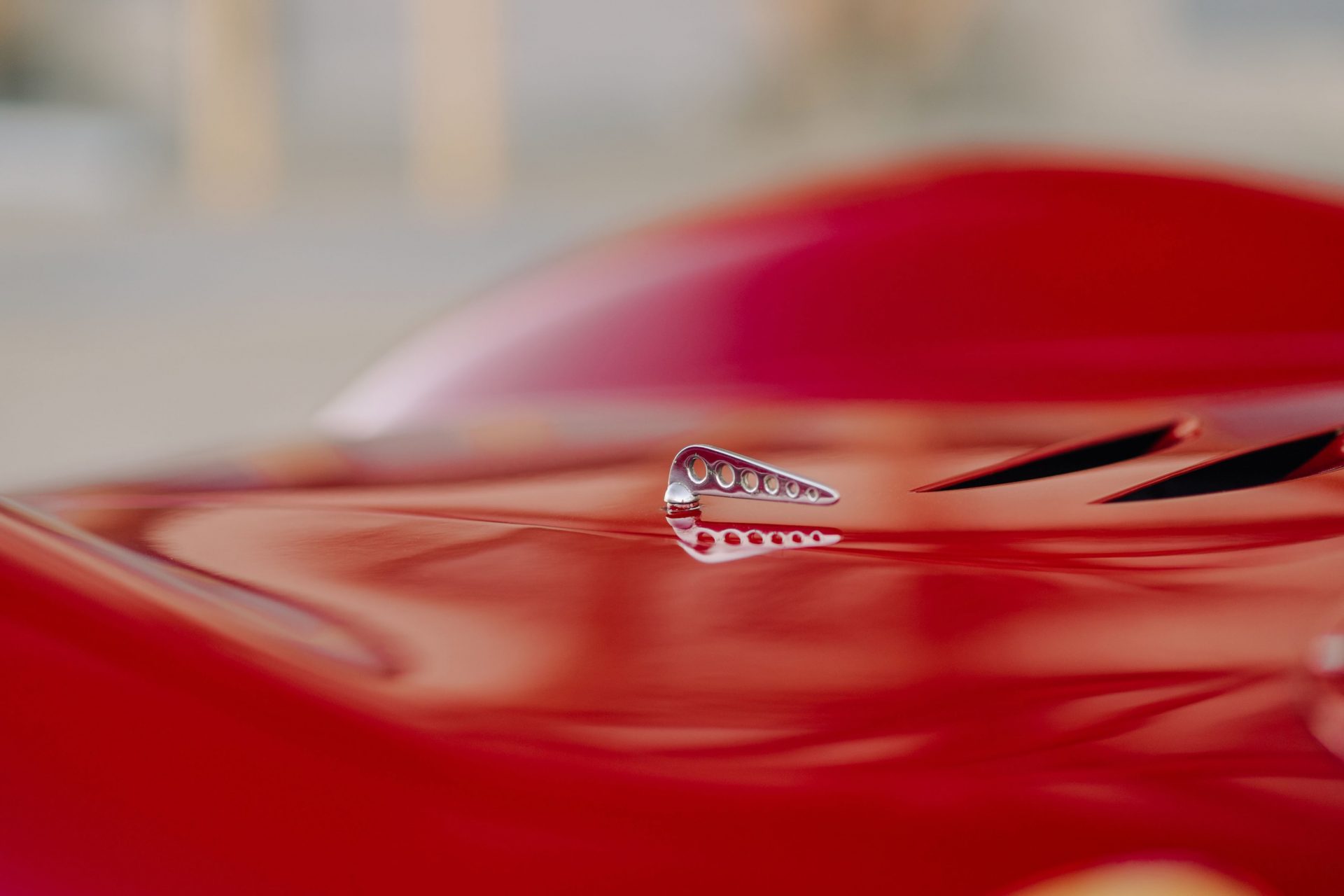
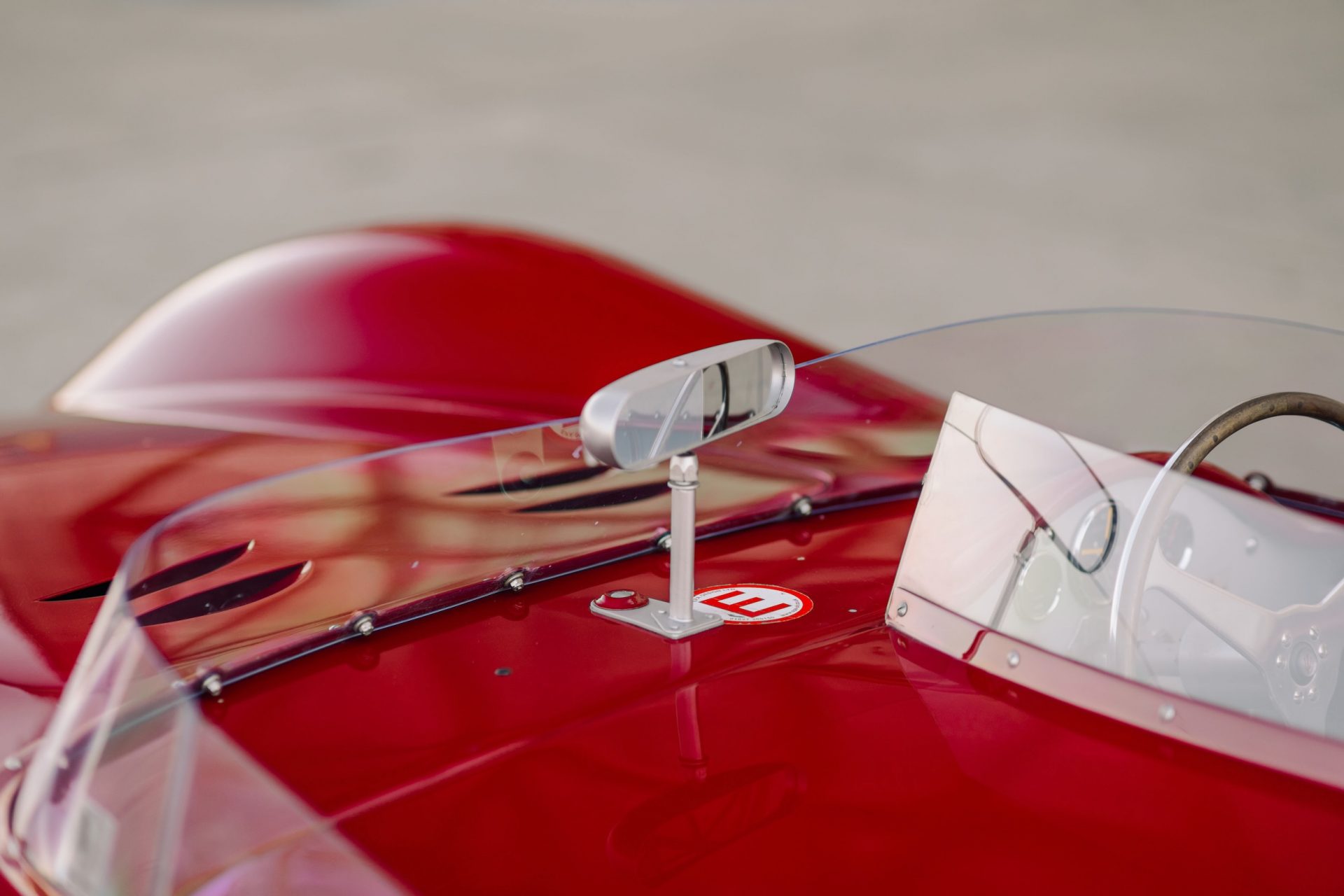


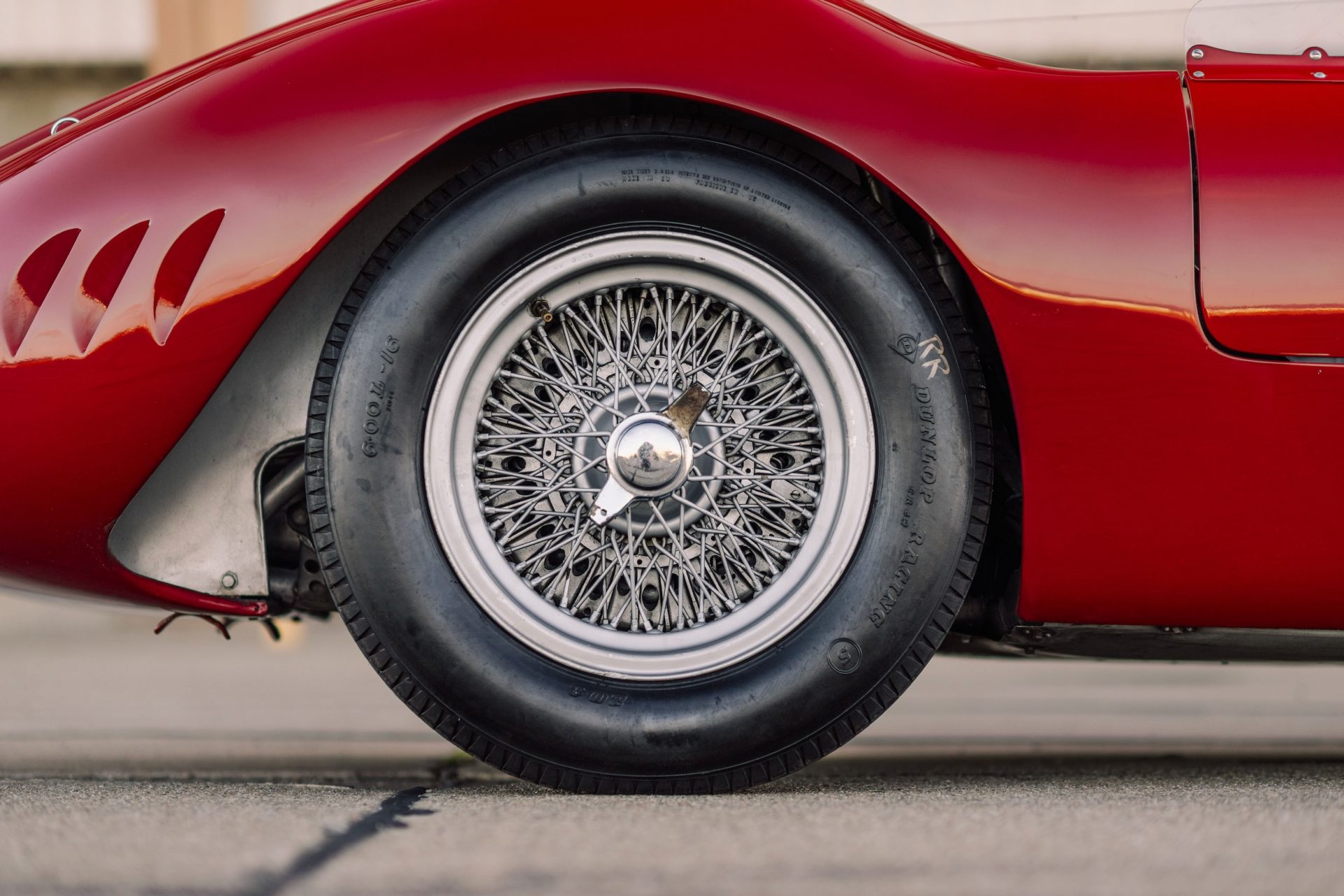
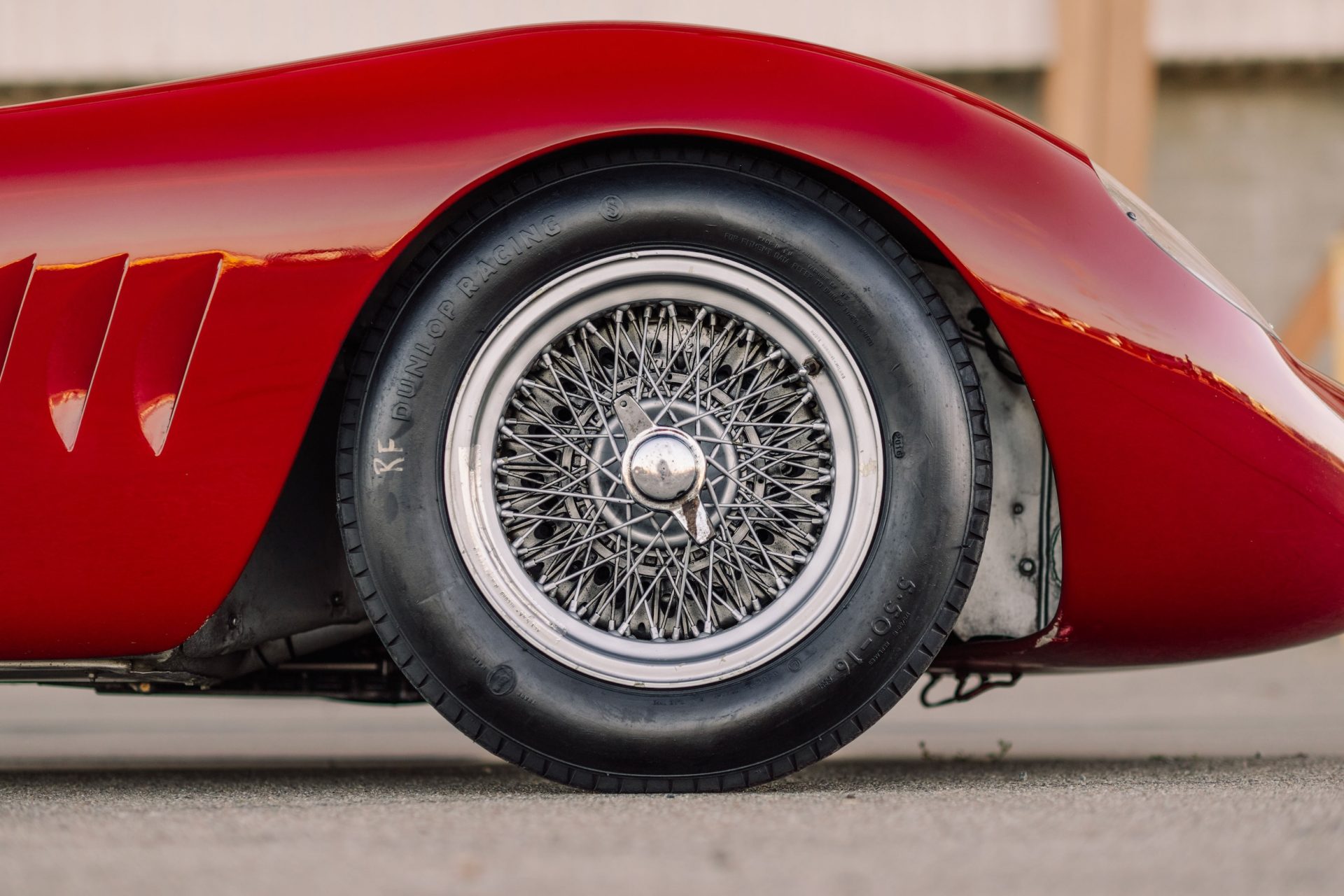
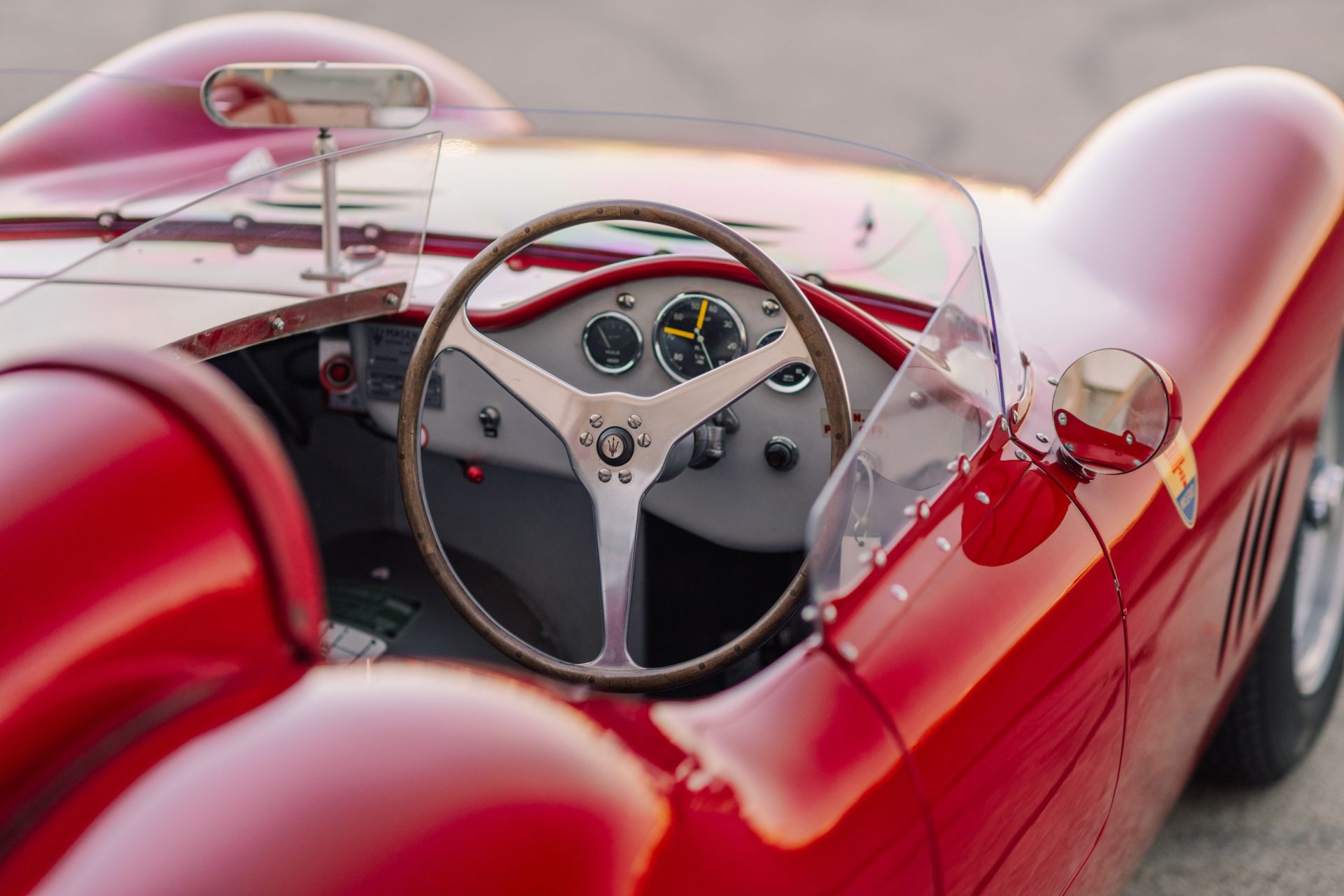
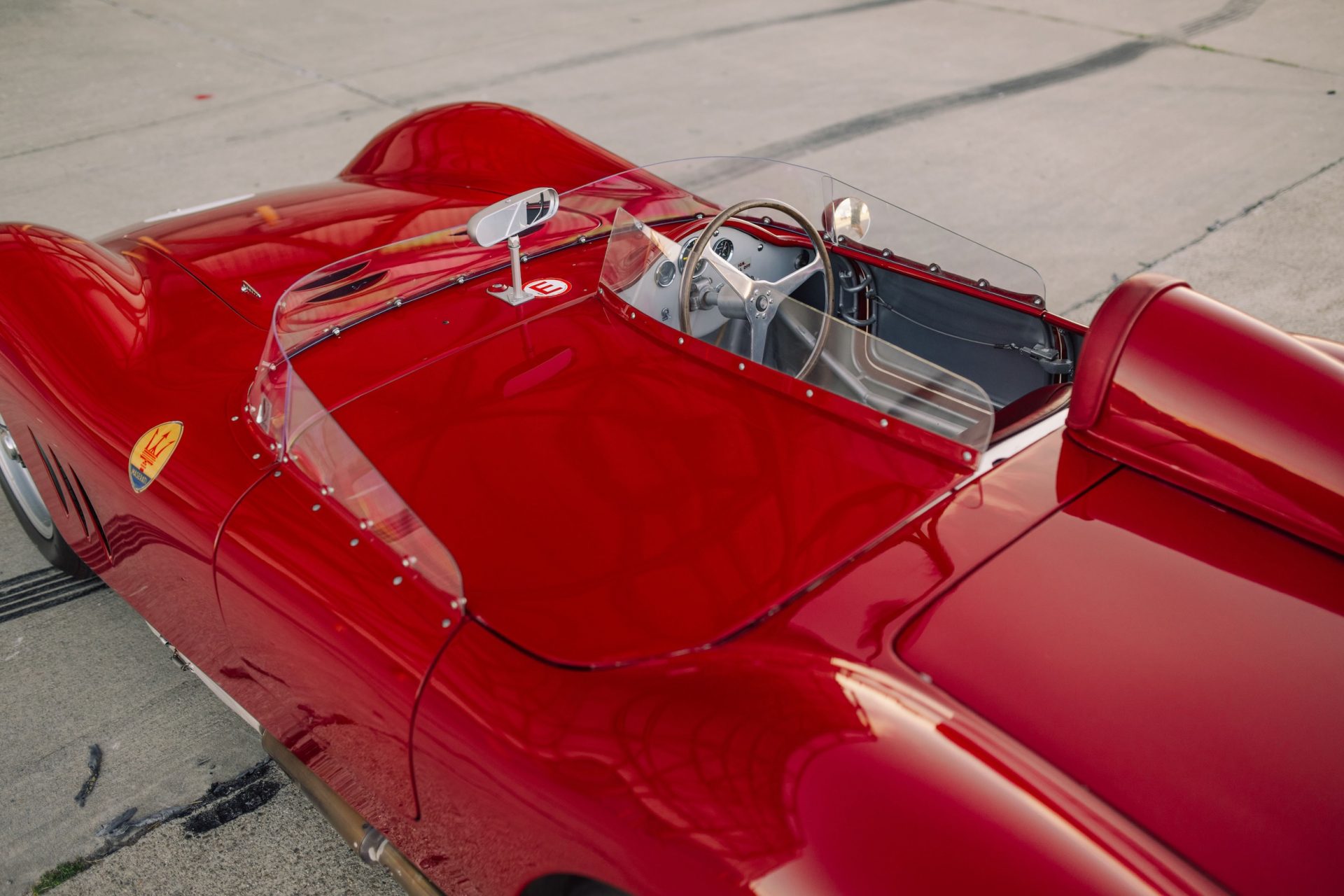

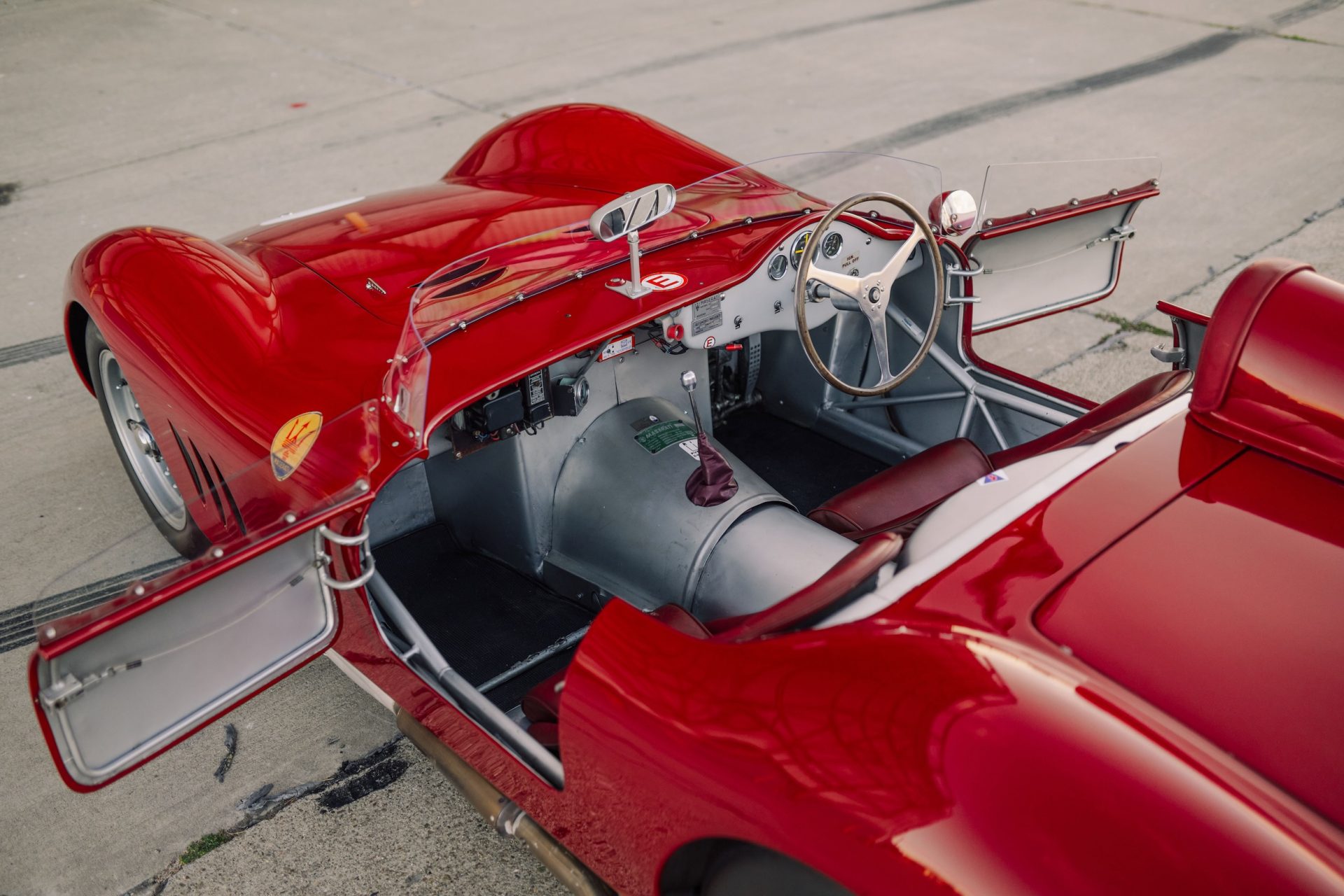


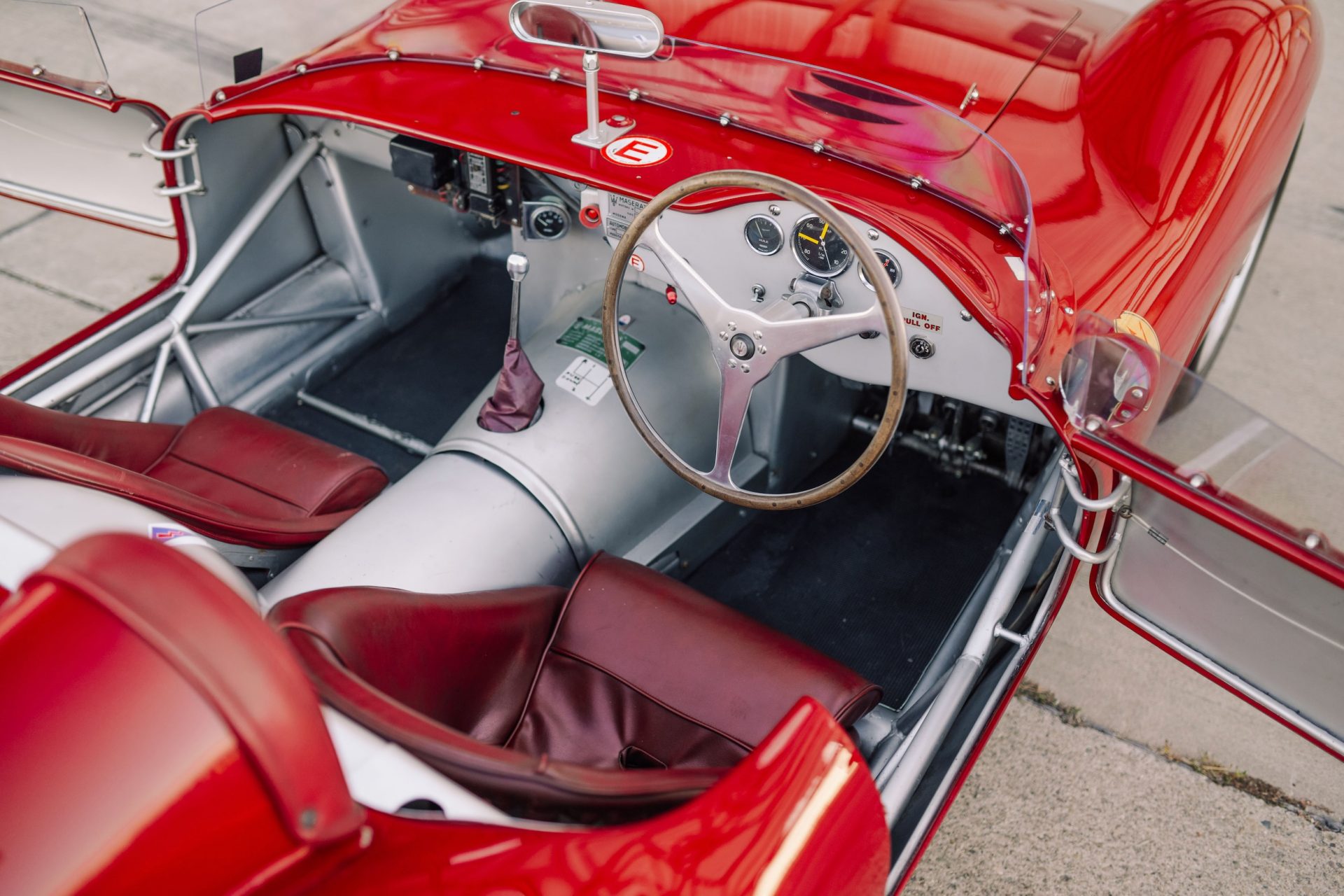
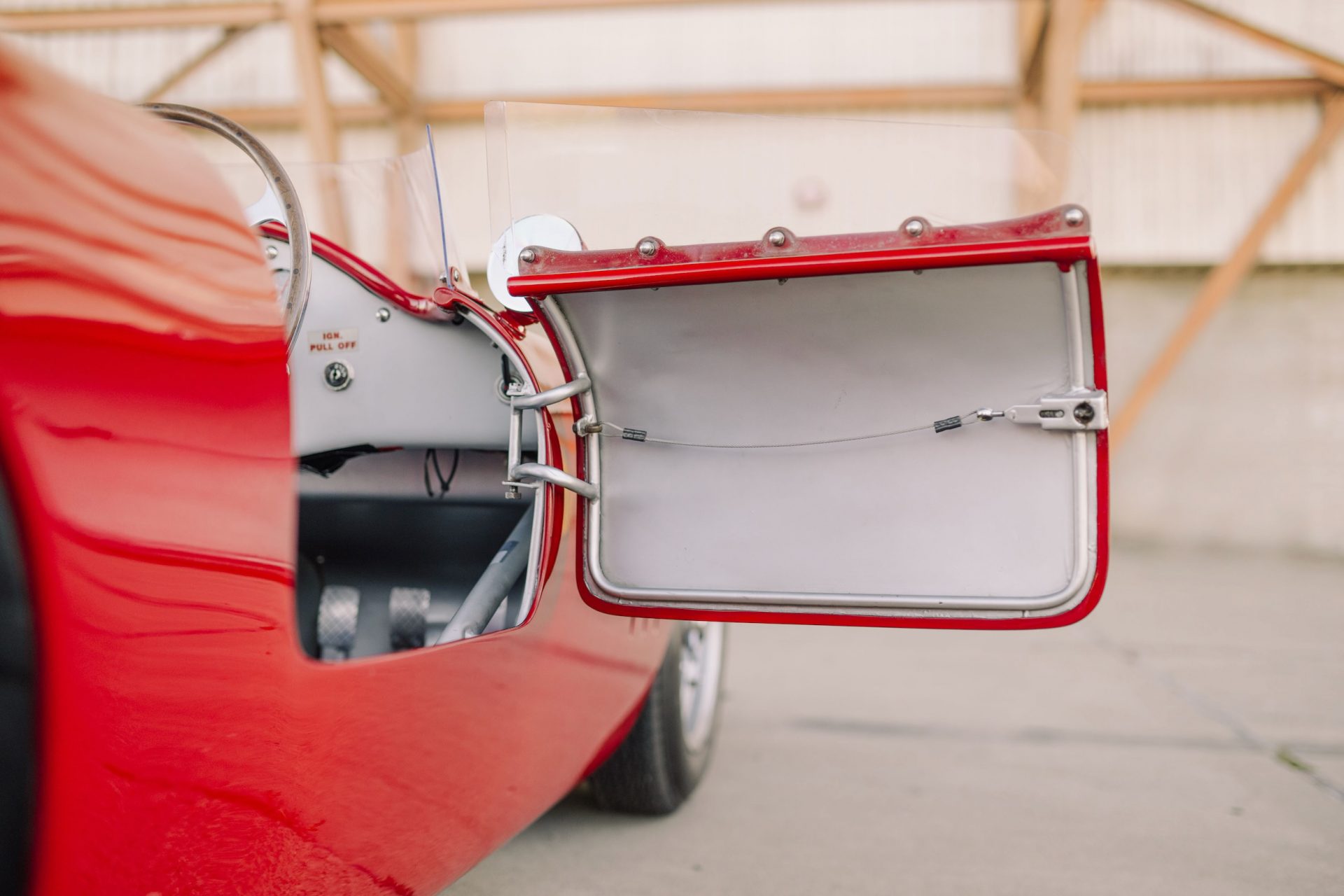

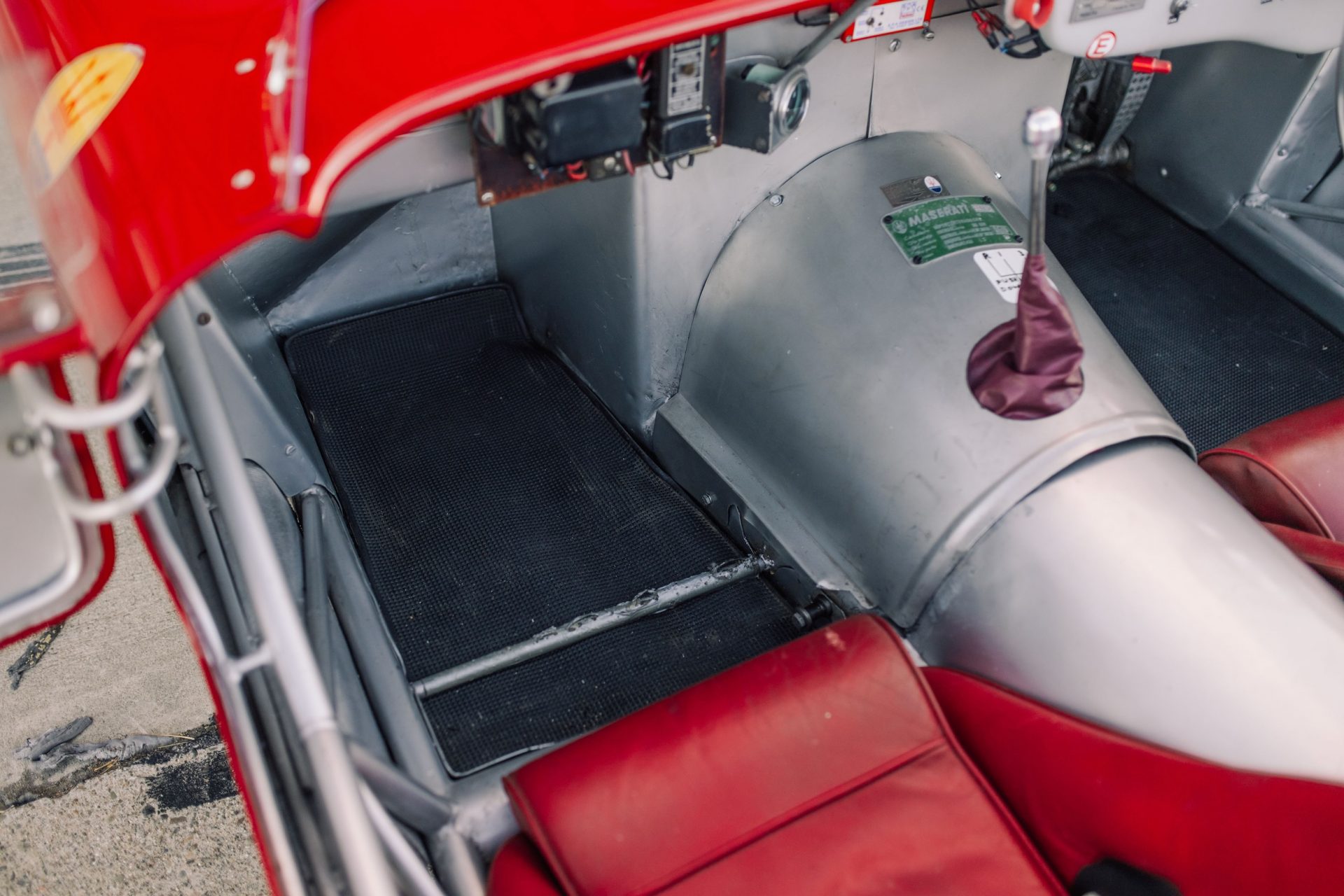


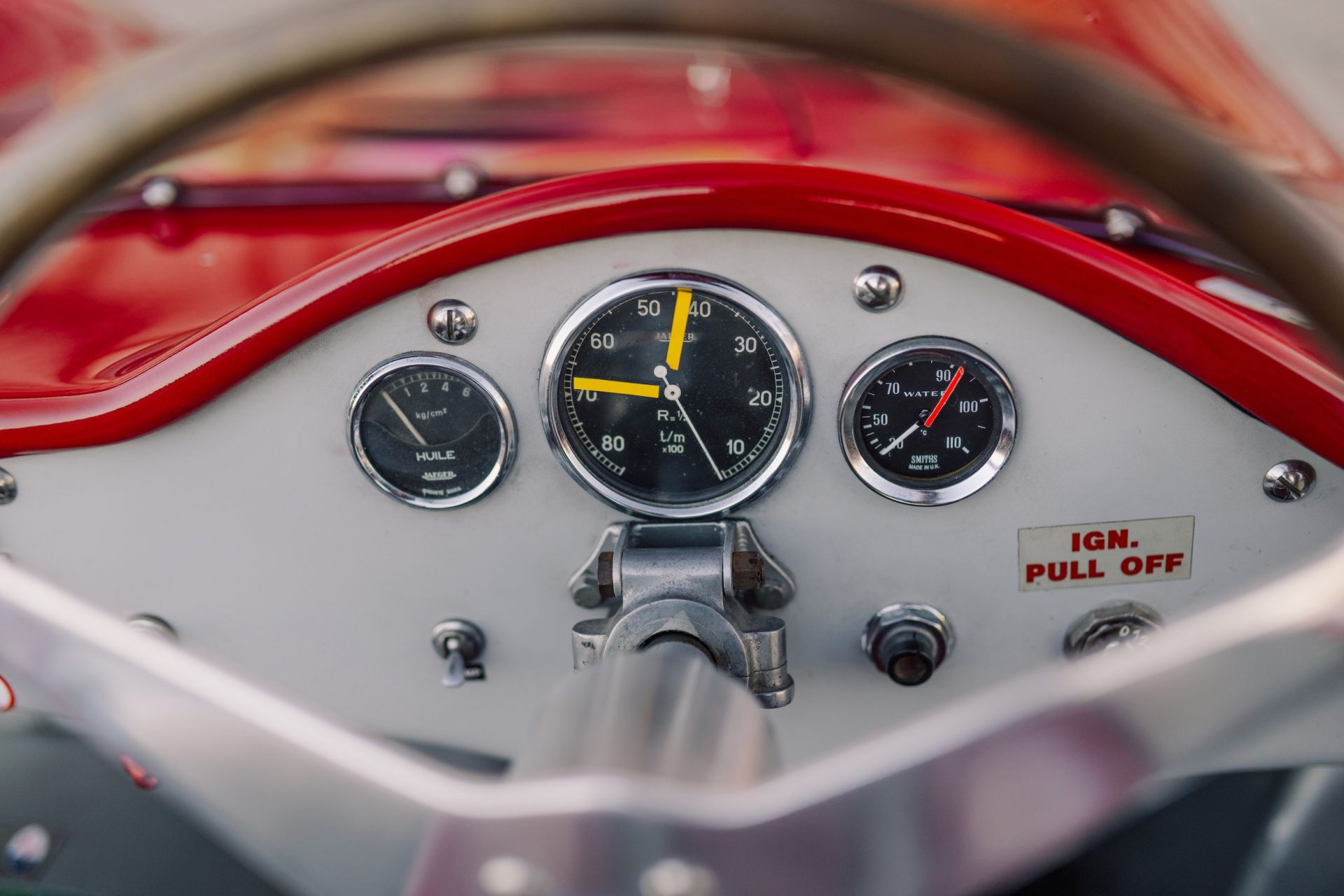
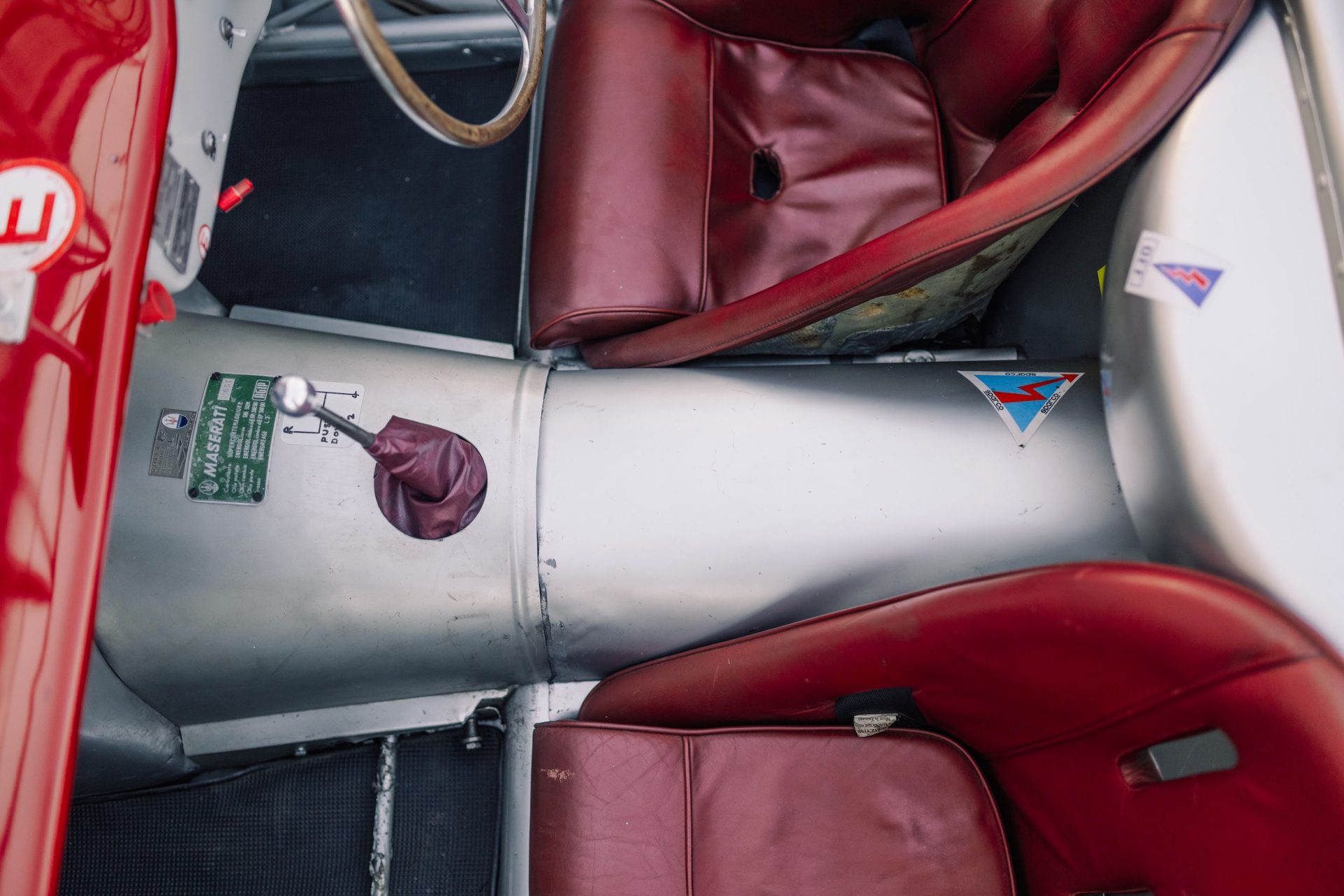
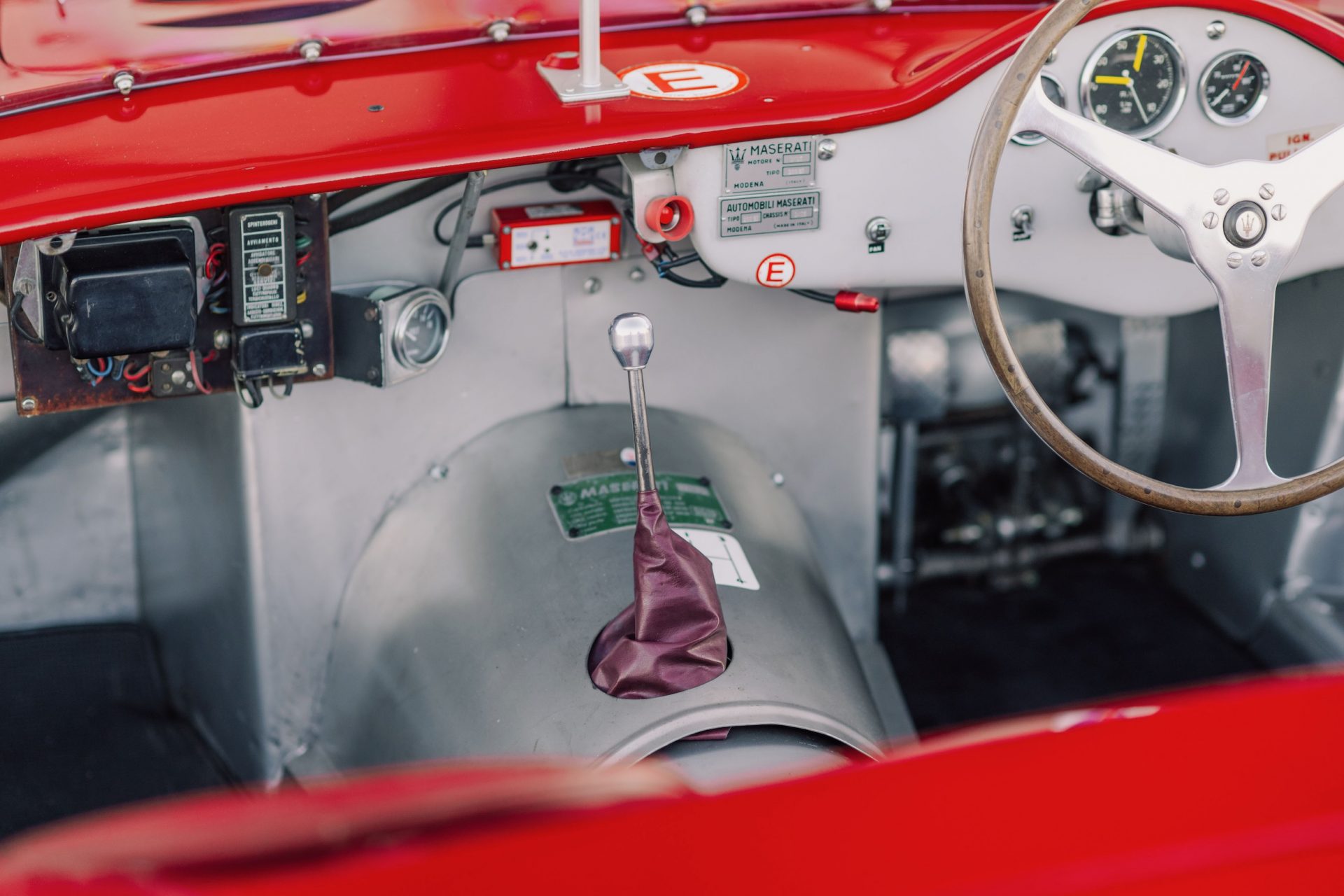
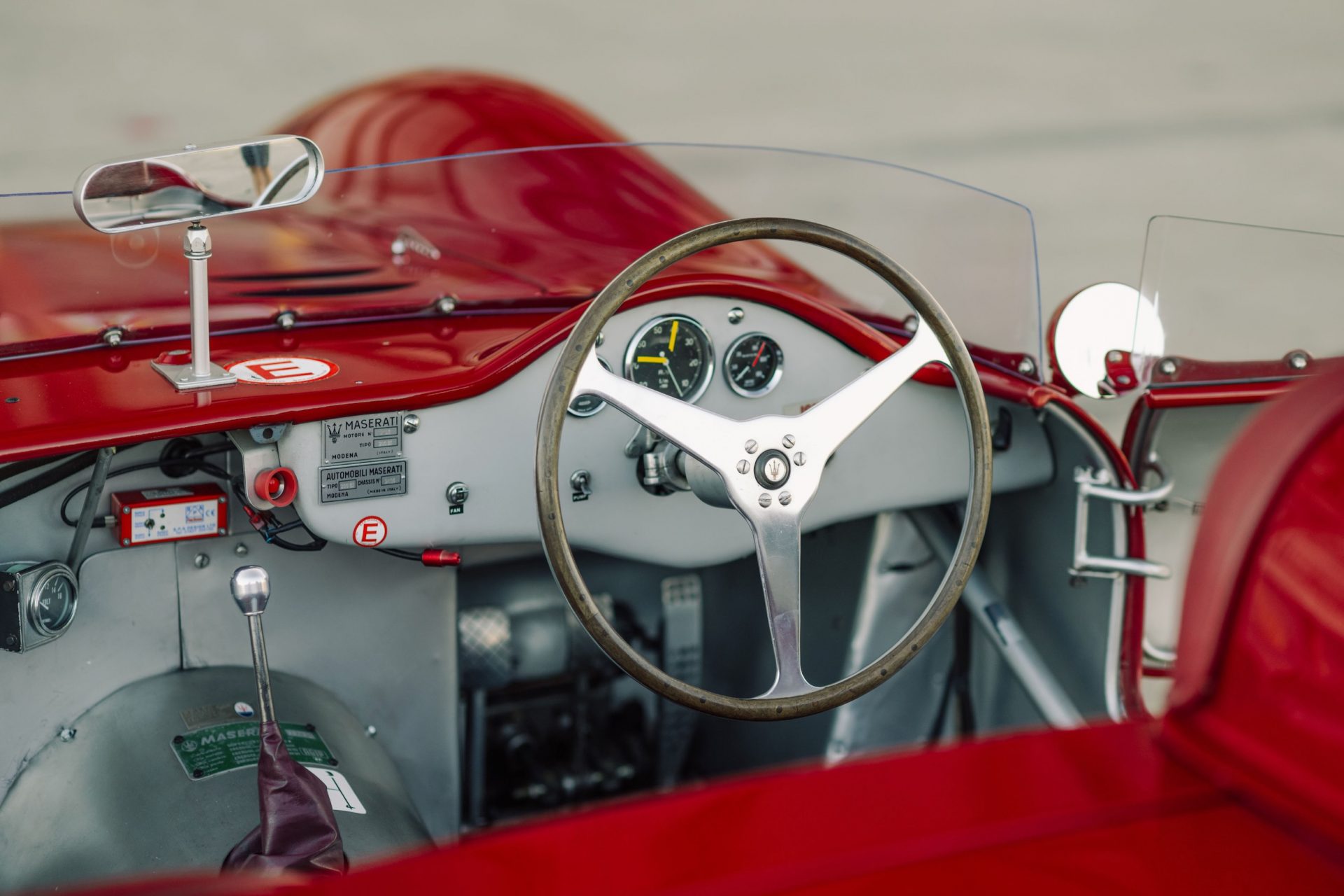
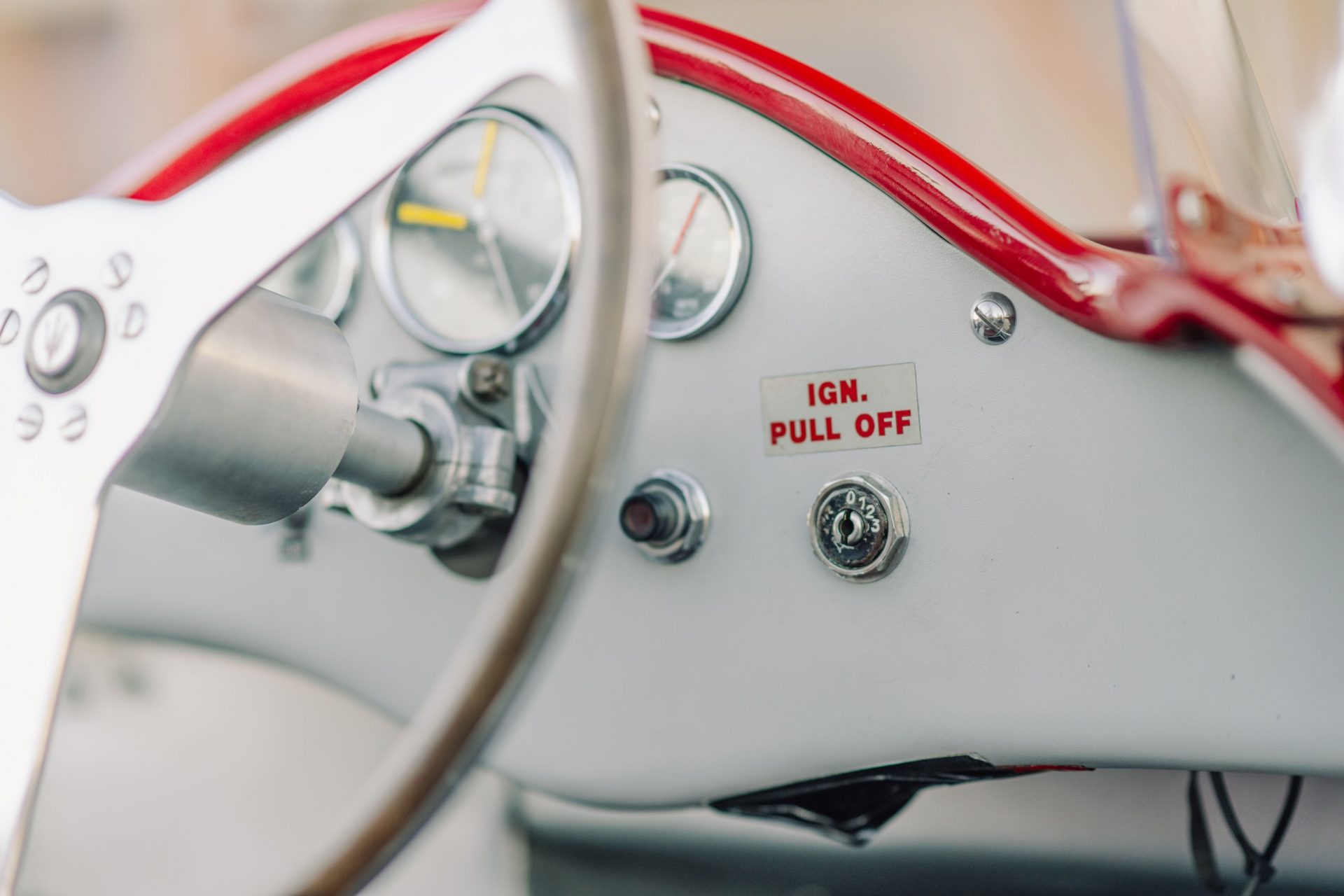
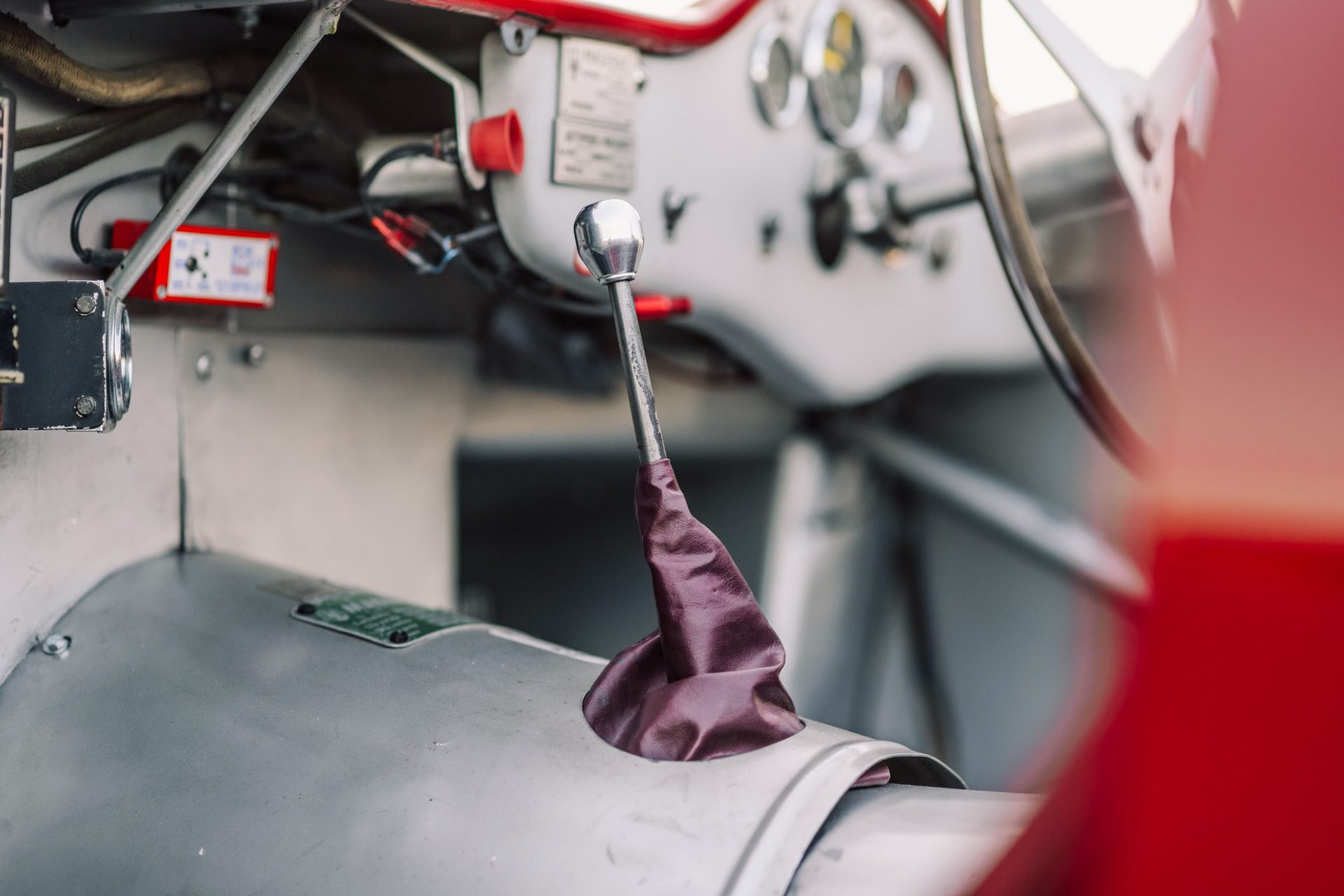
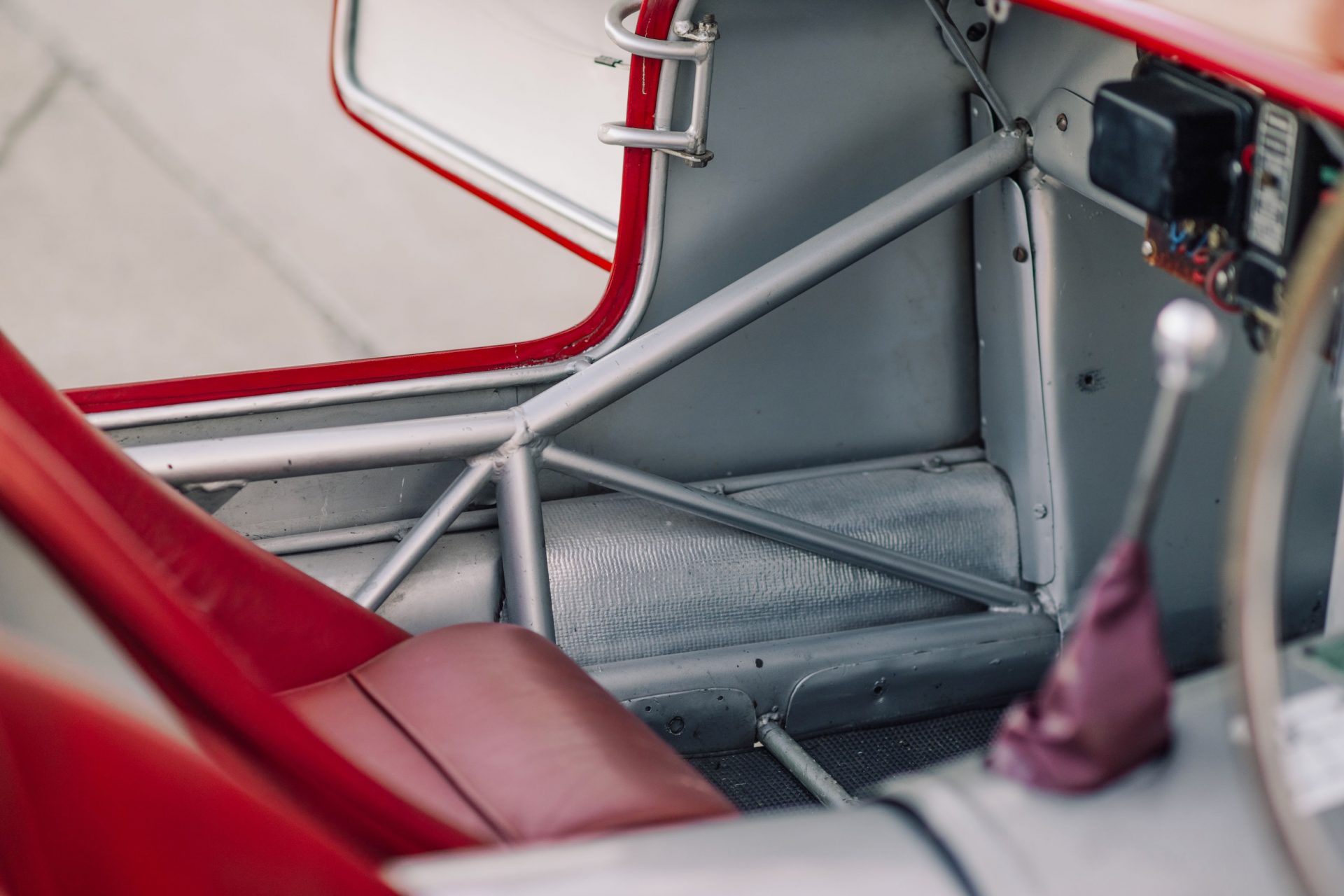

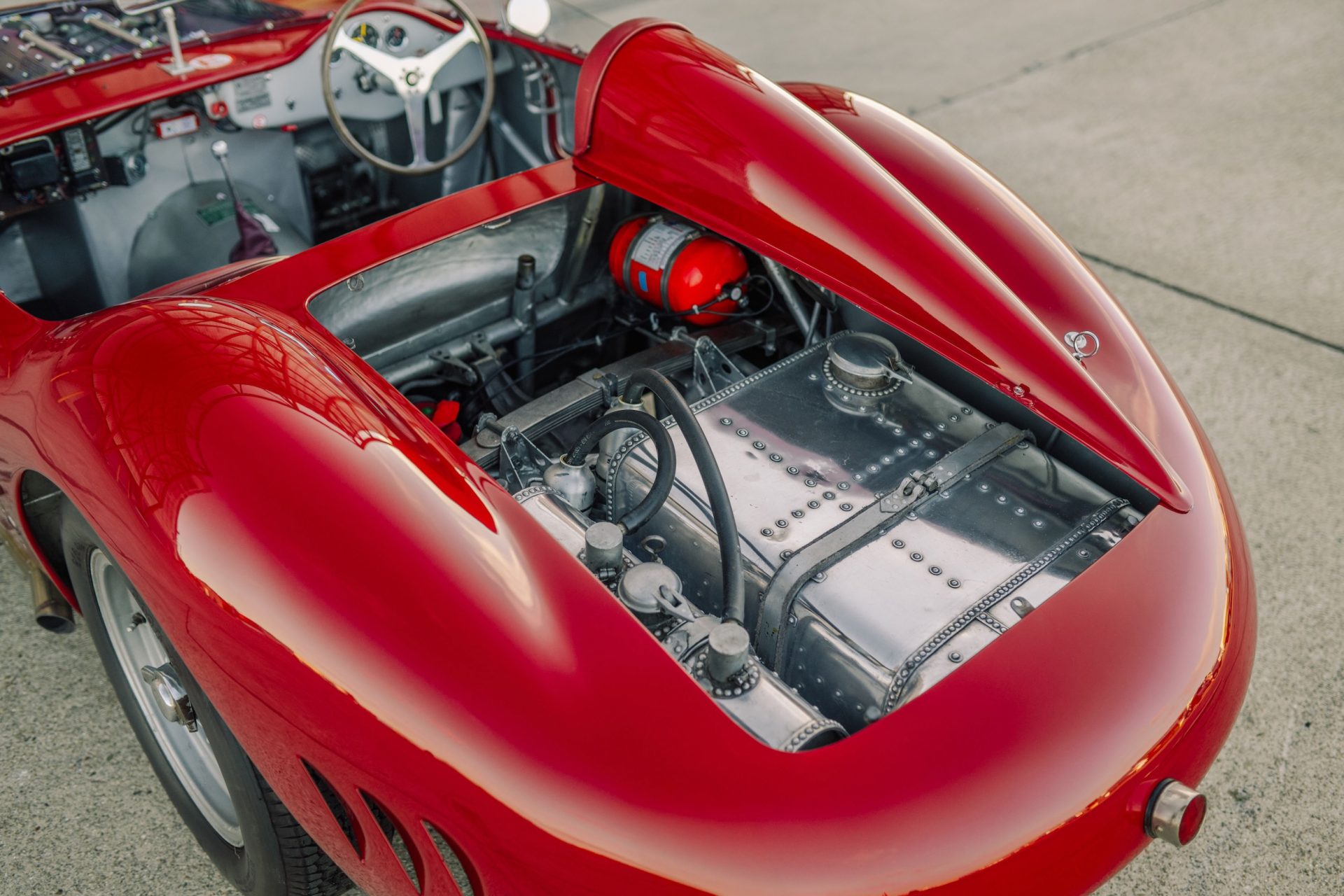
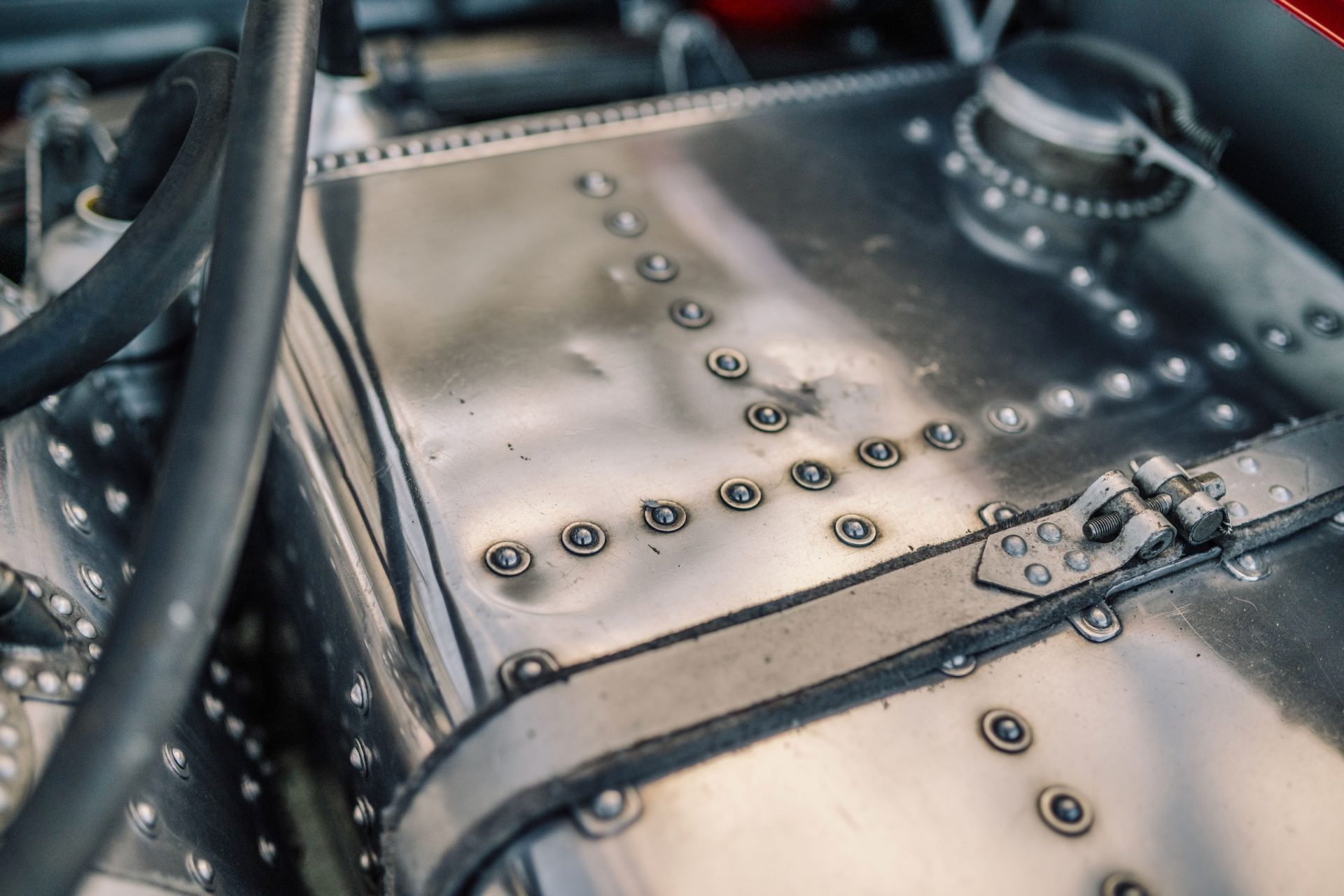
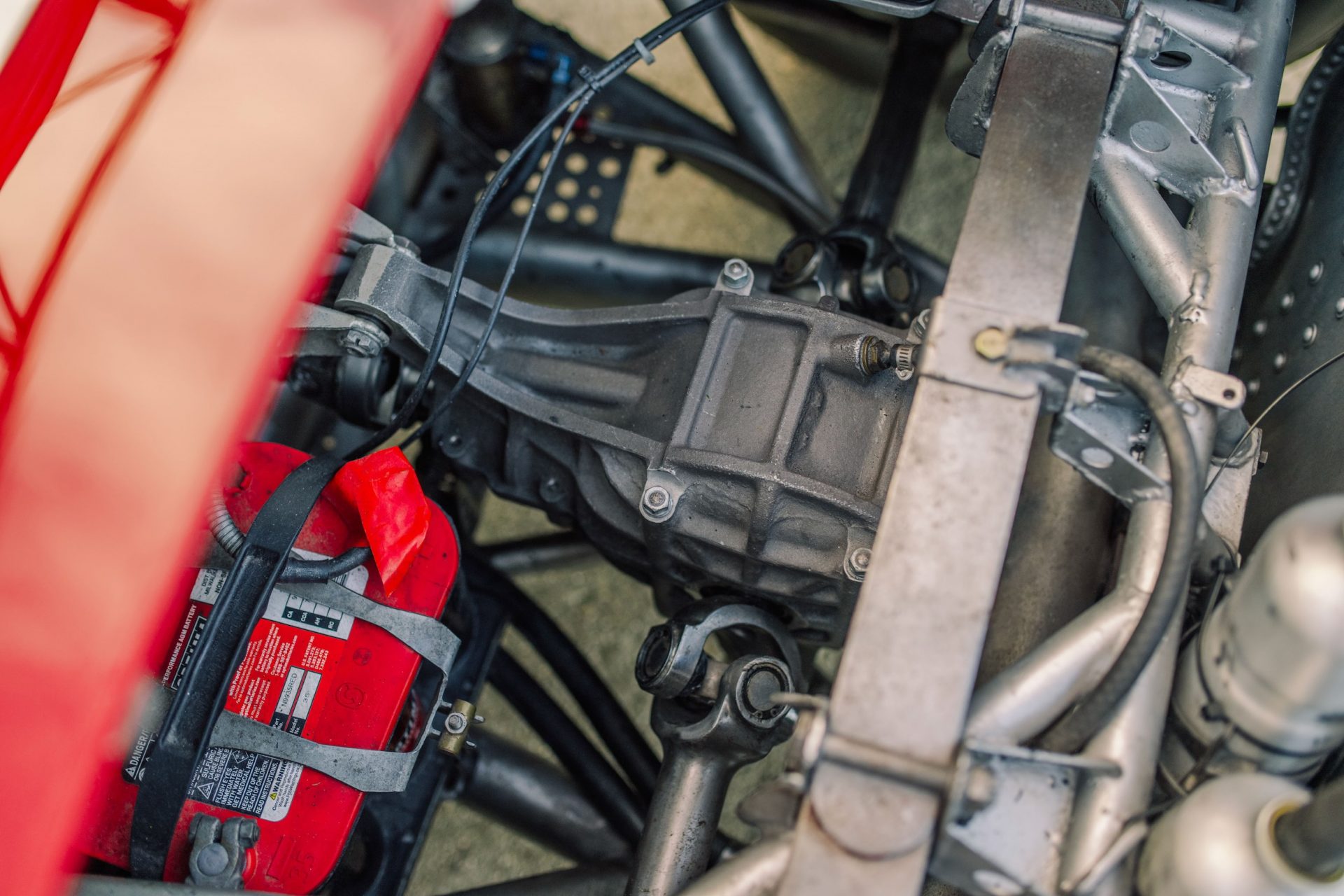


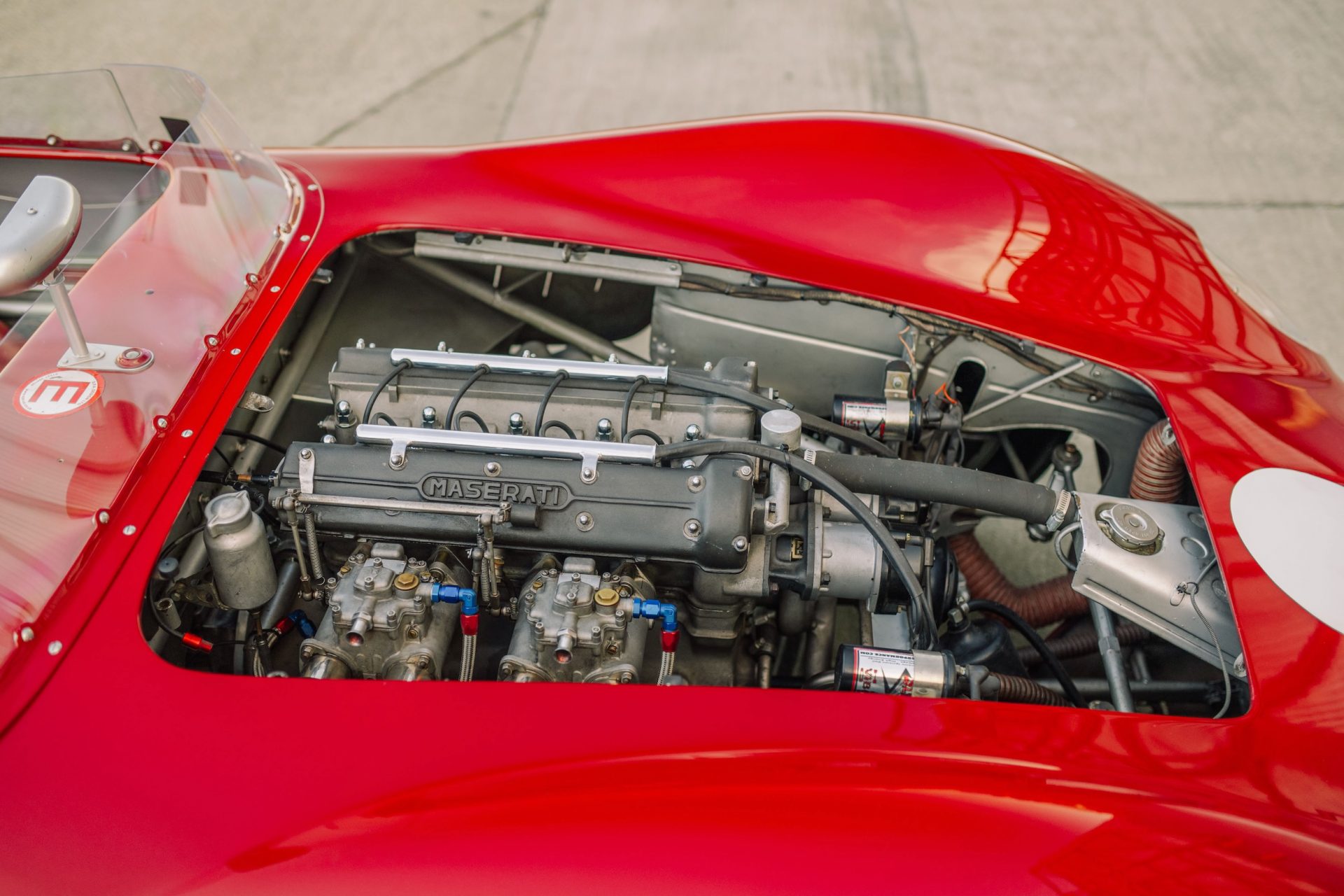
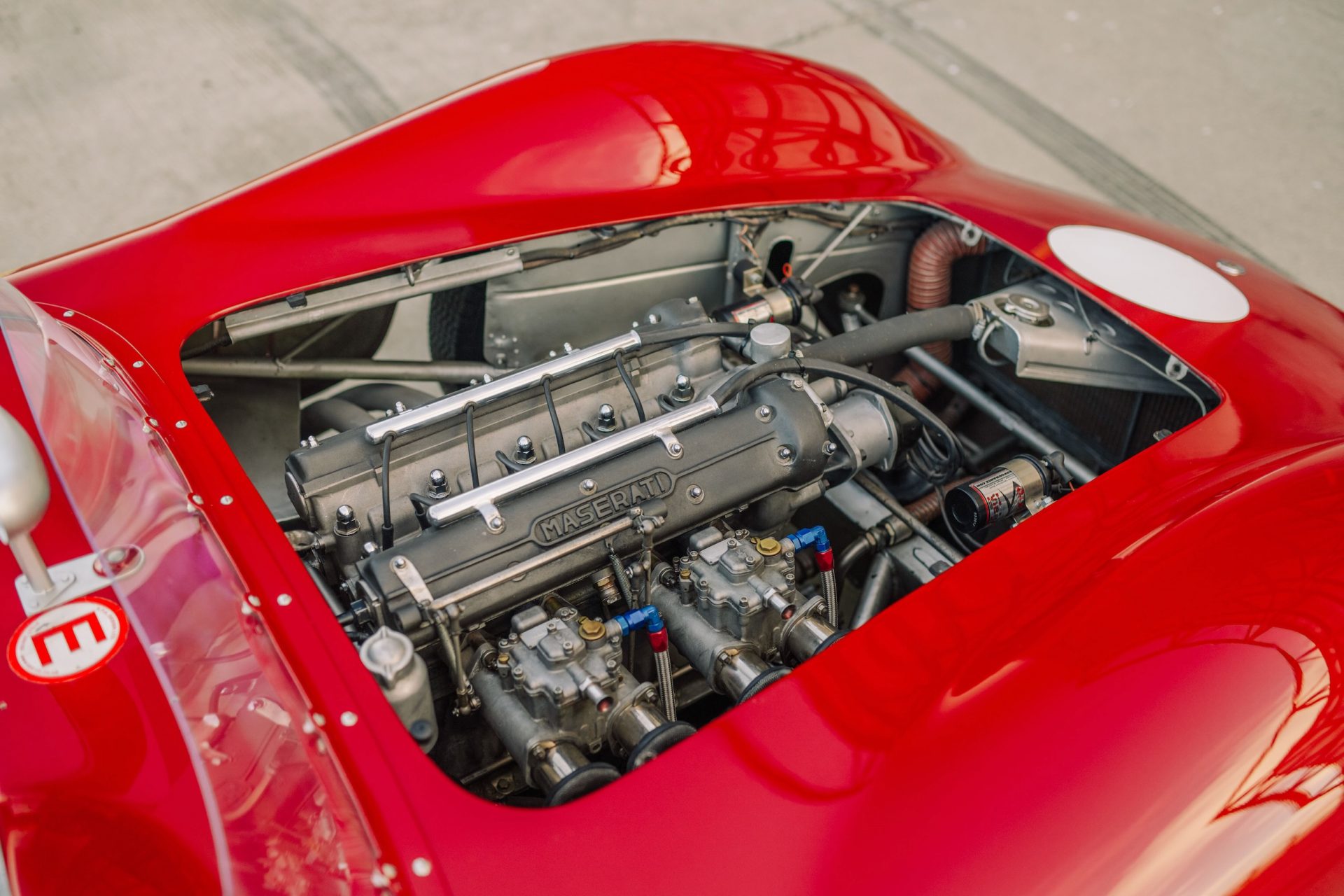
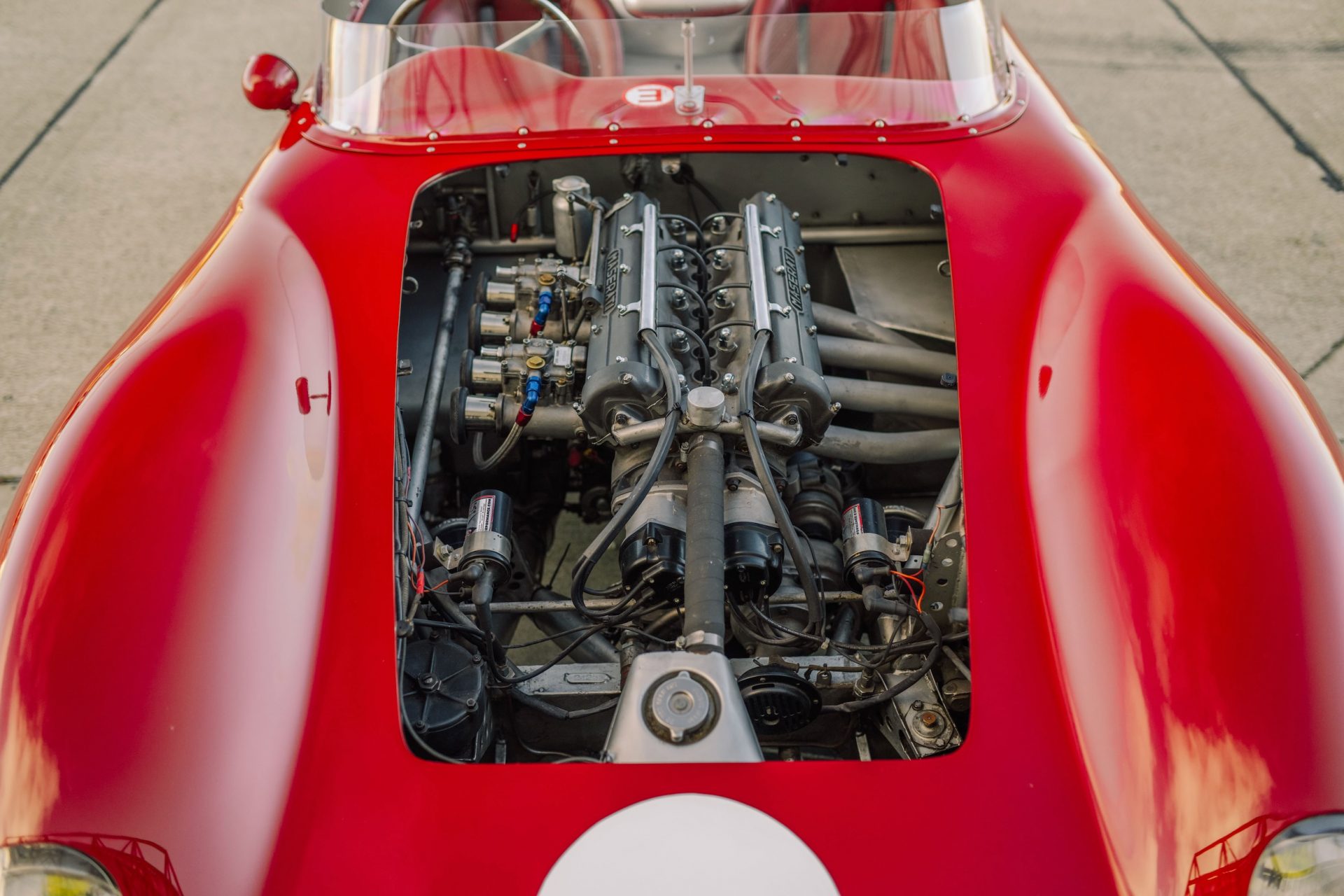
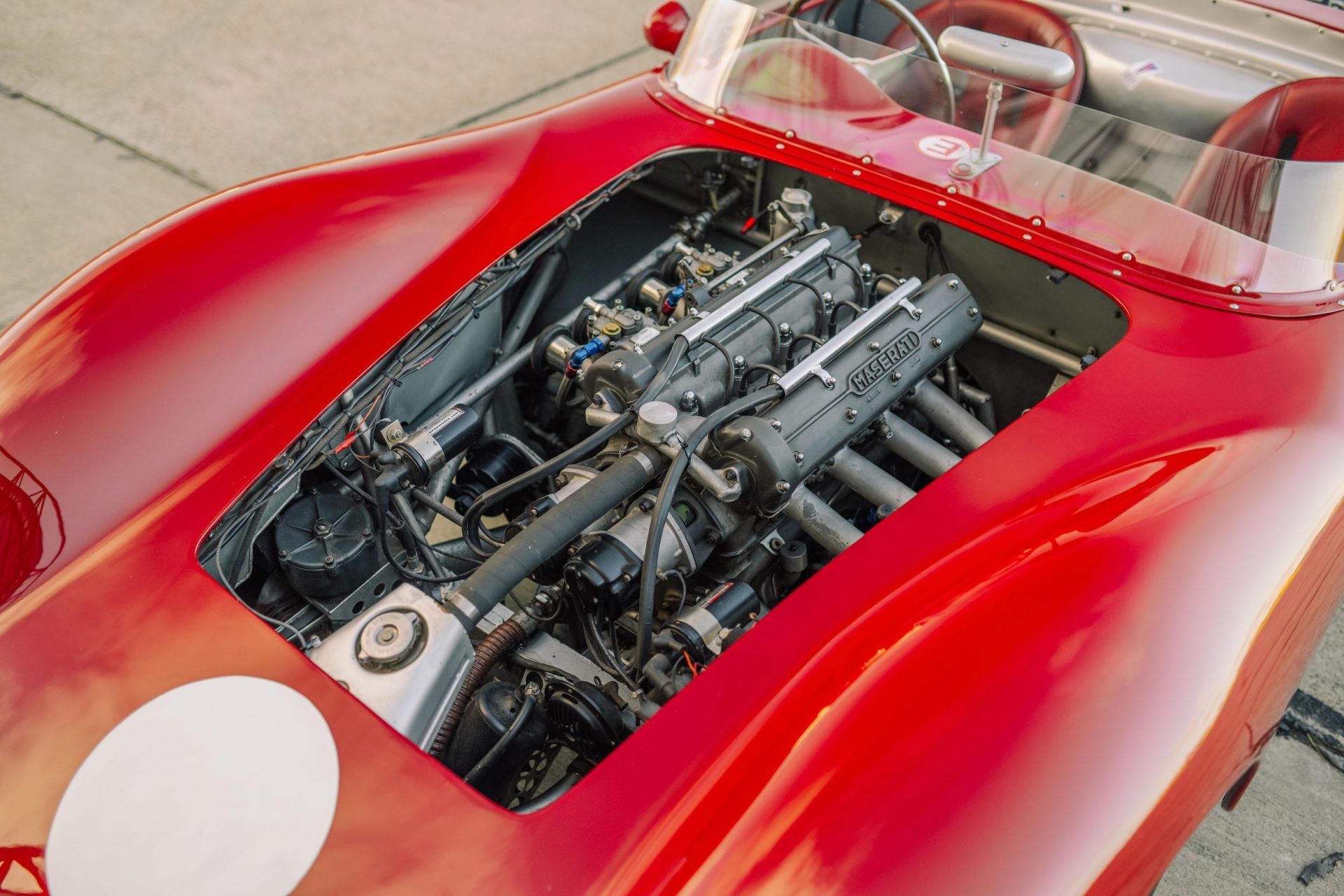
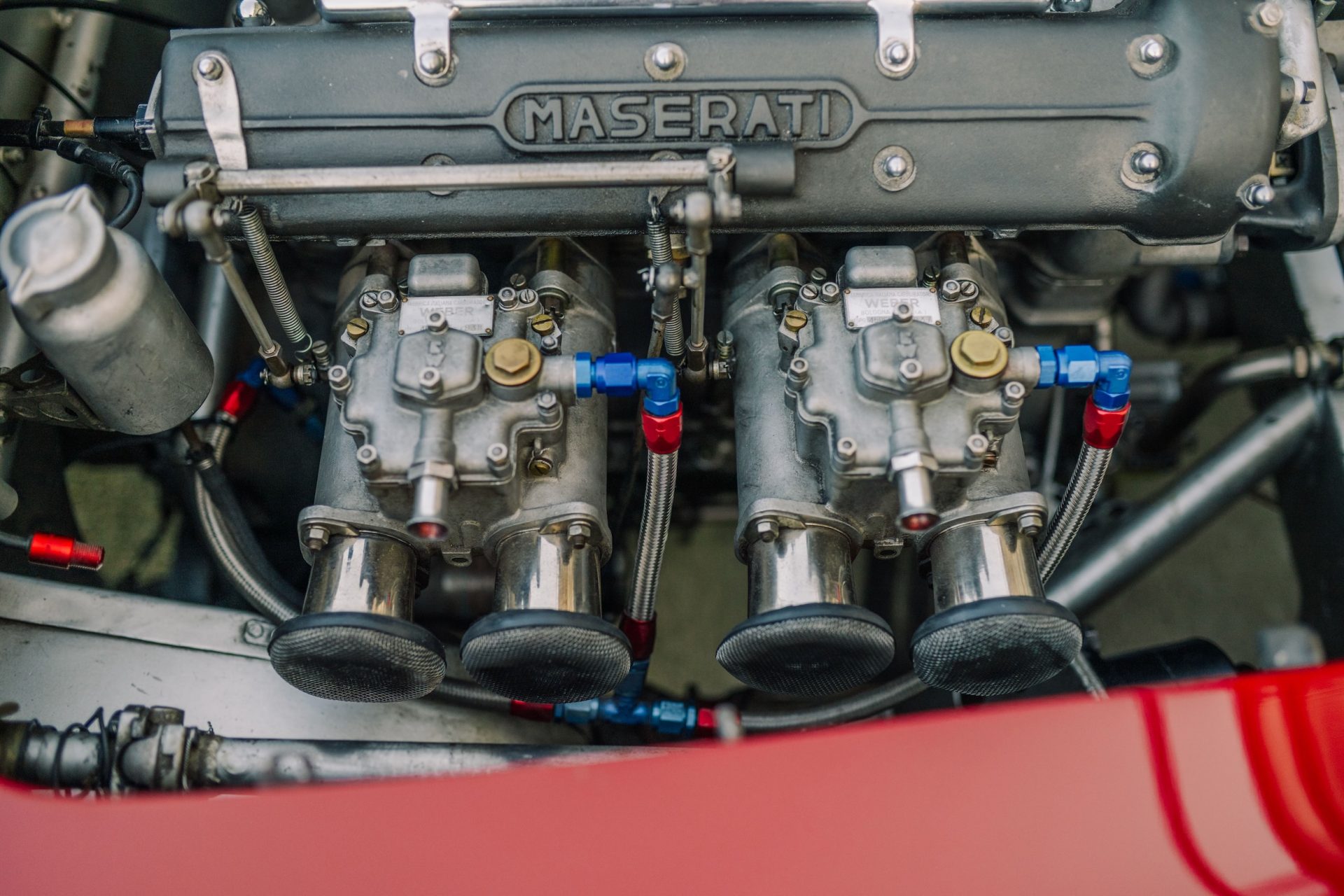

Und schon wieder: Gooding Christie’s, Pebble Beach 2026, Schätzpreis (nur noch) 2,25 bis 2,75 Millionen Dollar, Angaben wie bisher.




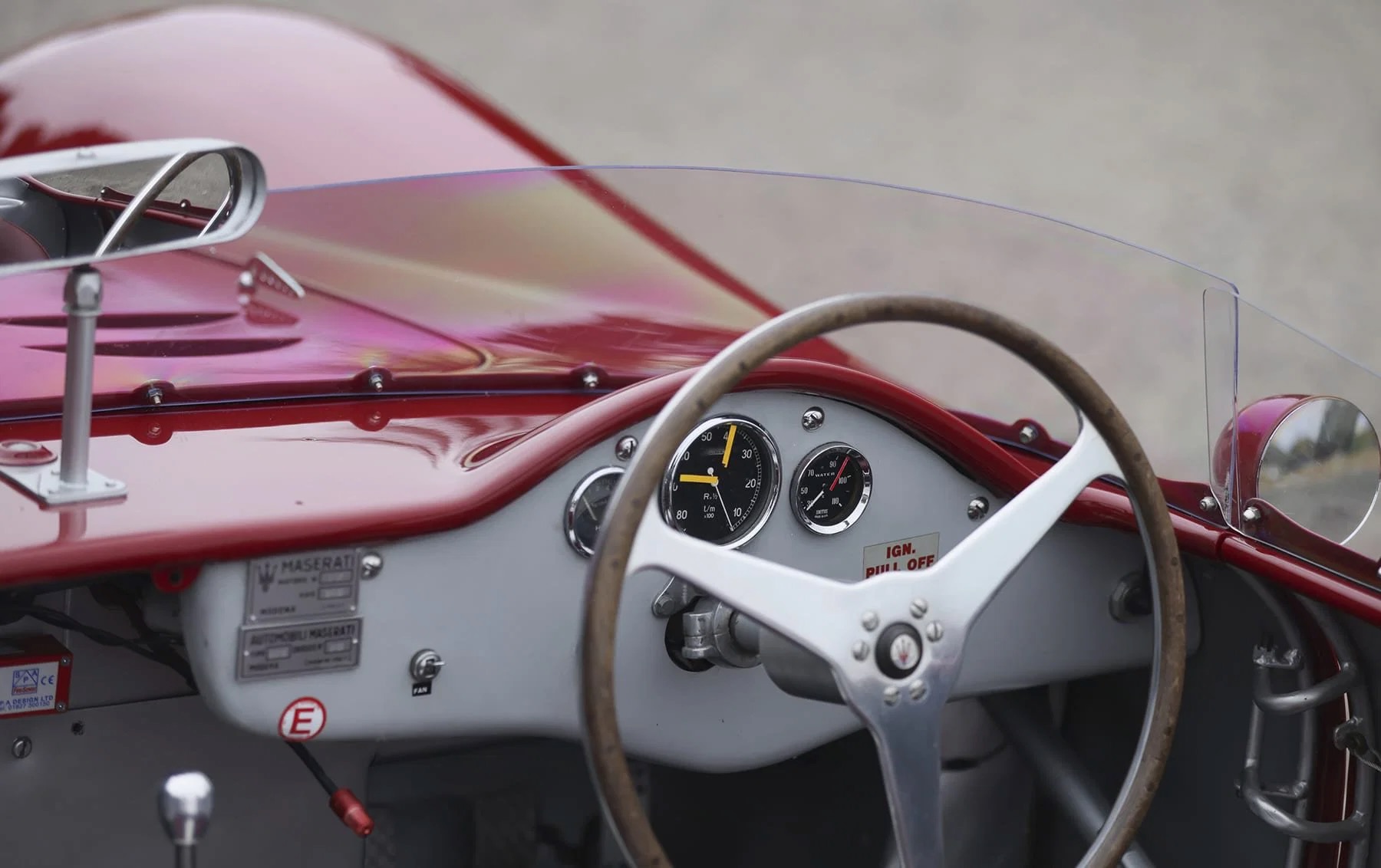
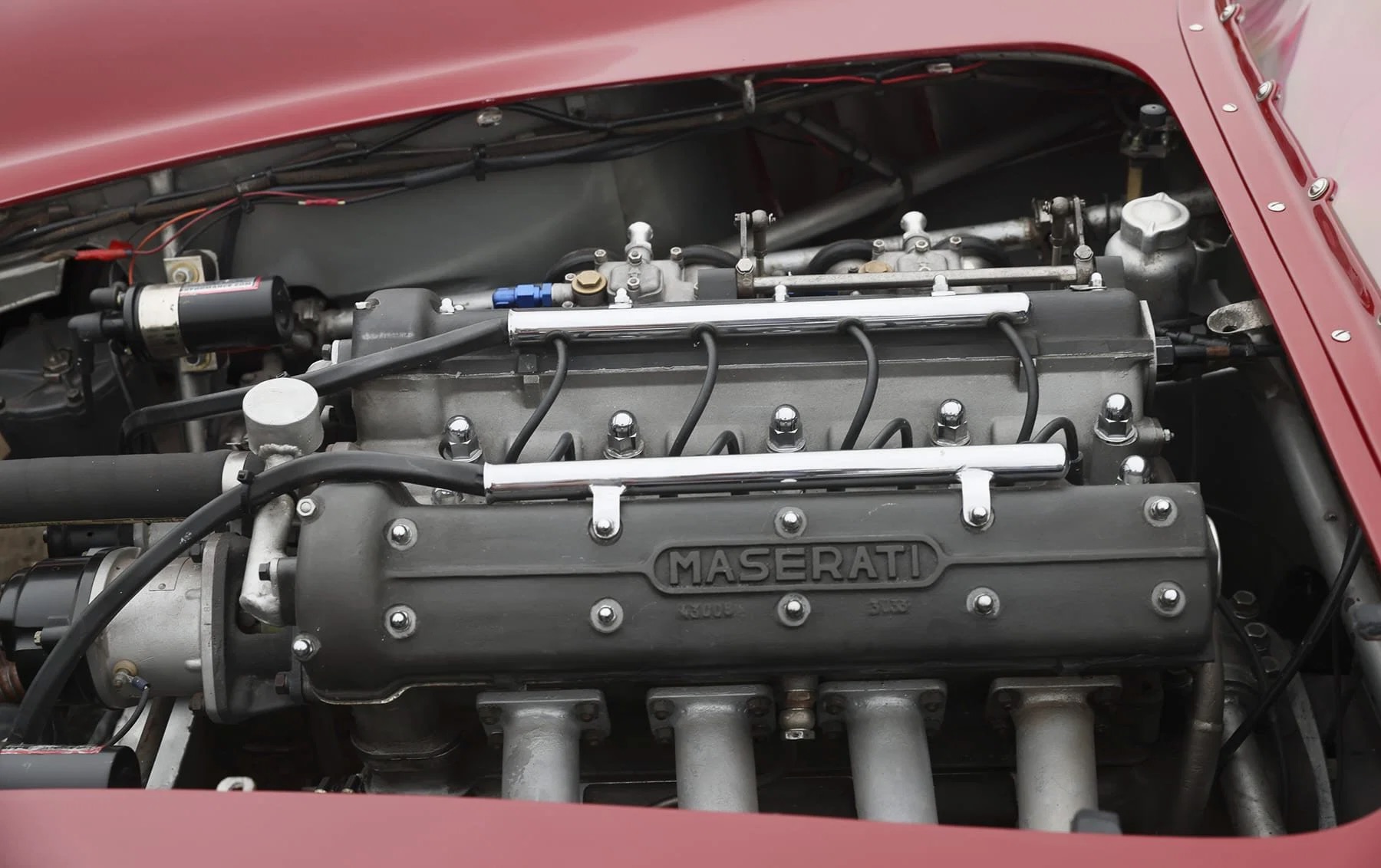
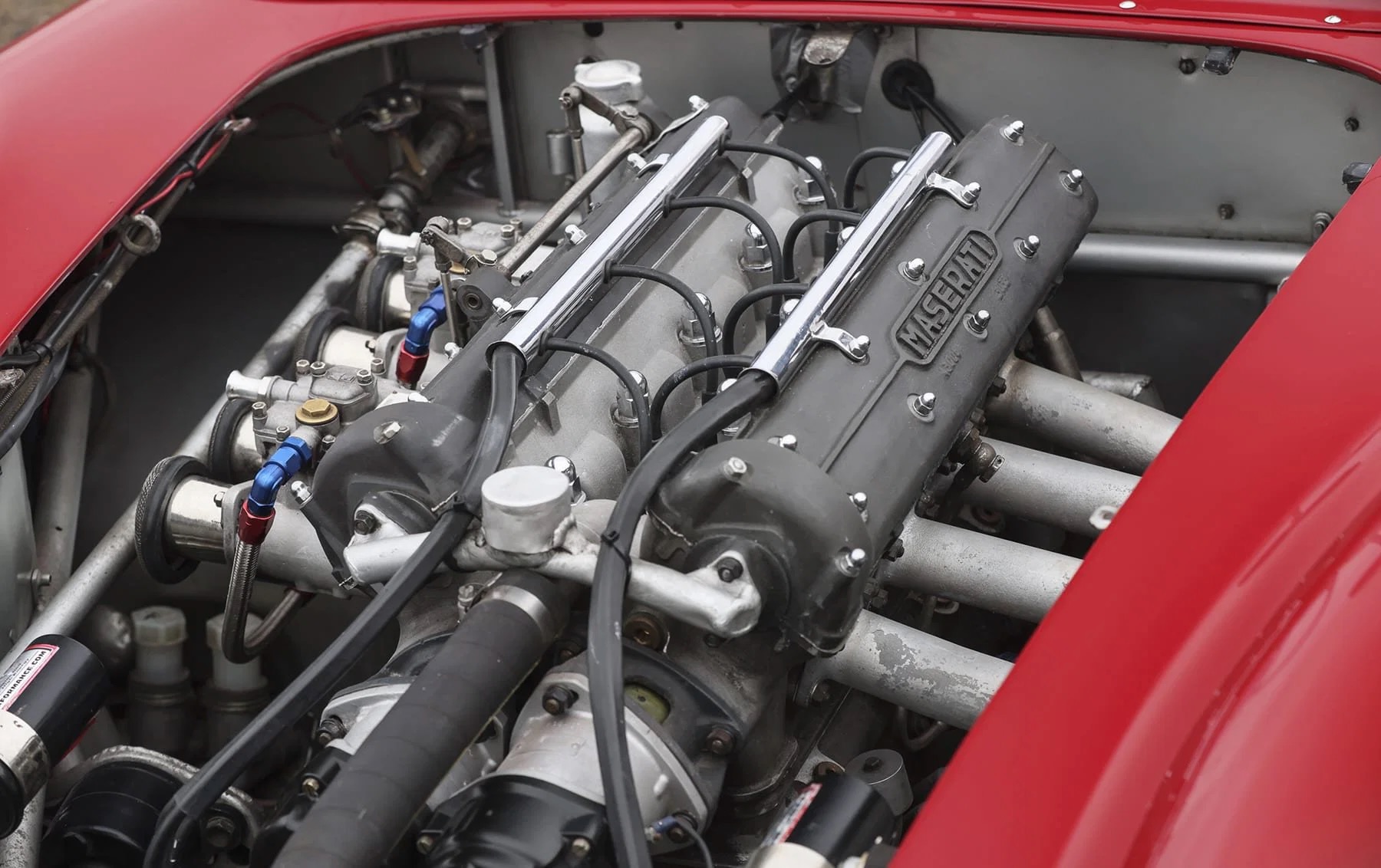

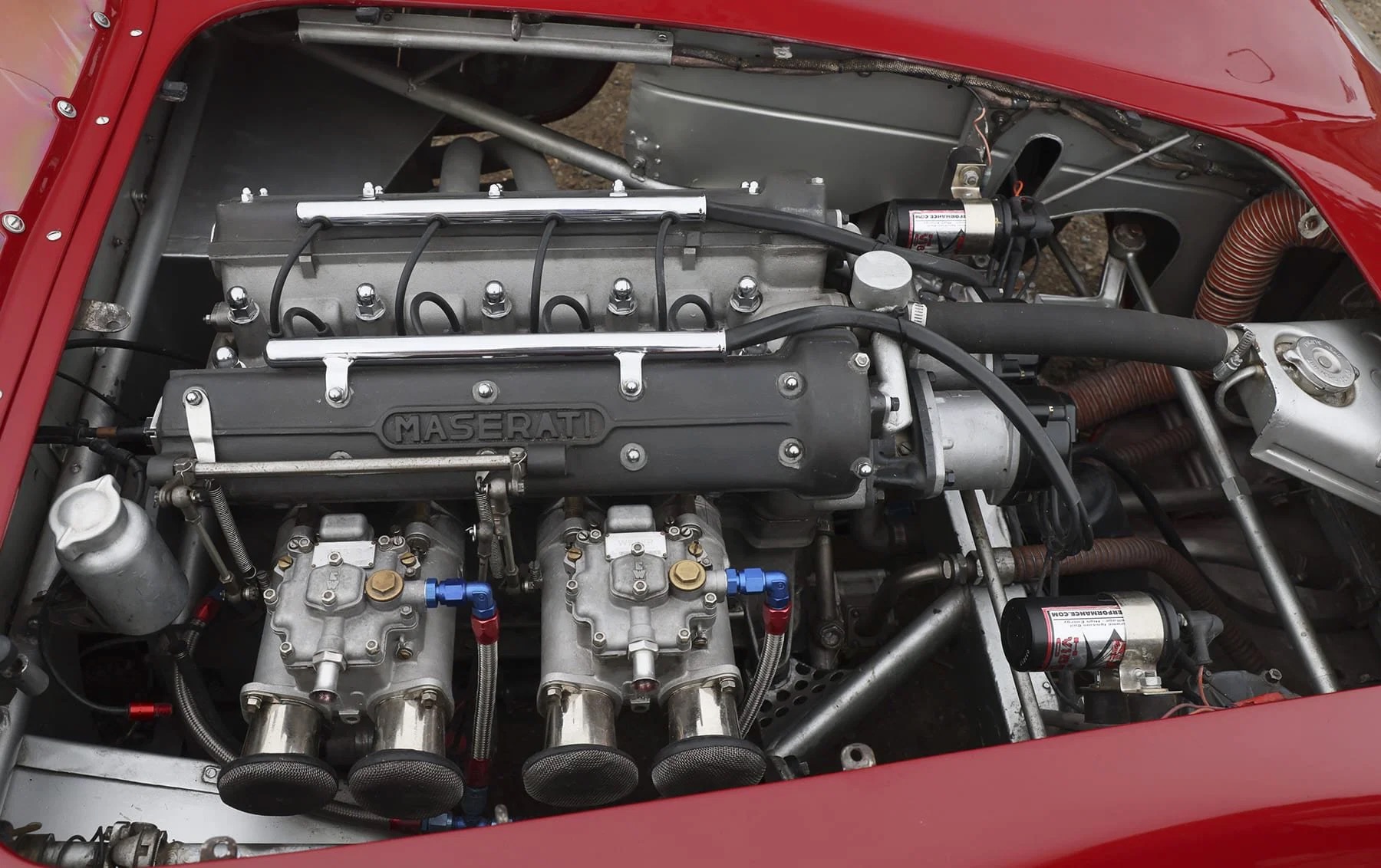
–
Mehr Maserati haben wir in unserem Archiv – und unbedingt empfehlenswert erscheint uns die Story zum grandiosen 450 S.
[…] ja dann auch schon 50. Am Ende seiner Karriere wurde er Ferrari untreu, startete zwei Mal auf einem Maserati 200SI (#2412) bei den 12 Stunden von Sebring. Doch die Liste seiner Ferrari ist […]
«This 200SI, chassis number 2412, would arrive with Kimberly in 1957, having been completed in February of 1957. Imported to the United States by the well-known Chicago-based dealer Harry Woodnorth, Kimberly had the Maserati repainted in his signature shade of Kimberly Red, a color he had formulated with the help of his friend Harley Earl, and a color which was seen on most of the Ferraris and Maseratis that he raced. Paired with sensuous open coachwork by Medardo Fantuzzi, there is no doubt that this Kimberly Red Maserati would have been one of the most breathtaking machines on track at any race. Stemming from the FIA’s new Appendix C regulations introduced in 1957 that mandated a full-width windscreen, two functioning doors, and provision for a spare wheel, Maserati christened this new car the 200SI (with the suffix standing for Sport Internazionale). Later cars featured the twin-plug, four-cylinder, but with slightly enlarged engines to 2.5-liters of displacement and were renamed as the 250S, after which many of the original 2-liter cars were privately upgraded to 250S-specification. However, chassis number 2412 is one of only a handful of cars not to be upgraded. Kimberly’s 200SI debuted in competition at the 12 Hours of Sebring in March 1957, with Ted Boynton, Kimberly, and famed journalist/racing driver Denise McCluggage sharing driving duties. Unfortunately, 2412 was forced to retire because of a gearbox failure after 58 laps. Regardless of the result, you can be sure that Gentleman Jim would have made sure that both he and his entourage would have enjoyed their weekend at the races. His Kimberly racing team members wore tailored driving suits to match the Kimberly red of his cars, waiters were attired in matching red jackets, and racing trailers were appropriately liveried and immaculately presented. Aside from all the glitz and glamour, Kimberly was known to his closest confidantes as an extraordinarily generous man who gave freely to charity and supported the less fortunate—a true gentleman both on and off the track. The Maserati made three additional starts in 1957, all at Elkhart Lake, and during the last of these races Kimberly was joined by the accomplished Jack McAfee. During 1958, chassis number 2412 started seven events, including the Grand Prix of Cuba in February and the 12 Hours of Sebring a month later. Yet, despite Kimberly’s best efforts, the 200SI struggled to finish these races due to various mechanical issues. Driver Jay Middleton actually experienced the most success during this time, finishing 9th in class at Elkhart Lake in June 1958 and 3rd overall at the same track a month later. In May 1958, Kimberly consigned the Maserati back to Harry Woodnorth to sell for him and ensure the car found its next caretaker. While exact ownership history during the 1960s is currently unknown, by the early 1970s, the car was owned by William Baker of Illinois. In December 1976, the 200SI was sold to Dr. Elliot Siegel of Chicago, and he went on to retain possession until November 1993, accounting for 17 years of dedicated single-owner care».
Thoroughly researched by international Maserati historian Walter Bäumer, his ten page report is on file and documents Maserati 200Si chassis number 2415 from day one. The new sports racing Maserati was ordered on 2 February 1957, by S.A.R.C., the Italian oil company owned by Sig. Fernando “Nando” Pagliarini. Pagliarini, a well-to-do oil man and gentleman racer from Parma, had started competing in 1952 at the Mille Miglia in a little Fiat 500, but soon recognized Maserati’s phenomenal competition cars were the way to success. He acquired a Maserati A6GCS in 1953 with which he tried his luck in the Mille Miglia that year, and later a Maserati 150S which he took on the grueling Brescia-Rome-Brescia race in 1956, although he didn’t finish.
Nando Pagliarini would take delivery of the brand-new Maserati 200Si chassis number 2415 on 23 March 1957. Finished in “Italian Racing Red,” the new Maserati was one of just about 19 200Si (Sport Internazionale) examples made introduced to conform to international sports car racing rules, featuring the fully-developed chassis as opposed to the earlier models based on the 150S chassis. The light aluminum bodywork was handcrafted by Carrozzeria Fantuzzi with a sleek, aerodynamic shape, arguably one of the best sports car designs ever made. The potent, dry-sump light-alloy 2.0-liter four-cylinder competition engine featured dual overhead camshafts, massive Weber carburetors, and was located low and far back in the competition chassis for excellent weight distribution.
2415 would debut on the Italian racing scene with Pagliarini at the wheel on 28 April 1957, at the Bologna-San Luca Hillclimb, where Pagliarini successfully brought the potent 200Si home to a 5th in Class/5th Overall finish. The real test of 2415 and Pagliarini’s racing capabilities would take place the following month at the 1957 Mille Miglia. Run on the 11th and 12th of May, the 24th and very last edition of the grueling Mille Miglia race was the 3rd round of the World Sportscar Championship, with competition at the very highest international level. Sporting start number 504 (reflecting a hardy 05:04 am start time) Pagliarini at the wheel of 2415 would compete against the very best drivers and teams in the world, and spectacular archival photos on file show Pagliarini at scrutineering in Brescia, proudly getting 2415 ready for the race, in addition to many photos and actual video footage of the 1957 Maserati 200Si sporting number 504 racing through Italy, from Brescia to Rome and back. Pagliarini and 2415 would finish the heroic race with an impressive result of 6th in Class and 23rd Overall, and bring home the Maserati sports racer safely, despite a tap to the nose, which didn’t prevent him from finishing the race. Impressive indeed, as of the 310 cars starting the 1957 Mille Miglia, just 172 would finish the race. The Maserati Works team at the 1957 Mille Miglia employed legendary racers Moss, Behra, Herrmann and Scarlatti, yet the team’s hopes of success had vanished early, with Behra out, having crashed his 450S even before the race started, Moss forced to retire due to a broken brake pedal, and Herrmann facing problems even before one of the first checkpoints. The 1957 Mille Miglia was won by Piero Taruffi in his Works Ferrari, but the win was overshadowed by the tragic accident just 70 kilometers from the Brescia finish, where race-leading Spanish factory driver Alfonso de Portago’s front tire exploded, resulting in him losing control of the car and tragically crashing fatally, causing one of motorsport history’s most horrific accidents. Three days after the conclusion of the event, the Italian government banned all motor racing on public roads, and thereby ending the original Mille Miglia race forever, and writing the last chapter of a now legendary era in motorsports history.
Following the Mille Miglia, Nando Pagliarini would continue competing with 2415 at various Italian sports car races and hillclimbs. Three scrapbook binders of original period newspaper clippings and old photographs accompanying the sale of 2415 show Pagliarini racing the 200Si to much success, without any serious mishaps compromising the cars originality today. He would enter the 1957 Mont Ventoux, Aosta-Gran San Bernardo, Pontedecimo-Giovi, and Trieste-Opicina hillclimbs, and in 1958 run the Bologna-San Luca Hillclimb in May, and then score an overall win at the Castell‘ Arquato-Vernasca Hillclimb in June. The following month, a class win was achieved at the July 1958 Compiano-Vetto d’Enta race, and again in October 1958, Paliarini would bring 2415 home to a 4th overall finish at the Camionati Sociali di Velocita race. Later in 1958, Pagliarini would consign 2415 to Maserati, for them to handle the sale of the desirable and still competitive sports racing car to its next owner. Nando Pagliarini would go on to race important Ferraris in Italian sports racing events, including a 250 Tour de France, 250 SWB, and later a 250 GTO, but his 1957 Mille Miglia finish against fierce international competition stands out as one of his finest accomplishments.
In 1959, Maserati 200Si chassis number 2415 was sold to American Tommy Meehan, owner of the renowned exotic car dealership Autohouse in Seattle, Washington. According to Walter Bäumer’s detailed history report on 2415, Meehan had sent his friends Tom Carstons, Harry Eirely and renowned U.S. racer and car dealer Pete Lovely to Italy with a wish for them to find him a sports racing Maserati. The trend-setting successful American trio visited the Maserati factory where they tested a 1500 O.S.C.A. but didn’t buy it, and were then shown Pagliarini’s 200Si by Maserati that was there on consignment. A deal was struck with the Maserati factory for 2415, and Pete Lovely imported the car to the U.S. for Meehan later in 1959.
Meehan would start campaigning 2415 in the spring of 1960, after new pistons were ordered from Maserati and fitted due to the powerful racing engine running too lean. On 30 July 1960, Meehan competed with 2415 at the Westwood International, although running off the track, thankfully damaging just the front left suspension and wheel. Meehan continued to campaign 2415 in the Pacific Northwest until 1963, when he sold the car to Steve Skidmore, who raced the car mainly in Westwood International races during the 1963 season. In November of 1967, Skidmore sold 2415 to Samuel A. Wood of Washington, D.C., who later sold the 200Si to Frank McBee of Austin, Texas. Intending to use the car on the road, McBee carefully fitted front and rear bumpers to the original body; photos of these light modifications can also be seen in the archival photos in Bäumer’s report. He registered the car in August 1971 on Texas license plate “MC BEE.”
On 24 March 1972 McBee sold 2415 to Ed Niles of Los Angeles, California, noted collector and broker of some of the most important cars of the 1950s and 1960s, who in turn sold the Maserati to Lawrence Stevens from neighboring town Encino, California in July 1972. In September of 1978, Homer Tsakis from Katonah, New York acquired 2415, and had restoration work performed by Magnificent Motorcars of Buffalo, New York. In 1985, 2415 would return to the California sunshine, after being acquired by noted collector Anthony “Tony” Podell of Manhattan Beach. Podell would keep the car for nearly two decades, truly appreciating not just the thrilling performance and spectacular good looks of the Maserati 200Si, but also knowing that 2415 was one of the most original and purest examples in existence. Podell would appropriately run 2415 in the 1987 Mille Miglia Retrospective rally and enter it in numerous Monterey Historic Races during the 1990s. During Podell’s ownership, 2415 was looked after by noted restorer Michael Dopudja, a go-to guy for intricate sports racing Maserati and Ferrari cars of the period. Dopudja would restore the chassis, suspension and engine, and worked on the nose of the car. By the early 2000s, 2415 would return to its native Italy, when acquired by world renowned collector Norberto Ferretti of Rimini, a successful yacht builder and collector of some the most important sports and racing cars ever made. Ferretti would naturally run the original Mille Miglia veteran 2415 in the retrospective Mille Miglia on several occasions during the 2000s, before the car was acquired by noted collector Wolf-Dieter Baumann of Baden-Baden, Germany, during whose ownership the Maserati was maintained by noted U.K.-based Maserati specialist Steve Hart. Maserati historian Walter Bäumer thoroughly inspected the car during this time and confirmed that 2415 retains its original bodywork and chassis and was fitted with its original gearbox and engine block correctly stamped “2415” with internal number 17 as listed on the Maserati factory build sheet, while the cylinder head was identified as a period Maserati unit from an earlier car.
Baumann sold 2415 to the consignor in 2012, a renowned U.S.-based collector with a track record of owning only the most original and pedigreed cars available. Drawn to not just the purity and originality of 2415, but also the thrilling and extremely satisfying driving experience of the 200Si, he wisely crated the original matching-numbers engine—which is sold with the car—and commissioned a new engine build by Steve Hart in order to not risk the original pedigree of 2415. In the following years, 2415 would go on to be enjoyed on numerous Colorado Grand ventures, a few runs on the California Mille, and in 2019 once again returned to Italy and the cheering crowds of the Mille Miglia Retrospective. Renowned restorer Mark Allin of Rare Drive Inc. has expertly maintained 2415 in its current ownership for the past 12 years.
According to Walter Bäumer, the preeminent historian on sports racing Maserati’s and author of the book Maserati 300S; 200Si 2415 stands out as one of the most original examples of the rare breed, retaining its original chassis, bodywork, ancillaries such as suspension, tanks, brakes, instruments, and of course the original engine block sold with the car.
Maserati 200 SI, 1957, Chassis-Nummer #2425: «Claiming important period racing history, and benefitting from a comprehensive restoration and vintage racing participation through a 17-year ownership, this beautiful 200SI is a particularly desirable example. Numerically, chassis number 2425 is approximately the 23rd of 28 cars built. According to documentation from Maserati Classiche including a certificate of origin, and factory build sheet and delivery sheet copies, chassis number 2425 was originally equipped with a two-liter engine and completed in July 1957. The spider was slated for delivery to the official American distributorship, Maserati Corporation of America.
Despite these records, this 200SI has long been understood to be the car driven to a class win (3rd overall) by Giorgio Scarlatti at the Giro di Sicilia of April 1957. The victory was under the aegis of the Scuderia Centro Sud, the personal team of the Italian (central and south region) Maserati dealer Guglielmo Dei. The 200SI was then again entered by the Scuderia Centro Sud at the GP Cadours in September, where Andre Loens roared to overall victory, besting a host of Porsche 550 RS and Ferrari 500 TR examples. Following these European events, the Maserati was exported to the US and sold to none other than Jim Hall, the onetime Texan privateer who would soon leap to greater prominence with his celebrated Chaparral race cars. At the time, Hall was in business with Carroll Shelby as a Maserati dealer in Dallas, Texas, and he frequently promoted the cars he sold by racing them in SCCA events. His coterie of Maseratis included at least four of the reported nine 200SI examples that were directly distributed to the US as new cars. In October 1957, at the Hourglass Air Force Base in San Diego, Hall ran 2425 to a 2nd-in-class finish (3rd overall) during the preliminary race, and another 2nd-in-class (5th overall) a day later in the main race. In early November at the SCCA national event at Palm Springs, the Texan again finished 2nd in class (8th overall) before early retirements at Laguna Seca and Riverside over the next few weeks. In 1958 the Maserati was sold to Lieutenant-Colonel Robert “Bob” Kuhn, an avid SCCA privateer who gradually ascended through an interesting array of racing steeds, starting with an MG TD and then successively working his way through a Siata 208S, an Abarth, and an AC Bristol. Despite being one of the niche’s lesser-known names, Kuhn was the centerpiece of a human-interest story in the July 1957 issue of Sports Illustrated magazine titled “Weekend Heroes On Wheels.” His exploits in 2425, captured in vivid historic images on file, included a 6th overall finish at Lime Rock in September 1958, and a 5th overall finish at the Formula Libre race at Watkins Glen three weeks later.
By 1962 the Maserati was acquired by another racing privateer, Otto Klein, a US Navy veteran who would later go on to co-author the Clean Air Act. Klein campaigned the 200SI on numerous occasions over the following three years, finishing as high as 1st in class at the Wilmot Hills SCCA Regional event in May 1963, and overall victory at the Regional Lawrenceville race a week later, for which the original engine was replaced with a Chevy V-8. The original motor was carefully set aside and remains with the car today. The Maserati then proceeded through a short chain of respected American owners and dealers through the 1980s, including Ferrari collector Wayne Golomb, and esteemed dealers Joe Marchetti and Steve Barney. During this period the car twice participated in the Mille Miglia Storica, setting the tone for a long and rewarding career in vintage racing. In September 1994 the 200SI was sold to Phillip Marcq of London, and the spider was then treated to a full restoration, and issuance of an FIA Historic Technical Passport (HTP). Acquired in 1999 by a German collector, the Maserati was fitted with a cast-alloy 2.5 liter dual-ignition twin-cam engine that was purpose built by Olaf Kuester; and it then participated in the Shell Ferrari/Maserati Historic Challenges at Vallelunga in November 1999, and at Spa in April 2000. The car also ran the Oldtimer Grand Prix at the Nürburgring in 2000 and 2001. In 2007 the Maserati was acquired by the current caretaker, an enthusiast based in California who quickly commissioned a full restoration, including a rebuild of the currently installed engine by Rick Bunkfeldt’s esteemed Vintage Restoration Services of Hartland, Wisconsin. The owner then went on to enjoy the car numerous times in the Monterey Historics from 2013 to 2023. Most recently the 200SI was honored with participation in the special Maserati class (display only) at the 2024 Pebble Beach Concours d’Elegance, and three months later the car’s FIA HTP was renewed, remaining valid through December 2034. Ideal for further vintage racing enjoyment or presentation on concours fields, this exquisite 200SI is offered from 17 years of fastidious care, and it is accompanied by the matching-numbers engine and numerous racing spares».