

Für die Ewigkeit
Die Geschichte der Alfa Romeo 6C 1500/1750 hatten wir schon geschrieben, in aller Ausführlichkeit, hier (das lohnt sich). Weil das dort durch diverse Ergänzungen etwas unübersichtlich geworden ist, wollen wir hier zusätzlich eine kleine Sammlung eröffnen, uns dabei auf die legendären 1750er konzentrieren. Auch deshalb, weil es so viele schöne Geschichten zu erzählen gibt. Es gilt aber bei diesen Alfa Romeo das Gleiche wie bei den Bugatti Type 35: So ganz genau weiss man das nicht immer.


–
Chassis-Nummer: 0312870
Motorennummer: 700200 (siehe unten)


Auktion: Bonhams, Paris 2025, Schätzpreis 800’000 bis 1’200’000 Euro, mit diesen Informationen: «This Zagato-bodied Alfa Romeo 6C 1750 SS was first registered on 1st March 1929. Apart from its involvement in the 1929 Mille Miglia, the car’s pre-war history is uncertain, but it is known to have been fitted with a 6C 2300 ‚Pescara‘ triple-carburettor non-charged engine and its associated gearbox at the factory circa 1936/1937. The car also has an electric fuel pump and an electric cooling fan.
The Alfa’s first known owner was one Romeo Paoli in Northeast Africa in 1951, and the car is recorded as having won the Eritrean hill climb championship in 1954. Subsequent known owners are as follows: 1964 Geoffrey Kerr UK; 1965 J S Riley UK; 1994 P Groh Switzerland; 1997 M Willms Germany; 2003 J Pyritz Germany. Finished in stunning black over black, the Alfa 1750 SS Zagato has belonged to the current owner since 2004. The car is known to retain most of its original coachwork and presents beautifully. Maintenance works carried out in more recent times include an engine rebuild by B&F Touring-Garage in June 2020 (invoice for €36,564 available); a major service by CarXpert in May 2022 (invoice for €7,485 available); and a further service by them in March 2023 (bill for €4,113 on file). A very comprehensive history file accompanies the car containing numerous period photographs; (copy) previous owner correspondence; various invoices for works carried out; Alfa Romeo reference books; FIVA Identity Card; FIA Historic Technical Passport; and a copy of its Alfa Romeo register entry.»
–
Chassis-Nummer: 0312917


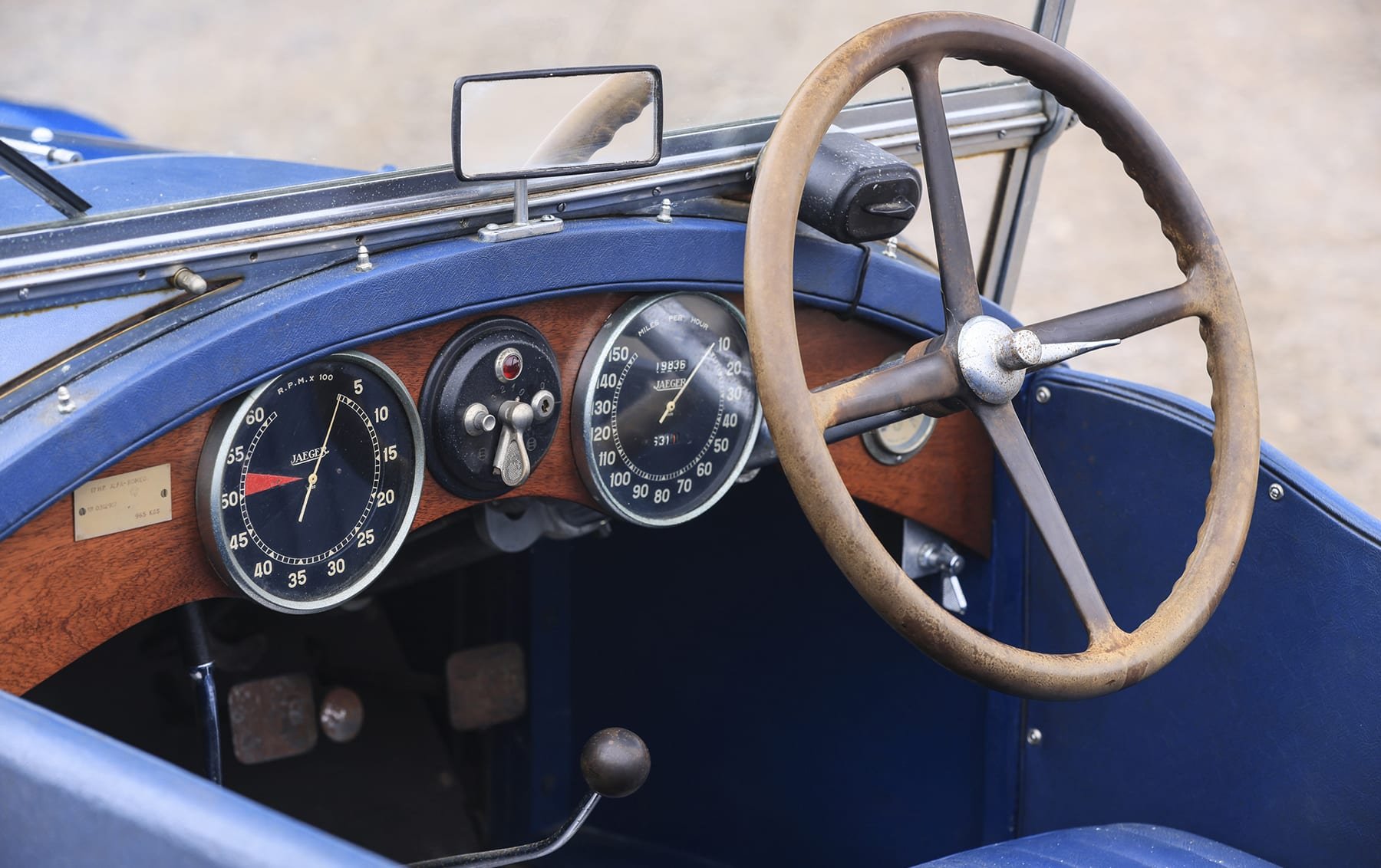


Auktion: Gooding Christie’s, Paris 2026, Schätzpreis 600’000 bis 700’000 Euro, mit diesen Angaben: (siehe Kommentare)
–
Chassis-Nummer: 10914519 (1931)


Auktion: Gooding Christie’s, Paris 2026, Schätzpreis 100’000 bis 150’000 Euro, mit diesen Angaben: «This fantastic 6C 1750 wears coachwork by Martin Walter Ltd. of Folkestone, a firm originally established in 1773 to make equine harnesses and long celebrated for its high level of craftsmanship. The story of how this 6C 1750 entered the Cherrett Collection is as delightful as the car itself. In spring 1967, while attending an Alfa Romeo gathering in one of their open 6Cs, Angela and Allan Cherrett were caught in a sudden downpour and took shelter alongside another Alfa enthusiast, a Mr. Drucker. In conversation, the Cherretts remarked that they ought to have a saloon for such weather, to which Mr. Drucker unexpectedly offered them his own 6C 1750 Saloon – this very example – for free. With its engine in need of repair, Mr. Drucker was simply happy to see it go to a good home, but the Cherretts insisted on paying him £250. A letter acknowledging payment and an invoice for its transport, dated June 3, 1967, remain on file.»
–
Chassis-Nummer: 8513041
Motoren-Nummer: 8513041


Auktion: RM Sotheby’s, Paris 2026, Schätzpreis 1,4 bis 1,8 Millionen Euro, mit diesen Angaben: «Built in 1930, chassis number 8513041 offered here made the short trip from the Alfa Romeo factory across Milan to be dressed in alloy bodywork by Carrozzeria Sport, who finished it in a style closely resembling that of contemporaries Zagato and Castagna. This 6C 1750 was then supplied new to a marque collector based to the south in Genoa before another citizen of the port city bought the car the following August. Per the research compiled by long-time registrar John de Boer, the car was raced by its second keeper during 1932 before it was returned to Alfa Romeo in 1933 and sold once again to a resident of Genoa. Chassis 8513041 found pastures new when it was purchased in January 1935 by Catullo Lami in Pisa prior to a 1936 acquisition by a custodian living in a town near Cremona. The Gran Sport Spider finally found a more permanent home when it was bought in May 1958 by Gianni Mazzocchi—the publishing magnate and owner of Editoriale Domus. While the body and drivetrain were found compete, the engine would not start. Subsequent repairs meant that Mazzocchi had to turn down an approach from the Director General of Metro-Goldwyn-Mayer Films for the car to star in a movie being made in France. The letter exchange is contained within the history file. Thereafter, the Alfa Romeo formed part of the collection at the QuattroRuote automotive magazine museum for almost 60 years. During its time with the Mazzocchi family, chassis 8513041 was enjoyed in the 1962 and 1965 editions of the Stresa to Mottarone rally. Following the latter appearance, the car was restored—including a repaint of the body and rebuild of the straight-six engine. The Alfa Romeo then featured in the Mille Miglia Storica, finishing the famed event in 1986 and 1987. Thanks, in part, to its long residency as part of the museum’s stable and the long-term care it has received from marque specialist Gianni Torelli, chassis 8513041 is notably well preserved. Of its many original touches, the car significantly retains its matching-numbers engine. Sold to the consigning owner in 2016, the Alfa Romeo has continued its participation in a series of high-profile historic events. This includes taking on the Gran Premio Nuvolari regularity rally in 2019, 2021, 2022, and 2023, the Targa Florio, and a further entry in the Mille Miglia in 2024. Accordingly, chassis 8513041 is accompanied by its FIVA Identity Card issued in October 2018, Mille Miglia Register papers valid until June 2026, and a fascinating history file.»
–
Chassis-Nummer: 8513064
Motoren-Nummer: 8513064


Auktion: RM Sotheby’s, Mailand 2025, Schätzpreis 1,3 bis 1,5 Millionen Euro, mit diesen Informationen: «This beautifully presented short-wheelbase Spider is approximately the 64th of 102 fourth-series Gran Sport examples built. Although the early history of chassis number 6C 8513064 is currently unknown, by the late-1960s the car was owned by Alfa Romeo enthusiast Keith Hellon of Mundelein, Illinois. In 1974 Hellon sold the 6C to Jackson Brooks, a marque collector based in Colorado, who was impressed by the car’s completeness and went on to perform a comprehensive multi-year restoration. After Brooks advertised the Alfa Romeo in January 1981, the car was sold to Thomas Perkins, the groundbreaking venture capital executive often considered to be a founding father of Silicon Valley. Also an avid yachtsman and sports car enthusiast, Mr Perkins featured the 6C in his book Classic Supercharged Sports Cars. In 1984 he sold the Spider back to Mr Brooks, who engaged the highly respected Phil Reilly & Co to conduct a full rebuild of the engine, with specific preparation for vintage racing use. Following this work, the 6C 1750 was entered in the 1985 Monterey Historic Races, where none other than legendary racing driver Phil Hill piloted the car to a 4th overall finish. A day later the Zagato was presented at the Pebble Beach Concours d’Elegance, completing a whirlwind weekend at the centre of the collector car niche. Soon after Mr Brooks sold the 6C into a short chain of California-based owners, but it is a testament to the Alfa Romeo’s timeless appeal that Brooks later included the car in his book Cars I Could’ve, Should’ve, Kept, with 8513064 featured as one of the cover stars. Brooks then sold the Alfa Romeo to Art Valdez of Los Angeles. He retained possession for 11 years, during which time the car successfully completed the Mille Miglia Storica on four occasions. Purchased in 1996 by another California-based enthusiast, the 6C 1750 was presented at Concorso Italiano two years later before passing to a third Golden State resident. Acquired in early-2012 by the consignor, a discerning collector based in Portugal, chassis number 6C 8513064 was only mildly driven for the following 10 years before it was submitted to respected marque specialist Jim Stokes Workshop (JSW) in 2023. In addition to performing a comprehensive inspection and service, JSW prepared a written report that indicates the Alfa Romeo retains its matching-numbers engine, a significant confirmation of the car’s high degree of authenticity».


–
Chassis-Nummer: 10814362
Motoren-Nummer: 10814362


Auktion: RM Sotheby’s, Paris 2025, Schätzpreis 2,25 bis 2,75 Millionen Euro. Der Alfa Romeo 6C 1750 mit Chassis-Nummer #10814362 und Zagato-Karosserie wurde am 2. Oktober 1931 in die Schweiz ausgeliefert, nach Gonda. Am 25. Juli 1933 wurde der Alfa auf Marguerite Ulrich aus Blonay, ebenfalls in der Schweiz, zugelassen. Zusammen mit ihrem Gatten unternahm die Dame anscheinend ausgiebige Reisen, auch nach Deutschland. Kurz vor Ausbruch des 2. Weltkrieges soll Herr Ulrich seinen geliebten Alfa Romeo in einer doppelten Mauer seiner Villa eingemauert haben. Als das Haus nach seinem Tod verkauft wurde, konnte #10814362 von einem gewissen Louis Visinand befreit werden. In der Folge hatte der 6C einige interessante Besitzer, vielleicht sogar Allen Dulles, den späteren Direktor des CIA, sicher aber Emmanuel de Graffenried, den Schweizer Rennfahrer. «Toulo», wie er genannt wurde, verkaufte den Alfa für 15’000 Franken – das war damals viel, viel Geld – nach Amerika. Nächster Besitzer war dann, wohl ab 1958, Phil Hill, der spätere Formel-1-Weltmeister. Hill liebte den Zagato-Alfa, er blieb 30 Jahre in seinem Besitz. In den 2003/2004 wurde #10814362 vom damaligen Besitzer restauriert, anscheinend gab es nicht so viel zu tun, die Rechnung belief sich auf relativ bescheidene 45’000 Dollar. In der aktuellen Beschreibung heisst es: «The car benefited from a complete overhaul of its running gear and drivetrain, save for the engine, with particular attention paid to preserving the interior and Zagato body. Still sporting its fabulous Zagato coachwork today, this Alfa Romeo retains its matching-numbers engine, and is accompanied by period-correct seats, a detailed report from Hans Matti, expired FIA HTP papers, historic photos, and period articles.»


–
Chassis-Nummer: 10814388


Auktion: RM Sotheby’s, London 2025, Schätzpreis 800’000 bis 1’200’000 Pfund, mit diesen Informationen: «The most desirable of the sporting 6Cs were those bodied as Spiders by Touring and Zagato. Chassis number 10814388 is a late Series V example that was adorned from new with a stunning Spider body by Touring—desirably this body is very similar to ones fitted to younger 8Cs. According to the estratto cronologico, this 6C was delivered to its first owner, Sig Guido Dó of Turin, on 22 June 1932. Guido Dó rallied a 6C 1750, believed to be this car, in an RACI rally at the Colle del Sestrières during a bitterly cold December in 1932. He finished 3rd in class in the challenging Alpine event. Dó then sold the 6C on 28 June 1933 to Dario Sessarego, who was clearly fond of his purchase as he kept it for the following 18 years until 1951. It then passed through a couple of dealers before being bought by a US serviceman, Joseph McNeill, who was posted in Rome. McNeill had servicing work done, which was invoiced in May 1952, before it was exported to the USA. A photo on file from this period shows that this Alfa Romeo was almost identical then to how it is today with exception to a different windscreen, seat and trailing edge of the rear wing. By 1956, it was owned by Robert Becker of Hyde Park, New York. Becker kept the 6C into the early 1960s and then it passed through a couple private owners in the USA before it found its way to the United Kingdom and eventually Russell Abrahams. Abrahams was clearly an Alfa Romeo enthusiast as this 1750 shared a garage with an older 1500 Tourer. At the beginning of the 1980s, this wonderful 6C joined the collection of the late David Black, a well-known Alfa Romeo restorer and authority—other cars in the stable included a P3, Alfa 8C 2900s, and a 2300. Utilising his knowledge, Black clearly recognised that this Gran Sport was a particularly special example. While factory build data for individual components is not available, it is possible to state that the engine is the original unit for the car, and components such as the front axle, gearbox, rear axle, and steering box are highly likely to be original to the car. Importantly, the bonnet is also numbered, further supporting the originality of the body. For the last two decades, this glorious Alfa Romeo has been maintained by the renowned specialist Jim Stokes Workshops to allow the continued enjoyment of it by the Black family. Offered after four decades of ownership, it is unlikely a Series V of this quality will become available again for some time».
–
Chassis-Nummer: 10814391
Motoren-Nummer: 10814391

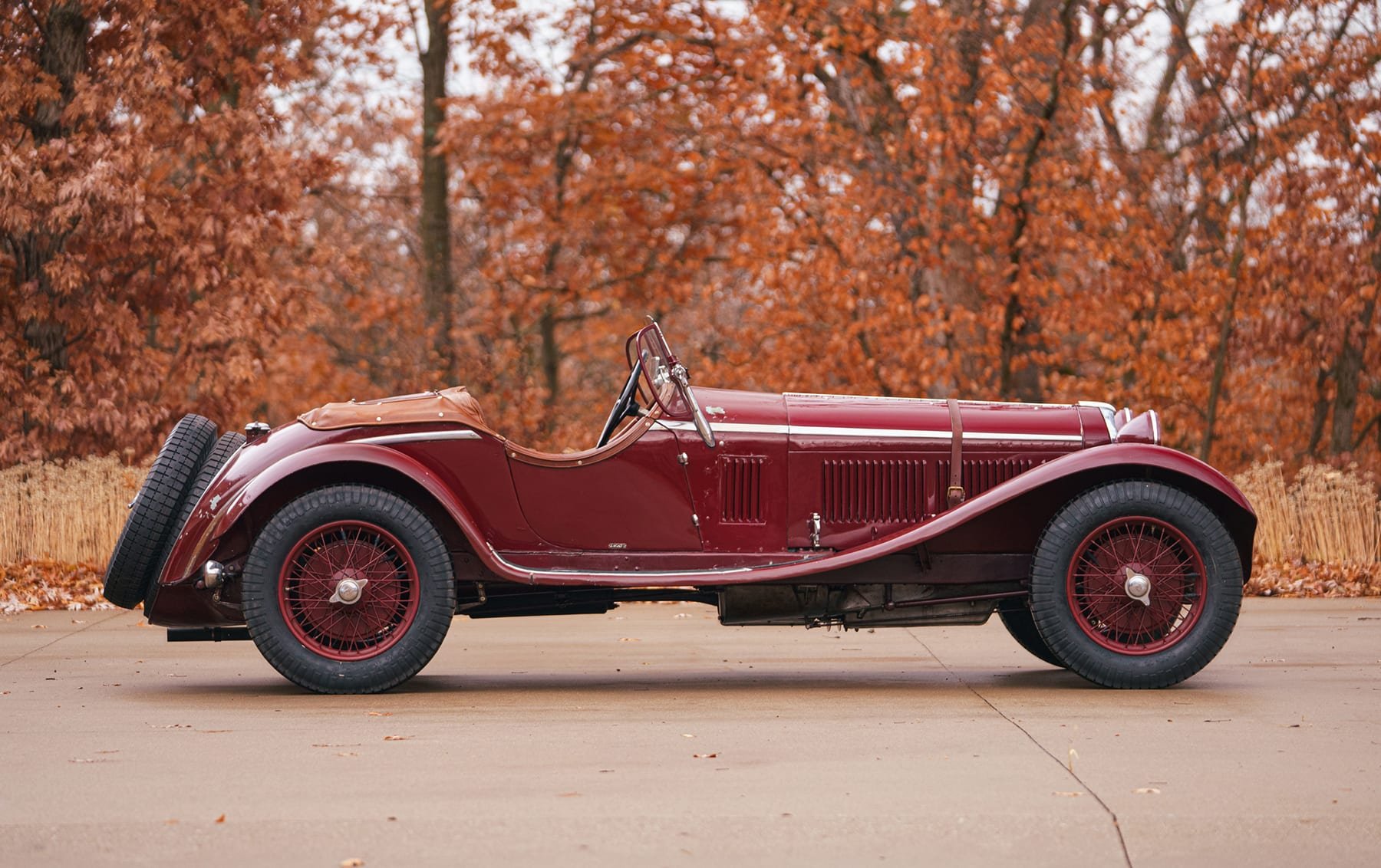


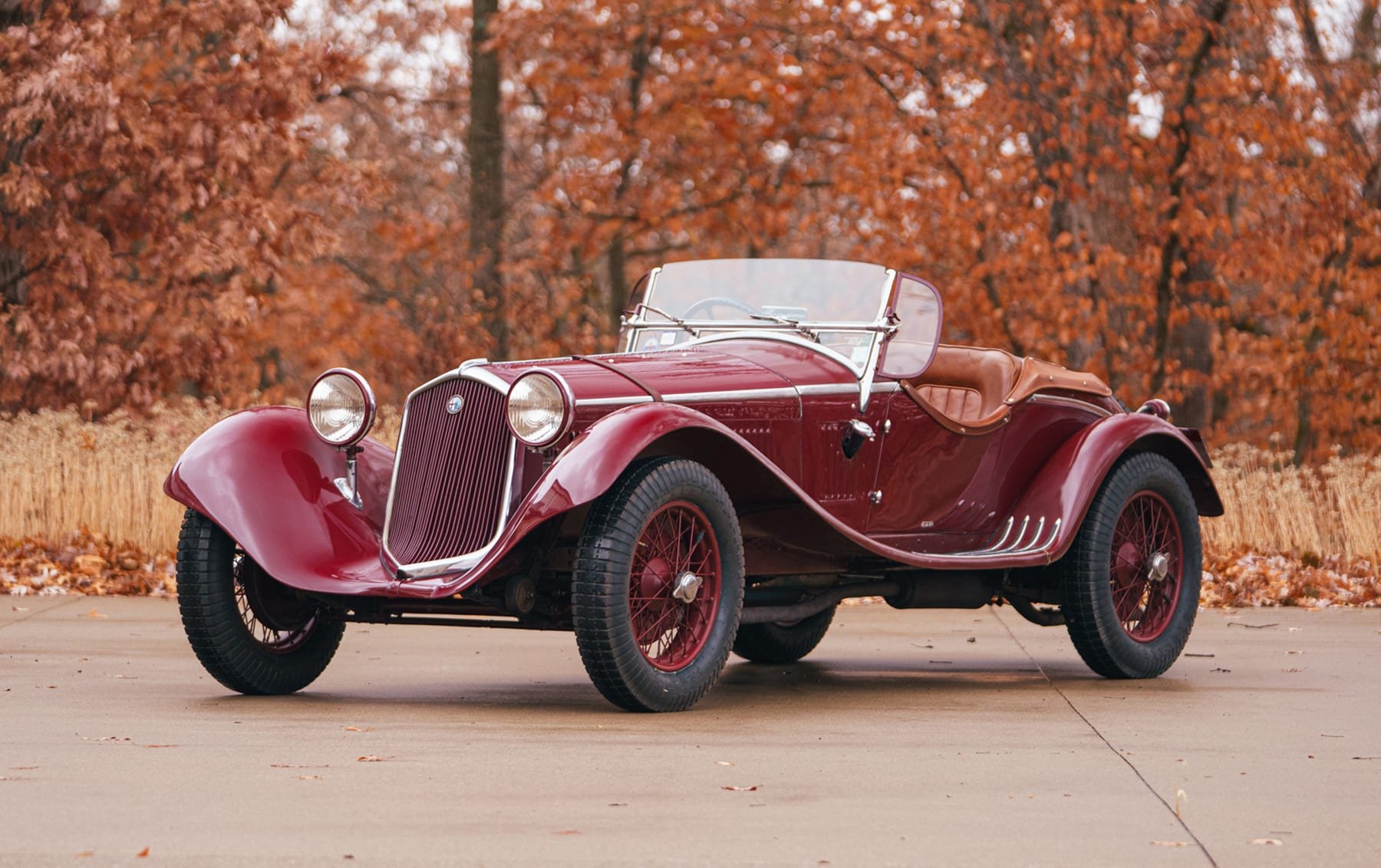
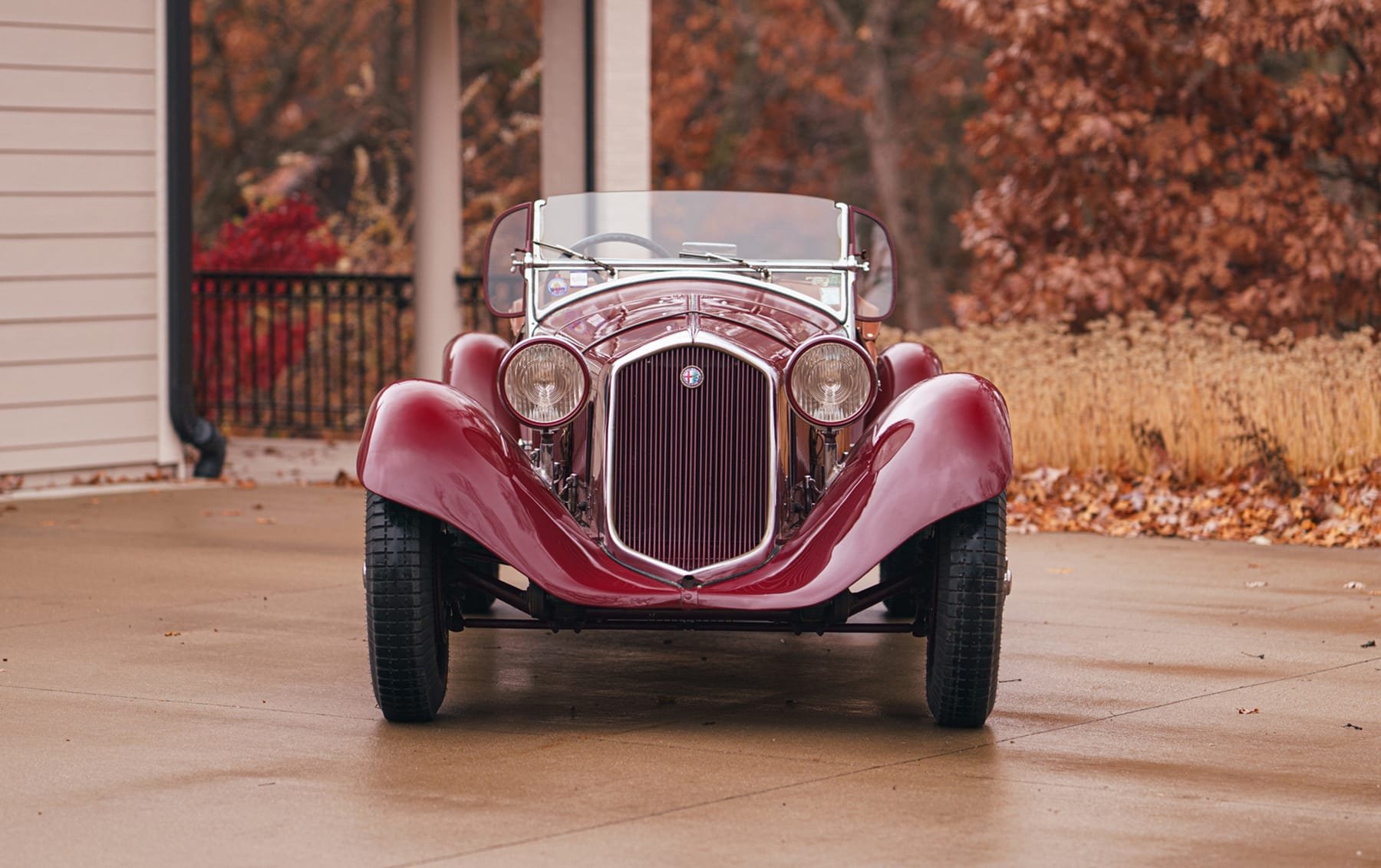
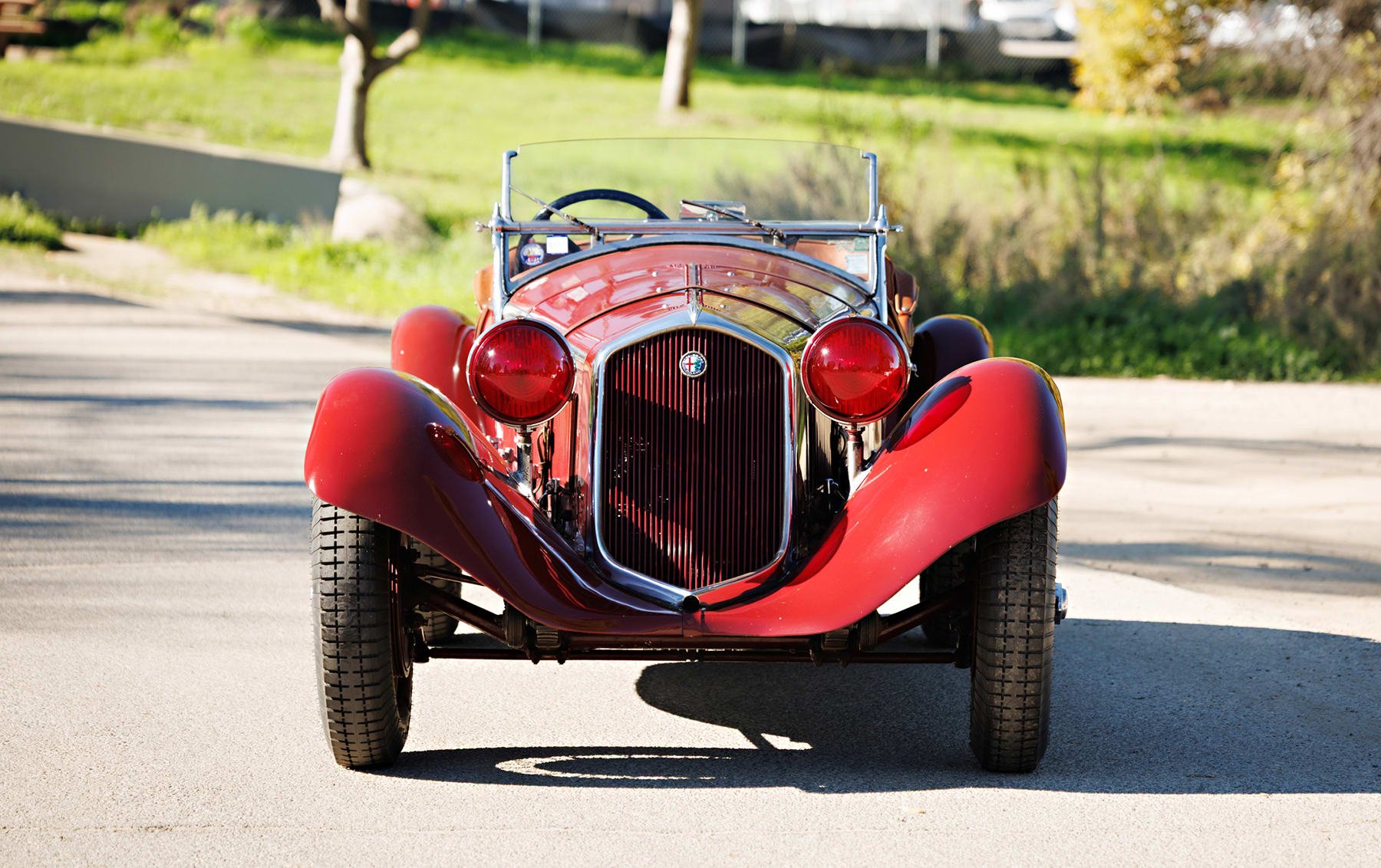

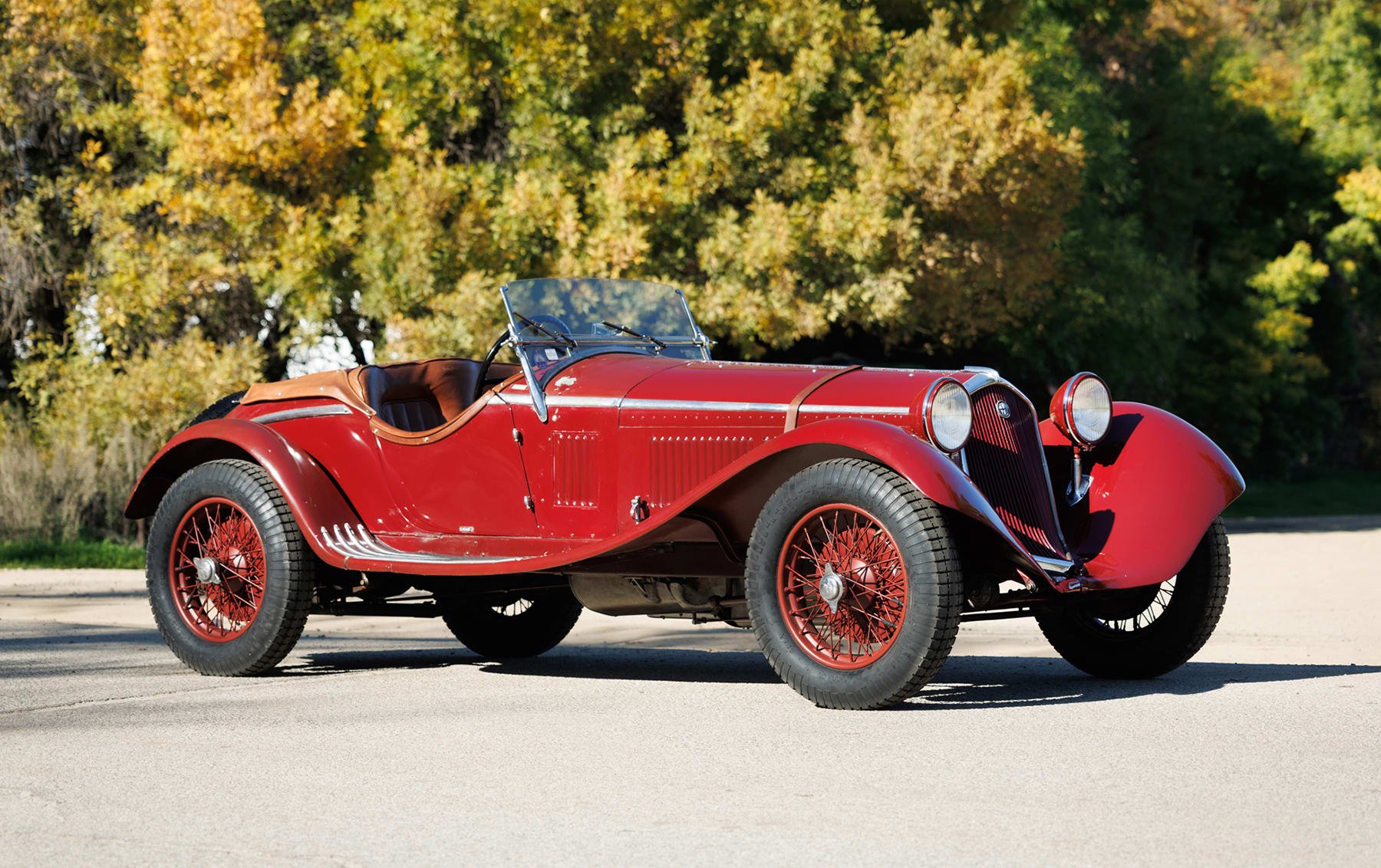

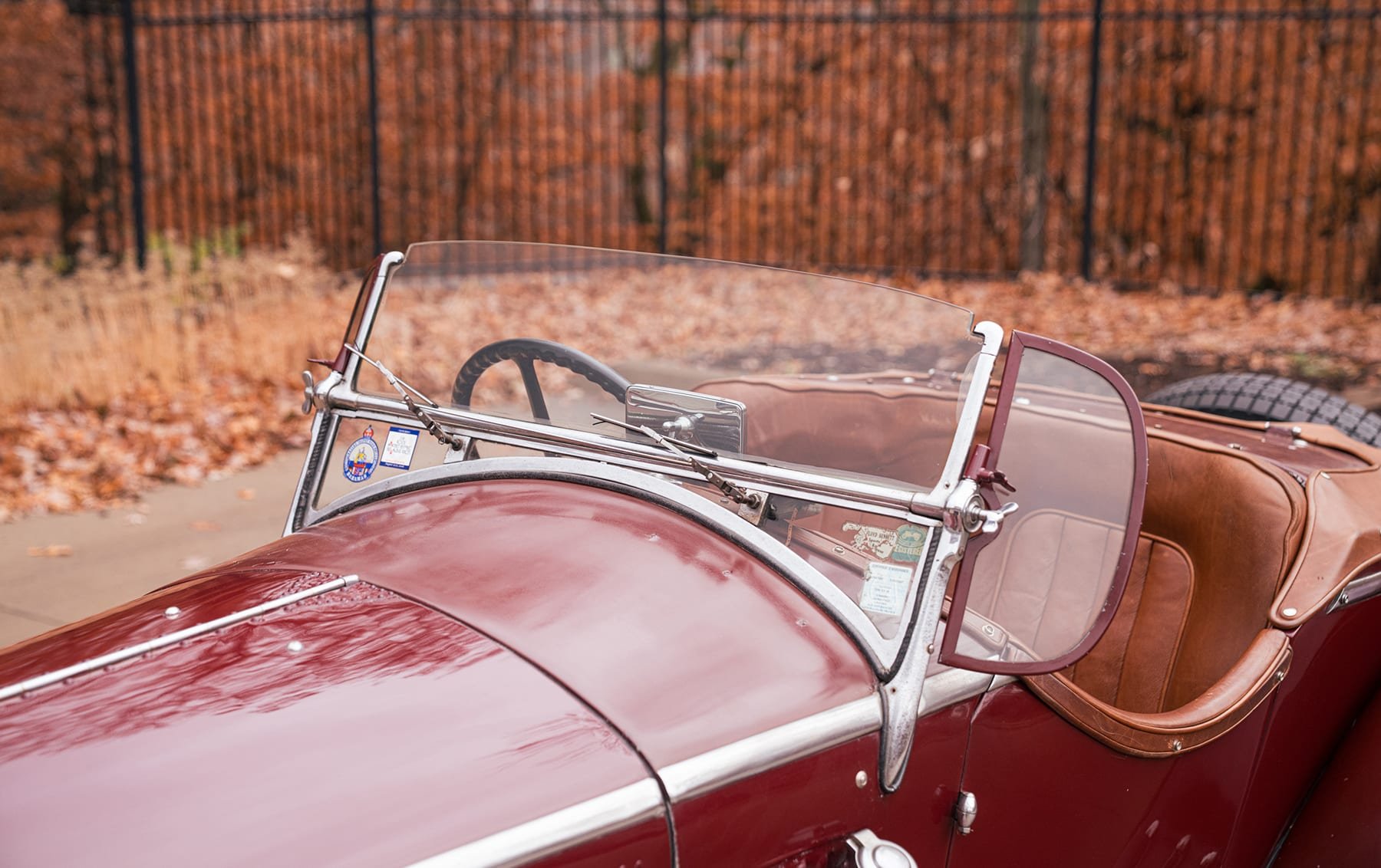


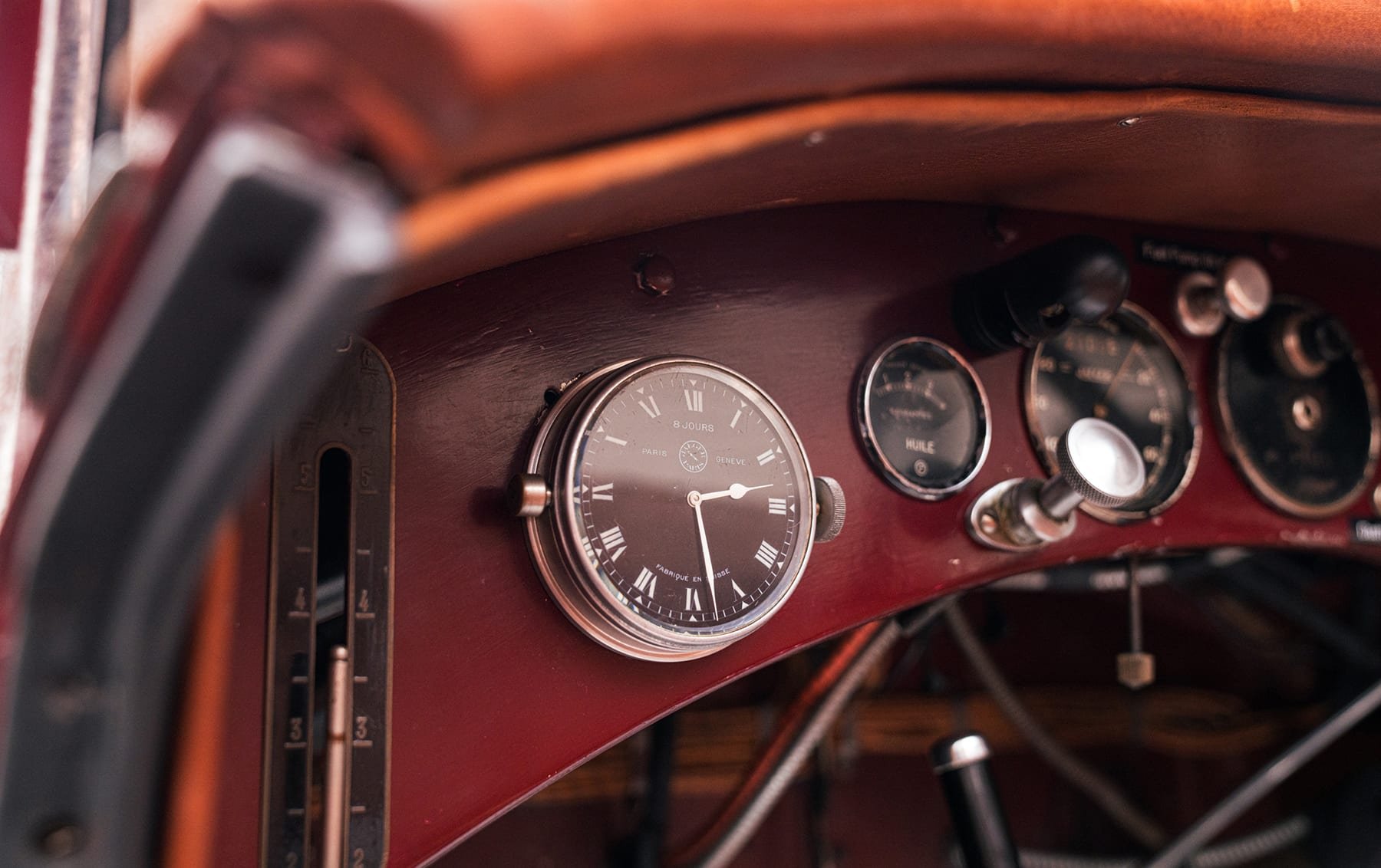


Auktion: Gooding Christie’s, Amelia Island 2026, Schätzpreis 1,75 bis 2,25 Millionen Dollar, mit diesen Angaben: (siehe Kommentare)
–
Mehr interessante Fahrzeuge finden sich in unserem Archiv.
Alfa Romeo 6C 1750, Chassis-Nummer: 0312917: «Chassis 0312917 is a distinguished example of the third-series 6C 1750 Super Sport. Originally imported to Britain by concessionaire F.W. Stiles, it was clothed by the Carlton Carriage Company in lightweight, fabric-over-wood touring coachwork built to International Sports Car Regulations, which required four-seater bodies on cars exceeding 1.5 liters. Finished in striking blue with a side-mounted spare, external fuel filler, and oil fillers, the Alfa Romeo was delivered new to the legendary Francis Curzon, the fifth Earl Howe.
Born in Mayfair in 1884, Lord Howe was among Britain’s foremost privateer racing drivers as well as a founding member – and first President – of the British Racing Drivers’ Club. An enthusiastic competitor at Brooklands, the Tourist Trophy, and Le Mans, he famously won the French endurance classic outright in 1931 at the wheel of an Alfa Romeo 8C 2300. His first Alfa Romeo, this very 6C 1750 SS, was registered on July 26, 1929, as “UV 5647.” Period records and correspondence confirm Howe quickly put it to competitive use, entering the Shelsley Walsh Hill Climb and that year’s Ards Tourist Trophy where, while co-driving with Leslie Callingham, he finished 2nd in Class and 18th Overall.
An original invoice from Hugh P. McConnell, dated May 26, 1930, and addressed to Lord Howe at 35 Curzon Street, London, records “attending you at Olaf Street, measuring the bores and strokes of your Alfa-Romeo Chassis No. 0312917. Preparing report in triplicate for Le Mans and officially certifying same.” This certification preceded the car’s historic appearance at the 24 Hours of Le Mans in June 1930, when Lord Howe and Callingham achieved a remarkable 5th Overall and 1st in Class finish. Their result behind two Speed Six Bentleys and two Talbots marked not only an impressive performance but also Alfa Romeo’s very first participation at Le Mans – a milestone for the marque.
Following its Le Mans campaign, Lord Howe sold 0312917 and later acquired a fourth-series 6C 1750 Gran Sport (chassis 8513091), re-registering it with the same number “UV 5647.” In later correspondence between Angela Cherrett and Lord Howe’s mechanic, Mr. Maslin, it was noted that “several of the Earl’s cars were originally registered in Italy and registrations did not really mean much.” In her 1966 Alfa Romeo Newsletter article (Vol. 10, No. 1), Cherrett observed, “I think it is likely that the glittering blue and chromium Alfa Romeo which competed at Shelsley Walsh and in the T.T. in 1929 with the registration UV 5647 was, in fact, the car which now bears the registration plate GH 8878 and which was the first Alfa Romeo to appear at the circuit of Le Mans, in the hands of that renowned motorist Francis Howe.”
After its success at Le Mans in 1930, the 1750 was driven by Callingham in the Ulster Automobile Club Hill Climb at Craigantlet on August 16, 1930, where his time of 1 minute 45 seconds was good enough to win the 2-liter class and a similar class for touring cars. Two weeks later, the 6C was entered into the 1930 Tourist Trophy, again driven by Leslie Callingham. Sadly, this would be 0312917’s last significant motor race, as it failed to finish due to a reported big-end engine failure.
During its subsequent history, 0312917’s original body was lost and its engine was replaced with one from 0411871, a third-series 1750 T. Surviving registration documents confirm its continuous UK history and, in 1965, chassis 0312917 was acquired by Angela and Allan Cherrett. Remarkably, Mrs. Cherrett located the car’s original crankcase and soon after in 1966, Mr. Cherrett completed a meticulous restoration that included a faithful recreation of the original Carlton Carriage touring body and a rebuild of the engine using its original crankcase. Over six decades of devoted Cherrett ownership followed, during which Mrs. Cherrett – an esteemed Alfa Romeo historian and author – compiled an exceptional documentation file comprising original logbooks, correspondence, invoices, and rare period photographs.»
Alfa Romeo 6C 1750 Series V Gran Sport, Chassis-Nummer 10814391: Chassis 10814391, the 91st Series V Gran Sport built, was completed on August 3, 1932, and delivered new just nine days later through Alfa Romeo concessionaire Oreste Peverelli of Como, Italy. Sold for 60,000 lire, it was registered the same day as “CO 6852” to Renato Lo Cascio of Inverigo, a textile industrialist and devoted Alfista. Finished as a two-seat Zagato Spider – as were most Gran Sports – this Alfa would enjoy an unusually well-documented and fascinating early life.
Lo Cascio was no casual owner. As the the proprietor of SAPITI (Società Anonima per Industrie Tessili Inverigo), he possessed both the means and the passion to assemble a small but significant collection of Alfa Romeos. Records confirm that he owned at least two 6C 1750 Gran Sports, including a Series IV example acquired in 1931 (and sold in 1933) and this car, purchased new in August 1932.
Family recollections add vivid texture to the car’s early history. According to Lo Cascio’s son Giorgio, the Alfa was originally delivered in gold paint with green leather upholstery, a flamboyant specification by the standards of the day. The effect was apparently too successful: Lo Cascio’s wife was said to be “ashamed” of the attention the car attracted and reportedly refused to ride in it after an evening at Teatro alla Scala, where the brightly colored Zagato Spider drew a crowd outside the famous Milan opera house.
Within months, the car was refinished in a more restrained silver, though the transformation went beyond paint alone. Period photographs show that the entire front end was subtly modernized, reflecting emerging styling trends of the mid-1930s. The updates included a new waterfall-style grille, the removal of the radiator cap, reshaped front fenders, metal spare tire covers, and delicate blade-type aluminum bumpers. Whether these changes were executed by Zagato or another Italian coachbuilder remains unknown, but the result was a cleaner, more contemporary appearance that aligned perfectly with the tastes of the period.
Lo Cascio actively used and displayed his Gran Sport, entering it in concours events and regularity competitions throughout the 1930s, including the Concorso di Eleganza at Bormio on August 15, 1935. After nearly two decades of ownership, he reluctantly parted with his cherished Alfa, with registration records declaring it “definitively exported” from Italy on September 6, 1949.
The buyer was Ralph Stein, one of the most influential early voices in the collector-car movement and, to many, the poet laureate of the automobile. Stein owned and experienced a wide array of significant machines, yet he held a special reverence for Alfa Romeo’s prewar sports cars, which he regarded as peerless in their balance of engineering sophistication and emotional appeal.
In his landmark book The Greatest Cars, Stein sings the praises of his 6C 1750 Gran Sport, describing it as the finest Alfa he had ever owned. Reflecting on the car’s performance and character, he wrote:
“That first 1750 Super Sport (senza compressore) Alfa was, of course, superb. But some years later I became the joyful owner of an even better one. This was a 1750 supercharged Gran Sport. A late fifth-series Zagato-bodied model… This blown Alfa was, of course, faster than my old unblown Super Sport. Top speed was near 100 mph. Zero to 60 took about eleven seconds. The engine was even more willing.”
Stein’s affection extended beyond words. The Gran Sport was pictured in both The Greatest Cars and Sports Cars of the World and was also illustrated on the cover of Sport Cars and Hot Rods, a popular Fawcett Book publication from 1950. In 1966, Stein finally sold the Alfa to David H. Tunick of Greenwich, Connecticut, a discerning collector whose stable included a Bentley Speed Six team car, a chain-drive Simplex, and a Mercedes-Benz 300 SL Gullwing.
Tunick chose preservation over restoration, storing the Alfa carefully for many years. This approach proved invaluable, allowing the car to survive in a remarkably original state. In 2001, following Tunick’s passing, the Alfa was offered publicly for the first time in more than 30 years and was acquired by noted French collector Paul-Emile Bessade. At the time, the odometer showed just 13,654 km, a figure consistent with the car’s undisturbed condition. During M. Bessade’s ownership, the Alfa Romeo benefited from mechanical work overseen by renowned marque specialist Jim Stokes Workshops and successfully participated in several editions of the 1000 Miglia.
A few years later, the Gran Sport returned to the US when it was purchased by Tony Schwartz, becoming only the fifth private owner in over seven decades. Recognizing both the car’s originality and its performance potential, Schwartz commissioned Jim Stokes Workshops to conduct an extensive mechanical rebuild at a cost of more than £200,000. During this process, the upper half of the engine was fitted with a new JSW block, camshafts, pistons, and ancillaries, while retaining the original matching-numbers crankcase. Dyno testing reportedly showed approximately 135 hp, a staggering increase over the original factory rating.
Other subtle upgrades, including revised blower drive ratios, increased compression, a modern racing clutch, hidden electronic ignition, and full-flow oil filtration, transformed the Gran Sport into a formidable yet reliable performer, ideally suited to demanding historic races and rallies.
Acquired at the Gooding & Company Scottsdale Auction in 2010 by California collector Larry Bowman and later joining Curtis Leaverton’s superb stable, the Alfa has since served as the centerpiece of a significant assemblage of the marque.